For the complete documentation index, see llms.txt. Prefer markdown by appending.mdto documentation URLs or sendingAccept: text/markdown.
Sign in with Google on Android and iOS with native account picker flows. Platform client IDs, token exchange, and Better Auth setup.
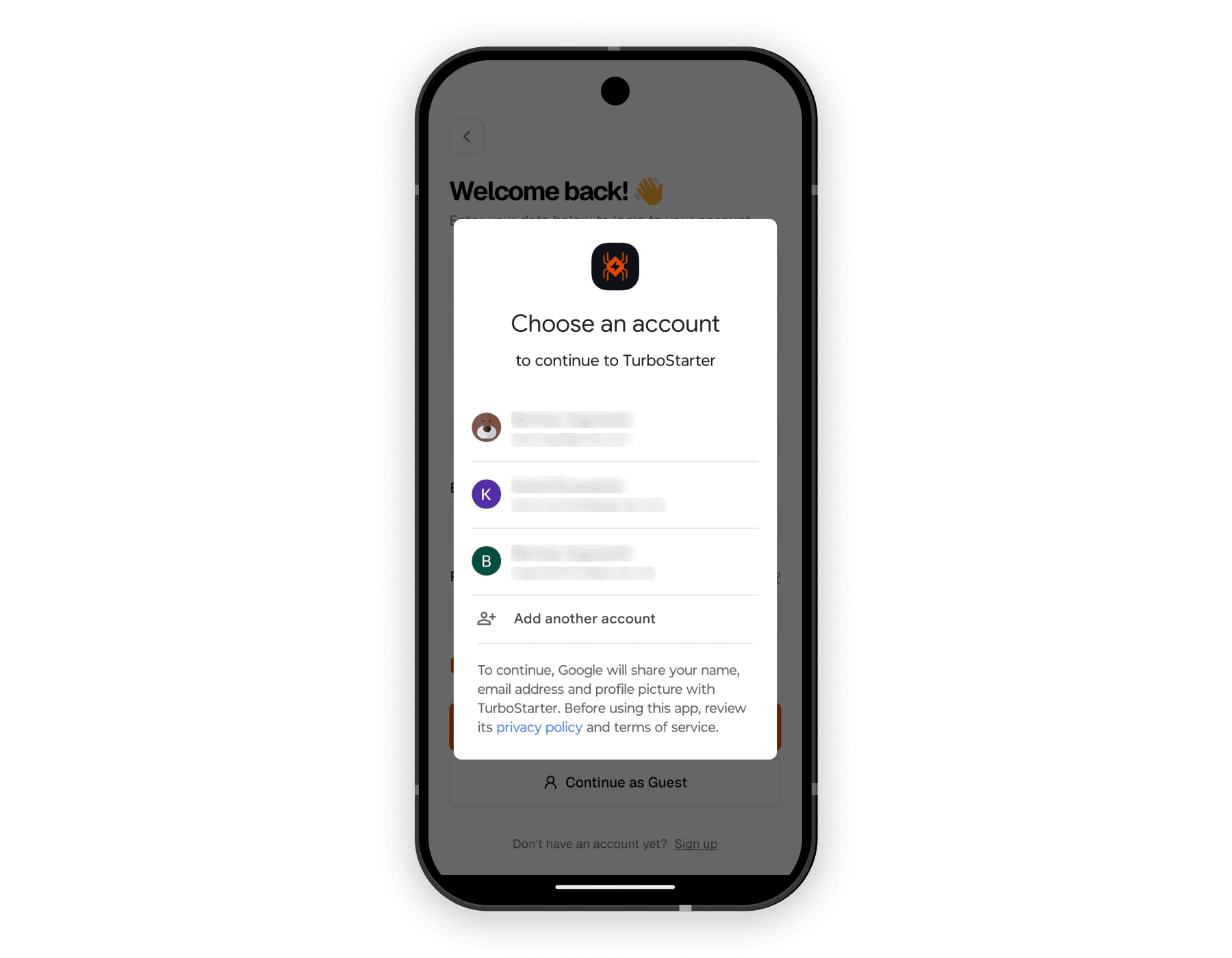
"Sign in with Google" enables a fast account-chooser experience on mobile (especially on Android). Configure your platform credentials, prompt the native account picker, then exchange the returned token on your backend to create a session with your auth server.
Platform support
On Android, Google Sign‑In uses Google Identity Services and integrates with the system account chooser. On iOS, the recommended Expo flow uses expo-auth-session with Google for a native, web-based sign-in experience.
Why use Google authentication?
First-class native UX
Account picker and token storage integrated with the OS for speed and familiarity.
Seamless across platforms
Android native chooser; iOS polished experience via Expo.
Secure by default
Tokens are verified server-side with Better Auth before a session is issued.
Faster onboarding
Reduce friction with one-tap sign-in and fewer passwords to remember.
Scalable
Built on Google Identity Services and best-practice OAuth flows.
Requirements
- Configure Google Cloud OAuth Client IDs (Android package + SHA-1, iOS bundle ID) in the Google Cloud Console
- Build with EAS to ensure native credentials are embedded correctly
- Add your app deep link scheme to the auth server's trusted origins configuration
Check the Better Auth documentation and @react-native-google-signin/google-signin documentation for steps to configure your server verification, client IDs and more.
High-level flow
- Configure Google OAuth Client IDs for Android and iOS in Google Cloud Console.
- Initialize the Google auth request in your app and render a "Sign in with Google" button.
- Prompt the account chooser; on success you receive an
idTokenand/oraccessToken. - Send the tokens to the API powered by Better Auth to verify and establish a session.
- Persist the session and proceed to the app.
For a more in-depth overview of Google authentication, including implementation details, platform caveats, and advanced configuration, see the following resources:
How is this guide?
Last updated on