AetherCode Autopilot
An autonomous AI coding agent that plans, writes, tests, and deploys full-stack features from a single product brief, built for fast-moving startups.
The rise of AI coding agents and why autopilot development is inevitable
Software development is undergoing a structural shift. With the rapid adoption of generative AI and large language models, developers are no longer just writing code—they’re orchestrating intelligent systems that can plan, generate, test, and refactor code autonomously.
This is where AI coding agents step in.
Unlike simple code completion tools, an AI coding agent like AetherCode Autopilot goes beyond autocomplete. It operates as a full-stack feature engineer capable of:
- Translating a single prompt into a structured implementation plan
- Writing frontend and backend code
- Generating and running tests
- Refactoring code based on best practices
- Creating structured Git commits and pull requests
The primary keyword here is AI coding agent, and the core differentiation is the autopilot-style, Git-integrated workflow that executes tasks end-to-end.
This article explores:
- The market opportunity behind AI coding agents
- The ideal target audience
- Core features and architecture
- Technical stack recommendations
- Monetization strategies
- Competitive positioning
- Risks and mitigation
- Step-by-step implementation roadmap
If you're searching for insights into building or investing in an AI coding agent SaaS, this guide provides expert-level, actionable direction.
Understanding user search intent for AI coding agents
Users searching for “AI coding agent” typically fall into one of these categories:
- Developers looking to boost productivity
- Founders evaluating AI-native SaaS ideas
- Engineering leaders exploring AI automation
- Investors analyzing AI devtools market trends
- Product builders validating an autonomous coding tool concept
To satisfy this intent, we must address:
- Does this solve a real pain?
- Is the market large enough?
- How is it technically feasible?
- What differentiates it from Copilot or ChatGPT?
- Can it integrate into existing Git workflows?
- Is it monetizable?
Let’s break it down.
Market opportunity: the shift toward autonomous software engineering
The macro trend
The global developer population continues to grow. According to the Stack Overflow Developer Survey (see official Stack Overflow blog reports for updated data), millions of developers now use AI tools regularly in their workflow.
But most tools today are:
- Suggestion-based (autocomplete)
- Chat-based (manual prompt interactions)
- Reactive instead of autonomous
The gap?
End-to-end feature automation integrated directly into Git.
Where current tools fall short
Most AI coding tools:
- Require constant manual prompts
- Don’t create structured implementation plans
- Don’t manage testing workflows automatically
- Don’t integrate deeply with Git branching and pull requests
- Lack contextual awareness of the entire repository
This creates friction.
AetherCode Autopilot solves this by acting as a goal-driven AI coding agent, not a suggestion engine.
Target audience analysis
1. Startup founders and indie hackers
Pain points:
- Limited engineering bandwidth
- Need to ship fast
- Small teams
Value proposition:
- Turn feature ideas into pull requests in minutes
- Reduce hiring pressure
- Accelerate MVP iteration
2. Small-to-mid engineering teams
Pain points:
- Backlog overload
- Repetitive feature scaffolding
- Inconsistent testing practices
Value proposition:
- AI handles boilerplate and standard feature builds
- Automatically writes tests
- Enforces consistent architecture patterns
3. Engineering managers & CTOs
Pain points:
- Developer productivity
- Code quality consistency
- Delivery timelines
Value proposition:
- Autonomous feature development
- Traceable Git-based workflows
- Measurable productivity gains
4. Open-source maintainers
Pain points:
- Limited contributor time
- Bug triage and refactoring burden
Value proposition:
- AI-generated issue-to-PR automation
- Automatic test additions
Core value proposition of AetherCode Autopilot
At its core, AetherCode Autopilot is:
An AI coding agent that plans, writes, tests, and refactors full-stack features from a single prompt, integrating directly with Git workflows.
What makes it different?
Instead of:
“Write me a login form in React.”
You say:
“Add role-based authentication with admin dashboards and audit logging.”
And the system:
- Creates a technical implementation plan
- Generates backend API endpoints
- Builds frontend UI
- Writes tests
- Refactors for performance and style
- Creates a feature branch
- Commits changes
- Opens a pull request
That’s autopilot.
Core features breakdown
Prompt-to-plan engine
Transforms high-level product requests into structured implementation plans with task breakdowns.
Full-stack code generation
Creates frontend, backend, database migrations, and integrations.
Automated testing
Generates unit, integration, and E2E tests.
Refactor & optimize
Improves code quality and aligns with repository standards.
Git-native execution
Creates branches, commits, and pull requests automatically.
Feature workflow: from prompt to pull request
This workflow creates an experience closer to hiring a junior-to-mid engineer than using a chatbot.
Technical architecture for building an AI coding agent
High-level system components
- LLM orchestration layer
- Repository ingestion engine
- Task planning module
- Code generation pipeline
- Testing & execution sandbox
- Git integration service
- User interface dashboard
Recommended tech stack
Frontend
Why?
- React ecosystem maturity
- Next.js for API routes + SSR
- TailwindCSS for rapid UI scaling
Backend
- Node.js or Python
- FastAPI (Python) or Express (Node)
- Background job queue (e.g., BullMQ or Celery)
- Docker sandbox execution
AI layer
- LLM API (OpenAI or similar provider)
- Embedding model for repository indexing
- Vector database (e.g., Pinecone or open-source alternative)
Git integration
- GitHub App
- GitLab OAuth App
- Bitbucket integration
Must support:
- Branch creation
- Commit batching
- Pull request creation
- PR comments
Example: Git automation logic
// simplified pseudo-logic for Git branch automation

async function createFeaturePR(repo, featureName, changes) {
  const branchName = `aether/${featureName}`;

  await git.createBranch(repo, branchName);
  await git.checkout(branchName);

  for (const file of changes) {
    await fs.writeFile(file.path, file.content);
    await git.add(file.path);
  }

  await git.commit(`feat: ${featureName} (generated by AetherCode Autopilot)`);
  const pr = await git.openPullRequest(repo, branchName);

  return pr;
}
Competitive landscape analysis
Major players in the AI coding space:
- GitHub Copilot
- Cursor
- ChatGPT
- Replit Ghostwriter
Let’s compare positioning.
| Feature | Copilot | ChatGPT | Cursor | AetherCode Autopilot |
|---|---|---|---|---|
| Autocomplete | ✅ | ❌ | ✅ | ✅ |
| Autonomous planning | ❌ | Limited | Limited | ✅ |
| Git-native PR creation | ❌ | ❌ | ❌ | ✅ |
| Full-stack feature automation | ❌ | Manual | Partial | ✅ |
Competitive advantage
- Autonomous feature-level execution
- Git-native workflow
- Structured implementation planning
- Integrated test generation
The USP is not “AI coding.”
It’s AI-driven feature execution with Git accountability.
Monetization strategies
1. Tiered subscription model
- Free tier: limited prompts/month
- Pro tier: unlimited features + PR automation
- Team tier: shared workspace + audit logs
2. Usage-based pricing
Charge based on:
- Lines of generated code
- AI tokens used
- Number of PRs created
3. Enterprise licensing
For larger orgs:
- On-prem deployment
- SOC2 compliance
- Custom AI model tuning
- SLA guarantees
4. Hybrid pricing approach
Best approach:
- Base subscription
- Usage overage pricing
This balances predictability and scalability.
Potential risks and mitigation strategies
Model hallucination risk
AI-generated code may introduce subtle bugs or security vulnerabilities.
Mitigation:
- Mandatory test generation
- Static analysis integration
- Security scanning tools
- Human approval before merge
Over-reliance on AI
Teams may weaken architectural discipline.
Mitigation:
- Enforce architecture templates
- Provide diff explanations
- Generate design summaries
Token cost explosion
Large repositories increase inference cost.
Mitigation:
- Smart repository chunking
- Context prioritization
- Incremental updates only
Building trust: E-E-A-T in AI developer tools
To establish trust:
- Publish transparent model limitations
- Document system architecture
- Provide security whitepapers
- Show real-world case studies
- Offer explainable code summaries
Trust is crucial in devtools. Developers are skeptical by default.
Go-to-market strategy
Phase 1: Indie hacker adoption
- Launch on Product Hunt
- Target Twitter/X dev community
- Offer free beta credits
Phase 2: Startup partnerships
- Integrate with popular SaaS boilerplates
- Partner with platforms like TurboStarter
- Offer startup discounts
Phase 3: Enterprise expansion
- Case studies
- Compliance certifications
- Sales-led growth
Implementation roadmap
Long-term vision: autonomous software teams
The future isn’t AI-assisted coding.
It’s AI-executed software development under human supervision.
AetherCode Autopilot positions itself at the center of:
- Autonomous development cycles
- Continuous AI refactoring
- Self-healing codebases
- Feature backlog automation
This is not replacing developers.
It’s amplifying them.
Final thoughts
The AI coding agent market is still early—but rapidly accelerating.
AetherCode Autopilot stands out by focusing on:
- Full-stack feature automation
- Git-native workflows
- Structured planning
- Integrated testing
- Pull request generation
This is the difference between suggestion tools and execution agents.
If executed properly, this product can:
- Reduce development time by 30–60%
- Lower hiring pressure
- Increase delivery velocity
- Standardize code quality
The opportunity is significant.
The differentiation is clear.
The demand is growing.
Now is the time to build.
Ready to build your AI SaaS faster?
If you’re launching an AI coding agent or developer-focused SaaS, start with a proven foundation like TurboStarter to accelerate your go-to-market and avoid rebuilding common SaaS infrastructure from scratch.
The future of development is autonomous.
The question is: will you build the autopilot—or watch someone else do it?
More 🤖 AI Startup SaaS ideas
Discover more innovative ai startup SaaS ideas that are trending in 2026. Each idea is AI-generated with market validation and growth potential to help you find your next profitable venture faster than competitors.
Your competitors are building with TurboStarter
Below are some of the SaaS ideas that have been generated and built with our starter kit.

Statiko
Monitor any Telegram channel in real time - track posts, edits, deletions, and growth with AI recaps 📡

Shibui
AI website builder - describe your business, pick a niche template, edit by chatting, and publish instantly ✨

Pro Service
Find verified home service professionals, compare quotes, and pay securely through escrow - built for Brazilians across the US 🏠

RankGrow
Fix your SEO with AI agents - connect Search Console, get prioritized tasks, and grow organic traffic 📈

SyncReads
Sync your favorite content for distraction-free reading, save time and replace multiple apps. Anytime, anywhere 🔄
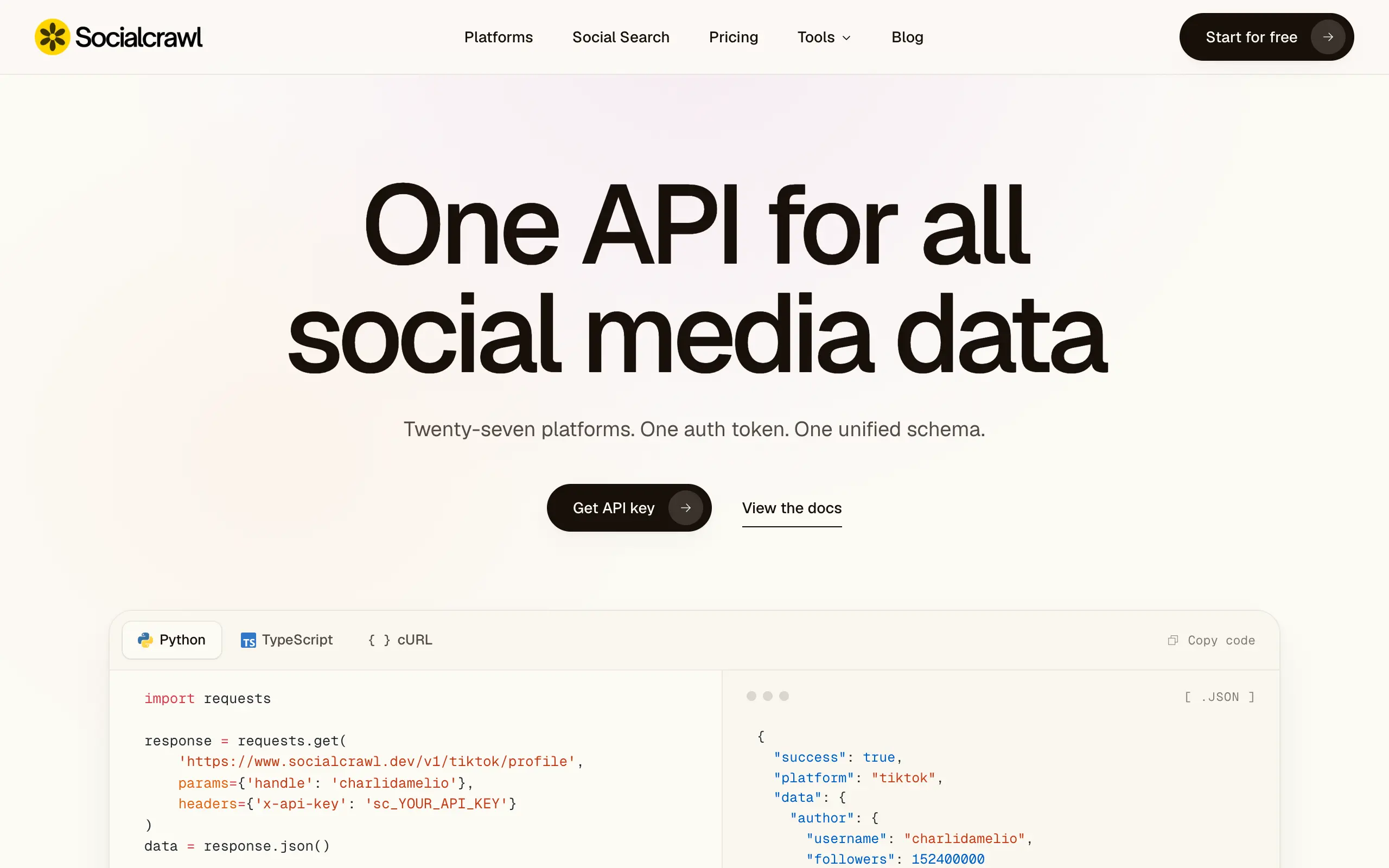
Socialcrawl
Get clean, structured data from 21 platforms like TikTok, Instagram, and YouTube with a single request 📊
Statiko
Monitor any Telegram channel in real time - track posts, edits, deletions, and growth with AI recaps 📡
Shibui
AI website builder - describe your business, pick a niche template, edit by chatting, and publish instantly ✨
Pro Service
Find verified home service professionals, compare quotes, and pay securely through escrow - built for Brazilians across the US 🏠
RankGrow
Fix your SEO with AI agents - connect Search Console, get prioritized tasks, and grow organic traffic 📈
SyncReads
Sync your favorite content for distraction-free reading, save time and replace multiple apps. Anytime, anywhere 🔄
Socialcrawl
Get clean, structured data from 21 platforms like TikTok, Instagram, and YouTube with a single request 📊
Statiko
Monitor any Telegram channel in real time - track posts, edits, deletions, and growth with AI recaps 📡
Shibui
AI website builder - describe your business, pick a niche template, edit by chatting, and publish instantly ✨
Pro Service
Find verified home service professionals, compare quotes, and pay securely through escrow - built for Brazilians across the US 🏠
RankGrow
Fix your SEO with AI agents - connect Search Console, get prioritized tasks, and grow organic traffic 📈
SyncReads
Sync your favorite content for distraction-free reading, save time and replace multiple apps. Anytime, anywhere 🔄
Socialcrawl
Get clean, structured data from 21 platforms like TikTok, Instagram, and YouTube with a single request 📊
Statiko
Monitor any Telegram channel in real time - track posts, edits, deletions, and growth with AI recaps 📡
Shibui
AI website builder - describe your business, pick a niche template, edit by chatting, and publish instantly ✨
Pro Service
Find verified home service professionals, compare quotes, and pay securely through escrow - built for Brazilians across the US 🏠
RankGrow
Fix your SEO with AI agents - connect Search Console, get prioritized tasks, and grow organic traffic 📈
SyncReads
Sync your favorite content for distraction-free reading, save time and replace multiple apps. Anytime, anywhere 🔄
Socialcrawl
Get clean, structured data from 21 platforms like TikTok, Instagram, and YouTube with a single request 📊
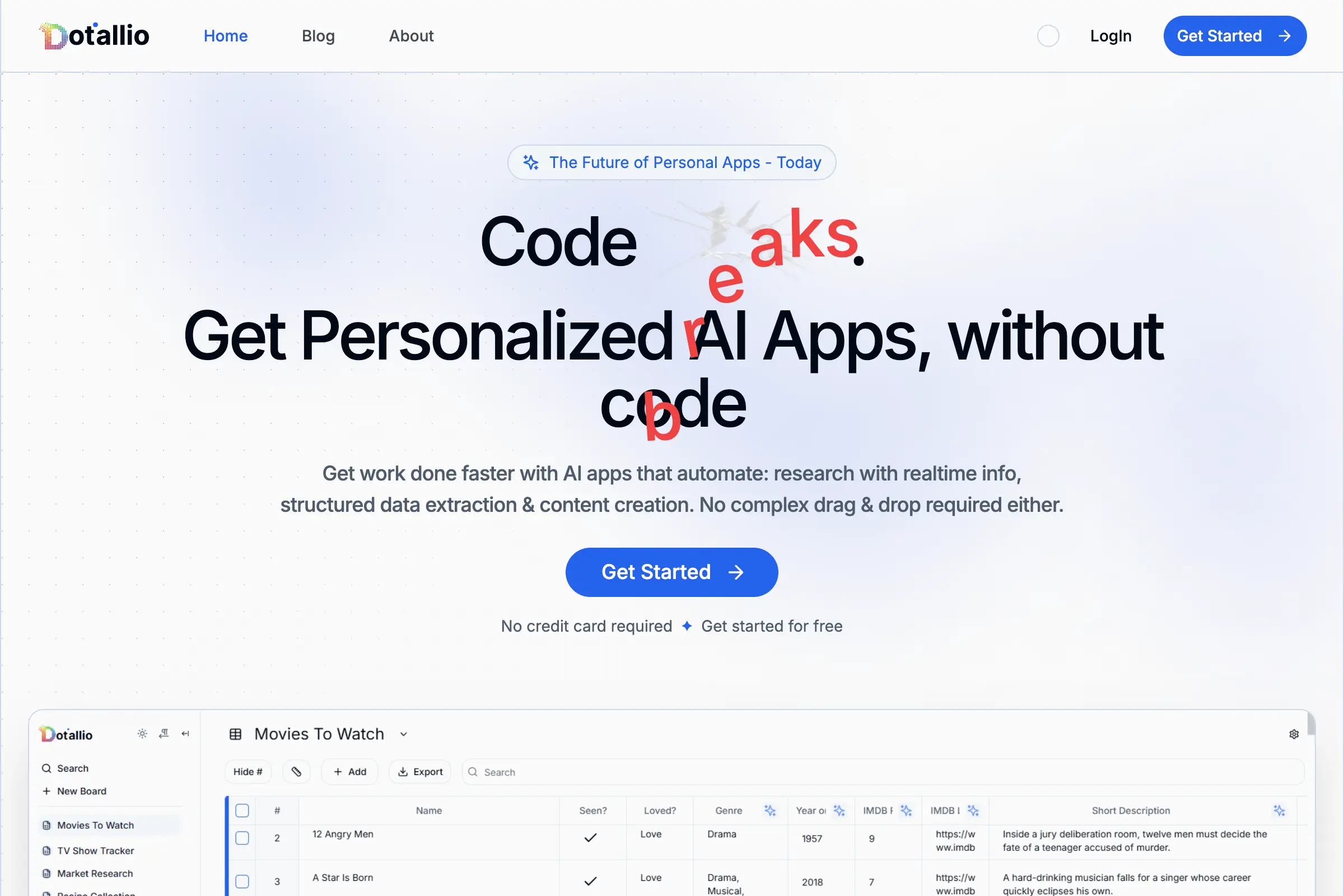
Dotallio
Personalized AI apps that automate research, data extraction, and content creation without code 🤖

Talk to Santa
Enjoy a magical live video chat or receive a unique AI-generated video greeting from Santa Claus 🎅

pozywka.pl
Scalable blog for food journalist, focused on performance and user experience 🌭
zagrodzki.me
Personal blog and portfolio of Bart Zagrodzki, where he shares his knowledge and work 💼
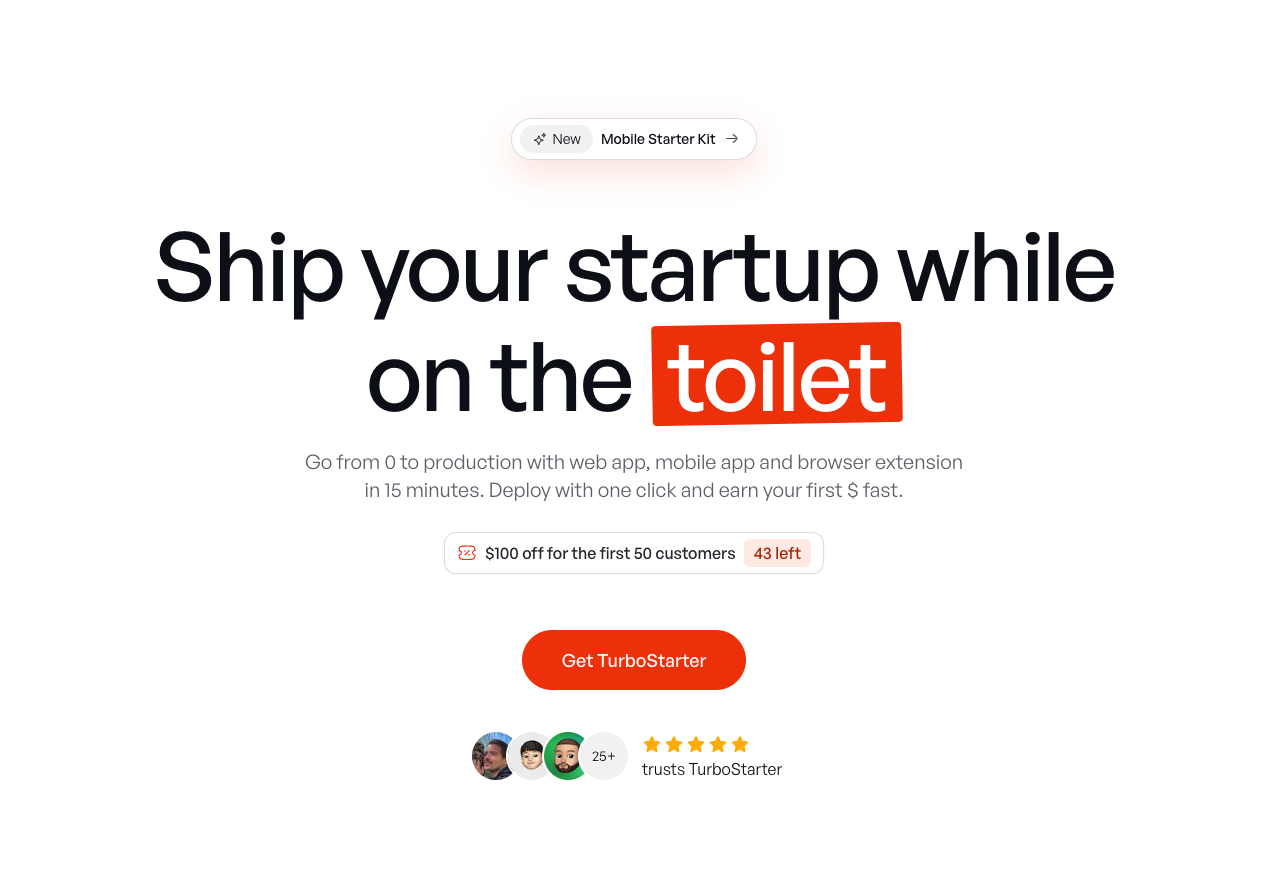
TurboStarter
Ship your startup everywhere. In minutes.
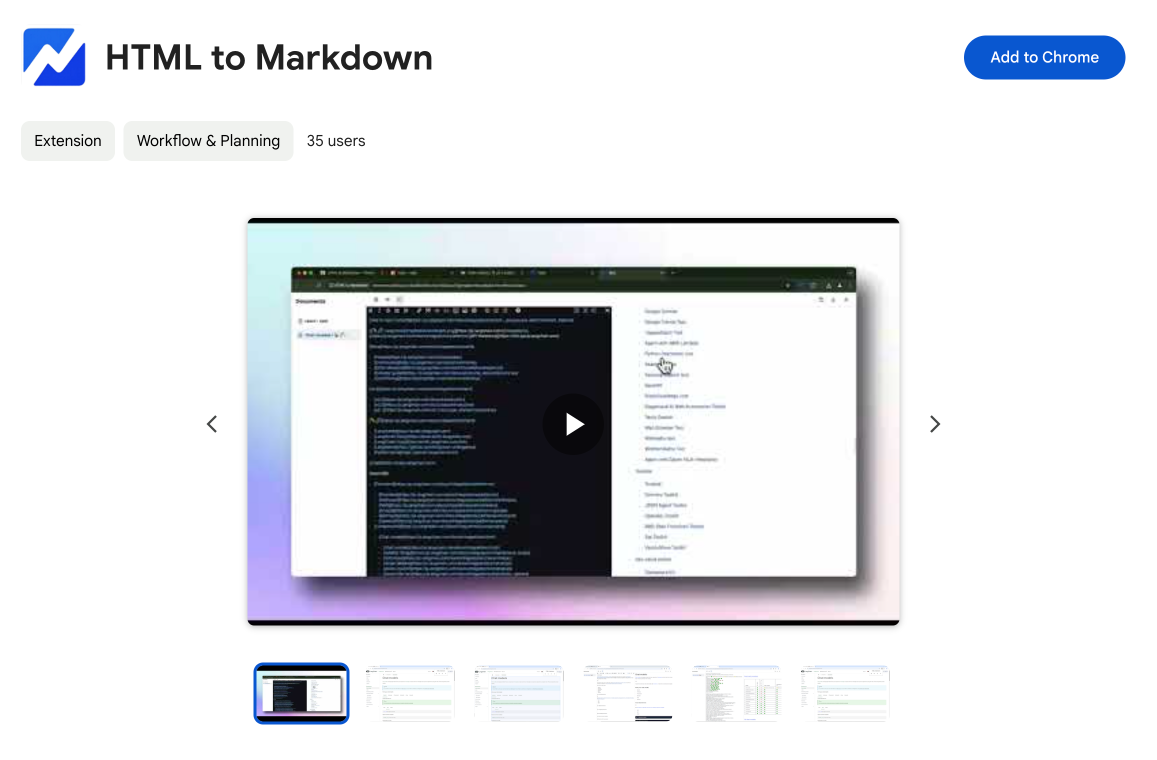
HTML to Markdown
Convert HTML to Markdown with ease, directly in your browser 📄
Dotallio
Personalized AI apps that automate research, data extraction, and content creation without code 🤖
Talk to Santa
Enjoy a magical live video chat or receive a unique AI-generated video greeting from Santa Claus 🎅
pozywka.pl
Scalable blog for food journalist, focused on performance and user experience 🌭
zagrodzki.me
Personal blog and portfolio of Bart Zagrodzki, where he shares his knowledge and work 💼
TurboStarter
Ship your startup everywhere. In minutes.
HTML to Markdown
Convert HTML to Markdown with ease, directly in your browser 📄
Dotallio
Personalized AI apps that automate research, data extraction, and content creation without code 🤖
Talk to Santa
Enjoy a magical live video chat or receive a unique AI-generated video greeting from Santa Claus 🎅
pozywka.pl
Scalable blog for food journalist, focused on performance and user experience 🌭
zagrodzki.me
Personal blog and portfolio of Bart Zagrodzki, where he shares his knowledge and work 💼
TurboStarter
Ship your startup everywhere. In minutes.
HTML to Markdown
Convert HTML to Markdown with ease, directly in your browser 📄
Dotallio
Personalized AI apps that automate research, data extraction, and content creation without code 🤖
Talk to Santa
Enjoy a magical live video chat or receive a unique AI-generated video greeting from Santa Claus 🎅
pozywka.pl
Scalable blog for food journalist, focused on performance and user experience 🌭
zagrodzki.me
Personal blog and portfolio of Bart Zagrodzki, where he shares his knowledge and work 💼
TurboStarter
Ship your startup everywhere. In minutes.
HTML to Markdown
Convert HTML to Markdown with ease, directly in your browser 📄
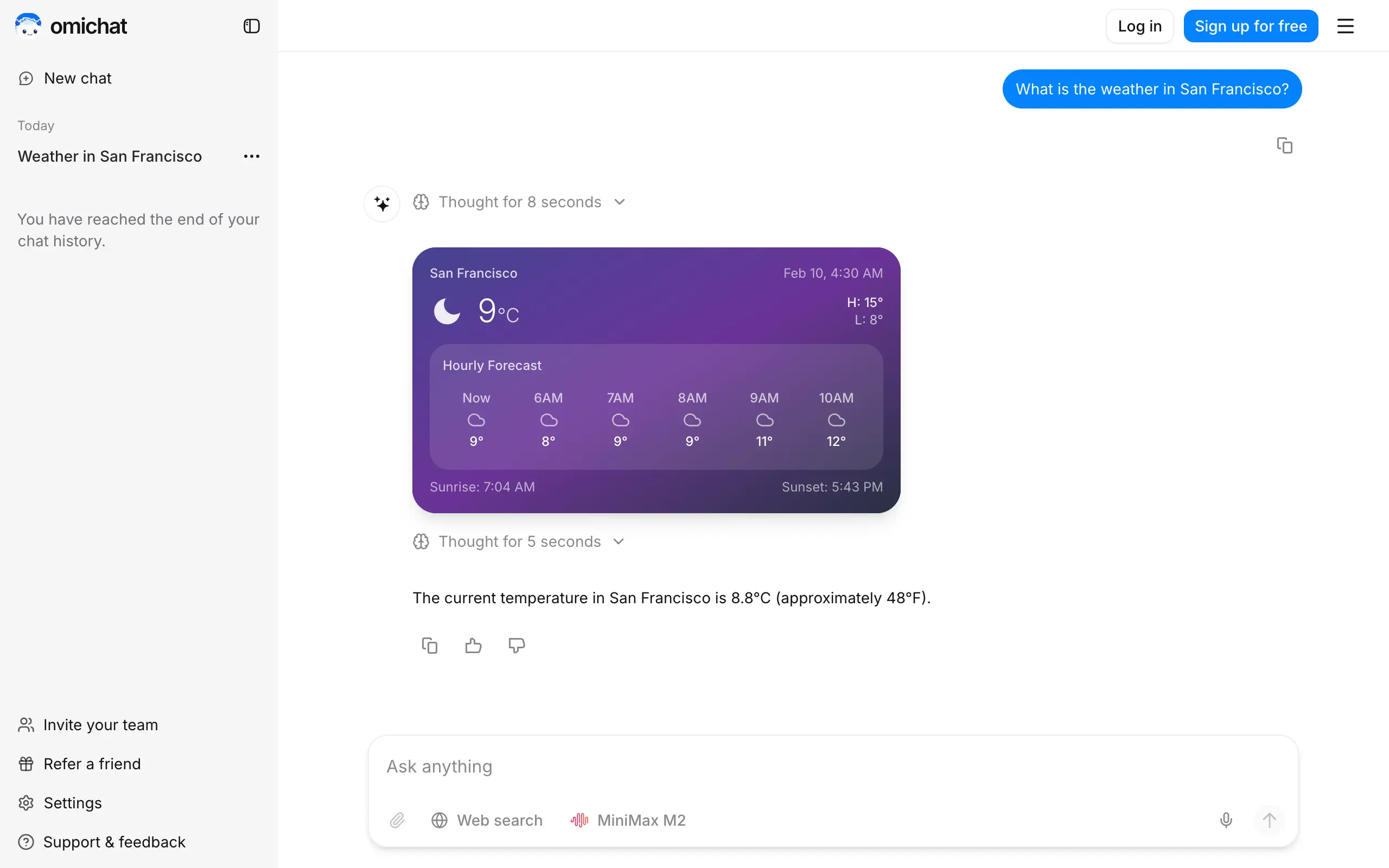
Omichat
Chat with 50+ AI models, including ChatGPT and Claude, in one place - switch models anytime without losing context 🤖
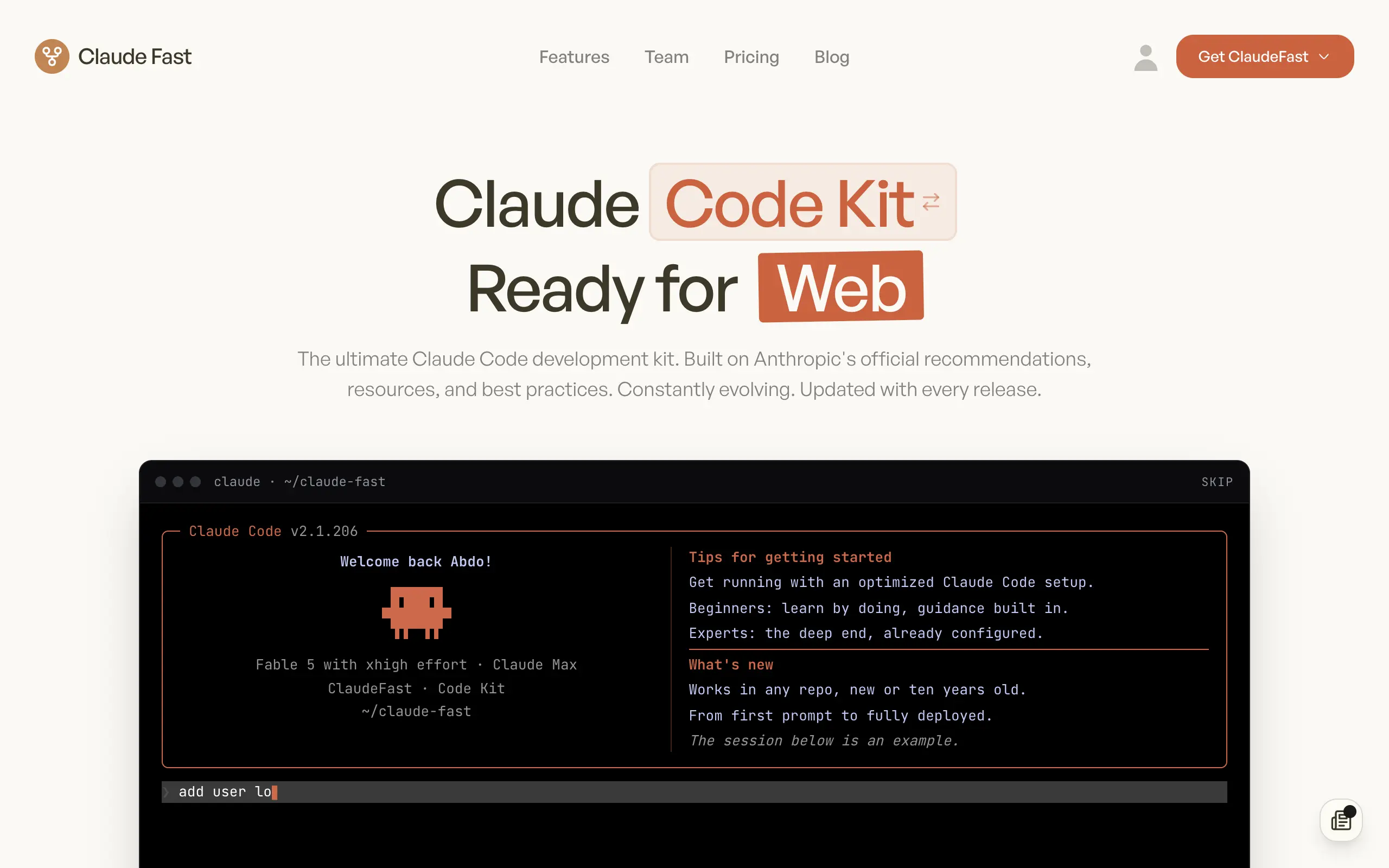
Claude Fast
Supercharge your Claude Code with 6x effective context window and specialized AI agents 🤖
EmojAI
AI-powered emoji picker with smart, context-aware suggestions 🤖

Solohacker
Autonomous company launcher - AI agents work 24/7, escalate what matters, and you stay in control 🤖

BeRawi: Storytelling Coach
Practice storytelling daily with instant feedback to sound clearer, more engaging, and confident 🎤
Omichat
Chat with 50+ AI models, including ChatGPT and Claude, in one place - switch models anytime without losing context 🤖
Claude Fast
Supercharge your Claude Code with 6x effective context window and specialized AI agents 🤖
EmojAI
AI-powered emoji picker with smart, context-aware suggestions 🤖
Solohacker
Autonomous company launcher - AI agents work 24/7, escalate what matters, and you stay in control 🤖
BeRawi: Storytelling Coach
Practice storytelling daily with instant feedback to sound clearer, more engaging, and confident 🎤
Omichat
Chat with 50+ AI models, including ChatGPT and Claude, in one place - switch models anytime without losing context 🤖
Claude Fast
Supercharge your Claude Code with 6x effective context window and specialized AI agents 🤖
EmojAI
AI-powered emoji picker with smart, context-aware suggestions 🤖
Solohacker
Autonomous company launcher - AI agents work 24/7, escalate what matters, and you stay in control 🤖
BeRawi: Storytelling Coach
Practice storytelling daily with instant feedback to sound clearer, more engaging, and confident 🎤
Omichat
Chat with 50+ AI models, including ChatGPT and Claude, in one place - switch models anytime without losing context 🤖
Claude Fast
Supercharge your Claude Code with 6x effective context window and specialized AI agents 🤖
EmojAI
AI-powered emoji picker with smart, context-aware suggestions 🤖
Solohacker
Autonomous company launcher - AI agents work 24/7, escalate what matters, and you stay in control 🤖
BeRawi: Storytelling Coach
Practice storytelling daily with instant feedback to sound clearer, more engaging, and confident 🎤

Connect with like-minded people
Join our community to get feedback, support, and grow together with 1,000+ builders on board, let's ship it!
Join usShip your startup everywhere. In minutes.
Don't burn tokens on setup and start building features on day one.