AgendaBrief
AI creates accessible meeting agendas, public summaries, and action-item pages from council packets and recorded sessions.
The opportunity for AI-powered council meeting summaries
Local government meetings contain decisions that directly affect residents, businesses, journalists, advocates, and public-sector staff. Yet the information people need is often buried in lengthy council packets, scanned attachments, video recordings, and minutes published days or weeks after a meeting.
AgendaBrief is an AI platform designed to turn those difficult public records into accessible meeting agendas, plain-language summaries, and action-item pages. Its primary value is not simply transcription or summarization. It is helping public institutions make civic information easier to find, understand, verify, and act on.
The primary keyword opportunity is AI council meeting summaries, supported by related terms such as:
- AI meeting agenda generator for local government
- council packet summarization software
- public meeting transparency software
- municipal meeting action-item tracking
- city council agenda summaries
- government meeting transcription and search
- accessible public records platform
- local government AI tools
- meeting minutes automation for municipalities
- public sector document intelligence
Search intent around this category is mixed. Some users are evaluating tools for a city, county, school board, or special district. Others want a better way to follow local government decisions. AgendaBrief should serve both audiences while making its buyer-focused value clear: it reduces the effort required to publish understandable, trustworthy meeting information.
The core product promise
AgendaBrief should help a public body publish a clear, source-linked view of what is being discussed, what was decided, who owns follow-up work, and where residents can verify each statement.
Why public meeting information is still difficult to use
Most public bodies already publish meeting materials to comply with open-meeting rules and records requirements. The problem is not always a lack of documents. It is a lack of usable context.
A typical council meeting may include:
- A multi-page agenda with procedural wording
- Staff reports and ordinances
- Budget spreadsheets and maps
- Public comments
- Consent-calendar items
- Amendments introduced during the meeting
- Video recordings with inconsistent audio quality
- Draft minutes that omit nuance or arrive later
For a resident, finding the answer to a simple question such as “Did the council approve the zoning change near my neighborhood?” may require downloading documents, watching hours of video, and interpreting legal or administrative language.
For a municipal clerk or communications team, the challenge is equally significant. They must publish material promptly, accurately, accessibly, and in a format that works for people with varying levels of technical literacy. Manual recap writing is valuable but time-consuming. Staff can rarely produce detailed summaries for every agenda item, every meeting, and every audience segment.
This is the market gap that AI council meeting summary software can address.
The real gap is between publication and understanding
Existing agenda management systems often perform important operational functions. They help clerks assemble agendas, manage approvals, publish packets, and archive meeting materials. Video platforms may host recordings and provide basic timestamps. Document repositories make official files available.
However, residents need more than a document portal. They need a guided explanation of public decisions.
AgendaBrief can occupy the layer between official source publication and public comprehension:
- It ingests agenda packets and recordings.
- It extracts agenda items, decisions, speakers, deadlines, and action items.
- It drafts plain-language summaries.
- It links summaries to supporting sources and timestamps.
- It gives staff an approval workflow before public publication.
- It creates searchable pages that improve long-term access to public information.
This positioning is important. AgendaBrief should not present itself as a replacement for official minutes, legal review, or clerk oversight. It should be a public-information acceleration and accessibility layer built around human review and source traceability.
Who needs AI council meeting summaries
AgendaBrief has multiple user groups, but the economic buyer and the public audience are not always the same person. A strong go-to-market strategy must acknowledge both.
Primary buyers in local government
The most likely paying customers are organizations responsible for meeting operations, public communication, and compliance.
- Municipal clerks need reliable workflows for agendas, packets, minutes, and public posting.
- City and county communications teams need understandable recaps that residents can share and search.
- City managers and administrators need visibility into decisions, follow-up responsibilities, and organizational commitments.
- IT and digital-services teams need secure, maintainable software that integrates with existing systems.
- School districts and boards need more accessible ways to communicate policies, spending, and board decisions.
- Special districts need lightweight tools that fit smaller teams and limited administrative capacity.
The strongest early customer profile is likely a small or mid-sized municipality that already publishes documents and recordings but lacks staff time to create consistent, searchable public summaries.
Public-facing users who create product pull
Residents may not purchase AgendaBrief directly, but their usage strengthens the value proposition for public bodies.
Key user segments include:
- Residents trying to understand a proposed ordinance or local project
- Journalists seeking decisions, vote context, and source material
- Neighborhood associations tracking development or transportation changes
- Business owners monitoring permits, fees, procurement, and regulations
- Advocates following environmental, housing, accessibility, or public-safety issues
- Researchers reviewing historical policy decisions
- People with disabilities who need more accessible alternatives to dense PDFs and video-only archives
A useful product principle is simple: every public page should answer a practical question quickly while making verification easy.
Internal users who need action visibility
AgendaBrief can also serve internal operational needs. A council meeting frequently produces follow-up work that spans departments. Staff may need to draft a revised ordinance, issue a request for proposals, return with budget scenarios, notify applicants, or schedule a future discussion.
An action-item layer can help teams see:
- The action requested or approved
- The accountable department or owner
- The originating agenda item
- The relevant meeting date
- The due date when one is stated
- The current review or completion status
- The original source excerpt or video timestamp
That makes the product useful beyond external communications and creates a meaningful retention driver.
What AgendaBrief should do
The best version of AgendaBrief is not a generic AI note-taking tool adapted for government. It is a purpose-built civic information system with structured workflows, grounded outputs, and review controls.
Create accessible agendas before the meeting
Before a meeting begins, AgendaBrief can transform an official agenda packet into a resident-friendly preview.
For each agenda item, the platform should generate:
- A plain-language title
- A short explanation of what the body will consider
- The relevant department, project, or policy area
- A summary of the recommendation
- Key financial figures when present
- Links to staff reports, exhibits, and ordinances
- A clear distinction between discussion items and decision items
- Potential public participation information where the packet provides it
The purpose is not to reinterpret legal documents. It is to explain them in clear language and link back to the official record.
For example, instead of displaying only “Resolution No. 2025-14,” an accessible agenda card might say:
Consider approving a contract for sidewalk repairs in the downtown area. Staff recommends awarding the contract to the lowest responsible bidder, subject to the budget amount listed in the staff report.
That is the kind of language residents can understand without removing necessary context.
Generate public summaries after the meeting
Post-meeting summaries are the flagship workflow for AI council meeting summaries. After a recorded session is available, AgendaBrief should combine the agenda, packet, transcript, and approved meeting metadata to produce a structured recap.
Each recap should state:
- What happened
- What was discussed
- What decision was made
- Whether the item passed, failed, continued, or was tabled
- The vote result when reliably available
- Any amendment or key condition
- Any follow-up direction given to staff
- Links to the relevant source documents
- A video timestamp when a recording exists
The system should clearly separate proposal, discussion, and final action. This distinction is essential because a staff recommendation is not necessarily an adopted decision, and a discussion item may result in no formal action.
Extract and manage action items
Action-item extraction is where AgendaBrief can become operationally indispensable.
AI should identify language such as:
- “Staff will return with options.”
- “Direct the city manager to…”
- “Prepare an amendment for the next meeting.”
- “Schedule a public hearing.”
- “Bring back cost estimates.”
- “Coordinate with the school district.”
Each possible action item should enter a review queue rather than becoming an automatic commitment. The reviewer can assign an owner, add a deadline, edit the language, and choose whether the action is visible publicly.
This human confirmation is critical. Public meetings often contain informal suggestions, rhetorical remarks, and ambiguous direction. Treating every spoken statement as a binding task would undermine trust.
Make meeting records searchable and navigable
Search should work across meetings, agenda items, summaries, action items, and source documents.
Useful search and filter capabilities include:
- Full-text search across approved public content
- Filters by meeting body, date, category, department, and status
- Search by project, neighborhood, ordinance number, or keyword
- A meeting archive with summaries and recordings
- Topic pages for recurring issues such as housing, roads, parks, or budgets
- Direct links to source pages, documents, and timestamps
- Shareable public URLs with stable citations
A resident should be able to search “parking minimums,” find the relevant meetings, read the public summary, and open the source record without needing to understand the local government’s internal filing conventions.
Before the meeting
Convert agenda packets into plain-language previews that help residents understand what is coming up.
During processing
Match agenda items with transcript segments, votes, and source documents using grounded AI workflows.
After the meeting
Publish reviewed summaries, searchable decision pages, and verified action-item records.
A trust-first AI workflow for public-sector use
Government users will reasonably ask whether AI-generated summaries are accurate, secure, and defensible. AgendaBrief must answer those concerns at the product level, not only in marketing copy.
The right workflow is AI-assisted drafting with human approval and source citations.
Ground every output in a source record
A summary should never be presented as an unsupported AI conclusion. Every factual statement should be traceable to one or more of the following:
- An agenda item
- A staff report or attachment
- A legislative document
- A verified meeting transcript
- An official vote record
- A specific segment of meeting video
The interface should show reviewers why an AI-generated statement exists. For example, a sentence about a contract amount should display the packet excerpt it came from. A statement about a council vote should link to the vote entry or timestamp.
This is often called retrieval-augmented generation, or RAG. Instead of relying only on a language model’s general knowledge, the system retrieves the relevant local documents and passes that material into a constrained generation workflow.
Require approval before public publication
A reliable publishing workflow can include the following states:
This workflow gives staff control while removing much of the repetitive work involved in creating initial drafts.
Design for accessibility from the beginning
Accessible public information is both an ethical obligation and a practical requirement. AgendaBrief should support WCAG-informed design practices, readable content, semantic page structure, keyboard navigation, and captions or transcripts where available.
The product should also provide:
- Plain-language summary options
- Clear headings and skimmable page hierarchy
- High-contrast interface modes
- Descriptive link labels
- Transcript search and jump-to-time controls
- Screen-reader-friendly agenda and action-item pages
- Downloadable, accessible document alternatives where feasible
- Multilingual workflows with visible language and review status
Teams should validate their accessibility approach against guidance from the W3C Web Accessibility Initiative. AI can improve accessibility, but it cannot substitute for proper design, testing, and institutional review.
Clearly label AI-assisted content
Trust improves when users understand what they are reading. Public pages can include a small notice explaining that content was AI-assisted, reviewed by the public body, and linked to official source material.
Avoid vague language such as “AI verified.” AI does not independently verify reality. A more accurate statement is:
This summary was generated from official meeting materials and reviewed by authorized staff. Source documents and recording timestamps are available on this page.
That language is precise, transparent, and defensible.
Core features that create a differentiated product
AgendaBrief needs a focused initial product rather than an overwhelming collection of civic-tech features. The most valuable capabilities should reinforce the core user journey from packet to understandable public record.
Essential MVP capabilities
For an initial release, prioritize:
- Packet upload and document ingestion
- PDF text extraction and OCR fallback for scanned files
- Agenda-item parsing and normalization
- Meeting recording upload or video link ingestion
- Transcript generation or transcript import
- AI-generated agenda previews and post-meeting summary drafts
- Source citations and timestamps
- Review and approval workflow
- Public meeting pages with search-friendly URLs
- Action-item extraction with reviewer confirmation
- Exportable data for archives or internal reporting
- Role-based access control and audit logs
A narrow MVP should prove two things:
- Staff can create high-quality public summaries much faster.
- Residents can find and understand council decisions more easily.
High-value expansion features
Once the core workflow is stable, AgendaBrief can expand into adjacent capabilities:
- Multilingual summary review workflows
- Automated topic tagging and policy-area classification
- Meeting comparison pages for recurring agenda items
- Public subscription alerts for selected topics
- Integration with agenda management systems
- Calendar sync and automated meeting reminders
- Vote extraction and vote-history views
- Department dashboards for open action items
- Public feedback intake linked to agenda topics
- AI-powered question answering limited to approved public records
- Records retention and archival exports
- API access for local journalism, civic groups, and public data portals
Feature prioritization framework
| Capability | Resident value | Staff value | Implementation complexity | MVP priority |
|---|---|---|---|---|
| Agenda packet summaries | High | High | Medium | High |
| Video transcript matching | High | High | High | High |
| Action-item tracking | Medium | High | Medium | High |
| Multilingual publication | High | Medium | Medium | Medium |
| Citizen Q&A assistant | Medium | Low | High | Later |
Recommended technology stack for AgendaBrief
AgendaBrief needs a modern SaaS architecture, but public-sector requirements should guide technical choices. Reliability, auditability, accessibility, and data isolation matter more than novelty.
Frontend and application layer
A strong web stack could include:
- Next.js for a full-stack React application with server rendering and SEO-friendly public pages
- React for reusable internal review interfaces and public components
- TypeScript for safer contracts across ingestion, AI pipelines, and UI layers
- Tailwind CSS for a consistent, accessible design system
- PostgreSQL for relational records such as meetings, agenda items, approvals, users, and audit events
Next.js is particularly suitable because AgendaBrief needs both authenticated staff workflows and fast, indexable public pages. Server-side rendering helps public summaries appear quickly and improves the foundation for organic search visibility.
Document and media processing
Council packets are operationally messy. The ingestion system must handle native PDFs, scanned PDFs, spreadsheets, Word documents, slide decks, and linked attachments.
Recommended processing components include:
- Object storage for original files and generated artifacts
- OCR for scanned documents
- A document parsing pipeline that preserves page numbers and source offsets
- A queue system for lengthy transcription and extraction jobs
- Video and audio transcription providers with word-level timestamps
- Structured extraction models for agenda items, votes, names, and actions
For document extraction, preserve the original file and record the exact page, document ID, and text span used for every generated claim. This metadata is crucial for review and auditability.
AI and retrieval architecture
A robust AI pipeline should include:
- Chunking of documents by agenda item, section, page, and attachment
- Embeddings for semantic retrieval
- A vector search layer alongside PostgreSQL metadata filters
- Structured output schemas for decisions, summaries, and action items
- Confidence flags and missing-evidence detection
- Prompt versioning and evaluation datasets
- Human review before publication
Use model outputs that conform to predictable schemas rather than free-form text whenever possible.
type AgendaBriefSummary = {
  meetingId: string;
  agendaItemId: string;
  status: "draft" | "needs_review" | "approved" | "published";
  plainLanguageTitle: string;
  summary: string;
  decision: "approved" | "denied" | "continued" | "no_action" | "unknown";
  citations: Array<{
    sourceType: "packet" | "transcript" | "vote_record" | "video";
    sourceId: string;
    page?: number;
    timestampSeconds?: number;
    excerpt: string;
  }>;
};
Structured outputs make it easier to validate required fields, prevent unsupported publishing, and build a reliable reviewer experience.
Security and compliance trade-offs
The public sector may require requirements such as single sign-on, data residency, retention policies, audit logs, and vendor security documentation. The exact obligations vary by jurisdiction, contract, and information type.
A practical approach is to begin with:
- Encryption in transit and at rest
- Tenant-level data isolation
- Role-based permissions
- Immutable audit logs for edits and approvals
- Document retention controls
- Regular backups and recovery testing
- A documented incident response process
- Vendor agreements that clearly define data handling
For early-stage teams, using managed cloud infrastructure can reduce operational overhead. The trade-off is less control over every system layer. Larger government customers may eventually request dedicated environments, specific cloud providers, or additional compliance attestations.
Do not claim compliance with standards that have not been independently achieved. Instead, document current controls, identify the shared-responsibility model, and give procurement teams accurate answers.
Monetization strategies for AgendaBrief
AgendaBrief is best positioned as a B2B SaaS product sold to public bodies, with pricing aligned to organizational complexity and meeting volume.
Tiered annual subscriptions
Annual contracts fit government procurement cycles and provide predictable revenue. Pricing can be based on a combination of population served, number of meeting bodies, meeting volume, and feature requirements.
Possible tiers include:
- Starter for small boards, districts, and municipalities with a limited number of meetings
- Professional for cities or counties that need multiple boards, approvals, public portals, and action tracking
- Enterprise for large jurisdictions that require integrations, SSO, advanced security review, dedicated support, and custom retention policies
Avoid pricing solely by AI tokens or document pages. Those costs matter internally, but buyers prefer a predictable budget.
Implementation and onboarding services
Government customers may value a paid onboarding package that includes:
- Archive migration planning
- Agenda template configuration
- Public-page branding
- Staff training
- Workflow design
- Integration setup
- Accessibility review support
- Initial summary quality calibration
Services revenue can accelerate adoption, but it should not become the only way the product functions. The long-term goal is a repeatable platform implementation.
Usage-based add-ons
Certain high-cost or high-value features can be add-ons:
- Additional transcription hours
- Additional public bodies or committees
- Multilingual publication workflows
- API access
- Historical archive processing
- Advanced analytics
- Premium support or dedicated success management
The most effective packaging makes the core transparency benefit available while reserving operational scale and enterprise complexity for higher tiers.
Competitive advantage in the civic technology market
AgendaBrief will compete indirectly with agenda management tools, video streaming platforms, generic AI transcription tools, document portals, and manually maintained government websites.
Its advantage should be the combination of structured civic context, source-grounded AI, human approval, and public usability.
Why generic meeting AI is not enough
General meeting assistants are built around private team conversations. They may summarize a discussion, list tasks, and provide a transcript. But council meetings have different requirements:
- Public accountability
- Legal and procedural context
- Formal votes and motions
- Agenda-item structure
- Official document attachments
- Public records expectations
- Accessibility needs
- A requirement to distinguish discussion from official action
AgendaBrief can build specialized extraction rules, editorial templates, and review states around those realities.
Why document portals are not enough
A portal can make documents available, but it does not automatically make them understandable. Residents often encounter ambiguous file names, large PDF packets, duplicate attachments, and little explanation of outcomes.
AgendaBrief adds an interpretation layer while preserving source authority. The official packet remains available. The summary makes it usable.
A defensible product moat
The strongest long-term moat is not the language model itself. Foundation models are increasingly available to many software teams.
AgendaBrief can build defensibility through:
- A labeled dataset of agenda structures and public-meeting outcomes
- Domain-specific extraction and evaluation workflows
- Integrations with government publishing systems
- Trust earned through accurate, cited public records
- A repeatable implementation process for clerks and communications teams
- Historical archives that become more useful over time
- Resident adoption of searchable, shareable public pages
- Workflow lock-in from action-item tracking and approval records
The product should measure accuracy continuously. Create a benchmark set of real, anonymized or authorized meeting records and evaluate whether the system correctly identifies agenda items, decisions, vote outcomes, action owners, and citations.
Key risks and how to mitigate them
AI in public information systems creates real risks. AgendaBrief should openly address them.
Require source grounding, structured outputs, reviewer approval, citation visibility, and automated checks that reject claims lacking supporting evidence. Never publish AI drafts automatically for high-stakes decision content.
Preserve confidence signals, allow staff to correct transcripts, use agenda context to improve matching, and flag sections with low audio confidence. Video quality and public-comment audio can vary significantly.
Position AgendaBrief as a communication and record-navigation tool, not a legal authority. Provide clear review controls, version history, and configurable disclaimers. Encourage customers to involve clerks or counsel in policy decisions.
Start with smaller jurisdictions and special districts where pilots may be more feasible. Build reusable security questionnaires, data-processing documentation, accessibility statements, and implementation plans early.
Make AI use transparent. Explain the human review process, show sources, allow corrections, and avoid overstating automation. Trust grows through visible accountability rather than marketing language.
Avoid turning summaries into unofficial records
One of the most important safeguards is product language. In many jurisdictions, formal minutes and adopted records have specific legal definitions and retention requirements. AgendaBrief should let customers label pages appropriately, such as “meeting summary,” “public recap,” or “AI-assisted overview.”
It should not imply that a generated summary replaces the official minutes unless the customer has formally adopted a process that permits it.
SEO strategy for AgendaBrief public pages
AgendaBrief can create a compounding organic-growth engine for customers and for its own brand.
Public pages should answer local questions
A meeting page should have a descriptive title, an understandable summary, structured headings, source links, and a stable URL. This makes pages more useful for residents and more discoverable in search.
Examples of high-intent page concepts include:
- City council meeting summary for a specific date
- Planning commission decision on a named development
- Local budget hearing summary
- Council action on a road project
- School board meeting recap
- Public hearing outcomes for a zoning ordinance
Avoid publishing thin, repetitive AI pages. Every page should contain meaningful, reviewed context. Search visibility follows usefulness over time.
Build topic and archive pages
Topic pages can aggregate related records without replacing official archives:
- Housing and zoning decisions
- Public safety updates
- Capital improvement projects
- Parks and recreation planning
- Budget and procurement decisions
- Environmental and sustainability initiatives
These pages are valuable because local policy discussions often span months or years. A resident should be able to understand the timeline of a project without manually searching every past agenda packet.
Use structured metadata carefully
AgendaBrief can add standard metadata for titles, descriptions, canonical URLs, and open graph sharing. For public meeting content, it should avoid inventing structured facts that have not been confirmed.
The key SEO principle is straightforward: publish useful, source-backed pages that solve a local information problem better than a raw PDF archive.
How to launch AgendaBrief effectively
A successful launch should focus on proving measurable value with a limited number of design partners.
Start with one meeting type and one clear workflow
Do not begin by supporting every board format, video provider, document type, and government workflow. Start with one repeatable use case, such as city council meetings where packets and recordings are already publicly available.
The first implementation should answer:
- Can AgendaBrief parse the packet accurately?
- Can it match discussion to agenda items?
- Can staff review a post-meeting recap quickly?
- Can residents find answers faster than through the current website?
- Can the city publish more consistently without adding staff workload?
Define success metrics before building
Useful early metrics include:
- Time from meeting end to published reviewed recap
- Staff editing time per agenda item
- Percentage of AI claims with valid citations
- Summary approval and rejection rates
- Search usage and public-page visits
- Click-through rate from summaries to source records
- Number of verified action items created
- Action-item completion visibility
- Resident satisfaction feedback
- Customer renewal and expansion signals
Do not optimize only for generated-word volume. The product wins when it improves clarity and reduces staff effort without compromising trust.
Build the first version with production discipline
A SaaS starter kit can help founders move faster on authentication, billing, teams, dashboards, and application architecture. TurboStarter is useful for accelerating the commercial SaaS foundation so the team can focus engineering effort on the document pipeline, AI review workflow, and public meeting experience.
Actionable implementation plan
AgendaBrief can move from idea to a credible pilot in focused phases.
Phase one: validate the workflow
Interview municipal clerks, communications directors, city managers, and local journalists. Bring real public packets and recordings into conversations.
Ask practical questions:
- How do they create agendas and minutes today?
- Which steps consume the most staff time?
- What information do residents ask for repeatedly?
- How quickly do they need recaps published?
- Which systems store agendas, packets, votes, and recordings?
- Who has authority to approve public summaries?
- What security and accessibility requirements appear in procurement?
Collect a small sample of public meeting records from potential design partners and assess document quality before promising automation levels.
Phase two: build the trust layer first
Implement document ingestion, source preservation, agenda-item parsing, transcript alignment, and reviewer citations before investing heavily in visual polish.
The product should make reviewers confident enough to approve a summary. A beautiful dashboard without source traceability will not solve the central adoption barrier.
Phase three: launch a narrow pilot
Choose one or two meeting bodies and process a limited number of meetings. Offer white-glove onboarding, but record every manual step that could become productized.
Use the pilot to identify:
- Common packet patterns
- Failure modes in OCR and transcripts
- Summary language preferred by staff
- Required approval roles
- Data fields that vary by jurisdiction
- Public-page features residents use most
Phase four: package repeatable value
After successful pilots, turn lessons into templates, integrations, onboarding checklists, security documentation, and pricing tiers.
The clearest positioning statement is likely:
AgendaBrief helps local governments turn meeting packets and recordings into reviewed, accessible public summaries and source-linked action pages.
That message is concrete, outcome-focused, and differentiated from generic AI meeting tools.
Final perspective
AgendaBrief addresses a persistent civic problem: public information can be technically available while remaining practically inaccessible. AI council meeting summaries create an opportunity to close that gap, but only if the product is designed around evidence, editorial control, accessibility, and public trust.
The winning version of AgendaBrief will not try to automate civic judgment. It will help public servants publish clearer information, help residents understand decisions faster, and help everyone trace important claims back to the official record.
That combination of efficiency and accountability is the product’s strongest advantage.
More 🤖 AI Startup SaaS ideas
Discover more innovative ai startup SaaS ideas that are trending in 2026. Each idea is AI-generated with market validation and growth potential to help you find your next profitable venture faster than competitors.
Your competitors are building with TurboStarter
Below are some of the SaaS ideas that have been generated and built with our starter kit.
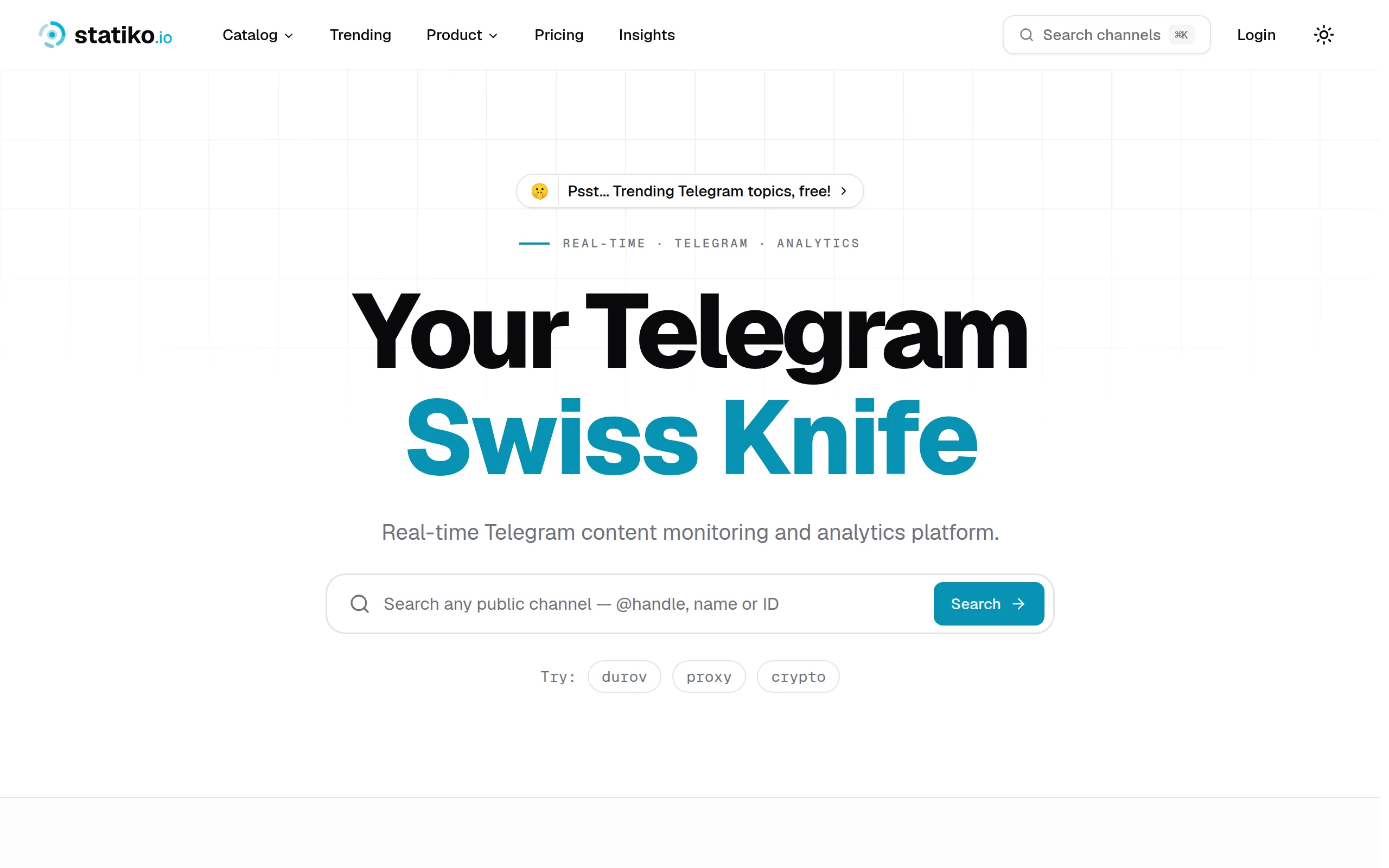
Statiko
Monitor any Telegram channel in real time - track posts, edits, deletions, and growth with AI recaps 📡

Shibui
AI website builder - describe your business, pick a niche template, edit by chatting, and publish instantly ✨

Pro Service
Find verified home service professionals, compare quotes, and pay securely through escrow - built for Brazilians across the US 🏠
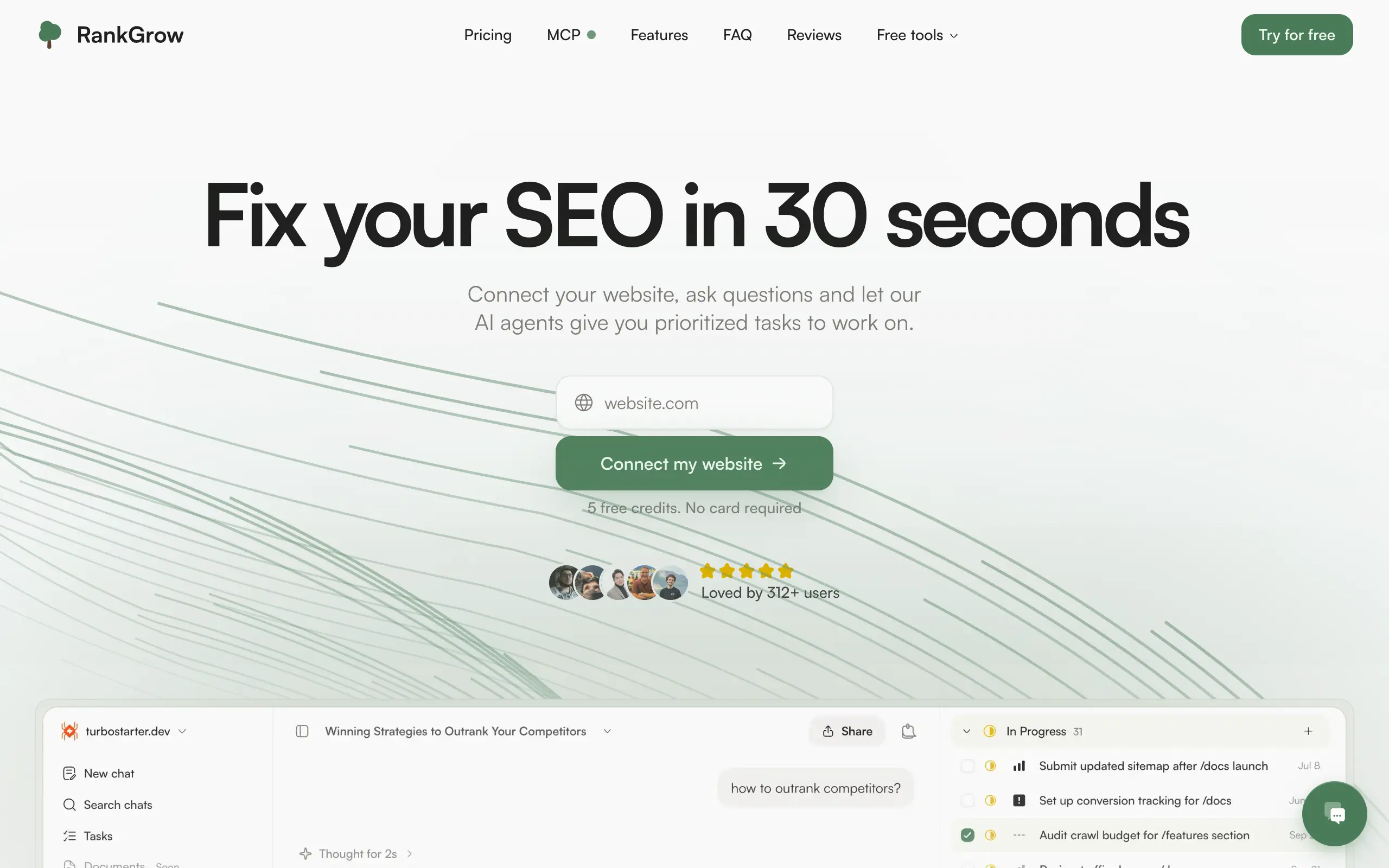
RankGrow
Fix your SEO with AI agents - connect Search Console, get prioritized tasks, and grow organic traffic 📈
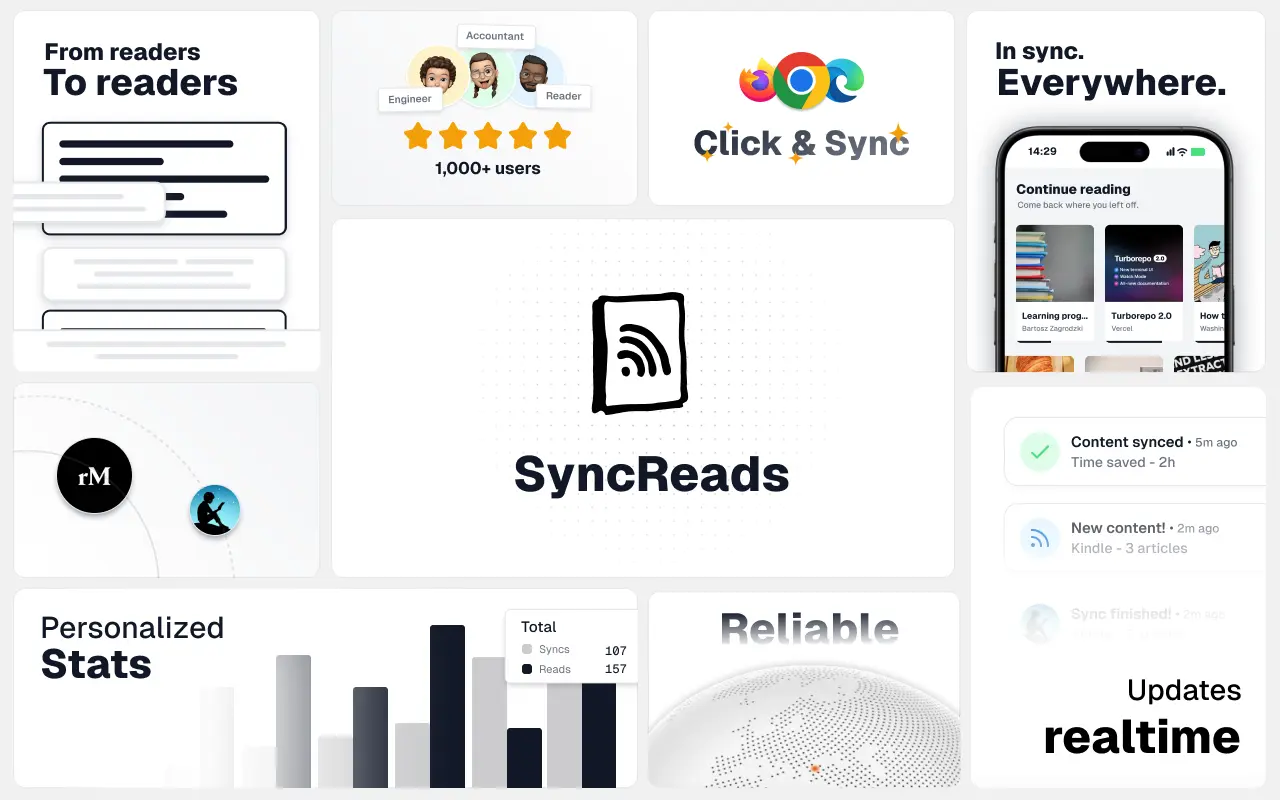
SyncReads
Sync your favorite content for distraction-free reading, save time and replace multiple apps. Anytime, anywhere 🔄
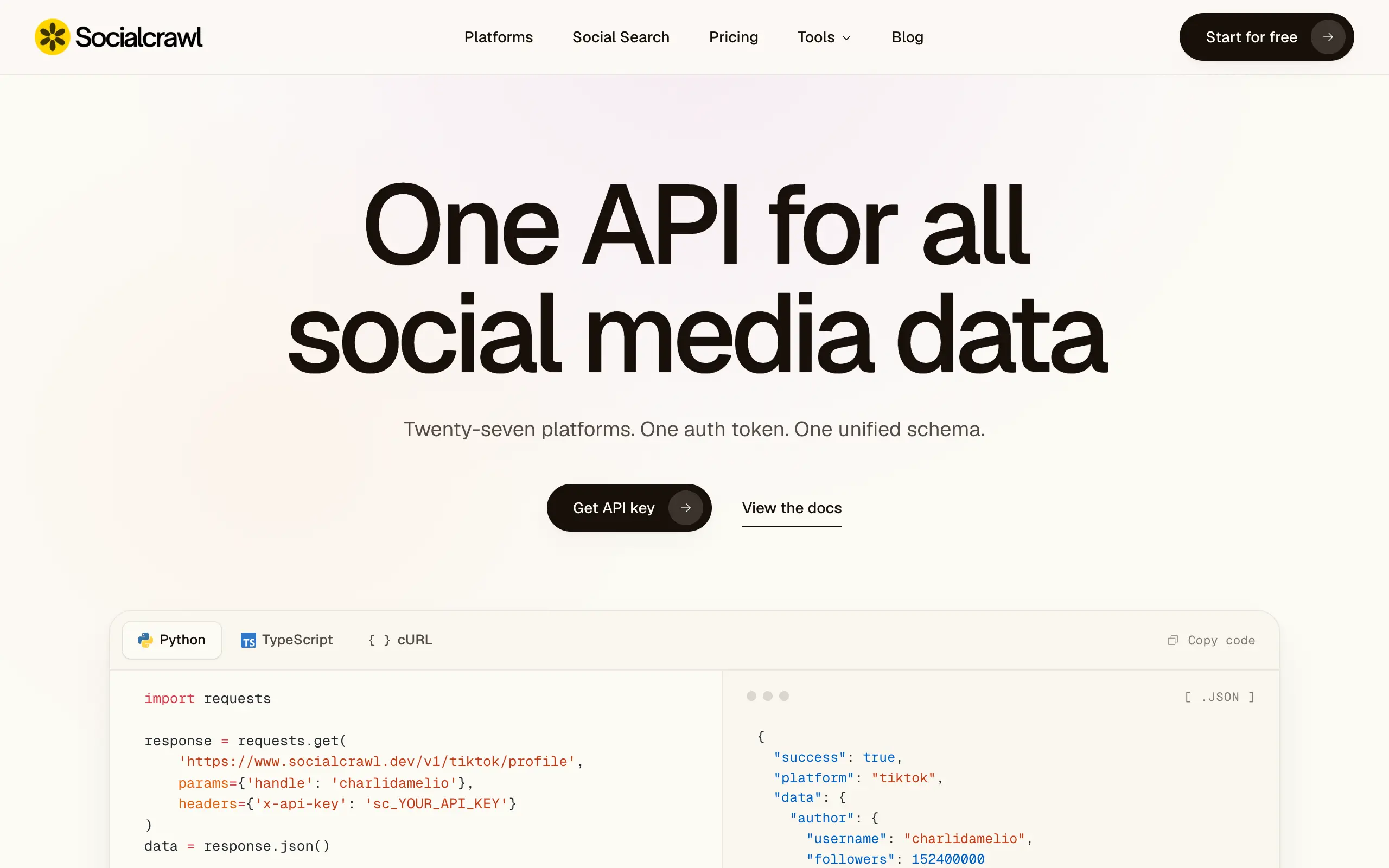
Socialcrawl
Get clean, structured data from 21 platforms like TikTok, Instagram, and YouTube with a single request 📊
Statiko
Monitor any Telegram channel in real time - track posts, edits, deletions, and growth with AI recaps 📡
Shibui
AI website builder - describe your business, pick a niche template, edit by chatting, and publish instantly ✨
Pro Service
Find verified home service professionals, compare quotes, and pay securely through escrow - built for Brazilians across the US 🏠
RankGrow
Fix your SEO with AI agents - connect Search Console, get prioritized tasks, and grow organic traffic 📈
SyncReads
Sync your favorite content for distraction-free reading, save time and replace multiple apps. Anytime, anywhere 🔄
Socialcrawl
Get clean, structured data from 21 platforms like TikTok, Instagram, and YouTube with a single request 📊
Statiko
Monitor any Telegram channel in real time - track posts, edits, deletions, and growth with AI recaps 📡
Shibui
AI website builder - describe your business, pick a niche template, edit by chatting, and publish instantly ✨
Pro Service
Find verified home service professionals, compare quotes, and pay securely through escrow - built for Brazilians across the US 🏠
RankGrow
Fix your SEO with AI agents - connect Search Console, get prioritized tasks, and grow organic traffic 📈
SyncReads
Sync your favorite content for distraction-free reading, save time and replace multiple apps. Anytime, anywhere 🔄
Socialcrawl
Get clean, structured data from 21 platforms like TikTok, Instagram, and YouTube with a single request 📊
Statiko
Monitor any Telegram channel in real time - track posts, edits, deletions, and growth with AI recaps 📡
Shibui
AI website builder - describe your business, pick a niche template, edit by chatting, and publish instantly ✨
Pro Service
Find verified home service professionals, compare quotes, and pay securely through escrow - built for Brazilians across the US 🏠
RankGrow
Fix your SEO with AI agents - connect Search Console, get prioritized tasks, and grow organic traffic 📈
SyncReads
Sync your favorite content for distraction-free reading, save time and replace multiple apps. Anytime, anywhere 🔄
Socialcrawl
Get clean, structured data from 21 platforms like TikTok, Instagram, and YouTube with a single request 📊
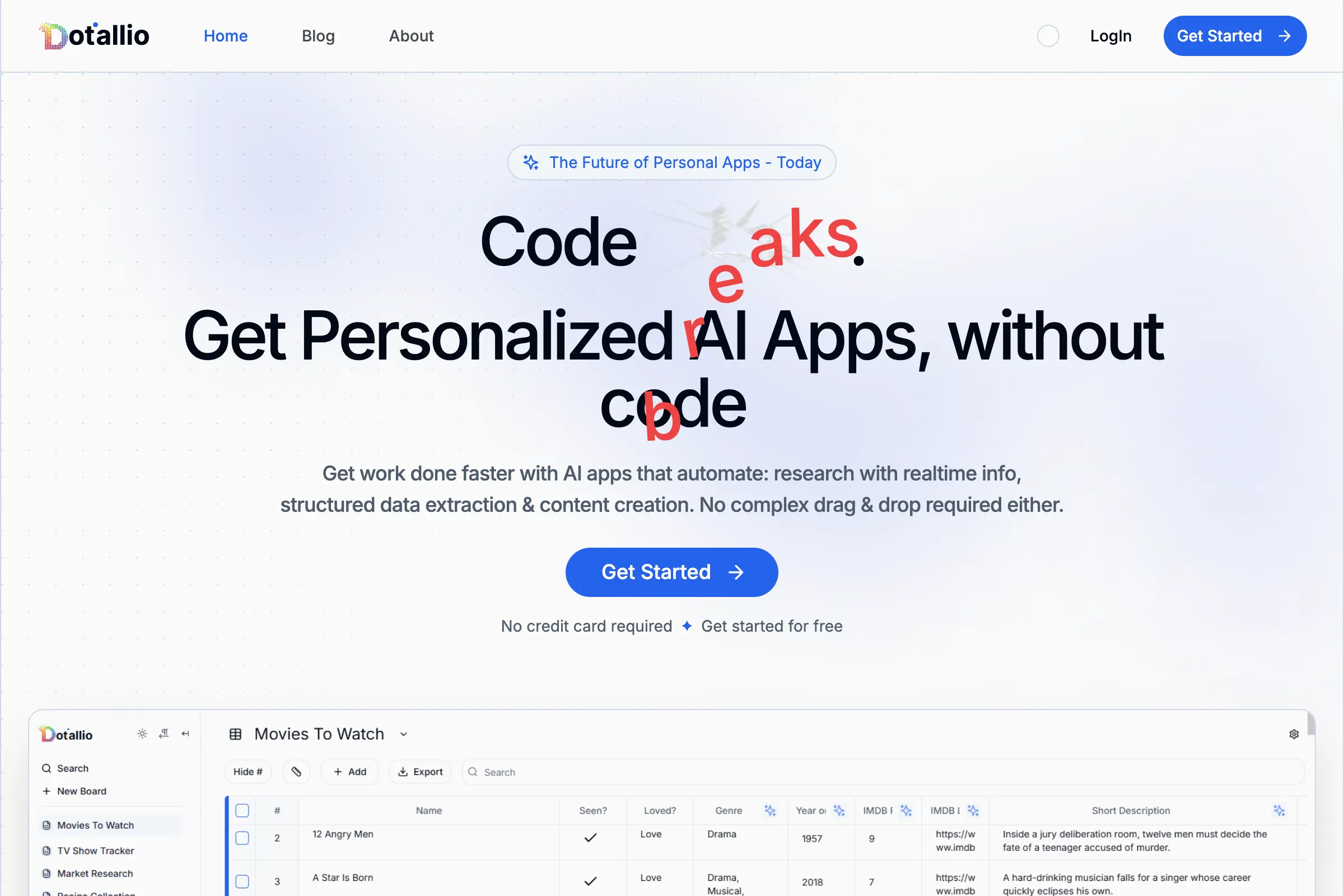
Dotallio
Personalized AI apps that automate research, data extraction, and content creation without code 🤖

Talk to Santa
Enjoy a magical live video chat or receive a unique AI-generated video greeting from Santa Claus 🎅

pozywka.pl
Scalable blog for food journalist, focused on performance and user experience 🌭
zagrodzki.me
Personal blog and portfolio of Bart Zagrodzki, where he shares his knowledge and work 💼
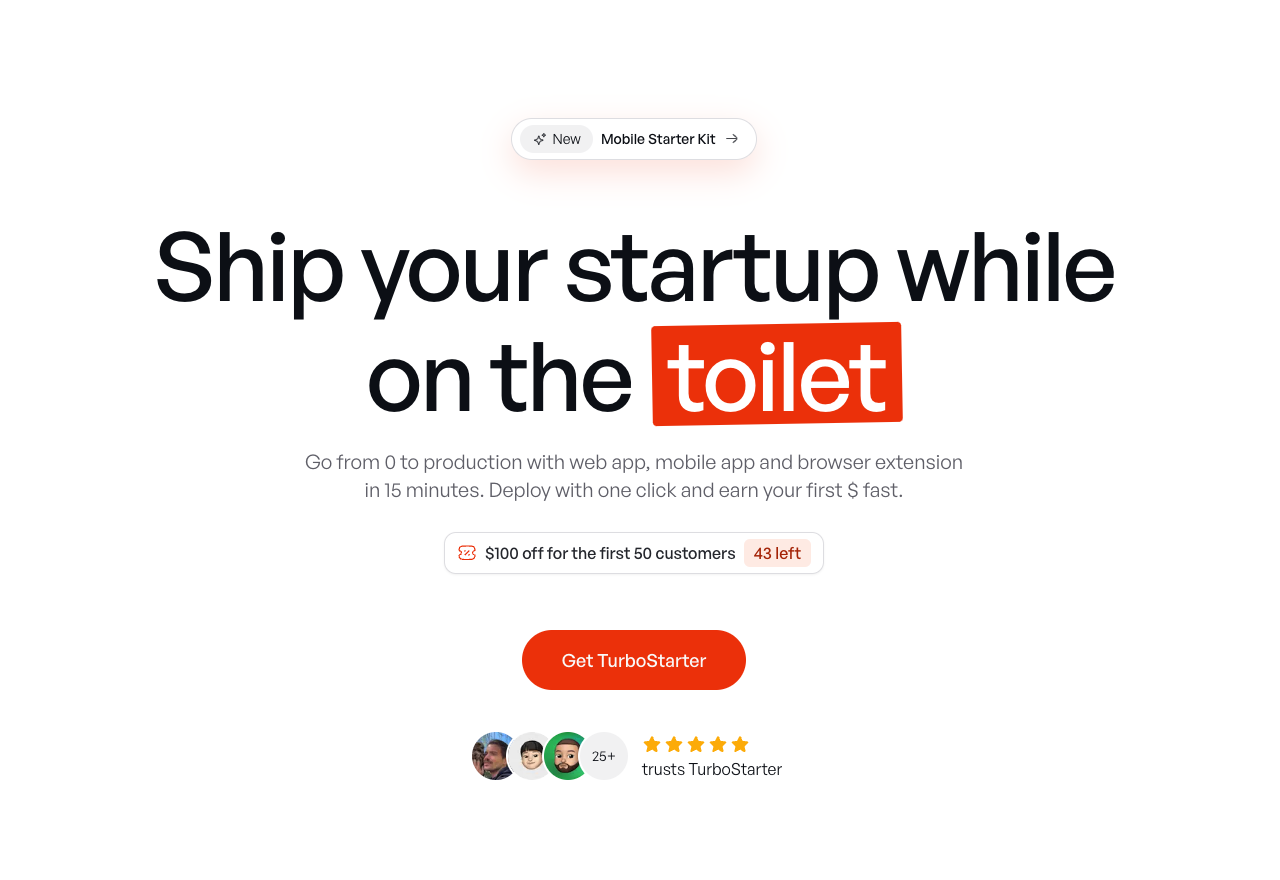
TurboStarter
Ship your startup everywhere. In minutes.
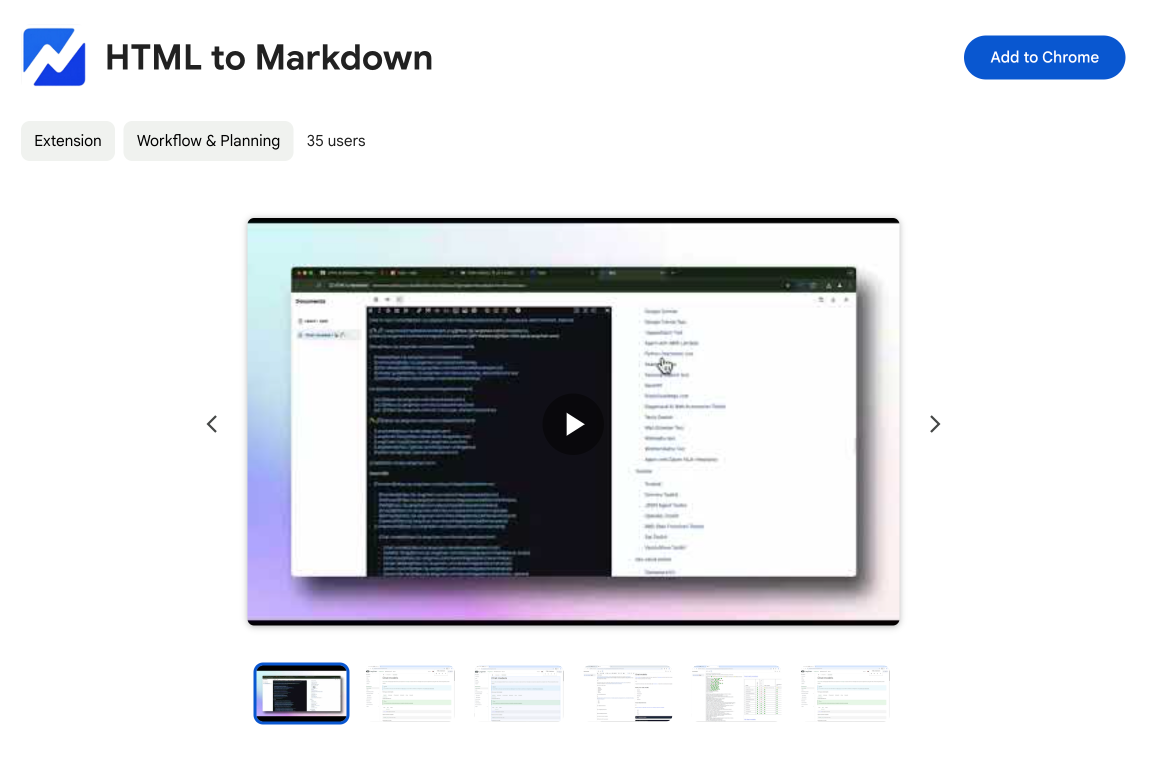
HTML to Markdown
Convert HTML to Markdown with ease, directly in your browser 📄
Dotallio
Personalized AI apps that automate research, data extraction, and content creation without code 🤖
Talk to Santa
Enjoy a magical live video chat or receive a unique AI-generated video greeting from Santa Claus 🎅
pozywka.pl
Scalable blog for food journalist, focused on performance and user experience 🌭
zagrodzki.me
Personal blog and portfolio of Bart Zagrodzki, where he shares his knowledge and work 💼
TurboStarter
Ship your startup everywhere. In minutes.
HTML to Markdown
Convert HTML to Markdown with ease, directly in your browser 📄
Dotallio
Personalized AI apps that automate research, data extraction, and content creation without code 🤖
Talk to Santa
Enjoy a magical live video chat or receive a unique AI-generated video greeting from Santa Claus 🎅
pozywka.pl
Scalable blog for food journalist, focused on performance and user experience 🌭
zagrodzki.me
Personal blog and portfolio of Bart Zagrodzki, where he shares his knowledge and work 💼
TurboStarter
Ship your startup everywhere. In minutes.
HTML to Markdown
Convert HTML to Markdown with ease, directly in your browser 📄
Dotallio
Personalized AI apps that automate research, data extraction, and content creation without code 🤖
Talk to Santa
Enjoy a magical live video chat or receive a unique AI-generated video greeting from Santa Claus 🎅
pozywka.pl
Scalable blog for food journalist, focused on performance and user experience 🌭
zagrodzki.me
Personal blog and portfolio of Bart Zagrodzki, where he shares his knowledge and work 💼
TurboStarter
Ship your startup everywhere. In minutes.
HTML to Markdown
Convert HTML to Markdown with ease, directly in your browser 📄
Omichat
Chat with 50+ AI models, including ChatGPT and Claude, in one place - switch models anytime without losing context 🤖
Claude Fast
Supercharge your Claude Code with 6x effective context window and specialized AI agents 🤖
EmojAI
AI-powered emoji picker with smart, context-aware suggestions 🤖
Solohacker
Autonomous company launcher - AI agents work 24/7, escalate what matters, and you stay in control 🤖
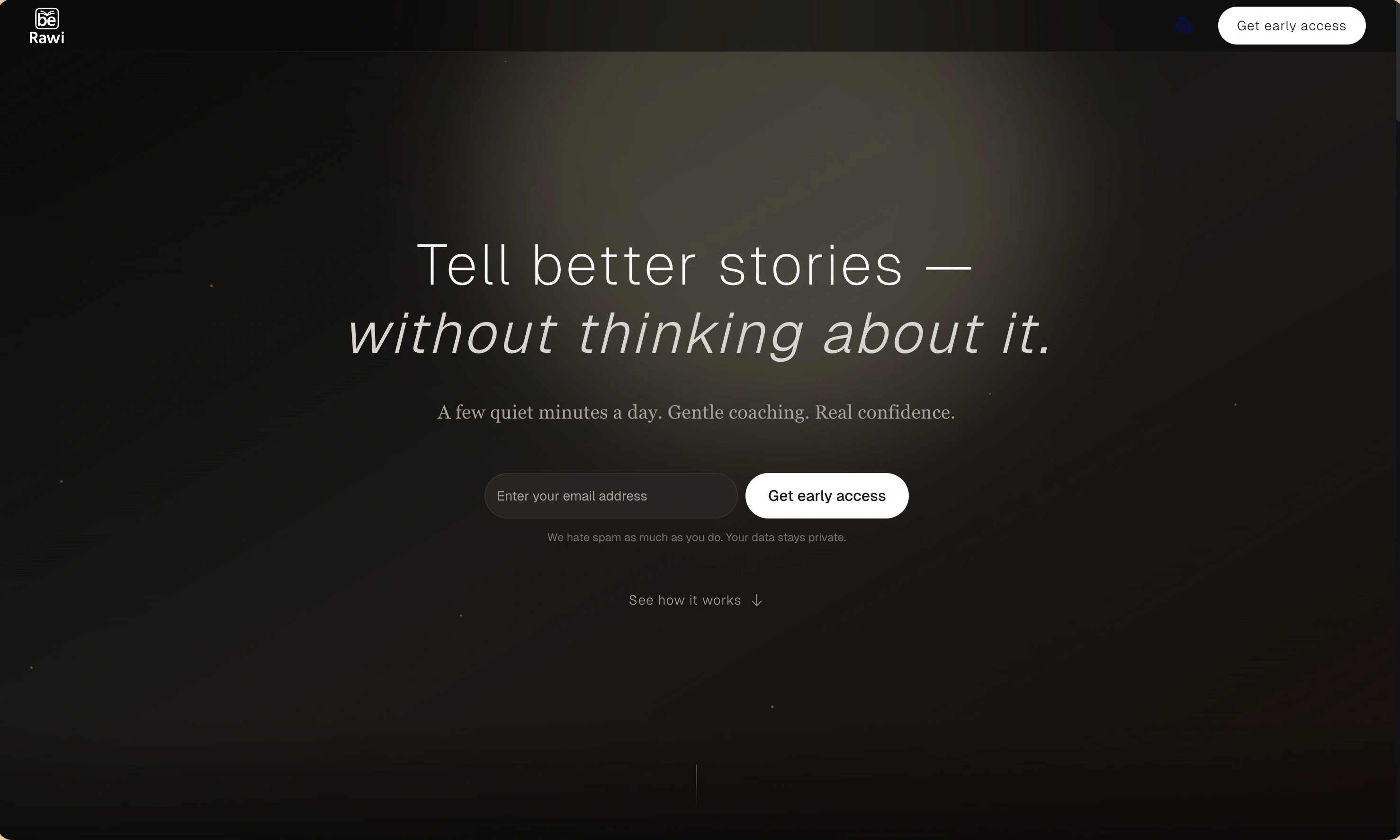
BeRawi: Storytelling Coach
Practice storytelling daily with instant feedback to sound clearer, more engaging, and confident 🎤
Omichat
Chat with 50+ AI models, including ChatGPT and Claude, in one place - switch models anytime without losing context 🤖
Claude Fast
Supercharge your Claude Code with 6x effective context window and specialized AI agents 🤖
EmojAI
AI-powered emoji picker with smart, context-aware suggestions 🤖
Solohacker
Autonomous company launcher - AI agents work 24/7, escalate what matters, and you stay in control 🤖
BeRawi: Storytelling Coach
Practice storytelling daily with instant feedback to sound clearer, more engaging, and confident 🎤
Omichat
Chat with 50+ AI models, including ChatGPT and Claude, in one place - switch models anytime without losing context 🤖
Claude Fast
Supercharge your Claude Code with 6x effective context window and specialized AI agents 🤖
EmojAI
AI-powered emoji picker with smart, context-aware suggestions 🤖
Solohacker
Autonomous company launcher - AI agents work 24/7, escalate what matters, and you stay in control 🤖
BeRawi: Storytelling Coach
Practice storytelling daily with instant feedback to sound clearer, more engaging, and confident 🎤
Omichat
Chat with 50+ AI models, including ChatGPT and Claude, in one place - switch models anytime without losing context 🤖
Claude Fast
Supercharge your Claude Code with 6x effective context window and specialized AI agents 🤖
EmojAI
AI-powered emoji picker with smart, context-aware suggestions 🤖
Solohacker
Autonomous company launcher - AI agents work 24/7, escalate what matters, and you stay in control 🤖
BeRawi: Storytelling Coach
Practice storytelling daily with instant feedback to sound clearer, more engaging, and confident 🎤

Connect with like-minded people
Join our community to get feedback, support, and grow together with 1,000+ builders on board, let's ship it!
Join usShip your startup everywhere. In minutes.
Don't burn tokens on setup and start building features on day one.