AgentSentry
Continuously monitors AI agent actions, tool calls, and data access to flag risky behavior before it becomes a breach. Built for security teams.
Why AI agent security monitoring is becoming essential
AI agents are moving from experimentation into operational workflows. They can read support tickets, query internal databases, update CRM records, create invoices, deploy infrastructure, review pull requests, and call third-party APIs. That autonomy creates business value, but it also creates a new security problem.
Traditional application security tools were not designed to answer questions such as:
- Which data did an AI agent access before making a decision?
- Which tool call led to a destructive action?
- Did the agent follow its authorized scope?
- Was a prompt injection attempt responsible for unexpected behavior?
- Did an agent expose sensitive data through an external connector?
- Can security teams stop a high-risk action before the action is completed?
AgentSentry is an AI agent security monitoring platform concept built to continuously observe agent actions, tool calls, identities, permissions, and data access. Its purpose is to identify and flag risky behavior before an AI agent becomes the path to a breach.
The core opportunity is not simply logging AI activity. It is creating a security control plane for autonomous and semi-autonomous software. AgentSentry would give security teams the context needed to detect unsafe agent behavior, enforce policy, investigate incidents, and prove governance controls across AI-enabled workflows.
The central product thesis
The winning AI agent security platform will treat an agent as a privileged digital identity with dynamic intent, not as a chat interface that only needs content moderation.
The AI agent security problem AgentSentry solves
AI agents differ from standard SaaS applications because they make decisions at runtime. A workflow may begin with an approved user request, but the agent can encounter untrusted documents, website content, emails, API responses, or database records that alter its behavior.
This creates a difficult security equation:
An AI agent may have access to powerful tools, broad data, and execution capabilities while making probabilistic decisions based on changing context.
A conventional security stack may log API calls or network traffic, but it usually cannot connect the full story. It may not know that:
- A customer support agent ingested a maliciously crafted ticket.
- The ticket contained indirect prompt injection instructions.
- The agent attempted to retrieve employee payroll data.
- The agent then tried to send extracted records to an unapproved external endpoint.
- The action was blocked only after a human noticed an anomaly.
AgentSentry fills that visibility and control gap by monitoring the complete agent execution trail. It captures the relationships between user intent, model output, tool selection, permission context, data classification, policy evaluation, and final action.
This category is often described using related terms such as:
- AI agent security
- AI agent observability
- agent governance
- LLM security monitoring
- AI runtime protection
- AI tool-call monitoring
- autonomous workflow security
- prompt injection detection
- AI access control
- AI security posture management
While these terms overlap, AgentSentry’s positioning should remain specific. The platform is designed for security teams that need runtime detection and prevention for AI agents with real-world tools and data access.
Who needs an AI agent security platform
The strongest initial market is not every company experimenting with generative AI. It is organizations where agents can access sensitive systems, make consequential changes, or act on behalf of employees and customers.
Primary buyers are security and platform leaders
The economic buyer is likely one of the following roles:
- Chief information security officer
- VP of security engineering
- Head of cloud security
- Director of AI governance
- Chief technology officer at an AI-native company
- Platform engineering leader responsible for internal developer tooling
These buyers care about reducing breach probability, meeting audit requirements, preventing unauthorized data exposure, and retaining control as AI deployment accelerates.
Their questions are practical:
- Which agents are running in production?
- What systems can each agent access?
- Which agents can modify records, deploy code, send emails, or transfer funds?
- Can we detect prompt injection or privilege escalation?
- Is there a reliable audit trail for agent decisions and actions?
- Can security policy block risky actions in real time?
Daily users include security operations and AI engineering teams
AgentSentry must satisfy two user groups with different priorities.
Security operations teams
Need alerts, investigations, evidence, risk scores, policy enforcement, and integrations with existing incident response workflows.
AI and platform engineers
Need low-friction SDKs, clear debugging context, policy testing, reliable tooling, and minimal impact on agent performance.
Compliance and risk teams
Need inventories, access reviews, control evidence, retention rules, and reports that explain how AI actions are governed.
Security operations teams will value explainable alerts over raw event volume. AI engineering teams will adopt the product only if instrumentation is straightforward and monitoring does not make agent development unnecessarily slow.
Best initial customer profile
The ideal early AgentSentry customer has several characteristics:
- It already has AI agents in production or plans to deploy them within one or two quarters.
- Its agents use external tools such as Slack, GitHub, Salesforce, Jira, cloud APIs, databases, or payment systems.
- It handles sensitive customer, financial, health, source code, employee, or identity data.
- It has an existing security team that can own policies and respond to alerts.
- It is subject to enterprise customer security reviews or regulatory requirements.
- It wants to scale AI automation without granting agents excessive standing privileges.
Financial services, healthcare technology, legal technology, enterprise SaaS, cybersecurity vendors, e-commerce marketplaces, and developer infrastructure companies are promising verticals. The initial go-to-market should prioritize buyers with high-value actions and clear risk ownership rather than low-risk content-generation use cases.
The market gap in AI agent runtime security
Many companies already use a mixture of cloud security tools, SIEM platforms, API gateways, data loss prevention systems, identity providers, and observability platforms. These are valuable, but they do not fully solve agentic risk.
Why existing security tooling is incomplete
A SIEM can store logs, but it generally does not understand an agent’s plan, tool execution sequence, delegated identity, or semantic data sensitivity. API security products can inspect API traffic, but they may not understand whether an API call was the result of a model being manipulated by untrusted input.
Likewise, LLM gateways can enforce model-level controls, but an AI agent can still create risk after the model response. The critical event may be a downstream action such as deleting a cloud storage bucket, changing an entitlement, exporting a database query, or sending a confidential file.
The market gap is an agent-aware runtime security layer that can evaluate both meaning and execution context.
| Security capability | Traditional logs | LLM gateway | API security | AgentSentry approach | Business outcome |
|---|---|---|---|---|---|
| Prompt and intent context | Limited | Strong | Limited | Strong | Better investigation quality |
| Tool-call policy enforcement | Limited | Partial | Strong | Strong | Reduced unsafe execution |
| Agent behavior baselining | Weak | Weak | Weak | Strong | Faster anomaly detection |
| End-to-end agent audit trail | Partial | Partial | Partial | Strong | Governance evidence |
Why timing matters now
The shift from chatbots to tool-using agents changes the risk profile of enterprise AI. Teams are increasingly connecting models to internal systems because the return on automation is higher when agents can take action, not merely generate text.
At the same time, security standards and governance frameworks are maturing. The NIST AI Risk Management Framework provides a useful governance foundation, while security leaders are developing controls for model risk, data exposure, identity, and operational resilience.
AgentSentry can occupy a practical layer between high-level AI governance policies and the runtime behavior of deployed agents. That is an attractive category because enterprises need evidence that policies are working in actual workflows.
What AgentSentry should monitor
The product should create a normalized event model for every agent execution. The objective is to make incidents understandable without forcing security analysts to reconstruct events across disconnected systems.
Agent identity and authorization context
Every event should begin with identity. AgentSentry needs to answer which agent acted, on whose behalf it acted, and which permissions it used.
Useful identity attributes include:
- Agent ID and version
- Agent owner and business unit
- Framework and deployment environment
- Human user or service initiating the task
- Delegated OAuth scopes and API credentials
- Assigned role and approved tool set
- Environment classification such as development, staging, or production
- Session ID and correlation ID
This data is important because “an agent accessed a database” is not a meaningful alert on its own. “A support triage agent using a delegated customer-success identity attempted to access payroll records outside its approved scope” is actionable.
Prompts, retrieved content, and model decisions
AgentSentry should securely capture relevant execution context while minimizing unnecessary retention of sensitive raw content.
The platform may record:
- User prompt classification
- System prompt and policy version
- Retrieved documents and source trust level
- Prompt injection indicators
- Model provider, model version, and temperature setting
- Reasoning metadata where available and appropriate
- Requested action and confidence score
- Data labels detected in prompt inputs or outputs
Because prompts can contain sensitive information, the product should support configurable redaction, tokenization, encryption, and retention policies. Security observability cannot become a new uncontrolled repository of customer data.
Tool calls and action outcomes
Tool calls are the most important telemetry source for an AI agent security platform. AgentSentry should inspect the requested action before execution and record the result afterward.
A normalized tool-call event should include:
- Tool name and tool version
- Requested operation
- Parameters after sensitive fields are masked
- Target system and destination
- Permission scope used
- Risk classification
- Policy decision
- Approval requirement
- Execution outcome
- Response metadata
- Side effects and rollback status
For example, a tool call to a CRM may be low risk when reading a ticket summary but high risk when exporting thousands of customer records. The risk engine must understand operation type, record volume, destination, identity, and context.
Data access and data movement
The platform should classify sensitive data and observe its movement across agent workflows. A high-value capability is detecting when an agent moves data from a trusted system into an unapproved destination.
Core data controls include:
- PII, PHI, PCI, credentials, and source code detection
- Custom classifiers for internal data categories
- Sensitive field masking in logs
- Data residency policy checks
- Cross-tenant access detection
- External domain allowlists
- Download and export thresholds
- File upload and attachment inspection
- Secret detection before tool execution
An agent that reads a small number of approved customer records may be performing its assigned job. An agent that retrieves unrelated customer records and prepares them for transmission to a new webhook requires immediate review.
Core AgentSentry features and solution design
The first release should focus on a narrow set of high-confidence security controls. A broad platform vision is useful, but early customers will buy a product that rapidly improves visibility and prevents specific risky actions.
Agent inventory and security posture dashboard
The dashboard should provide a continuously updated inventory of deployed agents. Each agent needs a profile showing where it runs, which model it uses, what tools it can call, which permissions it holds, what data it can access, and its current risk rating.
A strong posture score should incorporate more than event counts. It can evaluate:
- Privilege breadth
- Number and sensitivity of connected tools
- Unused permissions
- External network access
- Production deployment status
- Human approval coverage
- Sensitive data exposure
- Policy violations over time
- Framework and dependency versions
- Audit log completeness
This feature helps security leaders find “shadow agents” that were created outside formal security review. It also gives AI platform teams a clear remediation queue.
Real-time policy engine for AI agent actions
The policy engine is the core control mechanism. It should evaluate each tool call against rules before execution, with support for three outcomes:
- Allow the action
- Require human approval
- Block the action
Policies should combine deterministic rules with contextual risk signals. Deterministic controls are essential for trust because security teams need predictable enforcement.
Examples include:
- Block an agent from sending files to unapproved domains.
- Require approval before deleting more than a defined number of cloud resources.
- Prevent an agent from querying employee records unless the initiating user has an approved HR role.
- Deny database exports containing payment card data.
- Allow a development agent to create a pull request but not merge to the production branch.
- Require a break-glass workflow for changes to identity provider settings.
A human-readable policy language is important. Security teams should not need to write production code to define common controls.
const policy = {
  name: "Block sensitive exports to untrusted destinations",
  when: {
    tool: ["storage.upload", "email.send", "http.request"],
    dataClassification: ["PII", "PCI", "PHI"],
    destinationTrust: "untrusted",
  },
  action: "block",
  severity: "critical",
};
The policy engine should also support simulation mode. Before enforcement is enabled, teams can see how often a policy would have blocked or challenged real agent activity. This lowers adoption friction and reduces the risk of breaking critical workflows.
Behavioral anomaly detection
Rules alone cannot identify every threat. AgentSentry should build behavioral baselines for agents, tools, identities, and data flows.
Useful anomaly signals include:
- A sudden increase in tool-call volume
- A new destination domain or API
- An unusual sequence of tool calls
- Access to an unfamiliar dataset
- A change in operating hours or geographic source
- A large increase in records accessed
- Repeated failed attempts to access restricted tools
- Unexpected model or system prompt changes
- Abnormal chaining across multiple agents
Behavioral detection should be explainable. An alert should say why the activity is unusual, such as “This agent typically queries fewer than 20 CRM records per task and has never exported data externally. This session attempted to export 8,000 records to a newly registered domain.”
Prompt injection and malicious instruction detection
Prompt injection is a defining AI agent risk because untrusted content can attempt to override the agent’s instructions. AgentSentry should inspect inputs from documents, emails, websites, tickets, chat messages, and API payloads.
Detection should combine several methods:
- Known instruction-override patterns
- Semantic classification of malicious intent
- Marking untrusted content boundaries
- Policy checks on actions resulting from untrusted context
- Canary tokens and controlled test strings
- Source reputation signals
- Repeated behavior across sessions
The platform should not promise perfect prompt injection detection. No serious security product should make that claim. Instead, AgentSentry should provide layered controls: detect suspicious content, reduce the authority of untrusted inputs, apply tool-call policies, and require approvals for high-impact actions.
Investigation timeline and audit evidence
When an alert occurs, analysts need an understandable event narrative. The investigation screen should show the complete timeline from request to action.
A useful incident view includes:
- The initiating user and request
- The agent and version involved
- Retrieved context and trust sources
- Model decisions and selected tools
- Policy evaluations
- Data classifications
- External calls and destinations
- Final outcome and remediation actions
Exportable audit reports can help with enterprise reviews. Reports should show which controls are enabled, whether enforcement occurred, which agents handled sensitive data, and whether exceptions were approved.
Recommended technical architecture for AgentSentry
A production-grade agent security platform requires a design that can handle high event volume, preserve evidence integrity, and make enforcement decisions with low latency.
Recommended application stack
For the product console and customer-facing application, a modern TypeScript stack is a pragmatic choice.
- Next.js can support the web application, server-rendered dashboards, API routes, and authentication flows.
- React offers a mature ecosystem for complex security dashboards.
- Tailwind CSS can speed up consistent design system implementation.
- PostgreSQL is well suited for tenant configuration, policy metadata, users, agents, and transactional records.
- OpenTelemetry provides an important standard for collecting traces, logs, and metrics from distributed agent workflows.
- Kubernetes is appropriate for enterprise deployments that need workload isolation and scaling.
For an early-stage SaaS product, start with managed services where possible. Operational simplicity matters more than premature infrastructure sophistication.
Event ingestion and analytics architecture
Agent telemetry can grow quickly, particularly when one task triggers many model and tool events. The architecture should separate the control path from the analytics path.
The control path evaluates policy before a risky tool call completes. It must be low latency, highly available, and conservative in its dependencies. If the policy service is unavailable, customers need configurable fail-open or fail-closed behavior based on action criticality.
The analytics path receives high-volume events for search, baselining, detection, dashboards, and reporting. It can tolerate slightly higher latency because it does not sit directly in the action execution path.
The evidence path stores tamper-evident event records, policy decisions, and approval history. Immutable storage patterns, retention controls, encryption, and tenant isolation are crucial for investigations and compliance.
A practical event pipeline could use an API ingestion layer, message queue, stream processors, a hot analytics store, and encrypted object storage for longer retention. The precise tools depend on expected volume and deployment model.
For analytics, ClickHouse can be a strong option for high-volume event queries. The trade-off is added operational complexity compared with storing everything in PostgreSQL. PostgreSQL is sufficient for an MVP with controlled event volume, but a dedicated analytics database becomes valuable as customers ingest millions of events.
Integration strategy
Integrations are a major competitive factor. Customers will not replace their entire AI stack to adopt AgentSentry, so the product must meet agents where they already run.
Prioritize these integration methods:
- SDKs for Python and TypeScript
- Middleware for popular agent orchestration frameworks
- OpenTelemetry-compatible tracing ingestion
- REST API and webhook ingestion
- Proxy or gateway mode for selected tool calls
- SIEM exports to existing security workflows
- Ticketing and messaging integrations for approvals and incident response
- Identity provider integrations for role context and SSO
The SDK should offer both automatic and explicit instrumentation. Automatic tracing lowers the barrier to adoption, while explicit event APIs let advanced teams attach domain-specific risk context.
Monetization strategy for an AI agent security platform
AgentSentry should use a pricing model that aligns with the security value delivered while remaining predictable enough for enterprise procurement.
A hybrid platform and usage model
A practical approach is an annual platform fee plus metered usage based on monitored actions or agent execution events.
Possible pricing dimensions include:
- Number of production agents
- Number of connected tools and systems
- Monthly monitored tool calls
- Data retention duration
- Number of policy evaluations
- Premium detection modules
- Enterprise deployment model
- Support and service-level agreements
Avoid pricing purely per seat. The main product value is runtime security coverage, not collaboration features.
Suggested product tiers
- Starter supports smaller teams that need basic agent inventory, event logging, and standard policies.
- Growth adds real-time enforcement, anomaly detection, longer retention, SIEM integrations, and approval workflows.
- Enterprise includes private deployment options, custom retention, advanced integrations, dedicated support, audit exports, and enterprise identity controls.
A free developer tier may help ecosystem adoption, but it should be carefully scoped. For example, it could support a limited number of agents and a short retention window while excluding production enforcement.
Services as an early revenue lever
Early enterprise customers may need help with agent threat modeling, policy design, instrumentation, and rollout planning. A paid implementation package can create revenue while teaching the product team where workflows are difficult.
The goal should be to convert repeated services work into templates, policy packs, integration accelerators, and automated onboarding—not to build a consulting-heavy business.
Competitive advantage and the AgentSentry USP
The AI security market is growing, and competition will include AI gateways, model security vendors, observability products, cloud security companies, and established security operations platforms. AgentSentry needs a clear, defensible wedge.
Its core USP should be:
AgentSentry protects the moment an AI agent turns intent into action by connecting prompt context, identity, data sensitivity, tool calls, and enforceable security policy in one runtime control plane.
This positioning is more specific than generic AI observability and more comprehensive than a prompt filter.
Where AgentSentry can stand out
The strongest differentiators are likely to be:
- Action-level prevention rather than passive logging alone
- Identity-aware policy decisions that account for delegated user permissions
- Cross-tool execution visibility across an entire agent workflow
- Data movement analysis that identifies risky transfers between systems
- Explainable incident narratives built for security analysts
- Framework-agnostic instrumentation that avoids lock-in
- Security-native workflows such as approvals, evidence retention, and SIEM export
A product moat will emerge from a growing corpus of normalized agent action data, high-quality policy templates, detection logic, integration depth, and customer-specific behavioral baselines. The goal is not to claim that every model output can be understood perfectly. The goal is to make high-impact agent actions observable, governable, and interruptible.
Key risks and how to mitigate them
Security products must earn trust. AgentSentry will face technical, commercial, and operational risks that should be addressed from the product’s earliest design decisions.
High-volume alerts will cause analysts to ignore the platform. Start with high-signal detections, use risk scoring, group related events into incidents, and give customers simulation mode before turning on blocking policies.
A slow policy check can harm agent reliability. Keep the enforcement path lightweight, cache stable policy data, use regional deployment where needed, and make fail-open or fail-closed behavior configurable by policy.
Prompts and tool parameters may contain confidential data. Apply field-level redaction, encryption, access controls, configurable retention, customer-managed keys where appropriate, and strict tenant isolation.
The ecosystem evolves rapidly. Build around an internal event schema and OpenTelemetry-compatible concepts rather than coupling the entire platform to one orchestration library.
Generic messaging will be difficult to sell. Focus on concrete, high-impact workflows such as preventing unauthorized data exports, risky cloud changes, and prompt-injection-driven tool misuse.
Trust and privacy must be product features
Because AgentSentry processes security-sensitive telemetry, it should adopt enterprise-grade controls from the beginning. That includes encryption in transit and at rest, tenant isolation, least-privilege internal access, audit logging, secure software development practices, and documented incident response procedures.
Customers will also ask about data use. The product should clearly state whether customer telemetry is used to train any models. The safest default for enterprise trust is to avoid training on customer data unless explicit, contractually clear consent is obtained.
An actionable plan to build AgentSentry
The best path is to begin with an opinionated minimum viable product that solves one urgent security problem extremely well.
Phase one: validate the highest-risk workflow
Interview security leaders and AI platform engineers at organizations running tool-using agents. Do not ask only whether they “care about AI security.” Ask for specific recent workflows, incidents, audit requests, and deployment blockers.
Focus discovery on questions such as:
- Which agent actions would be most damaging if compromised?
- Which tools have the broadest permissions?
- Where are approvals currently manual or absent?
- What telemetry is already available?
- Which security system should receive alerts?
- What behavior would justify blocking an action automatically?
Pick one or two initial use cases, such as preventing sensitive data export or controlling AI-driven cloud administration.
Phase two: build the instrumentation and policy MVP
The MVP should include an SDK, event ingestion API, basic agent inventory, tool-call capture, policy evaluation, and a security dashboard. Do not begin with fully autonomous machine-learning detection. Clear, deterministic controls will create more customer confidence.
Phase three: expand from visibility to prevention
Once customers trust the event model and dashboard, add proactive prevention capabilities:
- Just-in-time approval workflows
- Identity-aware access checks
- Sensitive data movement controls
- Prompt injection risk scoring
- Behavioral baselines
- Automated case creation in security operations tools
- Compliance reports and evidence exports
The platform should always preserve a human override for truly exceptional workflows, but overrides must be logged, attributable, time-bound, and reviewable.
Phase four: build an enterprise-grade go-to-market motion
Initial sales should be consultative and use risk-based ROI. The value proposition is not merely “better AI logs.” It is reduced probability of unauthorized access, data loss, operational disruption, and failed enterprise security reviews.
Useful sales assets include:
- An AI agent threat-modeling workshop
- A security posture assessment
- Policy templates for common agent use cases
- A pilot success plan with measurable outcomes
- An executive-ready risk report
- Architecture documentation for security review
Measure early product-market fit through indicators such as agents monitored per customer, policies enabled, blocked or approval-gated risky actions, alert investigation time, time to instrument a new agent, and renewal expansion into additional teams.
Building a secure AI SaaS foundation
AgentSentry is a sophisticated security product, but the initial SaaS application does not need to be built from scratch. The team should preserve engineering energy for the differentiated runtime security layer: event modeling, integrations, detection logic, policy enforcement, and security workflows.
A production-ready SaaS starter can accelerate standard requirements such as authentication, billing, teams, dashboard foundations, emails, and subscription management. TurboStarter can provide that foundation so the team can focus on the product capabilities customers will actually evaluate during an AI security proof of concept.
Final perspective on the AgentSentry opportunity
AI agents are becoming operational actors inside modern businesses. As they gain access to systems, data, and execution privileges, organizations need more than model safety guidelines and static access reviews. They need continuous visibility into what agents do and the ability to stop risky actions at runtime.
AgentSentry can become the security layer that makes enterprise agent adoption safer. Its opportunity is strongest when it focuses on a clear promise: observe every meaningful agent action, understand its context, enforce practical policies, and give security teams evidence they can trust.
The most effective first version will not attempt to solve every AI governance problem. It will protect a few high-risk agent workflows exceptionally well, integrate with the tools security teams already use, and demonstrate that autonomous software can be deployed with accountable controls.
More 🤖 AI Startup SaaS ideas
Discover more innovative ai startup SaaS ideas that are trending in 2026. Each idea is AI-generated with market validation and growth potential to help you find your next profitable venture faster than competitors.
Your competitors are building with TurboStarter
Below are some of the SaaS ideas that have been generated and built with our starter kit.
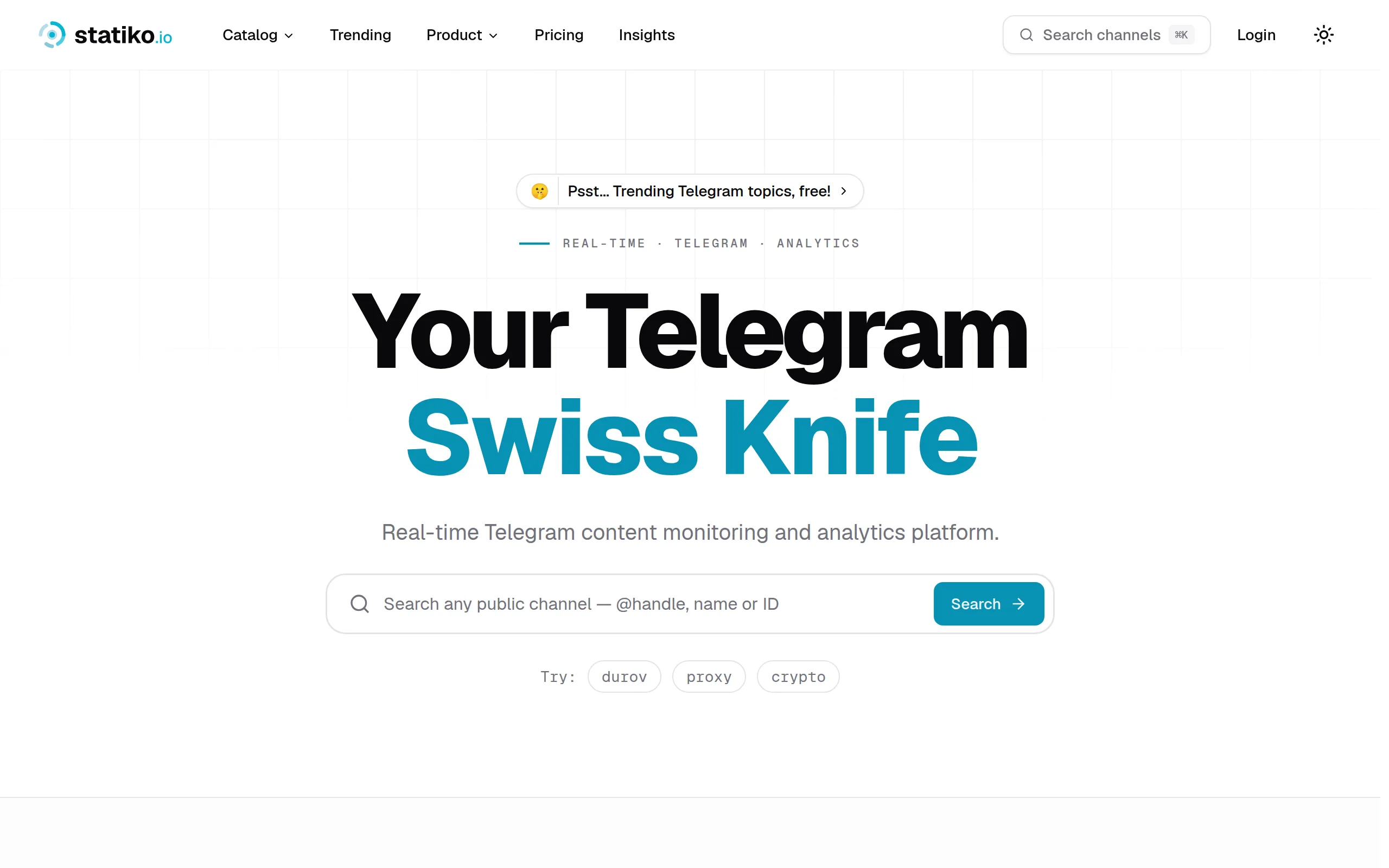
Statiko
Monitor any Telegram channel in real time - track posts, edits, deletions, and growth with AI recaps 📡

Shibui
AI website builder - describe your business, pick a niche template, edit by chatting, and publish instantly ✨

Pro Service
Find verified home service professionals, compare quotes, and pay securely through escrow - built for Brazilians across the US 🏠
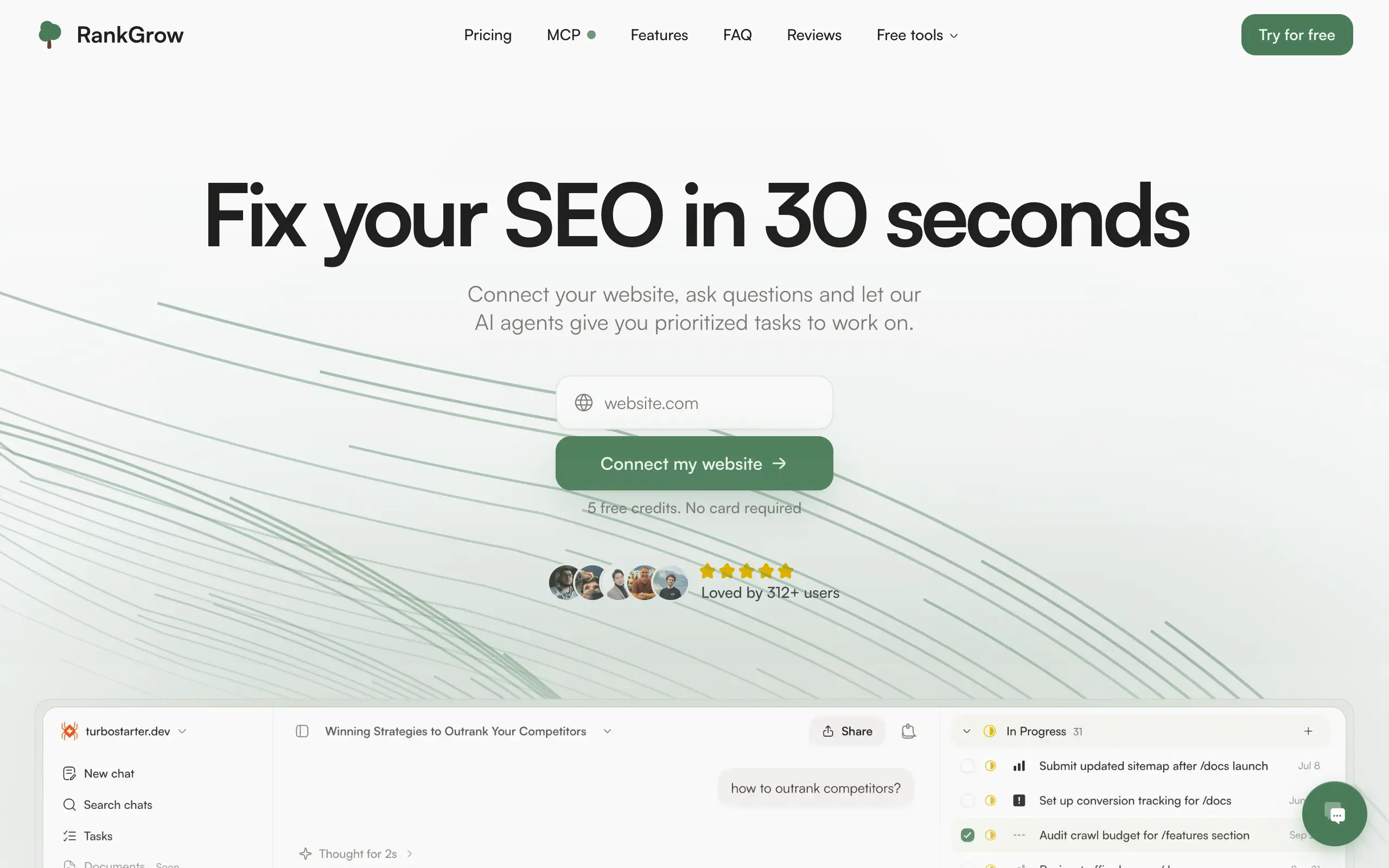
RankGrow
Fix your SEO with AI agents - connect Search Console, get prioritized tasks, and grow organic traffic 📈
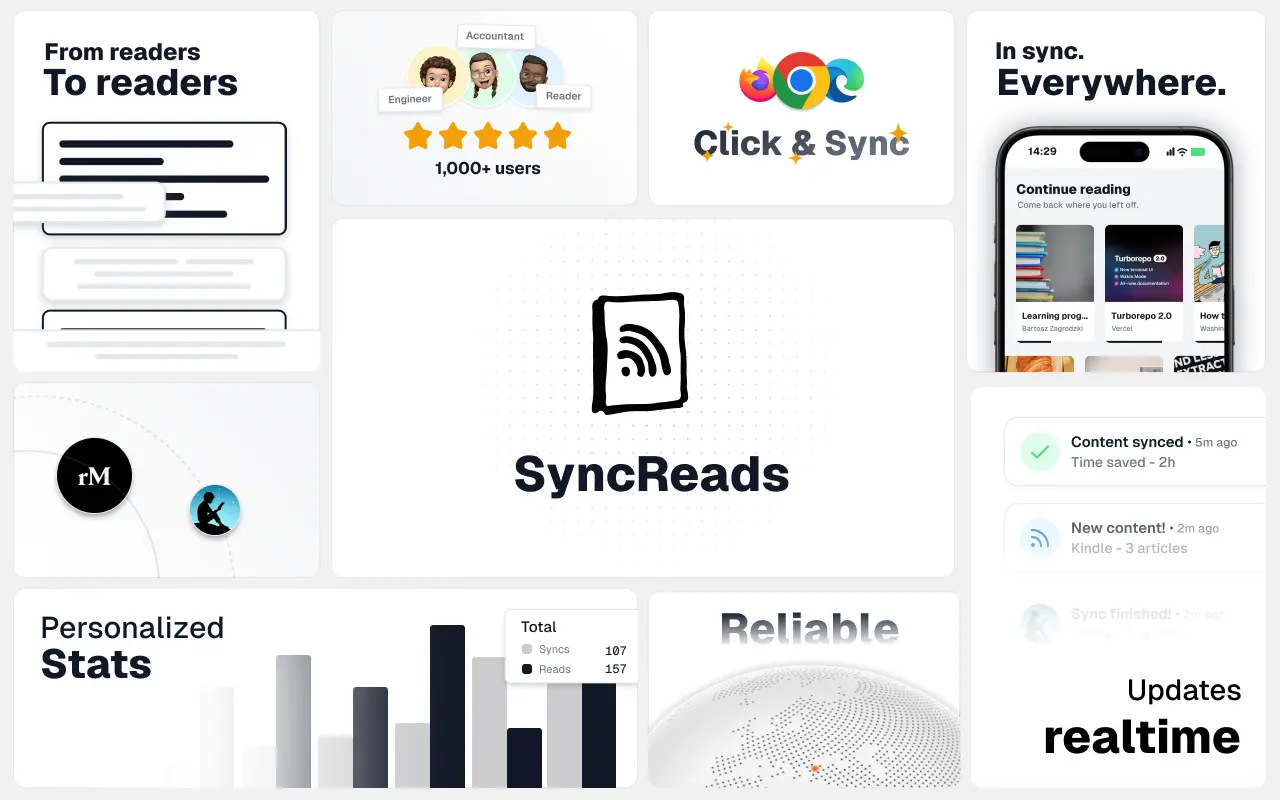
SyncReads
Sync your favorite content for distraction-free reading, save time and replace multiple apps. Anytime, anywhere 🔄
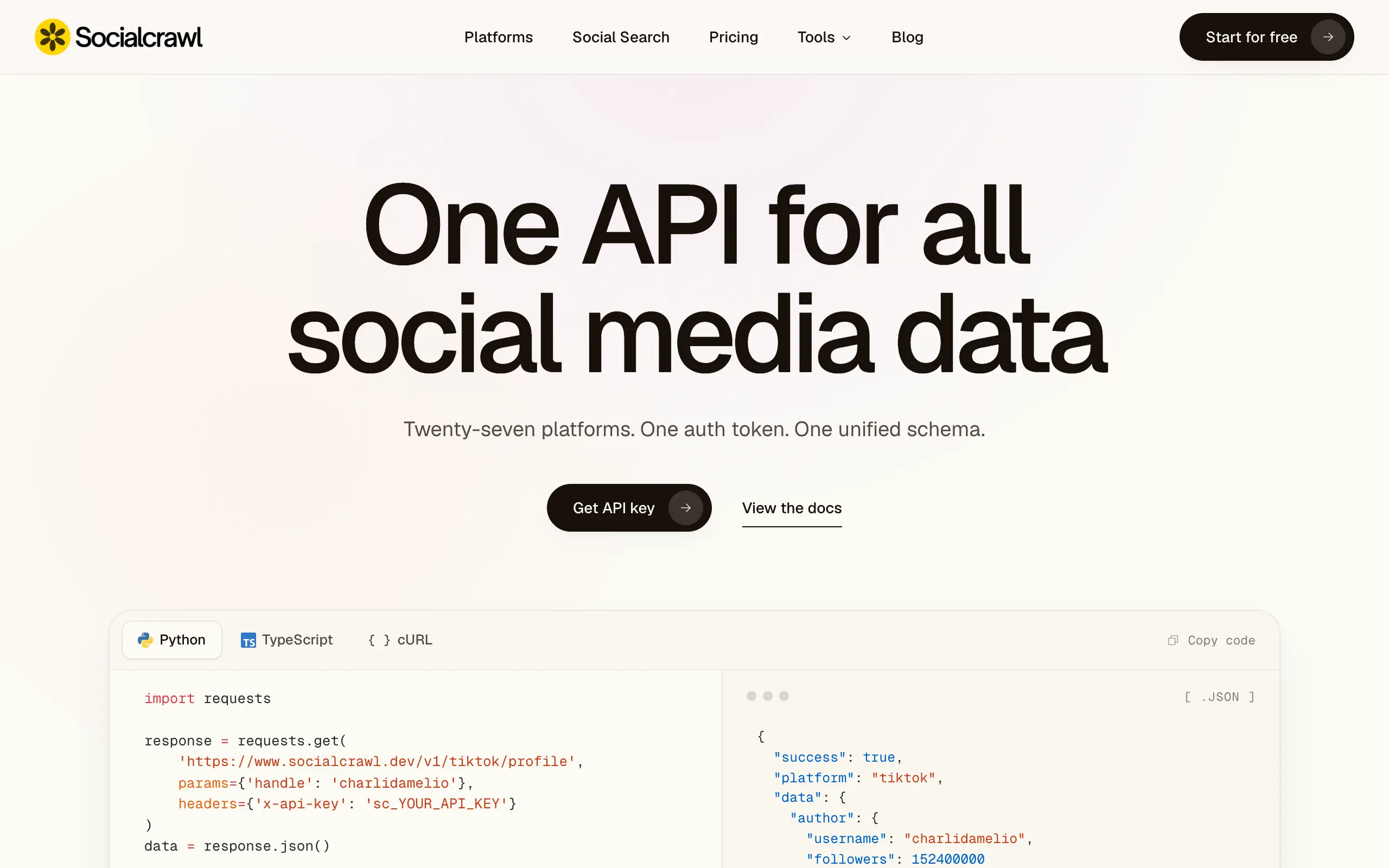
Socialcrawl
Get clean, structured data from 21 platforms like TikTok, Instagram, and YouTube with a single request 📊
Statiko
Monitor any Telegram channel in real time - track posts, edits, deletions, and growth with AI recaps 📡
Shibui
AI website builder - describe your business, pick a niche template, edit by chatting, and publish instantly ✨
Pro Service
Find verified home service professionals, compare quotes, and pay securely through escrow - built for Brazilians across the US 🏠
RankGrow
Fix your SEO with AI agents - connect Search Console, get prioritized tasks, and grow organic traffic 📈
SyncReads
Sync your favorite content for distraction-free reading, save time and replace multiple apps. Anytime, anywhere 🔄
Socialcrawl
Get clean, structured data from 21 platforms like TikTok, Instagram, and YouTube with a single request 📊
Statiko
Monitor any Telegram channel in real time - track posts, edits, deletions, and growth with AI recaps 📡
Shibui
AI website builder - describe your business, pick a niche template, edit by chatting, and publish instantly ✨
Pro Service
Find verified home service professionals, compare quotes, and pay securely through escrow - built for Brazilians across the US 🏠
RankGrow
Fix your SEO with AI agents - connect Search Console, get prioritized tasks, and grow organic traffic 📈
SyncReads
Sync your favorite content for distraction-free reading, save time and replace multiple apps. Anytime, anywhere 🔄
Socialcrawl
Get clean, structured data from 21 platforms like TikTok, Instagram, and YouTube with a single request 📊
Statiko
Monitor any Telegram channel in real time - track posts, edits, deletions, and growth with AI recaps 📡
Shibui
AI website builder - describe your business, pick a niche template, edit by chatting, and publish instantly ✨
Pro Service
Find verified home service professionals, compare quotes, and pay securely through escrow - built for Brazilians across the US 🏠
RankGrow
Fix your SEO with AI agents - connect Search Console, get prioritized tasks, and grow organic traffic 📈
SyncReads
Sync your favorite content for distraction-free reading, save time and replace multiple apps. Anytime, anywhere 🔄
Socialcrawl
Get clean, structured data from 21 platforms like TikTok, Instagram, and YouTube with a single request 📊
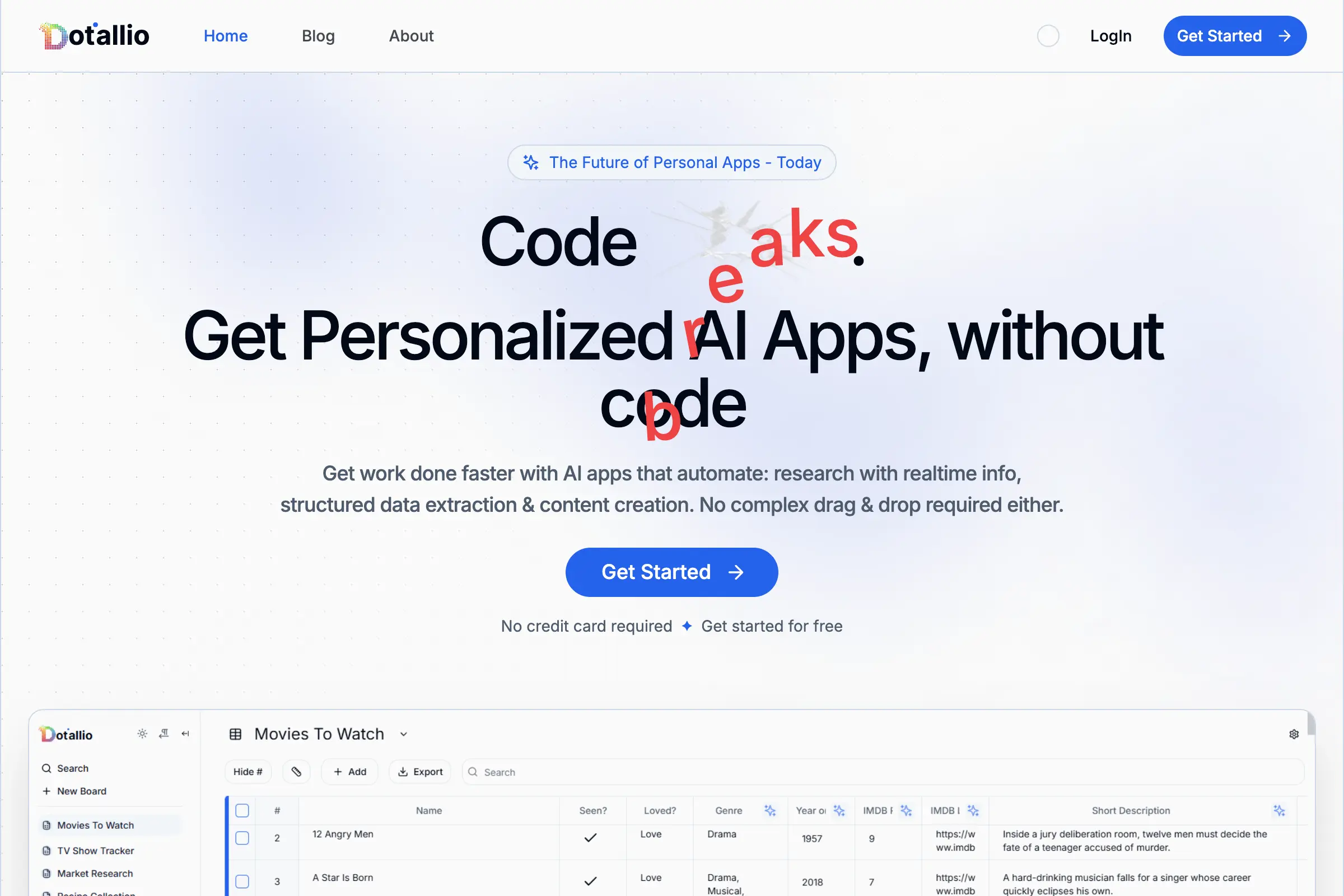
Dotallio
Personalized AI apps that automate research, data extraction, and content creation without code 🤖

Talk to Santa
Enjoy a magical live video chat or receive a unique AI-generated video greeting from Santa Claus 🎅

pozywka.pl
Scalable blog for food journalist, focused on performance and user experience 🌭
zagrodzki.me
Personal blog and portfolio of Bart Zagrodzki, where he shares his knowledge and work 💼
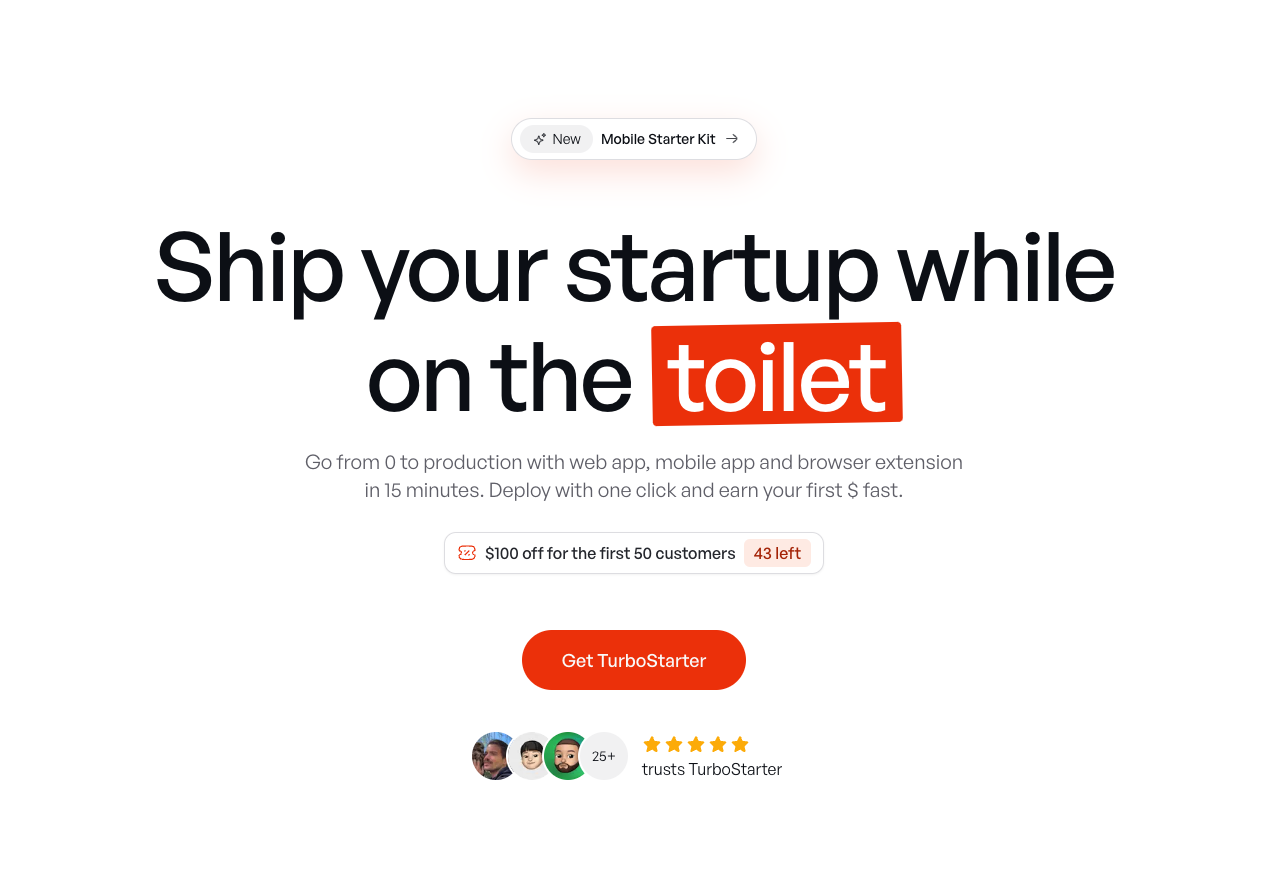
TurboStarter
Ship your startup everywhere. In minutes.
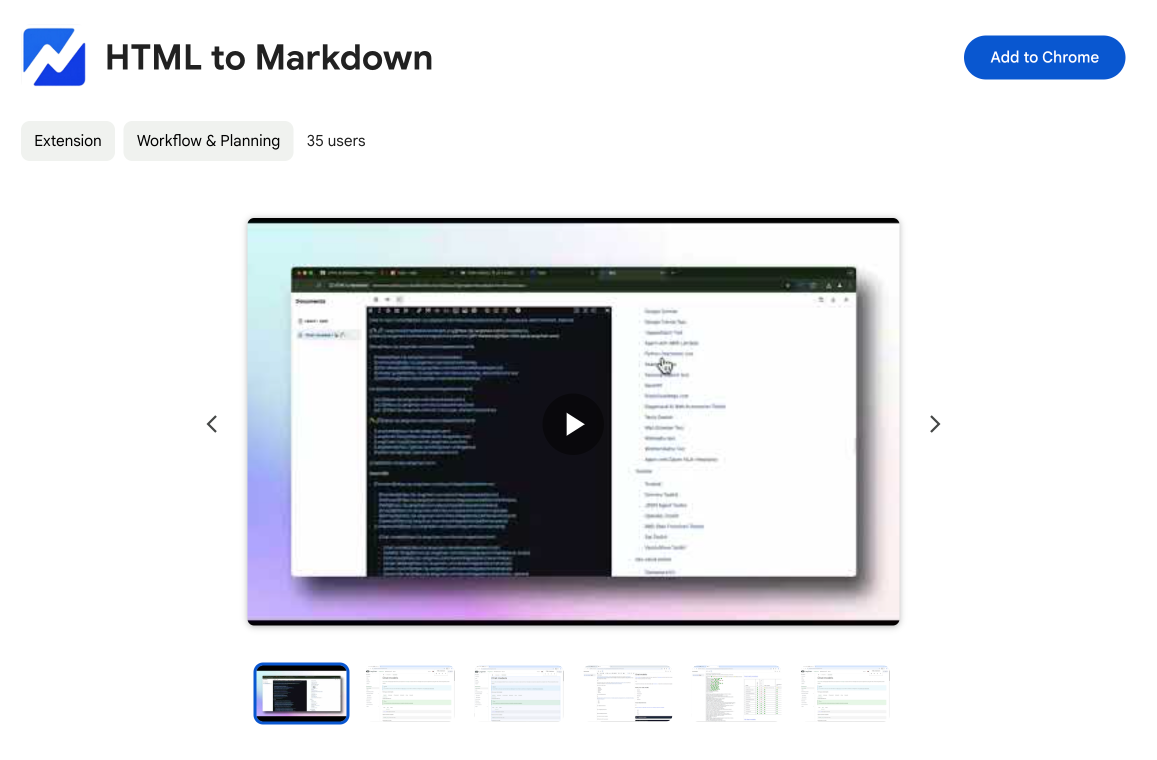
HTML to Markdown
Convert HTML to Markdown with ease, directly in your browser 📄
Dotallio
Personalized AI apps that automate research, data extraction, and content creation without code 🤖
Talk to Santa
Enjoy a magical live video chat or receive a unique AI-generated video greeting from Santa Claus 🎅
pozywka.pl
Scalable blog for food journalist, focused on performance and user experience 🌭
zagrodzki.me
Personal blog and portfolio of Bart Zagrodzki, where he shares his knowledge and work 💼
TurboStarter
Ship your startup everywhere. In minutes.
HTML to Markdown
Convert HTML to Markdown with ease, directly in your browser 📄
Dotallio
Personalized AI apps that automate research, data extraction, and content creation without code 🤖
Talk to Santa
Enjoy a magical live video chat or receive a unique AI-generated video greeting from Santa Claus 🎅
pozywka.pl
Scalable blog for food journalist, focused on performance and user experience 🌭
zagrodzki.me
Personal blog and portfolio of Bart Zagrodzki, where he shares his knowledge and work 💼
TurboStarter
Ship your startup everywhere. In minutes.
HTML to Markdown
Convert HTML to Markdown with ease, directly in your browser 📄
Dotallio
Personalized AI apps that automate research, data extraction, and content creation without code 🤖
Talk to Santa
Enjoy a magical live video chat or receive a unique AI-generated video greeting from Santa Claus 🎅
pozywka.pl
Scalable blog for food journalist, focused on performance and user experience 🌭
zagrodzki.me
Personal blog and portfolio of Bart Zagrodzki, where he shares his knowledge and work 💼
TurboStarter
Ship your startup everywhere. In minutes.
HTML to Markdown
Convert HTML to Markdown with ease, directly in your browser 📄
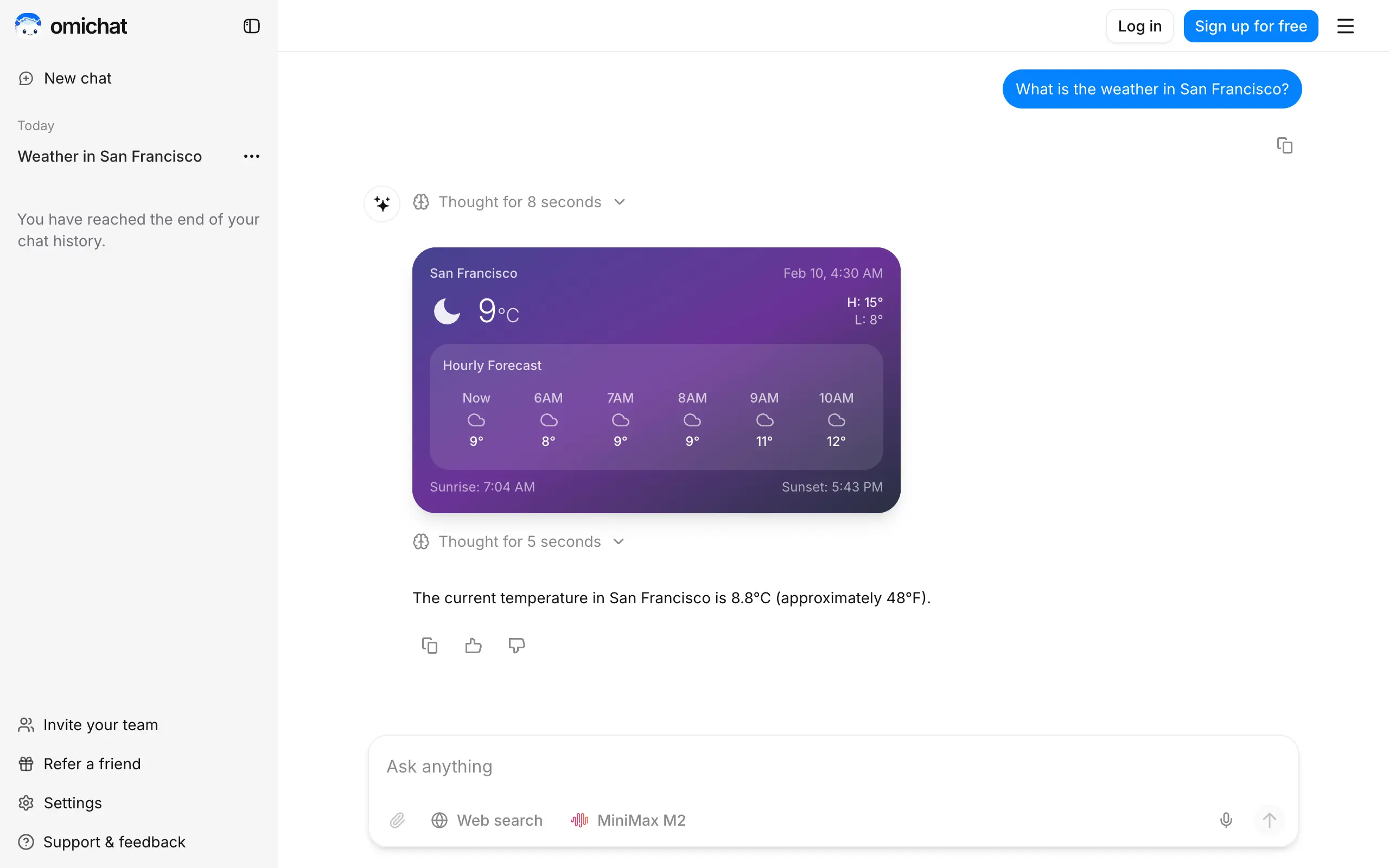
Omichat
Chat with 50+ AI models, including ChatGPT and Claude, in one place - switch models anytime without losing context 🤖
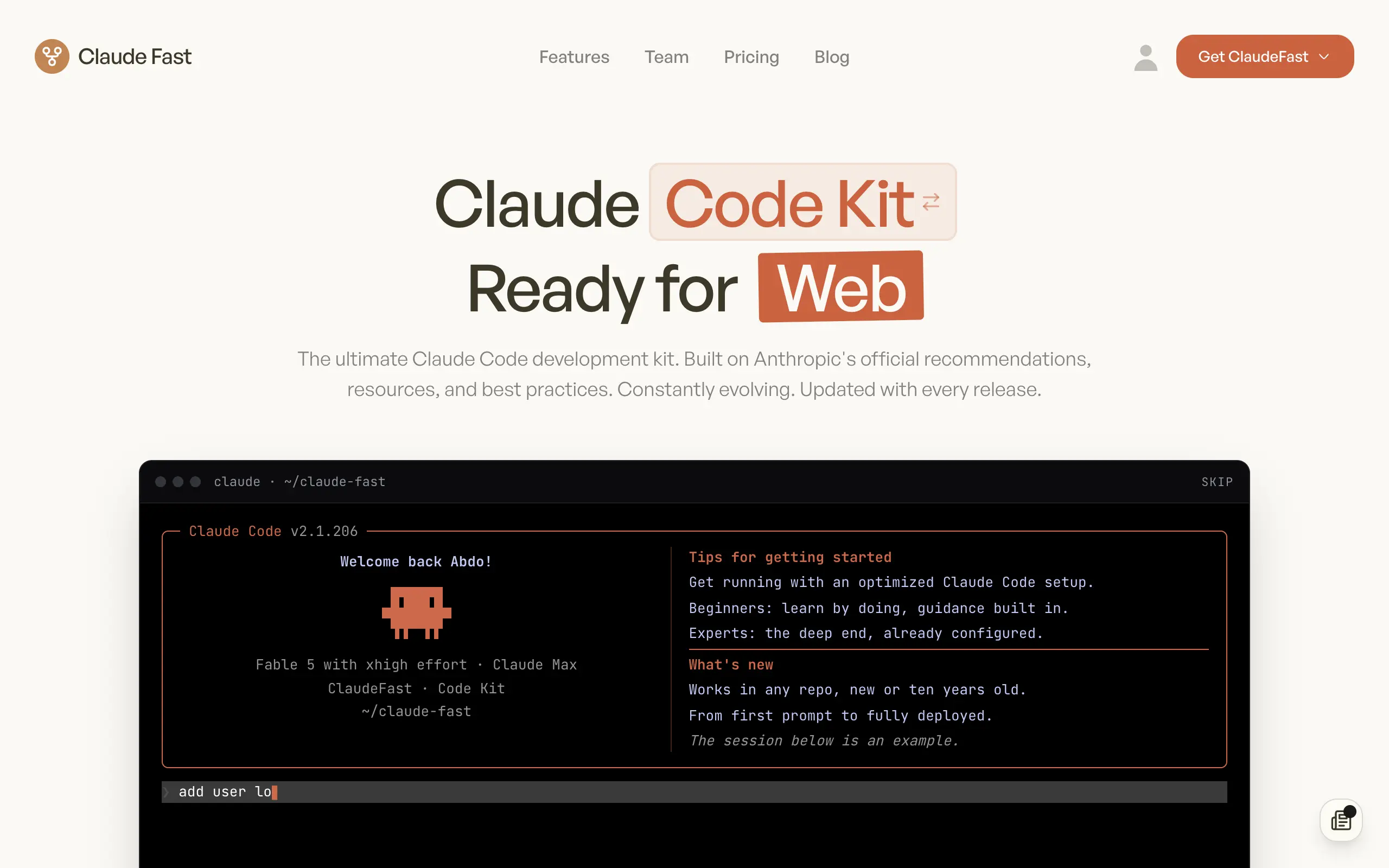
Claude Fast
Supercharge your Claude Code with 6x effective context window and specialized AI agents 🤖
EmojAI
AI-powered emoji picker with smart, context-aware suggestions 🤖
Solohacker
Autonomous company launcher - AI agents work 24/7, escalate what matters, and you stay in control 🤖

BeRawi: Storytelling Coach
Practice storytelling daily with instant feedback to sound clearer, more engaging, and confident 🎤
Omichat
Chat with 50+ AI models, including ChatGPT and Claude, in one place - switch models anytime without losing context 🤖
Claude Fast
Supercharge your Claude Code with 6x effective context window and specialized AI agents 🤖
EmojAI
AI-powered emoji picker with smart, context-aware suggestions 🤖
Solohacker
Autonomous company launcher - AI agents work 24/7, escalate what matters, and you stay in control 🤖
BeRawi: Storytelling Coach
Practice storytelling daily with instant feedback to sound clearer, more engaging, and confident 🎤
Omichat
Chat with 50+ AI models, including ChatGPT and Claude, in one place - switch models anytime without losing context 🤖
Claude Fast
Supercharge your Claude Code with 6x effective context window and specialized AI agents 🤖
EmojAI
AI-powered emoji picker with smart, context-aware suggestions 🤖
Solohacker
Autonomous company launcher - AI agents work 24/7, escalate what matters, and you stay in control 🤖
BeRawi: Storytelling Coach
Practice storytelling daily with instant feedback to sound clearer, more engaging, and confident 🎤
Omichat
Chat with 50+ AI models, including ChatGPT and Claude, in one place - switch models anytime without losing context 🤖
Claude Fast
Supercharge your Claude Code with 6x effective context window and specialized AI agents 🤖
EmojAI
AI-powered emoji picker with smart, context-aware suggestions 🤖
Solohacker
Autonomous company launcher - AI agents work 24/7, escalate what matters, and you stay in control 🤖
BeRawi: Storytelling Coach
Practice storytelling daily with instant feedback to sound clearer, more engaging, and confident 🎤

Connect with like-minded people
Join our community to get feedback, support, and grow together with 1,000+ builders on board, let's ship it!
Join usShip your startup everywhere. In minutes.
Don't burn tokens on setup and start building features on day one.