AgriMargin Copilot
An AI farm financial assistant that tracks costs, predicts cash flow, and recommends high-margin crops or livestock strategies based on your local market.
The opportunity behind an AI farm financial assistant
Farm profitability has never been more complex. Input costs fluctuate monthly. Commodity prices swing with global trade policies and weather patterns. Labor shortages increase operating expenses. At the same time, farmers are expected to adopt sustainable practices, reduce emissions, and invest in new technology.
Yet many small and mid-sized farms still manage finances with:
- Spreadsheets built years ago
- Paper receipts and manual bookkeeping
- Generic accounting tools not tailored to agriculture
- Limited forward-looking cash flow modeling
This creates a massive opportunity for AgriMargin Copilot, an AI farm financial assistant that tracks costs, predicts cash flow, and recommends high-margin crops or livestock strategies based on local market conditions.
The primary keyword here is AI farm financial assistant, supported by related terms such as:
- farm financial management software
- agricultural cost tracking
- farm cash flow forecasting
- crop profitability analysis
- livestock margin optimization
- precision agriculture analytics
This article provides a comprehensive blueprint: market validation, target audience analysis, feature architecture, technical stack, monetization models, risk mitigation, and a step-by-step implementation plan.
If you’re researching how to build an AI agriculture SaaS or evaluating farm financial software opportunities, this guide addresses your search intent directly.
Why farmers need smarter financial intelligence
Rising volatility in agricultural markets
Agriculture is exposed to:
- Climate variability
- Geopolitical trade shifts
- Fertilizer and fuel price spikes
- Changing consumer demand
- Policy and subsidy reforms
When input costs increase but crop prices stagnate, margins collapse quickly. Many farmers don’t have real-time visibility into:
- Cost per acre
- Cost per animal
- Break-even price
- Forecasted seasonal liquidity
- Optimal crop mix for next season
An AI-powered farm financial assistant can convert raw operational data into actionable insights.
The limitations of traditional farm accounting software
Most farm accounting tools focus on bookkeeping:
- Expense categorization
- Basic reporting
- Tax preparation
What they lack:
- Predictive cash flow modeling
- Market-driven crop recommendations
- Local price intelligence
- Scenario simulation (e.g., “What if corn drops 8%?”)
- AI-driven optimization
AgriMargin Copilot fills this gap by acting as a decision-support system, not just a record-keeping tool.
Target audience analysis
Understanding the target user is critical for product-market fit.
1. Small to mid-sized crop farmers
Pain points:
- Thin margins
- Limited financial planning tools
- Seasonal liquidity challenges
- Heavy reliance on intuition
What they want:
- Clear view of profitability per acre
- Forecasted revenue vs. cost breakdown
- Data-backed crop selection guidance
- Risk mitigation strategies
2. Livestock producers
Pain points:
- Feed cost volatility
- Disease risk
- Variable market pricing
- Capital-intensive operations
What they want:
- Per-animal margin tracking
- Feed-to-weight conversion cost modeling
- Price trend forecasting
- Cash flow smoothing tools
3. Agri-consultants and farm advisors
These professionals advise multiple farms and need:
- Portfolio-level analytics
- Benchmarking data
- Scenario modeling tools
- Reporting dashboards for clients
4. Ag lenders and rural banks (secondary market)
Banks often struggle to evaluate farm risk profiles accurately.
AgriMargin Copilot could provide:
- Risk scoring
- Forecasted cash flow models
- Margin stress tests
- Data-backed loan assessments
Strategic positioning tip
Position the product primarily for farmers, but architect the data model to support lenders and consultants later. This expands lifetime value (LTV) significantly.
The market opportunity and gap
Growing agtech adoption
Precision agriculture, IoT sensors, satellite imaging, and farm management platforms are growing rapidly. However, most focus on:
- Yield optimization
- Soil health
- Field mapping
- Irrigation efficiency
Few focus deeply on financial optimization tied to real-time market data.
Clear gap: predictive margin optimization
The missing layer is:
“Given my local soil, climate, input costs, and current futures pricing, what should I plant or raise next season for maximum expected margin?”
That’s the core differentiation of AgriMargin Copilot.
Competitive landscape snapshot
- Accounting-focused
- Reactive reporting
- Limited forecasting
- No AI-based crop recommendation
- Yield optimization
- Hardware-heavy
- Focus on agronomy
- Limited financial modeling
- AI cash flow forecasting
- Margin-based crop/livestock recommendations
- Local market integration
- Scenario simulation & risk analysis
Core features of AgriMargin Copilot
To win in the AI farm financial assistant category, the product must combine financial modeling, agronomic data, and local market intelligence.
1. Smart cost tracking engine
Features:
- Expense auto-categorization (fuel, seed, fertilizer, feed, labor)
- Integration with accounting tools
- Mobile receipt capture
- Field-level and herd-level allocation
AI layer:
- Detect cost anomalies
- Suggest cost-saving adjustments
- Compare costs against regional benchmarks
2. AI-powered cash flow forecasting
This is the heart of the product.
Capabilities:
- Seasonal income prediction
- Input cost projection
- Loan repayment modeling
- Subsidy and insurance modeling
Forecast model includes:
- Historical farm data
- Weather-adjusted yield assumptions
- Commodity price trends
- Futures pricing data
Trust and transparency matter
Financial AI must explain its assumptions. Always display model inputs and allow farmers to adjust variables.
3. Crop and livestock margin recommendation engine
This is the main USP.
Inputs:
- Local market prices
- Soil data
- Climate history
- Yield benchmarks
- Input cost projections
Outputs:
- Expected margin per acre (crop)
- Expected margin per animal (livestock)
- Risk-adjusted profitability score
- Diversification suggestions
Example:
- Corn: 12% projected margin, medium volatility
- Soybeans: 15% projected margin, lower volatility
- Sunflower: 19% projected margin, high volatility
4. Scenario simulation dashboard
Farmers can test:
- “What if fertilizer prices increase 10%?”
- “What if beef prices drop 7%?”
- “What if rainfall is below average?”
This transforms the tool into a farm risk management system, not just a dashboard.
5. Local market intelligence integration
Data sources:
- Public commodity exchanges
- Regional cooperative pricing
- Government agricultural data
- Historical climate records
Important: Always cite trusted sources such as USDA (when relevant) rather than obscure datasets.
6. Margin health score
Create a simple metric:
Farm Margin Health Score (0–100) based on:
- Liquidity
- Debt load
- Margin stability
- Input cost sensitivity
- Diversification
This simplifies complex analytics into an actionable signal.
Technical architecture and recommended stack
A robust AI farm financial assistant requires scalability, reliability, and explainable AI.
Frontend
Why:
- SEO-friendly server rendering
- Fast dashboard rendering
- Component-based design
- Strong ecosystem
Backend
Options:
- Node.js (TypeScript)
- Python (FastAPI) for ML-heavy components
- PostgreSQL for structured financial data
Trade-offs:
- Node.js simplifies full-stack TypeScript.
- Python is better for advanced ML modeling.
- Hybrid architecture often works best.
AI/ML layer
Core components:
- Time-series forecasting (Prophet, LSTM, or transformer-based models)
- Regression models for yield estimation
- Reinforcement learning for crop mix optimization
Infrastructure:
- Managed ML services (AWS, GCP, Azure)
- Batch retraining per region
Data ingestion layer
Sources:
- Commodity pricing APIs
- Weather APIs
- Public agricultural data
- Farm-uploaded financial records
Pipeline design:
- ETL jobs
- Validation checks
- Normalization by region
Example forecasting service endpoint
// Simplified example (Node.js + Express)
app.post("/forecast", async (req, res) => {
  const { farmId, scenario } = req.body;

  const historicalData = await getFarmFinancials(farmId);
  const marketData = await getLocalMarketData(farmId);

  const prediction = await runForecastModel({
    historicalData,
    marketData,
    scenario
  });

  res.json({ forecast: prediction });
});
Data privacy and security considerations
Farm financial data is highly sensitive.
Best practices:
- End-to-end encryption
- Role-based access control
- SOC 2 compliance roadmap
- Transparent data policies
- No resale of farm data without explicit consent
Major risk
If farmers feel their data could be sold or used against them (e.g., by buyers or lenders), adoption will collapse.
Monetization strategy options
1. Tiered SaaS subscription
Basic Plan
- Cost tracking
- Basic reports
Pro Plan
- AI forecasting
- Margin recommendations
- Scenario modeling
Enterprise
- Multi-farm dashboard
- Consultant tools
- API access
2. Revenue-based pricing
Charge based on:
- Acres managed
- Herd size
- Annual revenue band
This aligns pricing with value.
3. Embedded finance partnerships
Future expansion:
- Loan referrals
- Crop insurance integration
- Financial product marketplace
Be cautious to maintain trust.
4. Data insights (aggregated only)
Sell anonymized regional insights:
- Benchmark reports
- Industry trend analysis
Never sell identifiable farm-level data.
Competitive advantage analysis
Use this comparison model:
| Feature | Traditional Accounting | Precision Ag Tools | Generic AI Tools | AgriMargin Copilot |
|---|---|---|---|---|
| Cost tracking | ✅ | ❌ | ❌ | ✅ |
| AI cash flow forecasting | ❌ | ❌ | ⚠️ Limited | ✅ |
| Crop margin recommendations | ❌ | ⚠️ Yield only | ❌ | ✅ |
| Scenario simulation | ❌ | ❌ | ⚠️ Generic | ✅ |
Key differentiator:
AgriMargin Copilot optimizes for profitability, not just yield or bookkeeping.
Risks and mitigation strategies
1. Data accuracy risk
Mitigation:
- Allow manual override
- Show confidence intervals
- Continuous model retraining
2. Low-tech adoption in rural markets
Mitigation:
- Simple UX
- Mobile-first design
- Offline sync capability
- Strong onboarding support
3. Over-reliance on AI predictions
Mitigation:
- Always present alternative scenarios
- Encourage human review
- Provide explanation panels
Go-to-market strategy
Phase 1: niche focus
Target:
- One region
- One crop category
- One farm size segment
Why?
- Better data consistency
- Faster iteration
- Strong testimonials
Phase 2: partnerships
- Agricultural cooperatives
- Extension programs
- Rural banks
- Farm consultants
Phase 3: content-driven growth
SEO topics:
- “How to forecast farm cash flow”
- “Best crops for profit in [region]”
- “How to calculate cost per acre”
- “Farm margin calculator”
This builds authority in the farm financial management software niche.
Implementation roadmap
For faster execution, consider starting with a production-ready SaaS foundation like TurboStarter, which accelerates authentication, billing, and core SaaS infrastructure.
Long-term expansion vision
Carbon credit optimization
Model profitability of regenerative practices and carbon markets.
Supply chain intelligence
Recommend optimal selling channels for maximum margin.
AI agronomic advisor integration
Combine yield and margin intelligence in one platform.
Why AgriMargin Copilot can win
The agricultural sector is underserved in advanced financial AI.
Most tools help farmers grow more.
Few help them earn more.
AgriMargin Copilot’s unique positioning:
- Profit-first optimization
- AI-powered predictive modeling
- Localized market intelligence
- Risk-aware decision support
- Farmer-centric transparency
If executed with trust, transparency, and usability at the core, it can become the operating system for farm financial intelligence.
Final thoughts
An AI farm financial assistant is not just a SaaS product. It’s a strategic layer that empowers farmers to:
- Protect margins
- Reduce risk
- Make data-driven decisions
- Plan multi-season growth
By combining agricultural domain expertise, financial modeling, and explainable AI, AgriMargin Copilot can occupy a powerful and defensible niche in agtech.
The opportunity is clear.
The need is real.
The timing—amid increasing volatility and digital adoption—is ideal.
More 🤖 AI Startup SaaS ideas
Discover more innovative ai startup SaaS ideas that are trending in 2026. Each idea is AI-generated with market validation and growth potential to help you find your next profitable venture faster than competitors.
Your competitors are building with TurboStarter
Below are some of the SaaS ideas that have been generated and built with our starter kit.

Statiko
Monitor any Telegram channel in real time - track posts, edits, deletions, and growth with AI recaps 📡

Shibui
AI website builder - describe your business, pick a niche template, edit by chatting, and publish instantly ✨

Pro Service
Find verified home service professionals, compare quotes, and pay securely through escrow - built for Brazilians across the US 🏠
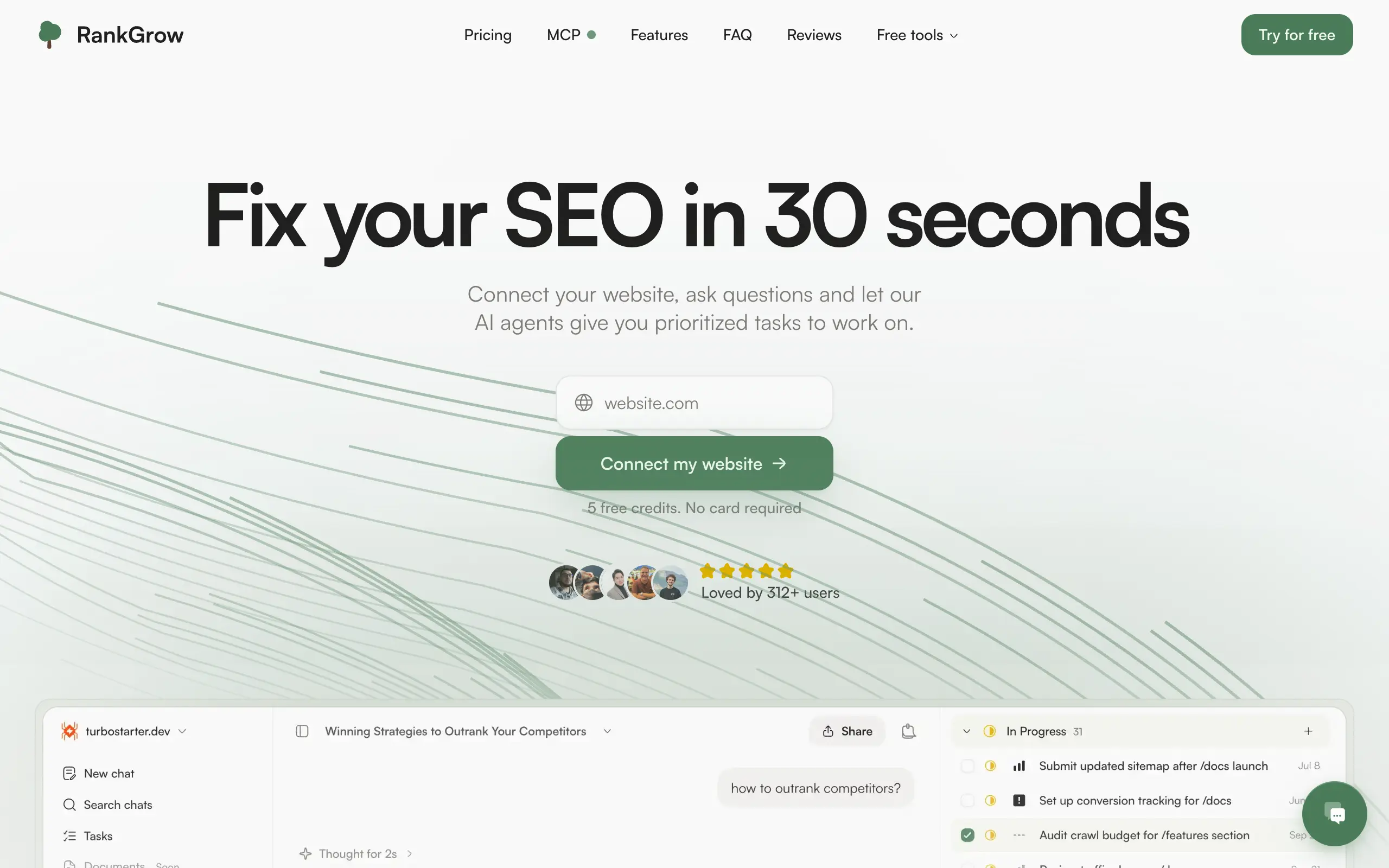
RankGrow
Fix your SEO with AI agents - connect Search Console, get prioritized tasks, and grow organic traffic 📈
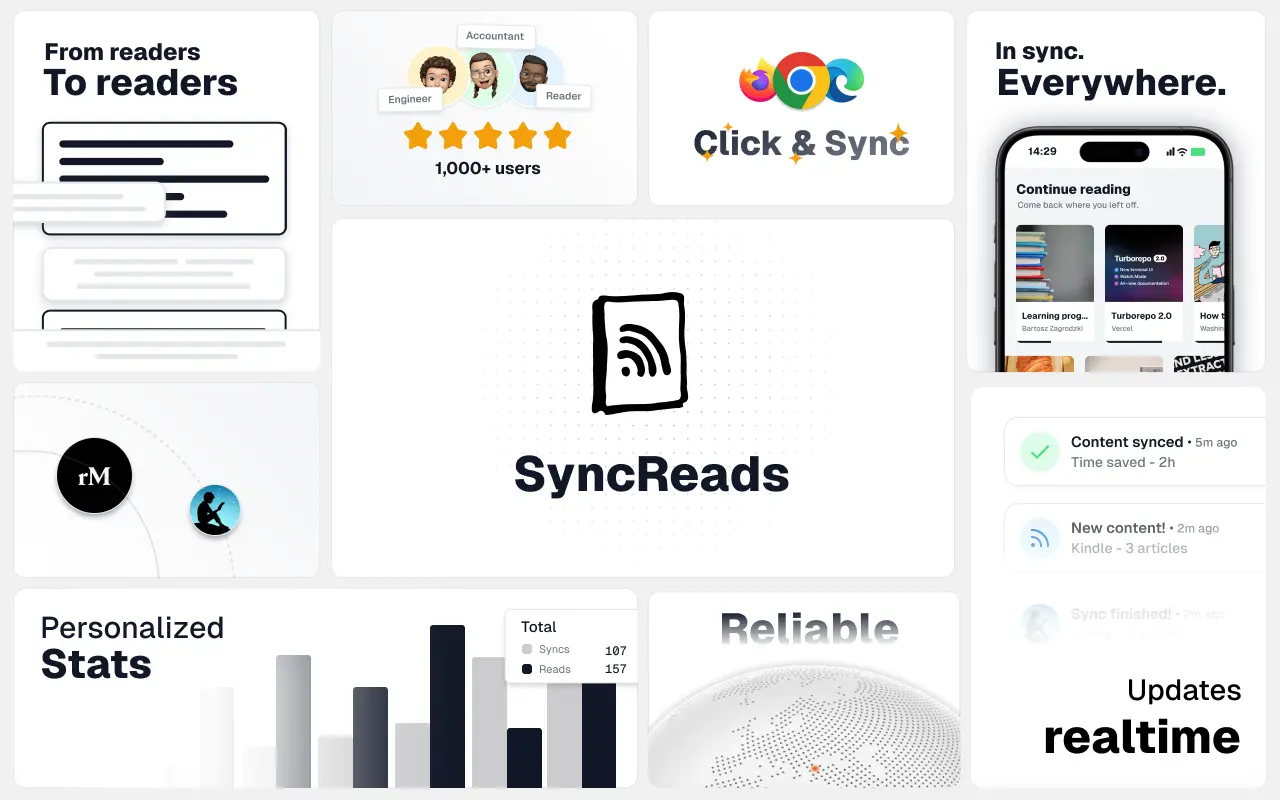
SyncReads
Sync your favorite content for distraction-free reading, save time and replace multiple apps. Anytime, anywhere 🔄
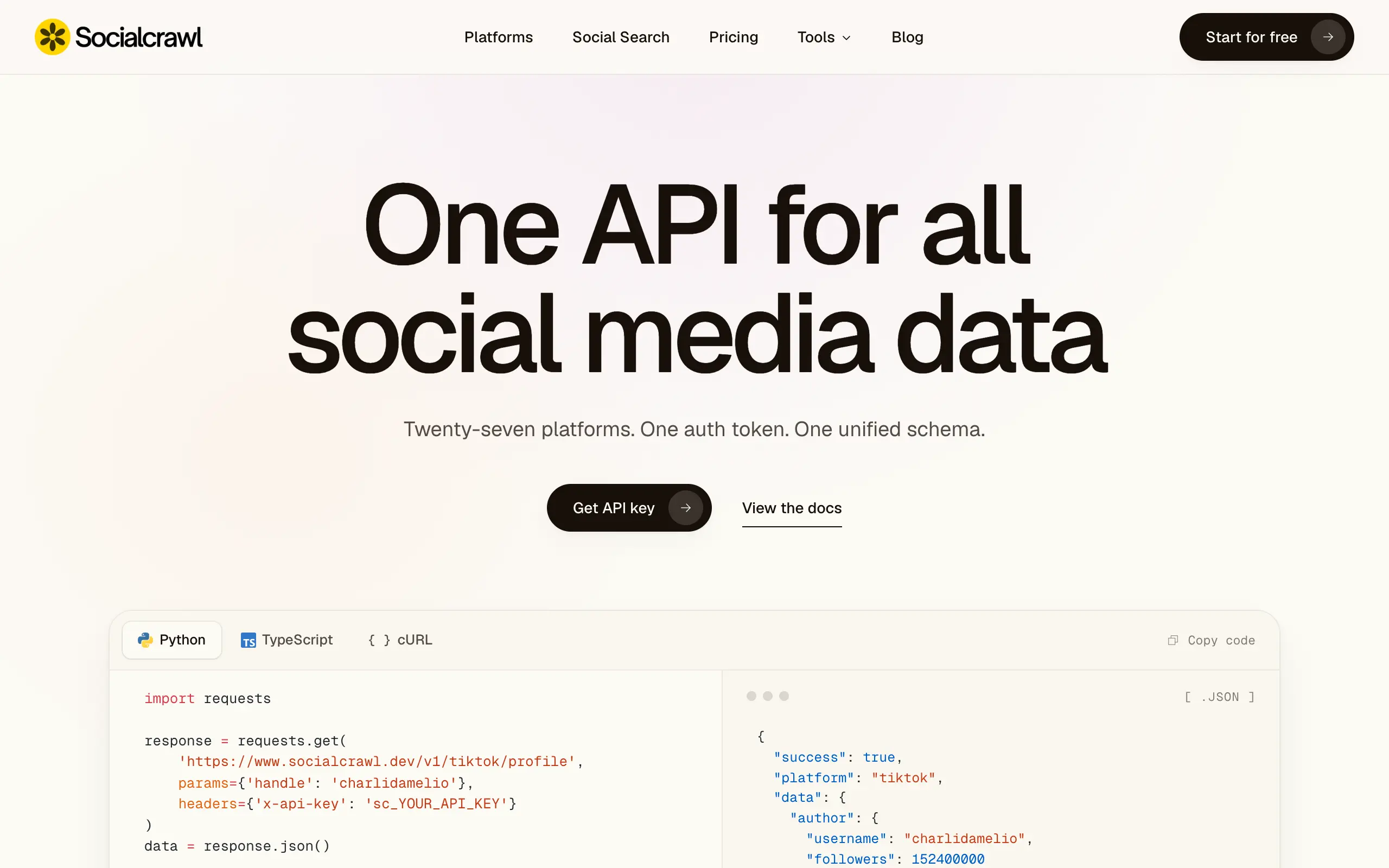
Socialcrawl
Get clean, structured data from 21 platforms like TikTok, Instagram, and YouTube with a single request 📊
Statiko
Monitor any Telegram channel in real time - track posts, edits, deletions, and growth with AI recaps 📡
Shibui
AI website builder - describe your business, pick a niche template, edit by chatting, and publish instantly ✨
Pro Service
Find verified home service professionals, compare quotes, and pay securely through escrow - built for Brazilians across the US 🏠
RankGrow
Fix your SEO with AI agents - connect Search Console, get prioritized tasks, and grow organic traffic 📈
SyncReads
Sync your favorite content for distraction-free reading, save time and replace multiple apps. Anytime, anywhere 🔄
Socialcrawl
Get clean, structured data from 21 platforms like TikTok, Instagram, and YouTube with a single request 📊
Statiko
Monitor any Telegram channel in real time - track posts, edits, deletions, and growth with AI recaps 📡
Shibui
AI website builder - describe your business, pick a niche template, edit by chatting, and publish instantly ✨
Pro Service
Find verified home service professionals, compare quotes, and pay securely through escrow - built for Brazilians across the US 🏠
RankGrow
Fix your SEO with AI agents - connect Search Console, get prioritized tasks, and grow organic traffic 📈
SyncReads
Sync your favorite content for distraction-free reading, save time and replace multiple apps. Anytime, anywhere 🔄
Socialcrawl
Get clean, structured data from 21 platforms like TikTok, Instagram, and YouTube with a single request 📊
Statiko
Monitor any Telegram channel in real time - track posts, edits, deletions, and growth with AI recaps 📡
Shibui
AI website builder - describe your business, pick a niche template, edit by chatting, and publish instantly ✨
Pro Service
Find verified home service professionals, compare quotes, and pay securely through escrow - built for Brazilians across the US 🏠
RankGrow
Fix your SEO with AI agents - connect Search Console, get prioritized tasks, and grow organic traffic 📈
SyncReads
Sync your favorite content for distraction-free reading, save time and replace multiple apps. Anytime, anywhere 🔄
Socialcrawl
Get clean, structured data from 21 platforms like TikTok, Instagram, and YouTube with a single request 📊
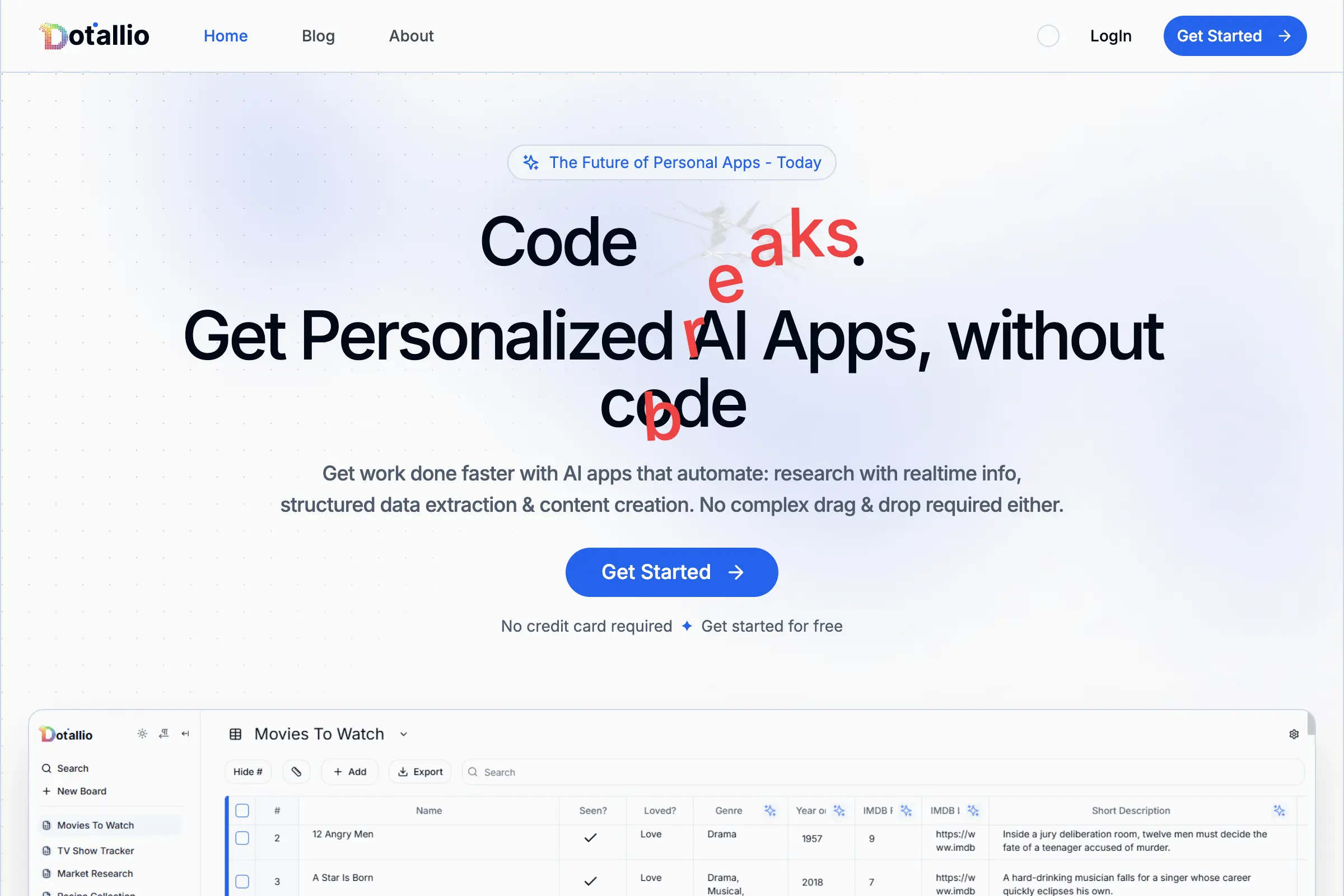
Dotallio
Personalized AI apps that automate research, data extraction, and content creation without code 🤖

Talk to Santa
Enjoy a magical live video chat or receive a unique AI-generated video greeting from Santa Claus 🎅

pozywka.pl
Scalable blog for food journalist, focused on performance and user experience 🌭
zagrodzki.me
Personal blog and portfolio of Bart Zagrodzki, where he shares his knowledge and work 💼
TurboStarter
Ship your startup everywhere. In minutes.
HTML to Markdown
Convert HTML to Markdown with ease, directly in your browser 📄
Dotallio
Personalized AI apps that automate research, data extraction, and content creation without code 🤖
Talk to Santa
Enjoy a magical live video chat or receive a unique AI-generated video greeting from Santa Claus 🎅
pozywka.pl
Scalable blog for food journalist, focused on performance and user experience 🌭
zagrodzki.me
Personal blog and portfolio of Bart Zagrodzki, where he shares his knowledge and work 💼
TurboStarter
Ship your startup everywhere. In minutes.
HTML to Markdown
Convert HTML to Markdown with ease, directly in your browser 📄
Dotallio
Personalized AI apps that automate research, data extraction, and content creation without code 🤖
Talk to Santa
Enjoy a magical live video chat or receive a unique AI-generated video greeting from Santa Claus 🎅
pozywka.pl
Scalable blog for food journalist, focused on performance and user experience 🌭
zagrodzki.me
Personal blog and portfolio of Bart Zagrodzki, where he shares his knowledge and work 💼
TurboStarter
Ship your startup everywhere. In minutes.
HTML to Markdown
Convert HTML to Markdown with ease, directly in your browser 📄
Dotallio
Personalized AI apps that automate research, data extraction, and content creation without code 🤖
Talk to Santa
Enjoy a magical live video chat or receive a unique AI-generated video greeting from Santa Claus 🎅
pozywka.pl
Scalable blog for food journalist, focused on performance and user experience 🌭
zagrodzki.me
Personal blog and portfolio of Bart Zagrodzki, where he shares his knowledge and work 💼
TurboStarter
Ship your startup everywhere. In minutes.
HTML to Markdown
Convert HTML to Markdown with ease, directly in your browser 📄
Omichat
Chat with 50+ AI models, including ChatGPT and Claude, in one place - switch models anytime without losing context 🤖
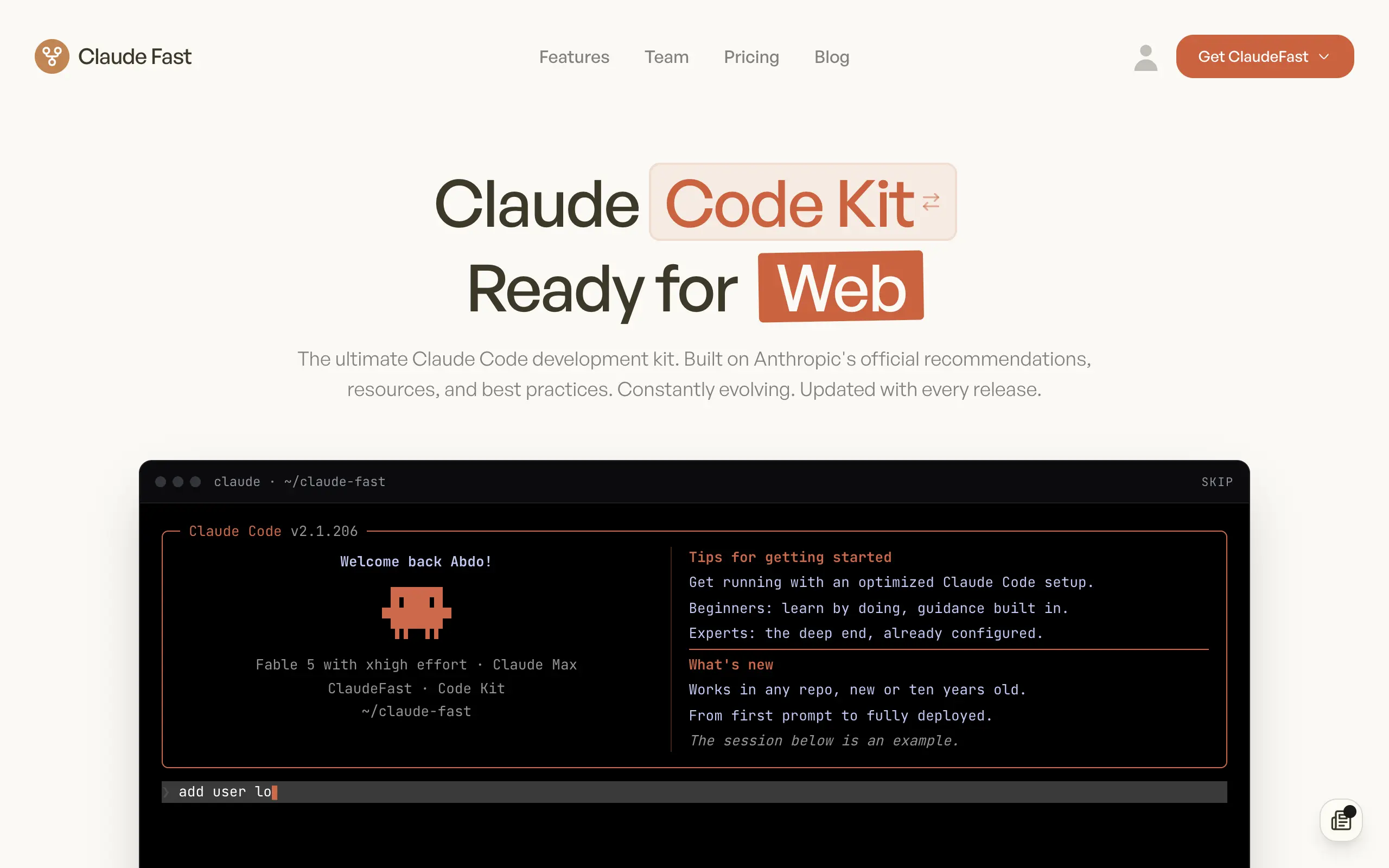
Claude Fast
Supercharge your Claude Code with 6x effective context window and specialized AI agents 🤖

EmojAI
AI-powered emoji picker with smart, context-aware suggestions 🤖

Solohacker
Autonomous company launcher - AI agents work 24/7, escalate what matters, and you stay in control 🤖

BeRawi: Storytelling Coach
Practice storytelling daily with instant feedback to sound clearer, more engaging, and confident 🎤
Omichat
Chat with 50+ AI models, including ChatGPT and Claude, in one place - switch models anytime without losing context 🤖
Claude Fast
Supercharge your Claude Code with 6x effective context window and specialized AI agents 🤖
EmojAI
AI-powered emoji picker with smart, context-aware suggestions 🤖
Solohacker
Autonomous company launcher - AI agents work 24/7, escalate what matters, and you stay in control 🤖
BeRawi: Storytelling Coach
Practice storytelling daily with instant feedback to sound clearer, more engaging, and confident 🎤
Omichat
Chat with 50+ AI models, including ChatGPT and Claude, in one place - switch models anytime without losing context 🤖
Claude Fast
Supercharge your Claude Code with 6x effective context window and specialized AI agents 🤖
EmojAI
AI-powered emoji picker with smart, context-aware suggestions 🤖
Solohacker
Autonomous company launcher - AI agents work 24/7, escalate what matters, and you stay in control 🤖
BeRawi: Storytelling Coach
Practice storytelling daily with instant feedback to sound clearer, more engaging, and confident 🎤
Omichat
Chat with 50+ AI models, including ChatGPT and Claude, in one place - switch models anytime without losing context 🤖
Claude Fast
Supercharge your Claude Code with 6x effective context window and specialized AI agents 🤖
EmojAI
AI-powered emoji picker with smart, context-aware suggestions 🤖
Solohacker
Autonomous company launcher - AI agents work 24/7, escalate what matters, and you stay in control 🤖
BeRawi: Storytelling Coach
Practice storytelling daily with instant feedback to sound clearer, more engaging, and confident 🎤

Connect with like-minded people
Join our community to get feedback, support, and grow together with 1,000+ builders on board, let's ship it!
Join usShip your startup everywhere. In minutes.
Don't burn tokens on setup and start building features on day one.