AnswerLeak
Track which customer questions AI Overviews and competitors answer poorly in Google. Turn missed intent into ranked pages, FAQs, and conversion-focused briefs.
AnswerLeak is an AI SEO intelligence platform for teams that want to understand a growing visibility problem: Google may surface an AI-generated answer before a traditional organic result, yet that answer can still be incomplete, generic, outdated, or poorly aligned with what a prospective customer actually needs.
The opportunity is not simply to “rank in AI Overviews.” It is to identify high-value unanswered intent and turn it into useful content assets before competitors do. AnswerLeak helps marketers discover where AI Overviews and competing pages fail to answer customer questions well, then translates those gaps into ranked-page recommendations, FAQ opportunities, and conversion-focused content briefs.
For SaaS companies, agencies, ecommerce brands, and content-led businesses, this creates a practical workflow for converting search ambiguity into a measurable SEO pipeline.
The core opportunity
AI search experiences reward pages that are clear, specific, trustworthy, structured, and directly useful. The businesses that identify missing answers early can create better content before the search landscape becomes saturated.
Why AI Overview tracking software matters now
Traditional SEO platforms are built around rankings, backlinks, keywords, and technical audits. Those signals are still essential, but they do not fully explain what happens when a search results page includes AI-generated summaries, product suggestions, comparison lists, or follow-up questions.
A page can rank in the top 10 and still lose visibility when an AI Overview answers the searcher’s question without requiring a click. Conversely, an AI-generated result may expose an opportunity when it gives a vague answer, overlooks a critical use case, cites weak sources, or fails to guide the searcher toward a decision.
This is where AI Overview tracking software becomes useful. Rather than treating AI search as an unknowable black box, AnswerLeak gives teams a structured way to evaluate three connected questions:
- Which questions matter most to potential customers?
- Which of those questions are currently answered poorly by AI Overviews or competitors?
- What content should the business publish to provide the best answer and earn qualified traffic?
This shifts SEO planning away from publishing based on broad keyword volume alone. The better model is to prioritize intent quality, answer quality, commercial relevance, and competitive weakness.
For example, a project management SaaS may find that Google can summarize “what is project management software” adequately, but produces an unhelpful answer for “how to choose project management software for a 50-person agency with client access.” That second query is more specific, more commercially valuable, and often easier to differentiate with an expert-led page.
The search intent problem AnswerLeak solves
Search behavior has always been nuanced. A keyword such as “best CRM” may represent comparison intent, while “CRM for small accounting firms” reflects a narrower need with a clearer path to a solution. AI search adds another layer: users can receive a synthesized response even when no single source provides the complete answer.
The resulting gap is important for content teams. If an AI Overview contains a shallow or inaccurate response, users may still search for a better explanation. Businesses that publish the most useful supporting page can capture that demand.
AnswerLeak is positioned to solve the operational challenge behind this opportunity. It combines AI search tracking, competitor analysis, content gap discovery, prioritization, and brief generation into one workflow.
What “missed intent” means in AI search
Missed intent occurs when the available answer does not sufficiently satisfy the reason behind a search. It can happen in several ways:
- The AI Overview answers the basic definition but ignores the real buying criteria.
- Competitor content is broad but does not address a niche industry, role, geography, or technical requirement.
- Existing pages explain a topic but lack first-hand examples, implementation guidance, or decision support.
- Search results rely on old information in a fast-changing category.
- The answer omits constraints such as budget, compliance, integrations, security, or migration complexity.
- The searcher’s next question is predictable, but no page answers it clearly.
For AnswerLeak users, missed intent becomes a content opportunity rather than an abstract SEO observation.
Find weak AI answers
Detect AI Overview responses that are incomplete, generic, outdated, or poorly aligned with the underlying customer question.
Expose competitor blind spots
Compare what competitors cover against what searchers still need to know before they can make a confident decision.
Create publishable briefs
Turn opportunity data into structured page outlines, FAQs, proof requirements, and conversion recommendations.
Target audience for AnswerLeak
The strongest customers for AnswerLeak are organizations that already understand the value of search-led acquisition but need a better way to adapt their content strategy to AI-driven search experiences.
In-house SaaS marketing teams
B2B SaaS marketers are an especially strong fit because their buyers often research complex, multi-step questions before booking a demo or starting a trial. A simple keyword report cannot always reveal whether a page helps the buyer evaluate solutions.
AnswerLeak can help SaaS teams identify questions around:
- Product comparisons and alternatives
- Integration compatibility
- Security and compliance requirements
- Pricing and total cost of ownership
- Migration workflows
- Role-specific implementation
- Industry-specific use cases
- Feature limitations and workarounds
A customer support platform, for instance, may discover that competitors rank for “customer support automation,” but few pages explain how to automate repetitive tickets without harming customer satisfaction. That gap can support a practical guide, product-led workflow page, FAQ cluster, and demo conversion path.
SEO agencies and content agencies
Agencies need a repeatable way to demonstrate strategic value to clients. AI Overview monitoring and intent gap analysis can become a high-value service layer above standard rank tracking.
An agency can use AnswerLeak to produce:
- AI visibility audits for prospective clients
- Monthly missed-intent reports
- Competitor answer quality assessments
- Content roadmaps tied to pipeline opportunities
- Client-ready content briefs
- Vertical-specific FAQ recommendations
The platform’s value is not just reporting that a competitor appears in search. It is explaining why the existing answer is weak and what a client should publish next.
Ecommerce and category-leading brands
Ecommerce teams can use AnswerLeak to find decision-stage questions where generic category pages do not provide enough support. Product content often needs stronger guidance around selection, compatibility, safety, fit, care, installation, comparisons, and troubleshooting.
A home fitness retailer might uncover opportunities around questions such as:
- Which adjustable dumbbell weight range is right for beginners
- How much space a compact treadmill needs
- Whether a walking pad works on carpet
- How to maintain an indoor rowing machine
These are not merely blog topics. They can be designed as high-intent educational pages that guide users toward appropriate products.
Subject-matter experts and content publishers
Publishers with genuine expertise can use AnswerLeak to prioritize content where firsthand knowledge offers a defensible advantage. This is especially valuable in categories where generic AI-generated content is easy to produce but difficult to trust.
Examples include:
- Healthcare operations
- Finance and accounting workflows
- Cybersecurity
- Legal technology
- HR compliance
- Manufacturing operations
- Developer tools
- Professional education
In these markets, the winning content often includes expert judgment, caveats, current standards, workflows, real examples, and credible sources. Those are precisely the areas where shallow AI summaries commonly underperform.
Market gap and competitive opportunity in AI search analytics
The AI search analytics market is becoming more crowded, but many tools focus primarily on visibility reporting. They may show whether a brand appears in an AI-generated result, identify citations, or track prompt-level mentions.
Those features are useful, yet they leave an important gap: what should a team do next?
AnswerLeak’s opportunity is to bridge analysis and execution. It can differentiate by helping users move from observation to a prioritized content decision.
A meaningful AnswerLeak workflow could look like this:
This operational focus gives AnswerLeak a credible market position. It is not another generic AI content generator and not just another rank tracker. It is an AI search opportunity intelligence platform.
The content operations gap
Many SEO teams already have too many keywords and too few clear priorities. A report listing 10,000 queries is not automatically useful. The real bottleneck is deciding which pages deserve research, writing, design, subject-matter expert review, and promotion.
AnswerLeak should solve this with a decision framework that makes the trade-offs explicit.
| Opportunity signal | What it reveals | Content response | Business value | Priority |
|---|---|---|---|---|
| Weak AI Overview | The summary misses key context | Create a comprehensive answer page | High for research-led buyers | High |
| Competitor FAQ gap | A common objection lacks coverage | Add an FAQ or comparison section | Strong conversion support | Medium |
| Outdated source set | Results rely on older information | Publish a current expert update | High in changing markets | High |
| Long-tail industry query | Broad pages lack specialization | Build a vertical landing page | High commercial relevance | High |
Core features for an AI Overview gap analysis platform
The initial product should focus on an opinionated workflow. Avoid trying to replace every SEO platform in version one. AnswerLeak will be more valuable if it does one difficult job exceptionally well: finding and prioritizing questions with weak answers.
Query discovery and customer question ingestion
The best content opportunities do not come from one source. AnswerLeak should let users import or connect query data from multiple places, including:
- Google Search Console exports
- CSV keyword research files
- Customer support tickets
- Sales call notes
- CRM fields and closed-lost reasons
- On-site search queries
- Product review themes
- Competitor URLs
- Manually added strategic questions
The product should normalize similar questions, cluster them by intent, and preserve the source. Source provenance matters because a question from a sales call may be more commercially meaningful than a high-volume informational keyword.
AI Overview and SERP monitoring
AnswerLeak needs a reliable SERP capture layer that records the search landscape for selected keywords over time. For each query, the system should capture:
- Whether an AI Overview appears
- The visible answer text and cited domains where available
- Traditional organic results
- Featured snippets and People Also Ask patterns
- Ads, shopping results, local packs, and video modules when relevant
- Query location, language, device, and date
- Change history between crawls
Tracking history is crucial. A single snapshot can be misleading because search results vary. The product should identify persistent patterns and meaningful changes rather than overreacting to one SERP fluctuation.
Answer quality scoring
The answer quality score is AnswerLeak’s strategic centerpiece. It should not claim to determine objective truth with perfect certainty. Instead, it should explain its methodology and present a transparent, reviewable assessment.
A useful scoring model can combine:
- Intent coverage based on whether the answer addresses the core question and likely follow-ups
- Specificity based on concrete details, constraints, and relevant examples
- Freshness based on date-sensitive claims and recent source evidence
- Evidence quality based on authoritative, first-party, or expert-backed sources
- Commercial completeness based on whether the answer helps a buyer evaluate options
- Readability based on organization, clarity, and directness
- Risk signals based on unsupported claims, contradictions, or omitted caveats
The product should always show the rationale behind a score. Users must be able to inspect highlighted missing entities, unaddressed subtopics, dated claims, and suggested improvements. Explainable scoring creates trust and prevents the platform from becoming another opaque AI dashboard.
Competitor answer gap analysis
Competitor research should go beyond counting rankings. AnswerLeak can compare the user’s current page, the visible competitors, and the AI Overview against an ideal answer model.
For each opportunity, the platform can show:
- Topics all competitors cover
- Important subtopics no competitor covers well
- Questions competitors answer but the user does not
- Claims that require expert verification
- Format opportunities such as checklists, templates, calculators, tables, or decision trees
- Internal linking opportunities from existing pages
- Content depth recommendations based on query complexity
This creates a stronger brief than a generic “write 2,000 words about keyword X” instruction.
Conversion-focused content briefs
Most content platforms stop at SEO recommendations. AnswerLeak should recognize that the purpose of commercial content is not merely traffic. It is qualified demand generation.
Each brief should include:
- The primary search intent
- The decision stage
- The ideal page format
- Required questions and subtopics
- Recommended proof points
- Suggested expert contributors
- CTA placement guidance
- Objection-handling sections
- Internal and external link recommendations
- Schema opportunities where appropriate
- Quality assurance checklist before publication
For a B2B SaaS comparison page, the brief may recommend a clear product comparison table, transparent limitations, migration guidance, security documentation, relevant customer stories, and a contextual demo CTA. For a consumer product guide, it may prioritize a selection framework, compatibility details, product filters, care instructions, and buying guidance.
Building E-E-A-T into AnswerLeak recommendations
Experience, Expertise, Authoritativeness, and Trustworthiness are not a checkbox list. They are content qualities that help users make better decisions and help search engines assess whether a page is likely to be useful.
AnswerLeak can become more valuable by making E-E-A-T operational inside its briefs.
Experience signals
Experience is demonstrated when content reflects real-world use, testing, implementation, or firsthand observation. AnswerLeak should prompt users to add evidence that generic writers cannot easily replicate.
Useful experience prompts include:
- Add screenshots from the actual workflow
- Include lessons learned from implementation
- Explain trade-offs encountered in practice
- Provide anonymized customer examples
- Share test methodology for product claims
- Include before-and-after process examples
- Document common mistakes and how to avoid them
Expertise signals
Expertise requires accurate explanations and appropriate nuance. For high-stakes topics, AnswerLeak should flag the need for expert review rather than encouraging a fully automated publishing workflow.
Examples of expertise requirements include:
- Technical review for developer documentation
- Legal review for compliance claims
- Clinical review for health-related content
- Financial review for investment or tax guidance
- Security review for cybersecurity recommendations
Authoritativeness and trust signals
Authority grows through sustained, high-quality work, not just individual page optimization. Trust requires transparency about who created content, how claims were validated, and when information was updated.
AnswerLeak briefs can recommend:
- Named authors with relevant credentials
- Editorial review details
- Source citations to primary documentation
- Clear publication and update dates
- Disclosures for affiliate or commercial relationships
- Transparent comparison criteria
- Links to official product documentation
- Accurate explanations of limitations
Avoid automated content at scale without review
AI can accelerate research, clustering, outlining, and quality checks. It should not replace subject-matter validation, especially for content involving safety, legal obligations, financial decisions, security, or regulated industries.
Recommended tech stack for AnswerLeak
AnswerLeak needs a stack that supports reliable data ingestion, scheduled jobs, AI-assisted analysis, multi-tenant SaaS workflows, and clear reporting. The right choices depend on team experience, expected crawl volume, and data-provider constraints.
For an early-stage SaaS product, a TypeScript-first stack offers a pragmatic balance of speed and maintainability.
Frontend and application layer
A recommended web stack includes Next.js for server-rendered application pages and API capabilities, React for the interface layer, and Tailwind CSS for rapid, consistent styling.
This combination works well for SEO dashboards because it supports:
- Authenticated workspaces and team roles
- Fast filter-heavy user interfaces
- Server-side data loading
- Shareable reports
- Responsive data tables
- Content brief editors
- Public marketing pages and documentation
For teams that want to ship quickly without rebuilding subscriptions, authentication, billing foundations, and SaaS UI patterns from scratch, TurboStarter can reduce the amount of commodity setup work.
Data storage and search architecture
Use PostgreSQL as the primary relational database. It is well suited to organizations, projects, keywords, SERP snapshots, scores, briefs, billing records, and audit logs.
A practical architecture can separate data concerns:
- PostgreSQL for transactional SaaS data
- Object storage for raw SERP artifacts and exports
- A queue system for scheduled crawling and analysis jobs
- A vector index only where semantic retrieval adds genuine value
- A cache for expensive query results and dashboard aggregates
Do not use a vector database simply because the product uses AI. Traditional relational storage plus Postgres full-text search may be enough for an MVP. Add embeddings when the product needs semantic clustering across large, noisy question datasets or retrieval over a substantial internal knowledge base.
SERP data collection trade-offs
SERP collection is one of the riskiest parts of the product. Direct scraping can be technically fragile, may create compliance concerns, and can become expensive as the query set grows. A reputable SERP data provider can reduce operational burden, but it introduces vendor dependency and usage costs.
The product should abstract data collection behind a provider interface. That makes it easier to change vendors, use different data sources by geography, or blend provider data with first-party Search Console insights.
A simple data model might look like this:
type OpportunityScore = {
  intentCoverage: number
  specificity: number
  freshness: number
  evidenceQuality: number
  commercialFit: number
  rankingFeasibility: number
}

export function calculateOpportunityScore(score: OpportunityScore) {
  return Math.round(
    score.intentCoverage * 0.25 +
      score.specificity * 0.15 +
      score.freshness * 0.15 +
      score.evidenceQuality * 0.15 +
      score.commercialFit * 0.2 +
      score.rankingFeasibility * 0.1
  )
}
The code is simple by design. The important product decision is not the formula itself; it is whether users can understand, adjust, and trust the criteria behind prioritization.
AI model layer
The AI layer should use models for bounded tasks rather than handing over every product decision. High-value use cases include:
- Query clustering
- Intent classification
- Entity and subtopic extraction
- AI Overview completeness assessment
- Competitive content comparison
- Brief drafting
- FAQ generation
- Content quality assurance
- Explanation generation for scores
Use structured outputs and validation rules wherever possible. A model should return defined fields such as missing subtopics, evidence requirements, confidence level, and recommended page type. Avoid allowing free-form model responses to directly determine a customer’s content roadmap without checks.
Begin with a limited set of high-value keywords, scheduled SERP captures, transparent heuristic scoring, AI-assisted brief generation, and mandatory human review before recommendations are marked ready.
Add historical trend analysis, custom scoring weights, enterprise data connectors, role-based approvals, API access, localization, and model evaluation workflows as customer volume and dataset complexity grow.
Monetization strategy for AnswerLeak
A strong pricing model should align with the product’s cost drivers. SERP monitoring, AI analysis, data retention, team seats, and reporting volume all affect margins.
A hybrid subscription model is likely the best fit.
Starter plan for small teams
The entry plan should provide enough value to validate the product’s core workflow without supporting unlimited monitoring. It can include a limited number of tracked queries, one workspace, recurring scans, basic opportunity scoring, and a monthly quota of content briefs.
This plan targets freelancers, early-stage SaaS teams, consultants, and small ecommerce brands.
Growth plan for content teams and agencies
The growth tier should include more tracked queries, additional projects, competitor monitoring, historical reporting, shared briefs, custom scoring, exports, and client reporting.
Agency pricing should account for the fact that one customer may manage multiple client domains. Consider project-based allowances rather than only user-seat pricing.
Enterprise plan for complex organizations
Enterprise customers may need:
- Single sign-on
- Security and procurement documentation
- Data retention controls
- Custom integrations
- API access
- Dedicated onboarding
- Service-level commitments
- Role-based access controls
- Custom geographic tracking
- Private model or data-handling options
Enterprise value comes from workflow adoption, governance, and reporting reliability as much as it comes from raw query volume.
Usage-based safeguards
Because SERP and AI processing costs can rise quickly, usage limits must be easy to understand. Customers should know what counts as a tracked query, refresh, analysis credit, or generated brief.
The product should avoid surprise billing. Clear overage alerts, upgrade recommendations, and consumption dashboards build trust and lower support burden.
Competitive advantage and unique selling proposition
AnswerLeak’s central USP should be direct and memorable:
AnswerLeak finds the customer questions that AI search and competitors answer poorly, then turns those gaps into prioritized, conversion-ready content plans.
This positioning distinguishes it from several adjacent categories:
- Rank trackers that report positions but do not diagnose answer weakness
- AI visibility tools that report mentions but do not generate execution plans
- Keyword tools that estimate demand but do not assess answer quality
- AI writing tools that produce drafts but do not validate strategic opportunity
- Generic content optimization tools that focus on on-page terms rather than search-result gaps
The competitive advantage is strongest when AnswerLeak combines four capabilities in one trusted workflow:
- AI search monitoring that captures what users actually see
- Answer quality analysis that explains what is missing
- Business-aware prioritization that considers conversion potential
- Actionable content briefs that help a team publish a better page
The product should resist making unrealistic promises such as guaranteed AI Overview inclusion. Google’s search systems evolve, results vary, and no platform can control final SERP selection. Instead, AnswerLeak should promise a more credible outcome: helping teams systematically identify and close high-value information gaps.
Risks and mitigation strategies
Every AI SEO product faces technical, commercial, and reputational risks. Addressing them early will improve the product and strengthen buyer confidence.
Search results can differ by device, location, language, personalization, and time. Store metadata for every capture, use repeat measurements for important queries, and present confidence ranges instead of treating every snapshot as absolute truth.
AI recommendations can be wrong, generic, or insufficiently aware of a company’s market. Provide explanations, allow edits, preserve source evidence, and require human approval before a brief is finalized.
Search result providers can change pricing, limits, coverage, or terms. Build a provider abstraction layer, monitor unit economics, and avoid hard-coding the application around one vendor format.
A single score may appear more precise than it really is. Show scoring factors, confidence levels, and source data. Let advanced users adjust weights based on their own strategy.
Sales notes, support tickets, and CRM data can contain sensitive information. Minimize data collection, encrypt data in transit and at rest, define retention controls, and make permissions visible to workspace administrators.
A practical implementation roadmap
The fastest route to product-market learning is to build a focused MVP around one clear user promise: identify the highest-value search questions where the current answer is weak.
Phase one: validate the pain manually
Before investing heavily in infrastructure, work with a small set of design partners. Ideally, choose a mix of B2B SaaS teams and SEO agencies with active content programs.
For each partner:
- Collect 100 to 300 strategically important queries.
- Capture the current search landscape for those terms.
- Review AI Overviews and top-ranking pages manually with a repeatable rubric.
- Identify missed intent and content gaps.
- Create briefs for the highest-priority opportunities.
- Track whether published pages earn impressions, rankings, assisted conversions, and sales engagement.
This manual phase will reveal which insights customers value enough to pay for. It also creates labeled examples for evaluating automated scoring later.
Phase two: launch the narrow MVP
The first production version should include:
- Workspace and project setup
- Keyword and question import
- Scheduled SERP snapshots
- AI Overview detection where available
- Competitor URL capture
- Explainable answer quality score
- Opportunity prioritization dashboard
- Content brief generation
- CSV and shareable report export
- Basic user feedback controls
Avoid broad content generation features at this stage. The differentiator is opportunity intelligence, not producing another generic article draft.
Phase three: make the recommendations more defensible
Once users trust the basic workflow, improve quality through feedback loops. Let users mark recommendations as useful, irrelevant, too broad, inaccurate, or already addressed. Compare recommendations against publication outcomes and refine the model.
Useful success metrics include:
- Percentage of opportunities accepted into a content roadmap
- Time from insight to approved brief
- Number of briefs that become published pages
- Organic impressions and clicks for published pages
- Conversion rate by opportunity type
- Customer retention by monitored project
- Cost per meaningful content opportunity generated
Phase four: build strategic moats
Long-term defensibility will come from proprietary workflows and outcome data, not only access to an AI model. AnswerLeak can build a moat through:
- Historical AI Overview change data
- Vertical-specific intent models
- Benchmarking by industry
- Scoring tuned to conversion outcomes
- High-quality brief templates
- Integrations with CMS, analytics, CRM, and content operations tools
- Feedback loops from customer publication results
Final recommendations for launching AnswerLeak
AnswerLeak has a compelling position in the evolving AI SEO market because it focuses on a painful and under-served question: not just whether a brand appears in AI search, but where searchers still need a better answer.
The best launch message is outcome-oriented. Avoid leading with technical language about large language models, embeddings, or automated crawlers. Lead with the business value:
- Find customer questions competitors fail to answer
- Discover weak AI search responses worth improving on
- Prioritize content that can influence revenue
- Give writers and subject-matter experts a better brief
- Build durable authority rather than chasing temporary search tactics
Start with a narrow, explainable scoring model. Pair automation with expert review. Make every recommendation traceable to visible SERP evidence, customer intent, and a specific publishing action. That combination will make AnswerLeak more trustworthy than a dashboard full of opaque AI scores.
The teams most likely to win in AI search will not be the ones that publish the most pages. They will be the ones that consistently identify what users still need, provide the clearest and most credible answer, and connect that answer to a useful next step. AnswerLeak can become the system that makes that process repeatable.
More 🤖 AI Startup SaaS ideas
Discover more innovative ai startup SaaS ideas that are trending in 2026. Each idea is AI-generated with market validation and growth potential to help you find your next profitable venture faster than competitors.
Your competitors are building with TurboStarter
Below are some of the SaaS ideas that have been generated and built with our starter kit.
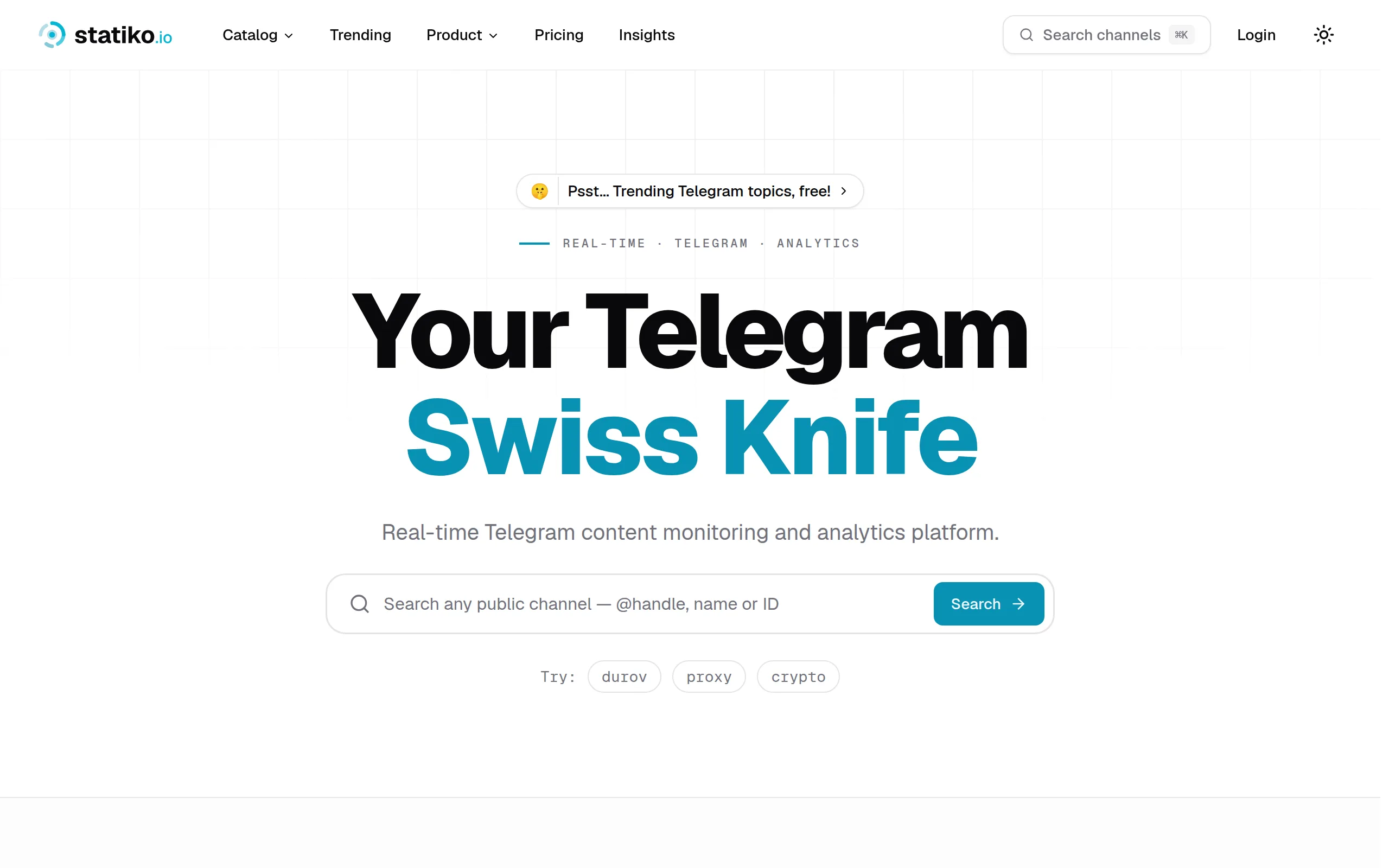
Statiko
Monitor any Telegram channel in real time - track posts, edits, deletions, and growth with AI recaps 📡

Shibui
AI website builder - describe your business, pick a niche template, edit by chatting, and publish instantly ✨

Pro Service
Find verified home service professionals, compare quotes, and pay securely through escrow - built for Brazilians across the US 🏠
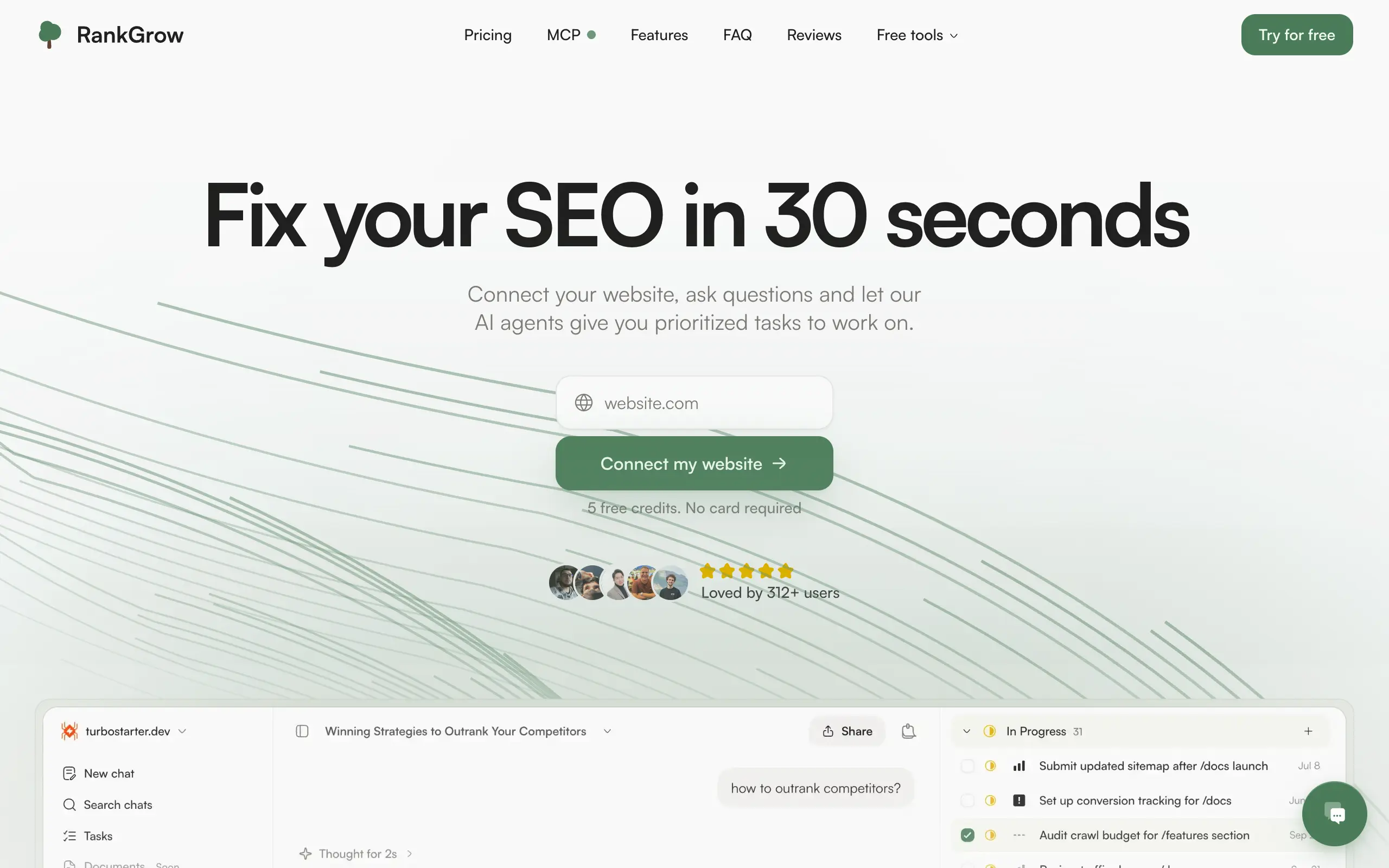
RankGrow
Fix your SEO with AI agents - connect Search Console, get prioritized tasks, and grow organic traffic 📈
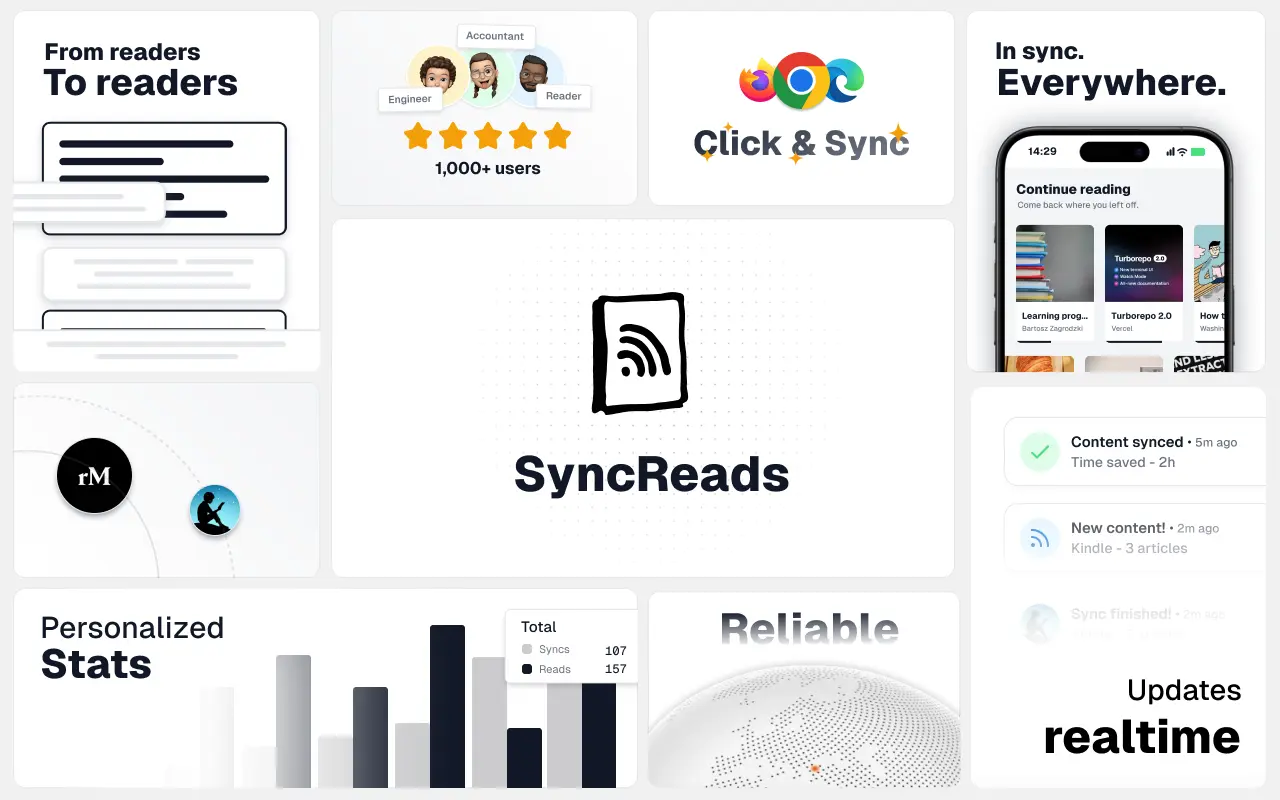
SyncReads
Sync your favorite content for distraction-free reading, save time and replace multiple apps. Anytime, anywhere 🔄
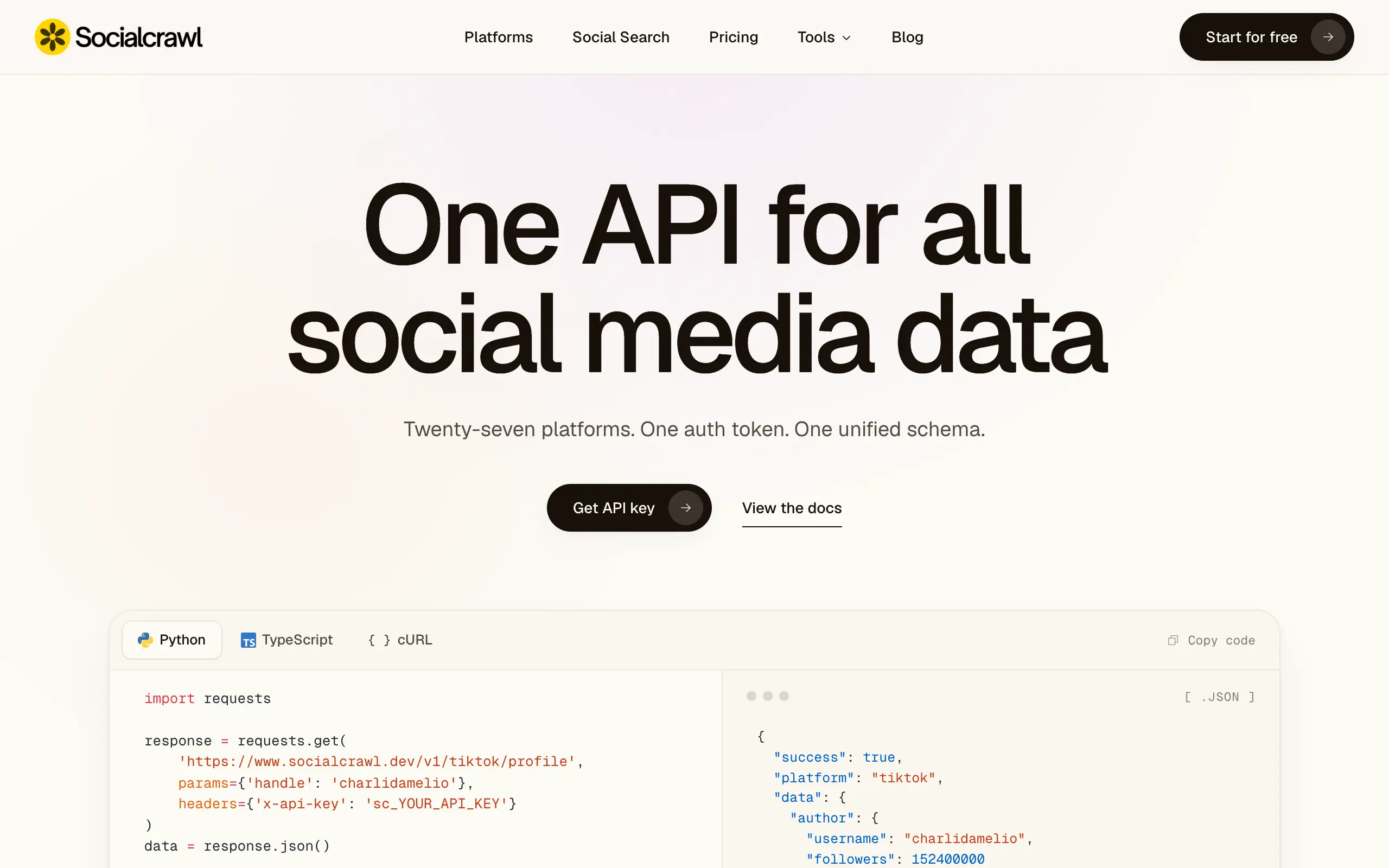
Socialcrawl
Get clean, structured data from 21 platforms like TikTok, Instagram, and YouTube with a single request 📊
Statiko
Monitor any Telegram channel in real time - track posts, edits, deletions, and growth with AI recaps 📡
Shibui
AI website builder - describe your business, pick a niche template, edit by chatting, and publish instantly ✨
Pro Service
Find verified home service professionals, compare quotes, and pay securely through escrow - built for Brazilians across the US 🏠
RankGrow
Fix your SEO with AI agents - connect Search Console, get prioritized tasks, and grow organic traffic 📈
SyncReads
Sync your favorite content for distraction-free reading, save time and replace multiple apps. Anytime, anywhere 🔄
Socialcrawl
Get clean, structured data from 21 platforms like TikTok, Instagram, and YouTube with a single request 📊
Statiko
Monitor any Telegram channel in real time - track posts, edits, deletions, and growth with AI recaps 📡
Shibui
AI website builder - describe your business, pick a niche template, edit by chatting, and publish instantly ✨
Pro Service
Find verified home service professionals, compare quotes, and pay securely through escrow - built for Brazilians across the US 🏠
RankGrow
Fix your SEO with AI agents - connect Search Console, get prioritized tasks, and grow organic traffic 📈
SyncReads
Sync your favorite content for distraction-free reading, save time and replace multiple apps. Anytime, anywhere 🔄
Socialcrawl
Get clean, structured data from 21 platforms like TikTok, Instagram, and YouTube with a single request 📊
Statiko
Monitor any Telegram channel in real time - track posts, edits, deletions, and growth with AI recaps 📡
Shibui
AI website builder - describe your business, pick a niche template, edit by chatting, and publish instantly ✨
Pro Service
Find verified home service professionals, compare quotes, and pay securely through escrow - built for Brazilians across the US 🏠
RankGrow
Fix your SEO with AI agents - connect Search Console, get prioritized tasks, and grow organic traffic 📈
SyncReads
Sync your favorite content for distraction-free reading, save time and replace multiple apps. Anytime, anywhere 🔄
Socialcrawl
Get clean, structured data from 21 platforms like TikTok, Instagram, and YouTube with a single request 📊
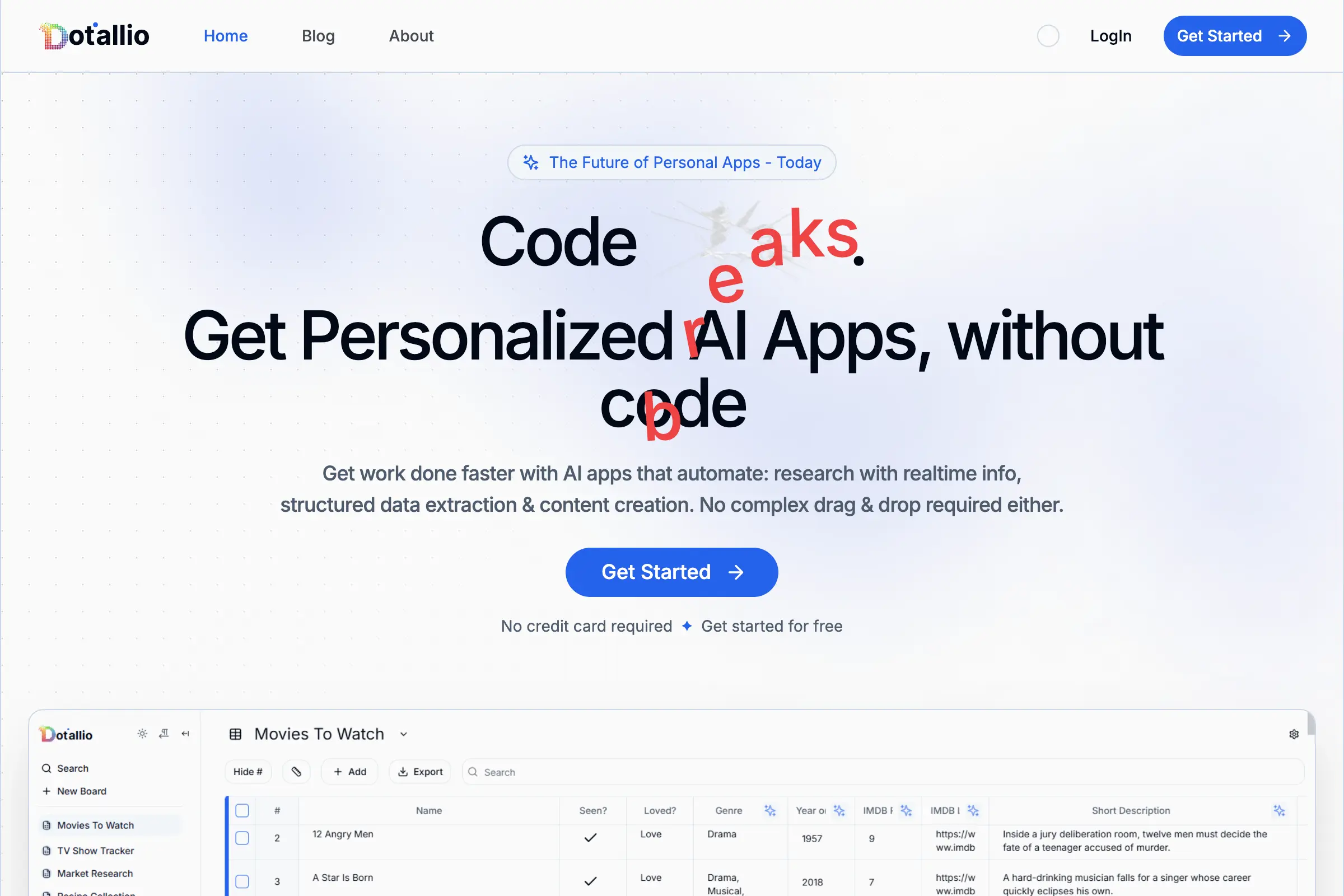
Dotallio
Personalized AI apps that automate research, data extraction, and content creation without code 🤖

Talk to Santa
Enjoy a magical live video chat or receive a unique AI-generated video greeting from Santa Claus 🎅

pozywka.pl
Scalable blog for food journalist, focused on performance and user experience 🌭
zagrodzki.me
Personal blog and portfolio of Bart Zagrodzki, where he shares his knowledge and work 💼
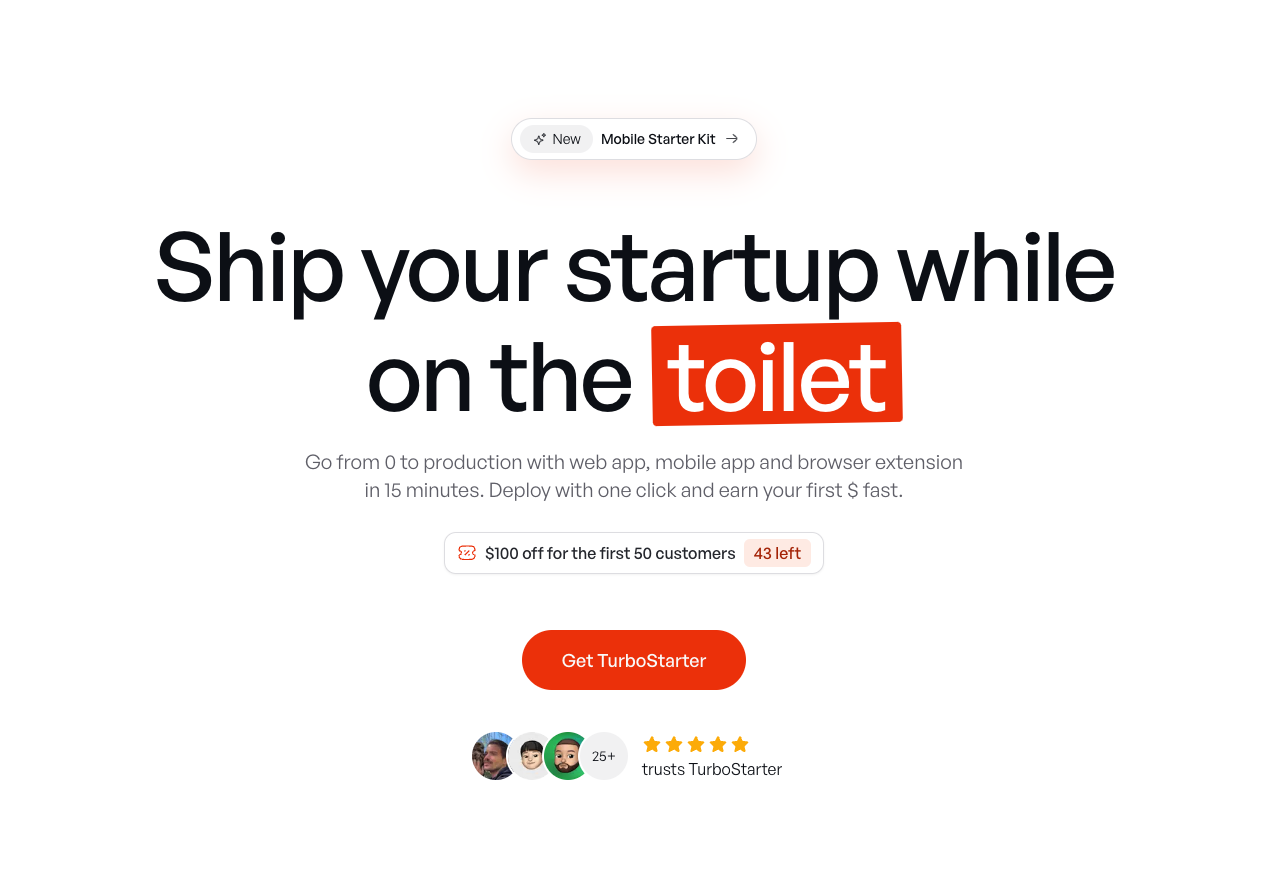
TurboStarter
Ship your startup everywhere. In minutes.
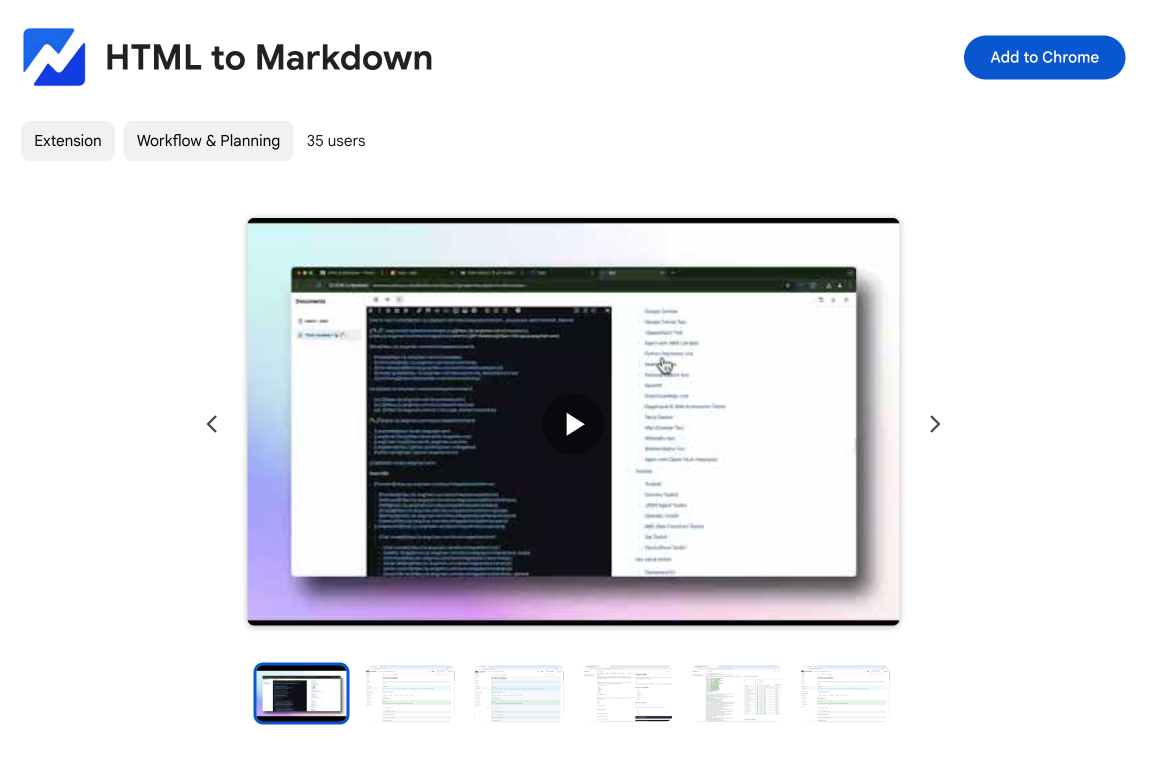
HTML to Markdown
Convert HTML to Markdown with ease, directly in your browser 📄
Dotallio
Personalized AI apps that automate research, data extraction, and content creation without code 🤖
Talk to Santa
Enjoy a magical live video chat or receive a unique AI-generated video greeting from Santa Claus 🎅
pozywka.pl
Scalable blog for food journalist, focused on performance and user experience 🌭
zagrodzki.me
Personal blog and portfolio of Bart Zagrodzki, where he shares his knowledge and work 💼
TurboStarter
Ship your startup everywhere. In minutes.
HTML to Markdown
Convert HTML to Markdown with ease, directly in your browser 📄
Dotallio
Personalized AI apps that automate research, data extraction, and content creation without code 🤖
Talk to Santa
Enjoy a magical live video chat or receive a unique AI-generated video greeting from Santa Claus 🎅
pozywka.pl
Scalable blog for food journalist, focused on performance and user experience 🌭
zagrodzki.me
Personal blog and portfolio of Bart Zagrodzki, where he shares his knowledge and work 💼
TurboStarter
Ship your startup everywhere. In minutes.
HTML to Markdown
Convert HTML to Markdown with ease, directly in your browser 📄
Dotallio
Personalized AI apps that automate research, data extraction, and content creation without code 🤖
Talk to Santa
Enjoy a magical live video chat or receive a unique AI-generated video greeting from Santa Claus 🎅
pozywka.pl
Scalable blog for food journalist, focused on performance and user experience 🌭
zagrodzki.me
Personal blog and portfolio of Bart Zagrodzki, where he shares his knowledge and work 💼
TurboStarter
Ship your startup everywhere. In minutes.
HTML to Markdown
Convert HTML to Markdown with ease, directly in your browser 📄
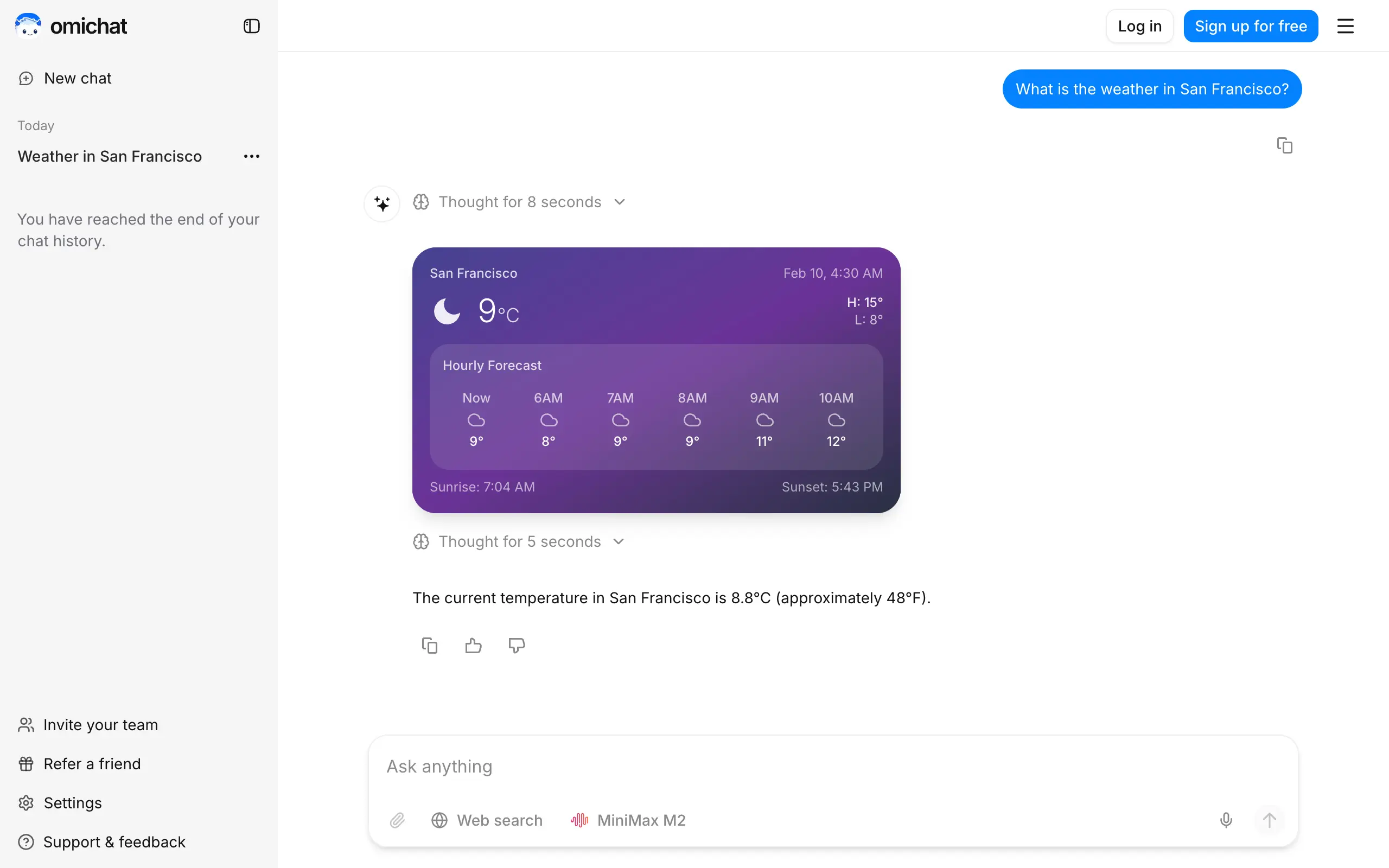
Omichat
Chat with 50+ AI models, including ChatGPT and Claude, in one place - switch models anytime without losing context 🤖
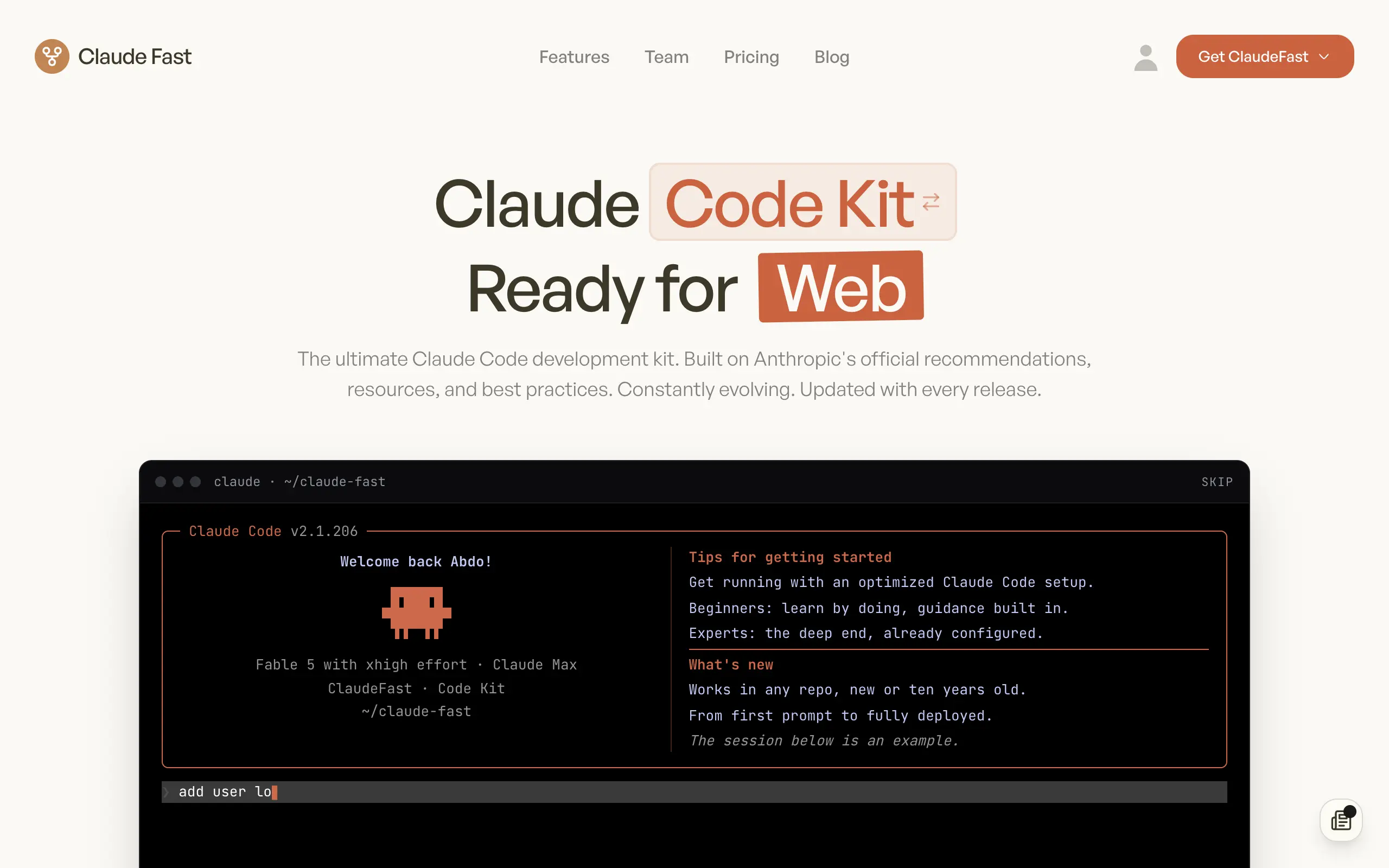
Claude Fast
Supercharge your Claude Code with 6x effective context window and specialized AI agents 🤖
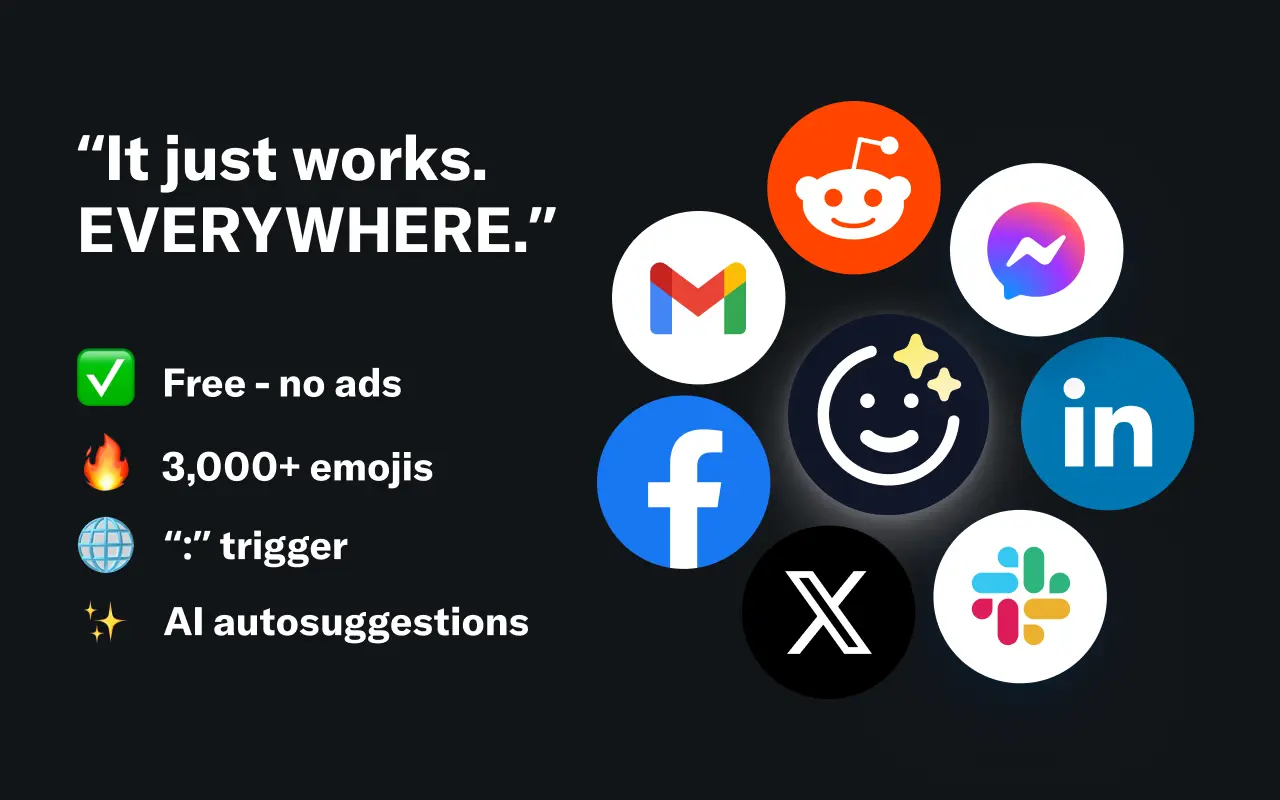
EmojAI
AI-powered emoji picker with smart, context-aware suggestions 🤖
Solohacker
Autonomous company launcher - AI agents work 24/7, escalate what matters, and you stay in control 🤖

BeRawi: Storytelling Coach
Practice storytelling daily with instant feedback to sound clearer, more engaging, and confident 🎤
Omichat
Chat with 50+ AI models, including ChatGPT and Claude, in one place - switch models anytime without losing context 🤖
Claude Fast
Supercharge your Claude Code with 6x effective context window and specialized AI agents 🤖
EmojAI
AI-powered emoji picker with smart, context-aware suggestions 🤖
Solohacker
Autonomous company launcher - AI agents work 24/7, escalate what matters, and you stay in control 🤖
BeRawi: Storytelling Coach
Practice storytelling daily with instant feedback to sound clearer, more engaging, and confident 🎤
Omichat
Chat with 50+ AI models, including ChatGPT and Claude, in one place - switch models anytime without losing context 🤖
Claude Fast
Supercharge your Claude Code with 6x effective context window and specialized AI agents 🤖
EmojAI
AI-powered emoji picker with smart, context-aware suggestions 🤖
Solohacker
Autonomous company launcher - AI agents work 24/7, escalate what matters, and you stay in control 🤖
BeRawi: Storytelling Coach
Practice storytelling daily with instant feedback to sound clearer, more engaging, and confident 🎤
Omichat
Chat with 50+ AI models, including ChatGPT and Claude, in one place - switch models anytime without losing context 🤖
Claude Fast
Supercharge your Claude Code with 6x effective context window and specialized AI agents 🤖
EmojAI
AI-powered emoji picker with smart, context-aware suggestions 🤖
Solohacker
Autonomous company launcher - AI agents work 24/7, escalate what matters, and you stay in control 🤖
BeRawi: Storytelling Coach
Practice storytelling daily with instant feedback to sound clearer, more engaging, and confident 🎤

Connect with like-minded people
Join our community to get feedback, support, and grow together with 1,000+ builders on board, let's ship it!
Join usShip your startup everywhere. In minutes.
Don't burn tokens on setup and start building features on day one.