API Driftwatch
Continuously discovers undocumented API changes from live traffic and docs, then generates compatibility alerts and updated SDK contracts.
Why API drift detection has become a production-critical capability
Modern APIs rarely remain static. Product teams add fields, rename parameters, change validation rules, introduce new response states, deprecate endpoints, and deploy internal service updates continuously. Even teams with disciplined API governance can experience a dangerous gap between what their API documentation says, what SDKs expose, and what production traffic actually does.
This gap is known as API drift.
API Driftwatch is an AI-powered API drift detection platform that continuously observes live API traffic, compares it with declared API contracts and documentation, detects undocumented changes, and generates compatibility alerts plus updated SDK contract recommendations.
The core value proposition is straightforward. Instead of learning about a breaking API change after customer complaints, failed integrations, or an incident review, engineering teams can identify the drift while it is emerging and act before it becomes an expensive production problem.
For companies operating public APIs, internal microservices, partner integrations, or multi-version SDK ecosystems, API drift detection software can become a key layer in the API reliability stack.
The central problem API Driftwatch solves
An OpenAPI file is a declaration of intent. Live traffic is evidence of reality. API Driftwatch continuously reconciles the two so teams can make decisions based on how APIs behave in production, not only on what documentation claims.
What is API drift?
API drift occurs when an API implementation, its observed production behavior, its documentation, and its client contracts stop matching one another.
An API may be technically available while still being operationally broken for part of its ecosystem. For example, a backend can return a successful HTTP response while silently removing a response property that older mobile clients rely on. A standard availability monitor may consider that endpoint healthy. An API drift monitoring platform identifies that the response contract changed and flags the downstream risk.
Common forms of API drift include:
- Undocumented endpoint changes, such as a newly deployed route that never appears in the API specification.
- Schema drift, including added, removed, renamed, nullable, or type-changed request and response fields.
- Behavioral drift, such as new status codes, modified pagination logic, altered default values, or changed error payloads.
- Authentication drift, where an endpoint begins requiring a scope, header, token format, or permission that previous clients did not need.
- Version drift, where a supposedly stable API version receives behavior changes that belong in a newer version.
- SDK drift, where generated or manually maintained client libraries lag behind actual endpoint behavior.
- Documentation drift, where docs describe examples and parameters that production no longer accepts.
The operational impact can be substantial. API changes sit at the intersection of release engineering, customer experience, security, integration reliability, and developer relations. A missing field can break a customer dashboard. A changed enum can cause a mobile app crash. A new undocumented endpoint can create a shadow security surface. A mismatch between a partner contract and production can trigger an integration outage.
The target audience for API Driftwatch
API Driftwatch is best positioned for organizations with enough API surface area, release velocity, or external dependency risk that manual contract review is no longer sufficient.
The platform should prioritize teams that can clearly connect API drift to reliability, revenue, compliance, or support costs.
Platform engineering teams
Teams responsible for API standards, service ownership, observability, and developer platforms need a scalable way to enforce contracts across many services.
API product teams
Public API owners need early warnings about compatibility issues that may affect customers, partners, integrations, and developer trust.
Enterprise integration teams
Organizations connecting ERPs, CRMs, payment tools, and internal services need to detect contract changes before business workflows fail.
Developer experience teams
DX teams can use production-derived change intelligence to keep API references, examples, changelogs, and SDKs accurate.
Primary buyer profile
The primary economic buyer is likely a VP of Engineering, Head of Platform, Director of API Engineering, CTO, or Chief Architect at a company with a growing API estate.
Their pain is not merely that documentation gets stale. Their deeper concern is that undocumented changes create unpredictable risk across distributed systems and external consumers.
These buyers usually care about:
- Reducing API-related incidents and support tickets
- Lowering mean time to detection for compatibility regressions
- Establishing dependable API governance without slowing release velocity
- Improving visibility across microservices and teams
- Protecting API adoption and partner relationships
- Supporting compliance and change-management requirements
- Avoiding the cost of maintaining SDKs and specs manually
Daily users and internal champions
The daily users may be backend engineers, platform engineers, SREs, technical writers, API architects, QA leads, and developer advocates.
Each user group needs a different outcome:
- Backend engineers need actionable diffs, reproduction evidence, ownership details, and suggested fixes.
- SRE teams need alert routing, severity context, deployment correlation, and incident response workflows.
- API architects need cross-service contract governance and a reliable inventory of observed endpoints.
- Technical writers need confidence that docs match production behavior.
- SDK maintainers need contract updates that can feed client generation pipelines.
- Security teams need visibility into unknown or unexpected API behavior.
A successful API drift detection product should not force every stakeholder into a single dashboard. It should provide role-specific workflows while relying on one trusted evidence layer.
The API drift monitoring market gap
Existing API tooling typically excels at one part of the API lifecycle. API design platforms help teams author specifications. API gateways manage routing and policies. observability products reveal latency and errors. testing tools validate expected behavior before release. API security tools identify suspicious behavior and attack patterns.
However, a gap often remains between declared contracts and real production behavior over time.
An OpenAPI linter can tell a team that a specification has a structural problem. It cannot always tell them that production responses now contain a new undocumented field. A unit test can confirm expected behavior for covered scenarios. It cannot reliably capture every tenant-specific, feature-flagged, region-specific, or partner-only behavior that happens in live traffic.
This is where API Driftwatch can establish a differentiated position.
| Capability | API design tools | Traditional monitoring | API security tools | API Driftwatch |
|---|---|---|---|---|
| Author API specifications | ✅ | ❌ | ❌ | Supports comparison |
| Observe real production contracts | Limited | Partial | Partial | ✅ |
| Detect undocumented contract changes | ❌ | ❌ | Partial | ✅ |
| Estimate client compatibility risk | Partial | ❌ | ❌ | ✅ |
| Generate SDK contract recommendations | Partial | ❌ | ❌ | ✅ |
Why now is the right time for AI API contract intelligence
Several technology trends make an AI API change detection product more compelling than it would have been a few years ago.
First, service architectures are increasingly distributed. An API request may cross gateways, service meshes, serverless functions, third-party services, and internal microservices. Ownership can be fragmented, and the team that changes an endpoint may not know every consumer affected.
Second, delivery cycles have accelerated. Continuous deployment, feature flags, experiment frameworks, and AI-assisted development let organizations ship faster. That speed improves delivery capacity but increases the chance that a subtle contract change bypasses documentation and review workflows.
Third, organizations are adopting API-first products and embedded integrations. APIs are no longer only internal engineering interfaces. They are often customer-facing products, partner channels, automation foundations, and critical business infrastructure.
Finally, modern AI can help normalize noisy traffic, cluster related schemas, identify meaningful anomalies, explain compatibility implications, and draft contract updates. AI should not replace deterministic schema analysis. It should make the resulting evidence more useful and easier to act on.
For credible market sizing and category validation, the final go-to-market plan should cite recent sources such as an industry API management report, a software supply-chain report, and a developer survey. Use the publication year, publisher, report title, and page number when making numerical claims rather than relying on uncited estimates.
How API Driftwatch works
The product should operate as a continuous reconciliation system. It gathers observed API behavior from approved production telemetry sources, maps that behavior to declared contracts, evaluates changes with deterministic compatibility rules, then uses AI to provide explanation and remediation guidance.
Ingest live API traffic safely
API Driftwatch should support multiple collection paths because enterprise infrastructure is heterogeneous.
Potential data sources include:
- API gateway logs from systems such as Kong, Apigee, AWS API Gateway, or NGINX
- Reverse proxies and load balancers
- Service mesh telemetry
- OpenTelemetry traces and span attributes
- Application middleware for frameworks such as Node.js, Python, Java, Go, and .NET
- API request logs stored in a data warehouse
- Controlled network capture where policy permits it
The ingestion architecture should favor metadata and sampled payload shapes over indiscriminate full-payload collection. A drift detection platform needs endpoint paths, methods, status codes, headers, response timing, schema structure, and selected values. It does not need to retain every raw customer record forever.
This design choice is fundamental for privacy, cost, and enterprise adoption.
Discover endpoints and inferred schemas
After ingesting traffic, API Driftwatch identifies methods, route patterns, request structures, response structures, and behavior variants.
A robust discovery engine should:
- Normalize dynamic paths such as
/users/8291/orders/3004into parameterized route candidates. - Group requests by endpoint, method, version, tenant class, and deployment environment.
- Infer field names, data types, nested objects, arrays, requiredness, formats, enums, and nullability.
- Track response status code distributions and error payload structures.
- Identify low-frequency anomalies separately from stable behavior.
- Preserve evidence windows so users can inspect when a change first appeared.
Schema inference must be confidence-aware. A field observed once in a low-volume error response should not be treated the same way as a field present in 99.9% of successful responses for a high-volume endpoint.
Compare observed behavior with API documentation
The comparison layer should accept OpenAPI 3.x specifications first, with future support for GraphQL schemas, AsyncAPI documents, protobuf definitions, and internal IDLs.
API Driftwatch can compare three versions of truth:
- Declared contract stored in a repository, registry, or API design platform
- Observed contract derived from approved production traffic
- Historical contract that records behavior over time
This three-way comparison is more valuable than a basic file diff. A Git diff can show that a specification changed. It cannot automatically prove that production behavior changed, show whether the deployed API matches the new spec, or reveal that a deployed change had no corresponding documentation update.
Classify compatibility impact
Not every detected difference deserves a PagerDuty alert. A practical API drift detection platform must classify severity based on compatibility risk, confidence, traffic volume, consumer exposure, and policy.
For REST APIs, examples of high-risk changes may include:
- Removing a previously observed response field
- Changing a field from a string to an object
- Making an optional request property required
- Removing an enum value that active clients send
- Returning a new authentication or authorization failure pattern
- Changing a successful endpoint to return a different status code family
- Introducing a breaking pagination or cursor format change
Lower-risk events may include adding an optional response field, adding a new endpoint, or documenting a stable behavior that already existed in production.
Avoid alert fatigue
A drift event is not automatically an incident. The alerting model should distinguish between informational documentation gaps, review-needed changes, probable compatibility breaks, and confirmed customer-facing regressions.
Generate useful contract and SDK updates
The AI layer should make evidence comprehensible, but generated output must remain reviewable and deterministic where it affects code.
A high-value workflow looks like this:
The key product principle is human-approved automation. API Driftwatch should reduce time spent finding and describing changes, not silently rewrite contracts that downstream teams depend on.
Core features for an API drift detection platform
A compelling initial product needs enough depth to solve the complete workflow, while avoiding a bloated first release.
Live API inventory and endpoint discovery
The platform should create a continuously updated inventory of discovered API routes, versions, methods, traffic levels, owners, environments, and documented status.
Useful inventory views include:
- Undocumented endpoints with observed request volume
- Documented endpoints with no recent production traffic
- Endpoints with incomplete schema coverage
- New routes appearing after a deployment
- Deprecated routes that remain actively used
- Sensitive endpoints classified by authentication and data-handling policy
This inventory is valuable even before advanced AI features are fully mature. Many teams simply do not have an accurate, current answer to the question, “What APIs are actually running in production?”
Contract drift timeline
Every endpoint needs a historical timeline that shows contract changes alongside deployment events and traffic patterns.
Users should be able to answer:
- When did this field first appear or disappear?
- Which service deployment introduced it?
- Is it present in all environments?
- How many clients or tenants may be affected?
- Was the change documented?
- Did error rates or latency change after the drift event?
This evidence-first interface builds trust. Engineers are less likely to dismiss alerts when the platform shows a clear before-and-after schema sample, timestamps, frequency, and related release information.
Compatibility scoring
A generic severity badge is not enough. API Driftwatch should calculate a compatibility score with explainable factors.
Possible inputs include:
- Contract change type
- Field direction, such as request versus response
- Observed client usage
- API versioning promises
- SDK language exposure
- Endpoint traffic volume
- Presence of external or partner consumers
- Historical stability of the endpoint
- Configured organization policy
For example, adding an optional response property may receive a low score, while removing a response property used by multiple SDK versions should receive a critical score.
Consumer-aware impact analysis
The strongest long-term differentiator is the ability to move from “something changed” to “these consumers are likely affected.”
API Driftwatch can correlate observed endpoint behavior with:
- API keys or application identifiers
- User-agent and SDK version information
- Gateway consumer metadata
- Known partner accounts
- Mobile app versions
- Internal service identities
- Request paths and field usage patterns
Privacy controls must be built in. The product should allow teams to hash, tokenize, or pseudonymize identifiers while still measuring consumer cohorts.
Review workflows and integrations
Drift alerts must reach teams where they work. Initial integrations should focus on systems with high operational value:
- GitHub and GitLab pull request comments
- Slack and Microsoft Teams notifications
- Jira and Linear issue creation
- PagerDuty or Opsgenie escalation for critical regressions
- Datadog and Grafana links for correlated observability
- OpenAPI registries and artifact repositories
- CI checks for contract approval policies
For source control integrations, GitHub is an obvious early ecosystem target because contract definitions and SDK generation workflows are frequently managed through repositories.
The unique selling proposition of API Driftwatch
The unique selling proposition is not simply “AI for API documentation.” That category is too broad and increasingly crowded.
API Driftwatch should position itself as:
The production truth layer for API contracts that detects undocumented drift, explains compatibility risk, and turns live behavior into reviewable SDK and documentation updates.
This positioning has several advantages.
First, it anchors the product in production evidence rather than static design-time analysis. Second, it addresses both reliability and developer experience. Third, it avoids claiming that AI alone can guarantee API correctness. The platform combines deterministic schema comparison with AI-assisted interpretation and remediation.
A concise differentiation framework is:
- Production-native because it learns from observed live behavior.
- Contract-aware because it compares traffic with API specifications and historical baselines.
- Compatibility-focused because it prioritizes changes that can break consumers.
- Workflow-connected because it produces tickets, pull requests, and SDK-ready artifacts.
- Privacy-conscious because it can minimize payload retention and apply redaction at ingestion.
- Explainable because every alert should show the underlying evidence and rule logic.
Recommended technical architecture and tech stack
API Driftwatch requires a technical design that balances real-time responsiveness, deep historical analysis, data privacy, and predictable operating cost.
Product application stack
For the customer-facing application, a modern TypeScript stack is a strong default.
- Frontend using React for the dashboard and interactive schema diffs.
- Web framework using Next.js for server-rendered application pages, authentication flows, and API endpoints.
- Styling using Tailwind CSS for a consistent, fast-to-iterate design system.
- Database using PostgreSQL for organizations, users, policies, integrations, alert state, endpoint metadata, and workflow records.
- ORM using Prisma when development speed and typed access are priorities.
- Authentication using enterprise-ready SSO support with SAML and OIDC as the product moves upmarket.
For founders who want a fast path to a production-ready SaaS foundation, TurboStarter can reduce setup time for application structure, billing, authentication, and common SaaS concerns. The drift analysis engine should still be designed as a separate domain service rather than tightly coupled to the web application.
Ingestion and event processing
Traffic ingestion is the technical heart of the product. It should be built for burst handling, replayability, isolation, and tenant controls.
A practical architecture can include:
- An edge collector or lightweight agent written in Go or Rust
- An HTTP ingestion API for gateways and log forwarders
- A message bus such as Kafka, Redpanda, or a managed cloud queue
- Stream workers for normalization and route-template inference
- Object storage for encrypted short-retention raw evidence
- A columnar analytics store such as ClickHouse for high-volume event aggregation
- PostgreSQL for durable control-plane and workflow data
The trade-off is complexity. Kafka plus ClickHouse offers high throughput and analytical flexibility, but it introduces operational overhead. An early-stage SaaS can start with managed queues, PostgreSQL partitioning, and object storage, then move high-volume tenants to a dedicated analytics pipeline when usage justifies it.
Schema inference and comparison engine
The compatibility engine should be deterministic, testable, and independent from the large language model layer.
Recommended capabilities include:
- JSON schema extraction and canonicalization
- OpenAPI parsing and validation
- Structural schema diffs
- Requiredness and nullability comparison
- Enum and format change detection
- Status code and error-body drift detection
- Configurable semantic versioning policies
- Baseline windows and confidence thresholds
- Suppression rules with expiration dates
- Change clustering to prevent duplicate alert storms
A simplified representation of a drift event might look like this:
type DriftEvent = {
  endpointId: string;
  method: "GET" | "POST" | "PUT" | "PATCH" | "DELETE";
  changeType: "field_removed" | "type_changed" | "status_code_added";
  fieldPath?: string;
  previousShape: unknown;
  observedShape: unknown;
  confidence: number;
  compatibilityRisk: "low" | "medium" | "high" | "critical";
  firstSeenAt: string;
  evidenceCount: number;
};
AI layer and its boundaries
Use AI for tasks where language reasoning and pattern explanation add real value:
- Summarizing a multi-field contract diff
- Drafting changelog entries
- Proposing OpenAPI descriptions and examples
- Explaining why a change may be breaking
- Grouping related events across endpoints
- Suggesting likely owning teams from service metadata
- Turning a drift event into a clear issue description
Do not rely solely on an LLM to determine whether a field changed from an integer to a string. Deterministic parsers should establish factual changes first. The model should receive structured, redacted evidence and produce an explanation with clear uncertainty boundaries.
This hybrid approach improves trustworthiness and reduces hallucination risk.
Monetization strategy for API Driftwatch
API Driftwatch should use pricing that aligns with the customer’s observable API footprint while remaining easy to understand.
Recommended pricing model
A hybrid model combining platform access with usage tiers is appropriate.
- Starter plan for small teams with a limited number of services, shorter retention, basic alerts, and one source-control integration.
- Growth plan for scale-ups needing more endpoints, multiple environments, Slack or Jira workflows, historical timelines, and SDK contract exports.
- Enterprise plan for high-volume traffic, SSO, audit logs, private networking, dedicated retention controls, custom data residency, advanced RBAC, and support agreements.
The main billable metric could be observed API operations, tracked endpoints, or monitored services. Each has trade-offs.
| Pricing metric | Customer clarity | Revenue alignment | Risk |
|---|---|---|---|
| Tracked endpoints | High | Moderate | May underprice high traffic |
| API operations | Moderate | High | Can feel variable |
| Monitored services | High | Moderate | Complex service definitions |
| Hybrid platform plus usage | High | High | Requires transparent billing |
A sensible approach is a base platform fee plus included event volume and clear overage bands. Do not charge based on the number of detected drift events. Customers should never feel discouraged from discovering problems.
Expansion revenue opportunities
Enterprise expansion can come from capabilities with tangible governance and operational value:
- Additional environments and regions
- Longer historical retention
- More API sources and integrations
- Advanced consumer impact analysis
- Private cloud or virtual private cloud deployment
- Compliance exports and audit reporting
- Dedicated support and onboarding
- API governance policy packs
- Premium SDK generation workflows
Risks and mitigation strategies
API Driftwatch addresses sensitive production data and makes claims about compatibility. Those realities require a conservative product strategy.
Raw API payloads may contain personal data, credentials, payment information, or proprietary business records. Mitigate this risk with field-level redaction, token detection, configurable allowlists, encrypted transport and storage, short raw retention, tenant-managed keys where required, and a metadata-first collection mode.
Early schema inference can be noisy because APIs behave differently across tenants, feature flags, and edge cases. Use confidence thresholds, minimum sample sizes, baseline windows, change clustering, configurable rules, and an explicit feedback loop where teams can mark expected behavior.
Generated contract patches may be incomplete or overly confident. Keep the source-of-truth diff deterministic, label AI suggestions clearly, include evidence links, and require review before changes are published or merged.
Security reviews can slow sales, especially when traffic data is involved. Prepare documentation early for architecture, encryption, data retention, subprocessors, access controls, incident response, and deployment options. A strong security posture is a product feature, not only a legal requirement.
Large observability, API management, and security vendors may add drift features. Defend the position with superior production-to-contract reconciliation, consumer-aware compatibility intelligence, high-quality workflow integrations, and a focused data model built specifically for API contract evolution.
Go-to-market strategy and competitive advantage
The initial wedge should target teams already feeling pain from API reliability and documentation gaps. Broad “API intelligence” messaging is less effective than a concrete promise tied to a known operational failure.
Strong initial messages include:
- Detect undocumented breaking API changes before customers do
- Keep OpenAPI specifications and SDK contracts aligned with production
- Turn live API behavior into reviewable compatibility alerts
- Find shadow endpoints and stale API documentation automatically
Best early adopter segments
Early adopters are likely to include:
- B2B SaaS companies with public developer APIs
- Fintech and payments platforms with strict partner compatibility expectations
- Logistics, commerce, and marketplace businesses with many integrations
- Healthcare and regulated software companies with formal change controls
- Developer-tool companies operating complex APIs and SDKs
- Enterprises modernizing from monoliths to microservices
These teams have both the pain and the technical maturity to install collectors, connect contract repositories, and evaluate a new operational product.
Build credibility through measurable outcomes
To demonstrate E-E-A-T in marketing and sales content, avoid vague claims such as “eliminate API outages.” Instead, help customers measure specific outcomes:
- Time from deployment to detection of undocumented drift
- Percentage of production endpoints represented in the API contract
- Number of compatibility risks discovered before customer reports
- Documentation freshness rate
- Time required to prepare an SDK contract update
- Reduction in API-related support tickets after adoption
- Percentage of drift events automatically routed to an accountable owner
Case studies should include context, implementation details, customer review process, and measurable before-and-after outcomes. When publishing numerical results, identify the measurement period and methodology.
An actionable MVP implementation plan
The first release should focus on delivering a clear, reliable answer to one high-value question:
What changed in production API behavior that is not reflected in our declared contract, and is it likely to break consumers?
Avoid trying to support every API protocol, every gateway, every SDK language, and every enterprise deployment model from day one.
Phase one: establish the evidence layer
Build the smallest credible workflow around REST and OpenAPI.
Phase two: make findings actionable
Once the evidence layer is stable, add the workflow features that turn detection into customer value.
Prioritize:
- GitHub pull request generation for OpenAPI updates
- Jira and Linear ticket workflows
- Configurable compatibility policies
- Deployment and release correlation
- Better baseline management
- Team ownership mapping
- Documentation and changelog generation
- SDK contract export for TypeScript first
TypeScript is a strategic first SDK target because many modern API teams use it across frontend and backend applications. Expand to Python, Java, Go, C#, and other languages based on customer demand and the code generation system selected.
Phase three: move upmarket
Enterprise readiness should follow validated demand, not precede it unnecessarily.
High-value enterprise capabilities include:
- SAML SSO and SCIM provisioning
- Fine-grained RBAC
- Audit logs
- Data residency controls
- Private connectivity
- Bring-your-own-cloud or private deployment options
- Advanced redaction and policy enforcement
- Consumer impact analysis
- GraphQL and asynchronous API support
Final perspective
API Driftwatch has the potential to occupy a valuable position between API observability, API governance, documentation automation, and compatibility management.
Its opportunity comes from a persistent operational reality. Teams can write excellent specifications and test suites, yet production systems still evolve in ways that are undocumented, unexpected, and risky for consumers. The winning product will not merely identify differences. It will provide reliable evidence, classify actual compatibility risk, protect sensitive data, and give engineers a fast path from detection to a reviewed fix.
The most defensible version of API Driftwatch is not an autonomous AI agent that changes API contracts on its own. It is a trusted production intelligence layer that makes API changes visible, explainable, and governable at the speed modern teams deploy.
More 🤖 AI Startup SaaS ideas
Discover more innovative ai startup SaaS ideas that are trending in 2026. Each idea is AI-generated with market validation and growth potential to help you find your next profitable venture faster than competitors.
Your competitors are building with TurboStarter
Below are some of the SaaS ideas that have been generated and built with our starter kit.
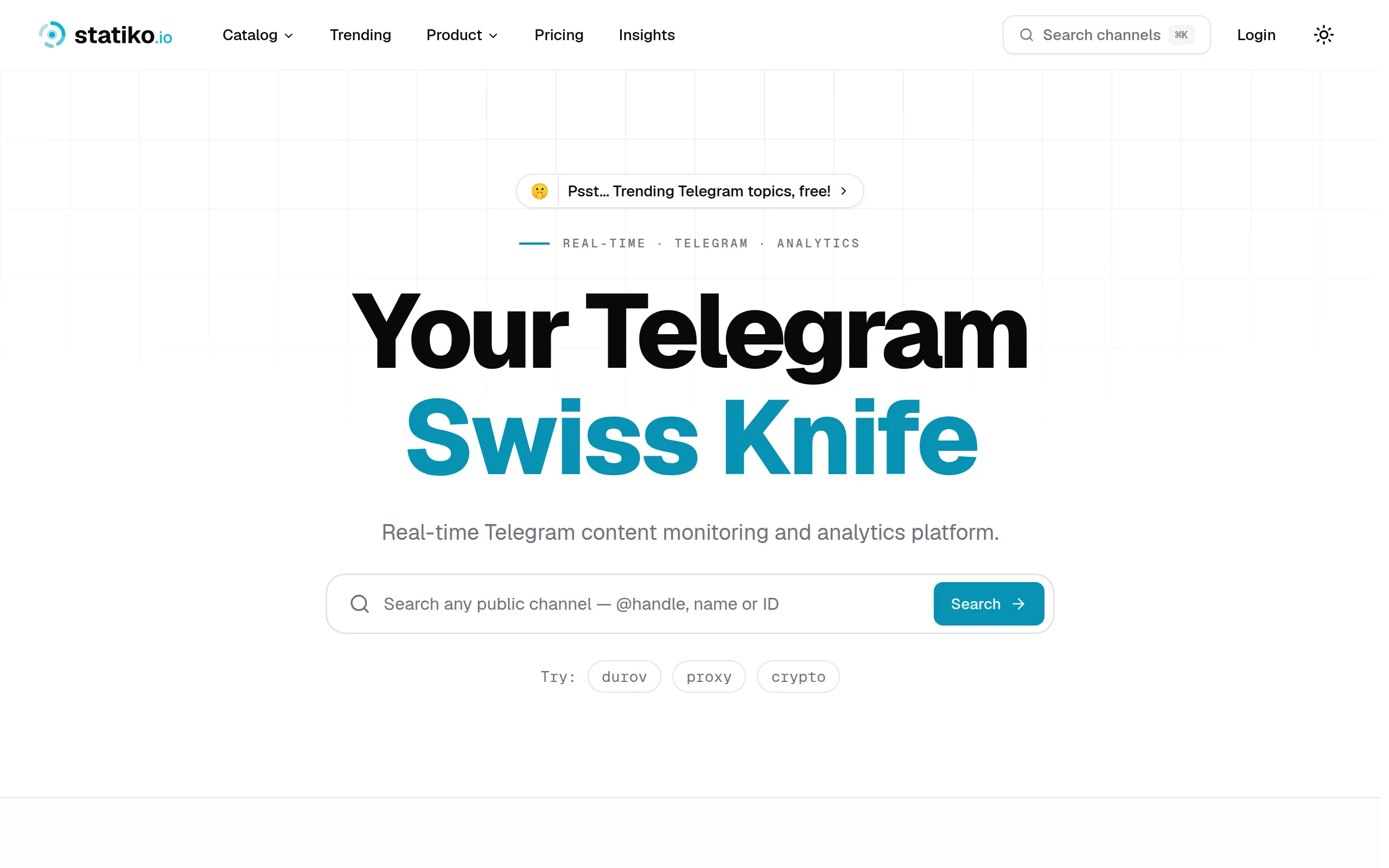
Statiko
Monitor any Telegram channel in real time - track posts, edits, deletions, and growth with AI recaps 📡

Shibui
AI website builder - describe your business, pick a niche template, edit by chatting, and publish instantly ✨

Pro Service
Find verified home service professionals, compare quotes, and pay securely through escrow - built for Brazilians across the US 🏠
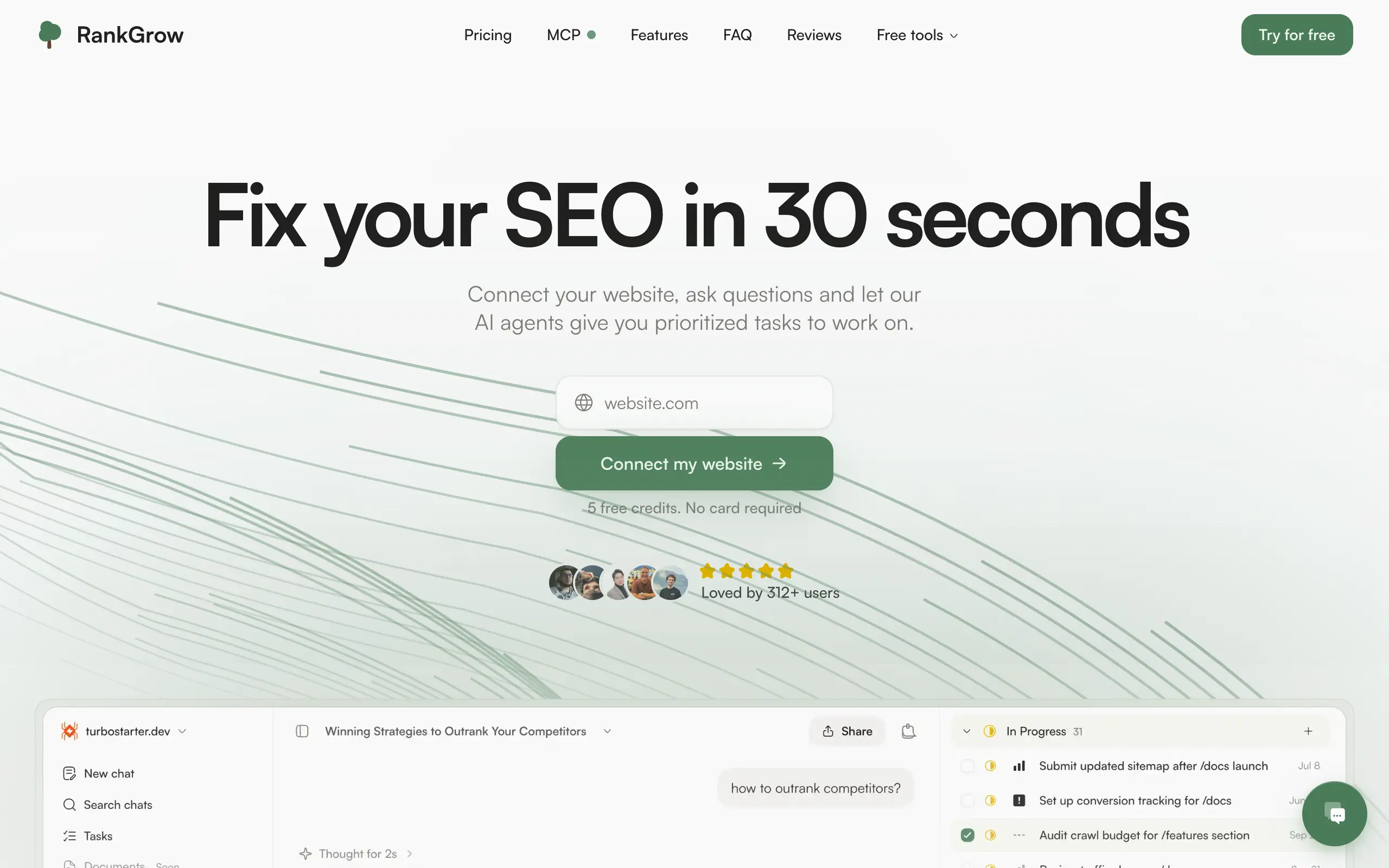
RankGrow
Fix your SEO with AI agents - connect Search Console, get prioritized tasks, and grow organic traffic 📈
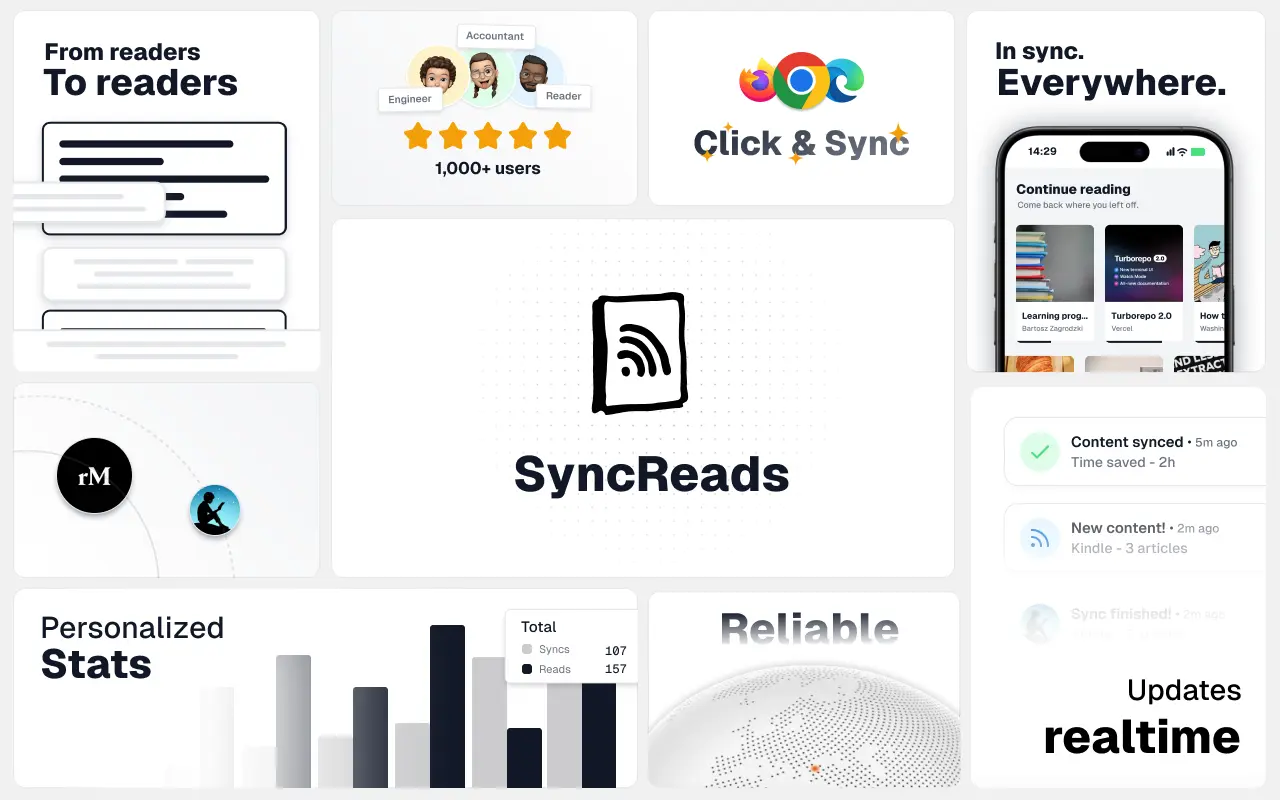
SyncReads
Sync your favorite content for distraction-free reading, save time and replace multiple apps. Anytime, anywhere 🔄
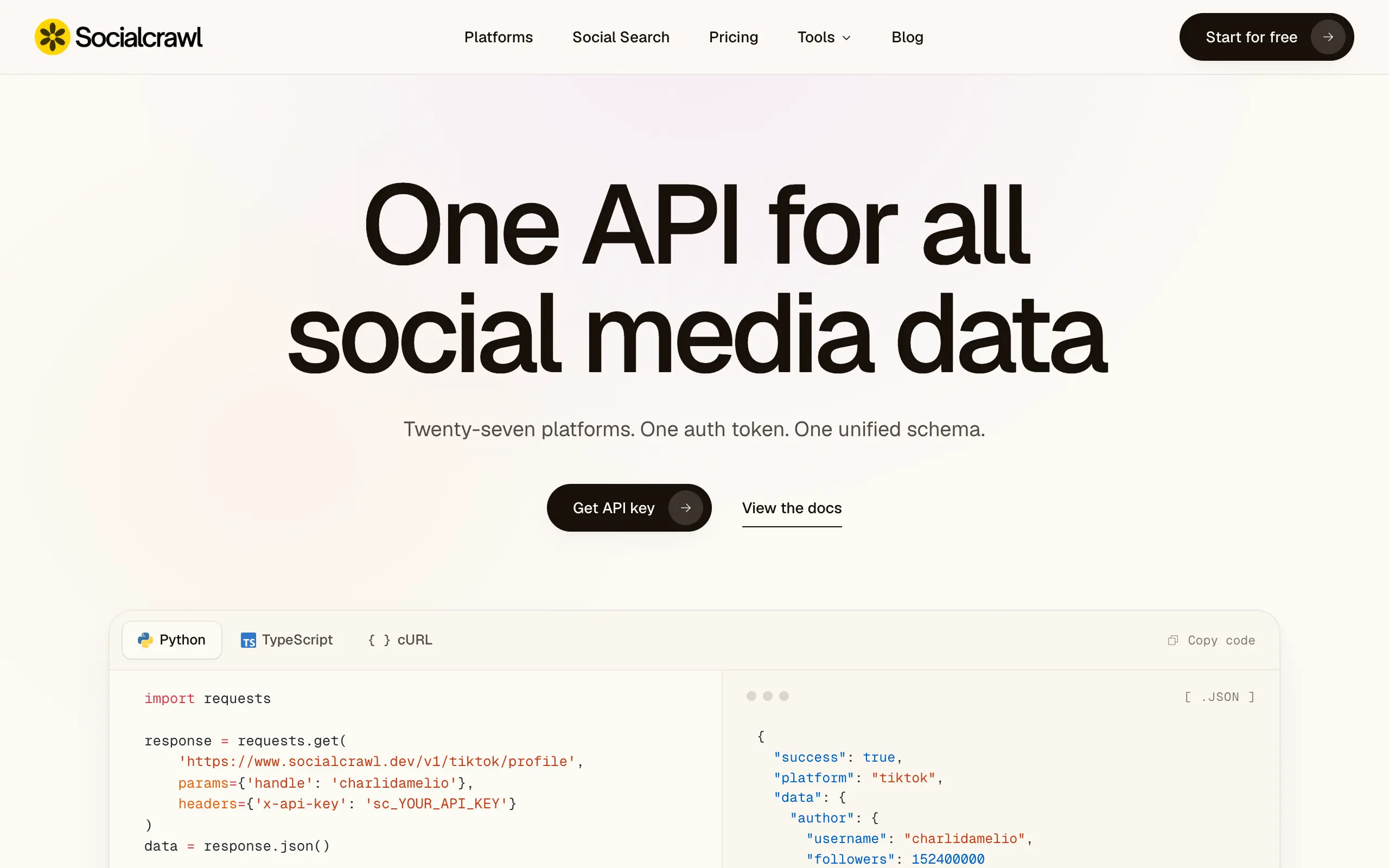
Socialcrawl
Get clean, structured data from 21 platforms like TikTok, Instagram, and YouTube with a single request 📊
Statiko
Monitor any Telegram channel in real time - track posts, edits, deletions, and growth with AI recaps 📡
Shibui
AI website builder - describe your business, pick a niche template, edit by chatting, and publish instantly ✨
Pro Service
Find verified home service professionals, compare quotes, and pay securely through escrow - built for Brazilians across the US 🏠
RankGrow
Fix your SEO with AI agents - connect Search Console, get prioritized tasks, and grow organic traffic 📈
SyncReads
Sync your favorite content for distraction-free reading, save time and replace multiple apps. Anytime, anywhere 🔄
Socialcrawl
Get clean, structured data from 21 platforms like TikTok, Instagram, and YouTube with a single request 📊
Statiko
Monitor any Telegram channel in real time - track posts, edits, deletions, and growth with AI recaps 📡
Shibui
AI website builder - describe your business, pick a niche template, edit by chatting, and publish instantly ✨
Pro Service
Find verified home service professionals, compare quotes, and pay securely through escrow - built for Brazilians across the US 🏠
RankGrow
Fix your SEO with AI agents - connect Search Console, get prioritized tasks, and grow organic traffic 📈
SyncReads
Sync your favorite content for distraction-free reading, save time and replace multiple apps. Anytime, anywhere 🔄
Socialcrawl
Get clean, structured data from 21 platforms like TikTok, Instagram, and YouTube with a single request 📊
Statiko
Monitor any Telegram channel in real time - track posts, edits, deletions, and growth with AI recaps 📡
Shibui
AI website builder - describe your business, pick a niche template, edit by chatting, and publish instantly ✨
Pro Service
Find verified home service professionals, compare quotes, and pay securely through escrow - built for Brazilians across the US 🏠
RankGrow
Fix your SEO with AI agents - connect Search Console, get prioritized tasks, and grow organic traffic 📈
SyncReads
Sync your favorite content for distraction-free reading, save time and replace multiple apps. Anytime, anywhere 🔄
Socialcrawl
Get clean, structured data from 21 platforms like TikTok, Instagram, and YouTube with a single request 📊
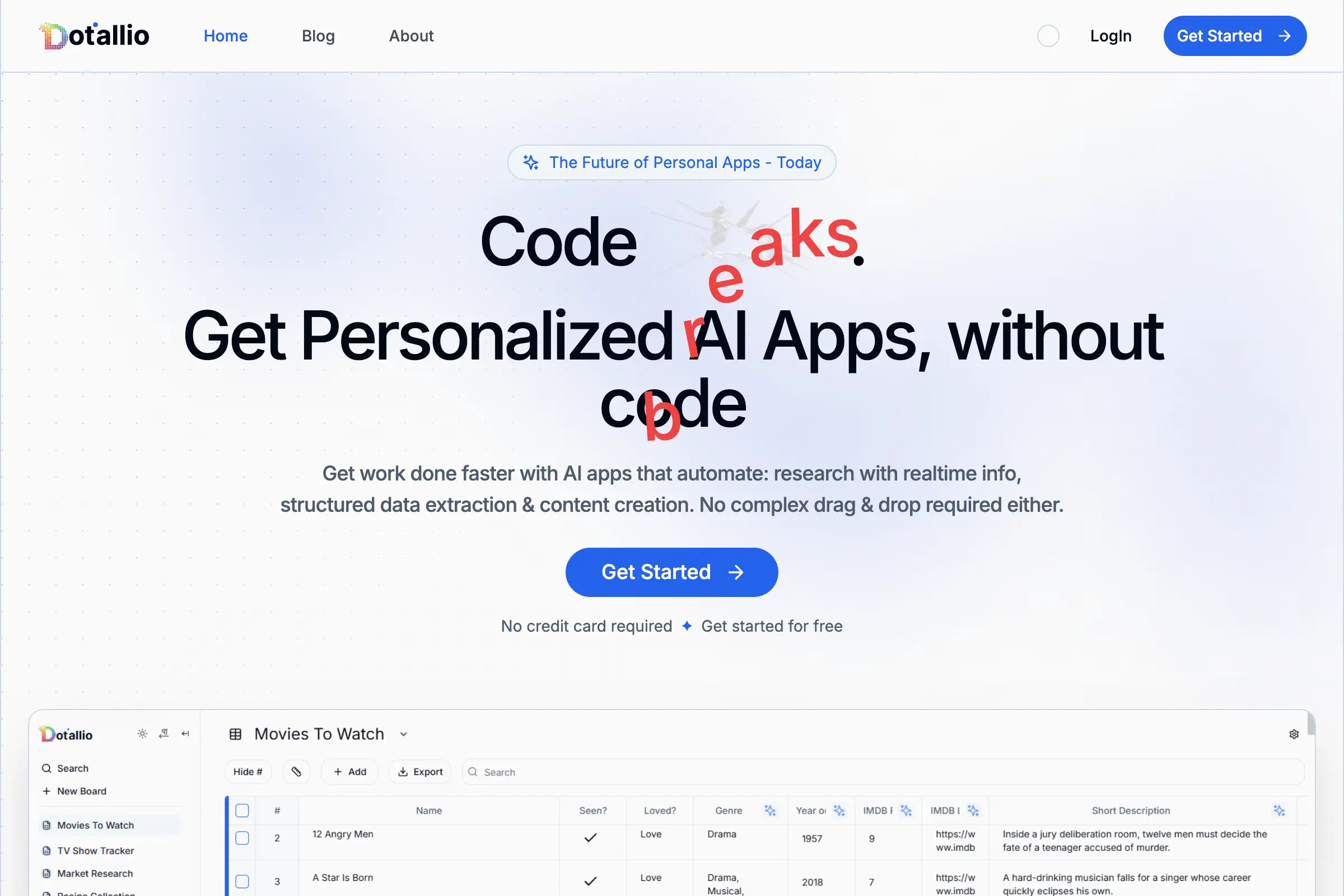
Dotallio
Personalized AI apps that automate research, data extraction, and content creation without code 🤖

Talk to Santa
Enjoy a magical live video chat or receive a unique AI-generated video greeting from Santa Claus 🎅

pozywka.pl
Scalable blog for food journalist, focused on performance and user experience 🌭
zagrodzki.me
Personal blog and portfolio of Bart Zagrodzki, where he shares his knowledge and work 💼
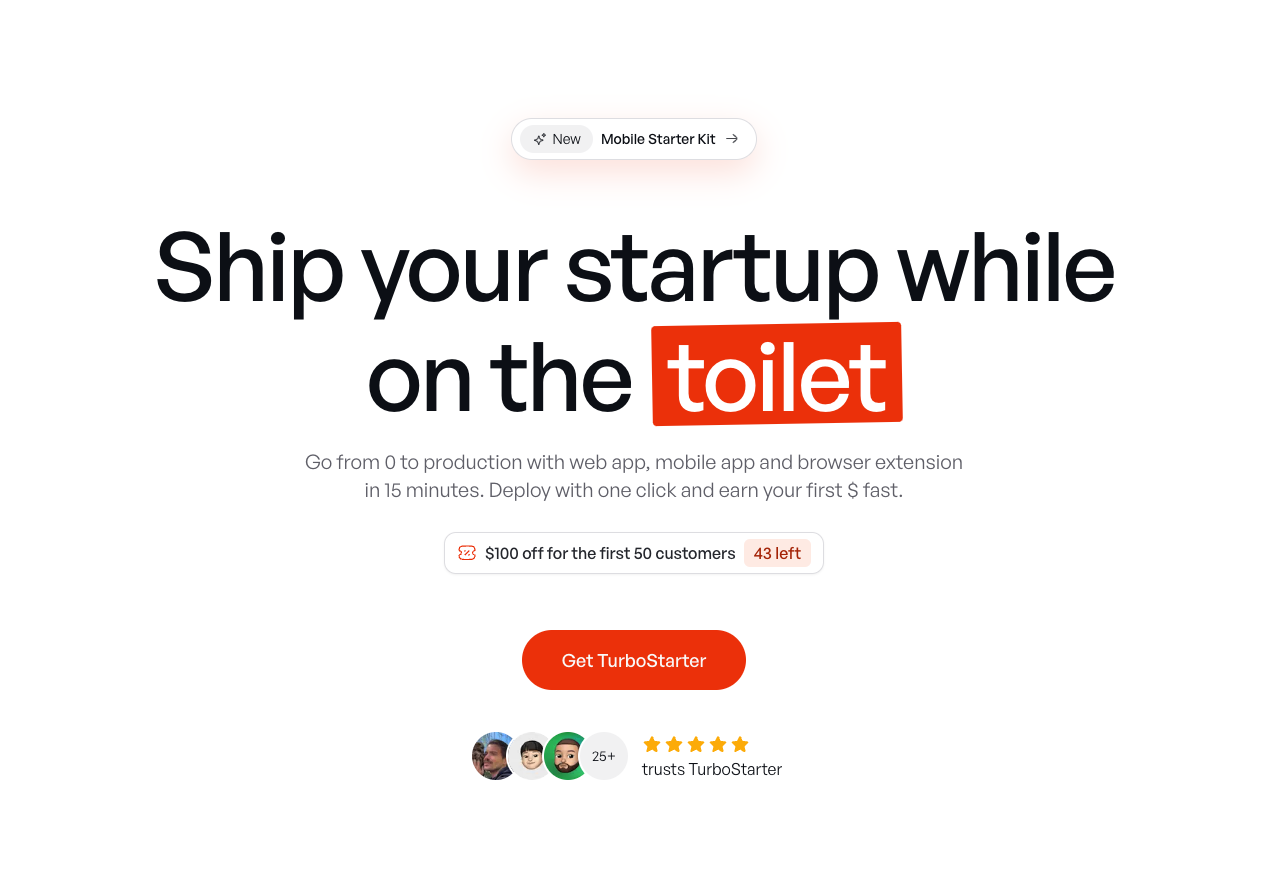
TurboStarter
Ship your startup everywhere. In minutes.
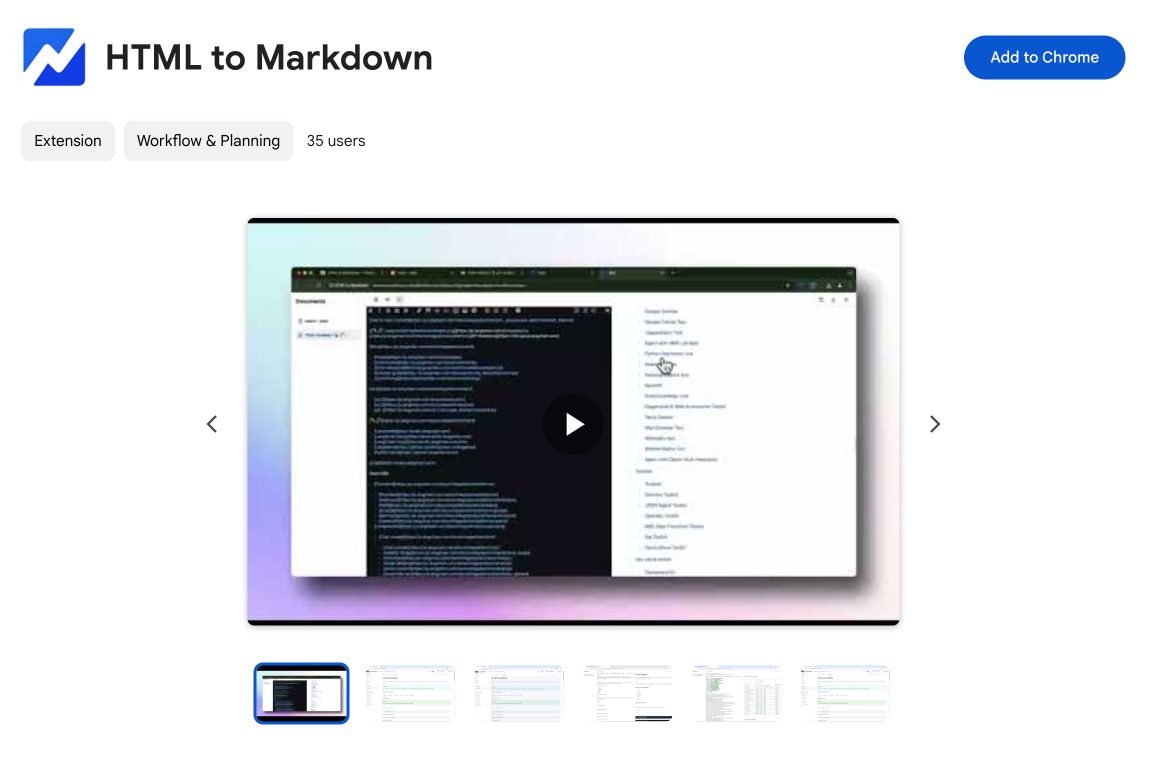
HTML to Markdown
Convert HTML to Markdown with ease, directly in your browser 📄
Dotallio
Personalized AI apps that automate research, data extraction, and content creation without code 🤖
Talk to Santa
Enjoy a magical live video chat or receive a unique AI-generated video greeting from Santa Claus 🎅
pozywka.pl
Scalable blog for food journalist, focused on performance and user experience 🌭
zagrodzki.me
Personal blog and portfolio of Bart Zagrodzki, where he shares his knowledge and work 💼
TurboStarter
Ship your startup everywhere. In minutes.
HTML to Markdown
Convert HTML to Markdown with ease, directly in your browser 📄
Dotallio
Personalized AI apps that automate research, data extraction, and content creation without code 🤖
Talk to Santa
Enjoy a magical live video chat or receive a unique AI-generated video greeting from Santa Claus 🎅
pozywka.pl
Scalable blog for food journalist, focused on performance and user experience 🌭
zagrodzki.me
Personal blog and portfolio of Bart Zagrodzki, where he shares his knowledge and work 💼
TurboStarter
Ship your startup everywhere. In minutes.
HTML to Markdown
Convert HTML to Markdown with ease, directly in your browser 📄
Dotallio
Personalized AI apps that automate research, data extraction, and content creation without code 🤖
Talk to Santa
Enjoy a magical live video chat or receive a unique AI-generated video greeting from Santa Claus 🎅
pozywka.pl
Scalable blog for food journalist, focused on performance and user experience 🌭
zagrodzki.me
Personal blog and portfolio of Bart Zagrodzki, where he shares his knowledge and work 💼
TurboStarter
Ship your startup everywhere. In minutes.
HTML to Markdown
Convert HTML to Markdown with ease, directly in your browser 📄
Omichat
Chat with 50+ AI models, including ChatGPT and Claude, in one place - switch models anytime without losing context 🤖
Claude Fast
Supercharge your Claude Code with 6x effective context window and specialized AI agents 🤖
EmojAI
AI-powered emoji picker with smart, context-aware suggestions 🤖
Solohacker
Autonomous company launcher - AI agents work 24/7, escalate what matters, and you stay in control 🤖

BeRawi: Storytelling Coach
Practice storytelling daily with instant feedback to sound clearer, more engaging, and confident 🎤
Omichat
Chat with 50+ AI models, including ChatGPT and Claude, in one place - switch models anytime without losing context 🤖
Claude Fast
Supercharge your Claude Code with 6x effective context window and specialized AI agents 🤖
EmojAI
AI-powered emoji picker with smart, context-aware suggestions 🤖
Solohacker
Autonomous company launcher - AI agents work 24/7, escalate what matters, and you stay in control 🤖
BeRawi: Storytelling Coach
Practice storytelling daily with instant feedback to sound clearer, more engaging, and confident 🎤
Omichat
Chat with 50+ AI models, including ChatGPT and Claude, in one place - switch models anytime without losing context 🤖
Claude Fast
Supercharge your Claude Code with 6x effective context window and specialized AI agents 🤖
EmojAI
AI-powered emoji picker with smart, context-aware suggestions 🤖
Solohacker
Autonomous company launcher - AI agents work 24/7, escalate what matters, and you stay in control 🤖
BeRawi: Storytelling Coach
Practice storytelling daily with instant feedback to sound clearer, more engaging, and confident 🎤
Omichat
Chat with 50+ AI models, including ChatGPT and Claude, in one place - switch models anytime without losing context 🤖
Claude Fast
Supercharge your Claude Code with 6x effective context window and specialized AI agents 🤖
EmojAI
AI-powered emoji picker with smart, context-aware suggestions 🤖
Solohacker
Autonomous company launcher - AI agents work 24/7, escalate what matters, and you stay in control 🤖
BeRawi: Storytelling Coach
Practice storytelling daily with instant feedback to sound clearer, more engaging, and confident 🎤

Connect with like-minded people
Join our community to get feedback, support, and grow together with 1,000+ builders on board, let's ship it!
Join usShip your startup everywhere. In minutes.
Don't burn tokens on setup and start building features on day one.