AutoDocPro
Transform codebases into beautiful documentation automatically with AI, saving developers hours and improving onboarding for teams.
Understanding the need for automated code documentation
Creating and maintaining high-quality documentation is an ongoing challenge for developers and organizations alike. As codebases evolve, keeping documentation up to date can become a time-consuming, error-prone task. This is where AI-powered tools like AutoDocPro come into play, offering the potential to automatically generate clear, accurate, and visually appealing documentation directly from source code.
In this article, we'll break down why automated code documentation is more than a developer's dream, who benefits most from solutions like AutoDocPro, where the strongest market opportunities lie, and how AI-driven SaaS platforms are transforming codebase documentation for teams large and small.
Who benefits: In-depth audience analysis
Who is searching for automated code documentation?
AutoDocPro targets a rich and diverse audience with overlapping but distinct pain points:
- Software engineers & developers: Seek ways to spend less time on documentation and more on actual coding.
- Engineering teams & leads: Need consistent, up-to-date docs to speed onboarding and cross-team collaboration.
- DevOps & SRE professionals: Require clear operational and infrastructure guidelines as part of maintainable codebases.
- Open-source project maintainers: Depend on quality documentation to attract contributions, reduce onboarding friction, and encourage community growth.
- Technical writers: Are challenged by the volume and technical depth required for manual documentation in fast-moving projects.
- Tech startups & SaaS companies: Aim to minimize onboarding overhead and improve product maintainability as they scale.
User intent and the documentation pain point
Most users landing on AutoDocPro are primarily interested in the following:
- Saving time with automated, up-to-date docs
- Improving team onboarding speed and reducing knowledge silos
- Boosting code quality and transparency
- Minimizing documentation drift as codebases change
Their search intent is action-oriented: they want immediate, reliable solutions that reduce manual work and ensure consistency without adding process overhead.
Market opportunity and gap analysis
The documentation dilemma: Market status
According to Gartner, ineffective documentation can increase onboarding time by over 40%, with up to 20% of a developer's time lost to unclear codebases and missing knowledge transfer. Despite an abundance of tools for code review and static analysis, there are relatively few solutions focused specifically on:
- End-to-end documentation automation
- Semantic understanding using AI/ML
- Real-time syncing of docs with evolving codebases
- Multi-language and multi-framework support
Manual documentation remains widely adopted. However, it's often out of sync and varies in quality across projects. While platforms like Docusaurus, Sphinx, or JSDoc generate docs from code comments, their quality is wholly dependent on the original comments—if those exist and are well-written. Traditional tools rarely provide AI-powered summaries, architecture insights, or visual diagrams.
Emerging trends
Several industry shifts are converging to create ideal conditions for a tool like AutoDocPro:
- Growing codebase complexity: Modern applications involve multiple frameworks, languages, and interconnected services.
- Remote and distributed workforces: Increased need for asynchronous knowledge sharing.
- AI/ML advancements: Robust LLMs (Large Language Models) can summarize, explain, and generate documentation that matches human quality.
- Developer velocity focus: Companies invest in DevEx (Developer Experience) for efficiency and talent retention.
- API first development: API documentation quality is critical for external adoption and internal collaboration.
Industry data
The global AI-powered developer tools market is expected to exceed $2 billion by 2027. Adoption of automated documentation generators is projected to accelerate with mainstreaming of AI coding assistants and DevOps automation platforms.
How AutoDocPro automates and enhances code documentation
Core features: What sets AutoDocPro apart
- AI-powered code analysis: Understands context, not just syntax—leverages LLMs to extract intent and relationships.
- Automatic documentation generation: Creates method, class, and API docs, as well as architectural overviews, with minimal manual effort.
- Multi-language support: Handles modern languages like Python, JavaScript, TypeScript, Go, Java, C#, and more.
- Customizable documentation themes: Delivers visually stunning, brand-matching doc sites straight out of the box.
- Continuous synchronization: Auto-updates documentation as the codebase evolves, using git hooks or CI/CD integrations.
- Intelligent diagrams: Generates both text-based and visual documentation, including UML or flow diagrams where relevant.
- Collaboration and review tools: Allows teams to comment, suggest edits, or approve documentation changes collaboratively.
- Simple onboarding: Minimal setup—install a CLI tool or integrate via GitHub/GitLab, and get live docs in minutes.
- API, SDK, and architecture support: Documents REST, GraphQL, and gRPC APIs, plus microservice and monolith architectures.
Intelligent, context-aware documentation
Uses natural language processing to generate not just code docs, but architectural overviews and relationship maps.
Instant onboarding boosts
AutoDocPro dramatically shortens developer onboarding by keeping docs accurate and accessible.
Visual diagram integration
Auto-generates sequence diagrams, class/property charts, and flowcharts, eliminating the need for manual updates.
LSI and semantic keywords integrated above:
AI documentation, codebase documentation, automated code comments, developer onboarding, codebase understanding, synchronize docs, collaborative docs, architecture diagrams, multi-language documentation.
Recommended tech stack: Balancing power and flexibility
Implementing an intelligent, scalable SaaS platform like AutoDocPro requires carefully chosen technologies. Below is a recommended stack, including rationale and notable trade-offs.
| Layer | Recommendation | Alternative | Pros | Cons |
|---|---|---|---|---|
| Frontend | React | Vue.js | Large ecosystem, SSR support, robust docs | Heavier bundle size than Vue |
| UI Framework | TailwindCSS | Chakra UI | Highly customizable, utility-first, fast styling | Learning curve with utility classes |
| Backend (API) | Node.js | Python (FastAPI) | Asynchronous, large npm ecosystem | Callback hell possible without patterns |
| AI/ML | OpenAI, custom LLM pipeline | Google PaLM, Anthropic Claude | State-of-the-art semantic understanding | API costs, rate limits |
| Auth & CI/CD | Auth0, GitHub Actions | Firebase Auth, GitLab CI | Easy cloud auth, seamless integration | Potential vendor lock-in |
Additional suggested tools
- Database: PostgreSQL for structured data, Redis for caching
- Containerization: Docker for local development and deployment
- Cloud hosting: AWS or DigitalOcean, optionally leveraging TurboStarter for rapid SaaS scaffolding
- Observability: Sentry for error monitoring, Datadog for infrastructure insights
Trade-offs to consider
- AI model latency vs. cost: Larger LLMs may generate better documentation but can increase response times and operation costs.
- Self-hosted vs. cloud AI: Self-hosted models reduce ongoing expenses, but demand substantial hardware and maintenance.
Monetization strategies for sustainable growth
For a SaaS like AutoDocPro, building a financially viable business model is as crucial as delivering technical value. Here are the top monetization options, their pros, and potential fit:
1. Freemium model
- Offer a generous free tier for individuals or small open-source projects.
- Pro and Team Plans unlock advanced features (e.g., private repos, diagramming, advanced integrations, team permissions, API docs).
- Advantage: Accelerates user acquisition and virality, especially within developer communities.
2. Usage-based pricing
- Charge per number of codebase/doc generations, team members, or AI compute minutes.
- Advantage: Aligns cost with value delivered, flexible for all business sizes.
- Warning: Can surprise users with variable bills; requires transparent usage dashboards.
3. Enterprise-focused plans
- Custom SLAs, on-premise/self-hosted deployments, SSO, priority support for large engineering orgs.
- Advantage: Higher ACV (Annual Contract Value) and tailored solutions for regulated industries.
4. Marketplace and integrations
- Paid plugin/add-on ecosystem for exporting docs, custom themes, or 3rd-party service hooks.
- Advantage: Opens up secondary revenue streams and increases stickiness.
Example monetization flow
Managing risks and ensuring trust
Potential risks for AutoDocPro, and how to mitigate them:
Risk: Handling sensitive or proprietary source code in the cloud.
Mitigation: Invest in robust encryption, allow self-hosted/on-premises deployment, undergo SOC2 audits, and provide clear privacy policies.
Risk: LLMs generating incorrect or misleading documentation.
Mitigation: Combine AI output with static analysis, confidence scores, and human review workflows. Allow annotations and version rollback.
Risk: High compute demands for large codebases or many simultaneous users.
Mitigation: Use cloud auto-scaling, edge caching, performant queueing systems, and monitor customer experience metrics.
Risk: AI model or parser does not support the latest frameworks/languages.
Mitigation: Modular plugin architecture, rapid LLM fine-tuning, and open API for community-contributed support.
Competitive advantage: What sets AutoDocPro apart
A strong unique selling proposition (USP) is the backbone of SaaS success. Here’s how AutoDocPro stands out among both traditional and AI-first competitors:
- Truly context-aware documentation: Not just parsing comments, but understanding code logic and intent using cutting-edge LLMs.
- Effortless setup and live synchronization: Teams add docs to CI/CD in minutes, zero onboarding friction.
- Stunning, customizable output: Go beyond markdown—AutoDocPro produces beautiful, interactive doc sites as default, not afterthought.
- Collaboration-first: Review, suggest, and approve docs as a team, bridging the gap between dev, DevOps, and technical writers.
- Multi-language and multi-architecture support: Consistent, high-quality results whether you’re documenting a mono-repo, microservice mesh, or modern API gateway.
- Integration ecosystem: Deep connects with GitHub, GitLab, Slack, Jira, Notion, and more—becoming a central knowledge hub for engineering teams.
Actionable steps to validate and implement AutoDocPro
Making automated documentation a pillar of your development workflow can yield immediate ROI. Here’s how to get started with a SaaS solution like AutoDocPro:
- Sign up for a free trial.
- Connect a public or private repository.
- Examine the generated docs for completeness and clarity.
- Install CLI or GitHub App for local-to-cloud sync.
- Customize and brand the doc site.
- Pilot with a single team or project for quick wins.
- Measure onboarding time and developer satisfaction before/after.
- Roll out continuous documentation via CI/CD integration.
- Establish review/approval workflows for trust and accuracy.
- Expand integration to DevOps, QA, and support.
- Analyze market fit and pricing models.
- Leverage TurboStarter for rapid MVP launch.
- Prioritize security, privacy, and multi-language support.
- Develop plugin and API integration strategies for stickiness.
- Track metrics: doc update frequency, onboarding speed, codebase coverage.
Conclusion: Bringing AI-powered code documentation to your workflow
The pain and cost of outdated or absent documentation is real, measurable, and growing as codebases scale and development velocity accelerates. With a platform like AutoDocPro, engineering teams, startups, and open-source projects can transform documentation from a tedious afterthought into an automated, AI-powered asset.
Key takeaways:
- Dramatically reduce time spent on manual docs.
- Improve onboarding and institutional knowledge sharing.
- Continuously reflect new code and designs, with stunning, branded outputs.
- Stay competitive by enhancing developer experience and productivity.
Ready to shift code documentation from a bottleneck to a growth engine? Integrate AI-powered automation like AutoDocPro into your stack—and build smarter, faster, and together.
For further reading, see the documentation for React, TailwindCSS, and consider rapid SaaS scaffolding with TurboStarter.
More 🤖 AI Startup SaaS ideas
Discover more innovative ai startup SaaS ideas that are trending in 2026. Each idea is AI-generated with market validation and growth potential to help you find your next profitable venture faster than competitors.
Your competitors are building with TurboStarter
Below are some of the SaaS ideas that have been generated and built with our starter kit.
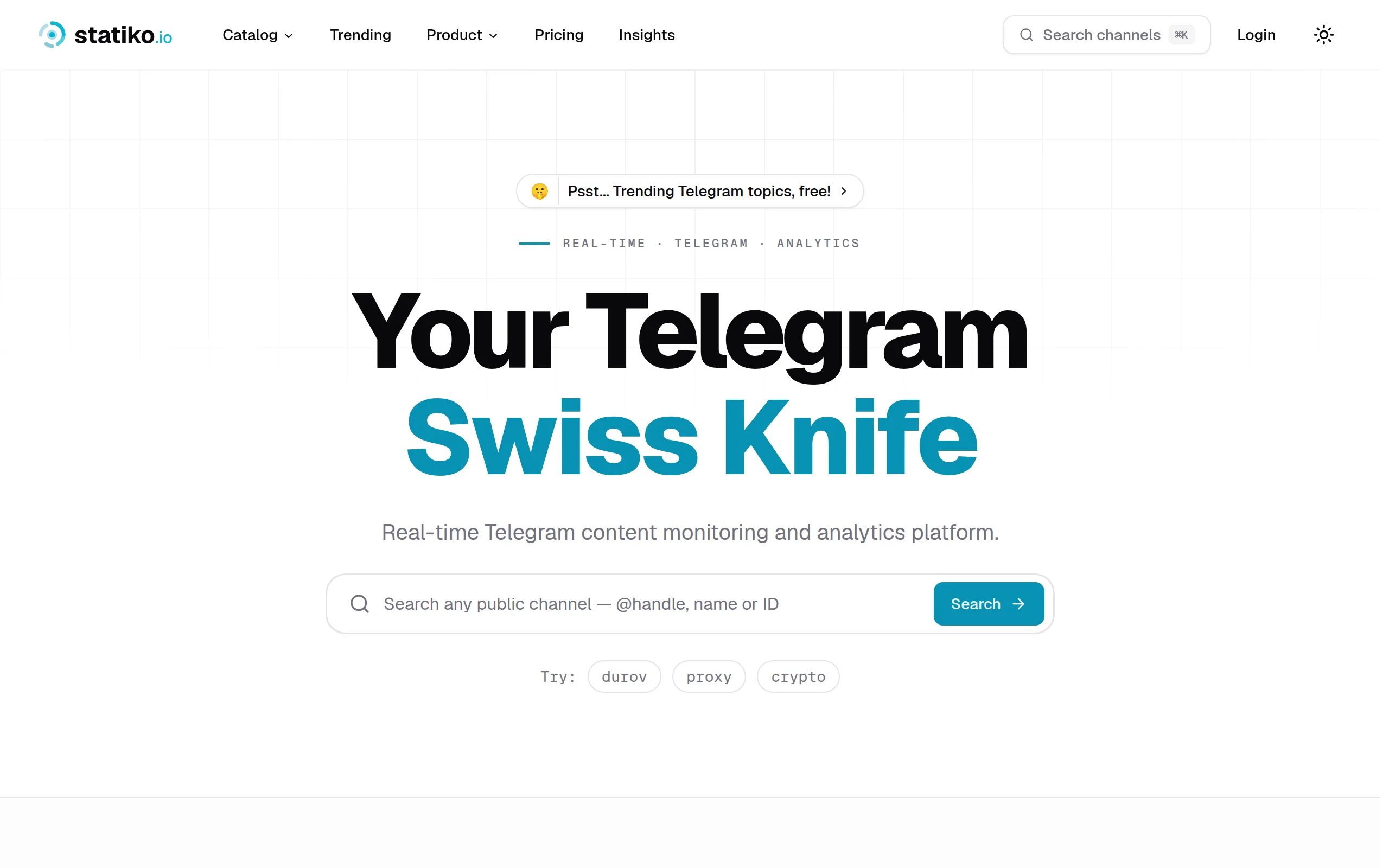
Statiko
Monitor any Telegram channel in real time - track posts, edits, deletions, and growth with AI recaps 📡

Shibui
AI website builder - describe your business, pick a niche template, edit by chatting, and publish instantly ✨

Pro Service
Find verified home service professionals, compare quotes, and pay securely through escrow - built for Brazilians across the US 🏠
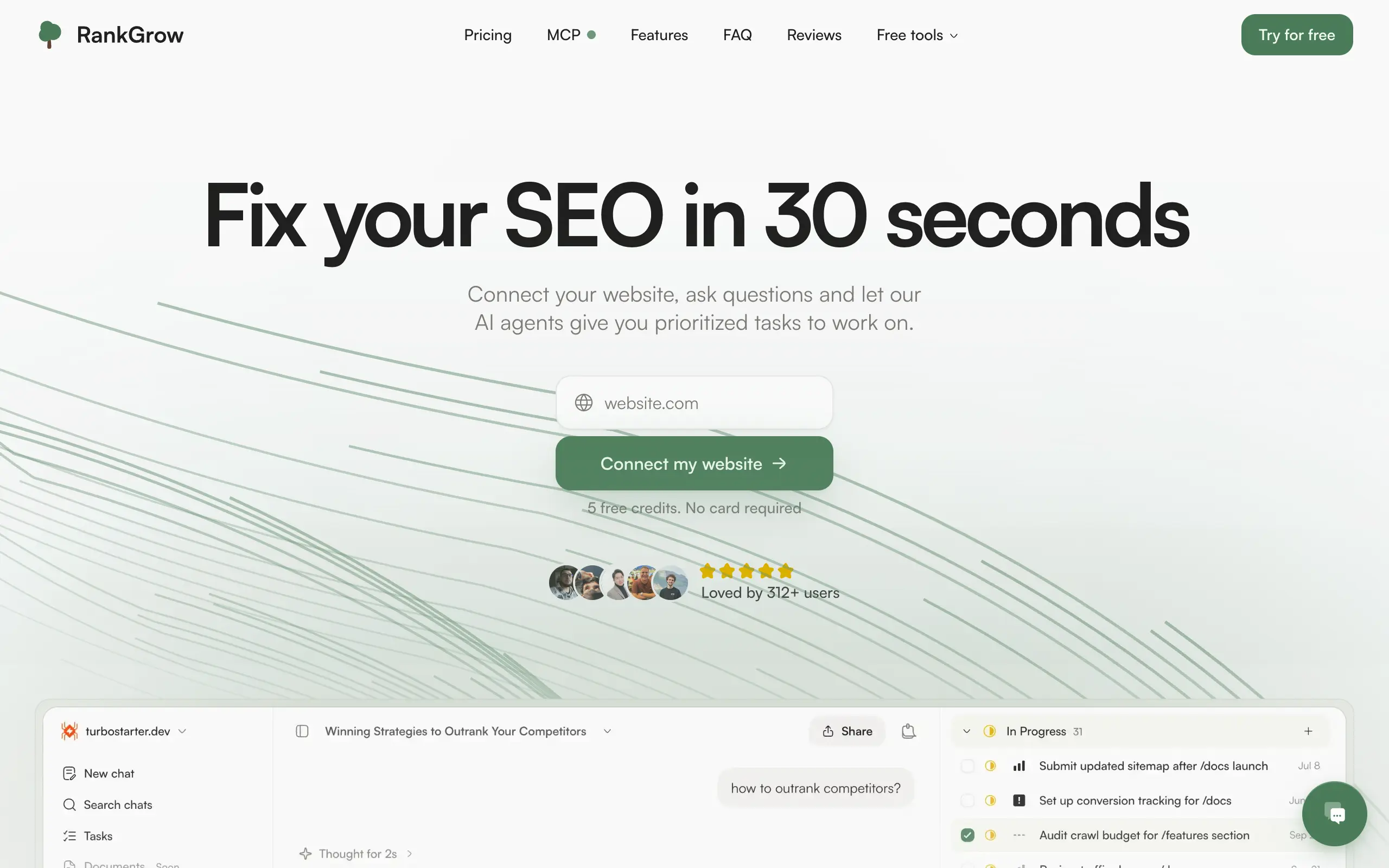
RankGrow
Fix your SEO with AI agents - connect Search Console, get prioritized tasks, and grow organic traffic 📈
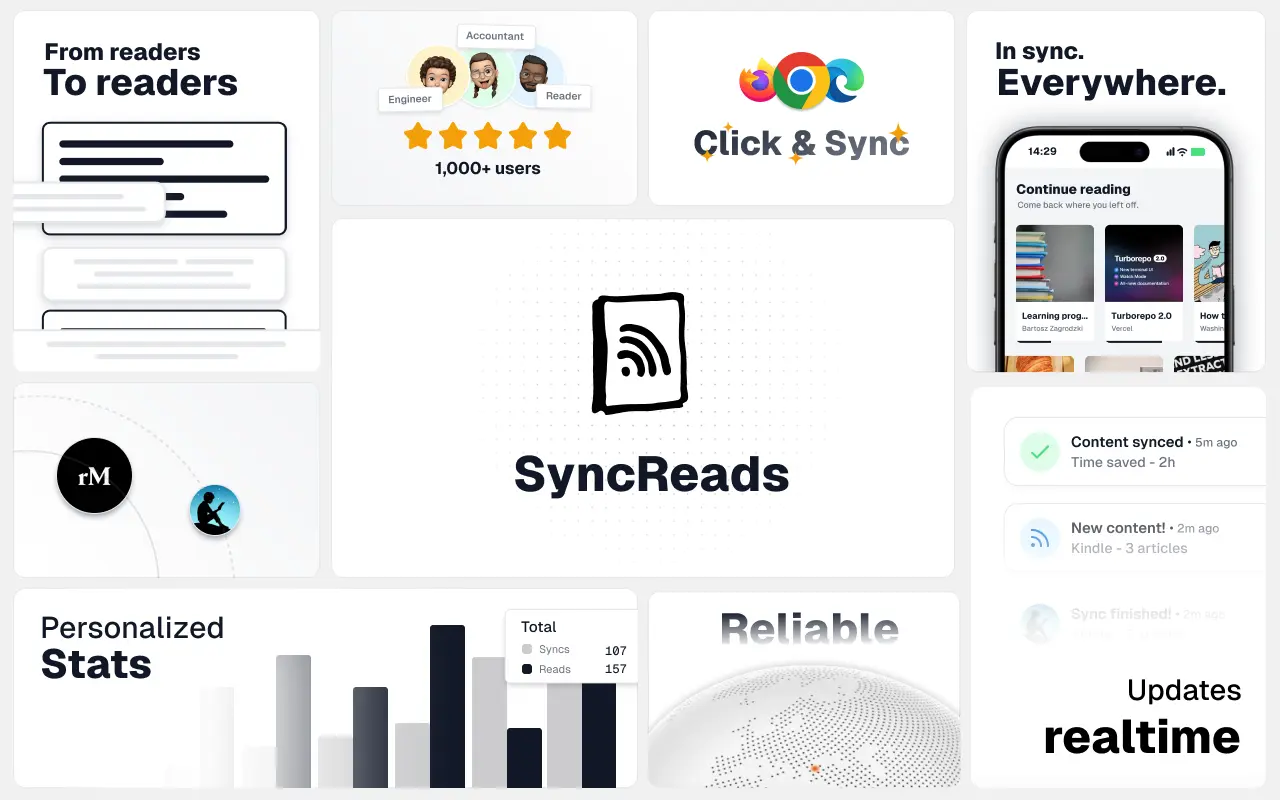
SyncReads
Sync your favorite content for distraction-free reading, save time and replace multiple apps. Anytime, anywhere 🔄
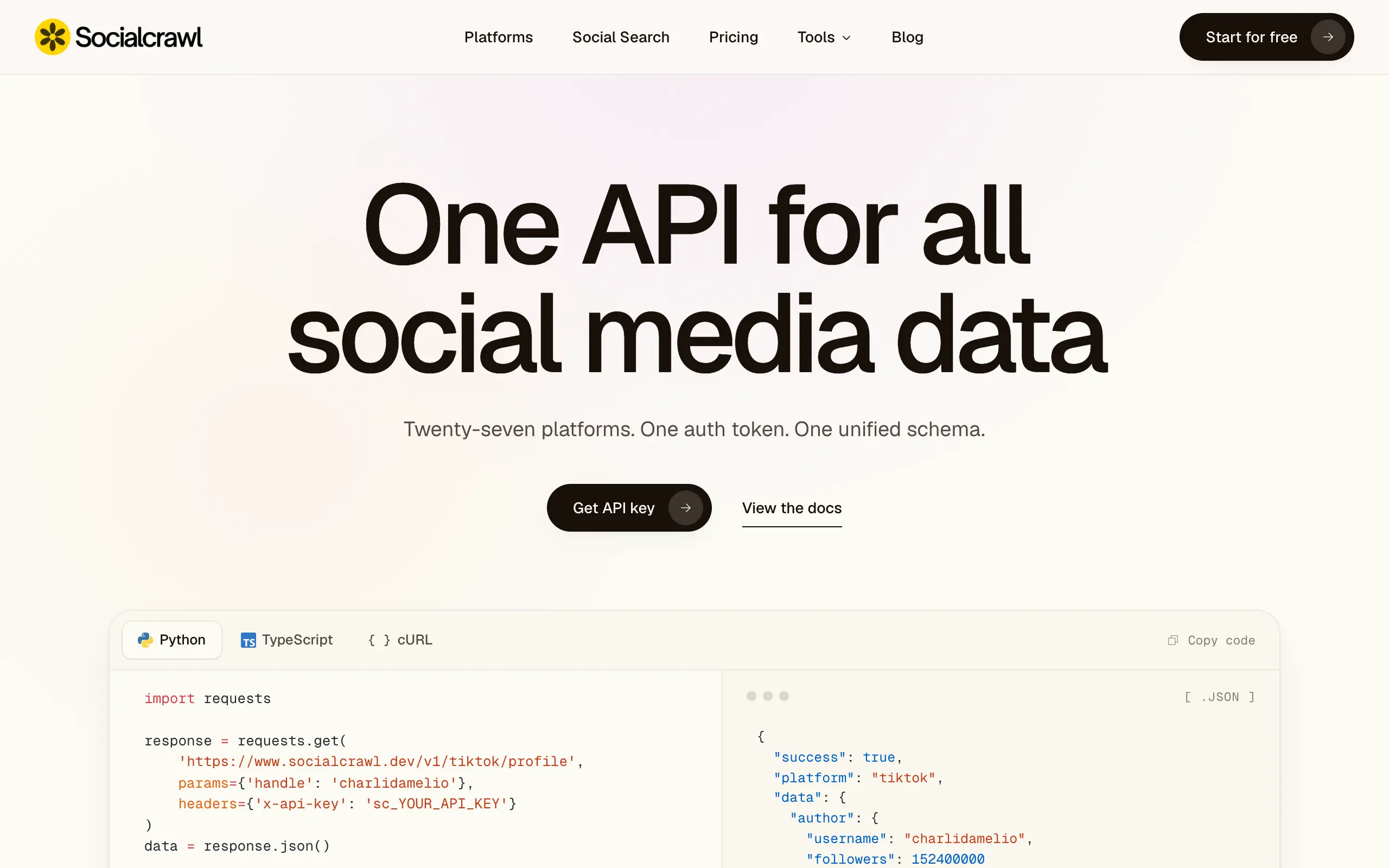
Socialcrawl
Get clean, structured data from 21 platforms like TikTok, Instagram, and YouTube with a single request 📊
Statiko
Monitor any Telegram channel in real time - track posts, edits, deletions, and growth with AI recaps 📡
Shibui
AI website builder - describe your business, pick a niche template, edit by chatting, and publish instantly ✨
Pro Service
Find verified home service professionals, compare quotes, and pay securely through escrow - built for Brazilians across the US 🏠
RankGrow
Fix your SEO with AI agents - connect Search Console, get prioritized tasks, and grow organic traffic 📈
SyncReads
Sync your favorite content for distraction-free reading, save time and replace multiple apps. Anytime, anywhere 🔄
Socialcrawl
Get clean, structured data from 21 platforms like TikTok, Instagram, and YouTube with a single request 📊
Statiko
Monitor any Telegram channel in real time - track posts, edits, deletions, and growth with AI recaps 📡
Shibui
AI website builder - describe your business, pick a niche template, edit by chatting, and publish instantly ✨
Pro Service
Find verified home service professionals, compare quotes, and pay securely through escrow - built for Brazilians across the US 🏠
RankGrow
Fix your SEO with AI agents - connect Search Console, get prioritized tasks, and grow organic traffic 📈
SyncReads
Sync your favorite content for distraction-free reading, save time and replace multiple apps. Anytime, anywhere 🔄
Socialcrawl
Get clean, structured data from 21 platforms like TikTok, Instagram, and YouTube with a single request 📊
Statiko
Monitor any Telegram channel in real time - track posts, edits, deletions, and growth with AI recaps 📡
Shibui
AI website builder - describe your business, pick a niche template, edit by chatting, and publish instantly ✨
Pro Service
Find verified home service professionals, compare quotes, and pay securely through escrow - built for Brazilians across the US 🏠
RankGrow
Fix your SEO with AI agents - connect Search Console, get prioritized tasks, and grow organic traffic 📈
SyncReads
Sync your favorite content for distraction-free reading, save time and replace multiple apps. Anytime, anywhere 🔄
Socialcrawl
Get clean, structured data from 21 platforms like TikTok, Instagram, and YouTube with a single request 📊
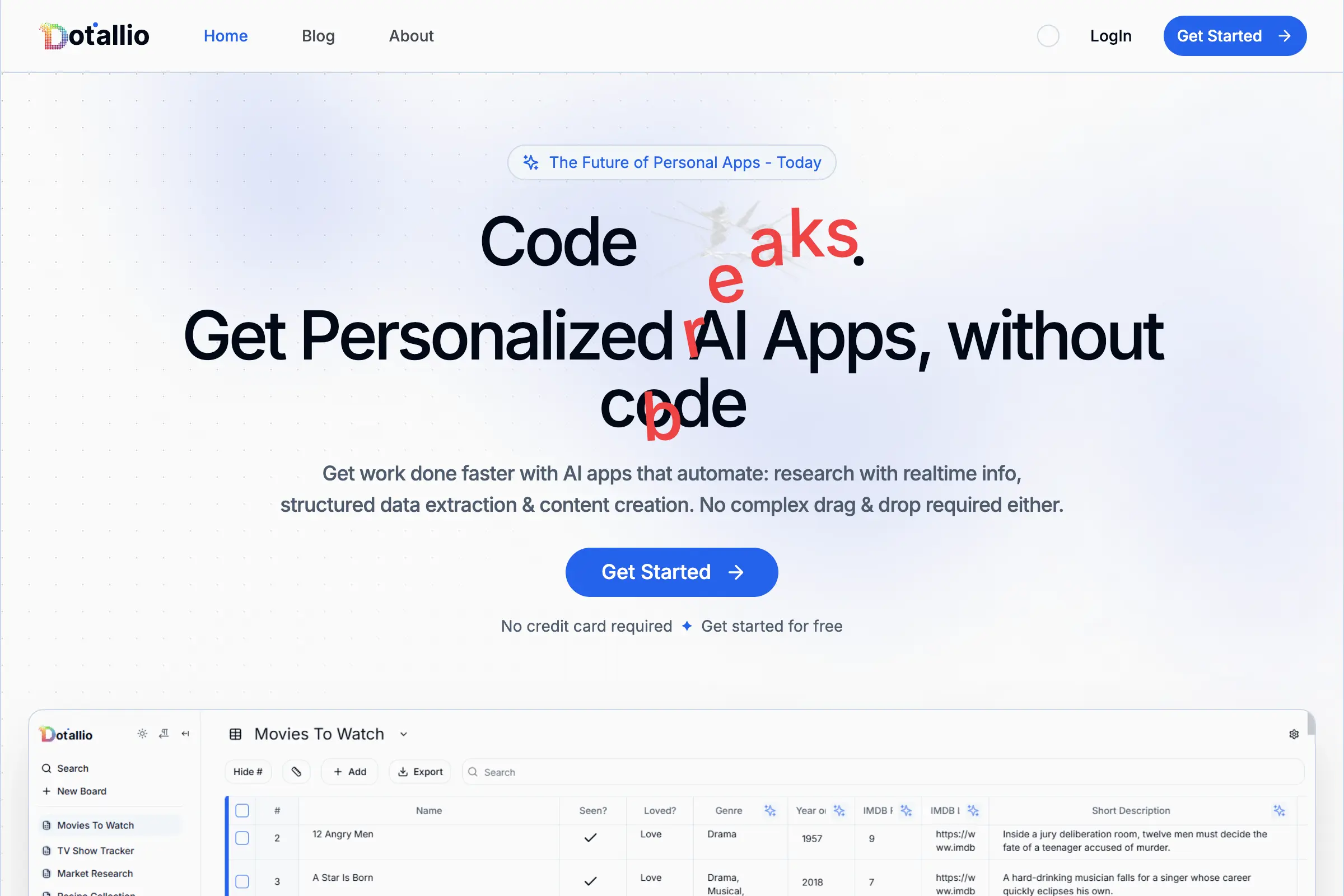
Dotallio
Personalized AI apps that automate research, data extraction, and content creation without code 🤖

Talk to Santa
Enjoy a magical live video chat or receive a unique AI-generated video greeting from Santa Claus 🎅
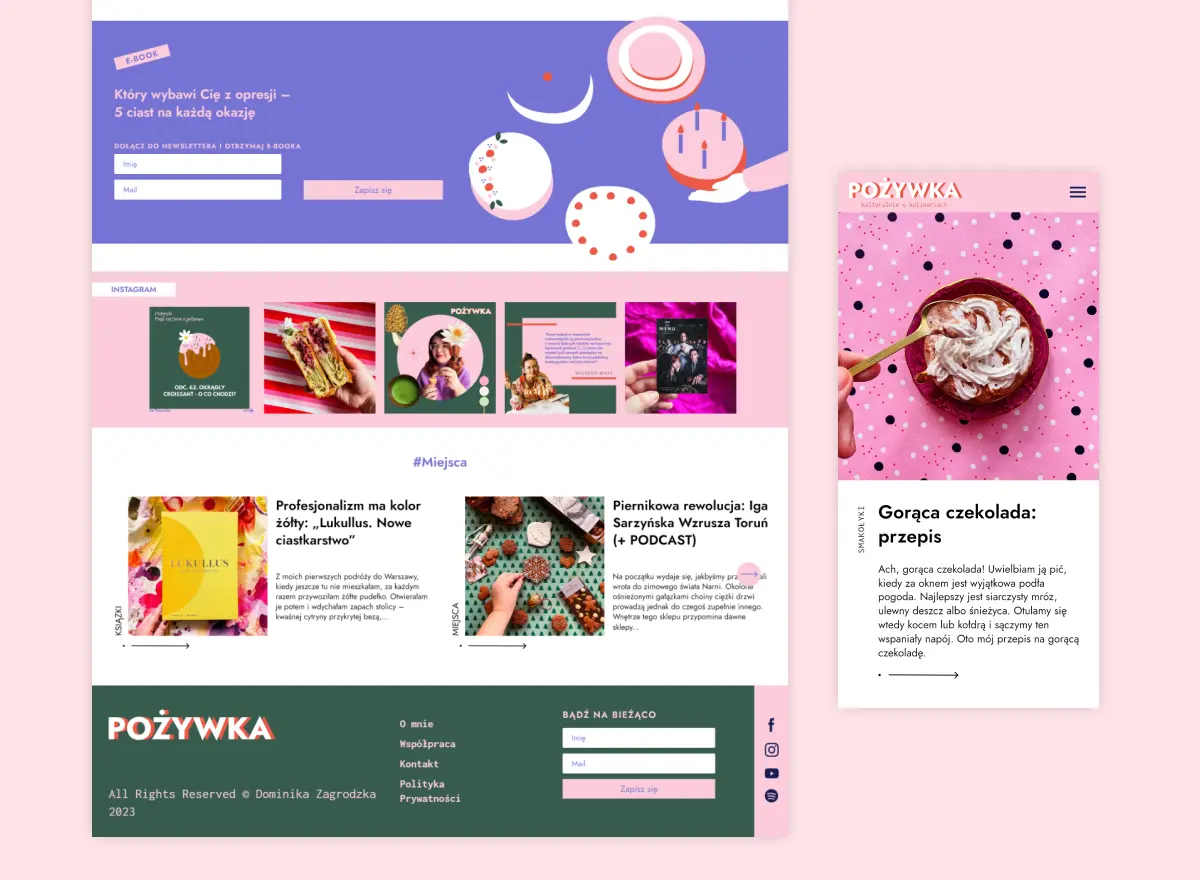
pozywka.pl
Scalable blog for food journalist, focused on performance and user experience 🌭
zagrodzki.me
Personal blog and portfolio of Bart Zagrodzki, where he shares his knowledge and work 💼
TurboStarter
Ship your startup everywhere. In minutes.
HTML to Markdown
Convert HTML to Markdown with ease, directly in your browser 📄
Dotallio
Personalized AI apps that automate research, data extraction, and content creation without code 🤖
Talk to Santa
Enjoy a magical live video chat or receive a unique AI-generated video greeting from Santa Claus 🎅
pozywka.pl
Scalable blog for food journalist, focused on performance and user experience 🌭
zagrodzki.me
Personal blog and portfolio of Bart Zagrodzki, where he shares his knowledge and work 💼
TurboStarter
Ship your startup everywhere. In minutes.
HTML to Markdown
Convert HTML to Markdown with ease, directly in your browser 📄
Dotallio
Personalized AI apps that automate research, data extraction, and content creation without code 🤖
Talk to Santa
Enjoy a magical live video chat or receive a unique AI-generated video greeting from Santa Claus 🎅
pozywka.pl
Scalable blog for food journalist, focused on performance and user experience 🌭
zagrodzki.me
Personal blog and portfolio of Bart Zagrodzki, where he shares his knowledge and work 💼
TurboStarter
Ship your startup everywhere. In minutes.
HTML to Markdown
Convert HTML to Markdown with ease, directly in your browser 📄
Dotallio
Personalized AI apps that automate research, data extraction, and content creation without code 🤖
Talk to Santa
Enjoy a magical live video chat or receive a unique AI-generated video greeting from Santa Claus 🎅
pozywka.pl
Scalable blog for food journalist, focused on performance and user experience 🌭
zagrodzki.me
Personal blog and portfolio of Bart Zagrodzki, where he shares his knowledge and work 💼
TurboStarter
Ship your startup everywhere. In minutes.
HTML to Markdown
Convert HTML to Markdown with ease, directly in your browser 📄
Omichat
Chat with 50+ AI models, including ChatGPT and Claude, in one place - switch models anytime without losing context 🤖
Claude Fast
Supercharge your Claude Code with 6x effective context window and specialized AI agents 🤖
EmojAI
AI-powered emoji picker with smart, context-aware suggestions 🤖
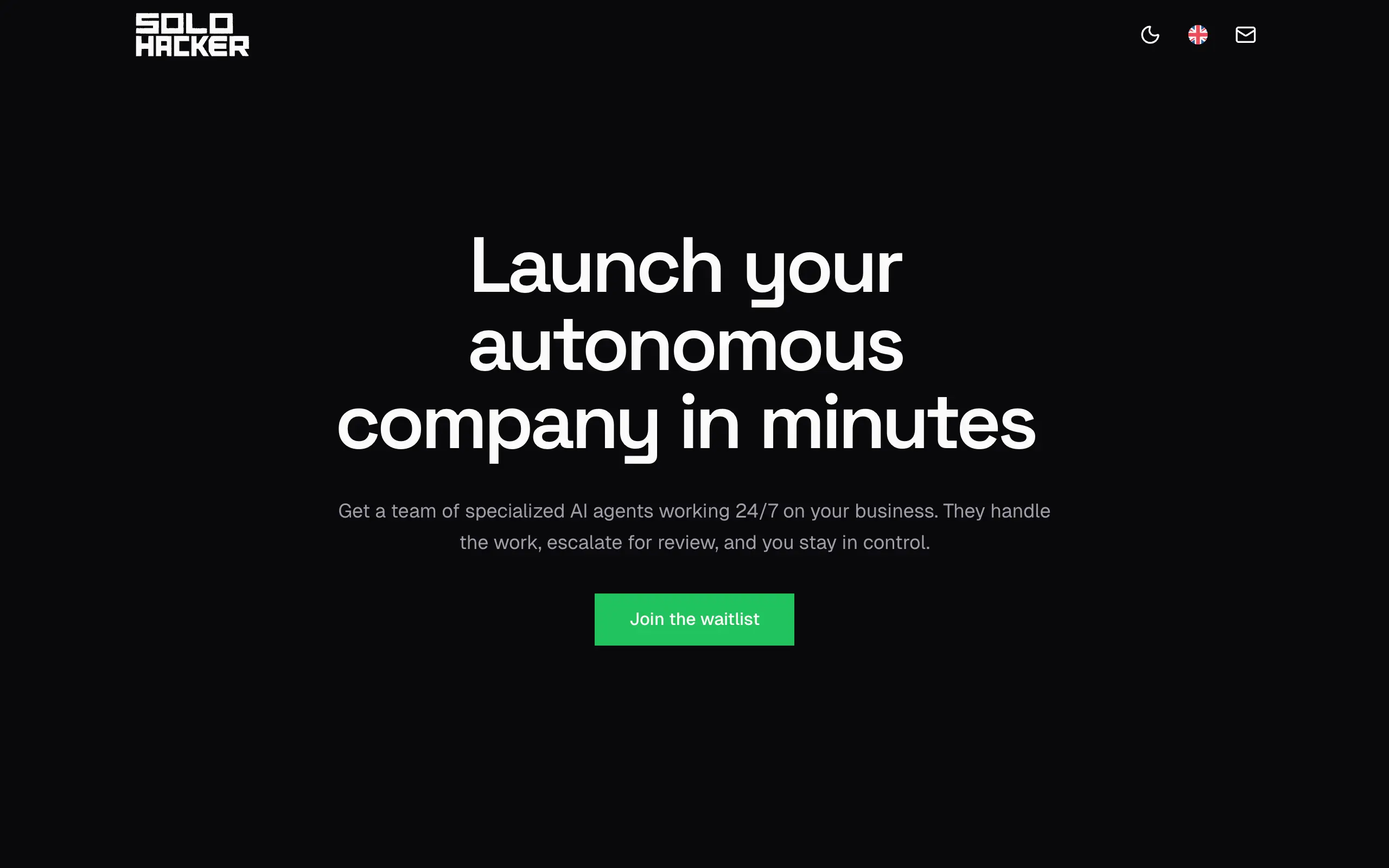
Solohacker
Autonomous company launcher - AI agents work 24/7, escalate what matters, and you stay in control 🤖
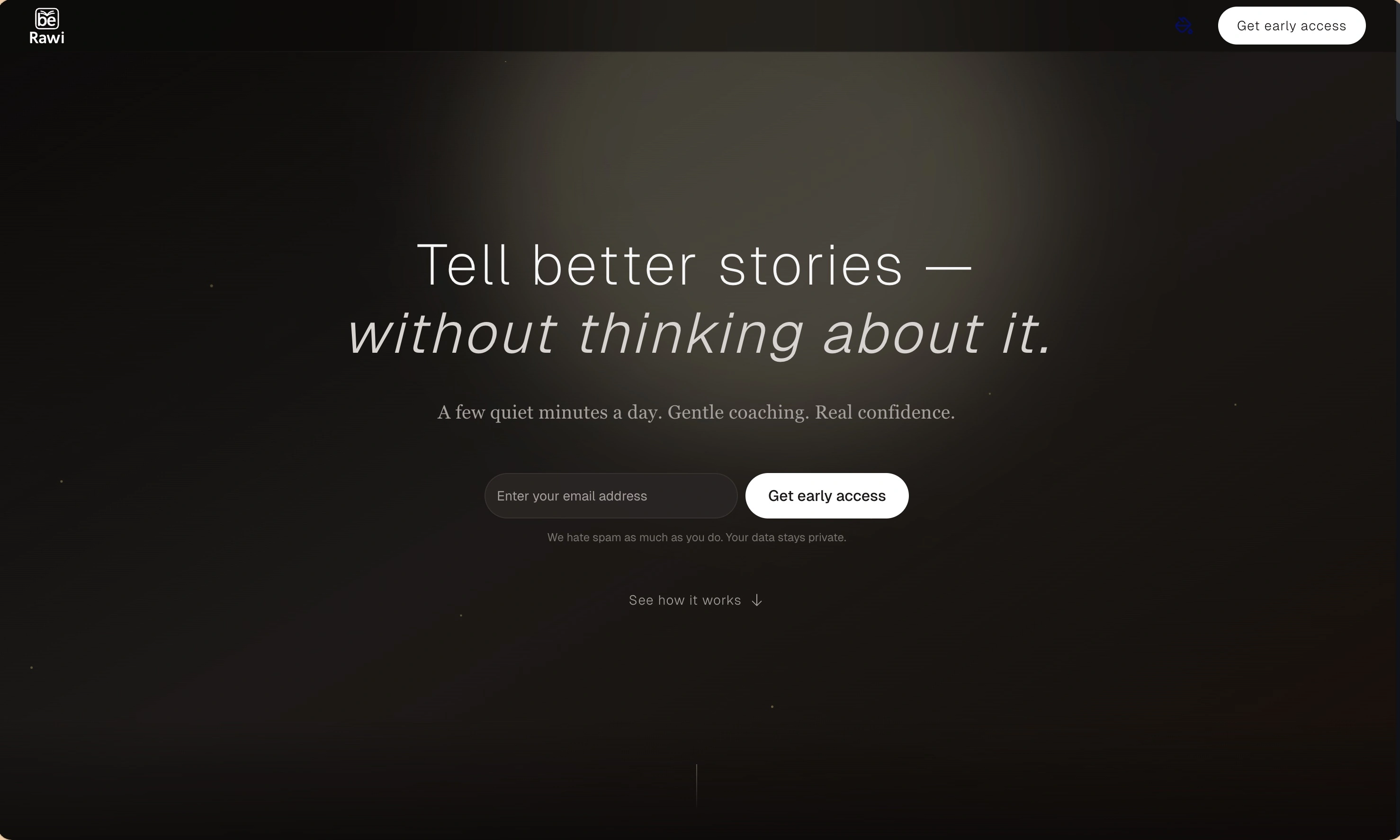
BeRawi: Storytelling Coach
Practice storytelling daily with instant feedback to sound clearer, more engaging, and confident 🎤
Omichat
Chat with 50+ AI models, including ChatGPT and Claude, in one place - switch models anytime without losing context 🤖
Claude Fast
Supercharge your Claude Code with 6x effective context window and specialized AI agents 🤖
EmojAI
AI-powered emoji picker with smart, context-aware suggestions 🤖
Solohacker
Autonomous company launcher - AI agents work 24/7, escalate what matters, and you stay in control 🤖
BeRawi: Storytelling Coach
Practice storytelling daily with instant feedback to sound clearer, more engaging, and confident 🎤
Omichat
Chat with 50+ AI models, including ChatGPT and Claude, in one place - switch models anytime without losing context 🤖
Claude Fast
Supercharge your Claude Code with 6x effective context window and specialized AI agents 🤖
EmojAI
AI-powered emoji picker with smart, context-aware suggestions 🤖
Solohacker
Autonomous company launcher - AI agents work 24/7, escalate what matters, and you stay in control 🤖
BeRawi: Storytelling Coach
Practice storytelling daily with instant feedback to sound clearer, more engaging, and confident 🎤
Omichat
Chat with 50+ AI models, including ChatGPT and Claude, in one place - switch models anytime without losing context 🤖
Claude Fast
Supercharge your Claude Code with 6x effective context window and specialized AI agents 🤖
EmojAI
AI-powered emoji picker with smart, context-aware suggestions 🤖
Solohacker
Autonomous company launcher - AI agents work 24/7, escalate what matters, and you stay in control 🤖
BeRawi: Storytelling Coach
Practice storytelling daily with instant feedback to sound clearer, more engaging, and confident 🎤

Connect with like-minded people
Join our community to get feedback, support, and grow together with 1,000+ builders on board, let's ship it!
Join usShip your startup everywhere. In minutes.
Don't burn tokens on setup and start building features on day one.