AutoPlenish
Smarten your auto detailing workflow: AutoPlenish predicts inventory orders and automates staff rotas, reducing shortages and excess spending for startups.
Auto detailing startups and independent garage owners increasingly face twin challenges: unpredictable inventory shortages and inefficient staff scheduling. AutoPlenish presents an AI-driven SaaS solution designed to streamline inventory control and staffing, minimize excess spending, and keep small detailing businesses running at peak efficiency. In this deep-dive, we’ll explore how AutoPlenish meets search intent for auto detailing management tools, analyze its features and unique selling proposition, and guide you through technical and business setup, showcasing real industry expertise.
Understanding the target audience for AutoPlenish
Before diving into the specifics, let’s identify who benefits most from AutoPlenish and what their core pain points are. This ensures the product is laser-aligned with solving real business problems, a core driver of SaaS success.
Target users:
- Auto detailing startups (1-20 employees)
- Independent auto shops and mobile detailing services
- Boutique garage owners moving towards digital operations
- Franchise managers overseeing multiple detailing locations
- Workshop supervisors who handle supplies and scheduling
Typical pain points:
- Frequent stockouts of high-turnover supplies (cleaners, pads, towels)
- Over-ordering leading to storage issues and unnecessary costs
- Last-minute staff rota changes causing operational disruptions
- Lack of historical data to predict busy periods or needed supplies
- Manual, time-consuming spreadsheets or fragmented apps
Why inventory and staff automation matters
Labor, cleaning fluids, and consumables often make up over 65% of an auto detailer's variable costs ([reference: IBISWorld Industry Reports on Auto Detailers]). Efficient management = stronger margins.
Search intent insight: Users landing on AutoPlenish are seeking actionable, expert-backed solutions for streamlining their detailing workflow with automation—targeting both operational savings and less stress.
Market gap and opportunity analysis
Despite the explosion of software in the automotive aftermarket, auto detailing businesses remain underserved with integrated, predictive automation tools. Most small shops rely on generic POS platforms, DIY spreadsheets, or disconnected scheduling and order apps.
Where current solutions fall short
- Inventory management tools rarely tailor predictions to detailing-specific products (soaps, buffer pads, protectants).
- Staff scheduling software is generic, lacking integration with workload forecasts based on scheduled details, weather, or seasonality.
- Existing solutions do not unify inventory prediction with staff rota automation—leading to inefficiencies on both fronts.
Market opportunity signals
- The mobile and shop-based auto detailing industry in North America alone is projected to top $14B in 2024 and is growing annually ([reference: Grand View Research, detailing market size]).
- The majority (>70%) of shops still manage inventory and HR manually.
- AI-based predictive analytics is now proven in retail and restaurants, but adoption in auto services lags—representing untapped value.
| Inventory Only | Staffing Only | Unintegrated | AI-Driven Predictions | Industry-Specific |
|---|---|---|---|---|
| ✅ | ❌ | ❌ | ✅ | ❌ |
| ✅ | ❌ | ✅ | ✅ | ❌ |
AutoPlenish directly addresses the gap by combining vertical-specific knowledge, AI prediction, and end-to-end automation.
Core features of the AutoPlenish AI platform
Let’s dig into the product capabilities and how they answer the specific, high-intent needs of auto detailing operations.
AI-powered inventory prediction
- Tracks real-time usage rates and past order history for every SKU.
- Analyzes seasonality (e.g., pollen season, winter slush) and local events to forecast demand spikes.
- Sends automated, customizable restock alerts and can trigger e-commerce orders with partnered suppliers.
- Supports "smart bundles"—grouping items that run out together, reducing splits in order shipments.
Automated staff rota management
- Integrates with booking calendars (Google Calendar, Shopify Bookings, etc.).
- AI forecast adjusts staff schedules in advance of predicted high- or low-volume periods.
- Suggests optimal staff numbers per shift, accounting for staff availability, skillsets, and even weather factors.
- Automatically notifies staff and tracks confirmations, minimizing last-minute swaps.
Analytics dashboard
- Visualizes top-performing services, busiest time slots, and supply cost per detail.
- Drill-downs for day/week/month analysis and custom reports for franchise owners.
- Export to CSV/PDF for accounting or payroll purposes.
Seamless mobile and multi-location support
- Responsive interface for on-the-go managers.
- Location grouping: manage inventory and teams at multiple branches from a single login.
AI-driven supply order prediction
Slash stockouts and reduce over-ordering by letting AutoPlenish anticipate your needs, not just react.
Effortless staff scheduling
Put rotas on autopilot: Fair, predictable schedules for staff and stress-free adjustments for managers.
One dashboard, 360° clarity
Gain data-driven insights into costs, trends, and performance across your whole detailing operation.
Recommended tech stack for AutoPlenish (with trade-offs)
Building a SaaS like AutoPlenish with genuine flexibility, scalability, and future-proofing requires thoughtful technology selection.
Frontend
- React: Widely adopted, great ecosystem, ideal for building responsive dashboards.
- TailwindCSS: Utility-first styling for rapid UI iteration and mobile responsiveness.
Backend
- Node.js: Good for rapid API development, asynchronous inventory and rota event handling.
- PostgreSQL: Robust relational database; excels at transactional data (bookings, orders).
- Consider Python for AI/ML integration—rich open-source ecosystem, seamless with common ML models.
AI & predictive analytics
- TensorFlow / PyTorch: Proven frameworks for building and deploying forecasting models.
- Integration with cloud ML services like AWS SageMaker, Google Vertex AI for scalable training/inference (if needed).
Other recommended integrations
- Calendar APIs: Google Calendar, Outlook for automatic rota imports.
- E-commerce/order fulfillment: Shopify, WooCommerce, or direct supplier integrations for frictionless restocking.
Trade-offs and considerations:
- Multi-language stack (Node.js for core, Python for AI): Adds complexity but allows use of best-in-class ML tools.
- Fully managed cloud ML vs. custom hosting: Managed is simpler to maintain, but may incur higher long-term costs.
- React + TailwindCSS = fast, modern, mobile-ready UI
- Great developer pool, maintainability
- Easy integration with analytics visualizations
- Node.js for robust APIs, fast real-time data flow
- Python for demand prediction algorithms (scikit-learn, TensorFlow, PyTorch)
- PostgreSQL for structured inventory + schedule data
Monetization strategies for AutoPlenish
Given the spending power and high pain points of auto detailing startups, structured pricing and monetization is crucial.
1. Tiered SaaS subscriptions
- Starter: Core features, limits on the number of SKUs/active staff and single-location use.
- Pro: Multi-location, advanced analytics, priority support.
- Enterprise: Custom AI tuning, integrations, onboarding.
2. Usage-based add-ons
- Charge per automated supplier order, or per "smart rota" adjustment beyond baseline usage.
3. Supplier partnership revenue
- Integrate with suppliers and earn referral commissions on fulfilled supply orders through the platform.
4. White-label for franchises
- Offer branded deployments with higher setup fees and API access.
Competitive analysis shows auto service businesses tolerate $49–$149/mo if the platform trims even one missed booking or supply shortfall monthly. Survey early users for willingness-to-pay.
Consider a limited free tier (e.g., 50 supply items tracked, one staff rota) to drive trial and word-of-mouth, with clear upgrade paths.
Risks and mitigation strategies
Like any AI SaaS venture, launching AutoPlenish involves several risks—each with proven mitigation tactics.
Potential risks
- Forecasting inaccuracy in unpredictable demand
- Low adoption rate due to change aversion from manual processes
- Integration complexity with third-party booking or supplier platforms
- Management of sensitive staff data (GDPR, CCPA compliance)
Suggested mitigation
- Use conservative forecast buffers and allow manual override for critical restock suggestions.
- Provide white-glove onboarding, in-app tooltips, and migration assistance to ease adoption.
- Prioritize APIs and official integrations over workarounds; start with most-used supplier/booking platforms.
- Employ industry-standard data encryption and transparent privacy policies.
Note on staff data privacy
Be proactive: Any app managing employee schedules and data should explain data use policies clearly and offer opt-outs to meet current privacy legislation requirements.
Competitive advantage and unique selling proposition
Why choose AutoPlenish over generic inventory or rota software?
Unique strengths:
- Auto detailing industry focus: All machine learning, forms, and workflows are built specifically for cleaners, pads, detailing consumables, and technician scheduling.
- Unified automation: No more switching between separate tools—both inventory and staff rotas are managed and predicted in a single dashboard.
- AI-powered, not just rule-based: The system learns each business’s historical rhythms, local weather trends, and event spikes for ever-more accurate predictions.
- Supplier partnership ecosystem: Automated restocking direct from trusted auto industry suppliers saves time and money.
- Mobile-first admin: Shop managers can handle urgent stock or rota alerts right from their phones, crucial in busy environments.
Recommended implementation steps for AutoPlenish SaaS
Ready to turn the AutoPlenish concept into a working SaaS MVP? Follow this expert step-by-step launch plan:
Map out the core workflows: Run discovery interviews with 10+ active auto detailers to confirm the dominant inventory and rota pain points.
Design the database schema & data flow: Prioritize supply SKUs, staff profiles, order triggers, and shift templates.
Develop the AI demand prediction MVP: Start with supervised learning models on historical usage; use open-source tools for fast iteration.
Build the UX: Ship mobile-responsive dashboards using React, integrating onboarding checklists and help modals.
Integrate third-party APIs: Connect booking calendars and sample supplier platforms for automated orders and rota imports.
Beta test with real shops: Track metrics around stockouts, labor hours saved, and user satisfaction. Gather feedback for fast iteration.
Launch the core SaaS: Activate paid and free tiers, monitor onboarding, and launch targeted marketing focusing on your unique AI-driven approach.
Conclusion: Why AutoPlenish is your smart detailing workflow assistant
AutoPlenish fills an urgent industry gap with a user-friendly SaaS platform that fuses AI-powered inventory predictions and staff scheduling into one seamless, auto detailing–specific workflow. By cutting down on shortages, over-orders, and last-minute shift headaches, AutoPlenish empowers shop owners to scale their business with confidence.
Next steps: If you’re an entrepreneur or auto services software founder, leverage resources like TurboStarter to streamline your SaaS MVP build, automate best practices, and focus on growth.
Frequently asked questions about AutoPlenish
Small-to-medium auto detailers, including shops with 1-20 employees, see the strongest ROI—but the platform scales to multi-branch franchises.
Yes. All features are optimized for mobile users, and inventory data is updated in real time—perfect for on-the-go operators.
Results depend on historical data and onboarding. Most users should expect >85% accuracy after two months of real-world use; manual overrides are always supported for safety.
Initial setup takes 20-30 minutes for core features. API integrations with calendars or suppliers may take longer, depending on your environment.
By combining vertical expertise, practical automation, and the latest in AI prediction, AutoPlenish stands out as the smart choice for auto detailing workflow efficiency in 2024 and beyond.
More 🤖 AI Startup SaaS ideas
Discover more innovative ai startup SaaS ideas that are trending in 2026. Each idea is AI-generated with market validation and growth potential to help you find your next profitable venture faster than competitors.
Your competitors are building with TurboStarter
Below are some of the SaaS ideas that have been generated and built with our starter kit.

Statiko
Monitor any Telegram channel in real time - track posts, edits, deletions, and growth with AI recaps 📡

Shibui
AI website builder - describe your business, pick a niche template, edit by chatting, and publish instantly ✨

Pro Service
Find verified home service professionals, compare quotes, and pay securely through escrow - built for Brazilians across the US 🏠
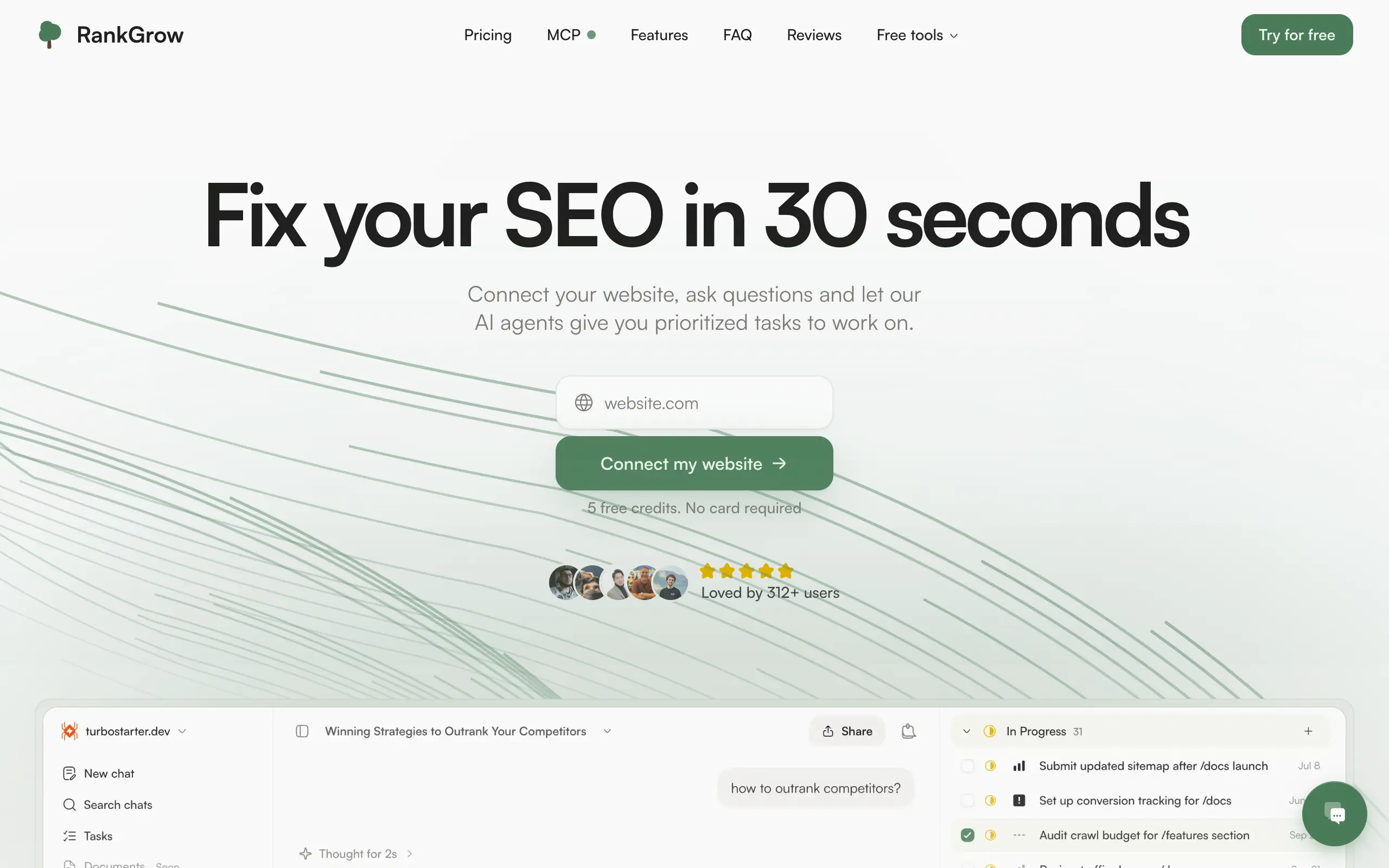
RankGrow
Fix your SEO with AI agents - connect Search Console, get prioritized tasks, and grow organic traffic 📈
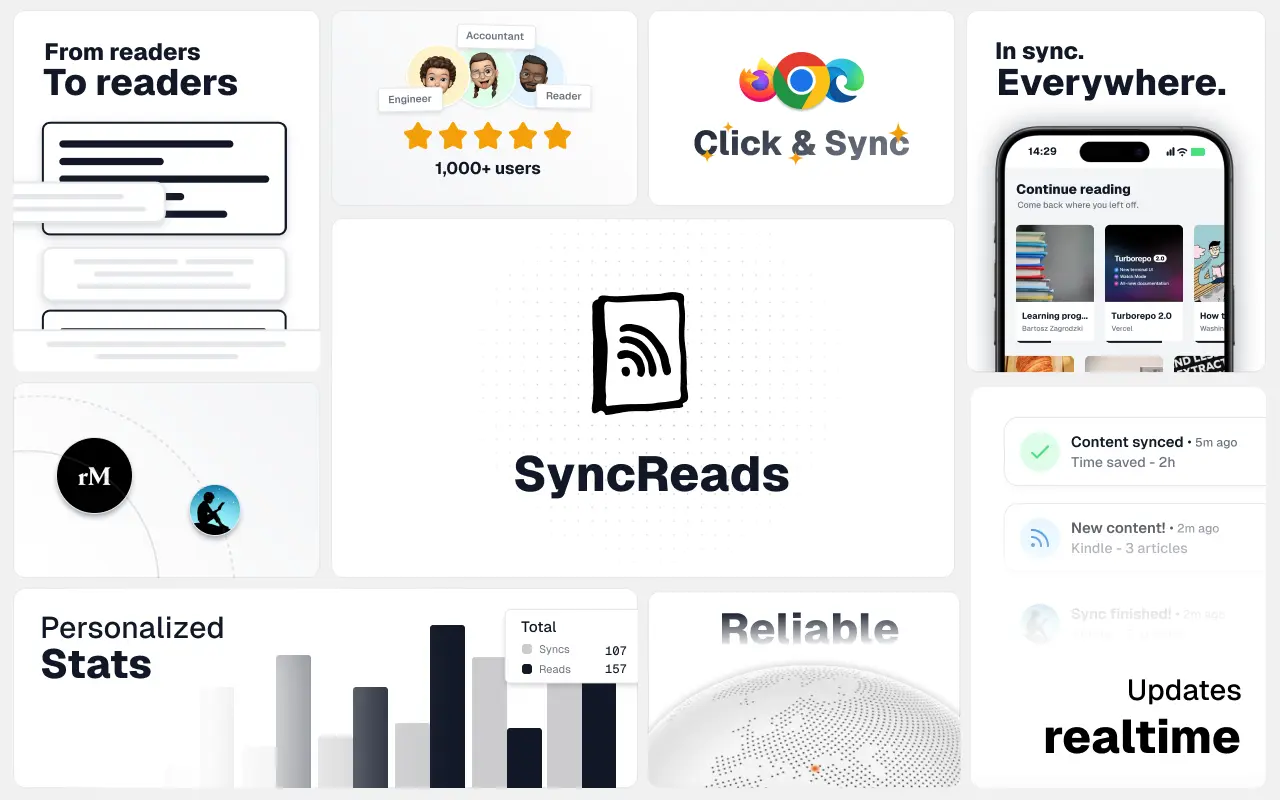
SyncReads
Sync your favorite content for distraction-free reading, save time and replace multiple apps. Anytime, anywhere 🔄
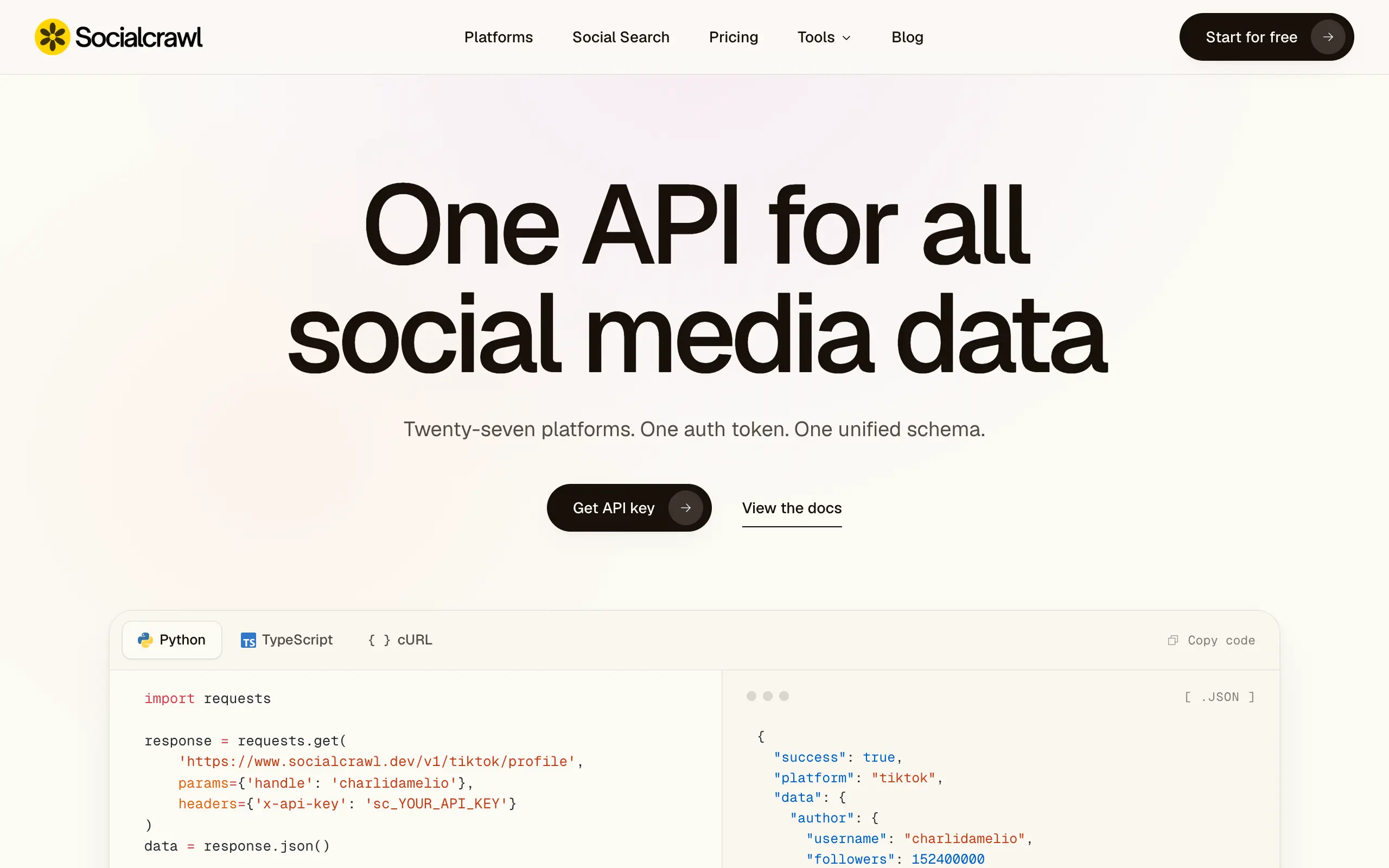
Socialcrawl
Get clean, structured data from 21 platforms like TikTok, Instagram, and YouTube with a single request 📊
Statiko
Monitor any Telegram channel in real time - track posts, edits, deletions, and growth with AI recaps 📡
Shibui
AI website builder - describe your business, pick a niche template, edit by chatting, and publish instantly ✨
Pro Service
Find verified home service professionals, compare quotes, and pay securely through escrow - built for Brazilians across the US 🏠
RankGrow
Fix your SEO with AI agents - connect Search Console, get prioritized tasks, and grow organic traffic 📈
SyncReads
Sync your favorite content for distraction-free reading, save time and replace multiple apps. Anytime, anywhere 🔄
Socialcrawl
Get clean, structured data from 21 platforms like TikTok, Instagram, and YouTube with a single request 📊
Statiko
Monitor any Telegram channel in real time - track posts, edits, deletions, and growth with AI recaps 📡
Shibui
AI website builder - describe your business, pick a niche template, edit by chatting, and publish instantly ✨
Pro Service
Find verified home service professionals, compare quotes, and pay securely through escrow - built for Brazilians across the US 🏠
RankGrow
Fix your SEO with AI agents - connect Search Console, get prioritized tasks, and grow organic traffic 📈
SyncReads
Sync your favorite content for distraction-free reading, save time and replace multiple apps. Anytime, anywhere 🔄
Socialcrawl
Get clean, structured data from 21 platforms like TikTok, Instagram, and YouTube with a single request 📊
Statiko
Monitor any Telegram channel in real time - track posts, edits, deletions, and growth with AI recaps 📡
Shibui
AI website builder - describe your business, pick a niche template, edit by chatting, and publish instantly ✨
Pro Service
Find verified home service professionals, compare quotes, and pay securely through escrow - built for Brazilians across the US 🏠
RankGrow
Fix your SEO with AI agents - connect Search Console, get prioritized tasks, and grow organic traffic 📈
SyncReads
Sync your favorite content for distraction-free reading, save time and replace multiple apps. Anytime, anywhere 🔄
Socialcrawl
Get clean, structured data from 21 platforms like TikTok, Instagram, and YouTube with a single request 📊
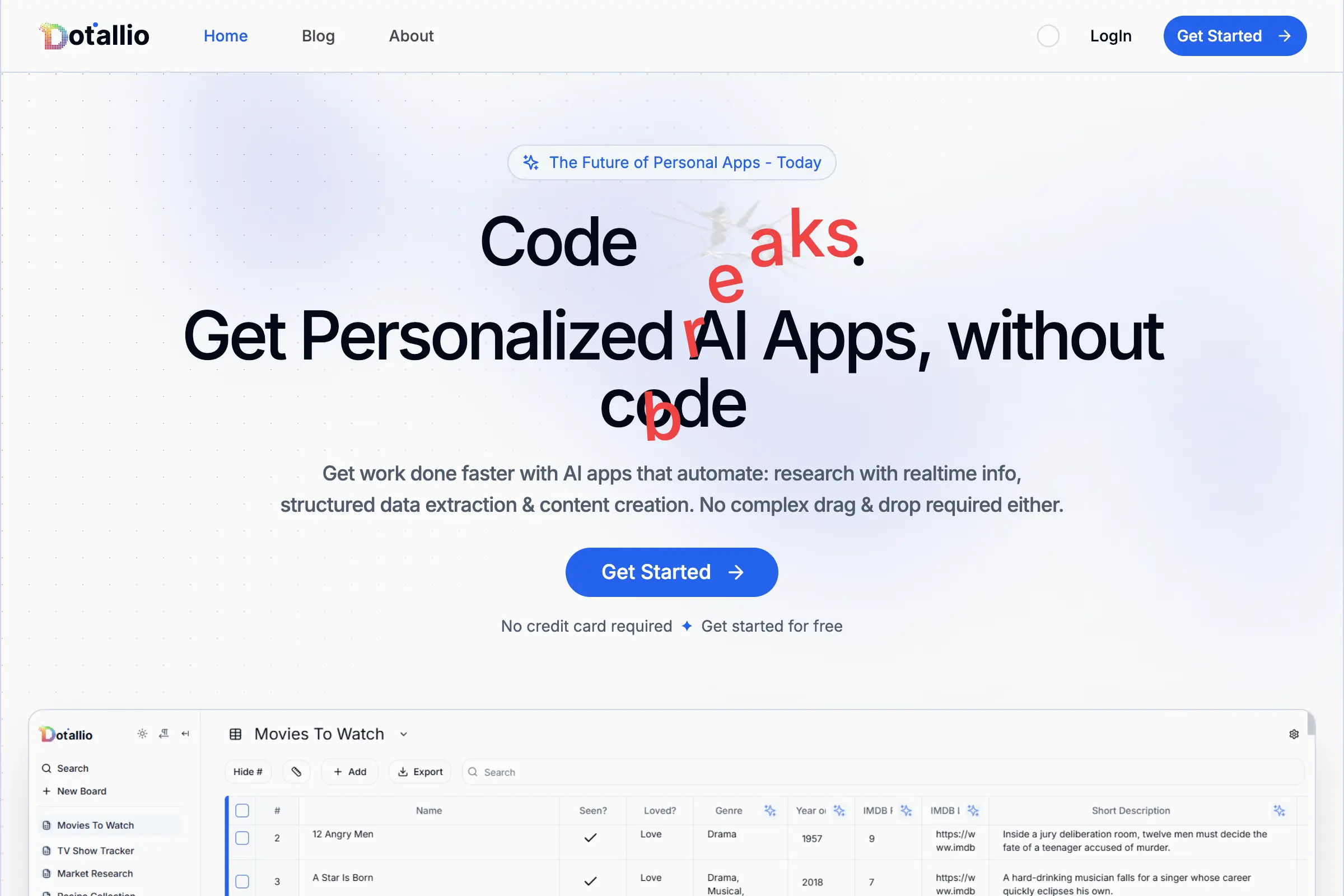
Dotallio
Personalized AI apps that automate research, data extraction, and content creation without code 🤖

Talk to Santa
Enjoy a magical live video chat or receive a unique AI-generated video greeting from Santa Claus 🎅

pozywka.pl
Scalable blog for food journalist, focused on performance and user experience 🌭
zagrodzki.me
Personal blog and portfolio of Bart Zagrodzki, where he shares his knowledge and work 💼
TurboStarter
Ship your startup everywhere. In minutes.
HTML to Markdown
Convert HTML to Markdown with ease, directly in your browser 📄
Dotallio
Personalized AI apps that automate research, data extraction, and content creation without code 🤖
Talk to Santa
Enjoy a magical live video chat or receive a unique AI-generated video greeting from Santa Claus 🎅
pozywka.pl
Scalable blog for food journalist, focused on performance and user experience 🌭
zagrodzki.me
Personal blog and portfolio of Bart Zagrodzki, where he shares his knowledge and work 💼
TurboStarter
Ship your startup everywhere. In minutes.
HTML to Markdown
Convert HTML to Markdown with ease, directly in your browser 📄
Dotallio
Personalized AI apps that automate research, data extraction, and content creation without code 🤖
Talk to Santa
Enjoy a magical live video chat or receive a unique AI-generated video greeting from Santa Claus 🎅
pozywka.pl
Scalable blog for food journalist, focused on performance and user experience 🌭
zagrodzki.me
Personal blog and portfolio of Bart Zagrodzki, where he shares his knowledge and work 💼
TurboStarter
Ship your startup everywhere. In minutes.
HTML to Markdown
Convert HTML to Markdown with ease, directly in your browser 📄
Dotallio
Personalized AI apps that automate research, data extraction, and content creation without code 🤖
Talk to Santa
Enjoy a magical live video chat or receive a unique AI-generated video greeting from Santa Claus 🎅
pozywka.pl
Scalable blog for food journalist, focused on performance and user experience 🌭
zagrodzki.me
Personal blog and portfolio of Bart Zagrodzki, where he shares his knowledge and work 💼
TurboStarter
Ship your startup everywhere. In minutes.
HTML to Markdown
Convert HTML to Markdown with ease, directly in your browser 📄
Omichat
Chat with 50+ AI models, including ChatGPT and Claude, in one place - switch models anytime without losing context 🤖
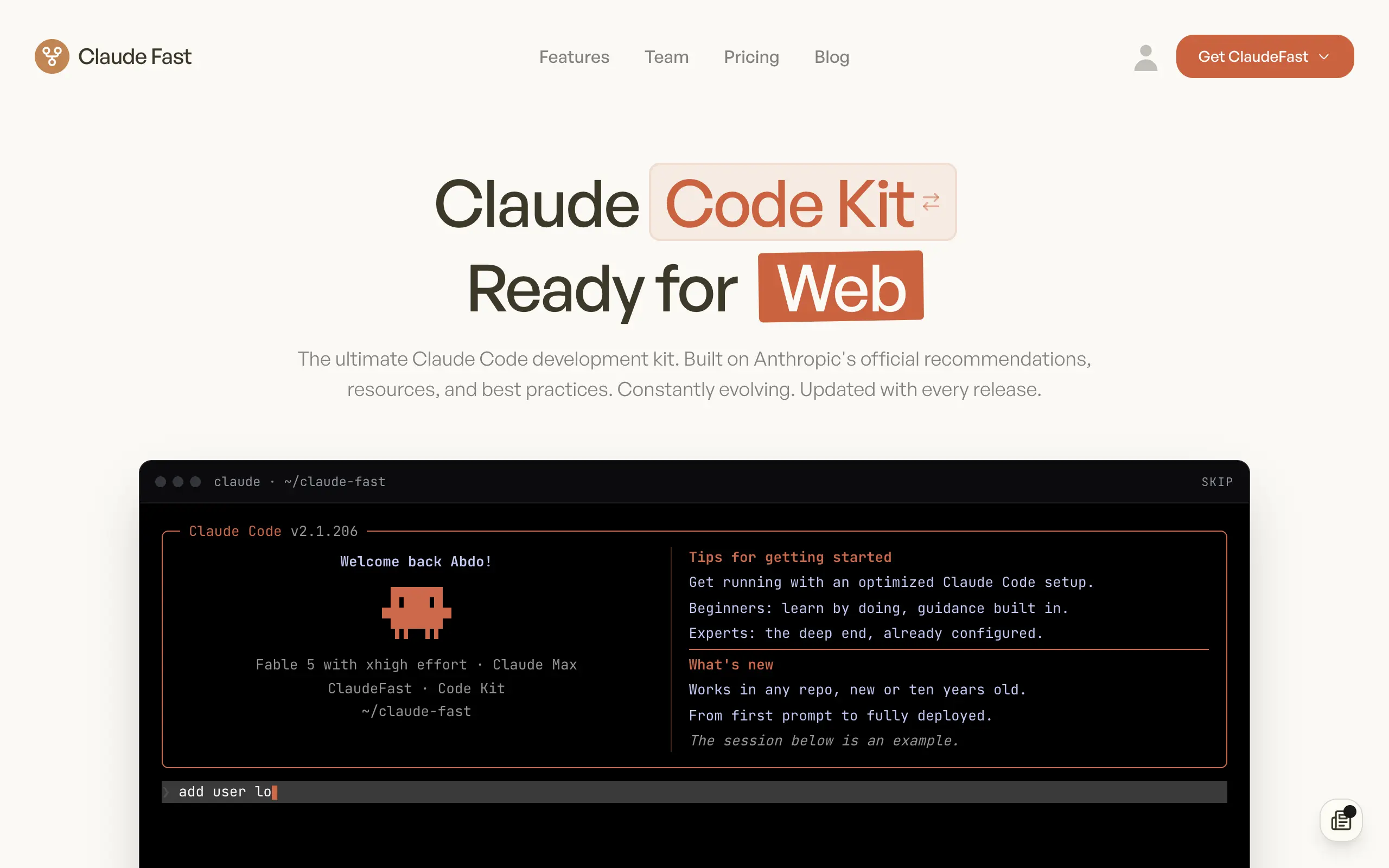
Claude Fast
Supercharge your Claude Code with 6x effective context window and specialized AI agents 🤖
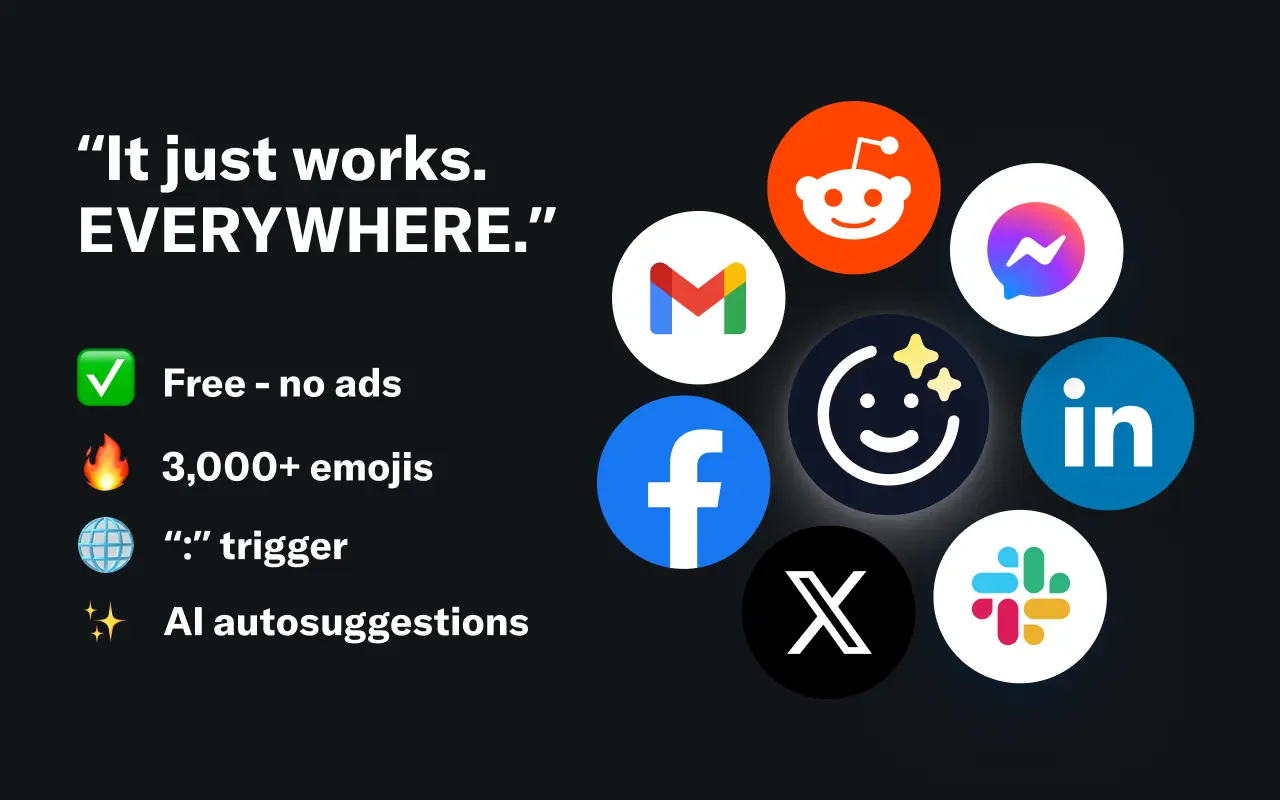
EmojAI
AI-powered emoji picker with smart, context-aware suggestions 🤖

Solohacker
Autonomous company launcher - AI agents work 24/7, escalate what matters, and you stay in control 🤖

BeRawi: Storytelling Coach
Practice storytelling daily with instant feedback to sound clearer, more engaging, and confident 🎤
Omichat
Chat with 50+ AI models, including ChatGPT and Claude, in one place - switch models anytime without losing context 🤖
Claude Fast
Supercharge your Claude Code with 6x effective context window and specialized AI agents 🤖
EmojAI
AI-powered emoji picker with smart, context-aware suggestions 🤖
Solohacker
Autonomous company launcher - AI agents work 24/7, escalate what matters, and you stay in control 🤖
BeRawi: Storytelling Coach
Practice storytelling daily with instant feedback to sound clearer, more engaging, and confident 🎤
Omichat
Chat with 50+ AI models, including ChatGPT and Claude, in one place - switch models anytime without losing context 🤖
Claude Fast
Supercharge your Claude Code with 6x effective context window and specialized AI agents 🤖
EmojAI
AI-powered emoji picker with smart, context-aware suggestions 🤖
Solohacker
Autonomous company launcher - AI agents work 24/7, escalate what matters, and you stay in control 🤖
BeRawi: Storytelling Coach
Practice storytelling daily with instant feedback to sound clearer, more engaging, and confident 🎤
Omichat
Chat with 50+ AI models, including ChatGPT and Claude, in one place - switch models anytime without losing context 🤖
Claude Fast
Supercharge your Claude Code with 6x effective context window and specialized AI agents 🤖
EmojAI
AI-powered emoji picker with smart, context-aware suggestions 🤖
Solohacker
Autonomous company launcher - AI agents work 24/7, escalate what matters, and you stay in control 🤖
BeRawi: Storytelling Coach
Practice storytelling daily with instant feedback to sound clearer, more engaging, and confident 🎤

Connect with like-minded people
Join our community to get feedback, support, and grow together with 1,000+ builders on board, let's ship it!
Join usShip your startup everywhere. In minutes.
Don't burn tokens on setup and start building features on day one.