AutoTune AI
Cloud AI that identifies plant models from logs or sims, auto-tunes PID/MPC controllers, and deploys validated gains with safety bounds.
Understanding the problem AutoTune AI solves in modern control systems
In industrial automation, robotics, energy systems, and advanced manufacturing, control tuning remains one of the most time-consuming and error-prone engineering tasks. Despite decades of research into PID, MPC, and adaptive control, most real-world controllers are still tuned manually or semi-manually by experienced engineers. This creates a significant bottleneck as systems become more complex, distributed, and software-defined.
AutoTune AI addresses this gap by providing a cloud-based AI platform that automatically identifies plant models from logs or simulations, tunes PID and MPC controllers, and deploys validated gains with safety bounds. The primary keyword for this article is AI controller auto-tuning software, with related semantic keywords including PID auto-tuning, MPC optimization, plant identification from logs, control system optimization, and industrial AI for control engineering.
Search intent for this topic is typically highly technical and evaluative. Users are not looking for superficial inspiration—they want validation that such a system is feasible, safe, scalable, and economically justified. This article is written to meet that intent by going deep into:
- The technical and market problem
- The target users and buying personas
- How AutoTune AI works end-to-end
- Architectural and algorithmic trade-offs
- Monetization and go-to-market strategy
- Risks, compliance, and safety considerations
- Competitive differentiation
- Actionable steps to build and launch
Who AutoTune AI is built for (target audience analysis)
Primary users: control engineers and automation teams
The core users of AutoTune AI are control engineers working in environments where tuning accuracy and stability directly affect safety, uptime, or cost. This includes:
- Industrial automation engineers (PLC/DCS environments)
- Robotics and autonomous systems engineers
- Process control engineers (chemical, oil & gas, water treatment)
- Power systems and renewable energy engineers
- Advanced manufacturing and motion control specialists
These users typically:
- Have strong mathematical and domain expertise
- Are risk-averse when deploying new tools
- Value explainability and validation over black-box AI
- Operate under strict safety and compliance constraints
AutoTune AI must therefore augment expertise, not replace it.
Secondary users: system integrators and OEMs
System integrators and original equipment manufacturers are a critical secondary audience:
- Industrial system integrators deploying similar control architectures repeatedly
- OEMs shipping machines with embedded controllers
- Robotics startups scaling hardware deployments
For these users, AutoTune AI offers:
- Faster commissioning
- Reduced dependence on scarce senior tuning experts
- More consistent performance across installations
Economic buyers and decision-makers
While engineers influence adoption, purchasing decisions are often made by:
- Engineering managers
- Operations directors
- CTOs or heads of automation
- Plant managers focused on downtime reduction
Their core concerns include:
- ROI from reduced commissioning time
- Fewer production disruptions
- Improved asset utilization
- Reduced reliance on hard-to-hire experts
Market opportunity and gap in AI controller auto-tuning software
Why controller tuning is still broken
Despite widespread availability of tuning heuristics and tools, most tuning workflows still look like this:
- Run the system with conservative gains
- Perform step tests or manual experiments
- Adjust gains based on intuition and rules of thumb
- Repeat until performance is “good enough”
- Lock gains and hope conditions don’t change
This process is:
- Time-consuming (days or weeks per system)
- Highly dependent on individual expertise
- Poorly documented and non-reproducible
- Fragile when operating conditions change
Existing tools often fall short because they:
- Require intrusive excitation tests
- Are limited to PID only
- Assume linear time-invariant plants
- Do not integrate deployment and validation
Why now: convergence of data, compute, and control theory
AutoTune AI becomes viable today due to several converging trends:
- Ubiquitous logging: Modern PLCs, SCADA systems, and simulators generate rich time-series data.
- Cloud compute: Identification and optimization can be done off-device without real-time constraints.
- Advanced system identification: Subspace methods, Bayesian identification, and neural surrogates outperform classical techniques.
- Hybrid AI approaches: Combining physics-based models with machine learning improves robustness and trust.
- Increased operational complexity: Manual tuning does not scale with system complexity.
This creates a strong opportunity for AI-driven controller tuning platforms that respect safety and engineering constraints.
What AutoTune AI actually does (core solution overview)
AutoTune AI is not a single algorithm—it is a workflow platform for safe, automated control optimization.
At a high level, the platform:
- Ingests logs or simulation data
- Identifies a plant model with uncertainty bounds
- Tunes PID or MPC controllers against performance objectives
- Validates gains through simulation and robustness checks
- Deploys gains with enforced safety constraints
High-level workflow
This workflow is designed to mirror how expert engineers already think, while removing manual iteration.
Plant identification from logs and simulations
Why identification is the foundation
Controller tuning is only as good as the plant model. AutoTune AI focuses heavily on robust plant identification, not just curve fitting.
Key challenges addressed:
- Noisy real-world data
- Limited excitation
- Nonlinear and time-varying behavior
- Unknown delays and constraints
Identification techniques used
AutoTune AI can support multiple identification approaches depending on data quality and system type:
- Linear state-space identification (subspace methods)
- ARX/ARMAX models for simpler systems
- Nonlinear grey-box models with known physics
- Neural surrogate models constrained by stability priors
Explainability matters
Unlike purely black-box models, AutoTune AI prioritizes interpretable representations that engineers can inspect and validate.
Handling uncertainty explicitly
Instead of producing a single “best-fit” model, AutoTune AI generates:
- Parameter confidence intervals
- Uncertainty envelopes
- Worst-case dynamics for robustness testing
This is critical for safe downstream tuning.
Automated PID and MPC tuning with safety guarantees
PID tuning done right
For PID controllers, AutoTune AI goes beyond classical methods like Ziegler–Nichols:
- Multi-objective optimization (overshoot, settling time, energy use)
- Robust tuning across uncertainty sets
- Constraints on actuator saturation and noise amplification
- Optional gain scheduling across operating points
Engineers can:
- Specify performance weights
- Lock or bound certain gains
- Compare AI-tuned gains against existing ones
MPC tuning and optimization
For MPC, AutoTune AI helps with:
- Prediction horizon selection
- Cost matrix tuning
- Constraint tightening for robustness
- Trade-offs between performance and computational load
This is especially valuable because MPC tuning is often more complex than the controller itself.
Validation, simulation, and safety bounds
Why validation is non-negotiable
AutoTune AI is designed for environments where failure is expensive or dangerous. As a result, no controller is deployed without validation.
Validation steps include:
- Monte Carlo simulations across uncertainty
- Disturbance and noise injection
- Constraint violation analysis
- Stability margin checks
Safety-bound deployment
Deployment outputs always include:
- Explicit gain bounds
- Rate-of-change limits
- Rollback configurations
- Versioned controller profiles
This ensures that AutoTune AI cannot silently push unsafe configurations.
Most auto-tuners optimize for a single operating point and ignore uncertainty. AutoTune AI treats uncertainty as a first-class citizen and validates against it explicitly.
Competitive landscape and positioning
How AutoTune AI compares to alternatives
| Feature | Manual tuning | Classic auto-tuners | AutoTune AI | Black-box AI control |
|---|---|---|---|---|
| Uses real logs | ✅ | ✅ | ✅ | ✅ |
| Handles uncertainty | ❌ | ❌ | ✅ | ❌ |
| Engineer-in-the-loop | ✅ | ✅ | ✅ | ❌ |
| Safe deployment | ✅ | ❌ | ✅ | ❌ |
Unique selling proposition (USP)
AutoTune AI’s core differentiation lies in:
- End-to-end workflow, not isolated algorithms
- Safety-first design with explicit bounds and validation
- Hybrid modeling combining physics and AI
- Cloud-native scalability without real-time dependencies
- Explainability for engineers
Recommended technology stack and architecture
Cloud-first but control-aware architecture
AutoTune AI benefits from being cloud-native while respecting control system realities.
Suggested stack:
- Frontend: React-based UI for data upload, visualization, and comparison
(e.g., React) - Backend APIs: Python or TypeScript services for orchestration
- ML/Optimization: Python ecosystem (NumPy, SciPy, PyTorch, CVXPY)
- Data storage: Time-series optimized storage
- Security: Role-based access, encrypted data at rest and in transit
Trade-offs to consider
- Cloud vs on-prem: Some industries require on-prem deployments.
- Latency: Tuning is offline, so latency is less critical.
- Explainability vs performance: More complex models may perform better but reduce trust.
Industrial compliance
For regulated industries, plan early for compliance requirements and audit trails.
Monetization strategy options
AutoTune AI lends itself to B2B SaaS pricing, but flexibility is key.
Pricing models to consider
- Per-project or per-system tuning credits
- Subscription tiers based on features and scale
- Enterprise licensing for OEMs and integrators
- Professional services for initial deployments
Value-based pricing rationale
Customers save money through:
- Reduced commissioning time
- Fewer tuning-related incidents
- Less reliance on senior experts
- Improved performance and efficiency
Pricing should reflect risk reduction and time savings, not compute costs.
Risks and mitigation strategies
Technical risks
- Poor data quality
Mitigation: Data validation and diagnostics - Overfitting to historical data
Mitigation: Robust validation and uncertainty modeling
Adoption risks
- Engineer distrust of AI
Mitigation: Transparency and human-in-the-loop controls - Organizational inertia
Mitigation: Pilot projects with measurable ROI
Business risks
- Long sales cycles
Mitigation: Target integrators and OEMs early - Narrow initial market
Mitigation: Start with high-value verticals
How AutoTune AI can be built and launched faster
Building a platform like AutoTune AI from scratch is non-trivial. Leveraging proven SaaS foundations can significantly accelerate development.
Using tools like TurboStarter helps founders:
- Ship secure authentication and billing faster
- Focus engineering effort on core algorithms
- Launch production-ready SaaS infrastructure sooner
This reduces time-to-market and technical risk.
Step-by-step implementation roadmap
At this stage, integrating a CTA helps convert interested readers into builders or early adopters.
Final thoughts: why AutoTune AI is a defensible SaaS opportunity
AutoTune AI sits at the intersection of AI, control theory, and industrial software—a space with high barriers to entry and strong demand for trustworthy solutions.
Its strength lies not in claiming to “replace engineers,” but in:
- Encoding best practices
- Scaling expertise
- Improving safety and consistency
- Making advanced control more accessible
For founders and teams with domain knowledge in control systems, AutoTune AI represents a high-impact, technically defensible, and commercially viable SaaS opportunity in an industry that is overdue for intelligent automation.
More 🤖 AI Startup SaaS ideas
Discover more innovative ai startup SaaS ideas that are trending in 2026. Each idea is AI-generated with market validation and growth potential to help you find your next profitable venture faster than competitors.
Your competitors are building with TurboStarter
Below are some of the SaaS ideas that have been generated and built with our starter kit.

Statiko
Monitor any Telegram channel in real time - track posts, edits, deletions, and growth with AI recaps 📡

Shibui
AI website builder - describe your business, pick a niche template, edit by chatting, and publish instantly ✨

Pro Service
Find verified home service professionals, compare quotes, and pay securely through escrow - built for Brazilians across the US 🏠
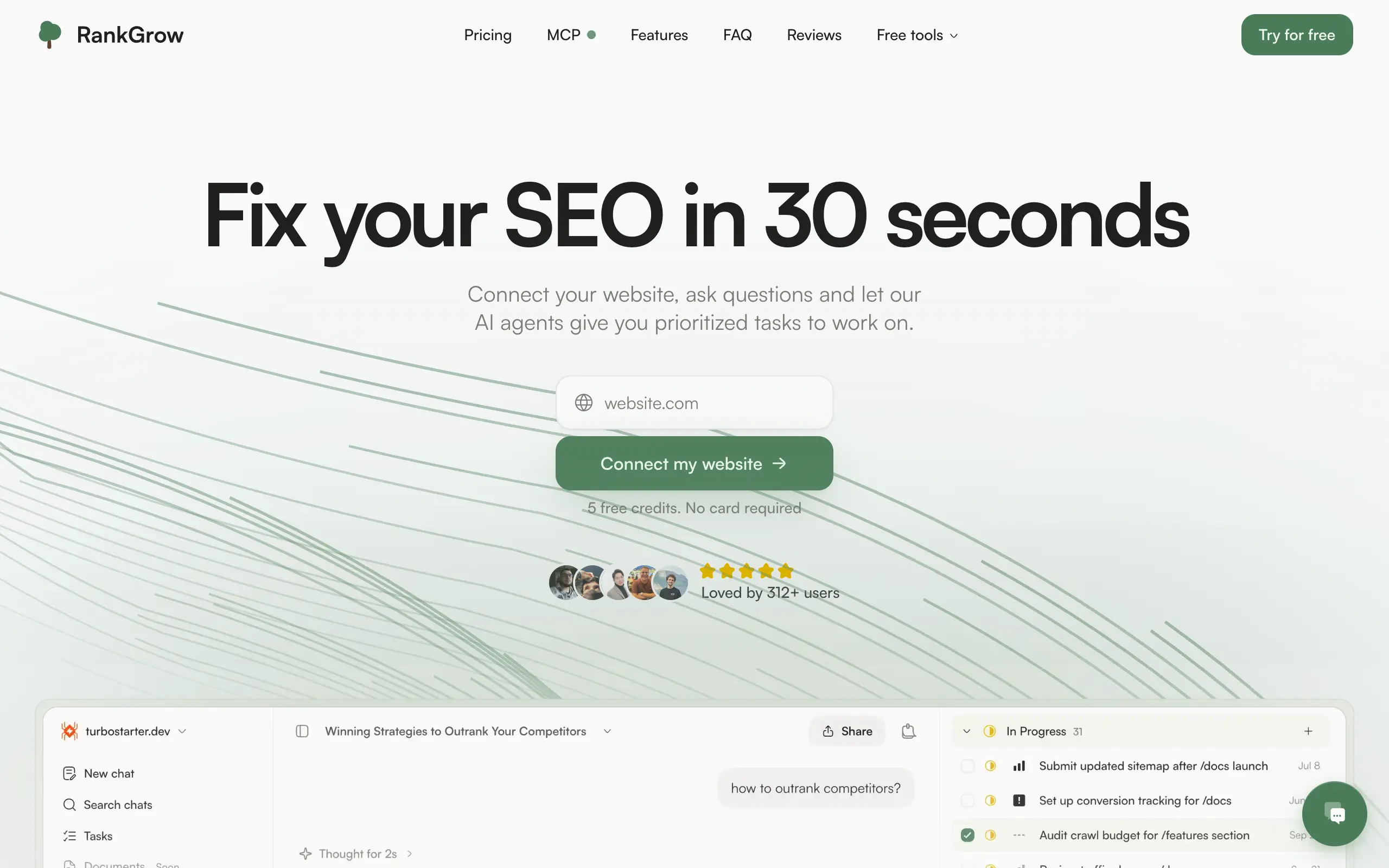
RankGrow
Fix your SEO with AI agents - connect Search Console, get prioritized tasks, and grow organic traffic 📈
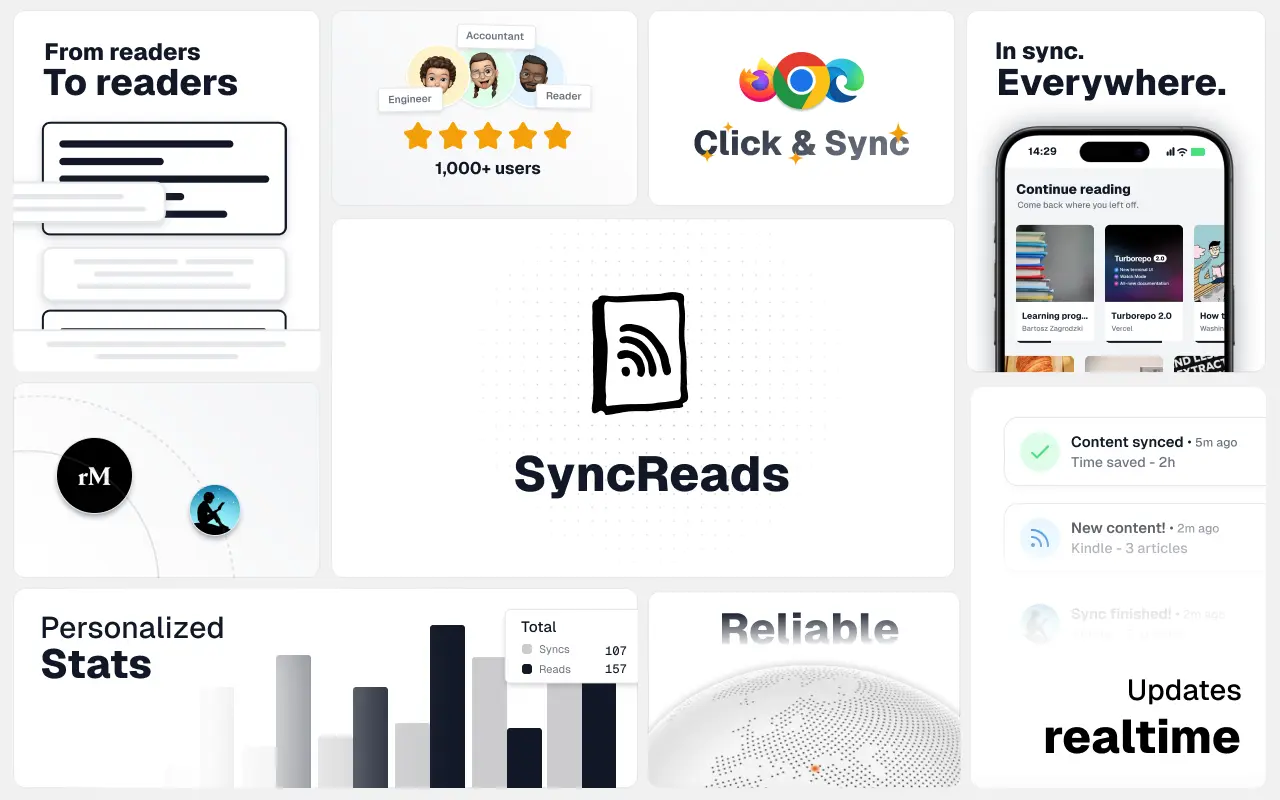
SyncReads
Sync your favorite content for distraction-free reading, save time and replace multiple apps. Anytime, anywhere 🔄
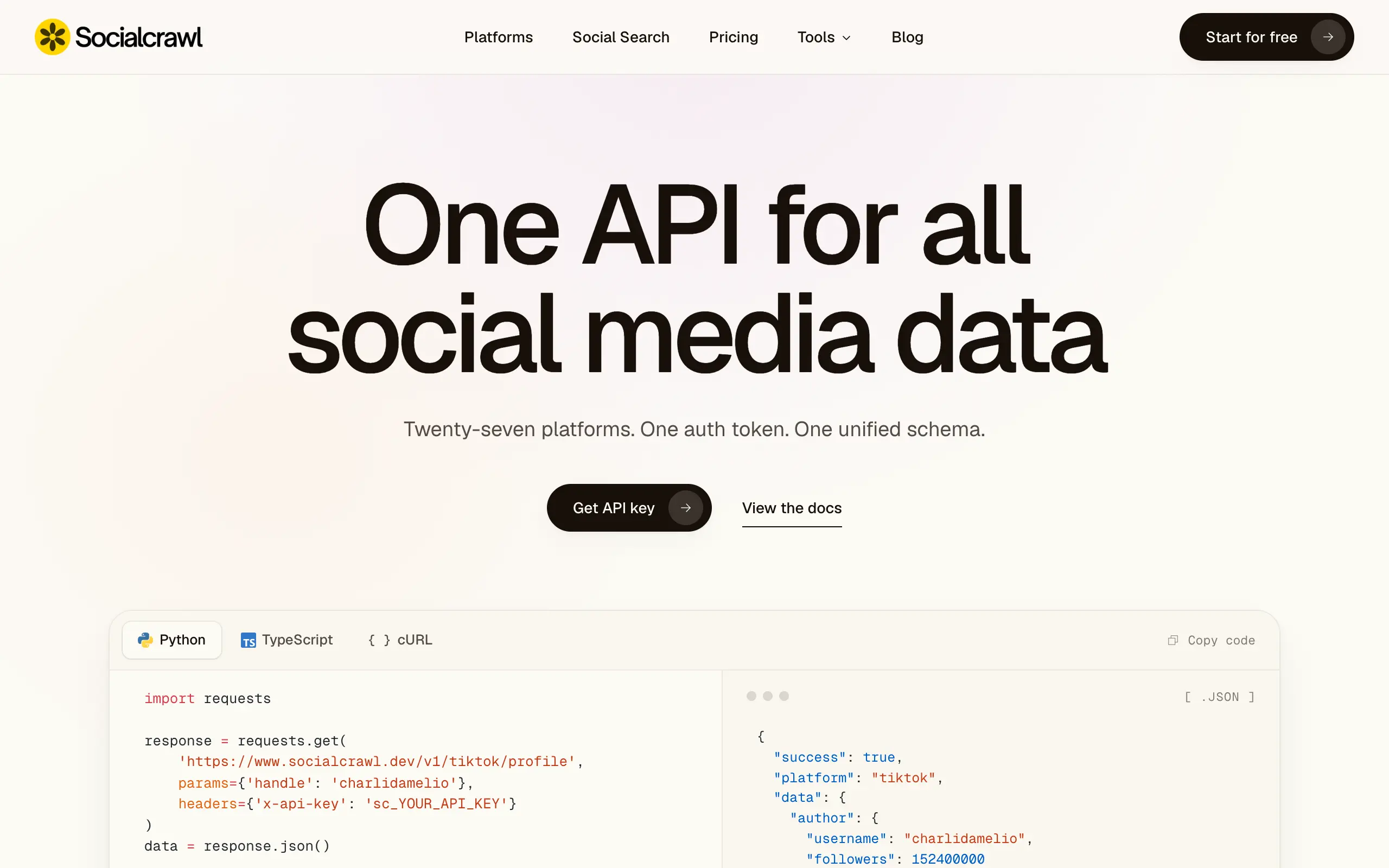
Socialcrawl
Get clean, structured data from 21 platforms like TikTok, Instagram, and YouTube with a single request 📊
Statiko
Monitor any Telegram channel in real time - track posts, edits, deletions, and growth with AI recaps 📡
Shibui
AI website builder - describe your business, pick a niche template, edit by chatting, and publish instantly ✨
Pro Service
Find verified home service professionals, compare quotes, and pay securely through escrow - built for Brazilians across the US 🏠
RankGrow
Fix your SEO with AI agents - connect Search Console, get prioritized tasks, and grow organic traffic 📈
SyncReads
Sync your favorite content for distraction-free reading, save time and replace multiple apps. Anytime, anywhere 🔄
Socialcrawl
Get clean, structured data from 21 platforms like TikTok, Instagram, and YouTube with a single request 📊
Statiko
Monitor any Telegram channel in real time - track posts, edits, deletions, and growth with AI recaps 📡
Shibui
AI website builder - describe your business, pick a niche template, edit by chatting, and publish instantly ✨
Pro Service
Find verified home service professionals, compare quotes, and pay securely through escrow - built for Brazilians across the US 🏠
RankGrow
Fix your SEO with AI agents - connect Search Console, get prioritized tasks, and grow organic traffic 📈
SyncReads
Sync your favorite content for distraction-free reading, save time and replace multiple apps. Anytime, anywhere 🔄
Socialcrawl
Get clean, structured data from 21 platforms like TikTok, Instagram, and YouTube with a single request 📊
Statiko
Monitor any Telegram channel in real time - track posts, edits, deletions, and growth with AI recaps 📡
Shibui
AI website builder - describe your business, pick a niche template, edit by chatting, and publish instantly ✨
Pro Service
Find verified home service professionals, compare quotes, and pay securely through escrow - built for Brazilians across the US 🏠
RankGrow
Fix your SEO with AI agents - connect Search Console, get prioritized tasks, and grow organic traffic 📈
SyncReads
Sync your favorite content for distraction-free reading, save time and replace multiple apps. Anytime, anywhere 🔄
Socialcrawl
Get clean, structured data from 21 platforms like TikTok, Instagram, and YouTube with a single request 📊
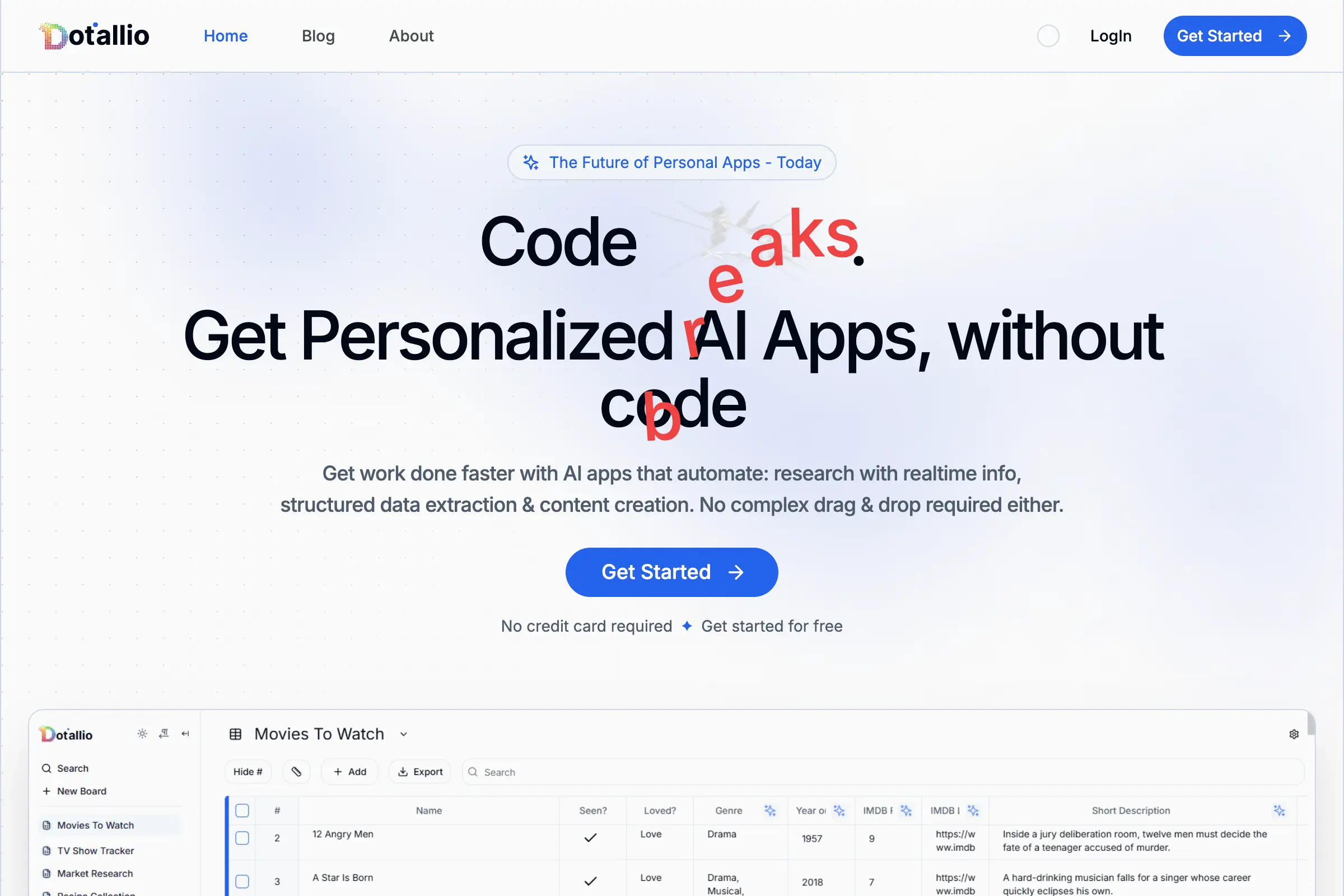
Dotallio
Personalized AI apps that automate research, data extraction, and content creation without code 🤖

Talk to Santa
Enjoy a magical live video chat or receive a unique AI-generated video greeting from Santa Claus 🎅

pozywka.pl
Scalable blog for food journalist, focused on performance and user experience 🌭
zagrodzki.me
Personal blog and portfolio of Bart Zagrodzki, where he shares his knowledge and work 💼
TurboStarter
Ship your startup everywhere. In minutes.
HTML to Markdown
Convert HTML to Markdown with ease, directly in your browser 📄
Dotallio
Personalized AI apps that automate research, data extraction, and content creation without code 🤖
Talk to Santa
Enjoy a magical live video chat or receive a unique AI-generated video greeting from Santa Claus 🎅
pozywka.pl
Scalable blog for food journalist, focused on performance and user experience 🌭
zagrodzki.me
Personal blog and portfolio of Bart Zagrodzki, where he shares his knowledge and work 💼
TurboStarter
Ship your startup everywhere. In minutes.
HTML to Markdown
Convert HTML to Markdown with ease, directly in your browser 📄
Dotallio
Personalized AI apps that automate research, data extraction, and content creation without code 🤖
Talk to Santa
Enjoy a magical live video chat or receive a unique AI-generated video greeting from Santa Claus 🎅
pozywka.pl
Scalable blog for food journalist, focused on performance and user experience 🌭
zagrodzki.me
Personal blog and portfolio of Bart Zagrodzki, where he shares his knowledge and work 💼
TurboStarter
Ship your startup everywhere. In minutes.
HTML to Markdown
Convert HTML to Markdown with ease, directly in your browser 📄
Dotallio
Personalized AI apps that automate research, data extraction, and content creation without code 🤖
Talk to Santa
Enjoy a magical live video chat or receive a unique AI-generated video greeting from Santa Claus 🎅
pozywka.pl
Scalable blog for food journalist, focused on performance and user experience 🌭
zagrodzki.me
Personal blog and portfolio of Bart Zagrodzki, where he shares his knowledge and work 💼
TurboStarter
Ship your startup everywhere. In minutes.
HTML to Markdown
Convert HTML to Markdown with ease, directly in your browser 📄
Omichat
Chat with 50+ AI models, including ChatGPT and Claude, in one place - switch models anytime without losing context 🤖
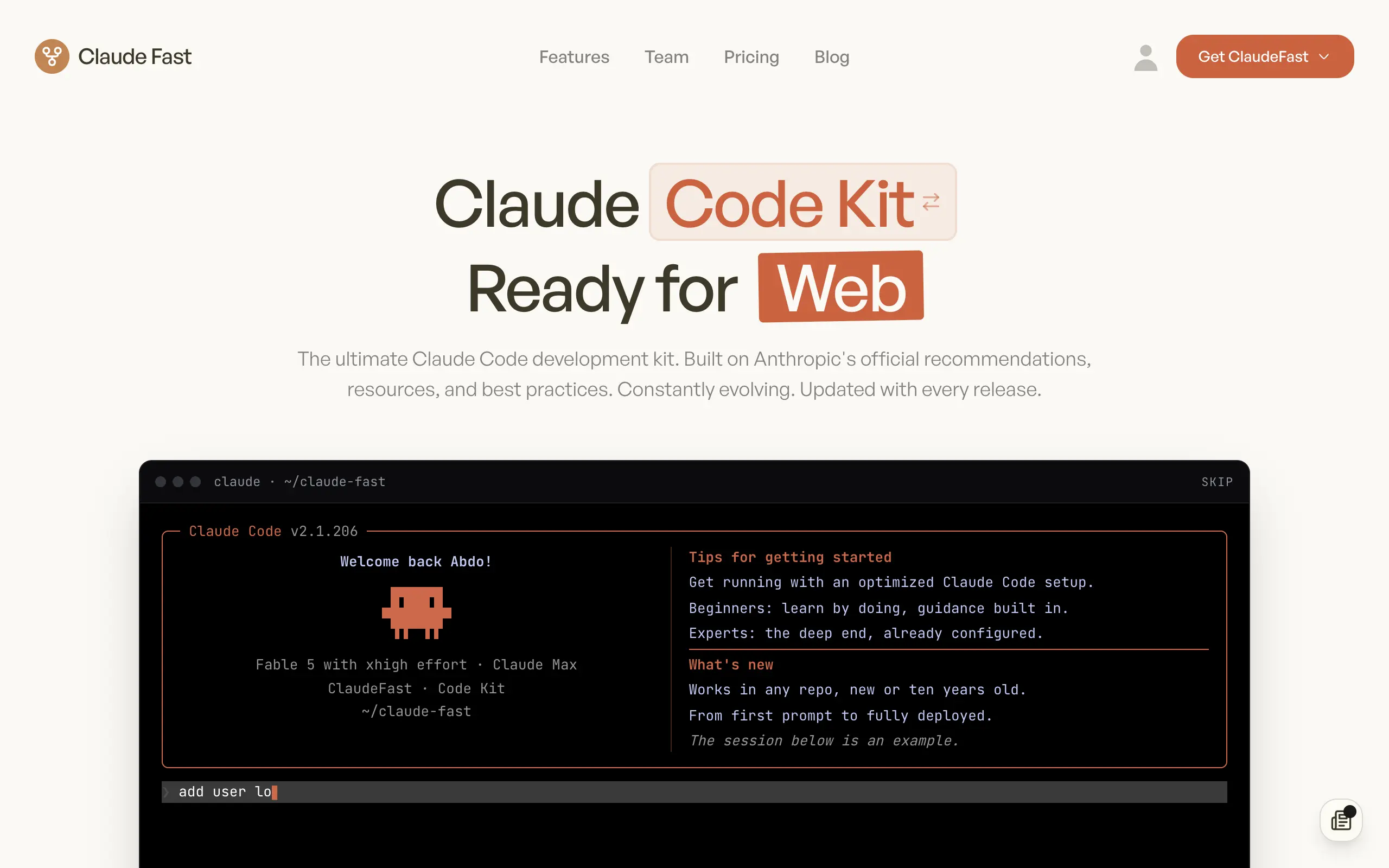
Claude Fast
Supercharge your Claude Code with 6x effective context window and specialized AI agents 🤖
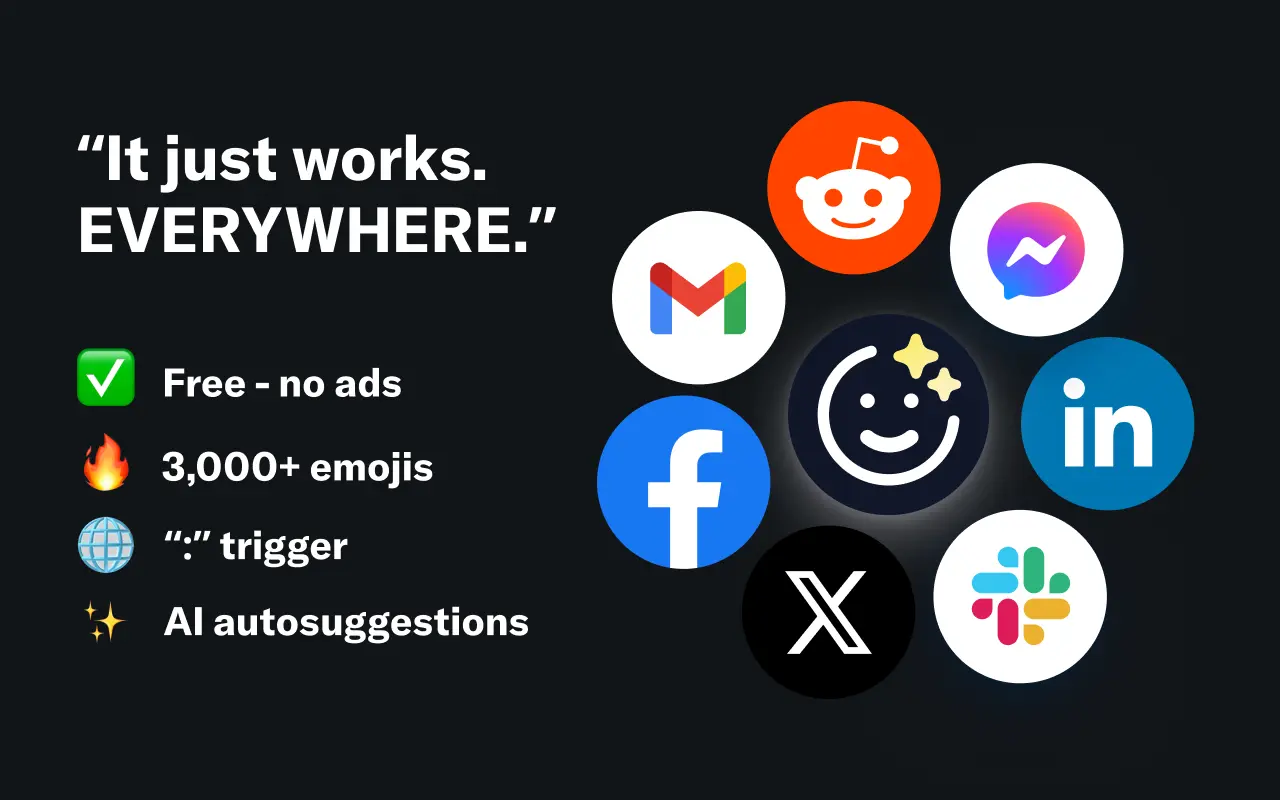
EmojAI
AI-powered emoji picker with smart, context-aware suggestions 🤖
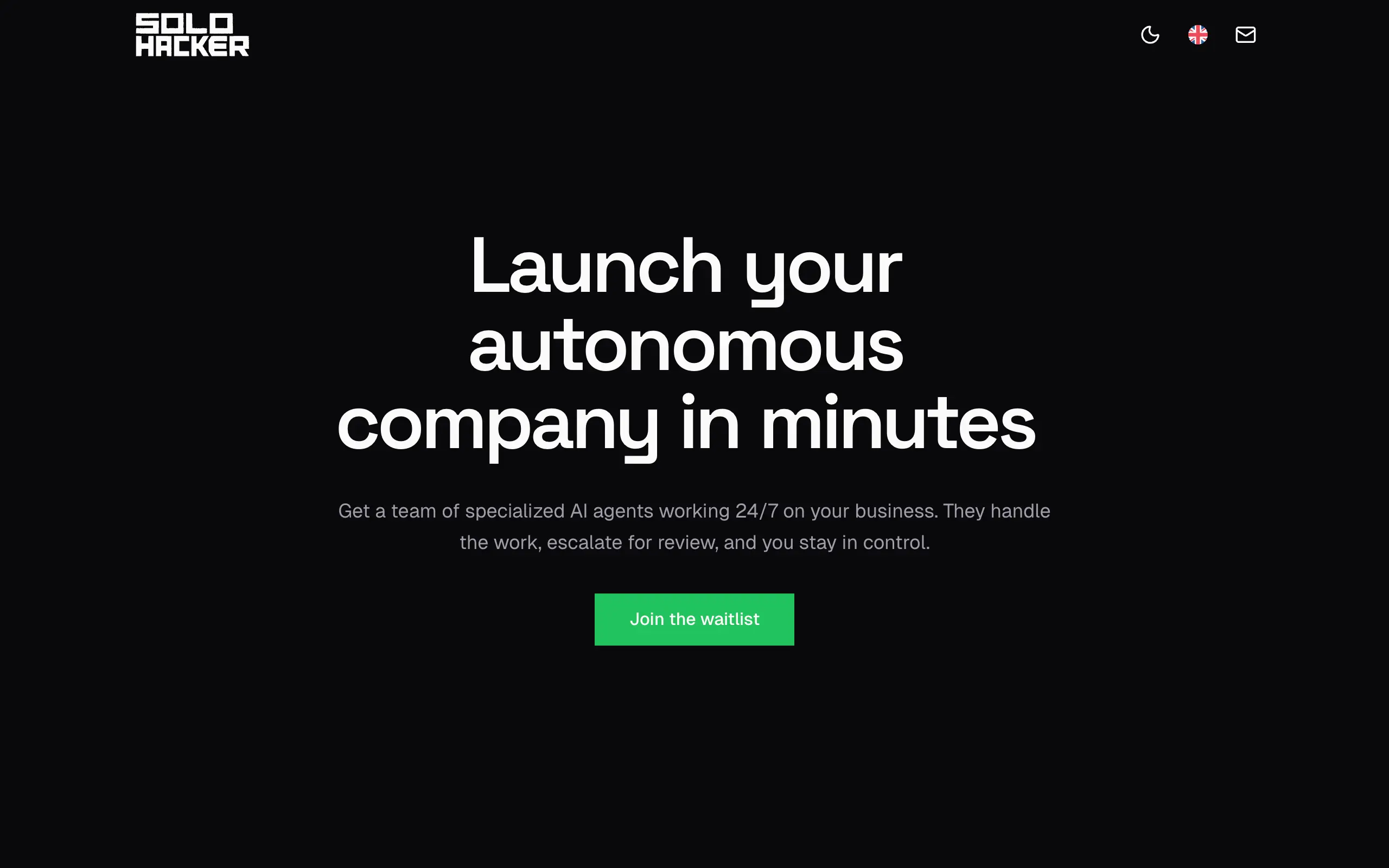
Solohacker
Autonomous company launcher - AI agents work 24/7, escalate what matters, and you stay in control 🤖
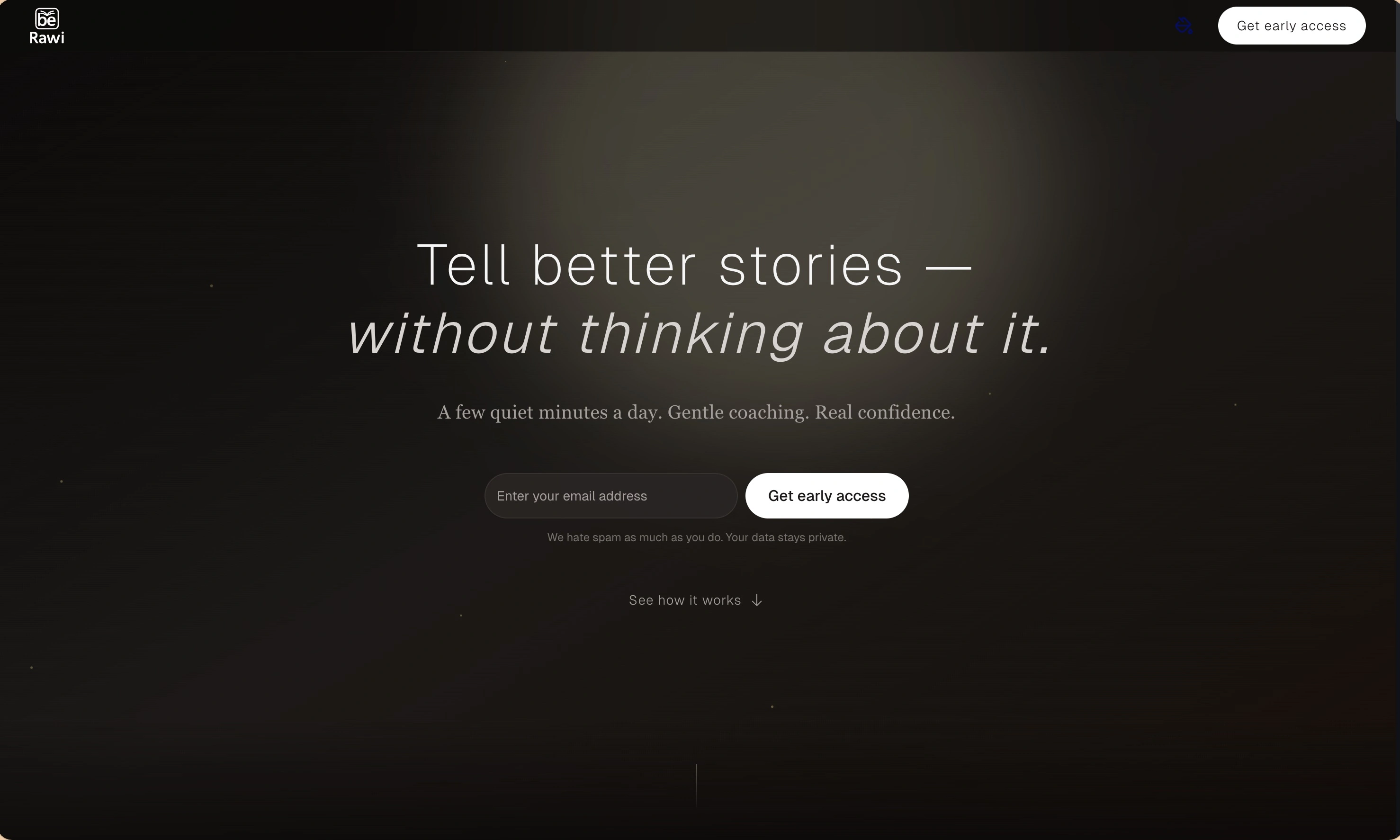
BeRawi: Storytelling Coach
Practice storytelling daily with instant feedback to sound clearer, more engaging, and confident 🎤
Omichat
Chat with 50+ AI models, including ChatGPT and Claude, in one place - switch models anytime without losing context 🤖
Claude Fast
Supercharge your Claude Code with 6x effective context window and specialized AI agents 🤖
EmojAI
AI-powered emoji picker with smart, context-aware suggestions 🤖
Solohacker
Autonomous company launcher - AI agents work 24/7, escalate what matters, and you stay in control 🤖
BeRawi: Storytelling Coach
Practice storytelling daily with instant feedback to sound clearer, more engaging, and confident 🎤
Omichat
Chat with 50+ AI models, including ChatGPT and Claude, in one place - switch models anytime without losing context 🤖
Claude Fast
Supercharge your Claude Code with 6x effective context window and specialized AI agents 🤖
EmojAI
AI-powered emoji picker with smart, context-aware suggestions 🤖
Solohacker
Autonomous company launcher - AI agents work 24/7, escalate what matters, and you stay in control 🤖
BeRawi: Storytelling Coach
Practice storytelling daily with instant feedback to sound clearer, more engaging, and confident 🎤
Omichat
Chat with 50+ AI models, including ChatGPT and Claude, in one place - switch models anytime without losing context 🤖
Claude Fast
Supercharge your Claude Code with 6x effective context window and specialized AI agents 🤖
EmojAI
AI-powered emoji picker with smart, context-aware suggestions 🤖
Solohacker
Autonomous company launcher - AI agents work 24/7, escalate what matters, and you stay in control 🤖
BeRawi: Storytelling Coach
Practice storytelling daily with instant feedback to sound clearer, more engaging, and confident 🎤

Connect with like-minded people
Join our community to get feedback, support, and grow together with 1,000+ builders on board, let's ship it!
Join usShip your startup everywhere. In minutes.
Don't burn tokens on setup and start building features on day one.