BillBuddy AI
An AI money companion that reads bills and receipts, flags subscription waste, predicts upcoming costs and suggests simple savings actions.
Why BillBuddy AI meets a growing personal finance need
Households have more recurring financial commitments than ever: streaming platforms, mobile plans, cloud storage, insurance premiums, memberships, utilities, installment payments, and digital subscriptions that renew silently in the background. The problem is not simply that people spend too much. It is that many people lack a clear, timely understanding of what they owe, when they owe it, and which expenses are genuinely valuable.
BillBuddy AI is an AI money companion designed to solve that problem. It reads bills and receipts, identifies recurring charges, predicts upcoming costs, flags subscription waste, and recommends straightforward savings actions. Rather than requiring users to become spreadsheet experts, it converts financial documents and transaction signals into understandable next steps.
The primary keyword for this SaaS concept is AI bill management app. Related semantic keywords include:
- AI budgeting assistant
- bill tracking software
- subscription management app
- receipt scanner app
- personal finance AI
- expense prediction tool
- recurring expense tracker
- subscription cancellation assistant
- household bill organizer
- AI financial companion
The opportunity is especially strong because consumers increasingly expect intelligent automation, but personal finance remains highly sensitive. BillBuddy AI must combine useful AI recommendations with clear user control, transparent data practices, and conservative financial guidance.
Positioning opportunity
BillBuddy AI should position itself as a financial awareness and savings companion, not as a replacement for a financial adviser, accountant, lender, or bank. Its value comes from helping users understand their own bills and act on concrete savings opportunities.
The problem with traditional bill tracking and budgeting apps
Traditional budgeting tools often ask users to do the hardest part themselves. They must connect accounts, categorize transactions, remember payment dates, and manually investigate charges they no longer recognize. This creates friction at the exact moment users are trying to reduce financial stress.
A basic expense tracker can show that a customer spent money. It rarely explains whether the payment is avoidable, whether the bill has increased unexpectedly, or what the customer should do next.
BillBuddy AI can close this gap by focusing on actionable financial visibility.
Common consumer pain points
Consumers frequently encounter several expensive and frustrating scenarios:
- A free trial converts into a paid annual plan.
- A subscription renews after the user stopped using the service.
- A utility bill rises, but the customer does not notice until after payment.
- A receipt is lost, making returns, reimbursements, and tax tracking harder.
- Multiple household members unknowingly pay for similar services.
- An insurance, telecom, or internet plan increases after an introductory rate ends.
- A user knows they want to save money but does not know where to begin.
- A large annual payment arrives unexpectedly and disrupts the monthly budget.
The core user need is not another dashboard filled with charts. It is a system that can say:
“Your video subscription increased by 18% compared with the prior billing cycle. You have not opened the related service in several months. Review or cancel before the next renewal on Tuesday.”
That combination of context, timing, and action is what makes an AI bill management app materially more useful than a passive finance tracker.
Target audience for an AI bill management app
BillBuddy AI should not attempt to serve every personal finance use case at launch. The strongest early strategy is to target consumers with recurring expenses, limited time, and a desire for financial clarity without advanced budgeting complexity.
Primary customer segments
Busy professionals
People with stable income, many digital subscriptions, and little time to monitor every renewal or price increase.
Young families
Households managing utilities, childcare, insurance, groceries, memberships, and shared recurring expenses.
Students and early-career users
Budget-conscious users who need simple alerts before renewals, overdrafts, and unexpected annual charges.
Freelancers and self-employed workers
Independent professionals who need receipt organization, expense visibility, and recurring cost forecasting.
High-intent users and buying triggers
The best customers are likely to search for a solution after experiencing a financial surprise. Their intent is practical and immediate. They may search for phrases such as:
- “How do I find subscriptions I forgot about?”
- “Best app to track monthly bills”
- “AI app to scan receipts”
- “How can I predict upcoming expenses?”
- “How do I stop wasting money on subscriptions?”
- “Track yearly subscriptions and renewals”
- “App that tells me which bills increased”
BillBuddy AI should create content and product onboarding flows around those moments. The product message should emphasize relief, clarity, and control rather than abstract financial optimization.
Jobs to be done
The following table clarifies what users are trying to accomplish when they adopt a subscription management app or AI budgeting assistant.
| User situation | Job to be done | BillBuddy AI response | Desired outcome | Product value |
|---|---|---|---|---|
| Too many recurring charges | Find waste quickly | Detect recurring merchants and unused plans | Lower monthly spending | Immediate savings opportunities |
| Irregular future costs | Avoid payment surprises | Forecast upcoming bills and annual renewals | Better cash flow planning | Reduced financial anxiety |
| Paper or email receipts | Keep expense records organized | Extract merchant, date, total, and category data | Searchable digital records | Less manual administration |
| Price increases | Understand whether a bill changed | Compare current and historical charges | Timely action before renewal | Trustworthy monitoring |
Market gap and opportunity for BillBuddy AI
The personal finance market is mature, but it remains fragmented. Budgeting apps focus on categories and spending plans. Banking apps focus on transactions. Subscription trackers focus on recurring charges. Receipt apps focus on document capture. BillBuddy AI can create a differentiated category by unifying those workflows around one clear promise: help users understand bills before they become expensive surprises.
The gap between data access and useful action
Many financial products already have access to transaction data. That does not automatically create value. Raw financial data is noisy:
- Merchant names may be unclear or inconsistent.
- A recurring payment can look like a one-time purchase.
- One merchant may bill monthly, annually, or through different payment processors.
- Bills can fluctuate naturally because of tax, usage, or promotional pricing.
- A recommendation can be harmful if it ignores household context.
BillBuddy AI’s defensible product opportunity is not simply “using AI on receipts.” It is building a reliable interpretation layer that combines document extraction, recurring transaction detection, historical comparisons, renewal calendars, and user feedback.
Why timing is a competitive advantage
A generic budgeting report arrives after the money has been spent. BillBuddy AI should prioritize pre-spend intervention:
- Alert users before an annual renewal.
- Detect an upcoming increase relative to previous payments.
- Identify duplicate subscriptions before another billing cycle.
- Estimate expected bills before the user commits discretionary spending.
- Remind users to upload or forward a receipt while it is still easy to find.
This proactive model can increase user retention because it demonstrates value at the moment a decision can still be changed.
Industry trends that support the concept
Several trends make an AI personal finance companion increasingly viable:
-
Consumer comfort with AI assistance has expanded, especially for summarization, document analysis, and personalized recommendations.
-
Open banking and financial data connectivity continue to improve in many markets, although implementation standards and consent requirements differ by region.
-
Optical character recognition and multimodal AI can extract structured information from bills, invoices, and receipts more accurately than older rules-only approaches.
-
Subscription fatigue is growing as consumers manage more recurring digital services and face frequent price adjustments.
-
Cost-of-living pressure has made small recurring expenses more meaningful to households.
For market-sizing claims, acquisition decks, or investor materials, reference authoritative publications from government consumer finance agencies, central banks, recognized market research firms, and major payment networks. Avoid presenting uncited market figures as fact, particularly when describing household debt, subscription spending, or average savings rates.
Core product features for BillBuddy AI
BillBuddy AI should start with a narrow but valuable feature set. The initial product must be accurate enough to build trust and simple enough that users can experience value within the first session.
1. AI bill and receipt scanning
Users should be able to upload an image, PDF, forwarded email attachment, or digital receipt. The system extracts essential fields, including:
- Merchant or provider name
- Billing date
- Due date
- Total amount
- Tax and fee details
- Service period
- Account reference or invoice number
- Renewal date when available
- Payment method when visible
- Expense category
- Confidence score for extracted fields
The product should never silently treat uncertain extracted data as definitive. If a due date or total has low confidence, BillBuddy AI should ask the user to confirm it.
A receipt scanner app becomes substantially more useful when the scanned data feeds into future forecasting, subscription detection, reimbursements, and searchable records.
2. Recurring expense and subscription detection
Recurring charge detection is one of the highest-value capabilities. The AI should identify patterns based on:
- Similar merchant names
- Comparable billing amounts
- Repeating billing intervals
- Transaction descriptions
- Receipt or invoice text
- User confirmations
- Connected account data when the customer explicitly consents
The interface should distinguish between certainty levels. For example:
- Confirmed subscription means the user has verified it.
- Likely recurring payment means the system has detected a meaningful pattern.
- Possible duplicate service means the AI sees overlap but requires review.
- One-time expense means there is not enough repeat evidence.
This language prevents overconfident recommendations and supports a trustworthy user experience.
3. Upcoming bill predictions
A core BillBuddy AI feature is a forward-looking calendar that estimates upcoming costs. The product can forecast:
- Known monthly payments
- Annual subscription renewals
- Quarterly charges
- Variable utility ranges
- Installment payments
- Expected recurring household costs
The forecast should communicate uncertainty. A prediction for a fixed subscription can be precise, while a utility estimate should include a range and explain the basis for the estimate.
For example:
Estimated electricity bill: $82–$104, based on the last six billing cycles and seasonal usage patterns.
This is more credible than displaying a falsely precise single number.
4. Price increase and anomaly alerts
BillBuddy AI should compare each new bill against historical patterns. Useful alerts include:
- “Your internet bill is $15 higher than the typical amount.”
- “This subscription changed from monthly to annual billing.”
- “A duplicate charge may have occurred within 48 hours.”
- “Your insurance premium rose at renewal.”
- “A new recurring payment has appeared.”
Each alert should explain the evidence, the likely impact, and the user’s available options. An alert without a next step creates anxiety. An alert with a clear action creates product value.
5. Personalized savings actions
The savings recommendation engine is BillBuddy AI’s primary differentiator. Recommendations should be specific, low-risk, and easy to understand:
- Cancel subscriptions unused for a user-defined period.
- Switch from annual to monthly billing when flexibility matters more than the discount.
- Review overlapping streaming, storage, fitness, or software plans.
- Set a renewal reminder before a trial converts.
- Pause a seasonal membership.
- Negotiate a bill using a prepared conversation checklist.
- Create a dedicated savings target from identified recurring waste.
Recommendations must avoid regulated financial advice unless BillBuddy AI has the appropriate licensing and compliance program. The app should frame suggestions as informational prompts based on user-provided or user-authorized data.
6. Explainable financial insights
Every AI recommendation needs an answer to the question: “Why did you tell me this?”
A recommendation detail view should include:
- The data sources used
- Historical transaction or bill comparisons
- The detected recurrence pattern
- The estimated annual impact
- Any uncertainty or limitations
- An option to mark the suggestion as helpful or not relevant
This feedback loop improves both model quality and customer trust.
A practical user journey for BillBuddy AI
A strong onboarding experience should deliver an early win in under five minutes. Do not begin by asking users to complete a long financial profile.
The key activation event should be more meaningful than “account created.” A better metric is:
User reviewed at least one detected recurring cost and enabled an upcoming payment or renewal alert.
That behavior indicates the user has experienced the core BillBuddy AI value proposition.
Recommended technology stack for BillBuddy AI
An AI bill management app handles sensitive data, document processing, notifications, and potentially financial account connections. The technology choices should prioritize security, maintainability, and observability over novelty.
Frontend and application layer
A modern web application can use Next.js with React and TypeScript. This combination supports server-rendered content, responsive dashboards, API routes, strong type safety, and an efficient developer experience.
For UI development, Tailwind CSS can help maintain a consistent interface while moving quickly during MVP validation.
A practical stack includes:
- Next.js for the user-facing application and server-side capabilities
- React for interactive dashboards and upload workflows
- TypeScript for safer data contracts
- Tailwind CSS for rapid, consistent interface styling
- PostgreSQL for relational financial records and audit-friendly data modeling
- Prisma for type-safe database access
- Stripe for subscription billing
- Sentry for application monitoring and error reporting
Document processing and AI architecture
The document pipeline should separate extraction from financial recommendations.
- Store the uploaded document securely.
- Run OCR or document parsing.
- Extract structured fields.
- Assign confidence scores.
- Normalize merchant names and categories.
- Match against known recurring patterns.
- Generate recommendations using structured data and documented business rules.
- Store an audit trail of the model output and user corrections.
Using an AI model alone for every decision can create inconsistent results. A hybrid design is safer:
- Use AI for text extraction, document classification, merchant normalization, and natural-language summaries.
- Use deterministic rules for due-date calculations, recurrence thresholds, alert timing, and monetary totals.
- Use user confirmation to resolve ambiguous payments and improve future matching.
type BillInsight = {
  merchant: string
  currentAmount: number
  previousAverageAmount: number
  recurringConfidence: "high" | "medium" | "low"
  recommendation: string
}

export function createPriceIncreaseInsight(
  bill: BillInsight
): string | null {
  const increase = bill.currentAmount - bill.previousAverageAmount
  const increaseRate = increase / bill.previousAverageAmount

  if (increaseRate < 0.1 || bill.recurringConfidence === "low") {
    return null
  }

  return `${bill.merchant} is ${Math.round(
    increaseRate * 100
  )}% above your previous average. Review the bill before the next payment.`
}
Trade-offs to consider
A fully managed AI API accelerates development, but it creates third-party data processing considerations. A self-hosted model may offer stronger control in some contexts, but it requires infrastructure expertise, monitoring, and potentially higher operational cost.
Similarly, financial data aggregation can accelerate recurring payment detection, but direct account connectivity increases compliance responsibilities and user concerns. An MVP can validate demand with manual uploads, email forwarding, and receipt scanning before adding account connections.
Start with document uploads, forwarded invoices, manual recurring bill entry, rules-based alerts, and AI-generated summaries. This approach reduces integration complexity and lets the team validate whether users value savings recommendations.
Add consent-based financial data connections, advanced merchant enrichment, household sharing, automated cancellation flows where feasible, and more sophisticated forecasting after product-market fit signals are clear.
Data privacy, security, and trust requirements
Financial information is among the most sensitive categories of consumer data. Trust cannot be treated as a legal footer or a late-stage compliance task. It must be visible throughout the product experience.
Security principles for an AI financial companion
BillBuddy AI should implement the following safeguards from the beginning:
- Encrypt sensitive data in transit and at rest.
- Use least-privilege access controls for employees and services.
- Separate customer identifiers from document content where practical.
- Maintain immutable audit logs for sensitive actions.
- Provide clear consent screens before connecting financial accounts.
- Allow users to export and delete their data.
- Define retention periods for uploaded bills and receipts.
- Redact or minimize sensitive fields before sending content to external AI providers.
- Perform regular security testing and dependency reviews.
- Publish a plain-language privacy explanation alongside the formal policy.
Avoiding harmful AI behavior
The AI should never imply certainty when it has only inferred a pattern. It should not shame users for spending, make unsupported credit recommendations, or suggest actions that could cause a missed payment.
Use language such as:
- “This appears to be a recurring payment.”
- “You may want to review this price change.”
- “Based on the bills you shared, this cost is expected next month.”
- “This estimate may vary if usage changes.”
Compliance is product work
If BillBuddy AI connects to bank accounts, facilitates payments, recommends financial products, or operates across multiple jurisdictions, engage qualified legal and compliance professionals early. Requirements can differ significantly by country, state, data type, and business model.
Monetization options for BillBuddy AI
The best pricing model should align with the product’s measurable value. Users are likely willing to pay when BillBuddy AI saves them money, prevents surprise bills, or reduces time-consuming administration.
Freemium subscription model
A freemium model is likely the strongest acquisition strategy.
- "Free plan" includes limited receipt scans, bill reminders, and a basic recurring expense view.
- "Premium plan" includes unlimited document scanning, full subscription detection, renewal forecasts, price increase alerts, household sharing, and advanced savings insights.
- "Family plan" supports multiple household members, shared bills, roles, and collaborative savings reviews.
The free plan should deliver genuine value without giving away every high-value automation feature. The objective is to build trust before asking for payment.
Savings-based or performance pricing
BillBuddy AI could eventually test a success-based model, where users pay a percentage of verified savings or a flat fee after completing a cost-reduction action. This approach is compelling in theory but complex in practice because savings attribution can be difficult to verify.
A safer version is to show estimated annual savings while charging a transparent monthly or annual subscription.
B2B2C and partnership revenue
Potential distribution partners include:
- Employee financial wellness programs
- Credit unions and community banks
- Insurance providers
- Accounting platforms for freelancers
- Consumer membership organizations
- Mobile carriers or utilities that want to offer proactive bill support
Partnerships can lower customer acquisition costs, but they may introduce conflicts of interest. If BillBuddy AI earns referral revenue from providers, that relationship should be disclosed clearly.
Competitive advantage and differentiation
The competitive landscape includes budgeting apps, banking tools, subscription trackers, receipt management products, and AI chat assistants. BillBuddy AI should not try to beat each competitor at its entire category. Instead, it should own the intersection of bill intelligence, proactive prediction, and explainable savings actions.
BillBuddy AI’s unique selling proposition
BillBuddy AI turns bills and receipts into an early-warning system for recurring costs, price increases, and practical savings opportunities.
This USP is stronger than “AI-powered budgeting” because it describes a direct user outcome. It also differentiates BillBuddy AI from products that merely display transaction histories.
Defensible product moats
Over time, BillBuddy AI can build defensibility through:
- A merchant and bill normalization dataset improved by consented user corrections
- Proprietary recurring expense detection logic
- Personalized recommendations based on individual timing and preferences
- High-quality explanation and trust patterns
- A household-level view of shared financial obligations
- Workflow integrations for receipt capture, email parsing, reminders, and review actions
- Retention driven by a continuously improving future bill calendar
The strongest moat is not the model itself. AI models are increasingly accessible. The moat is a trusted product system that consistently transforms messy financial information into useful, safe, and well-timed actions.
Risks and mitigation strategies
Every personal finance SaaS product faces meaningful risk. Addressing these openly strengthens both product planning and investor credibility.
Use confidence scoring, user review flows, merchant normalization, and deterministic checks for dates and amounts. Never present low-confidence insights as confirmed facts.
Offer document-upload workflows before requiring account connections, explain permissions in plain language, minimize retained data, and make deletion easy.
Use concise, evidence-based language. Let users set savings goals and dismiss irrelevant recommendations so personalization improves over time.
Build SEO content around bill tracking, subscription waste, receipt scanning, and annual renewal planning. Pair content with free tools, templates, and a compelling freemium experience.
Avoid acting as a bank, payment processor, lender, or regulated adviser unless the business has the necessary infrastructure, licenses, and counsel.
Go-to-market strategy for BillBuddy AI
SEO should be a major organic growth channel because the problem is highly searchable. Users often seek help after noticing a charge, receiving an expensive bill, or feeling overwhelmed by monthly costs.
Content clusters that can attract qualified traffic
Build content around high-intent questions:
- How to find and cancel forgotten subscriptions
- How to track annual subscriptions and renewals
- How to organize receipts for personal expenses
- How to identify duplicate subscriptions
- How to reduce monthly bills without changing banks
- How to predict upcoming household expenses
- Why utility bills increase and what to check
- Best methods for tracking recurring expenses
Each article should lead naturally to a relevant BillBuddy AI capability. For instance, an article about annual renewals can offer a downloadable renewal checklist and introduce the app’s renewal alert workflow.
Product-led acquisition loops
BillBuddy AI can create organic sharing and retention loops through:
- Monthly savings summaries
- Household bill review reports
- Annual subscription audit checklists
- Receipt export features
- Renewal calendar reminders
- “Found savings” milestones that users can share privately with family members
Avoid overly gamified financial messaging. The product should feel empowering and calm, not invasive or judgmental.
Actionable implementation roadmap
A disciplined MVP can validate demand without building a full banking platform.
Phase 1: validate the core pain
Build the minimum product around document uploads and recurring bill visibility.
- Create account authentication and secure file storage.
- Support receipt and bill uploads in image and PDF formats.
- Extract merchant, total, date, due date, and category fields.
- Let users manually confirm or edit extracted data.
- Create a recurring expense dashboard.
- Send due-date and renewal reminders.
- Interview users after they review their first detected recurring charge.
Success in this phase means users understand the value and return to review upcoming expenses.
Phase 2: introduce savings intelligence
Add high-confidence recommendations that are easy to explain.
- Detect repeated merchant payments.
- Compare current bills with historical averages.
- Flag likely subscription waste.
- Generate annualized cost estimates.
- Add dismiss, confirm, and correction feedback controls.
- Build a simple “potential savings” view with evidence for every suggestion.
Phase 3: scale personalization and integrations
Once users demonstrate retention and willingness to pay, expand carefully.
- Add email forwarding for invoices and receipts.
- Introduce optional financial account connections.
- Support household members and shared bills.
- Improve forecasts using historical patterns.
- Launch premium plans.
- Create privacy, security, and compliance processes suitable for the product’s maturity.
For founders who want to move from concept to production faster, TurboStarter can provide a practical foundation for building and launching a polished SaaS product.
Final perspective
BillBuddy AI has a compelling opportunity because it addresses a universal, recurring problem: people struggle to understand the financial commitments already in their lives. The product does not need to promise unrealistic wealth transformation. It only needs to help users see what is coming, identify what is changing, and take small, informed actions before money leaves their account.
The winning AI bill management app will be accurate, transparent, proactive, and respectful of user privacy. If BillBuddy AI focuses on trusted bill interpretation rather than flashy automation, it can become a daily financial companion that helps consumers reduce waste, avoid surprises, and feel more in control of their money.
More 🤖 AI Startup SaaS ideas
Discover more innovative ai startup SaaS ideas that are trending in 2026. Each idea is AI-generated with market validation and growth potential to help you find your next profitable venture faster than competitors.
Your competitors are building with TurboStarter
Below are some of the SaaS ideas that have been generated and built with our starter kit.

Statiko
Monitor any Telegram channel in real time - track posts, edits, deletions, and growth with AI recaps 📡

Shibui
AI website builder - describe your business, pick a niche template, edit by chatting, and publish instantly ✨

Pro Service
Find verified home service professionals, compare quotes, and pay securely through escrow - built for Brazilians across the US 🏠
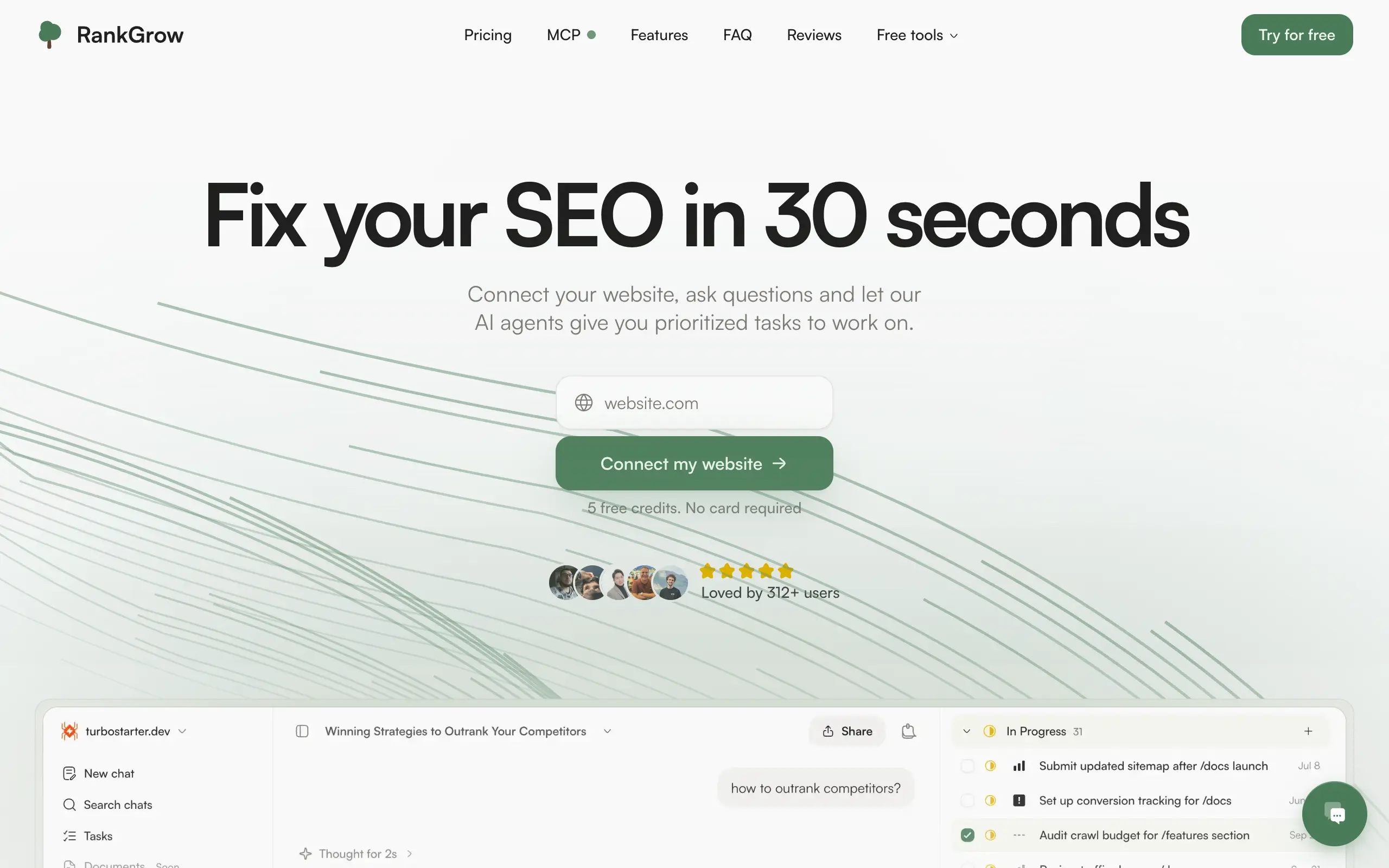
RankGrow
Fix your SEO with AI agents - connect Search Console, get prioritized tasks, and grow organic traffic 📈
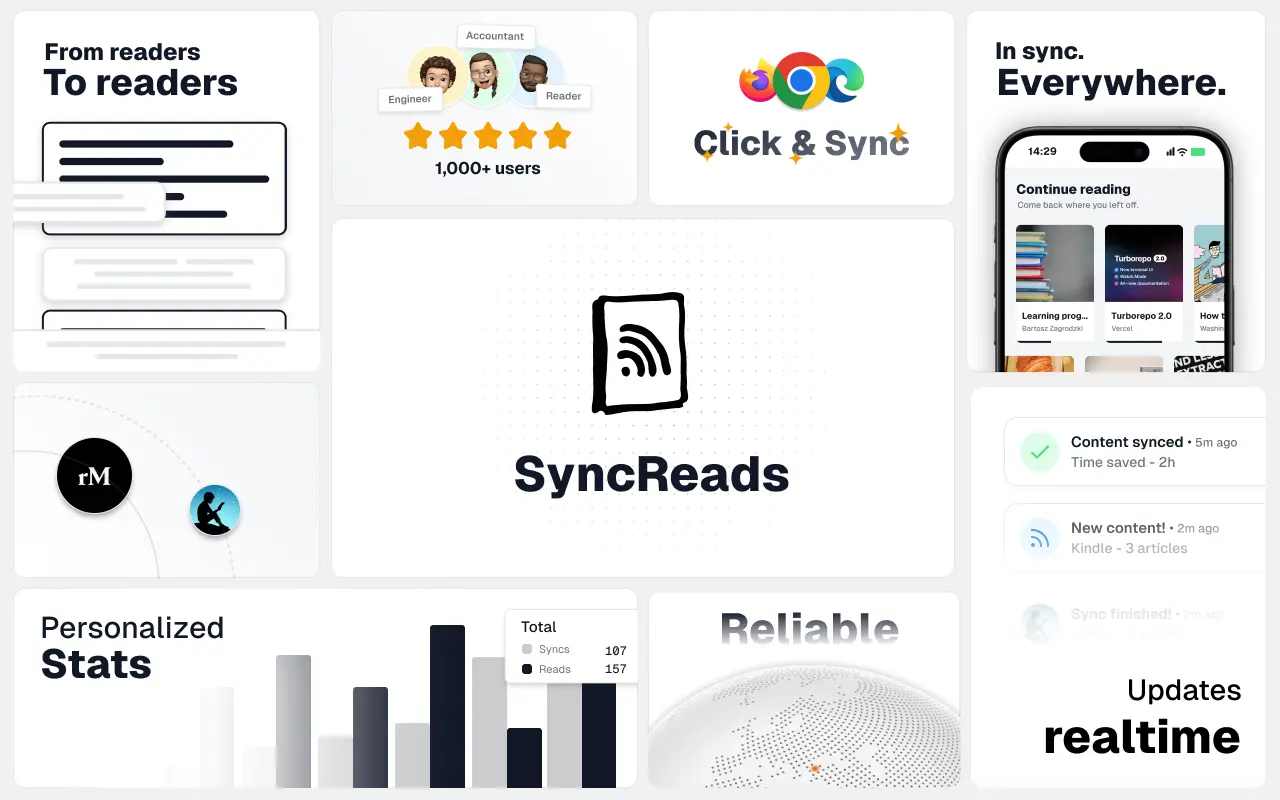
SyncReads
Sync your favorite content for distraction-free reading, save time and replace multiple apps. Anytime, anywhere 🔄
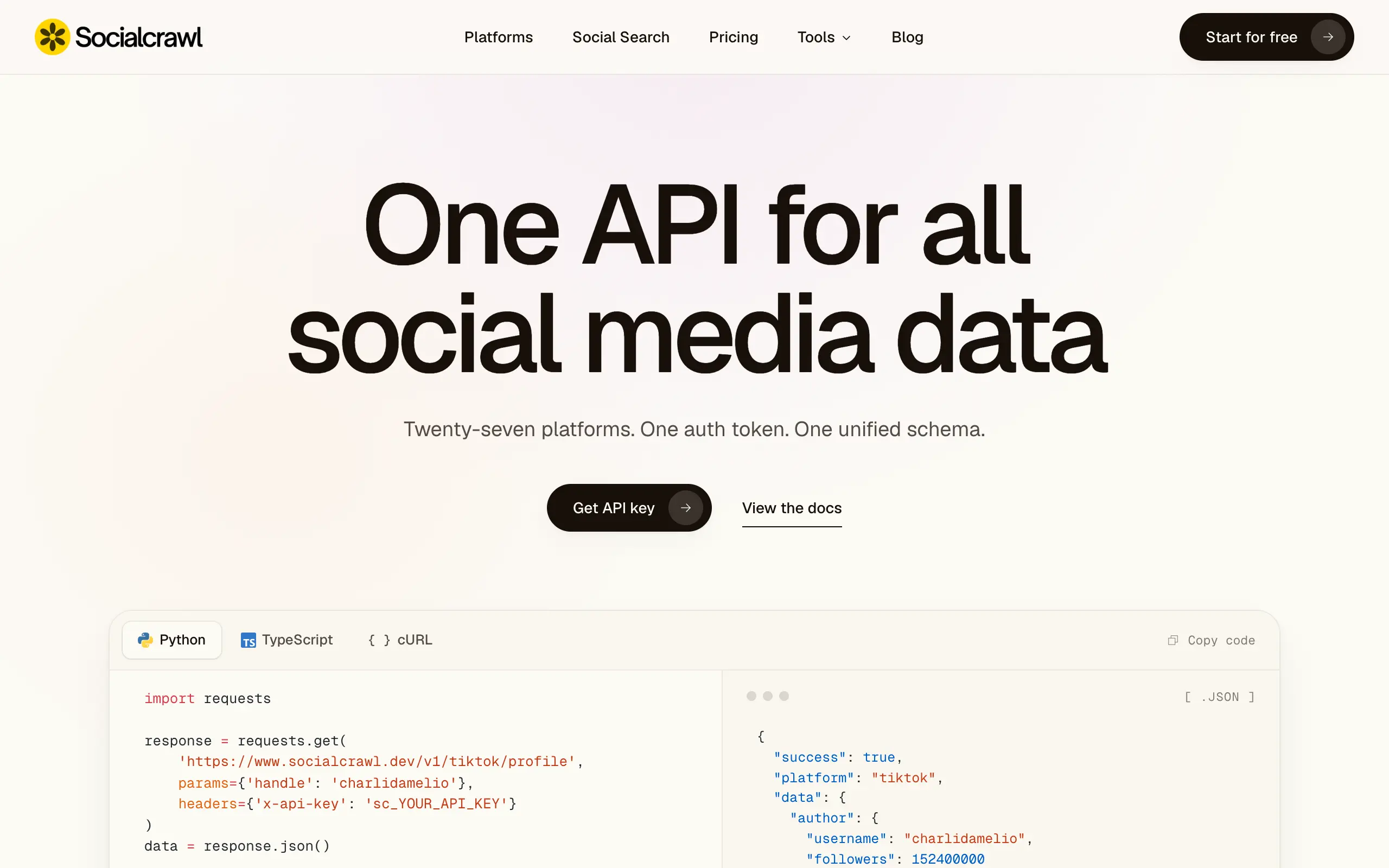
Socialcrawl
Get clean, structured data from 21 platforms like TikTok, Instagram, and YouTube with a single request 📊
Statiko
Monitor any Telegram channel in real time - track posts, edits, deletions, and growth with AI recaps 📡
Shibui
AI website builder - describe your business, pick a niche template, edit by chatting, and publish instantly ✨
Pro Service
Find verified home service professionals, compare quotes, and pay securely through escrow - built for Brazilians across the US 🏠
RankGrow
Fix your SEO with AI agents - connect Search Console, get prioritized tasks, and grow organic traffic 📈
SyncReads
Sync your favorite content for distraction-free reading, save time and replace multiple apps. Anytime, anywhere 🔄
Socialcrawl
Get clean, structured data from 21 platforms like TikTok, Instagram, and YouTube with a single request 📊
Statiko
Monitor any Telegram channel in real time - track posts, edits, deletions, and growth with AI recaps 📡
Shibui
AI website builder - describe your business, pick a niche template, edit by chatting, and publish instantly ✨
Pro Service
Find verified home service professionals, compare quotes, and pay securely through escrow - built for Brazilians across the US 🏠
RankGrow
Fix your SEO with AI agents - connect Search Console, get prioritized tasks, and grow organic traffic 📈
SyncReads
Sync your favorite content for distraction-free reading, save time and replace multiple apps. Anytime, anywhere 🔄
Socialcrawl
Get clean, structured data from 21 platforms like TikTok, Instagram, and YouTube with a single request 📊
Statiko
Monitor any Telegram channel in real time - track posts, edits, deletions, and growth with AI recaps 📡
Shibui
AI website builder - describe your business, pick a niche template, edit by chatting, and publish instantly ✨
Pro Service
Find verified home service professionals, compare quotes, and pay securely through escrow - built for Brazilians across the US 🏠
RankGrow
Fix your SEO with AI agents - connect Search Console, get prioritized tasks, and grow organic traffic 📈
SyncReads
Sync your favorite content for distraction-free reading, save time and replace multiple apps. Anytime, anywhere 🔄
Socialcrawl
Get clean, structured data from 21 platforms like TikTok, Instagram, and YouTube with a single request 📊
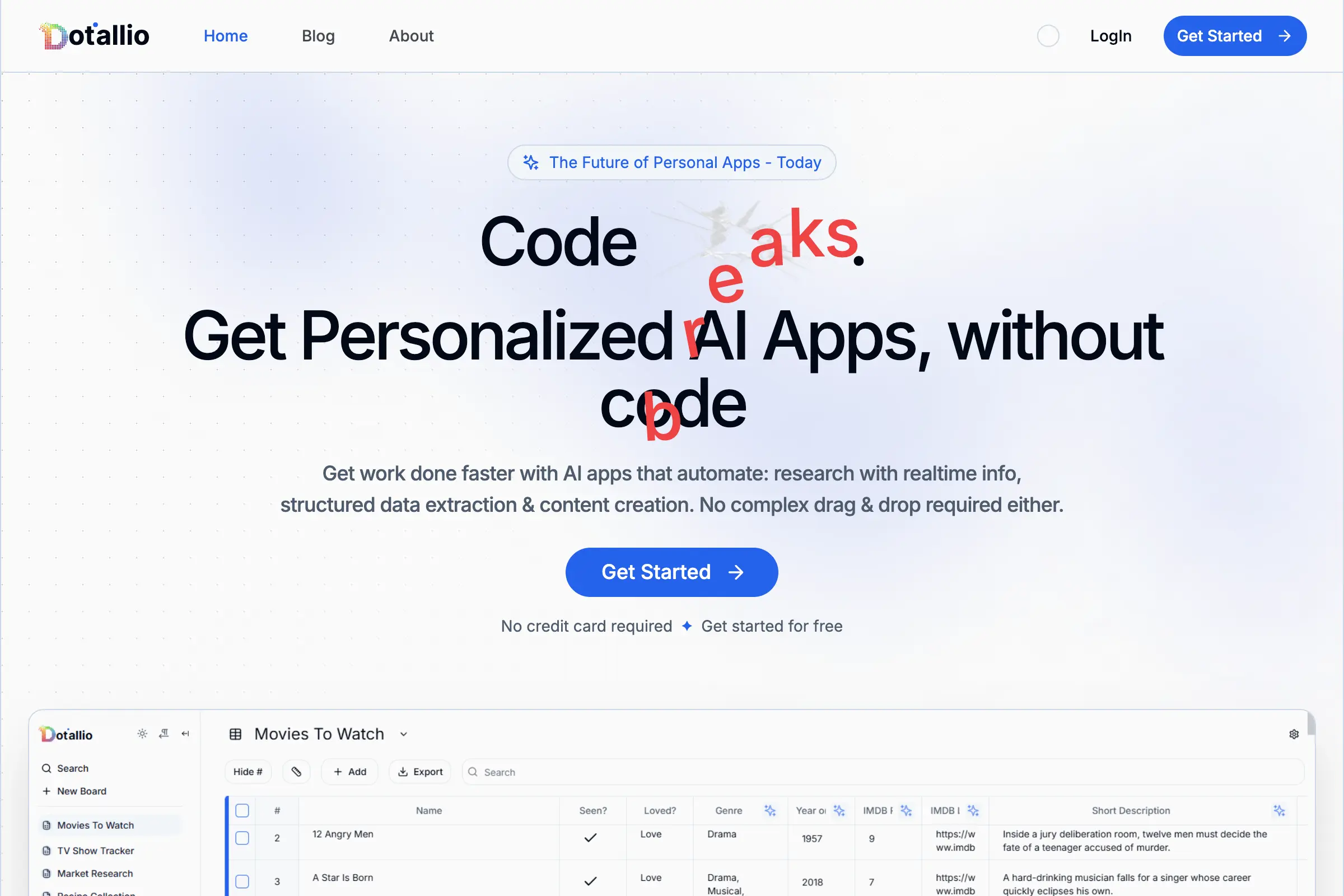
Dotallio
Personalized AI apps that automate research, data extraction, and content creation without code 🤖
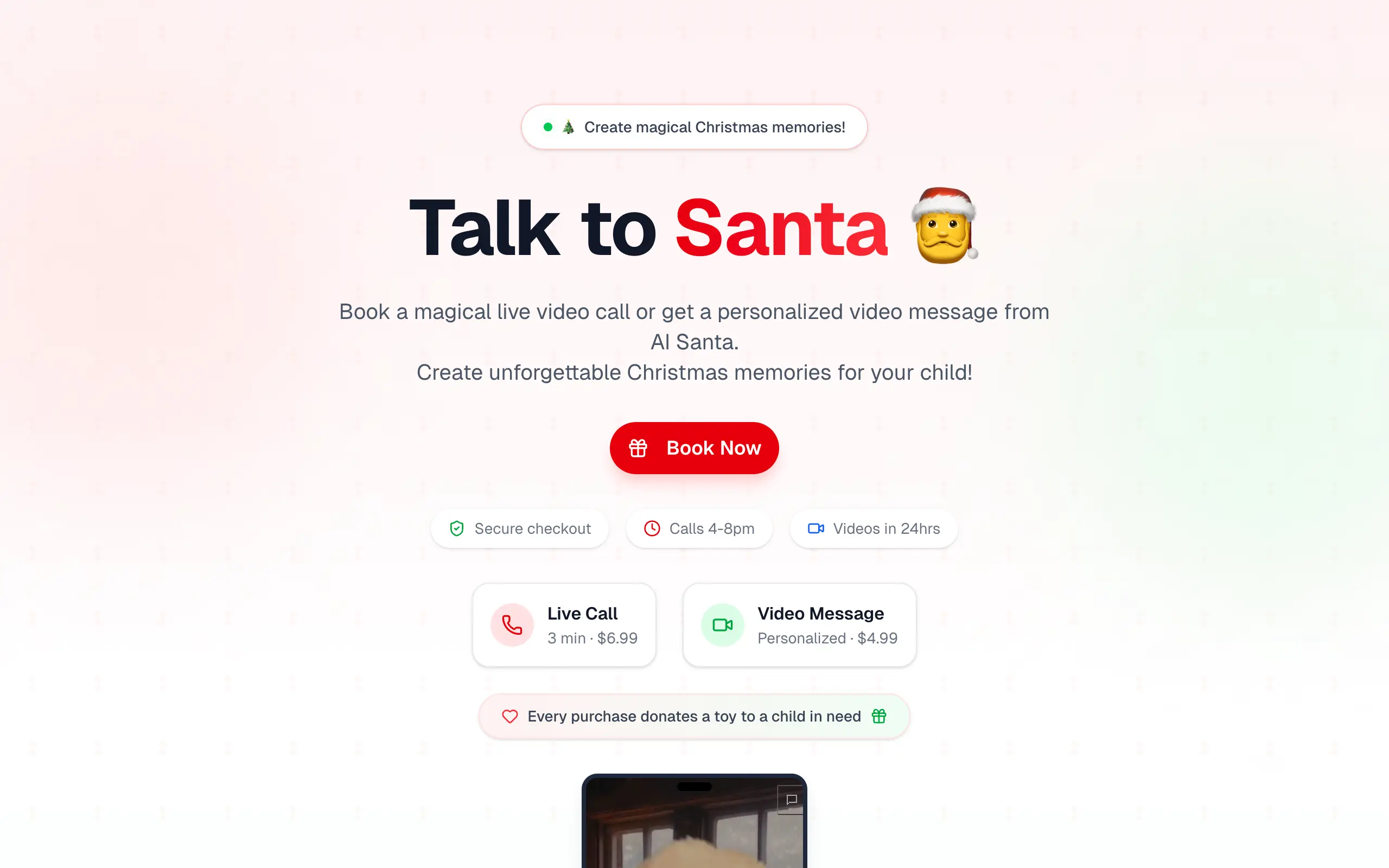
Talk to Santa
Enjoy a magical live video chat or receive a unique AI-generated video greeting from Santa Claus 🎅

pozywka.pl
Scalable blog for food journalist, focused on performance and user experience 🌭
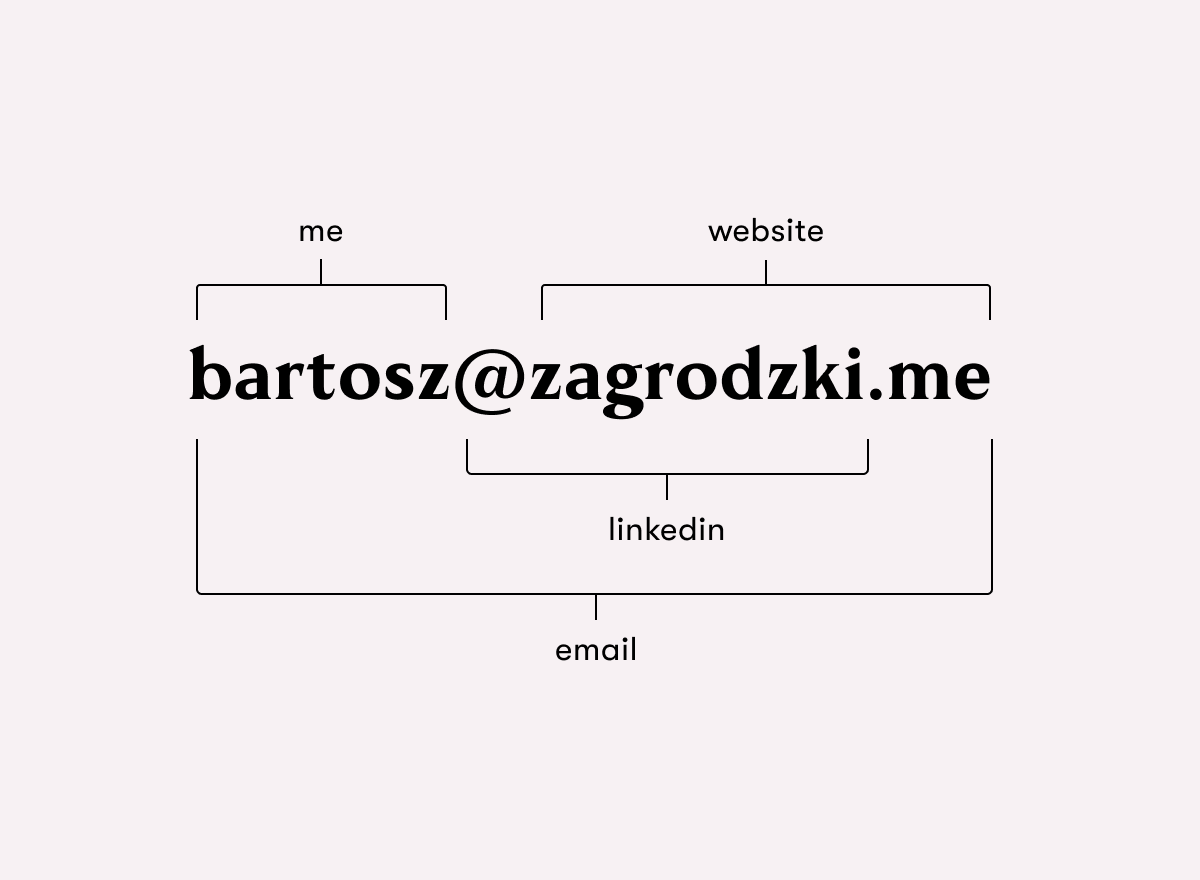
zagrodzki.me
Personal blog and portfolio of Bart Zagrodzki, where he shares his knowledge and work 💼
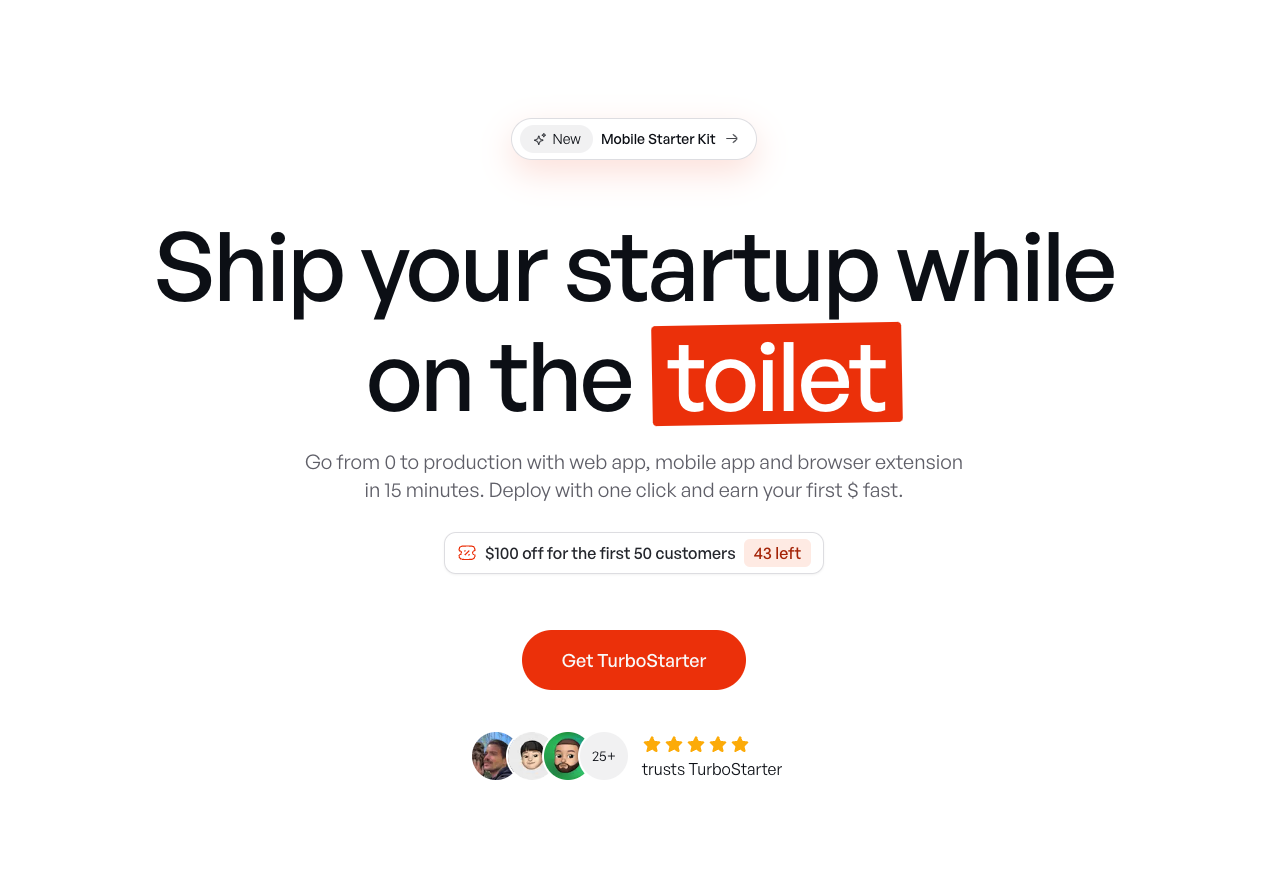
TurboStarter
Ship your startup everywhere. In minutes.
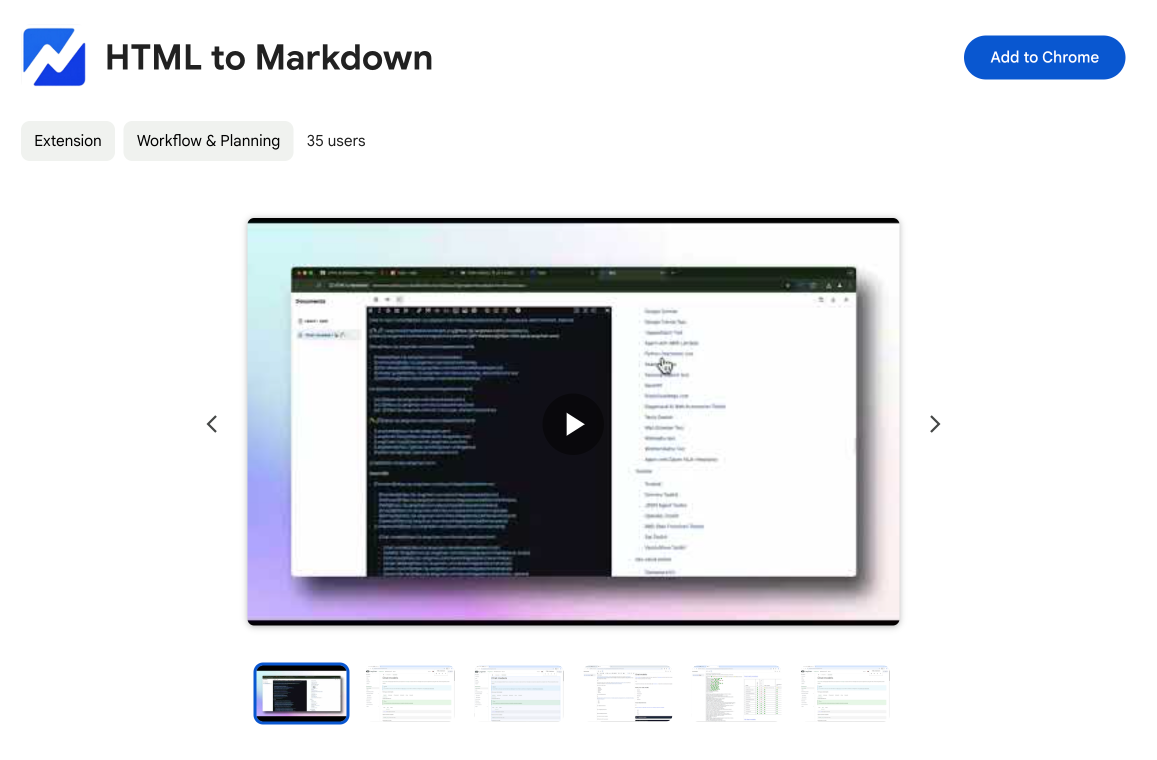
HTML to Markdown
Convert HTML to Markdown with ease, directly in your browser 📄
Dotallio
Personalized AI apps that automate research, data extraction, and content creation without code 🤖
Talk to Santa
Enjoy a magical live video chat or receive a unique AI-generated video greeting from Santa Claus 🎅
pozywka.pl
Scalable blog for food journalist, focused on performance and user experience 🌭
zagrodzki.me
Personal blog and portfolio of Bart Zagrodzki, where he shares his knowledge and work 💼
TurboStarter
Ship your startup everywhere. In minutes.
HTML to Markdown
Convert HTML to Markdown with ease, directly in your browser 📄
Dotallio
Personalized AI apps that automate research, data extraction, and content creation without code 🤖
Talk to Santa
Enjoy a magical live video chat or receive a unique AI-generated video greeting from Santa Claus 🎅
pozywka.pl
Scalable blog for food journalist, focused on performance and user experience 🌭
zagrodzki.me
Personal blog and portfolio of Bart Zagrodzki, where he shares his knowledge and work 💼
TurboStarter
Ship your startup everywhere. In minutes.
HTML to Markdown
Convert HTML to Markdown with ease, directly in your browser 📄
Dotallio
Personalized AI apps that automate research, data extraction, and content creation without code 🤖
Talk to Santa
Enjoy a magical live video chat or receive a unique AI-generated video greeting from Santa Claus 🎅
pozywka.pl
Scalable blog for food journalist, focused on performance and user experience 🌭
zagrodzki.me
Personal blog and portfolio of Bart Zagrodzki, where he shares his knowledge and work 💼
TurboStarter
Ship your startup everywhere. In minutes.
HTML to Markdown
Convert HTML to Markdown with ease, directly in your browser 📄
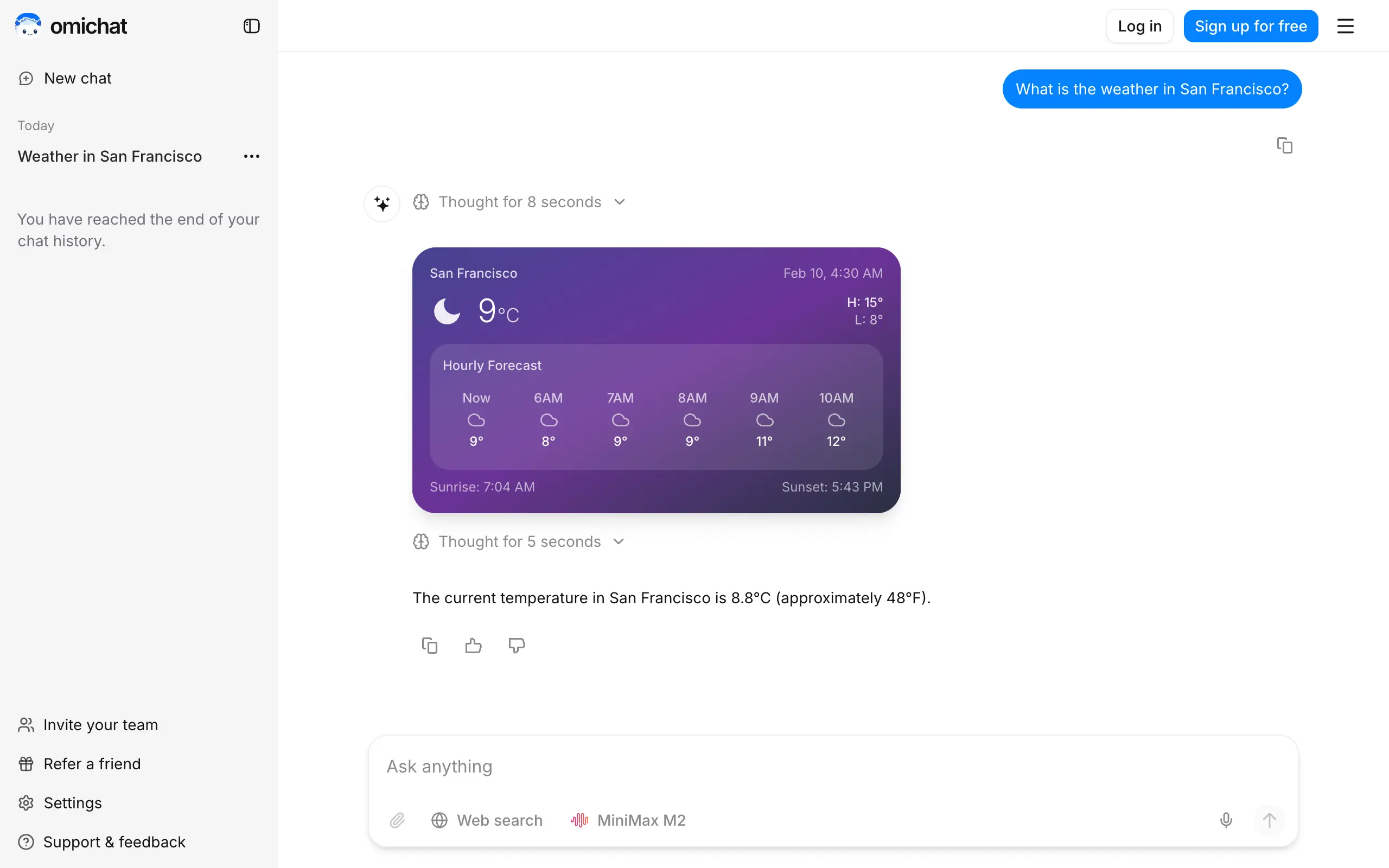
Omichat
Chat with 50+ AI models, including ChatGPT and Claude, in one place - switch models anytime without losing context 🤖
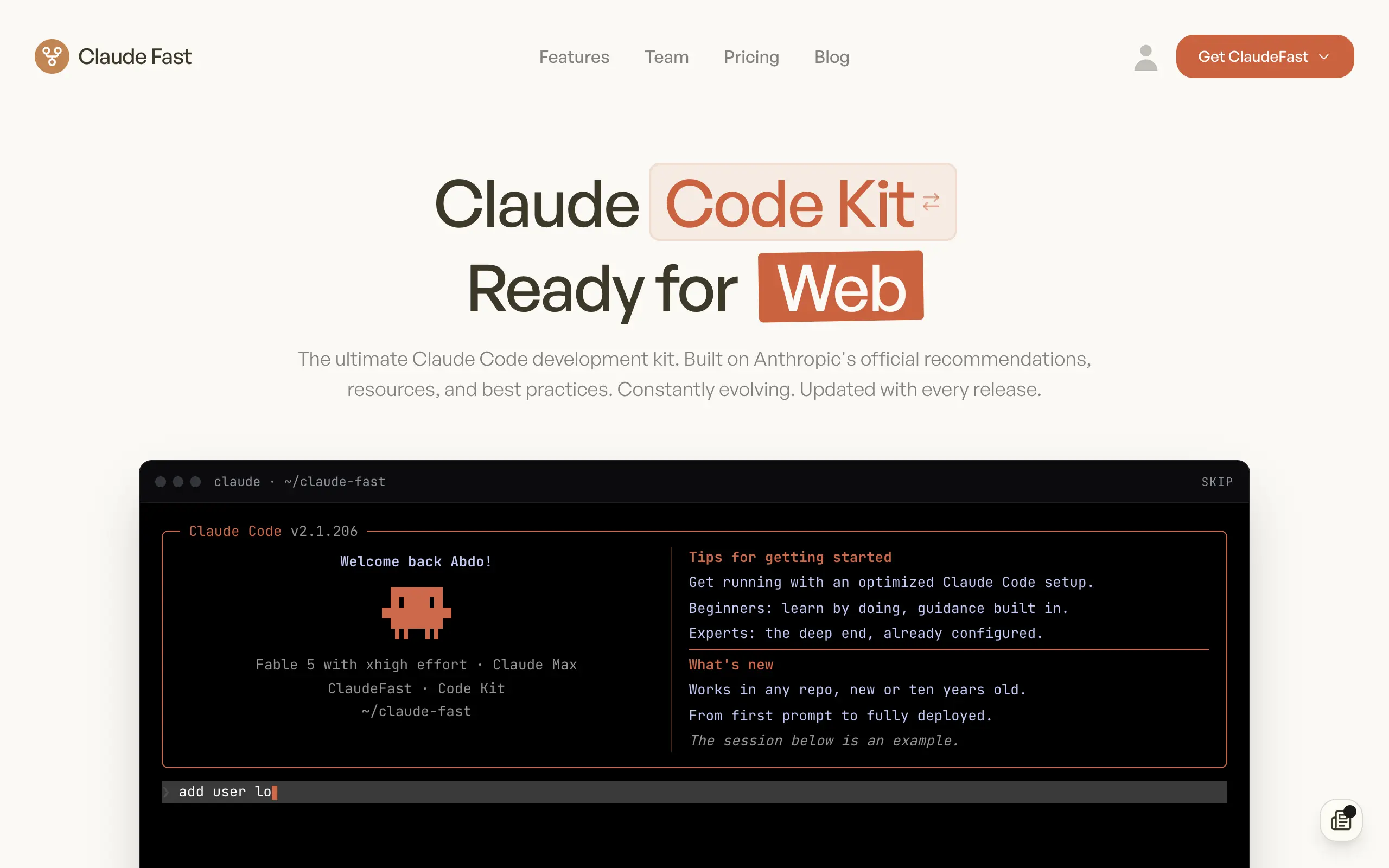
Claude Fast
Supercharge your Claude Code with 6x effective context window and specialized AI agents 🤖
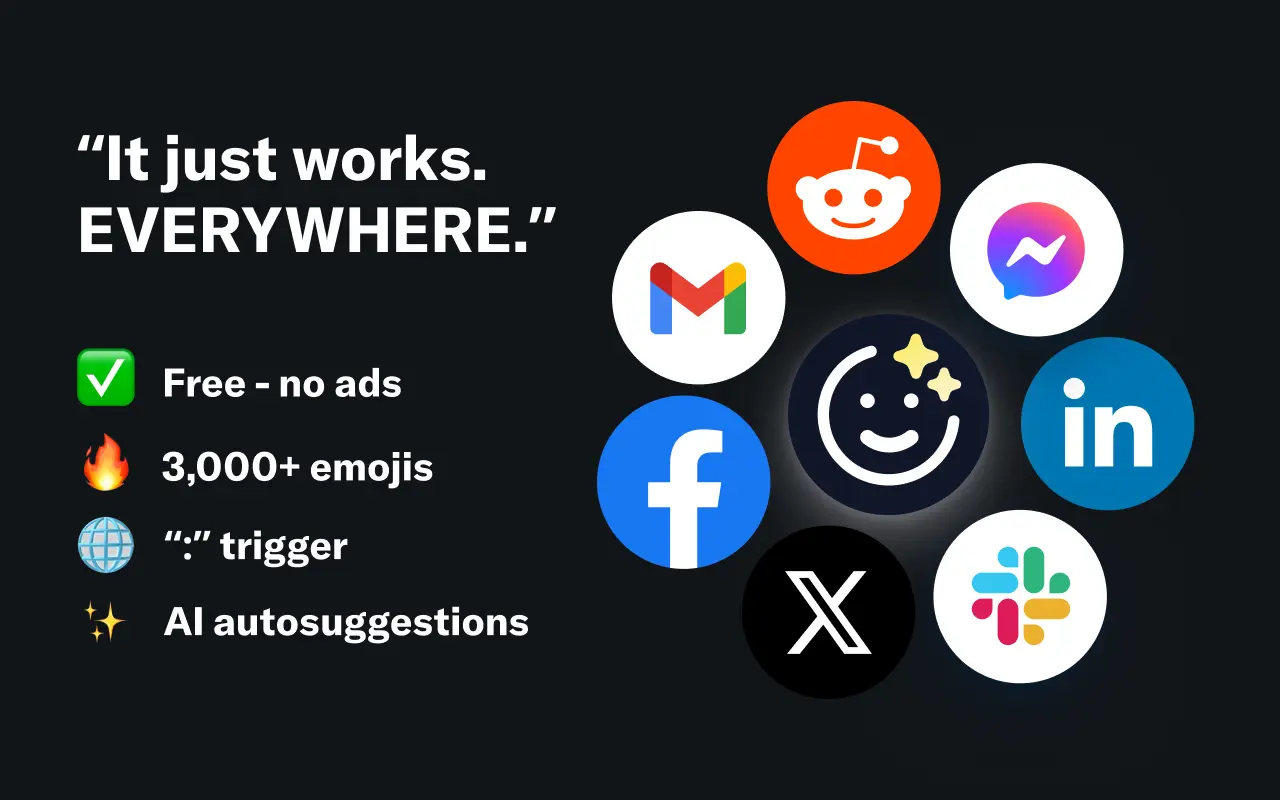
EmojAI
AI-powered emoji picker with smart, context-aware suggestions 🤖

Solohacker
Autonomous company launcher - AI agents work 24/7, escalate what matters, and you stay in control 🤖
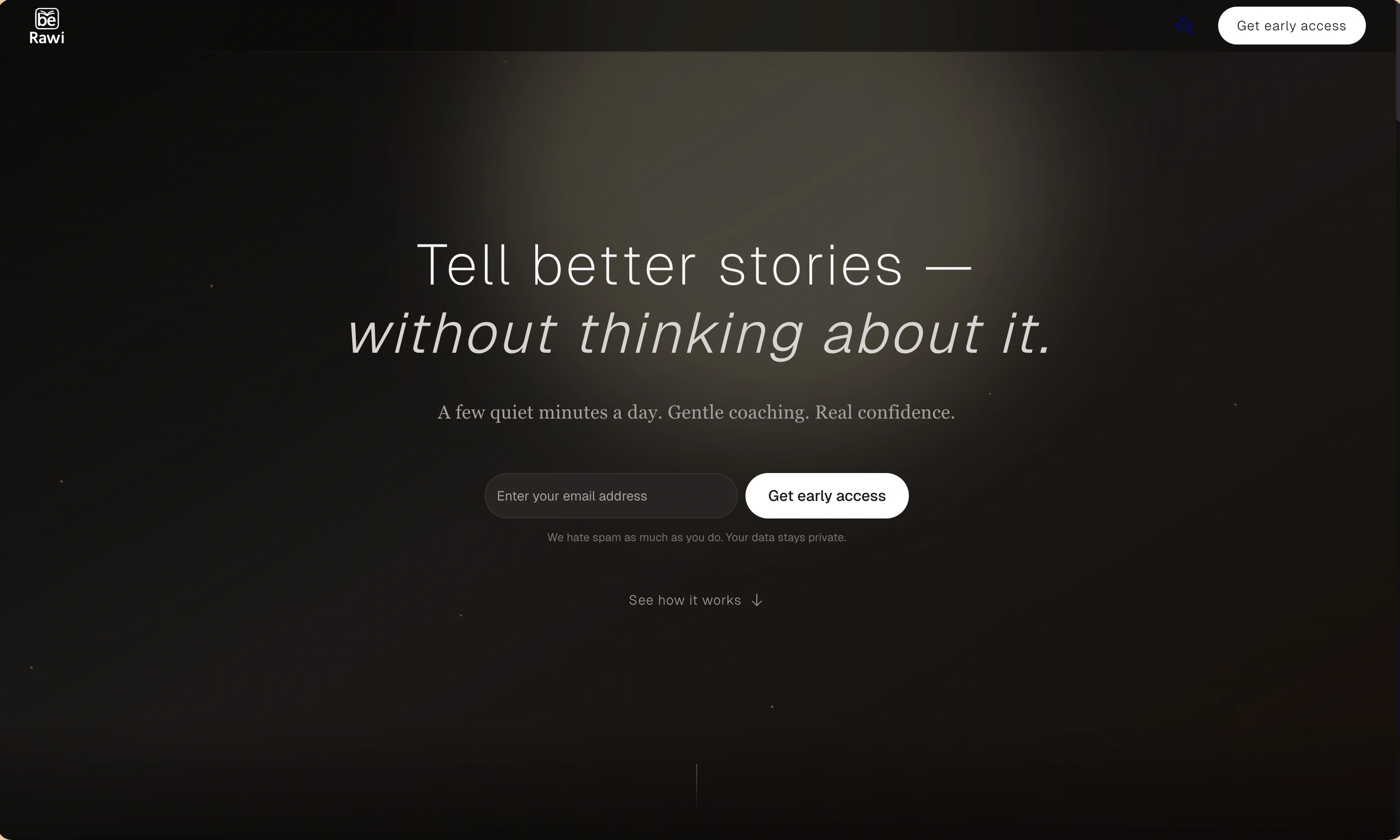
BeRawi: Storytelling Coach
Practice storytelling daily with instant feedback to sound clearer, more engaging, and confident 🎤
Omichat
Chat with 50+ AI models, including ChatGPT and Claude, in one place - switch models anytime without losing context 🤖
Claude Fast
Supercharge your Claude Code with 6x effective context window and specialized AI agents 🤖
EmojAI
AI-powered emoji picker with smart, context-aware suggestions 🤖
Solohacker
Autonomous company launcher - AI agents work 24/7, escalate what matters, and you stay in control 🤖
BeRawi: Storytelling Coach
Practice storytelling daily with instant feedback to sound clearer, more engaging, and confident 🎤
Omichat
Chat with 50+ AI models, including ChatGPT and Claude, in one place - switch models anytime without losing context 🤖
Claude Fast
Supercharge your Claude Code with 6x effective context window and specialized AI agents 🤖
EmojAI
AI-powered emoji picker with smart, context-aware suggestions 🤖
Solohacker
Autonomous company launcher - AI agents work 24/7, escalate what matters, and you stay in control 🤖
BeRawi: Storytelling Coach
Practice storytelling daily with instant feedback to sound clearer, more engaging, and confident 🎤
Omichat
Chat with 50+ AI models, including ChatGPT and Claude, in one place - switch models anytime without losing context 🤖
Claude Fast
Supercharge your Claude Code with 6x effective context window and specialized AI agents 🤖
EmojAI
AI-powered emoji picker with smart, context-aware suggestions 🤖
Solohacker
Autonomous company launcher - AI agents work 24/7, escalate what matters, and you stay in control 🤖
BeRawi: Storytelling Coach
Practice storytelling daily with instant feedback to sound clearer, more engaging, and confident 🎤

Connect with like-minded people
Join our community to get feedback, support, and grow together with 1,000+ builders on board, let's ship it!
Join usShip your startup everywhere. In minutes.
Don't burn tokens on setup and start building features on day one.