BriefGuard
AI checks creator UGC against campaign briefs before approval, flagging missing claims, brand-safety risks, and required talking points.
Why AI creator brief compliance software is becoming essential
Influencer and creator campaigns move quickly, but brand approvals often do not. A single campaign may involve dozens or hundreds of pieces of user-generated content, each with unique captions, videos, disclosures, product claims, visual requirements, and brand-safety expectations. Reviewing that volume manually is expensive, inconsistent, and difficult to scale.
BriefGuard is an AI creator brief compliance software concept designed to solve this operational problem. It analyzes creator UGC against campaign requirements before approval, flagging missing talking points, unapproved claims, absent disclosures, competitor references, risky language, and other compliance issues that can put a campaign at risk.
The core value proposition is straightforward: help creator marketing teams approve better content faster without sacrificing brand standards or regulatory discipline.
Rather than replacing brand managers, legal reviewers, or influencer marketing specialists, BriefGuard gives them a structured first-pass quality-control layer. Teams can spend less time repeatedly checking whether a creator mentioned the right product feature and more time making high-value editorial decisions.
The opportunity
Creator marketing is no longer a side channel for many consumer brands. As campaigns become more regulated, multi-market, and performance-driven, approval workflows need stronger systems than shared spreadsheets, email threads, and subjective manual reviews.
The creator campaign approval problem BriefGuard solves
A campaign brief may contain requirements across several categories:
- "Mandatory talking points" such as product benefits, ingredient claims, offer details, or feature demonstrations
- "Required disclosures" such as paid partnership labels, sponsorship language, or affiliate disclosures
- "Brand voice rules" such as prohibited language, tone expectations, and messaging priorities
- "Visual guidelines" such as logo placement, packaging visibility, approved colors, or required scenes
- "Brand-safety restrictions" such as profanity, sensitive topics, competitor mentions, or unsafe behavior
- "Legal and compliance requirements" such as prohibited medical claims, pricing accuracy, or regional disclaimer rules
- "Platform-specific rules" such as caption length, native disclosure tools, link requirements, or hashtag usage
In a manual process, campaign managers typically open a video, read the caption, compare it with a brief, leave feedback, wait for a revision, and repeat this process across every creator and deliverable. This is manageable for a small activation. It becomes a serious bottleneck when an agency runs multiple programs across TikTok, Instagram, YouTube, and short-form video platforms simultaneously.
The consequences of missed requirements can be significant:
- Delayed launch dates because approval queues become overloaded
- Wasted paid media spend on content that needs late revisions
- Inconsistent creator feedback that damages relationships
- Compliance exposure from missing advertising disclosures
- Reputation risk from unsafe, insensitive, or misleading content
- Lower campaign performance because critical product messages are omitted
- Difficult post-campaign reporting because the team cannot prove which requirements appeared in approved content
BriefGuard addresses this gap by turning an unstructured campaign brief into a repeatable AI-assisted review checklist.
Who needs an AI UGC review platform
The primary audience for BriefGuard is not every business that works with creators. It is specifically organizations with enough campaign volume, compliance sensitivity, or approval complexity to feel the cost of manual review.
Influencer marketing agencies
Agencies frequently manage large creator rosters and many concurrent client campaigns. Their account teams need to review content quickly while maintaining client-specific standards.
For agencies, BriefGuard can become an operational multiplier. A campaign manager can upload a client brief, define the required elements, and receive structured creator-content evaluations before content reaches the client approval stage.
The agency benefit is not simply faster work. It is more consistent work. A standardized approval record makes it easier to explain decisions, onboard new account managers, and provide clients with proof that required messages were checked.
In-house brand marketing teams
Consumer brands in beauty, skincare, food and beverage, fashion, wellness, consumer technology, travel, and retail often manage recurring creator programs. These teams need a way to preserve brand consistency across diverse creator styles.
A brand team may use BriefGuard to ensure that creators:
- Mention the current campaign offer correctly
- Avoid unsupported product claims
- Show the correct product variant or packaging
- Use required campaign messaging naturally
- Include the correct sponsored-content disclosure
- Avoid brand-safety red flags before publication
For larger enterprises, the product can also support governance across regional teams. A global brand may have universal requirements, while local markets add language-specific disclosures and country-level restrictions.
Regulated and high-scrutiny industries
Certain industries have a more urgent need for creator content compliance workflows.
Beauty and wellness
Review ingredient, efficacy, before-and-after, and health-adjacent claims before they create regulatory or trust issues.
Financial services
Check for required disclosures, prohibited performance promises, and unsuitable financial advice in sponsored creator content.
Food and beverage
Verify nutrition, allergy, promotion, and responsible-consumption messaging across UGC campaigns.
Health-adjacent products
Flag unsupported medical language and ensure required disclaimers are included before content is approved.
BriefGuard should not position itself as legal advice or as a replacement for final legal review. Instead, it should be positioned as a risk detection and workflow intelligence layer that helps legal and brand teams focus their attention where it is most needed.
Creator operations and UGC platforms
Creator marketplaces, affiliate networks, and UGC production platforms can use BriefGuard as embedded quality assurance. A platform managing thousands of creator submissions needs automated triage rather than a review model that scales linearly with headcount.
This opens an enterprise API opportunity. Rather than requiring every marketplace to build content analysis internally, BriefGuard could offer a white-label review engine, submission scoring API, or approval-workflow integration.
Market gap in creator content compliance
The creator economy software market includes influencer discovery tools, campaign management platforms, social listening products, affiliate tracking systems, and digital asset management tools. Many of these platforms help teams find creators, manage contracts, track performance, and organize deliverables.
However, there is still a meaningful gap between collecting creator content and verifying that it meets a detailed campaign brief.
Most existing workflows rely on some combination of:
- Spreadsheets with manually maintained checklists
- Shared cloud folders for drafts and revisions
- Project management comments
- Email approval chains
- Subjective reviewer judgment
- Generic moderation tools that do not understand campaign-specific requirements
- Legal review only after content has already been created
Generic content moderation can identify obvious unsafe material, but it does not reliably answer campaign-specific questions. For example:
- Did the creator explain the product benefit that the campaign requires?
- Did they accidentally describe a cosmetic product as a medical treatment?
- Did they use the exact approved promotional offer?
- Did the caption include the required campaign hashtag?
- Did the creator mention a direct competitor in the first 10 seconds?
- Did they show the package, product, or logo clearly enough?
- Did they disclose the sponsorship in the required way?
This is where BriefGuard’s market position becomes compelling. Its purpose is not merely “AI moderation.” Its purpose is brief-aware creator content validation.
That distinction matters for SEO positioning, sales conversations, and product design. The strongest category terms include:
- AI creator brief compliance software
- Influencer campaign approval software
- UGC compliance checker
- Creator content review platform
- Influencer marketing quality assurance
- Brand-safety review for creator content
- AI campaign brief checker
- Sponsored content compliance workflow
- Creator approval automation
BriefGuard’s unique selling proposition
BriefGuard’s unique selling proposition is its ability to translate a campaign brief into a structured, explainable pre-approval review of creator UGC.
A generic AI tool may summarize a video. BriefGuard should go further by mapping evidence from that video, transcript, caption, and metadata to individual campaign requirements.
The ideal product output is not a vague statement such as “This content may have issues.” It is a clear review artifact:
Requirement: Mention the product’s refillable packaging
Status: Missing
Evidence: The transcript discusses the product scent and usage but does not mention refillability.
Suggested action: Ask the creator to add the approved refillability talking point in the voiceover or caption.
This requirement-by-requirement evidence model gives users confidence in the AI’s reasoning. It also makes revisions easier for creators because feedback is specific, actionable, and tied directly to the original brief.
What makes BriefGuard defensible
BriefGuard can build defensibility through several product layers:
-
Campaign-specific requirement extraction
Convert messy briefs, PDFs, slide decks, templates, and plain-language instructions into structured checks. -
Multimodal content analysis
Combine video frames, audio transcription, captions, on-screen text, images, and metadata. -
Brand-specific policy libraries
Preserve approved claims, banned phrases, competitor lists, disclosure rules, and brand voice preferences over time. -
Evidence-backed findings
Show why a flag was raised, including timestamps, transcript excerpts, visible-text references, or caption highlights. -
Human feedback loops
Learn from reviewer overrides so the system aligns more closely with a brand’s actual interpretation of its brief. -
Workflow integrations
Meet teams where they already work through campaign platforms, asset storage, notifications, and APIs.
The strategic advantage is the combination of compliance intelligence, creative workflow, and brand context. A model alone is not a product moat. The workflow data, brand rules, reviewer decisions, and structured evaluation history can become increasingly valuable over time.
Core features for an AI campaign brief checker
An initial BriefGuard product should focus on the highest-value workflow: reviewing draft creator content before publication.
Brief ingestion and requirement extraction
Campaign briefs are rarely standardized. One brand may provide a polished PDF with sections for claims and deliverables. Another may send a slide deck, a Notion page, or a long email.
BriefGuard should let users upload or paste a brief, then extract key requirements into editable categories:
- Required talking points
- Mandatory phrases and hashtags
- Approved claims
- Prohibited claims and language
- Disclosure requirements
- Visual requirements
- Brand-safety exclusions
- Competitor references
- Platform-specific requirements
- Locale and language settings
The AI should always present extracted requirements for human confirmation. This is important because a poorly interpreted brief can cause downstream false positives. The product should make it easy to edit each requirement, assign a priority, and decide whether it is mandatory or advisory.
Multimodal UGC analysis
Creator content is inherently multimodal. A requirement might appear in spoken audio, text on screen, a caption, a visual product shot, or a combination of these signals.
A robust BriefGuard review engine should analyze:
- Video and image frames for visual context
- Audio transcripts for spoken claims and talking points
- Optical character recognition for on-screen text
- Captions, titles, hashtags, and descriptions
- Creator-submitted metadata
- Links, promotion codes, and tracked offer language where available
For video content, timestamped analysis is essential. A reviewer should be able to jump directly to the moment where an issue was detected rather than rewatching an entire piece of content.
Requirement-by-requirement scoring
The product should avoid a single opaque “pass” or “fail” score. Campaign reviewers need nuance.
A better system includes statuses such as:
- Passed
- Missing
- Needs review
- Potential risk
- Not applicable
- Confirmed by reviewer
Each requirement can include confidence, severity, evidence, and a recommended next action.
| Review area | Example check | Evidence source | Business value | Recommended action |
|---|---|---|---|---|
| Talking point | Creator mentions refillable packaging | Transcript and caption | Protects campaign message consistency | Request revision if missing |
| Disclosure | Paid partnership language is visible | Caption and on-screen text | Reduces compliance risk | Block approval until corrected |
| Brand safety | Profanity or sensitive content appears | Transcript and video context | Protects brand suitability | Route to human reviewer |
| Visual requirement | Product package is clearly shown | Video frames | Improves creative compliance | Ask for an additional shot |
Brand-safety and claims risk detection
Brand safety should be configurable, not generic. A family-focused brand, a luxury brand, and an alcohol brand may all define acceptable content differently.
BriefGuard should support custom policies for:
- Profanity and offensive language
- Sexualized, violent, or dangerous content
- Sensitive current events and political topics
- Substance references
- Mental health and medical claims
- Competitor names and logos
- Unverified environmental claims
- Pricing and promotional inaccuracies
- Before-and-after transformation claims
- Guarantees, superlatives, and unsupported performance claims
The system should distinguish between a confident violation and an ambiguous issue that requires human review. Over-flagging is a major usability risk. If a platform creates too many false alerts, reviewers will ignore it.
Creator-friendly revision feedback
The best approval software does not merely reject content. It helps creators fix it.
BriefGuard should generate a creator-safe feedback view that excludes internal risk scores and legal commentary while offering clear requested changes. For example:
- Add the campaign hashtag to the caption.
- Mention the refillable packaging benefit in your voiceover.
- Replace the phrase “cures dry skin” with the approved product language.
- Ensure the paid partnership disclosure appears before the first fold of the caption.
- Remove the visible competitor product from the background shot.
This feature can reduce back-and-forth, protect creator relationships, and shorten time to approval.
Approval analytics and audit trails
For enterprise customers, reporting is not optional. Teams need to understand where campaigns fail, how long review takes, and which requirements repeatedly cause revisions.
Useful reporting includes:
- First-pass approval rate
- Average review turnaround time
- Most frequently missed talking points
- Common claims-risk categories
- Creator revision count by campaign
- Compliance completion rate
- Reviewer override rate
- Flag precision by policy category
- Approval trends by market, platform, and brand
An audit trail should show who changed a requirement, which version of a brief was used, what the AI flagged, what the reviewer decided, and when approval occurred. This supports internal governance and gives enterprise buyers a clearer reason to adopt the platform.
How BriefGuard should work in practice
A practical product flow should feel simple even though the underlying AI system is sophisticated.
The product should offer different modes for different teams.
Fast triage is for high-volume campaigns. It surfaces only blocking issues, major omissions, and high-confidence brand-safety risks so campaign managers can quickly prioritize their review queue.
Detailed review is for teams that need requirement-level evidence. It includes transcript highlights, timestamps, visual references, rule explanations, and revision instructions for every flagged item.
Enterprise governance is for regulated or multi-market brands. It includes role-based permissions, policy libraries, regional rules, audit exports, approval routing, and organization-wide analytics.
Recommended technical architecture for BriefGuard
BriefGuard needs a modern SaaS architecture that can handle uploads, asynchronous AI processing, secure customer data, and enterprise integrations.
A sensible early-stage stack should prioritize speed of product development without closing the door on enterprise requirements.
Frontend and application framework
Use Next.js with React and TypeScript. This combination supports a fast, polished web application with server-side capabilities, typed data flows, and a large ecosystem.
For the interface, Tailwind CSS is a strong choice for building review dashboards, upload flows, issue panels, and responsive campaign workspaces quickly.
The core screens should include:
- Organization and workspace setup
- Campaign creation
- Brief builder and rule editor
- Creator submission portal
- Video review player with timestamp annotations
- Approval queue
- Analytics dashboard
- Policy library
- Settings, roles, and integrations
Database and storage
Use PostgreSQL as the primary relational database. Campaigns, requirements, submissions, reviewer decisions, rule versions, and audit logs all benefit from relational modeling and strong transactional consistency.
A managed platform such as Supabase can accelerate early development by combining PostgreSQL, authentication, storage, and real-time capabilities. It is especially useful for an MVP, though enterprise scale may eventually require more customized infrastructure decisions.
Store media assets in object storage rather than in the primary database. Amazon S3 is a common option for durable, scalable video and image storage.
Asynchronous media processing
Video analysis should run through a queue-based architecture. Do not attempt to process uploads inside a synchronous web request.
The processing workflow may include:
- Validate file type and size.
- Create a secure storage object.
- Extract audio from video.
- Generate a transcript with timestamps.
- Sample relevant video frames.
- Run optical character recognition on frames.
- Analyze captions and metadata.
- Compare extracted signals with campaign rules.
- Generate structured findings.
- Notify the reviewer when the report is ready.
For reliable background work, consider Inngest, Trigger.dev, or a cloud queue architecture. The trade-off is important:
- Managed workflow platforms speed up MVP development and provide observability.
- A custom queue architecture offers greater control at large scale but requires more operational expertise.
AI and multimodal model layer
The AI layer should be modular. Avoid building the application around one model provider or one model version.
BriefGuard will likely need several capabilities:
- Speech-to-text transcription
- Large language model reasoning for brief extraction and semantic claim matching
- Vision analysis for product visibility and unsafe visual context
- Optical character recognition for text overlays
- Embeddings or retrieval for brand-policy matching
- Confidence calibration and evaluation workflows
The application should use structured outputs wherever possible. For example, the AI should return a defined schema for each requirement:
type ComplianceFinding = {
  requirementId: string;
  status: "passed" | "missing" | "needs_review" | "risk";
  confidence: number;
  severity: "low" | "medium" | "high" | "blocking";
  evidence: Array<{
    source: "transcript" | "caption" | "frame" | "metadata";
    timestampStart?: number;
    timestampEnd?: number;
    excerpt: string;
  }>;
  explanation: string;
  recommendedAction: string;
};
Structured data makes it possible to render consistent reports, build analytics, preserve audit trails, and evaluate model quality over time.
Retrieval and policy context
Brand policies should not be injected as one long prompt. Instead, use a retrieval approach that selects the relevant approved claims, prohibited phrases, campaign rules, regional requirements, and previous reviewer guidance for each submission.
A vector search layer can support semantic retrieval, but it should complement rather than replace structured campaign rules. A required hashtag is deterministic. A brand-tone issue may require semantic interpretation. The product should treat those categories differently.
Security, privacy, and enterprise readiness
Creator content can include personal information, unreleased campaign materials, and commercially sensitive brand guidance. Security must be part of the product strategy from the beginning.
Important controls include:
- Tenant isolation between customer organizations
- Encryption in transit and at rest
- Role-based access control
- Secure signed upload and download URLs
- Configurable data retention periods
- Audit logs for approvals and policy changes
- Model provider data-processing review
- Clear customer ownership of uploaded media
- Consent-aware workflows for creator submissions
- Deletion workflows for content and derived data
As BriefGuard moves upmarket, prospective buyers may ask about security documentation, penetration testing, single sign-on, data residency, and vendor risk management. Build the underlying foundations early, even if advanced enterprise controls are initially sold as roadmap items.
Monetization strategy for BriefGuard
The best monetization model combines predictable subscription revenue with a usage component tied to media analysis volume.
Tiered SaaS pricing
A three-tier model is a practical starting point:
- "Starter": for small agencies and in-house teams with limited submissions, basic campaign templates, and standard analysis
- "Growth": for growing teams that need multiple workspaces, collaboration, deeper analytics, and higher monthly processing limits
- "Enterprise": for large brands, creator platforms, and regulated industries that need SSO, APIs, custom retention, policy libraries, audit exports, and contractual support
Usage can be measured by video minutes, analyzed assets, creator submissions, campaigns, or AI processing credits. Video minutes are often the clearest variable cost proxy because transcription and visual processing costs rise with duration.
Platform and API revenue
BriefGuard can create a second revenue stream through API access. Influencer marketing platforms, creator marketplaces, and UGC agencies with proprietary portals may pay for embedded compliance analysis.
Potential API use cases include:
- Analyze a submission before allowing it into an approval queue
- Score content against a campaign’s required talking points
- Detect disclosure gaps at upload time
- Send findings back to a partner platform
- Generate structured creator revision instructions
An API strategy can materially increase average contract value, but it should follow a stable core product. Building an API too early can create expensive custom work before the product model is proven.
Services as an early validation channel
During the first phase, a paid implementation or managed-review service can be useful. It helps the company learn which policies are truly valuable, what customers consider a false positive, and how campaign teams make final decisions.
The long-term objective should remain software revenue. However, a limited services layer can accelerate product-market fit when it is used deliberately to inform automation.
Competitive advantage and positioning
BriefGuard should not compete head-on with every influencer marketing platform. Its strongest positioning is as the approval intelligence layer that can work across existing creator workflows.
A campaign management tool may be excellent at creator discovery and payment administration. A social listening tool may be excellent at measuring mentions. A generic moderation API may flag unsafe images. BriefGuard’s differentiated job is to verify that content meets the specific requirements of a specific campaign.
This positioning gives the product several strategic advantages:
- It complements rather than replaces existing platforms.
- It has a measurable operational ROI through fewer manual review hours.
- It addresses compliance and brand-risk concerns that can unlock enterprise budgets.
- It creates valuable historical data on brief quality and creator performance.
- It can expand from pre-approval into live content monitoring and post-campaign reporting.
The most compelling sales message is not “we use AI to review videos.” Many products can make that claim. The better message is:
BriefGuard turns every campaign brief into an evidence-backed approval system, helping brands catch missing messages and content risks before publication.
Key risks and how to mitigate them
AI compliance products need careful product design because errors can create trust issues quickly.
False positives and alert fatigue
If BriefGuard flags harmless content too often, reviewers will lose confidence and stop using it.
Mitigation strategies include:
- Displaying evidence for every finding
- Showing confidence and severity separately
- Allowing reviewers to mark findings as incorrect
- Learning from organization-specific overrides
- Prioritizing high-severity issues in the default queue
- Using “needs review” rather than “violation” for ambiguous findings
False negatives and misplaced confidence
The opposite risk is more serious in regulated categories. If the product misses a prohibited claim, a customer may assume content was safe when it was not.
BriefGuard should clearly state that it is an AI-assisted review system, not a legal determination. High-risk policies should be routed to mandatory human review rather than fully automated approval.
Trustworthy AI positioning
Never promise perfect compliance. Position BriefGuard as a system that improves consistency, prioritizes reviewer attention, and creates evidence-backed approval workflows. Human judgment remains essential for nuanced legal, cultural, and brand decisions.
Ambiguous campaign briefs
Many briefs are vague. A requirement such as “make it feel premium” is difficult to evaluate consistently, even for humans.
The product should separate:
- Objective checks such as hashtags, phrases, disclosures, offer codes, and product visibility
- Semi-objective checks such as tone, claim risk, and message quality
- Subjective creative guidance that requires a human reviewer
This distinction improves product credibility and helps customers write better briefs.
Privacy and creator consent
Creators may be sensitive about how their content is processed, stored, and used to train models. Customers may also have contractual obligations regarding asset handling.
Mitigate this risk with transparent processing terms, data retention controls, customer-controlled deletion, and clear statements about whether customer data is used for model training. For many enterprise buyers, an opt-out-by-default approach is the safest starting position.
Integration complexity
Customers already use different systems for creator management, asset storage, approvals, and reporting. Attempting to integrate with every platform early can slow product development.
Start with universal workflows:
- Direct upload
- Secure share links
- CSV import and export
- Email notifications
- Webhooks
- Cloud storage connections
Then prioritize native integrations based on customer demand and revenue potential.
MVP scope and validation plan
The MVP should not try to solve every form of creator content analysis. Focus on one high-frequency, painful workflow.
A strong first version would support short-form video submissions with:
- Campaign brief upload or text input
- Editable requirement extraction
- Video upload
- Transcript generation
- Caption analysis
- Required talking-point checks
- Required hashtag and disclosure checks
- Basic competitor and prohibited-phrase detection
- Timestamped findings
- Human approval decisions
- Exportable review summary
This scope is narrow enough to build and test, but valuable enough to justify a paid pilot.
What to validate before scaling
Early validation should answer these questions:
- Do campaign teams trust the findings enough to change their workflow?
- How much time does the product save per submission?
- Which checks are most valuable and accurate?
- What false-positive rate is tolerable for different risk categories?
- Will brands pay for pre-approval compliance automation?
- Do creators find AI-generated revision requests clear and fair?
- Is the buyer an agency operations lead, influencer marketing manager, legal team, or platform owner?
For external credibility, publish anonymized pilot outcomes only when the methodology is clear. For example, document review time reduction, first-pass approval improvements, and the categories of issues caught. When using market statistics in sales collateral or content, cite authoritative sources such as regulatory agencies, established industry research firms, or platform policy documentation rather than relying on unsupported claims.
Practical implementation steps for launching BriefGuard
A disciplined launch plan can move BriefGuard from idea to validated SaaS product without overbuilding.
For founders building the initial SaaS product, a production-ready starter can reduce time spent on authentication, billing, teams, dashboard architecture, and foundational SaaS workflows. TurboStarter can provide a faster starting point so engineering effort stays focused on BriefGuard’s core compliance intelligence and review experience.
Final perspective on BriefGuard
BriefGuard has a credible SaaS opportunity because it targets a real operational gap in creator marketing: the difficulty of consistently validating high-volume UGC against detailed campaign requirements.
The winning product will not be the one that claims to automate every approval decision. It will be the one that gives campaign teams trustworthy evidence, catches meaningful issues early, reduces repetitive review work, and makes creator revisions easier to complete.
By combining brief ingestion, multimodal AI analysis, configurable brand policies, timestamped evidence, and human-in-the-loop approvals, BriefGuard can become the quality-control system between creator submission and campaign publication.
Its strongest long-term advantage is not simply AI. It is the structured knowledge created every time a brand defines a requirement, a creator submits content, the system identifies evidence, and a reviewer makes a decision. That data loop can make each future campaign faster, safer, and more consistent than the last.
More 🤖 AI Startup SaaS ideas
Discover more innovative ai startup SaaS ideas that are trending in 2026. Each idea is AI-generated with market validation and growth potential to help you find your next profitable venture faster than competitors.
Your competitors are building with TurboStarter
Below are some of the SaaS ideas that have been generated and built with our starter kit.

Statiko
Monitor any Telegram channel in real time - track posts, edits, deletions, and growth with AI recaps 📡

Shibui
AI website builder - describe your business, pick a niche template, edit by chatting, and publish instantly ✨

Pro Service
Find verified home service professionals, compare quotes, and pay securely through escrow - built for Brazilians across the US 🏠

RankGrow
Fix your SEO with AI agents - connect Search Console, get prioritized tasks, and grow organic traffic 📈

SyncReads
Sync your favorite content for distraction-free reading, save time and replace multiple apps. Anytime, anywhere 🔄
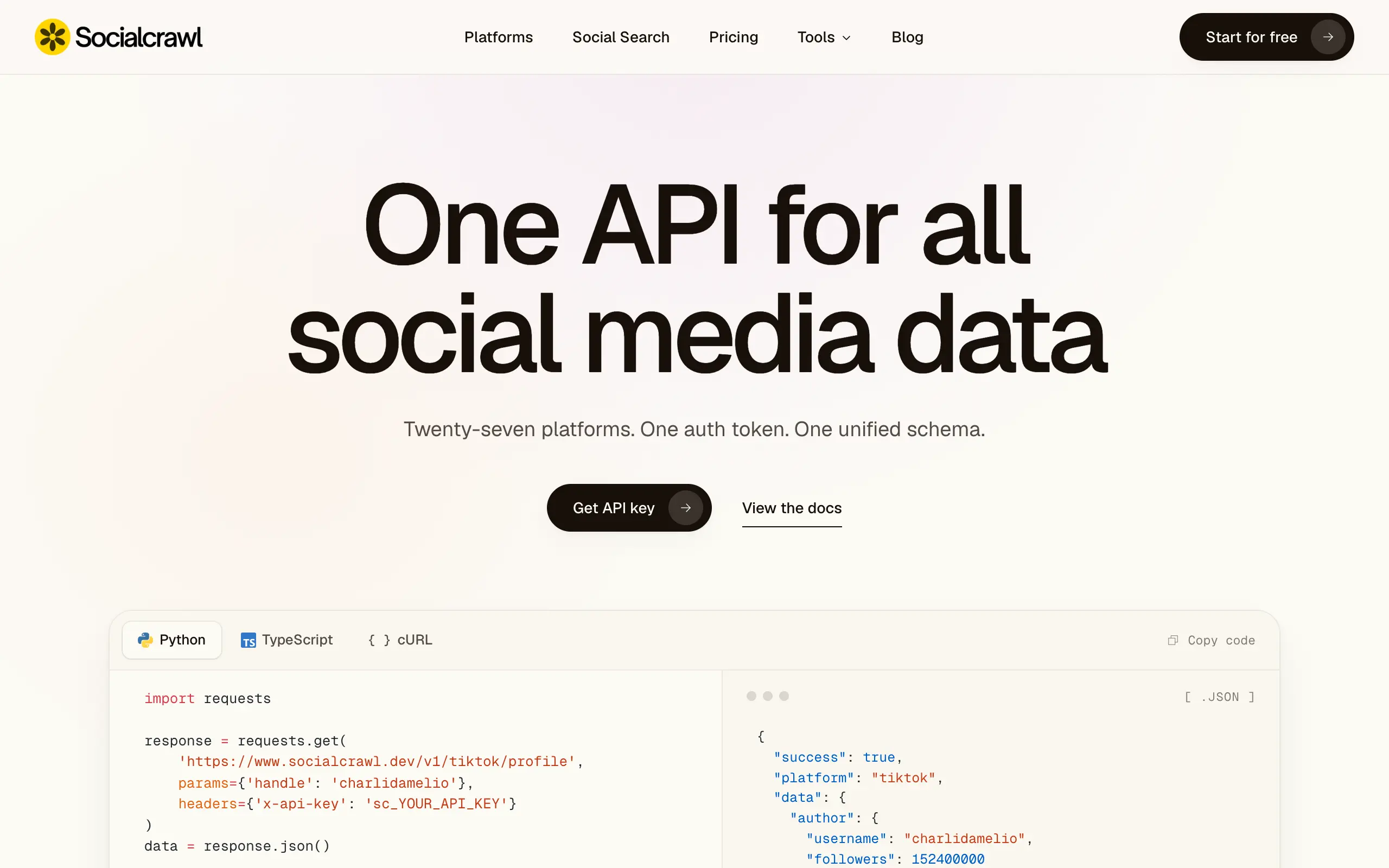
Socialcrawl
Get clean, structured data from 21 platforms like TikTok, Instagram, and YouTube with a single request 📊
Statiko
Monitor any Telegram channel in real time - track posts, edits, deletions, and growth with AI recaps 📡
Shibui
AI website builder - describe your business, pick a niche template, edit by chatting, and publish instantly ✨
Pro Service
Find verified home service professionals, compare quotes, and pay securely through escrow - built for Brazilians across the US 🏠
RankGrow
Fix your SEO with AI agents - connect Search Console, get prioritized tasks, and grow organic traffic 📈
SyncReads
Sync your favorite content for distraction-free reading, save time and replace multiple apps. Anytime, anywhere 🔄
Socialcrawl
Get clean, structured data from 21 platforms like TikTok, Instagram, and YouTube with a single request 📊
Statiko
Monitor any Telegram channel in real time - track posts, edits, deletions, and growth with AI recaps 📡
Shibui
AI website builder - describe your business, pick a niche template, edit by chatting, and publish instantly ✨
Pro Service
Find verified home service professionals, compare quotes, and pay securely through escrow - built for Brazilians across the US 🏠
RankGrow
Fix your SEO with AI agents - connect Search Console, get prioritized tasks, and grow organic traffic 📈
SyncReads
Sync your favorite content for distraction-free reading, save time and replace multiple apps. Anytime, anywhere 🔄
Socialcrawl
Get clean, structured data from 21 platforms like TikTok, Instagram, and YouTube with a single request 📊
Statiko
Monitor any Telegram channel in real time - track posts, edits, deletions, and growth with AI recaps 📡
Shibui
AI website builder - describe your business, pick a niche template, edit by chatting, and publish instantly ✨
Pro Service
Find verified home service professionals, compare quotes, and pay securely through escrow - built for Brazilians across the US 🏠
RankGrow
Fix your SEO with AI agents - connect Search Console, get prioritized tasks, and grow organic traffic 📈
SyncReads
Sync your favorite content for distraction-free reading, save time and replace multiple apps. Anytime, anywhere 🔄
Socialcrawl
Get clean, structured data from 21 platforms like TikTok, Instagram, and YouTube with a single request 📊
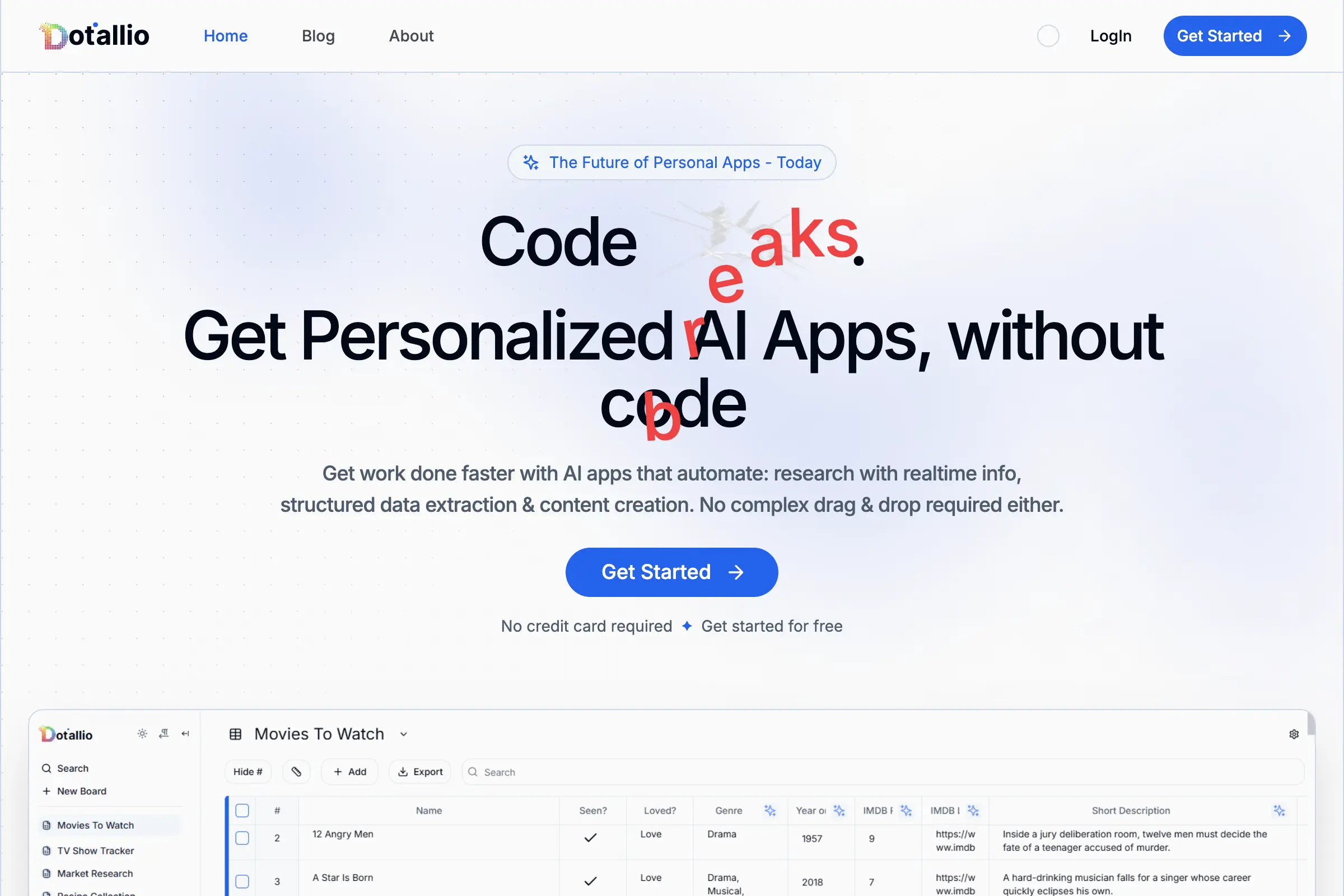
Dotallio
Personalized AI apps that automate research, data extraction, and content creation without code 🤖

Talk to Santa
Enjoy a magical live video chat or receive a unique AI-generated video greeting from Santa Claus 🎅

pozywka.pl
Scalable blog for food journalist, focused on performance and user experience 🌭
zagrodzki.me
Personal blog and portfolio of Bart Zagrodzki, where he shares his knowledge and work 💼
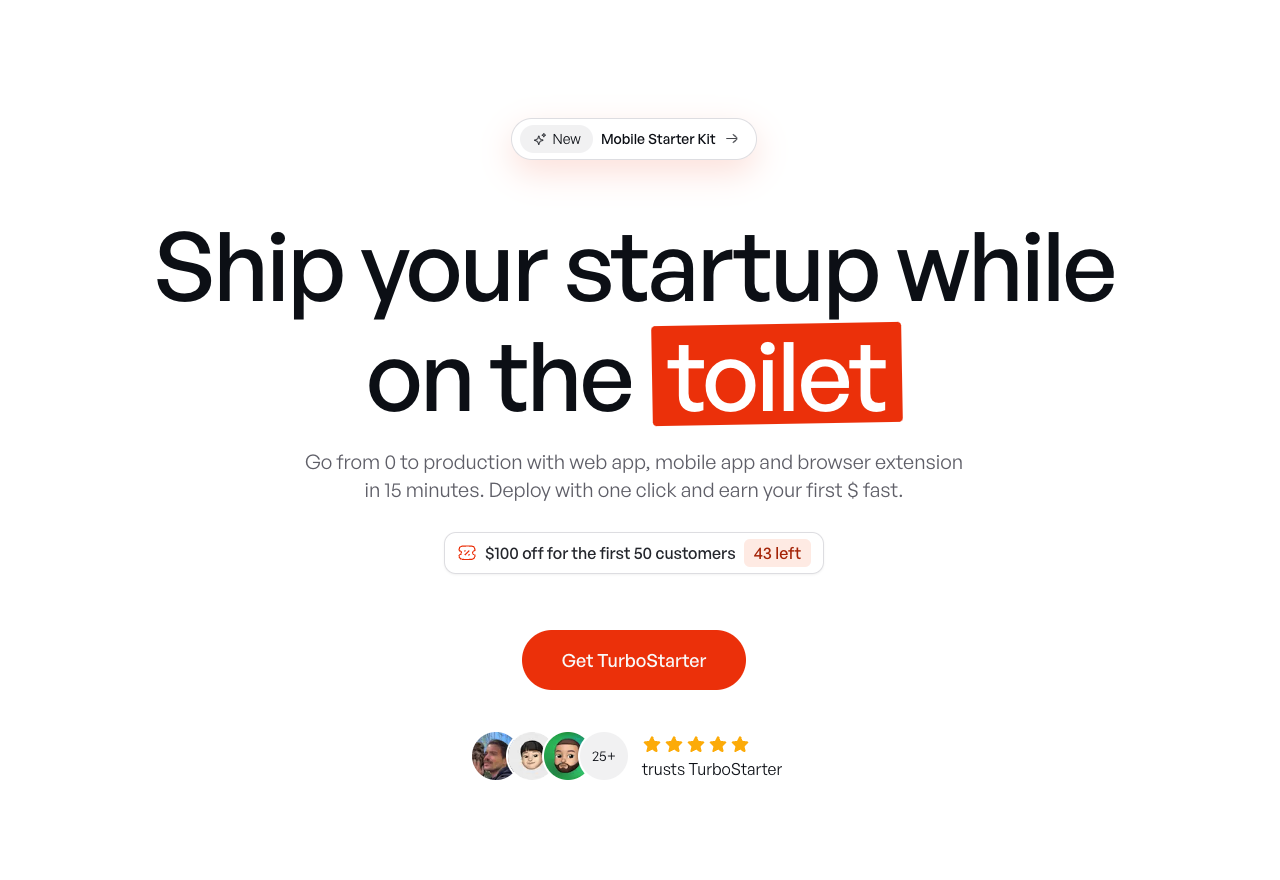
TurboStarter
Ship your startup everywhere. In minutes.
HTML to Markdown
Convert HTML to Markdown with ease, directly in your browser 📄
Dotallio
Personalized AI apps that automate research, data extraction, and content creation without code 🤖
Talk to Santa
Enjoy a magical live video chat or receive a unique AI-generated video greeting from Santa Claus 🎅
pozywka.pl
Scalable blog for food journalist, focused on performance and user experience 🌭
zagrodzki.me
Personal blog and portfolio of Bart Zagrodzki, where he shares his knowledge and work 💼
TurboStarter
Ship your startup everywhere. In minutes.
HTML to Markdown
Convert HTML to Markdown with ease, directly in your browser 📄
Dotallio
Personalized AI apps that automate research, data extraction, and content creation without code 🤖
Talk to Santa
Enjoy a magical live video chat or receive a unique AI-generated video greeting from Santa Claus 🎅
pozywka.pl
Scalable blog for food journalist, focused on performance and user experience 🌭
zagrodzki.me
Personal blog and portfolio of Bart Zagrodzki, where he shares his knowledge and work 💼
TurboStarter
Ship your startup everywhere. In minutes.
HTML to Markdown
Convert HTML to Markdown with ease, directly in your browser 📄
Dotallio
Personalized AI apps that automate research, data extraction, and content creation without code 🤖
Talk to Santa
Enjoy a magical live video chat or receive a unique AI-generated video greeting from Santa Claus 🎅
pozywka.pl
Scalable blog for food journalist, focused on performance and user experience 🌭
zagrodzki.me
Personal blog and portfolio of Bart Zagrodzki, where he shares his knowledge and work 💼
TurboStarter
Ship your startup everywhere. In minutes.
HTML to Markdown
Convert HTML to Markdown with ease, directly in your browser 📄
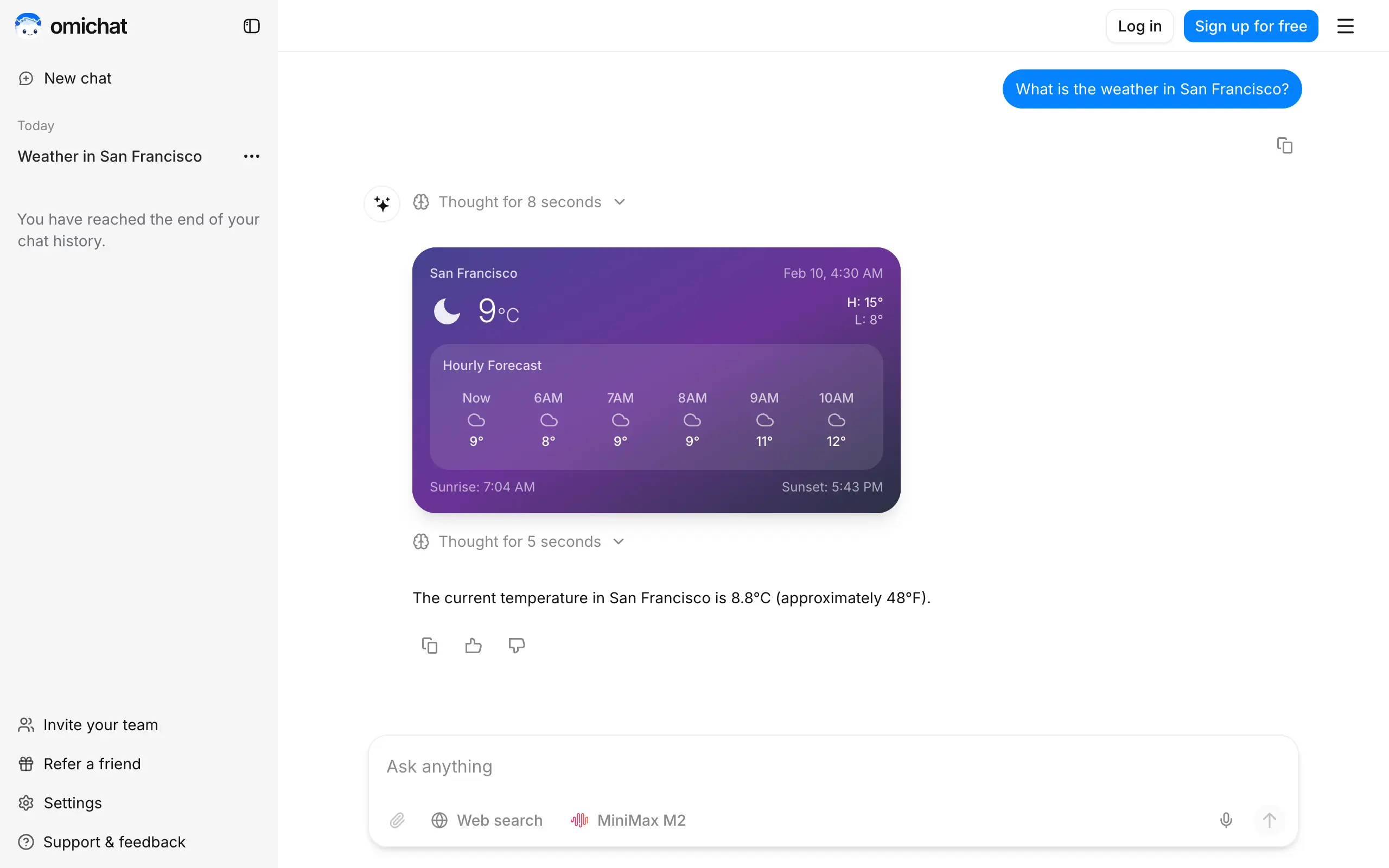
Omichat
Chat with 50+ AI models, including ChatGPT and Claude, in one place - switch models anytime without losing context 🤖
Claude Fast
Supercharge your Claude Code with 6x effective context window and specialized AI agents 🤖
EmojAI
AI-powered emoji picker with smart, context-aware suggestions 🤖

Solohacker
Autonomous company launcher - AI agents work 24/7, escalate what matters, and you stay in control 🤖

BeRawi: Storytelling Coach
Practice storytelling daily with instant feedback to sound clearer, more engaging, and confident 🎤
Omichat
Chat with 50+ AI models, including ChatGPT and Claude, in one place - switch models anytime without losing context 🤖
Claude Fast
Supercharge your Claude Code with 6x effective context window and specialized AI agents 🤖
EmojAI
AI-powered emoji picker with smart, context-aware suggestions 🤖
Solohacker
Autonomous company launcher - AI agents work 24/7, escalate what matters, and you stay in control 🤖
BeRawi: Storytelling Coach
Practice storytelling daily with instant feedback to sound clearer, more engaging, and confident 🎤
Omichat
Chat with 50+ AI models, including ChatGPT and Claude, in one place - switch models anytime without losing context 🤖
Claude Fast
Supercharge your Claude Code with 6x effective context window and specialized AI agents 🤖
EmojAI
AI-powered emoji picker with smart, context-aware suggestions 🤖
Solohacker
Autonomous company launcher - AI agents work 24/7, escalate what matters, and you stay in control 🤖
BeRawi: Storytelling Coach
Practice storytelling daily with instant feedback to sound clearer, more engaging, and confident 🎤
Omichat
Chat with 50+ AI models, including ChatGPT and Claude, in one place - switch models anytime without losing context 🤖
Claude Fast
Supercharge your Claude Code with 6x effective context window and specialized AI agents 🤖
EmojAI
AI-powered emoji picker with smart, context-aware suggestions 🤖
Solohacker
Autonomous company launcher - AI agents work 24/7, escalate what matters, and you stay in control 🤖
BeRawi: Storytelling Coach
Practice storytelling daily with instant feedback to sound clearer, more engaging, and confident 🎤

Connect with like-minded people
Join our community to get feedback, support, and grow together with 1,000+ builders on board, let's ship it!
Join usShip your startup everywhere. In minutes.
Don't burn tokens on setup and start building features on day one.