BucurestiFlow
AI-powered mobility app predicting traffic, transit delays, and crowding in Bucharest. Combines citizen reports with city data to suggest fastest, least-stress routes.
understanding the opportunity behind an AI-powered mobility app for Bucharest
Urban mobility is one of the most persistent pain points in fast-growing cities, and Bucharest is no exception. With increasing car ownership, aging infrastructure, and inconsistent public transport reliability, commuters face daily friction—lost time, stress, and unpredictability.
An AI-powered mobility app like BucurestiFlow addresses a clear and urgent need: helping people move through the city faster, more efficiently, and with less uncertainty.
But this is not just another navigation app. The real opportunity lies in combining predictive AI, real-time citizen reports, and official transport data into a single, intelligent system that adapts to Bucharest’s unique urban dynamics.
This article explores the full SaaS potential of BucurestiFlow—from market validation to monetization, technical architecture, and execution strategy.
why Bucharest is a perfect market for mobility innovation
urban congestion and unpredictability
Bucharest consistently ranks among the most congested cities in Europe. Traffic patterns are not only dense but also highly unpredictable due to:
- Frequent construction and infrastructure changes
- Informal driving behaviors
- Weather-sensitive congestion patterns
- Limited real-time coordination across transit systems
Traditional navigation tools like Google Maps or Waze provide baseline routing but struggle with hyperlocal unpredictability, especially in Eastern European cities.
public transport fragmentation
Bucharest’s public transit ecosystem includes:
- STB buses and trams
- Metrorex subway lines
- Ride-sharing services (Uber, Bolt)
- Informal transit behaviors (e.g., route deviations, delays)
The challenge is not just availability—it’s lack of synchronization and transparency.
rising demand for smarter commuting
Modern commuters want:
- Predictability
- Time savings
- Reduced stress
- Multimodal route optimization
This creates a strong demand for an AI-first mobility assistant rather than just a map.
target audience breakdown
Understanding user segments is key to building a product that actually sticks.
primary users
1. Daily commuters
- Office workers traveling during peak hours
- High sensitivity to delays and stress
- Need consistent, reliable routing
2. Students
- Flexible schedules but budget-conscious
- Heavy users of public transport
- Likely early adopters of new apps
3. Ride-share drivers
- Optimize routes for earnings
- Need predictive demand insights
- Highly engaged with traffic data
secondary users
4. Tourists
- Need simple, clear navigation
- Value crowding and safety insights
5. City planners and authorities
- Interested in aggregated mobility data
- Potential B2G (business-to-government) revenue stream
defining the core value proposition
At its core, BucurestiFlow is not just about directions—it’s about decision-making under uncertainty.
key promise
“Get the fastest, least stressful route in Bucharest, powered by real-time AI predictions and community insights.”
differentiation pillars
- Predictive intelligence, not just reactive routing
- Crowdsourced validation of conditions
- Stress-aware routing, not just fastest path
- Hyperlocal optimization tailored to Bucharest
core features that make the product compelling
1. AI-powered traffic prediction
Instead of showing current traffic, the app predicts:
- Traffic conditions 15–60 minutes ahead
- Congestion probability by route
- Incident likelihood (accidents, bottlenecks)
This uses machine learning models trained on:
- Historical traffic data
- Time-of-day patterns
- Weather conditions
- Event-based disruptions
2. multimodal route optimization
Users can combine:
- Walking
- Public transport
- Ride-sharing
- Driving
The system dynamically evaluates:
- Time
- Cost
- Crowding
- Stress level
3. real-time crowding insights
Crowding is often ignored by traditional apps but is critical for user comfort.
BucurestiFlow can estimate:
- Bus/tram occupancy levels
- Metro congestion
- Platform density
Using:
- User reports
- Sensor data (if available)
- Predictive modeling
4. citizen reporting system
Users can report:
- Traffic incidents
- Delays
- Overcrowding
- Road hazards
Gamification can encourage participation:
- Points
- Leaderboards
- Rewards
5. “least-stress” routing
This is a unique differentiator.
Instead of optimizing only for time, the app considers:
- Number of transfers
- Crowding levels
- Walking distance
- Route complexity
6. personalized commute learning
Over time, the app learns:
- User preferences
- Daily patterns
- Tolerance for delays
This allows:
- Smarter suggestions
- Proactive alerts
feature comparison with existing solutions
| Feature | Google Maps | Waze | Citymapper | BucurestiFlow |
|---|---|---|---|---|
| Predictive traffic AI | ❌ | ❌ | ❌ | ✅ |
| Crowding prediction | ❌ | ❌ | ✅ | ✅ |
| Citizen reporting | ✅ | ✅ | ❌ | ✅ |
| Stress-based routing | ❌ | ❌ | ❌ | ✅ |
market gap and competitive advantage
the gap
Most mobility apps are:
- Globally optimized
- Not localized deeply
- Focused on speed, not experience
Bucharest, however, requires:
- Local nuance
- Behavioral adaptation
- Community-driven insights
the advantage
BucurestiFlow wins by being:
- City-first, not global-first
- AI-native, not feature-added AI
- Community-powered, not just data-fed
recommended tech stack and architecture
Building a real-time AI mobility platform requires careful trade-offs between scalability, latency, and cost.
frontend
- React or React Native for cross-platform apps
- TailwindCSS for fast UI iteration
- Map integrations via Mapbox or Google Maps SDK
backend
- Node.js (fast iteration) or Go (high performance)
- GraphQL for flexible data querying
- WebSocket support for real-time updates
AI & data layer
- Python (TensorFlow / PyTorch) for modeling
- Time-series forecasting models (e.g., LSTM, Prophet)
- Real-time data pipelines using Kafka or similar
data sources
- Open city transport APIs (if available)
- Historical traffic datasets
- Weather APIs
- User-generated data
infrastructure
- AWS or GCP
- Serverless for scaling (Lambda, Cloud Functions)
- Redis for caching real-time data
sample predictive API endpoint
// Example: Predict traffic congestion for a route
app.post("/predict-route", async (req, res) => {
  const { origin, destination, time } = req.body;

  const prediction = await aiModel.predict({
    origin,
    destination,
    timestamp: time
  });

  res.json({
    estimatedTime: prediction.time,
    congestionLevel: prediction.congestion,
    stressScore: prediction.stress
  });
});
monetization strategies that actually work
freemium model
- Free: basic routing
- Premium:
- Predictive insights
- Stress-based routing
- Advanced alerts
B2B partnerships
- Ride-sharing companies
- Logistics firms
- Delivery services
B2G (government contracts)
Offer aggregated insights:
- Traffic heatmaps
- Infrastructure planning data
- Public transport optimization
in-app advertising (careful use)
- Location-based ads
- Sponsored routes or services
Important
Avoid overloading users with ads. Mobility apps are utility-first—intrusive ads can kill retention quickly.
growth strategy and user acquisition
phase 1: hyperlocal launch
- Focus only on Bucharest
- Build dense user base in key districts
phase 2: community-driven growth
- Incentivize reporting
- Gamify engagement
phase 3: partnerships
- Universities
- Corporations
- Transport providers
phase 4: expansion
- Other Romanian cities
- Eastern European markets
risks and mitigation strategies
data accuracy risk
If predictions are wrong, users lose trust quickly.
Mitigation:
- Combine multiple data sources
- Continuously retrain models
- Use confidence scores
cold start problem
No users = no data.
Mitigation:
- Seed with historical + public data
- Partner with local institutions
competition from big players
Google or Waze could replicate features.
Mitigation:
- Focus on deep localization
- Build strong community layer
regulatory challenges
Handling user data and mobility tracking requires compliance.
Mitigation:
- GDPR compliance
- Transparent data policies
implementation roadmap
building faster with the right tools
If you're serious about launching quickly, using a pre-built SaaS foundation can save months of work.
TurboStarter is particularly useful for:
- Authentication systems
- Billing integration
- Scalable backend setup
- SaaS-ready architecture
This allows you to focus on your core differentiator: AI mobility intelligence.
future opportunities and expansion
predictive urban intelligence
Beyond routing, the platform could evolve into:
- City-wide congestion forecasting
- Infrastructure simulation tools
- Event impact prediction
integration with smart city ecosystems
- IoT sensors
- Traffic lights
- Autonomous vehicles
mobility-as-a-service (MaaS)
Bundle transport options into one platform:
- Tickets
- Subscriptions
- Unified payments
final thoughts: why BucurestiFlow can win
BucurestiFlow sits at the intersection of:
- AI innovation
- Urban mobility demand
- Local market gaps
Its success depends on one thing: execution with real-world accuracy and user trust.
If done right, it won’t just be another app—it will become a daily decision engine for an entire city.
And that’s where true SaaS defensibility emerges.
next steps to bring this idea to life
Start simple, but think big.
- Validate the problem locally
- Build a narrow but powerful MVP
- Focus on accuracy over feature count
- Engage the community early
- Iterate relentlessly
Once users trust your predictions, everything else—growth, monetization, expansion—becomes much easier.
More 🤖 AI Startup SaaS ideas
Discover more innovative ai startup SaaS ideas that are trending in 2026. Each idea is AI-generated with market validation and growth potential to help you find your next profitable venture faster than competitors.
Your competitors are building with TurboStarter
Below are some of the SaaS ideas that have been generated and built with our starter kit.
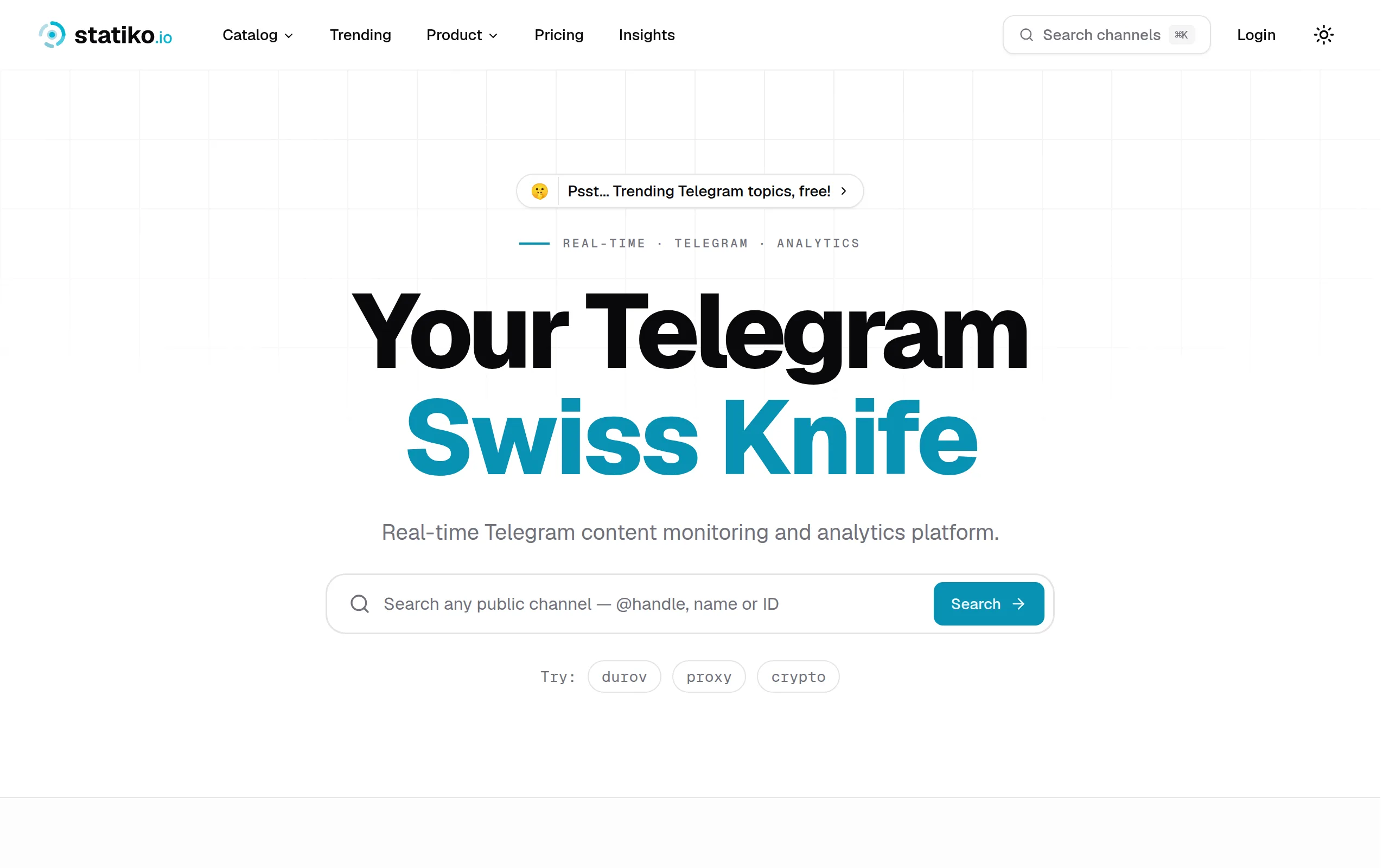
Statiko
Monitor any Telegram channel in real time - track posts, edits, deletions, and growth with AI recaps 📡

Shibui
AI website builder - describe your business, pick a niche template, edit by chatting, and publish instantly ✨

Pro Service
Find verified home service professionals, compare quotes, and pay securely through escrow - built for Brazilians across the US 🏠
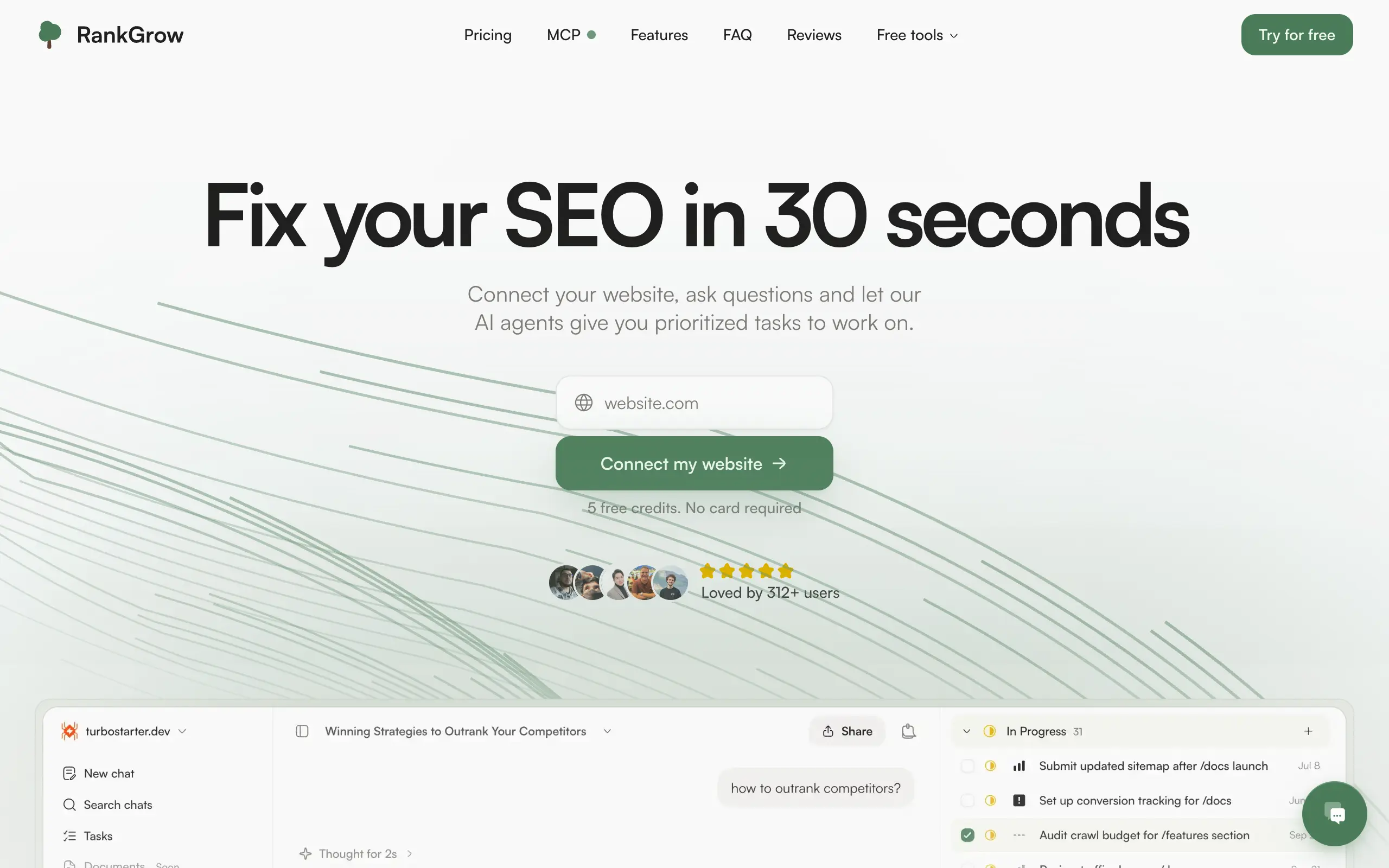
RankGrow
Fix your SEO with AI agents - connect Search Console, get prioritized tasks, and grow organic traffic 📈
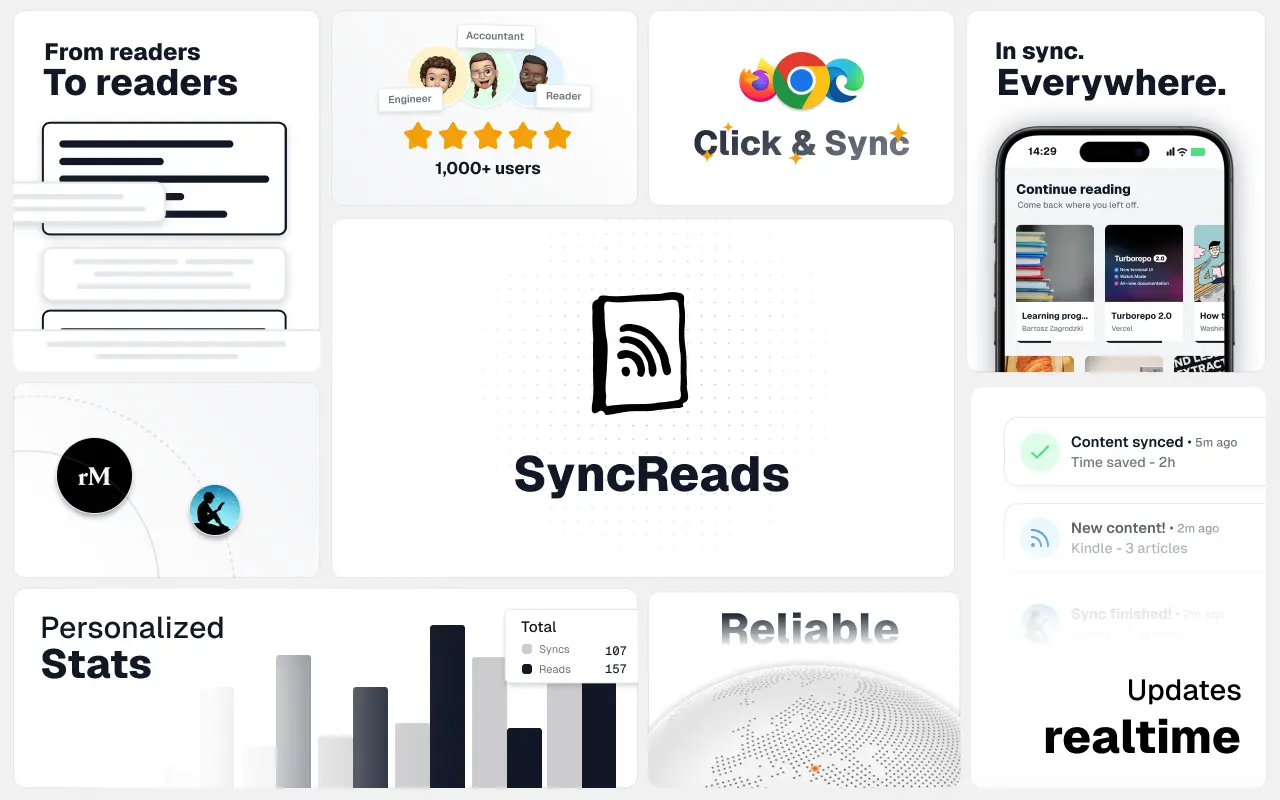
SyncReads
Sync your favorite content for distraction-free reading, save time and replace multiple apps. Anytime, anywhere 🔄
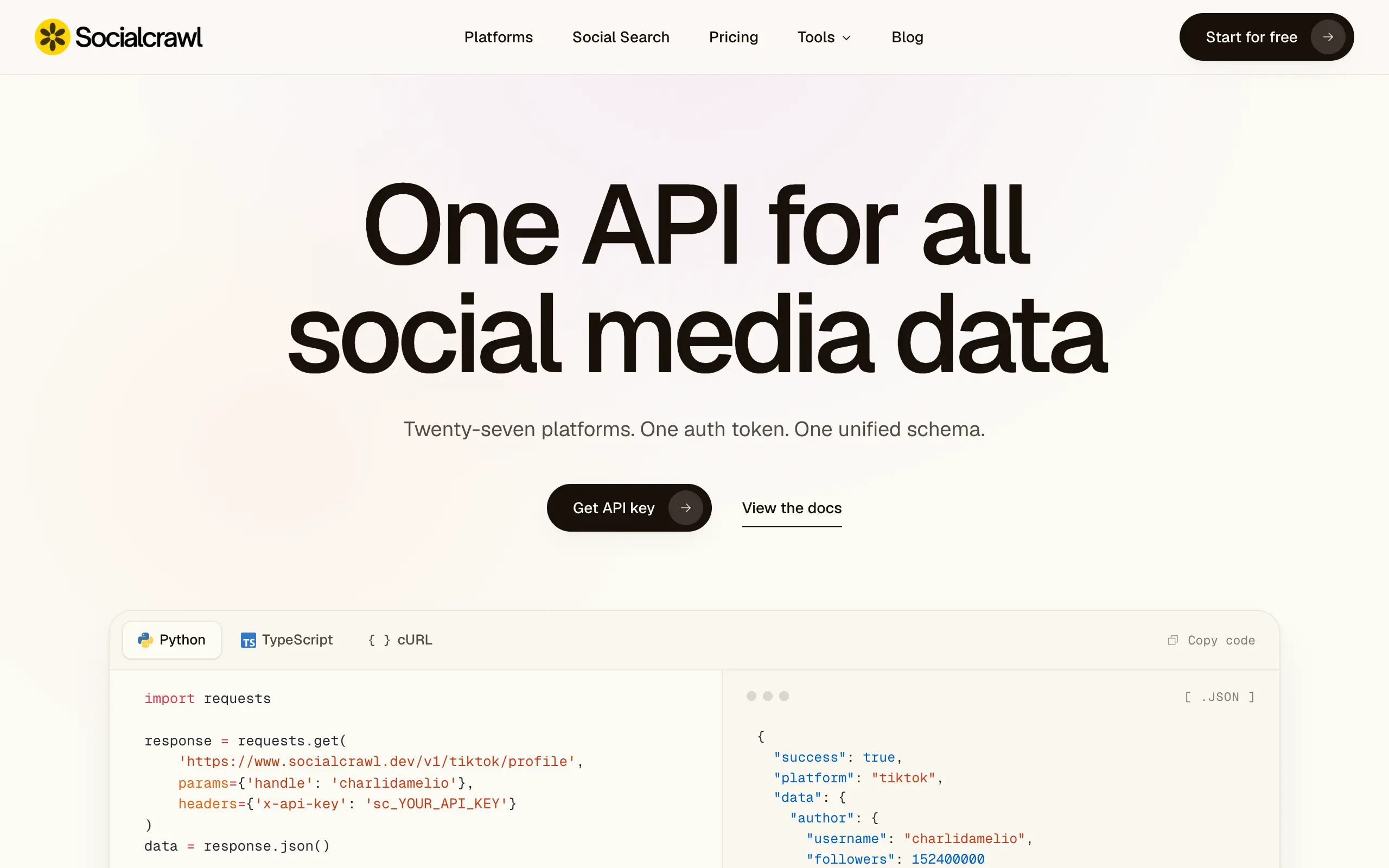
Socialcrawl
Get clean, structured data from 21 platforms like TikTok, Instagram, and YouTube with a single request 📊
Statiko
Monitor any Telegram channel in real time - track posts, edits, deletions, and growth with AI recaps 📡
Shibui
AI website builder - describe your business, pick a niche template, edit by chatting, and publish instantly ✨
Pro Service
Find verified home service professionals, compare quotes, and pay securely through escrow - built for Brazilians across the US 🏠
RankGrow
Fix your SEO with AI agents - connect Search Console, get prioritized tasks, and grow organic traffic 📈
SyncReads
Sync your favorite content for distraction-free reading, save time and replace multiple apps. Anytime, anywhere 🔄
Socialcrawl
Get clean, structured data from 21 platforms like TikTok, Instagram, and YouTube with a single request 📊
Statiko
Monitor any Telegram channel in real time - track posts, edits, deletions, and growth with AI recaps 📡
Shibui
AI website builder - describe your business, pick a niche template, edit by chatting, and publish instantly ✨
Pro Service
Find verified home service professionals, compare quotes, and pay securely through escrow - built for Brazilians across the US 🏠
RankGrow
Fix your SEO with AI agents - connect Search Console, get prioritized tasks, and grow organic traffic 📈
SyncReads
Sync your favorite content for distraction-free reading, save time and replace multiple apps. Anytime, anywhere 🔄
Socialcrawl
Get clean, structured data from 21 platforms like TikTok, Instagram, and YouTube with a single request 📊
Statiko
Monitor any Telegram channel in real time - track posts, edits, deletions, and growth with AI recaps 📡
Shibui
AI website builder - describe your business, pick a niche template, edit by chatting, and publish instantly ✨
Pro Service
Find verified home service professionals, compare quotes, and pay securely through escrow - built for Brazilians across the US 🏠
RankGrow
Fix your SEO with AI agents - connect Search Console, get prioritized tasks, and grow organic traffic 📈
SyncReads
Sync your favorite content for distraction-free reading, save time and replace multiple apps. Anytime, anywhere 🔄
Socialcrawl
Get clean, structured data from 21 platforms like TikTok, Instagram, and YouTube with a single request 📊
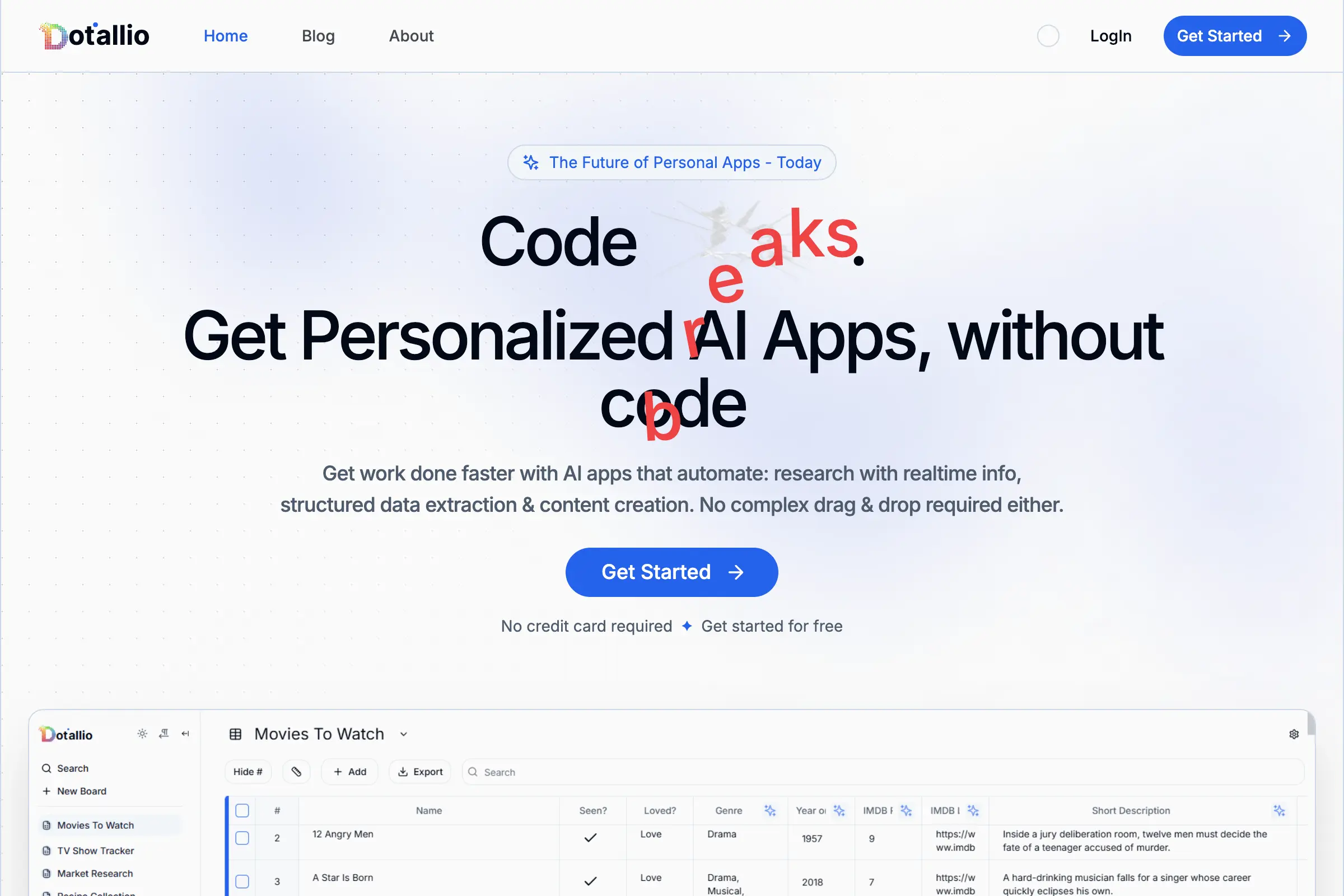
Dotallio
Personalized AI apps that automate research, data extraction, and content creation without code 🤖

Talk to Santa
Enjoy a magical live video chat or receive a unique AI-generated video greeting from Santa Claus 🎅

pozywka.pl
Scalable blog for food journalist, focused on performance and user experience 🌭
zagrodzki.me
Personal blog and portfolio of Bart Zagrodzki, where he shares his knowledge and work 💼
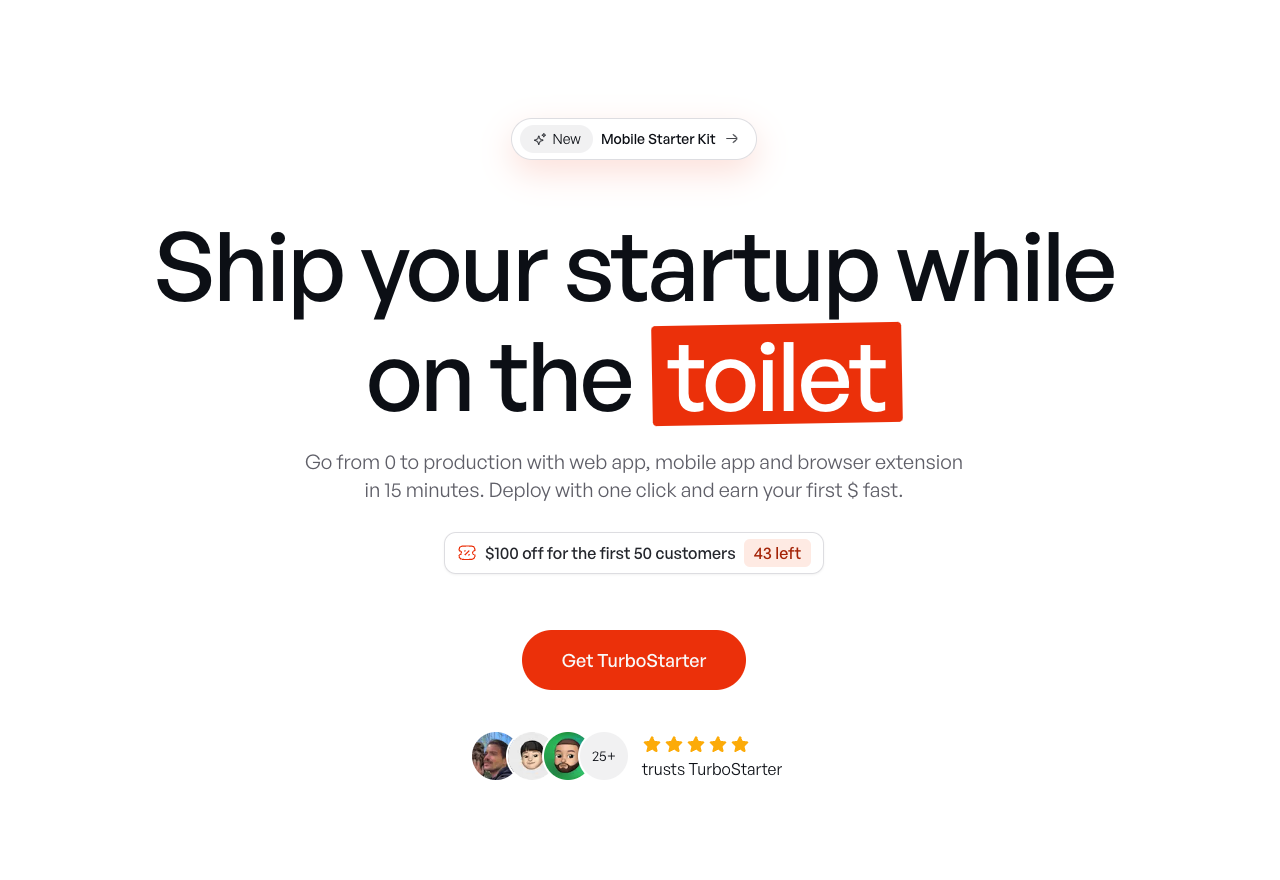
TurboStarter
Ship your startup everywhere. In minutes.
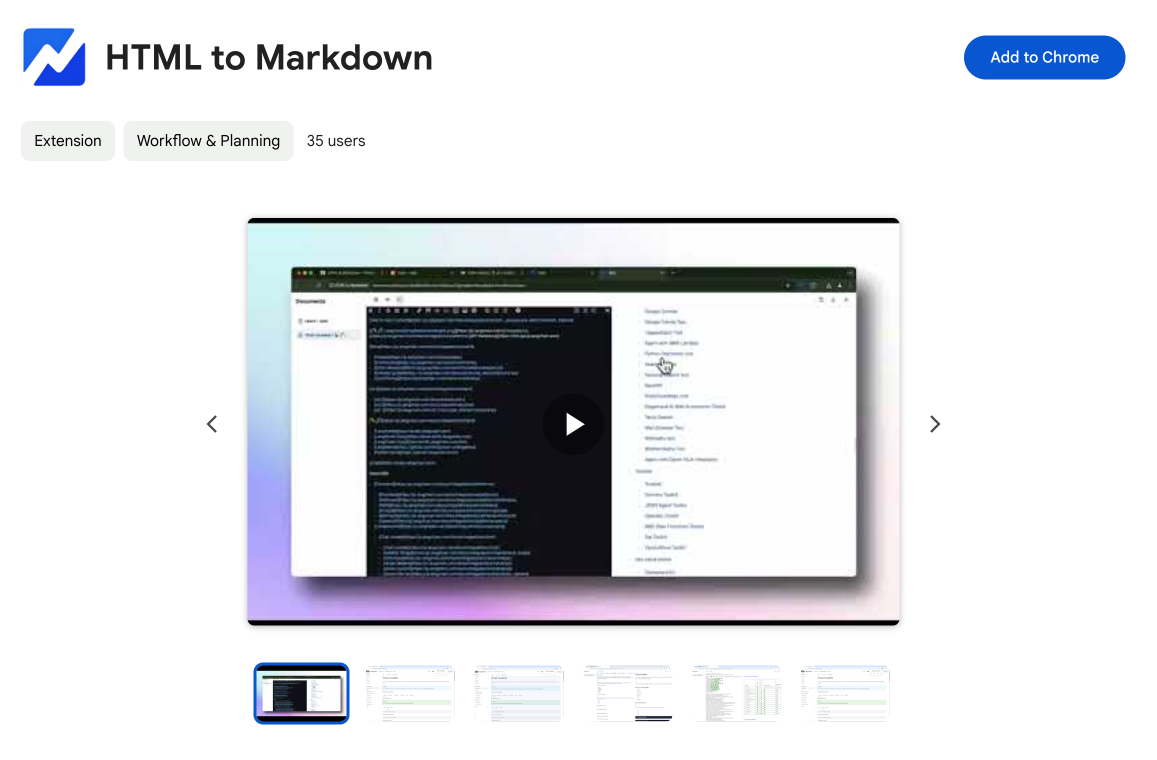
HTML to Markdown
Convert HTML to Markdown with ease, directly in your browser 📄
Dotallio
Personalized AI apps that automate research, data extraction, and content creation without code 🤖
Talk to Santa
Enjoy a magical live video chat or receive a unique AI-generated video greeting from Santa Claus 🎅
pozywka.pl
Scalable blog for food journalist, focused on performance and user experience 🌭
zagrodzki.me
Personal blog and portfolio of Bart Zagrodzki, where he shares his knowledge and work 💼
TurboStarter
Ship your startup everywhere. In minutes.
HTML to Markdown
Convert HTML to Markdown with ease, directly in your browser 📄
Dotallio
Personalized AI apps that automate research, data extraction, and content creation without code 🤖
Talk to Santa
Enjoy a magical live video chat or receive a unique AI-generated video greeting from Santa Claus 🎅
pozywka.pl
Scalable blog for food journalist, focused on performance and user experience 🌭
zagrodzki.me
Personal blog and portfolio of Bart Zagrodzki, where he shares his knowledge and work 💼
TurboStarter
Ship your startup everywhere. In minutes.
HTML to Markdown
Convert HTML to Markdown with ease, directly in your browser 📄
Dotallio
Personalized AI apps that automate research, data extraction, and content creation without code 🤖
Talk to Santa
Enjoy a magical live video chat or receive a unique AI-generated video greeting from Santa Claus 🎅
pozywka.pl
Scalable blog for food journalist, focused on performance and user experience 🌭
zagrodzki.me
Personal blog and portfolio of Bart Zagrodzki, where he shares his knowledge and work 💼
TurboStarter
Ship your startup everywhere. In minutes.
HTML to Markdown
Convert HTML to Markdown with ease, directly in your browser 📄
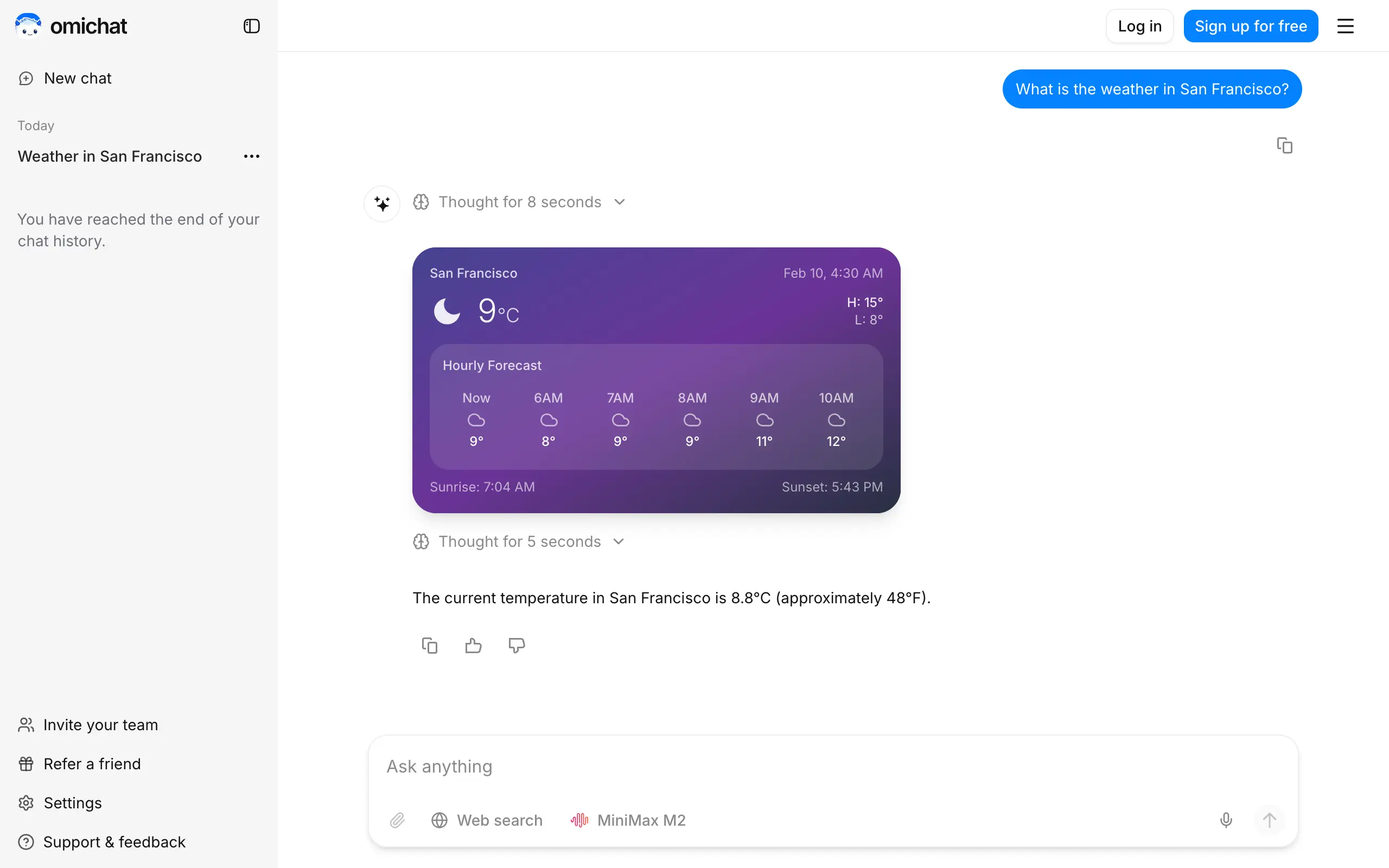
Omichat
Chat with 50+ AI models, including ChatGPT and Claude, in one place - switch models anytime without losing context 🤖
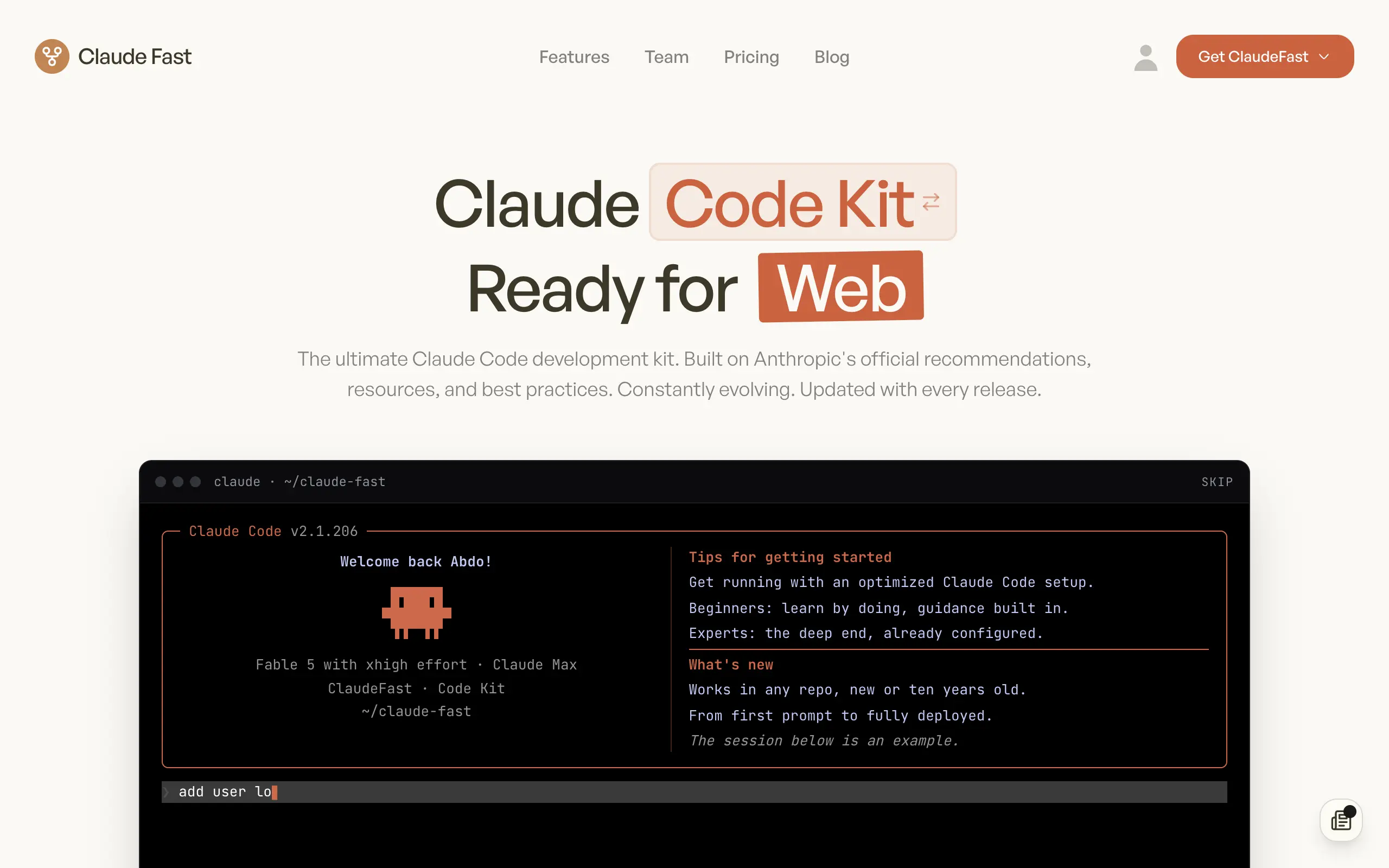
Claude Fast
Supercharge your Claude Code with 6x effective context window and specialized AI agents 🤖
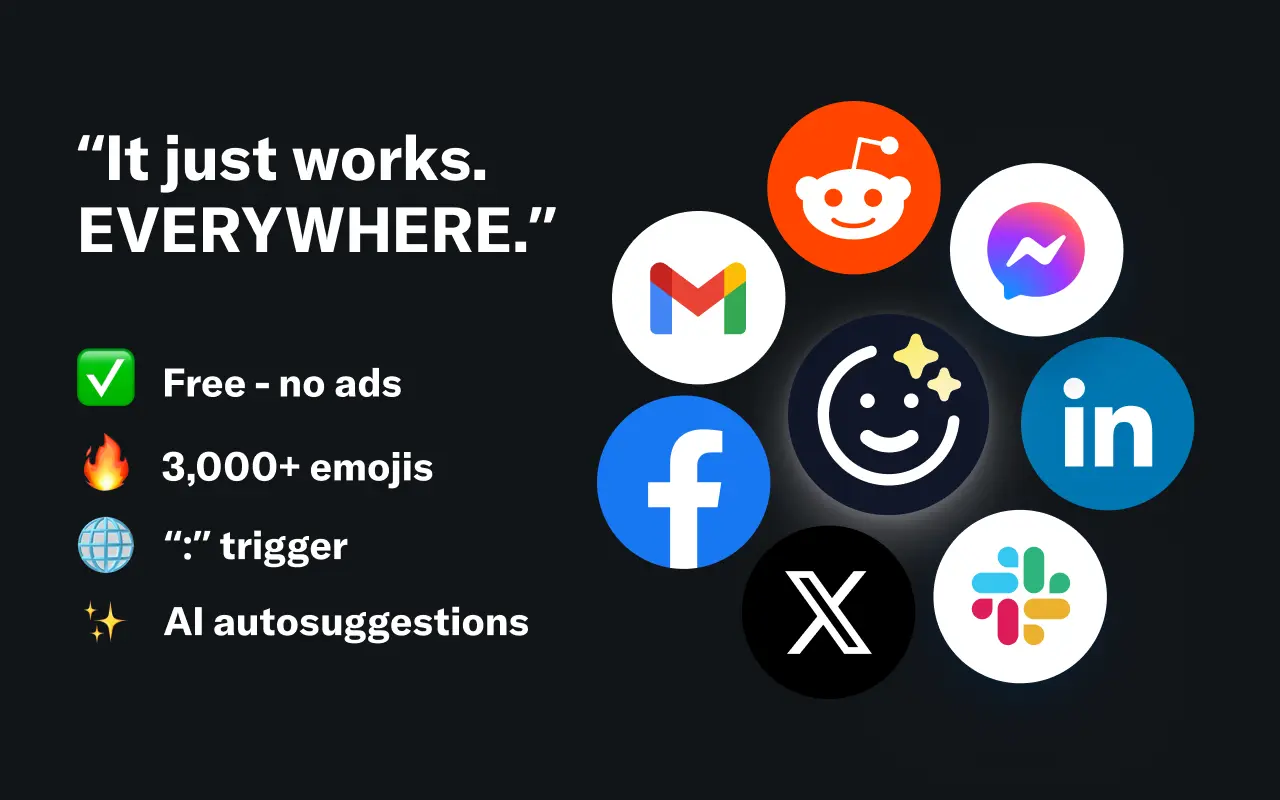
EmojAI
AI-powered emoji picker with smart, context-aware suggestions 🤖
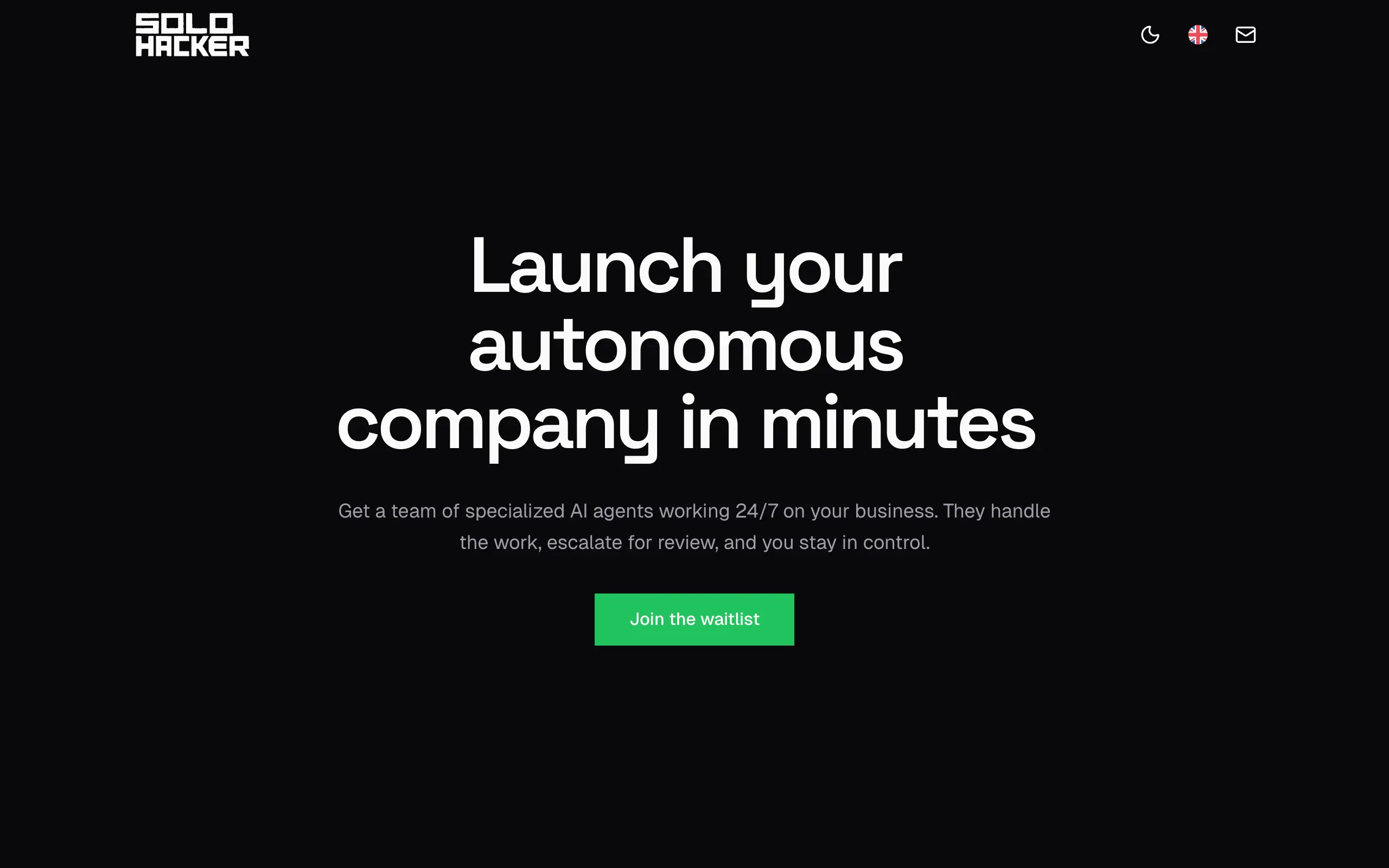
Solohacker
Autonomous company launcher - AI agents work 24/7, escalate what matters, and you stay in control 🤖

BeRawi: Storytelling Coach
Practice storytelling daily with instant feedback to sound clearer, more engaging, and confident 🎤
Omichat
Chat with 50+ AI models, including ChatGPT and Claude, in one place - switch models anytime without losing context 🤖
Claude Fast
Supercharge your Claude Code with 6x effective context window and specialized AI agents 🤖
EmojAI
AI-powered emoji picker with smart, context-aware suggestions 🤖
Solohacker
Autonomous company launcher - AI agents work 24/7, escalate what matters, and you stay in control 🤖
BeRawi: Storytelling Coach
Practice storytelling daily with instant feedback to sound clearer, more engaging, and confident 🎤
Omichat
Chat with 50+ AI models, including ChatGPT and Claude, in one place - switch models anytime without losing context 🤖
Claude Fast
Supercharge your Claude Code with 6x effective context window and specialized AI agents 🤖
EmojAI
AI-powered emoji picker with smart, context-aware suggestions 🤖
Solohacker
Autonomous company launcher - AI agents work 24/7, escalate what matters, and you stay in control 🤖
BeRawi: Storytelling Coach
Practice storytelling daily with instant feedback to sound clearer, more engaging, and confident 🎤
Omichat
Chat with 50+ AI models, including ChatGPT and Claude, in one place - switch models anytime without losing context 🤖
Claude Fast
Supercharge your Claude Code with 6x effective context window and specialized AI agents 🤖
EmojAI
AI-powered emoji picker with smart, context-aware suggestions 🤖
Solohacker
Autonomous company launcher - AI agents work 24/7, escalate what matters, and you stay in control 🤖
BeRawi: Storytelling Coach
Practice storytelling daily with instant feedback to sound clearer, more engaging, and confident 🎤

Connect with like-minded people
Join our community to get feedback, support, and grow together with 1,000+ builders on board, let's ship it!
Join usShip your startup everywhere. In minutes.
Don't burn tokens on setup and start building features on day one.