BugBard
AI playtest agents explore Unity and Godot builds, then turn crashes, confusing moments, and Portuguese feedback into reproducible bug reports.
What is BugBard?
BugBard is an AI game playtesting platform that explores Unity and Godot builds, identifies crashes and confusing gameplay moments, and turns its findings into reproducible bug reports. It can also process player feedback in Portuguese, helping teams connect what players experienced with what happened in the game.
The idea addresses a stubborn game-development problem: teams need to test their games repeatedly, but manual playtesting takes time, and bug reports from players often lack the steps needed to reproduce an issue. BugBard’s promise is to make that feedback loop faster by combining automated exploration, crash detection, and clear issue documentation.
The key is not to position BugBard as a replacement for human playtesters. Human players remain essential for evaluating enjoyment, emotional response, accessibility, and whether a mechanic feels satisfying. Instead, BugBard can help teams find technical issues and confusing interactions sooner, while giving developers a more useful starting point for investigation.
For a studio searching for AI playtesting software, automated Unity testing, or Godot game testing tools, the product concept is compelling because it brings several workflows together:
- An agent explores a game build.
- The system records relevant actions and observations.
- A potential issue is documented with evidence and reproduction steps.
- Player feedback, including Portuguese-language feedback, can be organized alongside test findings.
A successful version would need to make each step trustworthy. A visually plausible report is not enough. Developers need to understand what the agent did, what it observed, how confident it is, and whether the reported problem can be reproduced.
The problem with game testing today
Game teams already use a mix of manual testing, automated tests, internal playtests, community feedback, and crash-reporting tools. These approaches are valuable, but each leaves gaps.
Manual playtesting is useful but difficult to scale
Human testers are good at noticing when a game feels awkward, when instructions are unclear, or when an experience is unexpectedly frustrating. They can also describe subjective reactions that a test script cannot capture.
However, manual playtesting can be hard to repeat consistently. A tester may discover a problem once and then struggle to remember the exact sequence that led to it. Small differences in timing, movement, equipment, or game state can make a bug difficult to reproduce. For a small studio, it may also be impractical to assign a person to repeatedly explore every build across every supported platform.
AI playtest agents can complement this process by repeating exploration tasks and keeping a record of actions. They are most useful when they help teams answer concrete questions:
- Can the player reach a softlock or an unintended area?
- Does a crash occur after a particular sequence of actions?
- Is an objective easy to miss?
- Can an agent complete a basic path through a level?
- What happened immediately before a failure?
These questions are narrower than “Is this game fun?” That distinction helps set realistic expectations for an AI game testing product.
Player bug reports often lack reproducible details
Players may report that “the boss disappeared,” “the game froze,” or “the door doesn’t work.” Those reports can be genuine and important, but they often omit the information developers need to reproduce the issue:
- The game version and platform
- The current level, quest, or checkpoint
- The steps taken before the problem
- Whether the issue happens every time
- A screenshot, recording, or crash log
- The player’s language and intended meaning
The result is a costly back-and-forth between players, community managers, QA staff, and developers. A report that arrives with a clip, a timestamp, a build identifier, and a proposed reproduction sequence is much easier to triage.
Feedback in multiple languages can be hard to operationalize
Portuguese-language feedback expands the audience BugBard can support, but translation alone does not solve the product problem. Teams need to preserve the original message, understand the player’s meaning, and turn that meaning into an actionable issue without presenting an uncertain interpretation as fact.
A robust workflow should show the original Portuguese text beside any translation or summary. It should also distinguish direct player statements from AI-generated conclusions. That approach is more respectful to players and more useful to developers.
A useful product boundary
AI can help identify patterns, summarize feedback, and propose reproduction steps. It should not silently convert an uncertain interpretation into a confirmed bug. Give developers access to the source evidence and a clear way to verify every claim.
Who BugBard should serve first
“Game developers” is too broad to guide product design or marketing. BugBard should identify a narrow initial customer profile, learn its testing workflow, and expand only after the product proves useful in that environment.
Indie studios with frequent builds
Small teams often need QA coverage but have limited time and staff. A tool that can repeatedly explore a build, capture likely problems, and create organized reports could be valuable—especially when the setup is straightforward and does not require a dedicated test automation engineer.
For this audience, the product should focus on low-friction onboarding:
- Upload or connect a build.
- Choose a test objective or exploration mode.
- Review a session recording and its findings.
- Export issues to the team’s existing tracker.
A first-time user should not need to build a large library of custom scripts before getting a useful result.
QA leads and external testing providers
QA professionals are likely to care about consistency, evidence, and triage efficiency. They may want to run the same scenarios on multiple builds, compare outcomes, and inspect what changed between sessions.
These users are also likely to challenge weak claims. They need controls to label false positives, edit reproduction steps, and distinguish an observed failure from an agent’s hypothesis. BugBard will earn trust by making review faster, not by insisting its findings are always correct.
Studios with Portuguese-speaking player communities
Portuguese support could differentiate BugBard for studios that receive feedback from Brazilian or Portuguese-speaking players. Community teams may need to sort reports quickly, identify duplicates, and pass high-priority issues to QA without losing the original context.
That use case is especially promising if BugBard supports a broader feedback pipeline: importing text from a form or support inbox, grouping similar reports, and linking player reports to matching test sessions or known issues.
Developers using Unity and Godot
Unity and Godot are the named engine targets, so engine compatibility should be an early product strength rather than a marketing footnote. Each engine has different project structures, export settings, and ways to expose runtime information.
BugBard should document exactly what it supports: engine versions, desktop platforms, build formats, input methods, and any required instrumentation. Official documentation for Unity and Godot can help guide integration choices, but the product should maintain its own tested compatibility matrix.
Market opportunity and product gap
BugBard sits at the intersection of game QA, automated testing, crash reporting, and player-feedback management. Those areas already have established tools and workflows. The opportunity is not to claim that no one tests games automatically; it is to reduce the distance between exploration and an actionable, reproducible report.
Many tools specialize in one part of the process:
- A test framework runs explicit, predefined checks.
- A crash-reporting service captures errors and diagnostics.
- A human testing service provides observations from real players.
- A community platform collects player conversations and feedback.
- A project tracker manages work after an issue has been identified.
BugBard’s potential gap is the connective layer between these activities. It can explore a build, preserve evidence of what happened, translate or summarize relevant feedback, and produce an issue that fits an existing QA workflow.
This creates a practical product hypothesis to validate: studios will pay for a system that turns unstructured exploration and player reports into issues that are easier to reproduce and triage.
The hypothesis should be tested through interviews and working prototypes, not treated as proven market demand. Ask potential users how often they receive reports they cannot reproduce, how they currently test new builds, what causes their QA bottlenecks, and which tools they already pay for. Then measure whether BugBard reduces time spent investigating or improves the proportion of reports that developers can reproduce.
What customers may compare it with
BugBard will compete with more than direct AI agents. A buyer may compare it with:
- Existing automated test suites
- Manual QA hours
- Outsourced playtesting
- Crash-monitoring products
- Internal scripts and developer tools
- General-purpose AI used to summarize reports
This means the product’s competitive case should be based on measurable workflow improvement. “Uses AI” is not a durable advantage by itself. “Reduces the time from a player report to a verified reproduction” is much closer to a customer outcome.
The core product experience
The product should make an AI playtest session understandable and auditable. Users need to see not only the final report but also the evidence behind it.
Build ingestion and project setup
A studio should be able to create a project, specify its engine and platform, and provide a build through a secure upload or supported storage integration. BugBard should record the build version and relevant configuration so a report can be tied to the exact artifact that was tested.
Useful setup fields include:
- Engine and engine version
- Build identifier or release channel
- Target platform and resolution
- Input method, such as keyboard, controller, or touch
- Test objective, if the run is scenario-based
- Credentials or test account configuration, if required
Build handling deserves special care. Game binaries may contain confidential content, unreleased intellectual property, or sensitive credentials. Teams need to know where the build is stored, who can access it, how long it is retained, and how it is deleted.
AI-led exploration
The agent should be able to interact with the game through a controlled input layer and observe the resulting state. A first release should favor bounded, repeatable tasks over a vague promise that the agent can understand and play any game.
Possible exploration modes include:
- Guided exploration, where a tester gives the agent a goal such as reaching a checkpoint.
- Targeted reproduction, where the agent attempts a sequence reported by a player.
- Smoke testing, where the agent checks that basic flows remain accessible after a new build.
- Open exploration, where the agent explores within a time limit and flags suspicious behavior for review.
Each mode should show its constraints. For example, the agent may have limited understanding of custom controls, complex menus, timing-based mechanics, or multiplayer state. Accurate boundaries are better for long-term trust than impressive but overbroad claims.
Crash and confusing-moment detection
Crash detection is usually more reliable when it can combine visible behavior with technical signals such as process exit, logs, or engine-level diagnostics. Visual observation alone may confuse a loading screen, intentional fade, or frozen animation with a crash.
“Confusing moment” is even more subjective. BugBard should describe the observable signal rather than claim certainty about a player’s mental state. It might flag repeated backtracking, failure to progress after interacting with an object, or a prolonged pause near an objective. These are clues for a human reviewer, not proof that the level is confusing.
Evidence-rich, reproducible bug reports
A useful report should contain enough context for a developer to verify the issue:
- A concise, editable summary
- The build and platform
- Reproduction steps
- Expected and observed behavior
- A video or sequence of screenshots
- Relevant timestamps and input history
- Logs or crash details where available
- A confidence indicator and review status
The report should clearly separate three kinds of information:
- Observed evidence, such as recorded inputs, a screenshot, or a process exit.
- AI interpretation, such as a suggested title or suspected cause.
- Human validation, such as confirmation by QA or a developer.
That separation protects the team from treating a generated explanation as a confirmed technical diagnosis.
Portuguese feedback triage
BugBard can accept Portuguese feedback and help categorize it by topic, urgency, game area, or similarity to existing reports. It should preserve the original text and make any translation or summary easy to compare with the source.
A practical workflow might:
- Store the original player message.
- Detect the language and provide a clearly labeled translation when needed.
- Extract possible details such as platform, level, and actions.
- Suggest a category or duplicate match.
- Let a human reviewer confirm or edit the result.
This is more valuable than generic translation because it connects player language to QA operations. It also avoids a common failure mode: losing the nuance of a player’s report while trying to make it easier to process.
Integrations and export
BugBard should fit the studio’s existing workflow rather than demand that every developer move to a new project-management system. Start with useful exports and a small number of integrations selected through customer discovery.
Potential capabilities include:
- Issue creation in a tracker
- A link to the session recording and evidence
- Webhooks for new high-priority findings
- CSV or JSON exports for analysis
- A review queue for duplicate and unverified reports
An integration should preserve the distinction between an AI-suggested issue and a confirmed defect. One option is to create incoming reports in a triage status rather than assigning them directly to a developer.
Competitive advantage and unique selling proposition
BugBard’s most credible unique selling proposition is AI-assisted game exploration that turns observed failures and multilingual player feedback into traceable, reproducible bug reports for Unity and Godot teams.
That proposition has four parts:
- Game-specific exploration, rather than generic text summarization.
- Evidence attached to findings, so users can inspect what happened.
- Reproducibility as a core outcome, not an afterthought.
- Portuguese feedback support, with source text preserved for review.
The advantage becomes stronger if BugBard learns from the workflow without making unsupported claims about proprietary data or model superiority. Useful product differentiation can come from engine-specific setup, high-quality session replay, reliable build tracking, well-designed triage, and a polished feedback-to-issue workflow.
| Capability | Manual QA | Scripted tests | Crash reporting | BugBard concept |
|---|---|---|---|---|
| Human judgment about experience | ✅ | ❌ | ❌ | ⚠️ |
| Repeatable predefined checks | ⚠️ | ✅ | ❌ | ✅ |
| Unscripted exploration | ✅ | ❌ | ❌ | ✅ |
| Crash evidence | ✅ | ⚠️ | ✅ | ✅ |
| Reproduction-focused reports | ⚠️ | ✅ | ⚠️ | ✅ |
| Portuguese feedback triage | ⚠️ | ❌ | ❌ | ✅ |
The table describes intended positioning, not a guarantee that every capability will work for every project. In particular, AI exploration should be evaluated per game and task.
Recommended technical architecture
A practical architecture should separate build execution, agent control, evidence storage, analysis, and report delivery. This reduces the risk that a model failure or slow analysis step blocks the entire testing workflow.
Build execution and agent control
Run builds in isolated environments. A worker should launch one build, apply a known configuration, capture telemetry and media, and then clean up the environment. Isolation helps protect customer artifacts and limits one test run from affecting another.
For an MVP, a controlled desktop environment may be more practical than supporting every console, device, and cloud platform. Start with one or two target platforms, define the supported build requirements, and expand based on actual customer demand.
The agent-control layer can translate high-level actions into game inputs while collecting screenshots or video frames. It should track action history and timestamps so that the report can show what the agent attempted. For deterministic tasks, structured scripts may be more dependable than open-ended model decisions. A hybrid approach is sensible: use scripts for known flows and AI-guided exploration where the test objective permits it.
Application and data services
A conventional web application can handle organizations, projects, build metadata, sessions, permissions, report review, and integrations. A relational database is a sound default for structured entities such as users, projects, builds, sessions, and issues. Large recordings and build artifacts belong in object storage, not in ordinary database rows.
The analysis pipeline can be asynchronous:
- A user submits a build or schedules a run.
- A job enters a queue.
- A worker launches the build and runs the agent.
- Evidence and telemetry are stored.
- Analysis creates candidate findings.
- A reviewer validates, edits, or dismisses each finding.
- Confirmed issues are exported or assigned.
This architecture makes it easier to retry failed jobs, scale workers independently, and show progress to users.
Suggested technology choices
The stack should reflect team expertise and the need to operate build workers reliably.
- Web application: React with a server-rendered framework can support project dashboards, session review, and report triage. Official React documentation is a suitable starting point.
- UI styling: Tailwind CSS can speed up consistent dashboard development; review its official site when evaluating the approach.
- API and background jobs: Choose a backend language the team can operate confidently. TypeScript, Python, or Go can all work; the main requirement is dependable job orchestration and clear service boundaries.
- Relational data: PostgreSQL is a strong option for product records and queryable report metadata. Its official documentation covers core capabilities and operational considerations.
- Artifact storage: Use object storage for builds, screenshots, and recordings, with short-lived signed access where appropriate.
- Queue and worker system: Use a durable job queue so long-running test sessions do not depend on a web request staying open.
- Observability: Track worker health, job duration, failed runs, storage usage, and agent outcomes. Do not confuse product telemetry with game telemetry; define what is collected from each.
A managed full-stack foundation can reduce time spent rebuilding authentication, billing, and application plumbing. For a team that wants to focus on the testing product itself, TurboStarter may be worth evaluating as a starting point. It does not replace the need to design secure build execution or game-specific agent infrastructure.
Trade-offs to plan for
- Cloud workers versus customer-run agents: Cloud workers are easier to centralize and maintain, but may raise concerns about proprietary builds and platform coverage. Customer-run agents can improve control but increase setup and support complexity.
- Open-ended agents versus scripts: Open-ended exploration can find unexpected paths, but results may be inconsistent. Scripts are repeatable, but only cover what the team anticipated. A mixed model offers a reasonable balance.
- Video retention versus storage cost: Long recordings improve investigation but increase storage and privacy exposure. Make retention configurable and provide deletion controls.
- Model capability versus predictable operation: More sophisticated AI may improve exploration, but can add latency, cost, and variability. Test whether the improvement produces customer value before making it a dependency for every session.
A sample issue-generation workflow
The report pipeline should preserve raw evidence and make AI-generated content editable. A simplified TypeScript shape could look like this:
type PlaytestFinding = {
  projectId: string;
  buildId: string;
  sessionId: string;
  title: string;
  summary: string;
  reproductionSteps: string[];
  observedBehavior: string;
  expectedBehavior?: string;
  evidence: {
    videoUrl?: string;
    screenshotUrls: string[];
    logReferences: string[];
    inputTimeline: Array<{
      timestampMs: number;
      action: string;
    }>;
  };
  sourceFeedback?: {
    originalText: string;
    language: string;
    translatedText?: string;
  };
  confidence: number;
  reviewStatus: "needs_review" | "confirmed" | "dismissed";
};
This is a conceptual data model, not a complete implementation. In production, access to evidence should be authorized, URLs should not expose private artifacts indefinitely, and confidence should be calibrated against real review outcomes. A numeric confidence score is only useful if the team understands what it means and how often findings at that level are correct.
Monetization strategies
BugBard can test several pricing approaches. The right choice depends on compute costs, customer buying habits, and whether the product is used occasionally or continuously.
Usage-based pricing
Charge according to build minutes, agent sessions, or analyzed hours. This aligns price with infrastructure usage, but customers may find unpredictable bills difficult to budget. Include usage estimates, limits, and clear overage behavior.
Subscription tiers
A monthly plan can bundle a set number of projects, test minutes, users, and integrations. This is familiar to SaaS buyers and makes costs easier to forecast. Avoid setting limits before measuring the actual cost and usage patterns of the product.
Team and studio plans
Larger studios may value collaboration features, private deployment options, access controls, audit logs, retention policies, and priority support. These capabilities can support higher-value contracts, but they add operational and security obligations.
Paid pilot programs
An early paid pilot can be useful for validating whether BugBard solves a costly problem before building a broad self-serve product. Define a narrow success measure with each partner, such as reducing investigation time for a selected category of reports. Avoid presenting a pilot result as a general guarantee.
A sensible early approach is to offer a limited trial or pilot with transparent usage caps, then learn which outcomes customers are willing to pay for. Pricing should follow demonstrated value, not simply the amount of AI used.
Risks and how to mitigate them
False positives and vague findings
An agent may label intended behavior as a bug or describe an ambiguous moment too confidently. Provide evidence, allow reviewers to dismiss findings, and track precision by issue category. Prioritize findings that can be verified over a large volume of speculative alerts.
Poor reproducibility
AI-guided actions can vary between runs. Record inputs, timestamps, build identifiers, environment settings, and relevant state. For important flows, let teams convert a successful exploration into a repeatable test sequence.
Limited agent understanding
Games use custom interfaces, physics, timing, camera behavior, and controls. An agent that works in one genre may perform poorly in another. Begin with a defined compatibility scope and communicate supported tasks clearly. Use customer feedback to decide which game types to support next.
Build security and intellectual property
Studios may be reluctant to upload unreleased builds. Explain encryption, access control, retention, deletion, worker isolation, and incident response in plain language. Consider a customer-run execution option only when demand justifies the extra engineering and support burden.
Overstating the meaning of player behavior
A pause or repeated action does not prove that a player is confused. Label these signals as possible friction, show the underlying sequence, and make human review part of the workflow. Product language should reflect what the system can actually observe.
Translation errors and lost context
Portuguese text may include slang, regional expressions, or game-specific terms. Preserve the original message, make translations editable, and avoid treating language detection or summarization as infallible. If customer research supports it, validate output quality with fluent Portuguese speakers.
High compute and storage costs
Build execution and video capture can be resource-intensive. Measure cost per completed session, set runtime limits, use sensible recording policies, and separate lightweight checks from expensive exploration. Customers should be able to understand how usage affects cost.
Integration complexity
Every engine version, platform, and tracker integration can create support work. Start with a small compatibility matrix, document setup requirements, and instrument failed onboarding steps. Expand only where usage and customer value justify the maintenance cost.
How to validate BugBard before building too much
The fastest route to a useful product is to validate the workflow with real game teams rather than trying to build a universal agent first.
Interview indie developers, QA leads, and community managers. Ask them to walk through the last bug report that took too long to reproduce. Find out where the report came from, what evidence was missing, who investigated it, and how the team decided whether it was fixed.
Then test a narrow prototype:
- Choose one engine and a small number of supported build targets.
- Select a specific testing task, such as checking a basic navigation flow.
- Record the agent’s actions and the game’s visible response.
- Generate a draft report with evidence and editable reproduction steps.
- Compare the result with a human reviewer’s assessment.
- Measure whether the report saves time or improves reproduction success.
Track more than the number of findings. Useful evaluation measures include:
- The share of findings reviewers confirm
- The share of confirmed findings that can be reproduced
- Time from session completion to report review
- Time from report creation to verification
- Duplicate rate
- Cost per useful finding
- Build setup completion rate
These measurements help distinguish an impressive demo from a dependable product. If users spend more time correcting reports than they would spend testing manually, the workflow needs improvement.
Actionable implementation steps
Choose an initial customer and workflow. Focus on one group, such as small Unity studios or teams triaging Portuguese player reports. Interview prospective users and document the specific testing bottleneck they want to solve.
Define a narrow compatibility promise. Select supported engine versions, platforms, input types, and build requirements. Publish the limits clearly so early customers know what the system can and cannot test.
Build secure project and build management. Implement project access controls, build metadata, artifact storage, deletion policies, and an auditable session history before accepting valuable customer builds.
Create a bounded exploration prototype. Start with a task the agent can attempt repeatedly, such as navigating a menu or reaching a known checkpoint. Capture inputs, timestamps, screenshots, and logs.
Generate evidence-first reports. Produce a draft title, summary, and reproduction steps, but keep observations separate from AI interpretation. Require human review before treating a finding as confirmed.
Add Portuguese feedback triage. Store original text and provide clearly labeled translation or summary. Let reviewers correct the result and link feedback to existing issues.
Run a measured pilot. Work with a small number of studios, agree on evaluation criteria, and compare BugBard’s workflow with their current process. Use results to refine the product and pricing.
Expand based on repeatable value. Add integrations, platforms, and exploration modes when customer evidence supports them. Avoid expanding compatibility faster than the team can test and support it.
The bottom line
BugBard has a clear opportunity to make game QA reports more actionable by connecting AI-led exploration, crash evidence, and Portuguese player feedback. Its strongest positioning is not “AI plays games like a human.” It is a practical assistant that helps game teams find, understand, and reproduce problems sooner.
The product’s success will depend on trust: reproducible evidence, honest limits, careful treatment of player language, and secure handling of unreleased builds. Start with a narrow Unity or Godot workflow, validate that it saves real investigation time, and expand only after the results are repeatable.
More 🤖 AI Startup SaaS ideas
Discover more innovative ai startup SaaS ideas that are trending in 2026. Each idea is AI-generated with market validation and growth potential to help you find your next profitable venture faster than competitors.
Your competitors are building with TurboStarter
Below are some of the SaaS ideas that have been generated and built with our starter kit.
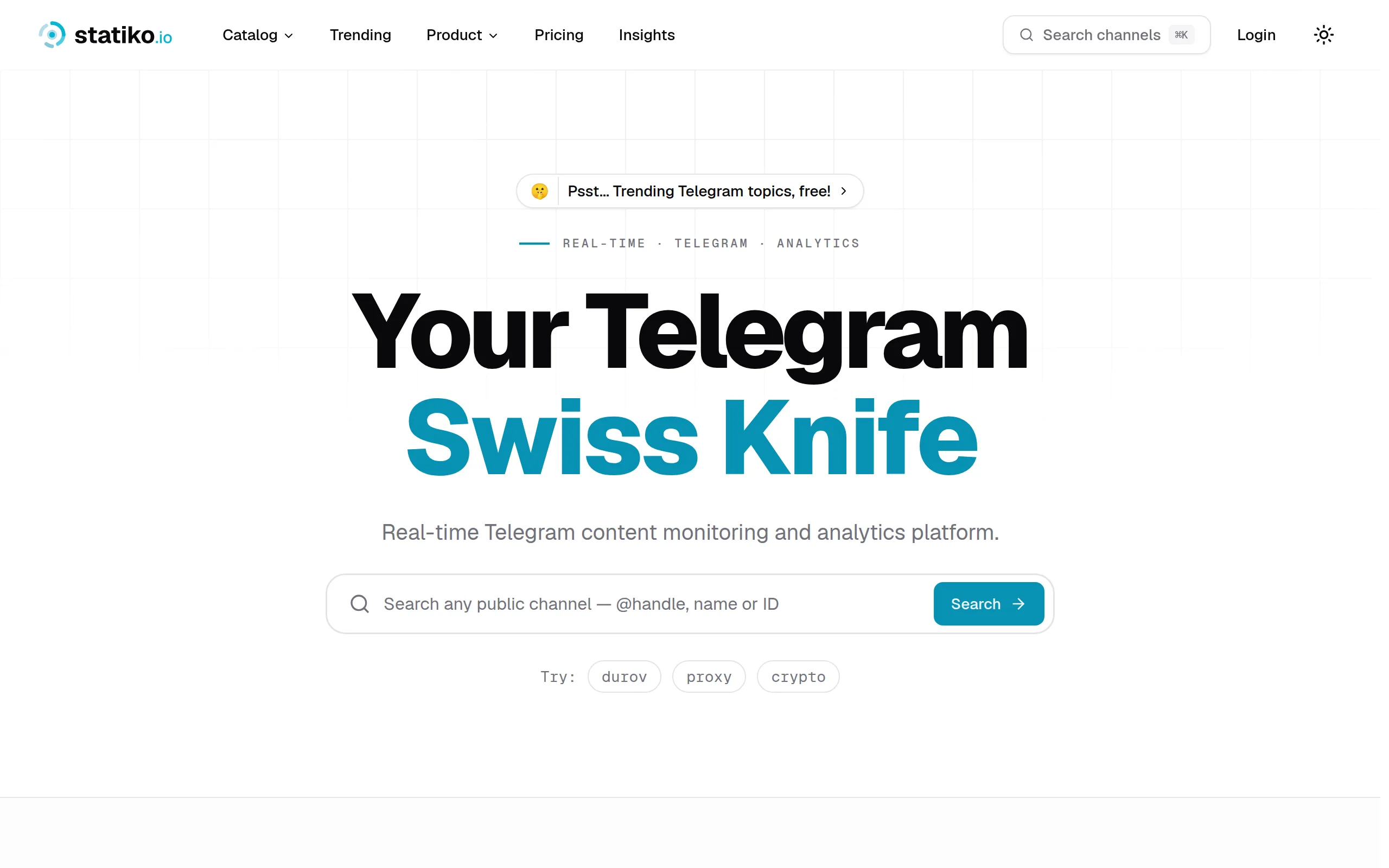
Statiko
Monitor any Telegram channel in real time - track posts, edits, deletions, and growth with AI recaps 📡

Shibui
AI website builder - describe your business, pick a niche template, edit by chatting, and publish instantly ✨

Pro Service
Find verified home service professionals, compare quotes, and pay securely through escrow - built for Brazilians across the US 🏠
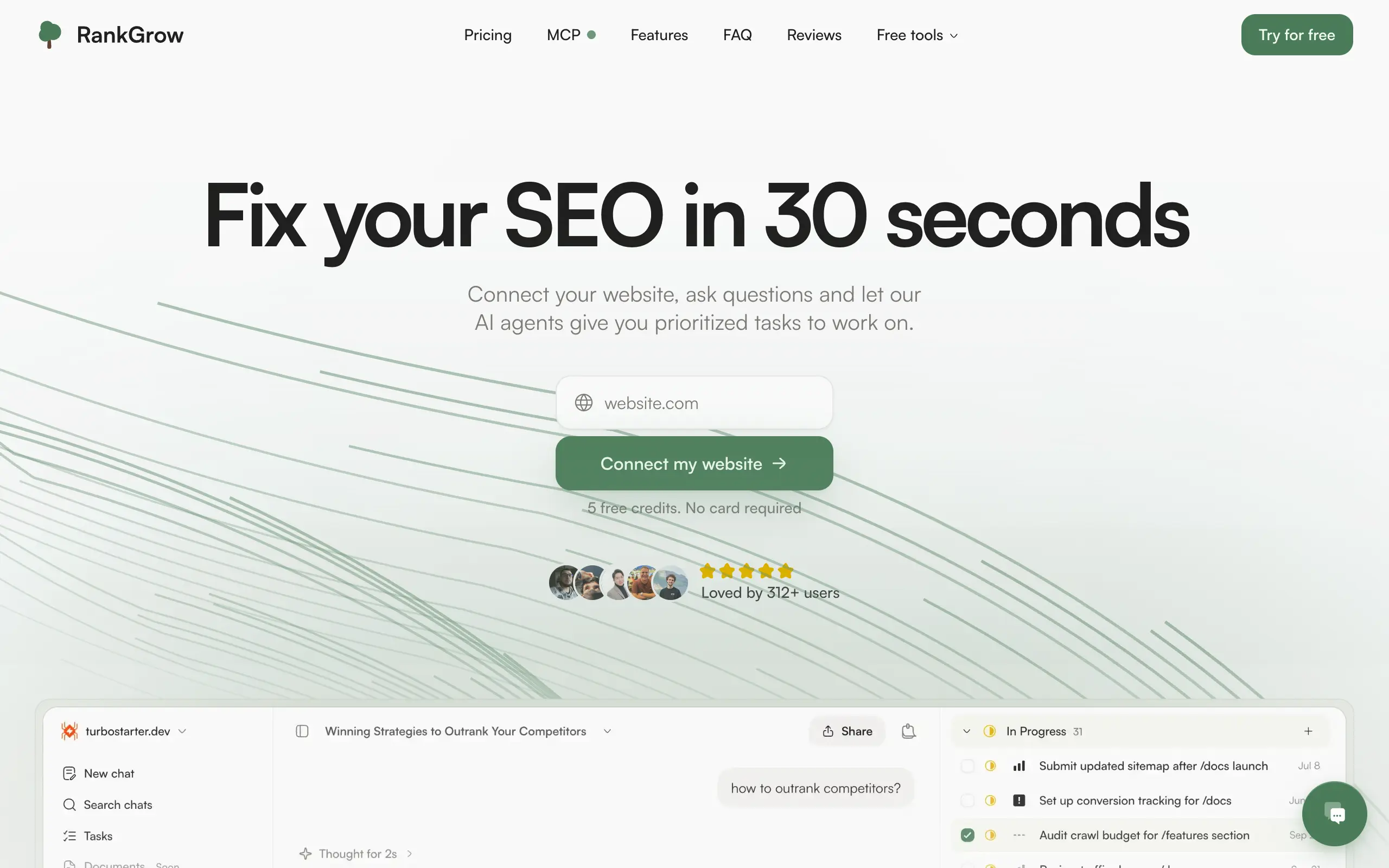
RankGrow
Fix your SEO with AI agents - connect Search Console, get prioritized tasks, and grow organic traffic 📈
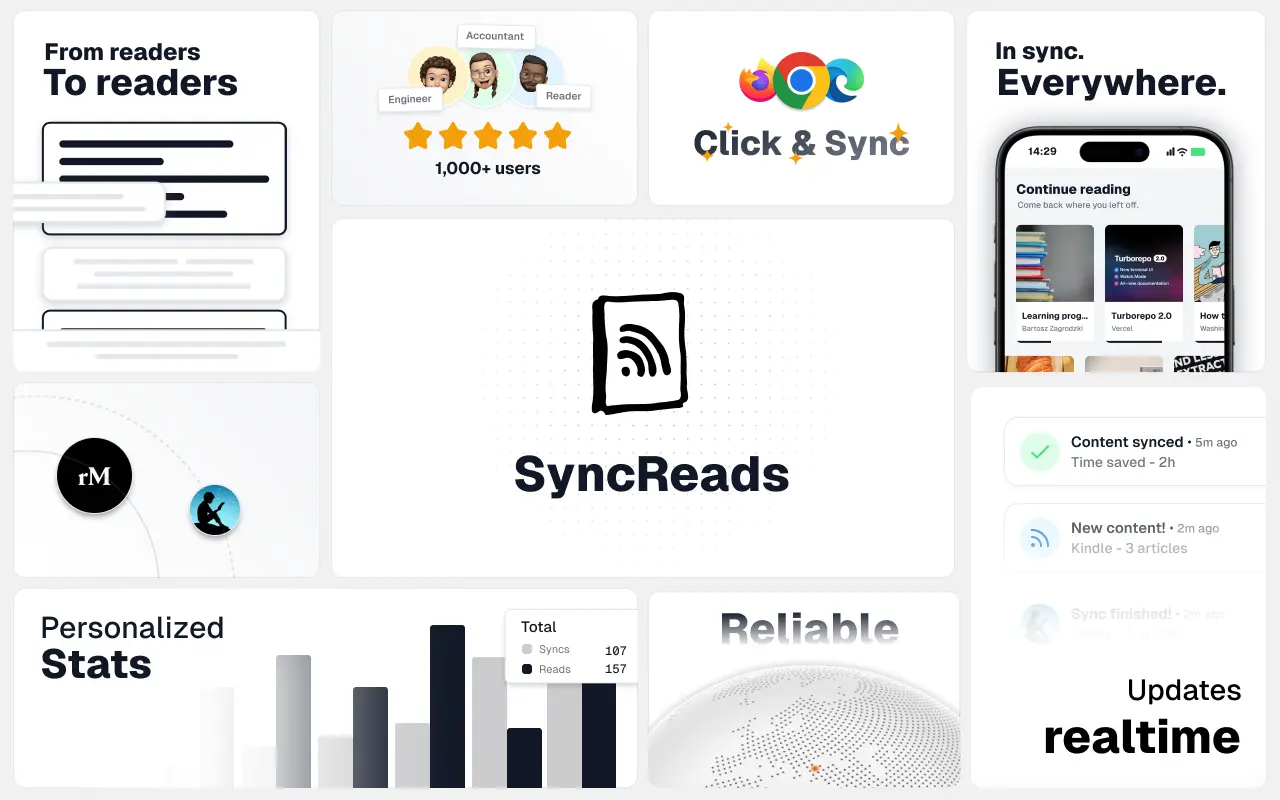
SyncReads
Sync your favorite content for distraction-free reading, save time and replace multiple apps. Anytime, anywhere 🔄
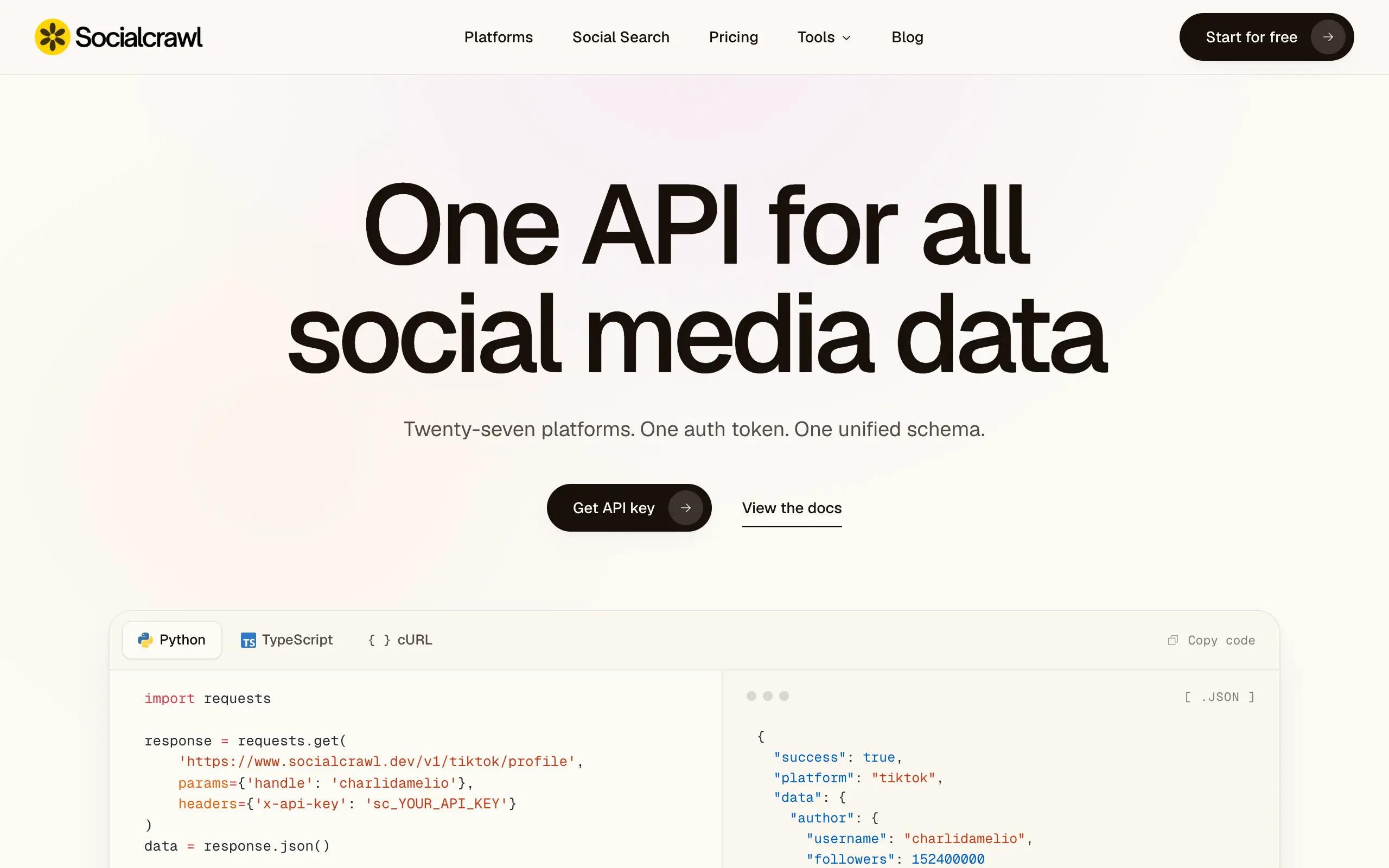
Socialcrawl
Get clean, structured data from 21 platforms like TikTok, Instagram, and YouTube with a single request 📊
Statiko
Monitor any Telegram channel in real time - track posts, edits, deletions, and growth with AI recaps 📡
Shibui
AI website builder - describe your business, pick a niche template, edit by chatting, and publish instantly ✨
Pro Service
Find verified home service professionals, compare quotes, and pay securely through escrow - built for Brazilians across the US 🏠
RankGrow
Fix your SEO with AI agents - connect Search Console, get prioritized tasks, and grow organic traffic 📈
SyncReads
Sync your favorite content for distraction-free reading, save time and replace multiple apps. Anytime, anywhere 🔄
Socialcrawl
Get clean, structured data from 21 platforms like TikTok, Instagram, and YouTube with a single request 📊
Statiko
Monitor any Telegram channel in real time - track posts, edits, deletions, and growth with AI recaps 📡
Shibui
AI website builder - describe your business, pick a niche template, edit by chatting, and publish instantly ✨
Pro Service
Find verified home service professionals, compare quotes, and pay securely through escrow - built for Brazilians across the US 🏠
RankGrow
Fix your SEO with AI agents - connect Search Console, get prioritized tasks, and grow organic traffic 📈
SyncReads
Sync your favorite content for distraction-free reading, save time and replace multiple apps. Anytime, anywhere 🔄
Socialcrawl
Get clean, structured data from 21 platforms like TikTok, Instagram, and YouTube with a single request 📊
Statiko
Monitor any Telegram channel in real time - track posts, edits, deletions, and growth with AI recaps 📡
Shibui
AI website builder - describe your business, pick a niche template, edit by chatting, and publish instantly ✨
Pro Service
Find verified home service professionals, compare quotes, and pay securely through escrow - built for Brazilians across the US 🏠
RankGrow
Fix your SEO with AI agents - connect Search Console, get prioritized tasks, and grow organic traffic 📈
SyncReads
Sync your favorite content for distraction-free reading, save time and replace multiple apps. Anytime, anywhere 🔄
Socialcrawl
Get clean, structured data from 21 platforms like TikTok, Instagram, and YouTube with a single request 📊
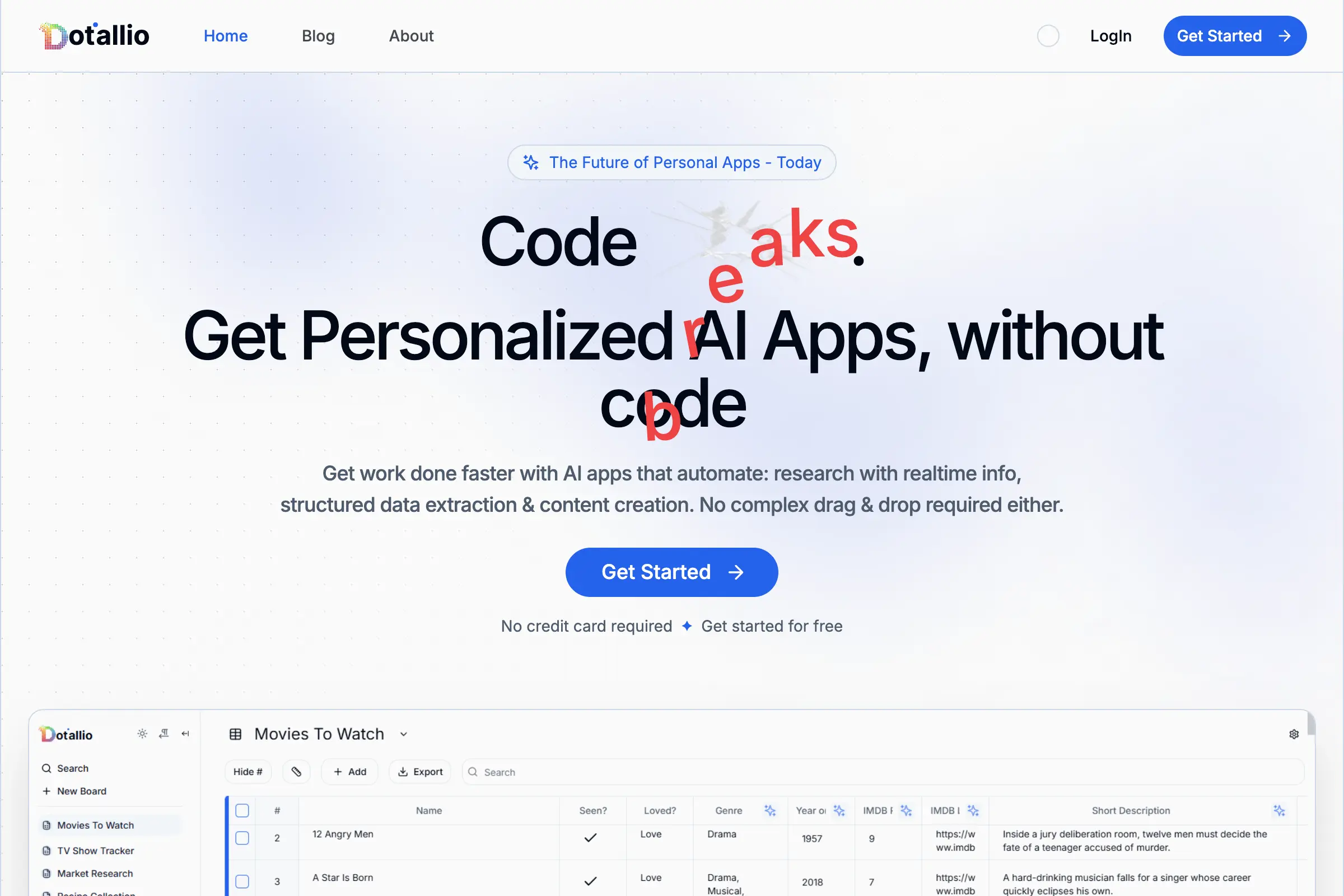
Dotallio
Personalized AI apps that automate research, data extraction, and content creation without code 🤖
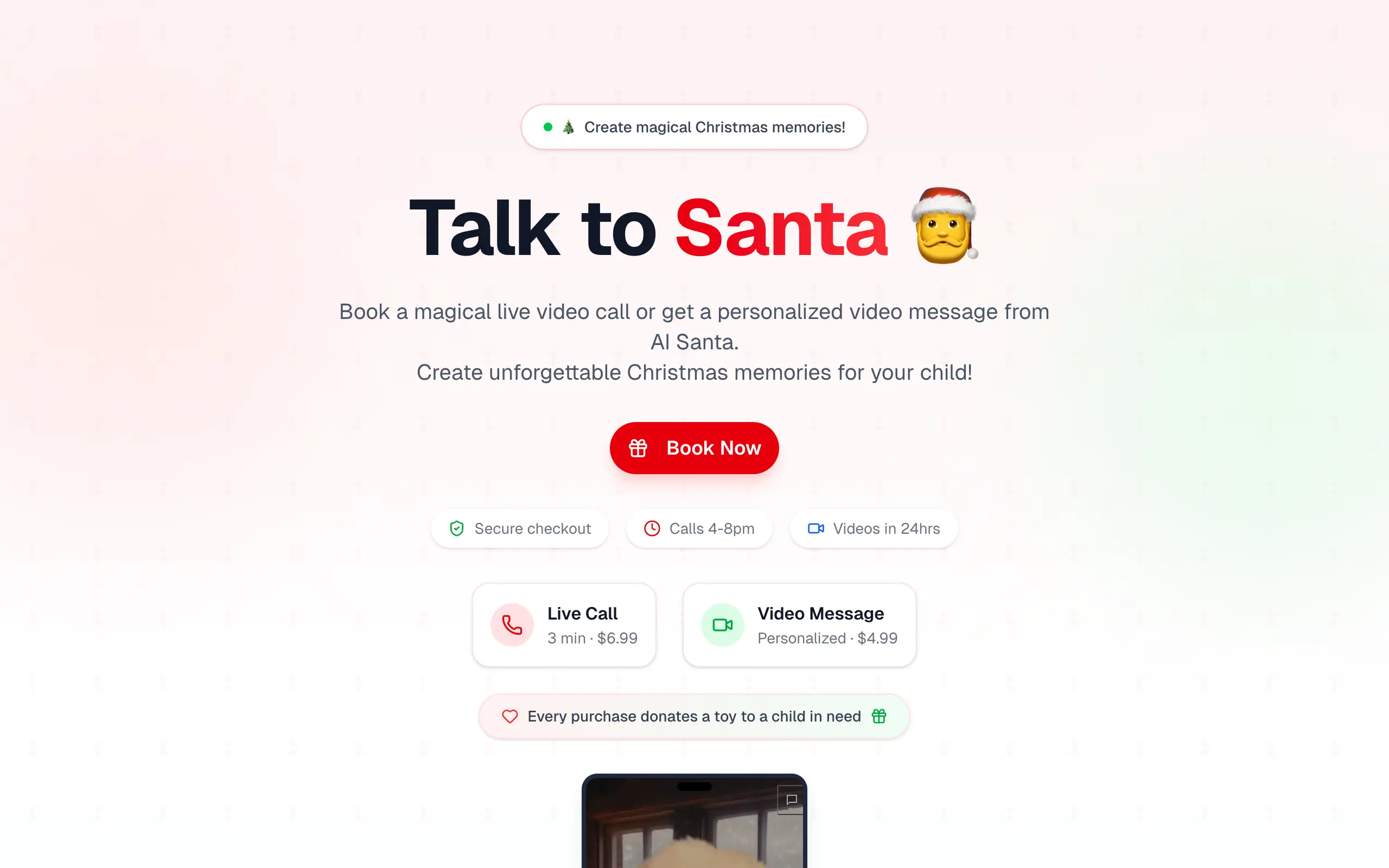
Talk to Santa
Enjoy a magical live video chat or receive a unique AI-generated video greeting from Santa Claus 🎅
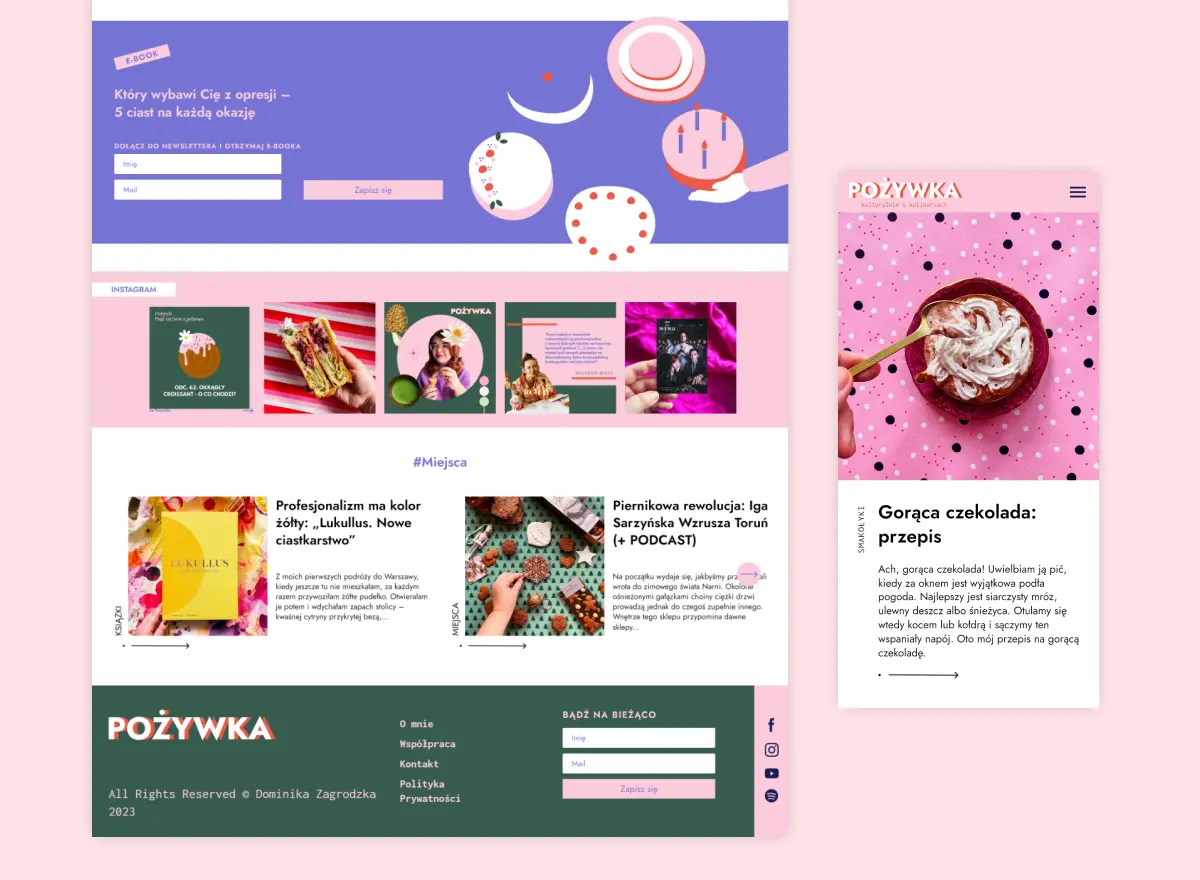
pozywka.pl
Scalable blog for food journalist, focused on performance and user experience 🌭
zagrodzki.me
Personal blog and portfolio of Bart Zagrodzki, where he shares his knowledge and work 💼
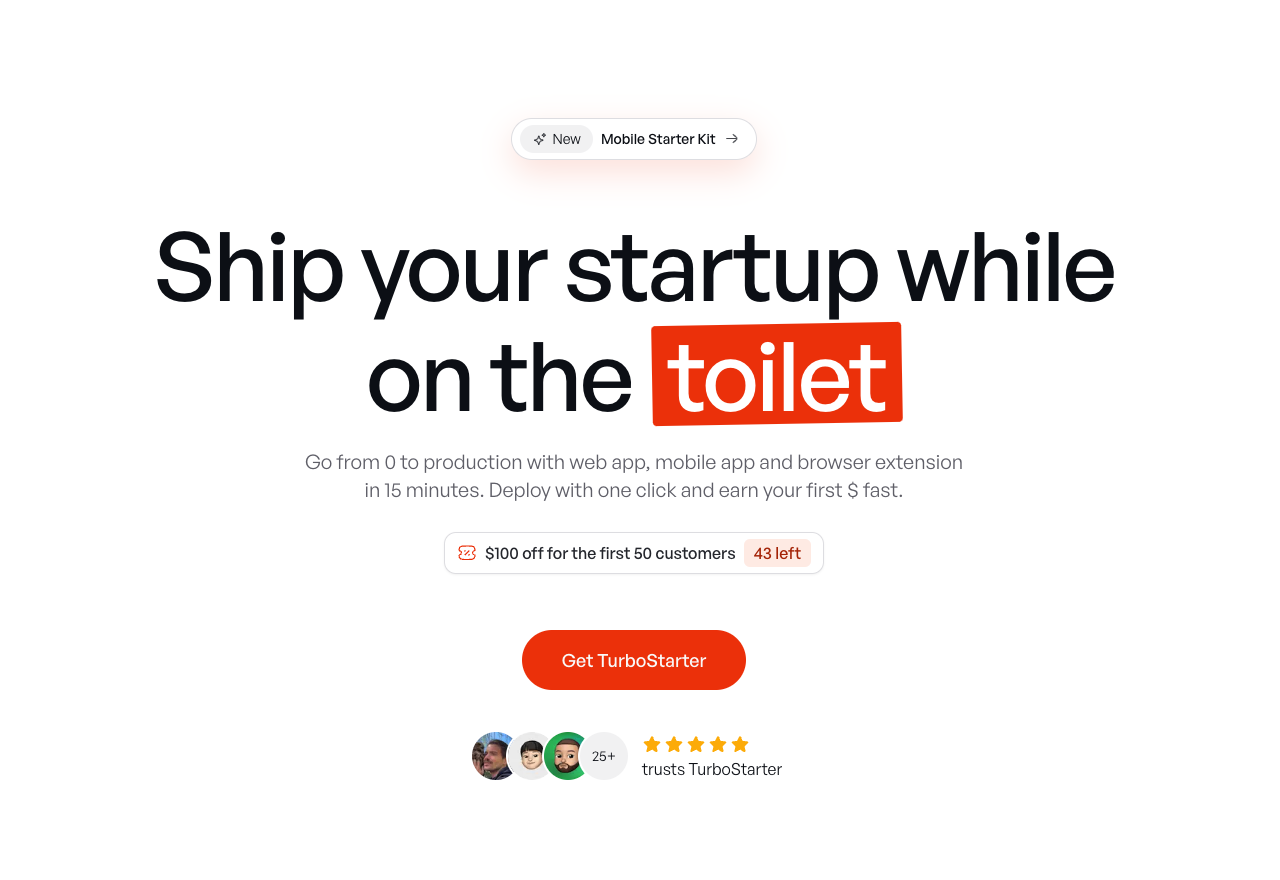
TurboStarter
Ship your startup everywhere. In minutes.
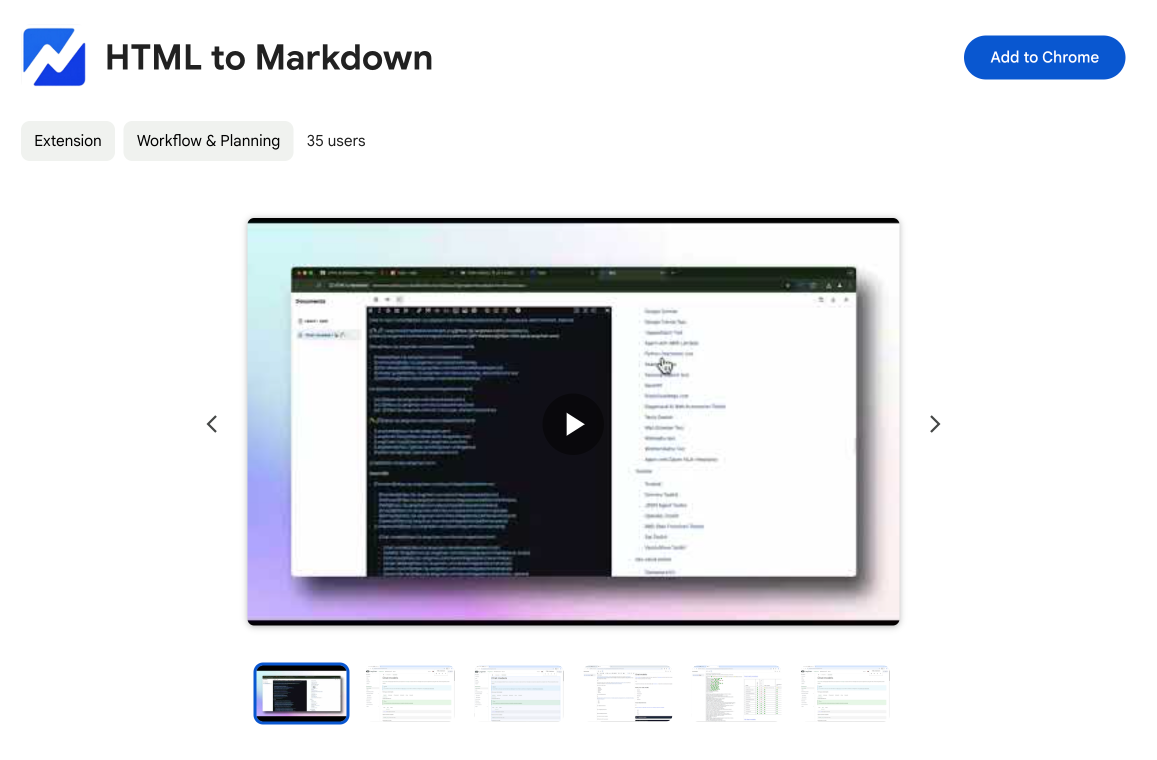
HTML to Markdown
Convert HTML to Markdown with ease, directly in your browser 📄
Dotallio
Personalized AI apps that automate research, data extraction, and content creation without code 🤖
Talk to Santa
Enjoy a magical live video chat or receive a unique AI-generated video greeting from Santa Claus 🎅
pozywka.pl
Scalable blog for food journalist, focused on performance and user experience 🌭
zagrodzki.me
Personal blog and portfolio of Bart Zagrodzki, where he shares his knowledge and work 💼
TurboStarter
Ship your startup everywhere. In minutes.
HTML to Markdown
Convert HTML to Markdown with ease, directly in your browser 📄
Dotallio
Personalized AI apps that automate research, data extraction, and content creation without code 🤖
Talk to Santa
Enjoy a magical live video chat or receive a unique AI-generated video greeting from Santa Claus 🎅
pozywka.pl
Scalable blog for food journalist, focused on performance and user experience 🌭
zagrodzki.me
Personal blog and portfolio of Bart Zagrodzki, where he shares his knowledge and work 💼
TurboStarter
Ship your startup everywhere. In minutes.
HTML to Markdown
Convert HTML to Markdown with ease, directly in your browser 📄
Dotallio
Personalized AI apps that automate research, data extraction, and content creation without code 🤖
Talk to Santa
Enjoy a magical live video chat or receive a unique AI-generated video greeting from Santa Claus 🎅
pozywka.pl
Scalable blog for food journalist, focused on performance and user experience 🌭
zagrodzki.me
Personal blog and portfolio of Bart Zagrodzki, where he shares his knowledge and work 💼
TurboStarter
Ship your startup everywhere. In minutes.
HTML to Markdown
Convert HTML to Markdown with ease, directly in your browser 📄
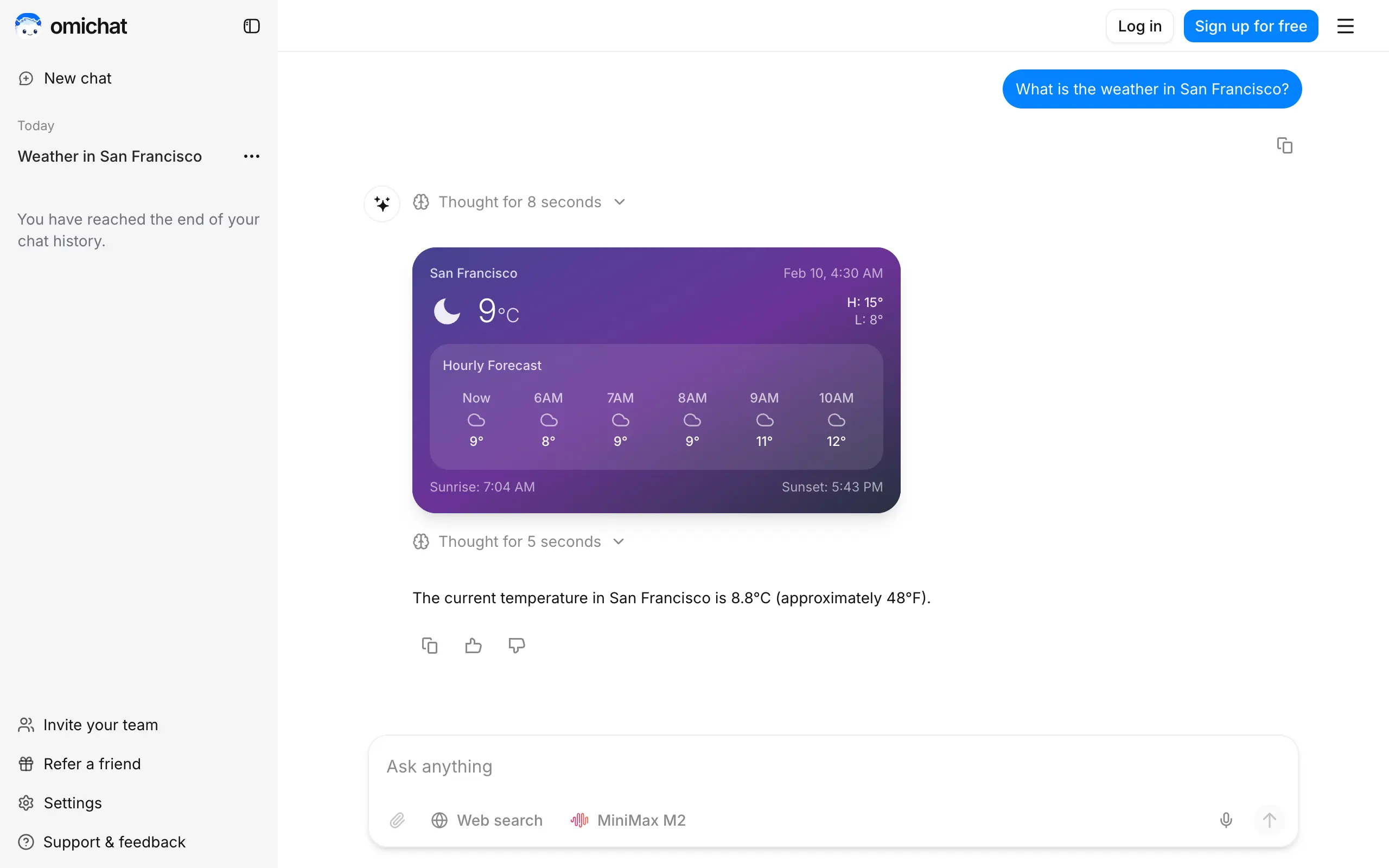
Omichat
Chat with 50+ AI models, including ChatGPT and Claude, in one place - switch models anytime without losing context 🤖
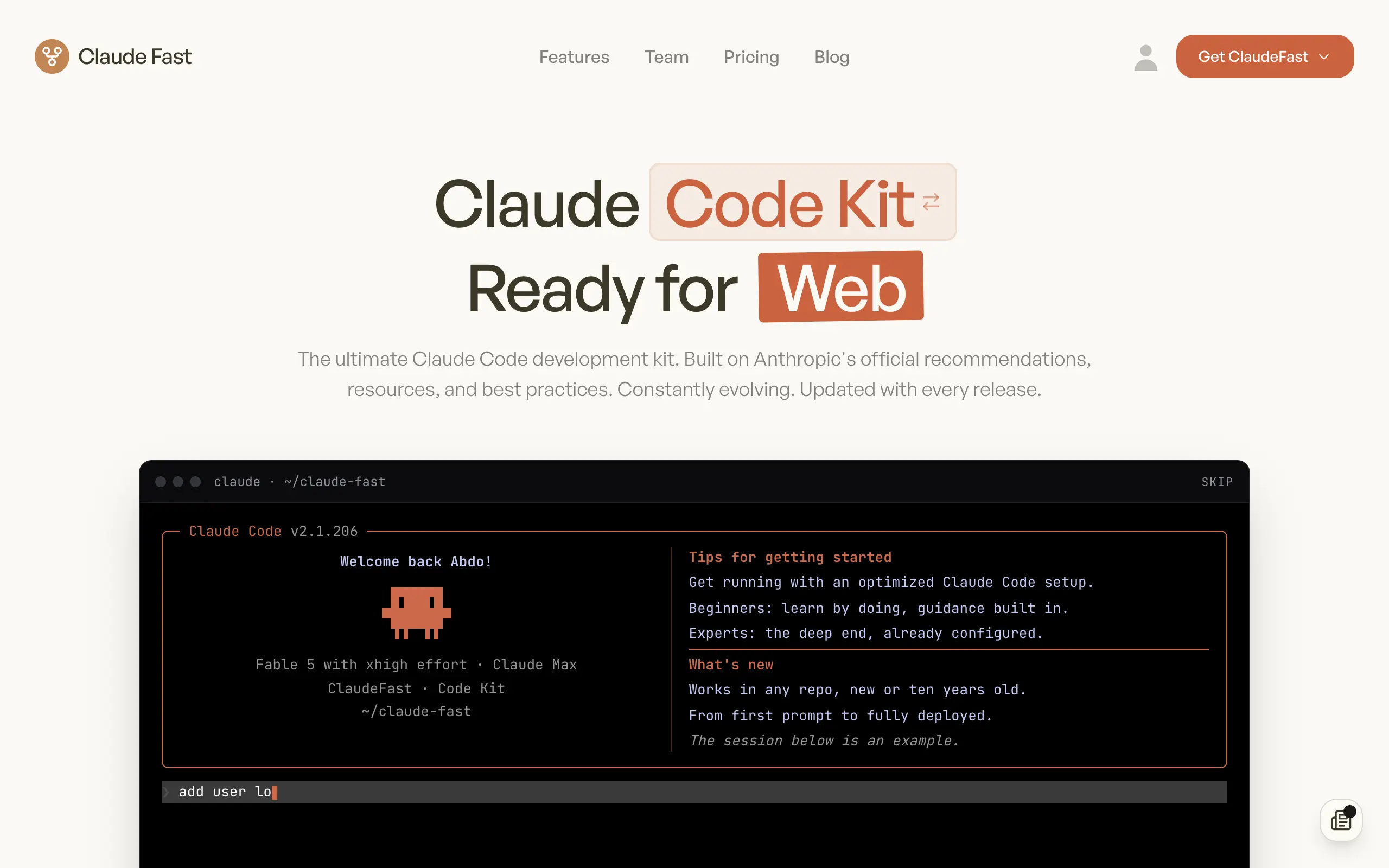
Claude Fast
Supercharge your Claude Code with 6x effective context window and specialized AI agents 🤖
EmojAI
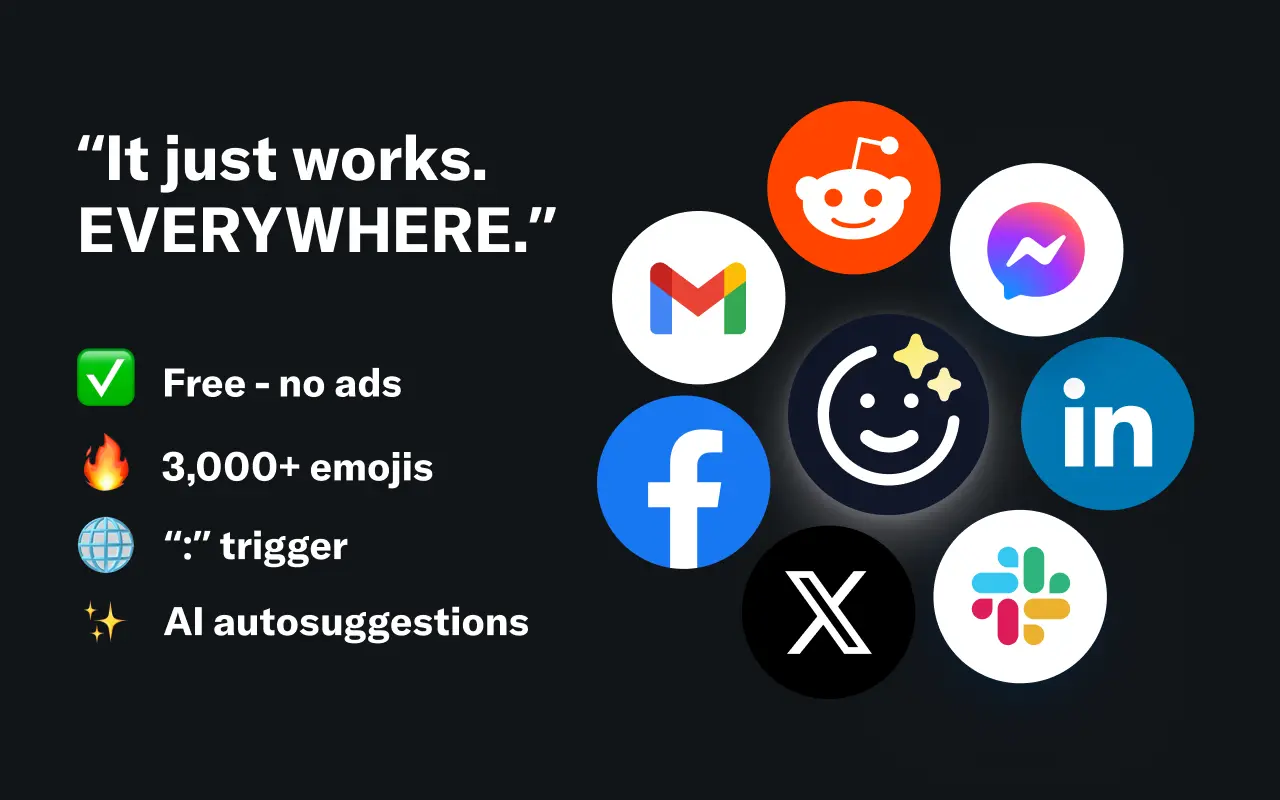
AI-powered emoji picker with smart, context-aware suggestions 🤖
Solohacker
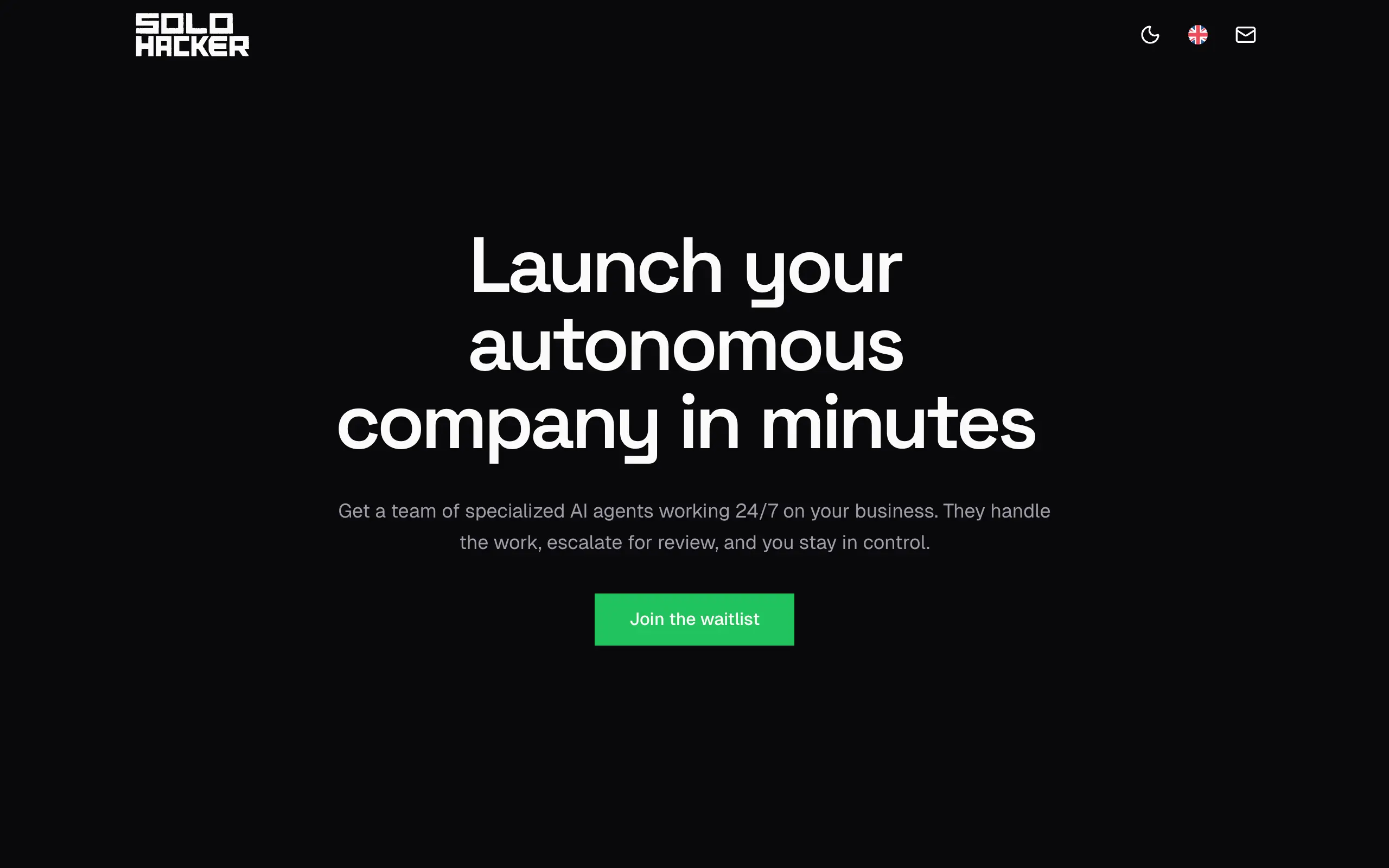
Autonomous company launcher - AI agents work 24/7, escalate what matters, and you stay in control 🤖
BeRawi: Storytelling Coach
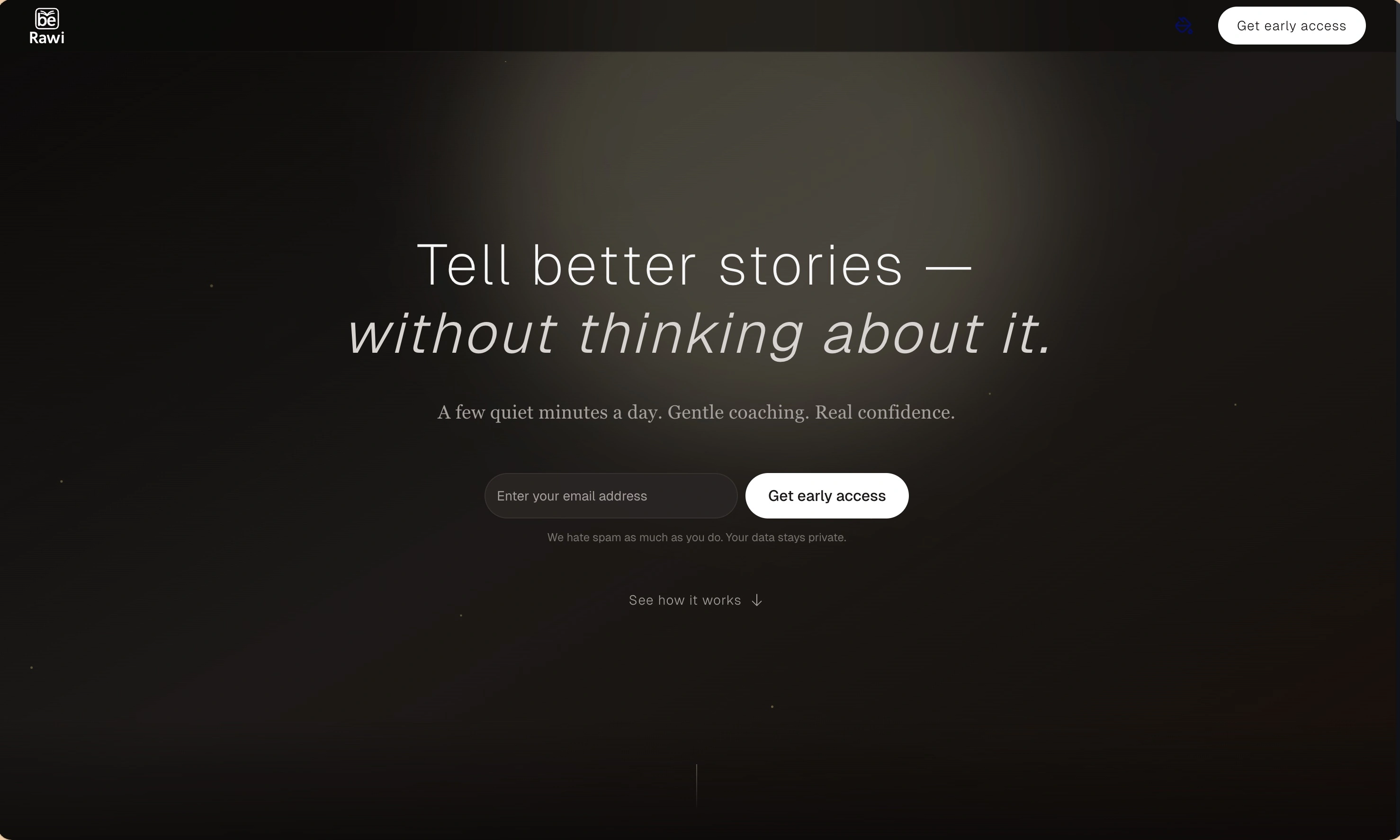
Practice storytelling daily with instant feedback to sound clearer, more engaging, and confident 🎤
Omichat
Chat with 50+ AI models, including ChatGPT and Claude, in one place - switch models anytime without losing context 🤖
Claude Fast
Supercharge your Claude Code with 6x effective context window and specialized AI agents 🤖
EmojAI
AI-powered emoji picker with smart, context-aware suggestions 🤖
Solohacker
Autonomous company launcher - AI agents work 24/7, escalate what matters, and you stay in control 🤖
BeRawi: Storytelling Coach
Practice storytelling daily with instant feedback to sound clearer, more engaging, and confident 🎤
Omichat
Chat with 50+ AI models, including ChatGPT and Claude, in one place - switch models anytime without losing context 🤖
Claude Fast
Supercharge your Claude Code with 6x effective context window and specialized AI agents 🤖
EmojAI
AI-powered emoji picker with smart, context-aware suggestions 🤖
Solohacker
Autonomous company launcher - AI agents work 24/7, escalate what matters, and you stay in control 🤖
BeRawi: Storytelling Coach
Practice storytelling daily with instant feedback to sound clearer, more engaging, and confident 🎤
Omichat
Chat with 50+ AI models, including ChatGPT and Claude, in one place - switch models anytime without losing context 🤖
Claude Fast
Supercharge your Claude Code with 6x effective context window and specialized AI agents 🤖
EmojAI
AI-powered emoji picker with smart, context-aware suggestions 🤖
Solohacker
Autonomous company launcher - AI agents work 24/7, escalate what matters, and you stay in control 🤖
BeRawi: Storytelling Coach
Practice storytelling daily with instant feedback to sound clearer, more engaging, and confident 🎤

Connect with like-minded people
Join our community to get feedback, support, and grow together with 1,000+ builders on board, let's ship it!
Join usShip your startup everywhere. In minutes.
Don't burn tokens on setup and start building features on day one.