CanonCompass
Get spoiler-controlled answers about characters, timelines, and worldbuilding while watching a movie or playing a game—without searching fan wikis.
What is CanonCompass?
CanonCompass is an AI-powered, spoiler-controlled lore assistant for people watching movies or playing games. It answers questions about characters, timelines, places, relationships, and worldbuilding without sending users into fan wikis or search results that may reveal future plot points.
The product addresses a familiar problem: people want to understand what is happening now, but they do not want to learn what happens next. A viewer may forget a character’s name, miss a line of dialogue, or wonder how two events connect. A player may want to understand a faction’s history without reading a page that explains a late-game twist.
The core promise is simple: get a useful answer that respects exactly where you are in the story.
That promise makes CanonCompass more than a general-purpose chatbot with a “no spoilers” instruction. To earn user trust, it needs to know which story a person means, understand their current progress, distinguish confirmed canon from interpretation, and restrict answers to information available up to that point.
This article explores the product opportunity, target users, feature set, technical architecture, business model, competitive positioning, risks, and a practical path to launch.
Why a spoiler-free AI lore assistant solves a real problem
Stories increasingly ask audiences to keep track of large casts, interconnected timelines, branching quests, fictional histories, and details spread across multiple installments. The challenge is not always that a story is difficult. It is that people consume it at different speeds and remember different things.
When someone becomes confused, their options are often poor:
- Search results may reveal a character’s fate or a later plot point in a title or snippet.
- Fan wikis can be comprehensive but may cover the whole series, including material the user has not reached.
- Discussion forums often assume readers have finished the story.
- A general AI assistant may answer confidently while mixing canon, speculation, and details from later installments.
- Rewinding or replaying a scene can interrupt the experience, especially during a game.
CanonCompass can make clarification feel less disruptive. Instead of opening several tabs and trying to avoid spoilers, users ask a question in natural language and receive a concise answer bounded by their progress.
The product is valuable when it solves both sides of the problem:
- Comprehension: Give the user enough context to understand the story.
- Protection: Do not reveal information beyond the user’s chosen point.
If the answer is accurate but spoils a major reveal, the experience has failed. If it avoids spoilers but is too vague to help, the experience has also failed. The product’s defining quality is the balance between usefulness and narrative safety.
Who is the target audience for CanonCompass?
CanonCompass has several potential audiences, but an initial product should focus on users with a clear, recurring need rather than trying to support every kind of story consumer at once.
Movie and television viewers
Viewers may need reminders about a character, a location, a line of dialogue, or an event from an earlier episode. This audience is a natural starting point because questions can often be anchored to an episode, season, or timestamp.
Typical questions include:
- “Who is the person speaking in this scene?”
- “Have we met this character before?”
- “What does this symbol mean?”
- “Why is the group traveling to this location?”
- “What do I need to remember from the previous episode?”
The product should let viewers set a clear progress boundary, such as the season and episode they have finished. A timestamp-based boundary could be useful later, but it introduces greater complexity because reliable scene-level context is harder to establish.
Video game players
Games create a particularly compelling use case. Players may encounter optional lore in item descriptions, side quests, codex entries, dialogue, or environmental storytelling. They may want context without leaving the game or reading a complete guide.
Questions might include:
- “What is this faction’s relationship to the city?”
- “Who is this non-player character?”
- “What did the previous quest establish about the artifact?”
- “Can you explain this codex entry without revealing later events?”
- “What should I remember before continuing this mission?”
Games also present a product challenge: progress is less linear than a film or television series. Players can complete quests in different orders, skip optional content, or make choices that change the story. CanonCompass will need a flexible way to represent progress instead of assuming everyone follows one official sequence.
Fans returning to a franchise
People who return to a long-running franchise after a break may need a recap that stops at a chosen point. They might remember the major events but forget names, alliances, or the order in which events happened.
For this group, useful features include:
- A user-controlled recap.
- A character relationship summary.
- A timeline limited to completed installments.
- A “remind me what I know so far” mode.
- Clear controls for switching between films, seasons, or games.
Casual fans and social viewers
Some people watch or play with friends and do not want to pause the group experience to search for context. A quick, private answer can help them stay engaged without making the rest of the group wait.
This audience may value a low-friction mobile web experience, fast responses, and answers that fit on one screen. They may not want to create an account before asking their first question.
Accessibility and language learners
A carefully designed lore assistant may also help users who benefit from plain-language explanations, character name reminders, or summaries of complicated dialogue. Language learners may want unfamiliar terms explained in context.
These uses should be treated as opportunities to improve the core product, not as assumptions about a user’s abilities. CanonCompass should provide optional explanation styles and let users choose the level of detail they prefer.
The market gap: story understanding without story-wide spoilers
The market opportunity lies between static reference material and open-ended AI chat.
A wiki is often designed to document everything. A general search engine is designed to find relevant pages, not to protect a user’s progress. A general chatbot can be conversational, but it may not have a reliable, structured understanding of a specific story’s canon or the user’s exact stopping point.
CanonCompass can differentiate itself by making story progress a first-class product concept.
| Existing approach | What it does well | Where it can fail for a spoiler-sensitive user |
|---|---|---|
| Fan wiki | Offers detailed reference material | May expose later plot information on the same page |
| Search engine | Finds a wide range of sources quickly | Snippets, titles, and results can reveal future events |
| General AI assistant | Accepts natural-language questions | May confuse canon, speculation, and different story installments |
| Recap video or article | Provides a guided summary | May cover more story than the user has reached |
| CanonCompass | Answers questions within a selected progress boundary | Must maintain accurate, well-sourced story knowledge |
This table describes product categories rather than every individual service. Actual competitive research should test specific products using the same questions, titles, and progress boundaries.
The opportunity is not simply “AI for fandom.” It is trustworthy, progress-aware story assistance. CanonCompass should treat spoiler control as a core information architecture and safety problem, not a prompt-writing feature.
The core user experience
A strong first-use flow should make the product’s promise clear before a user asks a question.
1. Select a story
The user chooses a supported movie, series, or game. CanonCompass should make the supported catalog visible rather than implying that it can answer accurately about every story.
2. Set progress
The user selects how far they have watched or played. A simple product might support season and episode selection for television and installment selection for films. For games, it might start with chapters, missions, or story milestones.
Progress must be easy to change. If the user moves ahead, the assistant needs to know. If they accidentally select a later point, CanonCompass should make it easy to step back.
3. Ask naturally
The question box should accept ordinary language, including follow-up questions. Users should not need to know character names or franchise terminology to get help.
4. Receive a bounded answer
The answer should be concise by default and clearly indicate the basis for its claims. It should avoid details that fall after the user’s progress boundary. If the question cannot be answered safely, the assistant should say so and offer a useful alternative.
5. Explore without losing context
Follow-up questions should inherit the selected story and progress. The interface should display the active spoiler boundary throughout the conversation so users can verify what the assistant is using.
Make the spoiler boundary visible
A “spoiler-free” label is not enough by itself. Show the selected title and progress point near the conversation, and provide a quick way to change them. Users should never have to guess what the assistant considers safe to discuss.
Core features for a spoiler-controlled lore assistant
Progress-aware answer generation
Every answer should be conditioned on a known progress state. The system should distinguish information that is:
- Available by the selected point: Safe to use in a direct answer.
- Known in the story but not yet revealed: Excluded from the answer.
- Uncertain or disputed: Labeled carefully instead of presented as settled canon.
- Outside the supported source set: Acknowledged rather than invented.
A robust implementation should enforce this distinction before the language model generates prose. A final review step can help catch accidental leaks, but it should not be the only protection.
Source-grounded responses
Users need a way to understand why an answer is trustworthy. Responses can cite the relevant episode, quest, scene, dialogue entry, or approved reference. If exact citations are not available, the product should say what kind of source supports the answer rather than inventing a precise location.
An internal source record might include:
- Story title and version.
- Episode, chapter, mission, or scene.
- A summary of the source.
- The earliest progress point at which the information becomes available.
- Whether the source is primary, licensed, user-submitted, or editorial.
- A confidence and review status.
The user interface can keep citations compact while still allowing a reader to inspect supporting context.
Canon, interpretation, and uncertainty labels
Lore questions frequently invite interpretation. “What does this ending mean?” may not have one definitive answer. CanonCompass should distinguish factual answers from readings of the story.
Useful answer labels could include:
- Confirmed in the story
- Implied by available evidence
- A common interpretation
- Not established at your current point
These labels help the product avoid presenting fan theories as official facts. They also give the assistant a graceful way to respond when the story intentionally leaves something ambiguous.
Spoiler-safe summaries
A user should be able to request summaries at different levels:
- A brief reminder of a character.
- A recap of the previous episode.
- A list of currently relevant factions.
- A timeline of events seen so far.
- A glossary of terms introduced up to the selected point.
The key requirement is that each summary respects the same progress boundary as conversational answers. Summary generation should not become a loophole that includes later events.
Follow-up questions and conversation memory
Users often ask a sequence of related questions. CanonCompass should remember the active title and spoiler boundary throughout the conversation, while allowing users to start a new story or change progress explicitly.
A practical design is to store the conversation’s story context separately from its natural-language history. This makes it easier to validate every follow-up against the same boundary and reduces the risk that a prompt includes information from an earlier, unrelated conversation.
User controls and spoiler reporting
Even a careful system can make mistakes. Give users visible controls to:
- Report a suspected spoiler.
- Flag an incorrect answer.
- Mark a source as unclear or outdated.
- Reset the conversation.
- Change the selected progress point.
- Choose a shorter or more detailed answer.
A spoiler report should be treated as a high-priority quality signal. The product team should review the reported answer, the retrieved sources, the user’s progress setting, and the model output together.
How to build reliable spoiler protection
Spoiler safety is not a single model setting. It is a sequence of product and engineering controls.
Represent story progress as structured data
Do not rely only on a free-text instruction such as “avoid spoilers after episode three.” Represent the boundary in a structured format that the backend can validate.
For example, a story progress state might include:
- A canonical story identifier.
- A selected season or installment.
- A completed episode or mission.
- Optional branch or route details.
- A version identifier when editions or releases differ.
The specific schema depends on the medium. A television episode order is usually more linear than a role-playing game with optional quests. The product should start with a manageable model and expand as real users reveal the cases that matter.
Tag every source by reveal point
Each knowledge item needs a release or reveal boundary. If a passage describes an event from a later episode, the retrieval system must not include it for a user who has not reached that episode.
This requirement affects content operations as much as software. A source without reliable progress metadata should not be treated as safe by default. It may be better to withhold uncertain material than to risk a spoiler.
Filter before retrieval and generation
A reliable answer pipeline can follow this order:
- Confirm the selected story and progress point.
- Retrieve only source material allowed at that point.
- Generate an answer using the permitted sources.
- Check the answer for references to restricted story facts.
- Return the answer with appropriate citations and uncertainty labels.
The exact implementation may vary, but filtering after generation alone is inadequate. If a model has already received future-plot material, asking it to hide that information does not provide a strong guarantee.
Design a safe refusal that remains helpful
Sometimes a question cannot be answered without revealing later information. The assistant should not simply return an unhelpful error. It can explain the limitation and offer a safe alternative.
For example, it might say that the answer is revealed after the selected episode and offer to explain what the story has established so far. This preserves the user’s control while still helping them understand the available context.
Test with adversarial and ambiguous questions
Quality testing should include more than direct factual questions. Test prompts such as:
- “Is this character trustworthy?”
- “Why does this object matter later?”
- “Does this person come back?”
- “Explain the ending without spoilers.”
- “I have finished the first chapter. What is the identity of the masked figure?”
- “I already know what happens, so you can tell me.”
The system should follow the explicit progress state, not treat a user’s casual wording as proof that spoilers are welcome. If a user wants to change the boundary, make that a clear action in the interface.
Recommended technology stack for CanonCompass
The right stack should support fast iteration, structured content, reliable retrieval, privacy, and clear separation between the application and the AI model. The product does not need a complex infrastructure on day one, but it does need a data model that can represent story boundaries consistently.
Web application and user interface
A web application is a practical starting point because users can access it from a phone, tablet, or desktop without waiting for app-store approval. React is a widely used interface library, and Next.js provides a framework for building React applications with routing and server-side capabilities.
A responsive web experience can support:
- A searchable title catalog.
- Progress selection.
- The question-and-answer interface.
- Source cards and citations.
- Account and subscription settings.
- Feedback and spoiler-report controls.
A native mobile application may make sense later if research shows that users need overlays, notifications, or stronger integration with media devices. Those features should be validated rather than assumed.
Backend and structured data
A relational database such as PostgreSQL is a strong fit for structured story metadata. CanonCompass needs relationships among titles, episodes, characters, sources, reveal boundaries, user progress, and answer feedback.
A relational model can make important rules explicit. For example, a source can be associated with a title and a minimum reveal point, and a query can filter out sources beyond the user’s progress before retrieval. This is often easier to audit than burying the logic in unstructured documents.
The backend should separate:
- The public story catalog.
- The curated knowledge base.
- User-specific progress and preferences.
- Conversation records.
- Feedback and moderation data.
- Billing and entitlement status.
Retrieval and AI orchestration
A retrieval-augmented generation approach can supply the model with relevant, approved source material rather than asking it to answer from general model knowledge alone. The retrieval layer should apply story and progress filters before sending context to a model.
Potential building blocks include:
- Full-text search for names, phrases, and distinctive terms.
- Vector search for semantically phrased questions.
- Metadata filters for title, version, medium, and reveal point.
- A model service for answer generation.
- A separate validation layer for citations and restricted facts.
The retrieval method should be selected based on measured performance. Vector search can help match natural-language questions to source passages, while full-text search can be more dependable for exact names and quotations. Many systems benefit from a hybrid approach, but a more complicated design is not automatically better for an early prototype.
Content management and editorial operations
The knowledge base needs an internal workflow, not just a database. Editors or reviewers should be able to add sources, tag their reveal points, correct character relationships, and mark disputed information.
A useful editorial record can include:
- Who created or reviewed the entry.
- Which approved source supports it.
- The date it was last reviewed.
- The relevant story version.
- The entry’s spoiler boundary.
- Any known continuity conflicts.
This operational layer is essential. Better prompts cannot compensate for missing or incorrectly tagged source material.
Analytics and observability
Measure whether users find the product useful and whether it keeps its promise. Track product events such as:
- A title selected.
- A progress boundary set or changed.
- A question submitted.
- A citation opened.
- A response rated helpful.
- A spoiler or accuracy report submitted.
- A user returning to ask another question.
Avoid collecting sensitive information that is not necessary to operate the product. Establish retention policies for conversations, and explain them in plain language.
Build-versus-buy trade-offs
Using managed hosting, authentication, billing, and AI services can reduce early engineering work. It also creates dependencies, recurring costs, and data-handling considerations. Building every infrastructure component in-house increases control but can delay learning from users.
For a founder or small team, a sensible approach is to outsource commodity capabilities while keeping the story knowledge model, progress logic, and answer-quality workflow under direct control. Those elements are central to CanonCompass’s differentiation.
Teams looking for an accelerator for a SaaS foundation can evaluate TurboStarter, while still validating that its conventions and integrations fit the product’s privacy, content, and AI requirements.
Monetization options
CanonCompass could use several revenue models. The best starting point depends on how often users ask questions and how expensive it is to serve a useful answer.
Freemium subscription
A free tier could provide a limited number of questions, a small set of supported stories, or basic answers. A paid plan could offer more questions, longer conversation history, deeper recaps, and expanded title coverage.
The free experience must demonstrate the product’s value without making spoiler protection feel like a premium safety feature. Basic safety should apply to every user.
Per-title or franchise access
Some users may prefer to pay for access to a specific game, series, or franchise rather than subscribe to a broad library. This could work where content preparation is costly and users have strong, focused interest.
However, per-title pricing risks making the catalog feel fragmented. It also requires careful packaging so users understand what they are buying.
Household or group plans
Families, watch parties, and gaming households may benefit from shared access. Individual profiles should keep progress separate, since two people using the same account may be at different points in a story.
Business-to-business licensing
A longer-term opportunity could involve licensing the underlying spoiler-aware assistance system to streaming platforms, game publishers, or entertainment services. This path may offer distribution advantages, but it usually involves longer sales cycles, integration requirements, and rights negotiations.
Advertising and affiliate models
Advertising may be possible, but it needs careful consideration. Ads for recaps, guides, or related content could expose spoilers or disrupt an immersive experience. Affiliate recommendations should be clearly disclosed and should not influence factual answers.
Pricing principles
Before setting a price, measure:
- How often users return.
- How many questions they ask per session.
- The cost of model and retrieval requests.
- How much editorial work each supported title requires.
- Whether users value a larger catalog, richer summaries, or higher usage limits most.
Use actual product data to choose a model. Avoid treating general subscription benchmarks as proof that users will pay for this particular service.
Competitive advantage and unique selling proposition
CanonCompass’s strongest potential advantage is not access to a language model. Many products can call an AI API. Its advantage should come from the combination of story-specific knowledge, explicit progress control, source traceability, and a reliable operating process.
| Capability | General search | Fan wiki | General AI chat | CanonCompass opportunity |
|---|---|---|---|---|
| Natural-language questions | Partial | Limited | Strong | Strong |
| User-selected progress boundary | Rare | Usually limited | Inconsistent | Core product behavior |
| Source-grounded answers | Variable | Often available | Variable | Designed into each answer |
| Spoiler-aware retrieval | Not guaranteed | Depends on page structure | Prompt-dependent | Enforced in the pipeline |
| Canon and theory distinction | Variable | Depends on editors | Inconsistent | Explicit answer labeling |
The product’s unique selling proposition can be expressed as:
CanonCompass helps you understand the story up to your point in it, with answers grounded in sources and controlled by your progress.
That positioning is more specific and defensible than “AI answers questions about movies and games.” It gives the team a clear test for new features: do they improve understanding, progress control, or trust?
Long-term differentiation could come from:
- A carefully curated and versioned knowledge base.
- Consistent reveal-point metadata.
- Strong user feedback loops for spoilers and errors.
- Editorial processes for complex franchises.
- Progress models that handle non-linear games.
- A reputation for refusing to guess when evidence is weak.
These advantages take time to build. They should be treated as operational capabilities, not merely marketing language.
Risks and how to mitigate them
Accidental spoilers
This is the highest-risk failure because it directly violates the product promise.
Mitigation: Filter source material before generation, tag reveal points at the source level, maintain a separate restricted-fact check, and run spoiler-focused tests before publishing new content.
Incorrect or fabricated answers
A fluent answer can sound authoritative even when it is wrong.
Mitigation: Ground responses in approved sources, display citations, label uncertainty, set confidence thresholds for direct answers, and provide a clear “I don’t have enough evidence” response.
Canon differences and continuity conflicts
Franchises may include reboots, alternate editions, adaptations, localization differences, or contradictory sources.
Mitigation: Give each story version an explicit identifier. Let users choose the relevant continuity when necessary, and make conflicts visible rather than silently merging incompatible material.
Copyright and licensing concerns
Story facts, dialogue, scripts, artwork, and reference material may be subject to rights restrictions. The legal analysis depends on the content, jurisdiction, use, and source. A product team should not assume that publicly accessible material is automatically available for unrestricted ingestion or display.
Mitigation: Obtain legal advice before scaling content collection. Prefer licensed or permissioned sources where appropriate, minimize reproduction of expressive text, record provenance, honor takedown requests, and define a review process for rights complaints.
Content coverage and freshness
Supporting many stories creates a large editorial workload. A shallow catalog can disappoint users, while a broad but poorly reviewed catalog can undermine trust.
Mitigation: Launch with a narrow catalog, publish coverage clearly, and expand based on demand and content quality. Measure unanswered questions to identify which titles or topics merit investment.
Cost and latency
Each AI request may involve retrieval, generation, validation, and logging. Rich context and repeated safety checks can increase cost and response time.
Mitigation: Keep answers concise by default, cache safe and reusable results where appropriate, use smaller or less expensive models for classification tasks, and monitor cost per successful answer rather than cost per request alone.
User privacy
Questions may reveal a user’s interests, media habits, or personal context. Conversation histories can be sensitive even when users do not think of them that way.
Mitigation: Collect only what the product needs, document retention and deletion policies, secure account data, and offer controls for clearing conversation history. Do not use private conversations for model training without appropriate consent and clear disclosure.
User-generated content quality
Community submissions can increase coverage but may include inaccurate details, unsourced claims, or deliberate spoilers.
Mitigation: Treat submissions as unverified until reviewed. Record provenance, apply moderation, and prevent unreviewed content from entering the answerable knowledge base.
Go-to-market strategy
CanonCompass should enter the market with a focused audience and a recognizable use case. “Ask anything about every story” is difficult to support and difficult for users to evaluate. A more effective launch might focus on one medium and a limited set of popular, discussion-rich titles.
Start with a narrow catalog
Choose titles based on observable signals such as community activity, recurring questions, story complexity, and the availability of reliable sources. Do not select titles only because the team personally likes them.
Recruit spoiler-sensitive beta users
Invite people who actively avoid spoilers and ask them to test the same scenarios across CanonCompass, search, and fan reference pages. Ask them to report both information leaks and answers that were too cautious to be useful.
Demonstrate the interaction
Short product demonstrations can show a user choosing a progress point, asking a question, and receiving a cited answer. This makes the benefit easier to understand than a generic AI product description.
Build search-oriented educational content
Useful articles and landing pages can address questions such as:
- How to avoid spoilers while looking up a character.
- How to understand a complex story without reading future plot details.
- How to keep track of a game’s factions and timeline.
- How to get a spoiler-free recap of a series.
- How to distinguish confirmed lore from fan theory.
The content should be genuinely helpful and should not promise coverage that the product does not yet provide.
Measure trust as a growth metric
User growth alone is not enough. Track whether users return, whether answers are rated useful, how often they open citations, how frequently they report spoilers, and whether they continue after an uncertain answer. A trustworthy refusal may be better for long-term retention than an unsupported response that happens to satisfy one query.
Actionable implementation steps
A practical plan can reduce product risk by validating the core promise before investing in a large content library.
Interview likely users. Speak with movie viewers, series fans, and game players who have searched for story context before. Ask what they tried, what went wrong, and how they currently set spoiler limits. Avoid asking only whether they “like the idea”; look for examples of real behavior.
Choose one initial use case. Select a medium and a small catalog where progress boundaries can be represented reliably. A focused television pilot or a limited set of game chapters may be easier to validate than a broad, multi-format launch.
Define the spoiler policy. Write down what the system considers safe, how it handles ambiguous progress, what happens when sources conflict, and when it should refuse to answer. Turn these rules into test cases.
Create a structured knowledge prototype. Add a small number of reviewed source records with explicit story versions, citations, and reveal points. Test whether the team can maintain the data accurately before expanding coverage.
Build the core interaction. Implement title selection, progress setting, natural-language questions, source-grounded answers, follow-up context, and feedback controls. Keep the first interface simple enough to test the central promise.
Run spoiler and accuracy evaluations. Test direct, ambiguous, adversarial, and follow-up questions at multiple progress points. Record whether the answer was safe, useful, correctly sourced, and appropriately uncertain.
Launch a private beta. Give users a limited but polished experience. Observe whether they understand the progress control, whether they trust citations, and which unanswered questions recur.
Expand based on evidence. Add titles, features, and pricing only after the team understands user demand, content costs, answer quality, and the operational effort required to maintain safe coverage.
What success should look like
CanonCompass should not define success only as the number of titles in its catalog or the number of questions answered. Those metrics can encourage breadth at the expense of trust.
A balanced early scorecard could include:
- Answer usefulness: The share of responses users rate as helpful.
- Spoiler safety: The rate of verified spoiler incidents, segmented by title and progress boundary.
- Grounding quality: The share of factual answers supported by relevant sources.
- Appropriate uncertainty: Whether the assistant declines or qualifies answers when evidence is insufficient.
- Retention: Whether users return for another story question or another viewing session.
- Coverage gaps: The most common questions the current knowledge base cannot answer.
- Operational cost: Editorial and AI costs associated with each supported title.
The team should review failures qualitatively, not just as percentages. A spoiler incident involving a central character may be more serious than a minor source mismatch, and a low-confidence answer may need a different remedy than a content gap.
The opportunity for CanonCompass
CanonCompass has a clear product thesis: people want context while they watch or play, but they should not have to risk learning what happens later. A spoiler-controlled AI lore assistant can make story discovery more convenient by combining natural-language questions with structured progress boundaries and source-grounded answers.
The opportunity is real only if the product earns trust. That means investing in content provenance, careful spoiler metadata, transparent citations, user controls, and a willingness to admit uncertainty. It also means launching with a manageable scope rather than claiming universal story knowledge.
Start with a focused audience, a small catalog, and a measurable definition of safe, useful answers. Validate the workflow with real users, then expand the knowledge base and business model as evidence accumulates. The strongest version of CanonCompass will not merely answer more questions. It will help people stay immersed in the stories they love while keeping control over what they learn next.
More 🤖 AI Startup SaaS ideas
Discover more innovative ai startup SaaS ideas that are trending in 2026. Each idea is AI-generated with market validation and growth potential to help you find your next profitable venture faster than competitors.
Your competitors are building with TurboStarter
Below are some of the SaaS ideas that have been generated and built with our starter kit.
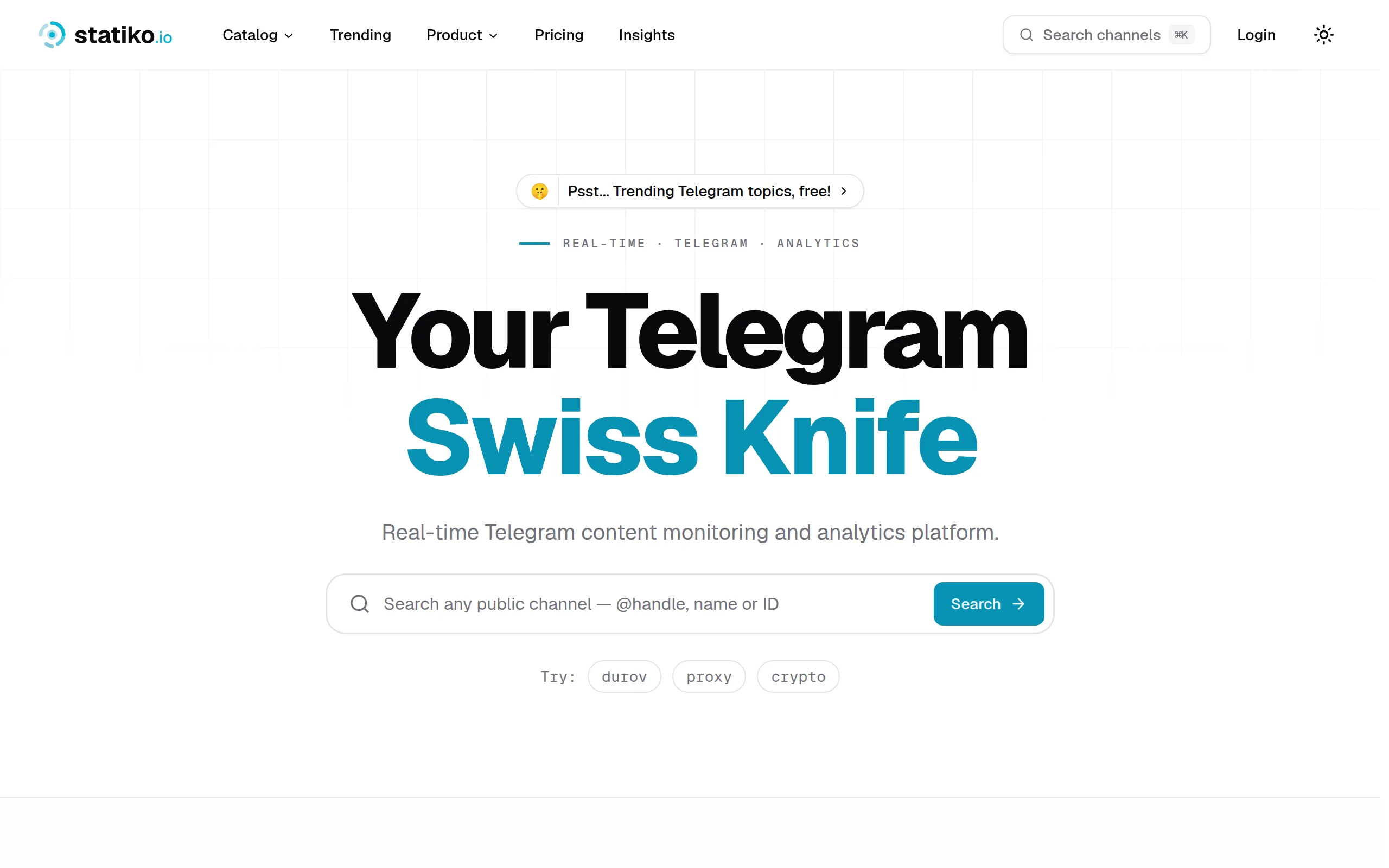
Statiko
Monitor any Telegram channel in real time - track posts, edits, deletions, and growth with AI recaps 📡

Shibui
AI website builder - describe your business, pick a niche template, edit by chatting, and publish instantly ✨

Pro Service
Find verified home service professionals, compare quotes, and pay securely through escrow - built for Brazilians across the US 🏠
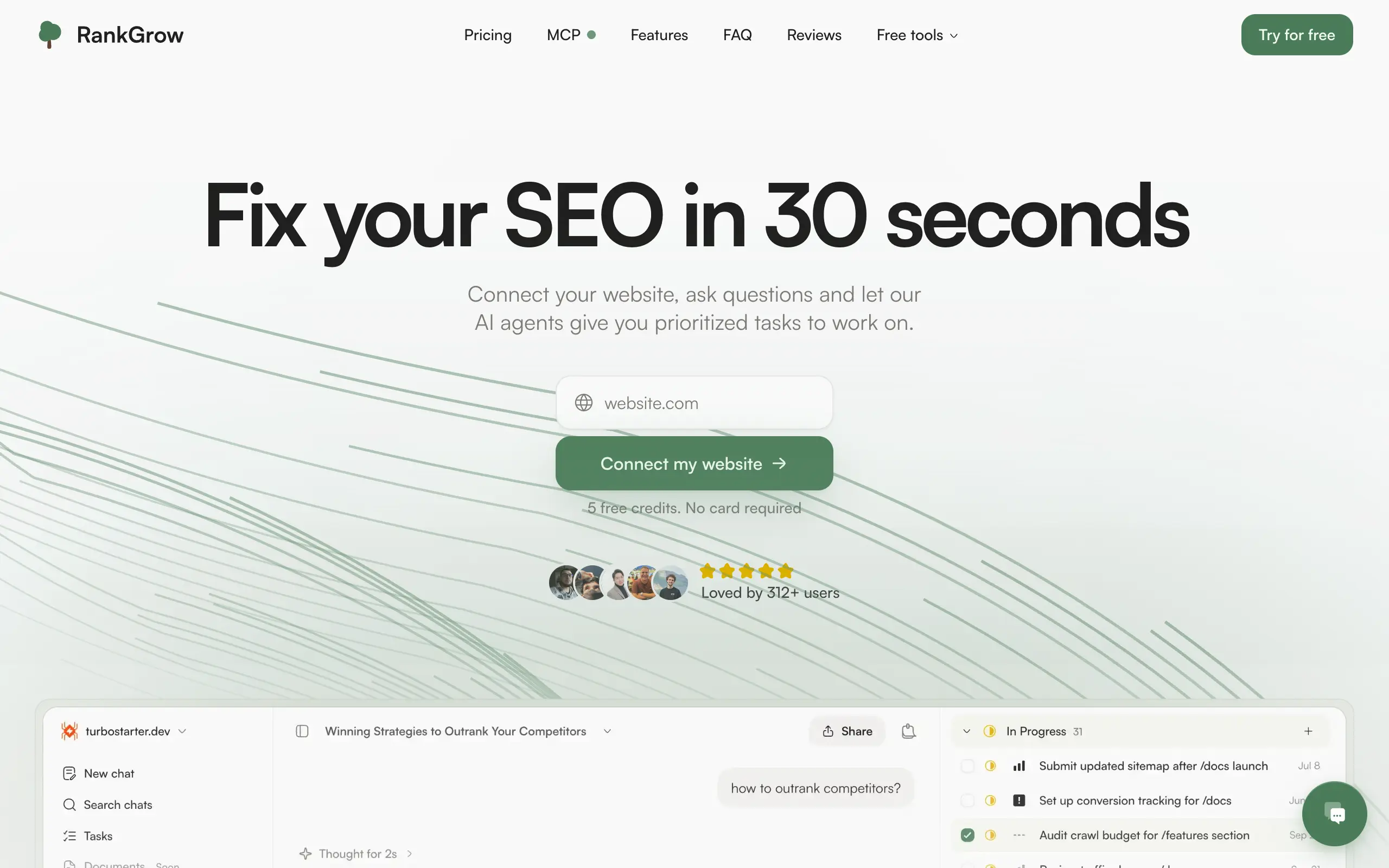
RankGrow
Fix your SEO with AI agents - connect Search Console, get prioritized tasks, and grow organic traffic 📈
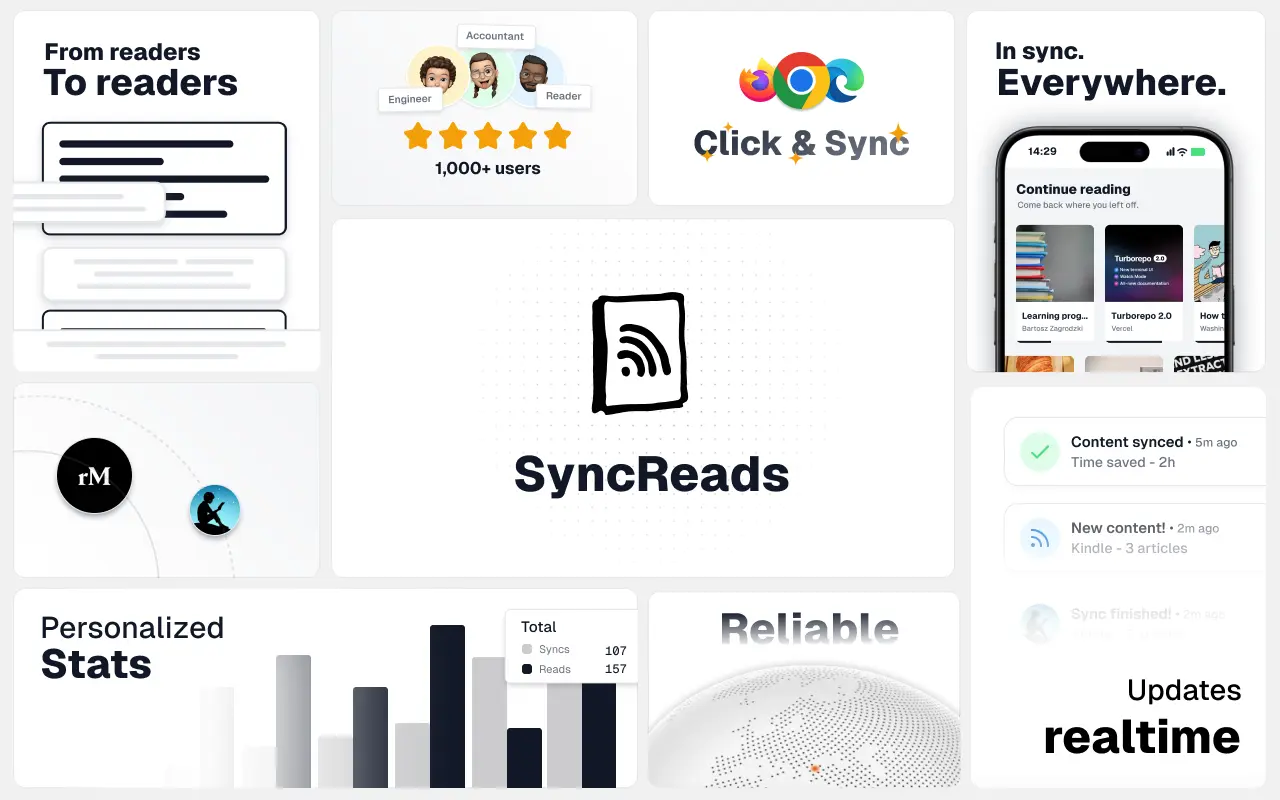
SyncReads
Sync your favorite content for distraction-free reading, save time and replace multiple apps. Anytime, anywhere 🔄
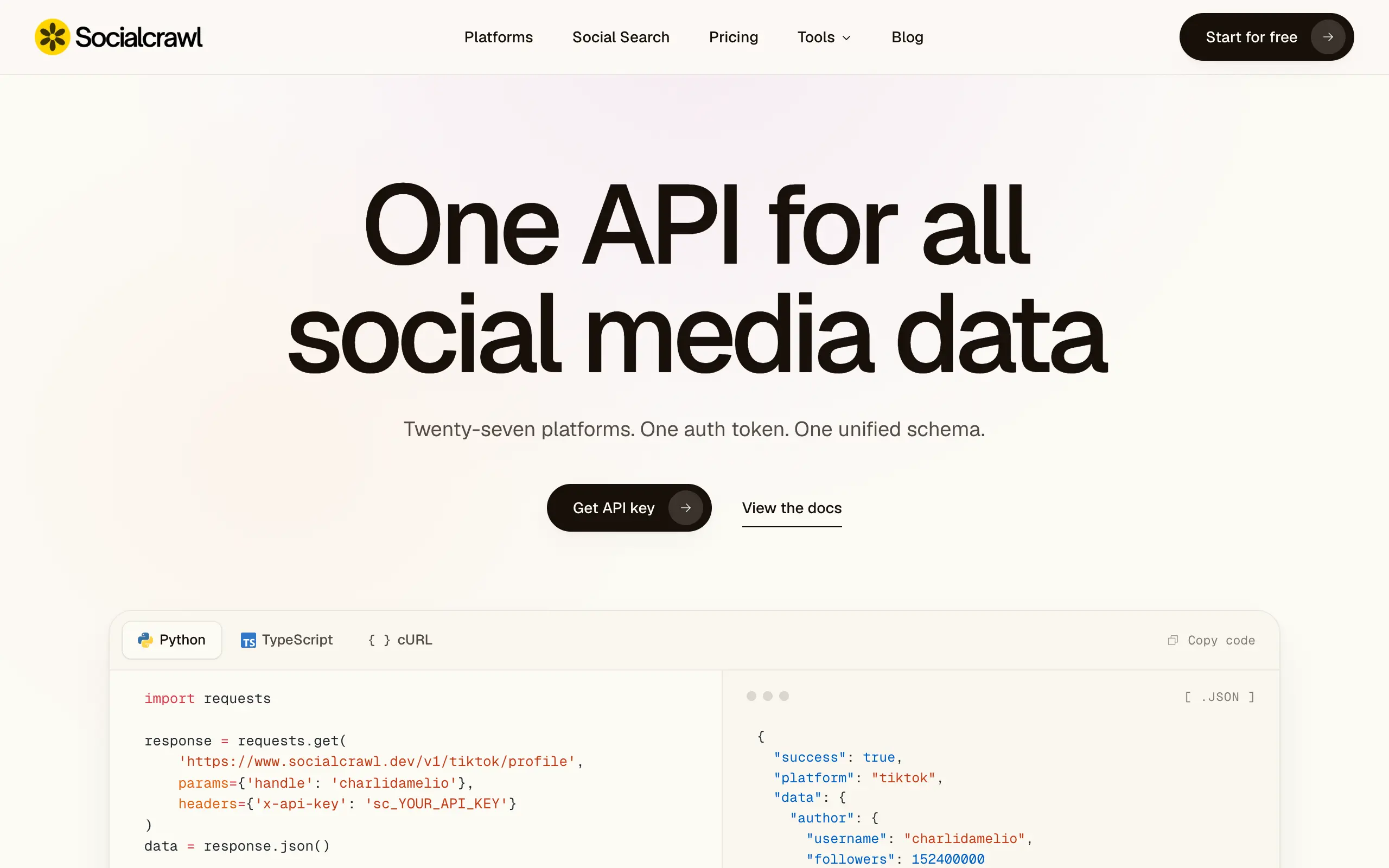
Socialcrawl
Get clean, structured data from 21 platforms like TikTok, Instagram, and YouTube with a single request 📊
Statiko
Monitor any Telegram channel in real time - track posts, edits, deletions, and growth with AI recaps 📡
Shibui
AI website builder - describe your business, pick a niche template, edit by chatting, and publish instantly ✨
Pro Service
Find verified home service professionals, compare quotes, and pay securely through escrow - built for Brazilians across the US 🏠
RankGrow
Fix your SEO with AI agents - connect Search Console, get prioritized tasks, and grow organic traffic 📈
SyncReads
Sync your favorite content for distraction-free reading, save time and replace multiple apps. Anytime, anywhere 🔄
Socialcrawl
Get clean, structured data from 21 platforms like TikTok, Instagram, and YouTube with a single request 📊
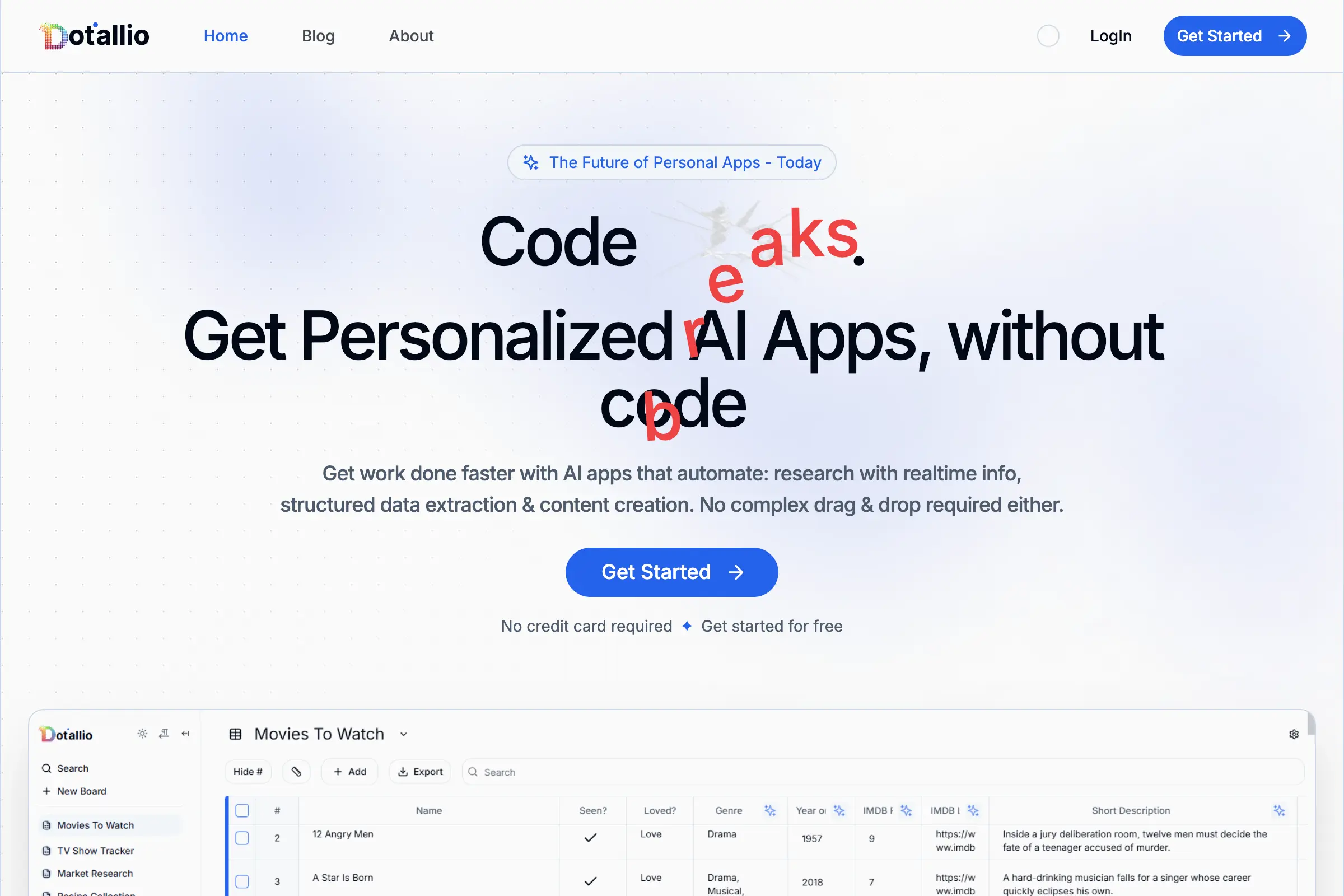
Dotallio
Personalized AI apps that automate research, data extraction, and content creation without code 🤖
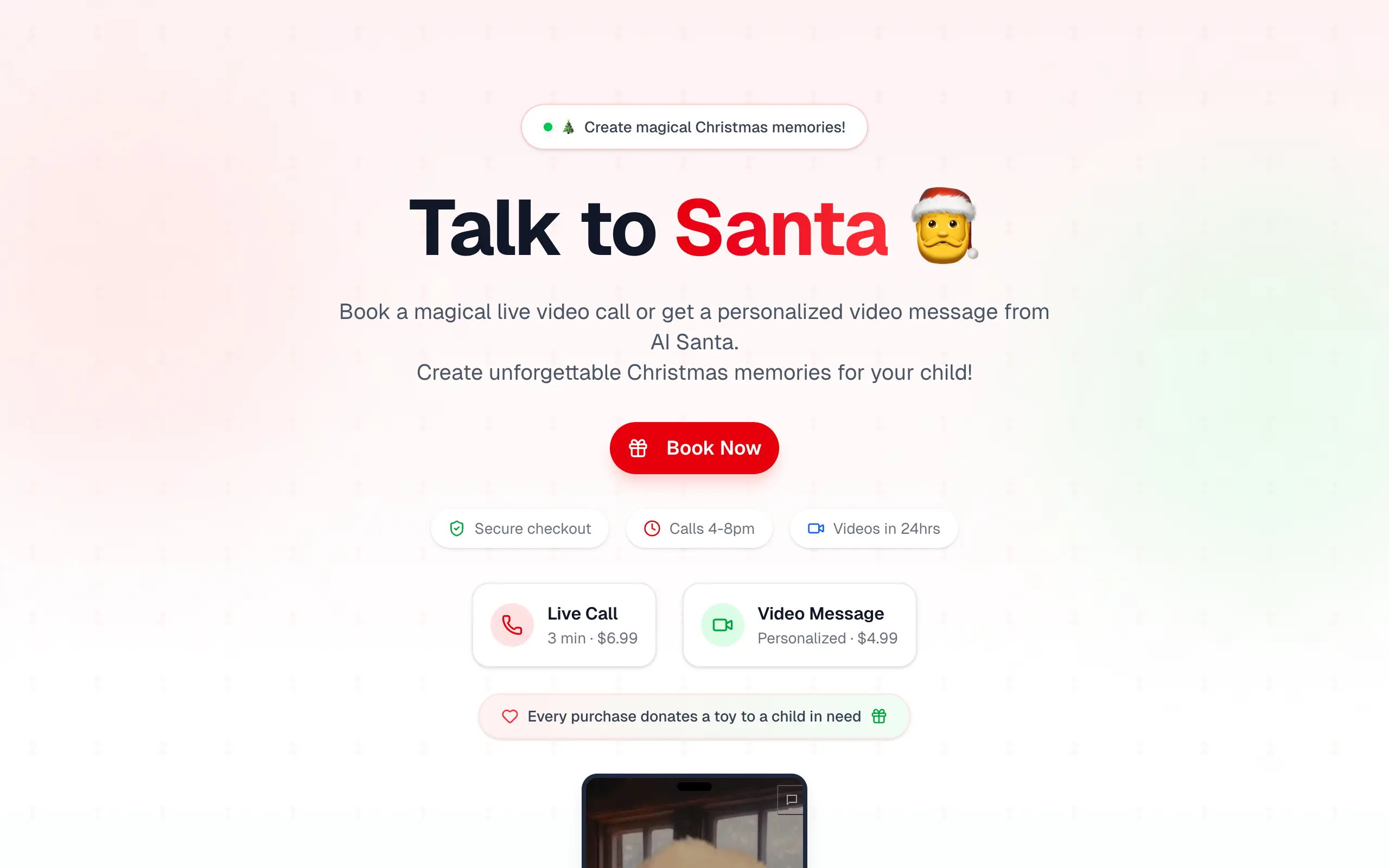
Talk to Santa
Enjoy a magical live video chat or receive a unique AI-generated video greeting from Santa Claus 🎅

pozywka.pl
Scalable blog for food journalist, focused on performance and user experience 🌭
zagrodzki.me
Personal blog and portfolio of Bart Zagrodzki, where he shares his knowledge and work 💼
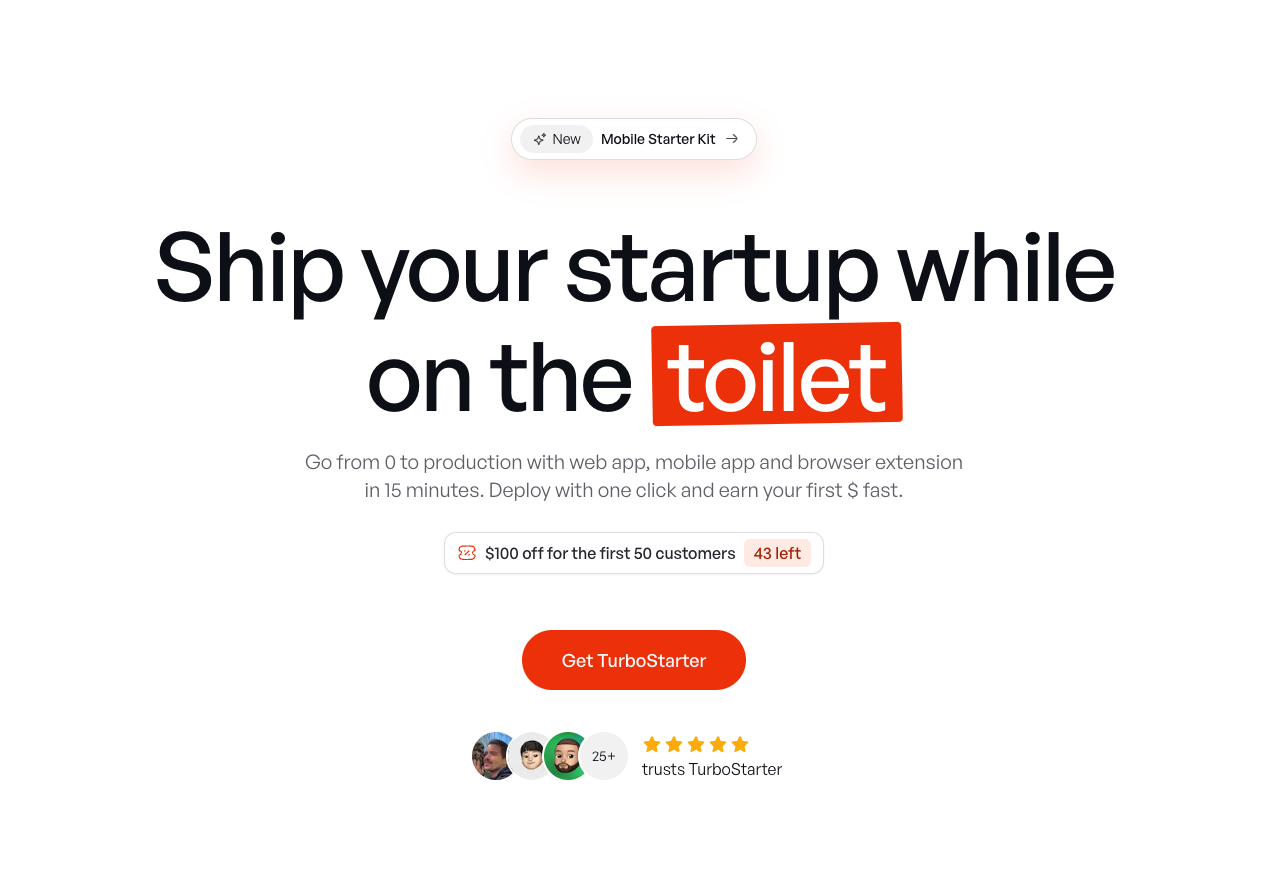
TurboStarter
Ship your startup everywhere. In minutes.
HTML to Markdown
Convert HTML to Markdown with ease, directly in your browser 📄
Dotallio
Personalized AI apps that automate research, data extraction, and content creation without code 🤖
Talk to Santa
Enjoy a magical live video chat or receive a unique AI-generated video greeting from Santa Claus 🎅
pozywka.pl
Scalable blog for food journalist, focused on performance and user experience 🌭
zagrodzki.me
Personal blog and portfolio of Bart Zagrodzki, where he shares his knowledge and work 💼
TurboStarter
Ship your startup everywhere. In minutes.
HTML to Markdown
Convert HTML to Markdown with ease, directly in your browser 📄
Omichat
Chat with 50+ AI models, including ChatGPT and Claude, in one place - switch models anytime without losing context 🤖
Claude Fast
Supercharge your Claude Code with 6x effective context window and specialized AI agents 🤖
EmojAI
AI-powered emoji picker with smart, context-aware suggestions 🤖
Solohacker
Autonomous company launcher - AI agents work 24/7, escalate what matters, and you stay in control 🤖
BeRawi: Storytelling Coach
Practice storytelling daily with instant feedback to sound clearer, more engaging, and confident 🎤
Omichat
Chat with 50+ AI models, including ChatGPT and Claude, in one place - switch models anytime without losing context 🤖
Claude Fast
Supercharge your Claude Code with 6x effective context window and specialized AI agents 🤖
EmojAI
AI-powered emoji picker with smart, context-aware suggestions 🤖
Solohacker
Autonomous company launcher - AI agents work 24/7, escalate what matters, and you stay in control 🤖
BeRawi: Storytelling Coach
Practice storytelling daily with instant feedback to sound clearer, more engaging, and confident 🎤

Connect with like-minded people
Join our community to get feedback, support, and grow together with 1,000+ builders on board, let's ship it!
Join usShip your startup everywhere. In minutes.
Don't burn tokens on setup and start building features on day one.