CartWhisper
An AI shopping assistant that answers product questions in-store, builds bundles, and recovers hesitation before customers abandon carts.
Why an AI shopping assistant is becoming essential for ecommerce
CartWhisper is an AI shopping assistant for ecommerce stores that answers product questions in real time, recommends compatible bundles, and intervenes when shopper hesitation signals a likely cart abandonment. Instead of forcing customers to search product pages, open help-center articles, or wait for human support, it gives them context-aware guidance at the exact moment a purchase decision is being made.
The timing is important. Ecommerce conversion is no longer only a traffic problem. Many stores can attract qualified visitors through paid search, social commerce, creators, email, and organic content, yet lose revenue during the final decision phase. Shoppers often leave because they cannot confidently answer questions such as:
- “Will this work with the model I already own?”
- “Which size should I choose?”
- “What is the difference between these two options?”
- “Do I need an accessory to use this product?”
- “Can this arrive before my event?”
- “Is this bundle actually cheaper than buying separately?”
- “What happens if it does not fit?”
A traditional live-chat widget is rarely designed for that level of product-specific commerce guidance. Generic AI chatbots can be helpful, but they frequently lack product catalog awareness, inventory context, merchandising logic, and safeguards against making unsupported claims.
CartWhisper’s opportunity is to become a specialized AI sales assistant for online stores. Its core value proposition is simple:
Help every shopper make a confident buying decision without requiring a human agent to be available.
For merchants, that can translate into stronger conversion rates, higher average order value, fewer repetitive support tickets, and more useful insight into why customers hesitate.
The product positioning that matters
CartWhisper should be positioned as a revenue and customer-confidence layer for ecommerce, not merely as another website chatbot. Merchants buy measurable business outcomes, including conversion assistance, bundle attachment, support deflection, and cart recovery.
Who CartWhisper should serve first
The broad ecommerce market is enormous, but “all online stores” is not a practical initial customer segment. The strongest go-to-market strategy is to focus on merchants where purchase uncertainty is common, product information is detailed, and a better answer can directly change the outcome of a sale.
Primary audience: mid-market Shopify merchants with complex catalogs
The best early customers are likely growing direct-to-consumer and omnichannel brands running stores on Shopify. These teams often have enough traffic to feel the cost of abandoned carts, but not enough customer-service capacity to offer high-touch product expertise around the clock.
Ideal early merchants usually share several characteristics:
- They sell products with specifications, variants, compatibility requirements, or sizing complexity.
- Their average order value is high enough that a modest conversion improvement has material financial value.
- Their product range supports cross-sells and bundles.
- Their support team repeatedly answers the same pre-purchase questions.
- Their marketing team already spends heavily to acquire visitors and wants more value from existing traffic.
- Their operations team can supply product data, policy documentation, and merchandising rules.
Strong verticals include consumer electronics, beauty and skincare, furniture, outdoor gear, pet supplies, specialty food, hobby equipment, apparel with complex fit guidance, supplements, and home improvement products.
Secondary audience: agencies and ecommerce consultants
Ecommerce agencies can become an efficient distribution channel. Agencies manage several client stores and are under consistent pressure to improve conversion rates without redesigning an entire storefront. A white-labeled or multi-store CartWhisper partner plan could give agencies a differentiated conversion-rate optimization service.
Agency customers are especially useful because they can provide:
- Faster access to a portfolio of merchant accounts.
- Cross-industry learning about what conversations drive revenue.
- Practical implementation feedback from people who configure ecommerce stacks daily.
- Credibility through case studies and merchant referrals.
End users: shoppers who need reassurance, not more choices
The product must ultimately serve the consumer. A customer rarely arrives hoping to interact with AI. They want an answer, confidence, and a frictionless checkout.
CartWhisper should therefore optimize for shoppers who are:
- Comparing products but cannot see a meaningful distinction.
- Unsure which size, configuration, color, or version is right.
- Buying a gift and need guided recommendations.
- Trying to complete a system with compatible accessories.
- Concerned about delivery dates, returns, warranties, or product care.
- Hesitating after adding an item to the cart.
- Looking for a curated bundle rather than manually assembling one.
The interface should feel like a knowledgeable store associate, not like an open-ended technical demo.
The ecommerce conversion gap CartWhisper can solve
Most ecommerce storefronts separate product discovery, customer support, merchandising, and cart recovery into disconnected systems. Product information lives in descriptions and metafields. Support knowledge lives in help centers. Bundle logic sits in a separate app. Cart abandonment emails arrive later, often after the shopper has already moved on.
That fragmentation creates a gap between the customer’s question and the store’s ability to answer it immediately.
Static product pages cannot answer contextual questions
A product page can explain standard details, but it cannot easily adapt to individual context. For example, a customer shopping for a camera lens may need to know whether the lens works with their specific camera body. A skincare customer may want to avoid an ingredient. A furniture shopper may need to compare dimensions against a room measurement.
The answer requires more than text retrieval. It requires product knowledge, policy-aware reasoning, and a response that points the shopper toward an appropriate next action.
Search is useful, but it is not conversational guidance
Site search works best when customers know the product name or category they need. It performs poorly when the intent is uncertain or expressed in natural language, such as “I need a beginner setup for weekend hiking under $300.”
An ecommerce AI assistant can turn vague buying intent into a guided product path. This creates an important distinction:
- Search helps users find items.
- CartWhisper helps users decide what to buy and why.
Traditional cart recovery happens too late
Email and SMS cart-recovery flows remain valuable, but they act after the visitor leaves. By that point, the merchant may have lost attention to a competitor, a distraction, or price anxiety.
CartWhisper can identify hesitation during the session through signals such as repeated product comparisons, long inactivity in the cart, back-and-forth navigation, attempted exits, or repeated questions. It can then deliver helpful, non-intrusive assistance before abandonment occurs.
The market gap is trustworthy, merchant-controlled AI
Many merchants are interested in generative AI but are rightly concerned about hallucinations, inaccurate stock details, unsafe claims, and off-brand language. CartWhisper should not simply expose a general-purpose language model to shoppers.
Its defensible market gap is a grounded, controlled ecommerce AI assistant that only makes claims supported by merchant-approved product data, policies, and commerce systems.
CartWhisper’s core solution and unique selling proposition
CartWhisper should combine three tightly connected capabilities:
- Product question answering grounded in catalog and policy information.
- Intelligent bundle building based on compatibility, customer goals, inventory, and merchant rules.
- In-session hesitation recovery that addresses uncertainty before cart abandonment occurs.
The unique selling proposition is not that it “uses AI.” Many products use AI. The differentiator is that CartWhisper connects conversational guidance with commerce actions and measurable revenue outcomes.
A shopper should be able to ask a question, receive a reliable answer, see recommended products or bundles, add them to cart, and continue toward checkout without breaking their flow.
Answer with confidence
Provide product, shipping, sizing, compatibility, and policy answers grounded in merchant-controlled sources.
Build the right basket
Recommend complementary items and preconfigured bundles that solve a complete customer need.
Recover hesitation in the moment
Detect uncertainty before exit and offer useful guidance rather than generic discount popups.
Core features for an AI shopping assistant
A successful first version should prioritize reliable workflows over an overly broad assistant. Each feature needs a clear business purpose, a defined data source, and an observable outcome.
Catalog-grounded product Q&A
The foundation of CartWhisper is a conversational interface that answers questions using store-approved content. It should ingest product titles, descriptions, variants, specifications, tags, collections, FAQs, shipping policies, return policies, care instructions, manuals, and selected support articles.
Important response capabilities include:
- Comparing two or more products.
- Explaining variant differences.
- Translating specifications into practical customer benefits.
- Answering fit and sizing questions from approved guides.
- Explaining compatibility between products.
- Providing care and setup information.
- Clarifying delivery and return policies.
- Linking or displaying the relevant product directly in the conversation.
The system should cite or expose its source context internally, even if the customer-facing design does not show formal citations for every answer. Merchant administrators need a way to audit why the assistant responded as it did.
Product comparison assistant
Comparison is one of the most commercially valuable conversational workflows. Customers who compare products are often high-intent, but they can abandon if differences are unclear.
CartWhisper should produce structured comparisons that focus on relevant decision criteria, including price, use case, materials, dimensions, compatibility, features, care requirements, and availability.
For example, rather than saying one product is “better,” it should say:
Choose the lighter option if portability is your priority. Choose the larger-capacity option if you need to carry equipment for full-day trips.
This approach is more useful, less risky, and easier for merchants to trust.
Goal-based bundle builder
A bundle engine can raise average order value when it solves a genuine shopper need. The key is to make recommendations feel helpful rather than promotional.
A shopper might ask:
- “What do I need for a home espresso starter setup?”
- “Build me a camping kit for two people.”
- “What should I buy with this tablet for school?”
- “Create a skincare routine for dry skin.”
- “I need a birthday gift set under $100.”
CartWhisper should translate this intent into a curated basket. It can combine fixed merchant bundles with dynamic recommendations that obey compatibility, stock, pricing, margin, and eligibility rules.
A good bundle experience includes:
- A concise explanation of why each item is included.
- A visible subtotal and savings where applicable.
- Options to remove or swap recommendations.
- Clear compatibility confirmation.
- A one-click add-all-to-cart action.
- Guardrails to prevent low-stock or unavailable products from being recommended.
Smart cart hesitation detection
The cart is where intent becomes fragile. CartWhisper can identify behavioral patterns associated with uncertainty, then offer narrowly relevant assistance.
Potential triggers include:
- Cart inactivity beyond a configurable threshold.
- Multiple visits to shipping or returns pages.
- Repeated removal and re-addition of the same product.
- Comparison of similar products across tabs or pages.
- Exit-intent behavior on desktop.
- A high-value cart with unresolved product questions.
- A failed promo-code attempt.
- Repeated changes to product variants.
The assistant should not aggressively interrupt every shopper. Instead, it should use progressive engagement:
- A subtle prompt appears when hesitation is detected.
- The prompt asks a specific, contextual question.
- The shopper can dismiss it without friction.
- A fuller conversational panel opens only when invited.
An effective prompt might be “Need help choosing the right size before checkout?” This is substantially more helpful than “Wait, get 10% off.”
Merchant knowledge controls
Trust is essential. Merchants need a control center where they can manage what CartWhisper knows and how it behaves.
The administration layer should include:
- Source selection and sync status.
- Approved knowledge collections.
- Product and policy exclusions.
- Custom answers for high-volume questions.
- Brand voice settings.
- Restricted terms and prohibited claims.
- Escalation rules for uncertain answers.
- Conversation review and quality feedback.
- Prompt testing before publishing changes.
For regulated or sensitive categories, such as supplements, cosmetics, medical-adjacent products, or financial products, the system must support stricter response controls. It should avoid diagnosing, making unsupported health claims, or presenting regulated guidance as fact.
Human handoff and lead capture
AI should complement support teams rather than conceal difficult cases. If confidence is low or a customer has an account-specific request, CartWhisper should offer a handoff path.
Possible handoff options include:
- Send the conversation to live chat during business hours.
- Create a support ticket with context attached.
- Capture an email address for a follow-up.
- Offer a call-back request for high-value purchases.
- Route wholesale, trade, or custom-order questions to sales.
The handoff must include the conversation transcript and product context. Asking customers to repeat themselves destroys the convenience that the assistant is supposed to create.
How CartWhisper should work behind the scenes
A reliable ecommerce AI shopping assistant requires more than a language model. It needs a structured commerce data layer, retrieval systems, rules, analytics, and strict permissions.
The recommended architecture
A practical architecture starts with a merchant data ingestion pipeline. The pipeline synchronizes catalog records, product variants, inventory availability, collection membership, policy pages, and knowledge documents from the ecommerce platform.
The system then transforms this information into two complementary formats:
- Structured commerce data for prices, variants, inventory, product attributes, and compatibility rules.
- Searchable knowledge content for product descriptions, FAQs, guides, manuals, and policy documentation.
At runtime, CartWhisper should first identify the shopper’s intent. It then retrieves relevant structured and unstructured context, applies merchant rules, and generates a concise response. Commerce actions, such as adding products to cart, should be executed through explicit APIs rather than model-generated guesses.
type AssistantResponse = {
  answer: string;
  recommendedProducts: Array<{
    productId: string;
    variantId?: string;
    reason: string;
  }>;
  confidence: "high" | "medium" | "low";
  needsHumanHandoff: boolean;
};

async function answerShopperQuestion(question: string, cartId: string) {
  const context = await retrieveApprovedStoreContext(question, cartId);
  const response = await generateGroundedAnswer(question, context);

  if (response.confidence === "low") {
    return {
      ...response,
      answer: "I want to make sure I give you an accurate answer. Would you like help from our team?",
      needsHumanHandoff: true,
    };
  }

  return response;
}
The example illustrates a critical principle: low confidence should not lead to an invented answer. It should lead to a transparent recovery path.
Retrieval-augmented generation for product accuracy
Retrieval-augmented generation, often called RAG, is a strong fit for this use case. Instead of relying solely on model training, the assistant retrieves relevant merchant information at the time of the question.
However, vector search alone is not enough for ecommerce. Product facts such as current inventory, price, discount eligibility, variant availability, and shipping eligibility should come from structured real-time sources.
A strong CartWhisper implementation combines:
- Semantic search for natural-language product and policy questions.
- Structured filtering for product attributes and availability.
- Rule evaluation for compatibility and merchandising constraints.
- Model generation for explanation and conversational flow.
- Observability tools for auditability and quality improvement.
Recommended technology stack and trade-offs
A modern SaaS stack should optimize for rapid iteration, secure multi-tenancy, and operational visibility.
| Layer | Recommended option | Why it fits | Trade-off | Key requirement |
|---|---|---|---|---|
| Frontend | React with Next.js | Fast product UI and SaaS dashboard development | Requires disciplined server-client boundaries | Responsive embedded widget |
| Styling | Tailwind CSS | Rapid, consistent component styling | Needs a clear design token system | Merchant theme adaptability |
| Database | PostgreSQL | Reliable relational data and tenant controls | Vector workloads may need extensions or a companion service | Conversation and merchant data isolation |
| Commerce integration | Shopify Dev | Strong initial ecosystem and commerce APIs | Platform dependency and API limits | OAuth, webhooks, and cart actions |
| Observability | OpenTelemetry | Vendor-neutral tracing and performance monitoring | Instrumentation takes engineering effort | AI quality and latency tracking |
For an early product, a managed vector database can accelerate development. At scale, consolidating embeddings alongside PostgreSQL can reduce operational complexity. The right decision depends on retrieval volume, latency requirements, filtering complexity, and the team’s database expertise.
For payments, subscriptions, and merchant billing, Stripe is a practical choice because it supports recurring pricing, usage-based billing, invoices, tax tooling, and customer self-service billing portals.
Monetization options for CartWhisper
CartWhisper should price around merchant value while remaining easy to understand. A hybrid subscription and usage model is likely the strongest long-term approach because AI inference costs and conversation volume can vary significantly between stores.
Subscription tiers with conversation allowances
A straightforward initial model could include three plans:
- Starter for smaller stores testing product Q&A and basic analytics.
- Growth for established brands that need cart triggers, bundle building, integrations, and larger conversation limits.
- Scale for high-volume or enterprise merchants needing custom onboarding, service-level commitments, advanced controls, and dedicated support.
Each plan can include a monthly conversation allowance. Additional qualified conversations can be billed as usage overage.
The metric should be clearly defined. A “conversation” might mean a session with one or more assistant messages, while passive prompt impressions should not be billed. Transparent definitions protect trust.
Revenue-based value pricing
For larger customers, CartWhisper can support pricing linked to attributed revenue or assisted orders. This aligns incentives, but it is more complex because attribution is contentious.
A merchant may reasonably ask whether a sale would have happened without the assistant. CartWhisper should avoid overstating causality. Instead, it can report several metrics:
- Assisted revenue from orders where the shopper interacted with CartWhisper.
- Bundle revenue generated by assistant-led add-to-cart actions.
- Support tickets deflected through resolved conversations.
- Conversion lift from controlled experiments.
- Cart recovery rate after a hesitation intervention.
Performance pricing is attractive only when the attribution methodology is clear and mutually agreed upon.
Add-ons that increase average revenue per account
Potential premium add-ons include:
- Multilingual support.
- Advanced product compatibility logic.
- Agency multi-store management.
- Custom knowledge ingestion and document processing.
- Live-agent integrations.
- API access and headless commerce support.
- Advanced analytics exports.
- White-label assistant branding.
- Dedicated conversion strategy services.
The strongest add-ons are those that map to a specific operational need rather than arbitrary feature gating.
Competitive advantage in the AI ecommerce assistant market
CartWhisper will compete indirectly with live chat products, help-center bots, product recommendation engines, bundle apps, onsite search platforms, and cart recovery tools. Its advantage must come from combining their most valuable moments into one coherent experience.
The defensible differentiation
CartWhisper can stand out through five strategic choices:
-
Commerce-native answers
It should understand products, variants, inventory, compatibility, and cart state, not merely retrieve text from a knowledge base. -
Actionable recommendations
Responses should lead to product comparisons, bundle creation, and cart updates instead of ending as a chat transcript. -
Hesitation-aware timing
The assistant should engage based on behavior and shopping context, not only when a visitor manually opens chat. -
Merchant-controlled accuracy
Administrators should be able to govern sources, rules, language, escalation behavior, and risky product claims. -
Revenue measurement with experimentation
The product should measure outcomes using holdouts and controlled tests where possible, helping merchants distinguish real lift from vanity metrics.
A generic chatbot often answers broad questions, depends heavily on unstructured content, and may not understand live inventory, cart contents, variant logic, or merchant-specific bundle rules.
CartWhisper is designed around the commerce decision. It grounds answers in approved data, recognizes shopper context, recommends purchasable products, and turns guidance into cart actions.
Data flywheels without compromising privacy
Over time, anonymized conversation patterns can reveal high-value insight. If hundreds of customers ask whether two products work together, that may indicate a missing compatibility chart. If shoppers repeatedly ask about a return condition, the policy page may be unclear. If a particular accessory is frequently recommended but rarely accepted, the bundle logic may need adjustment.
This creates a product improvement loop:
- Capture conversation intent and outcomes.
- Identify recurring uncertainty or friction.
- Recommend content, catalog, and merchandising improvements.
- Measure the impact of those improvements.
- Improve future assistant performance with approved updates.
The merchant should retain control over its data. CartWhisper should explain data retention, anonymization, model training policies, and deletion procedures in plain language.
Risks and mitigation strategies
AI shopping assistants can create real operational and reputational risk if they are rushed to market. The best strategy is to design trust and governance into the product from the first release.
Use retrieval from approved sources, structured product facts, response confidence thresholds, and hard constraints for sensitive attributes. When the assistant cannot verify an answer, it should say so and offer human help.
Retrieve current price and availability from the commerce platform at response time. Do not allow a language model to invent commercial facts, and clearly handle temporary synchronization failures.
Use frequency caps, configurable triggers, progressive engagement, and A/B tests. A helpful prompt should appear only when it has a strong contextual reason to exist.
Provide conversation logs, source visibility, approval workflows, policy controls, and clear reporting methodology. Trust increases when merchants can inspect and change system behavior.
Minimize data collection, use tenant isolation, encrypt sensitive data, restrict access through role-based permissions, and document retention and deletion practices. Seek legal review for applicable privacy obligations before scaling.
Avoid misleading conversion claims
CartWhisper should be careful with marketing claims. It may be tempting to promise a specific conversion increase, but performance varies substantially by catalog quality, traffic source, product price, customer intent, and implementation quality.
A more trustworthy approach is to state that the platform is designed to improve shopper confidence and measure conversion assistance. Then use customer case studies with transparent baselines, time periods, traffic volumes, and methodology.
For any published statistics, reference authoritative research or clearly label the data source and collection period. This is especially important when discussing ecommerce benchmarks, cart abandonment, AI adoption, or consumer behavior.
A practical implementation roadmap
The fastest path to a valuable product is not to build every conceivable AI commerce feature. Start with a narrow, measurable use case, establish trust, and expand based on real merchant behavior.
Build an MVP that merchants can trust
The MVP should answer a limited range of questions exceptionally well. It is better for CartWhisper to reliably answer product comparison, compatibility, sizing, and shipping-policy questions than to claim it can handle every customer-service task.
A high-quality MVP includes:
- Shopify product and policy synchronization.
- An embeddable storefront chat interface.
- Product-aware retrieval and structured product cards.
- Merchant knowledge approvals.
- Safe fallback behavior.
- Cart and product-page context.
- Basic conversation analytics.
- One-click handoff or lead capture.
- Event tracking for conversions and cart actions.
The first customer onboarding process should be partly manual. Founders or product specialists should review source material, identify recurring questions, configure guardrails, and inspect early conversations. This hands-on work produces better outcomes and reveals what eventually needs to be automated.
Suggested launch metrics
CartWhisper should evaluate success across customer experience, commercial impact, and system quality.
- Resolution rate measures the percentage of conversations resolved without human intervention.
- Product recommendation acceptance rate measures how often shoppers click or add recommended products.
- Bundle attachment rate measures the percentage of eligible orders that include recommended complementary items.
- Assisted conversion rate measures conversion among shoppers who engage with the assistant.
- Incremental conversion lift measures the difference between exposed and control groups.
- Cart recovery engagement rate measures responses to hesitation prompts.
- Deflection rate measures repetitive support questions resolved by the assistant.
- Low-confidence rate measures how often the system cannot safely answer.
- Latency measures whether the assistant responds fast enough to preserve shopping momentum.
- Merchant satisfaction measures whether store teams trust the output and reporting.
Do not treat assisted conversion as proof of incrementality. Engaged shoppers may already have stronger purchase intent. Controlled experiments are the most credible way to demonstrate causal value.
The path to a scalable ecommerce AI business
CartWhisper has the potential to become more than a conversational widget. Over time, it can become an intelligence layer that helps merchants understand customer intent across the entire buying journey.
The long-term platform could inform product page improvements, identify missing catalog attributes, surface frequent objections, recommend new bundles, prioritize support content, and reveal where shoppers lose confidence. That is a compelling strategic position because it sits between merchandising, customer experience, conversion optimization, and customer support.
The product should remain disciplined, though. Its success depends on delivering answers that are accurate, relevant, fast, and actionable. The assistant must make shopping easier without making the storefront feel intrusive or unpredictable.
For founders building CartWhisper, the immediate opportunity is clear: solve the expensive moment when a motivated shopper has a question but no confident path to an answer. Start with a focused vertical, integrate deeply with ecommerce data, measure outcomes rigorously, and earn merchant trust through control and transparency.
If you want to accelerate the SaaS foundation while focusing engineering effort on the AI commerce workflow, TurboStarter can provide a practical starting point for authentication, billing, dashboards, and production-ready SaaS infrastructure.
More 🤖 AI Startup SaaS ideas
Discover more innovative ai startup SaaS ideas that are trending in 2026. Each idea is AI-generated with market validation and growth potential to help you find your next profitable venture faster than competitors.
Your competitors are building with TurboStarter
Below are some of the SaaS ideas that have been generated and built with our starter kit.

Shibui
AI website builder - describe your business, pick a niche template, edit by chatting, and publish instantly ✨

Pro Service
Find verified home service professionals, compare quotes, and pay securely through escrow - built for Brazilians across the US 🏠
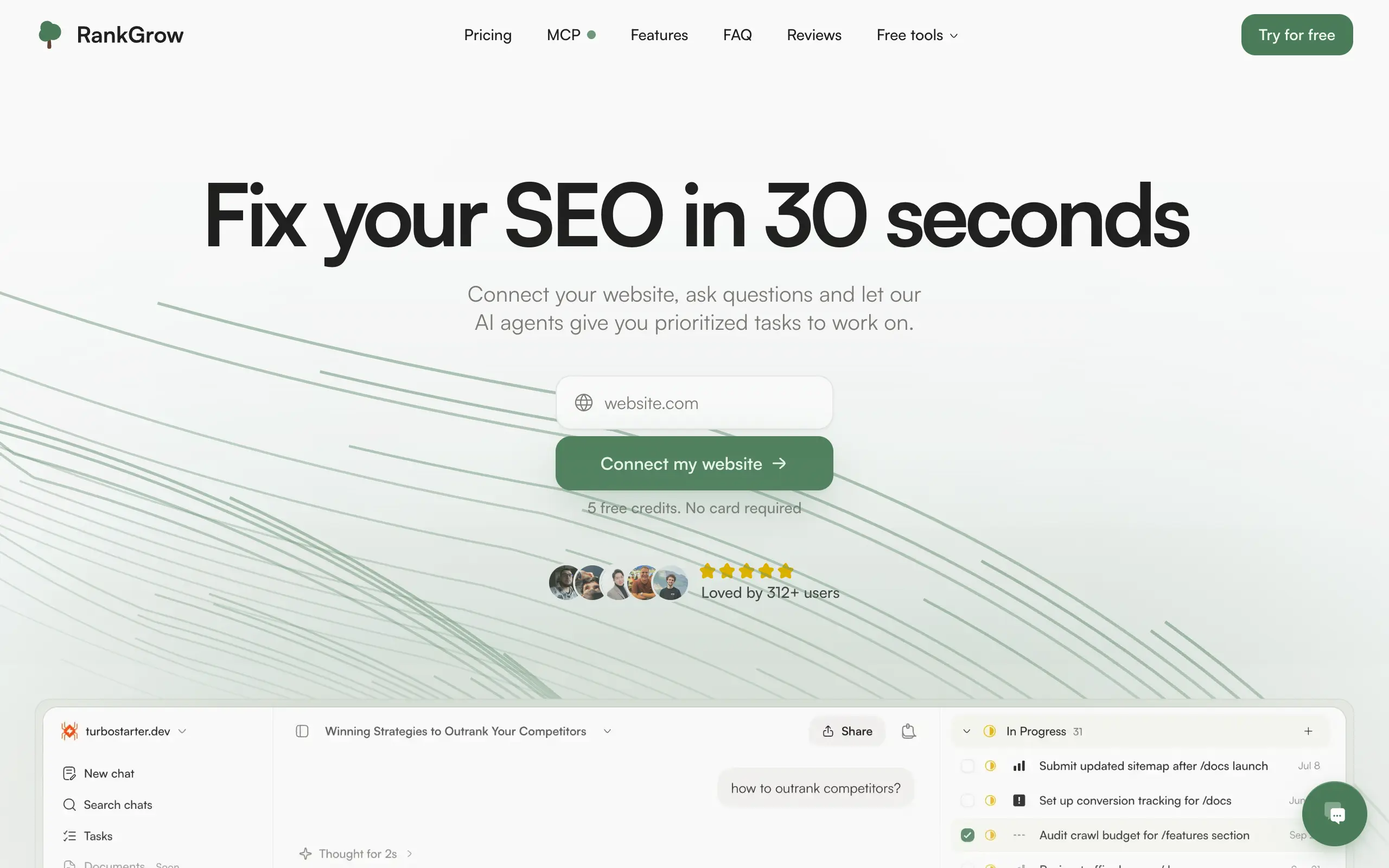
RankGrow
Fix your SEO with AI agents - connect Search Console, get prioritized tasks, and grow organic traffic 📈
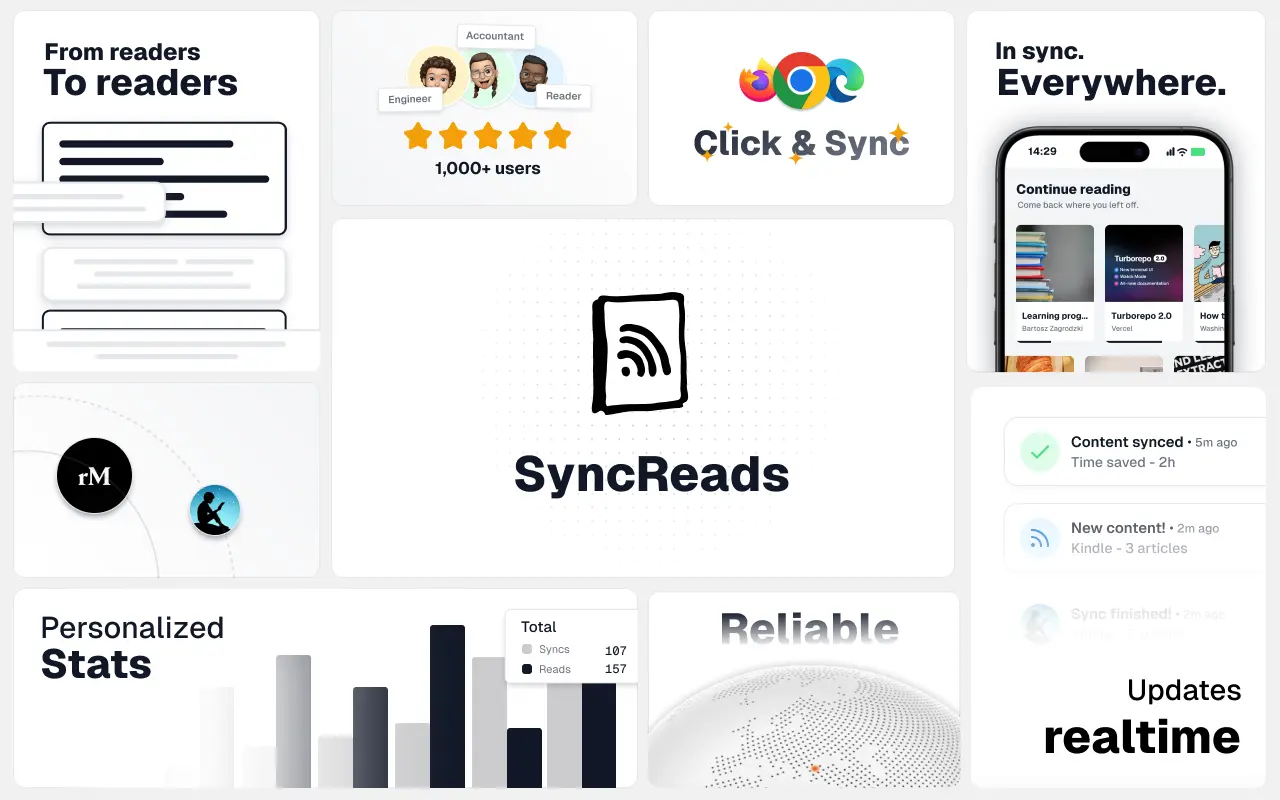
SyncReads
Sync your favorite content for distraction-free reading, save time and replace multiple apps. Anytime, anywhere 🔄
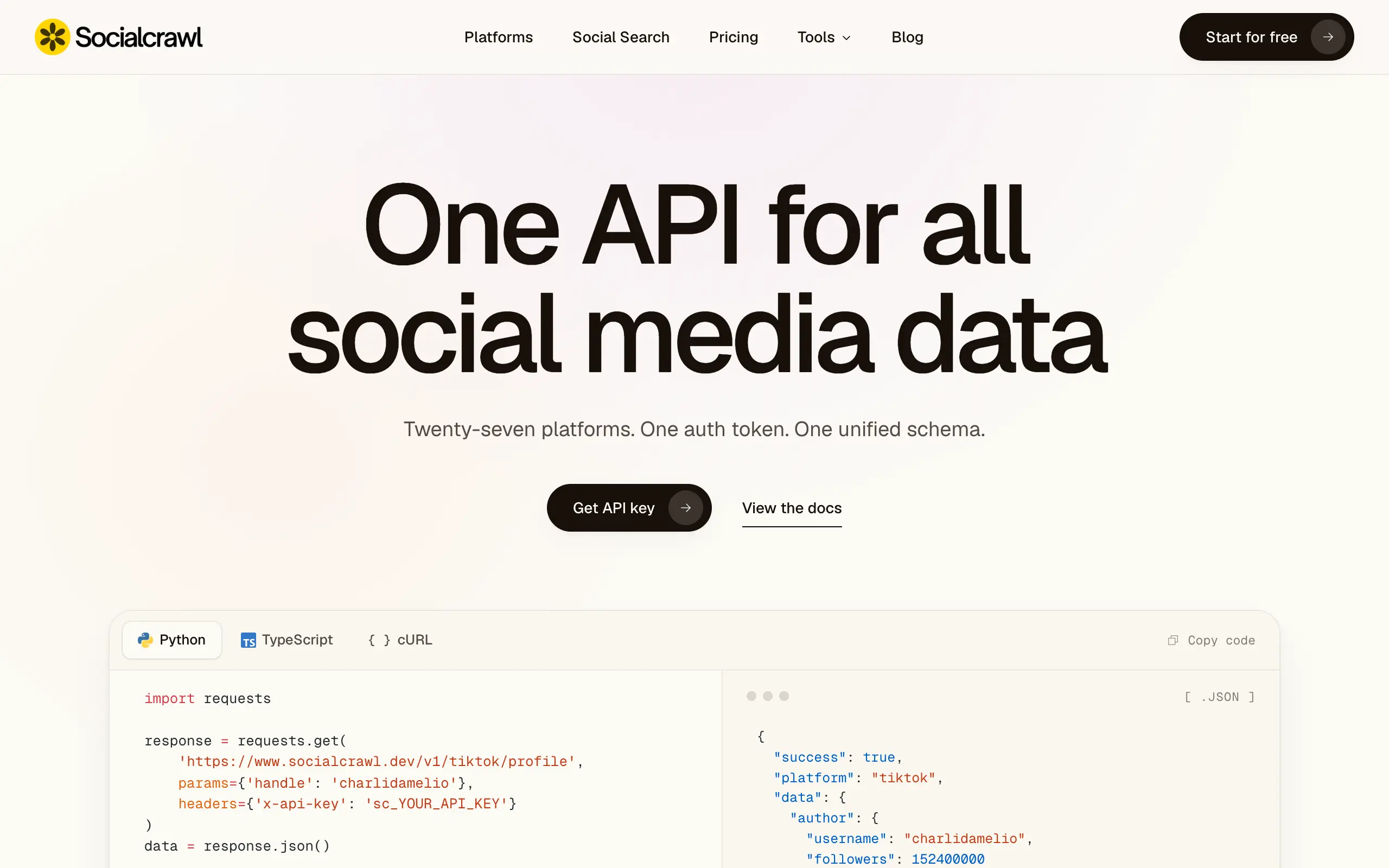
Socialcrawl
Get clean, structured data from 21 platforms like TikTok, Instagram, and YouTube with a single request 📊
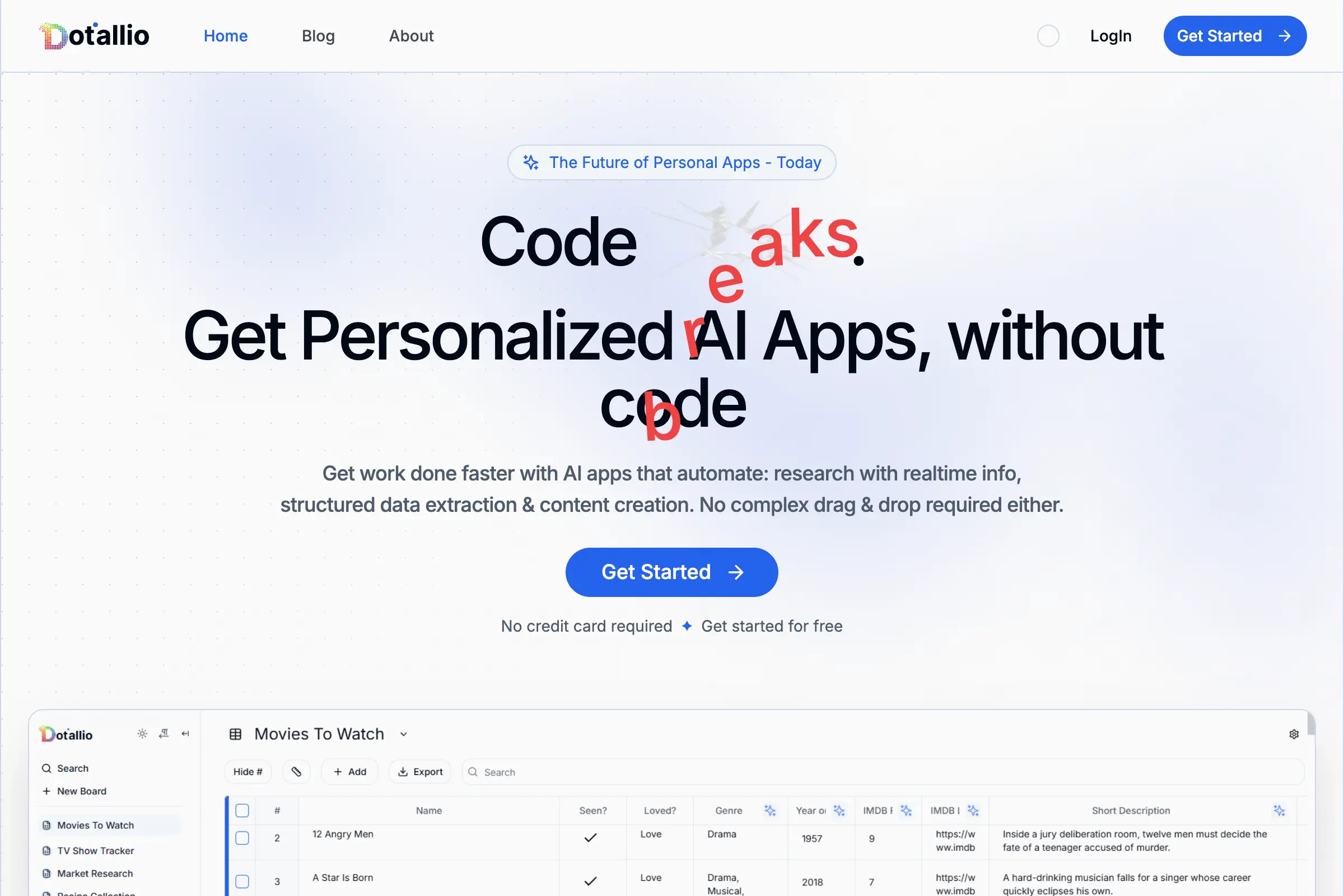
Dotallio
Personalized AI apps that automate research, data extraction, and content creation without code 🤖
Shibui
AI website builder - describe your business, pick a niche template, edit by chatting, and publish instantly ✨
Pro Service
Find verified home service professionals, compare quotes, and pay securely through escrow - built for Brazilians across the US 🏠
RankGrow
Fix your SEO with AI agents - connect Search Console, get prioritized tasks, and grow organic traffic 📈
SyncReads
Sync your favorite content for distraction-free reading, save time and replace multiple apps. Anytime, anywhere 🔄
Socialcrawl
Get clean, structured data from 21 platforms like TikTok, Instagram, and YouTube with a single request 📊
Dotallio
Personalized AI apps that automate research, data extraction, and content creation without code 🤖
Shibui
AI website builder - describe your business, pick a niche template, edit by chatting, and publish instantly ✨
Pro Service
Find verified home service professionals, compare quotes, and pay securely through escrow - built for Brazilians across the US 🏠
RankGrow
Fix your SEO with AI agents - connect Search Console, get prioritized tasks, and grow organic traffic 📈
SyncReads
Sync your favorite content for distraction-free reading, save time and replace multiple apps. Anytime, anywhere 🔄
Socialcrawl
Get clean, structured data from 21 platforms like TikTok, Instagram, and YouTube with a single request 📊
Dotallio
Personalized AI apps that automate research, data extraction, and content creation without code 🤖
Shibui
AI website builder - describe your business, pick a niche template, edit by chatting, and publish instantly ✨
Pro Service
Find verified home service professionals, compare quotes, and pay securely through escrow - built for Brazilians across the US 🏠
RankGrow
Fix your SEO with AI agents - connect Search Console, get prioritized tasks, and grow organic traffic 📈
SyncReads
Sync your favorite content for distraction-free reading, save time and replace multiple apps. Anytime, anywhere 🔄
Socialcrawl
Get clean, structured data from 21 platforms like TikTok, Instagram, and YouTube with a single request 📊
Dotallio
Personalized AI apps that automate research, data extraction, and content creation without code 🤖
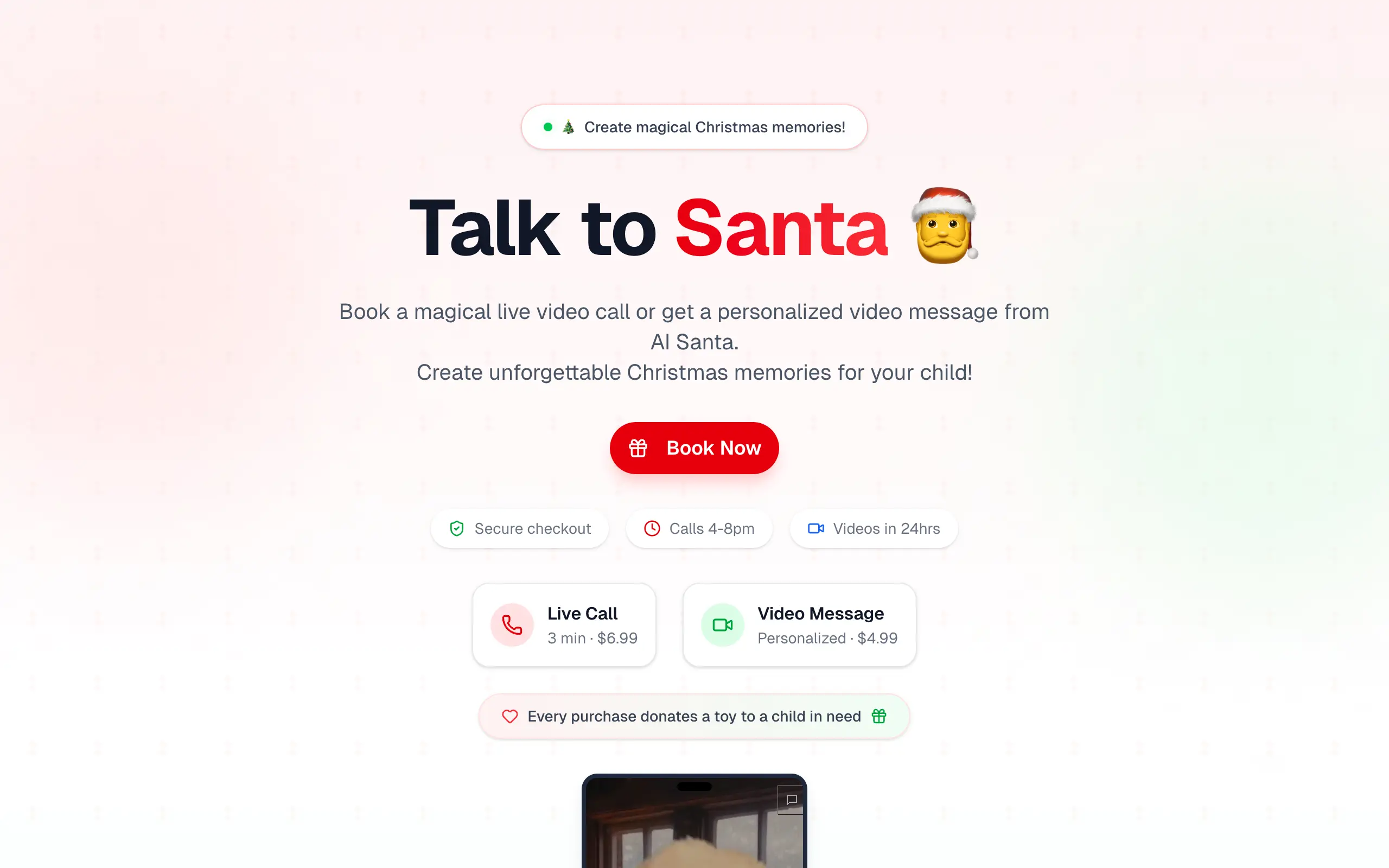
Talk to Santa
Enjoy a magical live video chat or receive a unique AI-generated video greeting from Santa Claus 🎅

pozywka.pl
Scalable blog for food journalist, focused on performance and user experience 🌭
zagrodzki.me
Personal blog and portfolio of Bart Zagrodzki, where he shares his knowledge and work 💼
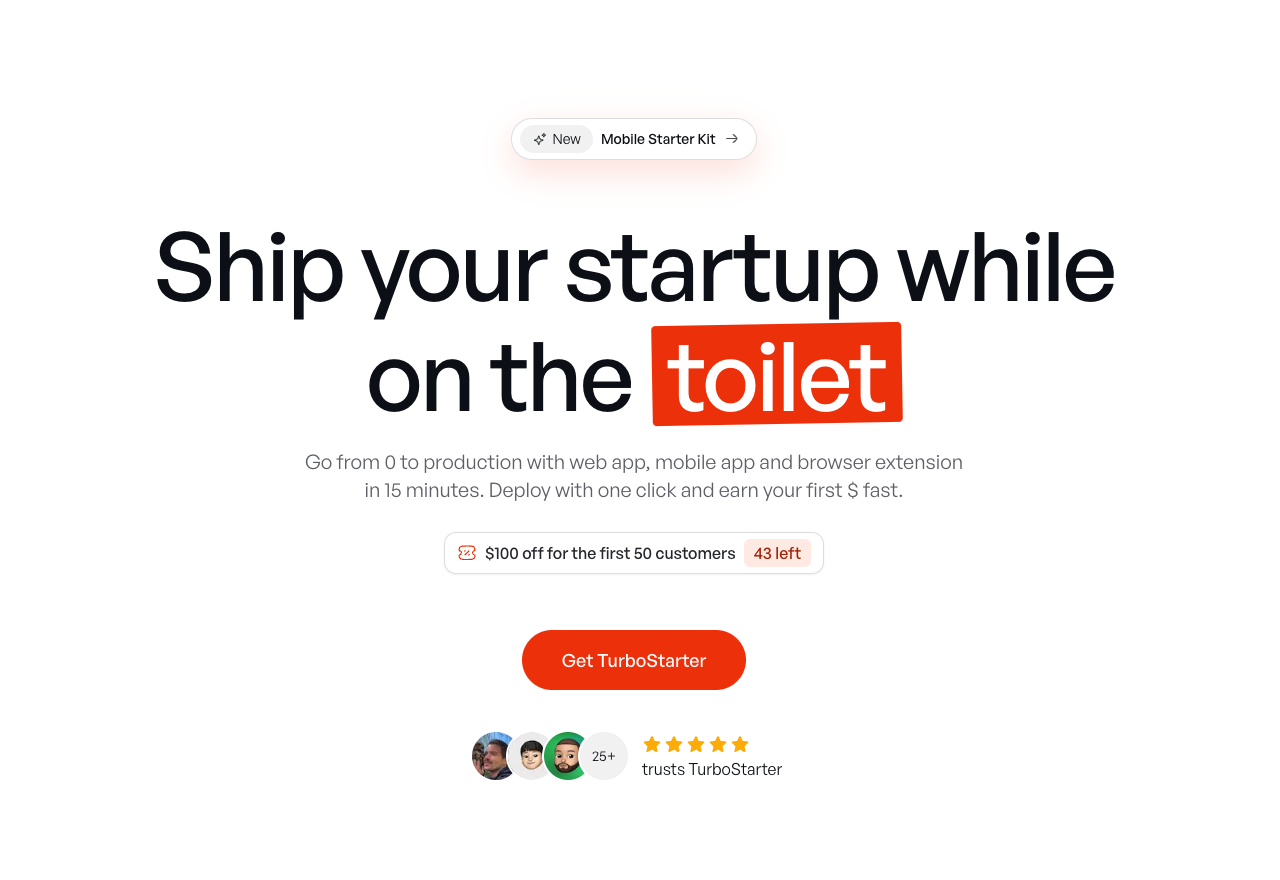
TurboStarter
Ship your startup everywhere. In minutes.
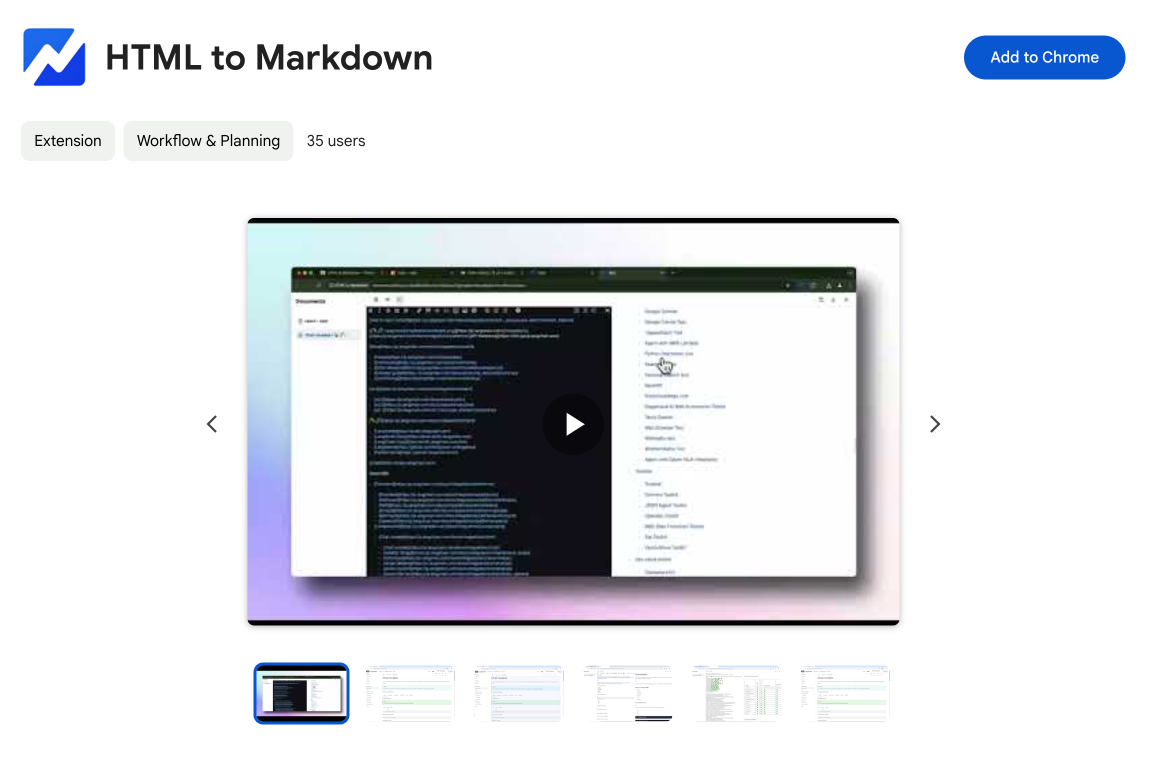
HTML to Markdown
Convert HTML to Markdown with ease, directly in your browser 📄
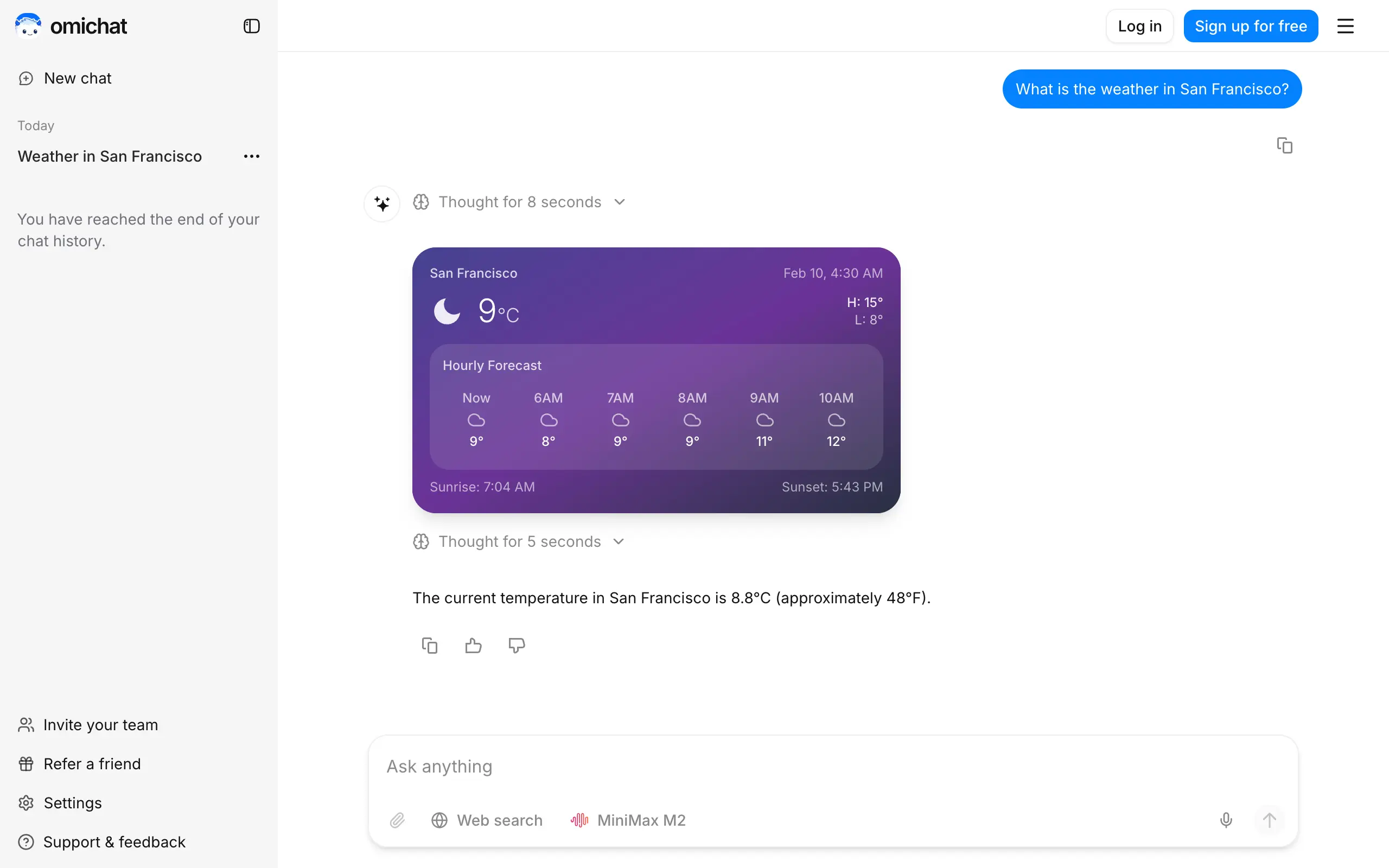
Omichat
Chat with 50+ AI models, including ChatGPT and Claude, in one place - switch models anytime without losing context 🤖
Talk to Santa
Enjoy a magical live video chat or receive a unique AI-generated video greeting from Santa Claus 🎅
pozywka.pl
Scalable blog for food journalist, focused on performance and user experience 🌭
zagrodzki.me
Personal blog and portfolio of Bart Zagrodzki, where he shares his knowledge and work 💼
TurboStarter
Ship your startup everywhere. In minutes.
HTML to Markdown
Convert HTML to Markdown with ease, directly in your browser 📄
Omichat
Chat with 50+ AI models, including ChatGPT and Claude, in one place - switch models anytime without losing context 🤖
Talk to Santa
Enjoy a magical live video chat or receive a unique AI-generated video greeting from Santa Claus 🎅
pozywka.pl
Scalable blog for food journalist, focused on performance and user experience 🌭
zagrodzki.me
Personal blog and portfolio of Bart Zagrodzki, where he shares his knowledge and work 💼
TurboStarter
Ship your startup everywhere. In minutes.
HTML to Markdown
Convert HTML to Markdown with ease, directly in your browser 📄
Omichat
Chat with 50+ AI models, including ChatGPT and Claude, in one place - switch models anytime without losing context 🤖
Talk to Santa
Enjoy a magical live video chat or receive a unique AI-generated video greeting from Santa Claus 🎅
pozywka.pl
Scalable blog for food journalist, focused on performance and user experience 🌭
zagrodzki.me
Personal blog and portfolio of Bart Zagrodzki, where he shares his knowledge and work 💼
TurboStarter
Ship your startup everywhere. In minutes.
HTML to Markdown
Convert HTML to Markdown with ease, directly in your browser 📄
Omichat
Chat with 50+ AI models, including ChatGPT and Claude, in one place - switch models anytime without losing context 🤖
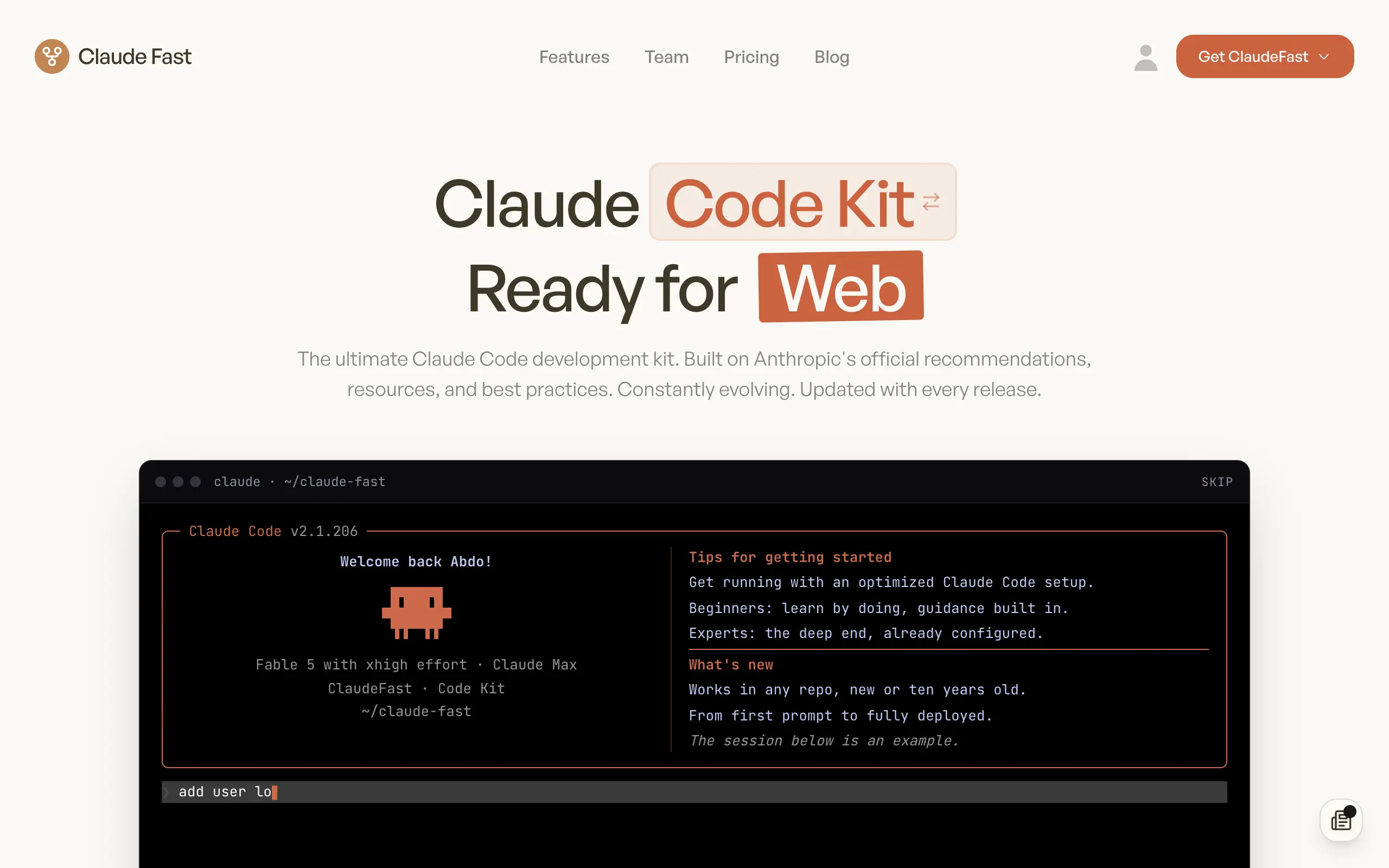
Claude Fast
Supercharge your Claude Code with 6x effective context window and specialized AI agents 🤖
EmojAI
AI-powered emoji picker with smart, context-aware suggestions 🤖
Solohacker
Autonomous company launcher - AI agents work 24/7, escalate what matters, and you stay in control 🤖
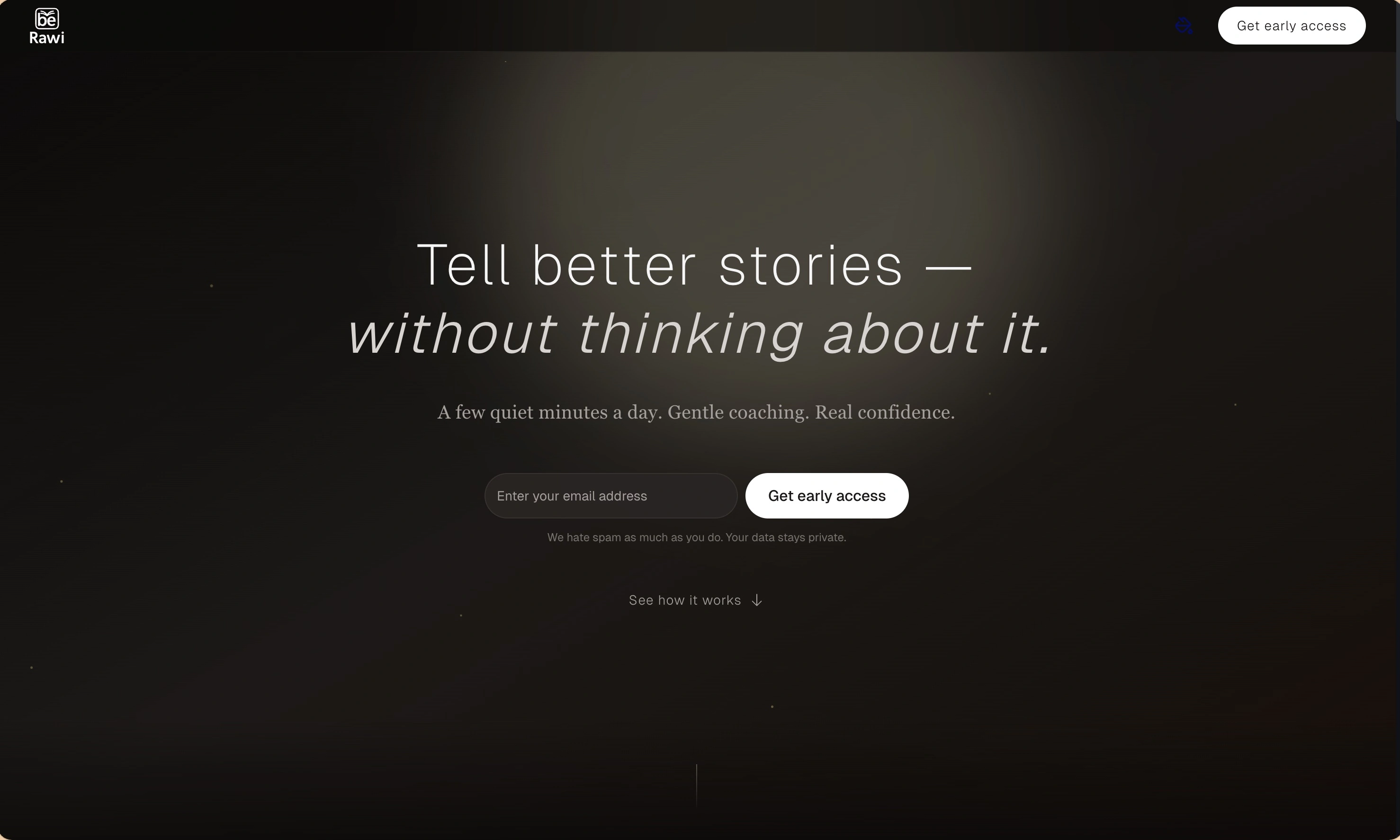
BeRawi: Storytelling Coach
Practice storytelling daily with instant feedback to sound clearer, more engaging, and confident 🎤
Claude Fast
Supercharge your Claude Code with 6x effective context window and specialized AI agents 🤖
EmojAI
AI-powered emoji picker with smart, context-aware suggestions 🤖
Solohacker
Autonomous company launcher - AI agents work 24/7, escalate what matters, and you stay in control 🤖
BeRawi: Storytelling Coach
Practice storytelling daily with instant feedback to sound clearer, more engaging, and confident 🎤
Claude Fast
Supercharge your Claude Code with 6x effective context window and specialized AI agents 🤖
EmojAI
AI-powered emoji picker with smart, context-aware suggestions 🤖
Solohacker
Autonomous company launcher - AI agents work 24/7, escalate what matters, and you stay in control 🤖
BeRawi: Storytelling Coach
Practice storytelling daily with instant feedback to sound clearer, more engaging, and confident 🎤
Claude Fast
Supercharge your Claude Code with 6x effective context window and specialized AI agents 🤖
EmojAI
AI-powered emoji picker with smart, context-aware suggestions 🤖
Solohacker
Autonomous company launcher - AI agents work 24/7, escalate what matters, and you stay in control 🤖
BeRawi: Storytelling Coach
Practice storytelling daily with instant feedback to sound clearer, more engaging, and confident 🎤

Connect with like-minded people
Join our community to get feedback, support, and grow together with 1,000+ builders on board, let's ship it!
Join usShip your startup everywhere. In minutes.
Don't burn tokens on setup and start building features on day one.