ChargebackShield AI
AI platform that predicts and prevents eCommerce chargebacks in real time using behavioral signals and transaction patterns, reducing losses and dispute rates.
understanding the rise of ai-powered chargeback prevention
Chargebacks have become one of the most persistent and costly problems in modern eCommerce. As online transactions scale globally, fraud tactics evolve just as quickly, leaving merchants constantly reacting rather than proactively preventing losses.
This is where an AI-powered chargeback prevention platform like ChargebackShield AI enters the picture. Instead of relying on static rules or manual review processes, it uses real-time behavioral analysis and predictive modeling to identify high-risk transactions before they turn into disputes.
The demand for intelligent chargeback management is rapidly increasing. Merchants are no longer just asking, “How do I win disputes?”—they’re asking, “How do I stop them from happening at all?”
what is ChargebackShield AI and why it matters
ChargebackShield AI is a real-time fraud detection and prevention platform designed specifically for eCommerce businesses. It leverages machine learning models to analyze:
- User behavior patterns
- Transaction anomalies
- Device fingerprinting
- Purchase velocity and intent signals
Instead of flagging transactions after fraud occurs, it predicts risk before authorization is completed.
why traditional chargeback systems fall short
Most current solutions rely on:
- Rule-based systems (e.g., block if IP mismatch)
- Manual review queues
- Reactive dispute handling
These approaches suffer from:
- High false positives (blocking legitimate users)
- Delayed response times
- Limited adaptability to new fraud tactics
ChargebackShield AI replaces static logic with adaptive intelligence.
Key insight
Modern fraud is behavioral, not just transactional. Platforms that fail to analyze user intent in real time will always lag behind attackers.
target audience and ideal users
Understanding who benefits most from ChargebackShield AI is critical for both product positioning and go-to-market strategy.
primary audiences
1. mid-to-large eCommerce brands
These businesses process thousands of transactions daily and face:
- Frequent chargebacks
- Significant revenue leakage
- Operational inefficiencies
They need scalable, automated solutions.
2. high-risk verticals
Industries especially vulnerable to fraud include:
- Digital goods (gaming, SaaS, subscriptions)
- Electronics retailers
- Travel and ticketing platforms
- Dropshipping businesses
3. payment processors and gateways
Integrating ChargebackShield AI as a layer within payment infrastructure creates:
- Value-added services
- Reduced merchant risk
- Increased platform trust
market opportunity and gap analysis
The global eCommerce fraud detection market continues to grow rapidly. Industry reports consistently estimate billions in annual losses due to chargebacks and fraudulent transactions.
key market gaps
Despite many fraud tools available, several gaps persist:
- Lack of real-time predictive intelligence
- Over-reliance on rules instead of adaptive AI
- Poor UX for fraud teams
- Limited explainability of decisions
ChargebackShield AI addresses these gaps by combining:
- Predictive analytics
- Behavioral intelligence
- Transparent risk scoring
emerging trends supporting this idea
- AI-first fraud prevention replacing rule engines
- Increased regulatory pressure on payment security
- Growth of digital-first commerce models
- Rising consumer expectations for seamless checkout
core features of ChargebackShield AI
A successful SaaS platform in this space must go beyond basic fraud detection. Below are the essential features that define ChargebackShield AI.
real-time transaction risk scoring
Every transaction is evaluated instantly using:
- Behavioral biometrics
- Historical transaction data
- Device and location signals
This produces a dynamic risk score before payment approval.
adaptive machine learning models
Unlike static systems, models continuously learn from:
- Confirmed fraud cases
- Chargeback outcomes
- Merchant-specific patterns
This ensures ongoing accuracy improvements.
behavioral fingerprinting
Tracks how users interact with the site:
- Mouse movements
- Typing patterns
- Session navigation
These signals help differentiate humans from bots or fraudsters.
smart decision engine
Based on risk scoring, the system can:
- Approve transactions
- Flag for review
- Block high-risk attempts
chargeback prediction dashboard
Provides insights such as:
- Predicted dispute rates
- High-risk customer segments
- Fraud trends over time
seamless integrations
Supports integration with:
- Shopify
- WooCommerce
- Stripe
- Custom APIs
// Example: simple API call for risk scoring
const response = await fetch("https://api.chargebackshield.ai/score", {
  method: "POST",
  headers: {
    "Content-Type": "application/json",
    "Authorization": "Bearer YOUR_API_KEY"
  },
  body: JSON.stringify({
    transaction_id: "12345",
    amount: 250,
    currency: "USD",
    user_behavior: sessionData
  })
});

const riskScore = await response.json();
how ChargebackShield AI creates a competitive advantage
To stand out in a crowded market, the platform must offer distinct value beyond standard fraud tools.
comparison with traditional solutions
| Feature | Rule-Based Tools | Manual Review | Basic AI Tools | ChargebackShield AI |
|---|---|---|---|---|
| Real-time prediction | ❌ | ❌ | ✅ | ✅ |
| Behavioral analysis | ❌ | ❌ | ✅ | ✅ |
| Adaptive learning | ❌ | ❌ | ✅ | ✅ |
| Explainability | ❌ | ✅ | ❌ | ✅ |
unique selling proposition (USP)
ChargebackShield AI differentiates itself through:
- Pre-transaction prevention rather than post-event mitigation
- Behavior-first intelligence instead of static rule checks
- Explainable AI decisions for transparency
- Continuous learning tailored to each merchant
recommended tech stack and architecture
Building a platform like ChargebackShield AI requires careful consideration of scalability, latency, and model performance.
frontend
- React for UI
- TailwindCSS for styling
- Real-time dashboards using WebSockets
backend
- Node.js or Python (FastAPI)
- GraphQL or REST APIs
- Event-driven architecture
AI and data layer
- Python ecosystem (PyTorch or TensorFlow)
- Feature stores (e.g., Feast)
- Real-time data streaming (Kafka or Pub/Sub)
infrastructure
- AWS or GCP
- Serverless functions for scalability
- CDN for global performance
trade-offs to consider
- Latency vs accuracy: Real-time scoring must be fast
- Explainability vs complexity: Simpler models are easier to interpret
- Cost vs performance: High-frequency scoring can be expensive
Important consideration
Fraud detection systems must operate within milliseconds. Poor optimization can lead to checkout delays and lost conversions.
monetization strategies
ChargebackShield AI can adopt multiple pricing models depending on target customers.
usage-based pricing
- Charge per transaction analyzed
- Scales with merchant volume
subscription tiers
- Starter: basic fraud detection
- Growth: advanced AI + analytics
- Enterprise: custom models + SLA
performance-based pricing
- Fee tied to chargeback reduction
- Aligns incentives with customers
add-on services
- Fraud consulting
- Custom rule tuning
- Dispute management tools
potential risks and mitigation strategies
No SaaS product is without risks—especially in fintech and fraud prevention.
risk: false positives blocking legitimate users
Mitigation:
- Continuous model training
- Adjustable risk thresholds
- Human review fallback
risk: evolving fraud tactics
Mitigation:
- Real-time model updates
- Threat intelligence feeds
- Continuous anomaly detection
risk: regulatory compliance
Mitigation:
- GDPR-compliant data handling
- Transparent data usage policies
- Audit trails
risk: integration friction
Mitigation:
- Plug-and-play SDKs
- Clear API documentation
- Prebuilt platform integrations
go-to-market strategy
Launching ChargebackShield AI requires a focused strategy.
initial niche targeting
Start with:
- Shopify merchants
- Subscription businesses
- Digital product sellers
acquisition channels
- SEO content targeting “reduce chargebacks”
- Partnerships with payment providers
- Developer-focused documentation
positioning message
Instead of:
“Fraud detection tool”
Position as:
“AI that stops chargebacks before they happen”
implementation roadmap
Building this SaaS product requires structured execution.
product experience and UX considerations
Fraud tools often fail due to poor usability.
key UX principles
- Clear risk explanations
- Minimal configuration required
- Visual dashboards for insights
- Actionable alerts
Clarity
Users must understand why a transaction was flagged.
Speed
Decisions must be delivered instantly.
Control
Merchants should override decisions easily.
future opportunities and expansion
ChargebackShield AI can evolve into a broader platform.
potential expansions
- Identity verification tools
- KYC/AML integrations
- Cross-merchant fraud intelligence network
- AI-powered dispute automation
long-term vision
Become the central intelligence layer for transaction trust across eCommerce.
actionable steps to get started
If you're planning to build ChargebackShield AI or a similar platform, here’s a practical path forward:
- Validate demand with merchants experiencing chargebacks
- Build a lightweight MVP focusing on prediction accuracy
- Integrate with one platform (e.g., Shopify) first
- Collect transaction data to train models
- Focus on UX and explainability early
- Scale gradually with infrastructure improvements
final thoughts
Chargebacks are not just a financial issue—they’re a signal of deeper trust and security challenges in eCommerce. Businesses that rely on outdated fraud systems will continue to lose revenue and customers.
ChargebackShield AI represents a shift toward proactive, intelligent, and adaptive fraud prevention. By combining real-time data processing with machine learning, it empowers merchants to stay ahead of fraud instead of reacting to it.
The opportunity is clear: build a platform that doesn’t just detect fraud—but prevents it entirely.
If you’re serious about building this kind of SaaS product efficiently, using a robust starter framework can accelerate development and reduce technical overhead. Tools like TurboStarter can help you launch faster with a scalable foundation.
More 🤖 AI Startup SaaS ideas
Discover more innovative ai startup SaaS ideas that are trending in 2026. Each idea is AI-generated with market validation and growth potential to help you find your next profitable venture faster than competitors.
Your competitors are building with TurboStarter
Below are some of the SaaS ideas that have been generated and built with our starter kit.

Statiko
Monitor any Telegram channel in real time - track posts, edits, deletions, and growth with AI recaps 📡

Shibui
AI website builder - describe your business, pick a niche template, edit by chatting, and publish instantly ✨

Pro Service
Find verified home service professionals, compare quotes, and pay securely through escrow - built for Brazilians across the US 🏠
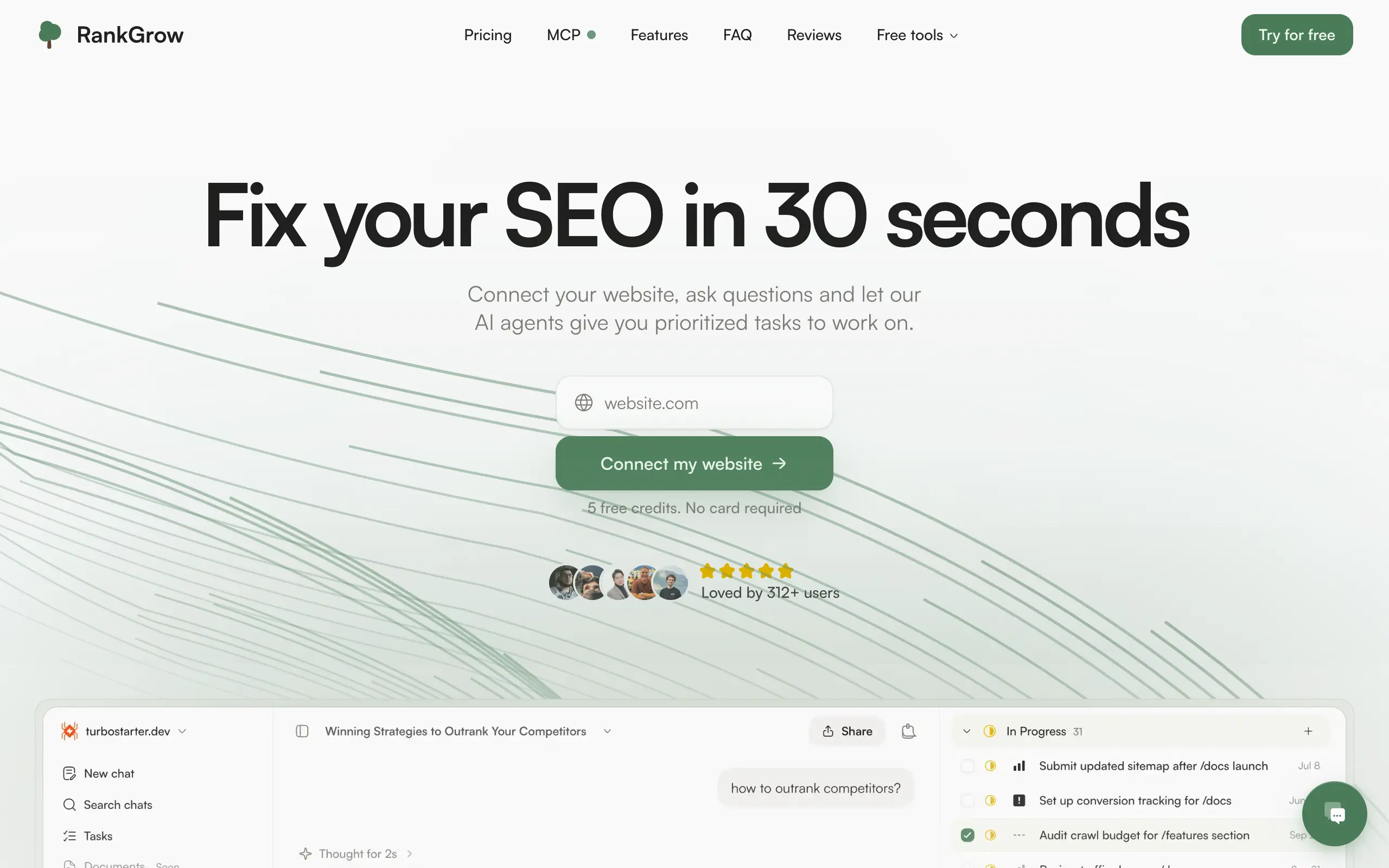
RankGrow
Fix your SEO with AI agents - connect Search Console, get prioritized tasks, and grow organic traffic 📈
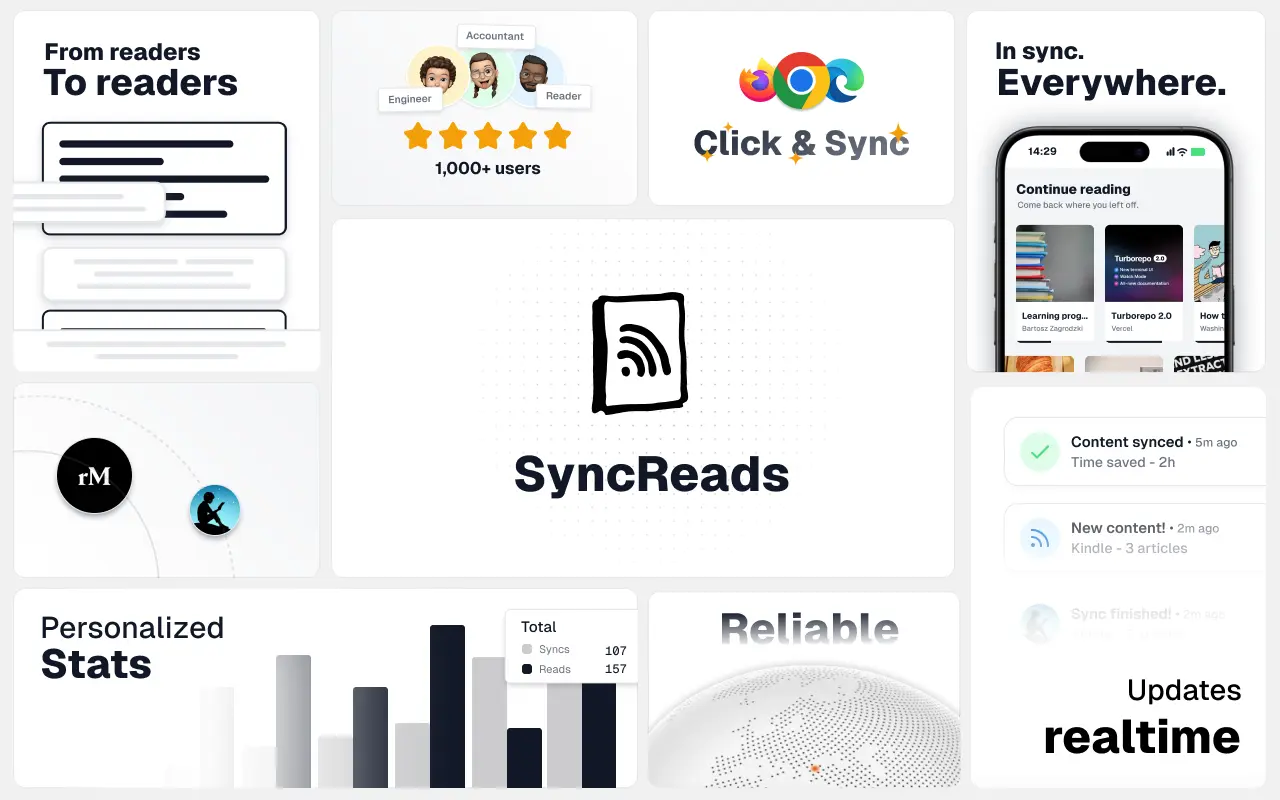
SyncReads
Sync your favorite content for distraction-free reading, save time and replace multiple apps. Anytime, anywhere 🔄
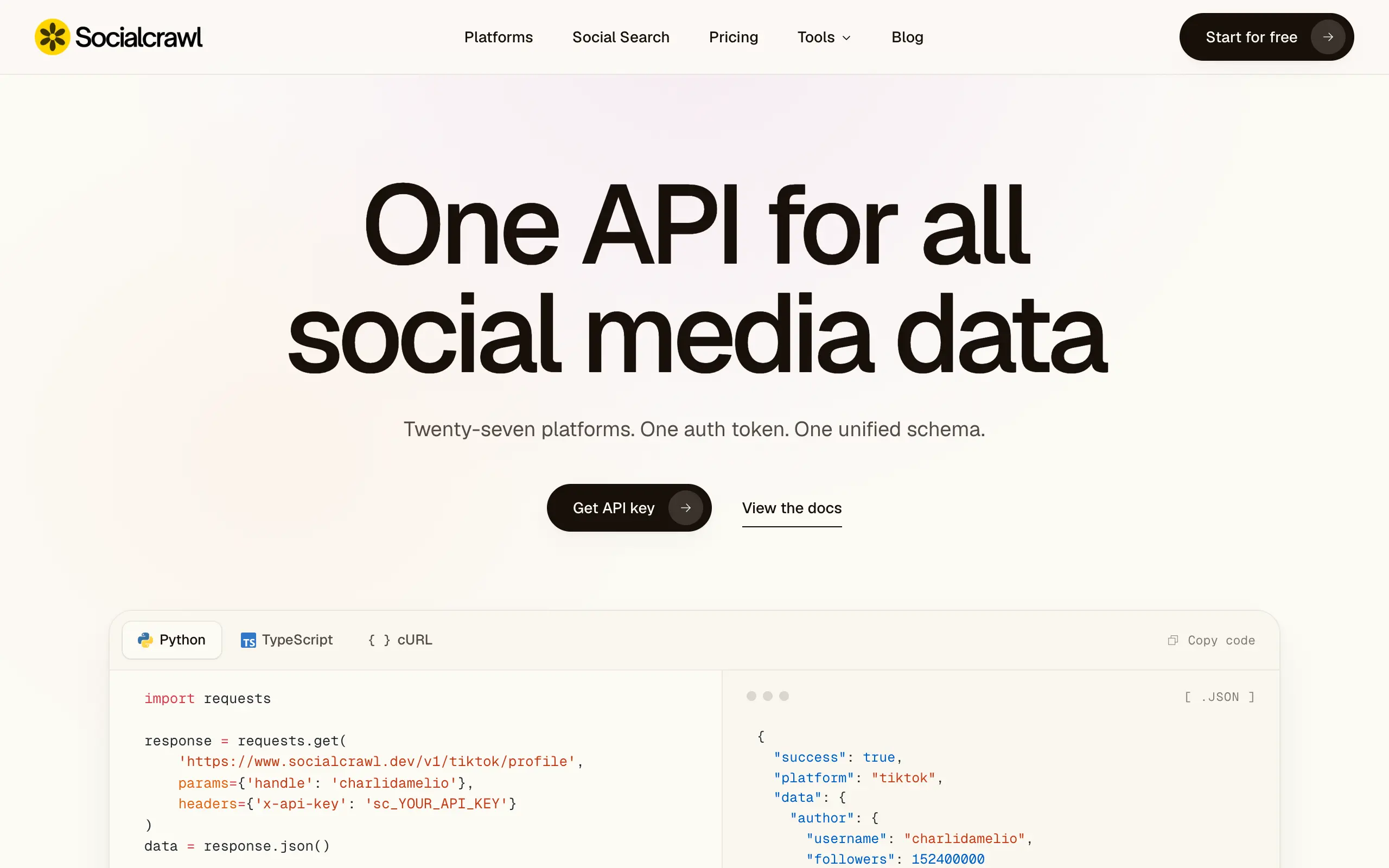
Socialcrawl
Get clean, structured data from 21 platforms like TikTok, Instagram, and YouTube with a single request 📊
Statiko
Monitor any Telegram channel in real time - track posts, edits, deletions, and growth with AI recaps 📡
Shibui
AI website builder - describe your business, pick a niche template, edit by chatting, and publish instantly ✨
Pro Service
Find verified home service professionals, compare quotes, and pay securely through escrow - built for Brazilians across the US 🏠
RankGrow
Fix your SEO with AI agents - connect Search Console, get prioritized tasks, and grow organic traffic 📈
SyncReads
Sync your favorite content for distraction-free reading, save time and replace multiple apps. Anytime, anywhere 🔄
Socialcrawl
Get clean, structured data from 21 platforms like TikTok, Instagram, and YouTube with a single request 📊
Statiko
Monitor any Telegram channel in real time - track posts, edits, deletions, and growth with AI recaps 📡
Shibui
AI website builder - describe your business, pick a niche template, edit by chatting, and publish instantly ✨
Pro Service
Find verified home service professionals, compare quotes, and pay securely through escrow - built for Brazilians across the US 🏠
RankGrow
Fix your SEO with AI agents - connect Search Console, get prioritized tasks, and grow organic traffic 📈
SyncReads
Sync your favorite content for distraction-free reading, save time and replace multiple apps. Anytime, anywhere 🔄
Socialcrawl
Get clean, structured data from 21 platforms like TikTok, Instagram, and YouTube with a single request 📊
Statiko
Monitor any Telegram channel in real time - track posts, edits, deletions, and growth with AI recaps 📡
Shibui
AI website builder - describe your business, pick a niche template, edit by chatting, and publish instantly ✨
Pro Service
Find verified home service professionals, compare quotes, and pay securely through escrow - built for Brazilians across the US 🏠
RankGrow
Fix your SEO with AI agents - connect Search Console, get prioritized tasks, and grow organic traffic 📈
SyncReads
Sync your favorite content for distraction-free reading, save time and replace multiple apps. Anytime, anywhere 🔄
Socialcrawl
Get clean, structured data from 21 platforms like TikTok, Instagram, and YouTube with a single request 📊
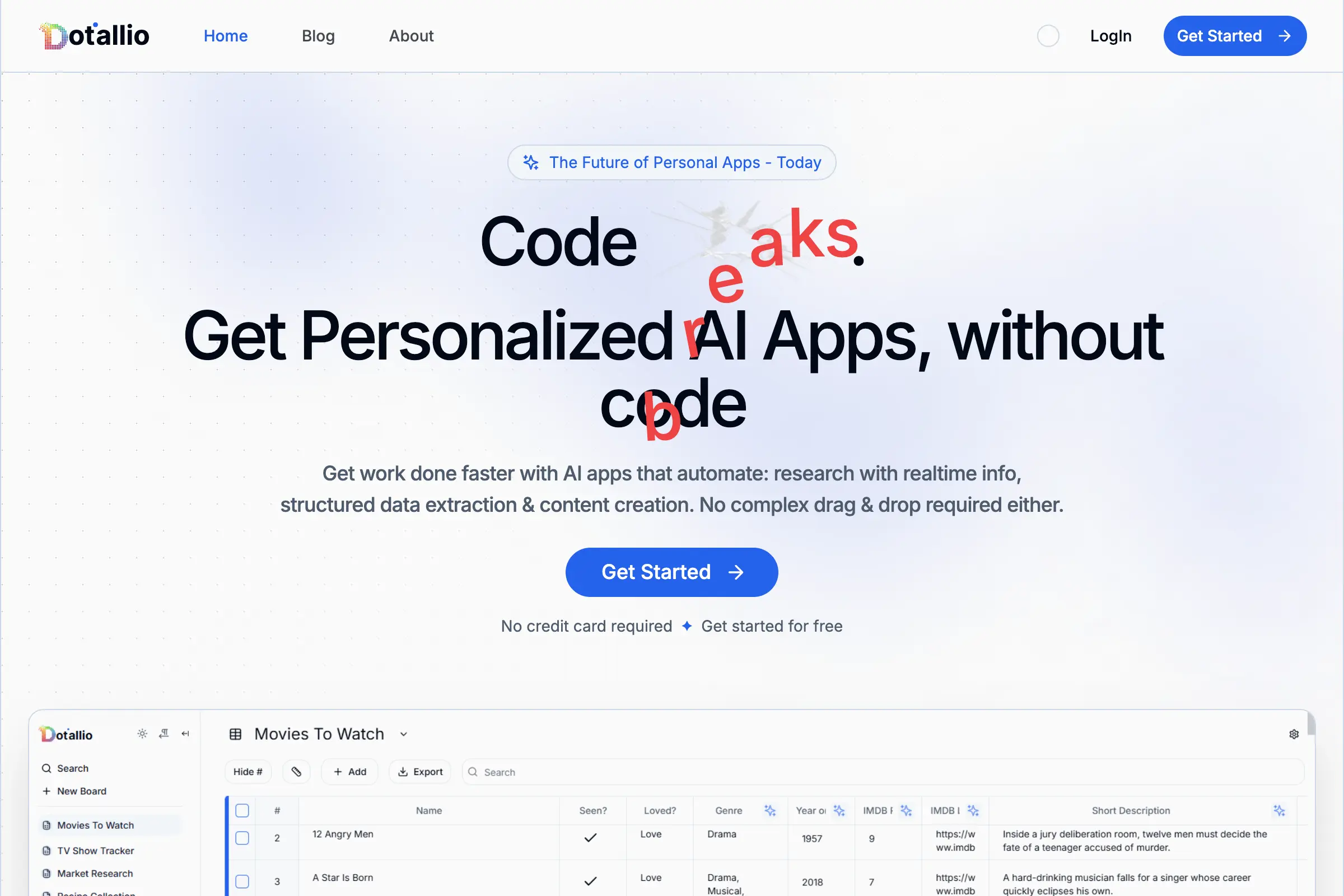
Dotallio
Personalized AI apps that automate research, data extraction, and content creation without code 🤖

Talk to Santa
Enjoy a magical live video chat or receive a unique AI-generated video greeting from Santa Claus 🎅

pozywka.pl
Scalable blog for food journalist, focused on performance and user experience 🌭
zagrodzki.me
Personal blog and portfolio of Bart Zagrodzki, where he shares his knowledge and work 💼

TurboStarter
Ship your startup everywhere. In minutes.
HTML to Markdown
Convert HTML to Markdown with ease, directly in your browser 📄
Dotallio
Personalized AI apps that automate research, data extraction, and content creation without code 🤖
Talk to Santa
Enjoy a magical live video chat or receive a unique AI-generated video greeting from Santa Claus 🎅
pozywka.pl
Scalable blog for food journalist, focused on performance and user experience 🌭
zagrodzki.me
Personal blog and portfolio of Bart Zagrodzki, where he shares his knowledge and work 💼
TurboStarter
Ship your startup everywhere. In minutes.
HTML to Markdown
Convert HTML to Markdown with ease, directly in your browser 📄
Dotallio
Personalized AI apps that automate research, data extraction, and content creation without code 🤖
Talk to Santa
Enjoy a magical live video chat or receive a unique AI-generated video greeting from Santa Claus 🎅
pozywka.pl
Scalable blog for food journalist, focused on performance and user experience 🌭
zagrodzki.me
Personal blog and portfolio of Bart Zagrodzki, where he shares his knowledge and work 💼
TurboStarter
Ship your startup everywhere. In minutes.
HTML to Markdown
Convert HTML to Markdown with ease, directly in your browser 📄
Dotallio
Personalized AI apps that automate research, data extraction, and content creation without code 🤖
Talk to Santa
Enjoy a magical live video chat or receive a unique AI-generated video greeting from Santa Claus 🎅
pozywka.pl
Scalable blog for food journalist, focused on performance and user experience 🌭
zagrodzki.me
Personal blog and portfolio of Bart Zagrodzki, where he shares his knowledge and work 💼
TurboStarter
Ship your startup everywhere. In minutes.
HTML to Markdown
Convert HTML to Markdown with ease, directly in your browser 📄
Omichat
Chat with 50+ AI models, including ChatGPT and Claude, in one place - switch models anytime without losing context 🤖
Claude Fast
Supercharge your Claude Code with 6x effective context window and specialized AI agents 🤖
EmojAI
AI-powered emoji picker with smart, context-aware suggestions 🤖

Solohacker
Autonomous company launcher - AI agents work 24/7, escalate what matters, and you stay in control 🤖

BeRawi: Storytelling Coach
Practice storytelling daily with instant feedback to sound clearer, more engaging, and confident 🎤
Omichat
Chat with 50+ AI models, including ChatGPT and Claude, in one place - switch models anytime without losing context 🤖
Claude Fast
Supercharge your Claude Code with 6x effective context window and specialized AI agents 🤖
EmojAI
AI-powered emoji picker with smart, context-aware suggestions 🤖
Solohacker
Autonomous company launcher - AI agents work 24/7, escalate what matters, and you stay in control 🤖
BeRawi: Storytelling Coach
Practice storytelling daily with instant feedback to sound clearer, more engaging, and confident 🎤
Omichat
Chat with 50+ AI models, including ChatGPT and Claude, in one place - switch models anytime without losing context 🤖
Claude Fast
Supercharge your Claude Code with 6x effective context window and specialized AI agents 🤖
EmojAI
AI-powered emoji picker with smart, context-aware suggestions 🤖
Solohacker
Autonomous company launcher - AI agents work 24/7, escalate what matters, and you stay in control 🤖
BeRawi: Storytelling Coach
Practice storytelling daily with instant feedback to sound clearer, more engaging, and confident 🎤
Omichat
Chat with 50+ AI models, including ChatGPT and Claude, in one place - switch models anytime without losing context 🤖
Claude Fast
Supercharge your Claude Code with 6x effective context window and specialized AI agents 🤖
EmojAI
AI-powered emoji picker with smart, context-aware suggestions 🤖
Solohacker
Autonomous company launcher - AI agents work 24/7, escalate what matters, and you stay in control 🤖
BeRawi: Storytelling Coach
Practice storytelling daily with instant feedback to sound clearer, more engaging, and confident 🎤

Connect with like-minded people
Join our community to get feedback, support, and grow together with 1,000+ builders on board, let's ship it!
Join usShip your startup everywhere. In minutes.
Don't burn tokens on setup and start building features on day one.