Churn Signal
AI detects renewal risk from support tickets, CRM notes, usage events, and calls, then recommends account-specific recovery plays.
Customer churn rarely appears as a single explicit event. It develops through weak product adoption, unresolved support friction, executive turnover, budget pressure, unclear value, and increasingly negative conversations. By the time a customer says they are “reviewing alternatives,” the renewal may already be at risk.
Churn Signal is an AI churn prediction software concept built to identify those early warning signs across support tickets, CRM notes, product usage events, renewal records, customer calls, and success-manager activity. Instead of presenting teams with another generic health score, it recommends account-specific recovery plays with the evidence, urgency, owner, and next best action behind every recommendation.
The opportunity is compelling for B2B SaaS companies with recurring revenue, especially those that have customer data distributed across platforms such as a CRM, help desk, analytics product, call recorder, and billing system. A customer success team may know something is wrong, but it often lacks a unified, defensible, and timely explanation of why an account is at risk and what to do next.
This guide examines the market, product strategy, AI architecture, monetization, risks, competitive positioning, and implementation roadmap for Churn Signal.
The core product thesis
The winning churn intelligence product is not merely a dashboard that predicts churn. It is an operational system that turns fragmented customer signals into prioritized, explainable retention actions.
Why AI churn prediction software matters now
Subscription businesses have always needed customer retention systems, but the data environment has changed. Teams now collect far more customer interaction data than they can realistically review by hand.
A mid-market SaaS company may have thousands of support conversations, dozens of product events per user, hundreds of sales and success notes, and recurring call recordings every month. Important churn signals are buried in unstructured text, behavioral trends, and disconnected workflows.
Traditional customer health scoring usually relies on manually weighted rules such as:
- “Low login volume” means an account is unhealthy.
- “More than five support tickets” raises risk.
- “No executive business review” is a warning signal.
- “Renewal is within 90 days” increases account priority.
These rules are useful as a starting point, but they often fail in real customer portfolios. A support ticket increase can be a healthy sign of expansion and onboarding. Lower usage may reflect seasonality. A customer with strong product usage may still be planning to churn because a champion left the company or a competitor offered a cheaper contract.
AI churn prediction software can improve the process by evaluating signals in context. It can recognize sentiment changes, identify repeated unresolved themes, compare behavior against an account’s own baseline, detect stakeholder risk in CRM notes, and connect these patterns to prior churn outcomes.
The practical value is not “AI for AI’s sake.” The value is helping teams answer four revenue-critical questions:
- Which accounts need attention today?
- What evidence suggests that each account is at risk?
- What retention play is most likely to help?
- Did the team act quickly enough to change the outcome?
Target audience for Churn Signal
Churn Signal should focus on B2B subscription businesses where customer retention has material revenue impact and account data already exists across several systems. The best early customers are not necessarily the largest enterprises. They are companies with enough complexity to feel the pain of fragmented customer intelligence, but enough operational flexibility to adopt a new retention workflow.
Primary audience: customer success and account management leaders
The primary buyer is typically a VP of Customer Success, Chief Customer Officer, Head of Account Management, or Director of Revenue Operations. These leaders own or influence net revenue retention, gross retention, renewal forecasting, and account expansion.
Their common problems include:
- Customer health scores that team members do not trust.
- Renewals that become visible too late in the quarter.
- Customer success managers spending too much time preparing account reviews.
- Inconsistent account risk assessments across the team.
- Limited clarity into which interventions actually reduce churn.
- Difficulty translating qualitative feedback into revenue forecasts.
For these leaders, Churn Signal should promise an auditable retention operating system rather than a black-box scoring model.
Secondary audience: customer success managers
Customer success managers are daily users, not always economic buyers. The product must save time and make them better at customer conversations without creating a surveillance-style workflow.
A useful workflow for a customer success manager might look like this:
- Open a prioritized account risk queue.
- See a concise explanation of newly detected risks.
- Review relevant tickets, call excerpts, usage trends, and CRM notes.
- Choose a recommended playbook or modify it.
- Assign tasks and log the outcome.
- Return later to see whether account risk has improved.
The product should help customer success managers act with confidence while preserving professional judgment. They should never feel that the AI is forcing them to follow a generic playbook.
Additional users: revenue operations, sales, and finance
Churn intelligence is valuable beyond customer success.
- “Revenue operations teams” need cleaner renewal forecasts and shared definitions of account risk.
- “Sales and account executives” need visibility into expansion blockers and stakeholder changes.
- “Product teams” need aggregate evidence about feature friction and adoption barriers.
- “Support leaders” need insight into issue categories correlated with revenue risk.
- “Finance teams” need forecast reliability and early visibility into downside exposure.
- “Executives” need a portfolio-level view of retention risk, recovery progress, and systemic churn drivers.
The interface should serve each group without becoming a bloated business intelligence platform. A focused role-based experience is more likely to retain users.
The customer churn intelligence gap
The market already includes customer success platforms, product analytics tools, conversation intelligence products, CRM systems, help desks, and business intelligence software. Churn Signal should not attempt to replace all of them.
Its market gap lies between customer data collection and account-level retention execution.
Most companies face one or more of the following gaps:
- Data is present but not connected across customer touchpoints.
- Health scores are static, manually maintained, and difficult to explain.
- Notes and calls contain valuable risk signals that are not searchable at scale.
- Product usage data is interpreted without customer context.
- Customer success teams are alerted to risks without being given practical recovery actions.
- Leadership cannot distinguish preventable churn from inevitable churn.
- Teams cannot consistently measure which retention playbooks work for which risk patterns.
Churn Signal can position itself as an AI retention intelligence layer that sits above existing systems. It should ingest signals from the tools a company already uses, generate explainable account risk assessments, and push recommended actions back into existing workflows.
Where existing tools fall short
A CRM tracks contacts, deals, tasks, and notes. It is not optimized to continuously analyze changes in account sentiment, usage behavior, issue severity, and call language.
A support platform captures ticket history. It does not usually combine tickets with renewal dates, stakeholder maps, and product adoption patterns.
A product analytics platform can show behavioral trends. It may not know that a newly appointed customer executive has questioned pricing, or that a critical integration has failed twice in the last month.
A customer success platform may offer health scores and playbooks, but many teams still struggle with data quality, configuration burden, and actionable AI recommendations.
The opportunity is to make the workflow simpler:
Connect the data, explain the risk, recommend the right intervention, and measure the recovery outcome.
Churn Signal’s unique selling proposition
Churn Signal’s strongest unique selling proposition is account-specific recovery intelligence backed by evidence.
Rather than assigning an opaque “red” health status, the product should tell a customer success manager something more useful:
This account’s renewal risk increased because weekly active users declined materially from its normal baseline, two implementation blockers remain unresolved, the executive sponsor was removed from recent conversations, and the last customer call included pricing pressure. Recommended next step: schedule an executive value review within five business days, resolve the integration issue with a named owner, and provide a usage benchmark report.
This approach differentiates the product in four ways:
- Multimodal evidence: It combines structured and unstructured customer data.
- Change detection: It focuses on what changed, not only on a static score.
- Explainable recommendations: Every risk alert includes supporting signals and sources.
- Closed-loop learning: Teams record outcomes so recommendations improve over time.
Detect earlier
Identify risk patterns when they emerge across tickets, product usage, notes, and calls instead of waiting for a renewal objection.
Explain clearly
Show the source evidence behind every account risk assessment so teams can validate the AI's reasoning.
Recover intelligently
Recommend tailored retention plays based on the account's risk pattern, segment, lifecycle stage, and prior outcomes.
Core features for an AI churn prediction platform
The initial Churn Signal product should prioritize workflows that produce immediate value for customer success teams. It is tempting to build a large analytics suite, but an MVP should begin with reliable data ingestion, clear account risk explanations, and action recommendations.
Unified customer signal timeline
Each account needs a chronological customer intelligence timeline that brings together important changes from connected systems.
The timeline can include:
- Product adoption milestones and declines.
- Support ticket volume, severity, and resolution duration.
- CRM notes and customer success activity.
- Renewal dates, contract values, and expansion opportunities.
- Call summaries, objections, and stakeholder sentiment.
- Invoices, payment issues, or contract-related events.
- NPS, CSAT, survey feedback, and open-text feedback.
- Completed retention actions and their outcomes.
The key is not to display every raw event. Churn Signal should highlight material changes and let users drill into source records when needed.
Explainable churn risk score
A risk score is useful when it is transparent, calibrated, and operationally meaningful. Churn Signal should avoid presenting a single number with no context.
A better account risk view includes:
- Overall renewal risk category.
- Confidence level based on data completeness and signal agreement.
- Risk direction, such as rising, stable, or improving.
- Top contributing factors.
- Revenue exposure tied to the account’s contract value.
- Time-to-renewal context.
- Recommended owner and due date.
- Links to source evidence.
For example, a score of 78 out of 100 means little without an explanation. A statement such as “risk rose 22 points this month due to adoption decline, unresolved integration issues, and negative executive sentiment” is useful.
AI analysis of support tickets and customer feedback
Support interactions often reveal churn risk earlier than CRM stages. Churn Signal should analyze ticket text and categorize patterns such as:
- Repeated defects or recurring incident types.
- Escalations and unresolved severity.
- Frustration, dissatisfaction, or loss of trust.
- Requests for cancellation or downgrade.
- Missing features associated with competitor comparisons.
- Implementation blockers.
- Billing, procurement, or security objections.
- Requests for executive escalation.
The model should distinguish between volume and severity. A highly engaged customer may submit many tickets without being at risk. What matters is the combination of ticket language, recurrence, age, business impact, and account context.
Call intelligence and stakeholder signal extraction
Customer call recordings and summaries are rich sources of retention information. Churn Signal can process transcripts from approved conversation platforms and identify:
- Explicit renewal concerns.
- Budget constraints.
- Competitor mentions.
- Negative sentiment shifts.
- Missing ROI or adoption evidence.
- New stakeholders and lost champions.
- Contract and procurement blockers.
- Action items that remain unresolved.
Because calls can contain sensitive information, this feature should be optional, permission-controlled, and transparent about what is analyzed and retained.
Product usage anomaly detection
Usage should be evaluated against an account’s own history, peer group, plan type, lifecycle stage, and seasonal patterns. A basic rule like “logins fell by 20%” is weak if the account normally has low activity during a particular period.
Useful adoption signals include:
- Declining active users relative to baseline.
- Reduced use of high-value features.
- Lower breadth of feature adoption.
- Fewer admin sessions.
- Failure to complete key onboarding milestones.
- Loss of usage from a previously active team.
- Integration failures or declining data sync volume.
- Declining engagement before a renewal date.
This is where a combination of time-series analysis and domain-specific rules can outperform generic dashboards.
Account-specific recovery plays
Recovery plays are the practical heart of Churn Signal. Each recommendation should include a reason, suggested action, expected objective, timing, and owner.
Examples include:
- Schedule an executive business review for an account with unclear realized value.
- Launch a targeted adoption workshop when high-value feature use declines.
- Escalate a recurring technical issue to an engineering liaison.
- Rebuild the stakeholder map after champion departure.
- Offer a usage benchmark report when ROI is questioned.
- Create a renewal mutual action plan for a stalled procurement process.
- Propose plan right-sizing when a customer is overprovisioned and budget constrained.
- Send a tailored release update when the customer’s recurring feature request was addressed.
The AI should suggest plays, not automatically send customer communications. Human approval protects relationship quality and prevents inappropriate automation.
Outcome tracking and playbook learning
A recommendation engine becomes substantially more valuable when it captures what happened after action was taken.
For each recovery play, Churn Signal should track:
- Whether the play was accepted, modified, ignored, or rejected.
- Time from risk detection to customer success action.
- Tasks completed and stakeholders engaged.
- Risk score movement after intervention.
- Renewal, contraction, expansion, or churn outcome.
- Customer segment and risk pattern.
- Qualitative notes from the account owner.
Over time, the platform can identify which plays have the best results for specific account types. It should be cautious about causal claims, however. A successful renewal does not automatically prove that a play caused the outcome. The platform should present performance as evidence and confidence, not certainty.
A practical data and AI architecture
Churn Signal should use a layered architecture that separates data ingestion, normalization, analytics, AI reasoning, and workflow delivery. This reduces technical risk and makes it easier to earn enterprise trust.
Data ingestion and normalization
The first layer connects to systems where customer signals live. High-value initial integrations include:
- CRM platforms for account, contact, renewal, and activity data.
- Support tools for tickets, tags, and satisfaction scores.
- Product analytics or event warehouses for usage data.
- Call intelligence tools for transcripts and summaries.
- Data warehouses for custom business metrics.
- Billing systems for invoices and payment events.
- Survey tools for NPS, CSAT, and qualitative responses.
A normalized account model should establish a durable mapping between external identifiers and a Churn Signal account record. Identity resolution is essential. If ticket data, usage events, and CRM records cannot be reliably associated with the same customer, the risk model will become misleading.
A simplified event structure might resemble this:
type CustomerSignal = {
  accountId: string;
  source: "crm" | "support" | "product" | "call" | "billing";
  eventType: string;
  occurredAt: string;
  importance: "low" | "medium" | "high";
  payload: Record<string, unknown>;
};
Risk modeling approach
The product should not rely solely on a large language model. Large language models are strong at extracting themes, summarizing conversations, and generating natural-language explanations. They are not automatically reliable churn probability estimators.
A robust AI churn prediction architecture combines several methods:
- Rules and thresholds for known critical events, such as a cancellation request or an overdue high-severity issue.
- Time-series features for detecting adoption changes against a baseline.
- Supervised machine learning for predicting churn likelihood when sufficient historical labeled data exists.
- Natural language processing for extracting sentiment, objections, product issues, and stakeholder changes.
- Retrieval-augmented generation for creating explanations grounded in source data.
- Human feedback signals to improve recommendations and reduce noise.
For early-stage customers without enough churn history, Churn Signal should use configurable heuristics and benchmark-informed patterns. As a customer accumulates outcomes, it can train account-specific or segment-specific predictive models.
Explainability and evidence retrieval
The explanation layer should retrieve a limited set of highly relevant evidence rather than asking a model to summarize an entire customer history without constraints.
A reliable process is:
- Calculate structured risk features.
- Identify the strongest contributing factors.
- Retrieve related tickets, notes, usage changes, and call excerpts.
- Generate an account summary grounded only in retrieved evidence.
- Show citations or source links inside the app.
- Allow the user to mark evidence as relevant or irrelevant.
This design reduces hallucination risk and makes the AI more defensible in customer success workflows.
Do not hide the evidence
A churn prediction system should never make unsupported claims about a customer. Every recommendation needs traceable source data, a confidence indicator, and an easy way for a user to disagree.
Recommended tech stack for Churn Signal
The recommended stack should optimize for rapid SaaS delivery, secure integrations, data-heavy workloads, and AI extensibility.
Application layer
A modern TypeScript-based web application is a practical foundation.
- React supports rich, interactive account dashboards and data-heavy interfaces.
- Next.js provides a strong full-stack framework for routing, server rendering, API endpoints, and deployment workflows.
- Tailwind CSS accelerates consistent product UI development.
- TypeScript reduces integration and data-modeling errors in a complex SaaS application.
For a founder building the product quickly, TurboStarter can provide a useful foundation for authentication, billing, SaaS application structure, and production-ready conventions.
Database and event storage
A relational database is appropriate for core business records, tenants, users, integrations, account entities, tasks, and recommendation outcomes.
PostgreSQL is a strong default because it is mature, reliable, supports structured relational data, and offers useful capabilities for JSON data and vector extensions.
A likely architecture includes:
- PostgreSQL for application data and normalized customer records.
- Object storage for large raw imports and permitted call artifacts.
- A warehouse or lakehouse connection for high-volume product events.
- A queue for asynchronous ingestion and AI processing.
- A vector search capability for retrieving relevant unstructured evidence.
The trade-off is complexity. Storing all high-volume product analytics events directly in the application database can become expensive and slow. For larger customers, querying their existing data warehouse may be preferable.
AI and analytics layer
The AI layer should be modular so model providers can be changed as quality, privacy, cost, or customer requirements evolve.
A pragmatic design includes:
- A model gateway abstraction for language model providers.
- Embedding generation for semantic retrieval.
- Background workers for transcript analysis and batch scoring.
- Feature computation jobs for usage and support trends.
- A model evaluation pipeline with labeled account outcomes.
- Prompt versioning and structured output validation.
Python is often a strong choice for the analytics service because its ecosystem supports data processing and machine learning experimentation. TypeScript can still handle the main application and integration API.
The main trade-off is operating two languages and deployment paths. A small team can initially keep rule-based scoring and simple AI enrichment in TypeScript, then introduce Python when feature engineering and model training warrant it.
Security and integration requirements
Security cannot be an afterthought for churn intelligence software because it may process customer communications, internal notes, contracts, and account revenue information.
The product should include:
- Tenant isolation at the database and application layers.
- Encryption in transit and at rest.
- Role-based access controls.
- Audit logs for data access and AI-generated recommendations.
- OAuth-based integrations where available.
- Secret encryption and rotation.
- Data retention settings.
- Configurable exclusion of sensitive sources and fields.
- Clear controls for transcript processing.
- Support for data deletion workflows.
Prospective enterprise customers will also expect a documented security posture, a subprocessors list, incident response procedures, and eventually compliance evidence appropriate to their market.
Monetization strategy for AI churn prediction software
Churn Signal should use value-aligned pricing. Since its benefit is connected to retained recurring revenue, a purely seat-based model may underprice the product for large portfolios while discouraging broader adoption among customer success teams.
A hybrid pricing approach is likely strongest.
| Plan | Ideal customer | Pricing metric | Core value | Expansion path |
|---|---|---|---|---|
| Starter | Early B2B SaaS teams | Tracked accounts | Risk dashboard and core integrations | More accounts and users |
| Growth | Scaled CS organizations | Accounts plus data volume | AI plays, call analysis, workflow automation | Advanced integrations |
| Enterprise | Complex portfolios | Annual contract | Security controls, custom models, support | Professional services |
Recommended pricing dimensions
Possible pricing dimensions include:
- Number of active customer accounts monitored.
- Annual recurring revenue under management.
- Number of connected data sources.
- Monthly volume of tickets, call minutes, or analyzed events.
- Premium AI analysis credits.
- Customer success manager or manager seats.
- Enterprise security, support, and data residency requirements.
The most understandable early pricing model is usually a platform fee plus an active-account tier. It directly reflects portfolio size while avoiding billing complexity around individual model calls.
Professional services as an early revenue lever
Early customers often need help with data mapping, health model configuration, renewal process design, and change management. Services can create meaningful onboarding revenue while teaching the product team where automation is most valuable.
Services should not become a permanent dependency. Every repeated implementation task should be evaluated as a candidate for a guided setup flow, connector enhancement, or reusable template.
Competitive advantage and defensibility
The customer success software category is competitive, so Churn Signal needs a focused wedge rather than a broad “all-in-one” promise.
Its competitive advantage can come from the combination of data quality, action quality, and learning loops.
Competing on recommendations, not dashboards
Many products can show customer health data. Fewer can reliably explain why a score changed and recommend a credible intervention tailored to the account.
Churn Signal should compete on:
- Evidence-backed account narratives.
- Fast detection of meaningful changes.
- Playbooks matched to risk type.
- Clear handoff into existing customer success workflows.
- Measurement of response quality and outcomes.
- Lower configuration burden than manually built health scoring systems.
Building a proprietary retention intelligence dataset
Over time, the product can develop defensibility through anonymized and privacy-safe patterns about risk signals and intervention outcomes. For example, it may learn that a combination of champion departure, falling adoption breadth, and unresolved support themes is strongly associated with contraction in a particular SaaS segment.
This must be handled with strict privacy controls. Customers should understand what data is used for model improvement, have appropriate contractual choices, and never have their confidential content exposed to another customer.
Workflow stickiness
The deepest moat is workflow adoption. If customer success managers begin each day in Churn Signal, log recovery work there, coordinate account actions there, and use it in renewal forecasting, the product becomes embedded in the retention operating rhythm.
That stickiness depends on trust. No product becomes central to renewal decisions if users regularly find false positives, stale data, or vague AI-generated recommendations.
Risks and mitigation strategies
A serious SaaS strategy must acknowledge the risks of building AI-driven churn prediction software.
Risk: poor data quality
Customer data is often incomplete, inconsistent, duplicated, or delayed. CRM notes may be sparse, product events may lack account mapping, and support tags may be unreliable.
Mitigation measures include:
- Build an integration health dashboard.
- Display data coverage and freshness for every account.
- Support data quality rules and field mappings.
- Let administrators exclude unreliable sources.
- Make confidence levels depend partly on available data.
- Begin with a narrow set of high-quality integrations.
Risk: false positives and alert fatigue
If every account looks risky, users will stop paying attention. If the system misses major risks, leadership will lose trust.
Mitigation measures include:
- Prioritize risk changes instead of repeatedly alerting on unchanged scores.
- Require evidence thresholds for high-severity alerts.
- Allow teams to tune sensitivity by segment.
- Capture explicit user feedback on alert quality.
- Evaluate precision, recall, calibration, and action rates.
- Start with a small pilot portfolio before rolling out company-wide.
Risk: AI hallucinations and misleading explanations
Language models can generate confident but unsupported narratives. In retention workflows, that can lead to poor customer interactions.
Mitigation measures include:
- Ground summaries in retrieved source evidence.
- Use structured outputs and validation.
- Link every claim to a source record.
- Clearly label generated summaries as AI-assisted.
- Restrict autonomous actions.
- Provide a feedback mechanism for incorrect analysis.
Risk: security and privacy concerns
Processing call transcripts, support conversations, and CRM notes creates legitimate privacy concerns.
Mitigation measures include:
- Make transcript analysis opt-in.
- Use least-privilege integration scopes.
- Encrypt customer data and integration credentials.
- Provide retention policies and deletion controls.
- Maintain access logs.
- Document model provider data handling.
- Offer enterprise controls as the market demands them.
Risk: long enterprise sales cycles
The buyers who most need churn intelligence may have security reviews, procurement requirements, and existing customer success platform contracts.
Mitigation measures include:
- Start with growth-stage SaaS companies.
- Offer a focused pilot with a measurable retention outcome.
- Integrate with existing tools rather than asking for replacement.
- Build case studies around time-to-detection and recovery play adoption.
- Develop security documentation before enterprise demand becomes urgent.
Start with leading indicators that users can act on: newly rising risk, time since the last meaningful customer engagement, unresolved critical support themes, adoption decline from account baseline, stakeholder changes, and renewal proximity.
No. Churn is influenced by factors outside a vendor's control, including budget cuts, company closures, and strategic shifts. Position Churn Signal as a system that identifies preventable risk earlier and helps teams execute better retention actions.
Not always. Companies with limited historical churn outcomes should begin with explainable rules, behavior baselines, text analysis, and human feedback. Predictive modeling becomes stronger as labeled outcomes accumulate.
Go-to-market strategy for Churn Signal
The most effective initial go-to-market wedge is likely B2B SaaS businesses with meaningful recurring revenue, a customer success team, and a fragmented customer data stack.
Ideal early customers may have:
- Several hundred to several thousand customer accounts.
- A renewal process that depends on customer success managers.
- A CRM and help desk already in place.
- Product usage data available in an analytics platform or warehouse.
- Painful churn surprises or unreliable renewal forecasts.
- A willingness to test AI-assisted operations.
Lead with a retention audit
A compelling acquisition motion is an AI retention signal audit. Rather than leading with broad platform claims, Churn Signal can help prospective customers evaluate whether their existing data contains overlooked churn signals.
The audit can demonstrate:
- Where account data is fragmented.
- Which leading indicators are missing from current health scores.
- How quickly high-risk signals could be detected.
- What percentage of the portfolio lacks actionable account context.
- Which retention playbooks are not consistently executed.
This gives sales conversations a practical, diagnostic foundation.
Create content for high-intent search topics
SEO content should target decision-makers researching customer retention, customer health scores, and AI-powered customer success operations.
Potential content clusters include:
- AI churn prediction software.
- Customer churn signals.
- Customer health score best practices.
- How to identify renewal risk.
- Customer success playbooks for at-risk accounts.
- Churn prediction model explained.
- How to reduce SaaS churn.
- Customer retention analytics.
- Leading indicators of customer churn.
- Support ticket analysis for customer success.
Each article should include practical frameworks, examples, limitations, and implementation guidance. Avoid generic claims that AI will solve churn automatically. Trustworthy content should explain the operational work required to convert insight into retention outcomes.
Implementation roadmap
A phased roadmap keeps the product focused and reduces the danger of building sophisticated AI before the data foundation is reliable.
Define the initial customer segment and choose a narrow ideal customer profile, such as B2B SaaS companies with recurring renewals, a CRM, a support platform, and product usage data.
Build the normalized account model, identity resolution layer, tenant architecture, authentication, and secure integration framework.
Launch the first two or three integrations, ideally CRM, support, and product analytics or warehouse data.
Deliver an account timeline, evidence view, basic risk rules, renewal context, and a daily prioritized risk queue.
Add AI extraction for support tickets and CRM notes, with source citations, confidence labels, and user feedback controls.
Introduce recommended recovery plays, task assignment, CRM sync, and play outcome tracking.
Pilot with design partners, evaluate alert quality, measure time-to-action, and refine the account risk model before expanding integrations.
Add supervised churn prediction, call intelligence, enterprise controls, benchmark reporting, and segment-specific play optimization.
The MVP should optimize for one clear moment of value: a customer success manager opens Churn Signal, discovers a risk they would otherwise have missed, understands why it matters, and takes a better action quickly.
Metrics that validate product-market fit
Churn Signal should measure product success using customer behavior and retention operations metrics, not just dashboard logins.
Important validation metrics include:
- Percentage of accounts with sufficient data coverage.
- Number of newly detected high-priority risk changes.
- Alert review rate.
- Recommendation acceptance and modification rate.
- Median time from risk detection to owner action.
- Reduction in late-stage renewal surprises.
- Customer success manager time saved during account reviews.
- Percentage of risk alerts judged relevant by users.
- Retention play completion rate.
- Gross revenue retention and net revenue retention trends over time.
Be careful when reporting revenue impact. Retention outcomes are influenced by pricing, product quality, market conditions, and account management. The strongest customer case studies will combine quantitative data with documented before-and-after operational changes.
Final perspective
Churn Signal has the potential to become a high-value AI retention intelligence platform because it addresses a costly, persistent SaaS problem: teams often recognize churn risk only after the customer relationship has deteriorated.
The product should not compete by offering another unexplained health score. It should earn adoption by connecting the signals that matter, surfacing the changes that deserve attention, showing clear supporting evidence, and helping customer teams choose the right recovery action.
The path to success is disciplined. Start with a narrow customer segment, a trusted data foundation, explainable risk signals, and a workflow that customer success managers will use every day. Expand into predictive models and deeper automation only after proving that the core recommendations are accurate, useful, and tied to measurable action.
More 🤖 AI Startup SaaS ideas
Discover more innovative ai startup SaaS ideas that are trending in 2026. Each idea is AI-generated with market validation and growth potential to help you find your next profitable venture faster than competitors.
Your competitors are building with TurboStarter
Below are some of the SaaS ideas that have been generated and built with our starter kit.
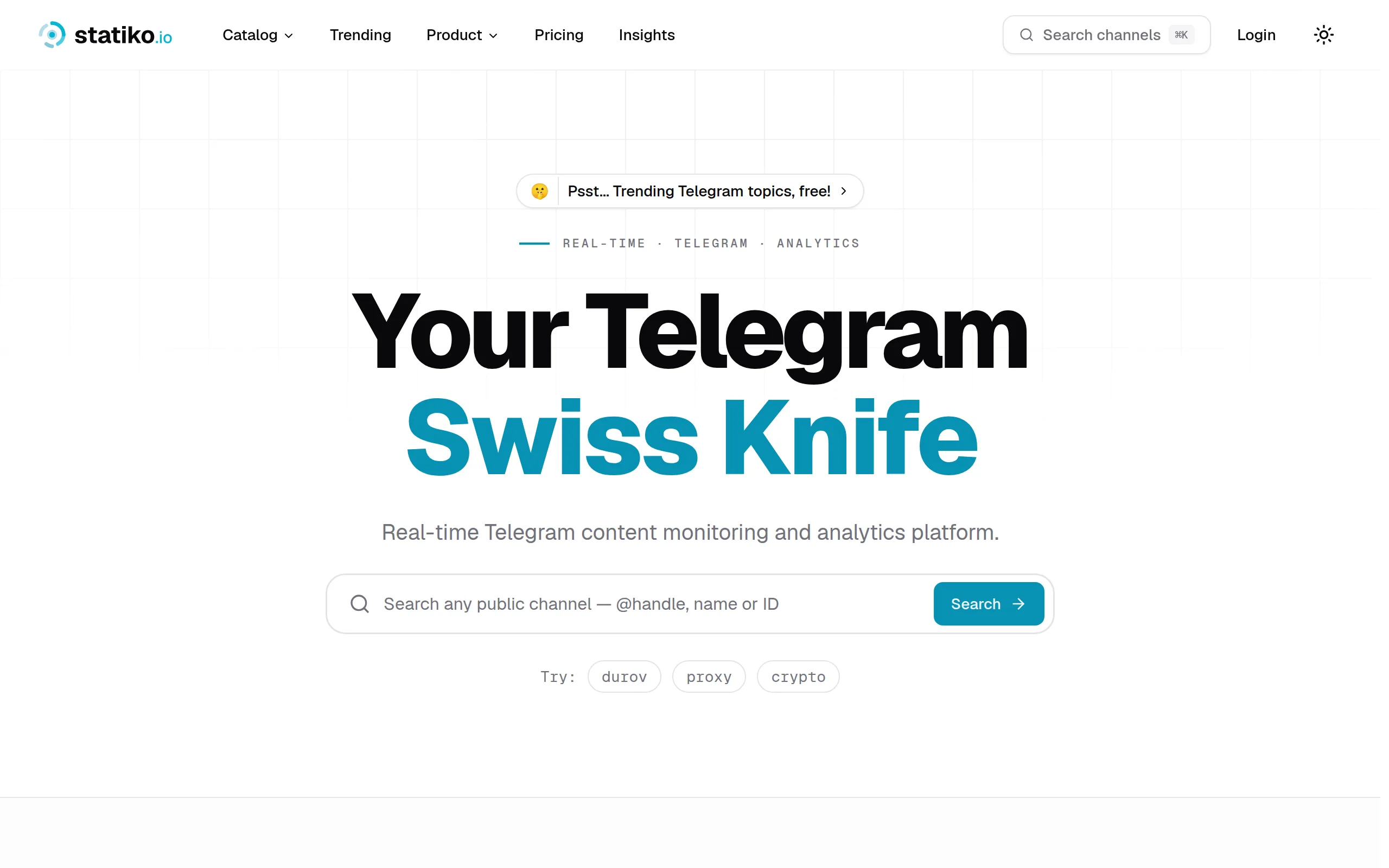
Statiko
Monitor any Telegram channel in real time - track posts, edits, deletions, and growth with AI recaps 📡

Shibui
AI website builder - describe your business, pick a niche template, edit by chatting, and publish instantly ✨

Pro Service
Find verified home service professionals, compare quotes, and pay securely through escrow - built for Brazilians across the US 🏠
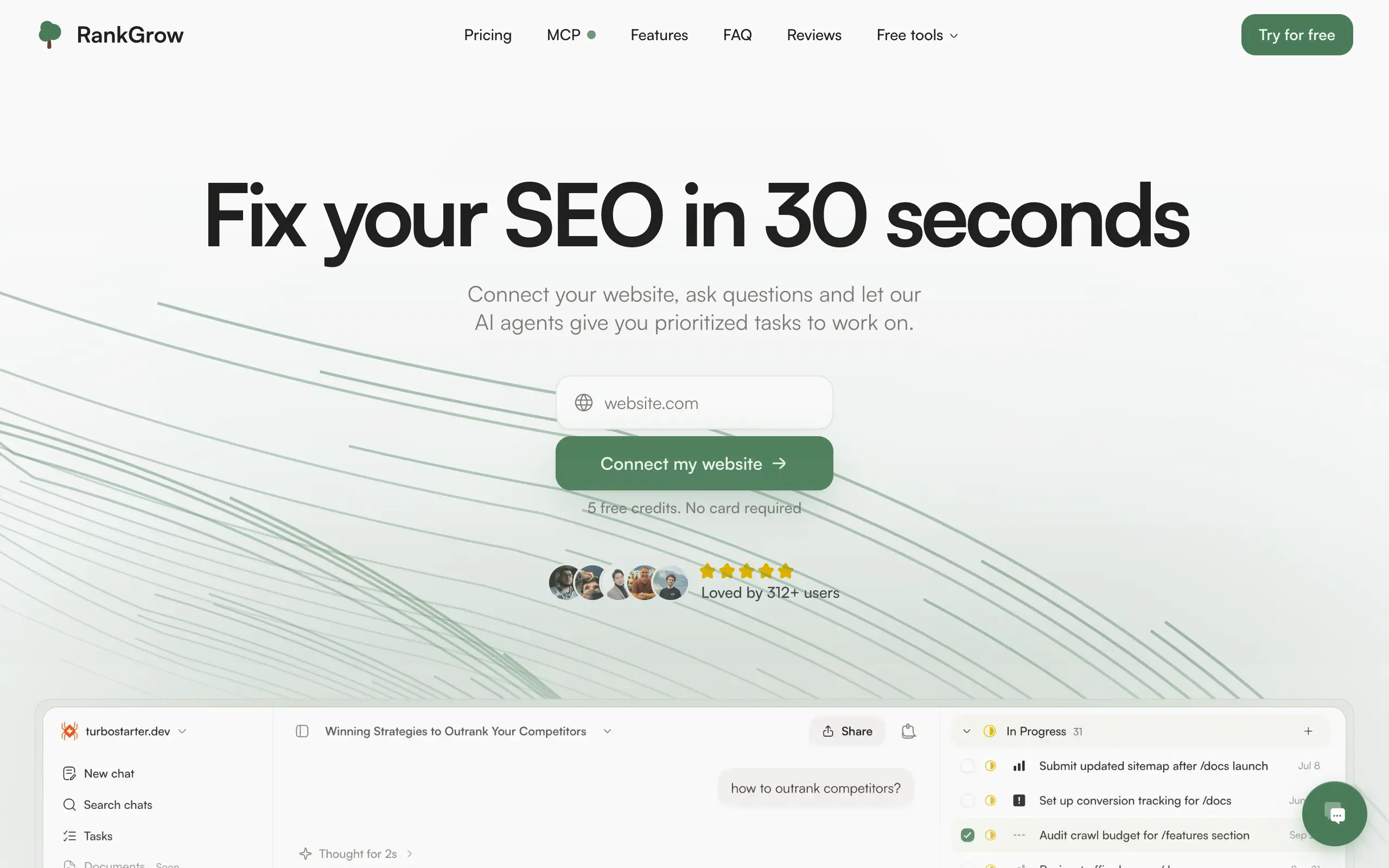
RankGrow
Fix your SEO with AI agents - connect Search Console, get prioritized tasks, and grow organic traffic 📈
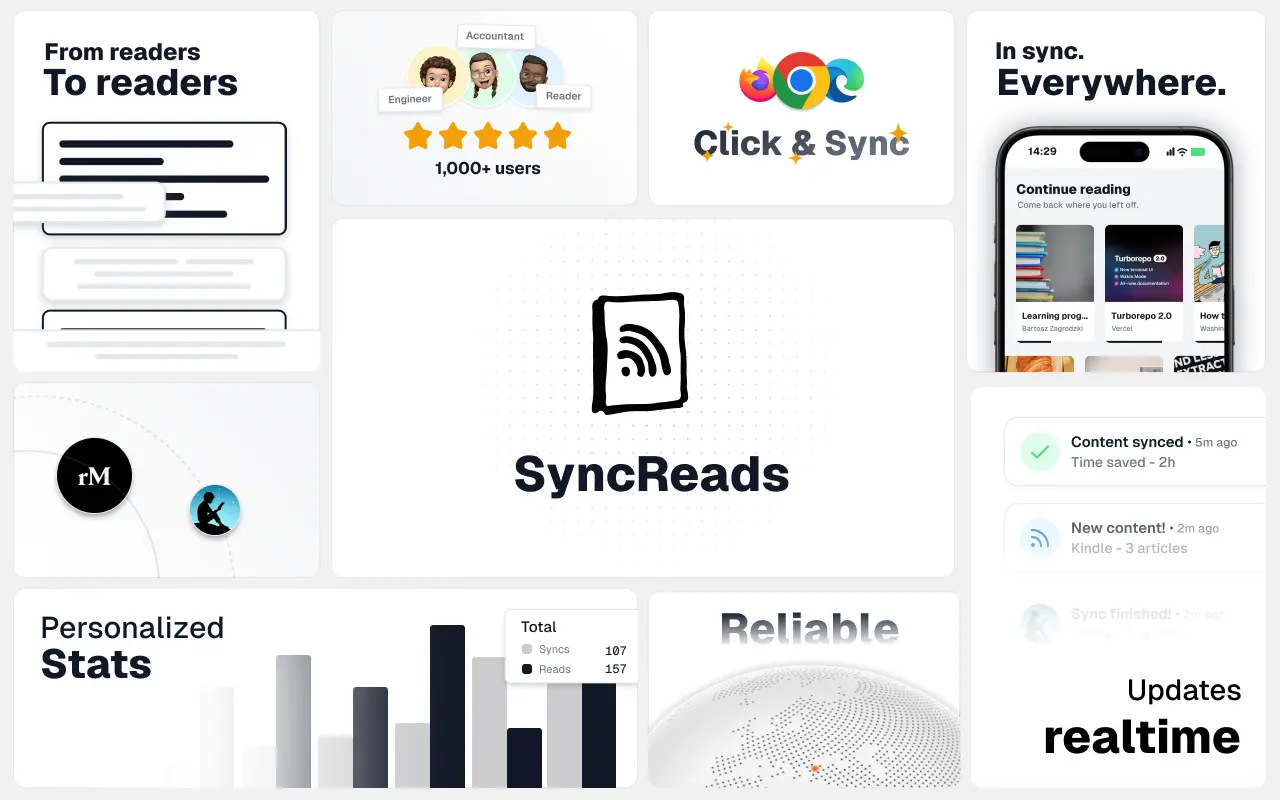
SyncReads
Sync your favorite content for distraction-free reading, save time and replace multiple apps. Anytime, anywhere 🔄
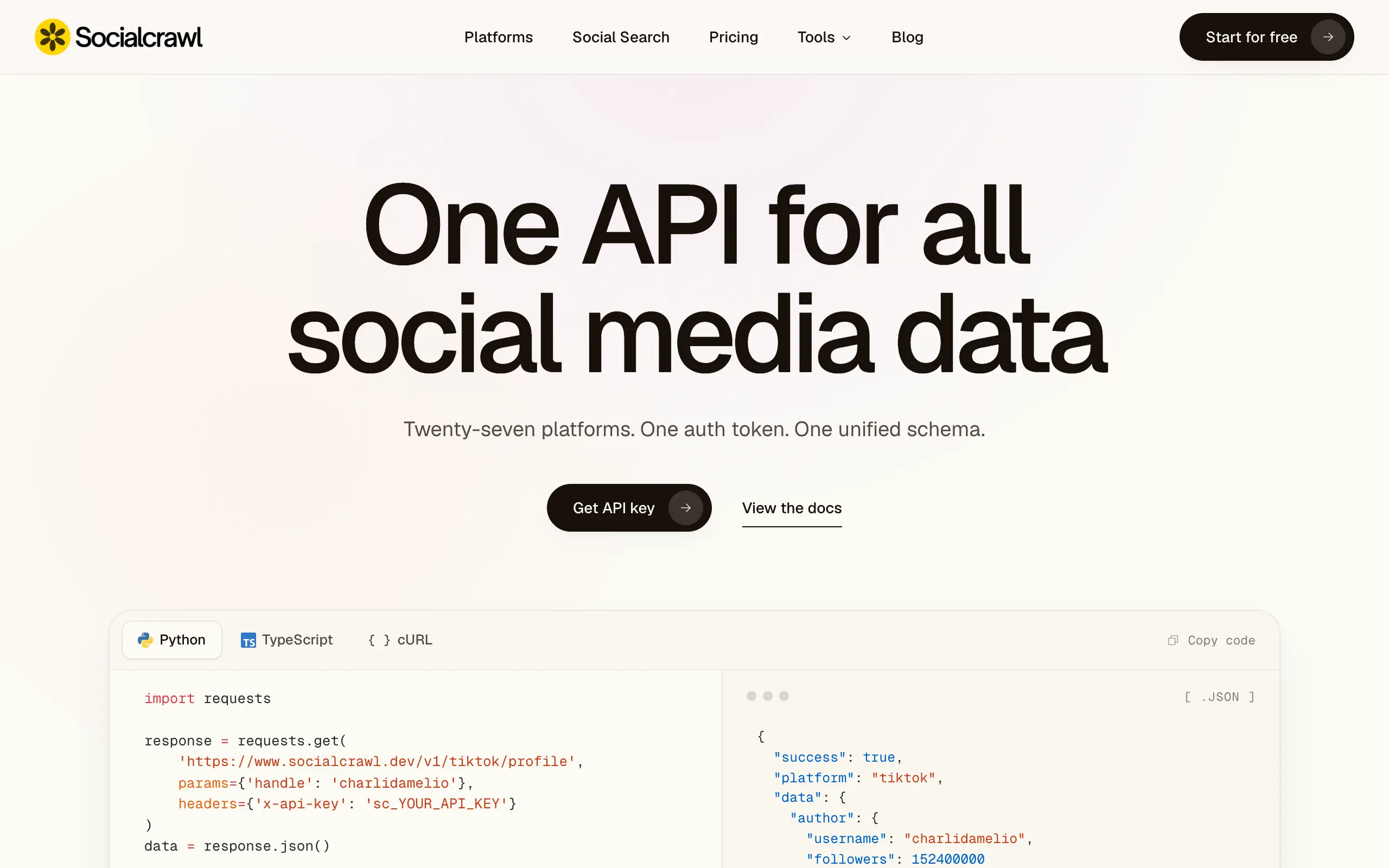
Socialcrawl
Get clean, structured data from 21 platforms like TikTok, Instagram, and YouTube with a single request 📊
Statiko
Monitor any Telegram channel in real time - track posts, edits, deletions, and growth with AI recaps 📡
Shibui
AI website builder - describe your business, pick a niche template, edit by chatting, and publish instantly ✨
Pro Service
Find verified home service professionals, compare quotes, and pay securely through escrow - built for Brazilians across the US 🏠
RankGrow
Fix your SEO with AI agents - connect Search Console, get prioritized tasks, and grow organic traffic 📈
SyncReads
Sync your favorite content for distraction-free reading, save time and replace multiple apps. Anytime, anywhere 🔄
Socialcrawl
Get clean, structured data from 21 platforms like TikTok, Instagram, and YouTube with a single request 📊
Statiko
Monitor any Telegram channel in real time - track posts, edits, deletions, and growth with AI recaps 📡
Shibui
AI website builder - describe your business, pick a niche template, edit by chatting, and publish instantly ✨
Pro Service
Find verified home service professionals, compare quotes, and pay securely through escrow - built for Brazilians across the US 🏠
RankGrow
Fix your SEO with AI agents - connect Search Console, get prioritized tasks, and grow organic traffic 📈
SyncReads
Sync your favorite content for distraction-free reading, save time and replace multiple apps. Anytime, anywhere 🔄
Socialcrawl
Get clean, structured data from 21 platforms like TikTok, Instagram, and YouTube with a single request 📊
Statiko
Monitor any Telegram channel in real time - track posts, edits, deletions, and growth with AI recaps 📡
Shibui
AI website builder - describe your business, pick a niche template, edit by chatting, and publish instantly ✨
Pro Service
Find verified home service professionals, compare quotes, and pay securely through escrow - built for Brazilians across the US 🏠
RankGrow
Fix your SEO with AI agents - connect Search Console, get prioritized tasks, and grow organic traffic 📈
SyncReads
Sync your favorite content for distraction-free reading, save time and replace multiple apps. Anytime, anywhere 🔄
Socialcrawl
Get clean, structured data from 21 platforms like TikTok, Instagram, and YouTube with a single request 📊
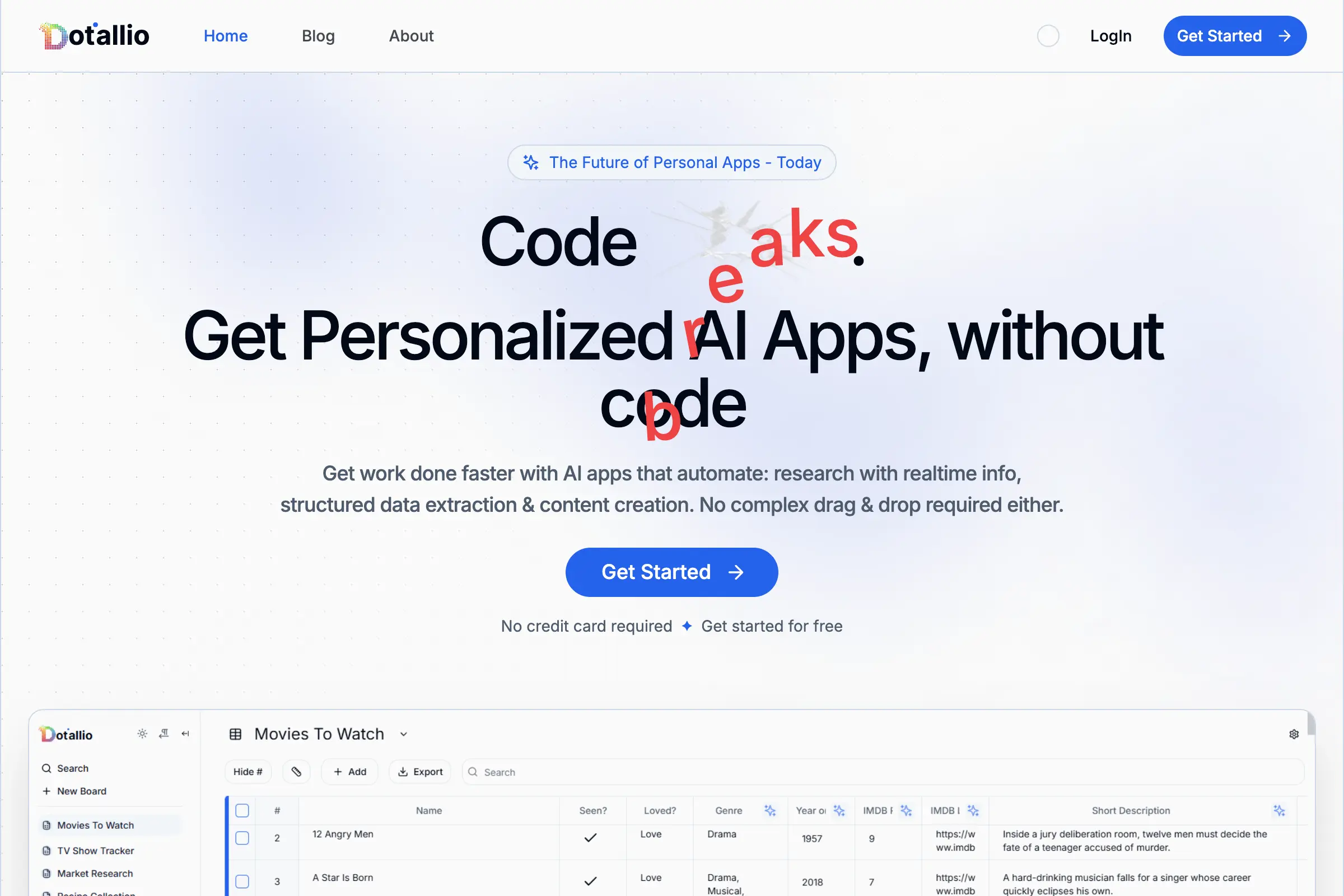
Dotallio
Personalized AI apps that automate research, data extraction, and content creation without code 🤖

Talk to Santa
Enjoy a magical live video chat or receive a unique AI-generated video greeting from Santa Claus 🎅

pozywka.pl
Scalable blog for food journalist, focused on performance and user experience 🌭
zagrodzki.me
Personal blog and portfolio of Bart Zagrodzki, where he shares his knowledge and work 💼
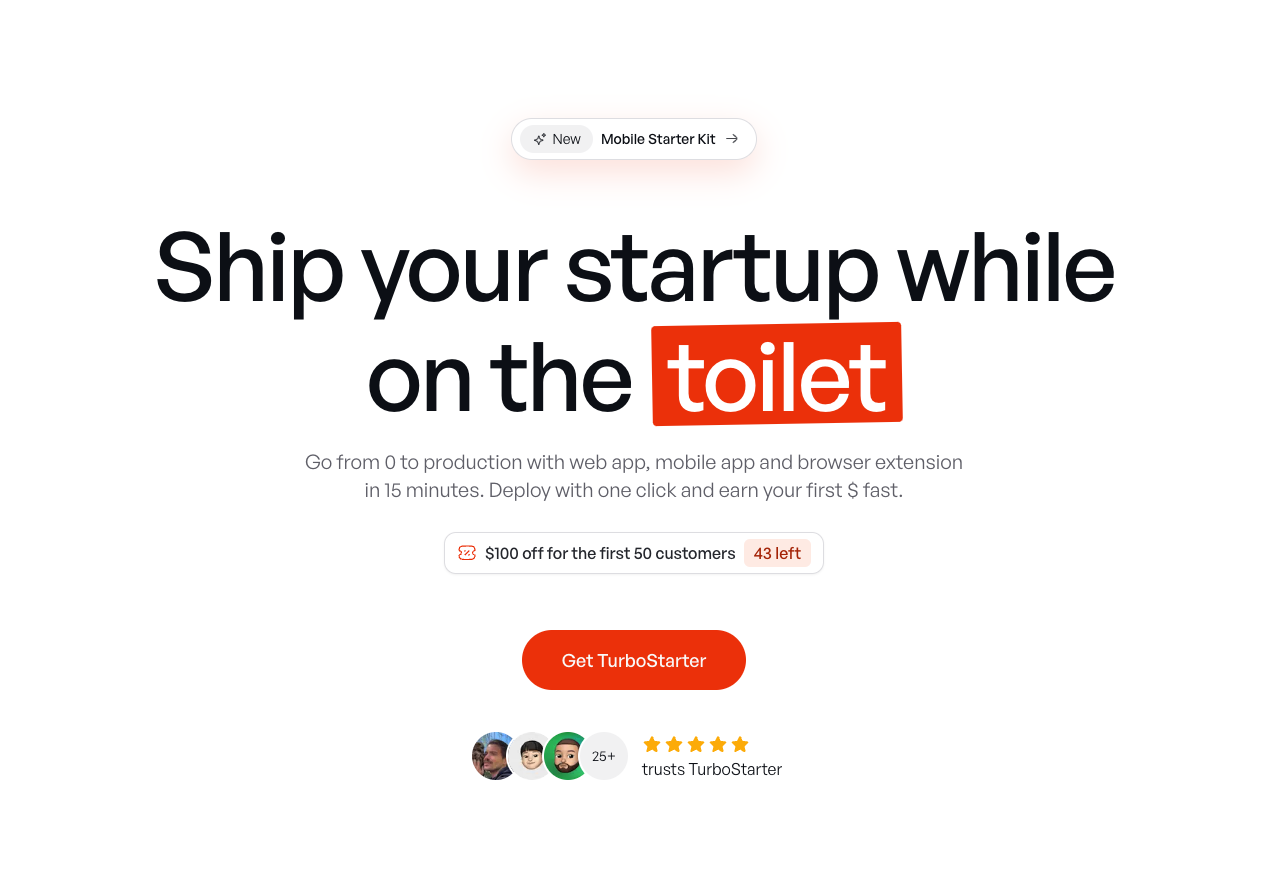
TurboStarter
Ship your startup everywhere. In minutes.
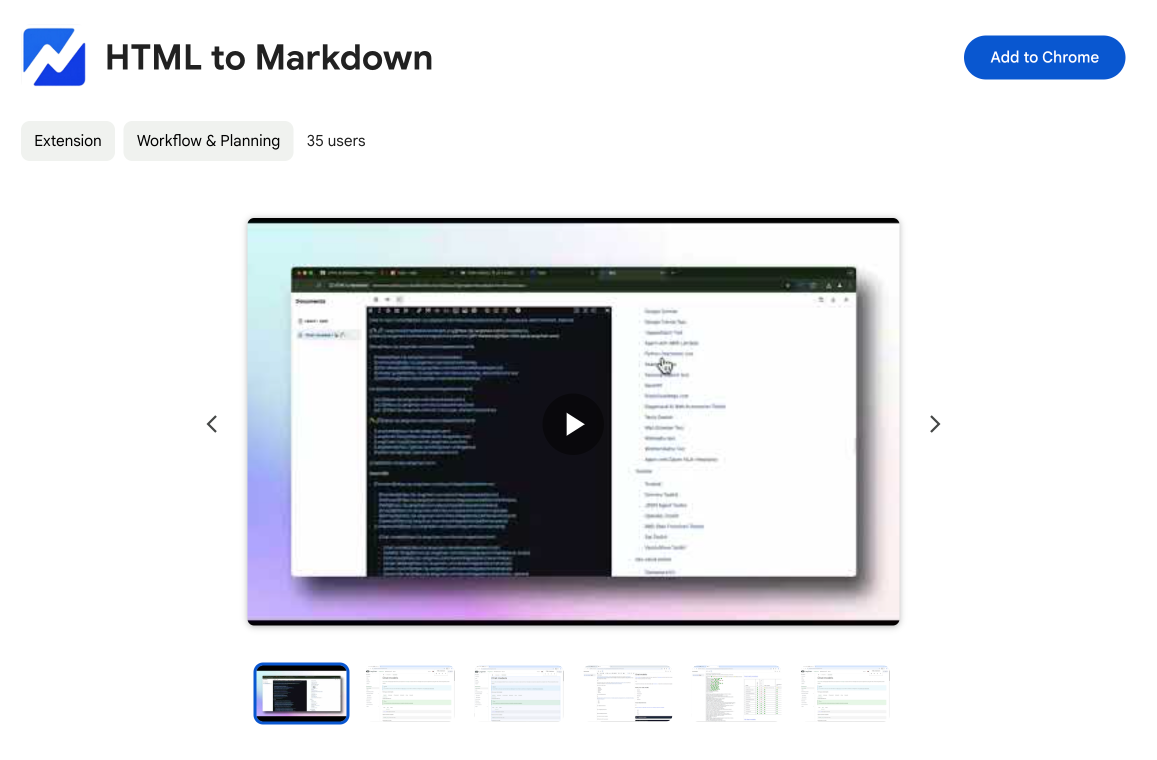
HTML to Markdown
Convert HTML to Markdown with ease, directly in your browser 📄
Dotallio
Personalized AI apps that automate research, data extraction, and content creation without code 🤖
Talk to Santa
Enjoy a magical live video chat or receive a unique AI-generated video greeting from Santa Claus 🎅
pozywka.pl
Scalable blog for food journalist, focused on performance and user experience 🌭
zagrodzki.me
Personal blog and portfolio of Bart Zagrodzki, where he shares his knowledge and work 💼
TurboStarter
Ship your startup everywhere. In minutes.
HTML to Markdown
Convert HTML to Markdown with ease, directly in your browser 📄
Dotallio
Personalized AI apps that automate research, data extraction, and content creation without code 🤖
Talk to Santa
Enjoy a magical live video chat or receive a unique AI-generated video greeting from Santa Claus 🎅
pozywka.pl
Scalable blog for food journalist, focused on performance and user experience 🌭
zagrodzki.me
Personal blog and portfolio of Bart Zagrodzki, where he shares his knowledge and work 💼
TurboStarter
Ship your startup everywhere. In minutes.
HTML to Markdown
Convert HTML to Markdown with ease, directly in your browser 📄
Dotallio
Personalized AI apps that automate research, data extraction, and content creation without code 🤖
Talk to Santa
Enjoy a magical live video chat or receive a unique AI-generated video greeting from Santa Claus 🎅
pozywka.pl
Scalable blog for food journalist, focused on performance and user experience 🌭
zagrodzki.me
Personal blog and portfolio of Bart Zagrodzki, where he shares his knowledge and work 💼
TurboStarter
Ship your startup everywhere. In minutes.
HTML to Markdown
Convert HTML to Markdown with ease, directly in your browser 📄
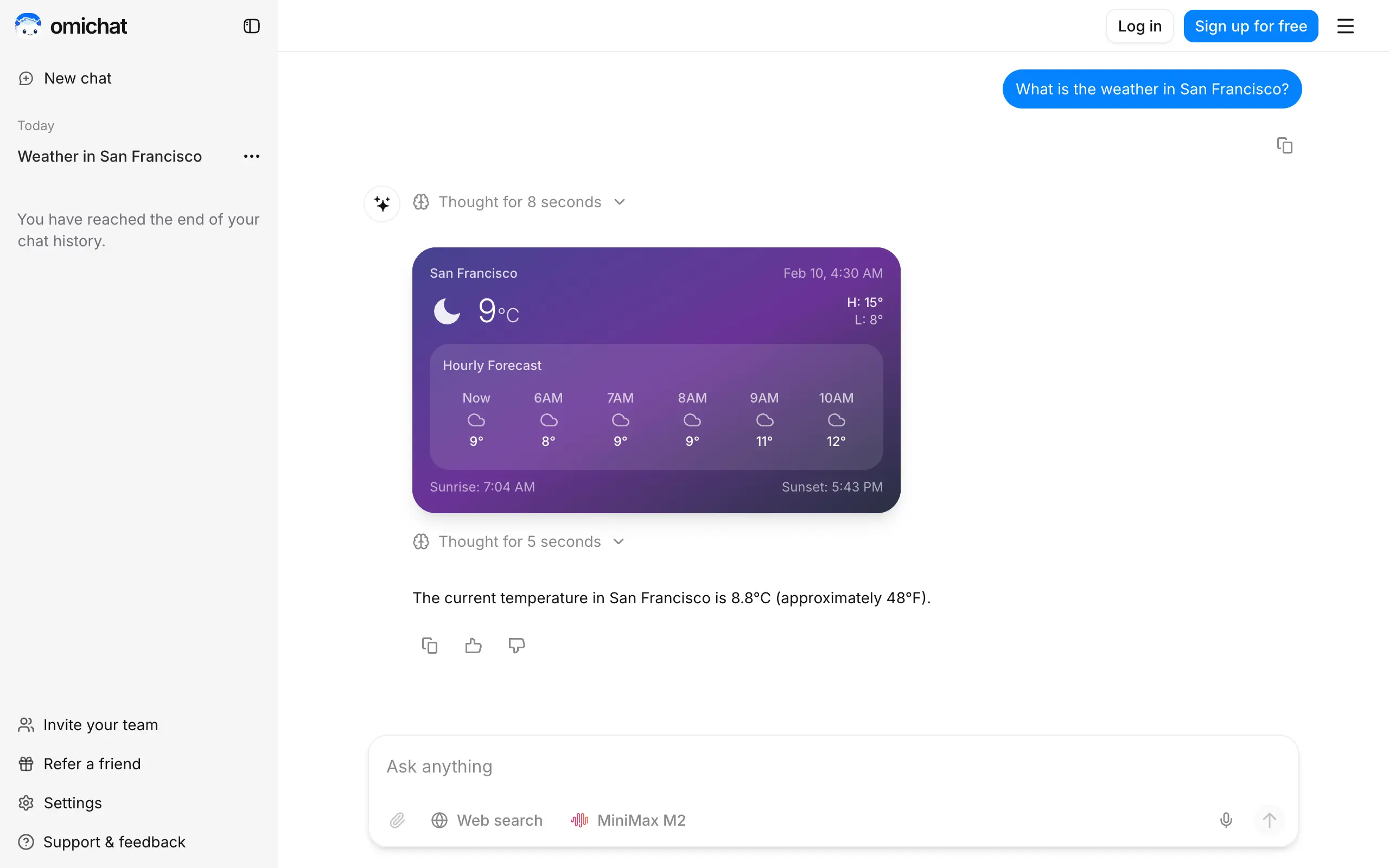
Omichat
Chat with 50+ AI models, including ChatGPT and Claude, in one place - switch models anytime without losing context 🤖
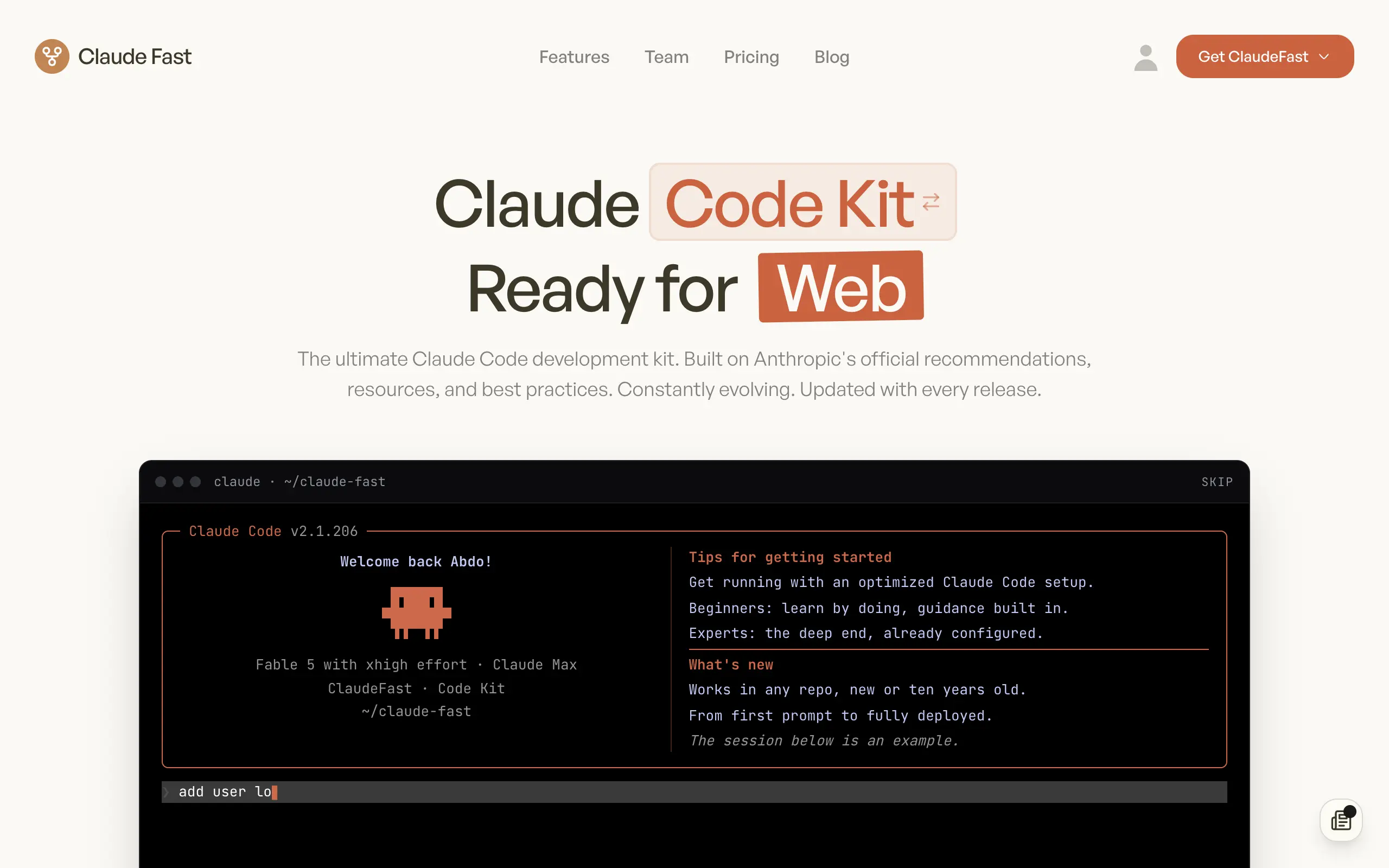
Claude Fast
Supercharge your Claude Code with 6x effective context window and specialized AI agents 🤖
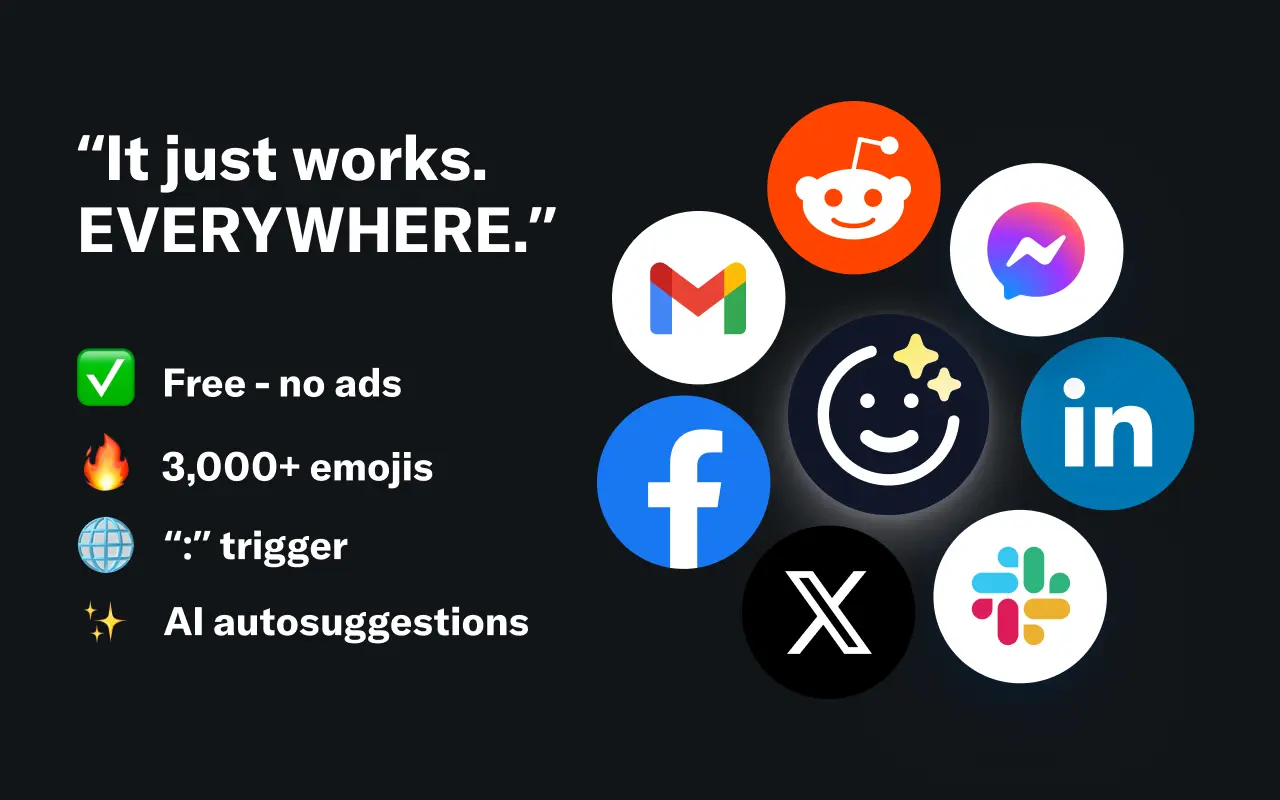
EmojAI
AI-powered emoji picker with smart, context-aware suggestions 🤖

Solohacker
Autonomous company launcher - AI agents work 24/7, escalate what matters, and you stay in control 🤖

BeRawi: Storytelling Coach
Practice storytelling daily with instant feedback to sound clearer, more engaging, and confident 🎤
Omichat
Chat with 50+ AI models, including ChatGPT and Claude, in one place - switch models anytime without losing context 🤖
Claude Fast
Supercharge your Claude Code with 6x effective context window and specialized AI agents 🤖
EmojAI
AI-powered emoji picker with smart, context-aware suggestions 🤖
Solohacker
Autonomous company launcher - AI agents work 24/7, escalate what matters, and you stay in control 🤖
BeRawi: Storytelling Coach
Practice storytelling daily with instant feedback to sound clearer, more engaging, and confident 🎤
Omichat
Chat with 50+ AI models, including ChatGPT and Claude, in one place - switch models anytime without losing context 🤖
Claude Fast
Supercharge your Claude Code with 6x effective context window and specialized AI agents 🤖
EmojAI
AI-powered emoji picker with smart, context-aware suggestions 🤖
Solohacker
Autonomous company launcher - AI agents work 24/7, escalate what matters, and you stay in control 🤖
BeRawi: Storytelling Coach
Practice storytelling daily with instant feedback to sound clearer, more engaging, and confident 🎤
Omichat
Chat with 50+ AI models, including ChatGPT and Claude, in one place - switch models anytime without losing context 🤖
Claude Fast
Supercharge your Claude Code with 6x effective context window and specialized AI agents 🤖
EmojAI
AI-powered emoji picker with smart, context-aware suggestions 🤖
Solohacker
Autonomous company launcher - AI agents work 24/7, escalate what matters, and you stay in control 🤖
BeRawi: Storytelling Coach
Practice storytelling daily with instant feedback to sound clearer, more engaging, and confident 🎤

Connect with like-minded people
Join our community to get feedback, support, and grow together with 1,000+ builders on board, let's ship it!
Join usShip your startup everywhere. In minutes.
Don't burn tokens on setup and start building features on day one.