ChurnSignal AI
Lightweight AI that scans support tickets and CRM notes to predict churn risk and flag accounts needing immediate attention for SMB SaaS teams.
The complete guide to building an AI-powered churn prediction tool for small SaaS founders
Customer churn is the silent killer of SaaS businesses.
You can acquire hundreds of users, grow MRR steadily, and still watch your company stall because customers quietly cancel every month. For small SaaS founders, churn is often more dangerous than slow growth. And yet, most early-stage teams lack the tools or data science expertise to predict and prevent it.
This is where an AI-powered churn prediction tool like ChurnSignal AI becomes strategically powerful: a lightweight system that analyzes Stripe billing data and customer support interactions to identify at-risk customers before they cancel.
In this in-depth guide, we’ll explore:
- The real market opportunity for churn prediction in micro and small SaaS
- The target audience and their urgent pain points
- Core features and product architecture
- Recommended tech stack (with trade-offs)
- Monetization strategies
- Competitive landscape and differentiation
- Risks and mitigation strategies
- Actionable steps to build and launch
If you’re validating, building, or investing in an AI churn analytics tool for SaaS, this article will give you a clear roadmap.
Why churn prediction is a massive opportunity in SaaS
Churn is not just a metric — it’s a growth limiter.
For subscription businesses, even a 1–2% reduction in monthly churn can dramatically increase lifetime value (LTV) and long-term revenue. According to multiple industry reports (e.g., ProfitWell and Recurly studies), improving retention by 5% can significantly increase profitability due to compounding subscription effects.
Yet most early-stage SaaS founders:
- Only look at churn after it happens
- Rely on basic Stripe dashboards
- Don’t track behavioral indicators
- Have no predictive system in place
Enterprise companies use advanced data science models, customer success teams, and platforms like Gainsight or Totango. But small SaaS teams with 1–10 employees? They’re blind to early warning signs.
The gap in the market
There is a clear product gap between:
- Basic analytics tools (Stripe dashboard, simple charts)
- Heavy enterprise platforms (complex onboarding, high cost, overkill features)
Small SaaS founders need:
- Plug-and-play integrations
- No data science knowledge required
- Actionable alerts, not dashboards
- Affordable pricing
This is exactly where ChurnSignal AI can win.
Target audience analysis: who truly needs churn prediction?
To build a successful AI SaaS tool, you must narrow the ICP (Ideal Customer Profile).
Primary audience: bootstrapped and indie SaaS founders
Characteristics:
- $1k–$50k MRR
- 50–2,000 active subscribers
- Solo founder or small team (≤5 people)
- Using Stripe for billing
- Using tools like Intercom, Zendesk, Help Scout, or email support
- No dedicated data analyst
Pain points:
- “I don’t know why people cancel.”
- “Churn feels random.”
- “I only find out when revenue drops.”
- “I don’t have time to manually analyze accounts.”
Their core desire isn’t “AI.” It’s:
“Tell me which customers are about to cancel and what I should do.”
Secondary audience: early-stage VC-backed SaaS startups
- $50k–$300k MRR
- Customer success team of 1–3 people
- Growing complexity in segments
- Need early predictive signals but can’t justify enterprise tools
These teams value:
- Customer health scoring
- Segmentation by risk
- Automated alerts
Understanding churn signals: what actually predicts cancellation?
Before building an AI churn prediction tool, you must understand what signals matter.
Churn is rarely random. It’s behavioral.
Billing-related signals (Stripe data)
- Failed payments
- Downgrades
- Usage-to-plan mismatch
- Inactive subscriptions nearing renewal
- Refund requests
- Discount usage patterns
Support-related signals
- Increase in support tickets
- Negative sentiment in messages
- Long unresolved threads
- Feature complaints
- Repeated bug reports
Behavioral signals (optional future integrations)
- Login frequency drop
- Feature adoption decline
- Session duration decrease
- No activity in last 7–14 days
ChurnSignal AI’s core insight:
Combine billing signals with support sentiment to detect churn risk early.
Most small SaaS tools only analyze billing. Very few correlate support interactions with payment data.
That’s the competitive edge.
Core features of ChurnSignal AI
Let’s break down the MVP and future roadmap.
1. One-click Stripe integration
Founders connect Stripe via OAuth.
Data ingested:
- Subscription status
- MRR
- Plan details
- Invoice history
- Failed payments
- Refunds
2. Support platform integration
Integrations with:
- Intercom
- Zendesk
- Help Scout
- Gmail inbox parsing (for early-stage users)
Extract:
- Message frequency
- Sentiment analysis
- Topic clustering
- Time-to-resolution
3. AI-powered churn score
Each customer receives:
- Churn probability score (0–100%)
- Risk category: Low / Medium / High
- Top contributing factors
Example:
Risk: 78%
Drivers: 2 failed payments, negative support sentiment, 14 days inactivity
4. At-risk alerts
- Weekly email digest
- Slack notifications
- “New high-risk account” alerts
No dashboards required if user doesn’t want them.
5. Action recommendations
Instead of just scores:
- “Offer plan downgrade”
- “Send check-in email”
- “Provide onboarding call”
- “Investigate unresolved ticket #4821”
This shifts from analytics tool to decision-support system.
Feature comparison vs alternatives
| Feature | Stripe Native | Basic Analytics | Enterprise CS Tools | ChurnSignal AI | Manual Spreadsheets |
|---|---|---|---|---|---|
| Churn prediction | ❌ | ❌ | ✅ | ✅ | ❌ |
| Support sentiment analysis | ❌ | ❌ | ✅ | ✅ | ❌ |
| Affordable for small SaaS | ✅ | ✅ | ❌ | ✅ | ✅ |
The sweet spot is clear: predictive intelligence without enterprise complexity.
Recommended tech stack (with trade-offs)
Building an AI churn prediction SaaS requires balancing speed, scalability, and cost.
Frontend
Why:
- Fast iteration
- SEO-ready marketing pages
- Large ecosystem
- Easy integration with auth providers
Backend
Option A: Node.js + TypeScript
Option B: Python (FastAPI)
Trade-off:
- Node.js: Easier full-stack sharing, great for API orchestration
- Python: Better ML ecosystem (scikit-learn, PyTorch)
For serious churn modeling, Python backend is often preferable.
Database
- PostgreSQL (relational customer + billing data)
- Redis (caching scores)
- Optional: vector DB for support embeddings
AI layer
- Sentiment analysis via OpenAI API or open-source models
- Churn classification via:
- Logistic regression (simple, interpretable)
- Gradient boosting (e.g., XGBoost)
- Neural networks (later stage)
Start simple. Interpretability matters for trust.
Example churn scoring pipeline
// Simplified churn scoring logic
const calculateChurnScore = (customer) => {
  let score = 0;

  if (customer.failedPayments > 1) score += 25;
  if (customer.sentiment < -0.3) score += 20;
  if (customer.daysInactive > 14) score += 15;
  if (customer.downgradedRecently) score += 10;

  return Math.min(score, 100);
};
MVP doesn’t need deep ML. Rule-based + lightweight ML is enough initially.
Monetization strategy
ChurnSignal AI directly impacts revenue. That makes pricing power strong.
Option 1: Tiered subscription pricing
- Starter ($29/month) – up to 200 customers
- Growth ($79/month) – up to 1,000 customers
- Pro ($199/month) – unlimited + advanced analytics
Option 2: Value-based pricing
Charge based on:
- MRR analyzed
- Number of tracked customers
- Number of integrations
Option 3: Hybrid model
Base subscription + usage-based AI credits.
Why founders will pay
If your tool:
- Reduces churn by 1–2%
- Saves 2–5 customers per month
- Increases LTV
Then ROI is obvious.
If a SaaS does $20k MRR and loses $2k monthly to churn, saving even $500/month justifies $79/month pricing instantly.
Position the product as:
“The cheapest customer success hire you’ll ever make.”
Competitive advantage and differentiation
Competitors to consider
- ProfitWell (retention analytics)
- Baremetrics
- ChartMogul
- Gainsight (enterprise)
- Totango (enterprise)
Where ChurnSignal AI wins
Focused on small SaaS
Built specifically for founders under $50k MRR with simple setup and no jargon.
Support + billing combined
Most tools analyze payments only. Combining sentiment and billing improves prediction accuracy.
Action-first design
Clear next steps instead of overwhelming dashboards.
Your USP:
AI-powered churn prediction that works out-of-the-box for small SaaS founders in under 10 minutes.
Risks and mitigation strategies
Risk 1: Poor prediction accuracy
Mitigation:
- Start with hybrid rules + ML
- Continuously retrain models
- Allow user feedback (“This prediction was wrong”)
Risk 2: Data privacy concerns
Mitigation:
- SOC2 roadmap
- Clear privacy policy
- Minimal data storage
- Encrypt at rest and in transit
Risk 3: API dependency on Stripe
Mitigation:
- Abstract billing layer
- Plan future Paddle/Chargebee integrations
Risk 4: Founder skepticism about AI
Mitigation:
- Show explainability
- Highlight “Top 3 reasons” for each risk score
- Provide case studies
Trust is critical
Churn prediction tools directly influence revenue decisions. Transparency and explainable AI will matter more than complexity.
Go-to-market strategy
For small SaaS tools, distribution matters more than tech.
1. Content marketing
SEO articles targeting:
- “How to reduce SaaS churn”
- “SaaS churn benchmarks”
- “How to predict customer churn”
- “Stripe churn analysis”
2. Indie hacker communities
- Build in public
- Share churn insights
- Publish anonymized benchmarks
3. Partnerships
- Stripe consultants
- SaaS coaches
- Micro-VC firms
Step-by-step implementation roadmap
To accelerate development, use a production-ready SaaS starter kit like TurboStarter to handle authentication, payments, dashboard UI, and foundational infrastructure. This allows you to focus on core AI and integrations instead of boilerplate setup.
Long-term vision: from churn prediction to revenue intelligence
ChurnSignal AI can evolve into:
- Expansion prediction (upsell detection)
- Customer lifetime value forecasting
- Automated retention campaigns
- Benchmarking across industries
Eventually:
Become the AI revenue co-pilot for small SaaS companies.
Final thoughts: why this idea is strong in 2026 and beyond
AI is no longer a novelty. It’s expected.
But small SaaS founders don’t want AI for the sake of it. They want:
- Simplicity
- Clear ROI
- Time savings
- Revenue protection
ChurnSignal AI hits all four.
It addresses a real, painful problem:
- High churn
- Low visibility
- No data team
- Limited time
By combining Stripe billing data with support sentiment analysis and presenting actionable risk alerts, this product occupies a highly defensible niche between basic dashboards and expensive enterprise tools.
For founders looking to build a meaningful AI SaaS product with strong retention and clear value, churn prediction for small SaaS is not just viable — it’s strategically compelling.
The opportunity isn’t just in detecting churn.
It’s in helping founders stop it before it happens.
More 🤖 AI Startup SaaS ideas
Discover more innovative ai startup SaaS ideas that are trending in 2026. Each idea is AI-generated with market validation and growth potential to help you find your next profitable venture faster than competitors.
Your competitors are building with TurboStarter
Below are some of the SaaS ideas that have been generated and built with our starter kit.
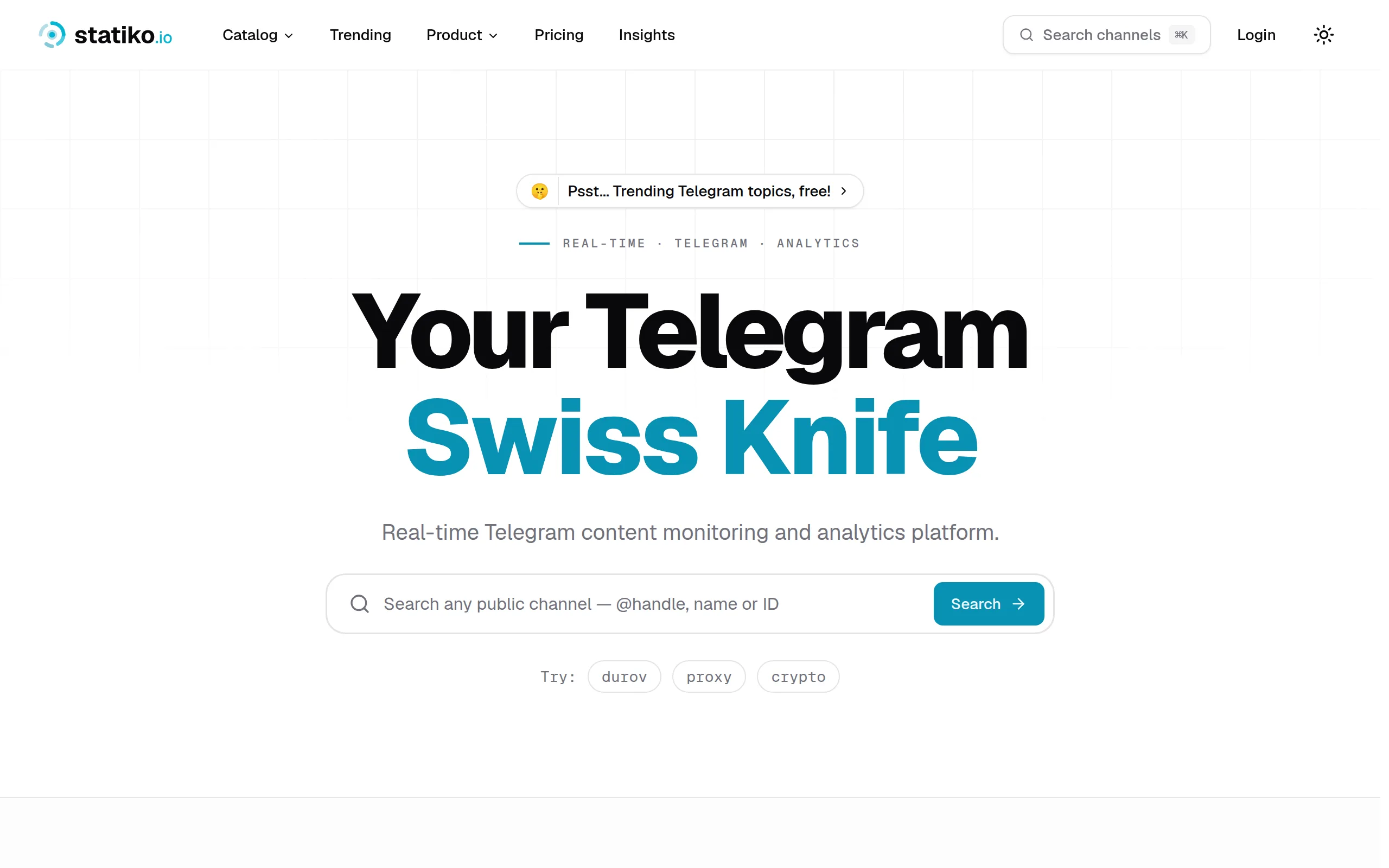
Statiko
Monitor any Telegram channel in real time - track posts, edits, deletions, and growth with AI recaps 📡

Shibui
AI website builder - describe your business, pick a niche template, edit by chatting, and publish instantly ✨

Pro Service
Find verified home service professionals, compare quotes, and pay securely through escrow - built for Brazilians across the US 🏠
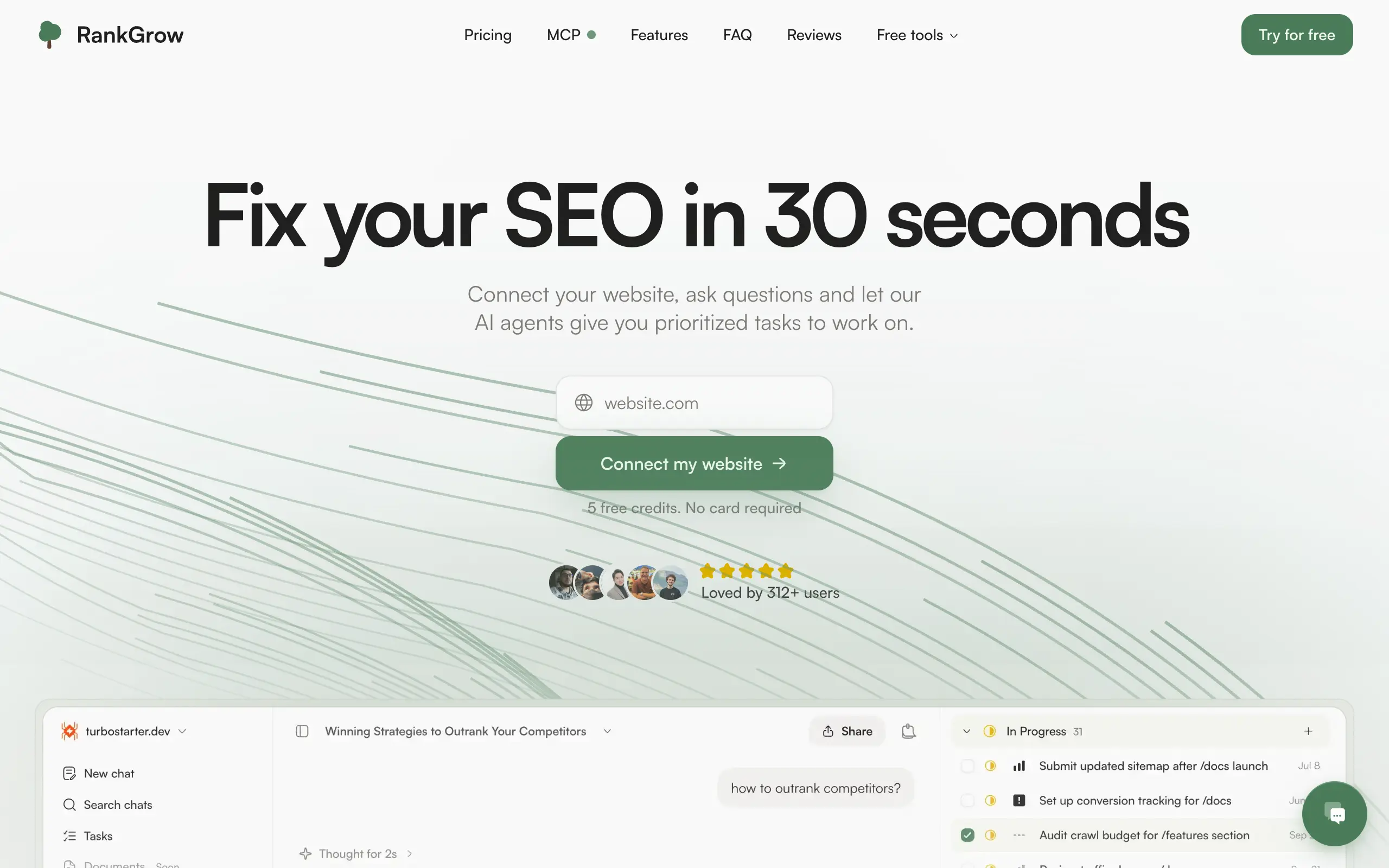
RankGrow
Fix your SEO with AI agents - connect Search Console, get prioritized tasks, and grow organic traffic 📈
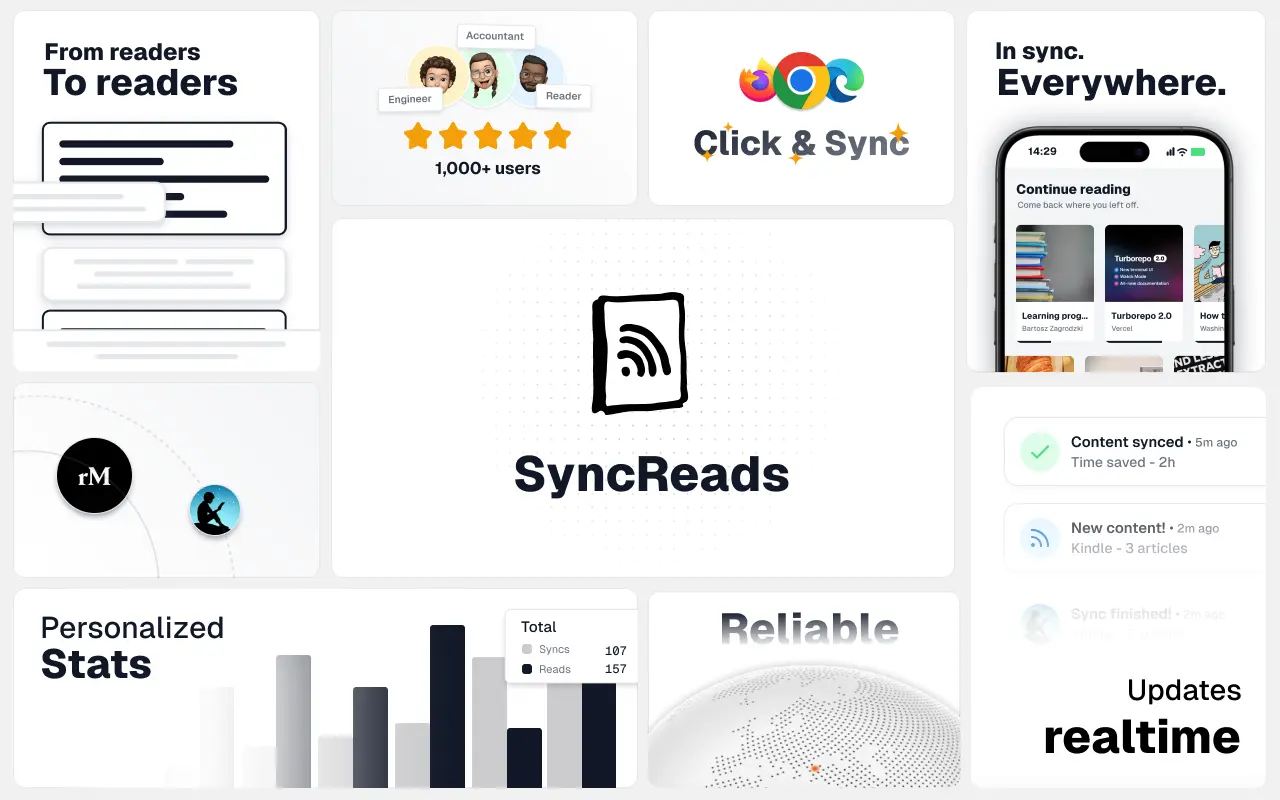
SyncReads
Sync your favorite content for distraction-free reading, save time and replace multiple apps. Anytime, anywhere 🔄
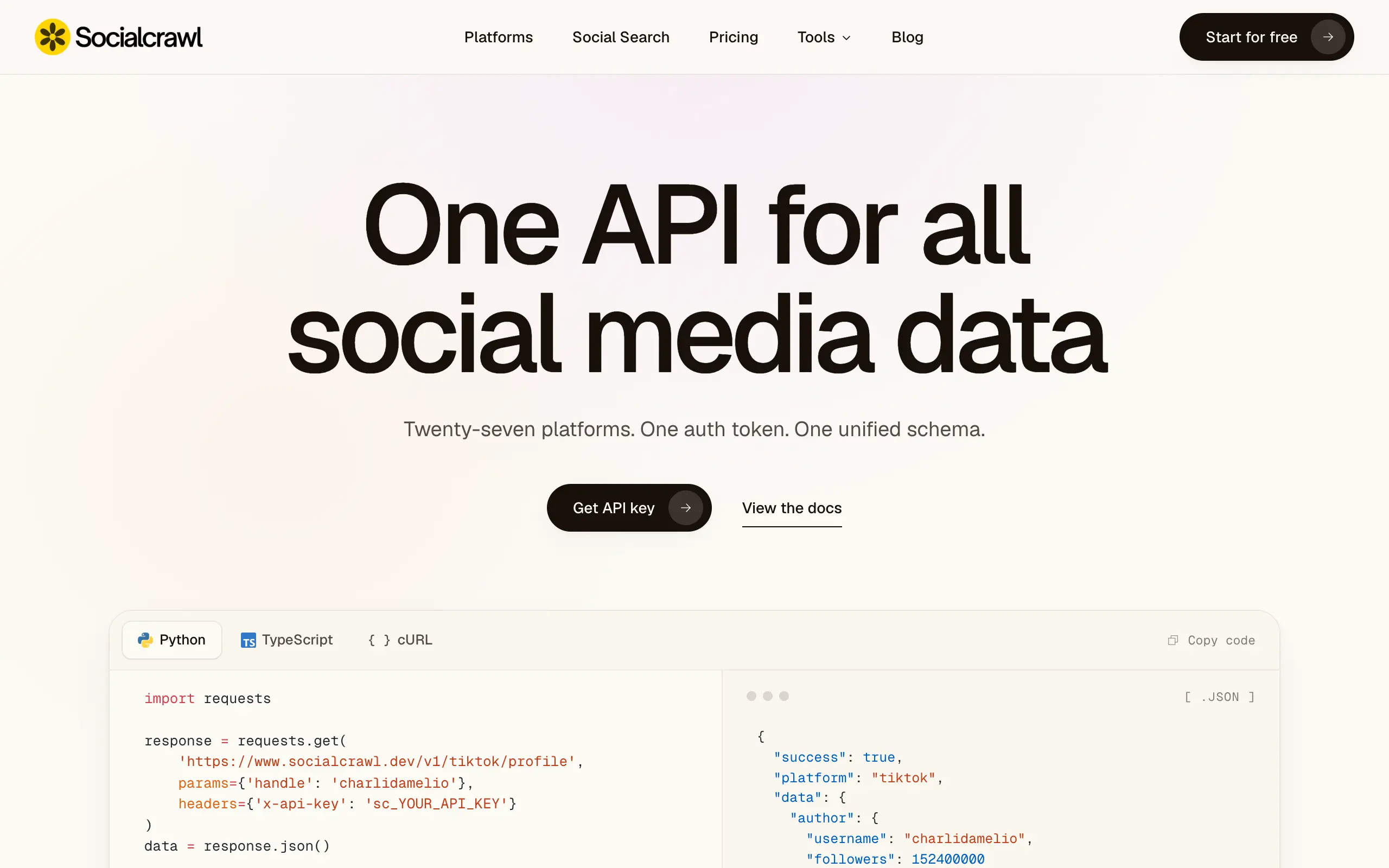
Socialcrawl
Get clean, structured data from 21 platforms like TikTok, Instagram, and YouTube with a single request 📊
Statiko
Monitor any Telegram channel in real time - track posts, edits, deletions, and growth with AI recaps 📡
Shibui
AI website builder - describe your business, pick a niche template, edit by chatting, and publish instantly ✨
Pro Service
Find verified home service professionals, compare quotes, and pay securely through escrow - built for Brazilians across the US 🏠
RankGrow
Fix your SEO with AI agents - connect Search Console, get prioritized tasks, and grow organic traffic 📈
SyncReads
Sync your favorite content for distraction-free reading, save time and replace multiple apps. Anytime, anywhere 🔄
Socialcrawl
Get clean, structured data from 21 platforms like TikTok, Instagram, and YouTube with a single request 📊
Statiko
Monitor any Telegram channel in real time - track posts, edits, deletions, and growth with AI recaps 📡
Shibui
AI website builder - describe your business, pick a niche template, edit by chatting, and publish instantly ✨
Pro Service
Find verified home service professionals, compare quotes, and pay securely through escrow - built for Brazilians across the US 🏠
RankGrow
Fix your SEO with AI agents - connect Search Console, get prioritized tasks, and grow organic traffic 📈
SyncReads
Sync your favorite content for distraction-free reading, save time and replace multiple apps. Anytime, anywhere 🔄
Socialcrawl
Get clean, structured data from 21 platforms like TikTok, Instagram, and YouTube with a single request 📊
Statiko
Monitor any Telegram channel in real time - track posts, edits, deletions, and growth with AI recaps 📡
Shibui
AI website builder - describe your business, pick a niche template, edit by chatting, and publish instantly ✨
Pro Service
Find verified home service professionals, compare quotes, and pay securely through escrow - built for Brazilians across the US 🏠
RankGrow
Fix your SEO with AI agents - connect Search Console, get prioritized tasks, and grow organic traffic 📈
SyncReads
Sync your favorite content for distraction-free reading, save time and replace multiple apps. Anytime, anywhere 🔄
Socialcrawl
Get clean, structured data from 21 platforms like TikTok, Instagram, and YouTube with a single request 📊
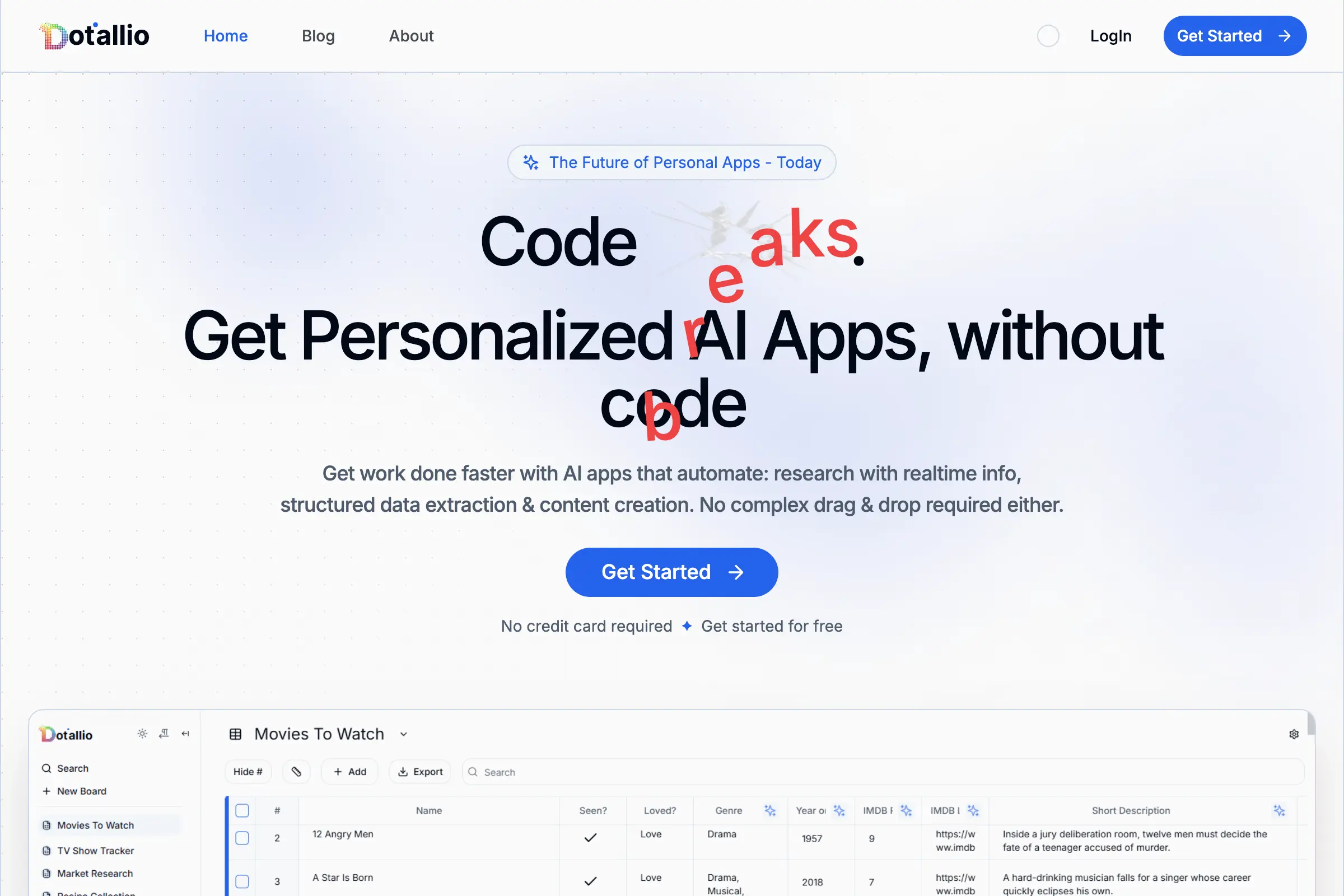
Dotallio
Personalized AI apps that automate research, data extraction, and content creation without code 🤖

Talk to Santa
Enjoy a magical live video chat or receive a unique AI-generated video greeting from Santa Claus 🎅

pozywka.pl
Scalable blog for food journalist, focused on performance and user experience 🌭
zagrodzki.me
Personal blog and portfolio of Bart Zagrodzki, where he shares his knowledge and work 💼
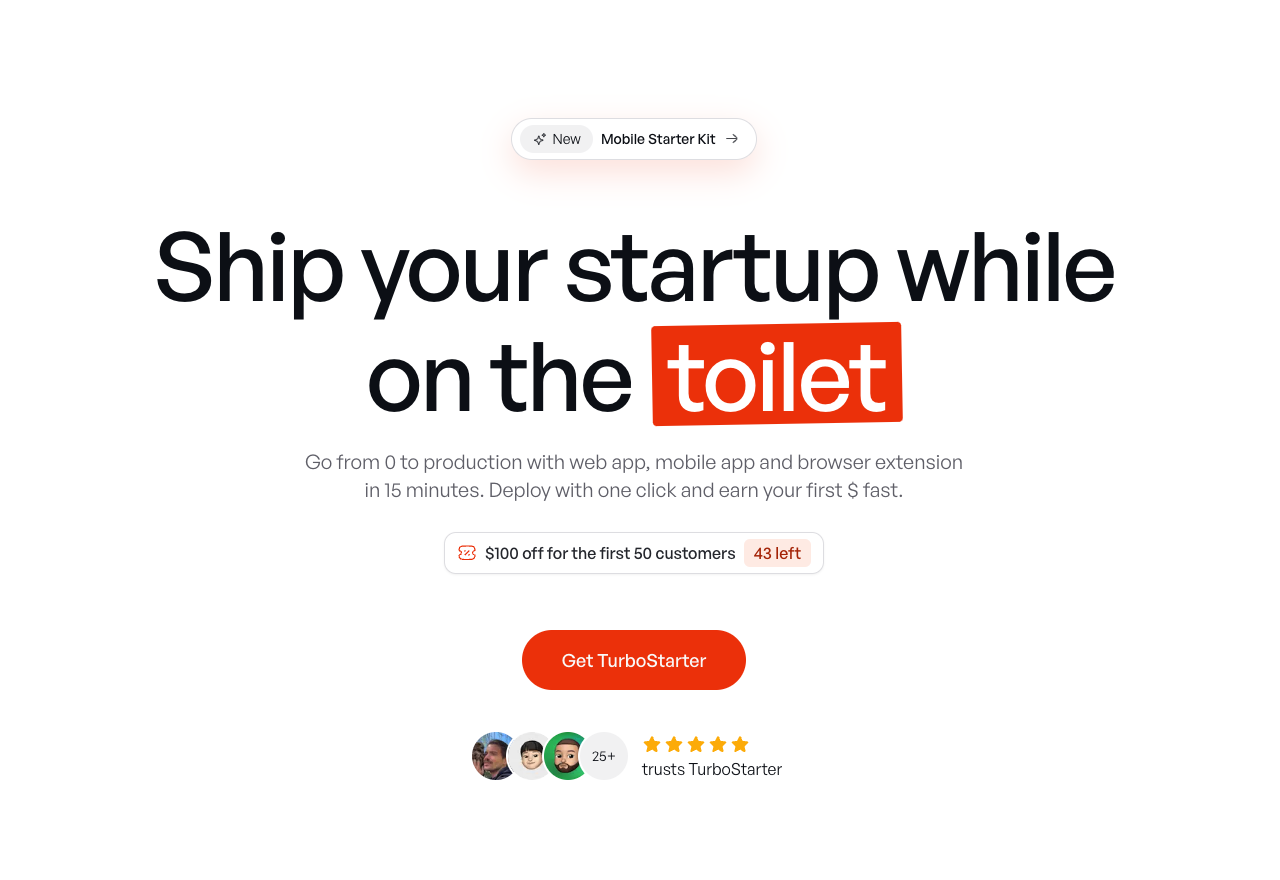
TurboStarter
Ship your startup everywhere. In minutes.
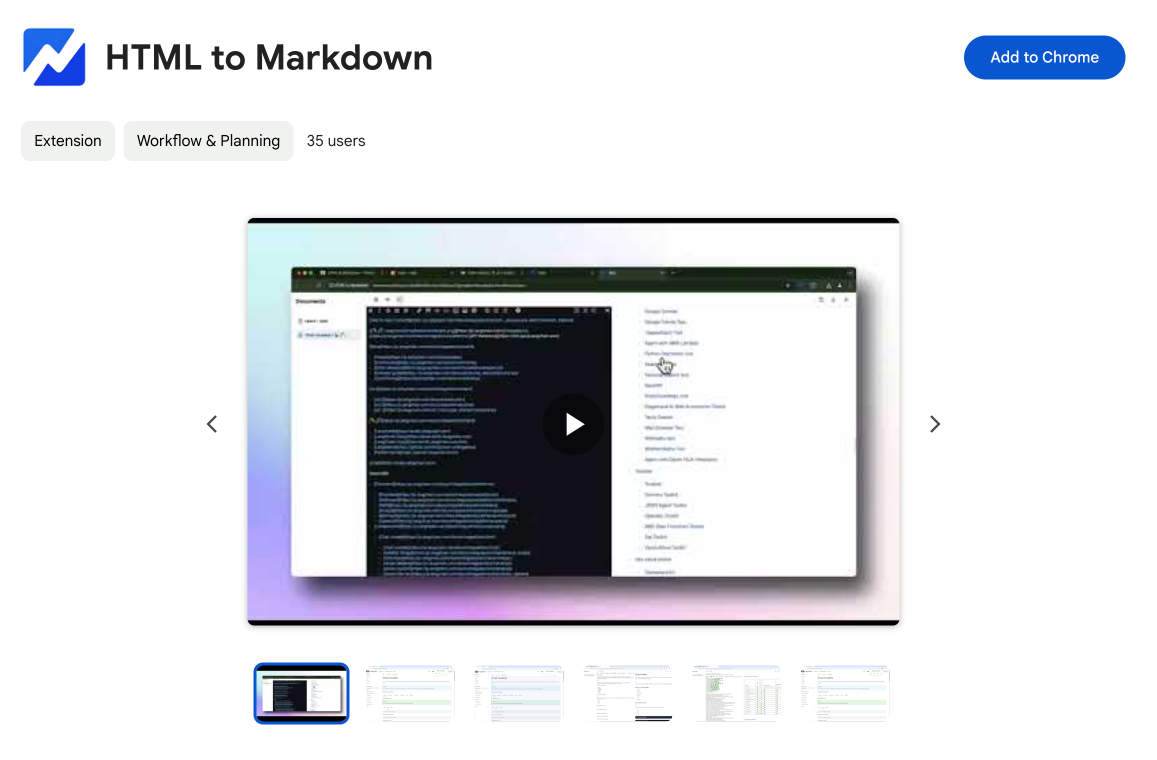
HTML to Markdown
Convert HTML to Markdown with ease, directly in your browser 📄
Dotallio
Personalized AI apps that automate research, data extraction, and content creation without code 🤖
Talk to Santa
Enjoy a magical live video chat or receive a unique AI-generated video greeting from Santa Claus 🎅
pozywka.pl
Scalable blog for food journalist, focused on performance and user experience 🌭
zagrodzki.me
Personal blog and portfolio of Bart Zagrodzki, where he shares his knowledge and work 💼
TurboStarter
Ship your startup everywhere. In minutes.
HTML to Markdown
Convert HTML to Markdown with ease, directly in your browser 📄
Dotallio
Personalized AI apps that automate research, data extraction, and content creation without code 🤖
Talk to Santa
Enjoy a magical live video chat or receive a unique AI-generated video greeting from Santa Claus 🎅
pozywka.pl
Scalable blog for food journalist, focused on performance and user experience 🌭
zagrodzki.me
Personal blog and portfolio of Bart Zagrodzki, where he shares his knowledge and work 💼
TurboStarter
Ship your startup everywhere. In minutes.
HTML to Markdown
Convert HTML to Markdown with ease, directly in your browser 📄
Dotallio
Personalized AI apps that automate research, data extraction, and content creation without code 🤖
Talk to Santa
Enjoy a magical live video chat or receive a unique AI-generated video greeting from Santa Claus 🎅
pozywka.pl
Scalable blog for food journalist, focused on performance and user experience 🌭
zagrodzki.me
Personal blog and portfolio of Bart Zagrodzki, where he shares his knowledge and work 💼
TurboStarter
Ship your startup everywhere. In minutes.
HTML to Markdown
Convert HTML to Markdown with ease, directly in your browser 📄
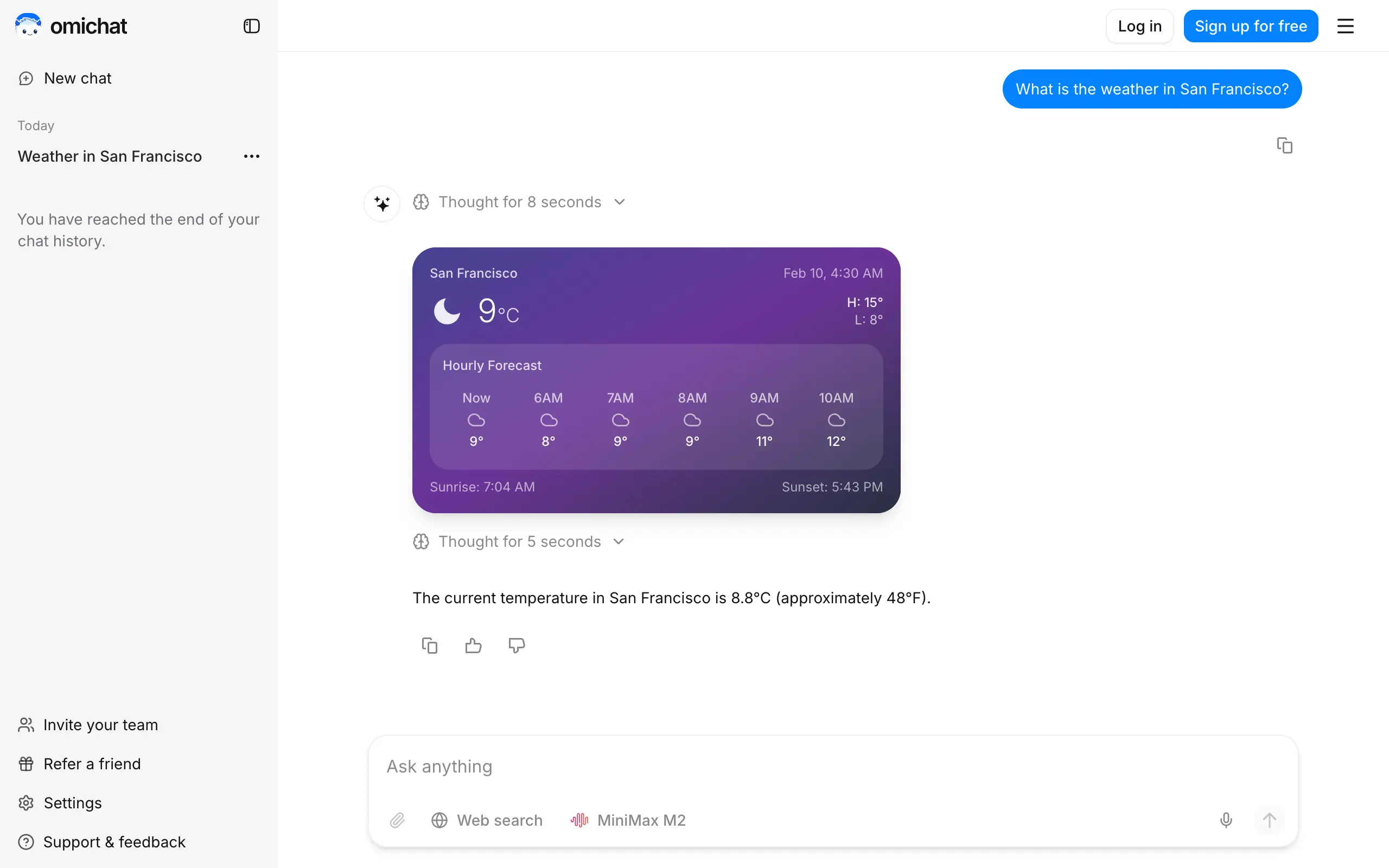
Omichat
Chat with 50+ AI models, including ChatGPT and Claude, in one place - switch models anytime without losing context 🤖
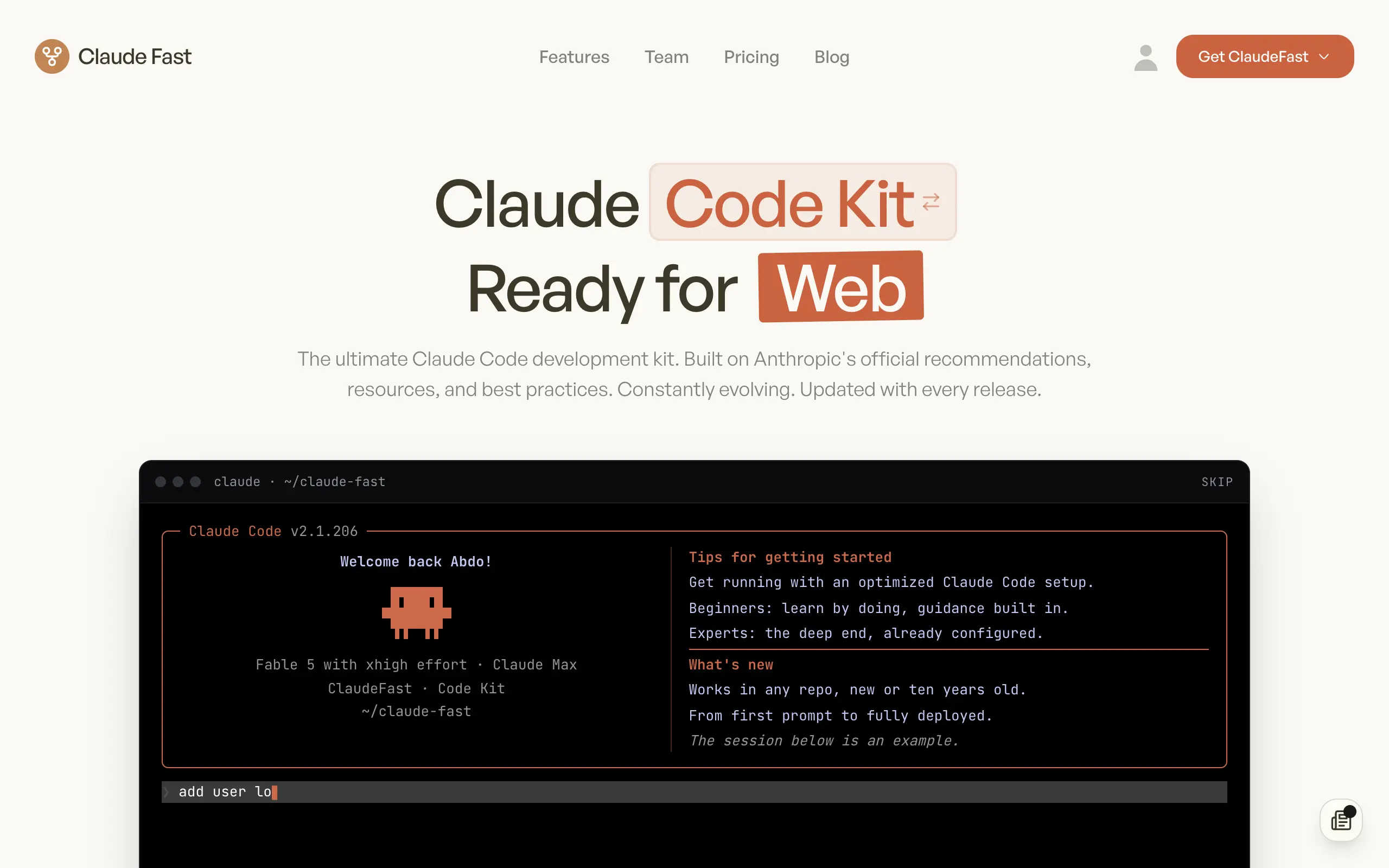
Claude Fast
Supercharge your Claude Code with 6x effective context window and specialized AI agents 🤖
EmojAI
AI-powered emoji picker with smart, context-aware suggestions 🤖
Solohacker
Autonomous company launcher - AI agents work 24/7, escalate what matters, and you stay in control 🤖
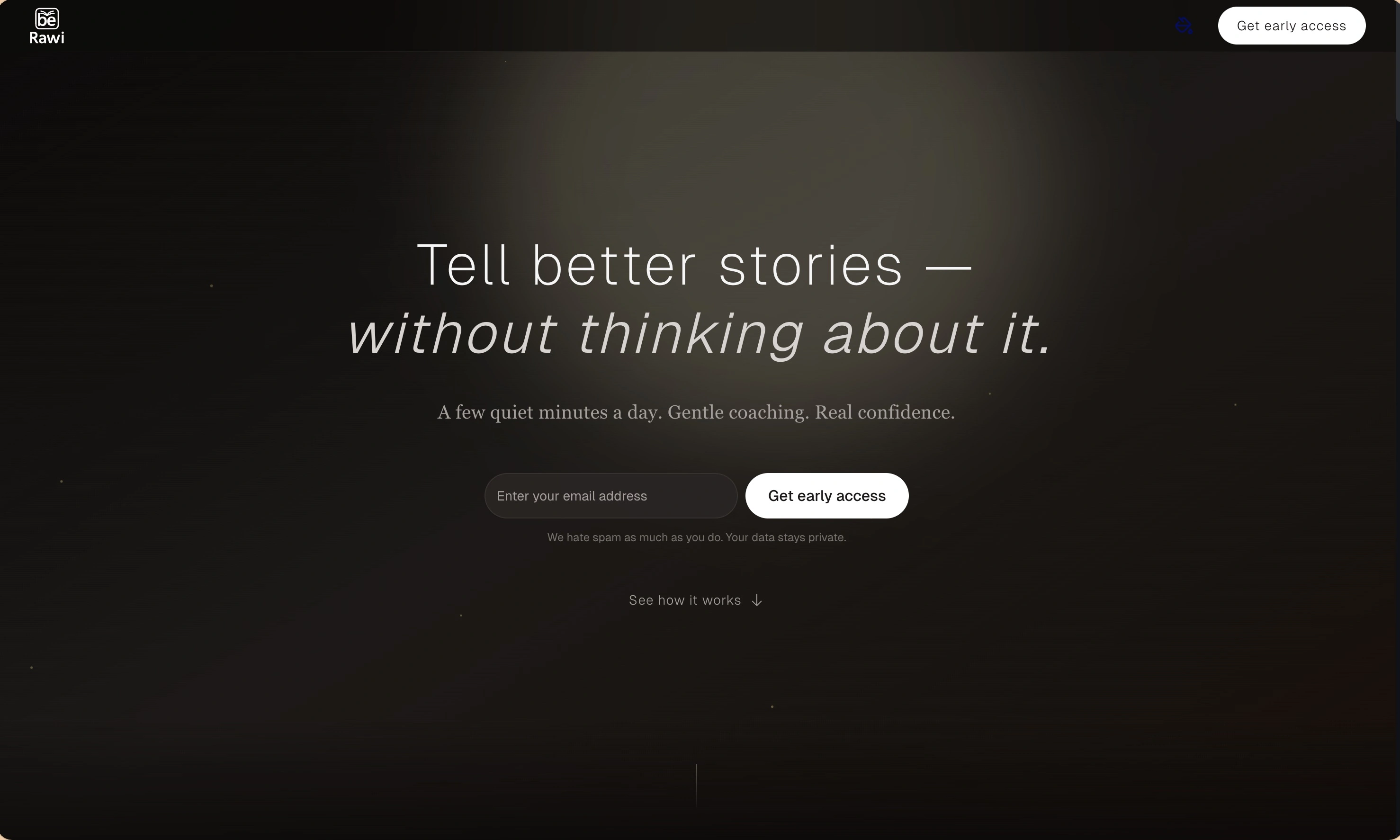
BeRawi: Storytelling Coach
Practice storytelling daily with instant feedback to sound clearer, more engaging, and confident 🎤
Omichat
Chat with 50+ AI models, including ChatGPT and Claude, in one place - switch models anytime without losing context 🤖
Claude Fast
Supercharge your Claude Code with 6x effective context window and specialized AI agents 🤖
EmojAI
AI-powered emoji picker with smart, context-aware suggestions 🤖
Solohacker
Autonomous company launcher - AI agents work 24/7, escalate what matters, and you stay in control 🤖
BeRawi: Storytelling Coach
Practice storytelling daily with instant feedback to sound clearer, more engaging, and confident 🎤
Omichat
Chat with 50+ AI models, including ChatGPT and Claude, in one place - switch models anytime without losing context 🤖
Claude Fast
Supercharge your Claude Code with 6x effective context window and specialized AI agents 🤖
EmojAI
AI-powered emoji picker with smart, context-aware suggestions 🤖
Solohacker
Autonomous company launcher - AI agents work 24/7, escalate what matters, and you stay in control 🤖
BeRawi: Storytelling Coach
Practice storytelling daily with instant feedback to sound clearer, more engaging, and confident 🎤
Omichat
Chat with 50+ AI models, including ChatGPT and Claude, in one place - switch models anytime without losing context 🤖
Claude Fast
Supercharge your Claude Code with 6x effective context window and specialized AI agents 🤖
EmojAI
AI-powered emoji picker with smart, context-aware suggestions 🤖
Solohacker
Autonomous company launcher - AI agents work 24/7, escalate what matters, and you stay in control 🤖
BeRawi: Storytelling Coach
Practice storytelling daily with instant feedback to sound clearer, more engaging, and confident 🎤

Connect with like-minded people
Join our community to get feedback, support, and grow together with 1,000+ builders on board, let's ship it!
Join usShip your startup everywhere. In minutes.
Don't burn tokens on setup and start building features on day one.