CivicPlain
AI accessibility and plain-language copilot for government sites that spots WCAG issues, rewrites content, and creates audit-ready reports.
Why an AI accessibility copilot for government websites matters now
Government websites are essential public infrastructure. Residents use them to pay bills, apply for benefits, register to vote, report problems, access emergency information, and understand local policies. When a digital service is inaccessible or written in confusing bureaucratic language, the impact is not merely a poor user experience. It can prevent people from accessing services they are entitled to receive.
CivicPlain is an AI accessibility and plain-language copilot designed for public-sector websites. It identifies likely WCAG accessibility issues, flags difficult content, suggests clear rewrites, and produces audit-ready reports that help government teams prioritize and document remediation work.
The primary opportunity is not simply building another website scanner. Government agencies need a workflow that connects technical accessibility findings with content quality, ownership, remediation, compliance reporting, and public trust. A successful government website accessibility software product must help teams move from “we found hundreds of issues” to “we fixed the highest-impact barriers and can prove what changed.”
CivicPlain’s central value proposition is straightforward:
Help public-sector teams make web content more accessible, understandable, and defensible without requiring every editor to become a WCAG specialist or plain-language expert.
This matters as public institutions face higher expectations for digital inclusion, more scrutiny around accessibility compliance, growing content inventories, and limited internal capacity. AI can accelerate the work, but it must be deployed carefully, with human review, transparent evidence, secure data handling, and repeatable audit trails.
The product should assist, not certify
Automated scanning can identify many common accessibility failures, but it cannot reliably determine every aspect of real-world accessibility. CivicPlain should clearly distinguish automated findings, AI recommendations, and items requiring human testing.
The target audience for CivicPlain
CivicPlain serves organizations that publish high volumes of public information and need to balance compliance, readability, security, and operational constraints. The strongest initial market is likely local and regional government, followed by state agencies, public authorities, education-adjacent institutions, and government contractors.
Primary users inside government organizations
The most active users are likely to be people who maintain websites, publish content, manage compliance, or respond to legal and public inquiries.
Digital services managers
Need a practical way to prioritize accessibility improvements across websites, forms, and high-traffic service journeys.
Content editors and communications teams
Need plain-language guidance that preserves policy meaning while making information easier to understand.
Accessibility coordinators
Need evidence, issue tracking, review workflows, and reports that support ongoing compliance programs.
IT and web development teams
Need reproducible technical findings that can be routed into engineering backlogs and verified after release.
Economic buyers and decision-makers
The buyer is often different from the daily user. Procurement may involve a chief information officer, chief digital officer, communications director, city manager, county administrator, agency general counsel, or accessibility program lead.
These buyers tend to evaluate a government accessibility platform through several lenses:
- Risk reduction for accessibility complaints, litigation, and reputational harm
- Staff time saved during manual audits and report preparation
- Ability to demonstrate progress to leadership, auditors, and the public
- Compatibility with existing content management systems and procurement rules
- Data security, privacy, hosting, and vendor accountability
- Accessibility expertise and credibility behind the product
A key positioning lesson is that CivicPlain should not sell only “AI-powered scanning.” Public-sector buyers need outcomes. They want clearer public information, prioritized remediation, stronger governance, and reliable reporting.
The people affected by better accessibility
The ultimate beneficiaries include people who use screen readers, keyboard-only navigation, voice control, magnification, captions, translations, mobile devices, slow internet connections, and assistive technologies. Plain language also helps people with cognitive disabilities, limited English proficiency, lower digital confidence, stressful life circumstances, or limited time.
A resident trying to understand how to apply for housing support should not have to decode legalistic sentences, hunt through inaccessible PDFs, or navigate a broken form label. CivicPlain should connect accessibility work to this human outcome rather than treating compliance as a checklist exercise.
The market gap in government website accessibility and plain language
The market already contains accessibility scanners, overlay products, enterprise monitoring platforms, consulting firms, content management systems, and readability tools. However, a meaningful gap remains between identifying issues and operationally resolving them.
Many public organizations experience a fragmented workflow:
- A scanner identifies technical issues.
- A consultant produces a lengthy audit document.
- Content teams continue publishing complex material.
- Developers receive unprioritized tickets.
- Leadership asks for a report on progress.
- Staff manually assemble spreadsheets, screenshots, and status updates.
This workflow is expensive, slow, and hard to sustain.
Where existing tools often fall short
Traditional accessibility scanners are useful, particularly for detecting repeatable technical patterns. Yet they may create large volumes of findings without enough context for a constrained municipal or agency team to decide what to fix first.
Generic AI writing tools can simplify sentences, but they may unintentionally alter legal meaning, invent information, remove required disclosures, or use language that does not match a government agency’s approved terminology.
Manual audits provide high-quality analysis, but they are periodic, costly, and difficult to apply continuously across thousands of pages and documents.
CivicPlain can occupy the space between these approaches by combining:
- Continuous automated monitoring for common WCAG issues
- AI-supported plain-language rewriting with constrained safeguards
- Human review queues for higher-risk recommendations
- Page-level and journey-level prioritization
- Evidence capture for audit-ready reporting
- Workflow integrations for content and development teams
The compliance context creates urgency
The Web Content Accessibility Guidelines are a widely recognized standard for accessible digital experiences. CivicPlain should map findings to WCAG 2.2 success criteria where appropriate, while avoiding any implication that a single automated scan proves full compliance.
In the United States, many public-sector accessibility programs also consider Section 508 requirements. Product education can direct users to Section508.gov for official guidance. State and local government obligations may differ based on jurisdiction, funding, policy, contracts, and legal requirements, so CivicPlain should encourage customers to consult qualified accessibility and legal professionals.
The market opportunity is especially strong because accessibility is no longer a one-time remediation project. It is an ongoing governance problem. New pages, third-party widgets, PDFs, policy changes, campaign microsites, and CMS updates can all introduce new barriers.
CivicPlain’s unique selling proposition
CivicPlain should position itself as an accessibility remediation and plain-language operations platform for government teams.
Its differentiator is the combination of technical detection, content intelligence, evidence management, and public-sector workflow design. Instead of forcing teams to switch between a scanner, readability editor, issue tracker, spreadsheet, and consultant report, CivicPlain can centralize the remediation lifecycle.
A clear product promise
A concise positioning statement could be:
CivicPlain helps government teams find accessibility barriers, make public content easier to understand, and document remediation progress with evidence-ready reports.
This is distinct from a generic website scanning product because it treats content clarity as an accessibility and service-delivery concern. It is also distinct from a generic AI writer because it grounds recommendations in public-sector policies, content rules, WCAG guidance, and review workflows.
What makes the product defensible
CivicPlain can build a durable advantage through product depth rather than relying on a generic large language model interface.
| Capability | Generic AI writer | Basic scanner | CivicPlain | Manual spreadsheet |
|---|---|---|---|---|
| WCAG issue detection | ❌ | ✅ | ✅ | ⚠️ |
| Plain-language rewriting | ✅ | ❌ | ✅ | ⚠️ |
| Government policy guardrails | ⚠️ | ❌ | ✅ | ⚠️ |
| Audit-ready evidence trail | ❌ | ⚠️ | ✅ | ✅ |
The most important moat is not the model itself. It is the structured data and workflow CivicPlain builds over time:
- Issue patterns across government content types
- Remediation templates for recurring problems
- Agency-specific style and terminology rules
- Human approval data that improves recommendation quality
- Evidence records tied to pages, releases, owners, and dates
- Integrations embedded into the publishing and development process
Core features for an AI accessibility copilot
A strong minimum viable product should be focused. CivicPlain does not need to solve every accessibility problem on day one. It needs to deliver a credible, high-value workflow that helps a government team find, understand, act on, and report on the issues that matter most.
Website and document accessibility scanning
CivicPlain should crawl approved domains and scan public pages for detectable accessibility patterns. It can use established automated testing rules to identify issues such as:
- Missing alternative text for meaningful images
- Empty links or ambiguous link text
- Form fields without associated labels
- Heading hierarchy problems
- Missing document language declarations
- Insufficient color contrast where reliably measurable
- Missing table headers
- Invalid ARIA patterns
- Duplicate identifiers
- Missing page titles
- Keyboard-focus risks that require validation
For PDF-heavy government sites, a later product phase can include document inventory, metadata checks, OCR detection, and prioritization of inaccessible documents. PDF remediation is complex, so CivicPlain should avoid overstating automated capabilities. A practical initial feature is identifying high-traffic or frequently linked PDF files and routing them into a remediation queue.
Plain-language analysis for public content
The plain-language feature should analyze content beyond a simple reading-grade score. Grade-level measurements can be useful directional signals, but they do not determine whether public information is understandable.
CivicPlain should evaluate signals such as:
- Sentence length and clause density
- Passive voice and nominalizations
- Unexplained acronyms
- Legal or administrative jargon
- Unclear action steps
- Missing deadlines, eligibility details, or contact paths
- Overly vague link labels
- Dense lists and poor information hierarchy
- Inconsistent terminology across related pages
The product should then suggest edits while preserving the source meaning. For high-risk content, such as benefits eligibility, legal notices, public safety information, tax guidance, or election information, the interface should emphasize that an authorized human must approve every rewrite.
Constrained AI rewriting with source visibility
The writing assistant should never behave like an opaque “rewrite everything” button. Government content carries policy, legal, and operational consequences.
A safer interaction pattern is side-by-side review:
The editor sees the existing page text, highlighted phrases, detected jargon, readability signals, and related accessibility concerns.
The editor receives a rewrite that uses shorter sentences, direct instructions, descriptive headings, and clear calls to action while retaining required facts.
The editor sees an explanation of what changed, which plain-language principle was applied, what requires subject-matter review, and whether any facts could not be safely inferred.
Every suggestion should include a rationale. For example, CivicPlain could explain that it changed “utilize” to “use,” split a 48-word sentence into three steps, or replaced “click here” with descriptive link text.
A useful product rule is that the AI should not invent missing policy details. If content lacks a deadline, eligibility criterion, or phone number, CivicPlain should flag the omission rather than fabricate an answer.
Prioritization based on public impact
Not every issue deserves equal treatment. A missing heading on an archived meeting page may matter less than a broken form label in an emergency assistance application.
CivicPlain should calculate a transparent priority score based on factors such as:
- Severity of the potential accessibility barrier
- Traffic volume and search visibility
- Presence in a critical public service journey
- Whether the page is a template affecting many pages
- Frequency of the issue across the site
- Age of the finding
- Legal or service-delivery sensitivity
- Whether a known remediation exists
The user interface should show why an item has its priority. Public agencies will trust a score more when they can inspect its inputs.
Audit-ready reporting and evidence management
This is where CivicPlain can create exceptional value. An accessibility coordinator often needs more than a dashboard. They need a defensible record of what was found, what was fixed, who reviewed it, and what still requires action.
An audit-ready report should include:
- Scope of the scan, including domains, dates, and crawl limits
- Testing methods and tool versions
- Automated findings mapped to relevant WCAG criteria when applicable
- Severity and prioritization logic
- Affected URLs, screenshots, code references, and timestamps
- Remediation status and assigned owner
- Before-and-after evidence for resolved issues
- Known limitations of automated testing
- A list of items requiring manual accessibility review
- Executive summary and trend analysis
CivicPlain should support export formats that fit government workflows, including accessible PDF, CSV, and machine-readable JSON. The generated PDF itself must be accessible, properly tagged, and tested before it can credibly represent an accessibility platform.
Integrations that fit real public-sector workflows
Government teams rarely replace all existing systems. CivicPlain should integrate where work already happens.
Early integrations should prioritize:
- Content management systems through plugins or API-based checks
- GitHub and GitLab for development issues
- Jira or similar ticketing systems
- Microsoft Teams and email notifications
- Single sign-on through SAML or OpenID Connect
- Scheduled reports for leadership and compliance stakeholders
A browser extension can also be valuable for content editors. It could inspect a draft page inside a CMS, provide plain-language suggestions, identify likely accessibility issues, and submit approved changes through the organization’s existing publishing workflow.
Recommended technology stack for CivicPlain
The technology choices need to support trustworthy scanning, secure multi-tenancy, asynchronous workloads, explainable AI outputs, and enterprise-grade reporting.
Frontend and application layer
A practical application stack could use Next.js with React and TypeScript. This combination supports a fast dashboard, server-rendered public pages, typed API boundaries, and a mature ecosystem.
Tailwind CSS is a strong choice for building a consistent design system quickly, particularly when paired with accessible component patterns and automated visual regression testing. The product’s own interface must meet a high accessibility standard, so keyboard navigation, visible focus states, semantic HTML, and screen-reader testing must be first-class requirements rather than late-stage polish.
For a SaaS foundation that already includes common application patterns, billing scaffolding, authentication flows, and production-oriented architecture, TurboStarter can reduce time spent building commodity infrastructure.
Accessibility scanning engine
CivicPlain should not reinvent established rule engines. It can build around trusted open-source and commercial tooling while adding its own prioritization and workflow layer.
Useful technical components include:
- Playwright for browser automation and rendering JavaScript-heavy government sites
- axe-core for automated accessibility rules
- A queue system for scheduled crawls, retries, rate limits, and large scans
- Screenshot capture for visual evidence
- DOM snapshots and source references for reproducible findings
A headless browser is more accurate for modern websites than simple HTML fetching, but it is also more expensive and operationally complex. CivicPlain should use a hybrid approach. Start with lightweight fetching for broad discovery, then use browser rendering for pages that need JavaScript execution or detailed evidence.
AI and content intelligence layer
The AI layer should use retrieval-augmented generation rather than relying only on a general-purpose prompt. Each agency should be able to provide approved style guides, terminology lists, content standards, policy documents, and examples of preferred language.
The system should retrieve only relevant approved sources and provide clear citations inside the product interface. Where source material is unavailable or conflicting, CivicPlain should say so.
A structured output contract can reduce unreliable responses. For example:
type RewriteRecommendation = {
  originalText: string;
  suggestedText: string;
  rationale: string[];
  readabilitySignals: {
    longSentences: number;
    unexplainedAcronyms: string[];
    jargonTerms: string[];
  };
  factualRisk: "low" | "medium" | "high";
  requiresHumanApproval: boolean;
  unresolvedQuestions: string[];
};
The key trade-off is between convenience and control. A fully autonomous editor may look impressive in a demo, but it creates unacceptable risk for public information. A review-first recommendation system is more likely to earn trust and pass procurement scrutiny.
Data, security, and infrastructure
A relational database such as PostgreSQL is well suited for tenants, users, roles, pages, findings, remediation history, report artifacts, and audit logs. Object storage can hold screenshots, downloaded documents, scan artifacts, and report exports.
For search, use PostgreSQL full-text search initially or add a dedicated search platform only when crawl volume and evidence retrieval justify it. Premature infrastructure complexity is a common SaaS mistake.
Government buyers will ask serious security questions. CivicPlain should plan for:
- Tenant isolation and role-based access control
- Encryption in transit and at rest
- Audit logs for content changes and report exports
- Data retention controls
- Configurable crawl permissions and domain allowlists
- Vendor security documentation
- Incident response procedures
- Subprocessor transparency
- Optional regional hosting where commercially viable
If CivicPlain processes unpublished drafts or internal policy documents, it must provide clear contractual commitments about data use. Customer data should not be used for model training without explicit, informed permission.
Monetization options for CivicPlain
The ideal pricing model should align with both public-sector procurement behavior and the value created by continuous monitoring.
Subscription pricing by website scale
A tiered annual subscription is likely the clearest model. Price can be based on the number of domains, pages scanned, document volume, users, and integrations.
Possible package structure:
- Starter for small municipalities or special districts with one website and monthly scans
- Professional for cities, counties, and agencies that need frequent scans, workflow routing, and scheduled reporting
- Enterprise for multi-domain organizations that need SSO, API access, custom retention, premium support, and advanced security review
Annual contracts are generally better aligned with government budgeting than monthly self-serve plans. However, a low-friction pilot can help organizations validate the product before committing to a broader deployment.
Paid implementation and accessibility services
Services can accelerate adoption without turning the company into a purely consulting-led business. High-value add-ons include:
- Initial baseline scan and remediation roadmap
- Accessibility and plain-language content workshops
- CMS integration and content governance setup
- Custom report templates
- Manual expert review for critical user journeys
- PDF inventory and remediation planning
The strategic principle is to package services around product adoption. Each engagement should create reusable templates, agency rules, and workflows that make the customer more successful in the software.
Usage-based expansion
Usage-based pricing can work for high-volume document processing, AI rewrite requests, additional domains, or frequent scans. The risk is unpredictable bills, which public-sector customers often dislike. If usage billing is used, CivicPlain should provide budget caps, alerts, and transparent forecasting.
Risks and mitigation strategies
CivicPlain operates in a sensitive category. The product must be designed around credibility, privacy, and careful claims.
Automated tools cannot test every WCAG criterion or replicate the lived experience of people using assistive technology. Mitigate this by labeling automated findings clearly, documenting coverage limits, recommending manual testing, and avoiding compliance guarantees.
AI can alter legal meaning or omit material details. Mitigate this with source-grounded generation, fact-preservation checks, approval workflows, high-risk content flags, version history, and mandatory human review for sensitive categories.
Government systems may expose staging environments, internal documents, or personal information. Mitigate this with domain allowlists, authentication controls, crawl scope settings, rate limits, robots policy handling where appropriate, and secure deletion procedures.
Large scans can generate thousands of issues. Mitigate this with deduplication, template-level grouping, impact scoring, quick-win recommendations, ownership rules, and staged remediation plans.
Government procurement can take months and involve security, legal, and accessibility reviews. Mitigate this with transparent security documentation, accessible VPAT-style materials where relevant, pilot packages, cooperative purchasing research, and clear implementation plans.
Avoiding the accessibility overlay trap
CivicPlain should not position itself as a one-click overlay or a substitute for fixing underlying code and content. Accessibility overlays have received substantial criticism from disabled users and accessibility professionals because they can fail to resolve root problems and may introduce new barriers.
The better product philosophy is durable remediation:
- Find the source issue
- Explain the impact
- Recommend a practical fix
- Assign ownership
- Verify the result
- Preserve evidence
- Monitor for regression
This approach is more work than adding a widget, but it produces a more trustworthy product and a stronger long-term customer relationship.
Go-to-market strategy for a government accessibility SaaS
The initial go-to-market motion should focus on a narrow, credible segment instead of trying to sell to every public institution.
Start with local government and public agencies
Small and midsize municipalities often have meaningful accessibility obligations but limited staff. They may manage a legacy website, a growing document library, and a communications team that publishes content under time pressure. This is an excellent fit for CivicPlain’s combined scanning and plain-language workflow.
A compelling pilot offer could focus on one public-service journey, such as:
- Applying for permits
- Paying utility bills
- Accessing emergency preparedness information
- Requesting public records
- Applying for housing or food assistance
- Finding election information
- Registering for parks and recreation programs
By showing improvement in a real resident journey, CivicPlain can create a stronger business case than a generic scan report.
Build authority through educational content
SEO should target high-intent searches such as:
- Government website accessibility checklist
- WCAG compliance for local government websites
- Plain language tools for government agencies
- How to audit a municipal website for accessibility
- Accessibility report template for public sector websites
- AI tools for government content accessibility
- How to make government web content easier to understand
The content should be genuinely useful, not thin lead-generation material. Publish practical guides, checklists, remediation examples, and explanations of what automated testing can and cannot detect.
When citing accessibility statistics, legal developments, or public-sector digital service trends, use authoritative references from official government sources, W3C materials, disability advocacy organizations, or established research institutions. For published claims, include a reference format such as “Source: W3C accessibility guidance, accessed [month year]” rather than relying on unsupported numbers.
A practical implementation roadmap
The fastest path is to validate a focused workflow before building a broad compliance suite.
Metrics that validate product-market fit
CivicPlain should track metrics that show real operational and public-service value.
- Time from finding creation to remediation
- Percentage of high-priority findings resolved
- Number of recurring template issues eliminated
- Change in plain-language quality signals over time
- Number of AI recommendations accepted, edited, or rejected
- Reduction in manual reporting time
- Percentage of critical service pages with recent scans
- Customer retention and expansion by domain or department
- User satisfaction among content editors and accessibility leads
Avoid treating the total number of detected issues as the main success metric. A higher issue count can simply reflect a broader crawl. The meaningful outcome is whether people can access and understand essential government services more easily.
Final perspective on CivicPlain
CivicPlain has the potential to become more than an AI website checker. Its strongest form is a trusted operating system for government web accessibility and plain language.
The winning product will combine rigorous automated testing, careful AI assistance, transparent limitations, strong security practices, and workflows that make public-sector teams more effective. It should make it easier for editors to publish understandable content, for developers to fix root causes, for accessibility specialists to manage risk, and for leaders to demonstrate progress.
The opportunity is especially compelling because accessible, clear government information benefits everyone. It improves service delivery, reduces confusion, supports inclusion, and strengthens public trust. By focusing on evidence-based remediation rather than superficial automation, CivicPlain can create a differentiated and defensible government accessibility SaaS business.
More 🤖 AI Startup SaaS ideas
Discover more innovative ai startup SaaS ideas that are trending in 2026. Each idea is AI-generated with market validation and growth potential to help you find your next profitable venture faster than competitors.
Your competitors are building with TurboStarter
Below are some of the SaaS ideas that have been generated and built with our starter kit.
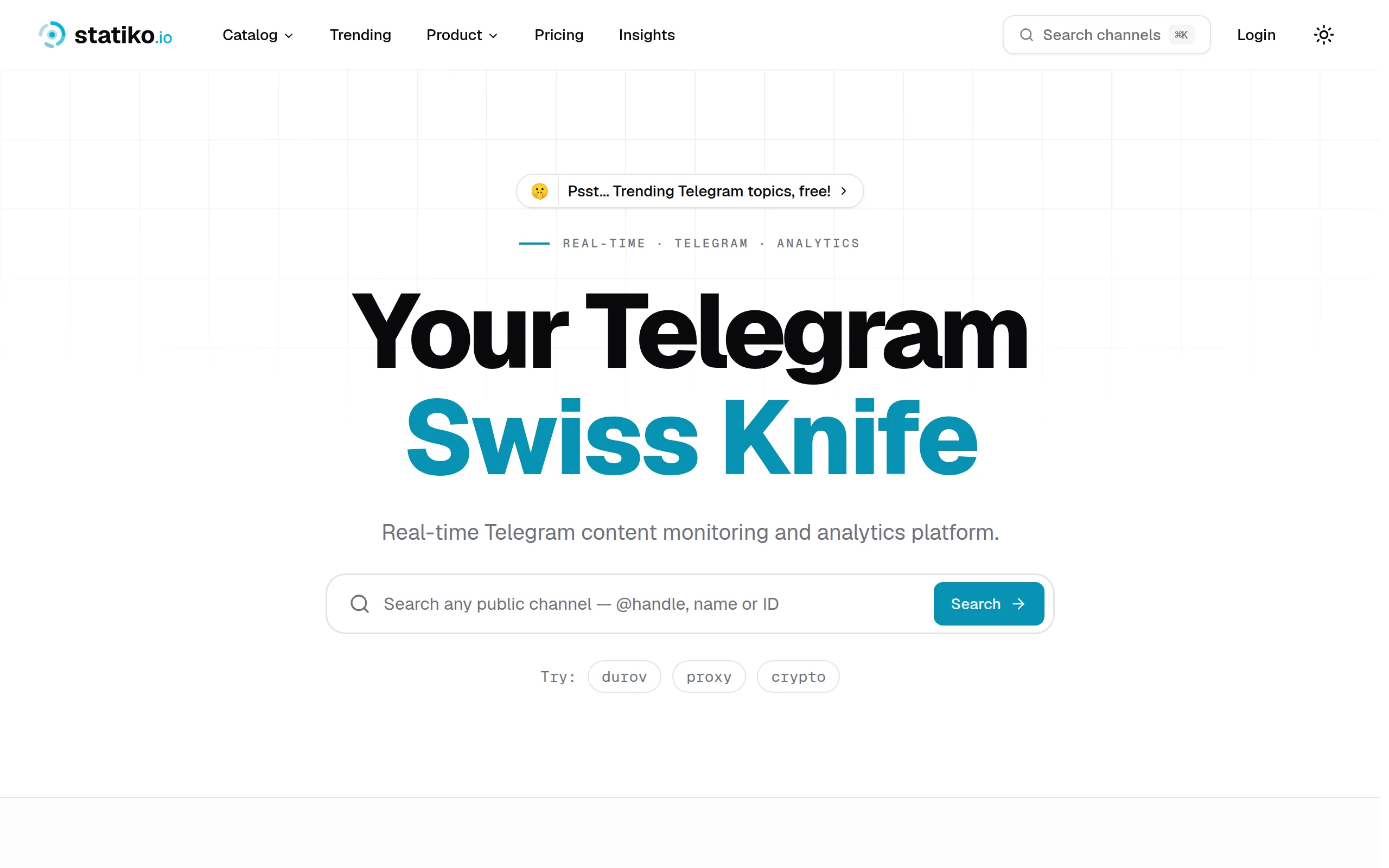
Statiko
Monitor any Telegram channel in real time - track posts, edits, deletions, and growth with AI recaps 📡

Shibui
AI website builder - describe your business, pick a niche template, edit by chatting, and publish instantly ✨
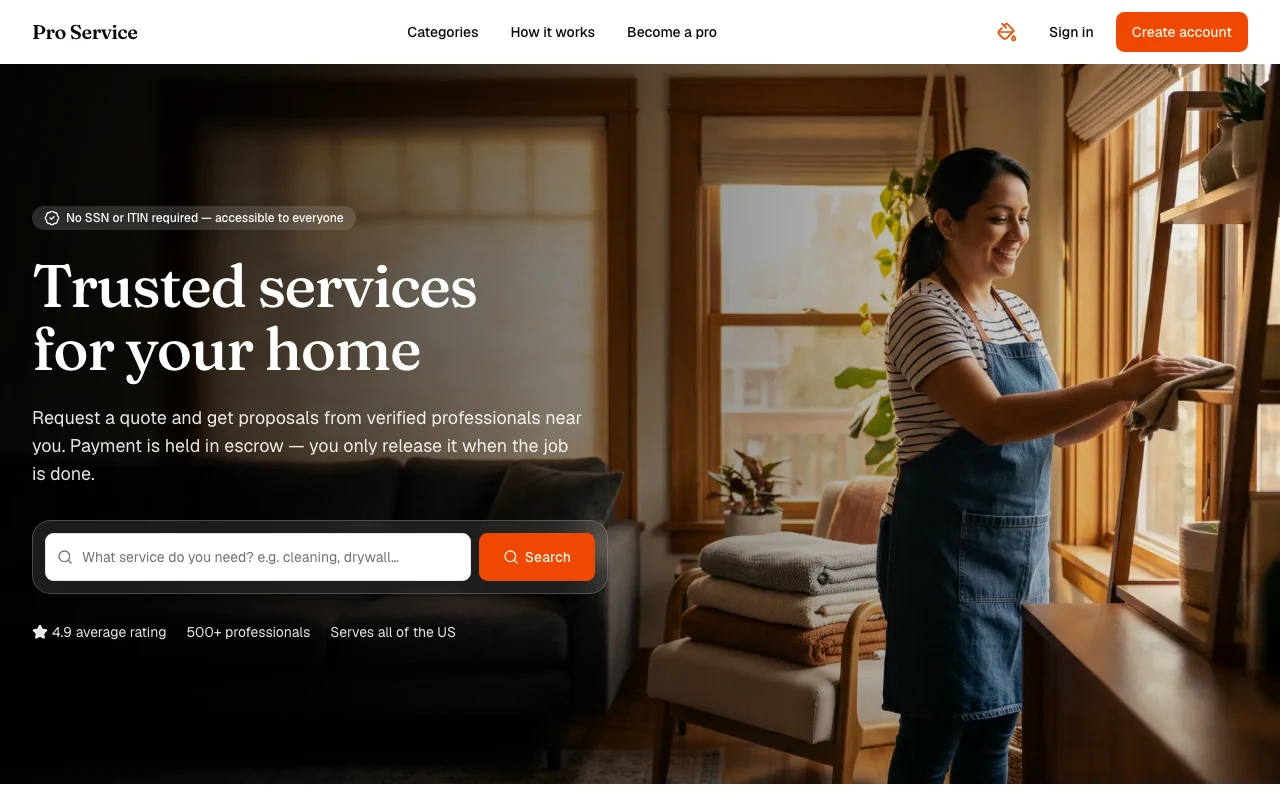
Pro Service
Find verified home service professionals, compare quotes, and pay securely through escrow - built for Brazilians across the US 🏠
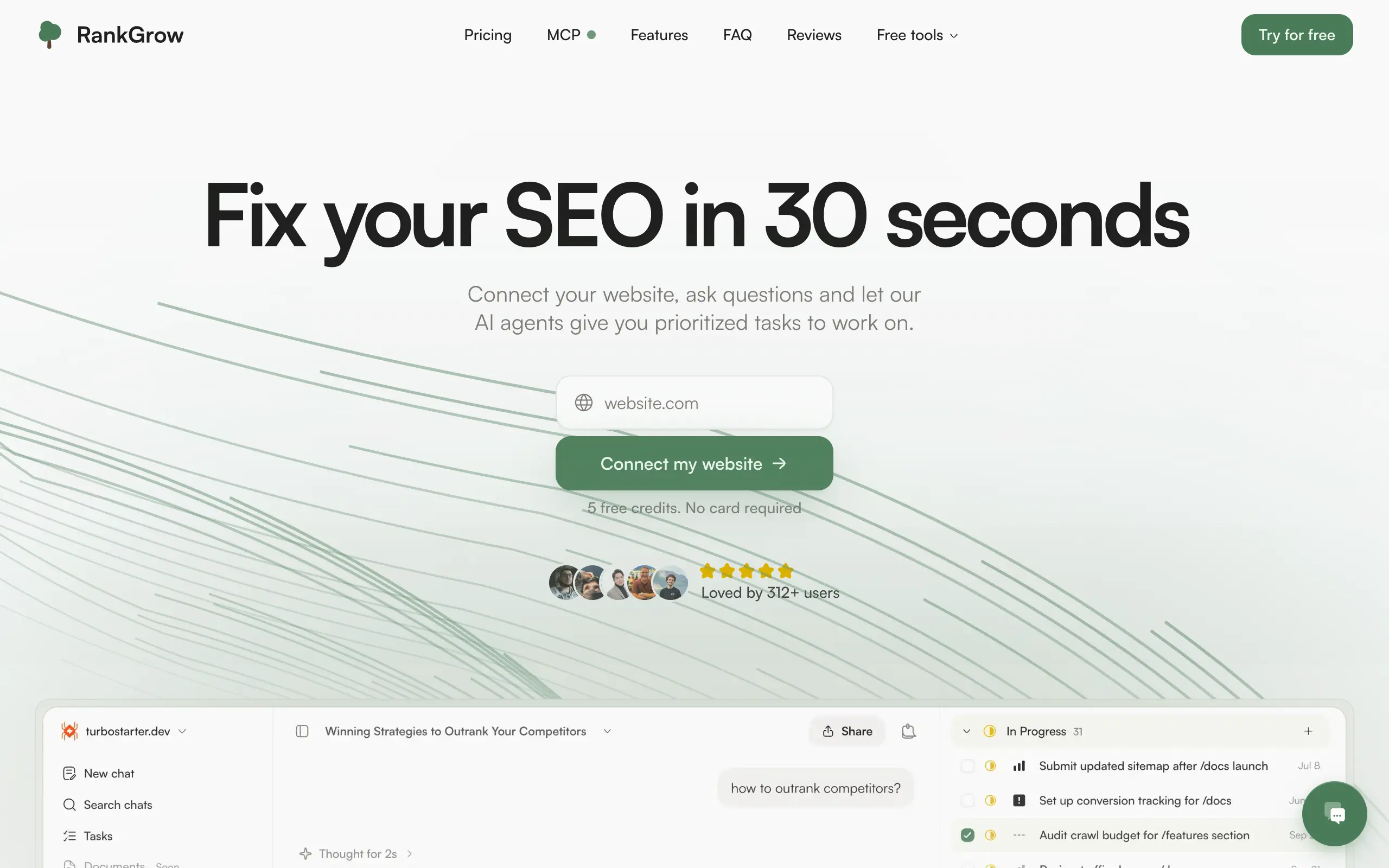
RankGrow
Fix your SEO with AI agents - connect Search Console, get prioritized tasks, and grow organic traffic 📈
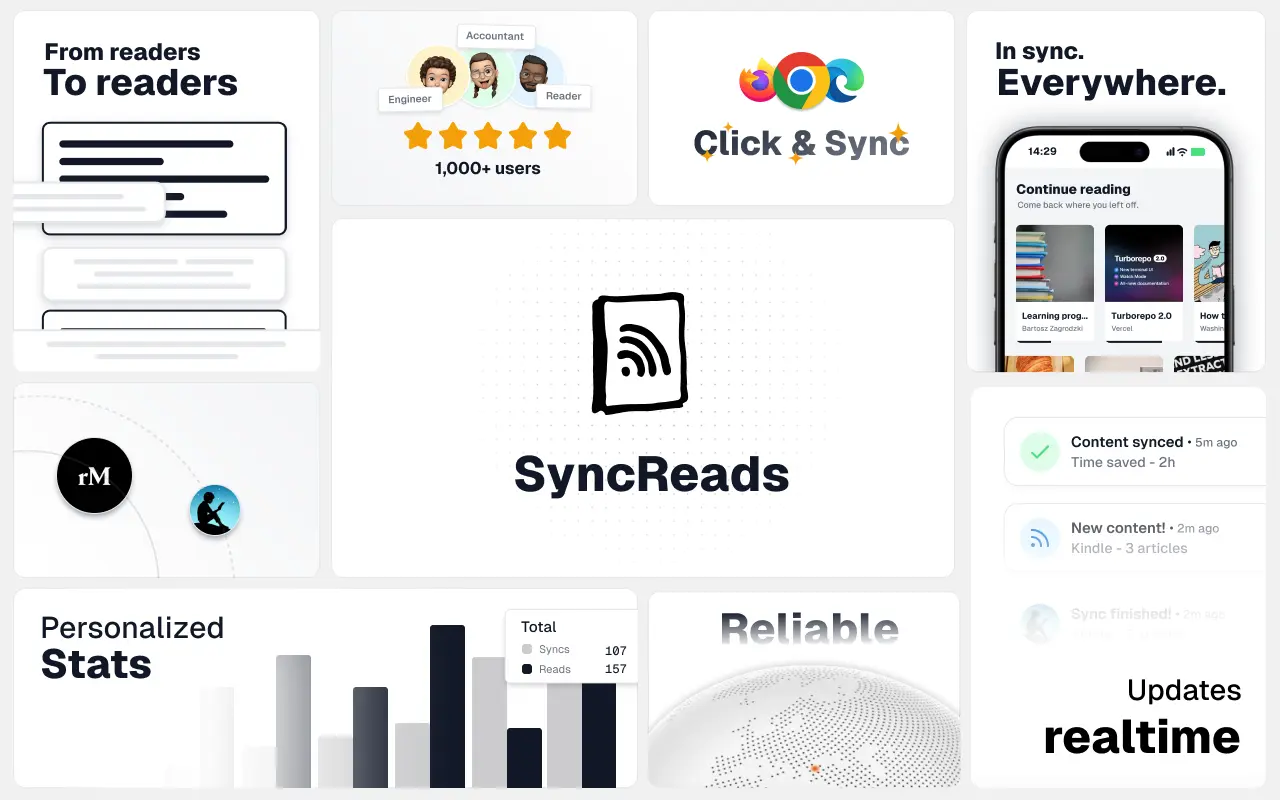
SyncReads
Sync your favorite content for distraction-free reading, save time and replace multiple apps. Anytime, anywhere 🔄
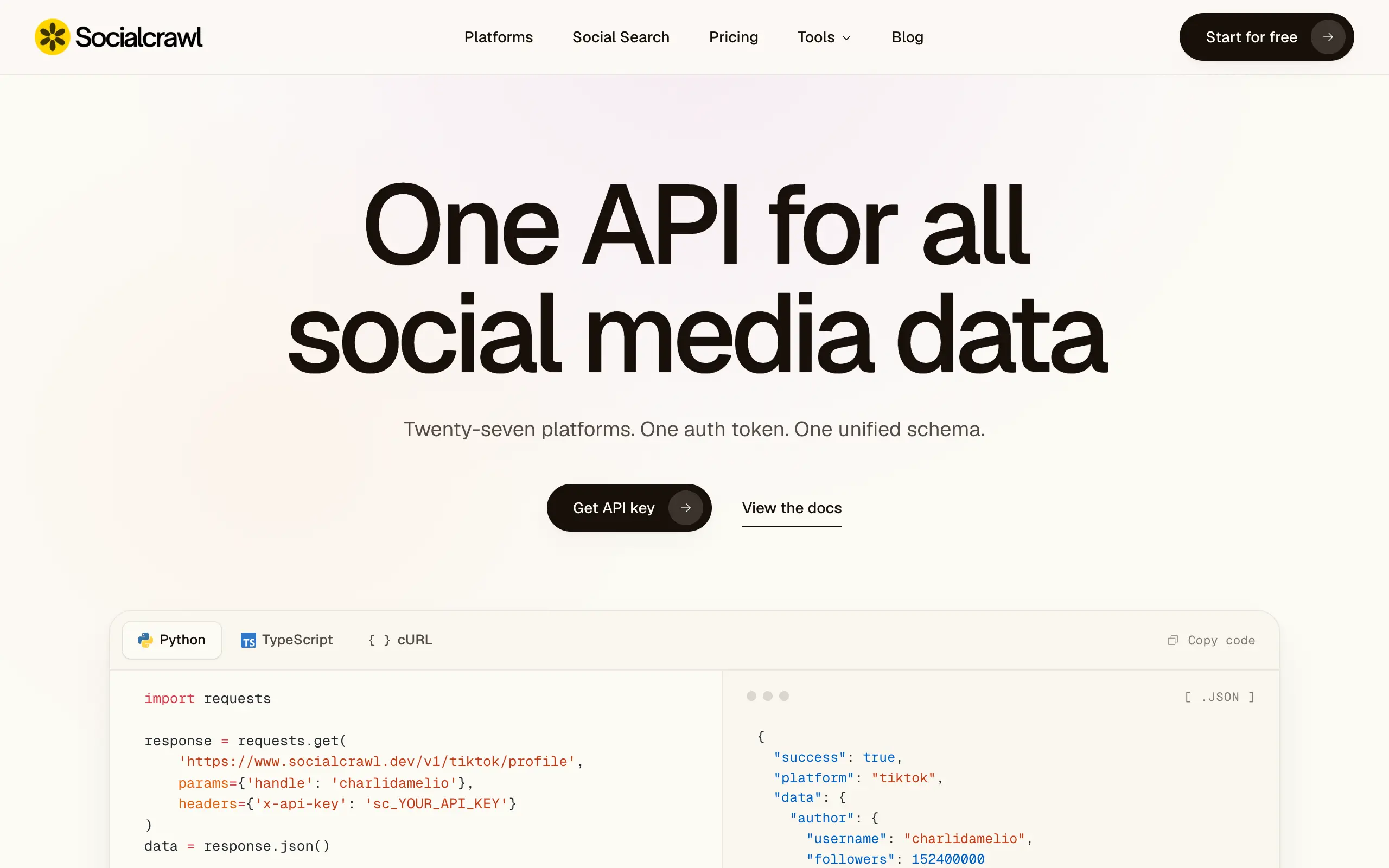
Socialcrawl
Get clean, structured data from 21 platforms like TikTok, Instagram, and YouTube with a single request 📊
Statiko
Monitor any Telegram channel in real time - track posts, edits, deletions, and growth with AI recaps 📡
Shibui
AI website builder - describe your business, pick a niche template, edit by chatting, and publish instantly ✨
Pro Service
Find verified home service professionals, compare quotes, and pay securely through escrow - built for Brazilians across the US 🏠
RankGrow
Fix your SEO with AI agents - connect Search Console, get prioritized tasks, and grow organic traffic 📈
SyncReads
Sync your favorite content for distraction-free reading, save time and replace multiple apps. Anytime, anywhere 🔄
Socialcrawl
Get clean, structured data from 21 platforms like TikTok, Instagram, and YouTube with a single request 📊
Statiko
Monitor any Telegram channel in real time - track posts, edits, deletions, and growth with AI recaps 📡
Shibui
AI website builder - describe your business, pick a niche template, edit by chatting, and publish instantly ✨
Pro Service
Find verified home service professionals, compare quotes, and pay securely through escrow - built for Brazilians across the US 🏠
RankGrow
Fix your SEO with AI agents - connect Search Console, get prioritized tasks, and grow organic traffic 📈
SyncReads
Sync your favorite content for distraction-free reading, save time and replace multiple apps. Anytime, anywhere 🔄
Socialcrawl
Get clean, structured data from 21 platforms like TikTok, Instagram, and YouTube with a single request 📊
Statiko
Monitor any Telegram channel in real time - track posts, edits, deletions, and growth with AI recaps 📡
Shibui
AI website builder - describe your business, pick a niche template, edit by chatting, and publish instantly ✨
Pro Service
Find verified home service professionals, compare quotes, and pay securely through escrow - built for Brazilians across the US 🏠
RankGrow
Fix your SEO with AI agents - connect Search Console, get prioritized tasks, and grow organic traffic 📈
SyncReads
Sync your favorite content for distraction-free reading, save time and replace multiple apps. Anytime, anywhere 🔄
Socialcrawl
Get clean, structured data from 21 platforms like TikTok, Instagram, and YouTube with a single request 📊
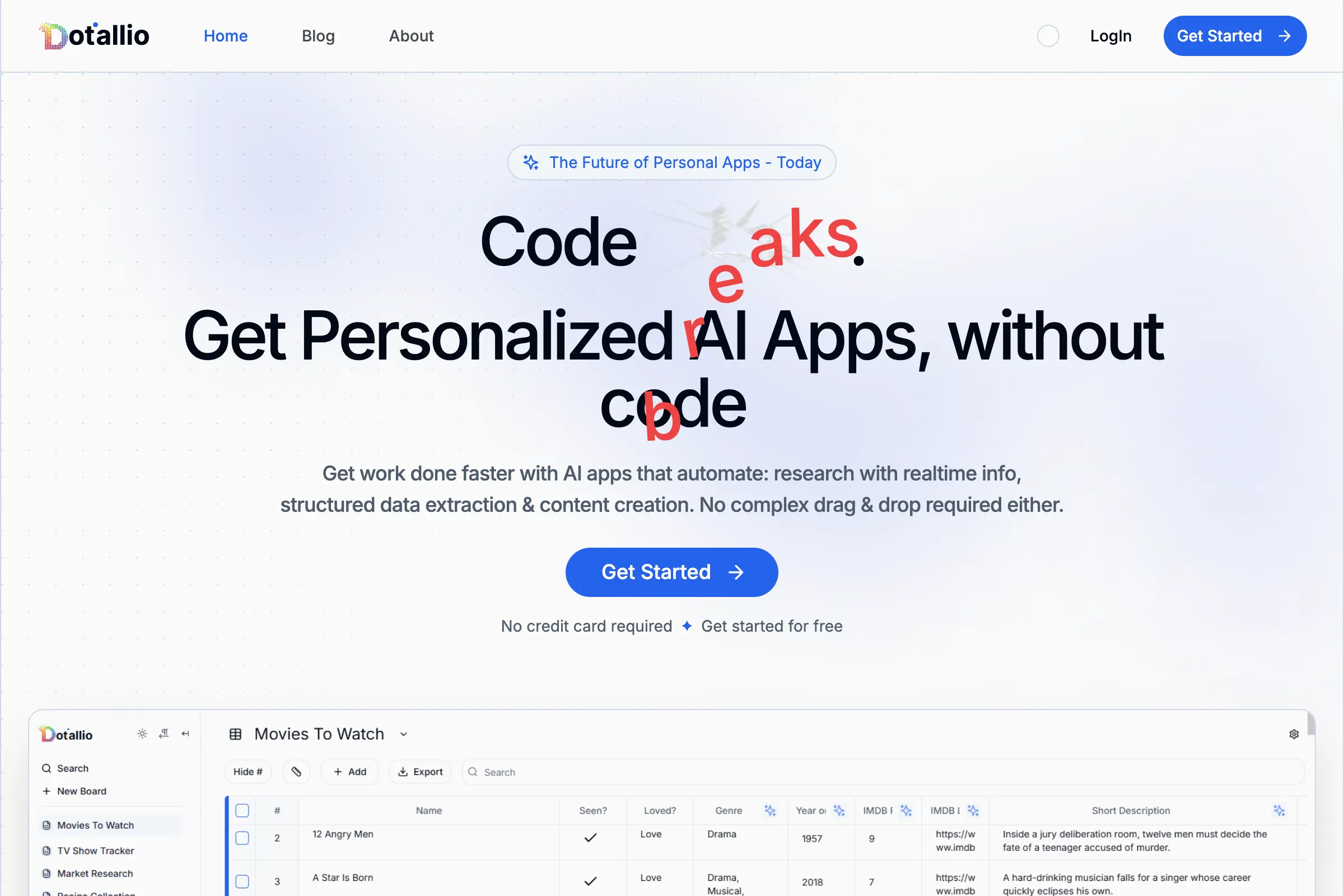
Dotallio
Personalized AI apps that automate research, data extraction, and content creation without code 🤖
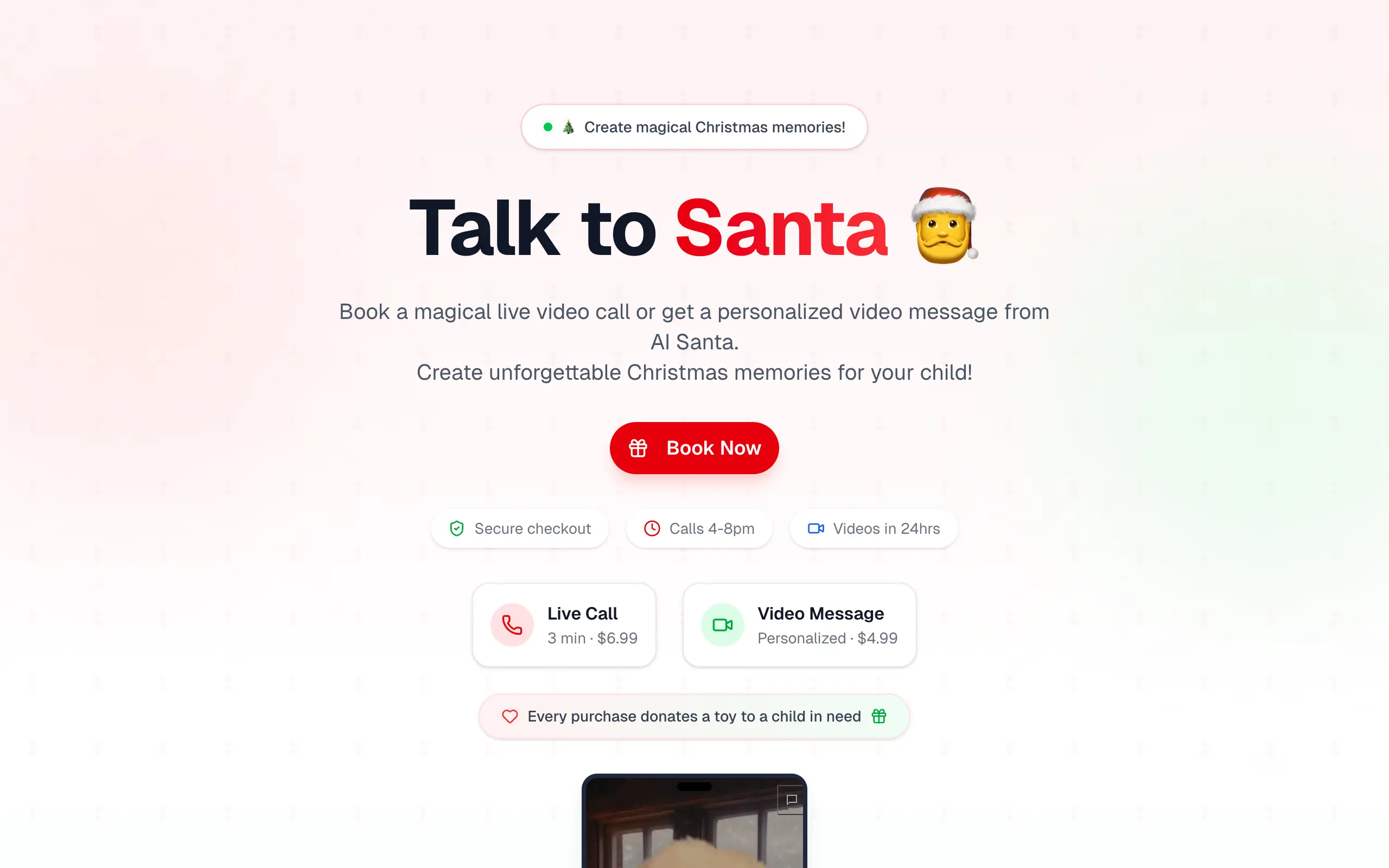
Talk to Santa
Enjoy a magical live video chat or receive a unique AI-generated video greeting from Santa Claus 🎅
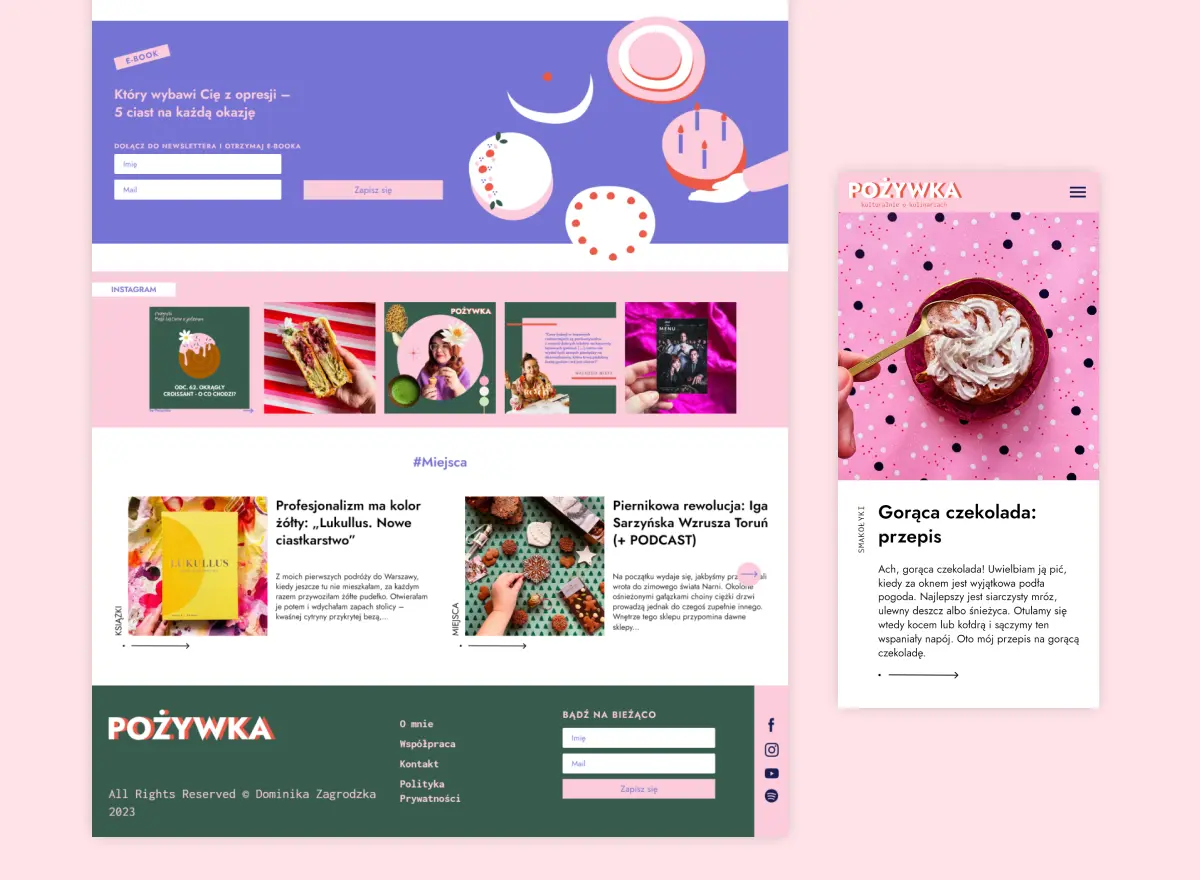
pozywka.pl
Scalable blog for food journalist, focused on performance and user experience 🌭
zagrodzki.me
Personal blog and portfolio of Bart Zagrodzki, where he shares his knowledge and work 💼
TurboStarter
Ship your startup everywhere. In minutes.
HTML to Markdown
Convert HTML to Markdown with ease, directly in your browser 📄
Dotallio
Personalized AI apps that automate research, data extraction, and content creation without code 🤖
Talk to Santa
Enjoy a magical live video chat or receive a unique AI-generated video greeting from Santa Claus 🎅
pozywka.pl
Scalable blog for food journalist, focused on performance and user experience 🌭
zagrodzki.me
Personal blog and portfolio of Bart Zagrodzki, where he shares his knowledge and work 💼
TurboStarter
Ship your startup everywhere. In minutes.
HTML to Markdown
Convert HTML to Markdown with ease, directly in your browser 📄
Dotallio
Personalized AI apps that automate research, data extraction, and content creation without code 🤖
Talk to Santa
Enjoy a magical live video chat or receive a unique AI-generated video greeting from Santa Claus 🎅
pozywka.pl
Scalable blog for food journalist, focused on performance and user experience 🌭
zagrodzki.me
Personal blog and portfolio of Bart Zagrodzki, where he shares his knowledge and work 💼
TurboStarter
Ship your startup everywhere. In minutes.
HTML to Markdown
Convert HTML to Markdown with ease, directly in your browser 📄
Dotallio
Personalized AI apps that automate research, data extraction, and content creation without code 🤖
Talk to Santa
Enjoy a magical live video chat or receive a unique AI-generated video greeting from Santa Claus 🎅
pozywka.pl
Scalable blog for food journalist, focused on performance and user experience 🌭
zagrodzki.me
Personal blog and portfolio of Bart Zagrodzki, where he shares his knowledge and work 💼
TurboStarter
Ship your startup everywhere. In minutes.
HTML to Markdown
Convert HTML to Markdown with ease, directly in your browser 📄
Omichat
Chat with 50+ AI models, including ChatGPT and Claude, in one place - switch models anytime without losing context 🤖
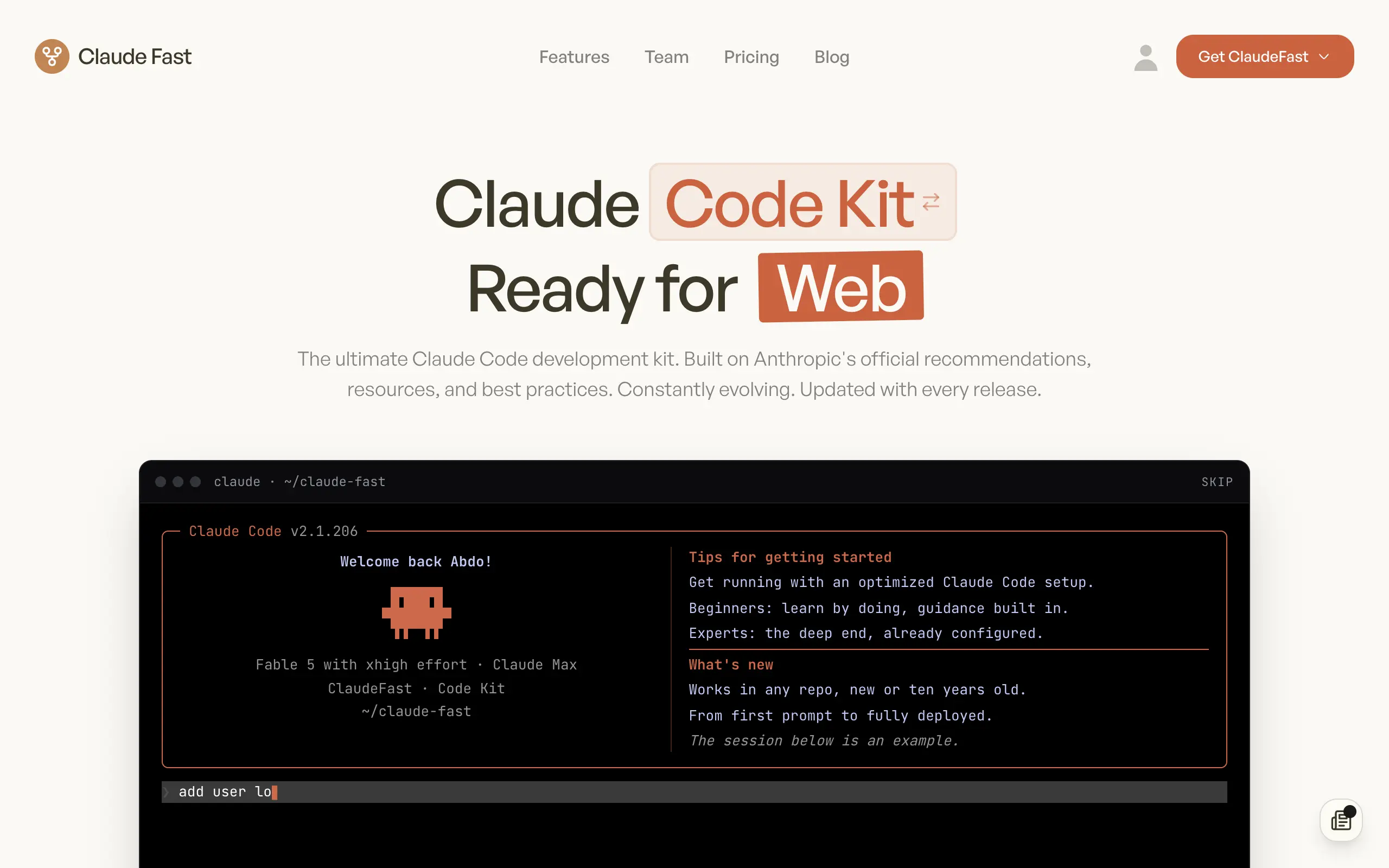
Claude Fast
Supercharge your Claude Code with 6x effective context window and specialized AI agents 🤖
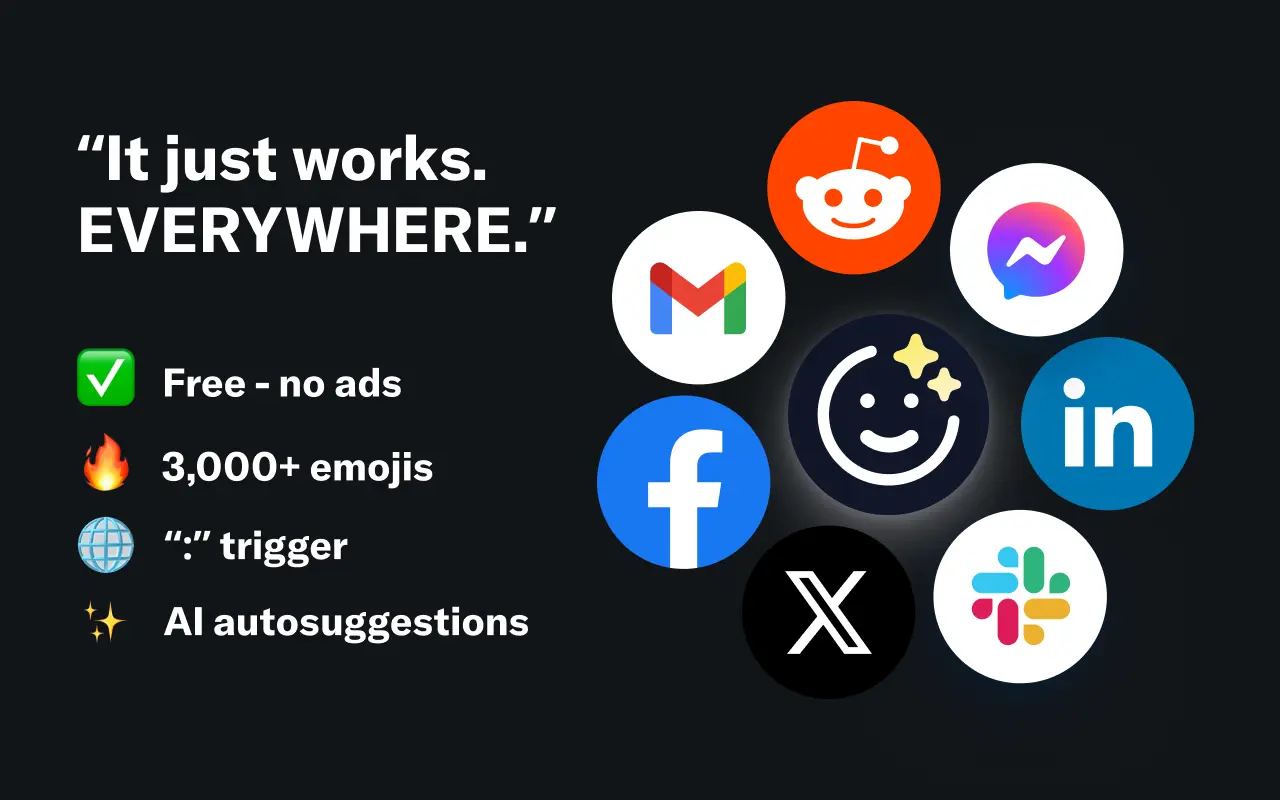
EmojAI
AI-powered emoji picker with smart, context-aware suggestions 🤖
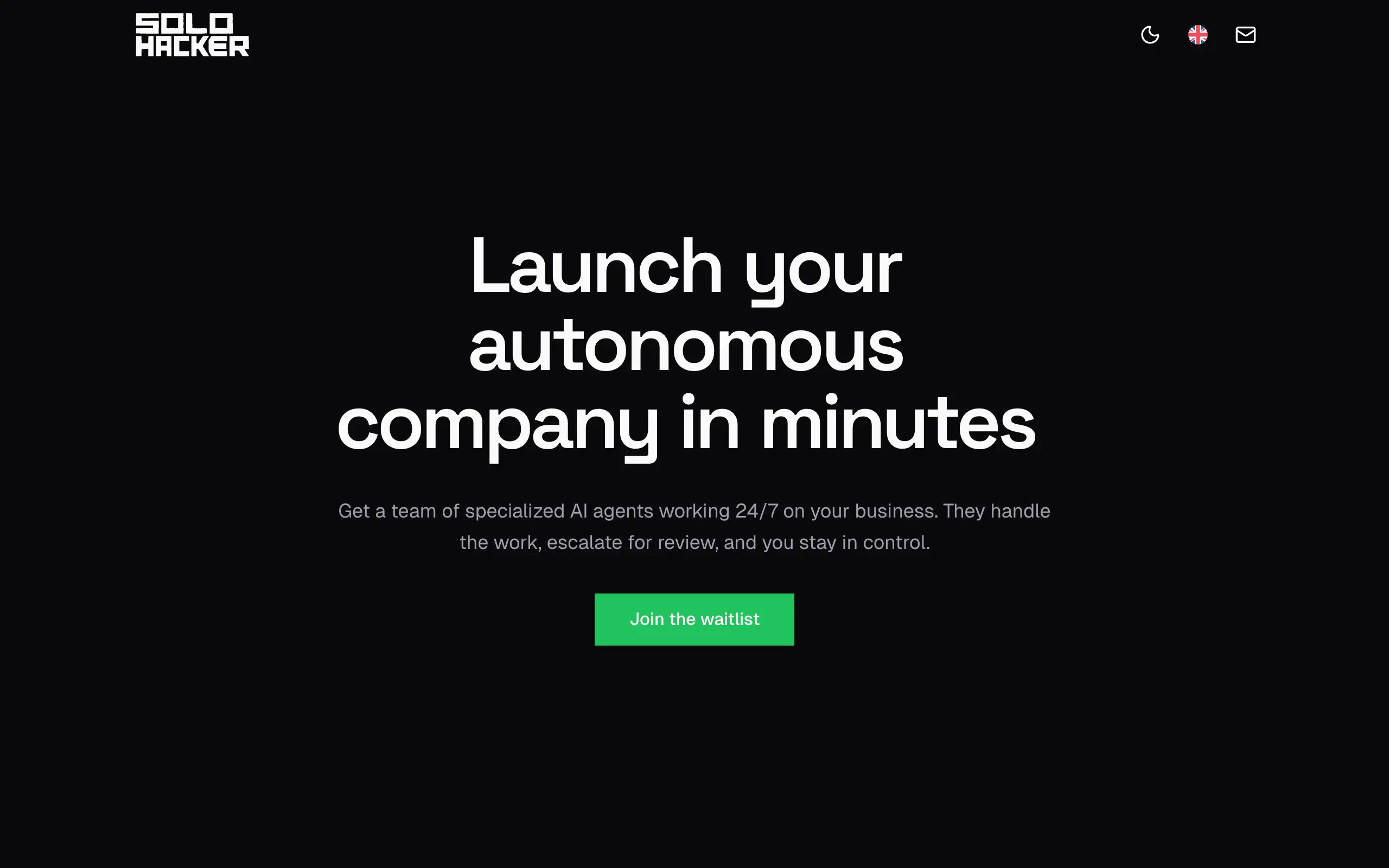
Solohacker
Autonomous company launcher - AI agents work 24/7, escalate what matters, and you stay in control 🤖
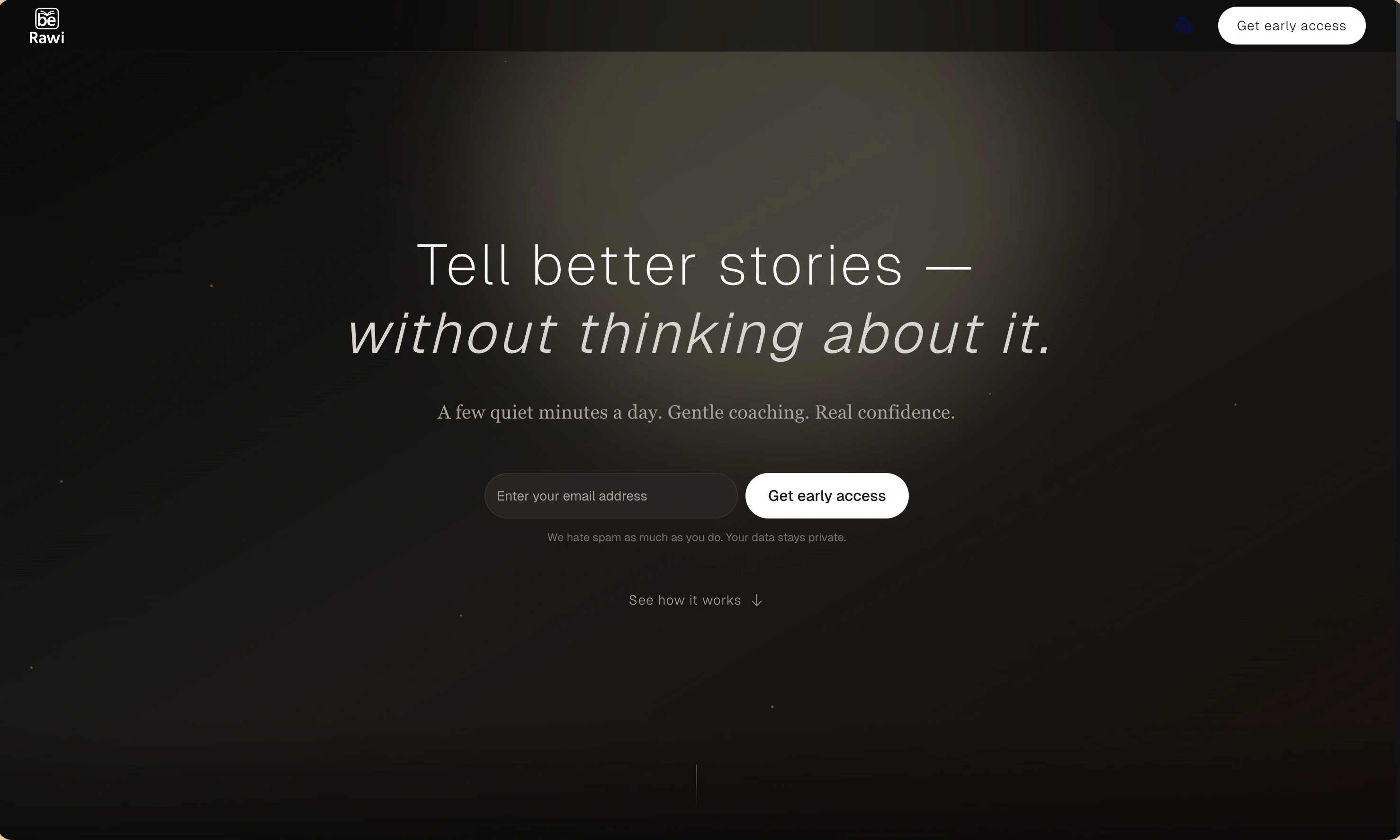
BeRawi: Storytelling Coach
Practice storytelling daily with instant feedback to sound clearer, more engaging, and confident 🎤
Omichat
Chat with 50+ AI models, including ChatGPT and Claude, in one place - switch models anytime without losing context 🤖
Claude Fast
Supercharge your Claude Code with 6x effective context window and specialized AI agents 🤖
EmojAI
AI-powered emoji picker with smart, context-aware suggestions 🤖
Solohacker
Autonomous company launcher - AI agents work 24/7, escalate what matters, and you stay in control 🤖
BeRawi: Storytelling Coach
Practice storytelling daily with instant feedback to sound clearer, more engaging, and confident 🎤
Omichat
Chat with 50+ AI models, including ChatGPT and Claude, in one place - switch models anytime without losing context 🤖
Claude Fast
Supercharge your Claude Code with 6x effective context window and specialized AI agents 🤖
EmojAI
AI-powered emoji picker with smart, context-aware suggestions 🤖
Solohacker
Autonomous company launcher - AI agents work 24/7, escalate what matters, and you stay in control 🤖
BeRawi: Storytelling Coach
Practice storytelling daily with instant feedback to sound clearer, more engaging, and confident 🎤
Omichat
Chat with 50+ AI models, including ChatGPT and Claude, in one place - switch models anytime without losing context 🤖
Claude Fast
Supercharge your Claude Code with 6x effective context window and specialized AI agents 🤖
EmojAI
AI-powered emoji picker with smart, context-aware suggestions 🤖
Solohacker
Autonomous company launcher - AI agents work 24/7, escalate what matters, and you stay in control 🤖
BeRawi: Storytelling Coach
Practice storytelling daily with instant feedback to sound clearer, more engaging, and confident 🎤

Connect with like-minded people
Join our community to get feedback, support, and grow together with 1,000+ builders on board, let's ship it!
Join usShip your startup everywhere. In minutes.
Don't burn tokens on setup and start building features on day one.