Clausely
Helps freelance contract lawyers draft and redline vendor agreements from their own clause library. Cuts the first-draft time per contract from hours to under thirty minutes.
An AI contract drafting tool for freelance lawyers helps independent counsel assemble and redline vendor agreements from their own clause library instead of starting from a blank page or a generic template. Clausely's bet is that a solo lawyer's real asset is their accumulated, battle-tested language, and that AI should retrieve and adapt that language rather than invent new text. In 2026 the pieces are finally practical: reliable structured output from language models, cheap document parsing and a growing population of independent lawyers who work without a firm's knowledge management team.
Key takeaways
- Target customer: freelance and fractional contract lawyers who draft and negotiate vendor, SaaS and services agreements for several clients.
- Pricing angle: a flat monthly subscription, for example $79 to $149 per seat, justified by hours saved per contract.
- Biggest risk: trust. Lawyers will not adopt a tool that hallucinates clauses or puts client confidentiality at risk.
- Time to MVP: roughly 4 to 6 weeks for a focused web app if you start from a starter kit and limit scope to vendor agreements.
Who is Clausely for?
Clausely is for the solo or fractional lawyer who handles 10 to 40 vendor and services agreements a month for a handful of startup or mid-market clients. They usually left a firm, kept their best precedents and now work from a folder of Word documents.
What is their current workaround?
Most keep a messy folder of past contracts, a few "gold standard" templates and a personal memory of which clause they used where. A first draft means opening three old agreements, copying indemnity language from one, payment terms from another and then reconciling defined terms by hand.
Why does the workaround fail?
- Search is by filename, not meaning. Finding "the limitation of liability clause where we capped at 12 months of fees" means opening files one by one.
- Versions drift. The same clause exists in nine slightly different forms and nobody knows which is current.
- Redlining is manual. Comparing a counterparty's paper against your preferred positions is slow and easy to get wrong when you are tired.
- Generic AI is risky. Pasting a contract into a general chatbot raises confidentiality concerns and returns plausible text that does not match the lawyer's own positions.
The billing model makes this painful. A freelancer who bills hourly loses margin on fixed-fee work, and one who bills fixed fees loses it on every extra hour of assembly.
Why is there room for an AI contract drafting tool in 2026?
The gap sits between two categories. Enterprise contract lifecycle tools and legal AI assistants such as Harvey target firms and in-house teams with sales-led pricing and heavy onboarding. At the other end, document automation tools and general chatbots are cheap but are not built around an individual lawyer's own language.
Freelancers fall between them. They are too small for enterprise contracts and too exacting for generic templates.
Why now?
- Retrieval over generation. Grounding output in a lawyer's own clauses is a more defensible pattern than free-form drafting, and tooling for it is mature.
- More independent lawyers. Fractional and freelance legal work has become a normal career path, and these lawyers buy their own software.
- Better document handling. Parsing Word files with tracked changes and numbering is far more tractable than it was a few years ago.
- Lower trust barrier through architecture. Options for data isolation, zero retention agreements with model providers and region-specific hosting are easier to offer.
The honest caveat: incumbents can add a "personal clause library" feature. Your edge has to be depth of workflow for the solo user, not the idea of the library itself.
What should the Clausely MVP include?
Build one workflow end to end: import clauses, draft a vendor agreement, redline an incoming one. Restrict the document type to vendor and services agreements so your clause taxonomy stays manageable.
Clause library import
Upload past agreements, split them into tagged clauses and let the lawyer approve, edit or reject each one.
Playbook-based drafting
Pick a counterparty type and risk posture, then assemble a first draft from the lawyer's own approved clauses with source references.
Redline against your positions
Upload a counterparty draft and see each clause compared with your preferred language, with suggested edits as tracked changes.
Word export with tracked changes
Export a clean .docx so the lawyer finishes the work in the tool they already use.
What should you cut?
Cut e-signature, client portals, matter management, templates for every contract type and a mobile app. Also skip fully automatic negotiation. The lawyer stays the decision maker.
What is the aha moment?
The aha moment is the first draft appearing in under thirty minutes, with every clause traceable to a document the lawyer wrote. Seeing "from your 2024 SaaS agreement for Client X" next to each clause is what builds trust.
How is Clausely different from existing options?
The positioning is simple: your language, your positions, your machine of record. Clausely never presents invented clauses as its own authority. It retrieves, adapts and flags.
| Option | Uses your own clauses | Redlines to your positions | Built for solo lawyers | Setup effort |
|---|---|---|---|---|
| Clausely | ✅ | ✅ | ✅ | Upload and review |
| Word and folders | ✅ | ❌ | ✅ | None, but slow |
| General AI chatbot | ❌ | Partial | ✅ | Low, but risky |
| Enterprise legal AI | Partial | ✅ | ❌ | Sales-led onboarding |
| Document automation tools | Partial | ❌ | Partial | Template building |
The weak spot is switching cost in the other direction: if lawyers already have a tidy library, they may feel they do not need help. Target those whose library is large but disorganized.
How would Clausely make money?
Charge lawyers a subscription, because they already pay for research and practice tools without procurement.
- Flat seat pricing. For example $99 per month. If a lawyer drafts 15 contracts a month and saves even two hours each, the price is trivial against their rate. This is the simplest option and the one to start with.
- Tiered by library and volume. A lower tier with a capped clause count and a higher tier with unlimited clauses and playbooks. Useful once you see usage patterns.
- Small-firm seats. Once solo users are happy, offer shared libraries for two to five lawyers. This is expansion revenue, not a day one feature.
As an assumption to test: if you convert 10% of trial lawyers at $99 per month, 100 paying customers means about $9,900 monthly recurring revenue. Measure trial-to-paid conversion early, since legal buyers often take longer to decide.
Which growth channel works first?
Direct outreach and community. Freelance lawyer groups, legal ops communities and LinkedIn are where these people talk. Offer a free library audit: they send three contracts, you show the extracted clauses. Content about contract negotiation positions can follow once you have credibility.
How do you validate Clausely before building?
Spend one to two weeks proving that lawyers will upload real documents and pay.
Interview eight freelance lawyers
Ask them to walk through their last vendor agreement from first draft to signature, and note where time went and which tools they used.
Run a manual concierge test
Take three past contracts from two lawyers, extract clauses by hand with a script and a model, and produce a first draft. Time how long review takes.
Publish a landing page
State the promise of a first draft from your own clauses in under thirty minutes, and address confidentiality directly. Collect waitlist emails with a short question about contract volume.
Ask for a paid pilot
Offer a discounted founding rate to three to five lawyers who completed the concierge test. A card on file is a stronger signal than a compliment.
If nobody will share real contracts even in a trial, the problem is trust, not features, and you should resolve that before writing code.
What tech stack should you use to build it?
Build a web app with a document pipeline behind it: ingest, clause segmentation, embedding and retrieval, drafting, comparison and export. Most of the non-differentiating work is standard SaaS plumbing, and a starter kit like TurboStarter covers it so you can spend your weeks on the clause engine.
What does TurboStarter cover?
TurboStarter gives you web and mobile apps in a monorepo, plus authentication, billing for subscriptions, a database layer and AI integration. It also includes emails, file storage, organizations and teams, background tasks, an admin panel, analytics and monitoring. Organizations matter later for small-firm shared libraries, and background tasks suit long document processing.
Which database approach fits the clause library?
Keeps clauses, metadata and embeddings in one place, so permission checks and joins are simple. For a solo lawyer's library, in the tens of thousands of clauses, this is typically enough and cheaper to run. Pick this for the MVP.
Makes sense only if retrieval volume or latency outgrows Postgres. It adds a second system to secure, which complicates your confidentiality story. Defer until you have evidence you need it.
A starting data model
Store each clause with its source, type and approval state, so every drafted sentence can be traced back.
create table clauses (
  id uuid primary key default gen_random_uuid(),
  owner_id uuid not null,
  source_document_id uuid not null,
  clause_type text not null,
  body text not null,
  approved boolean not null default false,
  embedding vector(1536),
  created_at timestamptz not null default now()
);
Which model setup should you choose?
Use a hosted model provider with a zero data retention agreement for the MVP, and make the provider swappable behind one interface. Keep generation constrained: the model selects and adapts approved clauses, and a validation step rejects output containing text not traceable to a source. Self-hosted models can wait until a customer demands them.
What could make Clausely fail?
Biggest risk: lawyers will not trust it with client documents
A single hallucinated clause or a confidentiality incident can end adoption in a profession built on risk avoidance. Mitigate with source-linked output, zero retention provider terms, encryption, clear data handling documentation and a human approval step before anything is exported. Never market it as legal advice.
Other risks
- Incumbents add the feature. Legal AI vendors can offer personal libraries. Stay focused on solo workflows, pricing and speed of iteration.
- Poor import quality. Messy Word files with odd numbering break clause splitting. Invest early in a review screen so lawyers can fix segmentation in minutes.
- Slow sales cycles. Lawyers are cautious buyers. Use paid pilots and a generous trial rather than relying on self-serve conversion alone.
What is the 30-day plan to launch Clausely?
Week 1: validate and scope
Complete interviews, run the concierge test and lock the MVP to vendor agreements.
Week 2: set up the foundation
Start from TurboStarter for auth, billing and the database, then build upload and clause extraction.
Week 3: build drafting and redlining
Ship retrieval-based drafting with source links, then comparison against the lawyer's positions.
Week 4: pilot and launch
Add Word export, onboard your pilot lawyers, fix import bugs and open a limited paid beta.
The goal at day 30 is not scale. It is five lawyers using Clausely on real contracts and at least a few paying. If you want to build an AI contract drafting tool for freelance lawyers, start with the interviews this week.
FAQ
Interview lawyers about their last real contract, then run a manual concierge draft using their own documents. Finish with a paid pilot request. Willingness to share real contracts and pay is the signal that matters.
Start with a flat monthly seat price, for example $79 to $149, and test it against hours saved per contract. Avoid usage-based pricing at first, since lawyers prefer predictable costs.
Enterprise legal AI such as Harvey, contract lifecycle management platforms, document automation tools and general chatbots. Few focus on a solo lawyer's own clause library, which is where Clausely competes.
A web app with Postgres, a vector extension such as pgvector, a hosted language model with zero retention terms, background jobs for document processing and .docx export. A starter kit handles auth, billing, emails and storage.
A focused MVP typically takes 4 to 6 weeks for one developer, assuming a starter kit and a single contract type. Costs are mostly your time plus model usage, hosting and a legal review of your terms and privacy policy.
Lawyers using tools to assist their own work is generally acceptable, but they remain responsible for the output. Position Clausely as an assistant that requires human review, and have your terms reviewed by a qualified lawyer in your jurisdiction.
More 🤖 AI Startup SaaS ideas
Discover more innovative ai startup SaaS ideas that are trending in 2026. Each idea is AI-generated with market validation and growth potential to help you find your next profitable venture faster than competitors.
Your competitors are building with TurboStarter
Below are some of the SaaS ideas that have been generated and built with our starter kit.

Monitor any Telegram channel in real time - track posts, edits, deletions, and growth with AI recaps 📡

AI website builder - describe your business, pick a niche template, edit by chatting, and publish instantly ✨

Find verified home service professionals, compare quotes, and pay securely through escrow - built for Brazilians across the US 🏠
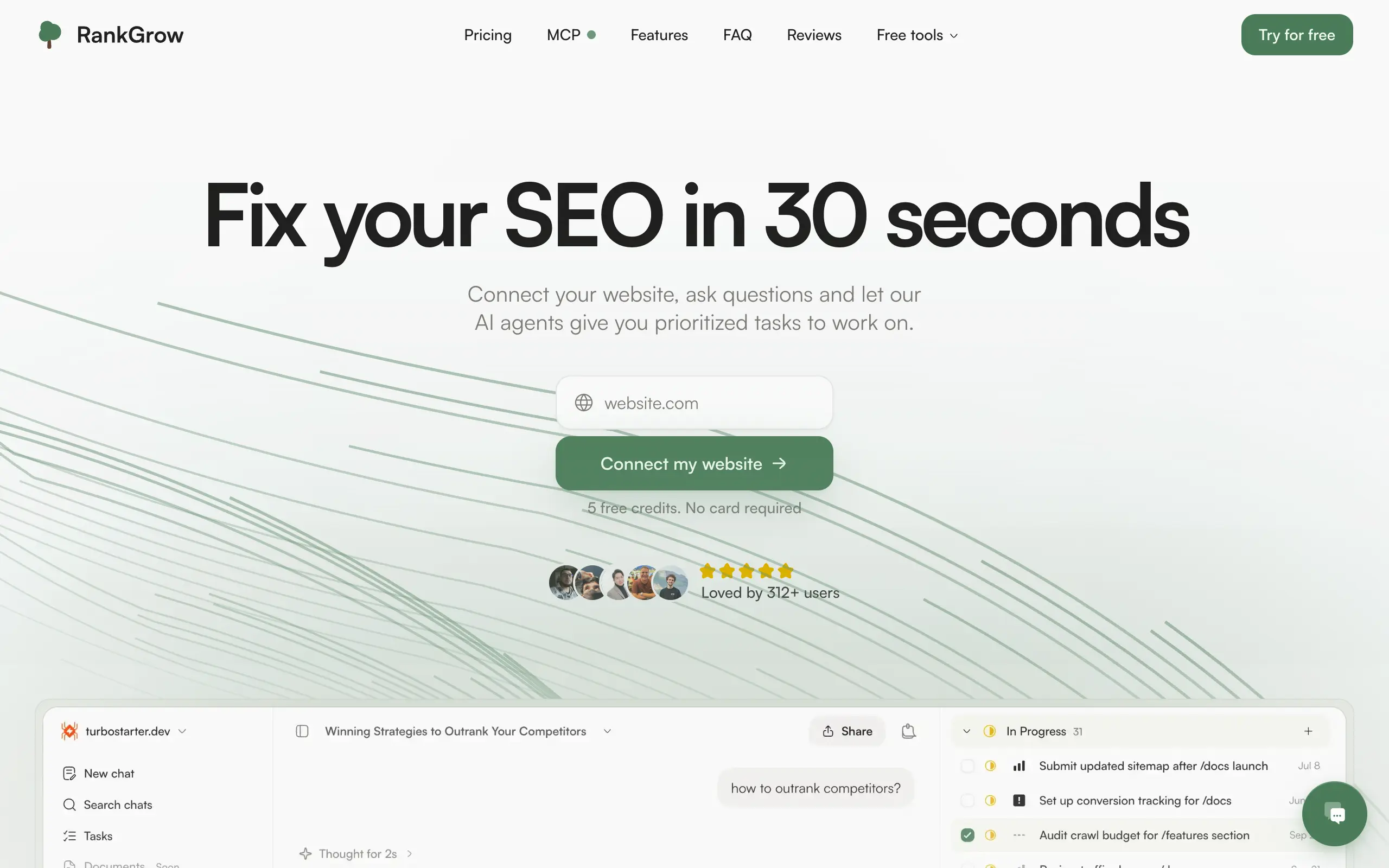
Fix your SEO with AI agents - connect Search Console, get prioritized tasks, and grow organic traffic 📈

Sync your favorite content for distraction-free reading, save time and replace multiple apps. Anytime, anywhere 🔄

Get clean, structured data from 21 platforms like TikTok, Instagram, and YouTube with a single request 📊
Monitor any Telegram channel in real time - track posts, edits, deletions, and growth with AI recaps 📡
AI website builder - describe your business, pick a niche template, edit by chatting, and publish instantly ✨
Find verified home service professionals, compare quotes, and pay securely through escrow - built for Brazilians across the US 🏠
Fix your SEO with AI agents - connect Search Console, get prioritized tasks, and grow organic traffic 📈
Sync your favorite content for distraction-free reading, save time and replace multiple apps. Anytime, anywhere 🔄
Get clean, structured data from 21 platforms like TikTok, Instagram, and YouTube with a single request 📊

Personalized AI apps that automate research, data extraction, and content creation without code 🤖

Enjoy a magical live video chat or receive a unique AI-generated video greeting from Santa Claus 🎅

Scalable blog for food journalist, focused on performance and user experience 🌭

Personal blog and portfolio of Bart Zagrodzki, where he shares his knowledge and work 💼

Ship your startup everywhere. In minutes.

Convert HTML to Markdown with ease, directly in your browser 📄
Personalized AI apps that automate research, data extraction, and content creation without code 🤖
Enjoy a magical live video chat or receive a unique AI-generated video greeting from Santa Claus 🎅
Scalable blog for food journalist, focused on performance and user experience 🌭
Personal blog and portfolio of Bart Zagrodzki, where he shares his knowledge and work 💼
Ship your startup everywhere. In minutes.
Convert HTML to Markdown with ease, directly in your browser 📄

Chat with 50+ AI models, including ChatGPT and Claude, in one place - switch models anytime without losing context 🤖

Supercharge your Claude Code with 6x effective context window and specialized AI agents 🤖

AI-powered emoji picker with smart, context-aware suggestions 🤖

Autonomous company launcher - AI agents work 24/7, escalate what matters, and you stay in control 🤖

Practice storytelling daily with instant feedback to sound clearer, more engaging, and confident 🎤
Chat with 50+ AI models, including ChatGPT and Claude, in one place - switch models anytime without losing context 🤖
Supercharge your Claude Code with 6x effective context window and specialized AI agents 🤖
AI-powered emoji picker with smart, context-aware suggestions 🤖
Autonomous company launcher - AI agents work 24/7, escalate what matters, and you stay in control 🤖
Practice storytelling daily with instant feedback to sound clearer, more engaging, and confident 🎤

Connect with like-minded people
Join our community to get feedback, support, and grow together with 1,000+ builders on board, let's ship it!
Join usShip your startup everywhere. In minutes.
Don't burn tokens on setup and start building features on day one.