Dirham Desk
Helps Indian expat freelancers in Dubai auto-sort receipts and invoices into UAE VAT-ready reports. Saves hours each quarter compared with manual spreadsheets.
Dirham Desk is an AI bookkeeping assistant for Indian expat freelancers in Dubai. It turns a messy pile of receipts, invoices and bank exports into UAE VAT-ready reports, so quarterly filing stops eating a weekend. In 2026, with VAT and corporate tax compliance now routine for freelancers and small license holders, AI receipt sorting for UAE VAT is a narrow, painful and payable problem that general accounting tools handle poorly.
Key takeaways
- Target customer: Indian freelancers and solo consultants in Dubai who are VAT-registered (or close to the threshold) and do their own books.
- Pricing angle: a flat monthly subscription in the range of $15 to $29, with a one-off quarterly filing-pack option for people who hate subscriptions.
- Biggest risk: accuracy and trust. One wrong VAT figure destroys credibility, so the product must show its reasoning and keep a human in the loop.
- Time to MVP: about 3 to 5 weeks for one developer using a starter kit, assuming you scope to receipts, invoices and a single VAT report.
Who is Dirham Desk for?
The ideal customer is an Indian freelancer or solo consultant living in Dubai, working on a freelance permit or a small free zone license. Think of a designer, developer, marketing consultant or trainer invoicing a mix of UAE clients and clients in India, the Gulf and Europe. They are usually comfortable with WhatsApp and UPI-style convenience, and uncomfortable with accounting jargon.
What they do today
Most of them run a spreadsheet, a folder of phone photos and a shared WhatsApp chat with a part-time accountant. Some use a general tool like Zoho Books or QuickBooks and give up on the categorization halfway through the year. Others hand everything to an accountant once a quarter and pay for the hours it takes to sort things out.
Why the workaround fails
The failure is not the spreadsheet itself. It is the sorting work that happens at the worst time, right before a deadline.
- Mixed documents: receipts arrive as photos, PDFs, emails and bank lines, often in English and Arabic.
- VAT nuance: not every expense is recoverable, and the treatment of foreign-currency invoices and clients outside the UAE needs care.
- Missing records: a tax invoice without the right details (supplier tax registration number, for example) can cause problems when you try to reclaim input VAT.
- Cost of delay: accountants bill for cleanup time, which is exactly the work software should do.
Is there a market for AI receipt sorting for UAE VAT?
Yes, but it is a niche you win by being specific, not by being big. The gap sits between generic global bookkeeping tools, which are built around other countries' tax logic, and local accountants, who are accurate but expensive for a freelancer earning modestly.
Why now in 2026
Several trends make this timing sensible, described qualitatively:
- Compliance is normal now: VAT is no longer new in the UAE, and corporate tax has pushed even small operators to keep cleaner records.
- Document AI is good enough: modern vision-language models read messy receipts far better than classic OCR, including mixed-language ones.
- Freelancing is growing: more professionals work independently, and many Indian expats prefer a low-cost, self-serve setup.
- Chat-first behavior: people are used to forwarding documents on WhatsApp or email, which lowers the friction of capture.
Who you compete with
Real alternatives include spreadsheets, Zoho Books, QuickBooks, and local accountants or bookkeeping firms. None are bad. They are simply either too general, too heavy or too costly for a solo freelancer who wants a quarterly VAT pack with minimal effort.
What should the Dirham Desk MVP include?
Build the shortest path from "pile of documents" to "VAT report I trust". The aha moment is uploading a quarter of receipts and seeing them sorted, totaled and mapped to VAT return boxes in minutes, with every uncertain item flagged for a quick review.
Smart capture
Upload photos, PDFs or forwarded emails, and extract supplier, date, amount, currency and VAT from each one.
Auto-categorization
Sort each document into expense and income categories, and flag items where VAT recovery is unclear.
VAT-ready report
Group totals by period into a quarterly summary that matches the structure of the UAE VAT return.
Review queue
Show low-confidence items with the extracted fields side by side with the source, so users approve in a click.
What to cut from version one
- Bank sync: start with CSV uploads, since bank integrations in the region are slow to negotiate.
- Direct filing: export a report and let users file themselves or send it to their accountant.
- Corporate tax: add it after VAT is reliable.
- Mobile app: a responsive web app plus email forwarding is enough to test demand.
How is Dirham Desk different from spreadsheets and accounting software?
The unique selling proposition is simple: UAE VAT logic built for freelancers, with receipts handled by AI and reviewed by the user. You are not building a general ledger. You are building the fastest route to a defensible quarterly report.
| Option | UAE VAT-ready report | Auto-reads receipts | Built for solo freelancers | Cost |
|---|---|---|---|---|
| Dirham Desk | ✅ | ✅ | ✅ | Low, flat |
| Spreadsheet | Manual | ❌ | Flexible but manual | Free, high time cost |
| General accounting software | Partly | Varies | ❌ Often overbuilt | Medium |
| Local accountant | ✅ | ❌ | Depends | Higher, per hour |
| DIY with a generic AI chatbot | ❌ Inconsistent | Partly | ❌ | Low, but unreliable |
The accountant is also a channel, not only a competitor. A clean export that an accountant can review in 15 minutes is a real selling point.
How would Dirham Desk make money?
Start with a subscription, because the pain recurs every quarter and the data compounds over time.
Option 1: flat monthly subscription
Charge somewhere between $15 and $29 per month with a free trial. As an assumption, if you charge $19/month and convert 5% of 1,000 trial users, you reach 50 paying customers and about $950 in monthly recurring revenue. That is a modest start, so cost control matters.
Option 2: quarterly filing pack
Offer a one-time payment per quarter for people who dislike subscriptions. It converts well with seasonal pain, but churn is built in, so treat it as an entry offer that upgrades to a plan.
Option 3: accountant plan
Sell a multi-client dashboard to freelance accountants and small bookkeeping firms. Revenue per account is higher, and one accountant can bring dozens of clients. Build this only after the solo product works.
First growth channel
The most likely channel is community presence where Indian expats already ask for help: Facebook groups, WhatsApp communities, Reddit and local freelancer forums. Answer VAT questions honestly, publish a plain-language checklist, and offer the tool as the shortcut. Referrals through accountants follow later.
How do you validate Dirham Desk in two weeks?
Spend ten to fourteen days testing whether people will hand over real documents and pay.
Interview ten freelancers
Ask how they handled their last VAT quarter, how many hours it took and what they paid. Listen for specific complaints, not general interest.
Ask an accountant to review the output format
Show a mock report to one or two UAE accountants. If they would accept it as a starting point, you have a credible deliverable.
Launch a landing page
State one promise, such as "Turn your receipts into a VAT-ready report". Drive traffic from community posts and track waitlist signups.
Run a concierge test
Ask five people to send you a quarter of documents. Process them with a script and manual checks, then return the report. Note error rates and time spent.
Pre-sell the first quarter
Ask for a small payment or a refundable deposit. Willingness to pay matters more than signups, and even 5 payers tell you something real.
What tech stack should you use to build Dirham Desk?
Use a TypeScript web stack with a relational database, a document-extraction model and a background job queue. The undifferentiated parts (accounts, billing, emails, storage) should come from a starter kit so your time goes into extraction accuracy and VAT logic.
What TurboStarter covers
TurboStarter ships a monorepo with web and mobile apps, authentication, billing, database, emails, file storage, AI, background tasks, an admin panel, analytics, internationalization and monitoring. For this idea, the relevant pieces are:
- Accounts: set up authentication so users sign in and keep their data private.
- Subscriptions: wire up billing for monthly plans and one-time quarterly packs.
- Document handling: use storage for uploaded receipts and invoices.
- Extraction pipeline: connect the AI layer for reading documents and suggesting categories.
Background tasks, organizations (for the accountant plan) and a mobile app are available later when you need them.
Choosing an AI approach
Send the receipt image directly to a vision-capable model and request structured JSON. This is fastest to build and handles odd layouts and mixed languages well. The trade-offs are per-document cost and less predictable output, so validate every response against a schema.
Run OCR first, then pass the text to a language model for classification. It can be cheaper at volume and gives you raw text to audit. It struggles with crumpled photos and Arabic-English layouts, so expect more tuning.
For the MVP, pick the hosted multimodal route and revisit costs once you have real volume.
A starting data model
Keep the extracted fields and the user's corrections separate. Corrections become your evaluation set.
create table documents (
  id uuid primary key,
  user_id uuid not null,
  file_url text not null,
  doc_type text not null, -- receipt | invoice
  supplier text,
  supplier_trn text,
  issue_date date,
  currency text,
  net_amount numeric(12,2),
  vat_amount numeric(12,2),
  category text,
  vat_recoverable boolean,
  confidence numeric(3,2),
  status text default 'needs_review', -- needs_review | approved
  created_at timestamptz default now()
);
Always store the original file, the model output and the user's final values. Without that trail, you cannot debug errors or defend a figure.
What could make Dirham Desk fail?
Biggest risk: wrong VAT numbers
If the product silently misclassifies a recoverable expense or misreads an amount, a user may file an incorrect return and blame you. Never present output as final tax advice. Show confidence, force review of uncertain items, keep the source document beside every figure, and have a UAE accountant check your VAT rules before launch.
Other risks
- Small niche: Indian freelancers in Dubai is a limited audience. Mitigate by designing the rules to extend to other expat groups and small UAE businesses later.
- Accountants as blockers: some will see you as a threat. Offer an accountant-friendly export and a referral arrangement.
- Model cost and drift: extraction costs can erode margins on a low price. Track cost per processed document from day one and cap free usage.
- Regulatory change: UAE rules evolve. Keep tax logic in versioned configuration, not scattered through code.
What is a realistic 30-day launch plan?
Days 1 to 7: validate
Complete interviews, the accountant review and the landing page. Decide whether to proceed based on pre-sale interest.
Days 8 to 14: scaffold
Start from TurboStarter so auth, billing and storage are already working. Build the upload flow and a basic documents table.
Days 15 to 21: extraction and review
Add model-based extraction, the confidence score and the review queue. Test on the concierge documents you collected.
Days 22 to 26: VAT report
Build the quarterly summary and an export your accountant contact approves. Measure accuracy against hand-checked results.
Days 27 to 30: private beta
Invite your waitlist, convert pre-sale customers and fix the top three issues. Price firmly rather than giving the product away.
Dirham Desk is a buildable bet on one painful quarterly chore. Start with the interviews this week, then ship the smallest version that produces a VAT-ready report someone would pay for.
FAQ
Interview ten freelancers, then run a concierge test where you process real receipts manually and return a report. If five people hand over documents and a few will pay up front, you have evidence worth building on.
A flat $15 to $29 per month is a reasonable test range for solo freelancers. Compare it to what they pay an accountant for cleanup time, and adjust based on how many hours you actually save them.
The main alternatives are spreadsheets, general accounting software such as Zoho Books and QuickBooks, and local accountants. Your edge is a narrow focus on UAE VAT for solo freelancers, with receipts handled by AI.
A TypeScript web app, a Postgres database, file storage for documents and a multimodal AI model for extraction is a sound default. A starter kit like TurboStarter covers auth, billing and storage so you can focus on extraction and VAT rules.
Assuming one developer and a starter kit, a usable MVP takes roughly 3 to 5 weeks. Main costs are model usage per document, hosting and an accountant's review of your VAT rules, all of which stay modest before launch.
Not in version one. Start by producing a report that matches the return structure, and let users or their accountants file. Direct filing adds integration and liability burdens that are better handled after the core accuracy is proven.
More 🤖 AI Startup SaaS ideas
Discover more innovative ai startup SaaS ideas that are trending in 2026. Each idea is AI-generated with market validation and growth potential to help you find your next profitable venture faster than competitors.
Your competitors are building with TurboStarter
Below are some of the SaaS ideas that have been generated and built with our starter kit.

Statiko
Monitor any Telegram channel in real time - track posts, edits, deletions, and growth with AI recaps 📡

Shibui
AI website builder - describe your business, pick a niche template, edit by chatting, and publish instantly ✨

Pro Service
Find verified home service professionals, compare quotes, and pay securely through escrow - built for Brazilians across the US 🏠
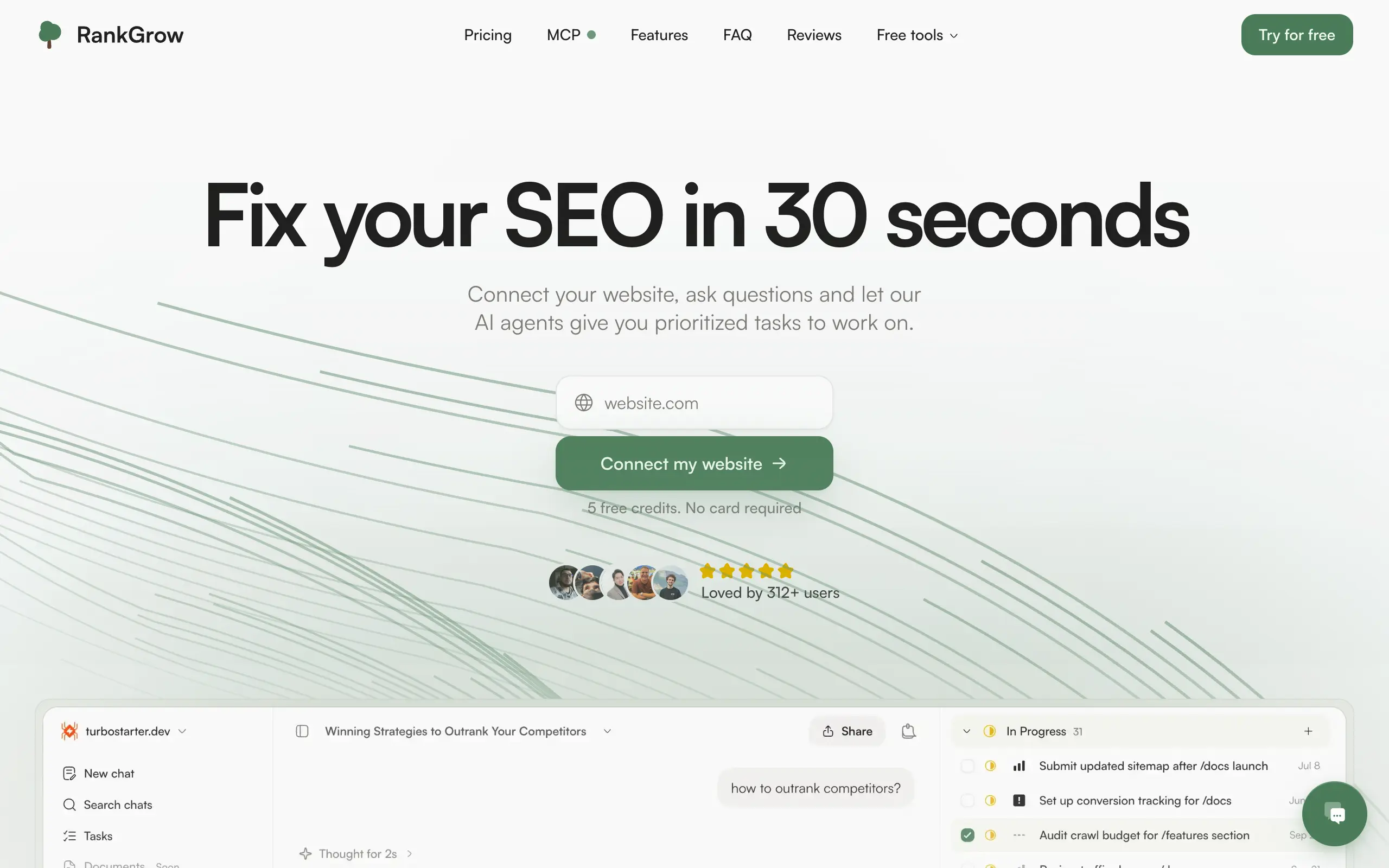
RankGrow
Fix your SEO with AI agents - connect Search Console, get prioritized tasks, and grow organic traffic 📈

SyncReads
Sync your favorite content for distraction-free reading, save time and replace multiple apps. Anytime, anywhere 🔄

Socialcrawl
Get clean, structured data from 21 platforms like TikTok, Instagram, and YouTube with a single request 📊
Statiko
Monitor any Telegram channel in real time - track posts, edits, deletions, and growth with AI recaps 📡
Shibui
AI website builder - describe your business, pick a niche template, edit by chatting, and publish instantly ✨
Pro Service
Find verified home service professionals, compare quotes, and pay securely through escrow - built for Brazilians across the US 🏠
RankGrow
Fix your SEO with AI agents - connect Search Console, get prioritized tasks, and grow organic traffic 📈
SyncReads
Sync your favorite content for distraction-free reading, save time and replace multiple apps. Anytime, anywhere 🔄
Socialcrawl
Get clean, structured data from 21 platforms like TikTok, Instagram, and YouTube with a single request 📊

Dotallio
Personalized AI apps that automate research, data extraction, and content creation without code 🤖

Talk to Santa
Enjoy a magical live video chat or receive a unique AI-generated video greeting from Santa Claus 🎅

pozywka.pl
Scalable blog for food journalist, focused on performance and user experience 🌭

zagrodzki.me
Personal blog and portfolio of Bart Zagrodzki, where he shares his knowledge and work 💼

TurboStarter
Ship your startup everywhere. In minutes.

HTML to Markdown
Convert HTML to Markdown with ease, directly in your browser 📄
Dotallio
Personalized AI apps that automate research, data extraction, and content creation without code 🤖
Talk to Santa
Enjoy a magical live video chat or receive a unique AI-generated video greeting from Santa Claus 🎅
pozywka.pl
Scalable blog for food journalist, focused on performance and user experience 🌭
zagrodzki.me
Personal blog and portfolio of Bart Zagrodzki, where he shares his knowledge and work 💼
TurboStarter
Ship your startup everywhere. In minutes.
HTML to Markdown
Convert HTML to Markdown with ease, directly in your browser 📄

Omichat
Chat with 50+ AI models, including ChatGPT and Claude, in one place - switch models anytime without losing context 🤖

Claude Fast
Supercharge your Claude Code with 6x effective context window and specialized AI agents 🤖

EmojAI
AI-powered emoji picker with smart, context-aware suggestions 🤖

Solohacker
Autonomous company launcher - AI agents work 24/7, escalate what matters, and you stay in control 🤖

BeRawi: Storytelling Coach
Practice storytelling daily with instant feedback to sound clearer, more engaging, and confident 🎤
Omichat
Chat with 50+ AI models, including ChatGPT and Claude, in one place - switch models anytime without losing context 🤖
Claude Fast
Supercharge your Claude Code with 6x effective context window and specialized AI agents 🤖
EmojAI
AI-powered emoji picker with smart, context-aware suggestions 🤖
Solohacker
Autonomous company launcher - AI agents work 24/7, escalate what matters, and you stay in control 🤖
BeRawi: Storytelling Coach
Practice storytelling daily with instant feedback to sound clearer, more engaging, and confident 🎤

Connect with like-minded people
Join our community to get feedback, support, and grow together with 1,000+ builders on board, let's ship it!
Join usShip your startup everywhere. In minutes.
Don't burn tokens on setup and start building features on day one.