EvalForge
A continuous evaluation API that scores AI model outputs for quality, bias, and drift, enabling production-grade monitoring and alerts.
Understanding the problem EvalForge solves in modern AI systems
As AI systems move from experimentation to production, a new class of problems emerges—how do you continuously evaluate AI model outputs once they’re live? Traditional offline benchmarks, one-time audits, or manual QA processes are no longer sufficient when models are:
- Continuously updated or fine-tuned
- Exposed to real-world, unpredictable inputs
- Embedded in mission-critical workflows like customer support, healthcare, finance, or hiring
This is where a continuous AI evaluation API like EvalForge becomes essential.
EvalForge is designed to score AI model outputs for quality, bias, and drift in real time, enabling production-grade monitoring, alerts, and governance. Instead of asking “Is my model good?” once, EvalForge helps teams answer “Is my model still behaving as expected right now?”
This article provides a deep, expert-level breakdown of the EvalForge API idea: the market opportunity, target users, core features, technical architecture, monetization strategies, risks, and a clear implementation roadmap. The goal is to validate EvalForge as a high-potential SaaS product while offering practical guidance for building and positioning it successfully.
What is EvalForge? A continuous AI evaluation API explained
At its core, EvalForge is a continuous evaluation and monitoring API for AI models. It integrates directly into production systems and evaluates model outputs along three critical dimensions:
- Quality – Is the output accurate, relevant, helpful, or aligned with expectations?
- Bias – Does the output exhibit unfair, unsafe, or discriminatory patterns?
- Drift – Is the model’s behavior changing over time due to data, usage, or context shifts?
Unlike static evaluation frameworks or internal scripts, EvalForge operates as an always-on layer that:
- Scores every (or sampled) AI output
- Aggregates metrics over time
- Triggers alerts when thresholds are breached
- Provides audit-ready evaluation logs
The primary keyword that defines this product category is continuous AI evaluation API, supported by related semantic keywords such as:
- AI model monitoring
- LLM evaluation
- AI bias detection
- Model drift detection
- Production AI observability
EvalForge positions itself at the intersection of AI reliability, safety, and observability—a rapidly growing and under-served market.
Why continuous AI evaluation is now a critical need
The shift from static models to living systems
Historically, ML models were trained, validated, deployed, and left largely untouched. Modern AI systems—especially LLM-powered applications—behave very differently:
- Prompts change
- User behavior evolves
- Models are updated silently by providers
- Context windows vary
- External tools and APIs influence outputs
This makes continuous evaluation non-negotiable.
A model that passed all tests last month may:
- Hallucinate more frequently today
- Introduce subtle bias due to new data patterns
- Drift away from brand voice or policy constraints
EvalForge directly addresses this gap by turning evaluation into an ongoing process rather than a one-time gate.
Regulatory and compliance pressure
Governments and enterprises are increasingly focused on AI governance. Regulations like the EU AI Act emphasize:
- Continuous risk monitoring
- Bias and fairness assessments
- Auditability of AI systems
A continuous AI evaluation API provides the technical foundation needed to support these requirements, making EvalForge particularly relevant for regulated industries.
Target audience analysis: who needs EvalForge most?
EvalForge is not a consumer tool. Its value is highest for teams operating production AI systems at scale.
1. AI-first SaaS companies
These companies embed AI deeply into their product experience.
Examples of use cases:
- AI writing assistants
- Customer support chatbots
- Sales automation tools
- AI copilots for developers or analysts
Pain points:
- Inconsistent output quality
- Customer complaints about hallucinations
- Lack of visibility into model degradation
EvalForge gives these teams a continuous feedback loop without building internal evaluation infrastructure.
2. Enterprise AI and ML teams
Large organizations deploying AI internally or externally need:
- Governance
- Compliance
- Clear accountability
EvalForge helps ML and platform teams monitor dozens or hundreds of models across departments with standardized metrics.
3. Regulated industries
Industries such as:
- Finance
- Healthcare
- Insurance
- Legal tech
- HR and hiring platforms
These sectors face heightened scrutiny around bias and explainability. EvalForge’s bias scoring and audit logs become a strong selling point.
4. AI infrastructure and platform providers
Companies building:
- LLM platforms
- AI orchestration tools
- MLOps solutions
EvalForge can be integrated as a complementary evaluation layer, either directly or via partnerships.
Market opportunity and gap analysis
Existing solutions fall into three imperfect categories
| Approach | Real-time | Bias detection | Drift monitoring | Easy API integration |
|---|---|---|---|---|
| Offline evaluation scripts | ❌ | ✅ | ❌ | ❌ |
| Traditional MLOps tools | ✅ | ❌ | ✅ | ❌ |
| Manual QA & reviews | ❌ | ❌ | ❌ | ❌ |
EvalForge’s opportunity lies in combining all three dimensions—quality, bias, and drift—into a single, developer-friendly AI evaluation API.
Why now is the right time
Several trends converge in EvalForge’s favor:
- Explosive adoption of LLMs in production
- Increased awareness of AI risk and hallucinations
- Growing regulatory oversight
- Engineering teams overloaded with AI complexity
EvalForge capitalizes on a market that is still early but moving fast, allowing it to define category expectations.
Core features that define EvalForge
Continuous output scoring
Every AI output (or a configurable sample) is evaluated using:
- Rule-based checks
- Heuristic scoring
- AI-assisted evaluation models
Scores are normalized and stored for trend analysis.
Quality evaluation
Quality is context-dependent. EvalForge should support:
- Task-specific scoring (e.g., summarization, classification, generation)
- Custom rubrics defined by the customer
- LLM-as-a-judge techniques with guardrails
Examples of quality metrics:
- Relevance
- Completeness
- Factual consistency
- Instruction adherence
Bias detection
Bias evaluation focuses on identifying:
- Harmful language
- Discriminatory patterns
- Unequal treatment across demographic groups
EvalForge can combine:
- Static bias lexicons
- Counterfactual testing
- Model-based bias classifiers
Important note on bias evaluation
Bias detection should be framed as risk indicators, not absolute judgments. Transparency about methodology is essential for trust.
Drift detection
Drift is measured over time by comparing:
- Output embeddings
- Score distributions
- Topic frequency
- Sentiment or tone
EvalForge can surface both sudden shifts and slow degradation, which are often harder to detect manually.
Alerts and thresholds
Teams can configure alerts based on:
- Quality score drops
- Bias risk spikes
- Drift exceeding acceptable bounds
Alerts can integrate with existing systems (Slack, PagerDuty, email) via webhooks.
Audit logs and traceability
For enterprise and regulated users, EvalForge should provide:
- Immutable evaluation logs
- Timestamped scores
- Model version tracking
This supports audits, incident reviews, and compliance reporting.
Technical architecture and recommended tech stack
API-first design philosophy
EvalForge should be designed as an API-first SaaS, making integration simple across stacks and languages.
Typical request flow:
- Application sends prompt + model output to EvalForge
- EvalForge evaluates the output asynchronously
- Scores and metadata are stored
- Alerts are triggered if needed
Backend stack recommendations
- Runtime: Node.js or Python (FastAPI)
- API framework: FastAPI (Python) or Express/NestJS (Node)
- Queueing: Redis or managed queues (for async evaluation)
- Storage:
- PostgreSQL for metadata
- Object storage for logs
- Embeddings & ML:
- Hosted LLMs
- Open-source models where possible
Frontend and dashboard
A lightweight dashboard helps users visualize trends.
- Framework: React
- Styling: TailwindCSS
- Charts: D3-based libraries or Recharts
Trade-offs to consider
- Latency vs depth of evaluation: Deeper analysis increases cost and response time
- Cost of LLM-based evaluation: Needs careful pricing and batching
- Explainability: Users need to understand why a score changed
Monetization strategies for EvalForge
EvalForge lends itself naturally to usage-based SaaS pricing, but multiple layers can coexist.
1. Usage-based API pricing
Charge based on:
- Number of evaluated outputs
- Complexity of evaluation (quality only vs quality + bias + drift)
This aligns cost with customer value.
2. Tiered plans
- Starter: Limited evaluations, basic metrics
- Pro: Advanced bias and drift detection
- Enterprise: Custom models, audit logs, SLA, on-prem options
3. Add-ons
- Custom evaluation rubrics
- Dedicated compliance reports
- Long-term data retention
4. Enterprise contracts
Large organizations prefer predictable pricing, security reviews, and support—high-margin opportunities for EvalForge.
Competitive advantage and differentiation
EvalForge’s USP lies in focus and clarity.
What makes EvalForge different
Continuous by default
Designed for always-on evaluation, not one-off benchmarks.
Bias + quality + drift in one API
Avoids fragmented tooling and inconsistent metrics.
Developer-first integration
Simple API calls instead of heavy MLOps setup.
Many competitors focus on:
- Model training metrics
- Offline evaluation
- Infrastructure-heavy MLOps
EvalForge positions itself as the observability layer for AI behavior, similar to how logging and monitoring tools transformed DevOps.
Risks and mitigation strategies
Risk: over-reliance on AI judging AI
Mitigation:
- Combine multiple evaluation methods
- Allow human-in-the-loop validation
- Be transparent about limitations
Risk: false positives in bias detection
Mitigation:
- Provide confidence intervals
- Allow customer-defined thresholds
- Emphasize trend analysis over single events
Risk: customer mistrust
AI evaluation tools must be trusted.
Mitigation:
- Clear documentation
- Explainable scoring
- Strong security and data handling practices
Go-to-market strategy and early traction
Ideal early adopters
- AI startups with visible output quality issues
- Teams deploying customer-facing LLMs
- Founders active in AI developer communities
Distribution channels
- Developer content and technical blogs
- Open-source evaluation templates
- Integrations with AI tooling ecosystems
EvalForge should aim to become the default evaluation layer teams reach for once they hit production issues.
Step-by-step implementation roadmap
For founders who want to accelerate this process, platforms like TurboStarter can help bootstrap SaaS infrastructure, authentication, and billing, allowing you to focus on EvalForge’s core evaluation logic.
Final thoughts: why EvalForge is a strong SaaS bet
EvalForge addresses one of the most urgent and under-solved problems in modern AI: knowing whether your models are still behaving responsibly and effectively after deployment.
By focusing on:
- Continuous evaluation
- Production readiness
- Bias and drift visibility
EvalForge positions itself as a foundational layer in the AI stack. As AI systems become more autonomous and widespread, tools that ensure trust, safety, and reliability will only grow in importance.
If executed well, EvalForge can evolve from a simple AI evaluation API into a category-defining platform for AI governance and observability.
More 🤖 AI Startup SaaS ideas
Discover more innovative ai startup SaaS ideas that are trending in 2026. Each idea is AI-generated with market validation and growth potential to help you find your next profitable venture faster than competitors.
Your competitors are building with TurboStarter
Below are some of the SaaS ideas that have been generated and built with our starter kit.

Statiko
Monitor any Telegram channel in real time - track posts, edits, deletions, and growth with AI recaps 📡

Shibui
AI website builder - describe your business, pick a niche template, edit by chatting, and publish instantly ✨

Pro Service
Find verified home service professionals, compare quotes, and pay securely through escrow - built for Brazilians across the US 🏠
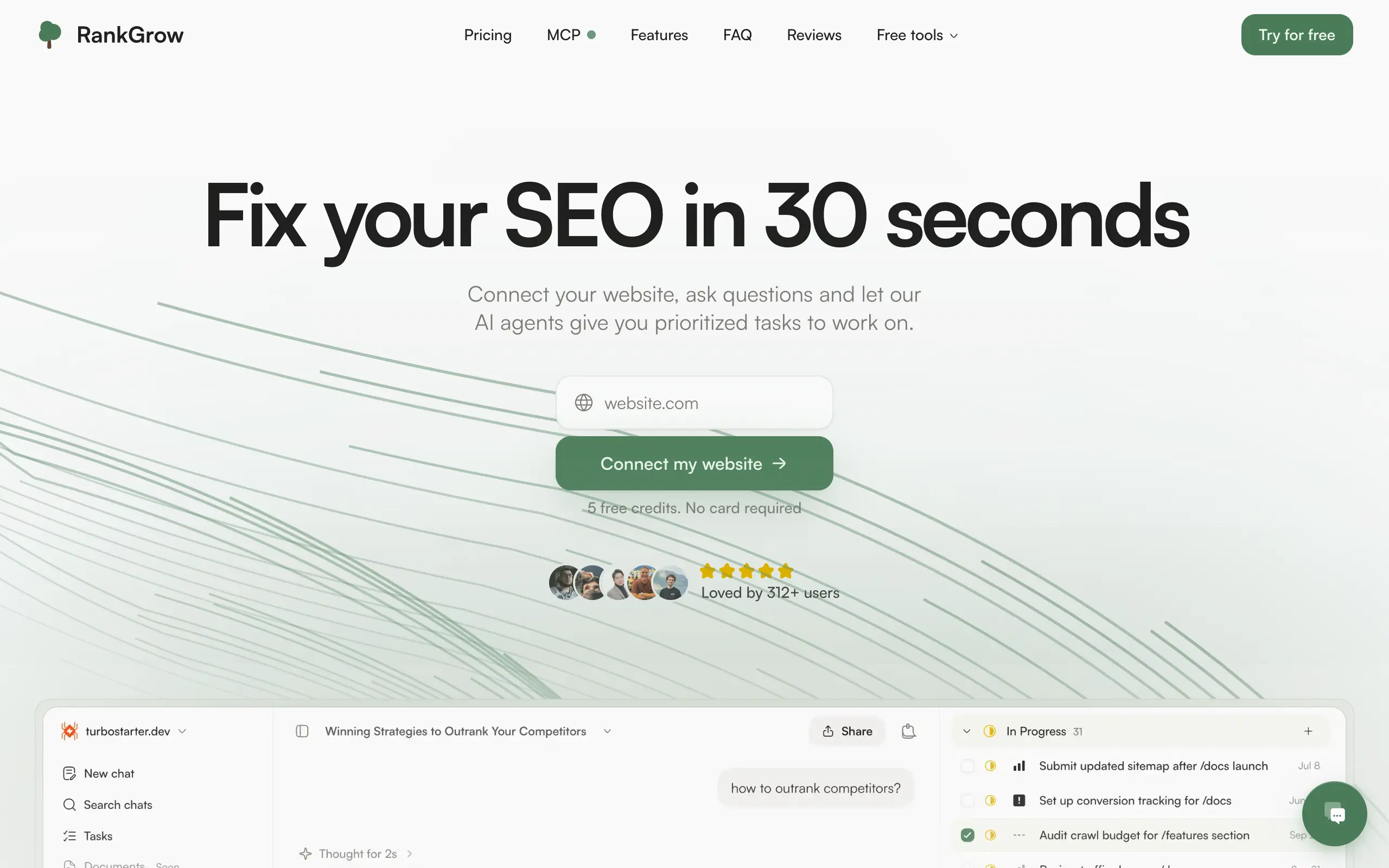
RankGrow
Fix your SEO with AI agents - connect Search Console, get prioritized tasks, and grow organic traffic 📈
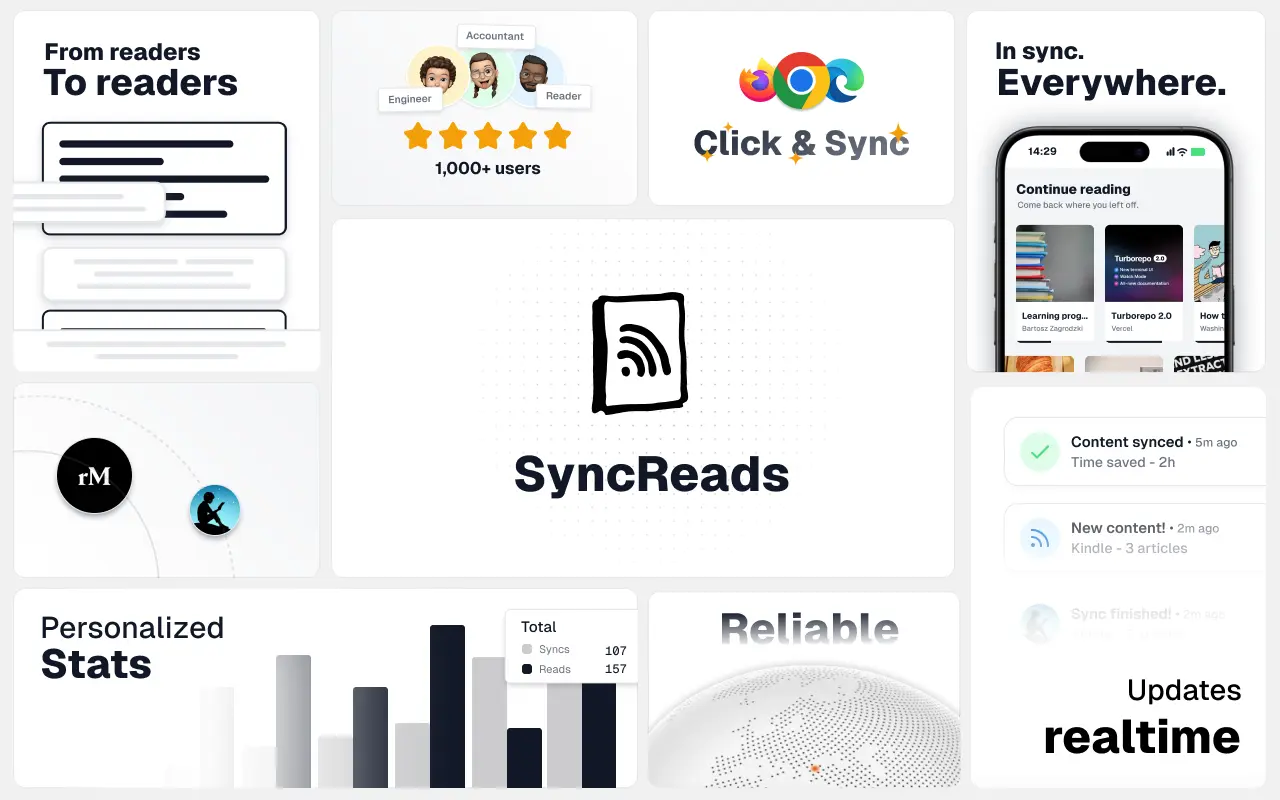
SyncReads
Sync your favorite content for distraction-free reading, save time and replace multiple apps. Anytime, anywhere 🔄
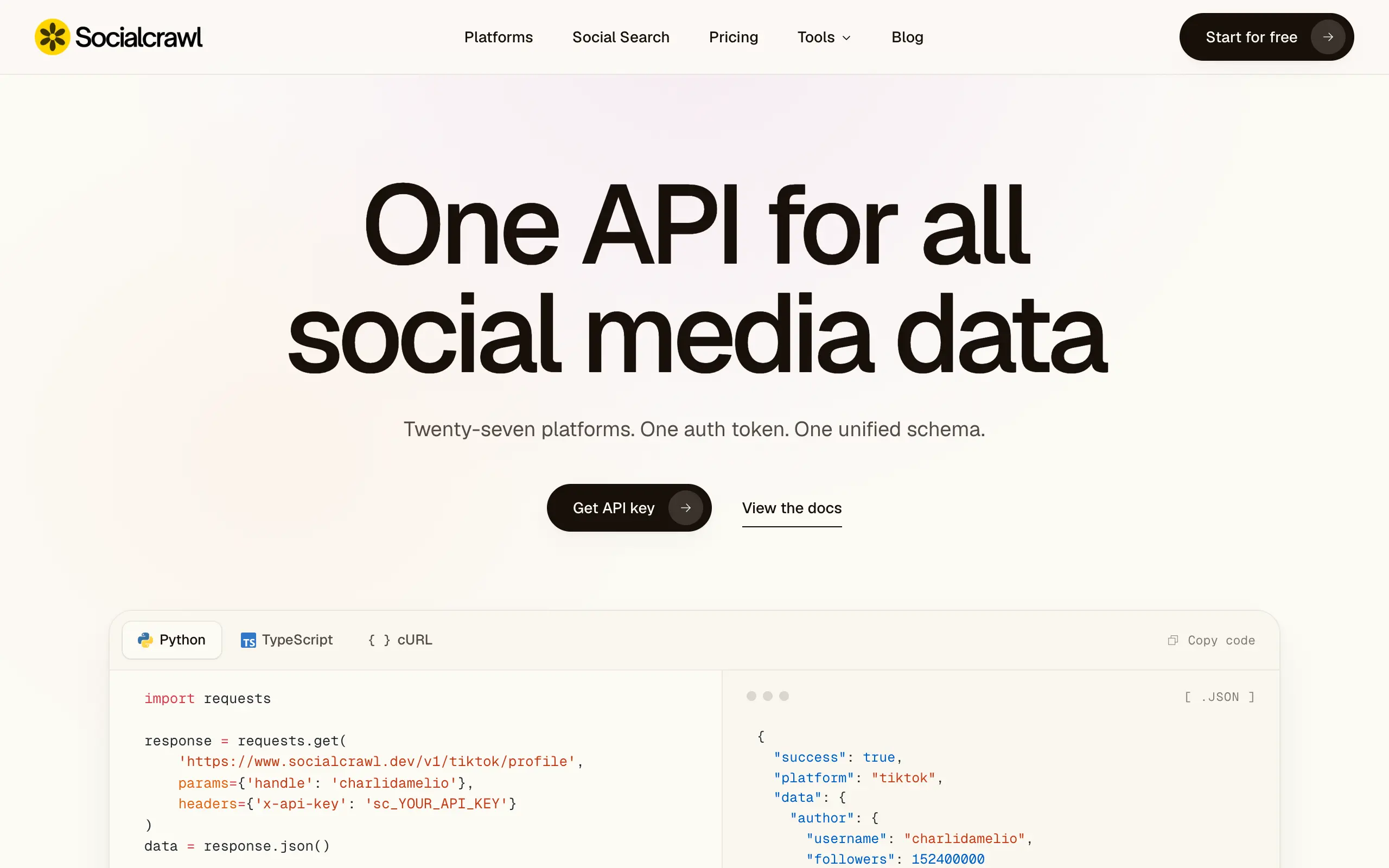
Socialcrawl
Get clean, structured data from 21 platforms like TikTok, Instagram, and YouTube with a single request 📊
Statiko
Monitor any Telegram channel in real time - track posts, edits, deletions, and growth with AI recaps 📡
Shibui
AI website builder - describe your business, pick a niche template, edit by chatting, and publish instantly ✨
Pro Service
Find verified home service professionals, compare quotes, and pay securely through escrow - built for Brazilians across the US 🏠
RankGrow
Fix your SEO with AI agents - connect Search Console, get prioritized tasks, and grow organic traffic 📈
SyncReads
Sync your favorite content for distraction-free reading, save time and replace multiple apps. Anytime, anywhere 🔄
Socialcrawl
Get clean, structured data from 21 platforms like TikTok, Instagram, and YouTube with a single request 📊
Statiko
Monitor any Telegram channel in real time - track posts, edits, deletions, and growth with AI recaps 📡
Shibui
AI website builder - describe your business, pick a niche template, edit by chatting, and publish instantly ✨
Pro Service
Find verified home service professionals, compare quotes, and pay securely through escrow - built for Brazilians across the US 🏠
RankGrow
Fix your SEO with AI agents - connect Search Console, get prioritized tasks, and grow organic traffic 📈
SyncReads
Sync your favorite content for distraction-free reading, save time and replace multiple apps. Anytime, anywhere 🔄
Socialcrawl
Get clean, structured data from 21 platforms like TikTok, Instagram, and YouTube with a single request 📊
Statiko
Monitor any Telegram channel in real time - track posts, edits, deletions, and growth with AI recaps 📡
Shibui
AI website builder - describe your business, pick a niche template, edit by chatting, and publish instantly ✨
Pro Service
Find verified home service professionals, compare quotes, and pay securely through escrow - built for Brazilians across the US 🏠
RankGrow
Fix your SEO with AI agents - connect Search Console, get prioritized tasks, and grow organic traffic 📈
SyncReads
Sync your favorite content for distraction-free reading, save time and replace multiple apps. Anytime, anywhere 🔄
Socialcrawl
Get clean, structured data from 21 platforms like TikTok, Instagram, and YouTube with a single request 📊
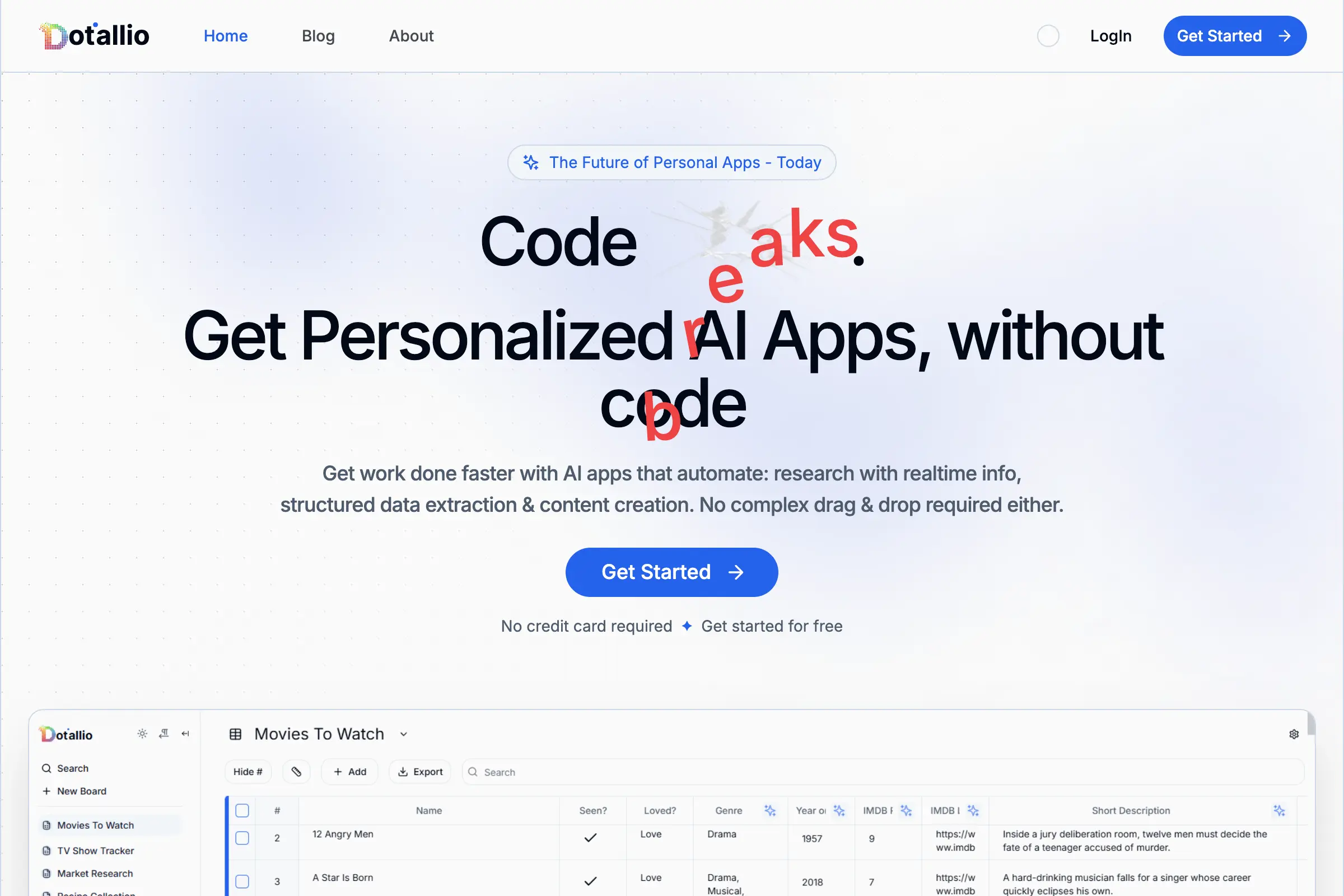
Dotallio
Personalized AI apps that automate research, data extraction, and content creation without code 🤖

Talk to Santa
Enjoy a magical live video chat or receive a unique AI-generated video greeting from Santa Claus 🎅

pozywka.pl
Scalable blog for food journalist, focused on performance and user experience 🌭
zagrodzki.me
Personal blog and portfolio of Bart Zagrodzki, where he shares his knowledge and work 💼

TurboStarter
Ship your startup everywhere. In minutes.
HTML to Markdown
Convert HTML to Markdown with ease, directly in your browser 📄
Dotallio
Personalized AI apps that automate research, data extraction, and content creation without code 🤖
Talk to Santa
Enjoy a magical live video chat or receive a unique AI-generated video greeting from Santa Claus 🎅
pozywka.pl
Scalable blog for food journalist, focused on performance and user experience 🌭
zagrodzki.me
Personal blog and portfolio of Bart Zagrodzki, where he shares his knowledge and work 💼
TurboStarter
Ship your startup everywhere. In minutes.
HTML to Markdown
Convert HTML to Markdown with ease, directly in your browser 📄
Dotallio
Personalized AI apps that automate research, data extraction, and content creation without code 🤖
Talk to Santa
Enjoy a magical live video chat or receive a unique AI-generated video greeting from Santa Claus 🎅
pozywka.pl
Scalable blog for food journalist, focused on performance and user experience 🌭
zagrodzki.me
Personal blog and portfolio of Bart Zagrodzki, where he shares his knowledge and work 💼
TurboStarter
Ship your startup everywhere. In minutes.
HTML to Markdown
Convert HTML to Markdown with ease, directly in your browser 📄
Dotallio
Personalized AI apps that automate research, data extraction, and content creation without code 🤖
Talk to Santa
Enjoy a magical live video chat or receive a unique AI-generated video greeting from Santa Claus 🎅
pozywka.pl
Scalable blog for food journalist, focused on performance and user experience 🌭
zagrodzki.me
Personal blog and portfolio of Bart Zagrodzki, where he shares his knowledge and work 💼
TurboStarter
Ship your startup everywhere. In minutes.
HTML to Markdown
Convert HTML to Markdown with ease, directly in your browser 📄
Omichat
Chat with 50+ AI models, including ChatGPT and Claude, in one place - switch models anytime without losing context 🤖
Claude Fast
Supercharge your Claude Code with 6x effective context window and specialized AI agents 🤖
EmojAI
AI-powered emoji picker with smart, context-aware suggestions 🤖
Solohacker
Autonomous company launcher - AI agents work 24/7, escalate what matters, and you stay in control 🤖

BeRawi: Storytelling Coach
Practice storytelling daily with instant feedback to sound clearer, more engaging, and confident 🎤
Omichat
Chat with 50+ AI models, including ChatGPT and Claude, in one place - switch models anytime without losing context 🤖
Claude Fast
Supercharge your Claude Code with 6x effective context window and specialized AI agents 🤖
EmojAI
AI-powered emoji picker with smart, context-aware suggestions 🤖
Solohacker
Autonomous company launcher - AI agents work 24/7, escalate what matters, and you stay in control 🤖
BeRawi: Storytelling Coach
Practice storytelling daily with instant feedback to sound clearer, more engaging, and confident 🎤
Omichat
Chat with 50+ AI models, including ChatGPT and Claude, in one place - switch models anytime without losing context 🤖
Claude Fast
Supercharge your Claude Code with 6x effective context window and specialized AI agents 🤖
EmojAI
AI-powered emoji picker with smart, context-aware suggestions 🤖
Solohacker
Autonomous company launcher - AI agents work 24/7, escalate what matters, and you stay in control 🤖
BeRawi: Storytelling Coach
Practice storytelling daily with instant feedback to sound clearer, more engaging, and confident 🎤
Omichat
Chat with 50+ AI models, including ChatGPT and Claude, in one place - switch models anytime without losing context 🤖
Claude Fast
Supercharge your Claude Code with 6x effective context window and specialized AI agents 🤖
EmojAI
AI-powered emoji picker with smart, context-aware suggestions 🤖
Solohacker
Autonomous company launcher - AI agents work 24/7, escalate what matters, and you stay in control 🤖
BeRawi: Storytelling Coach
Practice storytelling daily with instant feedback to sound clearer, more engaging, and confident 🎤

Connect with like-minded people
Join our community to get feedback, support, and grow together with 1,000+ builders on board, let's ship it!
Join usShip your startup everywhere. In minutes.
Don't burn tokens on setup and start building features on day one.