Explainly
AI that explains confusing letters, medical reports, contracts, bills, and government forms in plain language with clear next steps.
Confusing documents create expensive mistakes. A medical report can hide a follow-up recommendation in unfamiliar terminology. A utility bill can contain a rate increase that is easy to miss. A contract can place renewal, cancellation, liability, or payment obligations behind dense legal language. Government forms often use procedural vocabulary that discourages people from finishing an application correctly.
Explainly is an AI document explanation platform that translates letters, reports, contracts, bills, and government forms into plain language, highlights what matters, and gives users clear next steps. Its opportunity is not simply summarization. The product must help people understand documents in context, identify deadlines and risks, and know when they should contact a qualified professional.
This article outlines how to validate, build, position, monetize, and scale Explainly as a trusted AI SaaS product.
The core product principle
Explainly should explain what a document says without pretending to replace doctors, lawyers, financial advisors, benefits specialists, or government agencies. Trust comes from useful clarity, transparent limitations, source-grounded answers, and clear escalation guidance.
What is AI document explanation software?
AI document explanation software uses artificial intelligence to read uploaded documents, extract relevant content, identify key terms and deadlines, and restate information in accessible language. Unlike a generic chatbot, a strong AI document explainer should preserve document context and show users where each explanation came from.
For Explainly, the ideal workflow is simple:
- A user uploads a PDF, photo, screenshot, scanned letter, or copied text.
- Explainly detects the document category.
- The system extracts text through OCR when required.
- It creates a plain-language overview tailored to the document type.
- It highlights deadlines, payments, actions, unfamiliar terms, and potential questions.
- The user can ask follow-up questions grounded in the document itself.
- Explainly provides next-step guidance and recommends professional help when the stakes or uncertainty are high.
The primary keyword for this product category is AI document explanation software. Related search terms include:
- AI document explainer
- plain language document translator
- AI contract explanation tool
- medical report explanation AI
- bill explanation app
- government form assistant
- letter summarizer
- document simplification software
- AI form help
- plain English legal document summary
The strongest positioning is not “an AI summarizer.” People do not upload a rejection letter, pathology report, or lease because they want fewer words. They upload it because they need to understand consequences and decide what to do next.
The problem Explainly solves
Most important documents are written for institutional accuracy, regulatory compliance, internal operations, or legal defensibility. They are not consistently written for comprehension.
That gap affects people across education levels, income groups, and language backgrounds. Even highly literate people struggle when documents use domain-specific terminology, reference prior policies, contain tables, or bury time-sensitive instructions in long paragraphs.
Why traditional document help is inadequate
Existing methods create friction or fail to meet the user at the moment of need.
- "Search engines": Users must know which term to search and then evaluate generic explanations that may not apply to their situation.
- "Friends and family": Informal help is useful but can be unavailable, incomplete, or wrong.
- "Professional services": Lawyers, clinicians, accountants, and benefits advisors are essential for high-stakes matters, but they are not always immediately accessible or affordable for first-pass understanding.
- "Generic AI chatbots": They can explain text, but users may not know how to prompt them, how to preserve privacy, or how to distinguish a grounded answer from a confident guess.
- "Institution support lines": Call centers can be slow, limited to specific questions, or difficult to navigate before the user even understands what to ask.
Explainly can become the practical first layer of comprehension: a secure place to understand a document, prepare questions, and decide whether escalation is needed.
The emotional job to be done
The functional job is document interpretation. The emotional job is reducing uncertainty.
A user may think:
- “I received this letter and do not know whether I need to act.”
- “This medical language sounds serious, but I cannot tell what it means.”
- “I am signing a contract and want to understand the risks.”
- “Why is this bill higher than expected?”
- “I need to complete this government form, but I am afraid of making a mistake.”
- “I do not want to feel embarrassed asking someone to explain this.”
Explainly should speak calmly, directly, and respectfully. Its tone should never be patronizing. Plain language is not “dumbing things down”; it is making critical information accessible.
Target audience for Explainly
Explainly has broad consumer appeal, but a focused launch strategy is essential. Different document types carry different risks, extraction needs, willingness to pay, and acquisition channels.
| Audience | Primary document | Core pain | Urgency | Best initial offer |
|---|---|---|---|---|
| Consumers managing life admin | Letters, bills, forms | Confusion and missed actions | Medium to high | Freemium document explanation |
| Patients and caregivers | Medical reports and care letters | Complex terminology and anxiety | High | Guided explanation with safety routing |
| Renters and freelancers | Leases, agreements, invoices | Terms, fees, renewal obligations | Medium | Document review subscription |
| Immigrants and multilingual households | Government forms and official notices | Language and process barriers | High | Plain-language and multilingual support |
| Employee benefits teams | Benefits guides and policy notices | Repeated employee questions | Medium | B2B explanation portal |
Primary consumer segment: overwhelmed life administrators
The most accessible initial market is adults who manage household administration. This includes parents, caregivers, renters, freelancers, older adults, and people coordinating care or finances for family members.
They regularly receive:
- Insurance explanation of benefits statements
- Utility, telecom, and credit card bills
- School letters and administrative notices
- Bank, debt collection, and payment notices
- Housing and lease documents
- Government correspondence
- Benefits enrollment paperwork
This group values immediate clarity. They are not seeking a technical analysis; they want to know what happened, whether there is a deadline, what it might cost, and what they should do next.
Secondary segment: caregivers and patients
Medical report explanation AI has high demand potential because healthcare communications are difficult to interpret. However, this is also a high-risk category that requires strict safety design.
A patient might upload lab results, imaging summaries, discharge instructions, medication lists, or referral letters. Explainly can help translate terms, organize questions for a clinician, and highlight recommended follow-up language from the document.
It must not diagnose, determine treatment, or falsely reassure users. Product value should center on comprehension and appointment preparation.
High-value business segment: organizations that send complex documents
The B2B opportunity is significant. Organizations spend heavily on support teams because customers and employees struggle to interpret notices, policies, bills, and forms.
Potential buyers include:
- Health navigation and employee benefits providers
- Insurance agencies and brokers
- Financial wellness platforms
- Legal aid organizations
- Housing associations
- Utility providers
- Telecom companies
- HR teams
- Government service vendors
- Patient advocacy organizations
For these buyers, Explainly can reduce repetitive support contacts while improving accessibility and customer experience. A B2B version should be document-library-aware, branded, permissioned, and measurable.
The market gap: from summarization to safe understanding
The AI market is crowded with chatbots, PDF readers, transcription products, and generic productivity assistants. Explainly’s market gap is the space between a generic summary and qualified professional advice.
A generic summary says, “This is a letter about your insurance claim.”
An effective Explainly output says:
- This letter says your claim was partially denied.
- The stated reason is listed in section three.
- The document gives you 60 days to appeal.
- Your possible next steps are to review the reason, collect supporting records, and contact the plan using the number listed in the letter.
- Here are five questions to ask.
- This explanation is informational and not insurance, legal, or medical advice.
That is a materially better user experience because it is structured around decisions.
Why the timing is favorable
Several technology and behavior trends support the opportunity.
First, multimodal AI models can now interpret text, tables, images, and scanned pages more effectively than earlier text-only systems. Second, OCR quality has improved for phone-captured documents. Third, users are increasingly familiar with AI assistance, but they are also more cautious about hallucinations and privacy. That caution creates room for a trusted, specialized product.
Fourth, accessibility and plain-language expectations are rising. Many organizations are under pressure to make communications easier to understand, while consumers expect self-service support that feels more personal than a static FAQ.
For market sizing, avoid relying on vague AI market figures. Instead, use a bottoms-up model based on:
- The number of target consumers in a launch geography
- Estimated monthly confusing-document events per user
- Free-to-paid conversion rates
- Customer acquisition cost by channel
- B2B account value based on support deflection and document volume
When publishing external statistics, cite a primary source such as a government health agency, consumer finance regulator, national statistics office, or reputable industry research provider. Include the source name, publication date, geography, and methodology.
Explainly’s unique selling proposition
Explainly’s USP should be:
A privacy-first AI document explainer that turns complex real-world paperwork into plain language, important deadlines, and safe next steps with answers grounded in the original document.
This positioning has five defensible elements.
Document-grounded answers
Every explanation should connect back to the specific uploaded document, reducing generic or invented guidance.
Action-first output
Explainly identifies deadlines, amounts, obligations, missing information, and practical next actions.
Domain-aware templates
Medical letters, contracts, bills, and forms need different explanation structures and risk controls.
Trust and privacy controls
Sensitive-document handling, deletion options, clear consent, and transparent limitations differentiate the product.
Human escalation pathways
Explainly helps users prepare better questions and know when expert review is appropriate.
A strong competitive advantage is created when these elements work together. A competitor can copy a “summarize PDF” button. It is much harder to replicate category-specific workflows, trust design, document evidence mapping, safety policies, evaluation datasets, and distribution partnerships.
Core features for an AI document explainer
Explainly should not launch as an unlimited “ask anything” AI interface. The MVP needs a highly structured experience that makes the system’s value visible in the first minute.
Document upload and intelligent intake
The upload flow should accept common document formats:
- PDF files
- Photos from a mobile camera
- PNG and JPEG images
- Screenshots
- Copied text
- Multi-page scans
At upload, ask a minimal number of optional questions that improve interpretation:
- What type of document is this?
- What would you like help understanding?
- Is there a date or deadline you are concerned about?
- Which country or region applies to this document?
- What reading level or language would you prefer?
Do not force users to categorize every document correctly. Explainly should classify likely document types automatically, then let users correct the classification.
OCR, layout, and table extraction
The product must accurately extract more than paragraph text. Important details frequently appear in tables, footnotes, headers, handwritten annotations, and checkboxes.
The document pipeline should identify:
- Page structure
- Tables and line items
- Dates and deadlines
- Currency amounts
- Addresses and contact methods
- Form fields and checkboxes
- Document titles and issuing organizations
- Signature requirements
- References to attachments
OCR confidence should affect the experience. When text is unclear, Explainly should say that a phrase may have been misread and invite the user to review or upload a clearer image. Silent inaccuracies are dangerous in bills, forms, and legal notices.
Plain-language explanation layers
Users have different needs, so Explainly should present information progressively.
Start with a short, plain-language summary that answers what the document is, who sent it, and why it matters.
Explain unfamiliar terms, relevant sections, key amounts, dates, obligations, and the likely practical meaning of each section.
Provide a prioritized checklist, including deadlines, documents to gather, people to contact, and questions to ask. Avoid presenting professional advice as a definitive instruction.
Let users ask natural-language questions while retrieving evidence only from the uploaded document and approved guidance for that document category.
This layered approach avoids the common failure of long AI-generated summaries. Users should be able to scan the essentials, then open details only when needed.
Evidence-linked answers
Trust depends on showing the basis for an answer. Every meaningful output should include a document citation such as page number, section title, or highlighted text span.
For example:
Why does it say I owe $340?
Explainly can point to the bill’s “previous balance,” “new charges,” “payments received,” and “due date” sections instead of delivering an opaque answer.
Evidence linking also helps users verify results before acting. It provides a useful quality-control layer when the system misinterprets an ambiguous phrase.
Action plan and deadline detection
The action plan is Explainly’s most valuable feature. It should transform extracted facts into a ranked checklist.
A contract explanation might identify:
- The agreement start and end dates
- Automatic renewal language
- Cancellation notice requirements
- Payment terms
- Liability limitations
- Governing law language
- Signature and witness requirements
A government form explanation might identify:
- Eligibility statements
- Required supporting documents
- Sections the user needs to complete
- Submission method
- Missing fields
- Stated processing or response deadlines
An action plan should distinguish between:
- Explicit document requirements
- Suggested preparatory steps
- Questions to ask an institution or professional
That distinction is essential for trustworthy AI guidance.
Secure document history and deletion
Document history creates retention value, but sensitive content requires user control.
Users should be able to:
- View previous explanations
- Rename and organize documents
- Download a summary
- Delete a document immediately
- Set automatic deletion preferences
- Export data where required
- See whether content will be used for product improvement
For an early product, defaulting to short retention or user-controlled deletion can be a meaningful trust advantage.
Accessibility and multilingual explanation
Plain language alone does not solve accessibility. Explainly should support:
- Adjustable reading level
- Screen-reader-friendly outputs
- Larger text and high-contrast design
- Mobile-first document capture
- Translation into selected languages
- Original text alongside translated explanations
- Voice input and text-to-speech over time
Translation should be treated carefully in legal, medical, and government contexts. Explainly should clearly state that translated content is an aid to understanding and preserve the original wording for verification.
Domain-specific workflows and safety boundaries
Different document types need different output structures. A single prompt cannot safely handle all categories.
Medical report explanation AI
For health-related documents, Explainly should focus on:
- Explaining terms in accessible language
- Separating observations from conclusions
- Highlighting stated follow-up instructions
- Helping users prepare clinician questions
- Identifying urgent language already present in the document
- Encouraging appropriate professional contact when symptoms, emergencies, or uncertainty are involved
It should not diagnose conditions, assess severity from incomplete records, recommend changing medication, or infer treatment plans.
Medical safety boundary
A medical document explanation feature should include prominent emergency guidance for symptoms that may require immediate care. It must never imply that a document-only interpretation can replace clinical assessment.
AI contract explanation tool
Contract workflows can explain clauses and flag areas for attention without offering legal conclusions.
Useful contract outputs include:
- Parties and effective date
- Payment commitments
- Term and renewal provisions
- Termination requirements
- Confidentiality obligations
- Intellectual property clauses
- Indemnity and liability language
- Dispute resolution provisions
- Questions to ask before signing
Explainly should avoid saying that a contract is “safe,” “enforceable,” or “fair.” Legal effects vary by jurisdiction, facts, and the full agreement.
Bills, collections notices, and financial letters
Financial document explanations should prioritize factual clarity:
- Amount due
- Due date
- Previous balance versus new charges
- Fees and interest
- Payment methods listed in the document
- Dispute instructions
- Contact details
- Consequences explicitly stated by the issuer
Do not give individualized investment, tax, debt settlement, or credit advice without appropriate controls. The user should be able to understand the notice and prepare questions, not receive unsupported financial recommendations.
Government forms and official notices
Government document workflows require regional configuration. Terms, processes, and deadlines differ across countries, states, provinces, and municipalities.
The system can help users identify what a form requests, but it should not fabricate eligibility outcomes. If a form includes legal declarations, Explainly should encourage users to verify answers with the issuing agency or qualified advisor.
Recommended tech stack for Explainly
Explainly needs a stack that supports fast product iteration without compromising document processing, security, or observability.
A practical web foundation is Next.js with React and TypeScript. This combination supports server-rendered marketing pages, responsive application flows, secure server-side operations, and a mature ecosystem.
For a faster SaaS launch, TurboStarter can provide a strong starting point for authentication, billing foundations, application structure, and production-ready SaaS patterns.
Suggested architecture
- "Frontend": Next.js, React, TypeScript, and Tailwind CSS for a responsive, accessible interface.
- "Authentication": A managed provider or a well-supported auth solution with MFA options, role management, and secure session handling.
- "Database": PostgreSQL for users, subscriptions, metadata, audit logs, and structured extraction results.
- "Object storage": Encrypted private object storage for source documents and processed artifacts.
- "Queue system": Background jobs for OCR, classification, extraction, summarization, and notifications.
- "AI orchestration": A provider-agnostic service layer that can route requests to models based on cost, latency, modality, and safety requirements.
- "Search and retrieval": A vector-capable retrieval layer for document chunks, combined with metadata filters and page references.
- "Observability": Error tracking, structured logs, latency monitoring, model-response evaluation, and redacted event analytics.
- "Billing": A mature subscription and usage-based billing provider with webhook support.
Why retrieval-augmented generation matters
Retrieval-augmented generation, often called RAG, is essential for Explainly. The model should not answer based solely on broad training knowledge. It should retrieve relevant passages from the user’s document, then generate an answer based on those passages.
A simplified response policy could look like this:
type AnswerPolicy = {
  requireDocumentEvidence: boolean;
  includePageReferences: boolean;
  allowGeneralEducation: boolean;
  escalationRequired: boolean;
};

const medicalPolicy: AnswerPolicy = {
  requireDocumentEvidence: true,
  includePageReferences: true,
  allowGeneralEducation: true,
  escalationRequired: true,
};
The production implementation should do more than set flags. It should evaluate whether the answer is sufficiently supported, detect missing evidence, classify safety risk, and reject or reframe unsupported requests.
Trade-offs in AI model selection
Using a premium multimodal model can produce better reasoning and visual interpretation, but it may increase cost and latency. Smaller models can reduce cost for routine classification, extraction cleanup, and basic summaries, but may be less reliable for nuanced document interpretation.
A sensible routing strategy is:
- Use deterministic parsing and OCR first.
- Use lightweight classification for document type and risk level.
- Use a stronger model only when the document is complex or high value.
- Require retrieval evidence for user-facing explanations.
- Run automated quality checks before returning sensitive outputs.
Avoid building the product around one AI vendor. A provider abstraction allows Explainly to compare models, control spend, maintain resilience, and adapt to changing capabilities.
Privacy, security, and compliance strategy
Privacy is not a legal-page feature. It is part of the product itself.
Users may upload protected health information, financial statements, legal agreements, government identifiers, or personal correspondence. Explainly should treat every upload as sensitive by default.
Essential trust controls
- Encrypt documents in transit and at rest.
- Use private storage with tightly scoped access controls.
- Separate customer data by tenant.
- Minimize raw document retention.
- Redact sensitive fields from internal logs.
- Provide document deletion controls.
- Maintain audit logs for administrative access.
- Restrict production data access through least-privilege policies.
- Conduct regular security reviews and penetration tests.
- Make model-training and data-retention policies understandable.
If Explainly serves regulated healthcare workflows, it must obtain specialized legal and security guidance before making compliance claims. The same applies to privacy laws across regions. Avoid casually claiming compliance with any specific framework unless the operational, contractual, and technical requirements have been independently verified.
Store originals only when necessary to provide the user experience users expect, such as document history or follow-up questions. Offer immediate deletion and configurable retention. A privacy-forward option can process a document, return the explanation, and automatically remove the original after a stated period.
The safest default is not to use identifiable customer documents for generalized model training without explicit, informed opt-in. Explainly can improve quality through synthetic data, consented evaluation data, and carefully de-identified examples.
Show uncertainty rather than inventing confidence. Flag unclear scans, request a clearer upload, and mark fields that require user verification. For deadlines, amounts, and medical values, confirmation workflows are especially important.
Monetization strategy for Explainly
Explainly can combine consumer subscriptions, usage-based credits, and B2B licensing. The best model depends on whether users have recurring document needs or arrive only during high-stress events.
Freemium consumer plan
A free tier lowers adoption friction and allows users to experience the core “aha” moment.
Possible free-plan boundaries include:
- A limited number of document explanations each month
- Short document length limits
- Basic summary and key date extraction
- No long-term document history
- Limited follow-up questions
The free tier should still be genuinely useful. If it only produces a shallow teaser, it will undermine trust.
Premium individual subscription
A paid plan can include:
- More documents and pages each month
- Unlimited or expanded follow-up questions
- Saved document history
- Action-plan exports
- Deadline reminders
- Multilingual explanations
- Priority processing
- Shared household access
- Advanced contract, bill, or form templates
For a consumer product, test monthly and annual pricing. Annual plans work best after Explainly has ongoing utility through document storage, reminders, household collaboration, and recurring bill analysis.
Pay-per-document credits
Credits are useful for infrequent but high-intent use cases, such as reviewing a lease, interpreting a complicated medical report, or understanding a government notice.
This model can be particularly effective when the buyer does not want another subscription. It also allows category-specific pricing based on document length, complexity, and expected processing cost.
B2B and embedded API plans
Business pricing should be based on value and volume rather than consumer-style features alone.
Potential pricing dimensions include:
- Monthly active users
- Documents processed
- Pages processed
- Branded portals
- Team seats
- API calls
- Supported document templates
- Compliance and security requirements
- Implementation and integration services
A B2B buyer will care about metrics such as support-ticket deflection, form completion rate, customer satisfaction, handling time, and accessibility improvements. Explainly should build reporting around those outcomes.
Go-to-market strategy and distribution
The most effective acquisition strategy is likely a combination of high-intent SEO, useful free tools, partnerships, and product-led sharing.
SEO content opportunities
Explainly can build authority through educational content around document comprehension. Avoid publishing thin pages aimed only at ranking for every possible form. Instead, create well-researched guides that explain common concepts, user questions, and practical preparation steps.
Examples of high-intent content clusters include:
- How to read an explanation of benefits statement
- What to look for before signing a lease
- How to understand a utility bill
- What a government notice deadline means
- Questions to ask about a medical imaging report
- How automatic contract renewal clauses work
- How to prepare for an insurance claim appeal
For high-stakes topics, content should be reviewed by relevant subject matter experts. Add author credentials, review dates, sources, disclaimers, and clear distinctions between education and professional advice. This supports E-E-A-T and reduces the risk of overconfident content.
Partnerships
Partnership distribution may outperform paid consumer acquisition in sensitive categories.
Potential partners include:
- Patient advocacy organizations
- Employee assistance programs
- Financial wellness platforms
- Community legal aid organizations
- Immigration support nonprofits
- Insurance brokers
- Housing support groups
- Libraries and digital inclusion initiatives
- Employers offering benefits navigation
The partnership pitch is straightforward: Explainly can help users arrive better prepared, reduce repetitive questions, and improve comprehension without replacing the organization’s own expert support.
Product-led growth loops
Build sharing carefully because documents are private. Instead of encouraging users to share originals, let them share a redacted plain-language summary or a list of questions for a family member, doctor, advisor, or support representative.
Useful growth loops include:
- Downloadable question lists
- Secure household collaboration
- Referral credits
- “Explain another document” flows after a successful session
- Templates for recurring bill reviews and lease renewals
Key risks and mitigation plans
An AI document explanation startup faces meaningful risks. The strongest companies acknowledge them early and build mitigation into product design.
| Risk | Why it matters | Mitigation | Owner | Success signal |
|---|---|---|---|---|
| Hallucinated explanation | Users may act on inaccurate information | RAG, citations, answer abstention, QA evaluations | AI and product team | High evidence coverage rate |
| Privacy incident | Sensitive files can create severe trust damage | Encryption, least privilege, deletion controls, audits | Security lead | No unauthorized access events |
| Unauthorized advice | Medical and legal categories create liability exposure | Category policies, disclaimers, escalation, expert review | Compliance and product | Safe response evaluation score |
| Weak OCR quality | Errors in dates and amounts reduce usefulness | Confidence scoring and user verification steps | Engineering team | Improved extraction accuracy |
The biggest risk: misplaced trust
The central product risk is not that users dislike AI. It is that users may trust it too much when the output sounds clear and confident.
Mitigate this through interface design:
- Show source references for key claims.
- Use calibrated language such as “The document appears to state.”
- Separate extracted facts from general education.
- Ask users to verify critical dates, dollar amounts, and identifiers.
- Escalate when the document is incomplete, illegible, conflicting, or high risk.
- Avoid definitive language about legal rights, diagnoses, eligibility, or outcomes.
- Test outputs with domain experts and real-world edge cases.
A disclaimer alone is not enough. Safety must be reflected in the model policy, UX, and quality process.
How to validate Explainly before building everything
Validate the problem before investing in a broad multi-category platform.
Start with a narrow wedge
A practical launch wedge might be complex bills and official letters. This category offers frequent consumer demand, lower safety complexity than medical interpretation, and clear action-oriented outcomes.
A second strong wedge is rental leases and consumer contracts, particularly for renters, freelancers, and small-business owners. These users often understand that they need help before signing and may be willing to pay per document.
Do not begin with every document category at once. Each category requires specialized extraction, prompt structures, safety rules, examples, evaluation criteria, and support guidance.
Conduct problem interviews
Interview at least 20 to 30 potential users within one target category. Ask about recent real situations rather than hypothetical preferences.
Useful questions include:
- What was the last document you struggled to understand?
- What did you do after receiving it?
- Which part was most confusing?
- Did you miss a deadline, pay an unexpected fee, or delay a decision?
- What tools did you try?
- Would you upload that type of document to a privacy-focused AI product?
- What would make you trust or distrust the result?
- Would you pay for clarity in that moment?
Look for repeated language. Those phrases should shape Explainly’s landing page, onboarding, and SEO strategy.
Build a concierge prototype
Before automating complex workflows, manually test the desired output. With informed consent and robust privacy handling, take a small number of sample documents and produce structured explanations using an internal workflow.
Measure whether users find these sections valuable:
- Plain-language summary
- Key facts
- Deadlines
- Action checklist
- Questions to ask
- Source references
- Confidence or uncertainty indicators
The goal is to learn the best output format, not just prove that a large language model can summarize text.
Actionable implementation roadmap
A disciplined roadmap protects Explainly from becoming an unfocused document chatbot.
Choose one launch document category and one core audience. Define the highest-value user outcome, such as identifying a bill’s due date and dispute process.
Create a structured output schema for that category. Include summary, document facts, important terms, deadlines, action items, questions, source references, and safety notices.
Build secure upload, OCR, classification, and document retrieval before investing heavily in open-ended chat.
Implement evidence-linked explanations and an abstention path for low-confidence extraction or unsupported questions.
Run expert evaluations with representative documents, including poor scans, multi-page files, tables, ambiguous language, and adversarial prompt attempts.
Launch a limited beta with clear privacy terms, deletion controls, feedback collection, and hands-on support.
Measure activation, explanation completion, user trust, repeat usage, follow-up question quality, and conversion before expanding to a second document category.
For an MVP, focus on the smallest experience that reliably delivers this promise: upload a confusing document, understand what it says, and leave with a verified next-step checklist.
Final perspective: build Explainly around trust, not novelty
Explainly can address a universal problem: important documents are often difficult to understand precisely when people need clarity most. The market opportunity is broad, but broadness should not lead to a generic product.
The winning AI document explanation software will not be the one that produces the longest summary. It will be the one that consistently helps users answer four urgent questions:
- What is this document saying?
- What matters most to me?
- What do I need to do next?
- When should I ask a qualified person for help?
By combining document-grounded AI, category-specific workflows, privacy-first handling, readable explanations, and responsible escalation, Explainly can become a trusted layer between confusing paperwork and confident action.
More 🤖 AI Startup SaaS ideas
Discover more innovative ai startup SaaS ideas that are trending in 2026. Each idea is AI-generated with market validation and growth potential to help you find your next profitable venture faster than competitors.
Your competitors are building with TurboStarter
Below are some of the SaaS ideas that have been generated and built with our starter kit.

Statiko
Monitor any Telegram channel in real time - track posts, edits, deletions, and growth with AI recaps 📡

Shibui
AI website builder - describe your business, pick a niche template, edit by chatting, and publish instantly ✨

Pro Service
Find verified home service professionals, compare quotes, and pay securely through escrow - built for Brazilians across the US 🏠
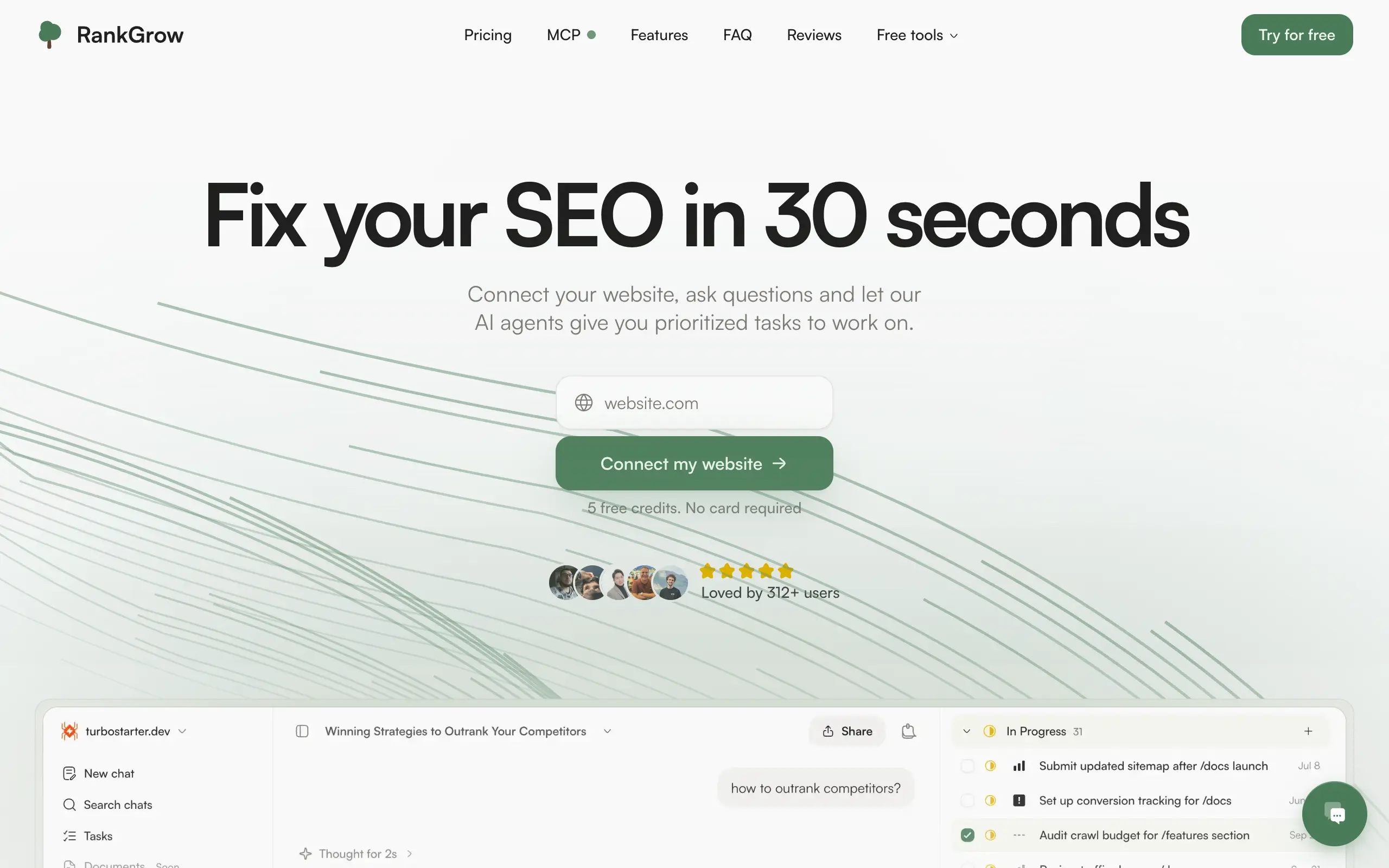
RankGrow
Fix your SEO with AI agents - connect Search Console, get prioritized tasks, and grow organic traffic 📈
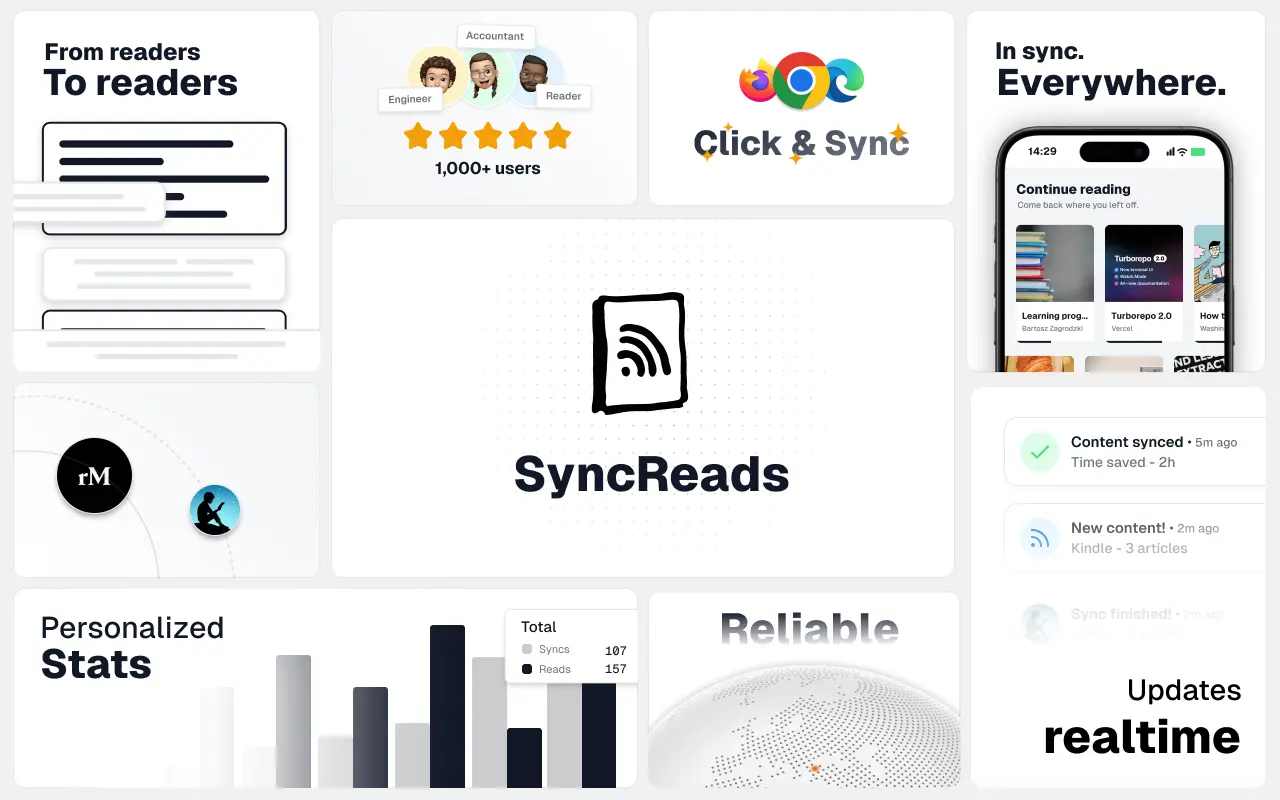
SyncReads
Sync your favorite content for distraction-free reading, save time and replace multiple apps. Anytime, anywhere 🔄
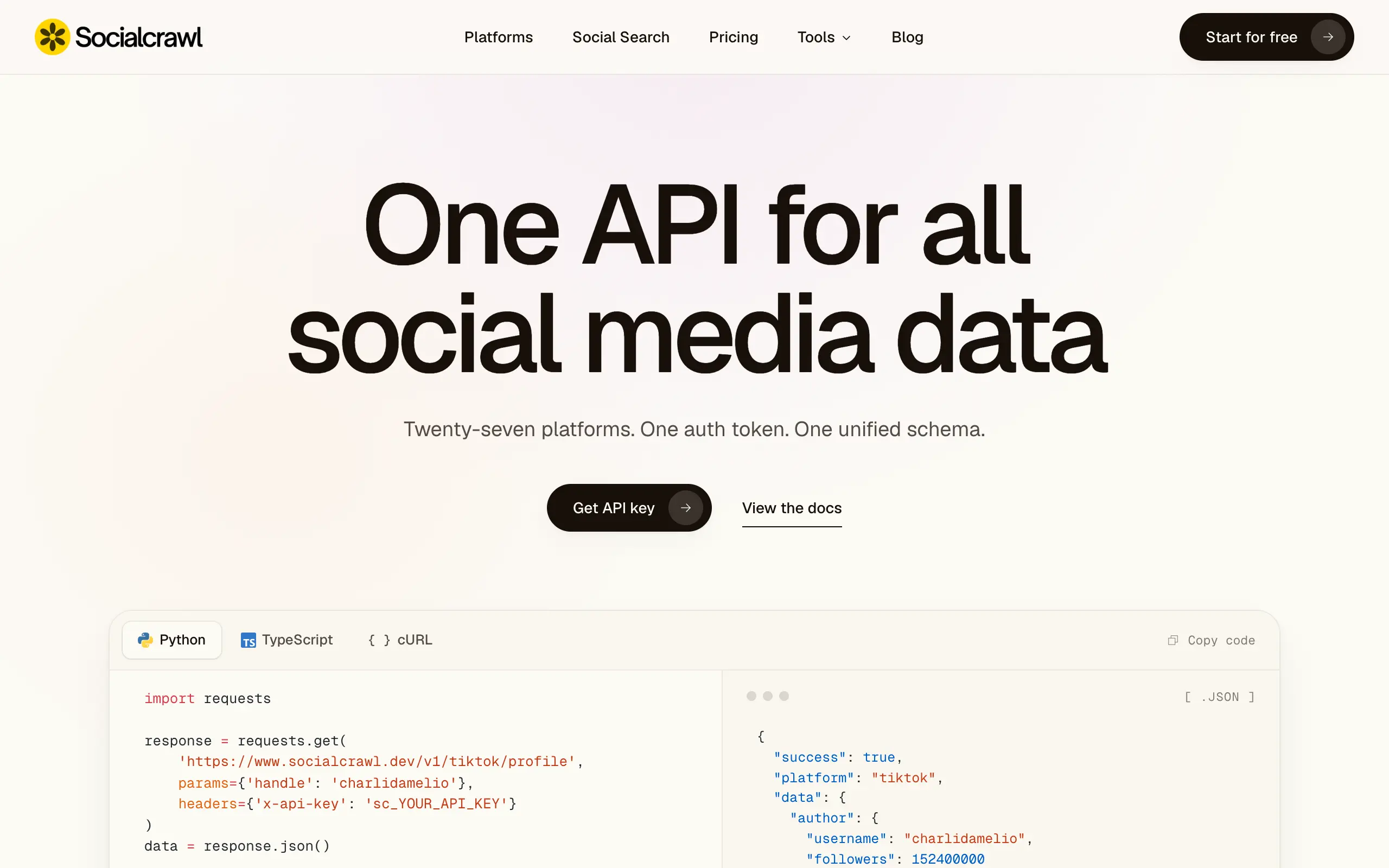
Socialcrawl
Get clean, structured data from 21 platforms like TikTok, Instagram, and YouTube with a single request 📊
Statiko
Monitor any Telegram channel in real time - track posts, edits, deletions, and growth with AI recaps 📡
Shibui
AI website builder - describe your business, pick a niche template, edit by chatting, and publish instantly ✨
Pro Service
Find verified home service professionals, compare quotes, and pay securely through escrow - built for Brazilians across the US 🏠
RankGrow
Fix your SEO with AI agents - connect Search Console, get prioritized tasks, and grow organic traffic 📈
SyncReads
Sync your favorite content for distraction-free reading, save time and replace multiple apps. Anytime, anywhere 🔄
Socialcrawl
Get clean, structured data from 21 platforms like TikTok, Instagram, and YouTube with a single request 📊
Statiko
Monitor any Telegram channel in real time - track posts, edits, deletions, and growth with AI recaps 📡
Shibui
AI website builder - describe your business, pick a niche template, edit by chatting, and publish instantly ✨
Pro Service
Find verified home service professionals, compare quotes, and pay securely through escrow - built for Brazilians across the US 🏠
RankGrow
Fix your SEO with AI agents - connect Search Console, get prioritized tasks, and grow organic traffic 📈
SyncReads
Sync your favorite content for distraction-free reading, save time and replace multiple apps. Anytime, anywhere 🔄
Socialcrawl
Get clean, structured data from 21 platforms like TikTok, Instagram, and YouTube with a single request 📊
Statiko
Monitor any Telegram channel in real time - track posts, edits, deletions, and growth with AI recaps 📡
Shibui
AI website builder - describe your business, pick a niche template, edit by chatting, and publish instantly ✨
Pro Service
Find verified home service professionals, compare quotes, and pay securely through escrow - built for Brazilians across the US 🏠
RankGrow
Fix your SEO with AI agents - connect Search Console, get prioritized tasks, and grow organic traffic 📈
SyncReads
Sync your favorite content for distraction-free reading, save time and replace multiple apps. Anytime, anywhere 🔄
Socialcrawl
Get clean, structured data from 21 platforms like TikTok, Instagram, and YouTube with a single request 📊
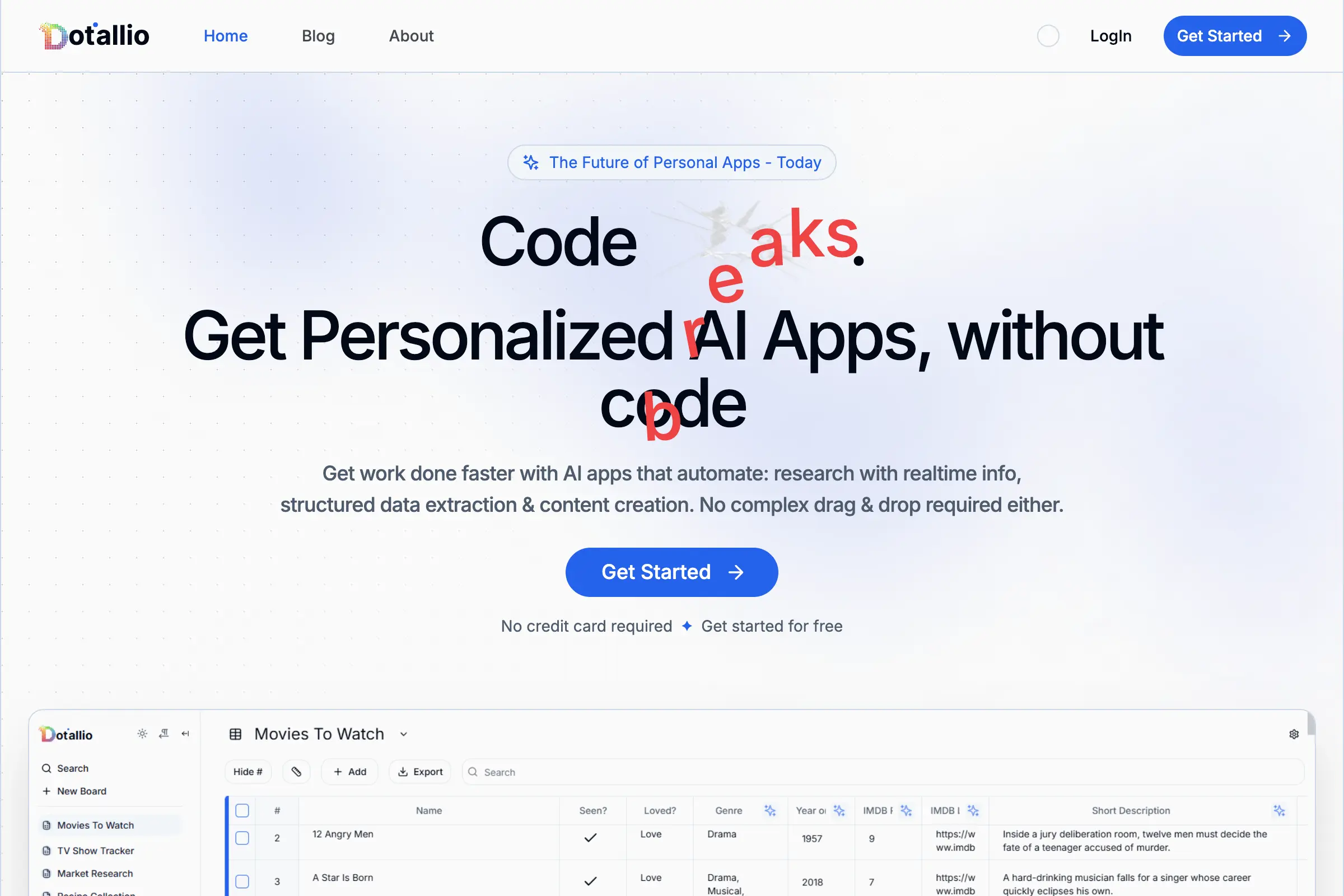
Dotallio
Personalized AI apps that automate research, data extraction, and content creation without code 🤖
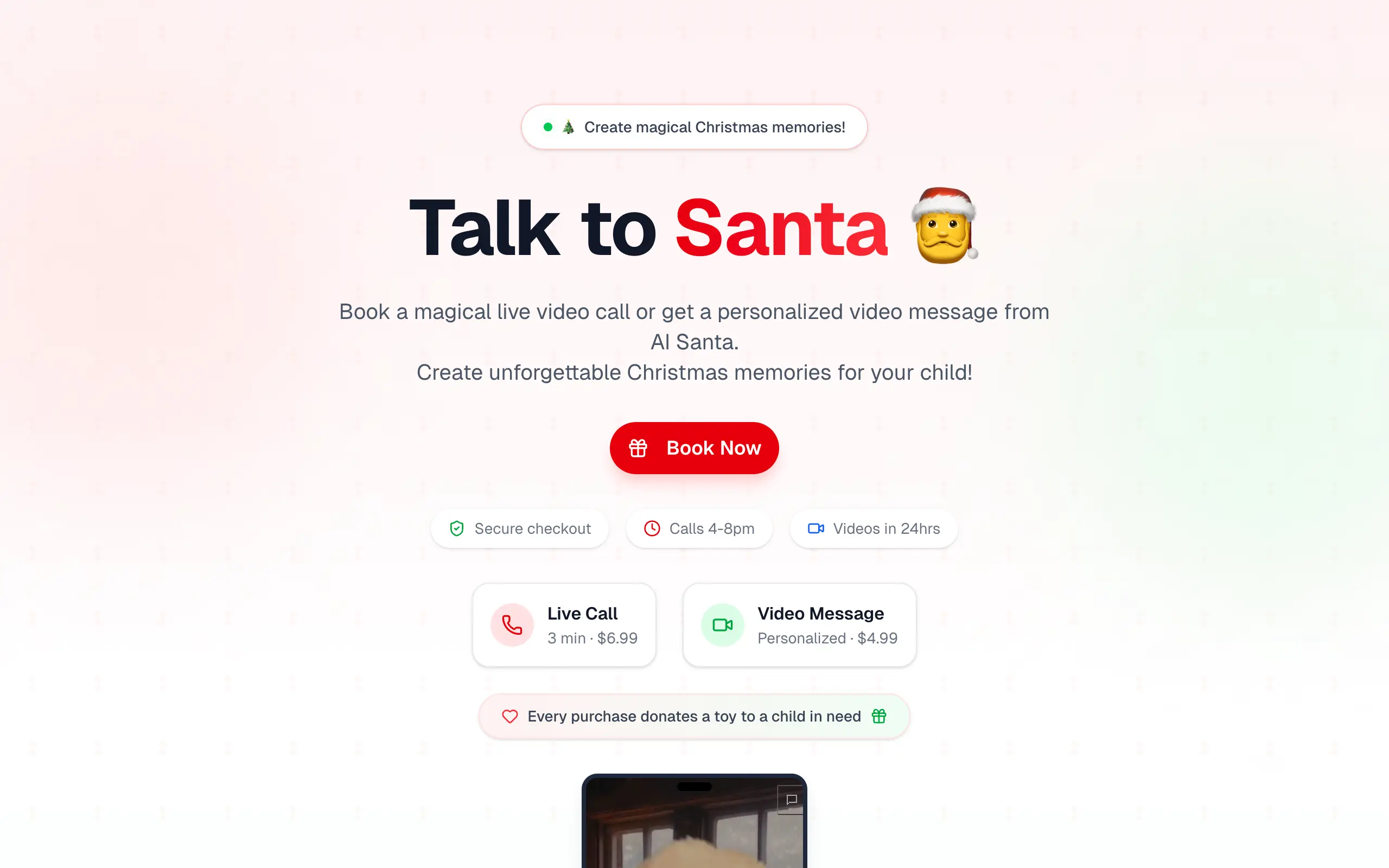
Talk to Santa
Enjoy a magical live video chat or receive a unique AI-generated video greeting from Santa Claus 🎅

pozywka.pl
Scalable blog for food journalist, focused on performance and user experience 🌭
zagrodzki.me
Personal blog and portfolio of Bart Zagrodzki, where he shares his knowledge and work 💼
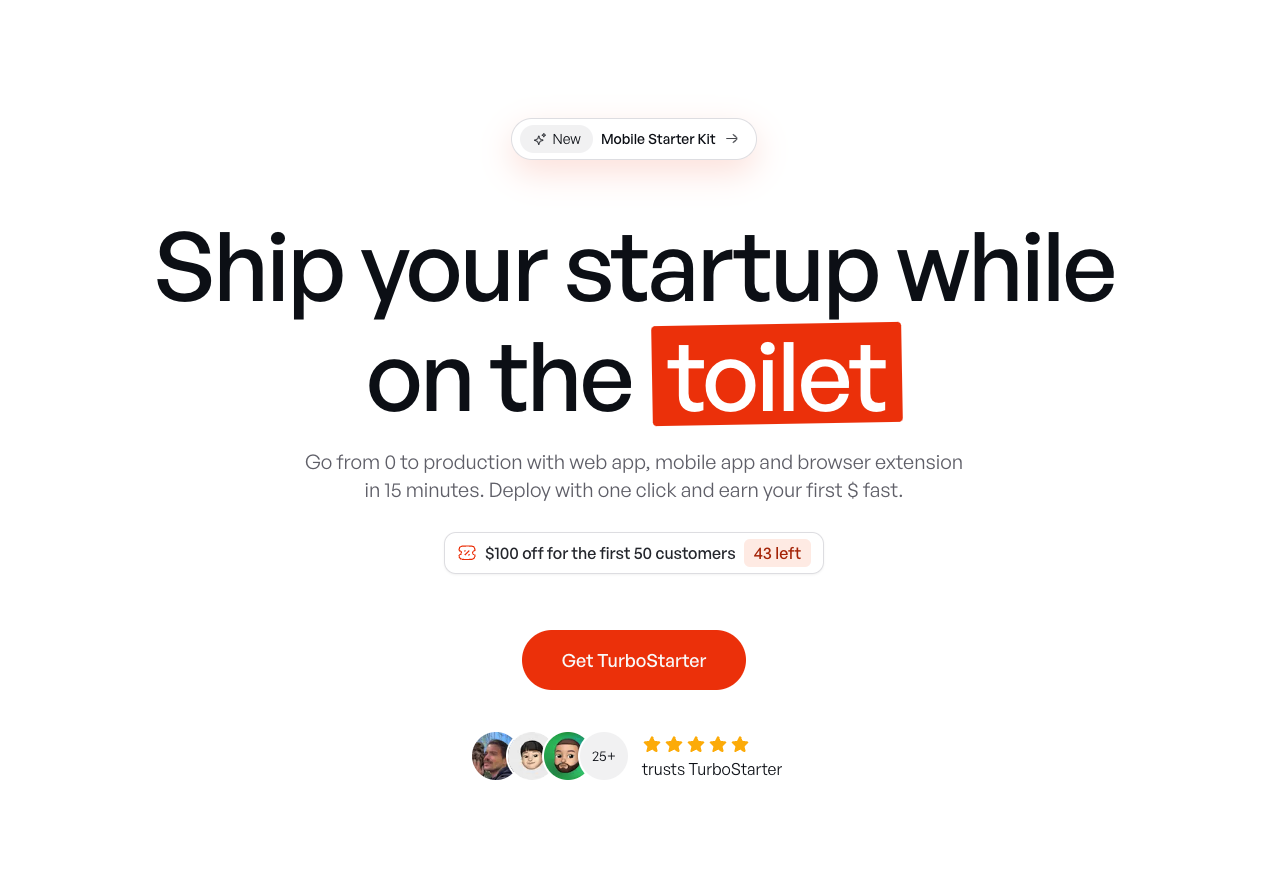
TurboStarter
Ship your startup everywhere. In minutes.
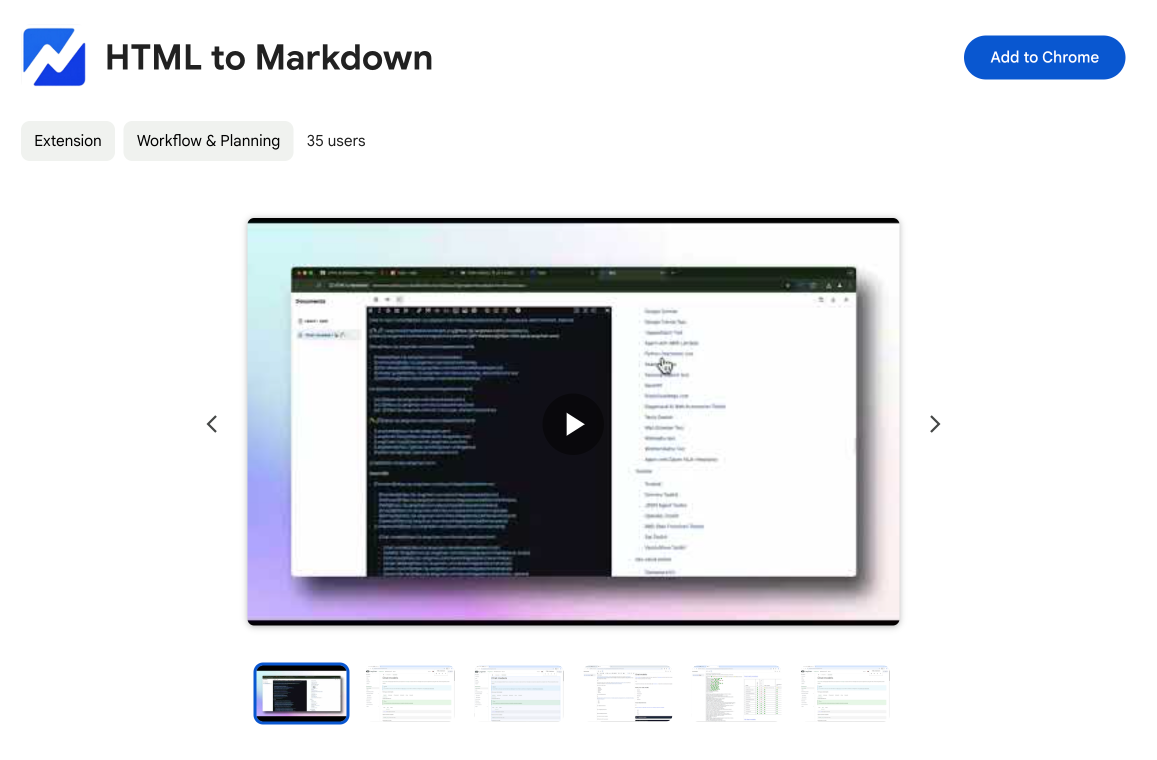
HTML to Markdown
Convert HTML to Markdown with ease, directly in your browser 📄
Dotallio
Personalized AI apps that automate research, data extraction, and content creation without code 🤖
Talk to Santa
Enjoy a magical live video chat or receive a unique AI-generated video greeting from Santa Claus 🎅
pozywka.pl
Scalable blog for food journalist, focused on performance and user experience 🌭
zagrodzki.me
Personal blog and portfolio of Bart Zagrodzki, where he shares his knowledge and work 💼
TurboStarter
Ship your startup everywhere. In minutes.
HTML to Markdown
Convert HTML to Markdown with ease, directly in your browser 📄
Dotallio
Personalized AI apps that automate research, data extraction, and content creation without code 🤖
Talk to Santa
Enjoy a magical live video chat or receive a unique AI-generated video greeting from Santa Claus 🎅
pozywka.pl
Scalable blog for food journalist, focused on performance and user experience 🌭
zagrodzki.me
Personal blog and portfolio of Bart Zagrodzki, where he shares his knowledge and work 💼
TurboStarter
Ship your startup everywhere. In minutes.
HTML to Markdown
Convert HTML to Markdown with ease, directly in your browser 📄
Dotallio
Personalized AI apps that automate research, data extraction, and content creation without code 🤖
Talk to Santa
Enjoy a magical live video chat or receive a unique AI-generated video greeting from Santa Claus 🎅
pozywka.pl
Scalable blog for food journalist, focused on performance and user experience 🌭
zagrodzki.me
Personal blog and portfolio of Bart Zagrodzki, where he shares his knowledge and work 💼
TurboStarter
Ship your startup everywhere. In minutes.
HTML to Markdown
Convert HTML to Markdown with ease, directly in your browser 📄
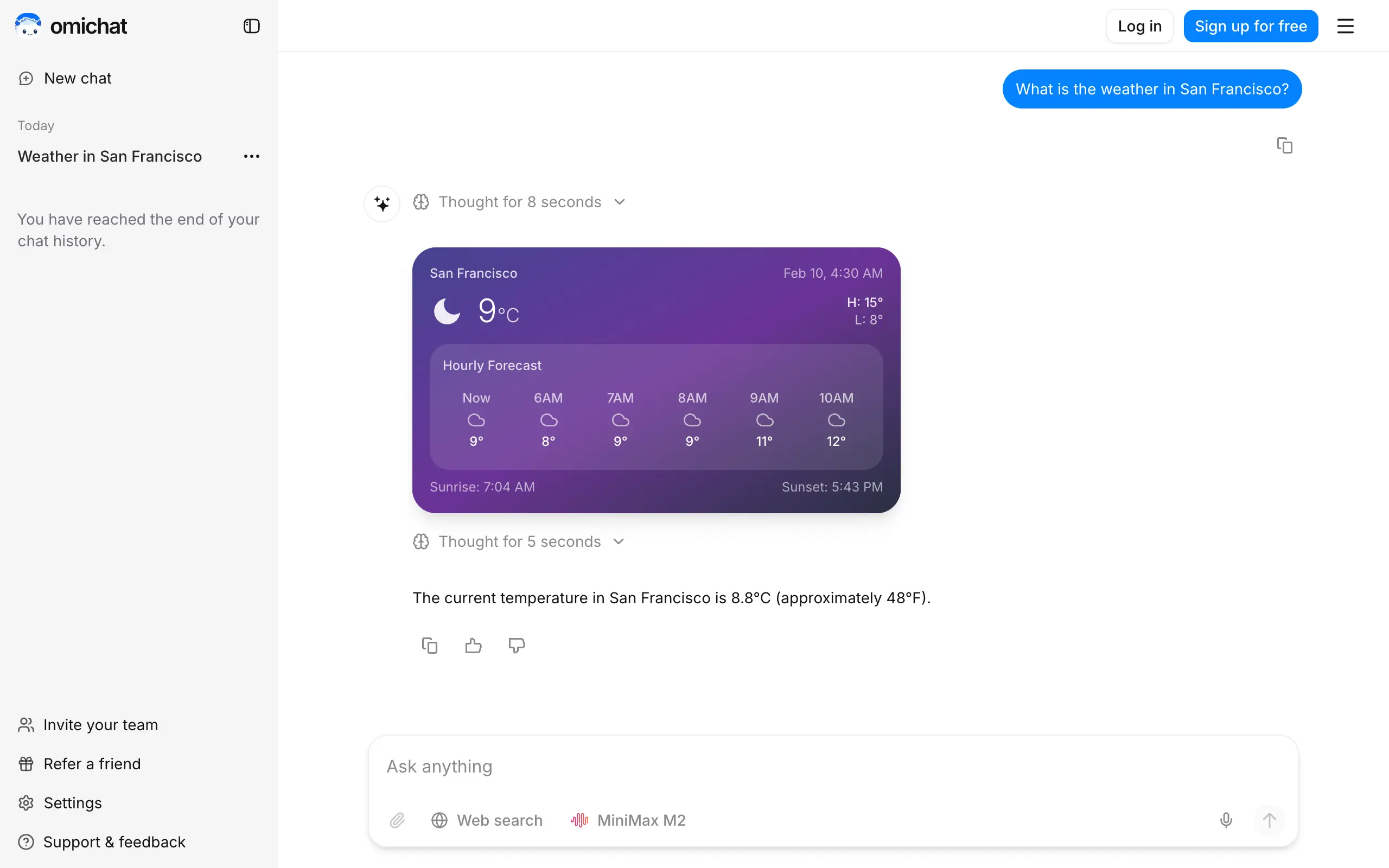
Omichat
Chat with 50+ AI models, including ChatGPT and Claude, in one place - switch models anytime without losing context 🤖
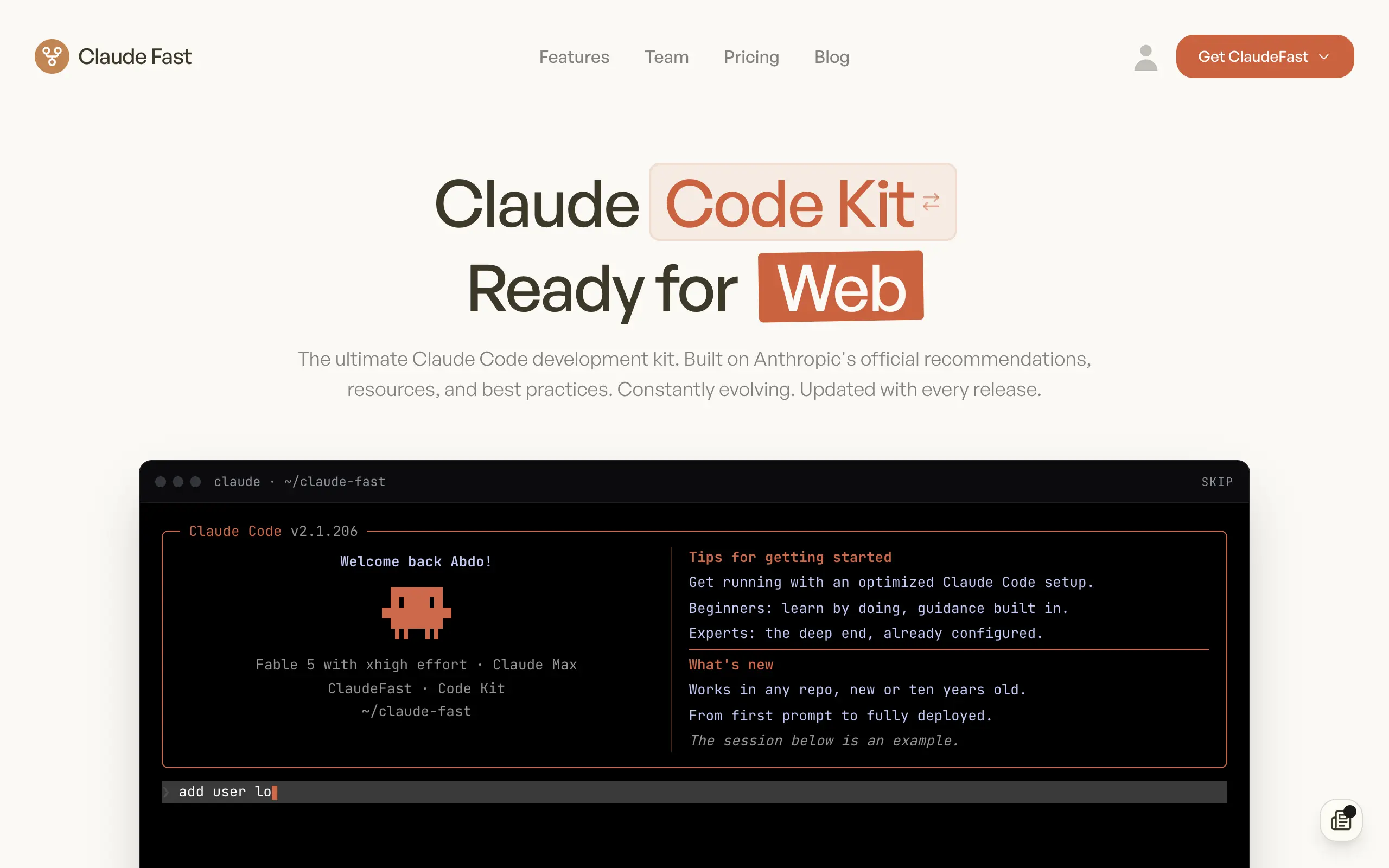
Claude Fast
Supercharge your Claude Code with 6x effective context window and specialized AI agents 🤖
EmojAI
AI-powered emoji picker with smart, context-aware suggestions 🤖
Solohacker
Autonomous company launcher - AI agents work 24/7, escalate what matters, and you stay in control 🤖

BeRawi: Storytelling Coach
Practice storytelling daily with instant feedback to sound clearer, more engaging, and confident 🎤
Omichat
Chat with 50+ AI models, including ChatGPT and Claude, in one place - switch models anytime without losing context 🤖
Claude Fast
Supercharge your Claude Code with 6x effective context window and specialized AI agents 🤖
EmojAI
AI-powered emoji picker with smart, context-aware suggestions 🤖
Solohacker
Autonomous company launcher - AI agents work 24/7, escalate what matters, and you stay in control 🤖
BeRawi: Storytelling Coach
Practice storytelling daily with instant feedback to sound clearer, more engaging, and confident 🎤
Omichat
Chat with 50+ AI models, including ChatGPT and Claude, in one place - switch models anytime without losing context 🤖
Claude Fast
Supercharge your Claude Code with 6x effective context window and specialized AI agents 🤖
EmojAI
AI-powered emoji picker with smart, context-aware suggestions 🤖
Solohacker
Autonomous company launcher - AI agents work 24/7, escalate what matters, and you stay in control 🤖
BeRawi: Storytelling Coach
Practice storytelling daily with instant feedback to sound clearer, more engaging, and confident 🎤
Omichat
Chat with 50+ AI models, including ChatGPT and Claude, in one place - switch models anytime without losing context 🤖
Claude Fast
Supercharge your Claude Code with 6x effective context window and specialized AI agents 🤖
EmojAI
AI-powered emoji picker with smart, context-aware suggestions 🤖
Solohacker
Autonomous company launcher - AI agents work 24/7, escalate what matters, and you stay in control 🤖
BeRawi: Storytelling Coach
Practice storytelling daily with instant feedback to sound clearer, more engaging, and confident 🎤

Connect with like-minded people
Join our community to get feedback, support, and grow together with 1,000+ builders on board, let's ship it!
Join usShip your startup everywhere. In minutes.
Don't burn tokens on setup and start building features on day one.