FairRecord AI
Automatically organizes messages, payments, and visitation history into structured, court-admissible reports, helping parents present clear, verifiable case narratives.
What is an AI co-parenting documentation platform and why it matters
In high-conflict custody situations, documentation is everything. Courts rely heavily on clear, consistent, and verifiable records when making decisions about parenting time, financial responsibilities, and child welfare. Yet most parents are left managing fragmented data across text messages, emails, payment apps, calendars, and handwritten notes.
An AI-powered co-parenting documentation platform like FairRecord AI addresses this gap by automatically organizing communication, financial records, and visitation history into structured, court-admissible reports.
This isn’t just a convenience tool. It directly impacts legal outcomes.
Instead of spending hours compiling timelines and evidence, parents can generate clean, chronological, and verifiable case narratives in minutes—reducing stress, legal costs, and the risk of missing critical details.
The core problem: fragmented evidence in custody disputes
Family court cases are uniquely documentation-heavy. Unlike many legal disputes, custody decisions often hinge on patterns of behavior over time.
Key challenges parents face
- Scattered communication
- Text messages across iMessage, WhatsApp, SMS
- Emails and co-parenting apps
- Incomplete financial tracking
- Child support payments
- Shared expenses (medical, school, activities)
- Manual visitation logs
- Easily disputed without proof
- Time-consuming report creation
- Lawyers often bill hourly to organize this data
Critical issue
Judges don’t just need evidence—they need structured, chronological, and credible narratives. Raw screenshots and disorganized logs often weaken otherwise strong cases.
Why existing solutions fall short
Many co-parenting apps (like OurFamilyWizard or TalkingParents) provide communication channels, but they don’t fully solve:
- Cross-platform data aggregation
- Intelligent summarization
- Court-ready reporting
- AI-assisted narrative building
This creates a clear market gap for a smarter, automation-first solution.
Target audience: who needs FairRecord AI most
The product serves a highly specific but deeply motivated audience.
Primary users
- Divorced or separated parents in custody disputes
- Parents in high-conflict co-parenting situations
- Individuals preparing for court hearings
Secondary users
- Family law attorneys
- Legal assistants and paralegals
- Guardians ad litem
- Mediators
User personas
The overwhelmed parent
Managing communication, payments, and visitation manually while preparing for court.
The strategic litigant
Wants to build a strong, evidence-backed narrative with minimal legal costs.
The family lawyer
Needs structured data quickly to prepare filings and arguments.
Core user intent
Users searching for solutions like FairRecord AI are typically looking for:
- “How to document co-parenting for court”
- “How to prove visitation history”
- “Best way to track child support payments”
- “Organize custody evidence”
This indicates high-intent, problem-aware users, making the product both valuable and monetizable.
Market opportunity and emerging trends
The intersection of legal tech and AI is growing rapidly.
Key trends driving demand
- Increased adoption of AI in legal workflows
- Rising divorce and custody case complexity
- Remote and digital evidence becoming standard in courts
- Self-representation (pro se litigants) increasing
According to publicly available reports (e.g., legal tech market analyses by Deloitte or Gartner), automation in legal documentation is one of the fastest-growing segments.
Market gap
Most tools fall into one of two categories:
- Communication platforms (limited intelligence)
- Legal software (too complex or expensive)
FairRecord AI bridges this gap by offering:
- Consumer-friendly UX
- AI-powered structuring
- Legal-grade outputs
How FairRecord AI works: the solution breakdown
At its core, FairRecord AI transforms messy, multi-source data into structured legal documentation.
Data ingestion
The platform integrates with:
- SMS and messaging apps
- Email providers
- Payment platforms (e.g., PayPal, bank exports)
- Calendar systems
AI processing layer
The AI engine performs:
- Message classification (conflict, agreement, scheduling)
- Timeline reconstruction
- Sentiment and tone analysis
- Payment categorization
Output generation
Users can generate:
- Chronological reports
- Visitation logs
- Financial summaries
- Incident reports
Key advantage
The system focuses not just on storing data, but transforming it into court-admissible narratives—a critical differentiator.
Core features that drive real value
1. Automated timeline generation
- Combines messages, events, and payments
- Displays clear sequences of events
- Eliminates manual sorting
2. Court-ready report builder
- Exportable PDFs formatted for legal use
- Includes timestamps and sources
- Clean, professional layout
3. Smart tagging and categorization
- AI tags messages as:
- Conflict
- Agreement
- Missed visitation
- Financial disputes
4. Payment tracking and verification
- Logs all transactions
- Matches payments with obligations
- Flags discrepancies
5. Visitation tracking
- Tracks scheduled vs actual visits
- Highlights missed or late exchanges
6. Evidence integrity system
- Timestamp verification
- Source attribution
- Audit trails
Feature comparison with existing tools
| Feature | Traditional Apps | Manual Tracking | Legal Software | FairRecord AI |
|---|---|---|---|---|
| AI summarization | ❌ | ❌ | ✅ | ✅ |
| Cross-platform aggregation | ❌ | ❌ | ✅ | ✅ |
| Court-ready reports | ⚠️ | ❌ | ✅ | ✅ |
| Ease of use | ✅ | ❌ | ❌ | ✅ |
Recommended tech stack for building FairRecord AI
Choosing the right stack is critical for scalability, security, and compliance.
Frontend
Why:
- Fast UI development
- Strong ecosystem
- Responsive design
Backend
- Node.js with NestJS or Express
- Python (for AI processing layer)
AI and NLP
- OpenAI APIs or similar LLM providers
- spaCy or Hugging Face for classification pipelines
Data storage
- PostgreSQL (structured data)
- AWS S3 (document storage)
Integrations
- Twilio (SMS ingestion)
- Gmail API
- Plaid (financial data)
Deployment
- AWS or Vercel (frontend)
- Docker for containerization
Compliance requirement
Handling sensitive family and legal data requires strict adherence to privacy standards such as GDPR and potentially HIPAA-like safeguards depending on jurisdiction.
Example: AI classification logic
function classifyMessage(message: string) {
  if (message.includes("missed") || message.includes("late")) {
    return "Visitation Issue";
  }
  if (message.includes("payment") || message.includes("$")) {
    return "Financial";
  }
  if (message.includes("schedule") || message.includes("pickup")) {
    return "Logistics";
  }
  return "General Communication";
}
In production, this would be replaced with a fine-tuned NLP model or LLM prompt pipeline.
Monetization strategies
Subscription tiers
-
Basic ($10–$20/month)
- Message tracking
- Basic reports
-
Pro ($30–$50/month)
- AI summaries
- Advanced reports
- Export features
-
Legal ($100+/month)
- Multi-case management
- Attorney collaboration tools
Additional revenue streams
- Pay-per-report generation
- Legal firm partnerships
- White-label licensing
Pricing insight
Users in custody disputes are highly motivated and often willing to pay for tools that:
- Save legal fees
- Improve court outcomes
- Reduce stress
Competitive advantage: why FairRecord AI stands out
1. AI-first architecture
Most competitors bolt on features. FairRecord AI is built around AI from the start.
2. Court-focused outputs
Not just tracking—but legal usability
3. Cross-platform aggregation
Eliminates fragmentation entirely
4. Narrative generation
Transforms raw data into persuasive timelines
Risks and how to mitigate them
Legal admissibility concerns
Risk: Courts may question AI-generated reports
Mitigation:
- Include raw data references
- Provide audit trails
- Allow manual edits
Privacy and security
Risk: Sensitive family data exposure
Mitigation:
- End-to-end encryption
- Role-based access
- Secure cloud infrastructure
AI inaccuracies
Risk: Misclassification or misleading summaries
Mitigation:
- Human review layer
- Confidence scores
- Editable outputs
Go-to-market strategy
Phase 1: niche targeting
Focus on:
- High-conflict custody cases
- Self-represented litigants
Phase 2: partnerships
- Family law firms
- Mediation services
Phase 3: content SEO
Target keywords like:
- “document custody case”
- “co-parenting evidence app”
- “track visitation for court”
Implementation roadmap
Practical example: user workflow
- Screenshots messages manually
- Tracks payments in spreadsheets
- Writes timelines by hand
- Pays lawyer to organize everything
- Syncs accounts automatically
- AI organizes all records
- Generates report in minutes
- Shares directly with attorney
Future opportunities and expansion
- Predictive insights (e.g., risk of missed visitation)
- Court filing integrations
- AI legal assistant for custody strategy
- Mobile-first experience
Why now is the right time to build this
Several factors converge:
- AI capabilities are mature enough for real-world legal workflows
- Legal tech adoption is accelerating
- Consumers are more comfortable trusting AI tools
- Courts increasingly accept digital evidence
This creates a rare window for category leadership.
Final thoughts and next steps
FairRecord AI addresses a deeply painful, emotionally charged, and underserved problem. By combining automation, AI, and legal-focused design, it delivers real, measurable value where it matters most—court outcomes and peace of mind.
If you’re building this product, the key is focus:
- Prioritize accuracy over flashy features
- Design for legal usability, not just convenience
- Build trust through transparency and security
Once those pillars are in place, scaling becomes much easier.
To accelerate development and avoid reinventing the wheel, consider starting with a proven SaaS foundation like TurboStarter, which can significantly reduce time-to-market.
More 🤖 AI Startup SaaS ideas
Discover more innovative ai startup SaaS ideas that are trending in 2026. Each idea is AI-generated with market validation and growth potential to help you find your next profitable venture faster than competitors.
Your competitors are building with TurboStarter
Below are some of the SaaS ideas that have been generated and built with our starter kit.

Statiko
Monitor any Telegram channel in real time - track posts, edits, deletions, and growth with AI recaps 📡

Shibui
AI website builder - describe your business, pick a niche template, edit by chatting, and publish instantly ✨

Pro Service
Find verified home service professionals, compare quotes, and pay securely through escrow - built for Brazilians across the US 🏠
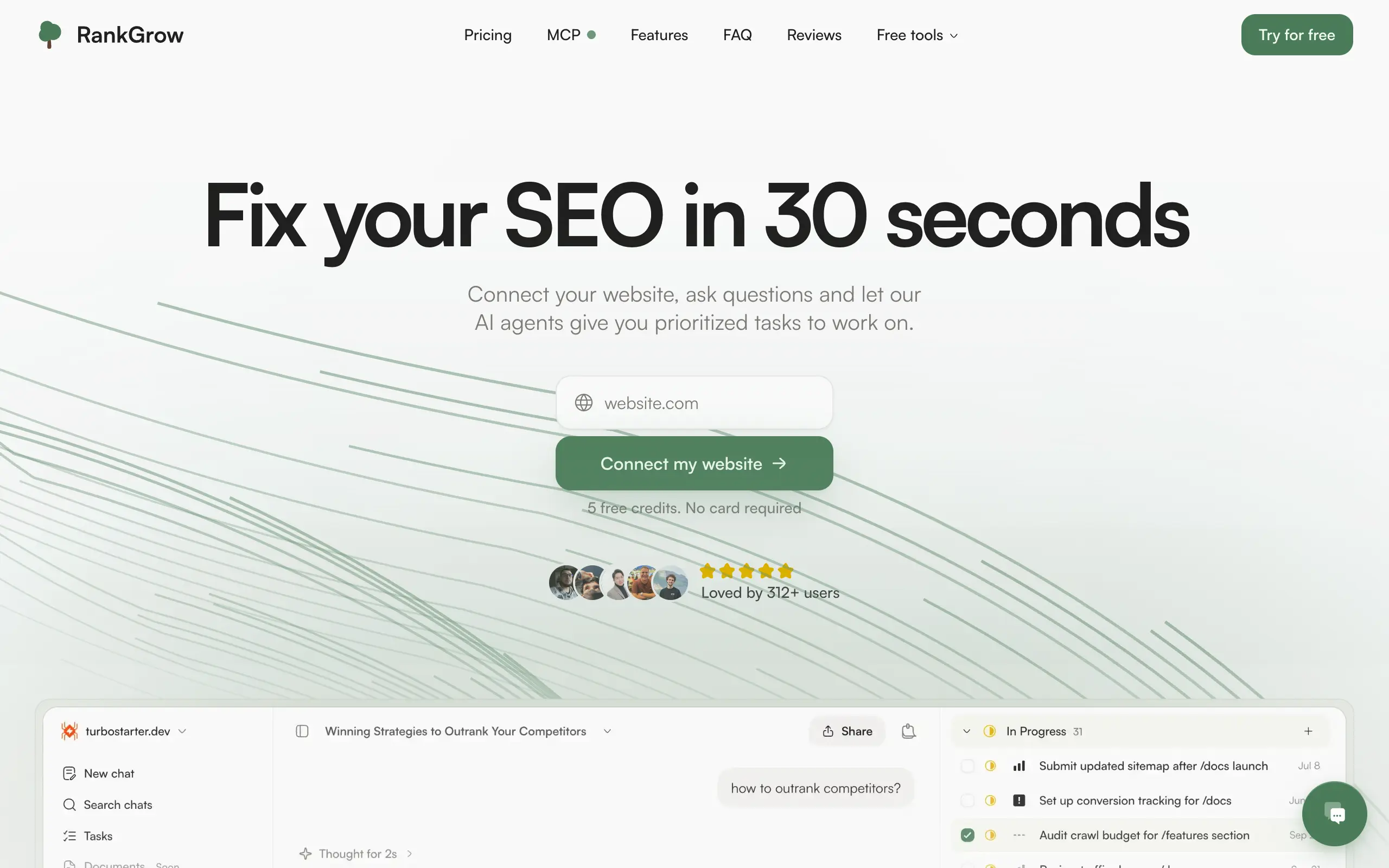
RankGrow
Fix your SEO with AI agents - connect Search Console, get prioritized tasks, and grow organic traffic 📈
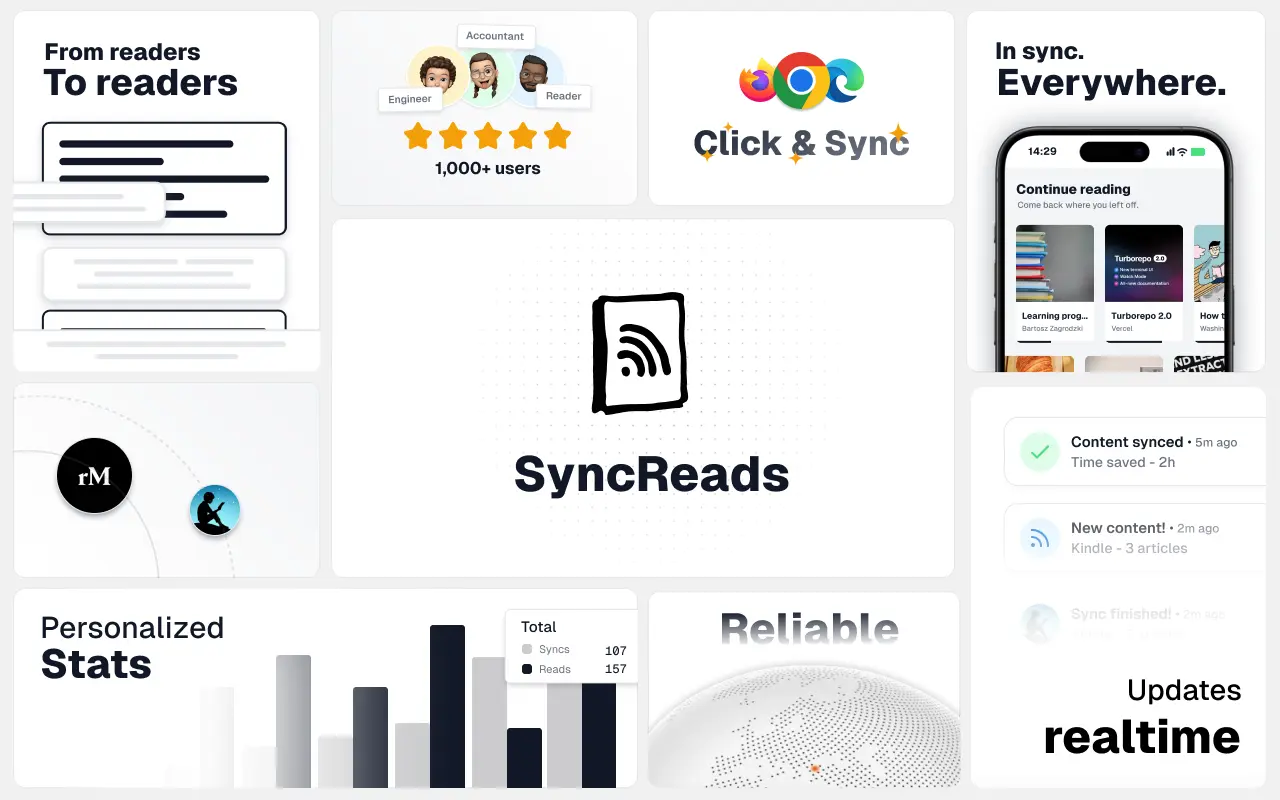
SyncReads
Sync your favorite content for distraction-free reading, save time and replace multiple apps. Anytime, anywhere 🔄
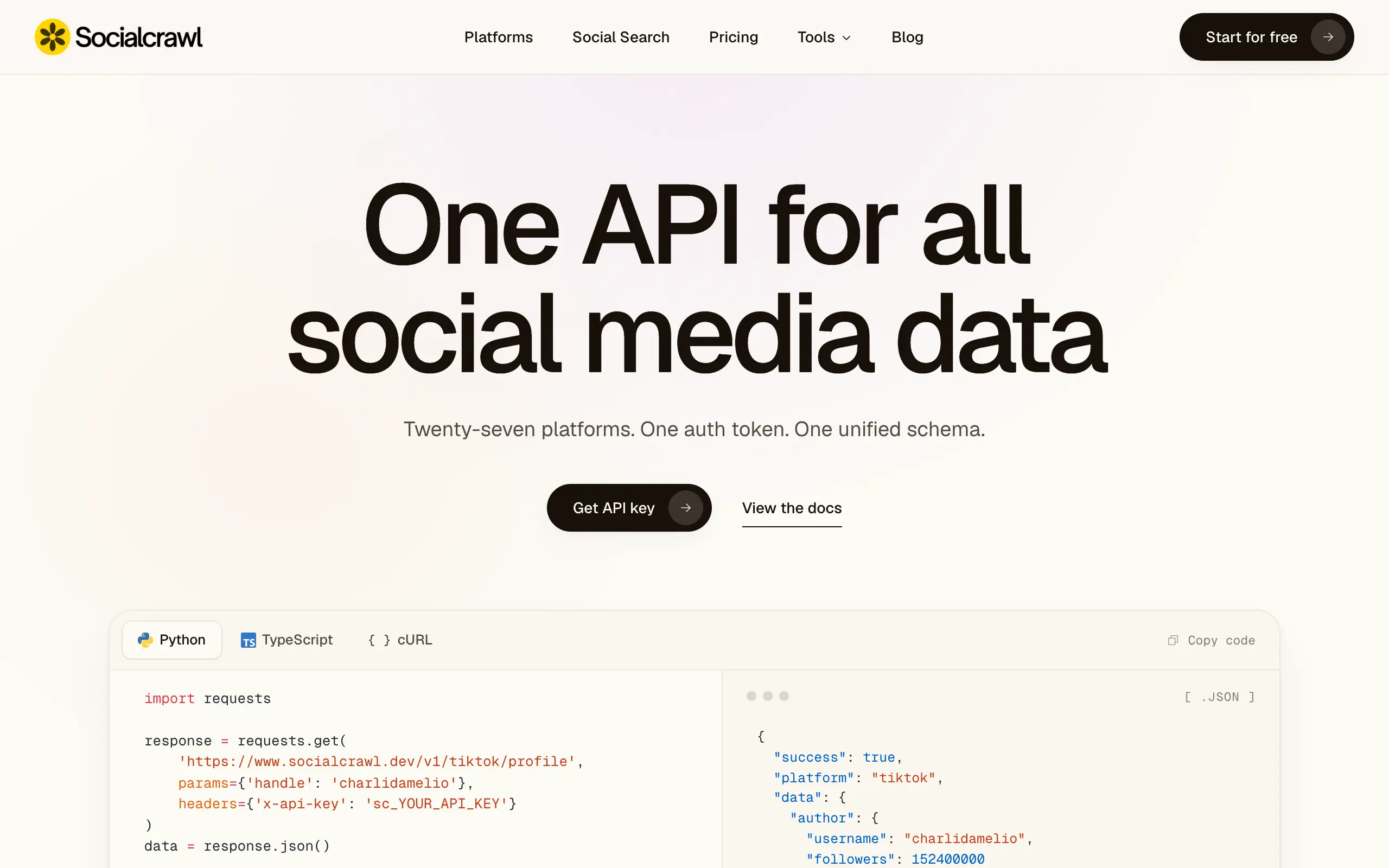
Socialcrawl
Get clean, structured data from 21 platforms like TikTok, Instagram, and YouTube with a single request 📊
Statiko
Monitor any Telegram channel in real time - track posts, edits, deletions, and growth with AI recaps 📡
Shibui
AI website builder - describe your business, pick a niche template, edit by chatting, and publish instantly ✨
Pro Service
Find verified home service professionals, compare quotes, and pay securely through escrow - built for Brazilians across the US 🏠
RankGrow
Fix your SEO with AI agents - connect Search Console, get prioritized tasks, and grow organic traffic 📈
SyncReads
Sync your favorite content for distraction-free reading, save time and replace multiple apps. Anytime, anywhere 🔄
Socialcrawl
Get clean, structured data from 21 platforms like TikTok, Instagram, and YouTube with a single request 📊
Statiko
Monitor any Telegram channel in real time - track posts, edits, deletions, and growth with AI recaps 📡
Shibui
AI website builder - describe your business, pick a niche template, edit by chatting, and publish instantly ✨
Pro Service
Find verified home service professionals, compare quotes, and pay securely through escrow - built for Brazilians across the US 🏠
RankGrow
Fix your SEO with AI agents - connect Search Console, get prioritized tasks, and grow organic traffic 📈
SyncReads
Sync your favorite content for distraction-free reading, save time and replace multiple apps. Anytime, anywhere 🔄
Socialcrawl
Get clean, structured data from 21 platforms like TikTok, Instagram, and YouTube with a single request 📊
Statiko
Monitor any Telegram channel in real time - track posts, edits, deletions, and growth with AI recaps 📡
Shibui
AI website builder - describe your business, pick a niche template, edit by chatting, and publish instantly ✨
Pro Service
Find verified home service professionals, compare quotes, and pay securely through escrow - built for Brazilians across the US 🏠
RankGrow
Fix your SEO with AI agents - connect Search Console, get prioritized tasks, and grow organic traffic 📈
SyncReads
Sync your favorite content for distraction-free reading, save time and replace multiple apps. Anytime, anywhere 🔄
Socialcrawl
Get clean, structured data from 21 platforms like TikTok, Instagram, and YouTube with a single request 📊
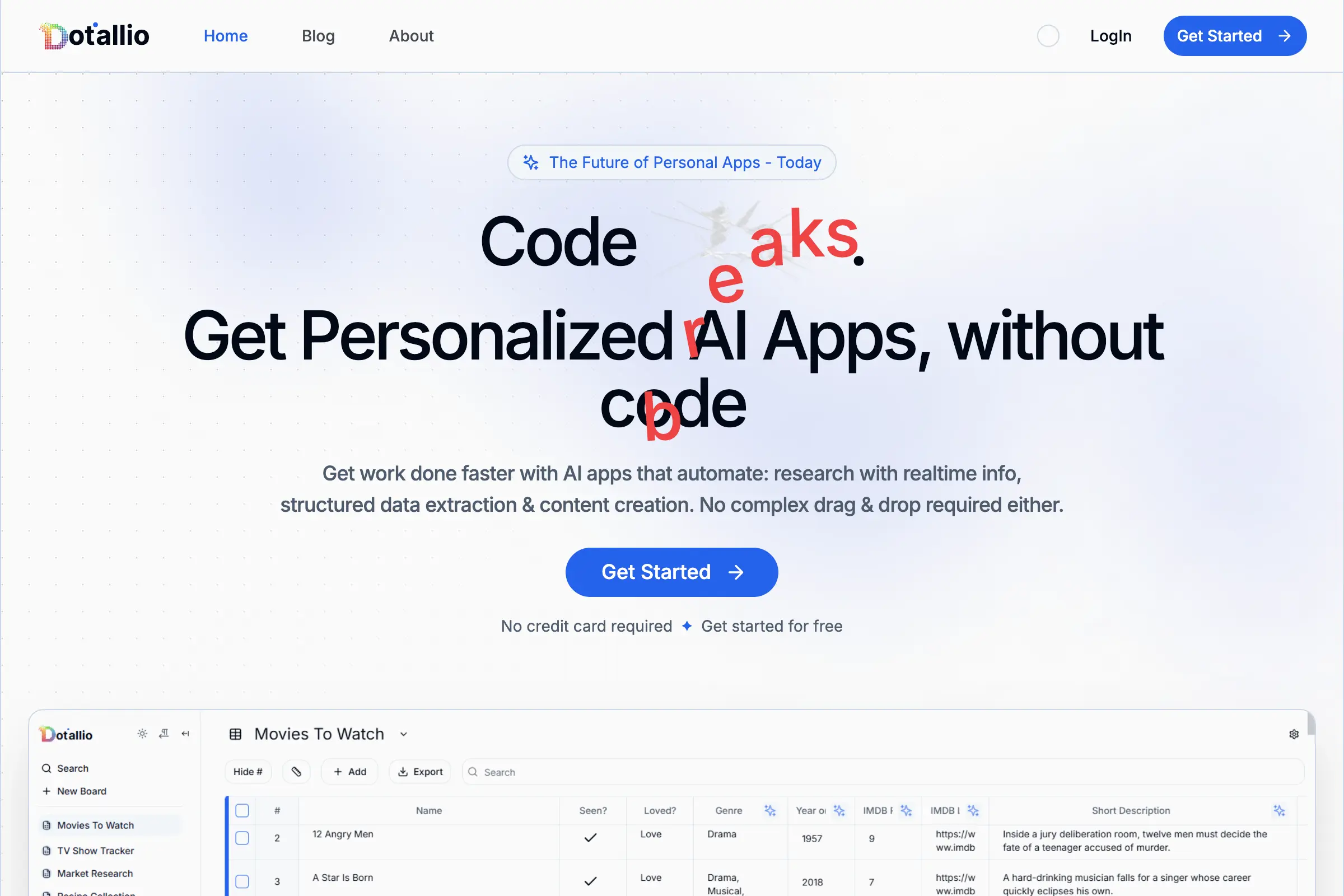
Dotallio
Personalized AI apps that automate research, data extraction, and content creation without code 🤖

Talk to Santa
Enjoy a magical live video chat or receive a unique AI-generated video greeting from Santa Claus 🎅

pozywka.pl
Scalable blog for food journalist, focused on performance and user experience 🌭
zagrodzki.me
Personal blog and portfolio of Bart Zagrodzki, where he shares his knowledge and work 💼
TurboStarter
Ship your startup everywhere. In minutes.
HTML to Markdown
Convert HTML to Markdown with ease, directly in your browser 📄
Dotallio
Personalized AI apps that automate research, data extraction, and content creation without code 🤖
Talk to Santa
Enjoy a magical live video chat or receive a unique AI-generated video greeting from Santa Claus 🎅
pozywka.pl
Scalable blog for food journalist, focused on performance and user experience 🌭
zagrodzki.me
Personal blog and portfolio of Bart Zagrodzki, where he shares his knowledge and work 💼
TurboStarter
Ship your startup everywhere. In minutes.
HTML to Markdown
Convert HTML to Markdown with ease, directly in your browser 📄
Dotallio
Personalized AI apps that automate research, data extraction, and content creation without code 🤖
Talk to Santa
Enjoy a magical live video chat or receive a unique AI-generated video greeting from Santa Claus 🎅
pozywka.pl
Scalable blog for food journalist, focused on performance and user experience 🌭
zagrodzki.me
Personal blog and portfolio of Bart Zagrodzki, where he shares his knowledge and work 💼
TurboStarter
Ship your startup everywhere. In minutes.
HTML to Markdown
Convert HTML to Markdown with ease, directly in your browser 📄
Dotallio
Personalized AI apps that automate research, data extraction, and content creation without code 🤖
Talk to Santa
Enjoy a magical live video chat or receive a unique AI-generated video greeting from Santa Claus 🎅
pozywka.pl
Scalable blog for food journalist, focused on performance and user experience 🌭
zagrodzki.me
Personal blog and portfolio of Bart Zagrodzki, where he shares his knowledge and work 💼
TurboStarter
Ship your startup everywhere. In minutes.
HTML to Markdown
Convert HTML to Markdown with ease, directly in your browser 📄
Omichat
Chat with 50+ AI models, including ChatGPT and Claude, in one place - switch models anytime without losing context 🤖
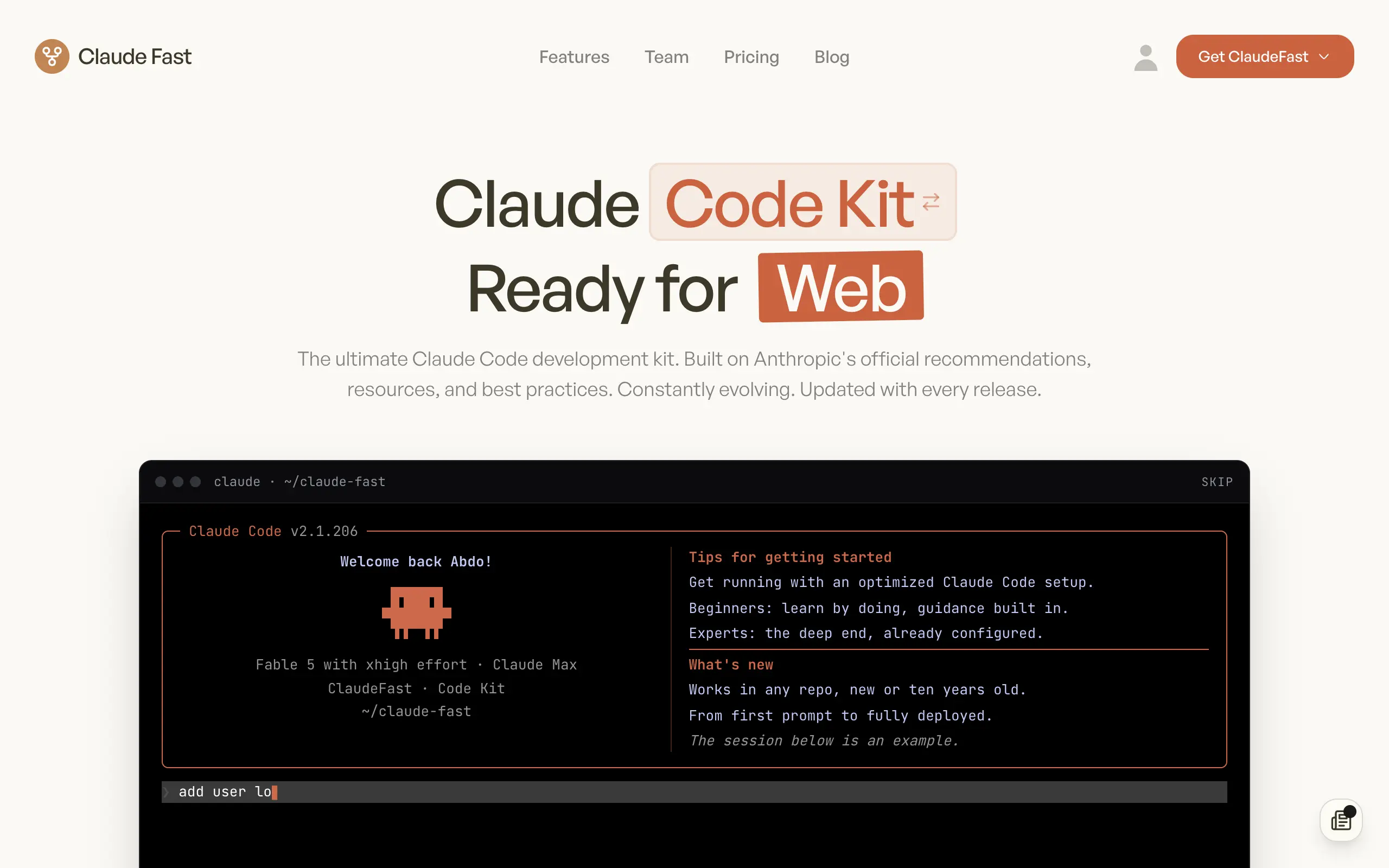
Claude Fast
Supercharge your Claude Code with 6x effective context window and specialized AI agents 🤖
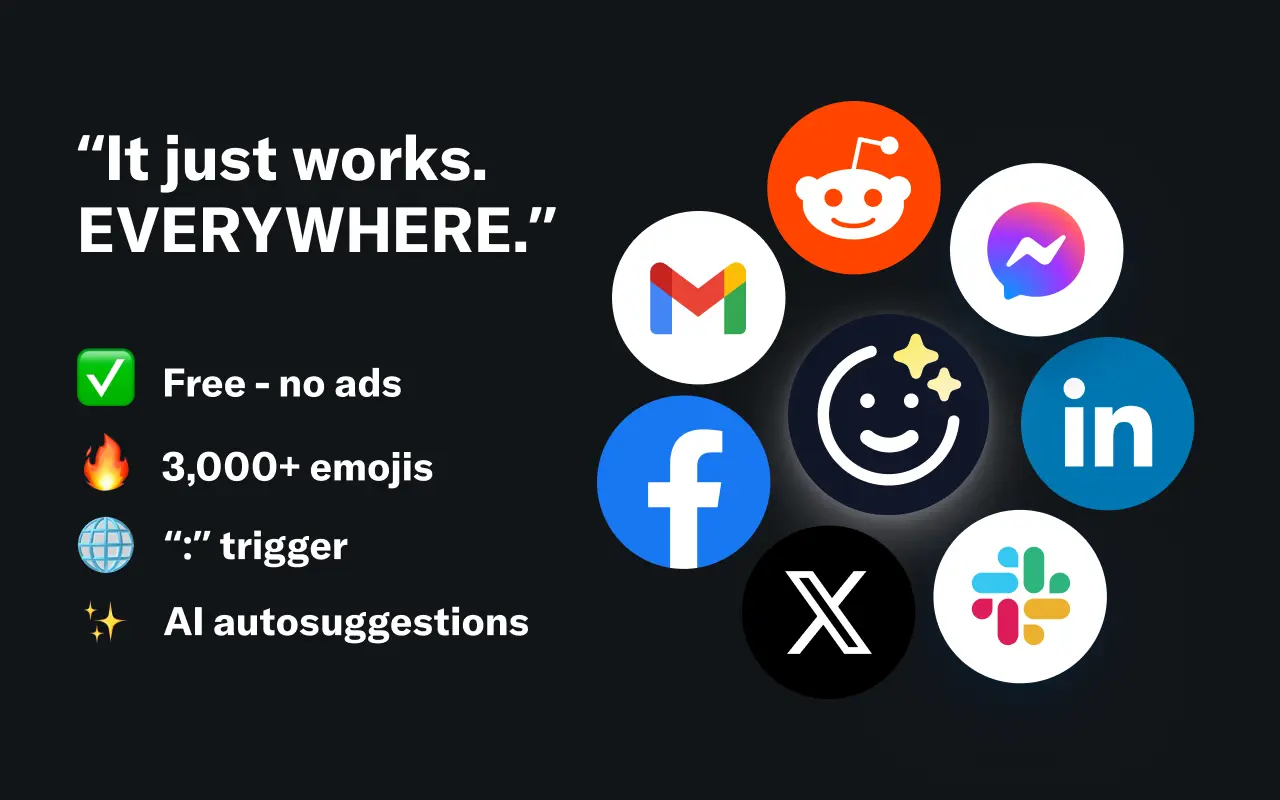
EmojAI
AI-powered emoji picker with smart, context-aware suggestions 🤖

Solohacker
Autonomous company launcher - AI agents work 24/7, escalate what matters, and you stay in control 🤖

BeRawi: Storytelling Coach
Practice storytelling daily with instant feedback to sound clearer, more engaging, and confident 🎤
Omichat
Chat with 50+ AI models, including ChatGPT and Claude, in one place - switch models anytime without losing context 🤖
Claude Fast
Supercharge your Claude Code with 6x effective context window and specialized AI agents 🤖
EmojAI
AI-powered emoji picker with smart, context-aware suggestions 🤖
Solohacker
Autonomous company launcher - AI agents work 24/7, escalate what matters, and you stay in control 🤖
BeRawi: Storytelling Coach
Practice storytelling daily with instant feedback to sound clearer, more engaging, and confident 🎤
Omichat
Chat with 50+ AI models, including ChatGPT and Claude, in one place - switch models anytime without losing context 🤖
Claude Fast
Supercharge your Claude Code with 6x effective context window and specialized AI agents 🤖
EmojAI
AI-powered emoji picker with smart, context-aware suggestions 🤖
Solohacker
Autonomous company launcher - AI agents work 24/7, escalate what matters, and you stay in control 🤖
BeRawi: Storytelling Coach
Practice storytelling daily with instant feedback to sound clearer, more engaging, and confident 🎤
Omichat
Chat with 50+ AI models, including ChatGPT and Claude, in one place - switch models anytime without losing context 🤖
Claude Fast
Supercharge your Claude Code with 6x effective context window and specialized AI agents 🤖
EmojAI
AI-powered emoji picker with smart, context-aware suggestions 🤖
Solohacker
Autonomous company launcher - AI agents work 24/7, escalate what matters, and you stay in control 🤖
BeRawi: Storytelling Coach
Practice storytelling daily with instant feedback to sound clearer, more engaging, and confident 🎤

Connect with like-minded people
Join our community to get feedback, support, and grow together with 1,000+ builders on board, let's ship it!
Join usShip your startup everywhere. In minutes.
Don't burn tokens on setup and start building features on day one.