FeedPilot
Catch product-feed errors and marketplace policy risks before listings lose visibility. AI suggests channel-specific fixes and helps teams update catalogs faster.
Product feeds are the structured catalogs that help retailers publish products across shopping channels, marketplaces, and advertising platforms. When a feed contains missing attributes, inconsistent variants, invalid identifiers, or policy-sensitive content, listings can be disapproved, limited, or shown less often. Finding those problems early is difficult when teams manage large catalogs across multiple channels.
FeedPilot is an AI product feed management and monitoring SaaS concept designed to help teams catch those issues before they affect listing visibility. It would audit product data, flag marketplace policy risks, explain why an issue matters, and suggest channel-specific fixes. Rather than simply reporting that a field is invalid, FeedPilot would help teams decide what to change, where to change it, and how to keep the correction consistent across their catalog.
The opportunity is to make product feed quality an ongoing workflow instead of a last-minute troubleshooting task. To succeed, FeedPilot must pair useful automation with transparent recommendations, reliable integrations, and clear limits around what AI can and cannot determine.
What is FeedPilot?
FeedPilot is an AI-powered product feed optimization and monitoring platform for businesses that distribute product listings across shopping channels and marketplaces. It would connect to a retailer’s catalog or existing feed-management workflow, inspect product data against channel requirements, and help teams resolve errors more efficiently.
A typical product feed includes fields such as:
- Product title and description
- Price and availability
- Brand and product identifiers
- Product category and condition
- Images and image links
- Variant attributes, such as size, color, or material
- Shipping, tax, and other channel-specific information
These fields may be accepted by one destination and rejected by another. A product title that works for a retailer’s website, for example, may be too long or poorly structured for a particular marketplace. FeedPilot’s purpose would be to make those differences visible and actionable.
A useful product feed monitoring tool should answer more than “What is wrong?” It should also help a team understand:
- Which products and channels are affected
- Whether the problem is blocking, warning-level, or advisory
- What business impact the issue may have
- Which data source should be corrected
- Whether the suggested fix is safe to apply automatically
That combination of detection, explanation, and workflow support is the core of the FeedPilot idea.
The problem with product feed management
Retailers often maintain product information in more than one system. A product information management platform may be the source of truth for descriptions, while an ecommerce platform stores price and inventory, and a feed tool transforms the data for channel-specific submission.
That distributed setup creates several common problems.
Feed errors are hard to prioritize
A feed may contain thousands of warnings and errors. Teams need to distinguish an urgent issue affecting many high-value products from a minor recommendation affecting a small group of listings. Without useful prioritization, operators spend time reviewing individual errors instead of addressing the underlying cause.
Channel requirements differ
Shopping channels and marketplaces have their own rules for required fields, category mappings, product identifiers, image formats, and content. Requirements can also vary by product type, country, or listing status. A generic validation report may not explain which rule applies or how to meet it.
Catalog data can become inconsistent
A correction made in one export or channel-specific file may not make its way back to the catalog’s source of truth. The same issue can then reappear during the next feed refresh. This creates repetitive work and makes it difficult to build durable data-quality processes.
Policy risk is not always obvious
Some problems are technical, such as a missing identifier. Others are semantic, such as promotional language, unsupported claims, or content that may conflict with a channel’s rules. A format validator can catch structural problems, but it may not recognize a policy-sensitive phrase in a title or description.
Teams lack a clear feedback loop
When a listing is limited or disapproved, teams may not know whether the cause was the catalog, a feed transformation, a destination-specific rule, or a recent policy change. Without a record of what happened and what fixed it, the same issue may return.
FeedPilot’s product opportunity is to connect these separate tasks into one operational workflow: detect, explain, prioritize, recommend, review, and measure.
Target audience for an AI product feed management tool
FeedPilot should begin with customers who feel the cost of feed errors and have enough catalog complexity to justify a dedicated solution.
Ecommerce brands
Direct-to-consumer and omnichannel brands may manage thousands of products across their online store, shopping destinations, and marketplaces. Their teams need a consistent way to find catalog problems, protect listing quality, and reduce repetitive manual checks.
FeedPilot could serve catalog managers, ecommerce operations leads, and performance marketing teams that rely on accurate product availability, pricing, and attributes.
Retailers and marketplace sellers
Retailers selling across multiple marketplaces face channel-specific rules and frequent catalog updates. They may need to coordinate between merchandising, operations, and marketing while keeping product information consistent.
For these businesses, the value proposition is not simply better feed formatting. It is reducing the time between an error appearing and a reliable correction being deployed.
Agencies and feed-management consultants
Agencies manage catalogs for multiple clients, each with different products, workflows, and channel configurations. A multi-account dashboard could help them identify client issues, standardize audits, and provide clearer reporting.
Agency users may also value collaboration features, such as approval steps, saved rule sets, and change histories. These features could make FeedPilot useful as both an internal operations tool and a client-facing reporting layer.
Ecommerce platforms and integration partners
Platform providers, system integrators, and product data consultants may want to offer feed-quality checks as part of a broader commerce service. This segment could become a channel for distribution, although partnership opportunities are typically slower to develop than direct sales.
Best initial customer profile
A practical initial customer profile would include businesses with:
- A substantial and frequently updated product catalog
- Multiple active sales or advertising destinations
- A team responsible for catalog quality
- Recurring feed issues that consume operational time
- Existing systems that can provide catalog data through APIs, exports, or webhooks
The initial product should avoid trying to serve every seller. Small stores with a few products may not have enough pain to pay for a specialized platform. A focused launch aimed at mid-market retailers, growing ecommerce brands, or agencies would provide clearer feedback.
Market opportunity and product gap
The market opportunity for FeedPilot comes from the growing complexity of commerce operations. Businesses increasingly distribute product data across websites, marketplaces, social commerce surfaces, and advertising platforms. Each additional destination can introduce more mappings, validation rules, and opportunities for data drift.
This article does not assume a particular market-size estimate. Before making investment or sales claims, the team should validate demand using customer interviews, paid pilots, and current research from reputable ecommerce and commerce-technology sources. If the product later publishes statistics about disapprovals, catalog size, or time saved, each claim should cite a current, authoritative source and clearly explain its methodology.
The product gap is best understood as a workflow opportunity rather than a claim that no competing tools exist. Feed management, product information management, marketplace integrations, and analytics are established categories. FeedPilot’s differentiation would depend on how well it connects their functions.
Potential gaps FeedPilot could address
- Actionable explanations: Translate technical validation messages into clear instructions for the person responsible for the catalog.
- Cross-channel comparison: Show how the same product data behaves across multiple destinations.
- Risk prioritization: Rank issues by affected product count, urgency, and potential business impact.
- Safe change workflows: Let teams review AI suggestions before applying updates.
- Root-cause analysis: Identify repeated problems caused by a shared catalog field, mapping, or transformation.
- Historical context: Show whether a rule, error, or product value changed before a listing issue appeared.
The strongest version of FeedPilot would not attempt to replace every feed manager or catalog system. Instead, it could become the intelligence and quality-control layer that helps teams get more value from systems they already use.
Core features for FeedPilot
The first product should solve a narrow, recurring problem exceptionally well. A broad list of features may sound compelling, but it can make early development slower and customer feedback harder to interpret.
1. Product feed health checks
FeedPilot should import or connect to a product feed and evaluate it for common problems, including:
- Missing required fields
- Invalid or malformed values
- Duplicate identifiers
- Broken or inaccessible image links
- Inconsistent product variants
- Out-of-date availability or pricing
- Category mapping gaps
- Unexpected changes in product counts
Each finding should include the affected products, relevant destination, severity, and a plain-language explanation. Users should be able to filter by issue type, product group, destination, and status.
2. Channel-specific validation
The validation system should account for each destination’s rules instead of relying on one generic checklist. A rule engine can check known structural requirements, while a separate policy layer can flag content that may deserve human review.
Rules need versioning. When a channel changes its requirements, FeedPilot should record which rule version was used, when the change occurred, and which products are affected. This is essential for trust and debugging.
3. AI-generated fix suggestions
AI can help explain an issue and propose a correction. For instance, it might suggest a clearer title, identify a missing size value, or recommend a more suitable category based on product attributes.
The platform should show the reasoning behind each recommendation in a concise, reviewable way. It should also distinguish among:
- Deterministic fixes, such as removing invalid whitespace
- High-confidence suggestions, such as completing a field from known catalog data
- Judgment calls, such as rewriting a product description
- Policy concerns that require a human decision
AI recommendations should never be presented as guaranteed approval. Channel policies can be nuanced, and a suggested edit may not resolve every issue.
4. Human review and approval
Teams should control whether proposed changes are applied automatically, sent for approval, or exported for manual review. Approval workflows are especially important for descriptions, claims, regulated product categories, and any update that may affect brand voice.
An audit trail should record who approved a change, what value changed, when the change was made, and which destination received it.
5. Bulk editing and reusable rules
A recurring issue often affects many products. FeedPilot should support bulk actions for safe, well-defined corrections and reusable rules for common transformations.
For example, a team might standardize a missing brand attribute across a product collection or apply a consistent formatting rule to a subset of titles. Bulk edits should include a preview, an affected-product count, and a rollback option.
6. Alerts and change detection
FeedPilot should monitor changes in feed health and alert users when a meaningful issue appears. Alerts should be configurable so teams are not overwhelmed by low-priority noise.
Useful alerts could include:
- A sudden increase in rejected or invalid products
- A sharp drop in feed item count
- A set of products with outdated availability
- A destination rule change affecting a product group
- A previously resolved error returning
7. Integrations and exports
Early integrations should focus on a small number of commonly used data sources and destinations. The product should support dependable imports and exports before attempting a very large integration directory.
Where direct integrations are unavailable, a secure file upload or scheduled file import can help customers test the product without a complex deployment. Integration priorities should be selected through customer discovery, not assumed from industry familiarity.
How FeedPilot’s workflow could work
A clear workflow helps users understand the value of a product feed optimization platform.
- Connect a catalog: Import a feed or connect an ecommerce, catalog, or feed-management system.
- Choose destinations: Select the channels and markets relevant to the catalog.
- Run an audit: Validate product fields and identify policy-sensitive content.
- Review priorities: Group issues by severity, affected products, and likely root cause.
- Apply or approve fixes: Use bulk rules where safe and human review where judgment is needed.
- Export or sync changes: Send approved updates to the appropriate source or destination.
- Monitor outcomes: Track whether the issue was resolved and whether it reappears.
The most important product metric is not the number of alerts generated. It is whether the platform helps users resolve issues accurately, with less repeated work and fewer preventable listing disruptions.
Competitive advantage and positioning
FeedPilot would compete indirectly with feed-management tools, product information systems, ecommerce platforms, marketplace operations software, and manual spreadsheets. The product’s competitive position should be based on a specific customer outcome, not a vague claim that it uses AI.
A potential positioning statement
FeedPilot helps ecommerce teams find and resolve product feed errors and marketplace policy risks before they become recurring catalog problems.
This positioning is credible if the product can show affected products, explain the issue, provide useful fixes, and track the resolution.
Potential sources of differentiation
From feed generators: FeedPilot could focus on diagnostics and quality workflows across existing systems rather than requiring customers to replace their current feed infrastructure.
From generic AI writing tools: FeedPilot would work with structured product data, destination requirements, catalog context, and approval workflows—not just generate copy.
From basic validation scripts: FeedPilot could add prioritization, explanations, change history, and recommendations that make technical findings useful to nontechnical operators.
From manual audits: Continuous monitoring could identify newly introduced problems sooner than periodic spreadsheet reviews.
These differences are hypotheses to validate. A competitive analysis should compare actual customer workflows and product capabilities, not just feature lists on vendor websites. During discovery, ask prospects what they currently use, what breaks, how they detect problems, and what they have already tried.
Recommended technology stack
FeedPilot’s technology choices should support reliable data processing, security, fast iteration, and explainable recommendations. The exact stack depends on the team’s expertise and customer requirements; no single architecture is automatically best.
Frontend
A modern React-based application is a reasonable choice for an interactive dashboard with filters, review queues, and product-level diagnostics. A component system can speed up consistent interface development, while server-rendered routes may help with performance and access control where appropriate.
The most important frontend considerations are not novelty but usability: clear issue severity, responsive tables, keyboard-accessible actions, and readable explanations.
Backend and API
A typed backend with a well-documented API can support web application requests, integration endpoints, and background processing. The service should separate authentication, account permissions, catalog ingestion, rule evaluation, and AI recommendations into maintainable modules.
For an early product, a modular monolith may be simpler to operate than multiple microservices. The team can split high-volume workloads later if real usage requires it.
Data storage
A relational database is a practical foundation for accounts, catalogs, products, rules, findings, approvals, and audit events. Product feeds can be large and change frequently, so the system should be designed around batch imports, incremental updates, and efficient indexing.
Object storage can hold uploaded feed files and export artifacts. These files should have retention policies, access controls, and encryption appropriate to the sensitivity of customer data.
Background processing
Feed imports and validations can take longer than a normal web request. A job queue allows the application to process large catalogs asynchronously, retry temporary failures, and show users progress.
Jobs should be idempotent where possible, meaning that repeating a job does not create duplicate changes or inconsistent findings. This is particularly important when integrations retry after a network interruption.
AI and rules architecture
Use deterministic validation for rules that can be checked exactly. Reserve language models for tasks that benefit from interpretation, such as explaining an error, classifying ambiguous content, or drafting a proposed edit.
A reliable architecture might follow this sequence:
- Validate known schemas and field constraints with deterministic rules.
- Use AI to interpret selected findings or suggest possible edits.
- Apply confidence thresholds and policy safeguards.
- Require human approval for higher-risk changes.
- Record prompts, model versions, outputs, and reviewer decisions according to the product’s privacy policy.
Do not make an AI model the only source of truth for channel requirements. Requirements should be represented in maintainable, testable rules, with clear ownership and update procedures.
Security and privacy
FeedPilot may handle commercially sensitive product data, pricing, and launch plans. Security should be part of the initial design, not a future enterprise add-on.
Baseline practices should include role-based access, secure credential handling, encryption in transit and at rest, tenant separation, audit logging, and a defined data-retention policy. The company should also explain whether customer data is sent to third-party AI services and how that data is handled.
A lean team could accelerate its product foundation with TurboStarter, then invest its engineering effort in the feed ingestion, validation, and recommendation capabilities that make FeedPilot distinct.
Monetization strategy
FeedPilot could use a subscription model aligned with catalog size, destination count, and workflow needs. Pricing should reflect the customer’s value and infrastructure costs, not only the number of features.
Potential pricing models
- Catalog-based tiers: Charge according to the number of products monitored, with clear limits and overage terms.
- Destination-based tiers: Price based on the number of active channels or marketplaces.
- Usage-based processing: Charge for feed volume or high-frequency processing where compute costs scale meaningfully.
- Agency plans: Offer multiple client accounts, shared reporting, and permissions for service providers.
- Enterprise plans: Include advanced security, custom integrations, support commitments, and governance features.
A hybrid model may be most understandable: a base subscription includes a catalog allowance and a set number of destinations, while larger catalogs or advanced workflow needs move customers into higher tiers.
Free trial and conversion
A free trial or limited audit can demonstrate value quickly. A strong trial should return useful findings without requiring a complicated implementation. For example, a user could upload a sample feed, select a destination, and receive a report showing prioritized issues.
The conversion moment should be tied to ongoing monitoring, collaboration, integrations, and repeat audits—not to withholding basic findings that would make the trial trustworthy.
Pricing validation
Early pricing should be tested in customer conversations and paid pilots. Ask potential buyers what budget the problem currently consumes, how urgently they need a solution, and which team owns the purchase. Avoid pricing solely by comparing competitors, because FeedPilot’s value may come from reducing operational effort across existing tools.
Risks and mitigation
A credible plan should address the ways an AI product feed monitoring platform can fail.
Incorrect recommendations
A confident but inaccurate suggestion can damage product content or create new policy issues.
Mitigation: Keep rule-based checks separate from AI suggestions, show confidence and reasoning, require review for sensitive changes, and provide rollback capabilities.
Changing channel requirements
Destination rules can evolve, making old validation logic incomplete.
Mitigation: Version rules, assign an owner to rule maintenance, monitor official channel documentation, and make rule freshness visible to customers. Clearly state that FeedPilot provides operational guidance, not a guarantee of approval.
Integration complexity
Every source system can have different APIs, data models, permissions, and update behavior.
Mitigation: Start with a small number of validated integrations. Support file-based workflows where useful, and build a repeatable integration framework before expanding to many destinations.
Alert fatigue
If the platform reports too many low-value findings, users may ignore it.
Mitigation: Prioritize by severity and business context, provide configurable thresholds, group related errors, and measure whether alerts lead to resolution.
Catalog data quality
AI cannot reliably infer information that is absent or contradictory in the source catalog.
Mitigation: Identify the source field and data lineage for each finding. Label inferred values as suggestions and avoid inventing product facts such as material, dimensions, certifications, or compatibility.
Privacy and security concerns
Customers may be reluctant to share product data or integration credentials with a new vendor.
Mitigation: Minimize data collection, protect secrets, document retention and deletion policies, and provide a clear explanation of third-party processing.
Customer acquisition costs
A specialized SaaS product may require education, onboarding, and sales support before customers understand the benefit.
Mitigation: Use a focused initial customer segment, offer a measurable audit, create practical educational content, and develop partnerships only after the onboarding process is repeatable.
Success metrics for the product
FeedPilot should track product outcomes, not just software activity.
Useful measures include:
- Time from issue detection to resolution
- Percentage of recommendations accepted by users
- Number of recurring issues prevented or resolved
- Share of findings confirmed as accurate
- Feed audit completion and return rates
- Customer retention and expansion by catalog or destination
- Support volume related to integrations and false positives
For customer-facing claims, establish a baseline before launch and use consistent measurement methods. If a pilot reports time saved or fewer errors, document the sample size, time period, and calculation so the claim remains trustworthy.
Actionable implementation plan
The safest route to launch is to validate one high-value workflow before building a broad platform.
Interview operators before designing the full product
Talk with ecommerce operations leaders, catalog managers, agencies, and marketplace sellers. Ask them to walk through a recent feed issue from detection to resolution. Capture which systems were involved, how long the task took, what information was missing, and what made the fix difficult.
Look for repeated pain across several companies. Do not treat interest in AI as proof of demand; validate whether buyers will pay to solve the operational problem.
Choose a narrow first use case
Select one catalog type, a small set of destinations, and a specific issue category. Examples might include missing required attributes, product identifier problems, or recurring title and category errors. A narrow scope makes it easier to test accuracy and demonstrate value.
Build a dependable feed audit
Create a simple upload or integration flow, deterministic validation rules, issue grouping, and a clear report. Test the system with real-world feeds that include malformed values, duplicate products, missing fields, and inconsistent variants.
Add AI where it improves the workflow
Use AI to explain findings or draft suggested edits after the deterministic audit identifies a problem. Compare suggestions with expert-reviewed answers, record failure cases, and avoid automated writes until quality is proven.
Run paid or tightly scoped pilots
Work with a small group of design partners. Define the baseline, agreed use case, success measures, data handling expectations, and review process before the pilot begins. Use the results to refine onboarding, prioritization, and pricing.
Expand integrations and automation gradually
Add integrations based on customer demand and implementation feasibility. Introduce automatic fixes only for low-risk, reversible changes, and keep an audit trail for every update.
The FeedPilot opportunity
FeedPilot’s strongest opportunity is to make product feed quality easier to operate across channels. Its potential unique selling proposition is not simply “AI for product listings.” It is a practical system that combines channel-aware validation, understandable explanations, prioritized fixes, human approval, and ongoing monitoring.
That distinction matters. Retail teams do not need more alerts for their own sake. They need to know which issues matter, how to resolve them without creating new problems, and whether the correction will persist in the source catalog.
A focused first release, transparent AI behavior, and reliable data workflows would give FeedPilot a credible path to earning trust. The next step is to validate the problem with the people who manage feeds every day, then build the smallest product that measurably reduces their time to resolution.
More 🤖 AI Startup SaaS ideas
Discover more innovative ai startup SaaS ideas that are trending in 2026. Each idea is AI-generated with market validation and growth potential to help you find your next profitable venture faster than competitors.
Your competitors are building with TurboStarter
Below are some of the SaaS ideas that have been generated and built with our starter kit.

Statiko
Monitor any Telegram channel in real time - track posts, edits, deletions, and growth with AI recaps 📡

Shibui
AI website builder - describe your business, pick a niche template, edit by chatting, and publish instantly ✨

Pro Service
Find verified home service professionals, compare quotes, and pay securely through escrow - built for Brazilians across the US 🏠
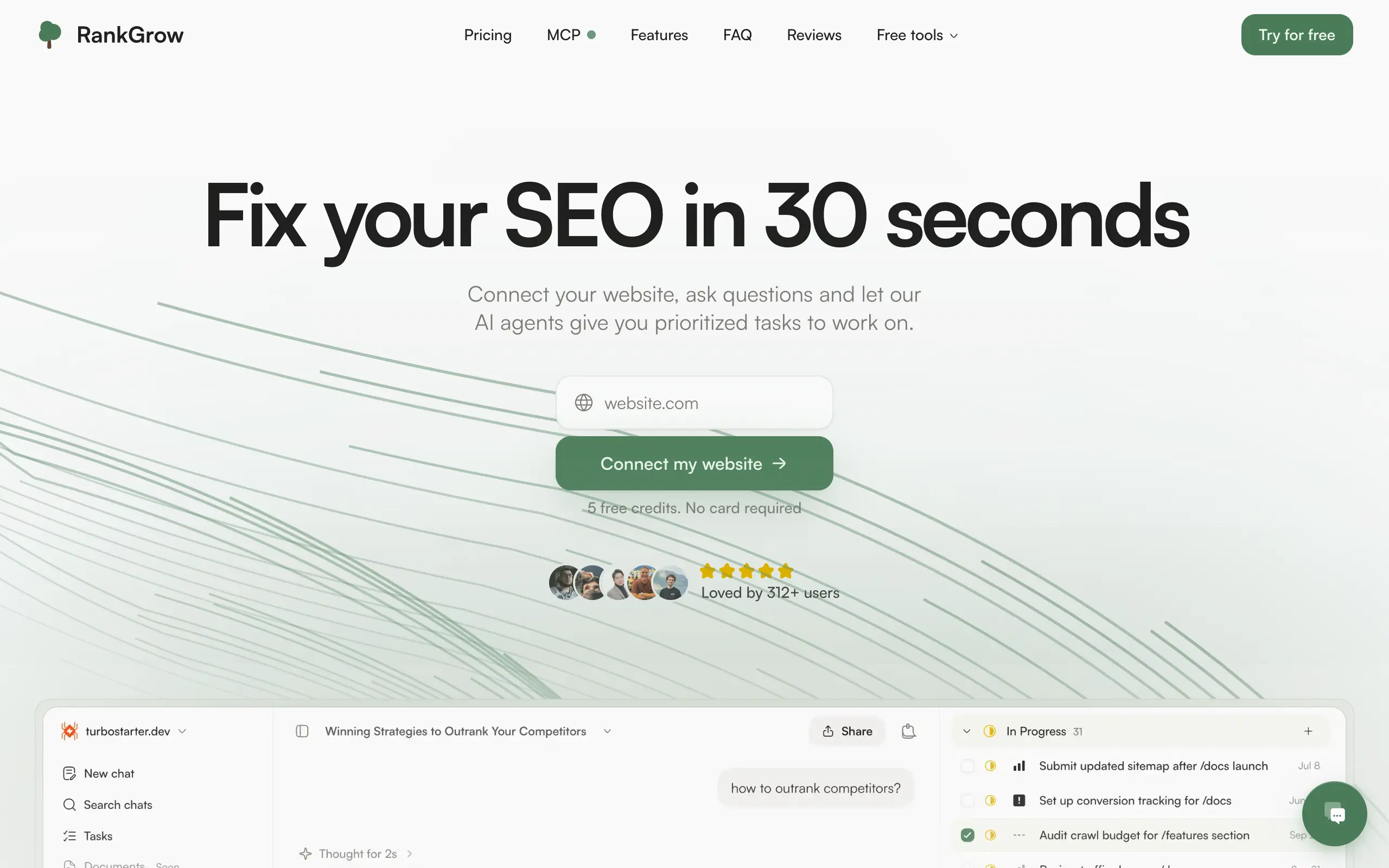
RankGrow
Fix your SEO with AI agents - connect Search Console, get prioritized tasks, and grow organic traffic 📈
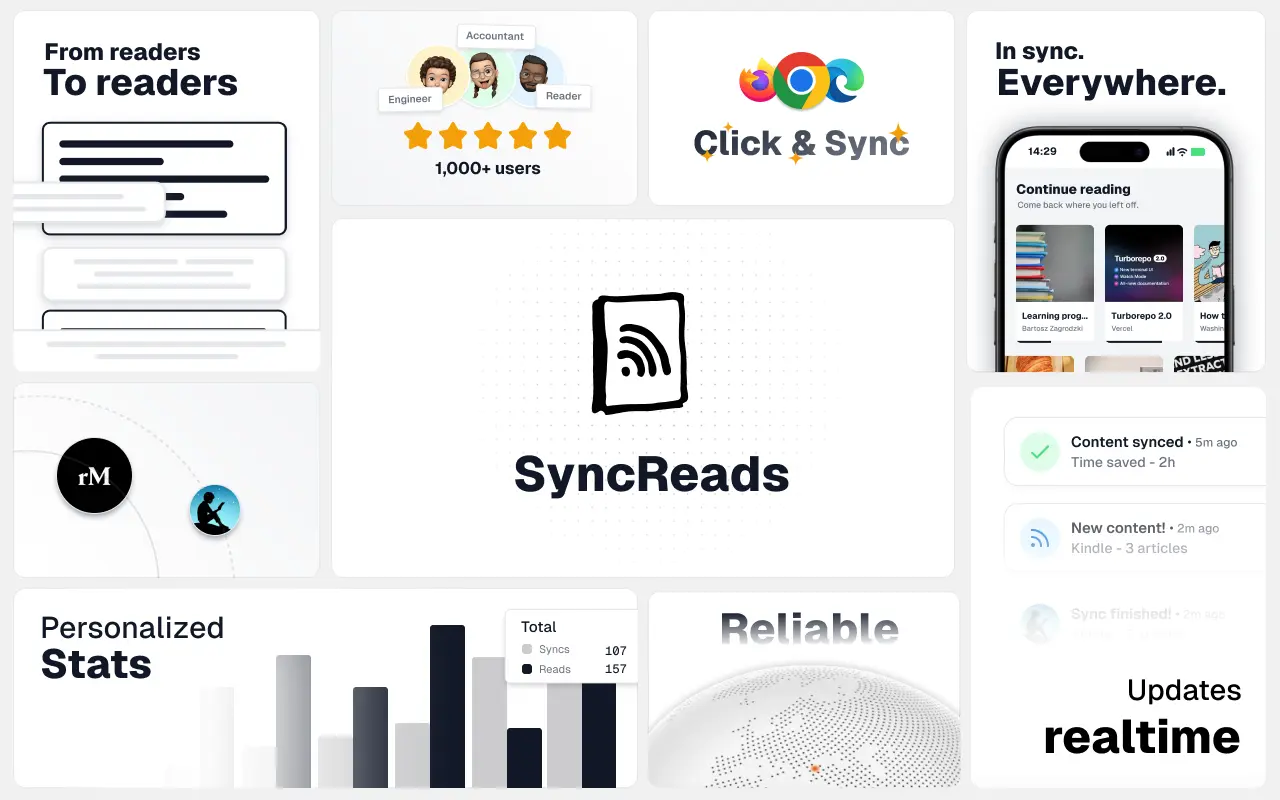
SyncReads
Sync your favorite content for distraction-free reading, save time and replace multiple apps. Anytime, anywhere 🔄
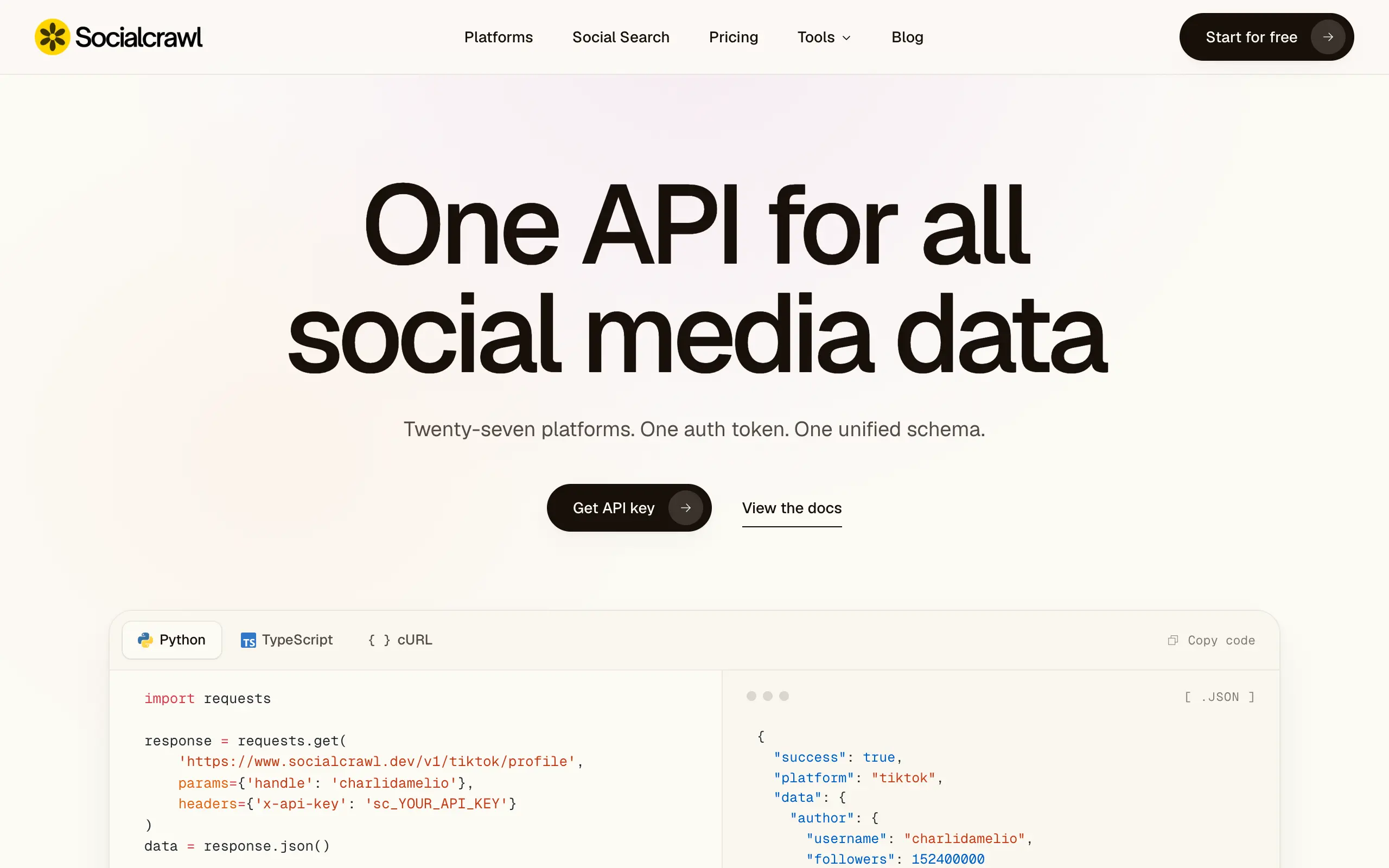
Socialcrawl
Get clean, structured data from 21 platforms like TikTok, Instagram, and YouTube with a single request 📊
Statiko
Monitor any Telegram channel in real time - track posts, edits, deletions, and growth with AI recaps 📡
Shibui
AI website builder - describe your business, pick a niche template, edit by chatting, and publish instantly ✨
Pro Service
Find verified home service professionals, compare quotes, and pay securely through escrow - built for Brazilians across the US 🏠
RankGrow
Fix your SEO with AI agents - connect Search Console, get prioritized tasks, and grow organic traffic 📈
SyncReads
Sync your favorite content for distraction-free reading, save time and replace multiple apps. Anytime, anywhere 🔄
Socialcrawl
Get clean, structured data from 21 platforms like TikTok, Instagram, and YouTube with a single request 📊
Statiko
Monitor any Telegram channel in real time - track posts, edits, deletions, and growth with AI recaps 📡
Shibui
AI website builder - describe your business, pick a niche template, edit by chatting, and publish instantly ✨
Pro Service
Find verified home service professionals, compare quotes, and pay securely through escrow - built for Brazilians across the US 🏠
RankGrow
Fix your SEO with AI agents - connect Search Console, get prioritized tasks, and grow organic traffic 📈
SyncReads
Sync your favorite content for distraction-free reading, save time and replace multiple apps. Anytime, anywhere 🔄
Socialcrawl
Get clean, structured data from 21 platforms like TikTok, Instagram, and YouTube with a single request 📊
Statiko
Monitor any Telegram channel in real time - track posts, edits, deletions, and growth with AI recaps 📡
Shibui
AI website builder - describe your business, pick a niche template, edit by chatting, and publish instantly ✨
Pro Service
Find verified home service professionals, compare quotes, and pay securely through escrow - built for Brazilians across the US 🏠
RankGrow
Fix your SEO with AI agents - connect Search Console, get prioritized tasks, and grow organic traffic 📈
SyncReads
Sync your favorite content for distraction-free reading, save time and replace multiple apps. Anytime, anywhere 🔄
Socialcrawl
Get clean, structured data from 21 platforms like TikTok, Instagram, and YouTube with a single request 📊
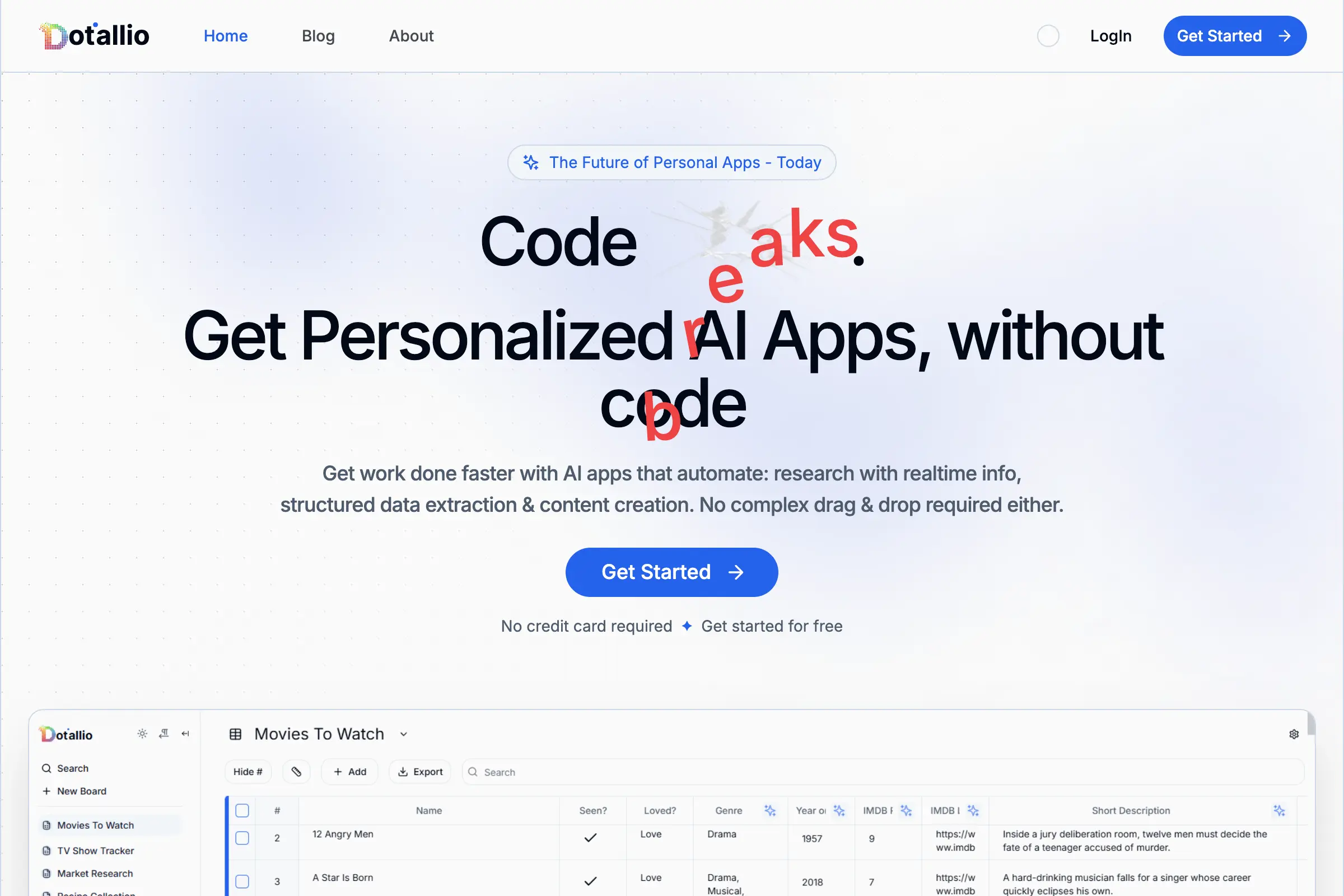
Dotallio
Personalized AI apps that automate research, data extraction, and content creation without code 🤖

Talk to Santa
Enjoy a magical live video chat or receive a unique AI-generated video greeting from Santa Claus 🎅

pozywka.pl
Scalable blog for food journalist, focused on performance and user experience 🌭
zagrodzki.me
Personal blog and portfolio of Bart Zagrodzki, where he shares his knowledge and work 💼

TurboStarter
Ship your startup everywhere. In minutes.
HTML to Markdown
Convert HTML to Markdown with ease, directly in your browser 📄
Dotallio
Personalized AI apps that automate research, data extraction, and content creation without code 🤖
Talk to Santa
Enjoy a magical live video chat or receive a unique AI-generated video greeting from Santa Claus 🎅
pozywka.pl
Scalable blog for food journalist, focused on performance and user experience 🌭
zagrodzki.me
Personal blog and portfolio of Bart Zagrodzki, where he shares his knowledge and work 💼
TurboStarter
Ship your startup everywhere. In minutes.
HTML to Markdown
Convert HTML to Markdown with ease, directly in your browser 📄
Dotallio
Personalized AI apps that automate research, data extraction, and content creation without code 🤖
Talk to Santa
Enjoy a magical live video chat or receive a unique AI-generated video greeting from Santa Claus 🎅
pozywka.pl
Scalable blog for food journalist, focused on performance and user experience 🌭
zagrodzki.me
Personal blog and portfolio of Bart Zagrodzki, where he shares his knowledge and work 💼
TurboStarter
Ship your startup everywhere. In minutes.
HTML to Markdown
Convert HTML to Markdown with ease, directly in your browser 📄
Dotallio
Personalized AI apps that automate research, data extraction, and content creation without code 🤖
Talk to Santa
Enjoy a magical live video chat or receive a unique AI-generated video greeting from Santa Claus 🎅
pozywka.pl
Scalable blog for food journalist, focused on performance and user experience 🌭
zagrodzki.me
Personal blog and portfolio of Bart Zagrodzki, where he shares his knowledge and work 💼
TurboStarter
Ship your startup everywhere. In minutes.
HTML to Markdown
Convert HTML to Markdown with ease, directly in your browser 📄
Omichat
Chat with 50+ AI models, including ChatGPT and Claude, in one place - switch models anytime without losing context 🤖
Claude Fast
Supercharge your Claude Code with 6x effective context window and specialized AI agents 🤖

EmojAI
AI-powered emoji picker with smart, context-aware suggestions 🤖

Solohacker
Autonomous company launcher - AI agents work 24/7, escalate what matters, and you stay in control 🤖

BeRawi: Storytelling Coach
Practice storytelling daily with instant feedback to sound clearer, more engaging, and confident 🎤
Omichat
Chat with 50+ AI models, including ChatGPT and Claude, in one place - switch models anytime without losing context 🤖
Claude Fast
Supercharge your Claude Code with 6x effective context window and specialized AI agents 🤖
EmojAI
AI-powered emoji picker with smart, context-aware suggestions 🤖
Solohacker
Autonomous company launcher - AI agents work 24/7, escalate what matters, and you stay in control 🤖
BeRawi: Storytelling Coach
Practice storytelling daily with instant feedback to sound clearer, more engaging, and confident 🎤
Omichat
Chat with 50+ AI models, including ChatGPT and Claude, in one place - switch models anytime without losing context 🤖
Claude Fast
Supercharge your Claude Code with 6x effective context window and specialized AI agents 🤖
EmojAI
AI-powered emoji picker with smart, context-aware suggestions 🤖
Solohacker
Autonomous company launcher - AI agents work 24/7, escalate what matters, and you stay in control 🤖
BeRawi: Storytelling Coach
Practice storytelling daily with instant feedback to sound clearer, more engaging, and confident 🎤
Omichat
Chat with 50+ AI models, including ChatGPT and Claude, in one place - switch models anytime without losing context 🤖
Claude Fast
Supercharge your Claude Code with 6x effective context window and specialized AI agents 🤖
EmojAI
AI-powered emoji picker with smart, context-aware suggestions 🤖
Solohacker
Autonomous company launcher - AI agents work 24/7, escalate what matters, and you stay in control 🤖
BeRawi: Storytelling Coach
Practice storytelling daily with instant feedback to sound clearer, more engaging, and confident 🎤

Connect with like-minded people
Join our community to get feedback, support, and grow together with 1,000+ builders on board, let's ship it!
Join usShip your startup everywhere. In minutes.
Don't burn tokens on setup and start building features on day one.