ForgeName
Generate memorable startup and brand names from your audience, positioning, and tone. Check domain availability and compare shortlisted ideas in one workspace.
Why an AI startup and brand name generator has room to win
Naming a company sounds simple until a founder has to do it. The name needs to be memorable, easy to say, relevant to the product, appropriate for the intended audience, and flexible enough to grow with the business. It also needs to be usable: a promising idea can quickly become impractical if its domain is unavailable, its spelling is confusing, or a similar brand already operates in the same category.
ForgeName is an AI startup and brand name generator designed to make that process more structured. A user describes their audience, positioning, and preferred tone; the product generates tailored name ideas, checks domain availability, and gives users a workspace to compare a shortlist.
That combination matters. A basic name generator produces options. A useful naming product helps users make a decision.
Founders searching for an AI business name generator, startup name generator, or brand name generator with domain availability are often looking for more than a list of clever words. They want a practical way to move from an unclear brief to a confident shortlist. ForgeName can serve that intent by connecting creative exploration with lightweight evaluation and organization.
The opportunity is not to promise a perfect name or replace legal advice. It is to make an ambiguous, high-stakes creative task easier to approach, iterate on, and share.
Who ForgeName should serve
The strongest early positioning will come from serving a defined audience exceptionally well rather than trying to name everything for everyone. ForgeName can support multiple types of users, but its onboarding, templates, and examples should initially focus on people with a clear and recurring need.
Founders preparing to launch
Early-stage founders are an obvious initial audience. They may be naming a startup before building a website, preparing a pitch, or testing a product concept. Many are working with limited time and may not have access to an agency or naming consultant.
Their needs typically include:
- Generating names that reflect a specific product and customer
- Exploring distinct naming directions rather than receiving repetitive variations
- Finding names that are easy to pronounce, spell, and remember
- Checking whether a relevant domain appears available
- Sharing a shortlist with co-founders or advisors
- Keeping track of why a name was selected or rejected
For this group, ForgeName should feel like a guided naming process, not a novelty prompt box.
Solo builders and indie hackers
Solo founders often develop and test ideas quickly. They may need a temporary project name one week and a more durable brand name the next. They value speed, a simple interface, and the ability to revisit or export saved ideas.
A focused workflow can help them explore multiple concepts without losing their earlier work. For example, users could create separate naming projects for a product, newsletter, community, or parent company.
Freelancers and naming professionals
Brand strategists, copywriters, and freelance designers can use ForgeName as a research and ideation assistant. They may need to generate directions for client workshops, explore naming territories, or organize options before a presentation.
This audience has different expectations from a first-time founder. They are likely to value:
- Multiple client workspaces
- Clear project notes and naming criteria
- Shareable review links
- Exportable shortlists
- The ability to record feedback and revisions
- Controls for excluding unwanted words, themes, or styles
Professional users may also be more willing to pay for collaboration and workflow features than for a larger volume of generated names.
Small businesses and product teams
Existing businesses often name products, services, campaigns, internal tools, or new divisions. Their challenge may be less about inventing a company identity and more about finding a name that fits an established brand system.
ForgeName could support these users with reusable brand context, such as preferred tone, words to avoid, audience descriptions, and existing naming conventions. That context would make repeat projects more relevant and reduce the need to start from scratch.
A practical initial customer profile
A strong first customer profile could be a founder or small team that is actively naming a digital product and has not yet committed to a final identity. This group has a clear trigger event, understands the value of a usable domain, and can give direct feedback about whether generated ideas are relevant.
ForgeName should validate this audience through interviews and real project observations. Ask users how they currently name products, what they find frustrating, which tools they already use, and what would make them trust a suggested name. Those conversations are more useful than assuming that every person who likes creative tools will become a paying customer.
The market opportunity and the gap ForgeName can address
The broad naming market includes naming agencies, brand consultants, domain registrars, search engines, spreadsheets, and free online generators. Each serves part of the problem, but many users must move between several tools to complete a decision.
A typical process can look like this:
- Write a short description of the business.
- Brainstorm words and naming directions.
- Ask an AI assistant or use a generic generator for ideas.
- Search the web to see whether similar companies exist.
- Check domain availability with a registrar.
- Paste promising options into a spreadsheet.
- Ask co-founders or colleagues to vote.
- Repeat the process when the first shortlist does not work.
That process creates a product opportunity: bring the core activities of ideation, domain discovery, comparison, and collaboration into one focused workspace.
Where existing approaches fall short
A generic generator may return many names but provide little context about why each name fits the brief. Some tools emphasize catchy combinations, while ignoring the audience, product category, brand tone, or pronunciation. The resulting list may feel creative but not actionable.
An AI chat interface can be flexible, but users often have to write and refine prompts themselves. It may not preserve a structured shortlist, offer consistent evaluation criteria, or connect ideas to domain checks.
A domain registrar can tell users whether a domain appears available, but it is usually optimized for domain transactions rather than brand exploration. It may not help a founder clarify what kind of name to seek in the first place.
A naming agency can provide strategic depth and human judgment, but it may be outside the budget or timeline of an early-stage founder. ForgeName does not need to replace that service. It can serve users who want a more affordable first pass, a better-prepared brief, or a structured tool to support an internal decision.
The specific gap to target
The clearest gap is not “AI can generate names.” That capability is easy to reproduce and unlikely to be a durable advantage by itself.
The stronger opportunity is to make name selection more informed and organized. ForgeName can connect a structured brief to a diverse set of naming directions, then help users evaluate and save options without presenting uncertain domain or legal information as a guarantee.
That positioning is more credible and more useful than claiming the product can find a perfect name automatically.
How to validate demand
Before investing heavily in features, test whether users experience the problem strongly enough to adopt a dedicated workflow.
Useful validation steps include:
- Interview founders who have named a product within the last year.
- Observe how they currently generate, check, and compare names.
- Ask what causes them to abandon a name they initially like.
- Test landing page messaging around the complete workflow, not just AI generation.
- Invite a small group to use a concierge prototype, where parts of the process are handled manually.
- Measure whether users return to their shortlist or invite collaborators.
- Ask whether domain checks, exports, or team review would justify a paid plan.
For industry statistics, market sizing, or claims about startup formation and domain adoption, cite current, credible sources such as government business registration data, reputable industry research, or clearly documented domain-industry reports. Avoid using broad statistics that do not directly support the product’s target market.
Core ForgeName features and how they solve the problem
ForgeName’s product experience should guide users through a sequence: clarify the brief, explore directions, evaluate candidates, and share or export a shortlist. Each feature should support that progression.
1. A structured naming brief
The quality of generated ideas depends heavily on the information the user provides. Instead of relying on one open-ended prompt, ForgeName can guide users through a short brief that captures:
- What the business or product does
- Who it serves
- The problem it solves
- The desired brand personality
- Preferred naming styles
- Words, meanings, or associations to avoid
- Relevant competitors or category references
- Whether the name should be descriptive, abstract, invented, or compound
The brief should be quick to complete, with optional advanced fields for users who want more control. Examples can help users explain tone without requiring branding expertise. A user might select “calm and dependable” or “bold and playful,” then add a sentence about what those terms mean for their audience.
A saved brief becomes reusable context. If a user later generates names for a related product, they can adapt the existing project rather than repeat the setup.
2. Distinct naming directions
A generator should not produce twenty variations of the same naming pattern and call that variety. ForgeName can present several clearly labeled naming directions, such as:
- Descriptive names that explain what a product does
- Suggestive names that hint at a benefit or feeling
- Invented names designed for distinctiveness
- Compound names that combine familiar concepts
- Founder-led or personal names
- Abstract names that leave room for future expansion
These labels help users see the trade-offs in different approaches. Descriptive names can be immediately understandable but may be less distinctive. Abstract names can provide flexibility but may require more brand-building.
For each suggestion, ForgeName can include a concise rationale explaining the connection to the user’s brief. The explanation should be presented as an aid to judgment, not as proof that the name is strategically correct.
3. Useful controls for iteration
Users need more than a “generate again” button. Helpful controls could include:
- More options in a selected naming direction
- Shorter or simpler names
- Names that are easier to pronounce
- A more serious, playful, premium, or technical tone
- Exclusion of specific words or themes
- Names suited to a particular audience or product category
- A preference for real words, coined words, or combinations
Iteration should preserve what the user has already saved. If a user selects a few favorites, a new generation should not erase the shortlist or make the project feel unpredictable.
4. Domain availability checks with clear caveats
Domain availability is a high-value feature because a name’s practical use often depends on its web presence. ForgeName can let users check selected names against supported domain extensions and display the result within the project.
However, domain availability is time-sensitive. A result can change after the check, and an available domain does not establish that a name is legally safe or free of conflicting brands. The product should explain the limits of its checks in plain language.
A trustworthy interface should distinguish among:
- A domain that appears available at the time of the check
- A domain that appears registered
- A check that failed or returned uncertain data
- A domain that requires the user to verify directly with a registrar
ForgeName should avoid implying that a domain is reserved unless the product has actually completed a supported reservation flow. It should also avoid presenting domain availability as trademark clearance.
5. A shortlist and comparison workspace
The workspace is central to ForgeName’s value proposition. Users should be able to save names, remove them, add notes, compare options, and return to the project later.
Useful comparison fields could include:
- Naming direction
- Fit with the audience
- Fit with the selected tone
- Ease of spelling and pronunciation
- Domain check status and timestamp
- User notes
- Feedback from collaborators
A simple ranking or rating system can help users focus. The product should not suggest that one numerical score replaces judgment. Instead, it can provide a consistent way for a team to record preferences and surface disagreements.
6. Collaboration and sharing
Naming can be subjective, so feedback from co-founders, clients, or teammates matters. ForgeName can support collaboration through shareable project views, comments, reactions, and voting.
A lightweight shared link may be sufficient for an initial version. More advanced team plans could include roles, edit permissions, feedback deadlines, and multiple client projects.
When gathering feedback, the interface should encourage useful input. A question such as “Which option best fits the audience, and why?” can produce more actionable comments than a simple popularity vote.
7. Export and next-step guidance
Users should be able to take their work with them. A basic export could include the saved names, rationales, notes, domain check status, and a reminder to conduct independent checks.
ForgeName can also provide a responsible next-step checklist:
- Search for similar brands in the relevant market.
- Check applicable trademark databases.
- Confirm domain details directly with a registrar.
- Test the name with representative customers.
- Review pronunciation, spelling, and cultural meaning in intended markets.
- Consult qualified legal counsel when appropriate.
This makes the product more trustworthy and helps users understand where AI ideation ends and professional review begins.
Recommended technology stack for ForgeName
A practical stack should support rapid iteration without making the first release unnecessarily complex. ForgeName does not need a large distributed architecture to test whether its core workflow is valuable.
Front end
React is a suitable foundation for a responsive application with interactive forms, project views, and shortlist controls. A framework such as Next.js can support routing, server-rendered pages, and server-side application logic where needed.
Tailwind CSS can speed up consistent interface development, particularly for a small team. The trade-off is that utility-heavy markup can become difficult to maintain if component boundaries and design tokens are not established early. A small design system should define spacing, typography, colors, and interaction states.
Backend and data storage
A relational database such as PostgreSQL fits the product’s core data well. Users, organizations, projects, briefs, generated name candidates, domain checks, notes, and votes all have clear relationships.
A straightforward data model might include:
- Users for account and preference information
- Projects for each naming effort
- Briefs for the user’s audience, positioning, and tone
- Candidates for generated names and explanations
- Checks for domain lookup results and timestamps
- Feedback for comments, reactions, and votes
The primary trade-off is between using a managed backend service for speed and assembling infrastructure directly for greater control. Early-stage teams should generally favor the approach that makes it easiest to ship secure authentication, backups, and database migrations reliably.
AI generation layer
The generation layer should use a model provider behind a server-side abstraction rather than binding the entire product to a single model’s response format. This makes it easier to compare quality, cost, latency, and reliability across providers.
A robust pipeline can:
- Validate and normalize the user’s brief.
- Generate candidates across selected naming directions.
- Apply structural checks, such as length or prohibited terms.
- Deduplicate similar outputs.
- Store the prompt version and model metadata needed for evaluation.
- Return candidates with concise, consistent explanations.
Use structured output where supported, and validate every response before showing it to the user. AI outputs can be malformed, repetitive, or inappropriate. The application should have a safe fallback path for failed generations and a clear message when a request must be retried.
The product should also manage costs through sensible limits, caching where appropriate, and model selection based on task complexity. Do not assume that the most expensive model will produce the most useful brand names. Run evaluations against real briefs and compare outputs with human preference and downstream usability.
Domain data integration
Domain availability requires a dependable source and careful handling of freshness. ForgeName should choose an API or provider based on supported extensions, rate limits, response quality, cost, and contractual terms.
The interface should record when a check occurred and avoid treating cached results as current indefinitely. If a lookup fails, the product should report that it could not confirm the result rather than guessing.
Billing and product analytics
A payment provider such as Stripe can support recurring subscriptions and one-time purchases. Keep billing logic on the server and avoid relying on client-side state to determine access.
Analytics should focus on product behavior that helps improve the workflow, such as:
- Brief completion rate
- Generation-to-save conversion
- Number of candidates saved per project
- Domain checks per shortlist
- Share-link usage
- Return visits to an existing project
- Upgrade and cancellation behavior
Collect only the data needed to improve the product. Be transparent about how project content is used, especially if user briefs or generated names are processed by external AI providers.
Build-versus-buy decisions
The early technical goal is to learn whether users value the workflow, not to build every infrastructure layer from scratch.
A sensible first release can use managed authentication, a managed database, a third-party AI provider, and an established billing service. The main architectural boundary worth protecting is the generation and domain-check abstraction. Those integrations are more likely to change as the team learns about quality, cost, and coverage.
Monetization strategies for an AI brand name generator
ForgeName can use several pricing models, but the best approach should align with how often users name products and which features create the greatest value.
Freemium with paid projects
A free tier can let users complete one project, explore a limited number of directions, and save a small shortlist. Paid plans can unlock more projects, additional generations, domain checks, exports, and collaboration.
This model supports product-led discovery, but the free experience must be genuinely useful. If users cannot reach a meaningful shortlist without upgrading, the product may feel like a demo rather than a tool.
Subscription plans for frequent users
Monthly or annual subscriptions could suit freelancers, studios, and product teams that name projects repeatedly. Paid features might include:
- Multiple client workspaces
- Shared review links
- Collaboration and permissions
- Reusable brand profiles
- Higher generation limits
- Advanced exports
- Team feedback controls
Subscriptions are less compelling for a founder who only needs to name one startup. ForgeName can address that mismatch with one-time project purchases or a time-limited project plan.
One-time project purchase
A fixed-price project package could provide a complete naming workspace for a set period or a defined amount of usage. This pricing is easy to understand and may fit occasional users better than a recurring subscription.
The trade-off is that revenue may be less predictable, and customers may compare the price directly with free AI tools. The paid offer should emphasize the complete workflow, saved shortlist, domain research tools, and collaboration rather than simply selling more generated names.
Professional and agency plans
A higher-priced plan can target naming consultants and agencies that manage multiple clients. The value comes from organization, client review, reusable templates, and repeat usage—not just increased AI limits.
Before developing extensive agency features, validate whether professionals actually want to run client workflows inside the product. Their current habits may rely on presentation tools, documents, or established creative processes that ForgeName must complement rather than replace.
Carefully considered referrals
A domain registrar referral relationship could create additional revenue, but it introduces trust and disclosure concerns. ForgeName should not rank names or domain suggestions based on undisclosed commercial incentives. If referral links are used, disclose the relationship clearly and keep naming recommendations independent from potential commissions.
Competitive advantage and positioning
ForgeName’s competitive advantage should be expressed as a combination of product choices rather than a single claim about its AI model.
| Capability | Generic AI chat | Basic name generator | Domain registrar | ForgeName opportunity |
|---|---|---|---|---|
| Structured audience and positioning brief | Partial | Usually limited | No | Core workflow |
| Multiple naming directions | Prompt-dependent | Sometimes | No | Guided exploration |
| Saved shortlist and comparison | Manual | Limited | No | Workspace-first design |
| Domain checks in context | Manual | Varies | Yes | Connect checks to saved names |
| Team feedback | External tools | Rare | Limited | Collaboration layer |
| Clear limits on legal certainty | Depends on prompt | Varies | Usually separate | Trust-centered guidance |
The table describes a product positioning opportunity, not a claim that every competing product lacks these capabilities. ForgeName should revisit this comparison through ongoing competitor research and direct product testing.
The strongest potential USP
A concise positioning statement could be:
ForgeName helps founders and small teams turn a brand brief into a practical, shareable shortlist—with AI-generated naming directions and domain checks in one workspace.
This distinguishes ForgeName from tools that only generate names. It also avoids promising trademark clearance, guaranteed availability, or a perfect result.
What could become defensible over time
The underlying AI model is not necessarily a moat. More durable advantages could come from:
- A well-designed workflow that users return to
- High-quality naming briefs and category-specific templates
- Useful evaluation criteria developed from user research
- Collaboration features that bring multiple stakeholders into a project
- Reliable domain-check integrations and transparent status information
- A reputation for relevant suggestions and honest limitations
- An opt-in feedback loop that helps improve generation quality
Any learning system based on user data should be designed with privacy and consent in mind. Do not use private project briefs for model training without clear disclosure and an appropriate user choice.
Risks and how to mitigate them
A naming product operates in an area where creativity, availability, and legal risk overlap. Clear product boundaries and careful wording are essential.
Repetitive or low-quality suggestions
AI models can produce generic names, awkward spellings, or variations that feel superficially different but share the same pattern.
Mitigation: Generate across defined naming directions, deduplicate similar candidates, test outputs against a library of representative briefs, and allow users to refine tone and constraints. Treat user saves, skips, and revisions as product feedback, not as a guarantee of objective quality.
False confidence about domain availability
A domain check may become outdated or return incomplete information. A user may mistake “available” for “secured.”
Mitigation: Timestamp results, explain that availability can change, provide direct next steps, and never imply that a domain is reserved unless a supported purchase or reservation has actually been completed.
Trademark and brand conflicts
A domain may be available while a similar brand already exists. Conversely, a name may be legally usable in one market but problematic in another. An AI-generated result is not legal clearance.
Mitigation: Make this limitation visible during the workflow and in exports. Encourage users to search relevant trademark databases, investigate their market, and consult qualified counsel when the decision has significant business consequences.
Cultural or language issues
A name that sounds appealing in one language may have an unintended meaning or pronunciation in another. AI can miss regional context, slang, and cultural associations.
Mitigation: Ask users to specify launch markets and languages, flag that automated suggestions require local review, and avoid claiming multilingual suitability without evaluation by knowledgeable speakers.
Privacy and confidentiality
A founder may enter unreleased product details or confidential positioning into a naming brief.
Mitigation: Explain which service providers process user inputs, minimize stored data, provide project deletion controls, and document retention practices clearly. Review AI provider settings and applicable privacy obligations before launch.
Overreliance on AI
Some users may expect the tool to make a final strategic or legal decision. Others may reject promising names simply because an automated score is low.
Mitigation: Present suggestions as options, explain trade-offs, and let users apply their own judgment. Use scores only as transparent organizational aids, not as authoritative measures of brand value.
High generation costs and weak retention
A user may generate many options once and never return. Heavy usage can also create costs before the business has validated willingness to pay.
Mitigation: Track cost per active project, set reasonable usage limits, and test one-time project pricing alongside subscriptions. Improve return use through saved projects, collaboration, and helpful progress rather than artificial engagement loops.
Competitive imitation
Name generation is easy to add to broader AI products. Competitors can reproduce basic features quickly.
Mitigation: Build around the end-to-end process, user trust, and specialized workflows. Learn which decision points create the most value and make those parts of the experience excellent.
A practical implementation roadmap
ForgeName should launch in stages. Each stage should reduce uncertainty before the team invests in more complex features.
Phase 1: Validate the problem and message
Interview founders, freelancers, and small product teams who have recently named a business or product. Focus on actual behavior rather than hypothetical interest.
Test whether users respond more strongly to:
- AI-powered idea generation
- Domain availability checks
- A guided naming brief
- A collaborative shortlist
- A complete naming workflow
Create a landing page that explains the product accurately and invites users to join a research or beta group. Avoid claiming legal clearance or guaranteed domain availability.
Phase 2: Build a focused MVP
The first product should support one clear journey:
- Create a naming project.
- Complete a short brief.
- Generate several distinct directions.
- Save and compare candidates.
- Check selected domains.
- Share or export a shortlist.
Keep onboarding short and make it easy to edit the brief. The initial product does not need a complex scoring engine, extensive agency controls, or a large library of templates.
Phase 3: Evaluate generation quality
Create a test set of varied naming briefs and review generated results for relevance, diversity, clarity, and potential issues. Include human review from people familiar with branding and the target categories.
Track practical outcomes, including whether users save names, whether they revise the brief, and whether collaborators can understand the rationale. A high number of generated candidates is not a success metric if users find few of them useful.
Phase 4: Add reliable domain checks
Integrate a domain data provider and clearly communicate what each result means. Store check timestamps and support failure states. Test how the product behaves when data is unavailable, delayed, or ambiguous.
Phase 5: Add collaboration and paid plans
Once users demonstrate that they are returning to projects or sharing shortlists, test collaboration features and pricing. Start with a simple share link or voting flow before building complex organization management.
Compare a subscription model with one-time project pricing. The right choice depends on observed usage patterns, not on which model is more common among SaaS companies.
Phase 6: Improve using evidence
Review product analytics, support requests, and user interviews regularly. Prioritize improvements that reduce friction in the naming decision, such as stronger brief guidance, better candidate diversity, clearer domain status, or easier stakeholder feedback.
How to build ForgeName efficiently
Speed matters, but a rushed foundation can make it harder to iterate on authentication, billing, project data, and team features. Use a starter that fits the product’s expected needs, then keep the first version deliberately small.
TurboStarter can help teams begin with a SaaS foundation rather than assembling every common application layer from scratch. The key is to preserve time for the product-specific work that differentiates ForgeName: the naming brief, generation quality, shortlist workflow, domain checks, and clear user guidance.
Before choosing any starter or framework, confirm that its conventions suit the team’s deployment, security, and maintenance requirements. A faster initial setup is useful only if the team can understand and operate the resulting application.
Frequently asked questions
An AI startup name generator uses a user’s description, audience, positioning, and style preferences to suggest possible business or product names. A stronger product also helps users organize, compare, and check those suggestions.
ForgeName is designed around the full naming workflow. It combines a structured brief, multiple naming directions, domain checks, and a shortlist workspace so users can evaluate ideas instead of receiving an unorganized list.
No. Domain availability and AI-generated suggestions do not establish trademark rights or legal clearance. Users should conduct appropriate research in the markets where they plan to operate and consult qualified legal counsel when needed.
The answer should come from customer behavior. Subscriptions may fit agencies and teams that name products repeatedly, while a one-time project plan may better suit founders who only need to name one business.
Conclusion
ForgeName has a clear opportunity to make startup and brand naming less fragmented. Its strongest version will not compete on the sheer number of names generated. It will help users turn a thoughtful brief into a relevant, organized shortlist, check practical domain information, and gather feedback without overstating what AI or availability data can prove.
The best next step is to validate the workflow with people who are actively naming a product. Learn where they lose time, which decisions they struggle to make, and whether a shared workspace changes the outcome. Then build the smallest product that can support that process reliably.
More 🤖 AI Startup SaaS ideas
Discover more innovative ai startup SaaS ideas that are trending in 2026. Each idea is AI-generated with market validation and growth potential to help you find your next profitable venture faster than competitors.
Your competitors are building with TurboStarter
Below are some of the SaaS ideas that have been generated and built with our starter kit.
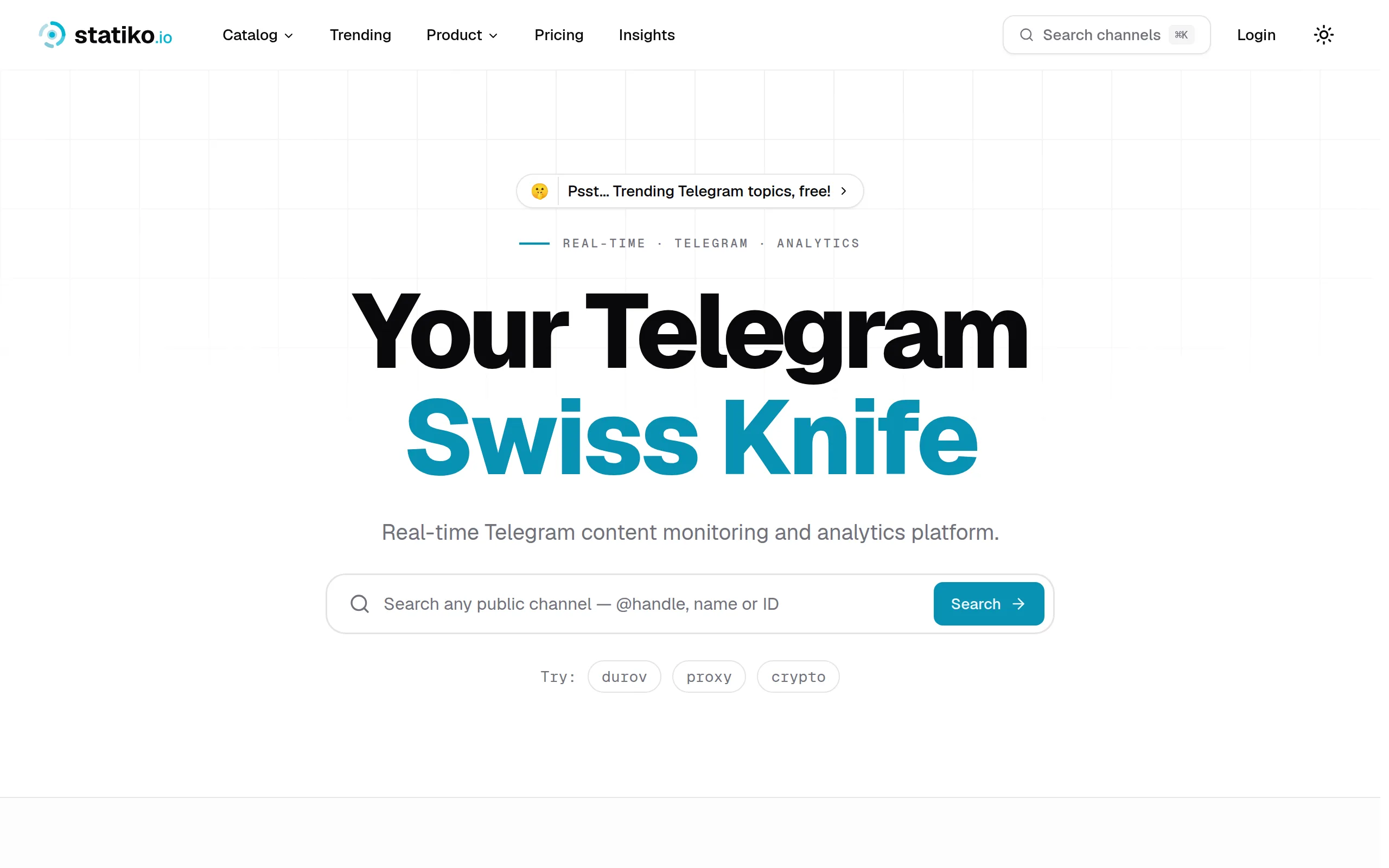
Statiko
Monitor any Telegram channel in real time - track posts, edits, deletions, and growth with AI recaps 📡
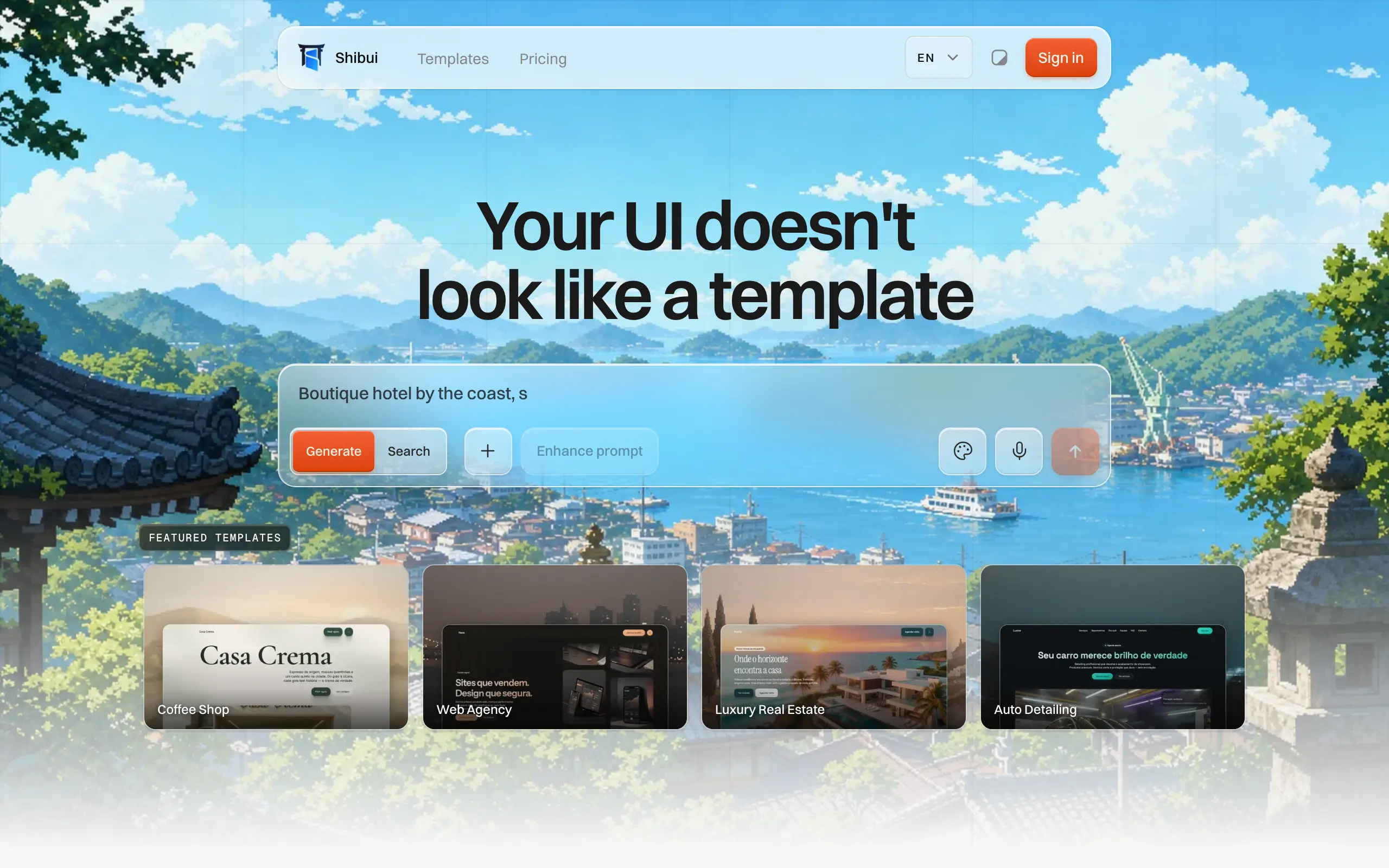
Shibui
AI website builder - describe your business, pick a niche template, edit by chatting, and publish instantly ✨

Pro Service
Find verified home service professionals, compare quotes, and pay securely through escrow - built for Brazilians across the US 🏠
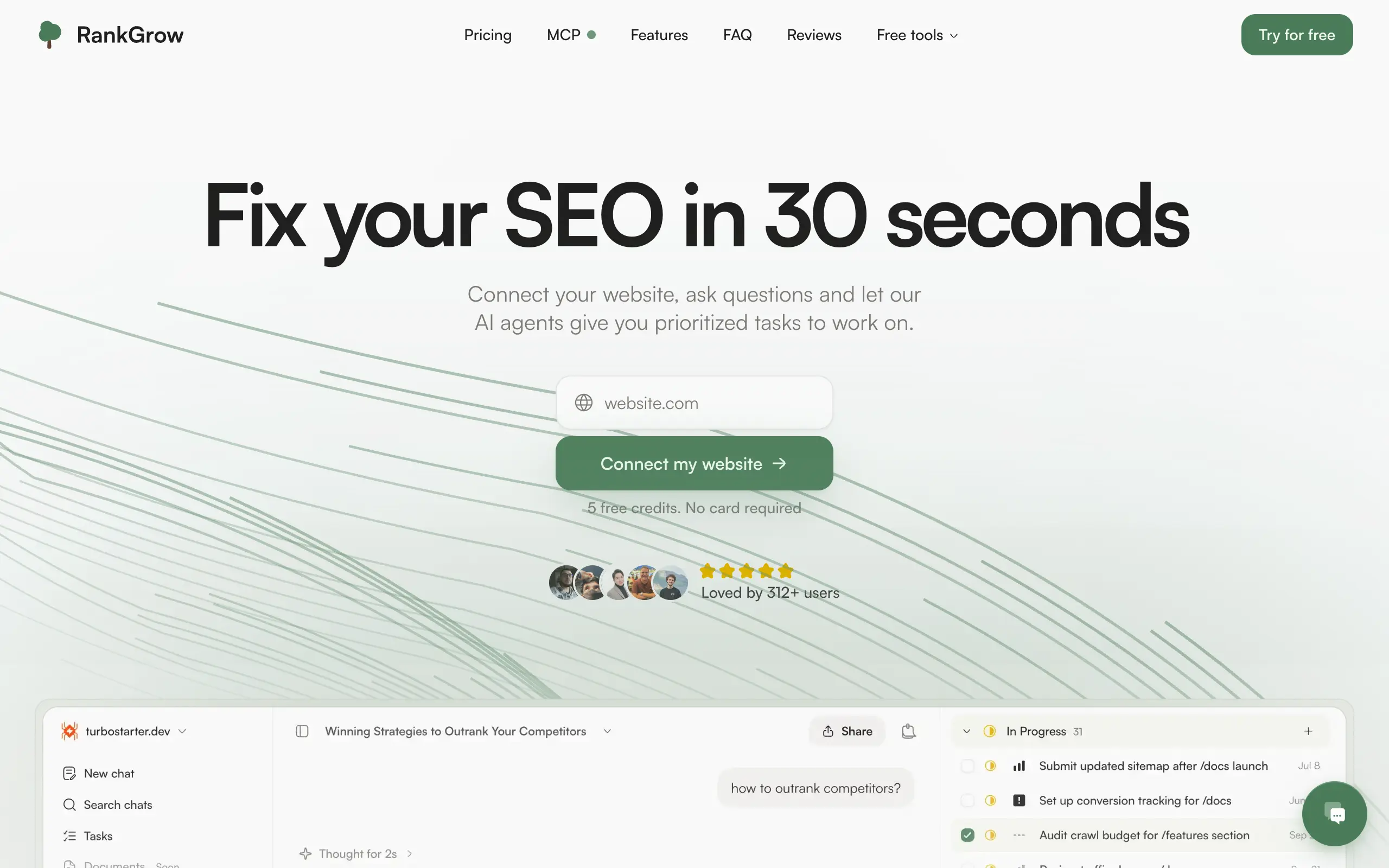
RankGrow
Fix your SEO with AI agents - connect Search Console, get prioritized tasks, and grow organic traffic 📈
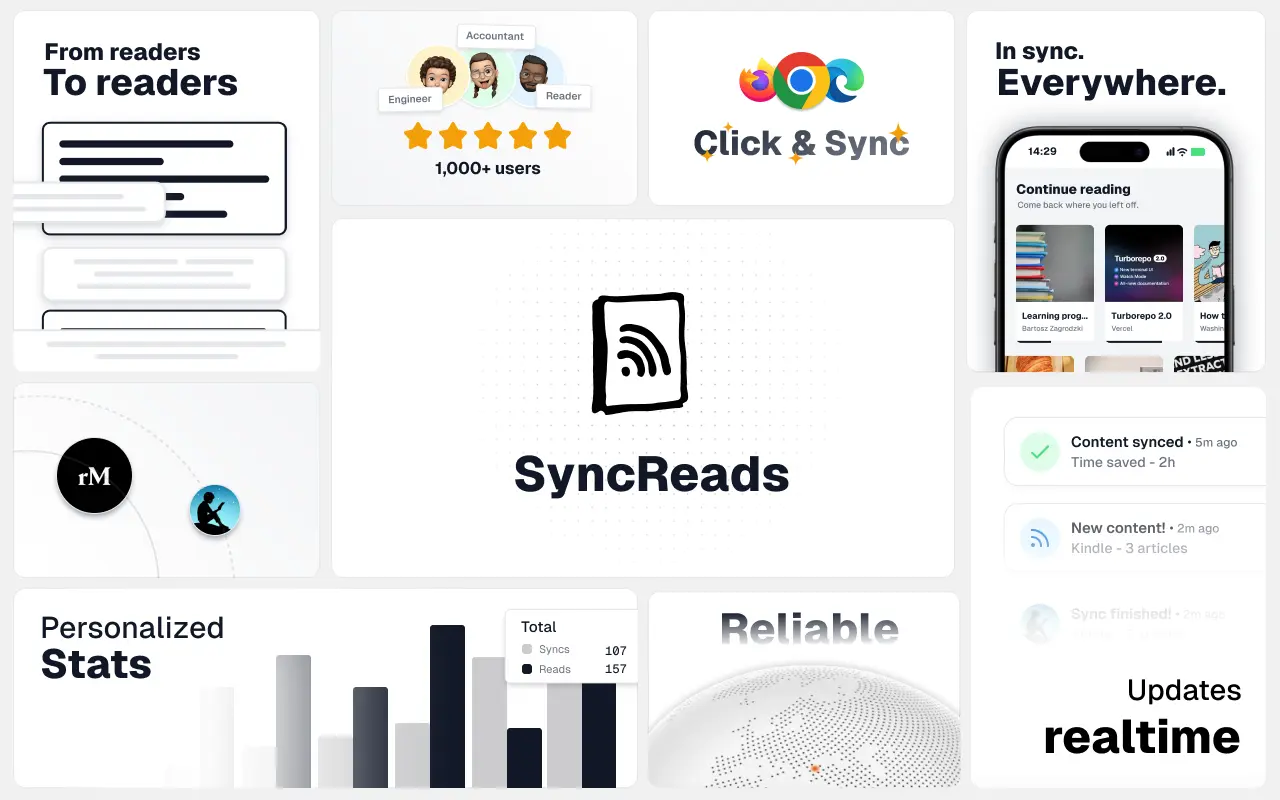
SyncReads
Sync your favorite content for distraction-free reading, save time and replace multiple apps. Anytime, anywhere 🔄
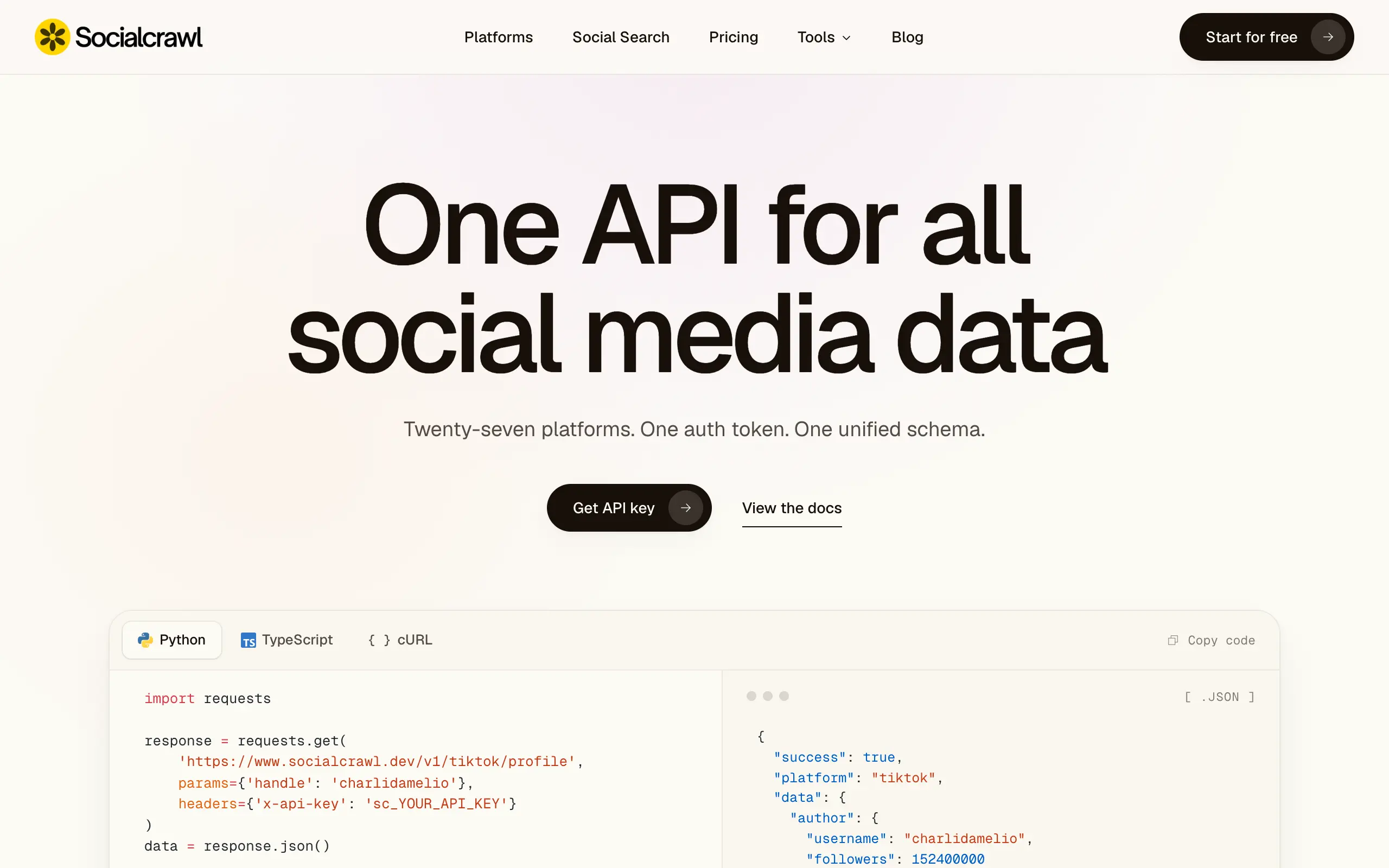
Socialcrawl
Get clean, structured data from 21 platforms like TikTok, Instagram, and YouTube with a single request 📊
Statiko
Monitor any Telegram channel in real time - track posts, edits, deletions, and growth with AI recaps 📡
Shibui
AI website builder - describe your business, pick a niche template, edit by chatting, and publish instantly ✨
Pro Service
Find verified home service professionals, compare quotes, and pay securely through escrow - built for Brazilians across the US 🏠
RankGrow
Fix your SEO with AI agents - connect Search Console, get prioritized tasks, and grow organic traffic 📈
SyncReads
Sync your favorite content for distraction-free reading, save time and replace multiple apps. Anytime, anywhere 🔄
Socialcrawl
Get clean, structured data from 21 platforms like TikTok, Instagram, and YouTube with a single request 📊
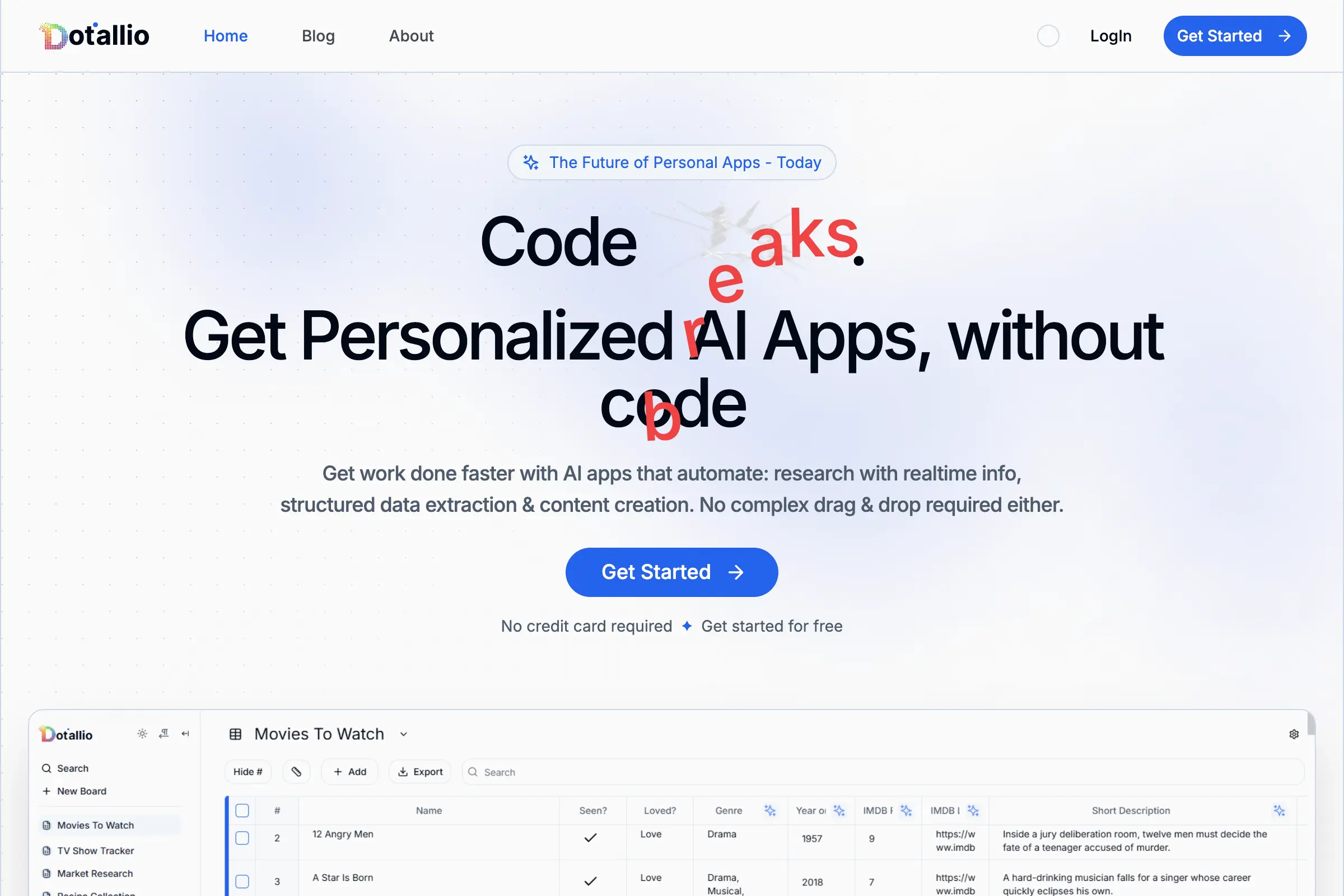
Dotallio
Personalized AI apps that automate research, data extraction, and content creation without code 🤖
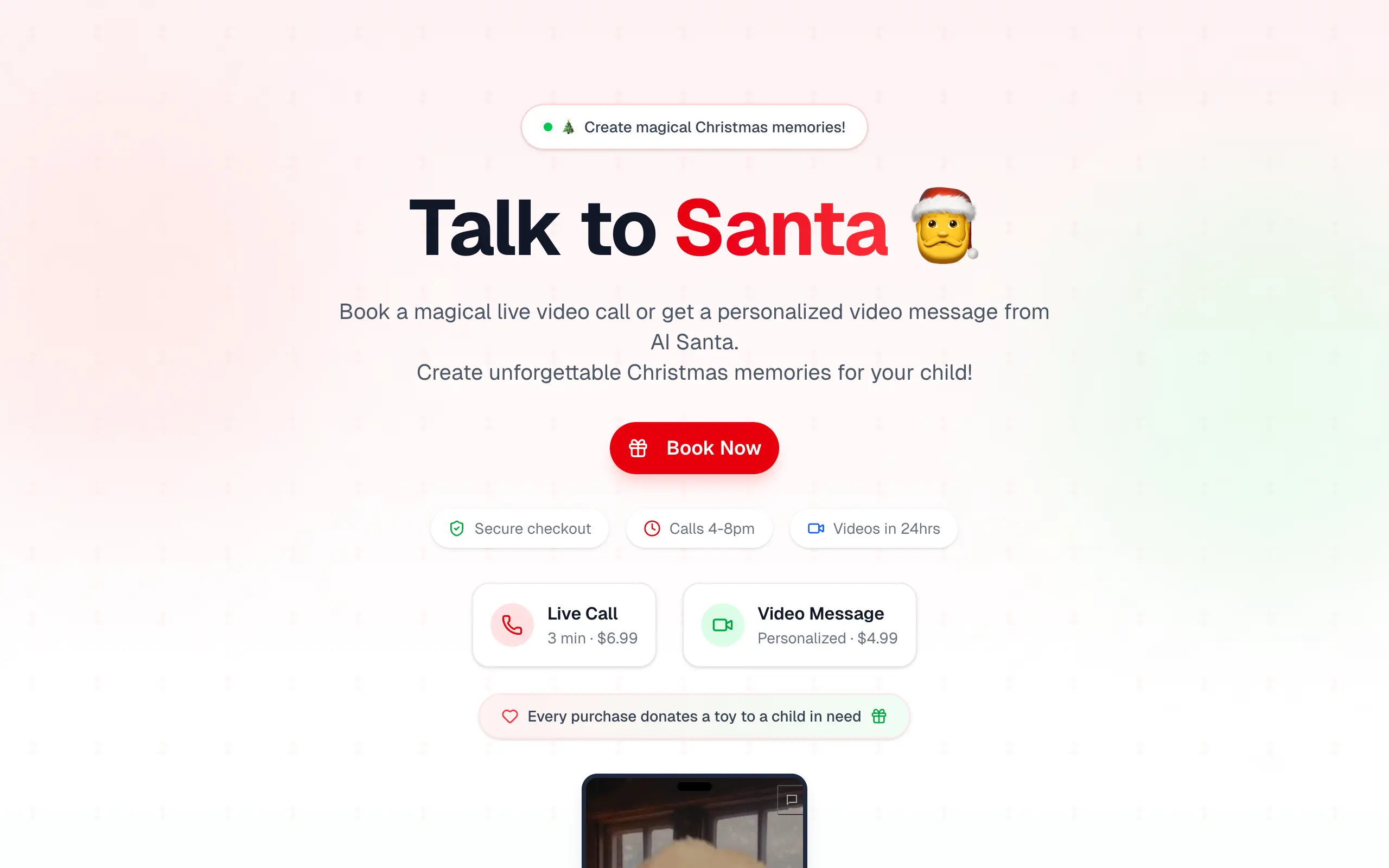
Talk to Santa
Enjoy a magical live video chat or receive a unique AI-generated video greeting from Santa Claus 🎅
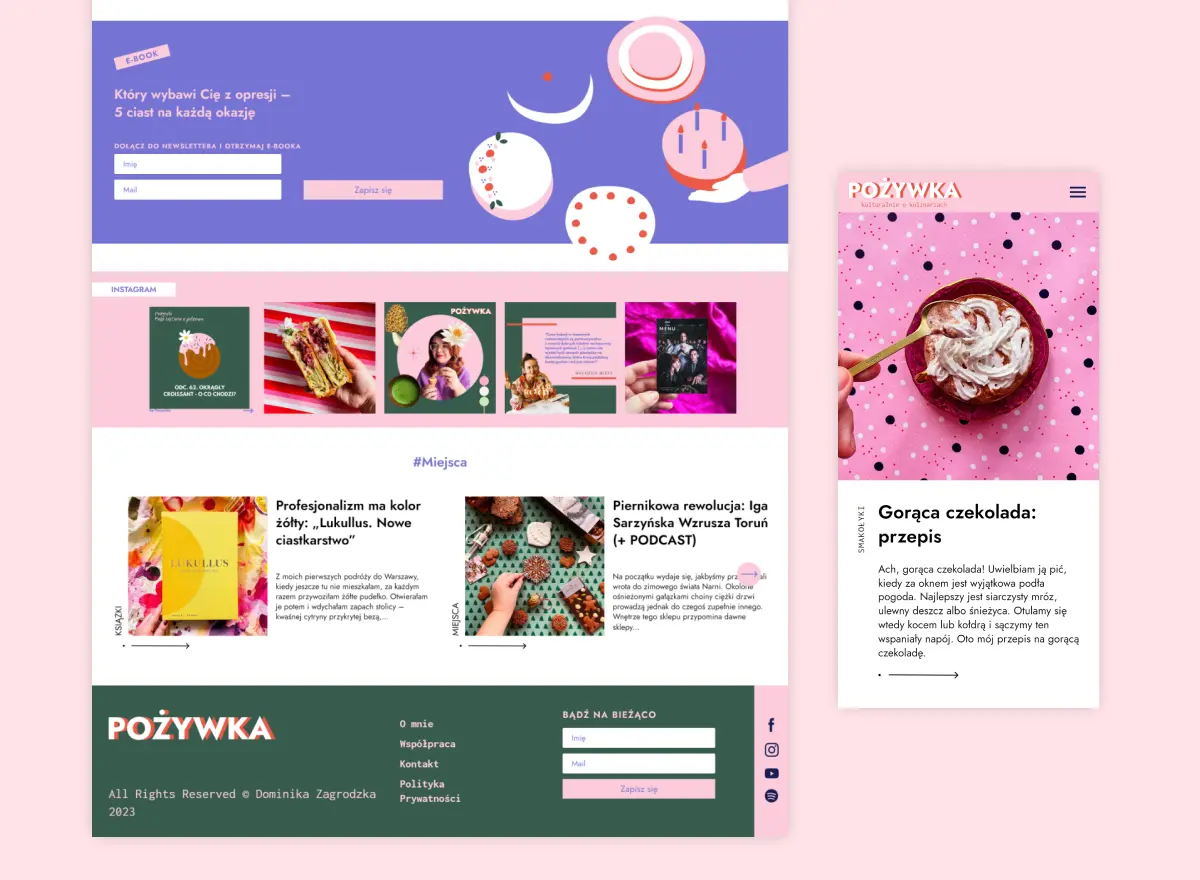
pozywka.pl
Scalable blog for food journalist, focused on performance and user experience 🌭
zagrodzki.me
Personal blog and portfolio of Bart Zagrodzki, where he shares his knowledge and work 💼
TurboStarter
Ship your startup everywhere. In minutes.
HTML to Markdown
Convert HTML to Markdown with ease, directly in your browser 📄
Dotallio
Personalized AI apps that automate research, data extraction, and content creation without code 🤖
Talk to Santa
Enjoy a magical live video chat or receive a unique AI-generated video greeting from Santa Claus 🎅
pozywka.pl
Scalable blog for food journalist, focused on performance and user experience 🌭
zagrodzki.me
Personal blog and portfolio of Bart Zagrodzki, where he shares his knowledge and work 💼
TurboStarter
Ship your startup everywhere. In minutes.
HTML to Markdown
Convert HTML to Markdown with ease, directly in your browser 📄
Omichat
Chat with 50+ AI models, including ChatGPT and Claude, in one place - switch models anytime without losing context 🤖
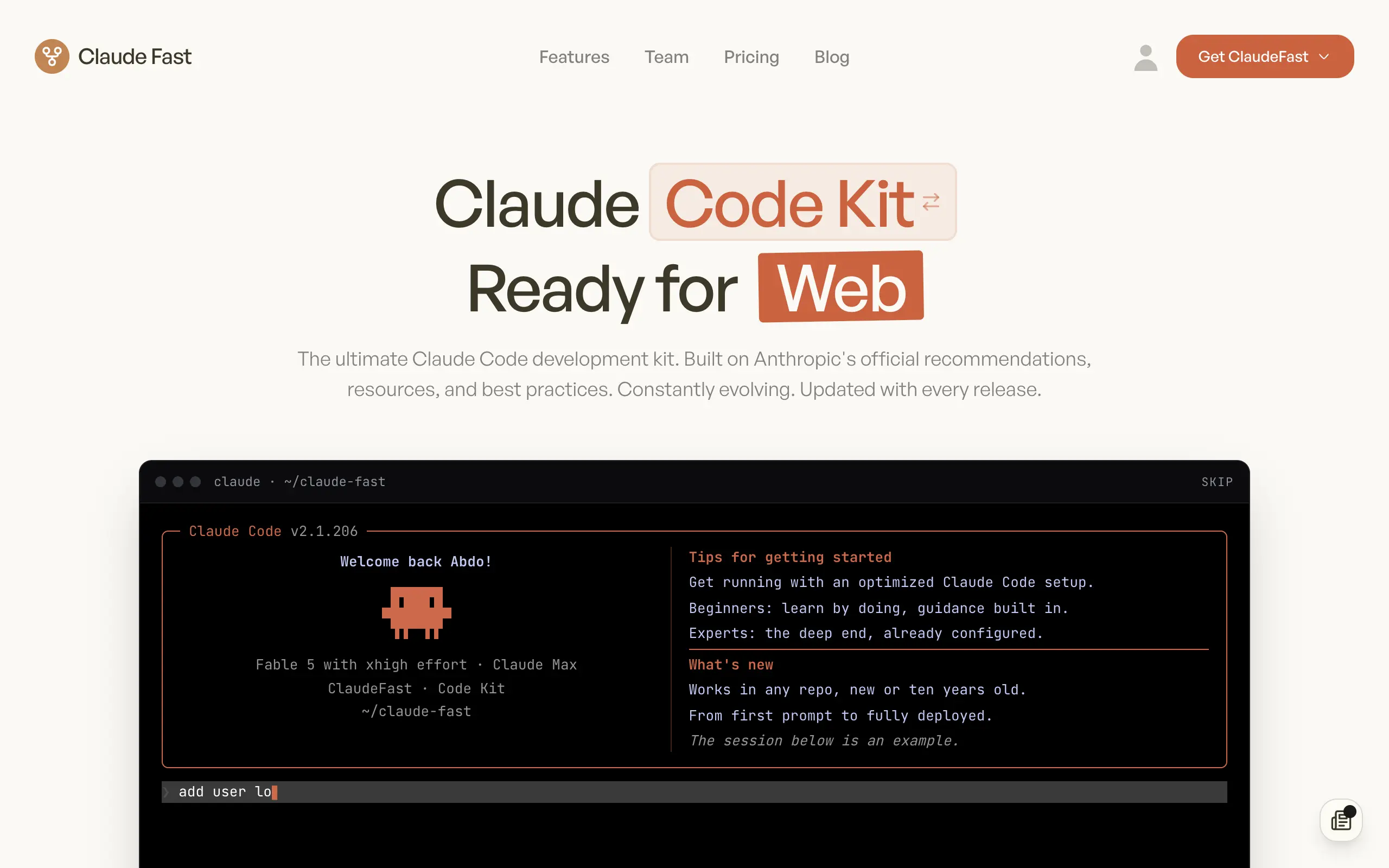
Claude Fast
Supercharge your Claude Code with 6x effective context window and specialized AI agents 🤖
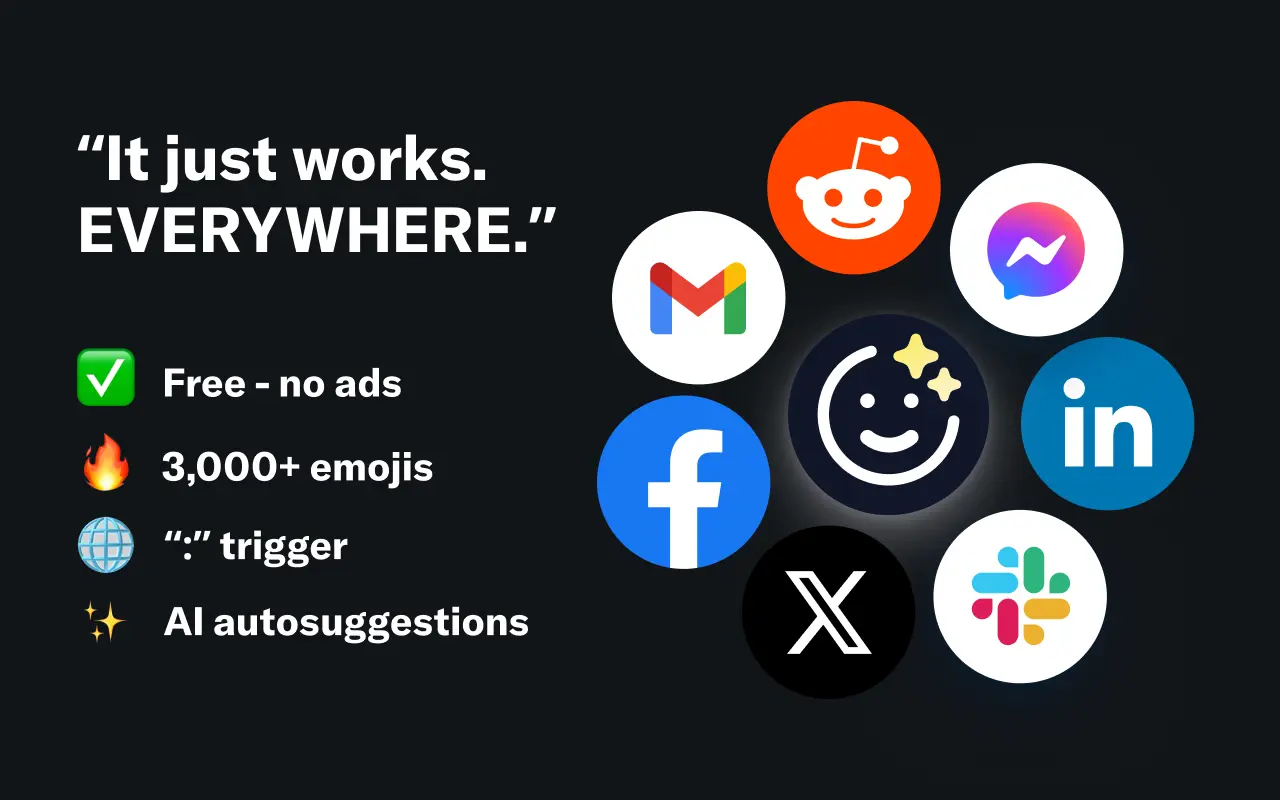
EmojAI
AI-powered emoji picker with smart, context-aware suggestions 🤖
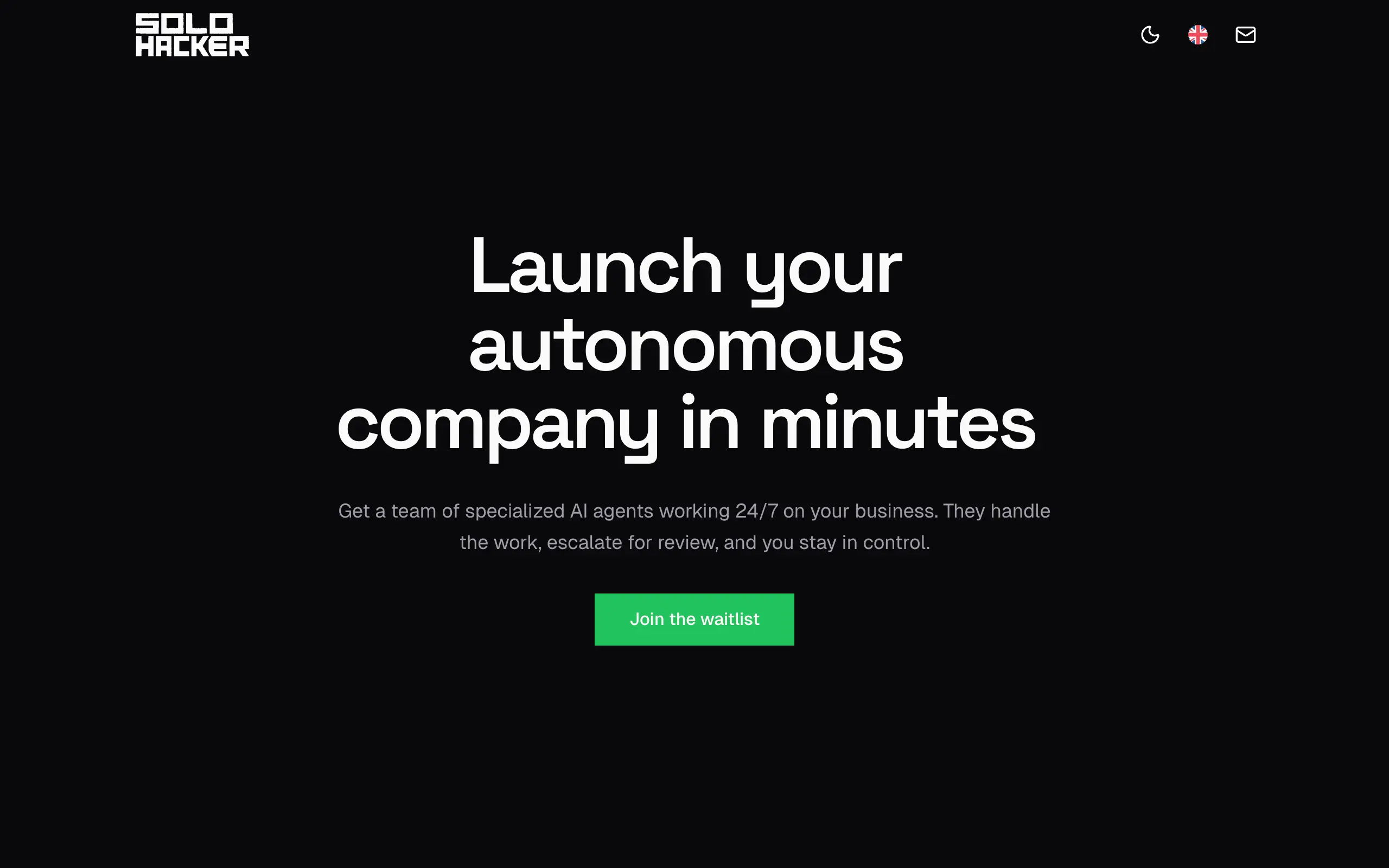
Solohacker
Autonomous company launcher - AI agents work 24/7, escalate what matters, and you stay in control 🤖
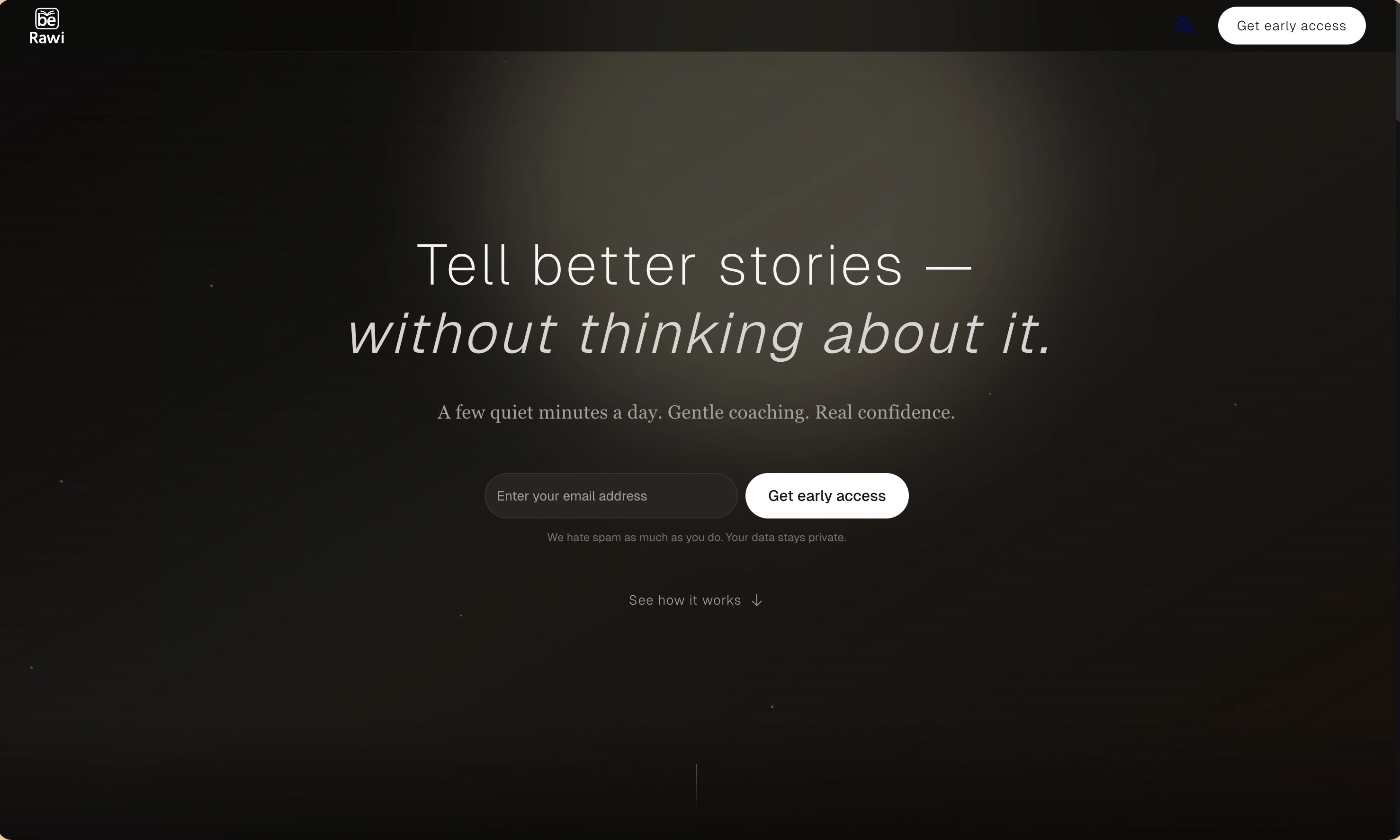
BeRawi: Storytelling Coach
Practice storytelling daily with instant feedback to sound clearer, more engaging, and confident 🎤
Omichat
Chat with 50+ AI models, including ChatGPT and Claude, in one place - switch models anytime without losing context 🤖
Claude Fast
Supercharge your Claude Code with 6x effective context window and specialized AI agents 🤖
EmojAI
AI-powered emoji picker with smart, context-aware suggestions 🤖
Solohacker
Autonomous company launcher - AI agents work 24/7, escalate what matters, and you stay in control 🤖
BeRawi: Storytelling Coach
Practice storytelling daily with instant feedback to sound clearer, more engaging, and confident 🎤

Connect with like-minded people
Join our community to get feedback, support, and grow together with 1,000+ builders on board, let's ship it!
Join usShip your startup everywhere. In minutes.
Don't burn tokens on setup and start building features on day one.