HomeSignal
AI-powered real estate search that matches buyers with homes using lifestyle, commute, and budget preferences. Explainable rankings surface the best-fit listings faster.
HomeSignal is an AI-powered real estate search concept built around a simple frustration: buyers often know what they want their daily life to feel like, but traditional property filters ask them to describe it in bedrooms, price ranges, and checkboxes.
The product opportunity is to help buyers find homes that fit their budget, lifestyle, and commute—then explain why each result ranks highly. That combination matters. A useful recommendation should not only surface a listing; it should make the trade-offs behind the recommendation clear enough for a buyer to decide whether the home is worth a closer look.
This guide explores the audience, market opportunity, product design, technology choices, business model, risks, and launch plan for HomeSignal. It is intended for founders evaluating an AI real estate search product, product teams planning an MVP, and real estate professionals considering a more personalized discovery experience.
What HomeSignal does
HomeSignal helps a buyer translate preferences into a ranked list of homes. Instead of relying only on conventional filters, it can consider questions such as:
- How long will the commute take at the time the buyer actually travels?
- Is the home near parks, transit, shops, schools, or other places the buyer values?
- Does the monthly cost fit the buyer’s budget after taxes, insurance, and other estimated expenses?
- Which preferences are essential, and which are flexible?
- What compromises explain why one home ranks above another?
The central product promise is more relevant home discovery with understandable recommendations. AI can help interpret natural-language preferences and make ranking more personal, but the product should pair that capability with reliable listing data, transparent scoring, and user control.
HomeSignal should not claim to know the objectively “best” home for a buyer. It should help each buyer identify homes that best match the preferences they have chosen, while making uncertainty and trade-offs visible.
Why AI real estate search has a meaningful opportunity
Many property search experiences are built around structured fields: location, price, number of bedrooms, property type, and perhaps a few amenities. These filters are useful, but they do not capture the full context of a home decision.
A buyer may say, “I want a quiet neighborhood where I can bike to coffee, keep my commute under 40 minutes, and still have room for a home office.” Translating that into a useful search involves multiple kinds of information:
- Explicit requirements, such as price ceiling, number of bedrooms, or an acceptable commute limit.
- Lifestyle preferences, such as nearby trails, walkable errands, or access to public transit.
- Contextual data, such as travel time, neighborhood points of interest, and listing details.
- Trade-offs, such as accepting a smaller home in exchange for a shorter commute.
- Uncertainty, because listing data can be incomplete, outdated, or imprecise.
An AI real estate search product can connect these pieces. It can turn conversational input into structured preferences, compare homes against those preferences, and explain the ranking in plain language.
The opportunity is not simply to add a chatbot to a property website. It is to create a more complete decision-support layer that helps buyers move from broad exploration to a manageable shortlist.
The problem with filter-only search
Traditional filters tend to treat each preference independently. A buyer can choose a maximum price and a minimum bedroom count, but the search may not help answer questions such as:
- Which listing offers the best balance between space and commute?
- How much would the buyer need to compromise to stay within budget?
- Are nearby amenities actually convenient for the buyer’s routine?
- Which result matches the buyer’s priorities most closely, rather than matching the largest number of filters?
A search interface can return hundreds of results that meet basic criteria while still leaving buyers with the work of evaluating them one by one. HomeSignal can reduce that burden by organizing results around fit, not just eligibility.
Why explainability should be part of the product
A recommendation is more useful when buyers can understand how it was produced. If a listing appears near the top, HomeSignal should show the factors that contributed to its placement.
For example, a result might explain that it ranked highly because it is within the buyer’s estimated monthly budget, has a shorter commute than most alternatives, and is close to parks the buyer selected. It might also note that the home is smaller than the buyer’s preferred size.
This approach offers three benefits:
- Trust: Buyers can judge whether the system’s reasoning makes sense.
- Control: Buyers can adjust priorities when a recommendation gets something wrong.
- Learning: The product can collect more meaningful feedback than a generic click or view.
Explainability should not be a decorative label attached to a ranking. It should be a core interaction that helps a buyer understand both the strengths and limitations of each match.
Target audience for HomeSignal
HomeSignal’s most promising early audience is not every person who might eventually buy a home. A focused initial segment makes it easier to validate the product, choose relevant data sources, and build a clear acquisition strategy.
Primary audience: active buyers who are overwhelmed by choice
The initial customer could be a buyer who is actively searching in a defined metropolitan area and has competing priorities. They may be relocating, buying for the first time, or balancing work, family, and budget constraints.
These buyers often need help turning a long list of preferences into a realistic search. They may not know which neighborhoods fit their commute or how to compare a higher-priced home near transit with a lower-priced home farther away.
HomeSignal can be especially valuable when a buyer:
- Has a specific commute or regular travel pattern.
- Is unfamiliar with the target city or neighborhood.
- Has a limited budget and needs to understand trade-offs.
- Values nearby amenities as much as the property itself.
- Wants to search in natural language rather than configuring many filters.
- Is comparing homes across several neighborhoods.
Secondary audiences
Once the consumer experience is validated, HomeSignal could serve related groups with different needs.
- Relocating professionals may need to evaluate housing options before they know local neighborhoods well.
- Real estate agents may use preference summaries to understand a client’s priorities and prepare more relevant recommendations.
- Brokerages may want a branded search experience that supports lead qualification and buyer engagement.
- Homebuilders may use preference insights to understand demand for locations, floor plans, and amenities.
- Property marketplaces may evaluate HomeSignal as a personalization layer for existing search products.
Each audience implies a distinct product and sales motion. Consumer users may expect a free or low-cost search experience, while professional customers may pay for workflow tools, integrations, or qualified leads. HomeSignal should avoid trying to serve all of these groups in its first release.
A practical initial customer profile
A strong early customer profile is a buyer who has already begun searching but is not yet confident in the trade-offs. That user has an immediate reason to try a new tool and can give feedback based on real decisions.
Useful research questions include:
- What did you search for most recently?
- Which filters did you use, and which important preferences could not be expressed?
- How do you currently estimate commute and neighborhood convenience?
- What makes you trust or distrust a property recommendation?
- Which information do you verify elsewhere before contacting an agent?
- What would make you return to a search product weekly?
The answers should inform the MVP more than assumptions about what “AI-powered” users might want.
The market gap and HomeSignal’s competitive advantage
HomeSignal would enter a market with established property portals, broker websites, agent-led search, and general-purpose AI assistants. The competitive challenge is real: many buyers already have familiar places to browse listings, and those services may have extensive inventory or brand recognition.
The opportunity is to differentiate through the quality of the decision experience rather than through a larger number of filters.
Where existing options may leave room
A listing portal may provide inventory and conventional search tools, but not deeply personalized explanations. An agent can offer local expertise, but their availability and search process vary. A general AI assistant may help brainstorm neighborhoods, but may not have current, licensed listing data or a reliable way to calculate property-specific commute and affordability comparisons.
HomeSignal’s potential advantage is combining:
- Preference interpretation that supports natural-language input.
- Lifestyle and commute matching alongside standard property filters.
- Explainable rankings that show the reasons behind a result.
- A learning loop that lets buyers correct, refine, and reprioritize preferences.
- Budget context that goes beyond the list price when reliable estimates are available.
| Capability | Basic listing search | Agent-led search | General AI assistant | HomeSignal opportunity |
|---|---|---|---|---|
| Current property inventory | Often available | Varies by workflow | May be limited or outdated | Licensed, freshness-aware listings |
| Standard property filters | Common | Usually available | Not a core strength | Keep as a dependable baseline |
| Lifestyle-based matching | Often limited | Depends on agent knowledge | Can discuss, but may lack structured data | Tie preferences to measurable context |
| Commute comparison | May be basic | Can be discussed manually | Can reason without guaranteed live data | Calculate with clear assumptions |
| Explainable ranking | Often limited | Human explanation | Text explanation may be generic | Show listing-specific match reasons |
| Preference learning | Varies | Often conversational | Usually session-based | Save and refine buyer preferences |
The table describes strategic positioning, not a claim that every competitor lacks these capabilities. A proper competitive analysis should review products in the launch market and test them against the same buyer tasks.
The HomeSignal USP
A concise unique selling proposition could be:
HomeSignal helps buyers find homes that fit the way they live, then explains why each home is a match.
This positioning is specific enough to distinguish the product from a generic AI search feature. It also sets an important product standard: every high-ranking result should have a clear, defensible reason for appearing.
What would make the advantage durable
AI models alone are rarely a durable moat. Competitors can adopt similar language models or conversational interfaces. HomeSignal’s long-term differentiation is more likely to come from the combination of:
- High-quality, properly licensed listing and location data.
- A reliable preference model that reflects buyer priorities.
- Feedback signals that improve ranking without being opaque.
- Trusted explanations that help buyers make decisions.
- Integrations with agents, brokerages, or transaction workflows.
- A strong local experience in selected markets.
The company should treat data relationships and user trust as strategic assets, not just technical dependencies.
Core product features and solution details
The MVP should answer one high-value question: Can HomeSignal help a buyer find and understand a better shortlist than their existing search process?
That question suggests a focused product rather than a broad real estate platform.
1. Conversational preference onboarding
A buyer should be able to describe a search in everyday language, such as “two bedrooms, near a train station, under my monthly budget, and no more than 35 minutes from work.” HomeSignal can convert this into structured preferences and ask follow-up questions when the request is ambiguous.
The product should distinguish between:
- Hard constraints, which exclude a home when they are not met.
- Soft preferences, which affect a score but do not automatically exclude a result.
- Unknowns, where data is unavailable or not reliable enough to support a conclusion.
For example, “must be below $600,000” is likely a hard constraint, while “I’d prefer a backyard” may be a soft preference. The user should be able to change those classifications.
2. Search profiles that users can edit
After onboarding, HomeSignal should present a readable summary of the search profile. This is more valuable than silently storing a prompt.
A profile might include:
- Maximum price or estimated monthly payment.
- Preferred home type and size.
- Work, school, or other frequent destinations.
- Commute mode and acceptable travel time.
- Neighborhood features the buyer values.
- Non-negotiable requirements.
- Flexible preferences and their relative importance.
An editable profile gives users a chance to catch misunderstandings before they influence recommendations.
3. Explainable home ranking
A ranking system should combine clear rules with personalized scoring. It should not depend entirely on a language model producing an unverified judgment.
A practical approach is to calculate component scores for price fit, location fit, commute fit, property attributes, and lifestyle match. The system can then apply buyer-selected weights and generate a concise explanation from the underlying evidence.
For each listing, show:
- The strongest reasons it matches.
- The most important compromises.
- Any missing or uncertain information.
- The effect of changing a preference.
A result should never imply false precision. If a commute estimate depends on time of day or mode of transport, the interface should state the relevant assumptions.
4. Commute and location context
A home’s location is more than its distance from a point on a map. HomeSignal could support travel-time comparisons for driving, public transit, walking, or cycling where dependable routing data is available.
Location context may also include proximity to places a buyer has selected, such as:
- Public transportation.
- Parks and recreation.
- Grocery stores and everyday services.
- Schools, where appropriate and responsibly presented.
- A workplace or other regular destination.
The interface should explain what is measured. “Close to transit” is less actionable than “estimated 12-minute walk to the selected station,” provided that the data source and calculation support that statement.
5. Budget-aware comparison
A purchase price is not the same as an affordable monthly cost. Depending on the data available, HomeSignal could show an estimated monthly payment that accounts for assumptions such as down payment, interest rate, property taxes, insurance, and association fees.
These estimates must be clearly labeled as estimates, not financial advice or lender quotes. Users should be able to inspect and change assumptions. If tax or insurance information is not reliable, it is better to disclose the gap than to show a misleadingly precise number.
6. Saved searches, alerts, and feedback
Buyers need a reason to return. Saved searches and alerts can make HomeSignal useful as listings change, while explicit feedback can improve future recommendations.
Useful feedback controls include:
- “More like this.”
- “Too expensive.”
- “Commute is too long.”
- “I do not care about this feature.”
- “This is a must-have.”
The product should distinguish between a user rejecting one home and changing a general preference. Otherwise, one-off feedback could distort the entire search.
7. Agent handoff and lead management
An optional agent handoff can help users act on their shortlist. HomeSignal might let a buyer request more information, schedule a showing, or share a preference profile with an agent.
The handoff should be transparent. Users should know what information will be shared, with whom, and for what purpose. Avoid turning the recommendation experience into a lead-capture form before users have received meaningful value.
Recommended technology stack for an AI real estate search product
The best stack depends on the team’s skills, listing-data agreements, expected traffic, and launch timeline. The important architectural principle is to keep the ranking logic, data provenance, and user preferences inspectable.
Frontend
A web-first MVP can use React with Next.js and TypeScript. This combination supports interactive search experiences while providing a mature ecosystem for routing, server rendering, and shared application code.
A responsive web app is a sensible first release because buyers often compare listings across devices and may arrive through search engines or shared links. A native mobile app can wait until usage patterns justify the additional development and maintenance.
Backend and database
A relational database such as PostgreSQL is a strong default for user profiles, saved searches, listing records, and structured preference data. If the product needs geospatial queries, PostGIS can extend PostgreSQL with location-aware capabilities.
The trade-off is that geospatial workflows and listing ingestion still require careful data modeling. A database choice does not solve licensing, freshness, or inconsistent source formats.
A practical backend can separate:
- User accounts and authorization.
- Listing ingestion and normalization.
- Geospatial and commute calculations.
- Ranking and explanation generation.
- Search history, saved homes, and feedback.
- Analytics and consent records.
AI and ranking architecture
Use a language model where language understanding adds value, such as extracting structured preferences from a conversational request or drafting a readable explanation from verified ranking factors.
Keep core ranking calculations grounded in structured inputs. A model should not invent property features, commute times, or affordability estimates. The safest pattern is to calculate the evidence first, then allow a model to summarize that evidence within constrained rules.
For example:
type SearchPreferences = {
  maxPrice?: number;
  requiredBedrooms?: number;
  commute?: {
    destinationId: string;
    maxMinutes: number;
    mode: "driving" | "transit" | "walking" | "cycling";
  };
  preferredAmenities: string[];
  hardConstraints: string[];
};

type MatchFactor = {
  label: string;
  score: number;
  explanation: string;
  confidence: "high" | "medium" | "low";
};

type HomeMatch = {
  listingId: string;
  overallScore: number;
  factors: MatchFactor[];
  caveats: string[];
};
In production, the ranking service should version its logic and retain enough information to reproduce why a listing received a particular score. That makes debugging, quality evaluation, and user support much easier.
Mapping and location services
A mapping or routing provider can supply geocoding, points of interest, and travel-time estimates. Provider selection should consider coverage in target markets, available travel modes, pricing, terms of use, and data retention requirements.
Do not treat every location source as interchangeable. A geocoded address, a travel-time estimate, and a neighborhood boundary each have different accuracy limits. HomeSignal should disclose relevant assumptions and avoid overstating precision.
Authentication, payments, and product infrastructure
For a fast launch, managed services can reduce operational work. A team might use Supabase for hosted database and authentication capabilities, while evaluating whether its data, security, and scaling requirements fit the product. For paid plans, Stripe provides billing infrastructure, though pricing and payment flows should be tested against the intended customer model.
The trade-off of managed services is reduced control over some infrastructure decisions. That may be worthwhile for an MVP, but the team should understand data export, backup, access-control, and vendor-dependency implications.
Founders who want to move faster on standard SaaS foundations can evaluate TurboStarter, then spend more of the initial build on listing data, ranking quality, and the buyer experience that differentiates HomeSignal.
Monetization strategy options
HomeSignal’s revenue model should fit the buyer journey and the business’s data costs. A free consumer experience may help acquire users, but it does not automatically create a sustainable business. The team should validate willingness to pay before committing to a single model.
Freemium consumer search
A free tier could include basic search, a limited number of saved homes, and standard match explanations. A paid plan might add advanced commute comparisons, more saved searches, richer budget scenarios, or collaborative household profiles.
This approach is familiar to consumers but can be difficult if users only need a property search tool temporarily. The value proposition must be strong enough to justify payment during a time-limited buying journey.
Agent and brokerage subscriptions
Agents or brokerages could pay for tools that summarize client preferences, create shareable shortlists, and monitor changes to buyer priorities. This may provide recurring revenue, but it introduces a different buyer and requires a clear return on investment.
A business plan should test whether HomeSignal saves time, improves client engagement, or helps agents respond to buyer needs. Avoid assuming that professionals will pay simply because the software uses AI.
Qualified lead or referral revenue
HomeSignal could earn revenue when users choose to connect with a participating agent or service provider. This model can monetize buyer intent, but it creates an obvious trust risk if ranking appears influenced by commercial relationships.
If referrals are introduced, sponsorship and compensation should be disclosed clearly. Paid placement should not be presented as an organic match. The recommendation criteria and the commercial relationship should remain distinguishable.
Data and market insights
Aggregated, privacy-conscious insights may eventually be useful to brokerages, developers, or housing organizations. This should be a later-stage option, not a reason to collect more personal data than the product needs.
Any reporting should be designed to avoid exposing individual search behavior or sensitive user information. Legal review is important before monetizing user-derived data.
Risks and mitigation strategies
Real estate search combines sensitive decisions, regulated practices, third-party data, and high user expectations. Trust needs to be built into the product from the beginning.
Listing data rights and freshness
Property data may be governed by licensing agreements, marketplace terms, or restrictions on storage, display, and redistribution. Listings may also change status quickly or contain incomplete fields.
Mitigation: Secure appropriate data rights before launch. Track source, retrieval time, and field-level provenance. Establish refresh rules and visibly indicate when information was last updated. Do not scrape or redistribute listings without confirming permission.
Fair housing and discriminatory outcomes
A recommendation system can cause harm if it uses protected characteristics, proxies for protected characteristics, or criteria that produce discriminatory outcomes. Neighborhood guidance and school-related features require particular care.
Mitigation: Obtain qualified legal guidance for the markets where HomeSignal operates. Review ranking inputs and outputs for potential bias. Avoid using protected-class data or inferred demographic traits for personalization. Make recommendations based on user-selected property and travel preferences, and provide an appeal or correction path.
Fair housing obligations vary by jurisdiction and product design. A general disclaimer is not a substitute for legal review or responsible system testing.
Inaccurate or overconfident recommendations
A bad ranking can cause buyers to overlook suitable homes or spend time on poor matches. The risk increases when the system hides missing data or presents estimates as facts.
Mitigation: Separate known facts from estimates. Display confidence or caveats where appropriate. Let users inspect the factors behind a score. Test recommendations with real buyers and review failure cases, not just engagement metrics.
Privacy and sensitive preferences
Search profiles may reveal workplaces, family needs, financial limits, and personal routines. Location data can be especially sensitive.
Mitigation: Collect only what is needed, explain why it is collected, and provide controls to edit or delete it. Secure data in transit and at rest, limit internal access, and define retention periods. Avoid retaining precise location histories when a less sensitive representation will work.
Cold-start and sparse feedback
A new product has little behavioral data, and users may not provide enough feedback to personalize recommendations.
Mitigation: Make the initial profile useful without historical behavior. Use transparent defaults and preference controls. Ask small, contextual questions rather than requiring an extensive onboarding survey.
High operational and data costs
Listing feeds, geocoding, routing, model inference, and support may become expensive as use grows.
Mitigation: Model cost per active search and per successful buyer action. Cache results when permitted, limit unnecessary model calls, and monitor usage by feature. Design the product so deterministic calculations handle routine scoring while AI is used selectively.
Conflicts between revenue and recommendation quality
If a vendor or agent pays for visibility, users may question whether the ranking reflects their needs.
Mitigation: Keep organic ranking criteria separate from paid distribution. Disclose commercial relationships in plain language. Do not sell a “best match” position unless it is clearly labeled as sponsored.
How to validate HomeSignal before building too much
A founder can test the main assumptions before creating a full platform.
Interview buyers about real searches
Talk to recent and active buyers, not only people who say the idea sounds interesting. Ask them to walk through a recent search, including the last home they rejected and why. Look for repeated pain around commute trade-offs, confusing neighborhoods, budget uncertainty, or too many irrelevant results.
Prototype the ranking explanation
A clickable prototype can show a buyer a search profile, a ranked list, and a “why this matches” explanation. The key test is whether users understand and trust the reasons—not whether they are impressed by a conversational interface.
Run a concierge test
For a small, carefully selected group, manually assemble a shortlist using approved data sources and structured preferences. Share the result with transparent reasoning and observe what users do next.
This test can reveal whether personalized matching is valuable before the team invests in automated ingestion, ranking infrastructure, and integrations.
Measure meaningful product outcomes
Page views and chat messages are not enough to demonstrate value. Track whether users:
- Complete a search profile.
- Save or compare recommended homes.
- Return to refine a search.
- Contact an agent or request a showing.
- Report that the shortlist is more useful than their existing process.
Ask users why a recommendation was helpful or unhelpful. Qualitative feedback often explains performance metrics better than a dashboard alone.
Actionable implementation steps
A disciplined launch plan keeps HomeSignal focused on the core promise while addressing data and trust requirements early.
Choose one launch market and user segment
Select a specific geography where the team can obtain compliant listing and location data. Choose one initial audience, such as relocating professionals or active first-time buyers, and document the job HomeSignal is helping them complete.
Validate the search problem
Interview buyers and agents about their current workflow. Identify the preferences that existing search tools handle poorly and rank them by frequency and decision impact. Do not build a feature just because it sounds impressive in a demo.
Secure data access and define trust requirements
Confirm the rights, permitted uses, update frequency, and display rules for listing and location data. Define how HomeSignal will handle privacy, deletion requests, recommendation explanations, and errors before opening the product to public use.
Build a narrow MVP
Start with preference onboarding, editable search profiles, compliant listing results, a transparent ranking, and saved searches. Add only the commute, lifestyle, and budget capabilities that can be supported with dependable data.
Test ranking quality with real users
Recruit buyers who are actively searching. Compare HomeSignal’s shortlist with their existing process and ask them to rate both match quality and explanation quality. Review cases where a buyer rejects a high-ranked result or saves a lower-ranked one.
Improve the feedback loop
Let users correct preference misunderstandings and mark why a home is not a fit. Use those signals to refine the profile and ranking, while preserving the distinction between a one-time rejection and a general preference change.
Test monetization without compromising trust
Evaluate consumer subscriptions, agent tools, or referral models with the relevant customer group. Make any paid relationship clear and ensure that it does not silently alter organic match rankings.
Expand only after the core experience works
Add new markets, integrations, and customer segments after HomeSignal demonstrates useful matches, reliable data handling, and repeat engagement in its initial market. Expansion should be driven by validated demand and data readiness.
The long-term potential of HomeSignal
HomeSignal has a compelling product direction because it focuses on the decision behind a search, not just the search interface. A buyer’s ideal home is shaped by the relationship between property, location, budget, and routine. Helping people compare those factors in a clear and personalized way is a meaningful problem to solve.
The product’s success will depend less on how prominently it uses AI and more on whether buyers can trust its results. That means combining reliable data, user-controlled preferences, transparent ranking, careful privacy practices, and honest explanations of uncertainty.
The strongest initial strategy is to build a narrow, high-quality AI real estate search experience in one market. If buyers repeatedly use HomeSignal to create better shortlists—and can explain why they trust those recommendations—the product will have a credible foundation for expanding into agent workflows, brokerage tools, and additional markets.
Frequently asked questions
HomeSignal is a proposed AI-powered real estate search product that matches buyers with homes based on lifestyle preferences, commute needs, and budget. It aims to make recommendations easier to evaluate by explaining why a listing ranks highly and what trade-offs it involves.
A standard filter usually narrows listings using fields such as price, bedrooms, and property type. AI real estate search can help interpret conversational preferences and combine them with structured listing and location data. A responsible product still needs clear rules, dependable data, and explanations users can inspect.
A practical MVP should include editable buyer preferences, compliant property listings, a transparent match ranking, basic commute or location context, and saved searches. It should avoid features that depend on unreliable data or introduce unnecessary privacy and legal risks.
No. Affordability estimates depend on assumptions and individual financial circumstances, while “best fit” is subjective. HomeSignal should present estimates as estimates, disclose relevant assumptions, and let buyers adjust the preferences that influence rankings.
Important risks include listing-data rights, stale or incomplete information, privacy concerns, biased recommendations, and loss of trust when rankings are difficult to explain. These risks should shape product architecture and operations from the beginning.
More 🤖 AI Startup SaaS ideas
Discover more innovative ai startup SaaS ideas that are trending in 2026. Each idea is AI-generated with market validation and growth potential to help you find your next profitable venture faster than competitors.
Your competitors are building with TurboStarter
Below are some of the SaaS ideas that have been generated and built with our starter kit.

Statiko
Monitor any Telegram channel in real time - track posts, edits, deletions, and growth with AI recaps 📡

Shibui
AI website builder - describe your business, pick a niche template, edit by chatting, and publish instantly ✨

Pro Service
Find verified home service professionals, compare quotes, and pay securely through escrow - built for Brazilians across the US 🏠
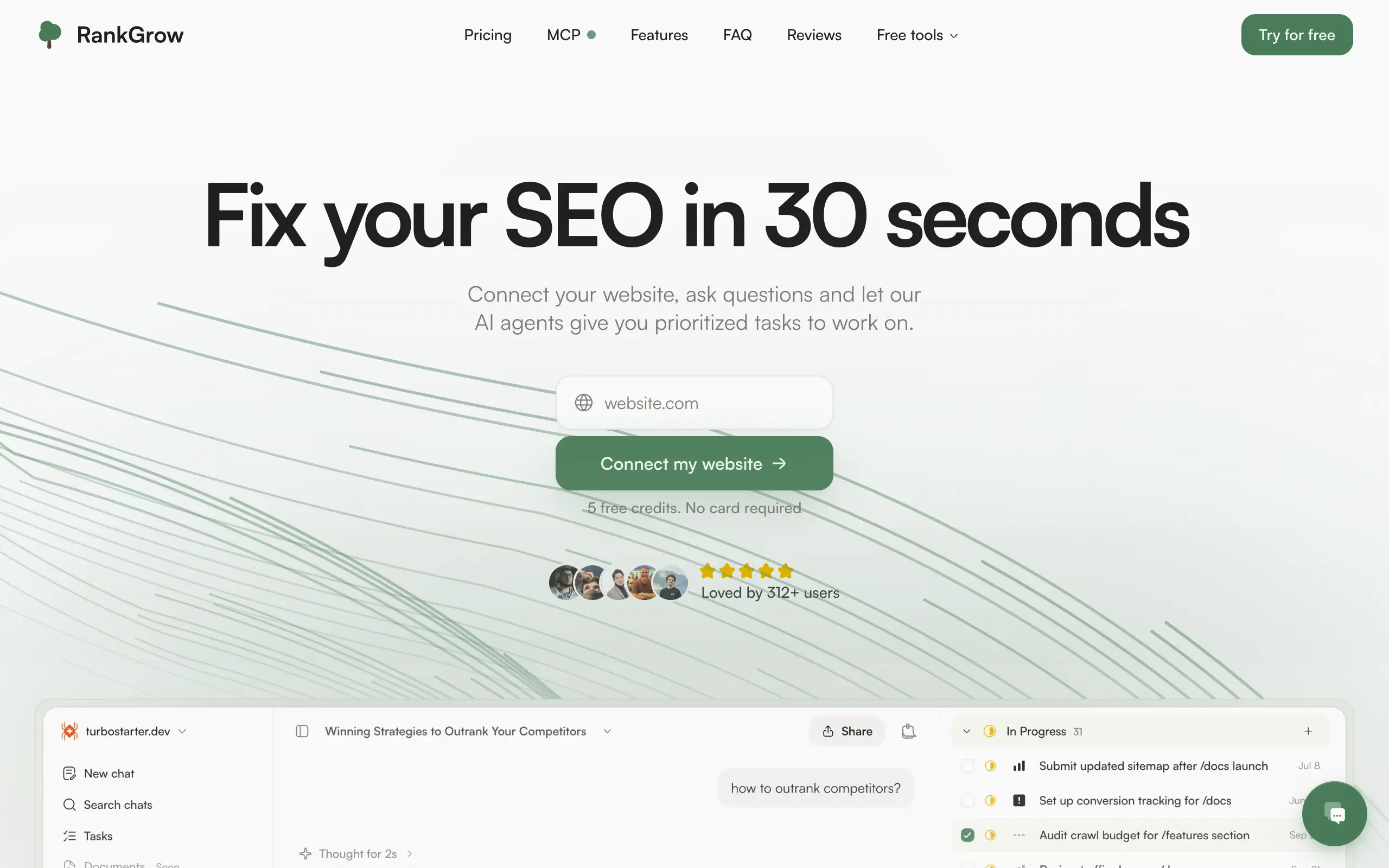
RankGrow
Fix your SEO with AI agents - connect Search Console, get prioritized tasks, and grow organic traffic 📈
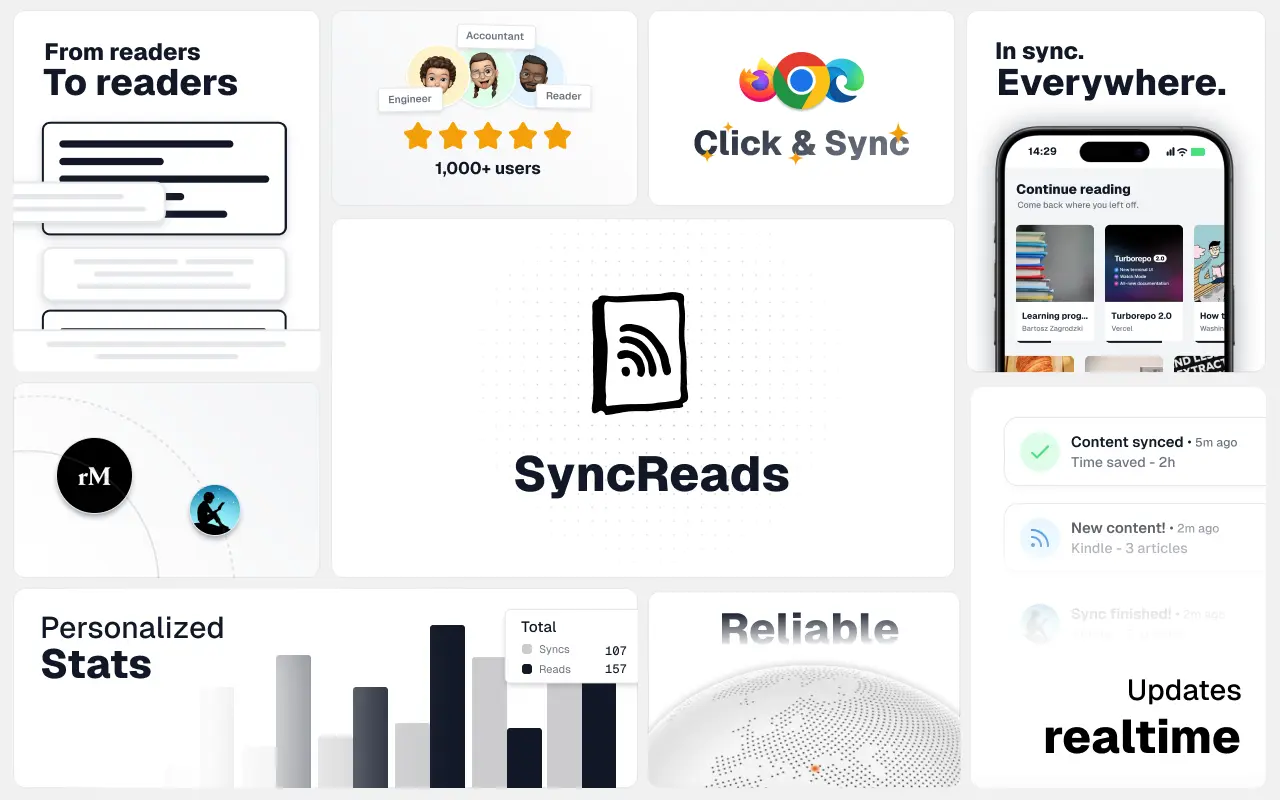
SyncReads
Sync your favorite content for distraction-free reading, save time and replace multiple apps. Anytime, anywhere 🔄
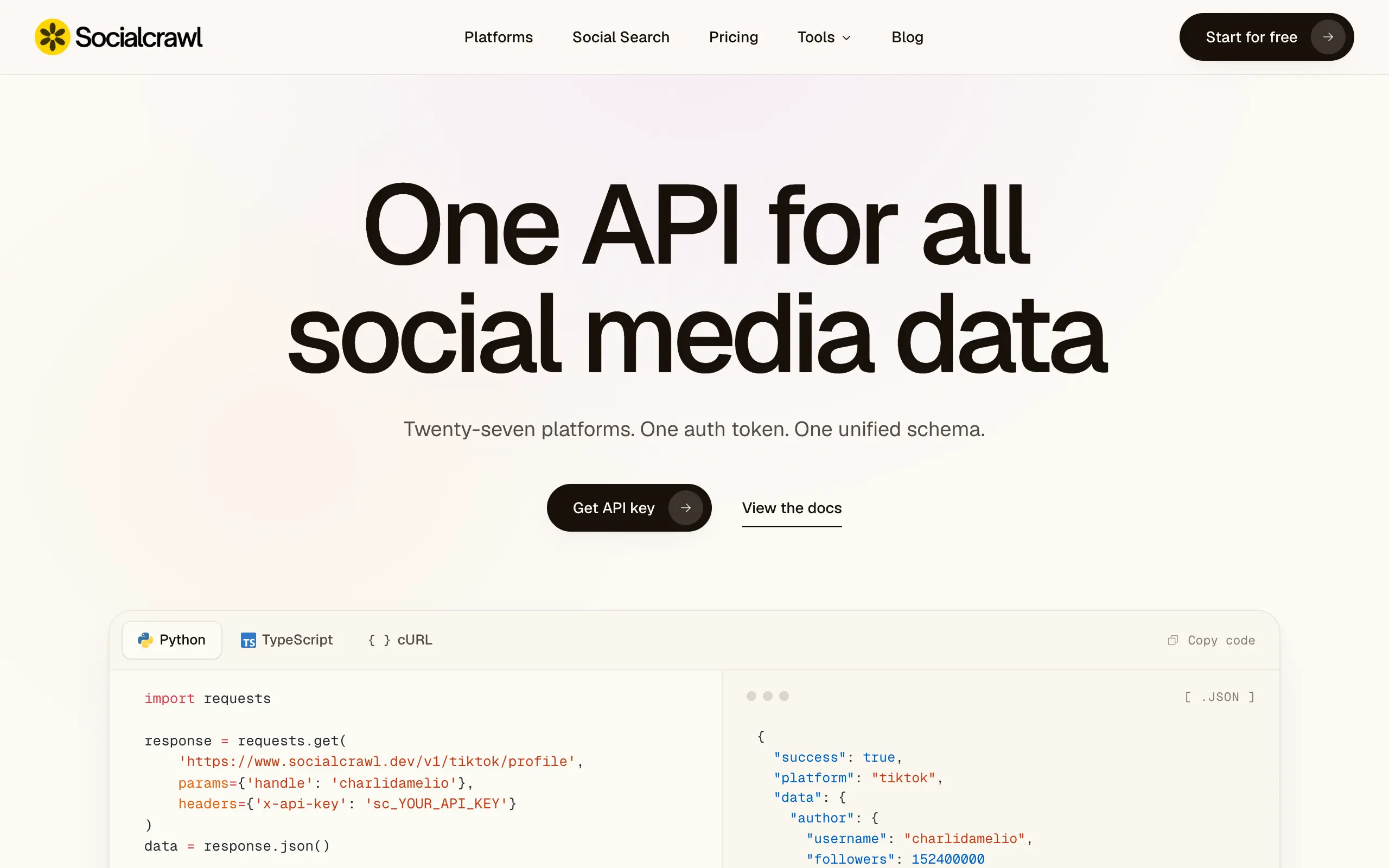
Socialcrawl
Get clean, structured data from 21 platforms like TikTok, Instagram, and YouTube with a single request 📊
Statiko
Monitor any Telegram channel in real time - track posts, edits, deletions, and growth with AI recaps 📡
Shibui
AI website builder - describe your business, pick a niche template, edit by chatting, and publish instantly ✨
Pro Service
Find verified home service professionals, compare quotes, and pay securely through escrow - built for Brazilians across the US 🏠
RankGrow
Fix your SEO with AI agents - connect Search Console, get prioritized tasks, and grow organic traffic 📈
SyncReads
Sync your favorite content for distraction-free reading, save time and replace multiple apps. Anytime, anywhere 🔄
Socialcrawl
Get clean, structured data from 21 platforms like TikTok, Instagram, and YouTube with a single request 📊
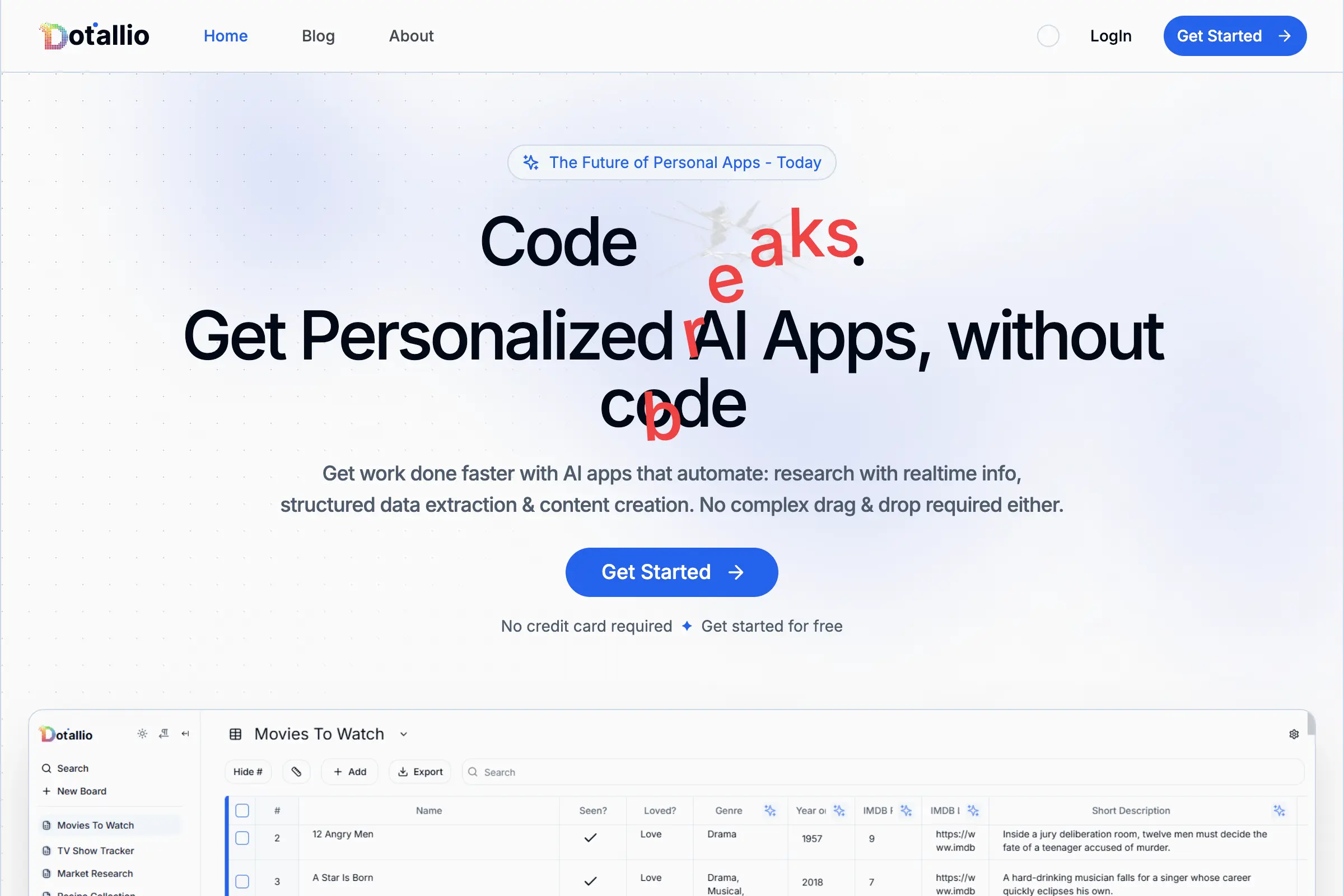
Dotallio
Personalized AI apps that automate research, data extraction, and content creation without code 🤖

Talk to Santa
Enjoy a magical live video chat or receive a unique AI-generated video greeting from Santa Claus 🎅

pozywka.pl
Scalable blog for food journalist, focused on performance and user experience 🌭
zagrodzki.me
Personal blog and portfolio of Bart Zagrodzki, where he shares his knowledge and work 💼

TurboStarter
Ship your startup everywhere. In minutes.
HTML to Markdown
Convert HTML to Markdown with ease, directly in your browser 📄
Dotallio
Personalized AI apps that automate research, data extraction, and content creation without code 🤖
Talk to Santa
Enjoy a magical live video chat or receive a unique AI-generated video greeting from Santa Claus 🎅
pozywka.pl
Scalable blog for food journalist, focused on performance and user experience 🌭
zagrodzki.me
Personal blog and portfolio of Bart Zagrodzki, where he shares his knowledge and work 💼
TurboStarter
Ship your startup everywhere. In minutes.
HTML to Markdown
Convert HTML to Markdown with ease, directly in your browser 📄
Omichat
Chat with 50+ AI models, including ChatGPT and Claude, in one place - switch models anytime without losing context 🤖
Claude Fast
Supercharge your Claude Code with 6x effective context window and specialized AI agents 🤖

EmojAI
AI-powered emoji picker with smart, context-aware suggestions 🤖

Solohacker
Autonomous company launcher - AI agents work 24/7, escalate what matters, and you stay in control 🤖

BeRawi: Storytelling Coach
Practice storytelling daily with instant feedback to sound clearer, more engaging, and confident 🎤
Omichat
Chat with 50+ AI models, including ChatGPT and Claude, in one place - switch models anytime without losing context 🤖
Claude Fast
Supercharge your Claude Code with 6x effective context window and specialized AI agents 🤖
EmojAI
AI-powered emoji picker with smart, context-aware suggestions 🤖
Solohacker
Autonomous company launcher - AI agents work 24/7, escalate what matters, and you stay in control 🤖
BeRawi: Storytelling Coach
Practice storytelling daily with instant feedback to sound clearer, more engaging, and confident 🎤

Connect with like-minded people
Join our community to get feedback, support, and grow together with 1,000+ builders on board, let's ship it!
Join usShip your startup everywhere. In minutes.
Don't burn tokens on setup and start building features on day one.