IteraNest Protocol
IteraNest Protocol is an AI engine that constructs and refines business blueprints, technical architectures, and deployable SaaS products, adapting to market changes without human aid.
The rapid evolution of SaaS and AI over the past decade has resulted in countless tools aiming to simplify business ideation and product development. Most, however, rely heavily on constant human input, static templates, or labor-intensive customization. The IteraNest Protocol sets itself apart by proposing an AI-driven protocol that constructs, revises, and deploys business blueprints, technical architectures, and SaaS solutions—autonomously adapting to changing markets and tech landscapes. This article explores the mechanics, potential, and competitive edge of the IteraNest Protocol, guiding SaaS founders, innovators, and investors in understanding its transformative ability for the SaaS ecosystem.
Understanding search intent: who seeks IteraNest Protocol?
To cover user intent authentically, let’s first outline who searches for information about an AI engine like IteraNest Protocol, and what they seek:
- SaaS founders and product managers: Seeking faster, smarter ways to validate ideas, design technical architectures, and scale products.
- AI and automation enthusiasts: Looking for advances in AI-driven product development.
- CXOs and investors: Eager to spot disruptive technologies or reduce risk in early-stage SaaS ventures.
- Developers & tech consultants: Interested in advanced tools or APIs that speed up deployments.
- Market analysts: Tracking trends in AI, SaaS automation, and business model adaptation.
Primary intent: They want to validate whether IteraNest Protocol can reduce manual overhead, accelerate product-market fit, automate technical choices, and dynamically refine deployed products with minimal to zero human oversight.
Target audience analysis
A thoughtful audience analysis is foundational to any solution’s market fit. For IteraNest Protocol, the main user personas include:
SaaS Entrepreneurs
Early-stage founders wanting to go from idea to MVP—fast, with minimized risk and reduced need for deep technical teams.
Enterprise Product Teams
Innovation departments at large organizations aiming to rapidly prototype, adapt, and scale business solutions at lower cost.
AI/DevOps Engineers
Tech professionals interested in integrating self-optimizing AI protocols into CI/CD workflows or product lifecycle management.
Tech Investors
Venture capitalists and angel investors seeking disruptive platforms delivering outsized efficiency gains in SaaS.
Consultants & Agencies
Digital transformation advisors eager to leverage hands-off SaaS ideation, documentation, and deployment for diverse clients.
Key motivators across all personas:
- Speed to market
- Cost savings on engineering and documentation
- Reduced risk of launching misaligned products
- Ability to stay ahead of the curve with continuous, AI-driven iteration
Market opportunity and gap analysis
Despite an abundance of low-code platforms, AI business assistants, and DevOps automation tools, there’s a glaring gap: Truly autonomous, continuously improving SaaS product generation protocols.
Current landscape
- Market saturated with manual or semi-automated SaaS builders.
- Fragmented solutions: Some offer idea validation; others generate technical docs, but very few close the loop from concept → technical architecture → deployment → iteration autonomously.
- Limited adaptive intelligence: Most systems require explicit human-provided feedback or interventions to remain relevant as markets shift.
LSI/related keywords: Zero-touch SaaS deployment, autonomous business blueprinting, adaptive SaaS engines, AI-driven product iteration, continuous deployment automation.
Data points suggesting strong demand
- According to industry surveys, over 70% of SaaS product launches fail to achieve clear product-market fit—most due to misaligned execution, slow adaptation, and costly, manual pivots. [Reference: Suggest citing a recent SaaS industry report, e.g., from Gartner or Statista.]
- AI investment in SaaS is projected to reach $150B+ by 2025 (statistic suggestion: [Gartner AI SaaS forecast]).
The unique gap IteraNest Protocol addresses
- A fully autonomous protocol that not only suggests but launches and adapts SaaS products.
- Automatic technical architecture updates—integrating new frameworks, scaling, and security best practices as they emerge.
- Market-driven refinements—via real-time AI analysis of product-market signals, not just pre-defined feedback loops.
Core features & detailed solution overview
Let’s break down what makes the IteraNest Protocol a game-changer compared to other AI or low/no-code SaaS automation tools.
1. Autonomous business blueprinting
- Ingests macro and micro market signals, customer reviews, trending pain points (via web scraping, APIs, or direct feeds).
- Defines target personas, value props, pricing, and sales strategies with zero manual prompting.
2. Technical architecture synthesis
- Designs best-fit, modular technical backbones (frontend + backend) dynamically, considering:
- Outputs interactive, up-to-date technical diagrams and architecture docs.
3. Deployable SaaS product generation
- Generates shippable codebases, using peer-reviewed open-source components where possible for auditability and security.
- Supports push-button, cloud-agnostic deployments (e.g., AWS, Azure, GCP).
- Seamless provisioning, versioning, and CI/CD hooks.
4. Continuous market adaptation
- Built-in agents monitor usage, competitor moves, tech advances, and customer sentiment.
- Autonomously orchestrates pivots: iterative feature releases, UX updates, new integrations.
5. Holistic documentation & compliance
- Produces real-time, living documentation—evolving alongside the deployed SaaS product.
- Handles security/compliance updates in line with regulations (GDPR, SOC 2, HIPAA).
Comparative feature table
| Autonomous blueprinting | Manual input required | Adaptive technical architecture | Continuous deployment | Real-time compliance |
|---|---|---|---|---|
| ✅ | ❌ | ❌ | ✅ | ❌ |
| ✅ | ❌ | ✅ | ✅ | ❌ |
Recommended tech stack for IteraNest Protocol
Choosing the right technology stack is crucial for an autonomous AI engine operating at the intersection of market intelligence, code generation, and orchestration.
Core components and their justifications
1. AI/LLM foundation
- Likely based on a combination of foundation models (e.g., OpenAI GPT-4, Claude) and fine-tuned agents specializing in market analysis, architecture design, and DevOps orchestration.
2. Backend platform
- Node.js: Optimal for scalable APIs, plugin ecosystems, and real-time orchestration.
- Python: Preferred for AI agent development, data mining, and ML training loops.
3. Frontend/UI
- React: For dynamic, interactive dashboards and blueprint visualization.
- Next.js: Enables fast, SEO-friendly landing pages and admin consoles.
- TailwindCSS: Rapid UI prototyping with utility-first styling.
4. Cloud & deployment
- Docker: Universal containerization of generated SaaS applications.
- Trigger cloud-agnostic infrastructure-as-code: e.g., Terraform.
- Multi-cloud support: AWS, Azure, GCP for maximum choice and resilience.
5. Real-time monitoring & adaptation
- Telemetry integrations: Prometheus, OpenTelemetry for live health data.
- Event-driven architecture: Kafka or serverless queues to process adaptative triggers.
Trade-offs:
- Language choices: Python offers best-in-class ML/AI libraries, while Node.js excels at orchestrating workflows. Combining both (via microservices) maximizes flexibility but increases integration/ops overhead.
- Cloud-agnosticism: While supporting multi-cloud provides resilience and reach, it can introduce complexity versus single-cloud setups.
- LLM reliance: Using large models (hosted or custom) can drive costs, but custom fine-tuning mitigates generic outputs.
Monetization strategy options
The IteraNest Protocol’s disruptive automation supports several viable SaaS business models:
1. Subscription-based access
- Tiered SaaS platform: Monthly/annual recurring plans based on feature usage (blueprints generated, SaaS deployments, monitored pivots).
- Target audience: Indie founders, SMEs, large enterprises (with corresponding service levels).
2. API consumption pricing
- Offer IteraNest as a programmable API, charging per call (blueprint generation, technical doc creation, deployment triggers).
- Ideal for advanced teams and agencies integrating into their own workflows.
3. Marketplace model
- Allow third parties to publish blueprint templates or technical architectures, earning transaction-based marketplace fees.
4. Enterprise licensing & customization
- White-label the protocol for in-house innovation labs, with robust SLAs and support contracts.
5. Value-based pricing
- For results-driven scenarios: charge a % of revenue or cost-savings achieved by end-users after successful product launches or pivots.
Potential risks & mitigation strategies
Even with advanced AI automation, early-stage SaaS platforms must address key risks:
1. Overfitting or misaligned output
- Risk: Generated blueprints may not accurately reflect nuanced or niche markets.
- Mitigation: Periodic human expert audit layers, continuous model fine-tuning, and user feedback integration.
2. Regulatory and compliance pitfalls
- Risk: Automated deployments must comply with ever-evolving data security and privacy frameworks (GDPR, SOC 2, CCPA).
- Mitigation: Integrate automated compliance checks, real-time audit logs, and offer "compliance primer" documentation with each deployed SaaS product.
3. Model transparency and explainability
- Risk: Stakeholders may distrust "black box" AI decisions for high-stakes deployments.
- Mitigation: Provide traceable, step-by-step rationales for generated blueprints and architecture choices.
4. Cost of underlying compute/LLMs
- Risk: Heavy LLM and orchestration use can be costly, especially at scale.
- Mitigation: Hybrid architectures using both commercial and open-source/community foundation models.
Pro tip
Always offer a thorough audit trail and manual override for critical iterations or product launches, especially in regulated industries.
Analysis of competitive advantage
How does IteraNest Protocol outperform competing AI SaaS builders or low-code platforms?
Many "AI-powered" SaaS assistants either stop at planning (e.g., business model canvases) or deployment (e.g., code generators), requiring heavy manual work for actual pivots and iteration. IteraNest Protocol closes the entire feedback loop, dynamically ingesting market data and refining both technical and business layers on its own.
By continuously scanning market, tech, and compliance trends, the IteraNest Protocol ensures outputs remain fresh—unlike static templates or manually-triggered workflows.
Most SaaS automators leave documentation, security, and compliance for users to handle. IteraNest generates living documentation and proactively integrates best practices.
Powerful API endpoints and multi-cloud builds enable integration anywhere, from solo founders to global enterprise DevOps.
Actionable implementation steps for launching with IteraNest Protocol
Utilizing the IteraNest Protocol to its full potential involves a set of well-defined steps:
Define your initial goal or target market. The protocol can ingest a broad set of verticals or focus on a single market need based on business objectives.
Connect relevant data sources and integrations. Feed in public reviews, competitor signals, or allow the protocol to fetch insights autonomously.
Initiate autonomous blueprint generation. Trigger the protocol to deliver a business plan, full technical architecture, and planned MVP or product roadmap.
Review documentation and compliance outputs. Even with automation, initial oversight ensures alignment with company policy or industry standards.
Deploy with a chosen cloud provider. The generated SaaS application is cloud-agnostic. Use built-in deploy hooks for AWS, Azure, GCP, or local testing.
Monitor and iterate. Let the protocol’s adaptive agents track real-world usage, market trends, and tech advancements—generating and rolling out product pivots automatically.
Engage with audit and override tools as needed. For peace of mind in compliance-heavy or mission-critical scenarios, periodically review AI-driven changes and override if necessary.
Why IteraNest Protocol stands out: unique selling proposition
What makes the IteraNest Protocol uniquely valuable in an increasingly crowded landscape of AI and SaaS automation tools?
- True autonomy: Unlike pseudo-automated solutions requiring frequent human checkpoints, IteraNest Protocol’s adaptive engine can operate months without human aid, orchestrating every step from market research to technical pivots.
- Evolving architectures: It not only generates but evolves SaaS architectures in real-time—embedding new frameworks, security practices, and deployment strategies autonomously.
- Democratized innovation: Solo founders or lean teams can now access enterprise-grade innovation and technical adaptation, leveling the SaaS playing field.
- Auditability by design: Comprehensive documentation, compliance, and override/audit functions ensure trust and transparency.
- API extensibility: Pluggable endpoints allow integration into broader toolchains or digital transformation initiatives—making it future-proof for agencies and enterprises.
Conclusion: The future of autonomous SaaS creation
The IteraNest Protocol represents a seismic leap for SaaS founders, technical innovators, and investors. By fully closing the automation loop—with continuous market and technical adaptation, bulletproof documentation, and robust, multi-cloud deployments—it redefines what it means to build, launch, and evolve digital products.
Getting started: For rapid market entry and futureproof SaaS launches, explore the IteraNest Protocol toolkit and see how it compares to other modern SaaS automation platforms like TurboStarter.
As the SaaS industry continues its AI-driven transformation, embracing end-to-end, autonomous engines like IteraNest Protocol will be key to winning in tomorrow’s hyperdynamic markets.
Looking for hands-on examples or want to trial next-generation AI SaaS deployment? Stay ahead with IteraNest Protocol for a new era of speed, intelligence, and adaptability in reaching your SaaS goals.
More 🤖 AI Startup SaaS ideas
Discover more innovative ai startup SaaS ideas that are trending in 2026. Each idea is AI-generated with market validation and growth potential to help you find your next profitable venture faster than competitors.
Your competitors are building with TurboStarter
Below are some of the SaaS ideas that have been generated and built with our starter kit.

Statiko
Monitor any Telegram channel in real time - track posts, edits, deletions, and growth with AI recaps 📡

Shibui
AI website builder - describe your business, pick a niche template, edit by chatting, and publish instantly ✨

Pro Service
Find verified home service professionals, compare quotes, and pay securely through escrow - built for Brazilians across the US 🏠
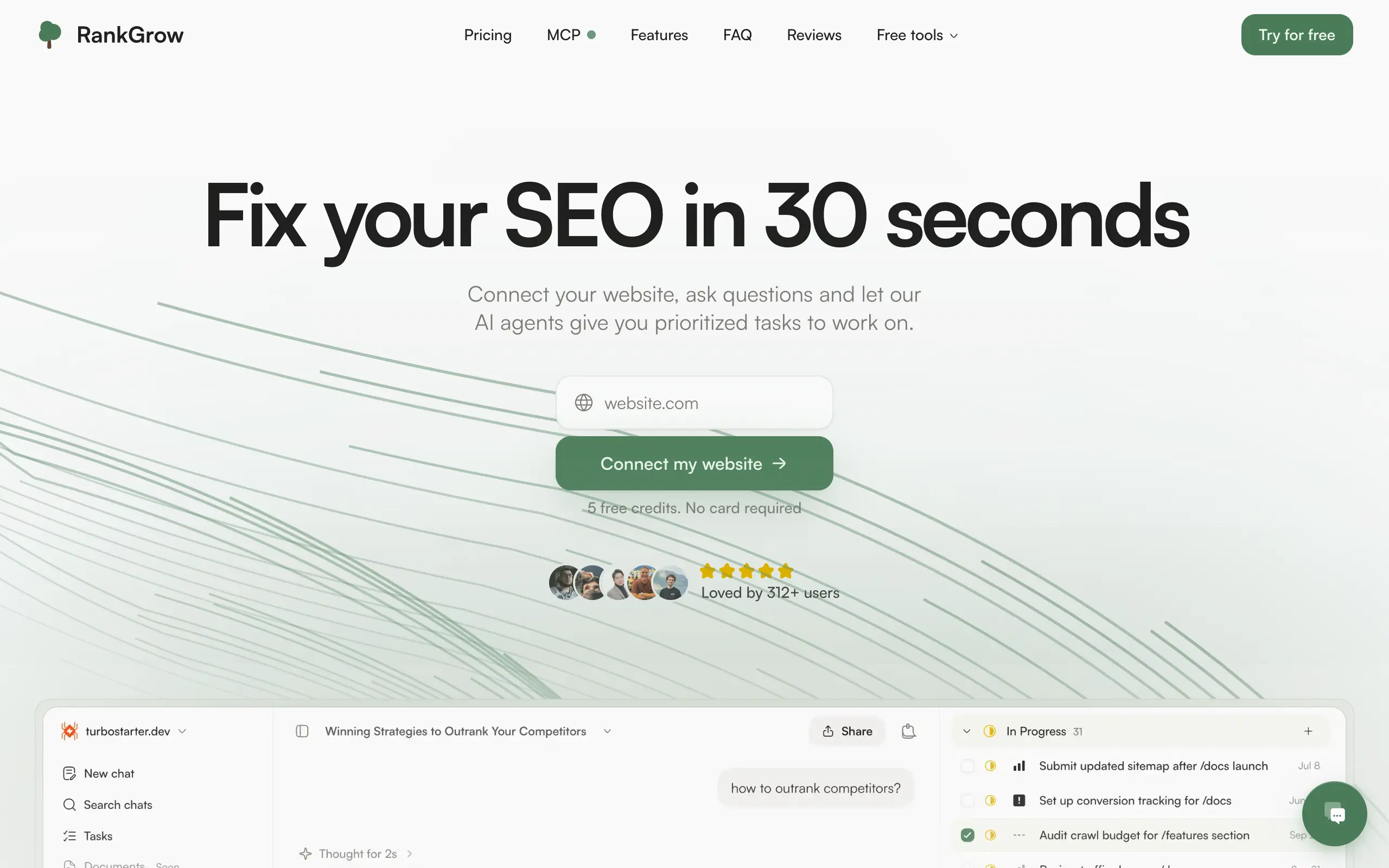
RankGrow
Fix your SEO with AI agents - connect Search Console, get prioritized tasks, and grow organic traffic 📈
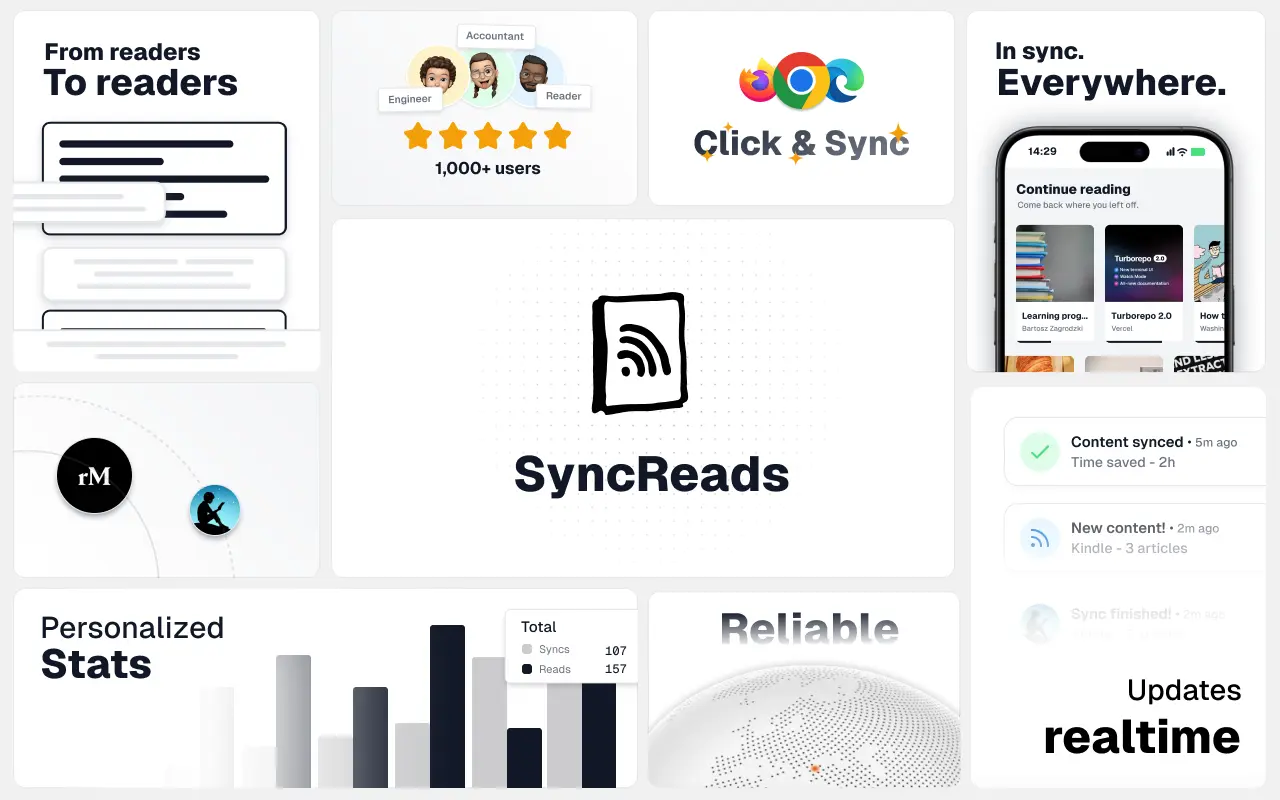
SyncReads
Sync your favorite content for distraction-free reading, save time and replace multiple apps. Anytime, anywhere 🔄
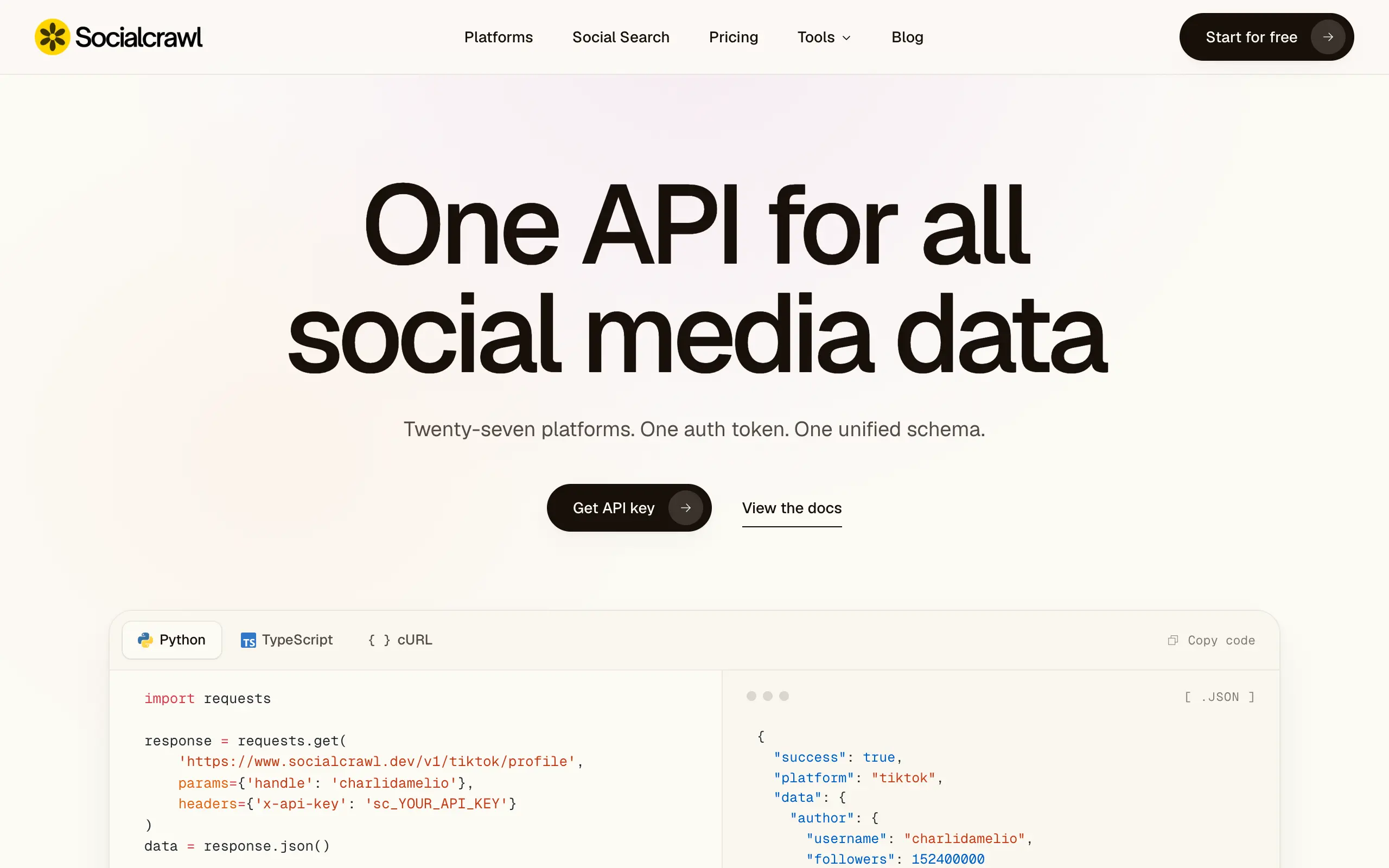
Socialcrawl
Get clean, structured data from 21 platforms like TikTok, Instagram, and YouTube with a single request 📊
Statiko
Monitor any Telegram channel in real time - track posts, edits, deletions, and growth with AI recaps 📡
Shibui
AI website builder - describe your business, pick a niche template, edit by chatting, and publish instantly ✨
Pro Service
Find verified home service professionals, compare quotes, and pay securely through escrow - built for Brazilians across the US 🏠
RankGrow
Fix your SEO with AI agents - connect Search Console, get prioritized tasks, and grow organic traffic 📈
SyncReads
Sync your favorite content for distraction-free reading, save time and replace multiple apps. Anytime, anywhere 🔄
Socialcrawl
Get clean, structured data from 21 platforms like TikTok, Instagram, and YouTube with a single request 📊
Statiko
Monitor any Telegram channel in real time - track posts, edits, deletions, and growth with AI recaps 📡
Shibui
AI website builder - describe your business, pick a niche template, edit by chatting, and publish instantly ✨
Pro Service
Find verified home service professionals, compare quotes, and pay securely through escrow - built for Brazilians across the US 🏠
RankGrow
Fix your SEO with AI agents - connect Search Console, get prioritized tasks, and grow organic traffic 📈
SyncReads
Sync your favorite content for distraction-free reading, save time and replace multiple apps. Anytime, anywhere 🔄
Socialcrawl
Get clean, structured data from 21 platforms like TikTok, Instagram, and YouTube with a single request 📊
Statiko
Monitor any Telegram channel in real time - track posts, edits, deletions, and growth with AI recaps 📡
Shibui
AI website builder - describe your business, pick a niche template, edit by chatting, and publish instantly ✨
Pro Service
Find verified home service professionals, compare quotes, and pay securely through escrow - built for Brazilians across the US 🏠
RankGrow
Fix your SEO with AI agents - connect Search Console, get prioritized tasks, and grow organic traffic 📈
SyncReads
Sync your favorite content for distraction-free reading, save time and replace multiple apps. Anytime, anywhere 🔄
Socialcrawl
Get clean, structured data from 21 platforms like TikTok, Instagram, and YouTube with a single request 📊
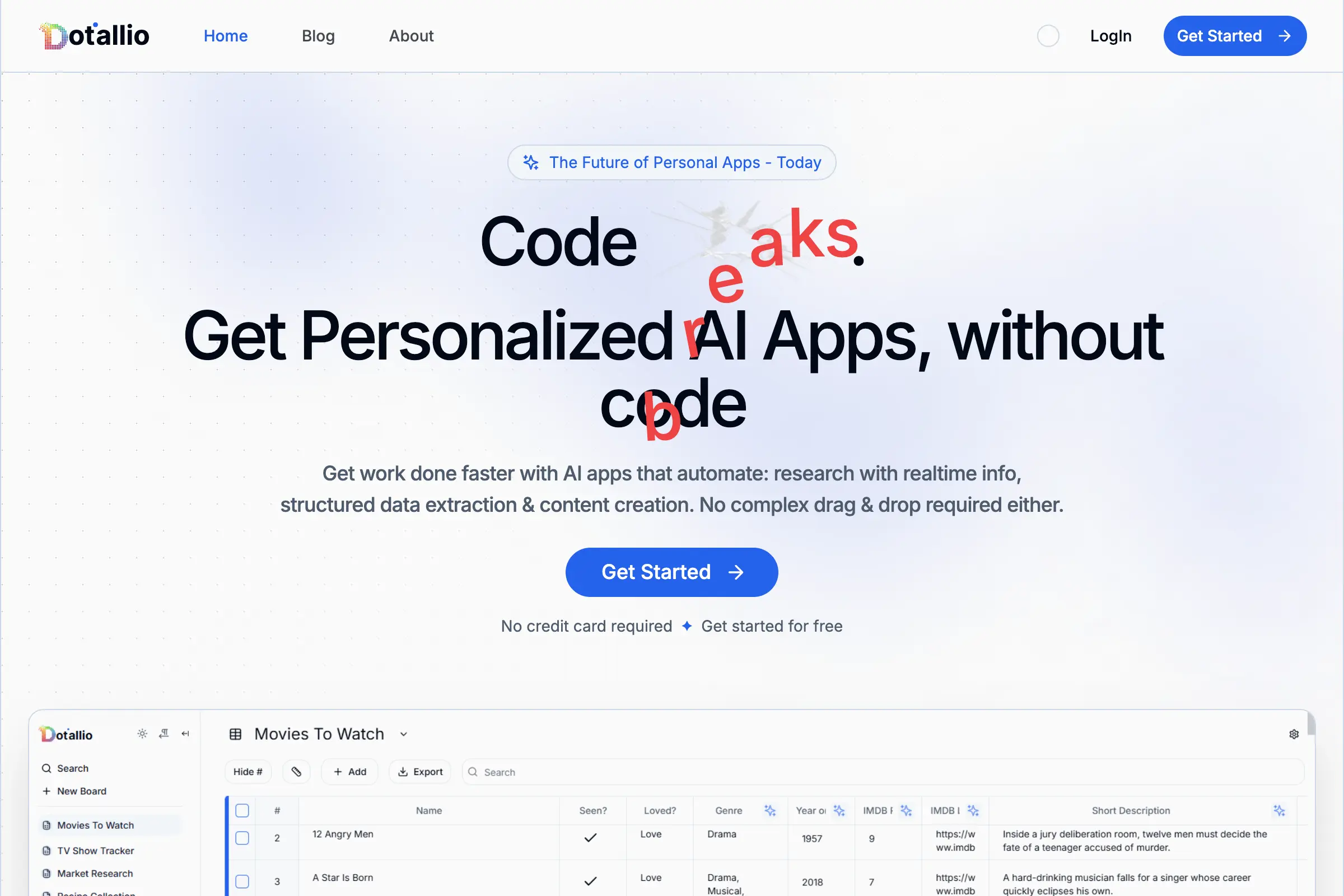
Dotallio
Personalized AI apps that automate research, data extraction, and content creation without code 🤖

Talk to Santa
Enjoy a magical live video chat or receive a unique AI-generated video greeting from Santa Claus 🎅

pozywka.pl
Scalable blog for food journalist, focused on performance and user experience 🌭
zagrodzki.me
Personal blog and portfolio of Bart Zagrodzki, where he shares his knowledge and work 💼
TurboStarter
Ship your startup everywhere. In minutes.
HTML to Markdown
Convert HTML to Markdown with ease, directly in your browser 📄
Dotallio
Personalized AI apps that automate research, data extraction, and content creation without code 🤖
Talk to Santa
Enjoy a magical live video chat or receive a unique AI-generated video greeting from Santa Claus 🎅
pozywka.pl
Scalable blog for food journalist, focused on performance and user experience 🌭
zagrodzki.me
Personal blog and portfolio of Bart Zagrodzki, where he shares his knowledge and work 💼
TurboStarter
Ship your startup everywhere. In minutes.
HTML to Markdown
Convert HTML to Markdown with ease, directly in your browser 📄
Dotallio
Personalized AI apps that automate research, data extraction, and content creation without code 🤖
Talk to Santa
Enjoy a magical live video chat or receive a unique AI-generated video greeting from Santa Claus 🎅
pozywka.pl
Scalable blog for food journalist, focused on performance and user experience 🌭
zagrodzki.me
Personal blog and portfolio of Bart Zagrodzki, where he shares his knowledge and work 💼
TurboStarter
Ship your startup everywhere. In minutes.
HTML to Markdown
Convert HTML to Markdown with ease, directly in your browser 📄
Dotallio
Personalized AI apps that automate research, data extraction, and content creation without code 🤖
Talk to Santa
Enjoy a magical live video chat or receive a unique AI-generated video greeting from Santa Claus 🎅
pozywka.pl
Scalable blog for food journalist, focused on performance and user experience 🌭
zagrodzki.me
Personal blog and portfolio of Bart Zagrodzki, where he shares his knowledge and work 💼
TurboStarter
Ship your startup everywhere. In minutes.
HTML to Markdown
Convert HTML to Markdown with ease, directly in your browser 📄
Omichat
Chat with 50+ AI models, including ChatGPT and Claude, in one place - switch models anytime without losing context 🤖
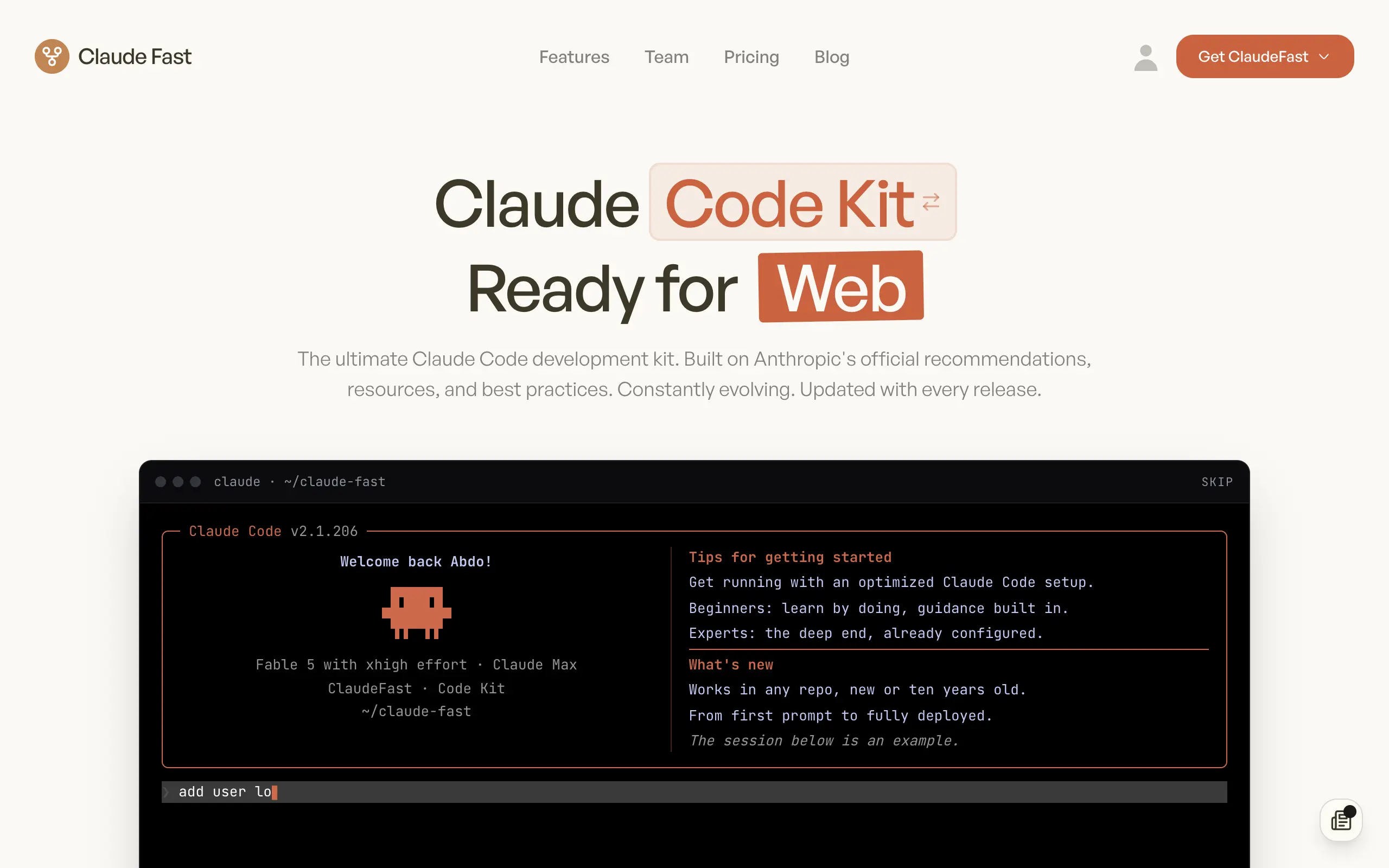
Claude Fast
Supercharge your Claude Code with 6x effective context window and specialized AI agents 🤖
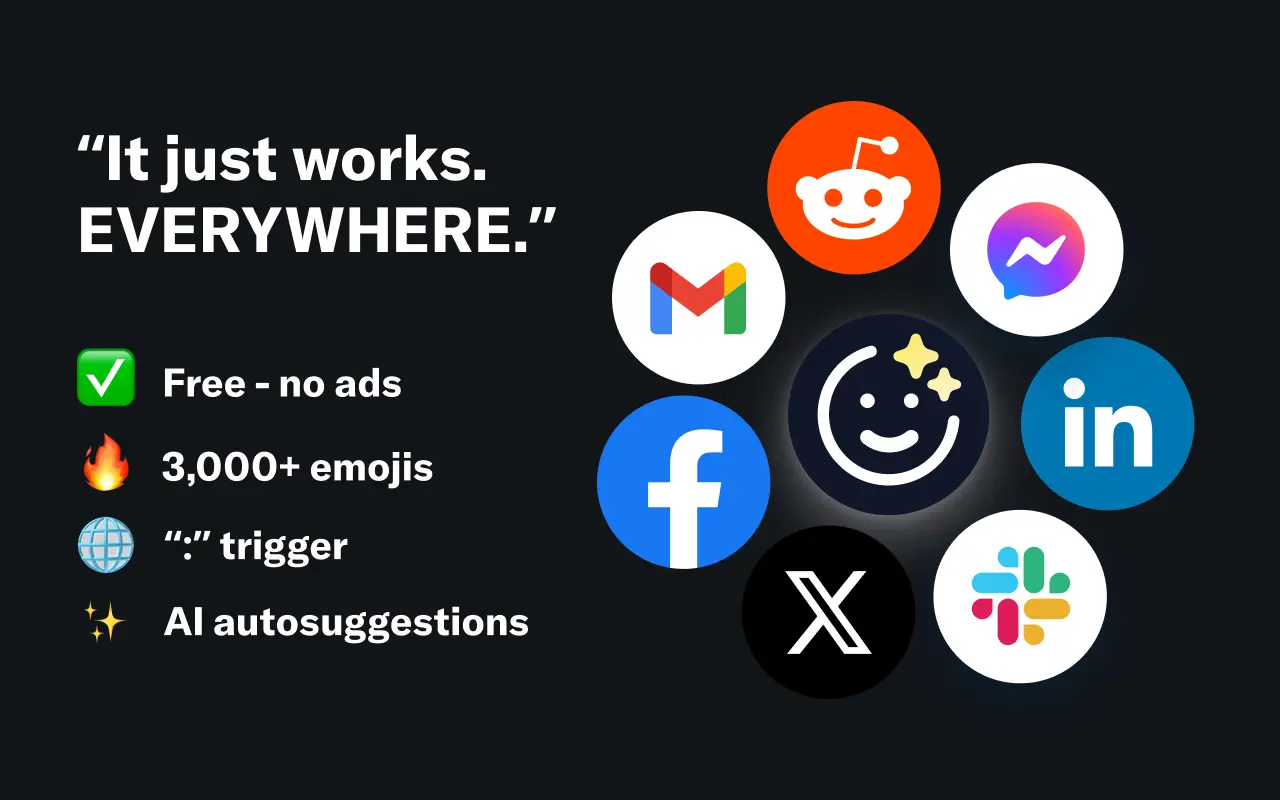
EmojAI
AI-powered emoji picker with smart, context-aware suggestions 🤖
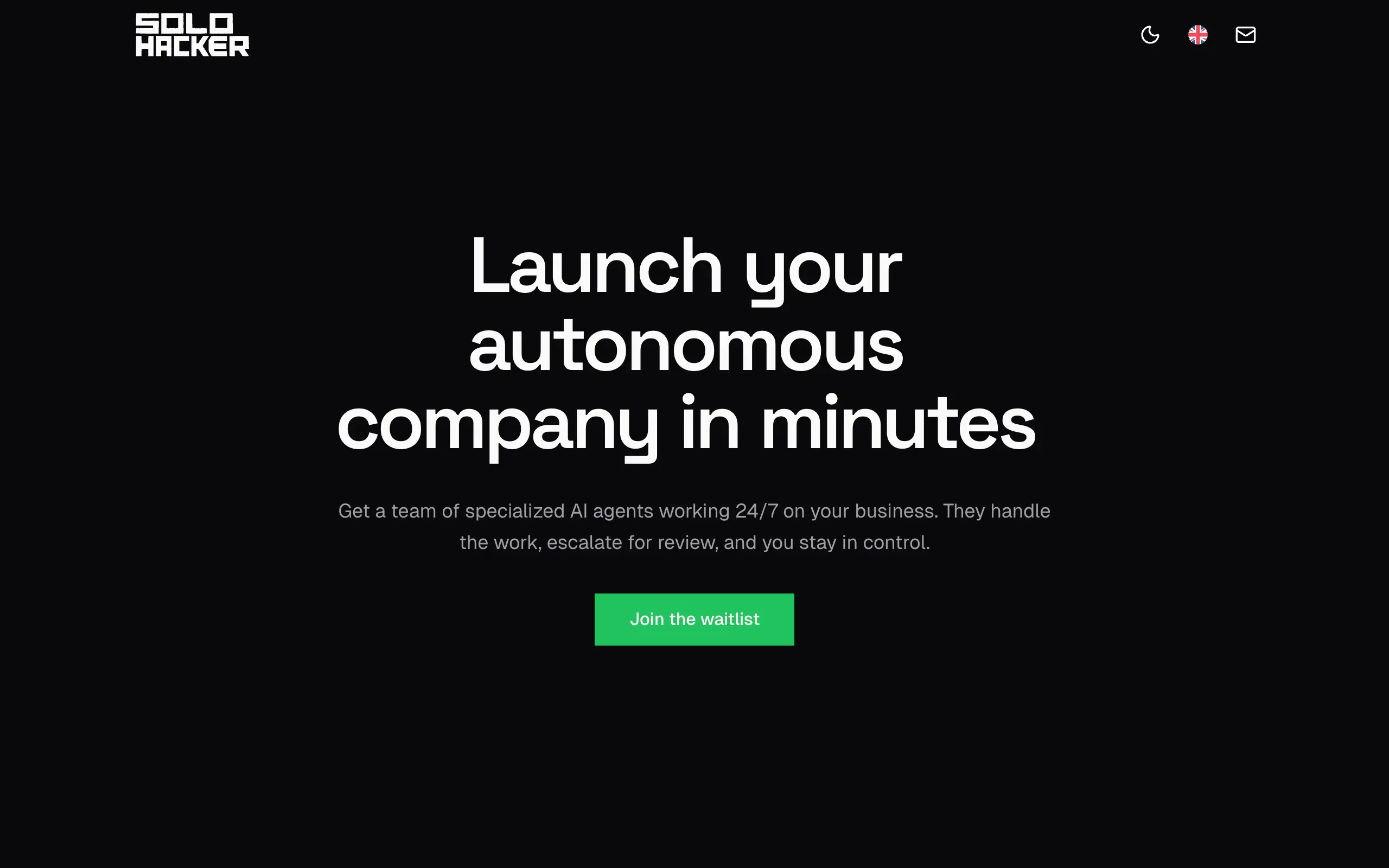
Solohacker
Autonomous company launcher - AI agents work 24/7, escalate what matters, and you stay in control 🤖

BeRawi: Storytelling Coach
Practice storytelling daily with instant feedback to sound clearer, more engaging, and confident 🎤
Omichat
Chat with 50+ AI models, including ChatGPT and Claude, in one place - switch models anytime without losing context 🤖
Claude Fast
Supercharge your Claude Code with 6x effective context window and specialized AI agents 🤖
EmojAI
AI-powered emoji picker with smart, context-aware suggestions 🤖
Solohacker
Autonomous company launcher - AI agents work 24/7, escalate what matters, and you stay in control 🤖
BeRawi: Storytelling Coach
Practice storytelling daily with instant feedback to sound clearer, more engaging, and confident 🎤
Omichat
Chat with 50+ AI models, including ChatGPT and Claude, in one place - switch models anytime without losing context 🤖
Claude Fast
Supercharge your Claude Code with 6x effective context window and specialized AI agents 🤖
EmojAI
AI-powered emoji picker with smart, context-aware suggestions 🤖
Solohacker
Autonomous company launcher - AI agents work 24/7, escalate what matters, and you stay in control 🤖
BeRawi: Storytelling Coach
Practice storytelling daily with instant feedback to sound clearer, more engaging, and confident 🎤
Omichat
Chat with 50+ AI models, including ChatGPT and Claude, in one place - switch models anytime without losing context 🤖
Claude Fast
Supercharge your Claude Code with 6x effective context window and specialized AI agents 🤖
EmojAI
AI-powered emoji picker with smart, context-aware suggestions 🤖
Solohacker
Autonomous company launcher - AI agents work 24/7, escalate what matters, and you stay in control 🤖
BeRawi: Storytelling Coach
Practice storytelling daily with instant feedback to sound clearer, more engaging, and confident 🎤

Connect with like-minded people
Join our community to get feedback, support, and grow together with 1,000+ builders on board, let's ship it!
Join usShip your startup everywhere. In minutes.
Don't burn tokens on setup and start building features on day one.