KindReply
An AI communication coach that drafts clear messages for work, family and services, adapting tone while helping users avoid misunderstandings.
What KindReply solves in everyday communication
KindReply is an AI communication coach designed to help people write clearer, kinder, and more effective messages across work, family, customer service, and other high-stakes conversations. Instead of acting like a generic AI writing tool, it focuses on the emotional and practical context behind a message.
The central problem is familiar. A user knows what they need to say, but they do not know how to say it without sounding passive-aggressive, cold, overly formal, vague, defensive, or confrontational. They may need to ask a colleague for a missed deadline, decline a family request, complain to a service provider, give difficult feedback, or respond to an emotionally charged text.
In each case, a poorly phrased message can create more work, tension, delay, or conflict.
KindReply can turn a rough thought such as:
“You ignored my email again. I need this now.”
Into a message that is direct while preserving the relationship:
“Hi Alex, I wanted to follow up on my earlier email about the report. Could you let me know whether you expect to have it ready today? I need it to complete the next step on my side.”
That outcome is more valuable than simple grammar correction. The user receives a message that accounts for tone, intent, hierarchy, urgency, and likely interpretation.
Core value proposition
KindReply helps people say what they mean without creating unnecessary misunderstanding. Its differentiator is context-aware tone coaching for real-world relationships, not merely rewriting text to sound “better.”
The primary keyword for this product category is AI communication coach. Related semantic keywords include AI message writer, tone assistant, workplace communication tool, conflict-free messaging, AI email assistant, text message rewriter, empathetic communication software, and professional message generator.
Why the AI communication coach market is growing
Communication is now distributed across email, Slack, Microsoft Teams, WhatsApp, text messages, support portals, project management tools, and social platforms. This creates more written interactions, more room for ambiguity, and less time to carefully review each message.
Remote and hybrid work have made written communication especially consequential. In an office, a quick clarification can happen in a hallway conversation. In distributed teams, an unclear sentence can sit unanswered for hours, become part of a permanent record, or be interpreted differently by people from different cultures and communication styles.
At the same time, consumers increasingly expect faster responses from businesses and service providers. Employees are expected to communicate professionally across functions. Managers need to give feedback without discouraging teams. Families navigate emotionally sensitive topics through short messages where context is limited.
A general-purpose chatbot can draft text, but it does not automatically solve the practical challenges of interpersonal communication:
- It may generate polished but generic language.
- It may fail to distinguish between a manager, peer, client, partner, parent, or service agent.
- It may over-soften a message that needs a firm boundary.
- It may make a message excessively formal, which can feel unnatural.
- It may not explain why wording could trigger defensiveness or confusion.
- It may not help users develop lasting communication skills.
This is the opportunity for KindReply. The product should be positioned as an AI communication coach, not just another prompt interface. The coaching layer can guide users toward clearer requests, appropriate boundaries, specific next steps, and language that matches the relationship.
Target audience for KindReply
KindReply has broad appeal because nearly everyone writes messages. However, the strongest early go-to-market strategy is to focus on users with frequent, consequential written communication and a clear willingness to pay.
Knowledge workers and remote teams
Knowledge workers send dozens of written messages each day. They regularly need to ask for updates, set priorities, clarify ownership, provide feedback, reschedule meetings, and communicate status to stakeholders.
Typical use cases include:
- Writing a tactful follow-up after no response
- Asking a teammate to revise incomplete work
- Pushing back on unrealistic deadlines
- Turning blunt Slack messages into constructive updates
- Drafting concise executive-facing summaries
- Clarifying scope before a project becomes blocked
- Responding professionally to criticism
For this audience, KindReply should emphasize time savings, reduced misunderstandings, stronger cross-functional collaboration, and confidence in high-visibility communication.
Managers and people leaders
Managers have unusually high communication leverage. A vague or harsh message can affect morale, performance, retention, and trust. Yet many first-time managers have little formal training in giving written feedback.
KindReply can help managers prepare messages for:
- Performance feedback
- Missed deadlines
- Role changes
- Compensation conversations
- Team announcements
- Conflict mediation
- Boundary-setting around workloads and availability
This group may be particularly valuable for team and business plans because communication quality can be tied to manager effectiveness, employee experience, and organizational risk.
Customer-facing professionals and freelancers
Consultants, freelancers, agencies, real estate professionals, recruiters, and account managers need to be warm, credible, and clear at the same time. They often lose time revising messages to clients or worrying about whether a request sounds demanding.
Their needs include:
- Following up on unpaid invoices
- Explaining delays or scope changes
- Declining work that does not fit
- Writing proposals and onboarding messages
- Asking clients for missing information
- Responding to complaints without accepting unfair blame
For this segment, KindReply should make communication feel professional without making it sound corporate or scripted.
Consumers handling family, services, and personal boundaries
A consumer plan can address personal interactions that are emotionally difficult but common. Users may be writing messages to landlords, schools, medical offices, contractors, family members, former partners, or customer support teams.
Examples include:
- Requesting a repair from a landlord
- Challenging an incorrect bill
- Declining a family invitation
- Asking a friend to respect a boundary
- Communicating co-parenting logistics
- Requesting a refund or escalation from a business
This audience values privacy, emotional reassurance, accessible language, and fast results. They may not identify with “communication coaching,” so acquisition messaging should also include practical search terms such as “help me write a polite complaint” and “rewrite this text to sound less rude.”
High-intent workplace user
Needs fast, professional drafts for feedback, follow-ups, requests, and cross-functional communication.
Relationship-conscious consumer
Needs wording support for sensitive personal, family, service, and boundary-setting messages.
Revenue-dense team buyer
Needs consistent communication quality, manager coaching, and privacy controls across a team.
The market gap: rewriting tools do not teach communication
Most existing AI writing products optimize for grammar, speed, general copywriting, or broad productivity. Many can rephrase a message. Far fewer are designed around the social dynamics of a message.
That distinction matters.
A person writing “Can you stop changing things without telling me?” may have multiple valid intentions:
- They want to express frustration.
- They want to establish a process.
- They want accountability.
- They want to avoid starting an argument.
- They want to preserve a professional relationship.
- They want a documented record of the request.
A basic rewrite tool may produce a cleaner sentence without understanding which outcome matters most. KindReply can bridge that gap by asking the right contextual questions and showing users trade-offs among possible tones.
The product should make its coaching visible. Rather than returning one mysterious answer, it can show options such as:
- Clear and neutral
- Warm but firm
- Direct and concise
- Collaborative
- Formal documentation
- De-escalating
That approach gives users agency. It also prevents the common failure mode where AI language sounds polished but does not sound like the user.
A product category built around emotional precision
KindReply’s unique selling proposition is emotionally intelligent message drafting with practical communication coaching.
The product does not need to claim that it can understand every relationship perfectly. It should instead help users articulate context, identify goals, and choose language deliberately.
A strong output should balance five factors:
| Factor | What it means | Common failure without coaching | KindReply guidance | User benefit |
|---|---|---|---|---|
| Intent | The outcome the sender wants | The request is implied rather than stated | Extract and clarify the desired action | Faster resolution |
| Tone | The emotional impression of the message | Message sounds cold, harsh, or overly apologetic | Offer calibrated tone alternatives | Better relationships |
| Context | Relationship, channel, and situation | Same language is used for a client and a sibling | Adapt formality and detail | More natural communication |
| Clarity | Specificity of request and next step | Recipient does not know what to do | Recommend an explicit ask or deadline | Fewer follow-ups |
| Boundaries | Respectful limits and expectations | Message either avoids the issue or escalates it | Use firm but non-accusatory language | Greater confidence |
Core features for an AI message drafting product
A minimum viable product should not try to solve every communication scenario immediately. Its first job is to make the user’s next message substantially easier and safer to send.
Context-aware message drafting
The central workflow begins with a rough draft, voice note transcript, or brief description of the situation. The user selects the recipient relationship, communication channel, desired tone, and goal.
Useful inputs may include:
- Recipient type, such as manager, colleague, client, friend, family member, service provider, or landlord
- Channel, such as email, Slack, SMS, WhatsApp, support form, or letter
- Desired outcome, such as request, follow-up, apology, boundary, feedback, escalation, or decline
- Tone preferences, such as warm, confident, direct, professional, brief, firm, or empathetic
- Urgency level and whether a deadline should be included
- Relationship sensitivity, such as low-stakes, ongoing relationship, or emotionally difficult
The output should provide a ready-to-send message, but it should also be editable and clearly structured.
Tone spectrum instead of a single rewrite
A major product advantage comes from offering multiple drafts with meaningful differences. Users rarely want “nicer” in the abstract. They want a message that is appropriate for the moment.
For example, the same request could be drafted in three modes:
This variation protects goodwill and invites coordination. It works well for peers, trusted clients, and relationships where the user wants to preserve a cooperative tone.
This variation states the issue and desired action with minimal emotional framing. It works well for workplace updates, project follow-ups, and vendor communications.
This variation clearly states a limit or expectation without insults, threats, or excessive explanation. It works well when previous requests have not been respected.
The user should understand why the variants differ. Small explanations, such as “this version removes blame and adds a specific request,” turn the tool into a coach rather than a black box.
Misunderstanding and tone risk detection
A tone analyzer can identify phrases that may be interpreted as accusatory, vague, passive-aggressive, overly apologetic, or unintentionally demanding.
Potential flags include:
- Absolutes such as “always” and “never”
- Ambiguous requests such as “please handle this soon”
- Loaded phrasing such as “obviously” or “as I already said”
- Excessive hedging that weakens a necessary request
- Missing ownership, deadline, or next action
- Unintended legal or reputational risk in a customer-facing message
The goal is not to enforce artificial politeness. A strong AI communication coach must respect that directness is sometimes necessary. The analysis should explain likely interpretations and let the user decide.
Scenario templates and guided prompts
Templates improve activation because users do not always know what to ask an AI tool. They also create high-intent landing pages for SEO.
High-value template categories could include:
- Follow up after no response
- Ask for a deadline update
- Say no politely
- Request a refund
- Complain professionally
- Apologize without over-apologizing
- Set a boundary with family
- Give constructive feedback
- Ask for clarification at work
- Reschedule an appointment
- Respond to a difficult customer
- Write a landlord repair request
Each template should request only the information needed to generate a useful result. For example, a refund request template may ask what was purchased, what went wrong, the desired resolution, and whether the user has already contacted support.
Personal communication preferences
Over time, KindReply can learn user preferences without copying private content indiscriminately. A user might prefer concise language, avoid exclamation marks, use British English, favor direct requests, or want to preserve a particular professional voice.
Useful preference settings include:
- Default message length
- Preferred sign-offs
- Formality level
- Words or phrases to avoid
- Default tone by recipient type
- Language and regional spelling
- Accessibility preference for plain language
- Personal boundary style, such as gentle, direct, or highly concise
This feature improves retention because the product becomes more useful with repeated use.
Learning loops and communication skill building
The long-term defensibility of KindReply is not only generation quality. It is helping users become more confident communicators.
After a draft is generated, the product can teach one concise lesson:
- “You made the request more actionable by adding a deadline.”
- “This version replaces a judgment with an observable fact.”
- “The phrase ‘I need’ is clearer than ‘it would be nice if.’”
- “A short reason provides context without over-explaining.”
Users should be able to skip these tips. The product must remain fast for urgent use cases. But optional coaching gives KindReply a differentiated path beyond commodity AI text generation.
Recommended tech stack for KindReply
The recommended stack should optimize for fast iteration, secure handling of sensitive text, reliable AI workflows, and a polished responsive experience.
Frontend and application framework
A strong foundation is Next.js with React and TypeScript. Next.js supports server-side rendering, route handlers, streaming interfaces, SEO-friendly public pages, and an integrated application architecture.
For design and UI speed, use Tailwind CSS alongside an accessible component system. The interface should feel calm and low-friction. Since users may arrive while stressed or emotionally activated, visual complexity can reduce trust.
Recommended frontend capabilities include:
- Autosaving drafts locally before account creation
- Mobile-first composer experience
- Clear copy and regenerate actions
- Side-by-side original and revised message views
- Tone chips and scenario selectors
- Version history for paid users
- Accessible keyboard navigation and screen-reader labels
Backend, database, and authentication
Use Supabase for PostgreSQL, authentication, row-level security, and storage. It is a practical early-stage choice because it reduces infrastructure overhead while preserving the flexibility of a relational database.
Core data models may include:
- Users and subscription status
- User communication preferences
- Draft sessions
- Messages and generated variants
- Template categories
- Feedback events
- Usage limits
- Consent and deletion requests
- Team workspaces for business plans
For authentication, support email magic links, Google sign-in, and optionally Microsoft sign-in for workplace users. Keep onboarding short. Users should be able to try a limited draft before being forced to create an account.
AI orchestration and model strategy
The AI layer should use structured prompts, JSON schema outputs where appropriate, moderation checks, and evaluation datasets. The system should separate tasks rather than rely on one giant prompt.
A reliable pipeline may include:
- Input classification for scenario, recipient, and risk level.
- Intent extraction to identify the user’s desired outcome.
- Tone analysis to detect ambiguity, escalation, or excessive softness.
- Draft generation for selected tone options.
- Quality checks for placeholders, hallucinated facts, and unsafe advice.
- Optional coaching explanation that references concrete wording choices.
For fast implementation, an API-based large language model is appropriate. The trade-off is vendor dependency and variable inference costs. Over time, a routing layer can direct simple rewrites to lower-cost models while reserving premium models for sensitive, nuanced, or multilingual requests.
Do not market the system as a therapist, legal adviser, or mediator. The product can help users draft a message, but it should not diagnose emotional states, determine fault in interpersonal disputes, or provide legal conclusions.
Payments and product analytics
Use Stripe for subscriptions, metered usage, invoices, trials, and team billing. Track product behavior with privacy-conscious analytics, focusing on events rather than message content wherever possible.
Important events to measure include:
- First message generated
- Draft copied
- Draft edited before copying
- Tone option selected
- Template used
- User returned within seven days
- User converted from free to paid
- User reported that a draft was helpful
- User deleted a draft or account
A starter kit can accelerate setup for authentication, payments, emails, dashboards, and SaaS operations. TurboStarter is especially relevant when the goal is to validate KindReply quickly without spending weeks rebuilding standard subscription infrastructure.
Example structured output for safer UI rendering
Instead of asking the model to return free-form prose only, KindReply can request a predictable object. This makes it easier to render tone explanations, warnings, and multiple message variants safely.
type DraftResponse = {
  detectedGoal: string;
  toneRisks: Array<{
    phrase: string;
    concern: string;
    suggestion: string;
  }>;
  variants: Array<{
    label: "Warm" | "Direct" | "Firm";
    message: string;
    rationale: string;
  }>;
  coachingTip: string;
};
Structured outputs reduce interface fragility and make automated quality evaluation more practical. The trade-off is that strict schemas can occasionally limit creative responses, so the system should allow a graceful fallback when model output cannot be parsed.
Monetization strategy for KindReply
KindReply can use a freemium subscription model because the product has recurring utility. Users may need it several times a week, and personalized preferences become increasingly valuable over time.
Free plan for acquisition and activation
The free tier should let users experience the core “aha” moment quickly. A reasonable offer could include a limited number of message rewrites per month, basic tone options, and a small set of templates.
The free plan should be generous enough to prove value but limited enough that regular users see an obvious upgrade path.
Potential free-plan limits include:
- Five to ten message drafts per month
- Basic tone adjustments
- No saved history beyond a short period
- Limited template access
- No custom communication profile
- No team features
Individual premium plan
A paid personal plan can include unlimited or high-volume drafts with reasonable fair-use limits, saved preferences, advanced tone analysis, message history, premium templates, multilingual support, and priority model access.
Pricing should be tested rather than assumed. A likely starting range for an individual AI communication coach is approximately $8 to $20 per month, depending on generation costs, feature depth, and the target customer segment.
The value proposition should focus on confidence and avoided friction, not word count. Users are paying for better outcomes in difficult conversations.
Team and business plans
A team plan can be more defensible and higher value than consumer subscriptions. It may include shared brand voice guidance, manager communication templates, administrative controls, privacy settings, usage reporting, and secure workspace features.
Potential team buyers include:
- Customer support teams
- Sales and account management teams
- Recruiting agencies
- Professional services firms
- People operations teams
- Distributed startups
- Property management businesses
Be cautious with team analytics. Managers should not be able to inspect private employee messages by default. The product’s trust depends on clear boundaries and transparent data practices.
Additional revenue opportunities
Over time, KindReply could offer:
- Industry-specific template packs
- Coaching programs for managers
- API access for customer support and CRM workflows
- White-label integrations
- Enterprise security and compliance packages
- Communication style audits for organizations
- Browser extension upgrades for Gmail, LinkedIn, Slack, and web forms
The best expansion path depends on which audience demonstrates the strongest retention. Avoid building integrations too early if the core drafting experience has not yet proven product-market fit.
Competitive advantage and positioning
KindReply will compete indirectly with general AI assistants, grammar tools, productivity platforms, and writing enhancement products. Competing on “better AI writing” alone is difficult because underlying language model capabilities change quickly.
The durable advantage should come from product specialization.
Build a trusted communication framework
KindReply can develop a proprietary framework for effective written communication. For example, each draft can be evaluated against a simple model:
- State the relevant fact
- Explain the impact when needed
- Make a clear request
- Define the next step
- Match the tone to the relationship
This framework should be embedded in templates, coaching tips, tone models, and quality evaluations. It gives the product conceptual consistency and makes the brand easier to remember.
Own high-intent communication workflows
Generic AI tools require users to formulate a prompt. KindReply should reduce that burden through workflows built for specific moments.
“Write a polite email” is generic. “Follow up with a vendor whose deliverable is three days late without damaging the relationship” is a product workflow with clear value.
High-intent workflows improve SEO, paid acquisition relevance, and conversion because they map to concrete problems users already search for.
Prioritize privacy as a feature
Messages about work disputes, family conflict, medical services, financial issues, or customer complaints can contain sensitive information. Privacy must be a first-class product feature, not a buried legal statement.
Trust-building practices should include:
- Clear explanation of what content is stored
- Simple draft deletion controls
- Explicit opt-in for model training, if ever offered
- Encryption in transit and at rest
- Minimal retention settings
- Strong access controls for team workspaces
- A plain-language privacy center
- Redaction options for names, account numbers, and addresses
For enterprise buyers, be prepared to answer questions about data processing, subprocessors, retention, security reviews, and data residency. Seek guidance from qualified privacy and security professionals before making compliance claims.
Risks and mitigation for an AI communication coach
An AI tool that influences interpersonal communication must be designed carefully. The product should not create false confidence or encourage users to outsource judgment in high-risk situations.
Overly polished output can feel unnatural, especially in close relationships. Mitigate this with editable drafts, user voice preferences, multiple tone choices, and explanations that encourage users to personalize important messages.
Messages involving harassment, abuse, legal disputes, self-harm, or immediate danger require special handling. Use safety classification, avoid definitive advice, provide neutral language options where appropriate, and show supportive resources or emergency guidance when risk signals are present.
Users may hesitate to paste sensitive messages into an AI tool. Reduce this barrier with transparent retention policies, optional redaction, no-training defaults where feasible, account-level deletion, and clear explanations of data handling.
A model may invent dates, promises, policies, or details that the user did not provide. Add instructions and automated checks that prohibit unsupported facts, highlight placeholders, and encourage users to verify important statements before sending.
Long prompts, repeated regeneration, and premium models can create expensive inference patterns. Use usage caps, caching for templates, model routing, concise system prompts, and monitoring of cost per activated and paid user.
Responsible UX principles
KindReply should follow a few practical rules:
- Never send messages automatically without explicit user action.
- Preserve the user’s ability to edit every draft.
- Explain uncertainty when context is incomplete.
- Avoid presenting generated language as objectively correct.
- Give users options rather than forcing one “perfect” tone.
- Clearly distinguish communication help from therapy, legal advice, or emergency support.
- Encourage human review for sensitive workplace, contractual, medical, and legal messages.
These principles improve trust and reduce product risk. They also align with the user’s actual need: support in making a decision, not a machine making a personal decision for them.
SEO strategy for an AI communication coach
Organic search can become a major acquisition channel because many KindReply use cases begin with problem-based searches. People search for wording help at the moment they need it.
Examples of high-intent keywords include:
- AI communication coach
- AI message writer
- rewrite text to sound professional
- make this email sound less rude
- how to politely follow up on an email
- how to say no politely in a text
- AI tool for difficult conversations
- write a professional complaint email
- how to set boundaries over text
- workplace communication assistant
- AI tone checker
The SEO strategy should combine evergreen educational articles, template pages, interactive tools, and product-led landing pages.
Create topic clusters around communication scenarios
A content cluster can include a broad pillar page about writing better messages, supported by focused pages for individual scenarios.
Potential clusters include:
- Workplace communication and manager feedback
- Professional email writing and follow-ups
- Customer service complaints and refund requests
- Family boundaries and difficult conversations
- Freelance client communication
- Tone analysis and passive-aggressive language
- Clear requests and conflict de-escalation
Each article should provide genuine guidance before presenting the product. For example, an article about following up after no response can explain timing, subject lines, escalation, and examples for different relationship types. Then it can introduce KindReply as a faster way to adapt the framework to a specific situation.
Use templates responsibly
Template pages can rank well, but low-quality pages full of interchangeable copy will not create authority. Every page should include:
- When to use the template
- What information to include
- Common mistakes to avoid
- Multiple examples by tone or audience
- Guidance on when to escalate
- A concise explanation of how the AI message writer can personalize the draft
Where claims involve workplace trends, AI adoption, mental health, or communication statistics, cite a credible current source in the editorial workflow. Suitable source types include research from recognized consultancies, peer-reviewed journals, government agencies, and established industry reports. Verify publication date and methodology before citing any statistic.
Build E-E-A-T into the content program
For strong trust signals, publish content reviewed by people with relevant expertise. This may include communications professionals, HR leaders, customer experience specialists, mediators, workplace coaches, and privacy professionals.
Helpful editorial practices include:
- Add author biographies with relevant credentials and experience.
- Include reviewed dates for sensitive or evolving guidance.
- Explain the limits of AI-generated communication advice.
- Use concrete examples rather than vague claims.
- Publish transparent privacy and safety documentation.
- Avoid clinical, legal, or employment-law claims without qualified review.
A practical implementation roadmap
The fastest path is to validate whether users repeatedly return for help with real messages. Do not begin with a massive feature set or every possible integration.
Define one high-value starting segment. Remote knowledge workers and managers are strong candidates because they communicate frequently and can describe the value in business terms.
Launch a focused MVP with rough-text input, recipient selection, goal selection, three tone variants, copy functionality, and basic safety checks.
Create ten to twenty scenario templates based on real search intent, including follow-ups, feedback, boundaries, complaints, requests, and polite declines.
Instrument activation carefully. Measure whether a user generates a draft, copies it, returns to create another draft, and converts after seeing repeated value.
Interview early users after they have used the product in a real situation. Ask what they were trying to avoid, what they changed before sending, and whether the result felt like their own voice.
Improve the product around the highest-retention workflows. Add personalization, history, browser extensions, and team features only after the core use cases prove repeat demand.
Suggested first 90 days
In the first month, focus on a usable private beta. Build the composer, generate tone variants, save user preferences, implement usage limits, and establish privacy controls. Recruit a small group of remote workers, freelancers, and managers for qualitative feedback.
In the second month, improve output quality with real-world evaluation cases. Create a test dataset of anonymized scenarios across workplace, family, and customer service contexts. Score drafts for clarity, appropriateness, factual fidelity, tone fit, and actionability. Human reviewers should assess difficult edge cases.
In the third month, launch public landing pages for the most successful scenarios. Pair each page with a simple interactive experience that lets visitors try a limited version of the AI communication coach. Begin testing individual pricing and track whether users return after their first urgent use case.
The key validation question is not whether users enjoy one generated draft. It is whether KindReply becomes a trusted habit before meaningful conversations.
Final perspective
KindReply has the potential to occupy a valuable space between generic AI writing software and traditional communication coaching. Its strongest opportunity is helping users navigate the moments where wording has real consequences: asking for accountability, setting a boundary, repairing tension, handling a complaint, giving feedback, or making a request that feels difficult to send.
The winning product will not promise to eliminate conflict or generate a universally perfect message. Instead, it will help users communicate with greater clarity, confidence, and care.
By specializing in tone-aware drafting, transparent coaching, privacy-conscious product design, and scenario-specific workflows, KindReply can become more than an AI message writer. It can become a practical communication companion that helps people avoid misunderstandings while still saying what needs to be said.
More 🤖 AI Startup SaaS ideas
Discover more innovative ai startup SaaS ideas that are trending in 2026. Each idea is AI-generated with market validation and growth potential to help you find your next profitable venture faster than competitors.
Your competitors are building with TurboStarter
Below are some of the SaaS ideas that have been generated and built with our starter kit.
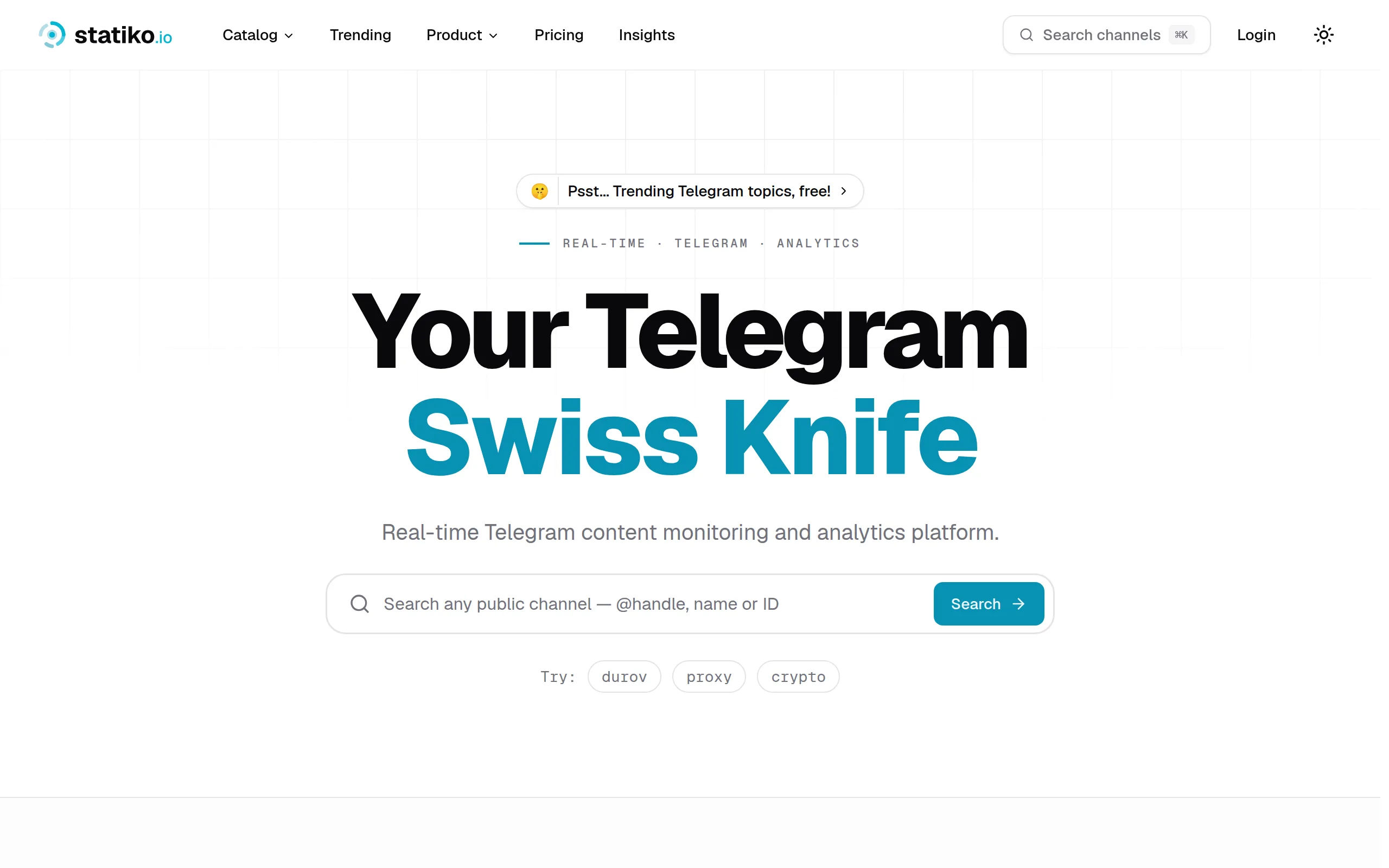
Statiko
Monitor any Telegram channel in real time - track posts, edits, deletions, and growth with AI recaps 📡
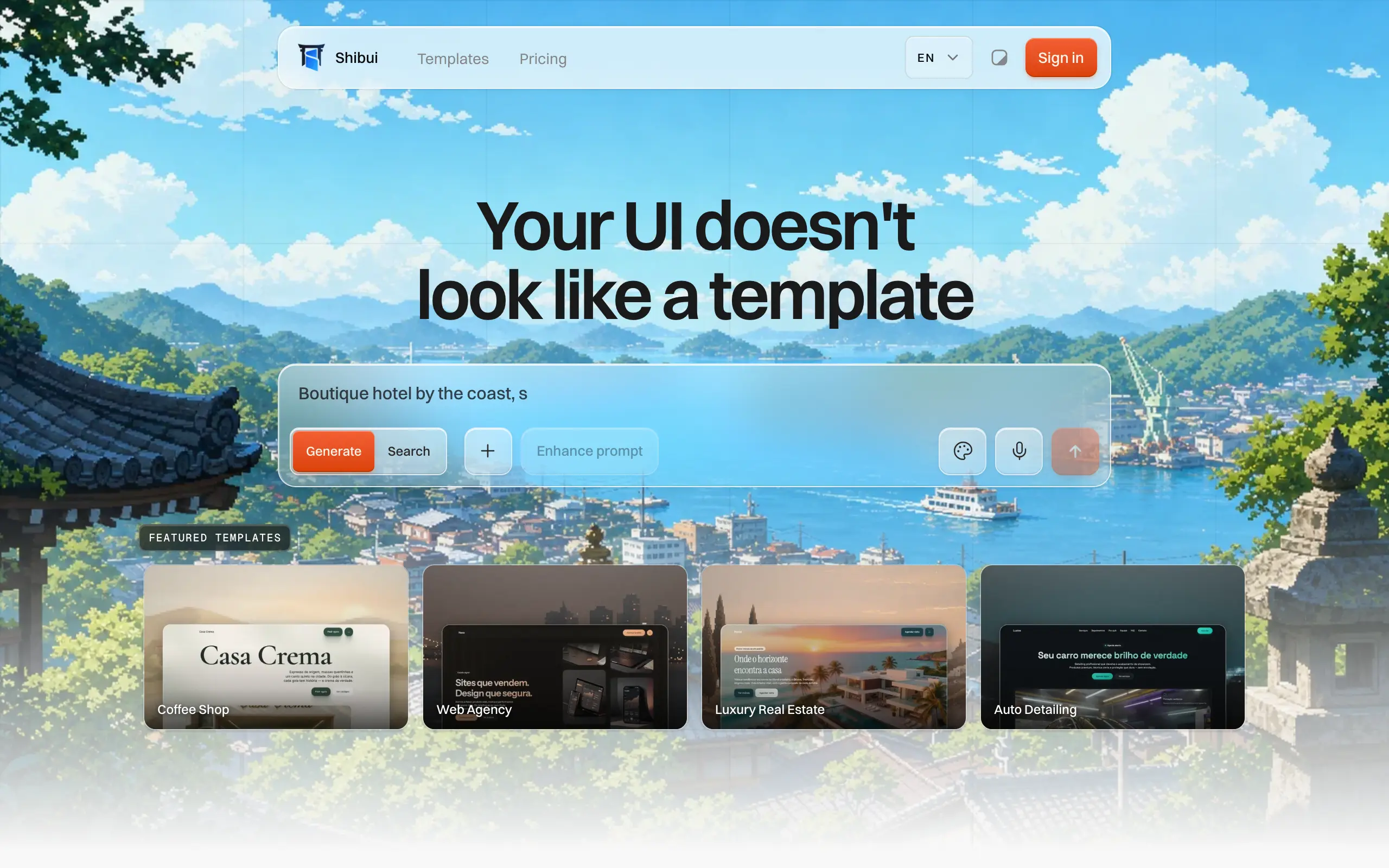
Shibui
AI website builder - describe your business, pick a niche template, edit by chatting, and publish instantly ✨

Pro Service
Find verified home service professionals, compare quotes, and pay securely through escrow - built for Brazilians across the US 🏠
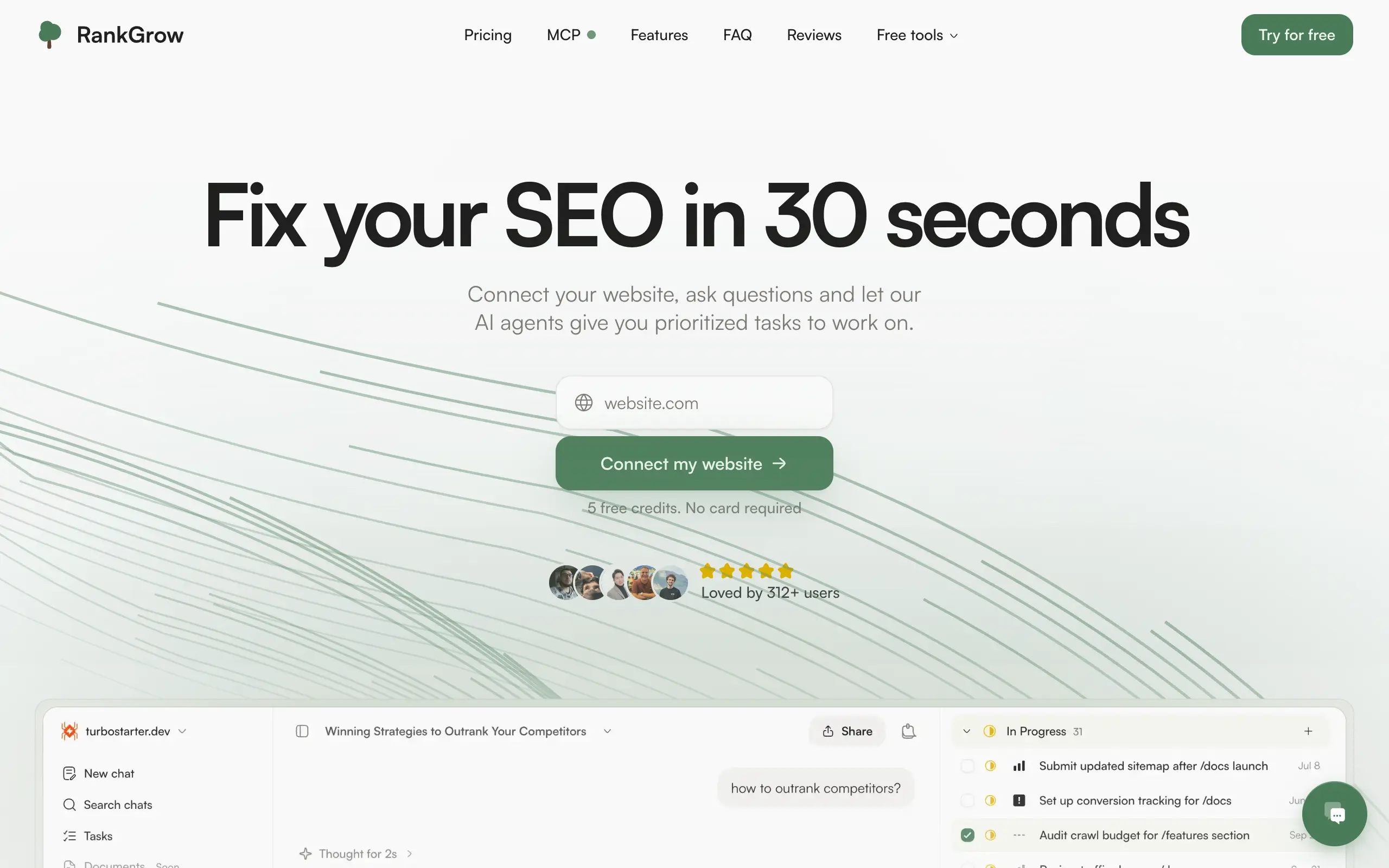
RankGrow
Fix your SEO with AI agents - connect Search Console, get prioritized tasks, and grow organic traffic 📈
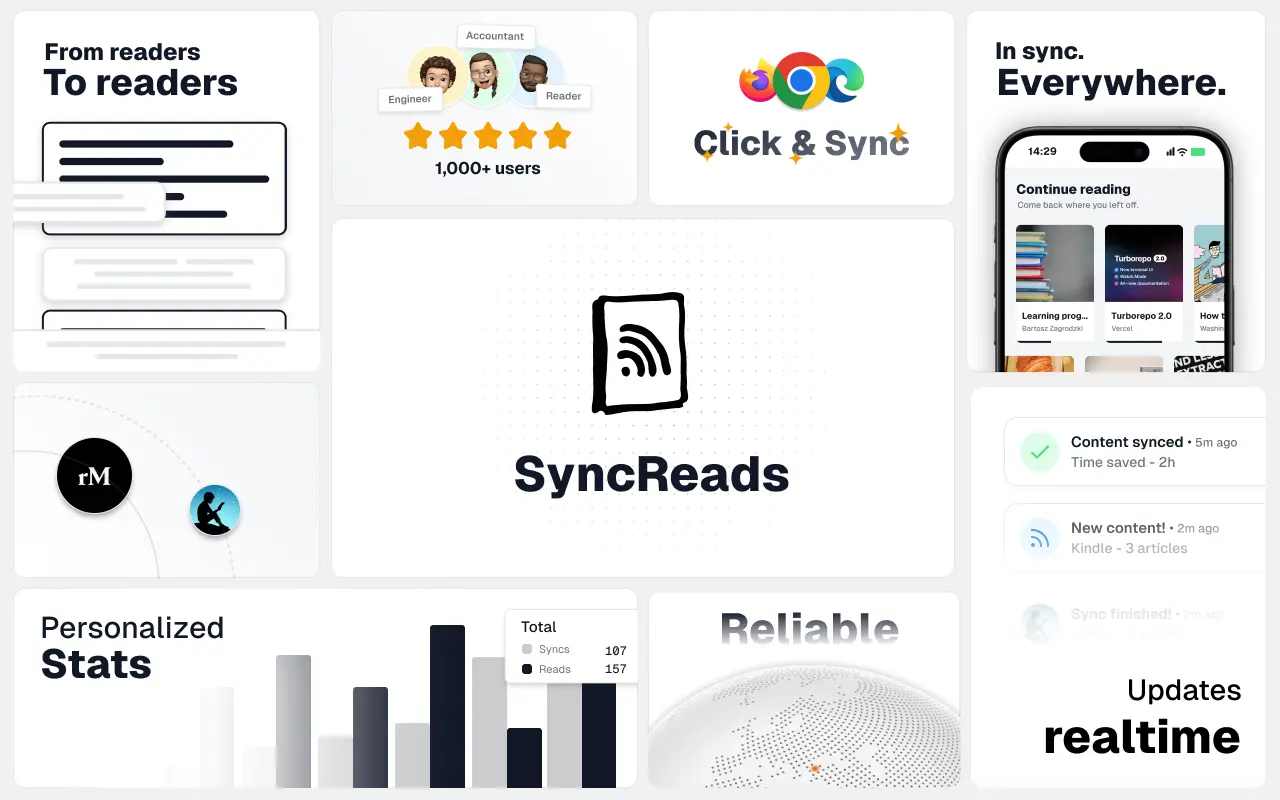
SyncReads
Sync your favorite content for distraction-free reading, save time and replace multiple apps. Anytime, anywhere 🔄
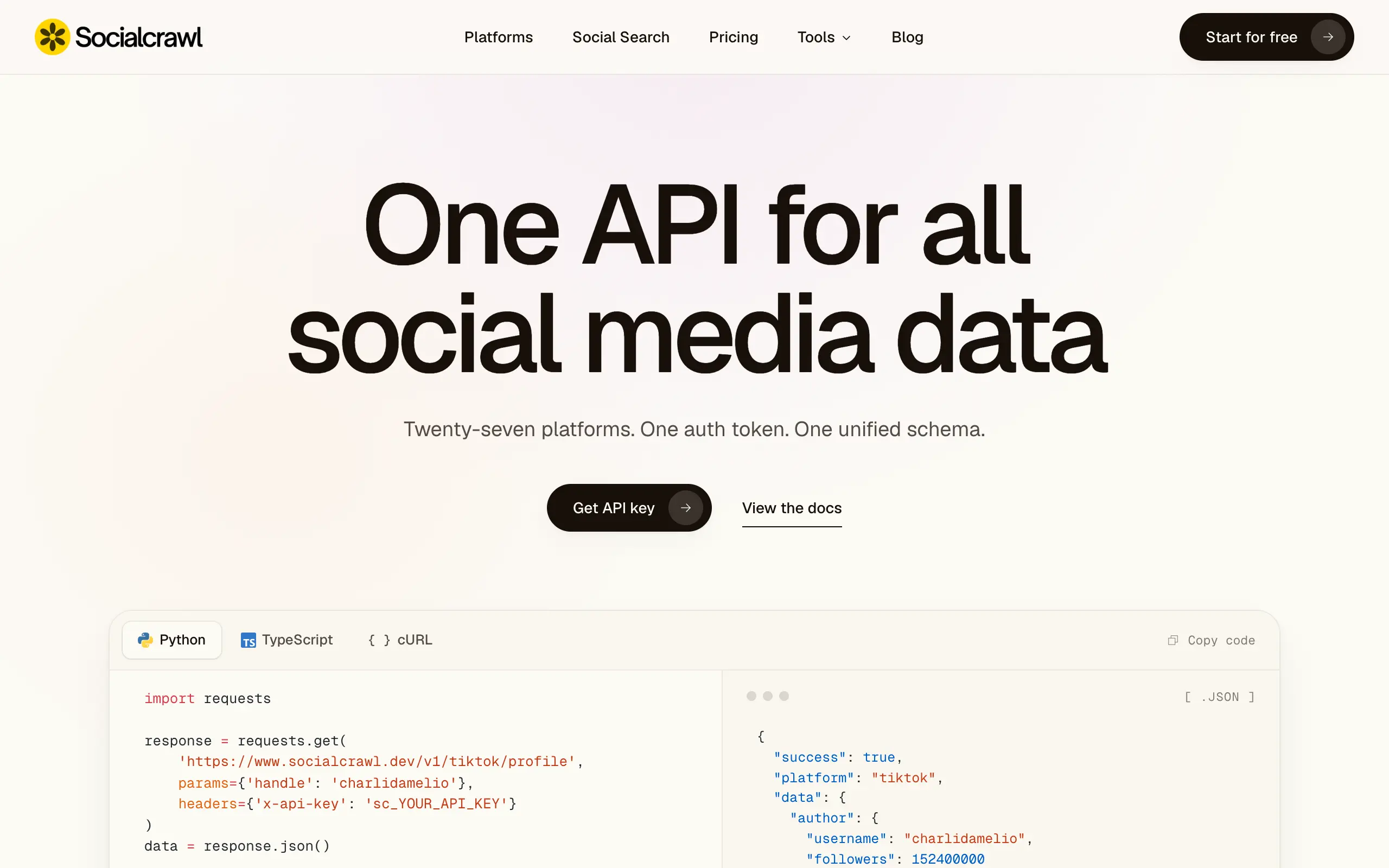
Socialcrawl
Get clean, structured data from 21 platforms like TikTok, Instagram, and YouTube with a single request 📊
Statiko
Monitor any Telegram channel in real time - track posts, edits, deletions, and growth with AI recaps 📡
Shibui
AI website builder - describe your business, pick a niche template, edit by chatting, and publish instantly ✨
Pro Service
Find verified home service professionals, compare quotes, and pay securely through escrow - built for Brazilians across the US 🏠
RankGrow
Fix your SEO with AI agents - connect Search Console, get prioritized tasks, and grow organic traffic 📈
SyncReads
Sync your favorite content for distraction-free reading, save time and replace multiple apps. Anytime, anywhere 🔄
Socialcrawl
Get clean, structured data from 21 platforms like TikTok, Instagram, and YouTube with a single request 📊
Statiko
Monitor any Telegram channel in real time - track posts, edits, deletions, and growth with AI recaps 📡
Shibui
AI website builder - describe your business, pick a niche template, edit by chatting, and publish instantly ✨
Pro Service
Find verified home service professionals, compare quotes, and pay securely through escrow - built for Brazilians across the US 🏠
RankGrow
Fix your SEO with AI agents - connect Search Console, get prioritized tasks, and grow organic traffic 📈
SyncReads
Sync your favorite content for distraction-free reading, save time and replace multiple apps. Anytime, anywhere 🔄
Socialcrawl
Get clean, structured data from 21 platforms like TikTok, Instagram, and YouTube with a single request 📊
Statiko
Monitor any Telegram channel in real time - track posts, edits, deletions, and growth with AI recaps 📡
Shibui
AI website builder - describe your business, pick a niche template, edit by chatting, and publish instantly ✨
Pro Service
Find verified home service professionals, compare quotes, and pay securely through escrow - built for Brazilians across the US 🏠
RankGrow
Fix your SEO with AI agents - connect Search Console, get prioritized tasks, and grow organic traffic 📈
SyncReads
Sync your favorite content for distraction-free reading, save time and replace multiple apps. Anytime, anywhere 🔄
Socialcrawl
Get clean, structured data from 21 platforms like TikTok, Instagram, and YouTube with a single request 📊
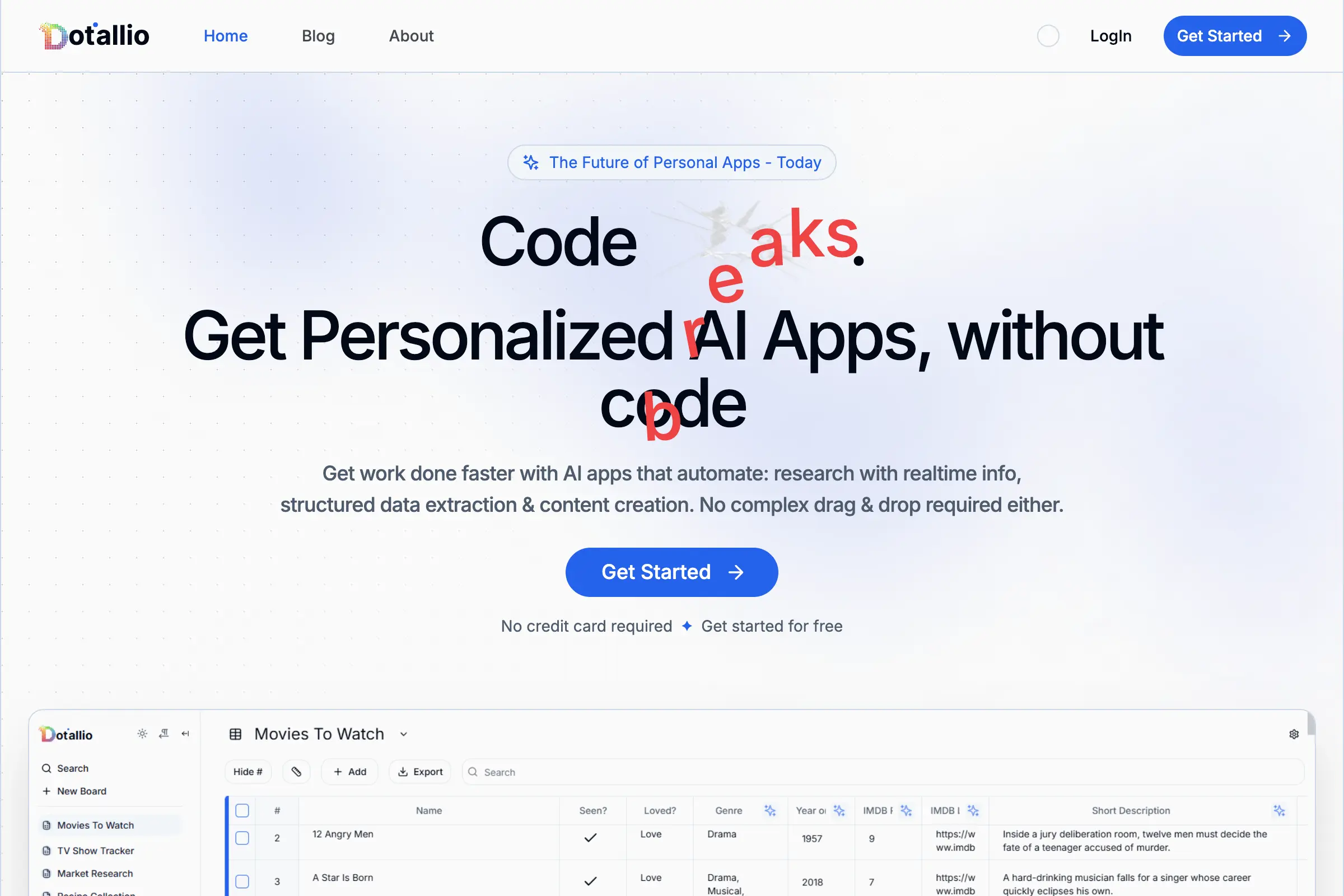
Dotallio
Personalized AI apps that automate research, data extraction, and content creation without code 🤖
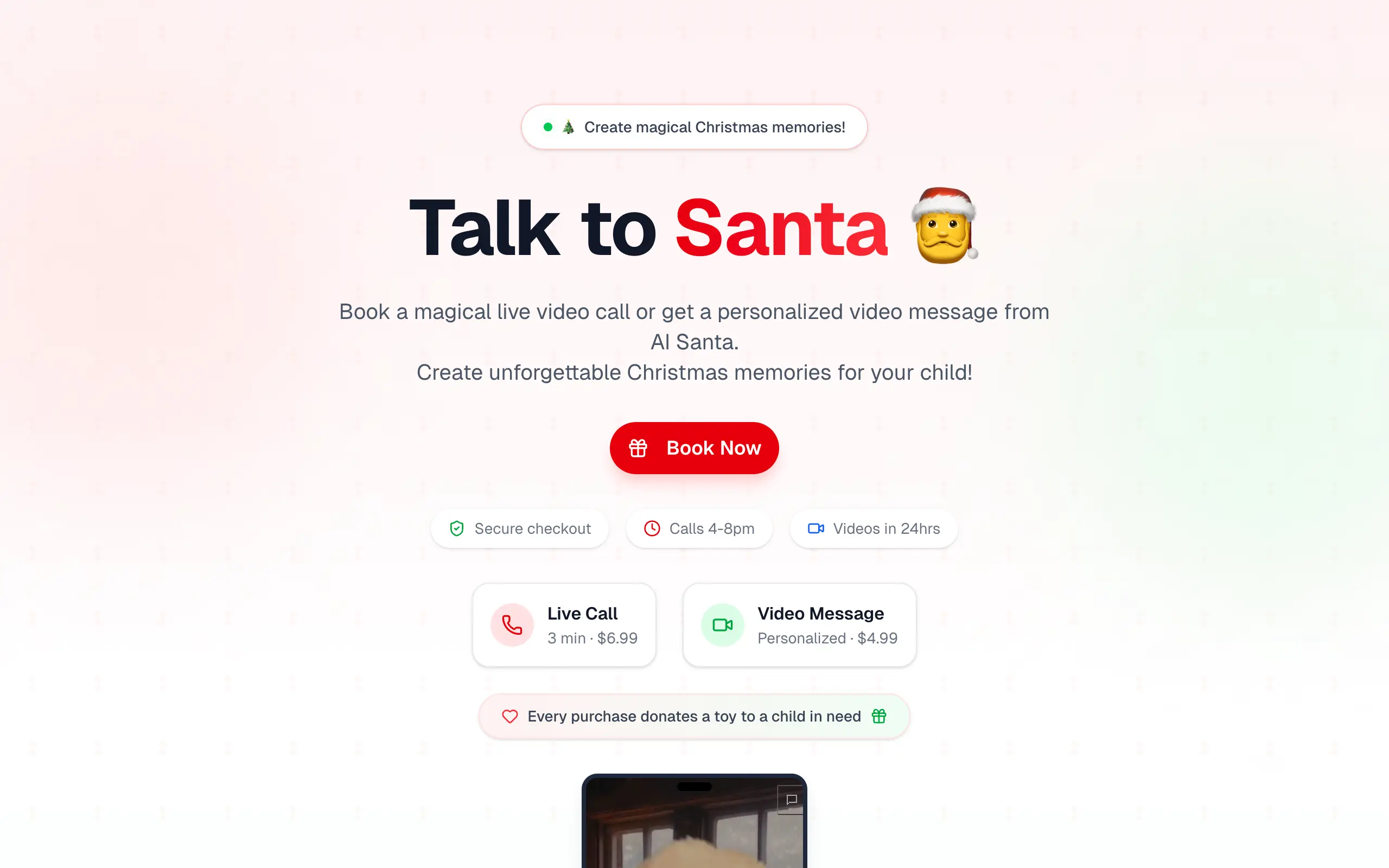
Talk to Santa
Enjoy a magical live video chat or receive a unique AI-generated video greeting from Santa Claus 🎅
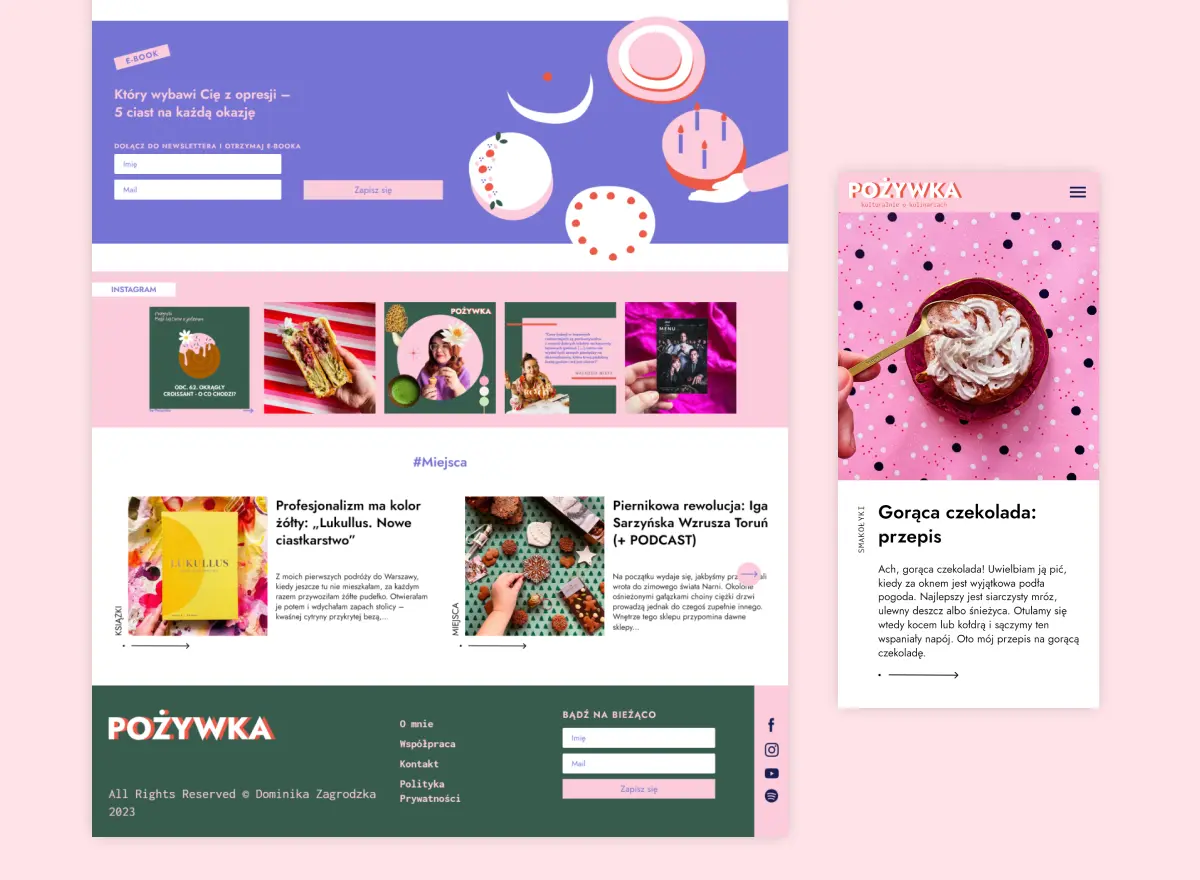
pozywka.pl
Scalable blog for food journalist, focused on performance and user experience 🌭
zagrodzki.me
Personal blog and portfolio of Bart Zagrodzki, where he shares his knowledge and work 💼
TurboStarter
Ship your startup everywhere. In minutes.
HTML to Markdown
Convert HTML to Markdown with ease, directly in your browser 📄
Dotallio
Personalized AI apps that automate research, data extraction, and content creation without code 🤖
Talk to Santa
Enjoy a magical live video chat or receive a unique AI-generated video greeting from Santa Claus 🎅
pozywka.pl
Scalable blog for food journalist, focused on performance and user experience 🌭
zagrodzki.me
Personal blog and portfolio of Bart Zagrodzki, where he shares his knowledge and work 💼
TurboStarter
Ship your startup everywhere. In minutes.
HTML to Markdown
Convert HTML to Markdown with ease, directly in your browser 📄
Dotallio
Personalized AI apps that automate research, data extraction, and content creation without code 🤖
Talk to Santa
Enjoy a magical live video chat or receive a unique AI-generated video greeting from Santa Claus 🎅
pozywka.pl
Scalable blog for food journalist, focused on performance and user experience 🌭
zagrodzki.me
Personal blog and portfolio of Bart Zagrodzki, where he shares his knowledge and work 💼
TurboStarter
Ship your startup everywhere. In minutes.
HTML to Markdown
Convert HTML to Markdown with ease, directly in your browser 📄
Dotallio
Personalized AI apps that automate research, data extraction, and content creation without code 🤖
Talk to Santa
Enjoy a magical live video chat or receive a unique AI-generated video greeting from Santa Claus 🎅
pozywka.pl
Scalable blog for food journalist, focused on performance and user experience 🌭
zagrodzki.me
Personal blog and portfolio of Bart Zagrodzki, where he shares his knowledge and work 💼
TurboStarter
Ship your startup everywhere. In minutes.
HTML to Markdown
Convert HTML to Markdown with ease, directly in your browser 📄
Omichat
Chat with 50+ AI models, including ChatGPT and Claude, in one place - switch models anytime without losing context 🤖
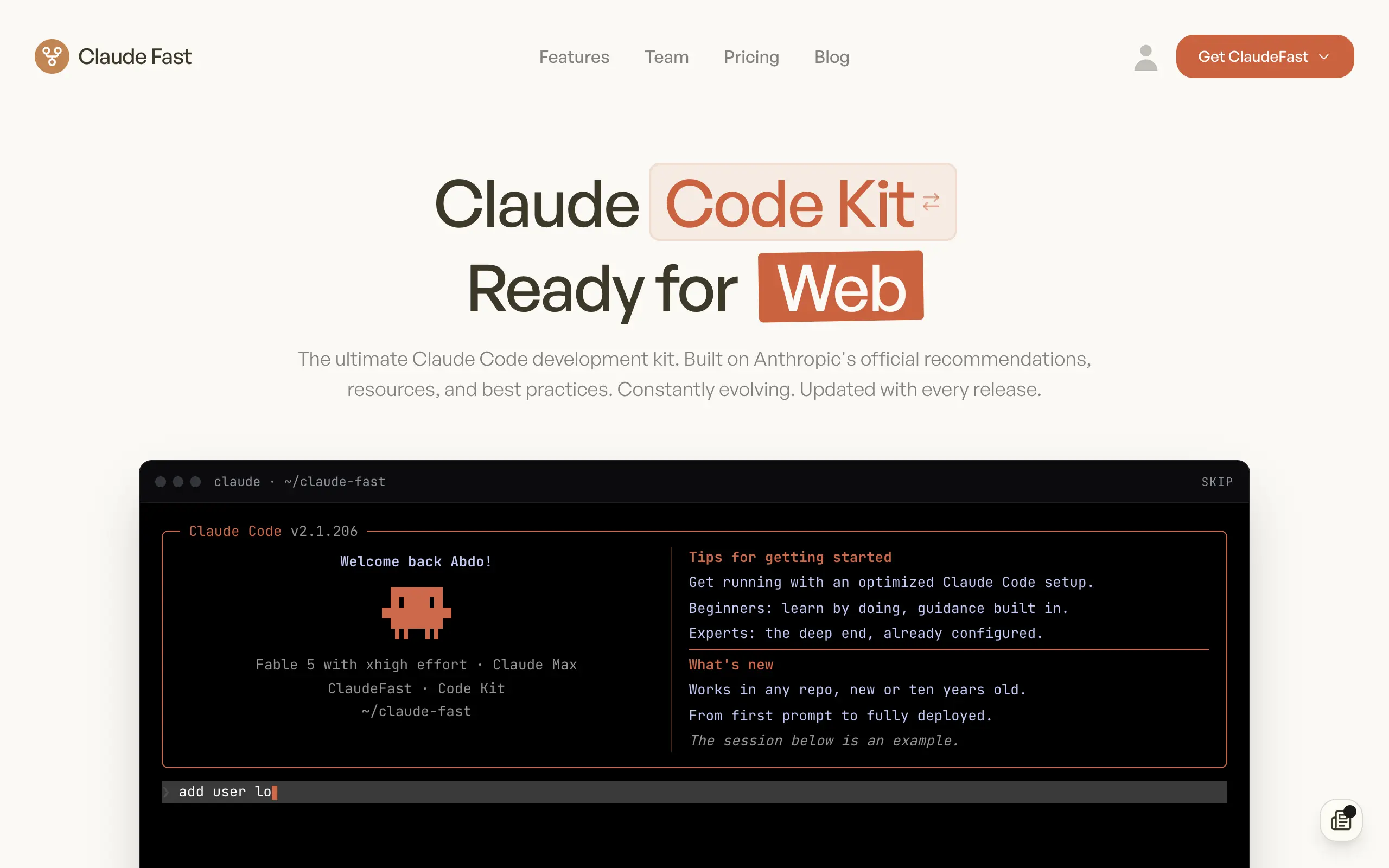
Claude Fast
Supercharge your Claude Code with 6x effective context window and specialized AI agents 🤖
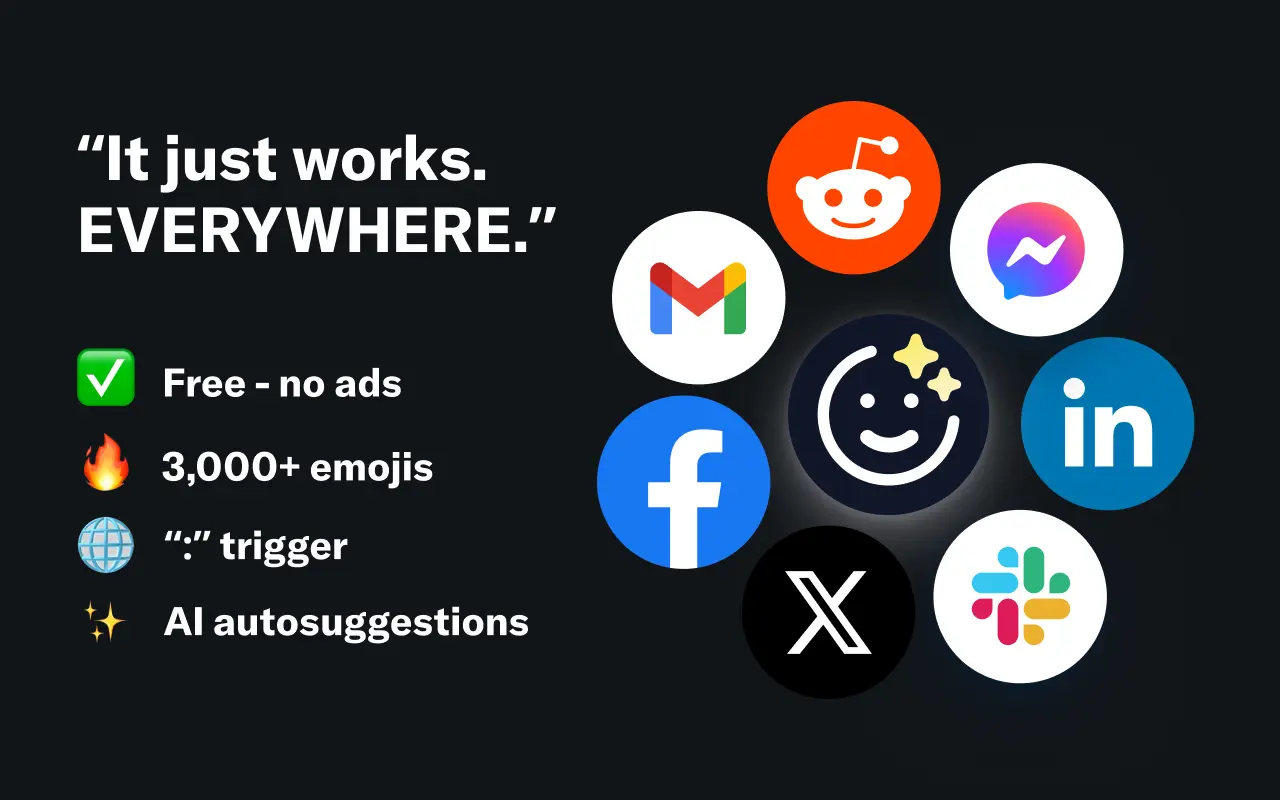
EmojAI
AI-powered emoji picker with smart, context-aware suggestions 🤖
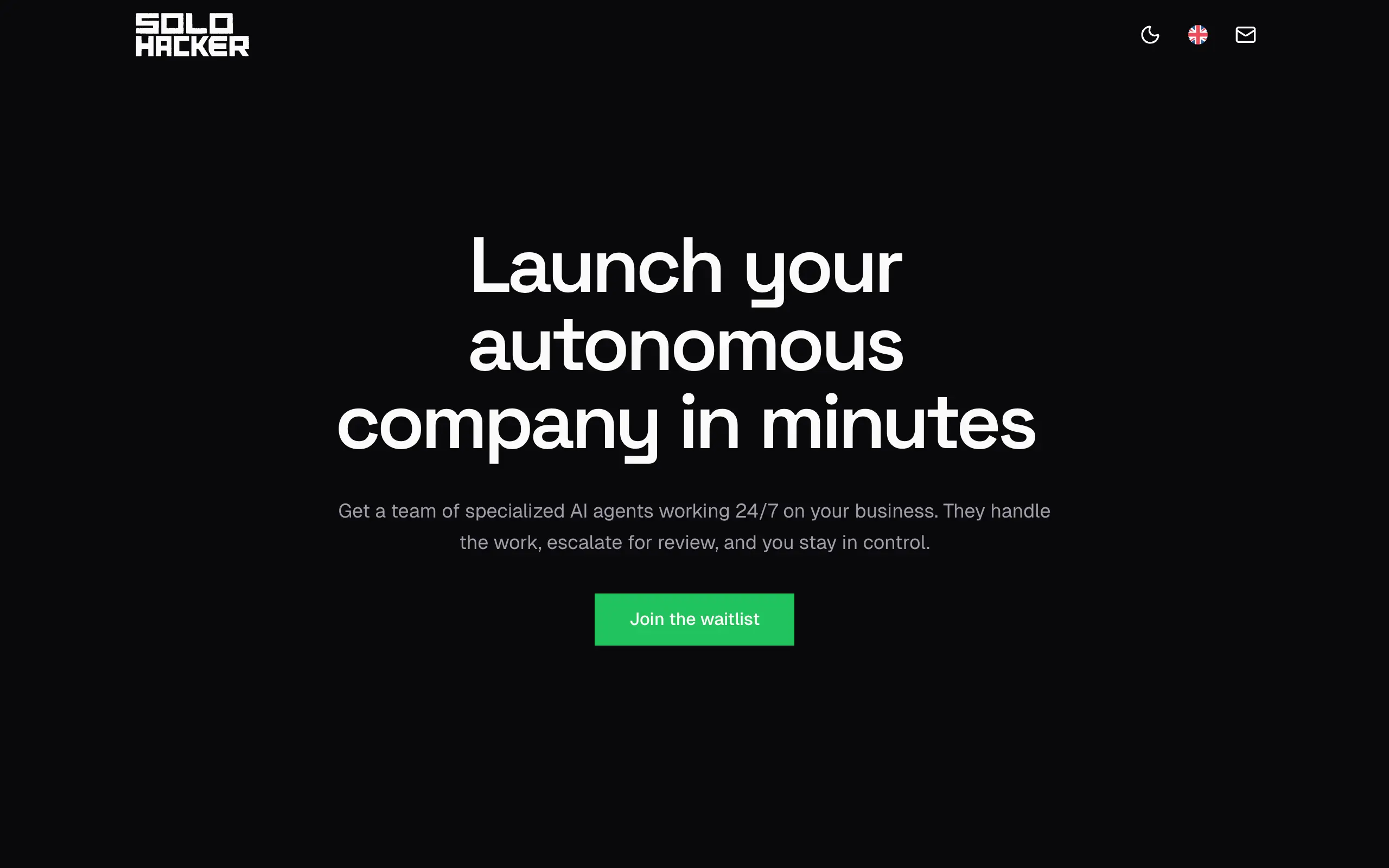
Solohacker
Autonomous company launcher - AI agents work 24/7, escalate what matters, and you stay in control 🤖
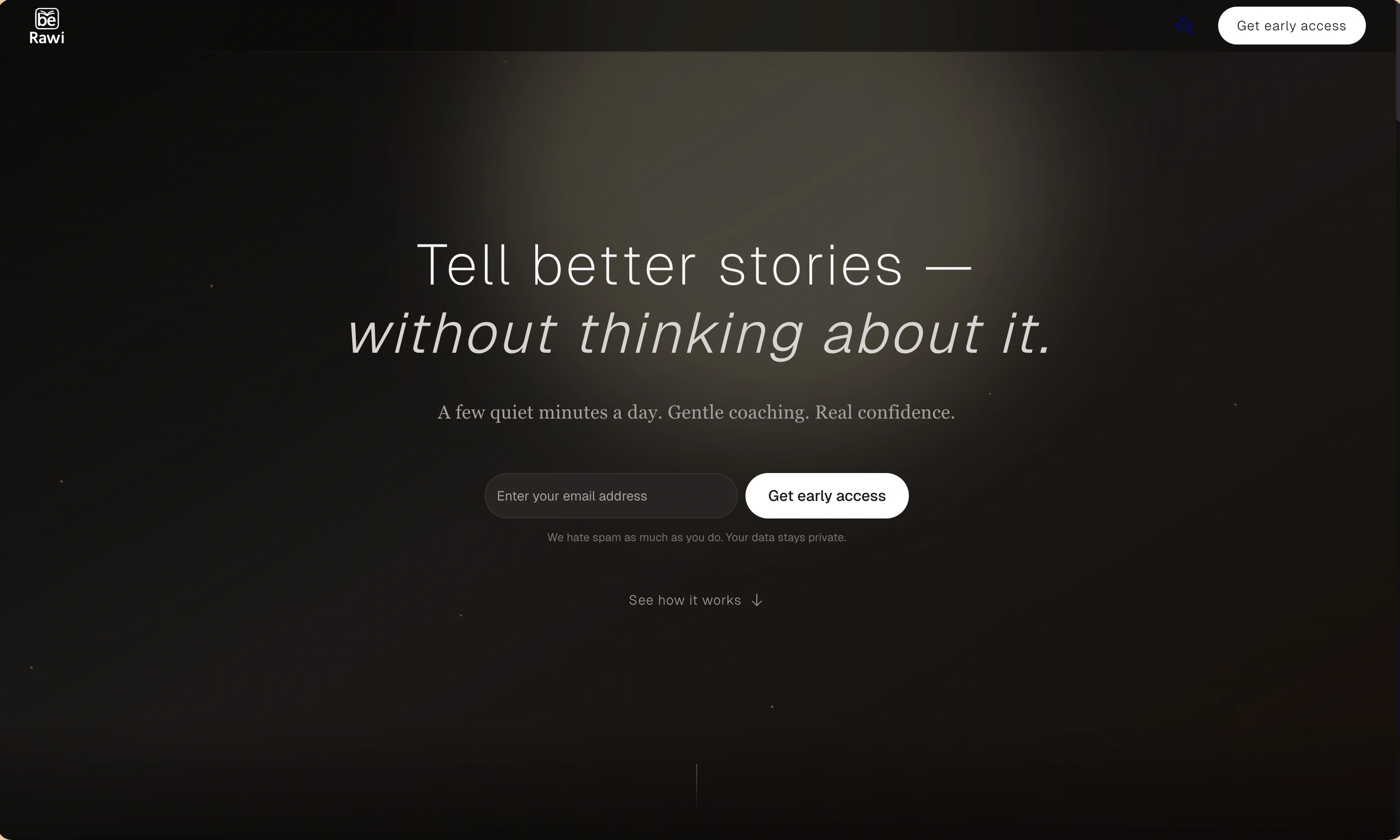
BeRawi: Storytelling Coach
Practice storytelling daily with instant feedback to sound clearer, more engaging, and confident 🎤
Omichat
Chat with 50+ AI models, including ChatGPT and Claude, in one place - switch models anytime without losing context 🤖
Claude Fast
Supercharge your Claude Code with 6x effective context window and specialized AI agents 🤖
EmojAI
AI-powered emoji picker with smart, context-aware suggestions 🤖
Solohacker
Autonomous company launcher - AI agents work 24/7, escalate what matters, and you stay in control 🤖
BeRawi: Storytelling Coach
Practice storytelling daily with instant feedback to sound clearer, more engaging, and confident 🎤
Omichat
Chat with 50+ AI models, including ChatGPT and Claude, in one place - switch models anytime without losing context 🤖
Claude Fast
Supercharge your Claude Code with 6x effective context window and specialized AI agents 🤖
EmojAI
AI-powered emoji picker with smart, context-aware suggestions 🤖
Solohacker
Autonomous company launcher - AI agents work 24/7, escalate what matters, and you stay in control 🤖
BeRawi: Storytelling Coach
Practice storytelling daily with instant feedback to sound clearer, more engaging, and confident 🎤
Omichat
Chat with 50+ AI models, including ChatGPT and Claude, in one place - switch models anytime without losing context 🤖
Claude Fast
Supercharge your Claude Code with 6x effective context window and specialized AI agents 🤖
EmojAI
AI-powered emoji picker with smart, context-aware suggestions 🤖
Solohacker
Autonomous company launcher - AI agents work 24/7, escalate what matters, and you stay in control 🤖
BeRawi: Storytelling Coach
Practice storytelling daily with instant feedback to sound clearer, more engaging, and confident 🎤

Connect with like-minded people
Join our community to get feedback, support, and grow together with 1,000+ builders on board, let's ship it!
Join usShip your startup everywhere. In minutes.
Don't burn tokens on setup and start building features on day one.