LaunchLint
Scan a web app for launch risks and simulate traffic, failures, and cloud costs; get prioritized fixes and deployment-ready CI/CD gates.
Why launch readiness is becoming an engineering problem
A web application can pass its tests and still fail on launch day. A database connection pool may be too small for a traffic spike. A cloud service limit may be lower than expected. A deployment can succeed while a background worker silently stops processing jobs. Even a seemingly minor configuration change can increase infrastructure costs or expose sensitive data.
These risks are difficult to catch because they sit across different parts of the delivery process. Load testing, security reviews, infrastructure checks, cost estimates, and deployment approvals are often handled by separate tools and teams. The result is a fragmented picture of whether an application is actually ready for production.
LaunchLint is a proposed AI-powered launch readiness platform that brings those checks together. It scans a web application and its deployment setup, simulates traffic and failure scenarios, estimates cloud costs, and turns findings into prioritized fixes and deployment-ready CI/CD gates.
The idea addresses a practical search and buying need: teams want to know whether a release is safe to ship, what could go wrong, and which risks matter most. They are not looking for another dashboard full of raw test results. They need an actionable answer, backed by evidence, that fits into their existing engineering workflow.
In short: LaunchLint would help engineering teams identify, understand, and block high-impact launch risks before those risks reach production.
What LaunchLint would do
LaunchLint would combine several kinds of release-readiness assessment into one workflow. A team connects a code repository and deployment environment, selects an application or service, and runs a launch review. The platform analyzes configuration and application signals, performs controlled simulations, and creates a prioritized readiness report.
A useful report should answer five questions:
- What could fail? Identify likely reliability, performance, security, configuration, and cost risks.
- How serious is each issue? Rank findings by impact, likelihood, and the importance of the affected service.
- What evidence supports the finding? Show the configuration, test result, trace, or assumption that led to the conclusion.
- What should the team do next? Provide concrete remediation guidance rather than generic warnings.
- Should this release pass its gate? Apply policy rules that can approve, warn, or block a deployment.
LaunchLint’s value would depend on connecting these answers to a repeatable engineering process. A scan that produces a one-time report may be useful, but a platform that evaluates every relevant pull request and deployment can become part of how a team ships software.
Target audience and ideal customers
LaunchLint’s broad audience is any organization that deploys web applications and wants to reduce the risk of production incidents. Its initial market should be narrower. Early customers need a recognizable problem, the ability to adopt a new tool quickly, and a clear reason to pay.
Early adopters
Startups preparing for a major launch are a natural first segment. A small team may lack a dedicated site reliability engineer, performance specialist, or cloud-cost analyst. Its engineers still need to verify that an application can handle expected traffic and recover from common failures.
Growing SaaS companies are another strong fit. As they add customers, services, integrations, and environments, the number of release risks grows. A platform that standardizes readiness checks can help teams avoid relying on an informal “looks good to me” approval process.
Engineering teams with frequent deployments may benefit from continuous readiness checks. They need a way to assess risk without requiring a large manual review before every release.
Agencies and software consultancies could use LaunchLint to provide clients with a documented readiness assessment before launching a site or application. A repeatable scan and report could support a service offering as well as improve delivery quality.
Likely buyers and users
The person who uses LaunchLint may not be the person who approves the purchase. A strong product should serve both audiences.
- Users may include developers, platform engineers, DevOps practitioners, and engineering leads.
- Technical champions are likely to be CTOs, heads of engineering, or senior platform engineers who are accountable for launch quality.
- Economic buyers may be founders, CTOs, or engineering executives who own reliability, cloud spending, or release risk.
- Security and compliance stakeholders may influence adoption when the platform handles source code, deployment configuration, or evidence needed for internal controls.
The product should be useful to an individual engineer, while providing enough collaboration and policy controls to justify a team or enterprise purchase.
Jobs customers need done
LaunchLint should be designed around the jobs that teams are trying to complete, not only around a list of technical checks.
- Confirm that a release is prepared for expected demand.
- Find configuration mistakes before they cause an outage.
- Understand how a dependency or service failure could affect users.
- Estimate the cost implications of a traffic increase or infrastructure change.
- Give reviewers a consistent and evidence-backed release assessment.
- Set rules that prevent known high-risk changes from deploying.
- Communicate readiness to stakeholders who do not read raw test output.
The most compelling product positioning is therefore not “AI scans your code.” It is a practical launch readiness platform that turns technical signals into prioritized, enforceable release decisions.
Market opportunity and the gap LaunchLint can address
Teams already use tools for static analysis, application security, observability, performance testing, infrastructure management, and cloud cost monitoring. LaunchLint does not need to replace all of them. Its opportunity is to connect their signals around a specific decision: is this application or release ready to launch?
Many existing tools are optimized for a particular task. A load-testing tool can show how a system behaves under simulated traffic, but it may not explain the deployment configuration behind the result. A cloud cost tool can estimate spending, but it may not connect a forecast to an upcoming release gate. A code scanner can surface issues, but it may not test how a service behaves when a dependency becomes slow.
That leaves a workflow gap:
- Teams collect findings from several tools.
- Someone must interpret which findings matter for the upcoming release.
- Risk is often communicated in different formats and with different assumptions.
- Approval decisions may depend on memory, judgment, or incomplete evidence.
- Important checks may be skipped when teams are busy.
LaunchLint could reduce this coordination burden by creating a unified readiness assessment, while still allowing customers to use their existing tools.
Why the timing is favorable
Several broader software trends make launch readiness increasingly relevant:
- More services and dependencies can make it harder to understand the full impact of a change.
- Infrastructure as code and automated deployments create opportunities to evaluate changes earlier in the development cycle.
- AI-assisted development can increase the volume of code and configuration changes teams need to review. That makes trustworthy automated checks more valuable, not less.
- Cloud spending scrutiny encourages teams to consider cost as part of a release rather than as a separate monthly review.
- Reliability expectations make teams more attentive to graceful degradation, recovery, and service-level objectives.
These trends are useful context, not a substitute for customer research. Before building a broad platform, LaunchLint should validate which risk categories buyers most urgently want to address and which decisions they are willing to automate.
The initial wedge
A platform spanning performance, resilience, security, and cost could become too broad for an early product. LaunchLint should start with a defined use case and expand only after proving value.
A promising first wedge is pre-launch performance and infrastructure readiness for web applications. That workflow offers a clear event, a measurable outcome, and a natural place for automated gates. From there, the product could add failure simulation, cost forecasting, and more advanced policy controls.
Another viable wedge is pull-request launch risk review for teams deploying through CI/CD. This approach makes the product visible in an existing workflow and lets customers evaluate findings before a release is live.
The right wedge depends on discovery interviews. Ask prospective customers to walk through their last difficult launch, show how they evaluated risk, and identify which checks they would trust an automated platform to perform.
Core features for an AI launch readiness platform
The product should make the path from connection to decision easy to understand. A broad feature set is less valuable than a dependable workflow that produces credible, actionable results.
1. Repository and environment onboarding
Customers should be able to connect a code repository and identify the application, deployment environment, and relevant services. The onboarding process should make permissions clear and ask only for the access required to run the selected checks.
Useful onboarding capabilities include:
- Repository selection and branch configuration.
- Environment selection, such as staging or a dedicated test environment.
- Infrastructure configuration discovery where supported.
- A way to identify critical services, databases, queues, and external dependencies.
- Clear guidance for setting up a safe test environment.
- A preview of what data LaunchLint will access and retain.
Onboarding should not imply that a repository scan alone can prove production readiness. The interface needs to distinguish findings inferred from code or configuration from findings demonstrated by an actual simulation.
2. Application and configuration scanning
LaunchLint could inspect source code, infrastructure definitions, deployment manifests, and selected configuration files for issues that commonly create launch risk.
Examples include:
- Missing or inconsistent health checks.
- Unsafe deployment settings.
- Inadequate resource limits or requests.
- Exposed or misconfigured services.
- Database connection pool settings that may not match expected demand.
- Missing timeout or retry limits in service integrations.
- Configuration differences between staging and production.
- Potentially risky changes to critical infrastructure.
The platform should be precise about what it can establish. A static finding is a signal, not proof that a production failure will occur. Each result should state its confidence, supporting evidence, and assumptions.
3. Traffic simulation and performance checks
Traffic simulation can help a team understand how a system behaves as demand changes. LaunchLint could help users define a realistic baseline, then run controlled scenarios such as steady traffic, sudden bursts, or gradual growth.
A useful performance assessment should consider more than a single peak request-per-second number. Depending on the setup, it may evaluate:
- Response-time percentiles.
- Error rates and timeouts.
- Resource utilization.
- Queue depth and processing delay.
- Database saturation signals.
- Performance at different traffic levels.
- Recovery after traffic returns to normal.
The platform should encourage realistic test design. A benchmark that sends requests from one location to a staging environment may not represent real user behavior, production data, or network conditions. LaunchLint should clearly explain such limitations and help customers make the test more representative.
4. Failure and resilience simulation
A production service can fail even when its dependencies appear healthy under normal conditions. LaunchLint could simulate selected failure modes in a controlled environment to test whether the application degrades safely.
Potential scenarios include:
- A dependency responding slowly.
- A downstream service returning errors.
- A worker being unavailable.
- A queue accumulating messages.
- A service restarting during a workload.
- A temporary loss of connectivity between components.
These tests must be carefully bounded. The platform should never introduce failure conditions into production by default. Customers should choose an approved environment, review the proposed scenario, and set limits on duration and impact.
A good resilience result is not just “the test passed.” It should explain what the platform simulated, how the application responded, which user-facing behavior was observed, and what recovery signals were measured.
5. Cloud cost estimation
A cloud-cost feature could estimate the financial effect of a release or traffic scenario. For example, LaunchLint might compare expected resource consumption across a baseline and a simulated higher-load case.
Cost outputs should include assumptions such as:
- Which cloud resources were included.
- The workload duration and traffic profile.
- Whether existing discounts or committed-use arrangements were considered.
- How autoscaling behavior was modeled.
- Which variable costs were not available to the estimate.
The product should avoid presenting simulated cost projections as precise invoices. Forecasting is most useful when assumptions are visible and teams can compare scenarios, not when a single number is given without context.
6. Prioritized findings and remediation guidance
A large list of technical issues can overwhelm users. LaunchLint should rank findings using transparent factors, such as:
- Potential customer impact.
- Likelihood under the tested scenario.
- Scope of affected services.
- Ease and urgency of remediation.
- Confidence in the evidence.
- Whether the issue violates a team-defined release policy.
Each finding should include a concise explanation, relevant evidence, a suggested fix, and a way to assign ownership. Where appropriate, LaunchLint could generate a proposed code or configuration change, but it should require review before applying that change.
7. CI/CD gates and release policies
The central value of LaunchLint is not just discovery. It is helping teams act on what they discover.
Teams could configure policies such as:
- Block deployment when a critical service exceeds an agreed error threshold.
- Require review when a high-risk configuration change is detected.
- Warn when a cost estimate exceeds a budget limit.
- Require a passing readiness report before a production promotion.
- Allow an exception only when a named reviewer records an approval.
Gates should be configurable and explainable. A false positive that blocks a deployment without adequate context can damage trust. Teams need options to tune thresholds, scope checks to relevant changes, and record a time-limited exception with an owner and reason.
CI/CD integrations should fit the customer’s current workflow rather than forcing a new deployment system. For example, GitHub Actions provides a documented workflow automation system that teams can use to run checks during development and deployment.
8. Reports, history, and collaboration
A useful readiness report should be understandable to engineers and decision-makers. It should include:
- A clear pass, warn, or block summary.
- Findings sorted by severity and confidence.
- Simulation details and assumptions.
- Historical comparisons across releases.
- Ownership and remediation status.
- Evidence that can be shared with reviewers.
- A record of policy exceptions and approvals.
Historical reports can help teams identify recurring issues and determine whether changes are improving readiness. They can also make reviews more consistent across teams, provided the product preserves enough context to interpret each result correctly.
How LaunchLint could stand out from existing tools
LaunchLint would compete with established products in several adjacent categories. Its advantage should not be framed as “one tool that does everything.” That claim is difficult to prove and often makes buyers question the depth of each feature.
A stronger competitive position is cross-functional launch risk orchestration. LaunchLint can connect evidence from existing tools, run focused simulations, and present a consistent release decision.
| Product area | Typical focus | LaunchLint opportunity | Key product challenge | Best initial proof point |
|---|---|---|---|---|
| Load testing | Measure behavior under traffic | Tie test outcomes to release decisions | Simulations must reflect real workloads | Catch a capacity issue before launch |
| Code scanning | Detect code and configuration patterns | Explain how findings affect readiness | Avoid noisy or unsupported conclusions | High-confidence, actionable findings |
| Cloud cost tools | Track or forecast infrastructure spend | Connect cost scenarios to a release | Estimates depend on visible assumptions | Identify a material cost change early |
| Observability | Show system behavior in production | Use operational signals to inform gates | Access and integrations can be complex | Make readiness reports evidence-based |
| CI/CD platforms | Automate build and deployment workflows | Add risk-aware approval criteria | Gates must be fast and dependable | Block only the changes that merit blocking |
The table describes product categories, not a claim that every tool in a category has the same feature set. LaunchLint should be evaluated against specific customer workflows and alternatives, not against broad assumptions about competitors.
A defensible unique selling proposition
A compelling USP could be:
LaunchLint turns application, infrastructure, simulation, and cost signals into an explainable launch decision that teams can enforce in CI/CD.
That position is useful because it focuses on the outcome rather than the use of AI. AI can help classify findings, summarize evidence, or draft remediation guidance, but customers will trust the product only if its core checks are reliable and its conclusions can be inspected.
How to make the advantage durable
The initial feature set can be copied. A stronger long-term advantage would come from quality and workflow integration:
- A growing set of validated scenarios for common application architectures.
- Better calibration of risk scores against observed customer outcomes.
- A library of organization-specific policies and readiness standards.
- Useful integrations with repositories, cloud environments, monitoring systems, and deployment pipelines.
- Historical context that helps customers understand whether risk is improving.
- A reputation for clear evidence and conservative recommendations.
Customer data can improve a product only when its use is transparent, contractually appropriate, and technically protected. LaunchLint should not treat sensitive repository or operational data as a default training asset.
Recommended technical stack and architecture
The right stack depends on the team’s experience, deployment model, security requirements, and expected workload. LaunchLint should keep the first architecture focused and avoid overengineering before demand is validated.
Web application and API
A TypeScript-based web interface using React can support interactive reports, scenario configuration, and team collaboration. A conventional API layer can manage organizations, projects, scan requests, integrations, and permissions.
A practical initial architecture might include:
- A web application for setup, reports, policies, and billing.
- An API service for user and organization workflows.
- Background workers for repository analysis and simulations.
- A relational database for accounts, policies, results, and audit records.
- Object storage for bounded artifacts such as reports and test output.
- A queue for long-running jobs and retryable tasks.
The trade-off is simplicity versus independent scaling. A modular monolith can help a small team ship faster, while background workers can scale separately when scans become compute-intensive.
Simulation and test execution
Traffic and failure simulations should run in isolated, controlled environments. The execution layer needs resource limits, environment validation, cancellation controls, and logs that can be inspected after a run.
A tool such as k6 may be useful for load-testing workflows. The product should first verify that the test environment is appropriate and that the customer has authorized the target. It should also limit request rates and provide a clear stop mechanism.
For resilience testing, the product should begin with safe, narrowly scoped scenarios. A more powerful failure-injection system brings additional operational and security risks, so it should be introduced only when the team can provide strong safeguards.
Cloud and infrastructure analysis
Infrastructure-as-code analysis can help LaunchLint inspect declared resources before deployment. It should account for the fact that configuration does not always match live infrastructure. A trustworthy report can distinguish between declared settings, observed settings, and inferred behavior.
Infrastructure access should follow least-privilege principles. LaunchLint should prefer read-only access where possible, use short-lived credentials where supported, and document every permission it requests.
AI and language models
AI can add value in targeted parts of the workflow:
- Summarizing a finding in plain language.
- Grouping related issues.
- Drafting a remediation plan.
- Explaining why a test result might matter.
- Helping users query their own readiness history.
AI should not be the sole authority for blocking a production deployment. Release gates should be based on deterministic checks, explicit policies, and verified evidence wherever possible. A model-generated explanation can assist a human reviewer, but it should not invent evidence or silently change a policy.
A safer design separates measurement from interpretation. Deterministic systems collect and evaluate results; AI helps explain those results with citations to the evidence available in the scan.
Observability and security
The platform itself needs strong operational visibility. OpenTelemetry offers documentation for collecting and exporting telemetry, and can help structure traces, metrics, and logs across LaunchLint services.
Security controls should include:
- Encryption in transit and at rest.
- Tenant isolation.
- Role-based access controls.
- Audit logs for sensitive actions.
- Secrets management that avoids exposing credentials in logs.
- Retention controls for source, simulation, and report data.
- A documented vulnerability response process.
- Clear disclosure of any third-party AI or infrastructure providers.
The more access LaunchLint needs, the more important it becomes to explain why that access is necessary and how customers can revoke it.
Monetization strategies
Pricing should reflect measurable customer value and the costs LaunchLint incurs to deliver scans. Because simulations can consume compute and cloud resources, unlimited usage may create poor economics.
Tiered subscription pricing
A simple starting structure could include:
- Free or trial tier for a limited number of projects and basic scans.
- Team tier with recurring checks, collaboration, and CI/CD integration.
- Business tier with advanced policies, audit history, and more environments.
- Enterprise tier with custom retention, identity controls, support commitments, and deployment options where justified.
The free experience should demonstrate a meaningful result without giving away unlimited expensive simulations.
Usage-based pricing
LaunchLint could charge based on the number of simulations, scan minutes, environments, or projects. Usage-based pricing aligns revenue with infrastructure costs, but can make bills unpredictable.
If using this model, the product should show estimated consumption before a test starts, provide usage alerts, and let administrators set budgets or hard limits.
Hybrid pricing
A hybrid model may offer a subscription that includes a monthly allowance, with additional usage billed separately. This creates a predictable base for customers while allowing heavier users to pay for the resources they consume.
Services and expert review
Some customers may want assistance interpreting results or building a readiness process. LaunchLint could offer optional onboarding, architecture reviews, or managed readiness assessments. These services may help early revenue and product learning, but they should not distract the team from building a repeatable software product.
Pricing validation should test willingness to pay around outcomes customers care about: fewer manual review hours, reduced risk of launch incidents, clearer approval evidence, and improved cost predictability.
Risks and mitigation strategies
A product that evaluates production readiness must earn trust. It should treat reliability, security, and accuracy as product requirements rather than features to add later.
False positives and false negatives
A false positive can block a safe release. A false negative can create a dangerous sense of security.
Mitigation: Show evidence and confidence, make policies configurable, track outcomes, and avoid claiming that a passing scan guarantees a successful launch. Begin with checks that can be validated reliably.
Unsafe simulations
Traffic tests or failure scenarios could affect production services or shared staging environments.
Mitigation: Require explicit target selection and authorization, use rate and duration limits, provide a visible cancellation control, and default to isolated environments. Keep potentially disruptive tests disabled until the customer deliberately configures them.
Overreliance on AI
A fluent AI-generated explanation can sound authoritative even when the underlying evidence is weak.
Mitigation: Separate model-generated summaries from measured results, cite the data supporting recommendations, label uncertainty, and never allow an unverified model response to silently change a release gate.
Sensitive data exposure
Repository contents, infrastructure configuration, and operational data may include secrets or commercially sensitive information.
Mitigation: Minimize data collection, detect and redact secrets where feasible, document retention, enforce tenant isolation, and provide clear controls for deleting data. Avoid using customer data for model training without explicit consent and a suitable contractual basis.
Integration complexity
A broad platform may need to support many source-control, cloud, monitoring, and deployment systems. Each integration adds maintenance work.
Mitigation: Focus first on a small set of commonly requested integrations. Build a stable integration framework, publish its limitations, and prioritize based on customer evidence rather than theoretical coverage.
Unclear ownership of remediation
A report can identify risks without making it clear who should fix them.
Mitigation: Assign findings to services, repositories, teams, or owners where possible. Integrate with existing issue and review workflows, and make it easy to track remediation status.
Uncertain cost forecasts
Cloud cost estimates can be wrong when workload behavior, pricing discounts, or autoscaling rules are incomplete.
Mitigation: Show assumptions, provide ranges rather than false precision when appropriate, and let users compare scenarios. Make clear that a simulation is a forecast, not a billing guarantee.
Competitive pressure
Established vendors may add broader readiness or AI capabilities.
Mitigation: Differentiate through an excellent release workflow, high-confidence findings, explainable evidence, and integrations that respect existing tools. Build customer trust and domain-specific scenario quality rather than relying on a broad feature checklist.
Go-to-market strategy
LaunchLint should reach buyers through the moment they are already thinking about risk: before a product launch, a major traffic campaign, a cloud migration, or a significant release.
Start with a specific launch scenario
A narrowly defined message is easier to understand than a general promise to “make software safer.” Examples of focused positioning include:
- Check whether a web application is ready for a public launch.
- Add performance and configuration checks to a deployment workflow.
- Create a repeatable readiness report for client handoffs.
- Identify high-impact launch risks before a release reaches production.
The team should test which message brings qualified conversations and which leads to an actual paid pilot.
Use an evidence-led sales process
Early sales should include a short discovery conversation, a guided scan, and a review of the resulting findings. The goal is to learn whether the customer trusts the evidence and whether the recommended actions fit its workflow.
Useful discovery questions include:
- What was the last release that felt unusually risky?
- Which checks did the team perform, and which were skipped?
- How does the team decide whether a deployment should be blocked?
- What would make an automated finding trustworthy?
- Which systems must LaunchLint integrate with to be useful?
- What information cannot leave the customer’s environment?
Build trust through transparent documentation
Technical buyers will want to know what the product scans, how it runs simulations, how it handles secrets, and what a readiness score means. Documentation should explain methods and limitations, not only benefits.
If LaunchLint publishes reliability or cost claims, it should provide a reproducible methodology and cite suitable primary sources. For external industry statistics, use a citation format that identifies the publishing organization, report title, publication date, and relevant section. Do not rely on unsourced percentages in marketing copy.
Actionable implementation steps
The best way to build LaunchLint is to validate the decision workflow before investing in a broad simulation platform.
Interview prospective users
Speak with founders, engineering leaders, platform teams, and agencies that ship web applications. Ask for examples of actual launch problems, current checklists, and recent release decisions. Look for repeated pain rather than general enthusiasm for AI.
Select one initial use case
Choose a narrow workflow, such as pre-launch performance readiness or pull-request risk review. Define the target customer, the environment being assessed, and the decision LaunchLint helps the customer make.
Define a trustworthy first report
Create a report format that includes findings, evidence, confidence, assumptions, severity, and next actions. Test it with engineers who were not involved in building the product. If they cannot understand why a finding matters, improve the explanation before adding more checks.
Build a safe, limited prototype
Start with repository or configuration analysis and one controlled simulation type. Make environment selection explicit. Add rate limits, timeouts, job cancellation, and audit logging before running tests against customer systems.
Add one CI/CD integration
Integrate with the workflow used by initial design partners. Make the gate behavior visible, configurable, and reversible. Measure how often a check provides useful guidance, produces noise, or delays a deployment.
Run paid design-partner pilots
Work with a small number of customers who have a real launch or release coming up. Agree on success criteria in advance, such as catching a previously missed issue, reducing manual review effort, or creating a repeatable readiness process.
Expand based on validated demand
Add cost forecasting, more failure scenarios, policy management, or additional integrations only when customers show that those capabilities solve a real problem. Use pilot feedback to prioritize reliability and trust improvements alongside new features.
During the build phase, a starter kit can reduce time spent on standard application infrastructure. Teams evaluating a foundation for a SaaS product can review TurboStarter, then make sure the chosen foundation fits their architecture, security, and customization requirements.
Conclusion
LaunchLint has a strong product premise because it focuses on a decision teams already have to make: whether a release is ready to ship. Its opportunity is not to replace every testing, monitoring, security, or cloud-cost product. It is to connect relevant evidence, run carefully controlled simulations, prioritize the risks that matter, and help teams apply consistent deployment gates.
The concept will succeed only if its assessments are credible. That means separating measured results from AI-generated explanations, showing assumptions, protecting customer data, and treating a passing scan as evidence rather than a guarantee.
The most effective path is to begin with one launch-readiness workflow, validate it with real engineering teams, and expand only after customers trust the findings and act on them. If LaunchLint can make release risk easier to understand and safer to manage, it can become a useful part of the modern software delivery process.
More 🤖 AI Startup SaaS ideas
Discover more innovative ai startup SaaS ideas that are trending in 2026. Each idea is AI-generated with market validation and growth potential to help you find your next profitable venture faster than competitors.
Your competitors are building with TurboStarter
Below are some of the SaaS ideas that have been generated and built with our starter kit.
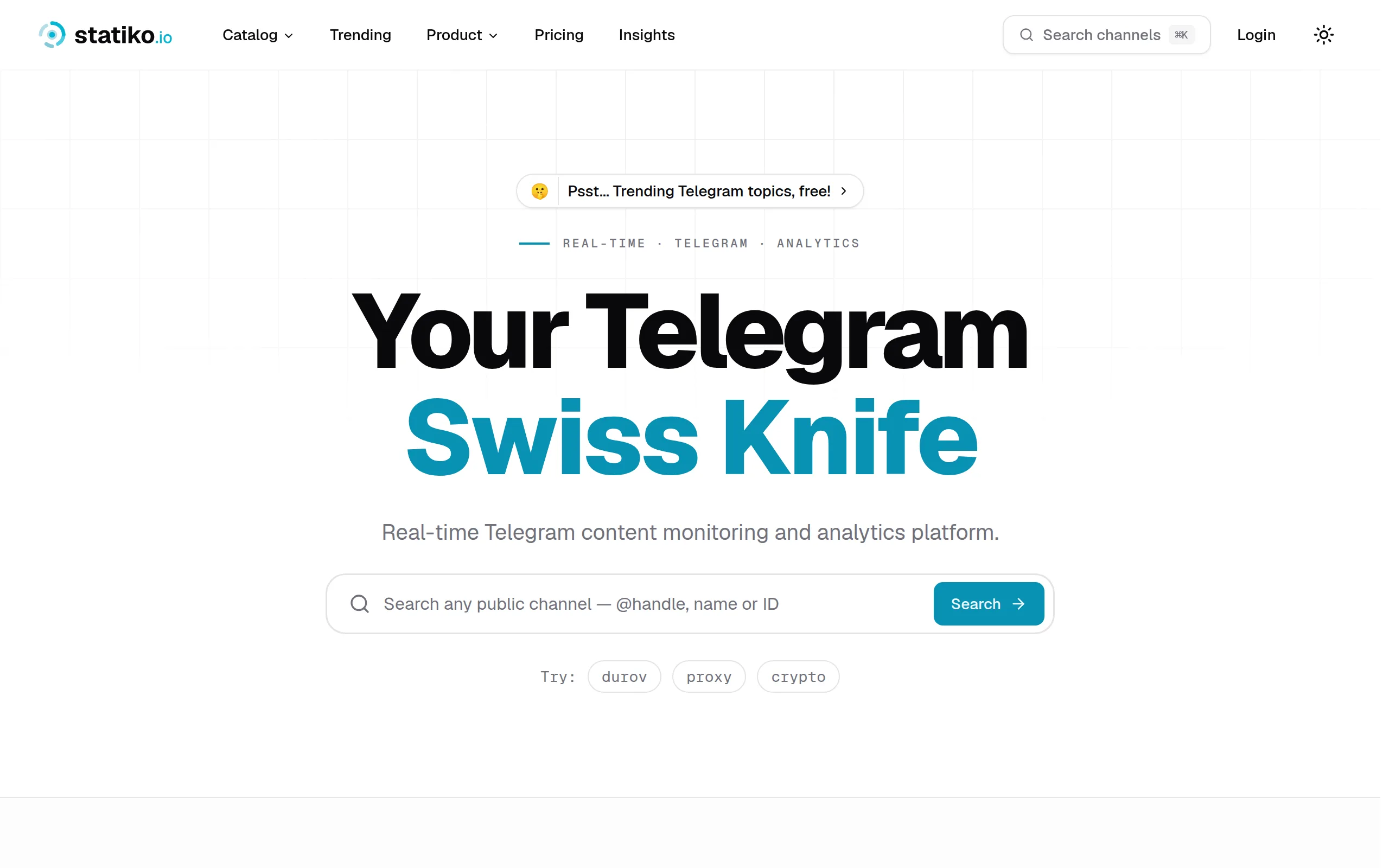
Statiko
Monitor any Telegram channel in real time - track posts, edits, deletions, and growth with AI recaps 📡

Shibui
AI website builder - describe your business, pick a niche template, edit by chatting, and publish instantly ✨

Pro Service
Find verified home service professionals, compare quotes, and pay securely through escrow - built for Brazilians across the US 🏠
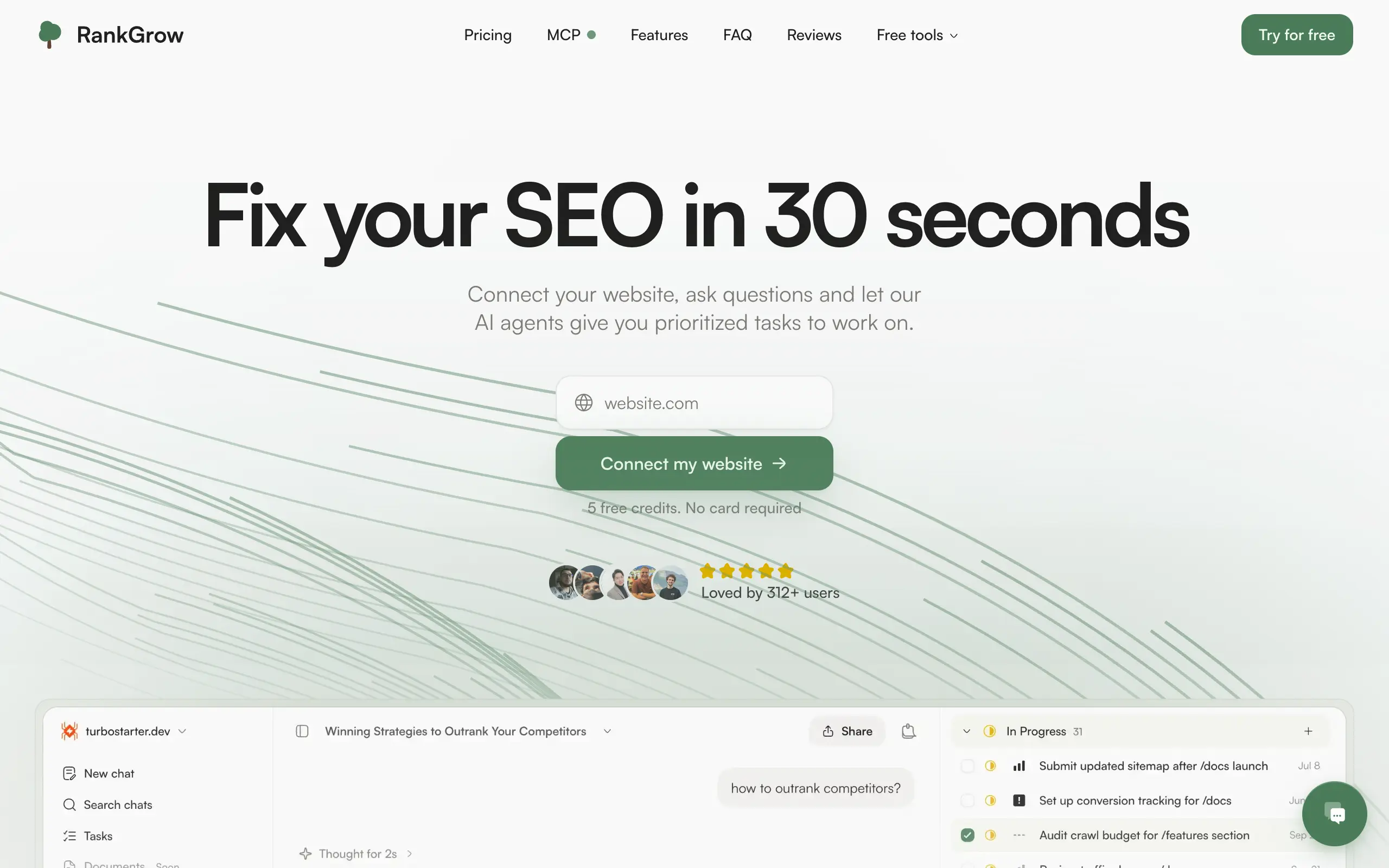
RankGrow
Fix your SEO with AI agents - connect Search Console, get prioritized tasks, and grow organic traffic 📈
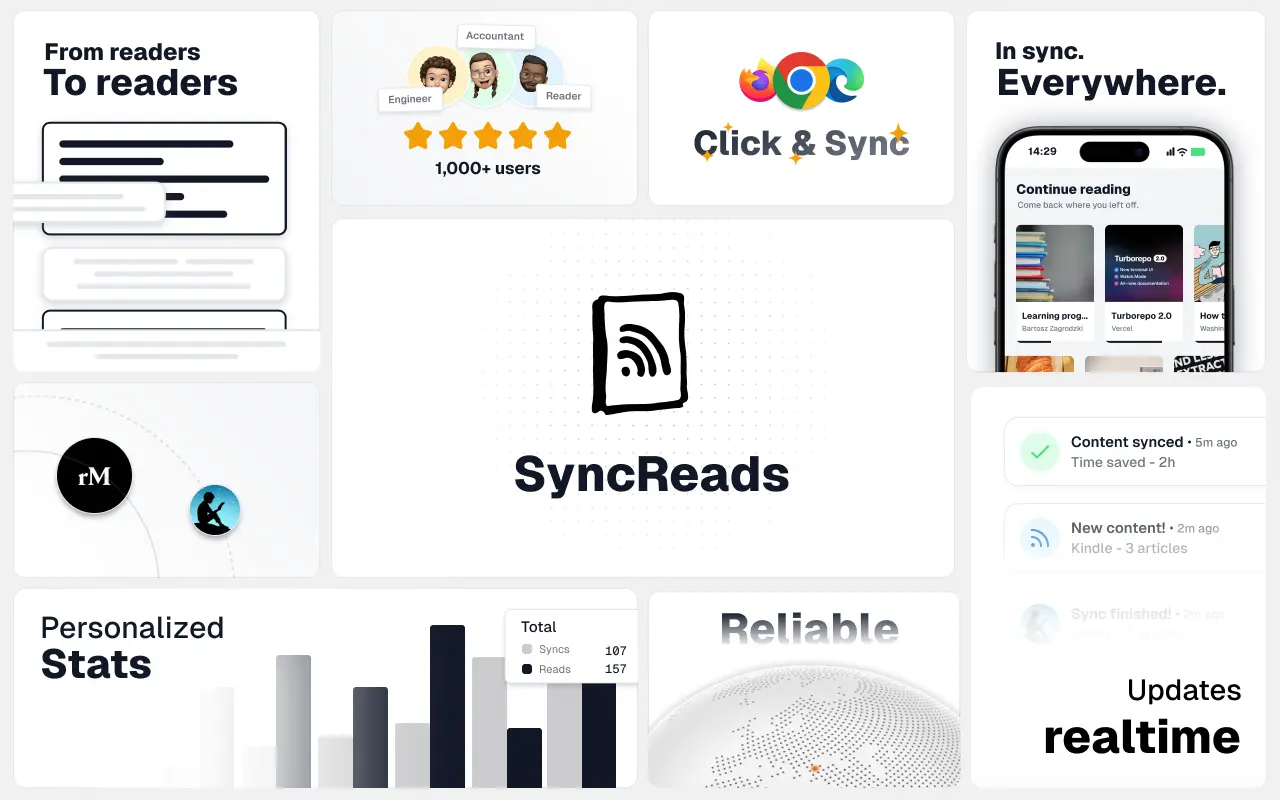
SyncReads
Sync your favorite content for distraction-free reading, save time and replace multiple apps. Anytime, anywhere 🔄
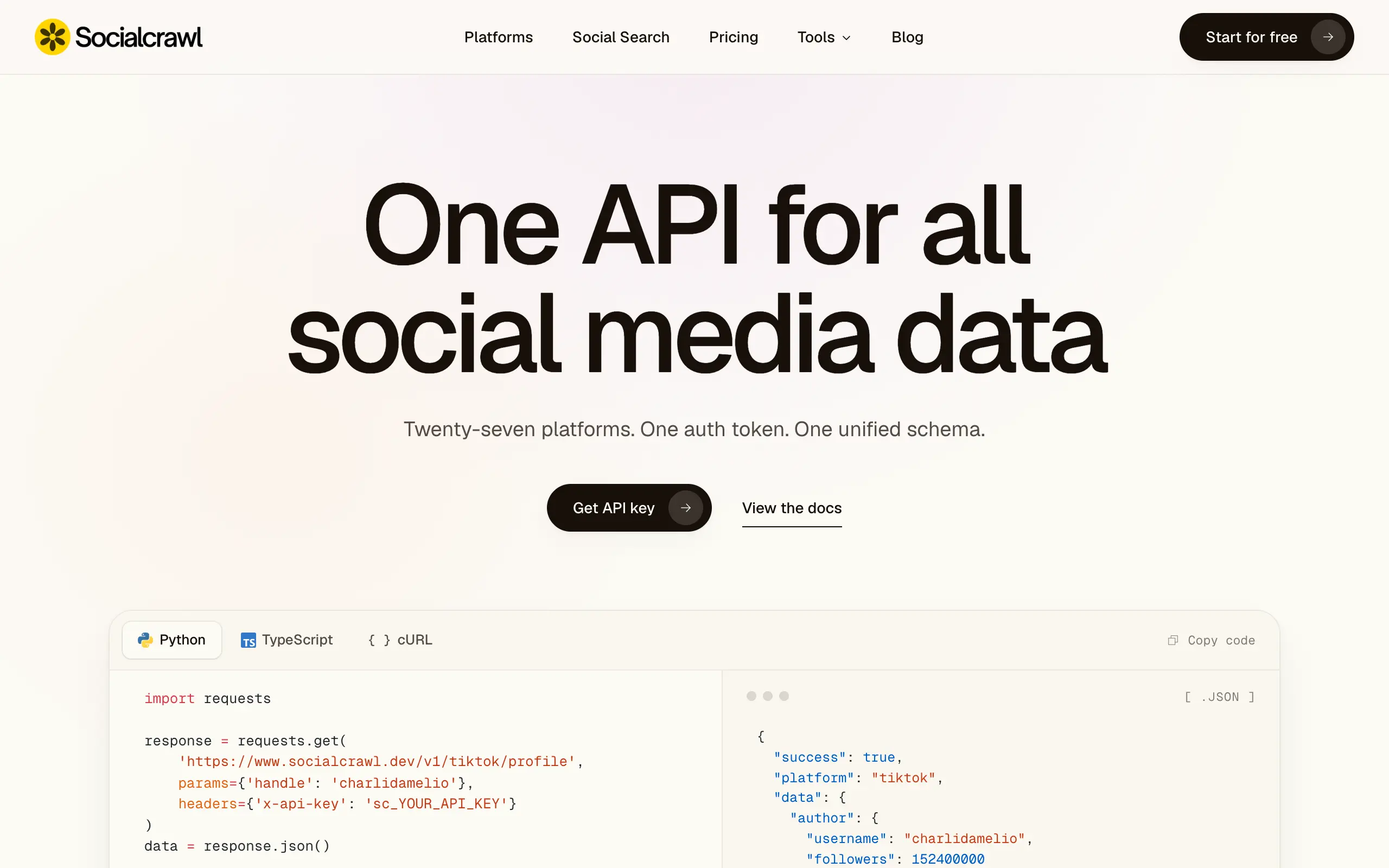
Socialcrawl
Get clean, structured data from 21 platforms like TikTok, Instagram, and YouTube with a single request 📊
Statiko
Monitor any Telegram channel in real time - track posts, edits, deletions, and growth with AI recaps 📡
Shibui
AI website builder - describe your business, pick a niche template, edit by chatting, and publish instantly ✨
Pro Service
Find verified home service professionals, compare quotes, and pay securely through escrow - built for Brazilians across the US 🏠
RankGrow
Fix your SEO with AI agents - connect Search Console, get prioritized tasks, and grow organic traffic 📈
SyncReads
Sync your favorite content for distraction-free reading, save time and replace multiple apps. Anytime, anywhere 🔄
Socialcrawl
Get clean, structured data from 21 platforms like TikTok, Instagram, and YouTube with a single request 📊
Statiko
Monitor any Telegram channel in real time - track posts, edits, deletions, and growth with AI recaps 📡
Shibui
AI website builder - describe your business, pick a niche template, edit by chatting, and publish instantly ✨
Pro Service
Find verified home service professionals, compare quotes, and pay securely through escrow - built for Brazilians across the US 🏠
RankGrow
Fix your SEO with AI agents - connect Search Console, get prioritized tasks, and grow organic traffic 📈
SyncReads
Sync your favorite content for distraction-free reading, save time and replace multiple apps. Anytime, anywhere 🔄
Socialcrawl
Get clean, structured data from 21 platforms like TikTok, Instagram, and YouTube with a single request 📊
Statiko
Monitor any Telegram channel in real time - track posts, edits, deletions, and growth with AI recaps 📡
Shibui
AI website builder - describe your business, pick a niche template, edit by chatting, and publish instantly ✨
Pro Service
Find verified home service professionals, compare quotes, and pay securely through escrow - built for Brazilians across the US 🏠
RankGrow
Fix your SEO with AI agents - connect Search Console, get prioritized tasks, and grow organic traffic 📈
SyncReads
Sync your favorite content for distraction-free reading, save time and replace multiple apps. Anytime, anywhere 🔄
Socialcrawl
Get clean, structured data from 21 platforms like TikTok, Instagram, and YouTube with a single request 📊
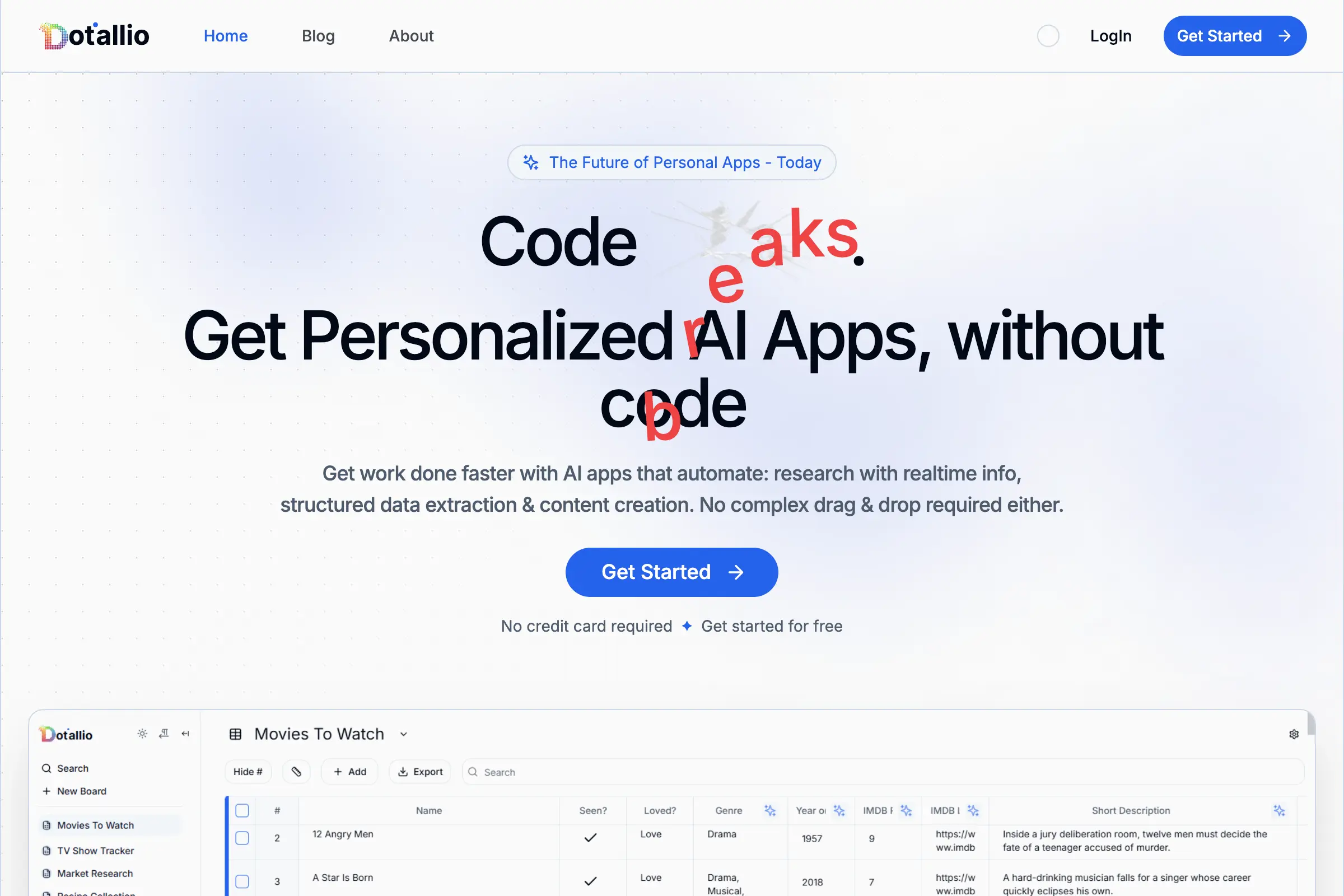
Dotallio
Personalized AI apps that automate research, data extraction, and content creation without code 🤖

Talk to Santa
Enjoy a magical live video chat or receive a unique AI-generated video greeting from Santa Claus 🎅

pozywka.pl
Scalable blog for food journalist, focused on performance and user experience 🌭
zagrodzki.me
Personal blog and portfolio of Bart Zagrodzki, where he shares his knowledge and work 💼
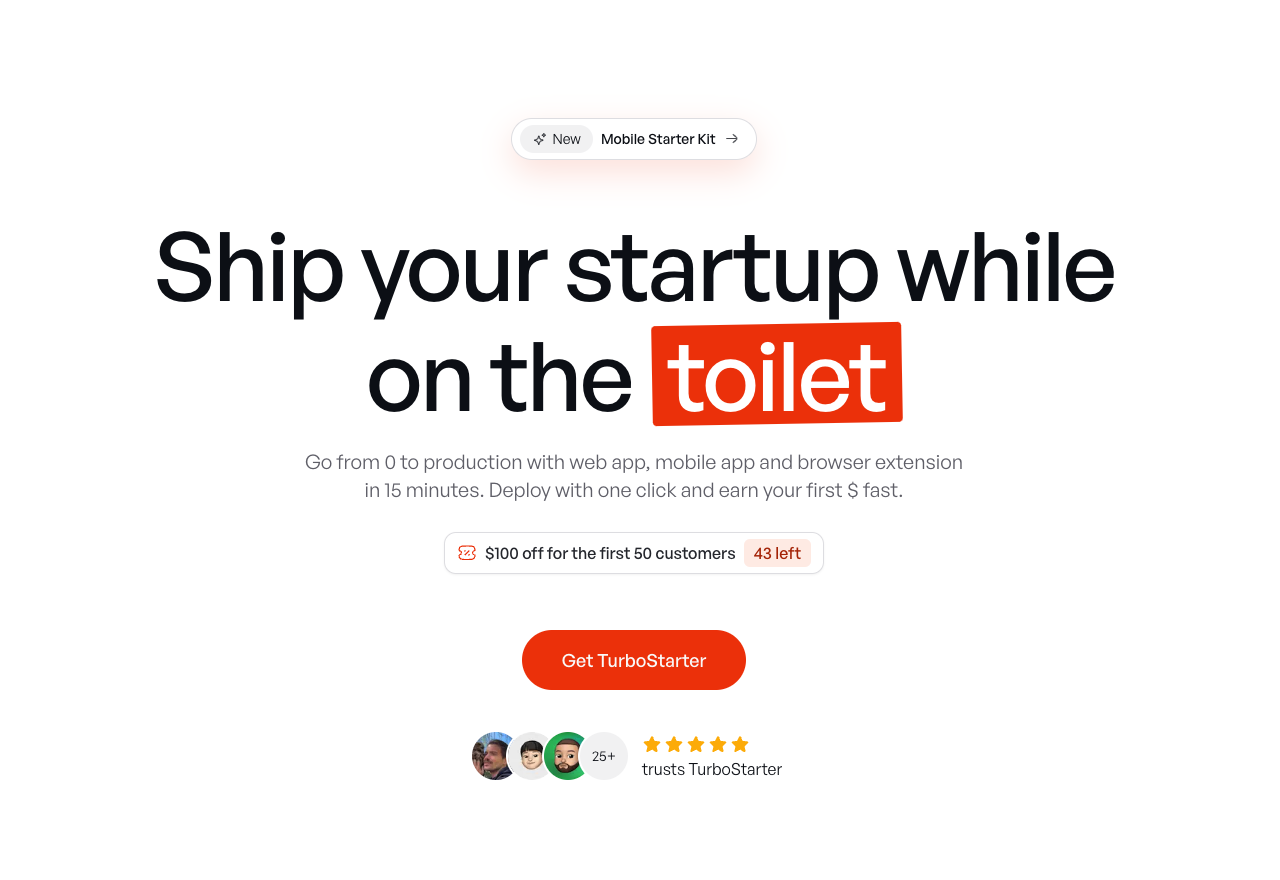
TurboStarter
Ship your startup everywhere. In minutes.
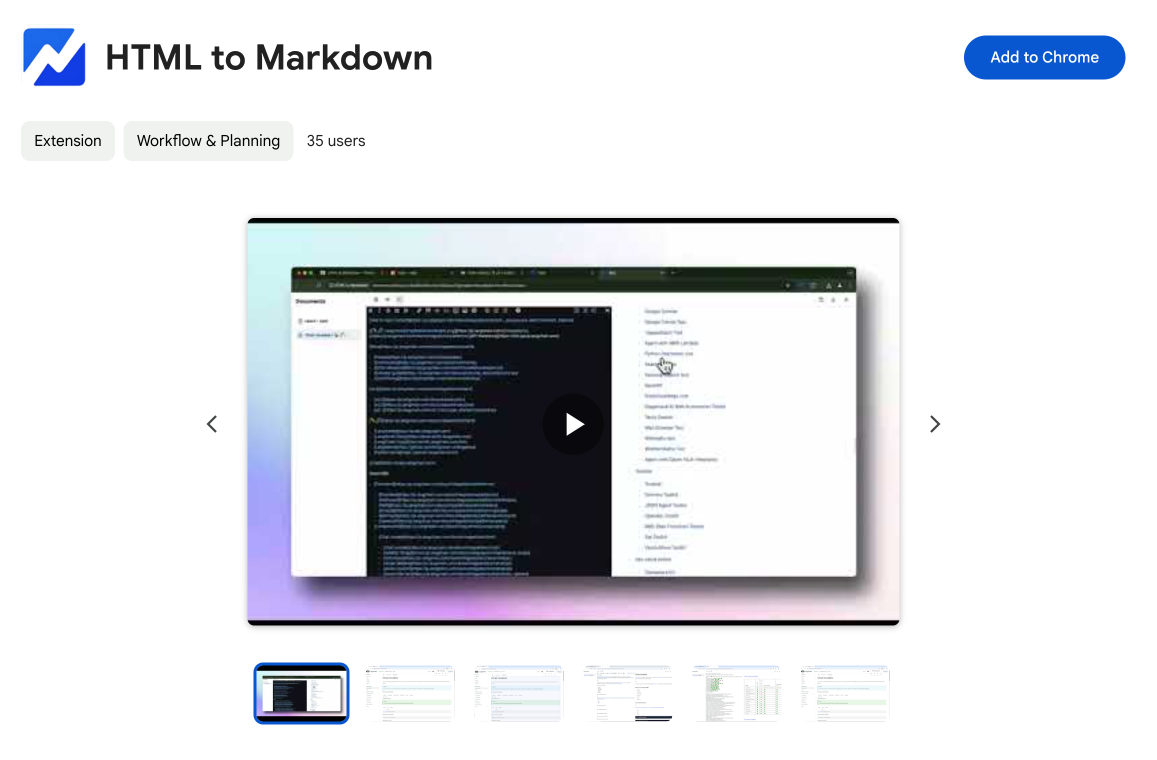
HTML to Markdown
Convert HTML to Markdown with ease, directly in your browser 📄
Dotallio
Personalized AI apps that automate research, data extraction, and content creation without code 🤖
Talk to Santa
Enjoy a magical live video chat or receive a unique AI-generated video greeting from Santa Claus 🎅
pozywka.pl
Scalable blog for food journalist, focused on performance and user experience 🌭
zagrodzki.me
Personal blog and portfolio of Bart Zagrodzki, where he shares his knowledge and work 💼
TurboStarter
Ship your startup everywhere. In minutes.
HTML to Markdown
Convert HTML to Markdown with ease, directly in your browser 📄
Dotallio
Personalized AI apps that automate research, data extraction, and content creation without code 🤖
Talk to Santa
Enjoy a magical live video chat or receive a unique AI-generated video greeting from Santa Claus 🎅
pozywka.pl
Scalable blog for food journalist, focused on performance and user experience 🌭
zagrodzki.me
Personal blog and portfolio of Bart Zagrodzki, where he shares his knowledge and work 💼
TurboStarter
Ship your startup everywhere. In minutes.
HTML to Markdown
Convert HTML to Markdown with ease, directly in your browser 📄
Dotallio
Personalized AI apps that automate research, data extraction, and content creation without code 🤖
Talk to Santa
Enjoy a magical live video chat or receive a unique AI-generated video greeting from Santa Claus 🎅
pozywka.pl
Scalable blog for food journalist, focused on performance and user experience 🌭
zagrodzki.me
Personal blog and portfolio of Bart Zagrodzki, where he shares his knowledge and work 💼
TurboStarter
Ship your startup everywhere. In minutes.
HTML to Markdown
Convert HTML to Markdown with ease, directly in your browser 📄
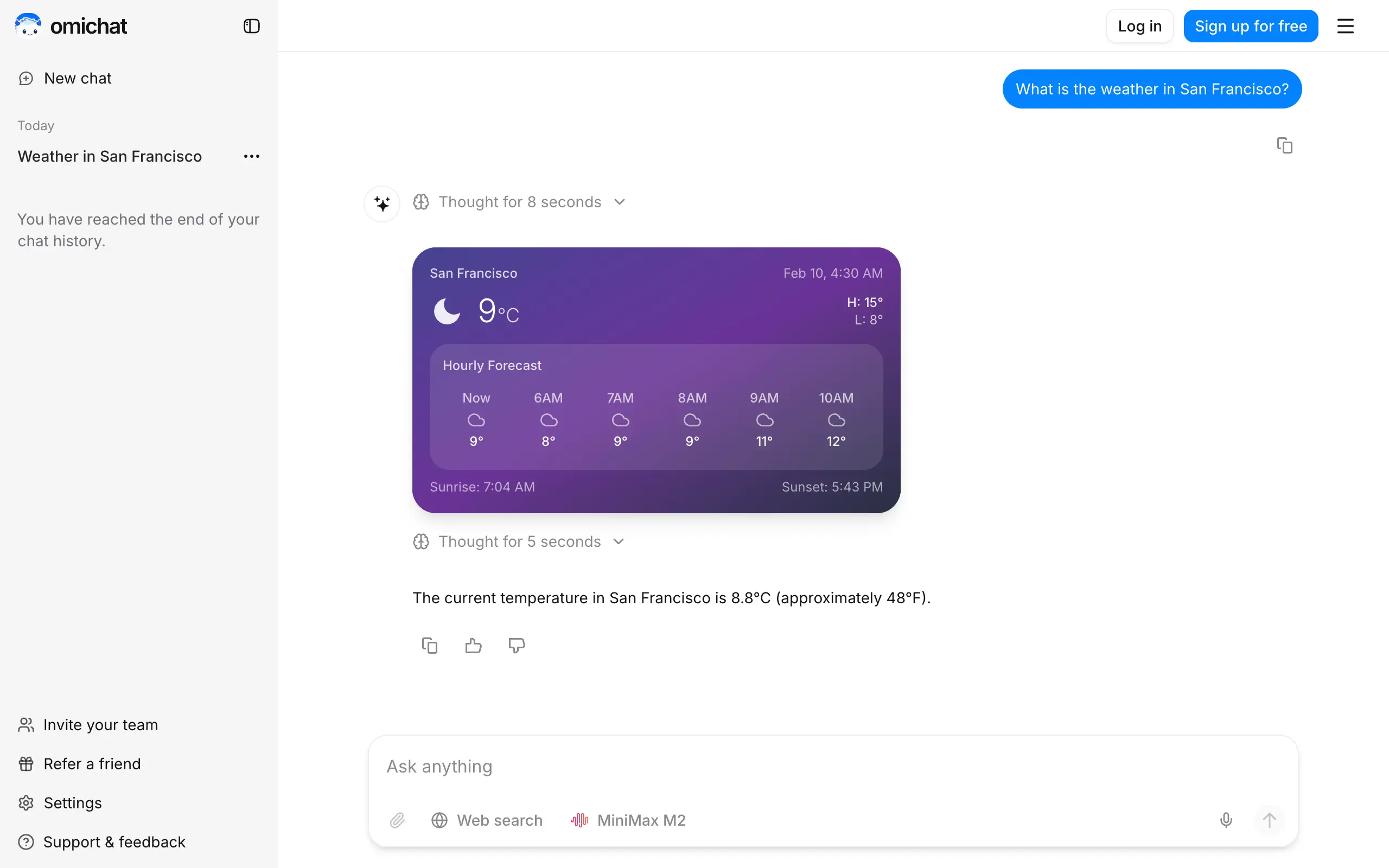
Omichat
Chat with 50+ AI models, including ChatGPT and Claude, in one place - switch models anytime without losing context 🤖
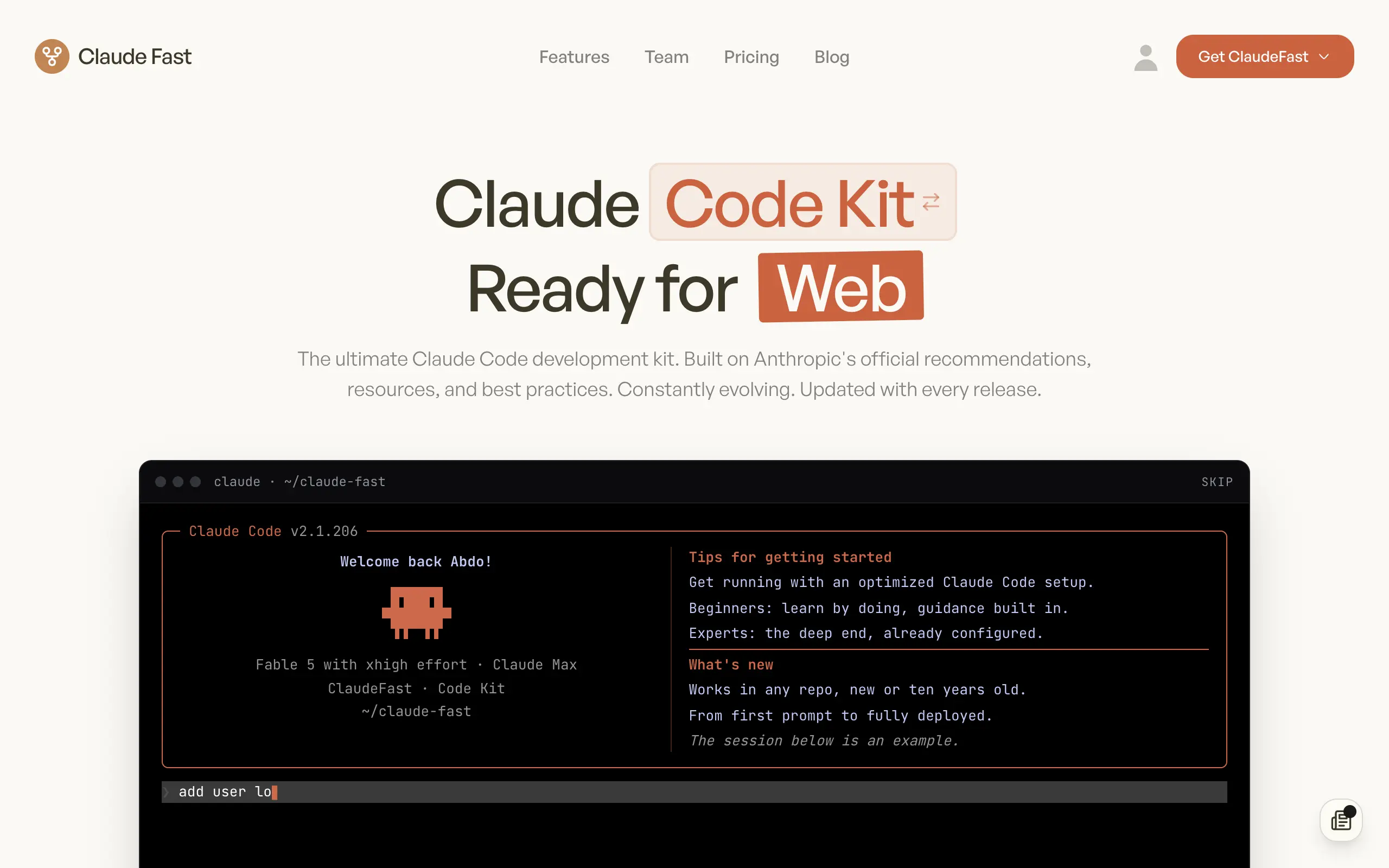
Claude Fast
Supercharge your Claude Code with 6x effective context window and specialized AI agents 🤖
EmojAI
AI-powered emoji picker with smart, context-aware suggestions 🤖
Solohacker
Autonomous company launcher - AI agents work 24/7, escalate what matters, and you stay in control 🤖

BeRawi: Storytelling Coach
Practice storytelling daily with instant feedback to sound clearer, more engaging, and confident 🎤
Omichat
Chat with 50+ AI models, including ChatGPT and Claude, in one place - switch models anytime without losing context 🤖
Claude Fast
Supercharge your Claude Code with 6x effective context window and specialized AI agents 🤖
EmojAI
AI-powered emoji picker with smart, context-aware suggestions 🤖
Solohacker
Autonomous company launcher - AI agents work 24/7, escalate what matters, and you stay in control 🤖
BeRawi: Storytelling Coach
Practice storytelling daily with instant feedback to sound clearer, more engaging, and confident 🎤
Omichat
Chat with 50+ AI models, including ChatGPT and Claude, in one place - switch models anytime without losing context 🤖
Claude Fast
Supercharge your Claude Code with 6x effective context window and specialized AI agents 🤖
EmojAI
AI-powered emoji picker with smart, context-aware suggestions 🤖
Solohacker
Autonomous company launcher - AI agents work 24/7, escalate what matters, and you stay in control 🤖
BeRawi: Storytelling Coach
Practice storytelling daily with instant feedback to sound clearer, more engaging, and confident 🎤
Omichat
Chat with 50+ AI models, including ChatGPT and Claude, in one place - switch models anytime without losing context 🤖
Claude Fast
Supercharge your Claude Code with 6x effective context window and specialized AI agents 🤖
EmojAI
AI-powered emoji picker with smart, context-aware suggestions 🤖
Solohacker
Autonomous company launcher - AI agents work 24/7, escalate what matters, and you stay in control 🤖
BeRawi: Storytelling Coach
Practice storytelling daily with instant feedback to sound clearer, more engaging, and confident 🎤

Connect with like-minded people
Join our community to get feedback, support, and grow together with 1,000+ builders on board, let's ship it!
Join usShip your startup everywhere. In minutes.
Don't burn tokens on setup and start building features on day one.