LaunchSignal
An AI brand-launch copilot for student founders that validates niche ideas, analyzes competitors, and builds a lean go-to-market plan.
What is LaunchSignal?
LaunchSignal is an AI brand-launch copilot designed to help student founders move from an early idea to a focused, testable go-to-market plan. It brings together three jobs that are often handled separately: validating a niche, researching competitors, and deciding how to reach the first customers.
The opportunity is not simply to generate more startup ideas. Founders already have access to general-purpose AI tools, search engines, startup templates, and advice from online communities. The harder problem is turning scattered information into a credible next step—without spending weeks on research or mistaking a confident-sounding answer for proof of demand.
LaunchSignal can address that gap by making early market research more structured, transparent, and actionable. Instead of promising that an idea will succeed, it can help a founder identify assumptions, gather evidence, compare alternatives, and run inexpensive tests.
Product principle: LaunchSignal should help founders make better decisions, not make decisions on their behalf.
That principle matters especially for students. Their budgets, schedules, experience, and access to customers vary widely. A useful product should explain its reasoning, show where its information came from, and offer a practical plan that a beginner can execute.
The problem LaunchSignal solves
Early-stage founders commonly face a sequence of connected questions:
- Is this problem specific and important enough to solve?
- Who experiences it most acutely?
- What do those people use today?
- Which competitors or substitutes already address it?
- What would make a new option meaningfully different?
- How can the founder reach potential customers affordably?
- What should be tested before building a complete product?
These questions are difficult because the evidence is fragmented. A founder may find competitor pricing on one website, user complaints in a forum, market language in social posts, and advice about customer interviews in a course. Each source answers only part of the problem, and the founder still has to decide what to do next.
A general AI assistant can help brainstorm, summarize, and draft. But it may also produce generic positioning, overlook relevant alternatives, or present unsupported assumptions as facts. A spreadsheet can organize research, but it does not necessarily help a novice choose what to investigate or prioritize.
LaunchSignal’s proposed value is to connect the research process to a decision-making workflow:
- Clarify the idea and intended customer.
- Surface assumptions that need evidence.
- Map direct competitors and substitutes.
- Identify a plausible wedge or differentiation hypothesis.
- Recommend low-cost tests.
- Turn results into a lean launch plan.
This is a more defensible product proposition than “AI validates your startup idea.” No tool can guarantee demand from a short description. LaunchSignal should instead help users reach a better-informed decision faster.
Who should use an AI brand-launch copilot?
The initial target audience should be narrow enough to guide product decisions. “Anyone with a business idea” is too broad for an effective first version.
Student founders at the idea and pre-launch stages
The clearest initial audience is students who are exploring an idea, building a prototype, or preparing for a first launch. They may be working independently or as part of a campus team, entrepreneurship program, incubator, or class project.
This group can benefit from structured guidance because members may have strong technical or domain skills but limited experience in customer discovery, competitive research, pricing, and marketing. They also tend to face practical constraints:
- Limited time between classes, work, and extracurricular commitments
- Little or no budget for consultants or paid research tools
- Uncertainty about how to approach potential customers
- Pressure to demonstrate progress to mentors, judges, or peers
- A need to learn the reasoning behind a recommendation, not just receive an answer
LaunchSignal should treat these constraints as product requirements. A plan that assumes a large advertising budget or a full-time founder is not useful to a student building a project on evenings and weekends.
Campus entrepreneurship programs and educators
A second audience is organizations supporting student ventures. Universities, accelerators, entrepreneurship clubs, and business courses may use LaunchSignal to help participants prepare for customer discovery or present more consistent launch plans.
For these users, potential value includes:
- A common framework for evaluating early ideas
- Progress visibility across teams
- Templates for interviews, experiments, and positioning
- A way to identify where founders need mentor support
- A repeatable curriculum component that does not replace human mentorship
Selling to institutions may involve longer procurement cycles and requirements around student data, administration, accessibility, and reporting. It is best treated as a later expansion rather than a prerequisite for an individual-founder MVP.
Early-stage solo builders and first-time founders
The product may eventually serve first-time founders outside education. However, this audience has a wider range of needs and willingness to pay. Some may want a one-time research report; others may want ongoing launch operations, collaboration, or analytics.
A good positioning sequence is to start with student founders, learn which workflows create repeat use, and then decide whether the product can credibly expand to other early-stage builders.
The market opportunity and product gap
LaunchSignal sits at the intersection of AI research assistance, startup education, customer discovery, and go-to-market planning. That intersection creates an opportunity, but it also means the product will be compared with tools that solve only part of the job.
Existing approaches are fragmented
A founder can combine general-purpose AI, web search, spreadsheets, note-taking apps, business-plan templates, and mentor feedback. This approach is flexible, but it requires the founder to know what to ask, how to judge the answers, and how to translate findings into action.
LaunchSignal can reduce that coordination burden by offering a guided workflow and a shared workspace for the evidence behind a launch decision.
Generic AI can be fast but shallow
General AI tools are useful for ideation, drafting, and synthesis. Their weakness is not that they cannot produce a business plan; it is that a polished plan can conceal weak evidence. A good product must distinguish between:
- A fact supported by a source
- A user-provided assumption
- An AI-generated hypothesis
- A conclusion that still needs testing
That distinction can build trust and improve learning. It also gives the product a stronger role than simply wrapping a language model in a startup-themed interface.
Traditional startup resources can feel difficult to apply
Books, courses, incubator materials, and templates can teach founders valuable methods. But users may struggle to apply general frameworks to their own niche, especially when they need a concrete next step today.
LaunchSignal can make those methods easier to practice by connecting each recommendation to the founder’s specific customer, problem, and constraints. It should not imply that a framework replaces experienced advisors or direct customer conversations.
The gap is decision support, not content generation
The most promising market gap is a beginner-friendly system that helps turn research into decisions. A strong product can answer not only “What might my competitors be?” but also:
- Which competitors are most relevant to this customer and use case?
- What evidence supports that comparison?
- What is still uncertain?
- Which assumption is most important to test first?
- What is the least expensive credible test?
- What would count as a useful result?
This shifts the product from report generation toward a repeatable learning loop.
Core LaunchSignal features
An effective MVP should focus on a connected workflow rather than a long list of disconnected AI features.
1. Structured idea intake
The product should begin with a guided intake that captures enough context to make research relevant. Useful fields include:
- A concise description of the product or service
- The target customer or user
- The problem the product addresses
- How customers solve the problem today
- The founder’s current stage
- Geography or language, if relevant
- Available time and budget
- Existing customer conversations or evidence
The intake should allow “I don’t know yet” as an answer. Forcing a user to invent certainty can make the resulting analysis less useful.
LaunchSignal can also identify vague descriptions and ask clarifying questions. For example, “a better way to manage events” could prompt the user to specify whether the target is student clubs, independent venues, corporate teams, or another group.
2. Niche and customer hypothesis analysis
The product can help founders define a more specific initial audience. It should not claim to know the ideal customer from a prompt alone. Instead, it can propose several customer hypotheses and explain the trade-offs.
For each hypothesis, the system might organize:
- The user’s likely context
- The problem they experience
- How frequently the problem may occur
- The current workaround
- The potential cost of doing nothing
- How the founder could reach a few people for interviews
- What evidence would support or weaken the hypothesis
This approach gives founders something to test instead of presenting a single AI-generated persona as a verified market segment.
3. Competitor and alternative mapping
Competitive analysis should include more than companies with similar products. Customers also use workarounds, internal processes, spreadsheets, free tools, or simply tolerate the problem.
LaunchSignal should separate:
- Direct competitors: Products aimed at a similar customer and problem
- Indirect competitors: Products that solve part of the same problem
- Substitutes: Existing behaviors or tools customers use instead
- The status quo: Doing nothing or accepting the problem
For each entry, show the source and the date it was checked whenever possible. If information is unavailable or uncertain, say so instead of filling the gap with invented detail.
A useful competitor profile might cover customer segment, main use case, positioning, visible pricing, strengths, limitations, and likely differentiation opportunities. It should avoid presenting a competitor’s marketing claims as independently verified product performance.
4. Evidence-backed positioning suggestions
Once the customer and alternatives are clearer, LaunchSignal can help draft a positioning statement. A useful structure is:
For [specific customer] who needs [job or outcome], [product] helps them [benefit] through [distinct approach], unlike [relevant alternative].
The AI can propose variations, but the interface should label these as drafts. Users should be encouraged to test language with real customers and avoid broad claims such as “the best,” “revolutionary,” or “guaranteed” unless they can substantiate them.
5. Lean go-to-market plan
The launch plan should be practical for a founder with limited resources. It can include:
- One primary customer segment
- A short value proposition
- A small set of outreach channels
- A landing-page or demo recommendation
- A customer interview script
- A low-cost experiment
- A measurement plan
- A suggested sequence of weekly actions
The plan should explain why each channel is recommended. For example, if the target customer is reachable through a specific professional community, the product can suggest a respectful outreach experiment rather than defaulting to paid advertising.
6. Experiment and interview workspace
A plan becomes more valuable when the founder can track whether they acted on it. LaunchSignal can include lightweight tools for:
- Recording interview notes
- Grouping recurring customer problems
- Tracking experiment hypotheses
- Comparing expected and observed outcomes
- Logging follow-up actions
- Updating the idea assessment when new evidence appears
This creates a natural reason to return to the product. It also makes LaunchSignal more useful than a one-time AI report.
7. Confidence and evidence labels
Every generated insight should communicate its status. A simple labeling system could include:
- Source-backed: Linked or cited information supports the claim
- Founder-provided: Based on information entered by the user
- AI hypothesis: A suggestion that needs verification
- Unverified: The system could not find adequate evidence
- Out of date: A source may no longer reflect current conditions
These labels make the product more trustworthy and help teach research literacy.
A competitive advantage that can be earned
LaunchSignal will compete with general AI assistants, startup-planning software, research tools, courses, and human mentors. It will not win merely by adding an AI chat interface. Its advantage needs to come from the workflow, trust model, and audience focus.
| Alternative | What it does well | Common limitation | LaunchSignal opportunity | Build priority |
|---|---|---|---|---|
| General AI assistant | Flexible brainstorming and drafting | Can provide generic or weakly sourced answers | Add a guided workflow, evidence labels, and next actions | High |
| Search engine | Broad access to public information | Founder must interpret and organize results | Summarize relevant findings with source context | High |
| Business-plan template | Provides a familiar structure | May encourage completion over validation | Connect each plan section to a testable assumption | Medium |
| Mentor or accelerator | Offers human judgment and experience | Access may be limited or inconsistent | Prepare founders to use mentor time effectively | Medium |
LaunchSignal’s most defensible early positioning is the evidence-first launch copilot for student founders. The product can stand out by combining:
- A student-friendly price and accessible language
- A workflow that starts with a narrow customer hypothesis
- Source-aware competitor research
- Clear separation between evidence and AI suggestions
- Small experiments instead of overbuilt business plans
- Learning-oriented explanations that help founders build judgment
The long-term advantage may come from product quality and accumulated workflow insight, not simply from the underlying model. If users repeatedly record interviews, tests, and decisions, LaunchSignal could help them see patterns across their own work. Any aggregated learning should be designed with strong privacy safeguards and should not expose one founder’s confidential information to another.
Recommended technology stack
The initial stack should favor speed of iteration, reliable data handling, and the ability to change model providers or workflows as the product develops.
Front end
A web application built with React and a framework such as Next.js is a practical choice. It supports an interactive onboarding flow, dashboards, research views, and server-rendered pages where useful.
Tailwind CSS can speed up styling and help a small team maintain a consistent interface. Remove the space inside the link when implementing the link in the published version: Tailwind CSS.
The trade-off is that a modern React application can introduce more architectural complexity than a simple landing page needs. Keep the MVP focused: one onboarding flow, one project workspace, and a small number of core views.
Backend and database
A relational database such as PostgreSQL is well suited to structured records such as users, projects, competitors, sources, interviews, assumptions, and experiments.
A managed platform such as Supabase can provide database, authentication, and storage capabilities without requiring a team to operate every service from scratch. The trade-off is platform dependency and the need to understand access-control policies carefully. Test authorization at the database level; hiding a screen in the interface is not sufficient protection.
A sensible data model might include:
- Users and workspaces
- Projects and idea versions
- Customer hypotheses
- Competitor records and source references
- Research findings
- Interviews and experiment results
- Generated plans and model metadata
Store source URLs, retrieval dates, and relevant excerpts where permitted. Avoid collecting personal information that is not necessary to deliver the product.
AI and research pipeline
Use a model API for language tasks such as asking clarifying questions, summarizing user-provided evidence, drafting interview scripts, and organizing research. Consult the OpenAI API documentation or the documentation for whichever provider is selected.
A model alone should not be treated as a live research database. For current competitor information, use a controlled retrieval process that collects permitted public sources, records provenance, and presents uncertainty. The product may need to limit automated collection, respect website terms, and use approved search or data providers.
Separate AI tasks into steps rather than asking one prompt to produce a complete launch report. For example:
- Normalize the founder’s idea and extract assumptions.
- Identify research questions.
- Retrieve or accept evidence.
- Summarize findings with citations or source references.
- Generate options and experiments.
- Ask the founder to review and edit the result.
This separation makes outputs easier to test and debug.
Billing and analytics
If the product charges individual users, Stripe is a common billing option. For an institutional plan, the product may also need invoicing, team management, and purchase-order workflows.
Use privacy-conscious product analytics to understand onboarding completion, report usefulness, experiment tracking, and retention. Track events that help answer product questions, but do not treat time spent in the app as a proxy for founder success.
Ship quickly without locking in too early
The technical goal is not to build an elaborate AI platform before validating the user need. Keep model calls behind a service layer so providers can be changed. Store generated content alongside its prompt or workflow version, where appropriate, so the team can investigate quality changes. Add evaluation cases for common idea types and failure modes before expanding access.
For a faster starting point, TurboStarter can help teams launch a SaaS foundation, allowing more time for the product-specific research and validation workflow.
Monetization strategies
LaunchSignal’s pricing should reflect how often users need the product, the value of the workflow, and the limited budgets of its initial audience.
Freemium for individual founders
A free tier can make it easy for students to test the product. It might include one project, a basic idea assessment, and a limited number of research actions. Paid plans could add more projects, deeper competitor tracking, collaboration, saved experiments, or exportable plans.
The risk is offering too much costly AI usage for free. Set clear limits and measure whether free users reach a meaningful outcome before deciding where to place the paywall.
One-time launch report
Some users may prefer a fixed-price report rather than a subscription. A one-time option could include a structured research summary, competitor map, and test plan. This can be easier to understand but may create lower retention unless users return to track experiments or update research.
Student subscription
A discounted individual subscription can align with a student’s need for ongoing support during a semester or launch period. Consider transparent monthly and annual options, a campus verification approach that minimizes personal data collection, and easy cancellation.
Institutional licensing
Universities, accelerators, and entrepreneurship programs may pay for cohort access, facilitator dashboards, or curriculum resources. This can support larger contracts, but expect longer sales cycles and additional requirements around privacy, accessibility, procurement, and support.
Services and expert review
Human review could be offered as an optional premium service or delivered through partners. It should complement the AI workflow rather than be presented as a guaranteed path to investment or success. Human expertise can be especially valuable when an idea involves regulated industries, technical feasibility, or specialized markets.
Risks and how to reduce them
Hallucinated or misleading research
An AI-generated competitor, pricing claim, or market insight can damage user trust. Reduce this risk by displaying sources, dates, and confidence labels; separating retrieved evidence from model inference; and making it easy for users to flag errors.
Do not imply that an AI-generated market estimate is authoritative. If a market-size calculation is included, show the assumptions and method, and encourage users to verify the inputs.
False confidence in idea validation
A score can look objective even when it is based on incomplete information. Avoid presenting a single “success probability” or definitive validation badge. If the product uses ratings, explain what they measure and what they cannot measure.
The product should encourage customer conversations and behavioral experiments. Positive feedback from friends, survey responses, or AI analysis may be useful, but none alone proves willingness to pay.
Privacy and sensitive business information
Founders may enter unpublished concepts, customer notes, or personal information. Use data minimization, clear retention policies, secure access controls, and transparent explanations of how information is processed. Be explicit about whether customer data is used to improve models, and provide appropriate controls.
For campus sales, assess applicable institutional privacy requirements and data-protection laws before launching. Do not assume that a student-facing product is exempt from privacy obligations.
Bias and unequal recommendations
AI research can favor well-documented companies, English-language sources, or markets with strong online visibility. This may leave local, emerging, or underserved markets poorly represented.
Mitigations include asking users to specify geography and language, showing research coverage limitations, and allowing founders to add their own sources and knowledge. Test outputs across different industries, regions, and business models.
Low willingness to pay
Student founders are often price-sensitive, and some may only need the product for a short project. Validate payment behavior early rather than assuming that high engagement means subscription demand.
Test pricing with real offers, not only surveys. Consider whether institutional buyers or accelerator programs provide a more sustainable route to revenue.
Product complexity and feature sprawl
It is tempting to add pitch decks, business plans, branding tools, social content, and financial projections. Each feature can dilute the core value and increase maintenance costs.
Keep the first version centered on the loop of research, decide, test, learn. Add adjacent features only when user evidence shows they improve that loop.
How to measure whether LaunchSignal is working
A useful measurement system should focus on user progress, not just AI output volume.
Activation metrics
Track whether users:
- Complete an idea brief
- Define a target customer hypothesis
- Review a competitor or alternative map
- Choose an experiment or interview action
- Return to record what they learned
These events indicate that users are moving through the intended workflow.
Quality metrics
Use product research and structured review to assess:
- Whether sources are relevant and traceable
- Whether generated claims are clearly labeled
- Whether recommendations fit the user’s budget and stage
- Whether a founder can explain the next step after using the product
- How often users correct or reject generated research
AI evaluation should include examples of vague ideas, niche markets, non-English contexts if supported, and prompts designed to expose unsupported claims.
Outcome metrics
Longer-term indicators may include completed customer interviews, experiments run, evidence recorded, and decisions changed because of new findings. These are not proof that a startup will succeed, but they are more meaningful than counting generated reports.
When publishing claims about market size, founder outcomes, or product impact, use a credible source and clearly explain the methodology. If internal product data is used, report the sample, time period, and limitations rather than implying that a small cohort represents all student founders.
A practical MVP roadmap
The first release should test whether founders will use a guided, evidence-oriented workflow—not whether the company can build a comprehensive startup platform.
Phase 1: Validate the workflow manually
Interview student founders, entrepreneurship educators, and campus program leads. Ask about the last time they evaluated an idea, what they tried, where they got stuck, and what they did next. Avoid relying on hypothetical questions such as “Would you use an AI tool?”
Run a concierge test: help a small number of founders create a niche hypothesis, competitor map, and experiment plan using a lightweight prototype or manual research process. Observe which parts they trust, ignore, or want to change.
Phase 2: Build the narrowest useful product
Create an MVP with:
- Guided idea intake
- Customer and problem hypothesis generation
- Competitor and substitute mapping
- Source and uncertainty labels
- A small set of recommended experiments
- A workspace for recording interviews and results
Do not begin with automatic validation scores, elaborate financial forecasts, or a large library of AI-generated branding assets. Those may look impressive but do not directly test the core product thesis.
Phase 3: Evaluate usefulness and trust
Invite a small cohort and review outputs with users. Check whether they can verify claims, understand limitations, and act on the plan. Track factual errors, irrelevant competitors, and recommendations that are unrealistic for a student founder.
A product that produces fewer insights with better evidence may be more valuable than one that generates a long report quickly.
Phase 4: Test pricing and distribution
Test a free individual plan, a paid founder plan, and a pilot with a campus program. Compare not just sign-ups but activation, completion, repeat use, and willingness to pay.
Potential early distribution channels include entrepreneurship clubs, university innovation programs, student startup competitions, incubators, and founder communities. Use partnerships to reach users, but keep onboarding self-serve where possible.
Phase 5: Expand based on repeated behavior
Add features only when usage patterns point to a clear need. If users return to update competitor research, consider monitoring. If teams need to coordinate interviews, improve collaboration. If educators need cohort oversight, explore institutional tools with privacy safeguards.
1. Choose a specific first user
Define the initial segment, such as university students with a software or consumer-service idea who are preparing to conduct customer discovery. Write down the stage, constraints, and likely alternatives they use today.
2. Identify the highest-risk assumption
Decide what must be true for LaunchSignal to be valuable. For example, founders may need to trust AI-assisted research enough to use it, but still want clear human control and source visibility.
3. Run problem interviews
Speak with founders and program leaders about actual past behavior. Document recurring pain points, current tools, and the consequences of getting the work wrong. Avoid pitching the product during the first part of each conversation.
4. Prototype one complete journey
Design the path from idea intake to a specific experiment. Test whether users understand the result and can take action without needing a long explanation from the product team.
5. Measure evidence quality
Review generated research for source accuracy, relevance, uncertainty, and usefulness. Create a repeatable evaluation set before opening access to a larger cohort.
6. Test a real payment path
Offer a clearly described paid plan or institutional pilot. Use observed purchase decisions to guide pricing, while considering the different budgets and purchasing processes of students and universities.
7. Improve the learning loop
Use interview notes and experiment outcomes to help founders update assumptions. This feedback loop is the basis for repeat value and a stronger product advantage.
A useful validation standard
LaunchSignal does not need to prove that an idea will succeed. It needs to help a founder identify what is uncertain, find better evidence, and choose a sensible next test.
The LaunchSignal USP
LaunchSignal’s clearest unique selling proposition is not that it uses AI to generate a launch plan. Many tools can generate plans. Its opportunity is to provide a student-friendly, evidence-first process for turning an early idea into testable go-to-market actions.
That proposition combines a focused audience with a concrete workflow:
- For student founders: Designed around limited time, experience, and budget
- Evidence-first: Distinguishes sourced information from assumptions and AI hypotheses
- Action-oriented: Prioritizes interviews and low-cost experiments over polished documents
- Connected: Links niche definition, competitor research, positioning, and launch planning
- Educational: Explains the reasoning so founders improve their own judgment
The product should earn trust by showing its limitations. Transparent uncertainty is not a weakness; it is essential to helping early founders avoid confusing confident language with market evidence.
For teams building the product, TurboStarter can provide a starting point for the SaaS foundation. The product’s durable value, however, will come from the quality of its research workflow, the usefulness of its recommendations, and the trust it earns with founders.
AI can help organize assumptions, summarize available research, and suggest experiments. It cannot conclusively establish demand from a prompt. Validation requires evidence from the intended customer, such as interviews, observed behavior, or credible purchase commitments. LaunchSignal should support that work rather than claim to replace it.
A score may be useful for organizing discussion, but it can create false precision. If used, it should describe specific dimensions—such as customer clarity or evidence strength—show the inputs, and make clear that it is not a probability of success.
Student founders are a strong initial segment because the idea is explicitly designed for them and their needs can be studied through campus communities. Individual subscriptions may be easier to test, while universities and accelerators can become important buyers after the core workflow has been demonstrated.
Avoid broad business-plan generation, guaranteed validation claims, complex financial forecasting, and a large suite of unrelated branding tools. Start with idea intake, evidence-aware research, and a practical experiment plan. Expand only when user behavior shows a recurring need.
Conclusion
LaunchSignal addresses a real early-stage challenge: student founders need more than ideas and generic advice. They need a clear way to investigate a niche, understand alternatives, and take the next sensible step with limited resources.
The strongest product will not promise certainty. It will make uncertainty easier to manage. By combining structured discovery, transparent competitor research, evidence labels, and practical experiments, LaunchSignal can become a useful companion for founders learning how to bring an idea to market.
Start with one audience, one connected workflow, and one measurable outcome: help a founder move from an untested idea to a better-informed experiment. Interview prospective users, prototype the process manually, test source quality, and ask people to pay before expanding the feature set. If founders return to record what they learned and use that evidence to change their plans, LaunchSignal will have demonstrated a stronger foundation than a polished AI-generated report.
More 🤖 AI Startup SaaS ideas
Discover more innovative ai startup SaaS ideas that are trending in 2026. Each idea is AI-generated with market validation and growth potential to help you find your next profitable venture faster than competitors.
Your competitors are building with TurboStarter
Below are some of the SaaS ideas that have been generated and built with our starter kit.
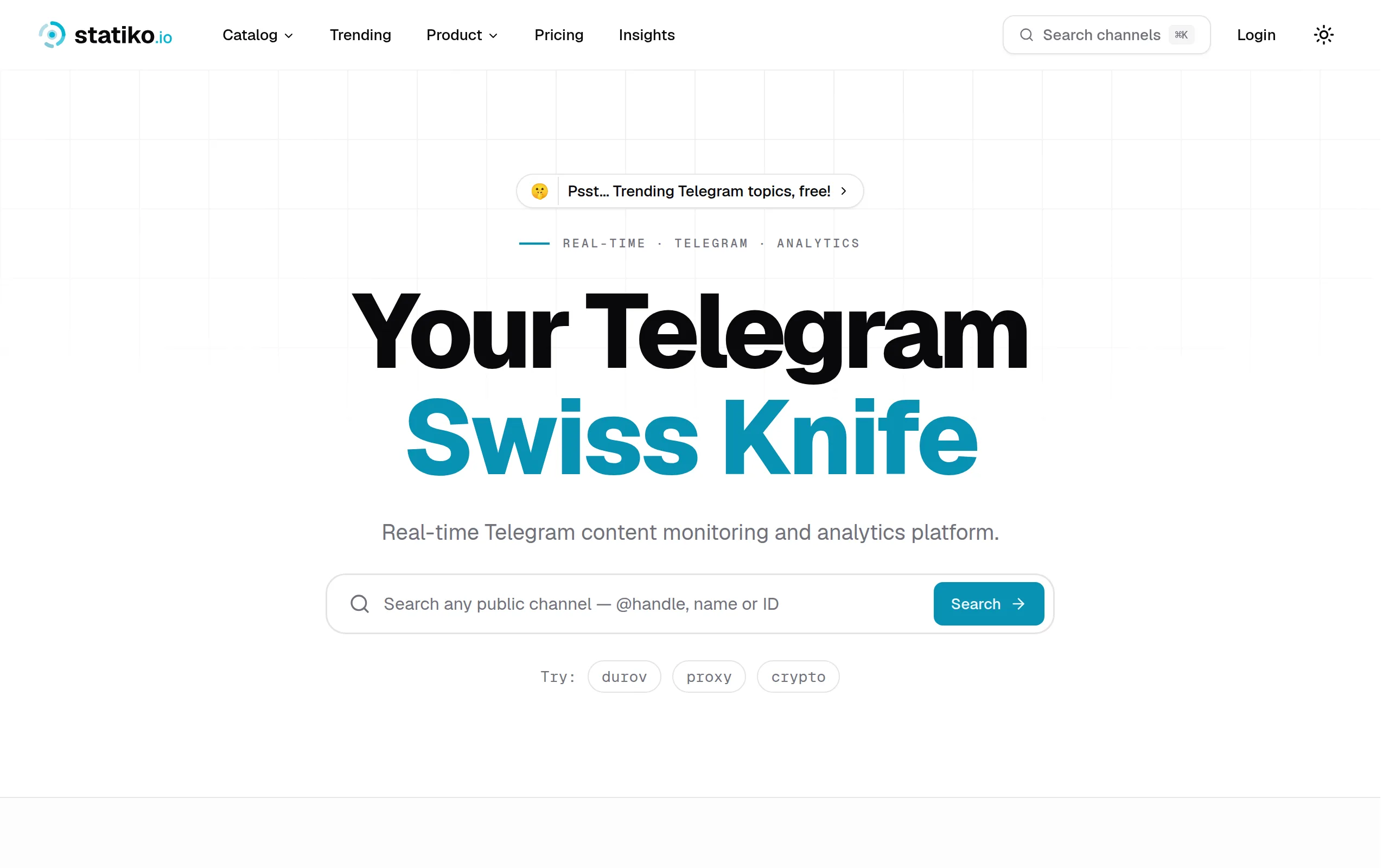
Statiko
Monitor any Telegram channel in real time - track posts, edits, deletions, and growth with AI recaps 📡
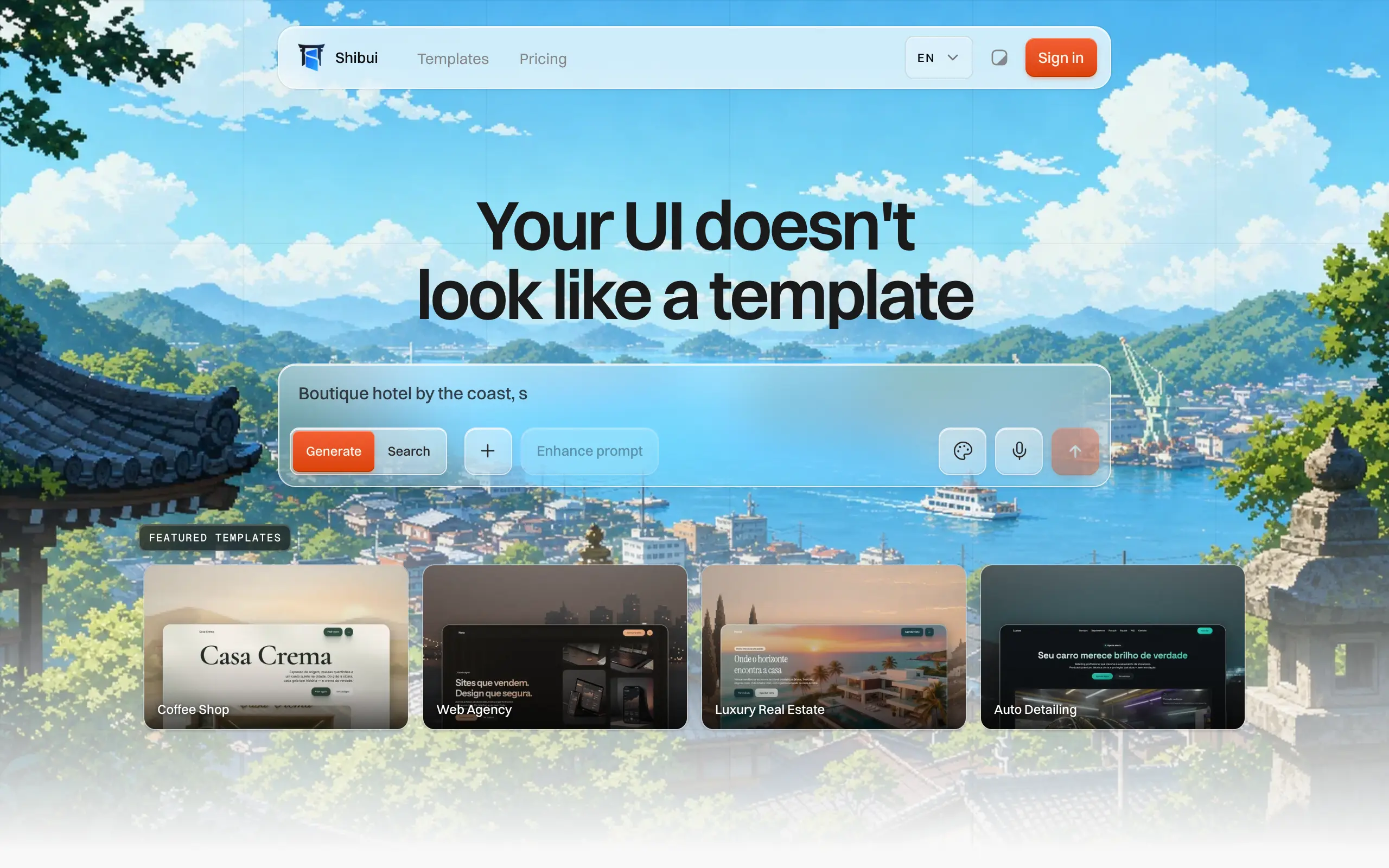
Shibui
AI website builder - describe your business, pick a niche template, edit by chatting, and publish instantly ✨

Pro Service
Find verified home service professionals, compare quotes, and pay securely through escrow - built for Brazilians across the US 🏠
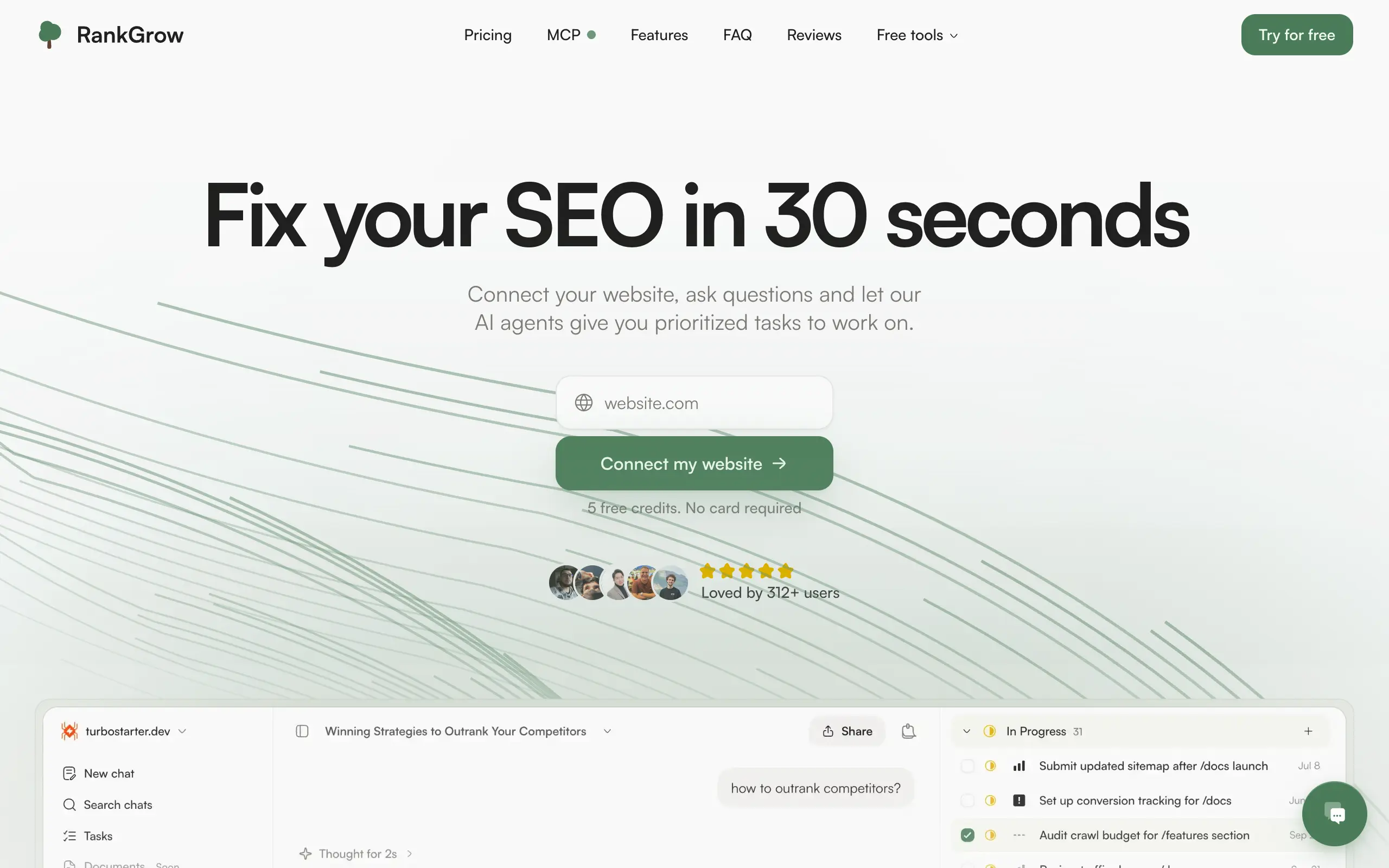
RankGrow
Fix your SEO with AI agents - connect Search Console, get prioritized tasks, and grow organic traffic 📈
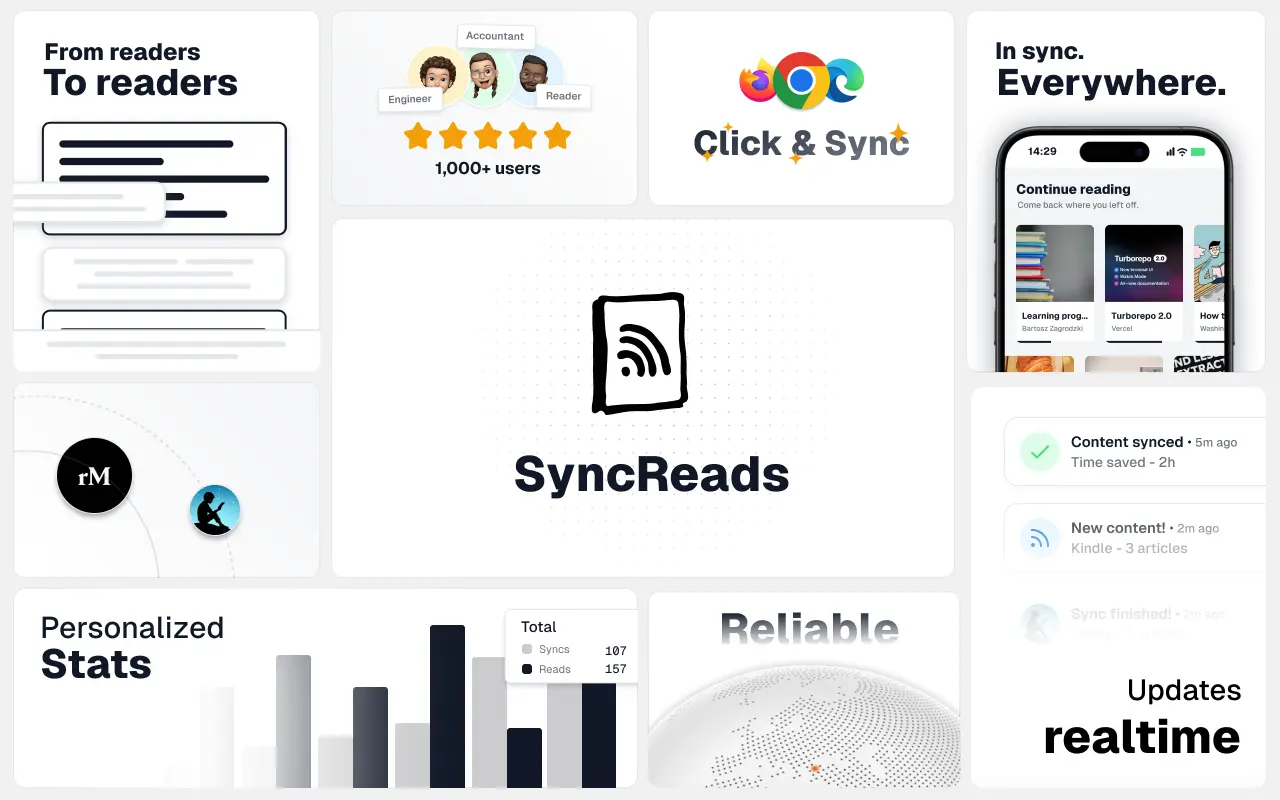
SyncReads
Sync your favorite content for distraction-free reading, save time and replace multiple apps. Anytime, anywhere 🔄
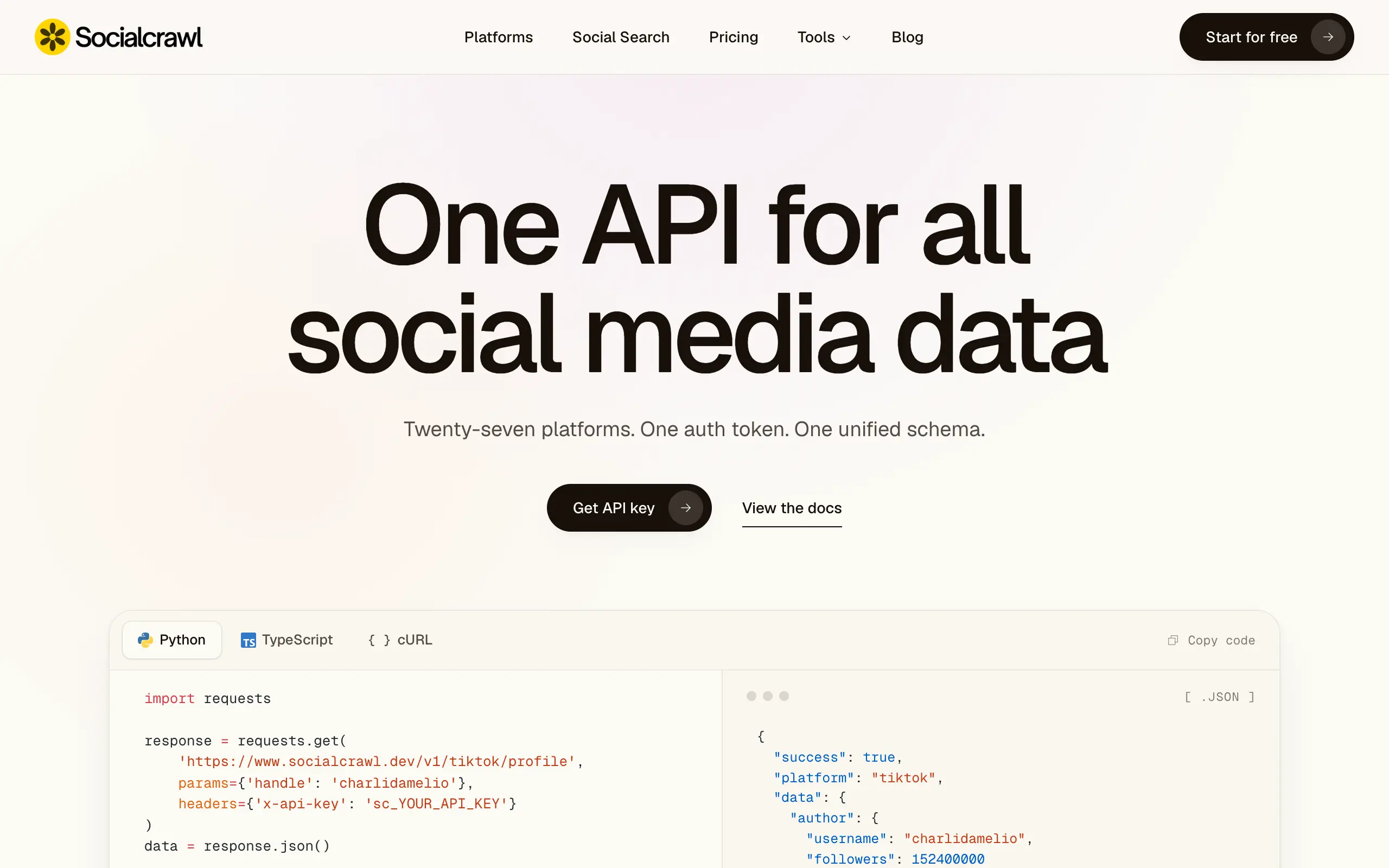
Socialcrawl
Get clean, structured data from 21 platforms like TikTok, Instagram, and YouTube with a single request 📊
Statiko
Monitor any Telegram channel in real time - track posts, edits, deletions, and growth with AI recaps 📡
Shibui
AI website builder - describe your business, pick a niche template, edit by chatting, and publish instantly ✨
Pro Service
Find verified home service professionals, compare quotes, and pay securely through escrow - built for Brazilians across the US 🏠
RankGrow
Fix your SEO with AI agents - connect Search Console, get prioritized tasks, and grow organic traffic 📈
SyncReads
Sync your favorite content for distraction-free reading, save time and replace multiple apps. Anytime, anywhere 🔄
Socialcrawl
Get clean, structured data from 21 platforms like TikTok, Instagram, and YouTube with a single request 📊
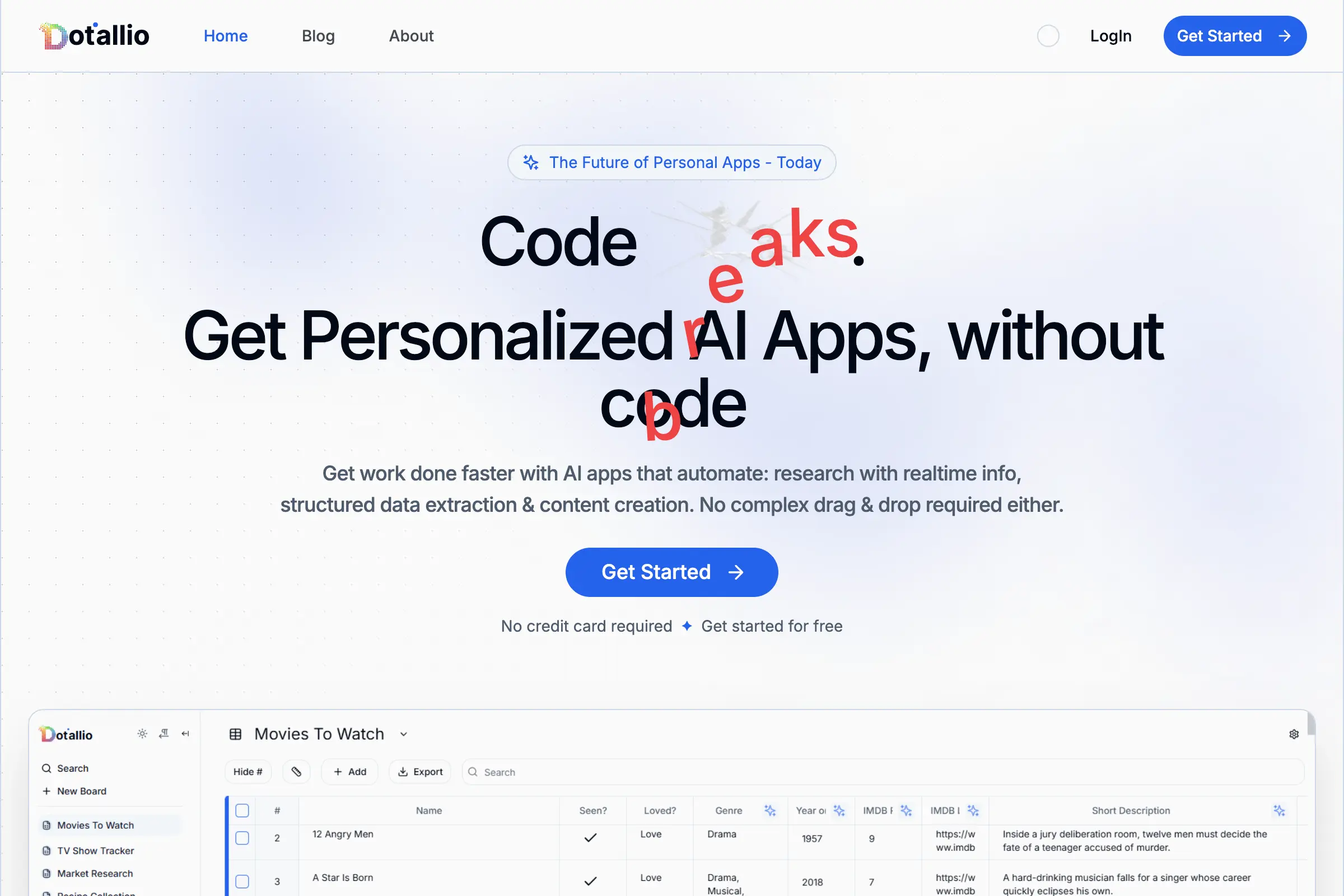
Dotallio
Personalized AI apps that automate research, data extraction, and content creation without code 🤖
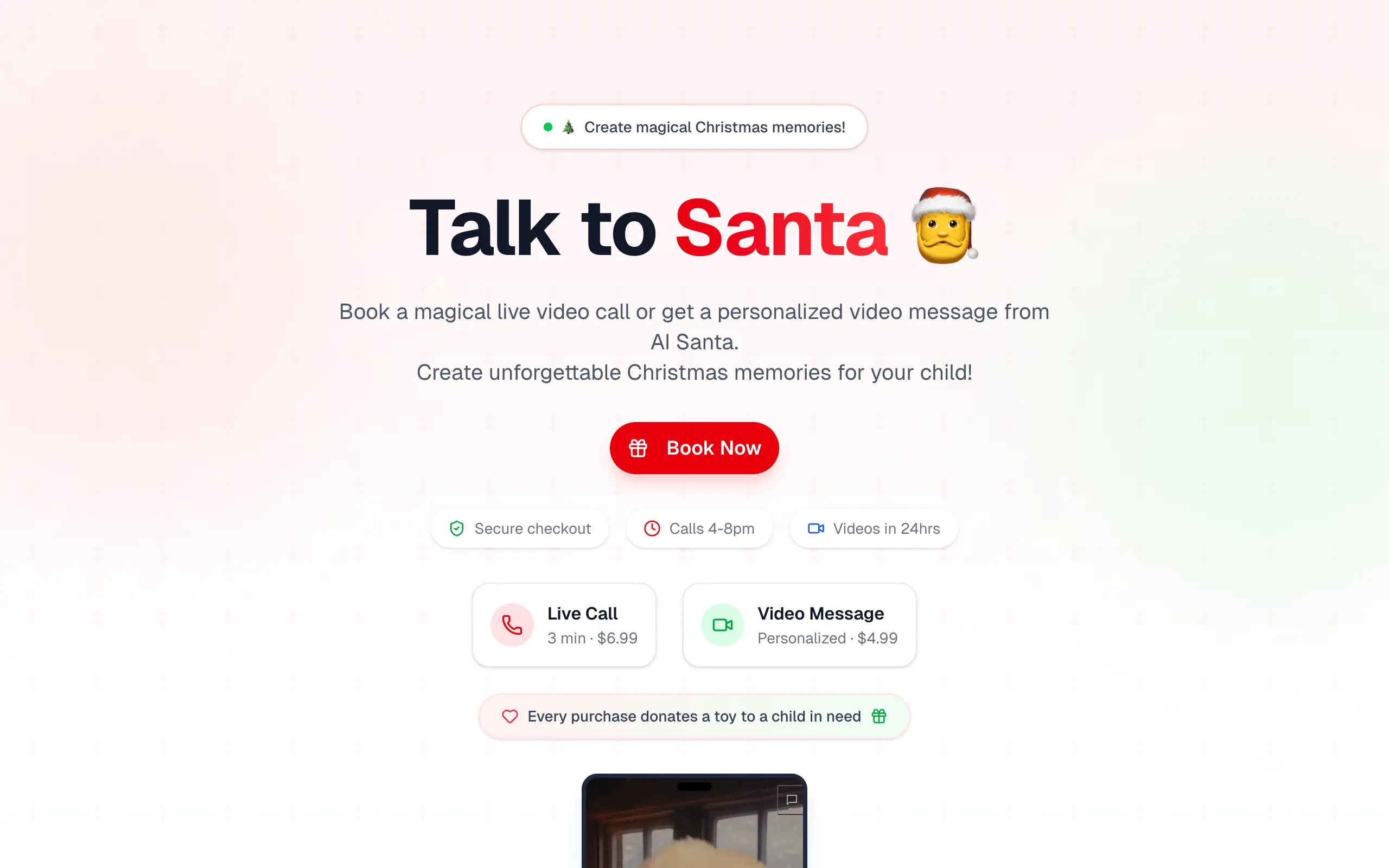
Talk to Santa
Enjoy a magical live video chat or receive a unique AI-generated video greeting from Santa Claus 🎅
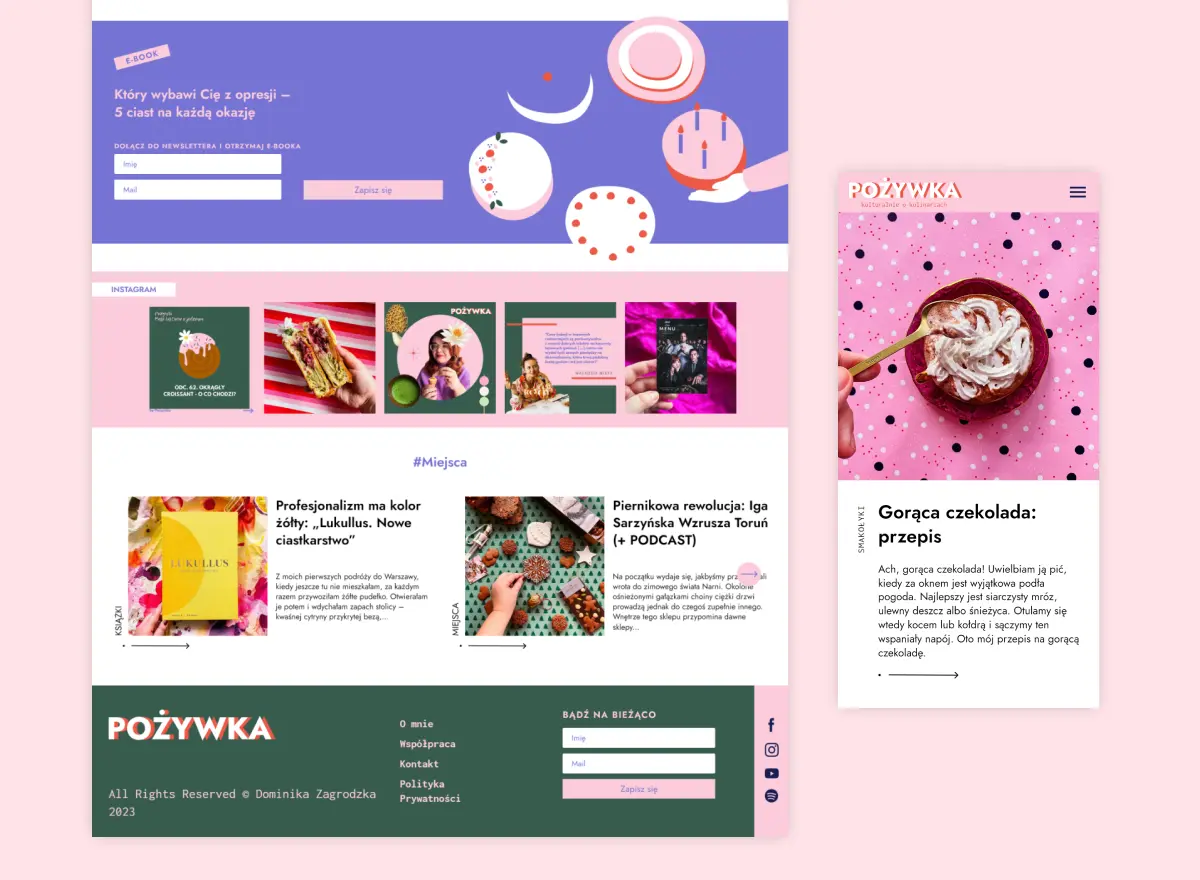
pozywka.pl
Scalable blog for food journalist, focused on performance and user experience 🌭
zagrodzki.me
Personal blog and portfolio of Bart Zagrodzki, where he shares his knowledge and work 💼
TurboStarter
Ship your startup everywhere. In minutes.
HTML to Markdown
Convert HTML to Markdown with ease, directly in your browser 📄
Dotallio
Personalized AI apps that automate research, data extraction, and content creation without code 🤖
Talk to Santa
Enjoy a magical live video chat or receive a unique AI-generated video greeting from Santa Claus 🎅
pozywka.pl
Scalable blog for food journalist, focused on performance and user experience 🌭
zagrodzki.me
Personal blog and portfolio of Bart Zagrodzki, where he shares his knowledge and work 💼
TurboStarter
Ship your startup everywhere. In minutes.
HTML to Markdown
Convert HTML to Markdown with ease, directly in your browser 📄
Omichat
Chat with 50+ AI models, including ChatGPT and Claude, in one place - switch models anytime without losing context 🤖
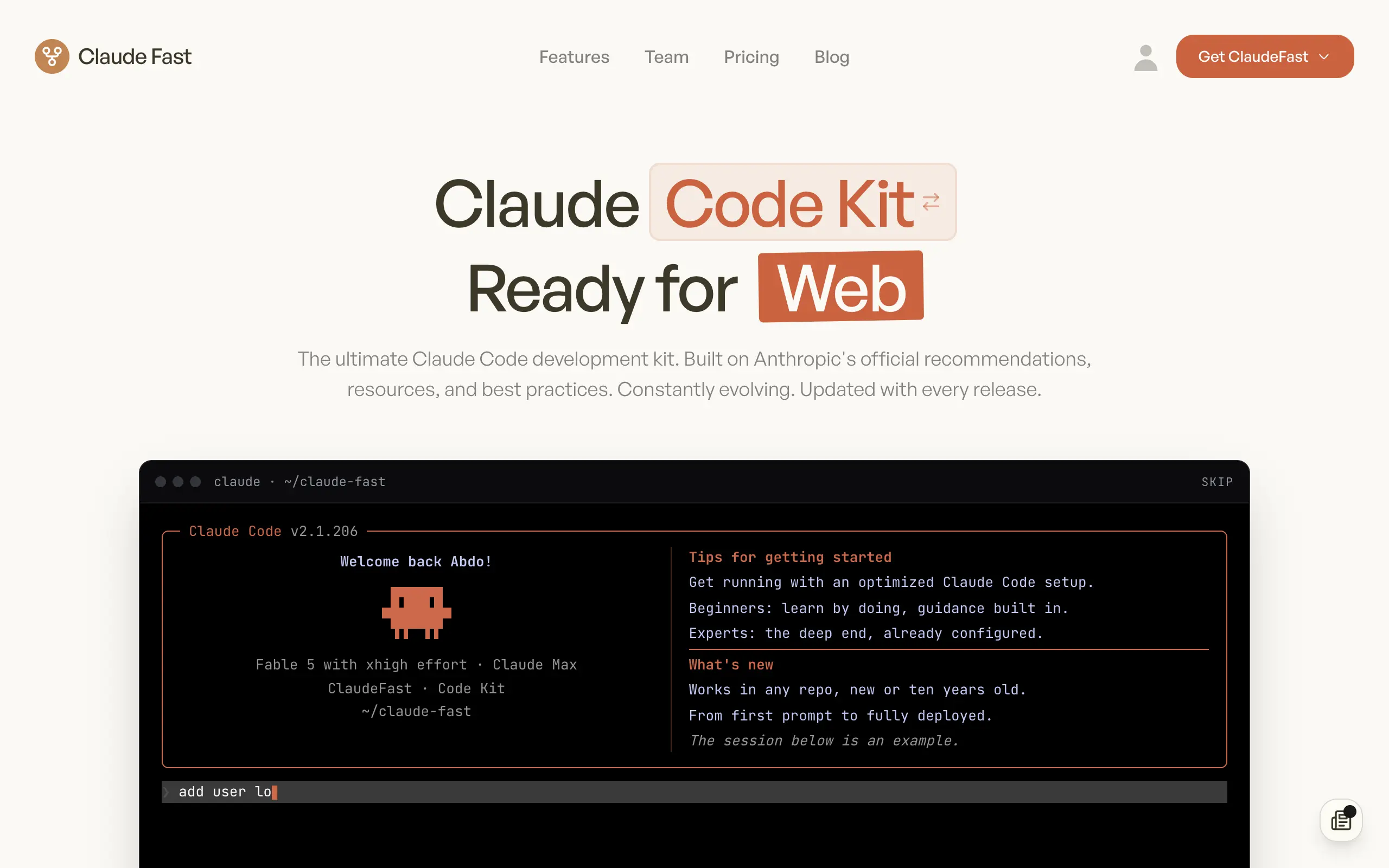
Claude Fast
Supercharge your Claude Code with 6x effective context window and specialized AI agents 🤖
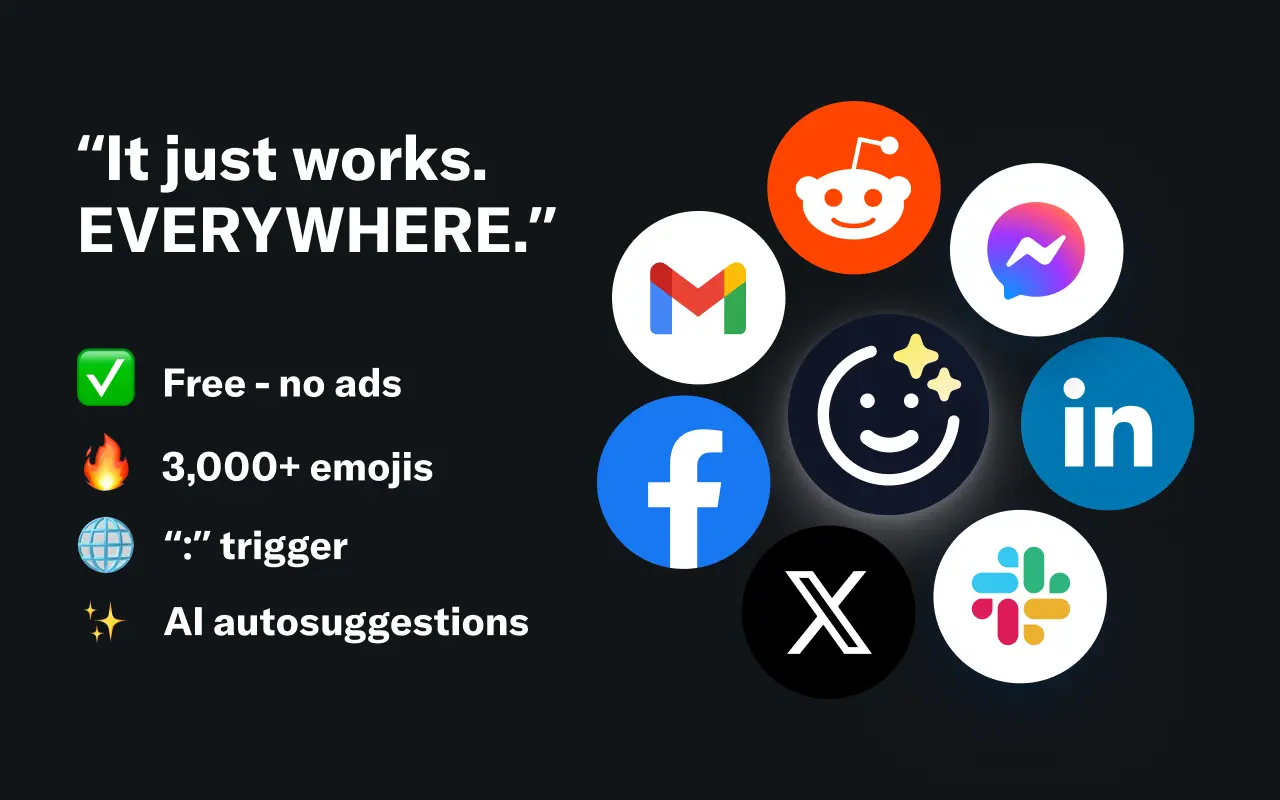
EmojAI
AI-powered emoji picker with smart, context-aware suggestions 🤖
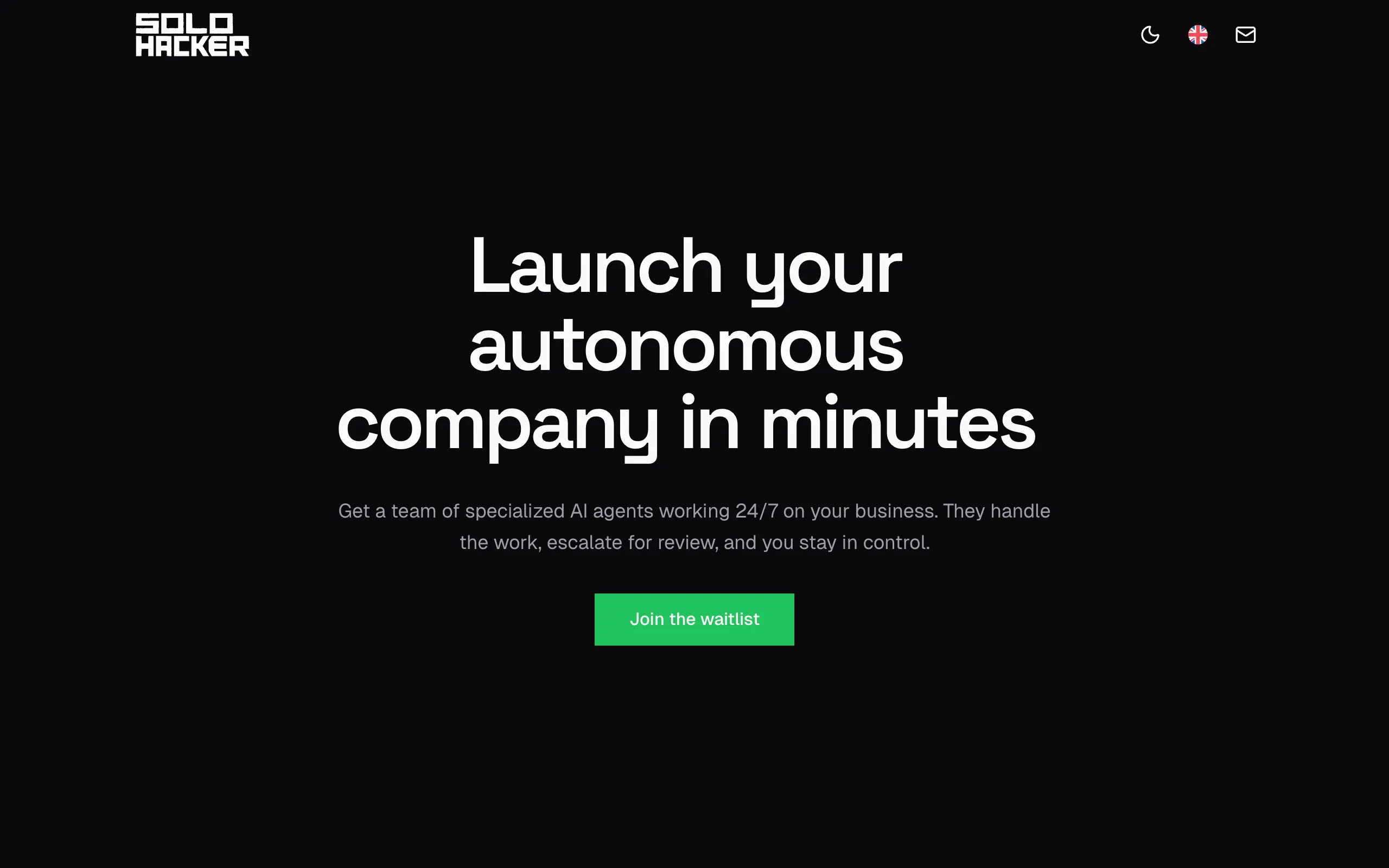
Solohacker
Autonomous company launcher - AI agents work 24/7, escalate what matters, and you stay in control 🤖
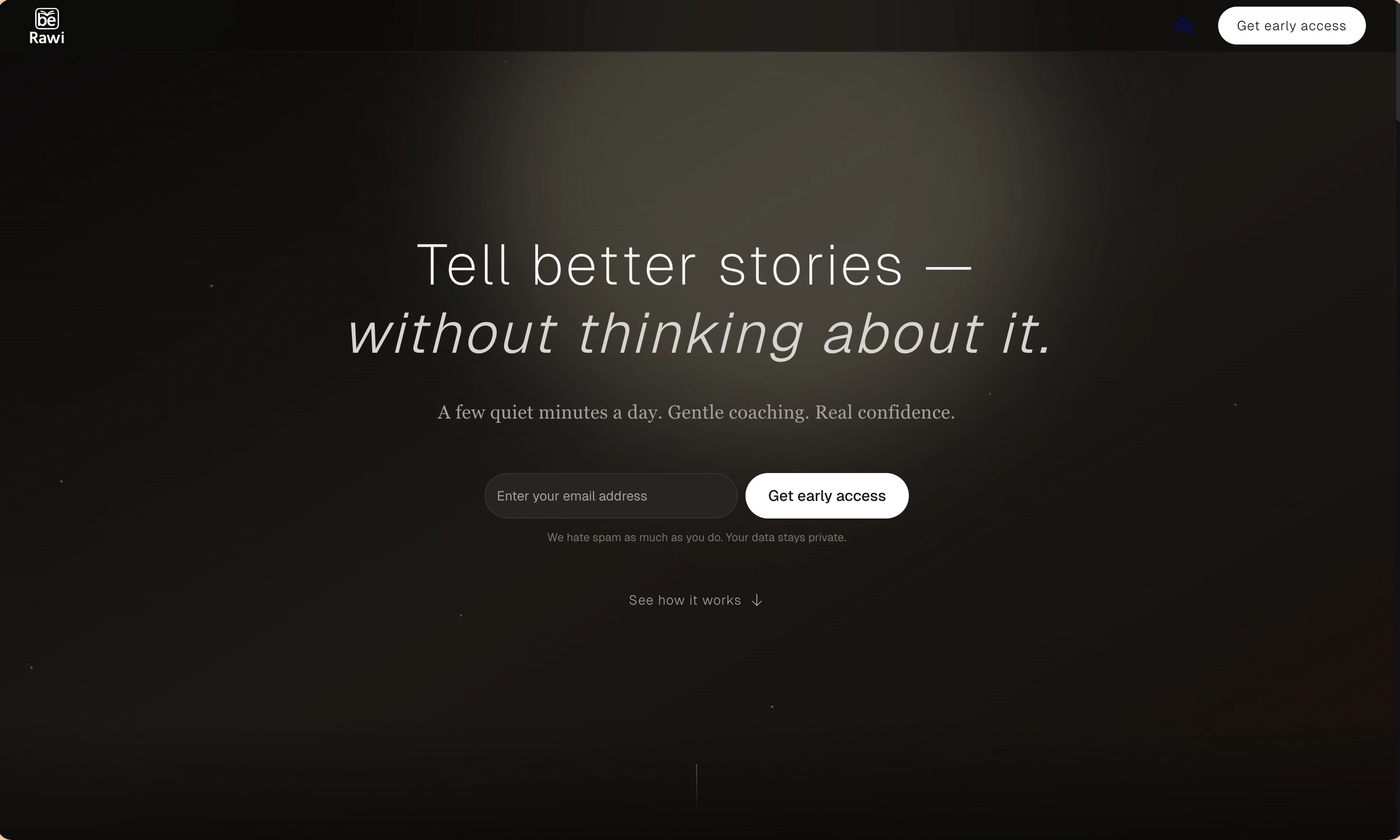
BeRawi: Storytelling Coach
Practice storytelling daily with instant feedback to sound clearer, more engaging, and confident 🎤
Omichat
Chat with 50+ AI models, including ChatGPT and Claude, in one place - switch models anytime without losing context 🤖
Claude Fast
Supercharge your Claude Code with 6x effective context window and specialized AI agents 🤖
EmojAI
AI-powered emoji picker with smart, context-aware suggestions 🤖
Solohacker
Autonomous company launcher - AI agents work 24/7, escalate what matters, and you stay in control 🤖
BeRawi: Storytelling Coach
Practice storytelling daily with instant feedback to sound clearer, more engaging, and confident 🎤

Connect with like-minded people
Join our community to get feedback, support, and grow together with 1,000+ builders on board, let's ship it!
Join usShip your startup everywhere. In minutes.
Don't burn tokens on setup and start building features on day one.