ListingLift
Turn a property address, photos, and notes into MLS-ready descriptions, social campaigns, showing sheets, and tailored buyer follow-ups.
The opportunity for an AI real estate listing content platform
Real estate agents and marketing teams are under constant pressure to produce polished, compliant, channel-specific content at speed. A single property listing can require an MLS description, feature sheet, showing notes, short-form social posts, email announcements, open house copy, buyer follow-ups, and internal talking points. Each asset needs to be accurate, compelling, and appropriate for its audience.
That workload creates a clear opportunity for ListingLift, an AI real estate listing description generator and property marketing workflow platform. The product turns a property address, photos, and agent notes into ready-to-review marketing assets that help agents bring listings to market faster without sacrificing brand quality or factual accuracy.
The strongest version of ListingLift is not simply an AI copywriting tool. It is a focused real estate content operating system built around the listing lifecycle:
- Gather property facts and positioning inputs.
- Generate compliant listing content in an agent’s voice.
- Adapt approved messaging to every marketing channel.
- Support buyer conversations after a showing or inquiry.
- Preserve a reusable record of listing facts, claims, approvals, and performance.
This focus matters because general-purpose AI tools can produce text, but they do not understand the practical workflow of a listing agent. They do not inherently know where MLS copy ends and social media copy begins, which property claims need verification, how buyer follow-up should change based on objections, or why fair housing language requires careful review.
The core positioning
ListingLift should be positioned as an AI-assisted property marketing workspace for real estate professionals, not as a tool that replaces agent judgment. Its promise is faster listing launch, more consistent marketing, and better-prepared buyer communication.
Who needs an AI real estate listing description generator
The most valuable customers are professionals who repeatedly transform scattered listing details into market-ready communications. Their common problem is not a lack of ideas. It is the time, consistency, and coordination required to turn property information into content that is useful across channels.
Independent real estate agents
Independent agents are an ideal early audience because they personally absorb much of the listing marketing workload. They may know how to write a compelling description, but a busy schedule means writing often happens late at night, between appointments, or minutes before a listing deadline.
For this group, ListingLift should solve practical problems:
- "MLS description": Convert raw notes into concise, factual, MLS-ready copy.
- "Social media campaign": Create platform-aware captions for Instagram, Facebook, LinkedIn, and short-form video scripts.
- "Showing sheet": Turn amenities, upgrades, and logistics into a clean property handout.
- "Buyer follow-up": Draft personalized messages based on buyer feedback, questions, and showing status.
- "Brand consistency": Apply preferred tone, standard calls to action, service areas, and formatting.
Independent agents are also highly sensitive to trust. They will only rely on AI when the tool makes reviewing content easier than writing from scratch.
Small and mid-sized brokerages
Brokerages often have agents with very different marketing skill levels. The result is inconsistent listing presentation, uneven brand voice, and unnecessary administrative work for marketing coordinators.
A brokerage plan can provide:
- Shared brand templates and approved tone guidelines.
- Brokerage-level language guardrails.
- Team libraries for preferred phrases, disclaimers, and calls to action.
- Review and approval workflows for marketing staff.
- Usage reporting by agent, office, and campaign type.
- Role-based access for agents, admins, and transaction coordinators.
The economic value is straightforward. If a marketing coordinator can support more agents without manually rewriting every asset, the brokerage can improve listing quality while controlling operational cost.
Real estate marketing coordinators and virtual assistants
Marketing coordinators are often the internal champions for a real estate listing copy generator. They need to collect inputs from agents, create multi-channel collateral, manage revisions, and publish assets under tight deadlines.
ListingLift can reduce repetitive production work by making the intake process structured. Instead of receiving a text message with fragments such as “new floors, huge yard, great location,” the coordinator can request an organized property brief with facts, upgrades, preferred positioning, media, and disclosures.
A useful coordinator workflow includes a status board:
- "Draft": Inputs are still being assembled.
- "Needs fact review": AI output is ready, but factual claims need confirmation.
- "Needs approval": Marketing or agent approval is pending.
- "Approved": Assets can be copied, exported, or scheduled.
- "Published": The campaign is live and available for reuse.
High-volume listing teams
Teams handling many properties each month need throughput and repeatability. They are likely to value integrations, standardized templates, and collaboration more than a standalone writing assistant.
For these customers, ListingLift should prioritize:
- Fast property intake forms.
- Duplicate listing templates for common property types.
- Batch campaign generation.
- Shared brand controls.
- CRM handoff for buyer follow-up drafts.
- Audit history for edits and approvals.
- API or automation support for larger operations.
The real market gap is workflow-specific AI, not generic content generation
AI adoption has changed expectations for content production. Agents increasingly know that a language model can write a paragraph, but they still face the harder issue of operationalizing that capability responsibly. Generic chat interfaces require users to repeatedly explain their property, their brand, the intended channel, and the restrictions on claims.
That is inefficient and risky.
The market gap is a vertical product that captures structured real estate data once and reuses it across all listing marketing outputs. ListingLift can occupy this gap by treating each property as a trusted source of truth rather than a one-off prompt.
| Capability | Generic AI chat | Template tool | ListingLift opportunity | Customer impact |
|---|---|---|---|---|
| Structured property facts | Usually manual | Limited | Centralized listing brief | Fewer factual errors |
| MLS-specific copy | Prompt dependent | Static fields | Guided generation and review | Faster launch process |
| Multi-channel adaptation | Manual prompting | Manual rewriting | One-click content variants | Consistent campaigns |
| Compliance safeguards | Varies by user | Rare | Claim flags and review workflow | Reduced marketing risk |
| Brand memory | Conversation-specific | Visual only | Persistent brokerage profile | More recognizable voice |
The product should avoid making unsupported promises such as guaranteed faster sales, increased home value, or complete compliance automation. The defensible promise is that ListingLift helps professionals create, organize, and review listing content faster.
Recent advances in multimodal AI also make the concept more practical. Modern models can interpret image inputs, summarize uploaded documents, and generate different copy formats from structured instructions. However, visual interpretation should support an agent’s notes, not override them. A model may recognize a kitchen island or hardwood-style flooring, but it should not independently assert material quality, permit status, square footage, school assignment, or neighborhood claims.
For market research and trend validation, cite authoritative reports from organizations such as the National Association of Realtors, local MLS organizations, or relevant state real estate commissions. Any time-sensitive market statistic should be dated and linked to its original report during publication.
How ListingLift should solve the listing marketing workflow
The best product experience starts with an intentional intake flow. Users should not face an empty prompt box and be expected to know what to write. Instead, ListingLift should guide them through a property brief that produces better data and better output.
Create a reliable property brief
A property brief is the foundation of every generated asset. It should include structured fields alongside freeform agent notes.
Recommended inputs include:
- "Property basics": Address, property type, list price, bedrooms, bathrooms, square footage, lot size, year built, and parking.
- "Key features": Renovations, appliances, outdoor spaces, views, accessibility features, smart-home equipment, and storage.
- "Agent positioning": The intended story of the listing, such as entertaining, low-maintenance living, historic character, or turnkey updates.
- "Known facts only": Verified details sourced from listing records, seller disclosures, inspections, or agent confirmation.
- "Photos and media": Listing photos, captions, video links, and selected hero images.
- "Audience context": Likely buyer motivations without protected-class targeting or exclusionary language.
- "Restrictions": Character limits, required disclosures, prohibited phrases, and MLS-specific rules.
- "Call to action": Showing instructions, contact details, open house information, and next steps.
A structured brief creates a major quality advantage. It reduces hallucination risk because the AI is instructed to write only from verified inputs. It also means every future asset can be regenerated when pricing, open house timing, or property status changes.
Generate MLS-ready property descriptions
The MLS listing description is one of the most important outputs, but it should never be treated as a fully autonomous publication. MLS rules vary by market, and agents must validate details before publishing.
ListingLift should offer description modes such as:
- Concise MLS copy within a defined character limit.
- Feature-forward copy for homes with distinctive upgrades.
- Lifestyle-led copy that remains grounded in verified property attributes.
- Luxury real estate listing descriptions with restrained, credible language.
- Investor-oriented copy focused on permitted, documented facts.
- New construction copy that highlights builder-provided specifications.
The interface should show sources behind meaningful claims. For example, if the draft says “new roof,” the user should see the source field or note that provided that detail. This source traceability turns AI output into a reviewable draft rather than an opaque answer.
Build social media campaigns from approved facts
Once the core listing narrative is approved, ListingLift can create a social campaign without inventing a new story for every platform. The content engine should preserve the same verified facts while adapting format, length, and call to action.
A campaign bundle could include:
- Instagram feed caption with a concise hook and feature highlights.
- Carousel slide copy organized around rooms or upgrades.
- Reel or TikTok video script with visual shot suggestions.
- Facebook listing announcement with local audience context.
- LinkedIn post for professional network visibility.
- Story frames for open house reminders.
- Email subject lines and preview text.
- Agent-facing posting checklist.
The product should allow users to choose a brand voice such as polished, warm, data-driven, conversational, or luxury. The brand voice should influence style but never alter factual constraints.
Produce useful showing sheets and open house materials
Showing sheets are frequently overlooked, even though they give agents and visitors a quick way to understand the property. ListingLift can generate a printable, editable outline that includes the strongest verified details.
A strong showing sheet should contain:
- At-a-glance property facts.
- Top upgrades and dates when confirmed.
- Room-by-room highlights.
- Utility, parking, and storage details when known.
- Showing instructions.
- Open house schedule.
- Questions buyers commonly ask.
- Agent contact information.
- Disclosure reminder or source references where appropriate.
This output should be exportable to a branded PDF or easily copied into a design tool. The text product does not need to compete with full graphic design suites at launch. It only needs to provide high-quality structured copy that fits an agent’s existing visual workflow.
Tailor buyer follow-up without sounding automated
Follow-up is where many agents need leverage but cannot afford to sound generic. ListingLift should help agents draft personalized messages after a showing, inquiry, open house visit, or price change.
The workflow can ask for a few pieces of context:
- Buyer name and preferred communication channel.
- How they interacted with the listing.
- Features they liked or concerns they mentioned.
- Stage of the buying process.
- The next recommended action.
- Whether the message should be a text, email, or CRM note.
The tool should then generate a draft that references only agent-provided context. It should not infer personal characteristics or make assumptions about financial qualifications, family status, nationality, disability, religion, or other protected traits.
Draft a concise, personal note that thanks the buyer, references one or two property features they discussed, invites questions, and offers a clear next step such as a second tour or disclosure packet.
Create separate follow-up versions for attendees who were highly engaged, casually browsing, or represented by another agent. The wording should remain professional and avoid pressure tactics.
Generate an update for interested contacts that states the verified price change, restates the strongest property benefits, and offers an appropriate follow-up action.
Compliance, accuracy, and trust must be product features
Real estate is a high-trust category. AI-generated real estate content is only useful when agents can verify it before publication. ListingLift should build trust through product design, not vague assurances.
Use a fact-first generation model
The core safety rule should be simple: generate from approved listing facts, not from assumptions.
The system prompt and application logic should instruct the model to:
- Use only confirmed property inputs.
- Mark missing information rather than filling gaps.
- Avoid claims that require legal, technical, or factual verification.
- Flag potentially subjective language for agent review.
- Preserve uncertainty when a source is unclear.
- Avoid fair housing violations and discriminatory targeting.
- Keep property marketing separate from legal or financial advice.
This approach is more valuable than trying to make the AI sound perfectly confident. A reliable “needs confirmation” flag can prevent expensive mistakes.
Add pre-publish review flags
A review system should identify language that warrants attention. It should not claim to determine legal compliance, but it can flag common risk categories.
Flag superlatives and claims such as “best school district,” “flood-free,” “soundproof,” “maintenance-free,” “investment guaranteed,” or “move-in ready” when no documented source supports them. Give the user a neutral alternative or ask for confirmation.
Detect language that may describe preferred occupants or imply exclusion based on protected characteristics. Offer a property-focused rewrite that discusses the home’s physical features and location facts without targeting people.
Flag references to permits, zoning, lot boundaries, tax treatment, legal bedroom counts, environmental conditions, or renovation approvals. Require an agent to confirm the source before the copy is approved.
Keep an audit trail
Brokerages and teams need accountability. For each listing asset, ListingLift should retain:
- Original source inputs.
- AI-generated draft versions.
- Human edits.
- Approval status.
- User who approved the asset.
- Date and time of export or publication.
- Notes explaining any flagged claim.
This history supports quality control and helps teams understand what messaging worked. It also makes the platform more credible for larger brokerage accounts.
Important product boundary
ListingLift should support a human review workflow. It should not present itself as legal counsel, MLS compliance certification, fair housing certification, or a substitute for local brokerage review policies.
Recommended technology stack for ListingLift
ListingLift needs a stack that supports rapid product iteration, reliable AI orchestration, secure handling of property data, and team collaboration. A modern TypeScript architecture is a strong fit because it enables shared types between the product interface and backend services.
Frontend and application framework
Use React with Next.js for the application layer. Next.js supports server-rendered workflows, authenticated dashboards, route handlers, and a strong ecosystem for SaaS development.
Tailwind CSS is well suited for building a fast, consistent interface. The ListingLift experience should prioritize clarity over novelty. Agents need obvious statuses, large editable text areas, clear source references, and frictionless copy or export actions.
A practical frontend feature set includes:
- Property dashboard with listing status.
- Structured intake forms with autosave.
- Rich text editor for AI drafts.
- Side-by-side source and output view.
- Diff view for revisions.
- Content template picker.
- Approval controls.
- Mobile-friendly quick capture for notes and photos.
Backend, database, and authentication
A relational database such as PostgreSQL is a strong foundation for property records, versions, team membership, permissions, and audit logs. It handles the connected nature of the data well: one listing has many assets, assets have many versions, and users belong to one or more organizations.
For authentication and organization management, use a mature SaaS-compatible provider or an implementation that supports:
- Secure user sessions.
- Organization workspaces.
- Role-based access control.
- Invited team members.
- Single sign-on as an enterprise upgrade.
- Data export and deletion processes.
Store source documents and listing photos in object storage with private access controls and signed URLs. Do not send more data to AI providers than is necessary for the requested task.
AI orchestration and prompt architecture
The AI layer should be designed as a controlled pipeline rather than a single large prompt. Each content type has different requirements, so it should use a dedicated prompt template and structured output schema.
For example, an MLS generator can return:
type ListingDescriptionDraft = {
  headline: string;
  description: string;
  characterCount: number;
  factsUsed: string[];
  needsConfirmation: string[];
  complianceFlags: string[];
};
Structured output makes it easier to display character count, show facts used, and present review flags in the product interface.
A robust generation flow should:
- Validate that required property fields exist.
- Retrieve the organization’s brand profile and restrictions.
- Assemble only relevant verified facts.
- Generate structured content for the requested asset.
- Run a second pass for factual grounding and policy flags.
- Save the draft with its source references.
- Require user approval before export or publishing.
The trade-off is increased model usage and slightly longer response times. For a real estate AI writing tool, that trade-off is worthwhile because trust and reviewability are more important than shaving a few seconds from generation.
Payments, analytics, and operational tooling
Use a reliable subscription billing provider that supports monthly and annual plans, trials, team seats, coupons, and invoices. Instrument product analytics around meaningful outcomes rather than vanity metrics.
Track events such as:
- Property brief created.
- Asset generated.
- Asset edited.
- Review flag resolved.
- Asset approved.
- Campaign exported.
- Buyer follow-up copied.
- User invited.
- Subscription upgraded.
The most important activation metric may be the percentage of new accounts that create a property brief and approve at least one listing asset within the first session.
For a faster foundation, TurboStarter can reduce the time required to assemble common SaaS infrastructure such as authentication, billing patterns, dashboards, and production-ready application structure.
Monetization strategies for ListingLift
A subscription model aligns naturally with recurring listing activity. Pricing should reflect the value of time saved, content volume, collaboration needs, and risk-management features.
Recommended pricing structure
Solo agent plan
A monthly plan for independent agents with a defined number of active listings, generation credits, brand voice settings, and core exports.
Team plan
A per-seat or workspace plan for small teams with shared templates, collaboration, approvals, and pooled listing usage.
Brokerage plan
A custom plan for offices that need brand governance, admin controls, audit logs, onboarding, and priority support.
A good early pricing model may combine active listing limits with included generation capacity. Purely credit-based pricing can feel unpredictable to agents who need to revise content repeatedly. Conversely, unlimited generation can create unbounded AI costs.
A hybrid model is usually easier to understand:
- Base subscription includes a reasonable number of active listings.
- Each active listing includes multiple asset generations and revisions.
- Higher plans unlock team controls, asset libraries, and additional active listings.
- Heavy photo analysis, bulk generation, or API access can be priced as add-ons.
Additional revenue opportunities
ListingLift can add revenue without compromising the core product:
- Brokerage onboarding and custom brand configuration.
- White-label or co-branded marketing portals.
- Premium MLS rule configuration by region.
- CRM integrations and automation connectors.
- Transaction coordinator workflows.
- Premium design export templates.
- API access for enterprise real estate platforms.
- Concierge content review from qualified human editors.
The company should resist launching too many add-ons before the listing brief to approved asset workflow is consistently valuable. A focused product earns expansion revenue more reliably than a broad product with shallow adoption.
Competitive advantage and defensible differentiation
ListingLift will compete indirectly with generic AI assistants, real estate CRM platforms, design tools, listing management software, and freelance marketing services. Its competitive advantage should come from workflow depth.
The ListingLift USP
ListingLift turns verified property information into an approved, multi-channel real estate marketing system.
That positioning is more defensible than “AI writes listing descriptions.” Many tools can generate a paragraph. Fewer can maintain a fact source, generate channel-specific assets, apply brokerage guardrails, capture approval history, and personalize buyer follow-up from the same property record.
The strongest differentiation pillars are:
-
Property-grounded generation
Every asset originates from a structured, reviewable source of truth. -
Real estate-native output formats
The product creates MLS descriptions, showing sheets, open house materials, social campaigns, and follow-up communications rather than generic blog posts. -
Brand and compliance controls
Brokerage-level templates, prohibited phrases, review flags, and audit trails address real operational concerns. -
Listing lifecycle continuity
A listing is not just a single description. It is an evolving campaign that changes with feedback, price updates, open houses, and buyer interest. -
Human-in-the-loop confidence
Agents remain in control of claims, tone, and publication. This makes AI adoption more practical in a regulated, reputation-sensitive industry.
Build a data moat responsibly
Over time, ListingLift can develop valuable proprietary insights, but it must do so with transparent privacy practices. With customer permission and appropriate aggregation, the platform could learn which approved message structures lead to higher engagement or faster internal approval.
Useful future insights may include:
- Which feature order performs best by property type.
- Which social hooks drive the most saved drafts or shares.
- Which claims are frequently flagged for review.
- Which campaign assets agents reuse most often.
- How content preferences differ by brokerage brand.
The platform should never expose one customer’s private listing data to another customer. Any model improvement program should have clear consent, opt-out choices, and contractual clarity about data handling.
Risks and mitigation for an AI property marketing SaaS
Every promising SaaS idea has execution risks. ListingLift’s risks are manageable when acknowledged early and addressed in product design.
| Risk | Why it matters | Mitigation | Priority | Owner |
|---|---|---|---|---|
| AI hallucinations | Incorrect property claims can damage trust | Fact-first inputs, source references, approval gates | High | Product and engineering |
| Compliance concerns | Housing language can create legal exposure | Flags, neutral rewrites, local policy configuration | High | Product and legal advisors |
| Low willingness to pay | Agents already use generic tools | Demonstrate time savings and workflow value | High | Founder and sales |
| Model cost volatility | Heavy usage can reduce margins | Usage limits, caching, model routing, structured prompts | Medium | Engineering |
| Integration complexity | MLS and CRM ecosystems vary widely | Start with exports and prioritize integrations from demand | Medium | Product |
The biggest strategic risk is building a feature-rich platform before proving that agents consistently use the core workflow. Start with the moment of highest pain: converting raw listing information into an accurate MLS description and campaign bundle. If users repeatedly return for that job, expansion features become much easier to prioritize.
A practical go-to-market approach
The initial go-to-market strategy should focus on a narrow segment where feedback is fast and the content workload is frequent. Independent listing agents and small teams in one or two markets are ideal design partners.
Start with customer discovery, not assumptions
Interview at least 20 active listing agents, coordinators, and brokerage marketing leaders. Ask them to walk through their most recent listing launch rather than asking whether they would use AI.
Useful discovery questions include:
- What information did you collect before writing the listing description?
- Which assets did you create for the listing?
- Who reviewed the content?
- Where did revisions come from?
- What takes the most time?
- What mistakes are you most worried about?
- Which software tools do you already use?
- How do you currently follow up with showing visitors?
- What would make you trust or reject AI-generated copy?
The goal is to identify repeated behavior, not just enthusiastic opinions.
Use a concierge MVP
Before automating every integration, offer a controlled MVP that helps a small group of agents generate real listing content. Observe where the process breaks:
- Are intake fields too burdensome?
- Do agents need more than one tone option?
- Which facts are frequently missing?
- Do they trust photo-derived suggestions?
- What kinds of claims need the most review?
- Is MLS copy or social content the strongest entry point?
- Do agents prefer exports, share links, or direct integrations?
This approach creates stronger product insight than launching a broad self-serve tool with no feedback loop.
Actionable implementation roadmap
A disciplined roadmap helps ListingLift reach the market quickly while preserving trust and quality.
The first version should aim for one measurable outcome: help an agent move from property notes to a reviewed, usable marketing package in significantly less time than their current process. That is a meaningful outcome customers can recognize immediately.
Once the product has achieved that outcome, ListingLift can become more than an AI real estate listing description generator. It can become the trusted workspace where property stories are created, validated, adapted, and carried through the full buyer communication journey.
Final perspective
ListingLift has a compelling SaaS opportunity because it addresses a frequent, high-friction workflow with clear economic value. Agents need speed, but they also need control. Brokerages need consistency, but they also need governance. Buyers expect responsive communication, but they can quickly recognize generic outreach.
The winning product will balance automation with accountability.
By grounding output in verified property facts, tailoring content for real estate-specific workflows, making review easy, and providing brand and compliance controls, ListingLift can earn trust where generic AI tools often fall short. The product’s long-term advantage will not be that it can write faster. It will be that it helps real estate professionals create better, more reliable listing marketing at every stage of the transaction.
More 🤖 AI Startup SaaS ideas
Discover more innovative ai startup SaaS ideas that are trending in 2026. Each idea is AI-generated with market validation and growth potential to help you find your next profitable venture faster than competitors.
Your competitors are building with TurboStarter
Below are some of the SaaS ideas that have been generated and built with our starter kit.

Statiko
Monitor any Telegram channel in real time - track posts, edits, deletions, and growth with AI recaps 📡

Shibui
AI website builder - describe your business, pick a niche template, edit by chatting, and publish instantly ✨

Pro Service
Find verified home service professionals, compare quotes, and pay securely through escrow - built for Brazilians across the US 🏠

RankGrow
Fix your SEO with AI agents - connect Search Console, get prioritized tasks, and grow organic traffic 📈
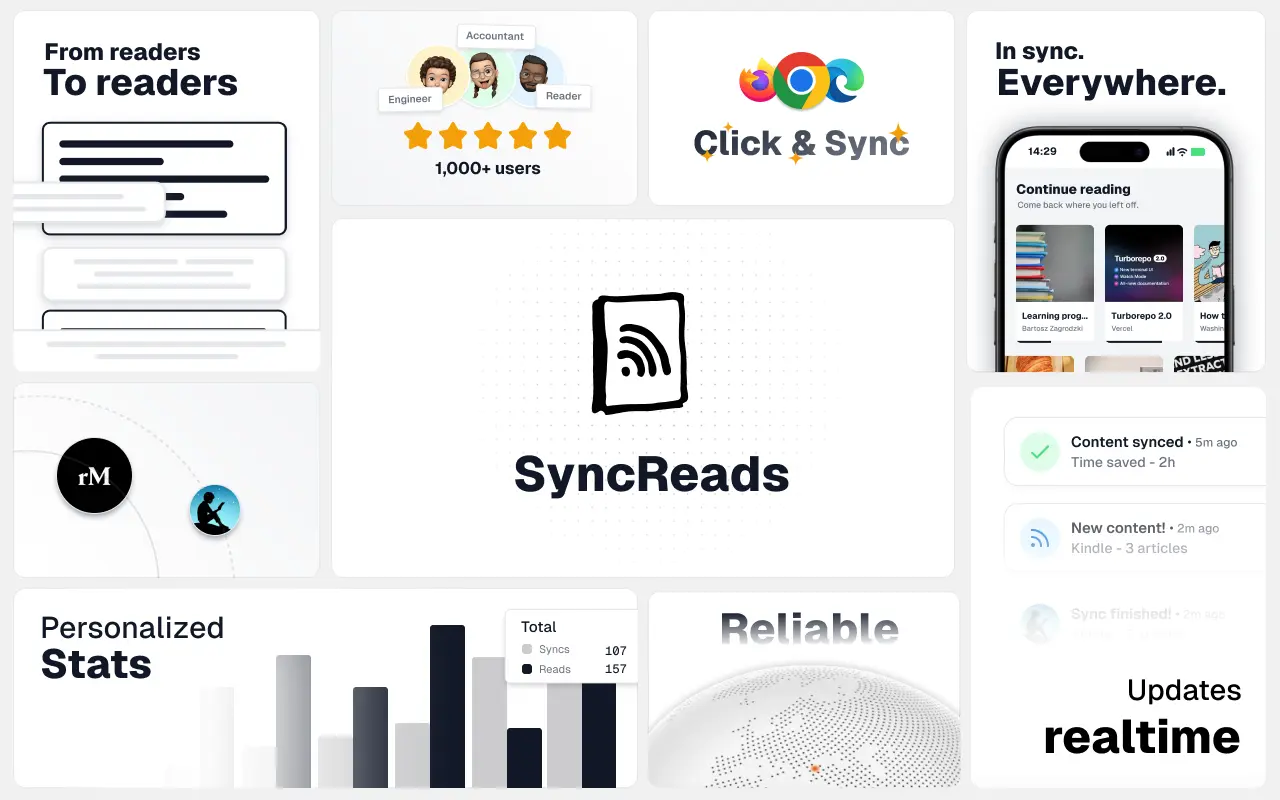
SyncReads
Sync your favorite content for distraction-free reading, save time and replace multiple apps. Anytime, anywhere 🔄
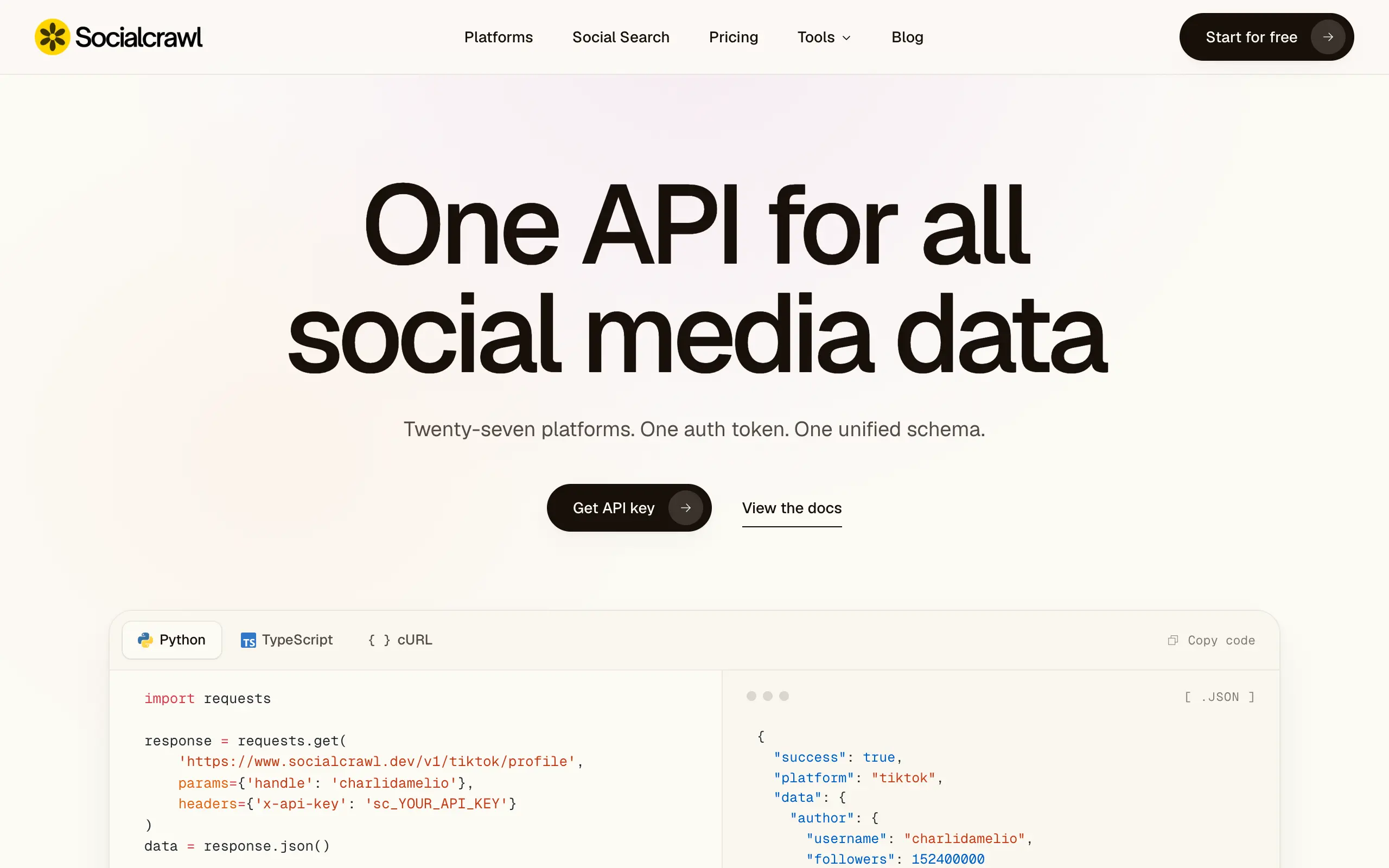
Socialcrawl
Get clean, structured data from 21 platforms like TikTok, Instagram, and YouTube with a single request 📊
Statiko
Monitor any Telegram channel in real time - track posts, edits, deletions, and growth with AI recaps 📡
Shibui
AI website builder - describe your business, pick a niche template, edit by chatting, and publish instantly ✨
Pro Service
Find verified home service professionals, compare quotes, and pay securely through escrow - built for Brazilians across the US 🏠
RankGrow
Fix your SEO with AI agents - connect Search Console, get prioritized tasks, and grow organic traffic 📈
SyncReads
Sync your favorite content for distraction-free reading, save time and replace multiple apps. Anytime, anywhere 🔄
Socialcrawl
Get clean, structured data from 21 platforms like TikTok, Instagram, and YouTube with a single request 📊
Statiko
Monitor any Telegram channel in real time - track posts, edits, deletions, and growth with AI recaps 📡
Shibui
AI website builder - describe your business, pick a niche template, edit by chatting, and publish instantly ✨
Pro Service
Find verified home service professionals, compare quotes, and pay securely through escrow - built for Brazilians across the US 🏠
RankGrow
Fix your SEO with AI agents - connect Search Console, get prioritized tasks, and grow organic traffic 📈
SyncReads
Sync your favorite content for distraction-free reading, save time and replace multiple apps. Anytime, anywhere 🔄
Socialcrawl
Get clean, structured data from 21 platforms like TikTok, Instagram, and YouTube with a single request 📊
Statiko
Monitor any Telegram channel in real time - track posts, edits, deletions, and growth with AI recaps 📡
Shibui
AI website builder - describe your business, pick a niche template, edit by chatting, and publish instantly ✨
Pro Service
Find verified home service professionals, compare quotes, and pay securely through escrow - built for Brazilians across the US 🏠
RankGrow
Fix your SEO with AI agents - connect Search Console, get prioritized tasks, and grow organic traffic 📈
SyncReads
Sync your favorite content for distraction-free reading, save time and replace multiple apps. Anytime, anywhere 🔄
Socialcrawl
Get clean, structured data from 21 platforms like TikTok, Instagram, and YouTube with a single request 📊

Dotallio
Personalized AI apps that automate research, data extraction, and content creation without code 🤖

Talk to Santa
Enjoy a magical live video chat or receive a unique AI-generated video greeting from Santa Claus 🎅

pozywka.pl
Scalable blog for food journalist, focused on performance and user experience 🌭
zagrodzki.me
Personal blog and portfolio of Bart Zagrodzki, where he shares his knowledge and work 💼

TurboStarter
Ship your startup everywhere. In minutes.
HTML to Markdown
Convert HTML to Markdown with ease, directly in your browser 📄
Dotallio
Personalized AI apps that automate research, data extraction, and content creation without code 🤖
Talk to Santa
Enjoy a magical live video chat or receive a unique AI-generated video greeting from Santa Claus 🎅
pozywka.pl
Scalable blog for food journalist, focused on performance and user experience 🌭
zagrodzki.me
Personal blog and portfolio of Bart Zagrodzki, where he shares his knowledge and work 💼
TurboStarter
Ship your startup everywhere. In minutes.
HTML to Markdown
Convert HTML to Markdown with ease, directly in your browser 📄
Dotallio
Personalized AI apps that automate research, data extraction, and content creation without code 🤖
Talk to Santa
Enjoy a magical live video chat or receive a unique AI-generated video greeting from Santa Claus 🎅
pozywka.pl
Scalable blog for food journalist, focused on performance and user experience 🌭
zagrodzki.me
Personal blog and portfolio of Bart Zagrodzki, where he shares his knowledge and work 💼
TurboStarter
Ship your startup everywhere. In minutes.
HTML to Markdown
Convert HTML to Markdown with ease, directly in your browser 📄
Dotallio
Personalized AI apps that automate research, data extraction, and content creation without code 🤖
Talk to Santa
Enjoy a magical live video chat or receive a unique AI-generated video greeting from Santa Claus 🎅
pozywka.pl
Scalable blog for food journalist, focused on performance and user experience 🌭
zagrodzki.me
Personal blog and portfolio of Bart Zagrodzki, where he shares his knowledge and work 💼
TurboStarter
Ship your startup everywhere. In minutes.
HTML to Markdown
Convert HTML to Markdown with ease, directly in your browser 📄
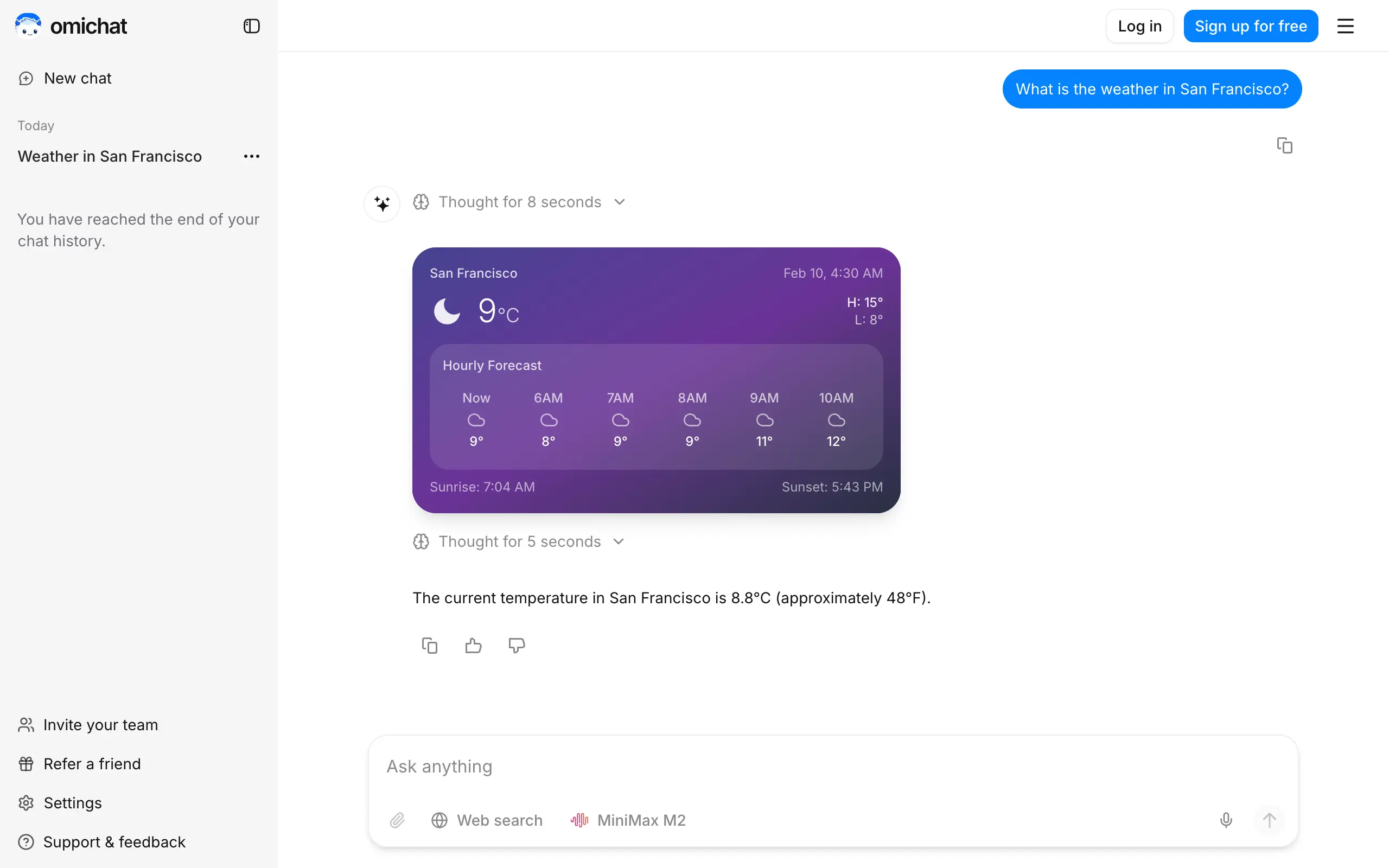
Omichat
Chat with 50+ AI models, including ChatGPT and Claude, in one place - switch models anytime without losing context 🤖
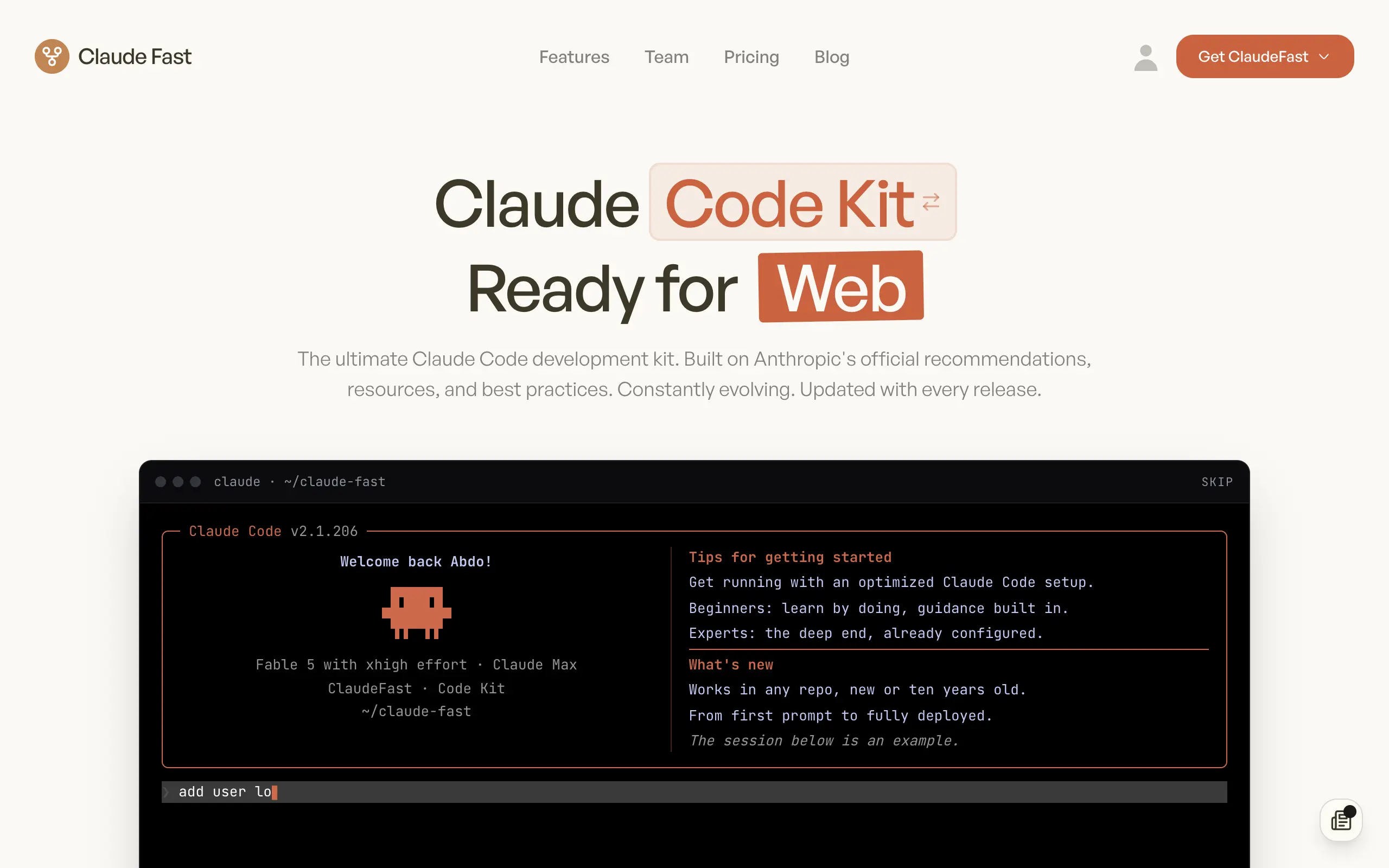
Claude Fast
Supercharge your Claude Code with 6x effective context window and specialized AI agents 🤖

EmojAI
AI-powered emoji picker with smart, context-aware suggestions 🤖

Solohacker
Autonomous company launcher - AI agents work 24/7, escalate what matters, and you stay in control 🤖

BeRawi: Storytelling Coach
Practice storytelling daily with instant feedback to sound clearer, more engaging, and confident 🎤
Omichat
Chat with 50+ AI models, including ChatGPT and Claude, in one place - switch models anytime without losing context 🤖
Claude Fast
Supercharge your Claude Code with 6x effective context window and specialized AI agents 🤖
EmojAI
AI-powered emoji picker with smart, context-aware suggestions 🤖
Solohacker
Autonomous company launcher - AI agents work 24/7, escalate what matters, and you stay in control 🤖
BeRawi: Storytelling Coach
Practice storytelling daily with instant feedback to sound clearer, more engaging, and confident 🎤
Omichat
Chat with 50+ AI models, including ChatGPT and Claude, in one place - switch models anytime without losing context 🤖
Claude Fast
Supercharge your Claude Code with 6x effective context window and specialized AI agents 🤖
EmojAI
AI-powered emoji picker with smart, context-aware suggestions 🤖
Solohacker
Autonomous company launcher - AI agents work 24/7, escalate what matters, and you stay in control 🤖
BeRawi: Storytelling Coach
Practice storytelling daily with instant feedback to sound clearer, more engaging, and confident 🎤
Omichat
Chat with 50+ AI models, including ChatGPT and Claude, in one place - switch models anytime without losing context 🤖
Claude Fast
Supercharge your Claude Code with 6x effective context window and specialized AI agents 🤖
EmojAI
AI-powered emoji picker with smart, context-aware suggestions 🤖
Solohacker
Autonomous company launcher - AI agents work 24/7, escalate what matters, and you stay in control 🤖
BeRawi: Storytelling Coach
Practice storytelling daily with instant feedback to sound clearer, more engaging, and confident 🎤

Connect with like-minded people
Join our community to get feedback, support, and grow together with 1,000+ builders on board, let's ship it!
Join usShip your startup everywhere. In minutes.
Don't burn tokens on setup and start building features on day one.