MarginMind
AI margin copilot for service firms that flags underpriced quotes, scope creep, and unbilled work before profits disappear.
Small manufacturers often discover margin erosion too late: after a quote has been accepted, materials have been purchased, or production is already underway. The underlying data exists, but it is fragmented across spreadsheets, ERP exports, supplier emails, purchase orders, bills of materials, and PDF quotes.
MarginMind is an AI margin copilot for small manufacturers that reads quotes, BOMs, and supplier communications to identify cost drift before an order becomes unprofitable. Rather than asking an owner, estimator, or purchasing manager to reconcile every number manually, it turns operational documents into timely margin alerts and practical next actions.
This article evaluates the opportunity behind MarginMind, the customer pain it solves, the product capabilities required for a credible launch, a practical technical architecture, pricing options, risks, and an implementation roadmap.
Why an AI margin copilot matters for small manufacturers
A manufacturing business can look busy while quietly losing money. Revenue growth does not automatically mean healthy operations when input costs, labor assumptions, freight fees, scrap rates, and supplier pricing shift between the moment a quote is sent and the moment an order is fulfilled.
This is especially painful for small and mid-sized manufacturers that operate with lean teams. A single estimator may quote jobs, negotiate with suppliers, chase purchase orders, update spreadsheets, and answer customer questions. Even where an ERP or MRP system is in place, critical commercial context often still lives in email threads and unstructured files.
The primary keyword for this category is AI margin copilot for small manufacturers. It describes a focused software category rather than a generic artificial intelligence tool. MarginMind should not position itself as a replacement for an ERP, accountant, or experienced estimator. Its role is to continuously watch for profitability risk across the existing workflow.
The fundamental promise is simple:
Give manufacturers an early warning when current costs no longer support the margin assumed in the original quote.
That promise is compelling because it connects AI directly to an executive-level outcome: protecting gross profit.
The key product principle
MarginMind should surface evidence, not merely produce an opaque score. Every margin alert needs to show the original assumption, the new cost signal, the likely financial impact, the confidence level, and the recommended next step.
The margin visibility gap in manufacturing
The most valuable SaaS ideas usually sit between a persistent operational problem and a workflow that existing systems do not fully solve. MarginMind fits that pattern.
Most small manufacturers have some combination of accounting software, spreadsheets, quoting tools, email, file storage, and an ERP or MRP platform. The problem is not necessarily that they have no data. The problem is that their data is poorly connected at the exact point where cost changes need attention.
Where margin leakage begins
A job may become less profitable for many reasons:
- "Material price movement": a supplier revises steel, resin, electronics, packaging, or component pricing after the quote was approved.
- "BOM quantity changes": engineering revisions increase a component count or substitute a more expensive part.
- "Freight and surcharge additions": supplier emails mention minimum order fees, expedited shipping, tariffs, fuel surcharges, or handling costs.
- "Labor assumption errors": actual routing time, setup effort, rework, or machine utilization differs from the original estimate.
- "Purchase price variance": the issued purchase order exceeds the estimate used to price the customer quote.
- "Customer scope creep": a buyer requests a revised specification, special packaging, testing, certification, or delivery schedule without a corresponding quote revision.
- "Currency exposure": imported materials become more expensive because of foreign exchange changes.
- "Expired quote assumptions": a quote remains open longer than the cost validity period from suppliers.
None of these causes are unusual. The risk comes from detecting them only at month-end or after a job closes.
Why existing systems leave a gap
ERP and MRP systems are important systems of record. However, many smaller businesses do not have fully integrated, real-time cost data. Their teams may use spreadsheets because implementation and maintenance of traditional manufacturing software can be costly or cumbersome.
A generic AI assistant also falls short. It can summarize an email, but it does not inherently know which quote, BOM revision, supplier SKU, and job margin are connected. MarginMind must build a structured economic model around a job and validate that model as new documents arrive.
| Workflow | Typical source | Common failure | MarginMind opportunity | Business result |
|---|---|---|---|---|
| Quoting | PDFs and spreadsheets | Old supplier assumptions remain hidden | Extract cost basis and validity windows | More defensible quotes |
| Purchasing | Email and purchase orders | Price increases are not tied to jobs | Match supplier changes to quoted BOM lines | Earlier escalation |
| Engineering | BOM revisions | Quantity and substitute changes are missed | Compare revisions and recalculate exposure | Controlled change orders |
| Finance | ERP and accounting exports | Margins are reviewed after the fact | Provide job-level leading indicators | Fewer surprise losses |
Target audience for MarginMind
The strongest initial market is not every type of manufacturer. Product focus is essential because document formats, unit economics, sales cycles, and costing approaches vary substantially by industry.
MarginMind should begin with manufacturers that have project-based or order-based quoting, meaningful material spend, frequent supplier communication, and limited internal analytics capacity.
Primary customer profile
The ideal early customer is likely a small manufacturer with approximately 10 to 200 employees that produces custom, configured, or low-to-medium-volume goods. These organizations frequently quote based on BOM assumptions and may use a mix of email, spreadsheets, QuickBooks, ERP software, and shared drives.
High-potential verticals include:
- Contract manufacturers and electronics assembly shops
- Metal fabrication and machine shops
- Industrial equipment and component manufacturers
- Custom packaging manufacturers
- Plastics, molding, and extrusion businesses
- Cabinet, millwork, and custom fixture manufacturers
- Specialty food or chemical producers with volatile input costs
- Industrial distributors that bundle components with value-added assembly
The best early adopters are already aware of quote-to-actual variance. They may say things such as:
- “We find out a job was bad only when accounting closes it.”
- “Our buyer sees price increases, but estimating does not always see them.”
- “We quote from Excel and too much is dependent on tribal knowledge.”
- “I need to know which open orders need a customer conversation today.”
Buying committee and user roles
MarginMind needs a multi-user workflow because the person feeling the pain is not always the person approving software.
Owner or general manager
Cares about gross margin, cash flow, customer relationships, and avoiding unprofitable growth.
Estimator or sales engineer
Needs fast, accurate cost assumptions and a clear reason to revisit a quote.
Purchasing manager
Needs supplier price changes connected to affected jobs and components.
Operations or production manager
Needs visibility into jobs that require schedule, routing, or process intervention.
Controller or finance lead
Needs traceable cost variance evidence and better forecasting.
A smart go-to-market motion should sell the strategic result to the owner or general manager while making the daily workflow easier for estimators and buyers.
Market opportunity and product positioning
MarginMind sits at the intersection of manufacturing analytics, quote-to-cash operations, procurement intelligence, and applied AI document processing. Its differentiated position is not “AI for manufacturing” in the abstract. That message is too broad and difficult to evaluate.
A sharper positioning statement is:
MarginMind continuously compares what you quoted against what suppliers, BOM revisions, and purchase documents now say, then flags orders at risk before margin disappears.
This positioning makes three important distinctions.
First, it focuses on future risk, rather than only historical reporting.
Second, it works with the documents small manufacturers already use, rather than requiring a complete ERP replacement.
Third, it explains AI through a practical outcome: extracting, matching, reconciling, and prioritizing cost changes.
The underserved middle market
Large enterprises may build sophisticated procurement, product lifecycle management, business intelligence, and ERP integrations. Very small businesses may manage every quote manually. The opportunity lies in the broad middle where manufacturers have enough jobs and supplier complexity to suffer material margin leakage, but not enough IT capacity to run a multi-year transformation program.
This segment often accepts a phased integration strategy. A product that starts with secure email forwarding and document upload, then connects to accounting or ERP systems, can deliver value sooner than a platform that requires deep implementation before the first alert.
Trends that support the opportunity
Several market trends make a margin intelligence platform timely:
- Supply chain volatility has made static cost assumptions less reliable.
- Manufacturers are under pressure to improve operational visibility without adding headcount.
- Document AI can now extract data from semi-structured PDFs, spreadsheets, and emails more effectively than rule-only OCR workflows.
- Smaller firms increasingly expect SaaS tools that integrate through APIs, exports, and email rather than large consulting engagements.
- Generative AI adoption has increased buyer awareness, but buyers now demand measurable outcomes rather than generic chat interfaces.
For market sizing or investment materials, reference authoritative industry research from government manufacturing surveys, manufacturing trade groups, or recognized analyst firms. Avoid relying on unsupported market-size figures. The stronger argument is the observable cost of an unprofitable order and the frequency with which pricing assumptions change.
Core features for an AI margin copilot
The product should be designed around a closed loop: ingest information, understand its relationship to a job, identify variance, quantify exposure, and route action to the right person.
1. Quote and BOM ingestion
The first capability is reliable extraction from the artifacts used to establish the original margin model.
MarginMind should accept:
- PDF quotes and quote exports
- Excel or CSV BOM files
- Purchase orders
- Supplier price lists
- Job travelers and work orders
- Scanned documents where OCR quality is sufficient
- ERP exports from common systems
- Email attachments and forwarded supplier messages
Each extracted record should retain the original document, page reference, source timestamp, and a normalized representation of fields such as part number, quantity, unit of measure, unit cost, lead time, quote number, and customer job number.
The platform should not pretend every extraction is perfect. It should highlight low-confidence fields for human review. This is essential for trust, especially where part numbers differ by punctuation, revision suffix, or supplier-specific nomenclature.
2. Supplier email monitoring and change detection
Supplier emails are a major source of early risk signals. A supplier may write that a material price has increased, a prior quote has expired, a component is unavailable, or an alternative must be approved.
MarginMind should identify events such as:
- Price increase notices
- Quote expiry dates
- New minimum order quantities
- Lead-time extensions
- Substitution suggestions
- Freight or surcharge additions
- Allocation or shortage notices
- Changes to payment terms
The system then needs to resolve which supplier, parts, quotes, and active jobs are affected. That matching process is the heart of the product’s defensibility.
A generic language model can classify the email. MarginMind’s value comes from combining that classification with structured job data and a deterministic calculation engine.
3. Margin drift calculations
The user should never have to infer why an alert matters. MarginMind needs transparent calculations that compare the latest expected cost with the original quoted baseline.
A basic model can be expressed as:
type MarginSnapshot = {
  quotedRevenue: number;
  quotedMaterialCost: number;
  currentExpectedMaterialCost: number;
  quotedLaborCost: number;
  currentExpectedLaborCost: number;
  otherCosts: number;
};

export function calculateExpectedMargin(snapshot: MarginSnapshot) {
  const expectedCost =
    snapshot.currentExpectedMaterialCost +
    snapshot.currentExpectedLaborCost +
    snapshot.otherCosts;

  const expectedGrossProfit = snapshot.quotedRevenue - expectedCost;
  const expectedMarginPercent =
    snapshot.quotedRevenue > 0
      ? (expectedGrossProfit / snapshot.quotedRevenue) * 100
      : 0;

  const quotedCost =
    snapshot.quotedMaterialCost +
    snapshot.quotedLaborCost +
    snapshot.otherCosts;

  return {
    expectedCost,
    expectedGrossProfit,
    expectedMarginPercent,
    costDrift: expectedCost - quotedCost,
  };
}
The production calculation engine should support more nuanced costing methods, including burden rates, scrap factors, yield assumptions, currency conversion, price breaks, and landed cost. However, the initial version should keep its math easy to inspect.
4. Actionable margin alerts
Alerts should be prioritized by financial impact, urgency, confidence, and ability to intervene.
An effective alert might read:
Supplier cost for part AL-6061-02 increased by 14%. This affects three open jobs. Job Q-1048 is projected to fall from 28% quoted gross margin to 17% expected gross margin, creating an estimated $4,850 exposure. The supplier quote expires in four days.
The alert should offer concrete actions:
- Assign to purchasing for supplier negotiation
- Assign to sales for customer repricing review
- Request estimator validation
- Mark as accepted risk with a reason
- Create a change-order task
- Mute a known non-issue
- Export the supporting evidence
5. Margin command center
A dashboard should answer the questions leaders actually ask:
- Which open jobs have the largest margin exposure?
- Which supplier changes affect the most revenue?
- Which quotes rely on expired cost assumptions?
- Which customers or product lines have recurring variance?
- How much at-risk gross profit is awaiting action?
- Where are users overriding alerts, and why?
The dashboard must be concise. Small manufacturers do not need another business intelligence suite with dozens of charts. They need a prioritized operating queue.
6. Audit trail and review workflow
Trust requires traceability. Every alert should show:
- The source document and relevant text or line item
- The original quote or BOM value
- The current interpreted value
- The matching rationale
- The calculation version
- The user actions taken
- Any manual corrections
This audit trail turns MarginMind from a convenient assistant into a system that finance, operations, and leadership can confidently use in margin reviews.
How MarginMind creates a competitive advantage
The competitive landscape includes ERP systems, quoting software, manufacturing execution tools, procurement software, spreadsheet templates, and generic AI platforms. MarginMind can win by being narrower and more operationally intelligent.
The defensible product moat
The product’s moat is not simply using a large language model. AI models are increasingly accessible. Defensibility comes from the workflow and data model built around manufacturing economics.
MarginMind can build durable advantages through:
- "Cross-document entity resolution": matching inconsistent part numbers, supplier names, quote IDs, and job references across messy real-world documents.
- "Manufacturing-specific ontology": understanding BOM structures, units, revisions, material classes, routings, and cost categories.
- "Feedback-driven matching": learning from users when a part, supplier quote, or job association is corrected.
- "Financially ranked alerts": prioritizing exposure rather than generating high volumes of low-value notifications.
- "Outcome history": tracking which alert types led to supplier concessions, re-quotes, engineering changes, or accepted risk.
- "Trust layer": providing citations, confidence levels, calculation logic, and audit history.
The product should avoid competing directly on “most advanced chatbot.” A buyer does not need clever conversation; they need accurate, explainable margin control.
ERP systems are systems of record. They may store standard costs, purchase orders, inventory, and work orders, but smaller deployments often lack complete document intelligence or proactive quote-to-current-cost monitoring.
Generic AI tools can summarize a supplier email or analyze a spreadsheet when prompted. They generally do not maintain a durable job graph, apply costing rules, or produce a governed audit trail.
MarginMind combines document ingestion, job matching, deterministic margin calculations, and evidence-backed alerts. It complements existing systems rather than demanding replacement.
Recommended technical stack for MarginMind
The right technical stack balances speed, security, extraction accuracy, and integration flexibility. Manufacturing documents are messy, so the architecture should separate AI interpretation from deterministic financial logic.
Application layer
A pragmatic web application stack could include:
- React for the interactive application interface
- Next.js for full-stack web delivery, routing, server-side logic, and deployment flexibility
- TypeScript for safer domain models and calculation code
- Tailwind CSS for fast, consistent interface development
- PostgreSQL for relational data such as organizations, jobs, BOM lines, quotes, alerts, approvals, and audit records
- Prisma or another typed ORM for database access and migration management
For an early SaaS build, TurboStarter can reduce setup time by providing a production-oriented foundation for authentication, billing, teams, and application structure.
Document and AI pipeline
The AI pipeline should be asynchronous and event driven. A document upload should not block the user while extraction, classification, matching, and recalculation occur.
Recommended building blocks include:
- Object storage for original files and versioned extracted artifacts
- OCR for scanned PDFs and image-based documents
- A document parser for PDFs, spreadsheets, and email attachments
- Queue workers for extraction and reprocessing
- An LLM layer for classification, extraction assistance, and email interpretation
- Rules and deterministic parsers for known document formats
- A vector search capability only where semantic retrieval genuinely improves matching or support workflows
The trade-off is important. An LLM can interpret ambiguous human language, but it should not be the final authority on a numeric cost calculation. Extracted values should be normalized, validated, and passed into a dedicated pricing and margin engine.
Matching architecture
Entity resolution is likely the hardest technical challenge. A robust approach uses multiple signals rather than asking an AI model to make a single unverified decision.
For example, a supplier email reference can be matched using:
- Exact part number or normalized SKU match
- Supplier identity match
- Customer job or quote identifier match
- Date overlap with an open job
- Unit of measure compatibility
- Fuzzy text similarity
- Historical user-approved matches
Each candidate relationship should receive a confidence score. Low-confidence matches should appear in a review queue rather than silently influencing expected margin.
Security and data governance
Manufacturing quotes, supplier pricing, BOMs, and customer specifications are commercially sensitive. Security cannot be an afterthought.
The minimum product standard should include:
- Tenant isolation between customer organizations
- Encryption in transit and at rest
- Role-based access controls
- Immutable audit logs for key actions
- Configurable retention policies
- Secure file handling and malware scanning
- Email connection permissions with least-privilege scopes
- Clear policies about whether customer data is used to train models
As the product matures, pursue the controls that enterprise buyers expect, such as security questionnaires, penetration testing, documented incident response, and a recognized compliance program where commercially necessary.
Do not over-automate financial decisions
MarginMind should recommend and prioritize. It should not automatically change customer prices, issue purchase orders, or alter BOMs without explicit human approval. The cost of a false positive is annoyance; the cost of an unreviewed false action can be a damaged customer relationship.
Monetization strategy for manufacturing margin intelligence
Pricing should align with measurable value while remaining easy for a small manufacturer to approve. MarginMind saves users time, but its primary value is avoided gross-margin loss. The pricing model should reflect that outcome without becoming complicated.
Recommended initial pricing model
A tiered subscription based on active jobs, monthly document volume, or monitored spend is more intuitive than seat-only pricing. The product processes business artifacts and monitors economic risk, so usage is often a better value metric than user count.
A possible structure includes:
- "Starter": for shops beginning with document uploads and a limited number of active jobs.
- "Growth": for teams using supplier email monitoring, collaboration workflows, and accounting or ERP imports.
- "Pro": for multi-site businesses requiring advanced integrations, custom rules, single sign-on, and enhanced support.
An onboarding fee can be justified for document template configuration, data mapping, and initial customer success work. This also protects the business from taking on complex integration work without revenue.
Value-based pricing narrative
The sales conversation should center on avoided exposure:
- One corrected quote can cover months of subscription cost.
- One timely supplier negotiation can protect a meaningful portion of monthly gross profit.
- A single dashboard can reduce the manual work of searching email threads and updating spreadsheets.
- Better evidence supports customer change-order conversations.
Do not claim a universal return on investment without validated customer data. Instead, provide an ROI calculator based on the customer’s own average job size, target margin, annual quote volume, and estimated frequency of cost variance.
Expansion revenue opportunities
Once the core margin copilot is trusted, MarginMind could expand into adjacent workflows:
- Quote expiry monitoring
- Supplier performance scorecards
- Purchase price variance analysis
- Customer profitability analysis
- Change-order management
- Commodity price watchlists
- Scenario modeling for new quotes
- Integration APIs and data warehouse exports
These should remain secondary until the core alerting workflow proves that users act on the product’s recommendations.
Risks and mitigation strategies
Every SaaS concept involving AI and financial information has meaningful execution risk. The best strategy is to name these risks early and build product safeguards around them.
Supplier documents and spreadsheets use inconsistent formats, while scanned files may be low quality. Mitigate this through confidence scoring, template-aware parsing, visible citations, human review queues, and a correction workflow that improves future matching.
If users see too many small or irrelevant alerts, they will stop trusting the system. Prioritize by financial exposure, suppress duplicates, let teams configure thresholds, and learn from dismissed alerts.
Manufacturing software environments are fragmented. Start with universal inputs such as CSV, Excel, PDFs, email forwarding, and scheduled exports. Add native integrations only after validating demand across target segments.
Manufacturers can be cautious with operational tools. Reduce perceived risk through a limited-scope pilot, clear security documentation, concierge onboarding, and proof based on the customer’s own historical jobs.
Margin-related recommendations must be explainable. Keep the math deterministic, show evidence, separate AI extraction from calculation logic, and ensure humans approve material actions.
A practical go-to-market strategy
The first version of MarginMind should sell a narrow and urgent use case, not a broad transformation vision.
A good initial wedge is:
Find supplier-driven cost increases that threaten the margins of open quoted jobs.
This wedge is easy to explain, easy to validate with historical documents, and relevant to owners, purchasing teams, and estimators.
Pilot design
A pilot can be structured around a limited time period, such as recent supplier emails and currently open jobs. The aim is to find real missed connections between cost changes and quote assumptions.
The pilot process should include:
- Import a sample set of quotes, BOMs, and supplier communications.
- Configure a small number of customer-specific part and job identifiers.
- Identify candidate margin drift events.
- Review alerts with an estimator, buyer, and owner.
- Quantify the financial exposure and confirm whether alerts were actionable.
- Convert the most valuable findings into a recurring monitored workflow.
This sales motion creates evidence before asking for a full rollout. It also exposes the messy data patterns needed to improve onboarding.
Content and demand generation
SEO content should target high-intent searches connected to operational pain. Useful topics include:
- How to calculate manufacturing quote-to-actual margin variance
- How to manage supplier price increases in manufacturing
- How to prevent unprofitable manufacturing jobs
- BOM cost tracking best practices
- Purchase price variance versus quoted cost
- Manufacturing gross margin dashboard metrics
- How to handle expired supplier quotes
The content should include calculation examples, downloadable process checklists, and practical advice. Avoid publishing shallow “AI will transform manufacturing” articles. Buyers want specifics about workflows, controls, and results.
Actionable implementation steps
A focused MVP can reach meaningful customer validation without attempting to become a complete manufacturing operating system.
Define the first customer segment, ideally one manufacturing vertical with similar BOM structures, supplier behavior, and quoting workflows.
Interview at least 15 estimators, purchasing managers, controllers, and owners. Ask for anonymized examples of quotes, BOMs, supplier price emails, and recently unprofitable jobs.
Build the core data model around organizations, jobs, quotes, BOM revisions, components, suppliers, documents, extracted facts, alerts, and user actions.
Launch document upload and email forwarding before deep ERP integrations. Prove that users value the detected insights first.
Create an evidence-first alert experience that shows source text, affected part, baseline cost, current cost, margin impact, confidence, and recommended owner.
Use deterministic calculation services for all financial outputs. Reserve AI for extraction, classification, normalization assistance, and explanation.
Run concierge pilots with a small number of manufacturers and measure alerts found, dollars of exposure identified, actions taken, and user trust in alert quality.
Productize the onboarding patterns that repeat across pilots, then add integrations and premium workflow features based on validated demand.
Final assessment of the MarginMind opportunity
MarginMind has a strong SaaS opportunity because it addresses a recurring, expensive, and under-instrumented operational problem: small manufacturers often lack a reliable way to detect when the cost assumptions behind open quotes are no longer valid.
The winning version of an AI margin copilot for small manufacturers will not be defined by a flashy chatbot. It will earn trust by connecting fragmented documents, understanding job context, calculating margin impact accurately, and showing users exactly what requires attention.
The clearest product strategy is to start narrow: monitor quotes, BOMs, and supplier communications for cost drift that threatens active jobs. From there, MarginMind can become a broader margin intelligence platform for quoting, procurement, finance, and operations.
Its unique selling proposition is both simple and differentiated: it transforms scattered manufacturing documents into early, evidence-backed margin protection decisions.
More 🤖 AI Startup SaaS ideas
Discover more innovative ai startup SaaS ideas that are trending in 2026. Each idea is AI-generated with market validation and growth potential to help you find your next profitable venture faster than competitors.
Your competitors are building with TurboStarter
Below are some of the SaaS ideas that have been generated and built with our starter kit.

Statiko
Monitor any Telegram channel in real time - track posts, edits, deletions, and growth with AI recaps 📡

Shibui
AI website builder - describe your business, pick a niche template, edit by chatting, and publish instantly ✨

Pro Service
Find verified home service professionals, compare quotes, and pay securely through escrow - built for Brazilians across the US 🏠
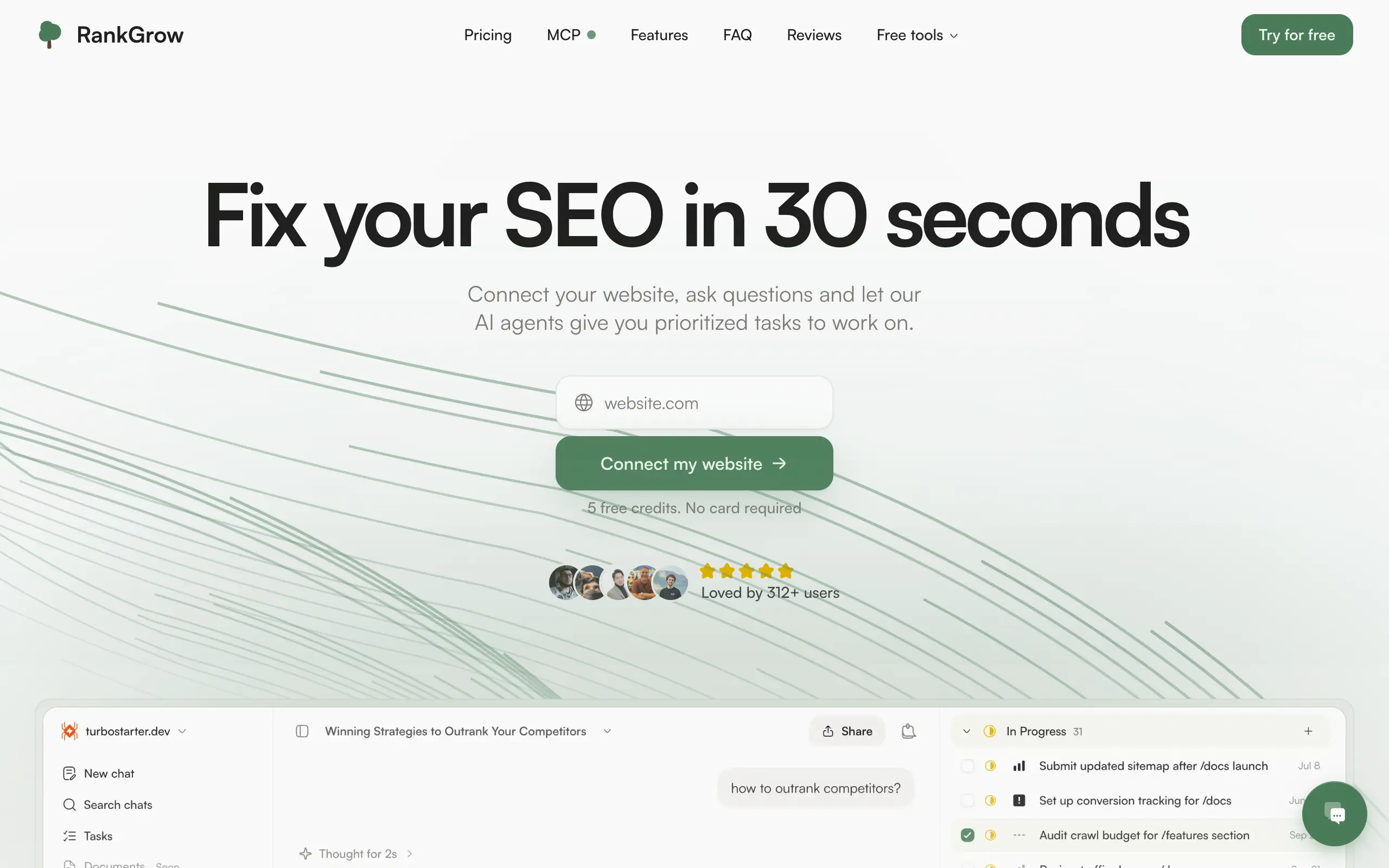
RankGrow
Fix your SEO with AI agents - connect Search Console, get prioritized tasks, and grow organic traffic 📈
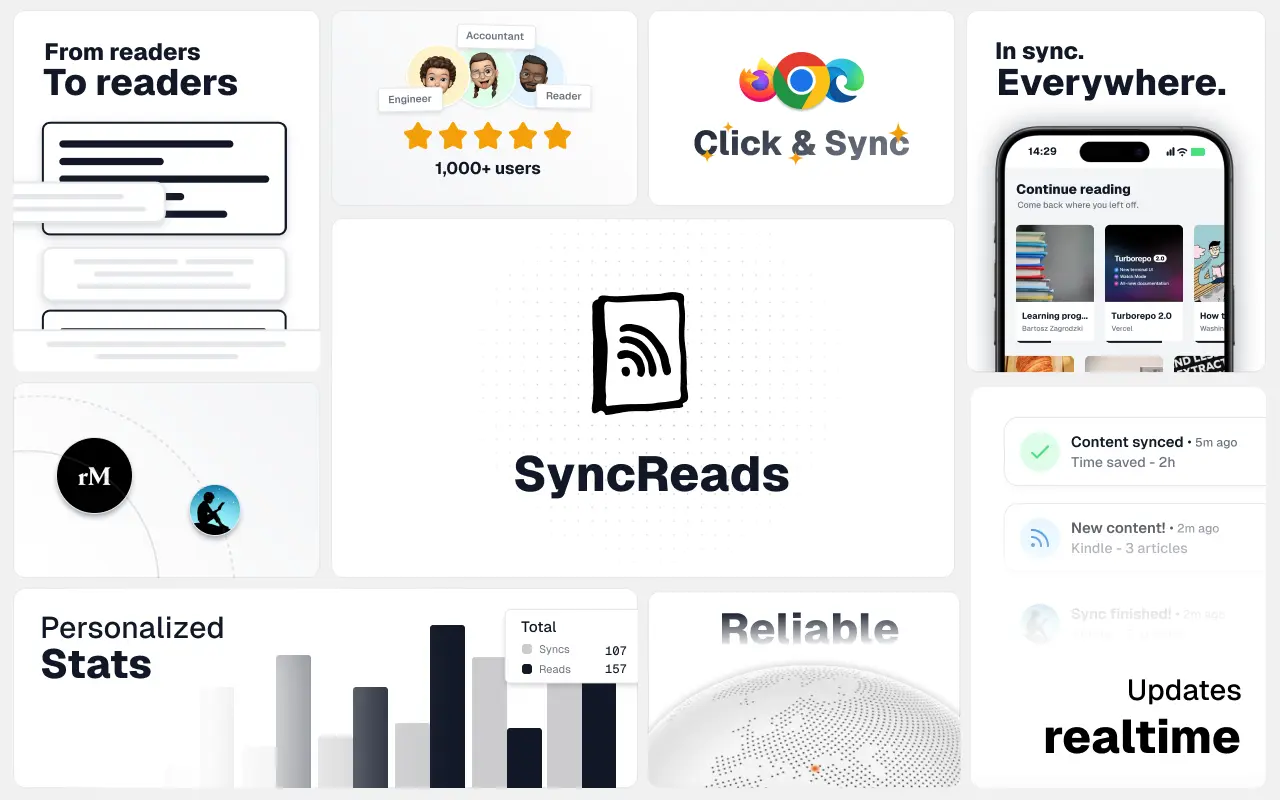
SyncReads
Sync your favorite content for distraction-free reading, save time and replace multiple apps. Anytime, anywhere 🔄
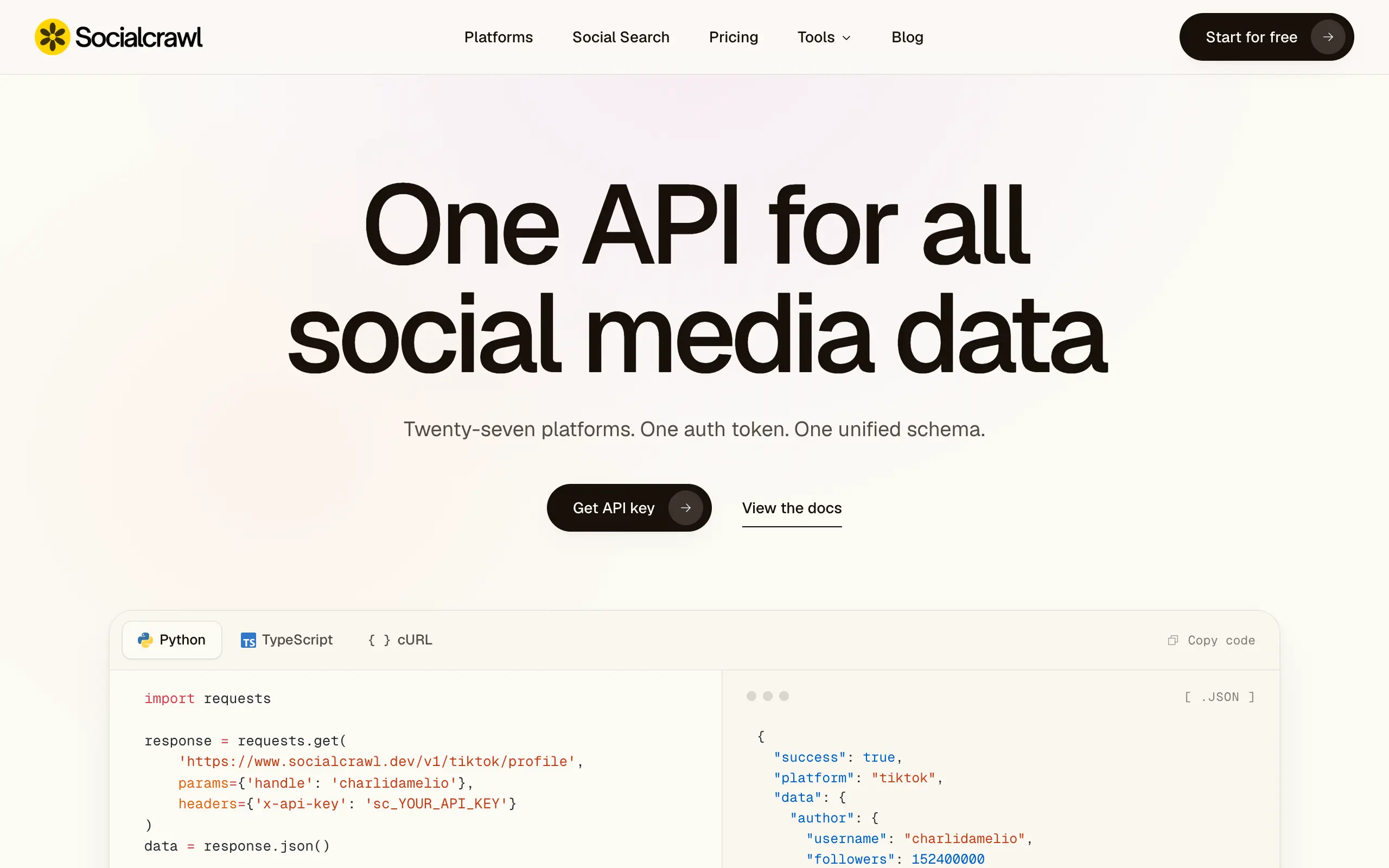
Socialcrawl
Get clean, structured data from 21 platforms like TikTok, Instagram, and YouTube with a single request 📊
Statiko
Monitor any Telegram channel in real time - track posts, edits, deletions, and growth with AI recaps 📡
Shibui
AI website builder - describe your business, pick a niche template, edit by chatting, and publish instantly ✨
Pro Service
Find verified home service professionals, compare quotes, and pay securely through escrow - built for Brazilians across the US 🏠
RankGrow
Fix your SEO with AI agents - connect Search Console, get prioritized tasks, and grow organic traffic 📈
SyncReads
Sync your favorite content for distraction-free reading, save time and replace multiple apps. Anytime, anywhere 🔄
Socialcrawl
Get clean, structured data from 21 platforms like TikTok, Instagram, and YouTube with a single request 📊
Statiko
Monitor any Telegram channel in real time - track posts, edits, deletions, and growth with AI recaps 📡
Shibui
AI website builder - describe your business, pick a niche template, edit by chatting, and publish instantly ✨
Pro Service
Find verified home service professionals, compare quotes, and pay securely through escrow - built for Brazilians across the US 🏠
RankGrow
Fix your SEO with AI agents - connect Search Console, get prioritized tasks, and grow organic traffic 📈
SyncReads
Sync your favorite content for distraction-free reading, save time and replace multiple apps. Anytime, anywhere 🔄
Socialcrawl
Get clean, structured data from 21 platforms like TikTok, Instagram, and YouTube with a single request 📊
Statiko
Monitor any Telegram channel in real time - track posts, edits, deletions, and growth with AI recaps 📡
Shibui
AI website builder - describe your business, pick a niche template, edit by chatting, and publish instantly ✨
Pro Service
Find verified home service professionals, compare quotes, and pay securely through escrow - built for Brazilians across the US 🏠
RankGrow
Fix your SEO with AI agents - connect Search Console, get prioritized tasks, and grow organic traffic 📈
SyncReads
Sync your favorite content for distraction-free reading, save time and replace multiple apps. Anytime, anywhere 🔄
Socialcrawl
Get clean, structured data from 21 platforms like TikTok, Instagram, and YouTube with a single request 📊
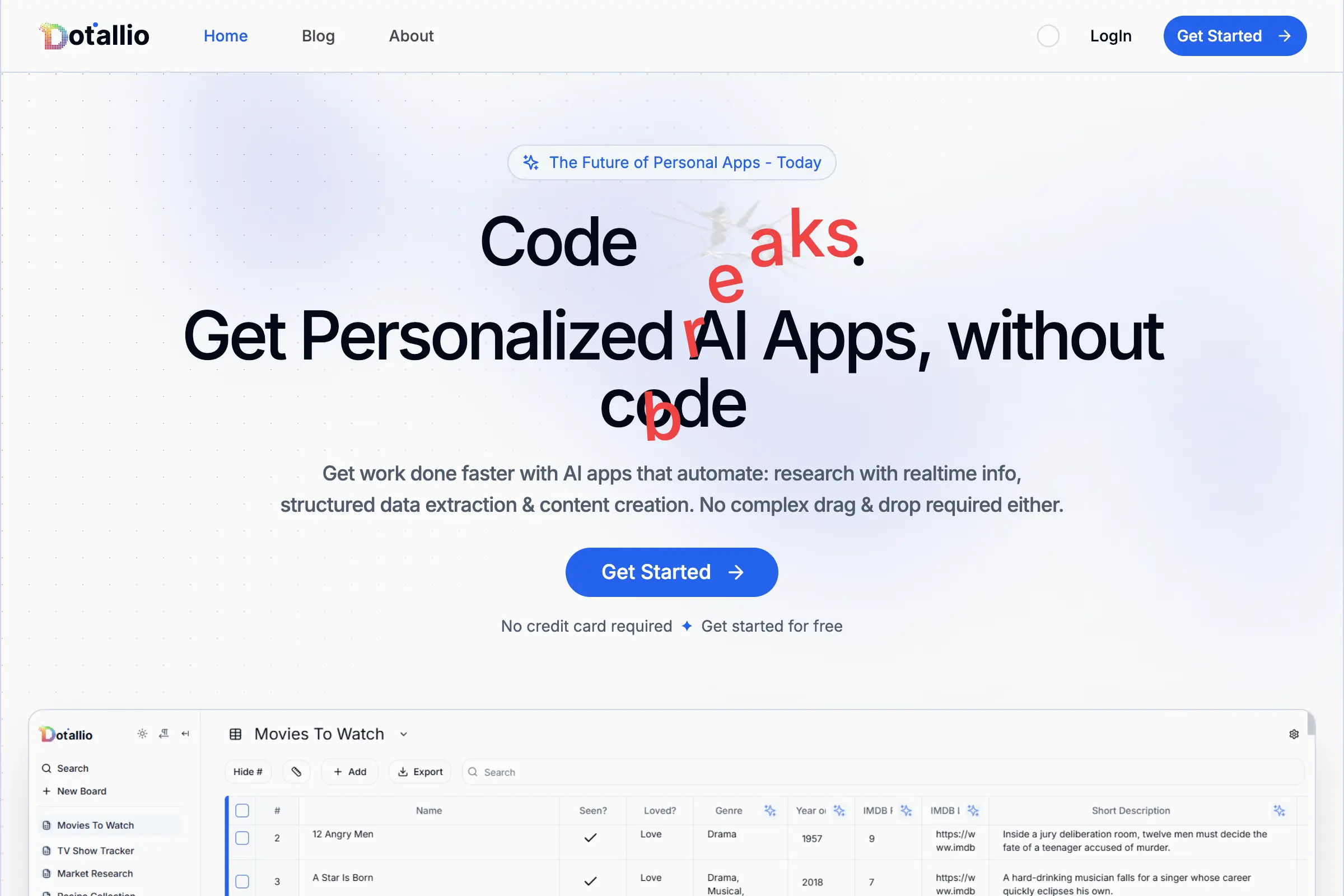
Dotallio
Personalized AI apps that automate research, data extraction, and content creation without code 🤖

Talk to Santa
Enjoy a magical live video chat or receive a unique AI-generated video greeting from Santa Claus 🎅

pozywka.pl
Scalable blog for food journalist, focused on performance and user experience 🌭
zagrodzki.me
Personal blog and portfolio of Bart Zagrodzki, where he shares his knowledge and work 💼

TurboStarter
Ship your startup everywhere. In minutes.
HTML to Markdown
Convert HTML to Markdown with ease, directly in your browser 📄
Dotallio
Personalized AI apps that automate research, data extraction, and content creation without code 🤖
Talk to Santa
Enjoy a magical live video chat or receive a unique AI-generated video greeting from Santa Claus 🎅
pozywka.pl
Scalable blog for food journalist, focused on performance and user experience 🌭
zagrodzki.me
Personal blog and portfolio of Bart Zagrodzki, where he shares his knowledge and work 💼
TurboStarter
Ship your startup everywhere. In minutes.
HTML to Markdown
Convert HTML to Markdown with ease, directly in your browser 📄
Dotallio
Personalized AI apps that automate research, data extraction, and content creation without code 🤖
Talk to Santa
Enjoy a magical live video chat or receive a unique AI-generated video greeting from Santa Claus 🎅
pozywka.pl
Scalable blog for food journalist, focused on performance and user experience 🌭
zagrodzki.me
Personal blog and portfolio of Bart Zagrodzki, where he shares his knowledge and work 💼
TurboStarter
Ship your startup everywhere. In minutes.
HTML to Markdown
Convert HTML to Markdown with ease, directly in your browser 📄
Dotallio
Personalized AI apps that automate research, data extraction, and content creation without code 🤖
Talk to Santa
Enjoy a magical live video chat or receive a unique AI-generated video greeting from Santa Claus 🎅
pozywka.pl
Scalable blog for food journalist, focused on performance and user experience 🌭
zagrodzki.me
Personal blog and portfolio of Bart Zagrodzki, where he shares his knowledge and work 💼
TurboStarter
Ship your startup everywhere. In minutes.
HTML to Markdown
Convert HTML to Markdown with ease, directly in your browser 📄
Omichat
Chat with 50+ AI models, including ChatGPT and Claude, in one place - switch models anytime without losing context 🤖
Claude Fast
Supercharge your Claude Code with 6x effective context window and specialized AI agents 🤖
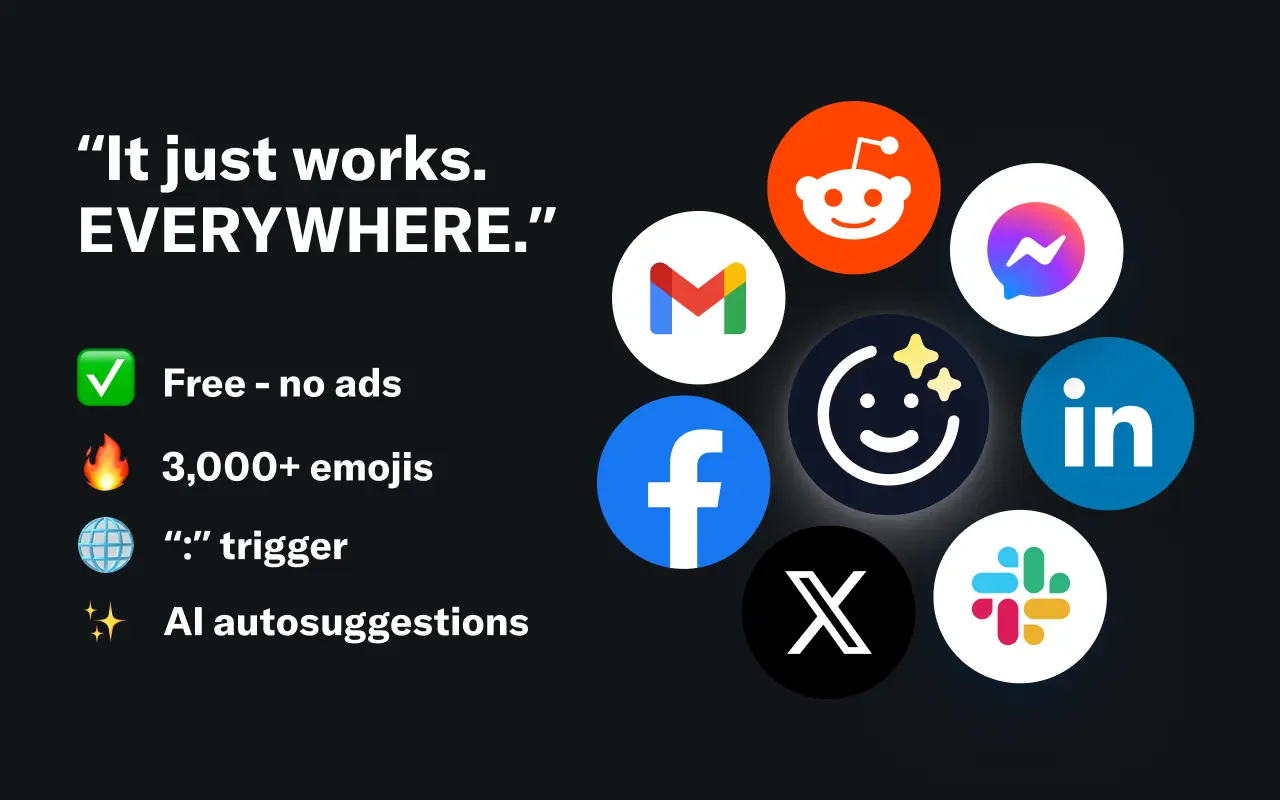
EmojAI
AI-powered emoji picker with smart, context-aware suggestions 🤖
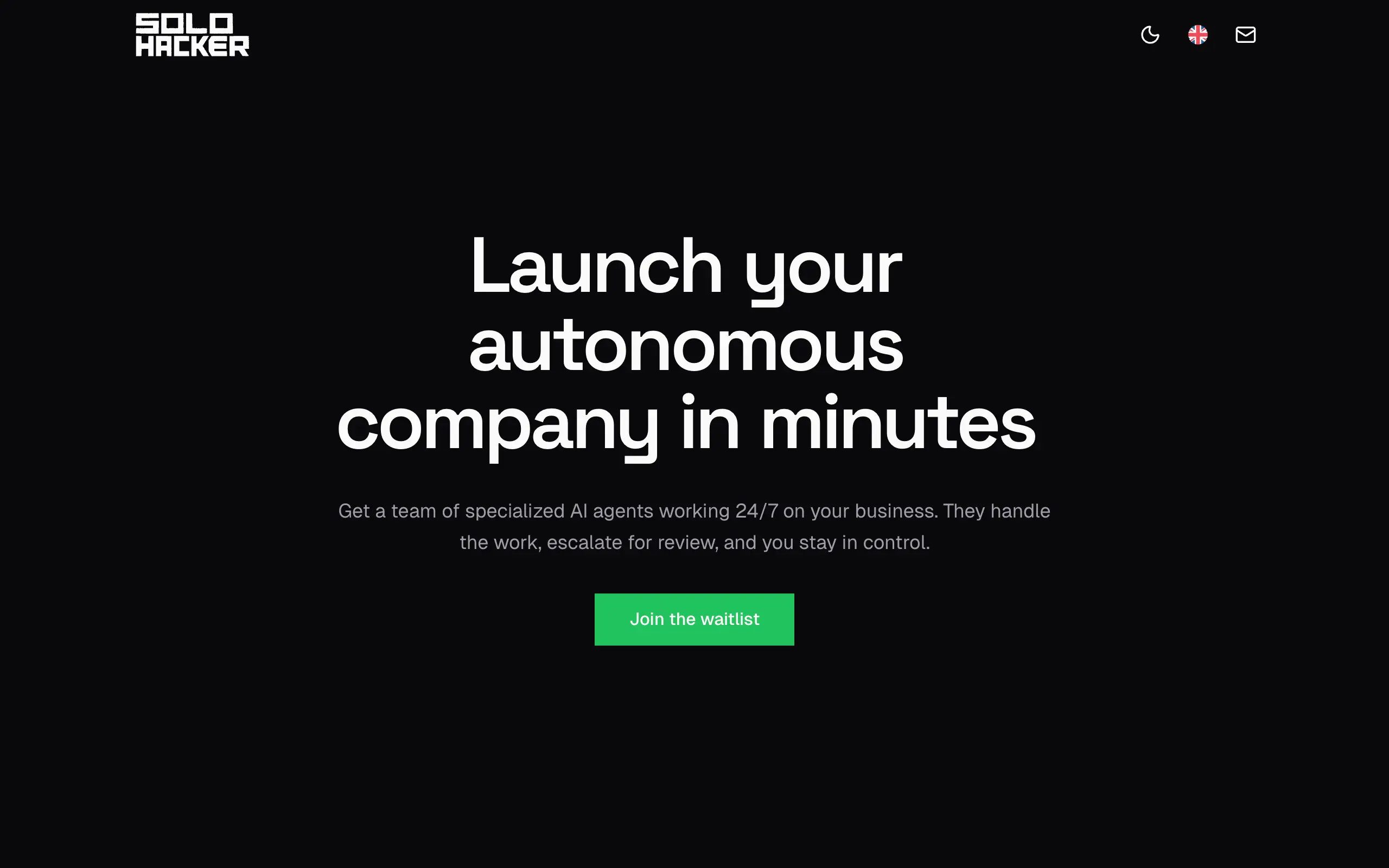
Solohacker
Autonomous company launcher - AI agents work 24/7, escalate what matters, and you stay in control 🤖

BeRawi: Storytelling Coach
Practice storytelling daily with instant feedback to sound clearer, more engaging, and confident 🎤
Omichat
Chat with 50+ AI models, including ChatGPT and Claude, in one place - switch models anytime without losing context 🤖
Claude Fast
Supercharge your Claude Code with 6x effective context window and specialized AI agents 🤖
EmojAI
AI-powered emoji picker with smart, context-aware suggestions 🤖
Solohacker
Autonomous company launcher - AI agents work 24/7, escalate what matters, and you stay in control 🤖
BeRawi: Storytelling Coach
Practice storytelling daily with instant feedback to sound clearer, more engaging, and confident 🎤
Omichat
Chat with 50+ AI models, including ChatGPT and Claude, in one place - switch models anytime without losing context 🤖
Claude Fast
Supercharge your Claude Code with 6x effective context window and specialized AI agents 🤖
EmojAI
AI-powered emoji picker with smart, context-aware suggestions 🤖
Solohacker
Autonomous company launcher - AI agents work 24/7, escalate what matters, and you stay in control 🤖
BeRawi: Storytelling Coach
Practice storytelling daily with instant feedback to sound clearer, more engaging, and confident 🎤
Omichat
Chat with 50+ AI models, including ChatGPT and Claude, in one place - switch models anytime without losing context 🤖
Claude Fast
Supercharge your Claude Code with 6x effective context window and specialized AI agents 🤖
EmojAI
AI-powered emoji picker with smart, context-aware suggestions 🤖
Solohacker
Autonomous company launcher - AI agents work 24/7, escalate what matters, and you stay in control 🤖
BeRawi: Storytelling Coach
Practice storytelling daily with instant feedback to sound clearer, more engaging, and confident 🎤

Connect with like-minded people
Join our community to get feedback, support, and grow together with 1,000+ builders on board, let's ship it!
Join usShip your startup everywhere. In minutes.
Don't burn tokens on setup and start building features on day one.