MarginMint
AI turns sales, cost, and inventory spreadsheets into margin insights and retail case studies for commerce students learning analytics.
Commerce students can explain revenue, cost of goods sold, and inventory turnover in theory, yet many struggle when those concepts arrive as imperfect spreadsheets from a retail business. Columns do not match, dates are inconsistent, discounts distort sales figures, and the real question is rarely obvious. An AI retail analytics learning platform such as MarginMint can close that gap by turning sales, cost, and inventory data into guided margin insights, retail case studies, and explainable analysis exercises.
MarginMint is not simply another chatbot for students. Its core opportunity is to make commercial analytics practical. A learner uploads a spreadsheet, receives a structured view of gross margin performance, then works through questions that mirror the decisions made by merchandising, finance, category management, and retail operations teams.
The strongest positioning is clear:
MarginMint helps commerce students learn retail analytics by converting real-world spreadsheets into explainable margin analysis and decision-focused case studies.
That combination of spreadsheet intelligence, education design, and retail-specific workflows gives the product a more defensible direction than a generic AI study assistant.
Primary search intent
People searching for an AI retail analytics tool, retail margin analysis software for students, or commerce analytics case studies typically want practical learning, clearer spreadsheet analysis, and a credible path from coursework to job-ready skills.
Why AI retail analytics education is a meaningful opportunity
Business education is shifting toward applied, data-literate learning. Employers increasingly expect graduates in commerce, retail, supply chain, finance, and marketing programs to interpret performance data rather than only define business terms. However, traditional coursework often creates a disconnect between classroom knowledge and the messy nature of business data.
A student may know the gross margin formula:
Gross margin = (Net sales - Cost of goods sold) / Net salesBut that student may still be unable to answer practical questions such as:
- "Which product categories are generating revenue but destroying margin?"
- "Did margin decline because costs increased, markdowns rose, or the sales mix changed?"
- "Which inventory items have weak sell-through and are tying up working capital?"
- "What would a retail manager do next, and what trade-offs would that decision create?"
- "Which assumptions make this spreadsheet analysis unreliable?"
These are the questions MarginMint should teach learners to investigate.
The platform sits at the intersection of several durable trends:
- "AI-assisted learning": Students want immediate guidance without waiting for office hours.
- "Analytics fluency": Employers value candidates who can transform raw information into clear recommendations.
- "Retail profitability pressure": Merchants need better visibility into unit economics, markdown exposure, and inventory productivity.
- "Experiential education": Universities and career programs are moving toward projects, simulations, portfolios, and case-based assessment.
- "Spreadsheet-first operations": Many small and mid-market retailers still manage vital reporting workflows in Excel, Google Sheets, CSV exports, and ERP downloads.
For market validation, the MarginMint team should reference recent research from authoritative sources such as the World Economic Forum, LinkedIn workplace learning reports, the National Retail Federation, and university employability research. Rather than relying on broad claims, publish cited statistics that connect analytics skills to career readiness and retail decision-making.
Who MarginMint should serve first
A broad audience may eventually include universities, business schools, bootcamps, tutors, retailers, and corporate learning teams. In the first version, however, MarginMint should focus on users with a repeated, urgent learning problem.
Commerce and business students
The primary user is an undergraduate or graduate student studying commerce, retail management, business analytics, accounting, supply chain, merchandising, or entrepreneurship.
Their situation is familiar:
- They understand business theory but have limited access to realistic datasets.
- They may be intimidated by complex spreadsheets.
- They need to prepare for internships, interviews, group projects, and entry-level analyst roles.
- They want a portfolio artifact that demonstrates business judgment, not just tool familiarity.
- They are often using disconnected tools for formulas, charts, notes, and AI prompts.
MarginMint should help them build confidence in a structured way. The outcome should not merely be “the AI gave me an answer.” The outcome should be “I can explain what happened to margin, why it happened, what I would recommend, and which evidence supports that recommendation.”
Instructors and course designers
Instructors are a critical second audience because they control curriculum adoption and assessment design. Their needs differ from student needs.
They need:
- Repeatable retail analytics assignments
- Datasets that are realistic but safe to share
- Clear grading rubrics
- Visibility into student reasoning
- Safeguards against uncritical AI-generated submissions
- Easy ways to create or customize cases
- Alignment with course outcomes
For this audience, MarginMint becomes a teaching operating system for margin analysis exercises. A professor should be able to assign a case, set the difficulty, decide which metrics students can access, and review an auditable explanation of how a learner reached a conclusion.
Career switchers and aspiring retail analysts
A valuable early expansion segment is the self-directed learner preparing for a role in retail planning, merchandising analytics, commercial finance, e-commerce operations, or category management.
This group has a strong willingness to pay when the product can deliver a measurable career outcome:
- A completed portfolio case study
- Interview-ready answers about gross margin and inventory
- A retail analytics certificate or skill assessment
- Familiarity with common commercial KPIs
- A record of spreadsheet interpretation and recommendations
Small retail teams and mentors
A later opportunity is to support small retail businesses, incubators, and mentors who want lightweight analysis support. This market should not distract from education initially, but it can become a powerful source of anonymized case formats and practical feedback.
The product should carefully distinguish between learning analytics and production financial advice. Students can learn decision frameworks from commercial data without MarginMint positioning itself as a substitute for an accountant, financial controller, or enterprise business intelligence platform.
The market gap in retail margin analysis learning
Existing options solve only parts of the learner’s problem.
Spreadsheets offer flexibility but little guidance. Generic AI chat tools can provide explanations but may misunderstand column meanings, invent assumptions, or fail to show a reliable calculation trail. Business intelligence software is powerful, but it can be expensive, complex, and designed for working analysts rather than beginners. Static case studies are useful, yet they often lack interactivity and do not teach students how to work through imperfect source data.
MarginMint can own a clear gap:
An educational, retail-specific AI workspace that turns tabular sales, cost, and inventory data into explainable margin insights and instructor-ready case studies.
| Approach | Realistic data | Retail context | Guided learning | Audit trail |
|---|---|---|---|---|
| Traditional spreadsheet coursework | Sometimes | Limited | Low | Manual |
| Generic AI chatbot | User supplied | Inconsistent | Moderate | Often weak |
| Business intelligence software | Yes | Configurable | Low for beginners | Strong |
| MarginMint | Yes | Purpose built | High | Explainable by design |
The difference is not just convenience. It is instructional design.
A good educational product breaks analysis into stages:
- Understand the data.
- Validate the data quality.
- Identify relevant KPIs.
- Detect material changes or anomalies.
- Form hypotheses.
- Test the hypotheses against the data.
- Make a recommendation.
- Explain limitations and assumptions.
That workflow teaches transferable analytical judgment. It also makes AI use more responsible because the model is supporting the student’s reasoning rather than replacing it.
The core MarginMint product experience
MarginMint should be designed around a learner journey, not a dashboard-first experience. A dashboard is useful, but students often need a narrative and a sequence of decisions before they know what to look for.
Upload and map data
Students upload CSV, XLSX, or Google Sheets exports and confirm how sales, costs, units, dates, products, channels, and inventory fields should be interpreted.
Explore margin drivers
AI identifies meaningful patterns in revenue, gross profit, gross margin percentage, markdowns, cost movements, sales mix, and inventory exposure.
Complete a retail case
The platform frames findings as a decision scenario with questions, evidence requests, coaching, and a final recommendation.
Build a portfolio artifact
Learners export a polished case summary that demonstrates commercial thinking, analysis quality, and communication skills.
Spreadsheet ingestion and data mapping
The first major feature should be a reliable data ingestion workflow. This is where generic AI tools frequently fail. Retail data is inconsistent, and headers can vary widely.
For example, one file may use Net Sales, another may use Sales Value, and another may include gross sales plus a separate returns field. Cost data may be represented as unit cost, landed cost, standard cost, or total cost of goods sold. MarginMint should never silently assume that fields are equivalent.
The import experience should include:
- File support for CSV and XLSX
- A preview of source rows before processing
- Column detection for dates, SKU, product, category, sales, units, costs, inventory, markdowns, and channels
- Plain-language mapping suggestions
- User confirmation for ambiguous fields
- Data quality flags for missing values, duplicates, malformed dates, and inconsistent currencies
- Calculated-field transparency
- A saved data dictionary for each case
A strong principle is simple: the platform should show users what it believes the data means before it produces insights.
Retail KPI engine
The retail analytics engine should calculate metrics only when the underlying data supports them. This avoids misleading outputs and teaches students that not every KPI can be derived from every spreadsheet.
Core metrics can include:
- "Net sales": Revenue after returns, discounts, or allowances where available.
- "Cost of goods sold": Direct product cost associated with sold units.
- "Gross profit": Net sales less cost of goods sold.
- "Gross margin percentage": Gross profit divided by net sales.
- "Average selling price": Net sales divided by units sold.
- "Markdown rate": Markdown value divided by applicable sales or original selling value, depending on the data model.
- "Sell-through rate": Units sold divided by units available for sale.
- "Inventory turnover": Cost of goods sold divided by average inventory value.
- "Weeks of supply": Inventory on hand divided by average weekly unit sales.
- "GMROI": Gross margin return on inventory investment, calculated as gross margin dollars divided by average inventory cost.
Students should be able to click any metric and see:
- The formula
- The data fields used
- The reporting period
- Important assumptions
- Why the metric matters in a retail decision
This creates a pedagogical advantage over black-box analytics.
AI-generated margin insights with evidence
The AI should not simply say, “Margin fell due to rising costs.” It should show the evidence behind that claim.
A high-quality MarginMint insight may read like this:
Gross margin declined by 4.2 percentage points in the outerwear category during the last eight weeks. The main contributors were a 7.8% increase in average unit cost and a higher share of discounted sales. Revenue remained stable, suggesting the margin decline is more closely related to cost pressure and promotional mix than reduced demand.
The system should then show the affected products, time period, source columns, and supporting calculations.
This evidence-first design is essential for trust. It reduces hallucination risk and teaches students to distinguish observations from interpretations.
Interactive case study generator
The retail case study generator is MarginMint’s most differentiated feature. Instead of giving every learner the same static PDF, the platform can create scenarios from uploaded or curated data.
A case might ask:
- Why did the homewares category miss its gross margin target?
- Which SKUs should the buyer review before the next purchase order?
- Should the retailer continue a promotion that increases volume but compresses margin?
- How could the business reduce excess inventory without damaging brand perception?
- What additional data would be required before making a pricing recommendation?
The case format should include a realistic business brief, learning objectives, a defined role, available data, constraints, prompts, and a rubric.
Student mode should provide progressive disclosure. Learners see enough guidance to begin, but they must interpret evidence and make their own recommendation before viewing deeper hints.
Instructor mode should support case creation, rubric configuration, class-level progress views, anonymized submissions, and an AI-use transparency report.
Portfolio mode should convert completed work into a concise, professional case summary with methodology, findings, charts, recommendations, and stated limitations.
Socratic AI coaching
The most educational AI behavior is not answer generation. It is guided questioning.
For example, if a student concludes that a category should be discontinued, MarginMint could respond:
What evidence distinguishes a temporary seasonal slowdown from a structurally weak product line? Before deciding, compare sell-through, markdown dependency, stock cover, and gross margin trend.
This approach supports academic integrity and strengthens critical thinking. The AI can provide hints at different levels:
- A directional nudge
- A suggested metric to investigate
- An explanation of a formula
- A challenge to a weak assumption
- A model answer after submission
- A comparison between the student’s approach and a benchmark approach
The platform should make the hint level visible to instructors so they can assess independent work appropriately.
How MarginMint should create trustworthy AI analysis
Trust is a product feature, not a marketing slogan. MarginMint will handle financial and commercial data, even if the early use case is educational. The product therefore needs explicit safeguards.
Build an explainability layer
Every conclusion should connect to an evidence chain. A student or instructor should be able to inspect:
- The source file and sheet
- The mapped data fields
- The transformations applied
- The calculation definition
- The filtered records or aggregate values
- The AI interpretation
- The recommended action and assumptions
This structure is more credible than treating a language model as a calculator. Where possible, deterministic code should calculate KPIs, while the AI model explains patterns and helps frame case questions.
Use retrieval and structured outputs
The AI should receive a compact, structured analytical context rather than a raw spreadsheet dump. That context might include:
- Verified metric values
- Dimension summaries by category, product, store, channel, and time
- Detected data quality issues
- User-selected filters
- A glossary of retail terminology
- Case-specific rubric instructions
Require the model to return structured fields such as finding, evidence, confidence, assumptions, and recommended_next_question. The application can then validate the output before showing it to users.
Protect privacy and academic integrity
Privacy expectations are especially important when users may upload coursework, business datasets, or customer-adjacent exports.
MarginMint should provide:
- Clear data retention settings
- Tenant isolation for institutional accounts
- Encryption in transit and at rest
- Role-based permissions
- A delete-data workflow
- Configurable model training controls
- Pseudonymization options for sample cases
- An AI disclosure statement in exported work
For education buyers, review relevant requirements with counsel, including student privacy expectations and institutional procurement standards. Do not make unsupported compliance claims. If the product pursues a formal certification or audit, publish the exact scope and date.
Avoid false certainty
Margin analysis can identify patterns, but it cannot prove causation without context. MarginMint should label hypotheses clearly, state missing data, and encourage learners to validate conclusions with operational knowledge.
Recommended tech stack for an AI retail analytics platform
The right MarginMint architecture should prioritize dependable data processing, secure multi-tenancy, clear product iteration, and cost controls. It does not need enterprise-scale complexity on day one, but it must handle uploaded files safely and produce reproducible calculations.
A practical web stack includes Next.js for the application layer, React for the interface, and Tailwind CSS for efficient design system development. A starter foundation such as TurboStarter can reduce setup time for common SaaS needs, including authentication, billing patterns, and application scaffolding.
Suggested technical architecture
- "Frontend": Next.js and React for responsive student and instructor workflows.
- "Styling": Tailwind CSS with reusable, accessible UI primitives.
- "Database": PostgreSQL for users, institutions, cases, assignments, data dictionaries, and audit records.
- "File storage": Object storage for encrypted CSV and XLSX uploads.
- "Data processing": Python or TypeScript workers for parsing spreadsheets, profiling data, and calculating deterministic retail metrics.
- "Job queue": A background job system for ingestion, transformations, chart generation, and AI analysis.
- "AI orchestration": A provider-agnostic layer that supports structured outputs, prompt versioning, retries, evaluation, and logging.
- "Analytics engine": SQL transformations plus a semantic metric layer for reproducible calculations.
- "Authentication": A managed authentication solution with support for role-based access and institutional single sign-on later.
- "Observability": Error tracking, application logging, prompt traces, latency monitoring, and cost alerts.
Why a hybrid calculation approach matters
Do not ask an LLM to calculate important financial metrics from unstructured input. Language models can be excellent at explanation, tutoring, and narrative synthesis, but they should not be the source of truth for arithmetic or data transformations.
Use deterministic functions for calculations:
type MarginMetrics = {
  netSales: number
  costOfGoodsSold: number
  grossProfit: number
  grossMarginPercent: number
}

export function calculateMarginMetrics(
  netSales: number,
  costOfGoodsSold: number
): MarginMetrics {
  const grossProfit = netSales - costOfGoodsSold
  const grossMarginPercent =
    netSales === 0 ? 0 : (grossProfit / netSales) * 100

  return {
    netSales,
    costOfGoodsSold,
    grossProfit,
    grossMarginPercent,
  }
}
Then provide validated results to the AI model with clear business context. This gives MarginMint a reliable foundation for explainable retail analytics.
Trade-offs to consider
A Python data-processing service may be more convenient for established dataframe libraries and spreadsheet analysis. A TypeScript-only stack can simplify team skills and shared types. The best choice depends on the founding team, expected upload complexity, and data volume.
For an MVP, optimize for:
- Fast CSV and standard XLSX support
- Reliable category and time-period aggregations
- Clear error messages
- Data mapping review
- A narrow set of retail metrics
- Strong test coverage for calculations
Avoid building a full drag-and-drop business intelligence tool too early. Students need guided insight, not unlimited dashboard configuration.
Monetization strategies for MarginMint
MarginMint can support both self-serve and institution-led revenue. The product should begin with a simple pricing model that aligns with learner value and university buying behavior.
Freemium student plan
A free plan can offer a limited number of spreadsheet uploads, starter retail cases, and basic KPI explanations. This creates product awareness through coursework, peer referrals, and career communities.
A paid student plan could include:
- More uploads and larger file limits
- Advanced case studies
- Portfolio exports
- Personalized skill feedback
- Interview practice based on completed cases
- More AI coaching interactions
- Certificate pathways
The key is to avoid charging for basic learning before students have experienced a clear outcome.
Instructor and classroom subscriptions
A classroom plan can charge per instructor, per course, or per active learner. It should include assignment management, custom cases, grading tools, rubrics, and student progress insights.
Universities often need predictable procurement. Annual departmental pricing with defined student seats may be easier to buy than a highly variable usage model.
Institutional licensing
For business schools, colleges, and career programs, MarginMint can offer an annual campus license with:
- Single sign-on
- Learning management system integrations
- Department-level analytics
- Custom branding
- Dedicated onboarding
- Data processing agreements
- Instructor training
- Curriculum-aligned case libraries
Premium case marketplace
Over time, MarginMint could offer expert-authored retail scenarios from practitioners, educators, and industry partners. This creates an additional revenue stream and enriches the learning library. Quality control must be strict because poorly designed cases can damage trust.
Competitive advantage and defensibility
MarginMint should not attempt to win by claiming it has “better AI” in the abstract. AI model capabilities change quickly. The durable advantage comes from the system around the model.
Its strongest competitive moat can combine five elements:
-
Retail-specific data model
The product understands sales, unit cost, markdowns, SKU hierarchies, inventory, channels, and common commercial KPIs. -
Educational workflow design
The platform teaches learners how to think, validate, and communicate rather than merely generating an answer. -
Evidence-backed AI
Every insight connects to visible calculations, source fields, assumptions, and limitations. -
Case and rubric library
A growing collection of well-designed cases, learning objectives, benchmark answers, and assessment criteria becomes increasingly valuable over time. -
Instructor feedback loop
Feedback from educators improves cases, coaching prompts, difficulty calibration, and the platform’s ability to identify common misunderstandings.
A generic spreadsheet assistant may summarize data. MarginMint should help a learner become capable of defending a retail recommendation in an interview, presentation, or classroom discussion.
Risks and how to mitigate them
Every AI education product must address risk deliberately. MarginMint’s category includes data accuracy, learner trust, academic integrity, and customer acquisition risks.
Mitigate this through deterministic calculations, schema validation, evidence citations within the product, confidence labels, prompt testing, human review for flagship cases, and a clear distinction between observed facts and hypotheses.
Use Socratic coaching, staged hints, reflection questions, instructor controls, AI-use disclosures, and rubrics that reward evidence and reasoning rather than polished prose alone.
Invest early in import reliability, mapping confirmations, data quality feedback, sample datasets, and helpful error recovery. The ingestion flow is part of the product, not a technical afterthought.
Start with individual educators, adjunct instructors, student communities, and self-serve portfolio users. Use early adoption data and case outcomes to build a stronger institutional sales motion.
Offer access controls, data deletion, encryption, clear retention policies, anonymization guidance, and environment separation. Encourage educational users to use synthetic or approved datasets where appropriate.
A practical go-to-market strategy
The best initial go-to-market wedge is likely retail analytics coursework and career readiness, rather than generic business education.
Start by recruiting a small group of instructors who teach:
- Retail management
- Merchandising
- Business analytics
- Management accounting
- Supply chain analytics
- E-commerce strategy
- Entrepreneurial finance
Offer them a tightly scoped pilot. The goal is not to sign dozens of institutions before the product is ready. The goal is to learn exactly which workflows create recurring value.
An early pilot should measure:
- Assignment completion rate
- Time to first useful insight
- Student confidence before and after the exercise
- Quality of student recommendations
- Instructor grading time
- Frequency of data mapping errors
- Student willingness to include exported work in a portfolio
- Instructor willingness to use MarginMint in the next term
Content marketing can complement direct outreach. High-intent SEO topics include:
- How to calculate gross margin from sales data
- Retail margin analysis examples
- Retail analytics case study for students
- GMROI explained with examples
- Inventory turnover formula for retail
- How to analyze markdown impact on profitability
- Commerce student portfolio project ideas
Each article should include a practical framework, a small example dataset, and a natural route into a MarginMint case. This helps the company earn authority before it asks users to trust an AI tool with their data.
An MVP roadmap for MarginMint
The first release should prove one important behavior: learners can upload a retail dataset, understand a margin problem, complete a structured case, and explain a recommendation with evidence.
Define a narrow first use case around gross margin and inventory analysis for a single retail dataset format, such as SKU-level weekly sales and inventory data.
Build secure file upload, spreadsheet preview, column mapping, data validation, and a reusable retail data dictionary.
Implement deterministic calculations for net sales, cost of goods sold, gross profit, gross margin percentage, sell-through, and basic inventory measures.
Create an evidence-first insight layer that shows source fields, filters, formulas, and calculations behind every AI-generated finding.
Launch three to five guided retail case templates with different decision contexts, such as markdown pressure, rising unit cost, excess inventory, and category profitability.
Add student reflections, instructor rubrics, AI-use disclosures, and exportable portfolio reports after the analysis workflow is reliable.
Run a pilot with a small instructor cohort, measure learning outcomes and product friction, then refine the onboarding experience before expanding feature scope.
The first product should be intentionally constrained. Resist adding forecasting, complex optimization, full enterprise integrations, or every possible retail metric until the core learning loop is proven.
Final recommendation
MarginMint has a strong opportunity to become a category-defining AI retail analytics learning platform if it remains focused on explainable, decision-oriented learning. Its value is not that it can read a spreadsheet faster than a student. Its value is that it can teach a student how experienced commercial teams think about margin, inventory, pricing, markdowns, and profitability.
The winning product experience will combine trustworthy data handling, deterministic calculations, retail-specific metrics, guided case studies, and AI coaching that challenges learners to reason from evidence. That is how MarginMint can serve students, earn instructor trust, and create a differentiated SaaS business with a credible path to institutional adoption.
More 🤖 AI Startup SaaS ideas
Discover more innovative ai startup SaaS ideas that are trending in 2026. Each idea is AI-generated with market validation and growth potential to help you find your next profitable venture faster than competitors.
Your competitors are building with TurboStarter
Below are some of the SaaS ideas that have been generated and built with our starter kit.

Statiko
Monitor any Telegram channel in real time - track posts, edits, deletions, and growth with AI recaps 📡

Shibui
AI website builder - describe your business, pick a niche template, edit by chatting, and publish instantly ✨

Pro Service
Find verified home service professionals, compare quotes, and pay securely through escrow - built for Brazilians across the US 🏠
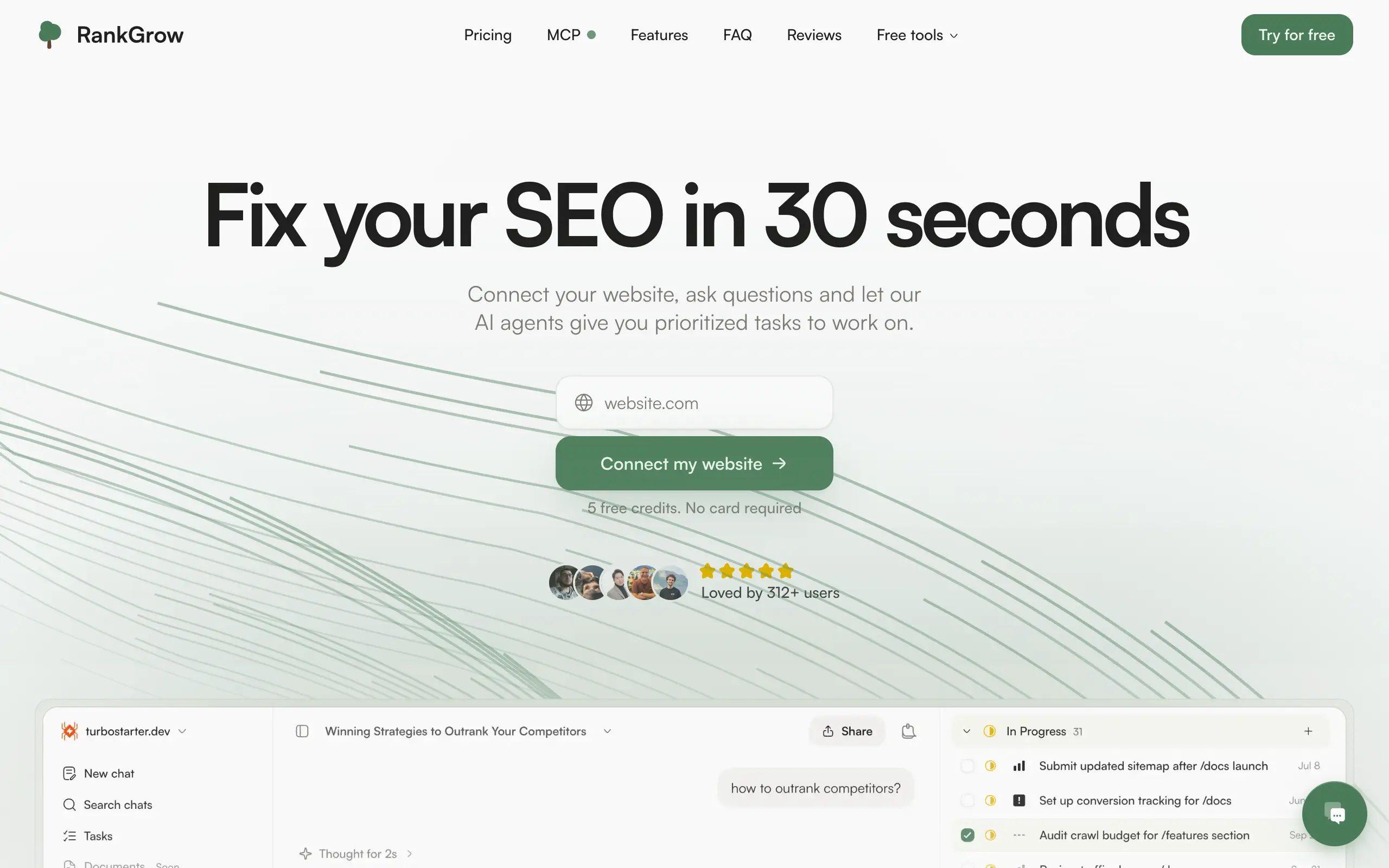
RankGrow
Fix your SEO with AI agents - connect Search Console, get prioritized tasks, and grow organic traffic 📈
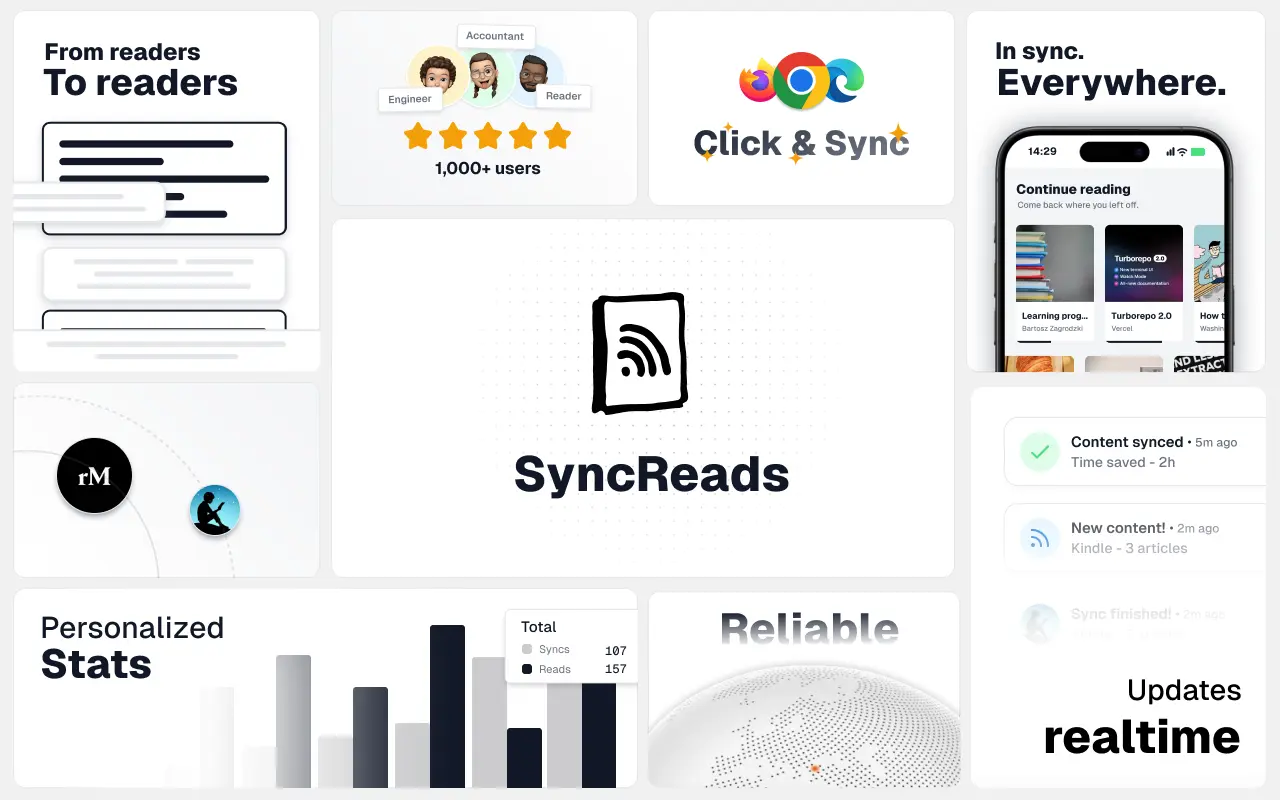
SyncReads
Sync your favorite content for distraction-free reading, save time and replace multiple apps. Anytime, anywhere 🔄
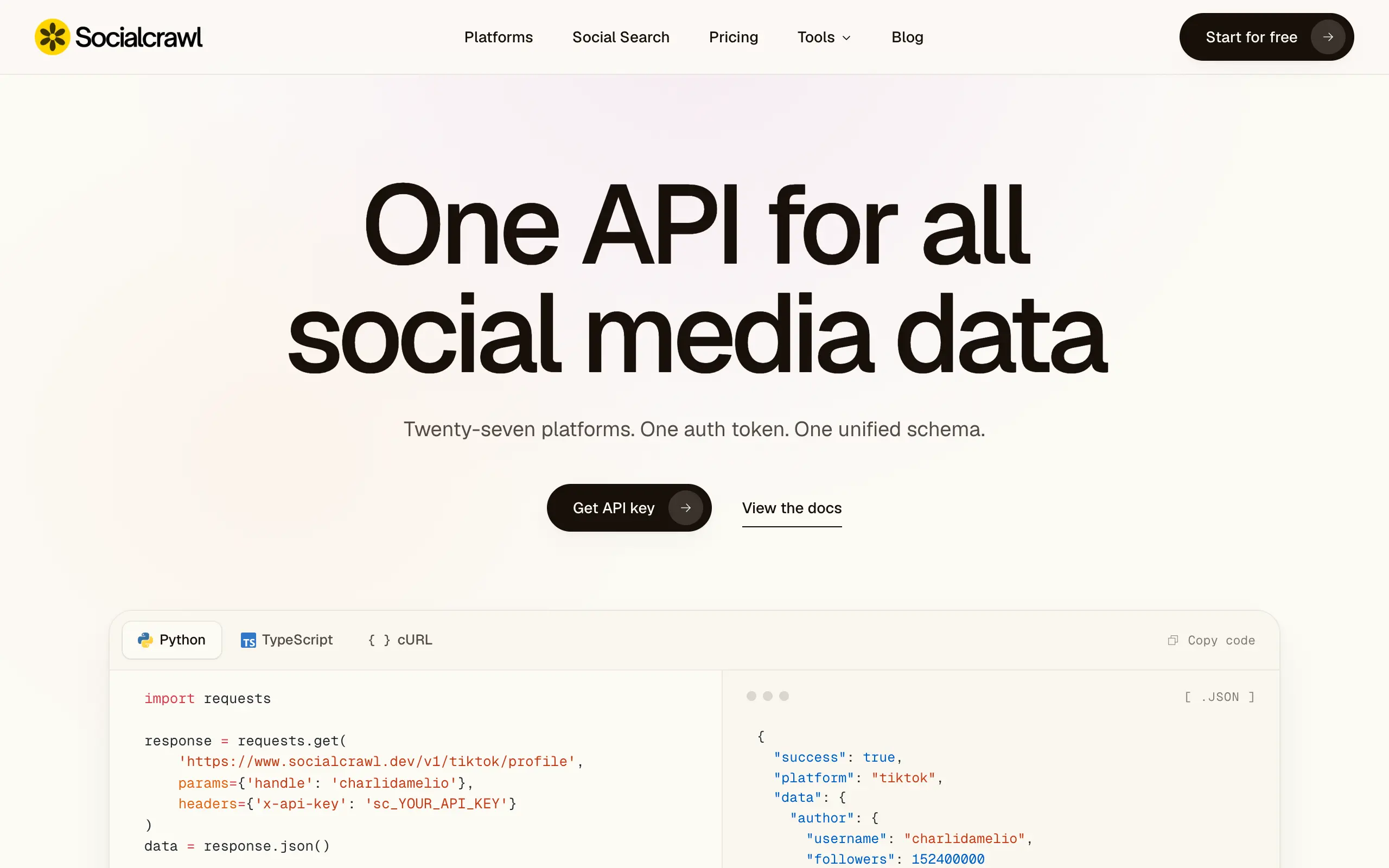
Socialcrawl
Get clean, structured data from 21 platforms like TikTok, Instagram, and YouTube with a single request 📊
Statiko
Monitor any Telegram channel in real time - track posts, edits, deletions, and growth with AI recaps 📡
Shibui
AI website builder - describe your business, pick a niche template, edit by chatting, and publish instantly ✨
Pro Service
Find verified home service professionals, compare quotes, and pay securely through escrow - built for Brazilians across the US 🏠
RankGrow
Fix your SEO with AI agents - connect Search Console, get prioritized tasks, and grow organic traffic 📈
SyncReads
Sync your favorite content for distraction-free reading, save time and replace multiple apps. Anytime, anywhere 🔄
Socialcrawl
Get clean, structured data from 21 platforms like TikTok, Instagram, and YouTube with a single request 📊
Statiko
Monitor any Telegram channel in real time - track posts, edits, deletions, and growth with AI recaps 📡
Shibui
AI website builder - describe your business, pick a niche template, edit by chatting, and publish instantly ✨
Pro Service
Find verified home service professionals, compare quotes, and pay securely through escrow - built for Brazilians across the US 🏠
RankGrow
Fix your SEO with AI agents - connect Search Console, get prioritized tasks, and grow organic traffic 📈
SyncReads
Sync your favorite content for distraction-free reading, save time and replace multiple apps. Anytime, anywhere 🔄
Socialcrawl
Get clean, structured data from 21 platforms like TikTok, Instagram, and YouTube with a single request 📊
Statiko
Monitor any Telegram channel in real time - track posts, edits, deletions, and growth with AI recaps 📡
Shibui
AI website builder - describe your business, pick a niche template, edit by chatting, and publish instantly ✨
Pro Service
Find verified home service professionals, compare quotes, and pay securely through escrow - built for Brazilians across the US 🏠
RankGrow
Fix your SEO with AI agents - connect Search Console, get prioritized tasks, and grow organic traffic 📈
SyncReads
Sync your favorite content for distraction-free reading, save time and replace multiple apps. Anytime, anywhere 🔄
Socialcrawl
Get clean, structured data from 21 platforms like TikTok, Instagram, and YouTube with a single request 📊
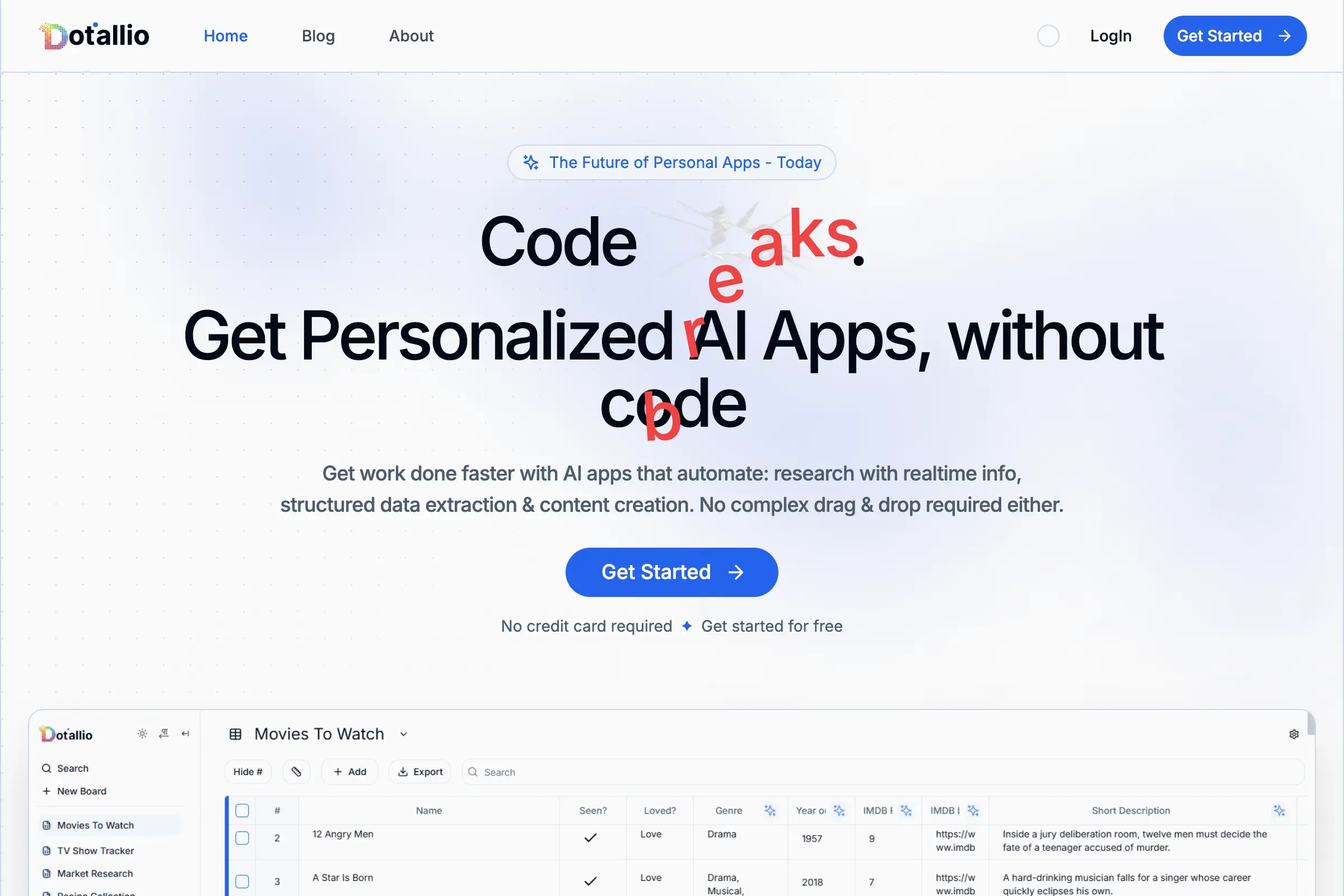
Dotallio
Personalized AI apps that automate research, data extraction, and content creation without code 🤖

Talk to Santa
Enjoy a magical live video chat or receive a unique AI-generated video greeting from Santa Claus 🎅

pozywka.pl
Scalable blog for food journalist, focused on performance and user experience 🌭
zagrodzki.me
Personal blog and portfolio of Bart Zagrodzki, where he shares his knowledge and work 💼
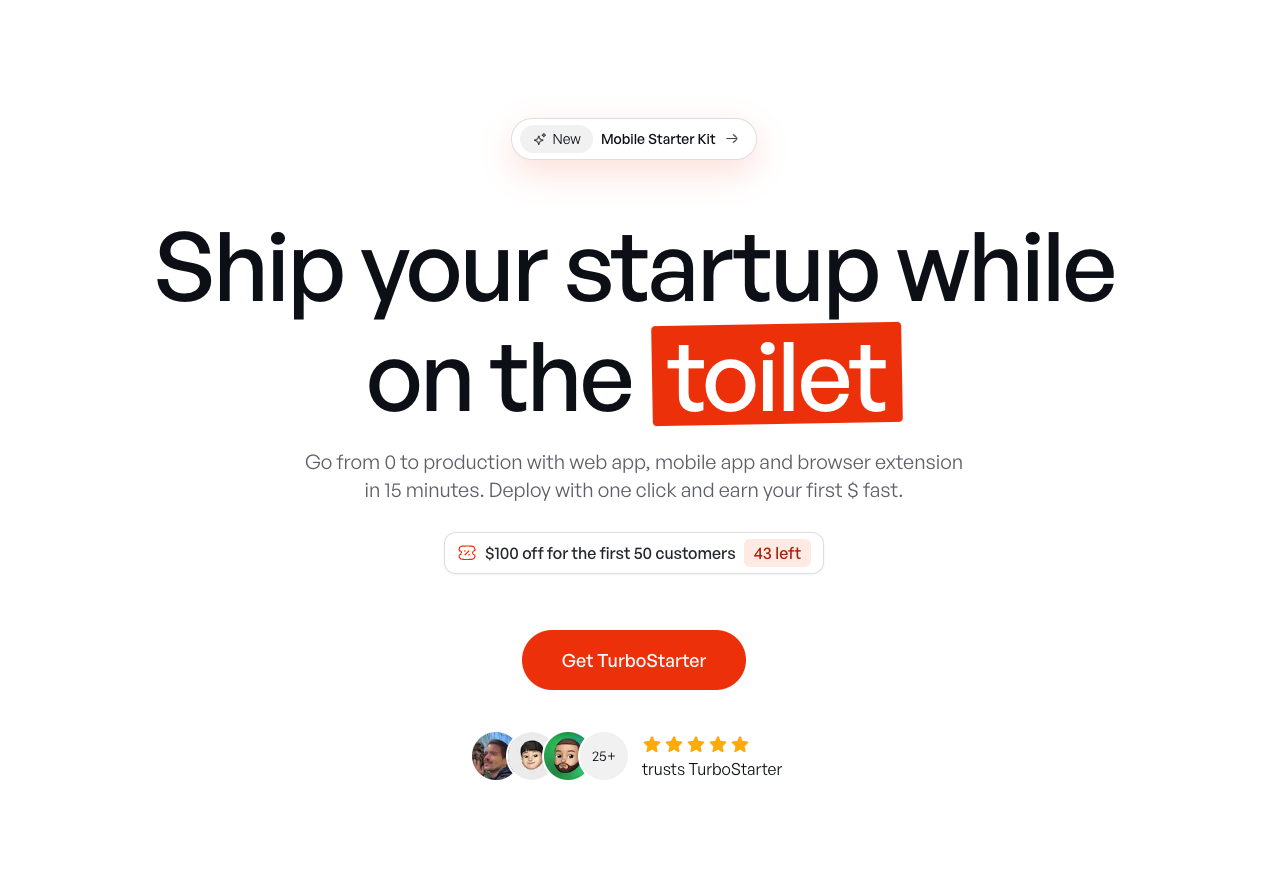
TurboStarter
Ship your startup everywhere. In minutes.
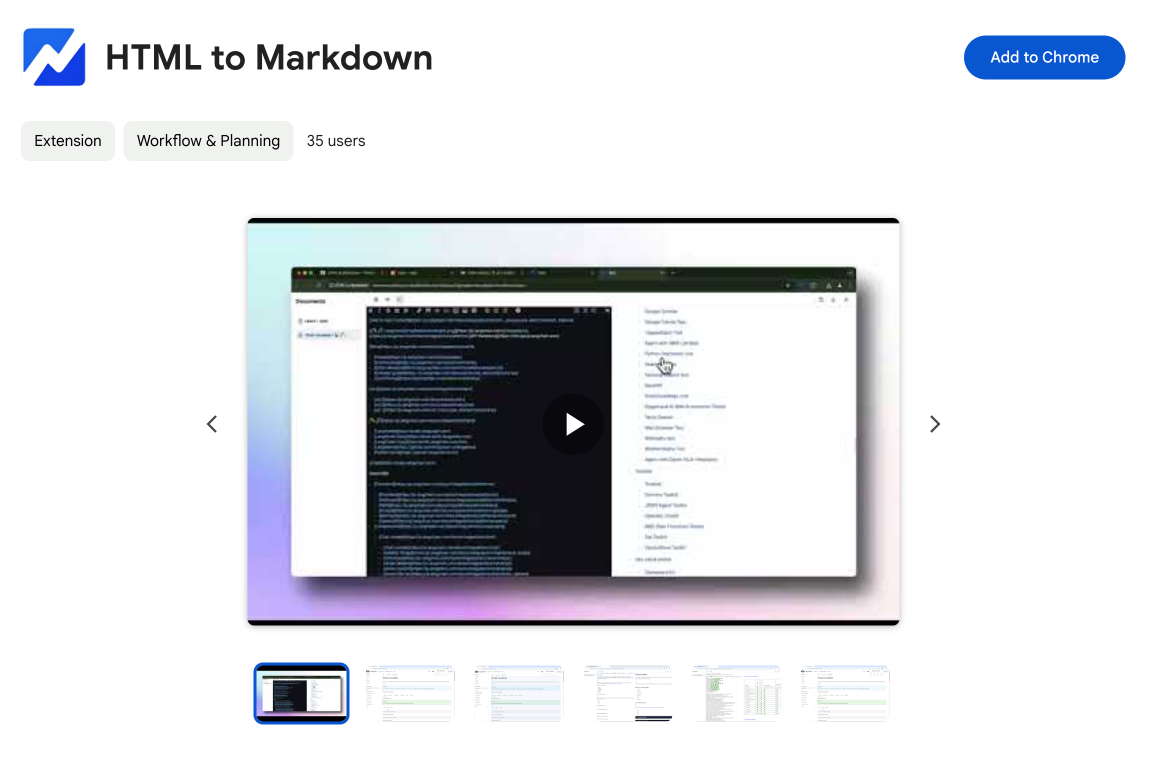
HTML to Markdown
Convert HTML to Markdown with ease, directly in your browser 📄
Dotallio
Personalized AI apps that automate research, data extraction, and content creation without code 🤖
Talk to Santa
Enjoy a magical live video chat or receive a unique AI-generated video greeting from Santa Claus 🎅
pozywka.pl
Scalable blog for food journalist, focused on performance and user experience 🌭
zagrodzki.me
Personal blog and portfolio of Bart Zagrodzki, where he shares his knowledge and work 💼
TurboStarter
Ship your startup everywhere. In minutes.
HTML to Markdown
Convert HTML to Markdown with ease, directly in your browser 📄
Dotallio
Personalized AI apps that automate research, data extraction, and content creation without code 🤖
Talk to Santa
Enjoy a magical live video chat or receive a unique AI-generated video greeting from Santa Claus 🎅
pozywka.pl
Scalable blog for food journalist, focused on performance and user experience 🌭
zagrodzki.me
Personal blog and portfolio of Bart Zagrodzki, where he shares his knowledge and work 💼
TurboStarter
Ship your startup everywhere. In minutes.
HTML to Markdown
Convert HTML to Markdown with ease, directly in your browser 📄
Dotallio
Personalized AI apps that automate research, data extraction, and content creation without code 🤖
Talk to Santa
Enjoy a magical live video chat or receive a unique AI-generated video greeting from Santa Claus 🎅
pozywka.pl
Scalable blog for food journalist, focused on performance and user experience 🌭
zagrodzki.me
Personal blog and portfolio of Bart Zagrodzki, where he shares his knowledge and work 💼
TurboStarter
Ship your startup everywhere. In minutes.
HTML to Markdown
Convert HTML to Markdown with ease, directly in your browser 📄
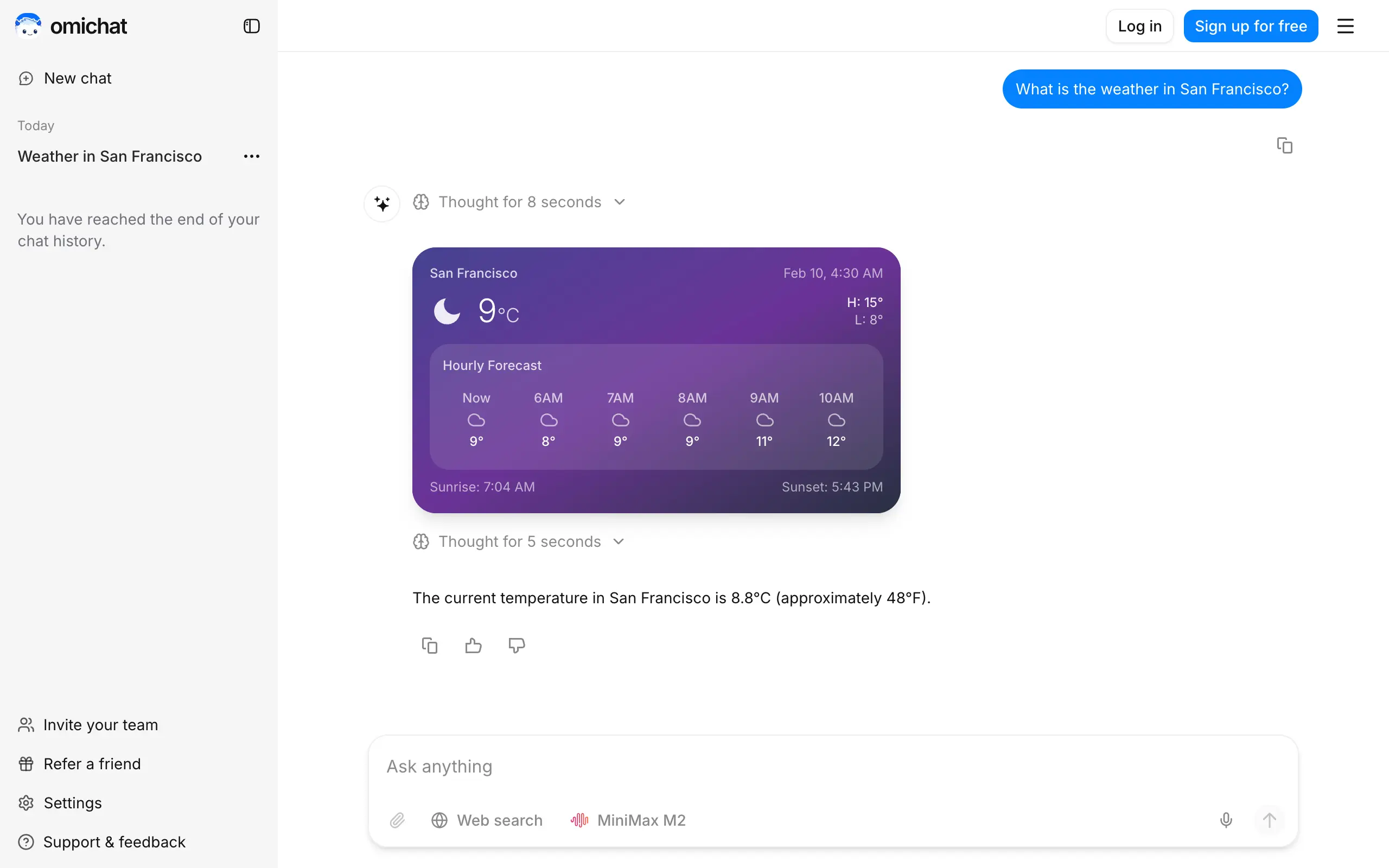
Omichat
Chat with 50+ AI models, including ChatGPT and Claude, in one place - switch models anytime without losing context 🤖
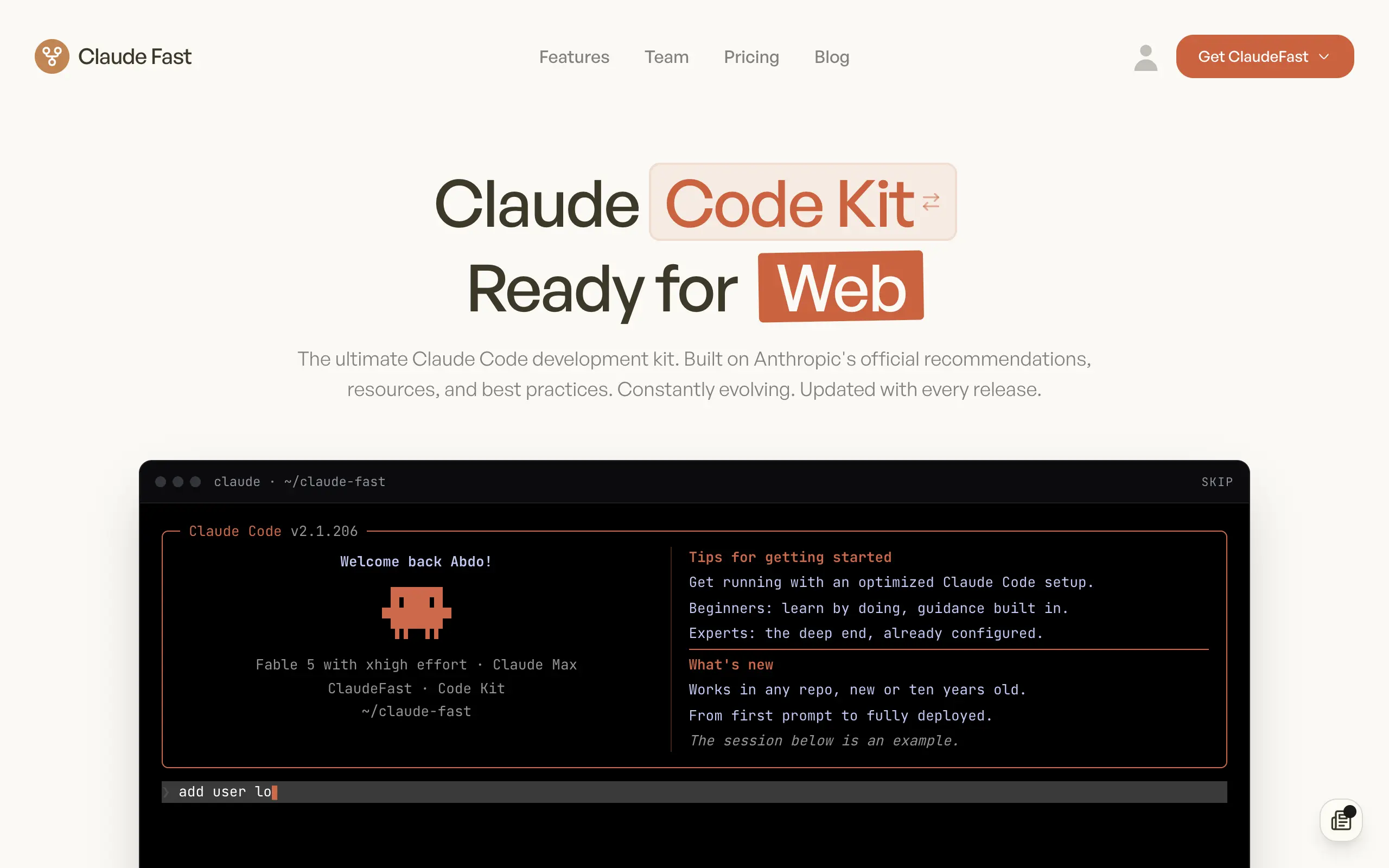
Claude Fast
Supercharge your Claude Code with 6x effective context window and specialized AI agents 🤖
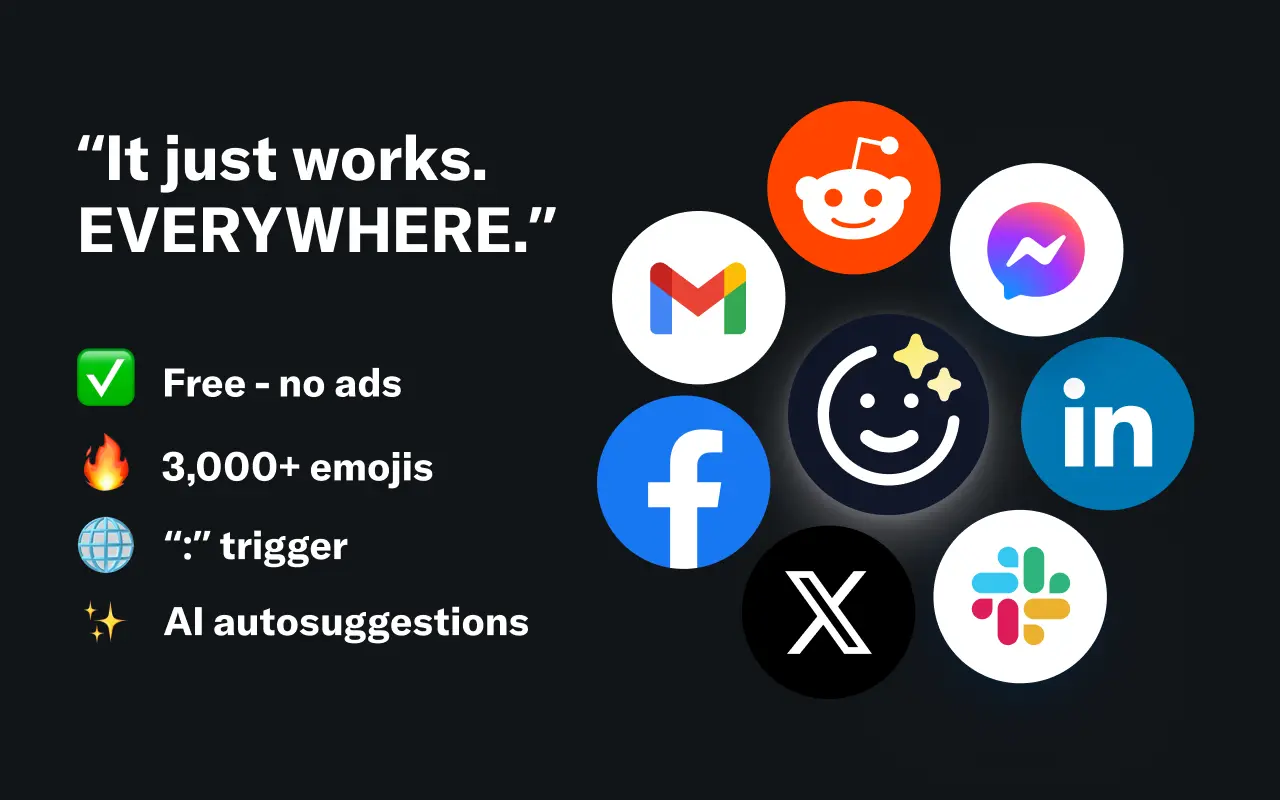
EmojAI
AI-powered emoji picker with smart, context-aware suggestions 🤖

Solohacker
Autonomous company launcher - AI agents work 24/7, escalate what matters, and you stay in control 🤖

BeRawi: Storytelling Coach
Practice storytelling daily with instant feedback to sound clearer, more engaging, and confident 🎤
Omichat
Chat with 50+ AI models, including ChatGPT and Claude, in one place - switch models anytime without losing context 🤖
Claude Fast
Supercharge your Claude Code with 6x effective context window and specialized AI agents 🤖
EmojAI
AI-powered emoji picker with smart, context-aware suggestions 🤖
Solohacker
Autonomous company launcher - AI agents work 24/7, escalate what matters, and you stay in control 🤖
BeRawi: Storytelling Coach
Practice storytelling daily with instant feedback to sound clearer, more engaging, and confident 🎤
Omichat
Chat with 50+ AI models, including ChatGPT and Claude, in one place - switch models anytime without losing context 🤖
Claude Fast
Supercharge your Claude Code with 6x effective context window and specialized AI agents 🤖
EmojAI
AI-powered emoji picker with smart, context-aware suggestions 🤖
Solohacker
Autonomous company launcher - AI agents work 24/7, escalate what matters, and you stay in control 🤖
BeRawi: Storytelling Coach
Practice storytelling daily with instant feedback to sound clearer, more engaging, and confident 🎤
Omichat
Chat with 50+ AI models, including ChatGPT and Claude, in one place - switch models anytime without losing context 🤖
Claude Fast
Supercharge your Claude Code with 6x effective context window and specialized AI agents 🤖
EmojAI
AI-powered emoji picker with smart, context-aware suggestions 🤖
Solohacker
Autonomous company launcher - AI agents work 24/7, escalate what matters, and you stay in control 🤖
BeRawi: Storytelling Coach
Practice storytelling daily with instant feedback to sound clearer, more engaging, and confident 🎤

Connect with like-minded people
Join our community to get feedback, support, and grow together with 1,000+ builders on board, let's ship it!
Join usShip your startup everywhere. In minutes.
Don't burn tokens on setup and start building features on day one.