MarginPilot
AI profit copilot for ecommerce brands that unifies ads, shipping, fees, and inventory to recommend higher-margin daily actions.
Ecommerce operators rarely lose margin because of one obvious mistake. Profit erodes through dozens of small decisions made across disconnected systems: a campaign keeps spending after contribution margin turns negative, a shipping zone becomes more expensive, a marketplace fee changes, inventory runs low on a profitable SKU, or a discount code quietly turns a bestselling product into a break-even sale.
An AI profit copilot for ecommerce solves this problem by translating fragmented operational data into a clear daily priority list. MarginPilot is positioned to unify advertising spend, shipping costs, payment fees, product costs, returns, inventory, and sales performance so ecommerce teams can take actions that improve profit rather than merely chasing revenue.
The opportunity is significant because many brands have access to dashboards but still lack a reliable answer to the question that matters most: what should we do today to protect and grow margin?
This article evaluates MarginPilot as an AI SaaS business, including its ideal customers, market gap, product architecture, monetization model, technology stack, risks, competitive position, and a practical path to launch.
Why an AI profit copilot for ecommerce is needed
Most ecommerce reporting tools focus on visibility. They display revenue, ad spend, return on ad spend, customer acquisition cost, average order value, and similar metrics. These metrics are useful, but they often fail to provide a true picture of business profitability.
A brand can report a healthy return on ad spend while losing money on individual orders once it includes:
- Cost of goods sold
- Shipping label costs
- Packaging and fulfillment fees
- Payment processing fees
- Marketplace commissions
- Discounts and promotions
- Returns and replacement orders
- Currency conversion costs
- Inventory holding costs
- Agency or creative production expenses
For a founder or growth lead, the challenge is not simply collecting these numbers. The challenge is understanding their relationship and deciding what action will have the greatest financial impact.
MarginPilot’s core promise should be simple:
Turn ecommerce profit data into ranked, evidence-based actions that improve contribution margin.
Instead of another static ecommerce analytics dashboard, MarginPilot can act as a daily operating system for profitable growth. It should tell users when to pause a campaign, raise a product price, change free-shipping thresholds, reorder inventory, reduce a discount, investigate high-return products, or shift budget toward more profitable customer segments.
The key product principle
MarginPilot should optimize for contribution margin and cash-aware profitability, not vanity metrics such as revenue, clicks, or blended return on ad spend alone.
Target audience for MarginPilot
The best customers for an AI ecommerce profit copilot are businesses that have enough data complexity to feel the pain of fragmented systems, but do not yet have a dedicated finance analytics team or custom data warehouse.
Primary audience: growing direct-to-consumer brands
The strongest early customer segment is likely Shopify-based direct-to-consumer brands with meaningful paid acquisition spend. These businesses typically have:
- Annual revenue from approximately $1 million to $50 million
- Multiple paid acquisition channels
- A catalog with several products or variants
- Third-party logistics or in-house fulfillment costs
- Regular promotions, bundles, and discount activity
- A lean team where founders, operators, and growth leads wear multiple hats
These brands often use a collection of tools for ecommerce reporting, attribution, accounting, inventory, and advertising. The data exists, but no one has time to reconcile it daily.
Their primary jobs to be done include:
- Understand true profit by order, product, channel, and campaign.
- Detect margin leakage before it becomes expensive.
- Prioritize the most valuable action for today.
- Make performance marketing decisions with financial confidence.
- Forecast whether inventory and marketing plans support cash flow.
Secondary audience: ecommerce agencies and fractional CFOs
Agencies and fractional finance teams can become an efficient distribution channel for MarginPilot. An agency managing 10 to 50 ecommerce clients has a strong incentive to standardize reporting and proactively identify issues.
For this segment, MarginPilot should support:
- Multi-brand workspaces
- Client-level permissions
- White-label or shareable reports
- Action queues by account
- Approval workflows for recommendations
- Portfolio-level views of client profitability
A fractional CFO can use the platform to identify financial risks before monthly close. A paid media agency can use it to explain why it shifted spend away from apparently high-performing campaigns that had poor contribution margin.
Tertiary audience: marketplace and omnichannel sellers
Brands selling across Shopify, Amazon, wholesale, retail, and marketplaces have a more complex margin picture. This is a larger long-term opportunity, but it should not be the first product focus.
Marketplace integrations introduce difficult issues around settlement timing, fee categories, returns, inventory allocation, taxes, and attribution. MarginPilot can expand into this segment after proving the model for direct-to-consumer brands.
Founder-led brand
Needs a fast, trustworthy daily view of what is making or losing money without hiring a data team.
Growth team
Needs campaign and channel recommendations based on profit after every relevant variable, not return on ad spend alone.
Agency or CFO partner
Needs a scalable way to monitor multiple stores, surface risks, and communicate financially sound recommendations.
The ecommerce profitability gap MarginPilot can own
The market already includes ecommerce analytics tools, attribution platforms, inventory platforms, accounting software, and business intelligence products. However, these categories frequently leave a critical gap between data and action.
Existing tools often answer only part of the problem
An attribution tool may estimate which channel influenced a conversion. An accounting platform may show financial statements after reconciliation. An inventory platform may show stock on hand. A shipping platform may reveal carrier spend.
Each system is useful independently. The operational problem is that a decision such as increasing paid spend requires context from all of them.
For example, a Meta campaign might appear successful based on revenue attribution. But its true profitability can deteriorate because:
- The promoted product has lower gross margin than the account average.
- The campaign attracts customers who use a large first-order discount.
- Orders ship to expensive zones.
- The promoted SKU has unusually high return rates.
- Inventory is close to stockout, creating lost sales or expensive expedited replenishment.
- The campaign cannibalizes repeat purchases that would have occurred organically.
MarginPilot can occupy the layer above individual systems. It does not need to replace every specialized platform. It needs to become the decision layer that connects financial outcomes to operational choices.
The gap is a workflow problem, not just a data problem
Many companies have already tried dashboards. Their team still asks questions in Slack, exports spreadsheets, and waits for finance to reconcile costs at month-end.
That means the product opportunity is not merely “better reporting.” It is a workflow that consistently moves from:
- Data collection
- Data normalization
- Margin calculation
- Anomaly detection
- Root-cause explanation
- Recommended action
- Approval or execution
- Measured outcome
This closed-loop workflow is a stronger business than a dashboard because it becomes embedded in the operating rhythm of the company.
MarginPilot’s unique selling proposition
MarginPilot should position itself as an AI profit copilot for ecommerce brands, not another ecommerce dashboard and not a generic chatbot connected to business data.
Its unique selling proposition is the ability to identify, explain, and prioritize daily actions based on their expected impact on contribution margin.
A clear positioning statement could be:
MarginPilot connects every meaningful ecommerce cost to every revenue decision, then recommends the highest-margin action your team can take today.
This differentiation rests on five product principles.
| Capability | Typical dashboard | Attribution platform | Accounting software | MarginPilot opportunity |
|---|---|---|---|---|
| Unified profitability data | Partial | Partial | Partial | Core product |
| Daily recommended actions | Rare | Limited | No | Core product |
| Campaign-level contribution margin | Limited | Strong in some tools | No | High-value capability |
| Inventory and margin context | Rare | Rare | Limited | Strategic differentiator |
| Explainable financial logic | Variable | Variable | Strong but retrospective | Required for trust |
Explainability is the product moat
Financial recommendations cannot be black boxes. A user should never receive a vague suggestion such as “optimize your campaign mix.”
Instead, each recommendation needs an auditable explanation:
- What changed
- Which data sources were used
- How MarginPilot calculated the impact
- The assumptions involved
- The expected upside
- The confidence level
- The action required
- The result after the action is taken
For example:
Pause Campaign A for 48 hours. It generated $4,800 in attributed revenue yesterday, but estimated contribution margin was negative 7.2% after product cost, discount usage, shipping, transaction fees, and expected returns. Reallocating $600 of daily budget to Campaign B could improve estimated daily contribution profit by $185.
This combination of financial rigor and actionable language can make MarginPilot more trusted than generic AI analytics products.
Core features for an AI ecommerce profit copilot
MarginPilot should launch with a focused product scope. The first version must deliver a reliable profit view before attempting full autonomous optimization.
Profit command center
The central dashboard should show the metrics decision-makers need every morning:
- Net sales
- Contribution profit
- Contribution margin percentage
- Gross margin percentage
- Total ad spend
- Blended customer acquisition cost
- Shipping and fulfillment costs
- Discount impact
- Returns reserve
- Inventory value and stock risk
- Cash conversion indicators
The interface should prioritize movement over static reporting. Users need to know what changed compared with yesterday, the prior week, and a selected baseline.
Daily action feed
The action feed is the heart of MarginPilot. It should present a limited number of high-confidence recommendations, ranked by expected financial value and urgency.
Recommendation categories may include:
- Pause or reduce unprofitable advertising campaigns
- Increase spend on profitable campaigns within inventory constraints
- Adjust prices for low-margin SKUs
- Raise or test a free-shipping threshold
- Review discount codes with destructive margin impact
- Investigate sudden carrier or fulfillment cost increases
- Reorder high-margin products before projected stockout
- Reduce exposure to products with high return rates
- Review bundles that hide low-margin items
- Investigate payment fee anomalies
Each action should have a clear owner, a status, a due date, and an outcome field.
True contribution margin engine
The calculation engine is the product’s foundation. A useful baseline formula is:
Contribution profit =
Net sales
− discounts
− refunds
− cost of goods sold
− shipping and fulfillment cost
− payment processing fees
− marketplace commissions
− advertising spend
− variable customer service and transaction costs
Brands will differ in which costs belong in contribution margin. MarginPilot should therefore provide a configurable financial model rather than claiming there is only one universal formula.
The software should allow users to set:
- Cost basis by SKU or variant
- Landed cost rules
- Shipping allocation logic
- Return reserve methodology
- Variable versus fixed costs
- Channel attribution method
- Currency conversion rules
- Tax treatment preferences
- Inventory valuation method where relevant
Avoid false precision
Profitability software should show when a value is estimated. Shipping allocation, return reserves, and channel attribution can be modeled differently across brands. Transparency about assumptions is more valuable than an artificially precise number.
AI recommendation and reasoning layer
Artificial intelligence should enhance the system after deterministic financial calculations are established. The AI layer can be responsible for:
- Detecting unusual cost or margin movements
- Identifying correlated drivers across channels and products
- Summarizing a large volume of data in plain language
- Prioritizing recommendations by likely financial impact
- Answering questions about trends and anomalies
- Drafting reports for founders, agencies, or finance teams
- Learning from accepted and rejected recommendations
The core financial math should remain rule-based, versioned, and testable. Large language models are useful for interpretation and communication, but they should not independently invent financial calculations.
Scenario planning and what-if analysis
A high-value expansion feature is scenario planning. Ecommerce teams need to estimate the consequences of decisions before making them.
Useful scenarios include:
- What happens if we increase prices by 5%?
- What is the maximum allowable customer acquisition cost for this product?
- How does a 10% shipping cost increase affect margin?
- Which products can support a 15% discount?
- How much can we spend on ads without missing our contribution margin target?
- What happens if a high-margin SKU goes out of stock next month?
A growth lead selects a campaign and sees allowable spend based on product-level margin, current discount behavior, expected returns, and available inventory.
A merchandiser tests a price change and sees estimated effects on gross profit, conversion assumptions, revenue, and break-even unit volume.
An operator sees which stockouts would create the largest contribution profit loss and can prioritize purchase orders accordingly.
Alerts that are useful rather than noisy
Alert fatigue can kill adoption. MarginPilot should not notify users about every fluctuation. It should alert only when an event is material, explainable, and actionable.
Examples of high-quality alerts include:
- A paid campaign became unprofitable after a shipping surcharge.
- A previously profitable SKU has crossed below its margin floor.
- A discount code caused a meaningful increase in low-margin orders.
- A fulfillment partner’s per-order cost rose beyond an expected range.
- A top-margin product will stock out before the next replenishment date.
- Return rates increased sharply for a particular variant or acquisition channel.
Users should be able to set materiality thresholds based on absolute dollars, percentage change, or forecasted financial impact.
Recommended technology stack for MarginPilot
A reliable ecommerce profitability product needs strong integrations, secure data handling, a flexible financial calculation layer, and a fast user interface.
For a modern SaaS application, a practical stack can combine a TypeScript-based web application with managed cloud services.
Application layer
A strong starting point is Next.js with React and TypeScript. Next.js supports server-side rendering, API routes or route handlers, authentication workflows, and a cohesive full-stack development experience.
For the user interface, Tailwind CSS supports rapid creation of consistent dashboards, tables, alert cards, and responsive layouts.
Recommended application choices include:
- Next.js for the SaaS frontend and backend-for-frontend layer
- React for interactive dashboards and data exploration
- TypeScript for safer integration and calculation code
- Tailwind CSS for scalable interface development
- PostgreSQL for transactional product data
- Prisma or a comparable ORM for database access
- Stripe for subscriptions, invoices, and billing workflows
Data ingestion and transformation layer
MarginPilot’s technical difficulty lies primarily in data normalization. Ecommerce systems use different identifiers, timing conventions, currencies, and definitions.
The ingestion pipeline should support APIs and webhooks from systems such as:
- Shopify
- Meta for Developers
- Google Ads
- TikTok for Business
- Shipping and fulfillment providers
- Payment processors
- Accounting tools
- Inventory management platforms
A durable ingestion architecture should use background workers and queues. Long-running syncs should never block the main application.
A sensible approach includes:
- Webhooks for near-real-time order and fulfillment events
- Scheduled API syncs for advertising and financial data
- Idempotent processing to prevent duplicated records
- Immutable raw-data storage for audits and reprocessing
- Normalized warehouse tables for calculations
- Data quality checks before recommendations are generated
Analytics and warehouse trade-offs
PostgreSQL can support an initial version if data volume is moderate and the schema is designed carefully. This reduces operational complexity and lets the team ship quickly.
As customers, integrations, and historical data increase, MarginPilot may need a dedicated analytical store such as ClickHouse or a cloud warehouse. A column-oriented analytics database can make time-series aggregation and high-cardinality queries much faster.
The trade-off is clear:
- PostgreSQL offers simplicity and lower early-stage operational overhead.
- A dedicated analytics platform offers stronger performance for large datasets, but adds modeling, infrastructure, and synchronization complexity.
The best early strategy is to separate raw ingestion, normalized operational data, and derived metric tables from the beginning. This makes a future warehouse migration less disruptive.
AI architecture and guardrails
The AI system should use a retrieval-based approach rather than giving a model unrestricted access to raw business data.
A robust flow looks like this:
An example recommendation object might resemble this:
const recommendation = {
  type: "reduce_campaign_budget",
  accountId: "brand_123",
  campaignId: "meta_campaign_456",
  expectedDailyProfitImpact: 185,
  confidence: "high",
  evidence: [
    "Estimated contribution margin fell from 11.4% to -7.2%",
    "Shipping cost per order increased by 18%",
    "Discount use increased from 9% to 24%"
  ],
  assumptions: [
    "Return reserve calculated from trailing 60-day product return rate",
    "Attribution uses the customer-selected blended model"
  ],
  recommendedAction: "Reduce daily budget by 60% for 48 hours"
};
This structured approach makes it easier to audit the system, test recommendation logic, and prevent AI hallucinations from affecting financial decisions.
Data trust, security, and compliance
Trust is not a supporting feature for MarginPilot. It is fundamental to the business model. Customers are sharing revenue data, costs, customer information, advertising performance, and potentially accounting information.
The platform should adopt security practices appropriate for financially sensitive ecommerce data.
Key requirements include:
- Encryption in transit and at rest
- Least-privilege access controls
- Role-based permissions
- Secure OAuth integrations instead of stored passwords
- Audit logs for data changes and recommendation actions
- Data retention controls
- Clear account deletion procedures
- Documented incident response process
- Regular dependency and vulnerability management
- Privacy policies tailored to customer data flows
MarginPilot should avoid storing more personal customer information than necessary. In many cases, profitability analysis can work with pseudonymous order identifiers, product information, geography at an aggregated level, and financial fields.
For enterprise readiness, a future roadmap can include SOC 2 preparation, single sign-on, custom data processing agreements, and more granular data residency options. Teams should consult qualified legal and security professionals for compliance requirements in their target markets.
Monetization strategy for MarginPilot
Pricing should align with the value MarginPilot creates. A store with more orders, channels, and complexity receives greater value, but subscription pricing must remain easy to understand.
Tiered subscription pricing
The most practical initial model is a tiered monthly subscription based on one or more measurable value proxies:
- Monthly order volume
- Annualized gross merchandise value
- Number of connected data sources
- Number of advertising accounts
- Number of team members
- Advanced forecasting or agency functionality
An example pricing structure could include:
- A starter plan for smaller brands that need unified profit reporting
- A growth plan with daily recommendations, forecasting, and additional integrations
- A scale plan with advanced workflows, multiple stores, and priority support
- An agency plan with client workspaces and portfolio management
- Enterprise pricing for custom integrations, security requirements, and high data volume
Avoid charging solely by seats. The value is tied more closely to the brand’s transaction volume and financial complexity than to the number of people viewing a dashboard.
Premium add-ons
Possible add-ons include:
- Additional stores or brands
- Historical data backfill
- Custom data source integrations
- Advanced inventory forecasting
- Automated Slack or email digests
- White-label reporting for agencies
- Dedicated onboarding and financial model configuration
- Data warehouse exports
- Single sign-on and enterprise controls
Value-based positioning
MarginPilot should communicate pricing in the context of recovered margin. If a brand identifies even one campaign, shipping policy, or discount rule that saves thousands of dollars per month, the platform can justify a meaningful SaaS price.
However, avoid making guaranteed savings claims. Profit outcomes depend on execution, data quality, market conditions, and a customer’s operational choices.
Competitive advantage and defensibility
The ecommerce analytics market is crowded, so MarginPilot needs a focused wedge and a credible long-term moat.
Start with a narrow, urgent use case
The initial product should target one painful problem exceptionally well:
Identify the daily advertising, pricing, shipping, and inventory actions most likely to improve contribution profit.
This is more compelling than trying to be a complete business intelligence product, accounting platform, and inventory suite from day one.
Build a proprietary profitability dataset
As users connect orders, product costs, shipping data, ad spend, returns, and outcomes, MarginPilot can develop a valuable anonymized understanding of ecommerce margin patterns.
Over time, the system may learn patterns such as:
- Which combinations of discounting and shipping policies produce margin risk
- How return behavior varies by product category or customer acquisition channel
- How quickly advertising efficiency shifts after inventory changes
- Which anomalies tend to precede material profit deterioration
Any benchmarking must preserve privacy, use appropriate aggregation, and be transparent about methodology. Done responsibly, this data asset can improve recommendation quality in ways a generic AI assistant cannot replicate.
Create workflow stickiness
The strongest retention driver is not a chart. It is becoming part of how the company operates.
MarginPilot can create stickiness through:
- Daily action queues
- Owner assignment and accountability
- Recommendation outcome tracking
- Saved margin policies
- Slack or email workflows
- Monthly profit reviews
- Shared reports for agencies and clients
- Historical records of decisions and impact
Once a growth lead, operator, and founder rely on MarginPilot to make weekly decisions, switching costs increase naturally.
Key risks and mitigation strategies
Every SaaS business in financial analytics faces meaningful risks. MarginPilot should address them directly rather than hiding them behind generic AI marketing.
Data quality risk
Bad data can create bad recommendations. Product cost files may be outdated, advertising APIs may lag, and shipping data may arrive late.
Mitigation should include:
- Data freshness indicators
- Missing-data warnings
- Reconciliation views
- Configurable calculation assumptions
- Validation rules for unusually high or low values
- Versioned financial models
- Clear labels for estimated versus confirmed values
Attribution uncertainty
Marketing attribution is inherently imperfect, especially across multiple devices and channels. MarginPilot should not present one attribution model as universal truth.
Instead, it should let users compare models and understand the sensitivity of recommendations. Where uncertainty is high, the product should communicate it clearly.
AI trust and hallucination risk
AI-generated summaries can be useful, but unsupported claims will destroy trust quickly.
Mitigation requires deterministic metric calculations, evidence-linked explanations, constrained output formats, and human approval for impactful actions. The system should say “insufficient confidence” when the data cannot support a reliable recommendation.
Integration dependency risk
Third-party APIs can change, rate-limit access, or experience outages. MarginPilot needs a robust connector strategy, monitoring, retries, versioning, and customer-facing status indicators.
The company should avoid becoming dependent on a single advertising or commerce platform for all revenue. Supporting multiple sources over time reduces concentration risk.
Competitive pressure
Larger analytics platforms may add AI features. MarginPilot’s defense is depth, speed, and operational focus. A broad dashboard company may summarize data, but MarginPilot can win by being better at trustworthy profit actions and measurable outcomes.
Avoid autonomous budget changes, broad marketplace support, complex enterprise procurement features, and generic chatbot functionality before the core contribution margin model is proven.
Show source data, calculation logic, assumptions, data freshness, and recommendation confidence. Finance users need traceability before they rely on automated insight.
Track the percentage of active accounts that review recommendations weekly, complete an action, and report or measure a positive profit outcome.
Go-to-market strategy for MarginPilot
A focused go-to-market approach should begin where the pain is visible and trust can be built through hands-on onboarding.
Start with design partners
Recruit 10 to 20 ecommerce brands that fit the primary target profile. Ideally, they should have Shopify, paid media spend, reliable cost-of-goods data, and a willingness to share feedback.
The goal is not to scale immediately. The goal is to validate:
- Which margin calculations customers trust
- Which data sources create the most onboarding friction
- Which recommendations lead to action
- Which actions produce measurable value
- What language customers use to describe their pain
- Which buyer has budget authority
Offer high-touch onboarding in exchange for feedback, testimonials, and permission to develop anonymized case studies.
Use content as a category-building channel
Search-driven content can be especially effective because ecommerce operators frequently search for answers to problems such as:
- How to calculate contribution margin for Shopify
- Why return on ad spend is not profit
- How to calculate allowable customer acquisition cost
- How to find unprofitable products in Shopify
- How shipping costs affect ecommerce margins
- How to set a profitable free-shipping threshold
- Ecommerce profit dashboard best practices
MarginPilot should publish detailed, practical content around these topics. Include templates, calculators, checklists, and examples. When citing market statistics, reference authoritative sources such as platform investor reports, reputable research firms, or audited public filings, and verify the source date before publication.
Partner with operators who already have trust
Potential channel partners include:
- Ecommerce growth agencies
- Fractional CFO firms
- Shopify consultants
- Fulfillment consultants
- Ecommerce accounting specialists
- Inventory planning advisors
These partners already see the financial problems MarginPilot addresses. A partner program can offer multi-client management, referral incentives, training, and co-branded reporting.
Actionable implementation plan
The best way to build MarginPilot is to sequence work around data trust and action quality, not feature count.
Phase one: validate the financial model
Start with Shopify, one advertising channel, basic cost-of-goods data, and shipping or fulfillment costs. Build the smallest product that can calculate a credible contribution margin view.
The first customer question to answer is:
Can MarginPilot accurately explain why yesterday’s profit changed?
If the answer is not consistently yes, do not add advanced AI features yet.
Phase two: launch actionable recommendations
Once the profit model is trusted, add a small number of recommendation types. Prioritize actions that have clear owners and short feedback loops, such as campaign budget adjustments, discount reviews, and shipping cost anomalies.
Track whether users accept, reject, snooze, or modify every recommendation. This feedback is essential for improving relevance.
Phase three: expand into forecasting and workflows
After proving daily decision support, add scenario planning, inventory-aware recommendations, Slack notifications, task assignment, and agency views.
The roadmap should remain driven by financial impact. A feature is valuable when it helps a customer make a better profit decision faster and with greater confidence.
Phase four: establish enterprise readiness
Only after strong retention in the core segment should MarginPilot prioritize advanced permissions, single sign-on, custom integrations, warehouse exports, formal compliance programs, and enterprise procurement support.
For founders who want to move faster on authentication, subscriptions, team management, and a modern SaaS foundation, TurboStarter can reduce the amount of commodity application setup required before building the differentiated profitability engine.
Final perspective
MarginPilot has a compelling SaaS opportunity because ecommerce brands do not need more disconnected reports. They need a reliable way to protect contribution margin in the face of volatile ad costs, shipping expenses, discounting, returns, and inventory constraints.
The strongest version of MarginPilot will not promise magical AI optimization. It will earn trust through accurate data, transparent calculations, clear assumptions, and recommendations tied to specific operational actions.
The category-defining product experience is simple to describe but difficult to execute:
Every morning, an ecommerce operator opens MarginPilot and knows exactly where profit is leaking, why it is happening, and what to do next.
By starting with a narrow direct-to-consumer use case, building a rigorous contribution margin engine, and treating explainability as a core feature, MarginPilot can become more than an ecommerce analytics tool. It can become the profit operating layer for modern ecommerce brands.
More 🤖 AI Startup SaaS ideas
Discover more innovative ai startup SaaS ideas that are trending in 2026. Each idea is AI-generated with market validation and growth potential to help you find your next profitable venture faster than competitors.
Your competitors are building with TurboStarter
Below are some of the SaaS ideas that have been generated and built with our starter kit.

Shibui
AI website builder - describe your business, pick a niche template, edit by chatting, and publish instantly ✨

Pro Service
Find verified home service professionals, compare quotes, and pay securely through escrow - built for Brazilians across the US 🏠

RankGrow
Fix your SEO with AI agents - connect Search Console, get prioritized tasks, and grow organic traffic 📈
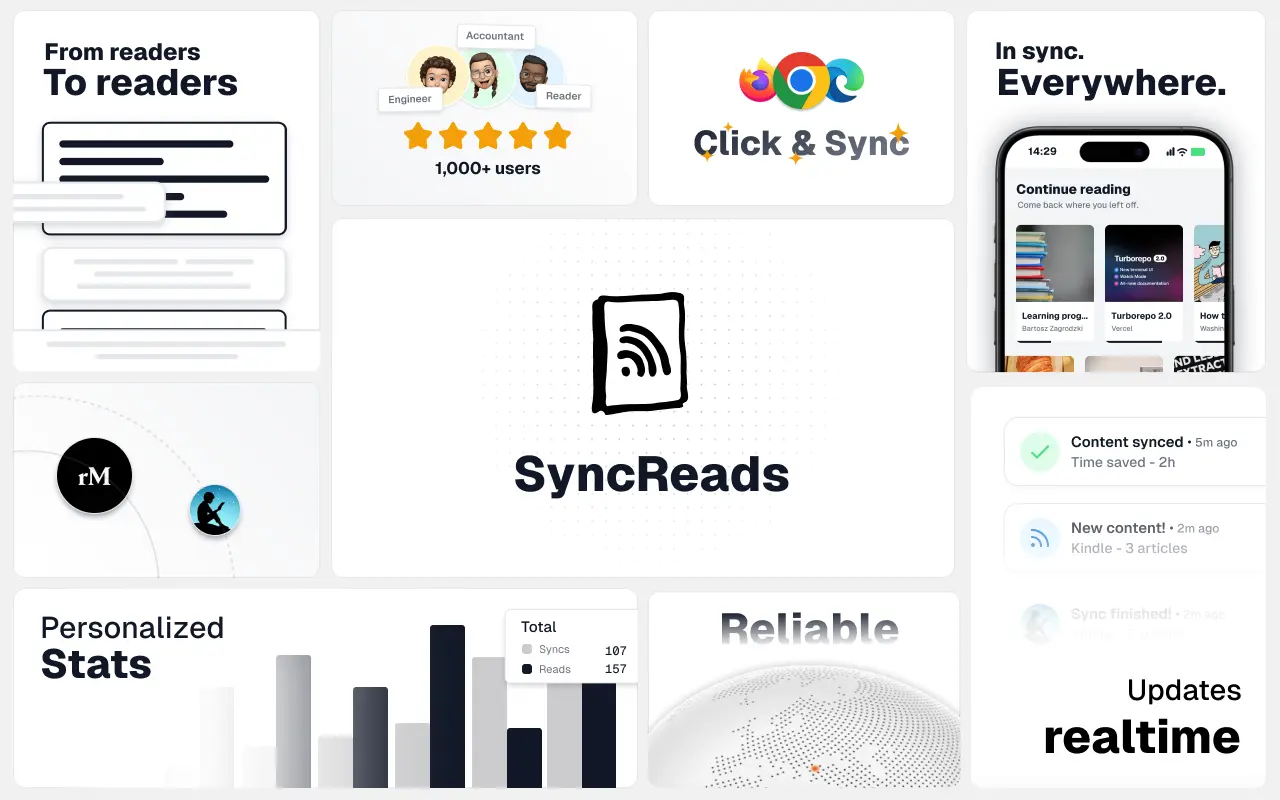
SyncReads
Sync your favorite content for distraction-free reading, save time and replace multiple apps. Anytime, anywhere 🔄
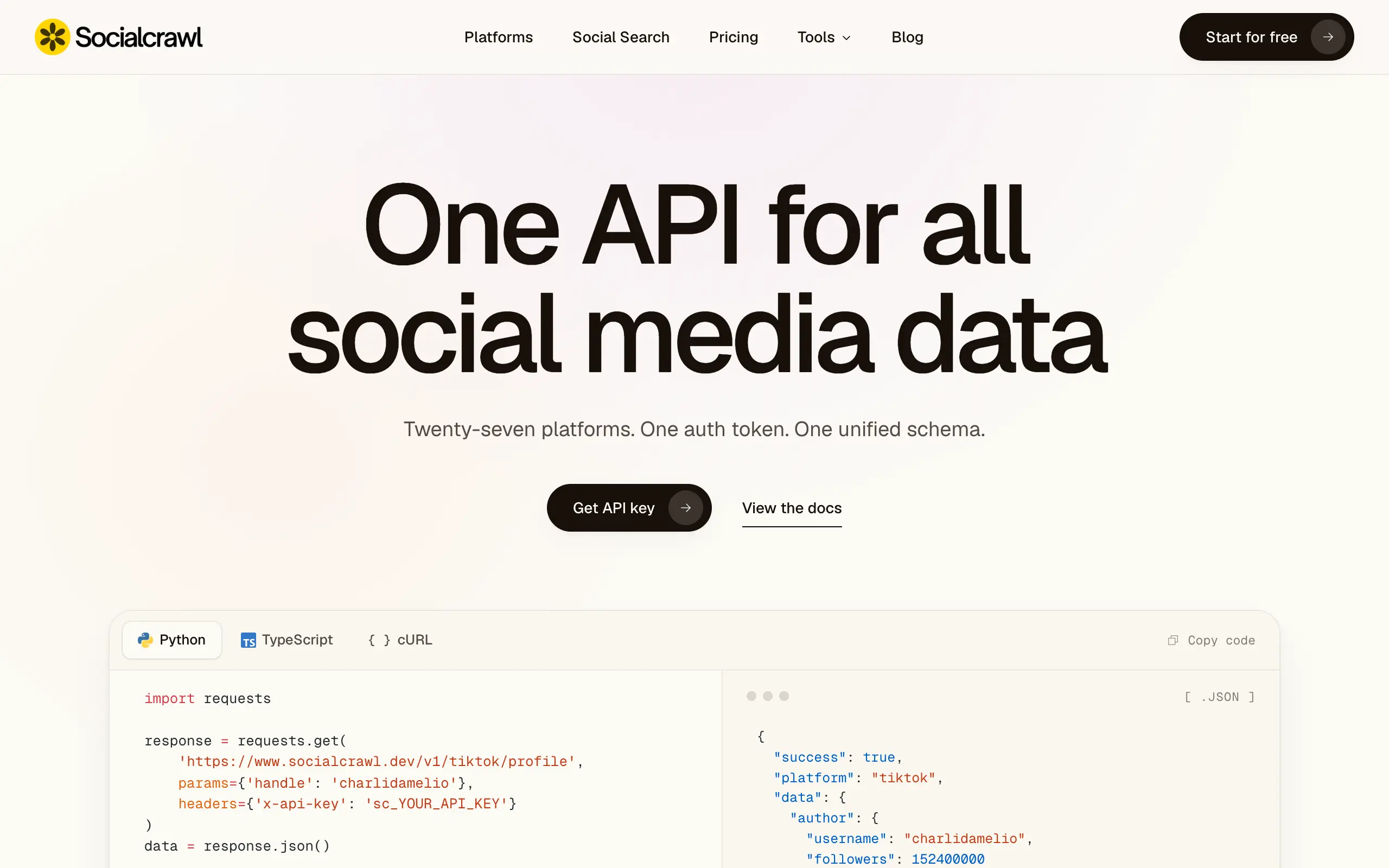
Socialcrawl
Get clean, structured data from 21 platforms like TikTok, Instagram, and YouTube with a single request 📊

Dotallio
Personalized AI apps that automate research, data extraction, and content creation without code 🤖
Shibui
AI website builder - describe your business, pick a niche template, edit by chatting, and publish instantly ✨
Pro Service
Find verified home service professionals, compare quotes, and pay securely through escrow - built for Brazilians across the US 🏠
RankGrow
Fix your SEO with AI agents - connect Search Console, get prioritized tasks, and grow organic traffic 📈
SyncReads
Sync your favorite content for distraction-free reading, save time and replace multiple apps. Anytime, anywhere 🔄
Socialcrawl
Get clean, structured data from 21 platforms like TikTok, Instagram, and YouTube with a single request 📊
Dotallio
Personalized AI apps that automate research, data extraction, and content creation without code 🤖
Shibui
AI website builder - describe your business, pick a niche template, edit by chatting, and publish instantly ✨
Pro Service
Find verified home service professionals, compare quotes, and pay securely through escrow - built for Brazilians across the US 🏠
RankGrow
Fix your SEO with AI agents - connect Search Console, get prioritized tasks, and grow organic traffic 📈
SyncReads
Sync your favorite content for distraction-free reading, save time and replace multiple apps. Anytime, anywhere 🔄
Socialcrawl
Get clean, structured data from 21 platforms like TikTok, Instagram, and YouTube with a single request 📊
Dotallio
Personalized AI apps that automate research, data extraction, and content creation without code 🤖
Shibui
AI website builder - describe your business, pick a niche template, edit by chatting, and publish instantly ✨
Pro Service
Find verified home service professionals, compare quotes, and pay securely through escrow - built for Brazilians across the US 🏠
RankGrow
Fix your SEO with AI agents - connect Search Console, get prioritized tasks, and grow organic traffic 📈
SyncReads
Sync your favorite content for distraction-free reading, save time and replace multiple apps. Anytime, anywhere 🔄
Socialcrawl
Get clean, structured data from 21 platforms like TikTok, Instagram, and YouTube with a single request 📊
Dotallio
Personalized AI apps that automate research, data extraction, and content creation without code 🤖

Talk to Santa
Enjoy a magical live video chat or receive a unique AI-generated video greeting from Santa Claus 🎅

pozywka.pl
Scalable blog for food journalist, focused on performance and user experience 🌭
zagrodzki.me
Personal blog and portfolio of Bart Zagrodzki, where he shares his knowledge and work 💼

TurboStarter
Ship your startup everywhere. In minutes.
HTML to Markdown
Convert HTML to Markdown with ease, directly in your browser 📄
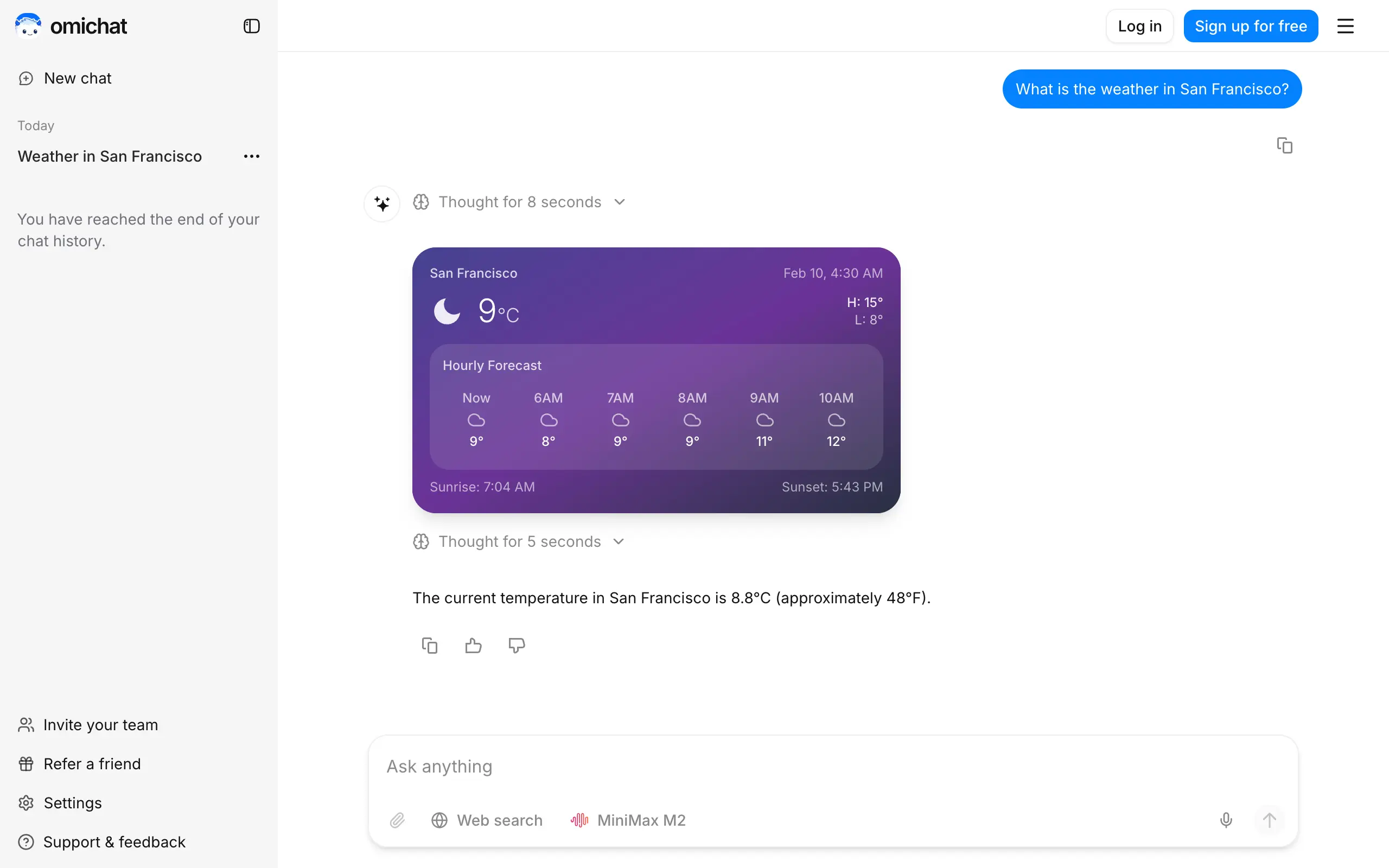
Omichat
Chat with 50+ AI models, including ChatGPT and Claude, in one place - switch models anytime without losing context 🤖
Talk to Santa
Enjoy a magical live video chat or receive a unique AI-generated video greeting from Santa Claus 🎅
pozywka.pl
Scalable blog for food journalist, focused on performance and user experience 🌭
zagrodzki.me
Personal blog and portfolio of Bart Zagrodzki, where he shares his knowledge and work 💼
TurboStarter
Ship your startup everywhere. In minutes.
HTML to Markdown
Convert HTML to Markdown with ease, directly in your browser 📄
Omichat
Chat with 50+ AI models, including ChatGPT and Claude, in one place - switch models anytime without losing context 🤖
Talk to Santa
Enjoy a magical live video chat or receive a unique AI-generated video greeting from Santa Claus 🎅
pozywka.pl
Scalable blog for food journalist, focused on performance and user experience 🌭
zagrodzki.me
Personal blog and portfolio of Bart Zagrodzki, where he shares his knowledge and work 💼
TurboStarter
Ship your startup everywhere. In minutes.
HTML to Markdown
Convert HTML to Markdown with ease, directly in your browser 📄
Omichat
Chat with 50+ AI models, including ChatGPT and Claude, in one place - switch models anytime without losing context 🤖
Talk to Santa
Enjoy a magical live video chat or receive a unique AI-generated video greeting from Santa Claus 🎅
pozywka.pl
Scalable blog for food journalist, focused on performance and user experience 🌭
zagrodzki.me
Personal blog and portfolio of Bart Zagrodzki, where he shares his knowledge and work 💼
TurboStarter
Ship your startup everywhere. In minutes.
HTML to Markdown
Convert HTML to Markdown with ease, directly in your browser 📄
Omichat
Chat with 50+ AI models, including ChatGPT and Claude, in one place - switch models anytime without losing context 🤖
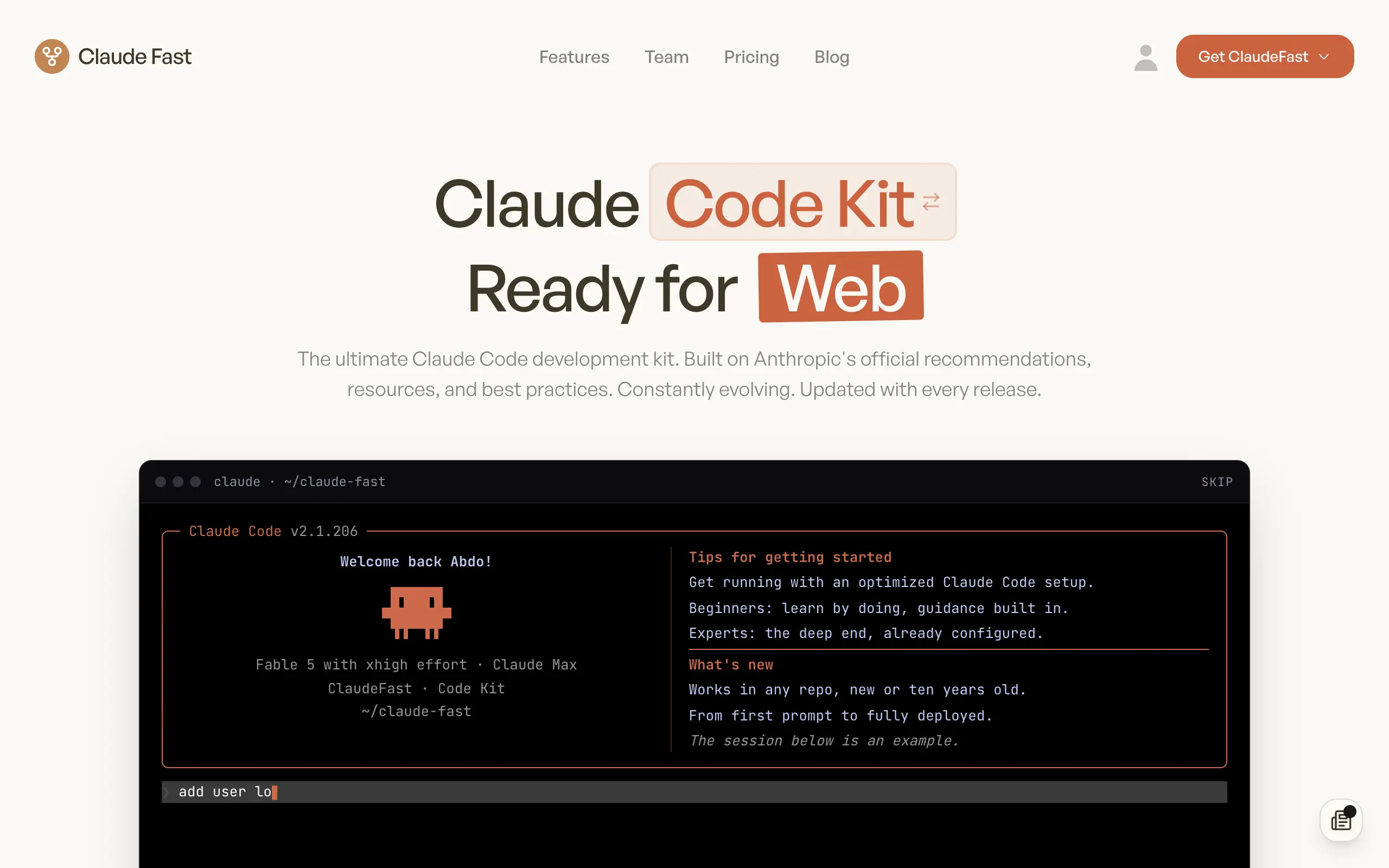
Claude Fast
Supercharge your Claude Code with 6x effective context window and specialized AI agents 🤖

EmojAI
AI-powered emoji picker with smart, context-aware suggestions 🤖

Solohacker
Autonomous company launcher - AI agents work 24/7, escalate what matters, and you stay in control 🤖

BeRawi: Storytelling Coach
Practice storytelling daily with instant feedback to sound clearer, more engaging, and confident 🎤
Claude Fast
Supercharge your Claude Code with 6x effective context window and specialized AI agents 🤖
EmojAI
AI-powered emoji picker with smart, context-aware suggestions 🤖
Solohacker
Autonomous company launcher - AI agents work 24/7, escalate what matters, and you stay in control 🤖
BeRawi: Storytelling Coach
Practice storytelling daily with instant feedback to sound clearer, more engaging, and confident 🎤
Claude Fast
Supercharge your Claude Code with 6x effective context window and specialized AI agents 🤖
EmojAI
AI-powered emoji picker with smart, context-aware suggestions 🤖
Solohacker
Autonomous company launcher - AI agents work 24/7, escalate what matters, and you stay in control 🤖
BeRawi: Storytelling Coach
Practice storytelling daily with instant feedback to sound clearer, more engaging, and confident 🎤
Claude Fast
Supercharge your Claude Code with 6x effective context window and specialized AI agents 🤖
EmojAI
AI-powered emoji picker with smart, context-aware suggestions 🤖
Solohacker
Autonomous company launcher - AI agents work 24/7, escalate what matters, and you stay in control 🤖
BeRawi: Storytelling Coach
Practice storytelling daily with instant feedback to sound clearer, more engaging, and confident 🎤

Connect with like-minded people
Join our community to get feedback, support, and grow together with 1,000+ builders on board, let's ship it!
Join usShip your startup everywhere. In minutes.
Don't burn tokens on setup and start building features on day one.