MarginSentinel
An AI margin monitor that connects purchase costs and sales prices, detecting profit leaks and suggesting price changes before margins erode.
MarginSentinel is an AI margin monitor built for businesses that sell physical products, bundles, subscriptions, or services with variable costs. Its core purpose is simple but commercially critical: connect purchase costs with sales prices, identify margin erosion early, and recommend practical price or sourcing actions before profitability leaks become a larger financial problem.
Many companies know their revenue, but far fewer can see their true gross margin in near real time. Finance teams may work from monthly reports. Ecommerce managers may rely on outdated supplier spreadsheets. Sales teams may discount products without understanding their current landed cost. The result is a silent loss of profit that often goes unnoticed until month-end reporting, inventory reviews, or annual planning.
An AI margin monitoring platform like MarginSentinel turns scattered cost and sales data into an operating system for profit protection. Rather than asking teams to manually compare vendor invoices, shipping changes, discount activity, marketplace fees, and selling prices, the product continuously monitors the relationship between cost and revenue.
The central opportunity
MarginSentinel should position itself as a profit-protection platform, not simply another analytics dashboard. Its value is in detecting margin risk early and helping teams decide what to do next.
Why AI margin monitoring software matters now
Margin management has become more difficult as businesses operate across more sales channels, more suppliers, and more volatile cost structures. Companies may sell through a direct ecommerce store, online marketplaces, wholesale partners, point-of-sale systems, and regional distributors. Each channel can have different fees, discounts, return rates, taxes, shipping rules, and fulfillment costs.
At the same time, purchase prices can move quickly. Supplier negotiations, foreign exchange shifts, commodity pricing, freight costs, packaging changes, and minimum order quantities all influence the actual cost of goods sold. A product that was profitable last quarter can become a low-margin or loss-making product without a visible warning.
Traditional business intelligence tools can display historical margin data, but they often depend on manual data preparation and fixed reporting cycles. A modern AI margin monitor should do more than chart performance. It should:
- Detect unusual margin changes as they happen
- Reconcile cost and sales data across systems
- Explain the likely drivers behind a margin decline
- Forecast the impact of cost and pricing changes
- Recommend a prioritized action for each risk
- Route alerts to the person who can act on them
This need is especially strong in industries where product-level decisions move quickly. Ecommerce brands, wholesalers, retailers, distributors, manufacturers, food and beverage businesses, and multi-location operators all face a version of the same challenge. They need to protect gross margin without slowing down sales, purchasing, or merchandising teams.
Target audience for MarginSentinel
The strongest early-market strategy is to avoid building for every company with financial data. MarginSentinel should focus on teams where changing costs and fragmented pricing create an urgent, measurable problem.
Ecommerce brands with growing SKU catalogs
Direct-to-consumer and omnichannel ecommerce brands are an ideal initial segment. These businesses commonly use platforms such as Shopify, marketplaces, third-party logistics providers, payment processors, and separate accounting systems.
Their teams often understand headline revenue but struggle to calculate fully loaded, SKU-level profitability. A small increase in landed cost or a marketplace fee update can materially change margin, particularly for products with thin contribution margins.
Common signals that an ecommerce brand is a high-quality customer include:
- More than 100 actively sold SKUs
- Multiple suppliers or international purchasing
- Frequent promotions and discount codes
- More than one selling channel
- Recurring concerns about advertising profitability
- Inventory planning managed in spreadsheets
- Finance reporting that arrives after decisions have already been made
For this audience, MarginSentinel can provide daily answers to questions such as:
- Which SKUs have crossed below their target gross margin?
- Which discount campaigns are reducing contribution margin too far?
- Which supplier cost increases require a retail price review?
- Which channel generates revenue but produces weak net profit?
- Which product variants should be bundled, repriced, or paused?
Wholesale distributors and importers
Distributors often manage thousands of products, complex customer pricing agreements, supplier catalogs, rebates, freight, and minimum-order constraints. Their margin risk is not limited to a public list price. It can come from contract pricing, sales representative discounts, special terms, backorders, and unallocated freight.
MarginSentinel can become particularly valuable when it combines invoice-level purchase costs with customer-level sales pricing. A distributor can then identify where a previously profitable customer-product combination has become commercially unsustainable.
The platform should support workflows such as:
- Monitoring gross margin by customer, region, product family, and sales representative
- Comparing vendor cost changes with contract pricing commitments
- Flagging quotes that are likely to fall below approved margin floors
- Identifying suppliers whose price changes have the largest revenue impact
- Prioritizing price reviews based on expected recoverable profit
Multi-channel retailers and marketplace sellers
Retailers selling through stores, ecommerce, and marketplaces have a more complicated version of margin analysis. Channel fees, returns, fulfillment costs, and promotional rules can make identical products have very different economics by channel.
A marketplace seller may see positive product margin before advertising and platform fees but negative contribution margin afterward. MarginSentinel should give these operators a channel-aware profitability view rather than treating every sale as equivalent.
CFOs, finance leaders, and fractional finance teams
The economic buyer may be a chief financial officer, finance director, controller, or outsourced finance leader. These users care about governance, forecast accuracy, reporting confidence, and profitability discipline.
They do not necessarily want another dashboard that requires manual interpretation. They want a system that highlights material exceptions, explains the reason for each alert, and creates a defensible audit trail of pricing and cost decisions.
Economic buyer
CFOs and finance leaders who need trustworthy visibility into gross margin, cost changes, and exposure.
Daily operator
Ecommerce, pricing, purchasing, and category teams that need clear action recommendations.
Internal champion
Analysts who currently reconcile costs and revenue manually in spreadsheets every week.
The market gap MarginSentinel can own
The market has no shortage of accounting platforms, ecommerce analytics tools, inventory systems, and business intelligence products. The gap is the operational layer between data visibility and margin action.
Accounting platforms are systems of record. They are important for compliant financial reporting, but they may not surface granular and timely commercial margin risk. Ecommerce analytics tools often focus on acquisition, conversion, retention, and advertising performance. Inventory tools focus on stock availability, purchasing, and replenishment. General business intelligence tools can visualize almost anything, but someone must build and maintain the data model.
MarginSentinel can occupy the category of AI-powered margin intelligence.
Its differentiated promise should be:
Detect the products, channels, customers, and supplier changes that threaten profit, then recommend the most valuable action before the loss compounds.
This positioning is stronger than generic phrases such as “profitability dashboard” because it emphasizes monitoring, early warning, and action.
The hidden cost of spreadsheet-based margin analysis
Most companies do not lack data. They lack reliable, connected data at the moment they need to make a pricing or purchasing decision.
A common spreadsheet workflow looks like this:
- Export sales reports from an ecommerce or ERP platform.
- Download supplier invoices or update a purchase-cost worksheet.
- Attempt to match product names, SKUs, and variants.
- Estimate shipping, payment, warehouse, or marketplace costs.
- Compare results to a target margin.
- Email a report after the period has ended.
This process is slow, hard to audit, and vulnerable to errors. It also gives teams a backward-looking answer. By the time a spreadsheet identifies a problem, dozens or hundreds of low-margin orders may already have occurred.
MarginSentinel should replace this periodic reporting process with a persistent margin surveillance workflow.
Core features for an AI margin monitor
A successful MVP should establish trust in the numbers before expanding into advanced automation. Margin recommendations will only be useful if customers believe the underlying product, cost, and transaction data is correct.
Unified cost and sales data connections
The product needs connectors that collect both sides of the margin equation.
On the revenue side, MarginSentinel should ingest:
- Orders and refunds
- Product and variant data
- Selling prices and discounts
- Sales channel information
- Customer or customer-group details
- Taxes where relevant to the customer’s margin definition
- Marketplace commissions and transaction fees
On the cost side, it should ingest:
- Supplier invoices
- Purchase orders
- Historical unit costs
- Freight and duty allocations
- Packaging and fulfillment costs
- Vendor rebates or volume discounts
- Currency conversion information
- Inventory receiving records
The platform should begin with the integrations most common for its chosen vertical. For ecommerce, that might mean Shopify, accounting software, spreadsheets, and CSV imports. For distributors, the priorities may be an ERP, accounting package, and purchase order system.
SKU and product matching engine
Data matching is not glamorous, but it is central to the product’s credibility. Supplier invoices rarely mirror the clean product names used on storefronts. One SKU may have multiple vendor codes, bundles may combine multiple components, and variants may differ in size, color, packaging, or region.
MarginSentinel should include a matching engine that supports:
- Exact matching through SKU, UPC, EAN, or internal product IDs
- Mapping rules for supplier-specific item codes
- Bundle and kit cost rollups
- Effective-date cost history
- Manual review queues for ambiguous matches
- Confidence scores for automated mappings
- Full audit history for every mapping change
A useful UX pattern is to show a matching confidence score and distinguish verified records from inferred records. Users should never be left wondering whether a margin alert is based on a confirmed cost or a system assumption.
Real-time margin calculation
The core calculation should be configurable because “margin” is interpreted differently across industries. MarginSentinel should not force every customer into one fixed formula.
At a basic level:
const grossMargin = (netRevenue - costOfGoodsSold) / netRevenue;

const contributionMargin =
  (netRevenue - costOfGoodsSold - channelFees - fulfillmentCosts) / netRevenue;
The platform should allow customers to define:
- "Revenue basis": gross sales, net sales, or revenue excluding tax
- "Cost basis": standard cost, latest cost, weighted average cost, or invoice-level cost
- "Margin type": gross margin, contribution margin, or custom contribution model
- "Alert threshold": a percentage, currency amount, or variance from expected margin
- "Cost allocation": per unit, shipment, order, product family, or configurable rule
This configurability is essential. A finance team may evaluate gross margin using accounting cost of goods sold, while an ecommerce operator may need contribution margin after fulfillment and channel fees.
Margin leak detection and anomaly alerts
This feature is the heart of the AI margin monitor. MarginSentinel should identify meaningful changes, not simply notify users about every fluctuation.
The alert system should detect:
- Cost increases that reduce margin below a target threshold
- Selling price reductions without a corresponding cost decrease
- Discount codes that create negative contribution margin
- Channel fee changes affecting net profitability
- Customer-specific pricing that violates commercial guardrails
- Product bundles with unexpectedly weak margins
- Cost discrepancies between purchase orders and vendor invoices
- Return patterns that materially lower net margin
- Product variants that underperform the parent product
- Sudden changes compared with a product’s historical margin pattern
The system should rank alerts using a combination of severity, expected financial impact, confidence, and urgency. A 2 percent margin decline on a low-volume SKU should not receive the same priority as a 2 percent decline on a top-selling product.
| Margin signal | Likely cause | Business impact | Recommended action | Priority |
|---|---|---|---|---|
| Unit cost rises | Supplier invoice increase | Gross profit declines | Review price or supplier terms | High |
| Promotion margin drops | Discount exceeds allowance | Negative contribution risk | Adjust offer or exclusion rules | High |
| Channel margin differs | Fees or fulfillment costs change | Unprofitable channel growth | Reprice or change channel mix | Medium |
AI recommendations with transparent reasoning
AI-generated recommendations should be explainable, constrained, and tied to the customer’s own rules. Generic advice such as “increase price by 10 percent” is not enough. Pricing actions affect demand, positioning, customer relationships, contracts, and competitive dynamics.
Every recommendation should show:
- The affected product, customer, supplier, or channel
- The observed margin change
- The likely drivers behind the change
- The financial exposure if no action is taken
- A suggested action and its projected recovery
- The assumptions used in the projection
- A confidence level
- The option to approve, dismiss, snooze, or assign the recommendation
For example, MarginSentinel might state that a supplier cost increase reduced a SKU’s gross margin from 48 percent to 39 percent. It could recommend testing a price increase that restores a 45 percent target margin, while clearly noting that the recommendation assumes stable unit sales.
This creates a more trustworthy product experience than presenting AI output as certainty.
Avoid autonomous price changes in the first release
MarginSentinel should recommend and simulate price changes before it automatically publishes them. Most businesses need approval workflows, brand controls, and clear accountability for commercial decisions.
What-if pricing and cost simulations
Simulation makes the platform useful even when no alert has fired. Users should be able to model an upcoming supplier increase, proposed promotion, exchange-rate movement, or price adjustment before implementing it.
A robust scenario planner can answer:
- What happens if supplier cost rises by 8 percent?
- How much must a product price change to return to target margin?
- Which products need action first to protect the most gross profit?
- What is the expected margin impact of a sitewide discount?
- Which channel remains profitable after marketplace fees?
- Can a bundle offset the margin weakness of an individual product?
This feature moves MarginSentinel from reporting software into a decision-support product.
Collaboration, approvals, and audit trails
Margin protection is cross-functional. Finance may identify an issue, purchasing may negotiate a new cost, merchandising may revise pricing, and ecommerce may update the storefront.
The product should include workflows for assignment, comments, status tracking, and approvals. A clear audit log can show who reviewed an alert, what action was selected, and whether the risk was resolved.
This creates value for finance and enterprise buyers because it supports governance as well as analysis.
Recommended technology stack for MarginSentinel
The technical architecture should support secure integrations, accurate data processing, explainable AI, and scalable analytics. It does not need unnecessary complexity in the earliest version.
Frontend and application layer
A practical SaaS stack could use Next.js with React for the web application. This combination supports server-rendered marketing pages, authenticated dashboards, API routes, and a mature ecosystem.
Tailwind CSS is a strong choice for building a consistent interface quickly. Margin analysis software benefits from dense but understandable tables, filters, alerts, drill-down views, and responsive dashboards. A utility-first system can help the product team iterate without introducing inconsistent visual patterns.
For charts, teams should choose a library that supports accessible interactive data visualization and can handle time series, comparisons, and drill-down states. The best choice depends on the desired customization level and the amount of data rendered in the browser.
Data storage and analytics architecture
PostgreSQL is a reliable starting point for core application data, user accounts, organizations, product mappings, alert rules, approval state, and audit logs.
For high-volume transaction analytics, the team may eventually add a columnar warehouse or analytics database. This can make recurring margin calculations, historical comparisons, and anomaly detection more efficient as order counts grow.
A sensible architecture separates:
- Operational application records
- Raw imported source data
- Normalized sales and cost facts
- Derived margin calculations
- Alert and recommendation outputs
- Immutable audit events
This separation makes it easier to reprocess data when mapping rules change, correct a cost allocation, or add a new source integration.
Background jobs and ingestion pipeline
Cost and sales ingestion should operate asynchronously. External APIs can fail, return incomplete data, or enforce rate limits. MarginSentinel needs retry logic, idempotent processing, monitoring, and alerting around every connector.
Background job queues should handle:
- Scheduled imports
- Webhook processing
- Historical backfills
- Product matching tasks
- Recalculation after cost changes
- Alert evaluation
- Report generation
- Recommendation generation
The important trade-off is freshness versus cost. Not every customer needs real-time recalculation for every product. The platform can offer different update frequencies by plan, while using webhooks for high-value events such as order creation, price changes, and supplier cost updates.
AI layer and model design
Generative AI is useful for explaining insights, drafting recommendations, summarizing trends, and answering natural-language questions about margin data. However, it should not be the source of truth for financial calculations.
The recommended architecture is:
- Calculate margins with deterministic, versioned rules.
- Detect anomalies using statistical or machine learning methods.
- Retrieve relevant records, policies, and calculations.
- Use an LLM to generate a concise explanation and recommended next step.
- Display supporting evidence and allow human review.
This approach reduces hallucination risk. The model should receive structured calculations, not be asked to infer financial values from raw text.
For advanced anomaly detection, early versions can use baselines such as rolling averages, threshold rules, and seasonally adjusted comparisons. As the product collects more customer-specific data, it can introduce models that account for product seasonality, channel behavior, promotions, and expected supplier cost patterns.
Security and financial data controls
Trust is non-negotiable for margin management software. MarginSentinel will hold commercially sensitive data including supplier costs, pricing policies, product performance, and potentially customer records.
The platform should implement:
- Encryption in transit and at rest
- Role-based access controls
- Multi-factor authentication for privileged users
- Tenant isolation
- API credential encryption
- Audit logs for sensitive changes
- Data retention controls
- Export and deletion workflows
- Secure webhook verification
- Regular backup and recovery testing
As the company moves upmarket, it should prepare for customer security questionnaires and a formal compliance roadmap. Customers will expect clear documentation around data handling, AI processing, access controls, and subprocessors.
Monetization strategy for AI margin monitoring software
MarginSentinel has a strong value-based pricing opportunity because it can connect directly to recovered gross profit. The best pricing model should reflect the complexity and value of the customer’s data environment without punishing growth too aggressively.
Recommended hybrid pricing model
A hybrid subscription model can include a platform fee plus a usage dimension based on connected sales volume, order volume, active SKUs, or monitored revenue.
Potential plans include:
- "Starter": for smaller ecommerce brands with one sales channel, limited integrations, and basic alerts
- "Growth": for multi-channel brands that need margin simulations, advanced rules, and collaboration workflows
- "Scale": for distributors and larger operators needing customer-level pricing, custom integrations, and enhanced support
- "Enterprise": for advanced security controls, single sign-on, dedicated onboarding, custom data models, and service-level commitments
Avoid a purely seat-based model. The product’s value reaches finance, purchasing, pricing, and operations teams, so charging per user can discourage broad adoption. A base platform fee plus business-scale metric is easier to align with value.
Premium expansion opportunities
High-margin add-ons can include:
- Automated vendor invoice extraction and normalization
- Advanced scenario planning
- Multi-entity and multi-currency reporting
- Custom ERP integrations
- Pricing approval workflows
- Forecasting and budget variance analysis
- Dedicated margin analyst services
- Benchmarking based on anonymized and permissioned data
A managed implementation package is particularly attractive during the early stage. It helps customers clean their data, establish target margins, and configure alert policies. It also gives the MarginSentinel team direct insight into recurring implementation problems that should become product features.
Competitive advantage and defensibility
MarginSentinel should not attempt to beat general-purpose accounting systems at bookkeeping or general-purpose BI tools at visualization. Its advantage comes from owning the margin decision workflow.
The strongest moat is a combination of:
- Product-level cost and revenue normalization
- Industry-specific margin logic
- Historical mappings and customer-approved data rules
- Alert relevance tuned to business impact
- Action workflows tied to real commercial decisions
- A growing library of explainable recommendation patterns
The product becomes harder to replace as it learns how a customer defines costs, handles bundles, allocates freight, structures customer pricing, and approves commercial decisions.
How MarginSentinel differs from adjacent tools
Accounting systems are essential systems of record. They provide financial controls and period reporting, but they are not always designed to monitor SKU-level cost changes or recommend pricing actions in an operational workflow.
Business intelligence tools are flexible and powerful. They require data models, dashboards, maintenance, and analyst time. They often show a problem but do not provide a prebuilt workflow to prioritize, explain, and resolve margin leaks.
MarginSentinel is purpose-built for profit protection. It connects costs and selling prices, detects material changes, and turns financial signals into accountable commercial actions.
The unique selling proposition should remain focused and memorable:
MarginSentinel finds where profit is leaking and tells your team what to do before the loss becomes routine.
Key risks and practical mitigation
Every financial analytics SaaS product faces risks around data quality, customer trust, integration depth, and implementation time. Addressing these early is part of building a credible business.
Data quality and cost allocation complexity
The largest product risk is not AI accuracy. It is incomplete, inconsistent, or ambiguous cost data. If an invoice is missing, a bundle is mapped incorrectly, or freight allocation is unclear, the displayed margin may be misleading.
Mitigation should include:
- A visible data-quality score by integration and product group
- Clear separation between actual, estimated, and missing cost data
- Review queues for low-confidence product mappings
- Customer-configurable allocation rules
- Recalculation history when costs or mappings change
- Implementation checklists for finance owners
- Alerts that include confidence and source-data coverage
Recommendation trust and pricing sensitivity
Users may resist AI pricing recommendations, especially if they fear volume loss or customer backlash. The product should frame AI as decision support, not an unchallengeable authority.
Mitigate this risk with simulations, explicit assumptions, human approval flows, and recommendation explanations. Start with clear use cases such as flagging a known supplier increase rather than attempting to optimize every product price automatically.
Integration dependency
External systems can change APIs, restrict data access, or behave inconsistently. MarginSentinel should avoid relying on one integration path for all customers.
Use a layered integration strategy that includes direct APIs, secure file uploads, spreadsheet templates, and eventually partner integrations. CSV support may feel less elegant, but it is strategically valuable for onboarding customers with legacy systems.
Long time to value
If it takes months to configure a margin model, smaller businesses may churn before realizing value. The early product should focus on a narrow “first value” moment.
For example, a new ecommerce customer should be able to connect sales data, upload current product costs, set a target margin, and see its top at-risk SKUs within days rather than weeks.
Identify a small number of high-revenue products whose current costs or discounts have pushed them below an agreed target margin. The finding should be traceable to source data and easy for a business owner to validate.
No. It should complement accounting and ERP systems by providing a faster operational layer for margin monitoring, investigation, and commercial action.
Only after MarginSentinel has earned trust with accurate alerts, simulations, approval workflows, and clearly defined customer guardrails.
Go-to-market strategy and validation plan
The fastest route to product-market fit is a focused vertical launch. Start with a segment where data sources are relatively consistent and margin pain is immediate.
A promising wedge is mid-market Shopify brands that import products, run promotions, and have enough SKU complexity to outgrow spreadsheets. This group can often validate the core workflow quickly because order data is accessible and decision-makers understand gross margin pressure.
Founder-led customer discovery
Before extensive engineering, interview at least 20 potential users across finance, ecommerce, purchasing, and operations. Ask for examples of recent margin surprises rather than hypothetical opinions.
Useful discovery questions include:
- Walk me through the last time a supplier cost change affected profitability.
- How do you calculate product margin today?
- Which systems contain your sales price and purchase cost data?
- How long does it take to identify a margin issue?
- Who approves price changes?
- What action do you take when a product falls below target margin?
- Which margin reports do you trust least and why?
- What would make you hesitate to connect your data to a new platform?
The goal is to uncover language customers already use. If they consistently say “landed cost,” “contribution margin,” “price leakage,” or “unprofitable SKUs,” those terms should shape the website copy, onboarding, dashboard labels, and SEO strategy.
Content and SEO strategy
The primary keyword should be AI margin monitor, supported by natural related terms such as:
- Margin monitoring software
- Profit leak detection
- Gross margin analytics
- Product profitability software
- SKU profitability analysis
- Pricing intelligence platform
- Landed cost tracking
- Ecommerce margin calculator
- Margin erosion detection
- Contribution margin dashboard
High-intent content should solve specific operational problems. Examples include guides about detecting margin erosion, calculating landed cost, analyzing SKU profitability, and setting pricing guardrails for promotions.
The strongest content should include formulas, practical examples, screenshots, implementation checklists, and anonymized customer stories once available. For industry statistics, reference reputable sources such as public company filings, government trade data, recognized accounting bodies, or established consulting research. Cite the original report directly when publishing, rather than relying on unattributed market claims.
Actionable implementation steps
MarginSentinel should be built in focused phases. The initial objective is not a complete finance suite. It is a trusted system that detects high-value margin leaks for a clearly defined customer segment.
The development process can move faster with a production-ready SaaS foundation that already includes authentication, billing, organizations, dashboard patterns, and deployment structure. TurboStarter can help reduce setup time so the team can focus on MarginSentinel’s differentiating capabilities such as cost normalization, margin logic, integrations, and alert workflows.
Final perspective
MarginSentinel has the potential to become a high-value AI finance operations product because it targets a problem businesses already feel in their profit and loss statements. Revenue growth is visible and celebrated. Margin erosion is often fragmented across suppliers, promotions, fulfillment costs, customer pricing, and channel fees.
That invisibility is the opportunity.
The winning version of this AI margin monitor will not be the one with the most charts or the most aggressive automation. It will be the platform that users trust when a decision matters. It will accurately connect cost and sales data, identify the risks worth acting on, explain why they matter, and make the next step clear.
By starting with a narrow vertical, prioritizing data trust, and treating AI as an explainable decision-support layer, MarginSentinel can build a defensible position in margin monitoring software and become an essential part of how growing companies protect profit.
More 🤖 AI Startup SaaS ideas
Discover more innovative ai startup SaaS ideas that are trending in 2026. Each idea is AI-generated with market validation and growth potential to help you find your next profitable venture faster than competitors.
Your competitors are building with TurboStarter
Below are some of the SaaS ideas that have been generated and built with our starter kit.
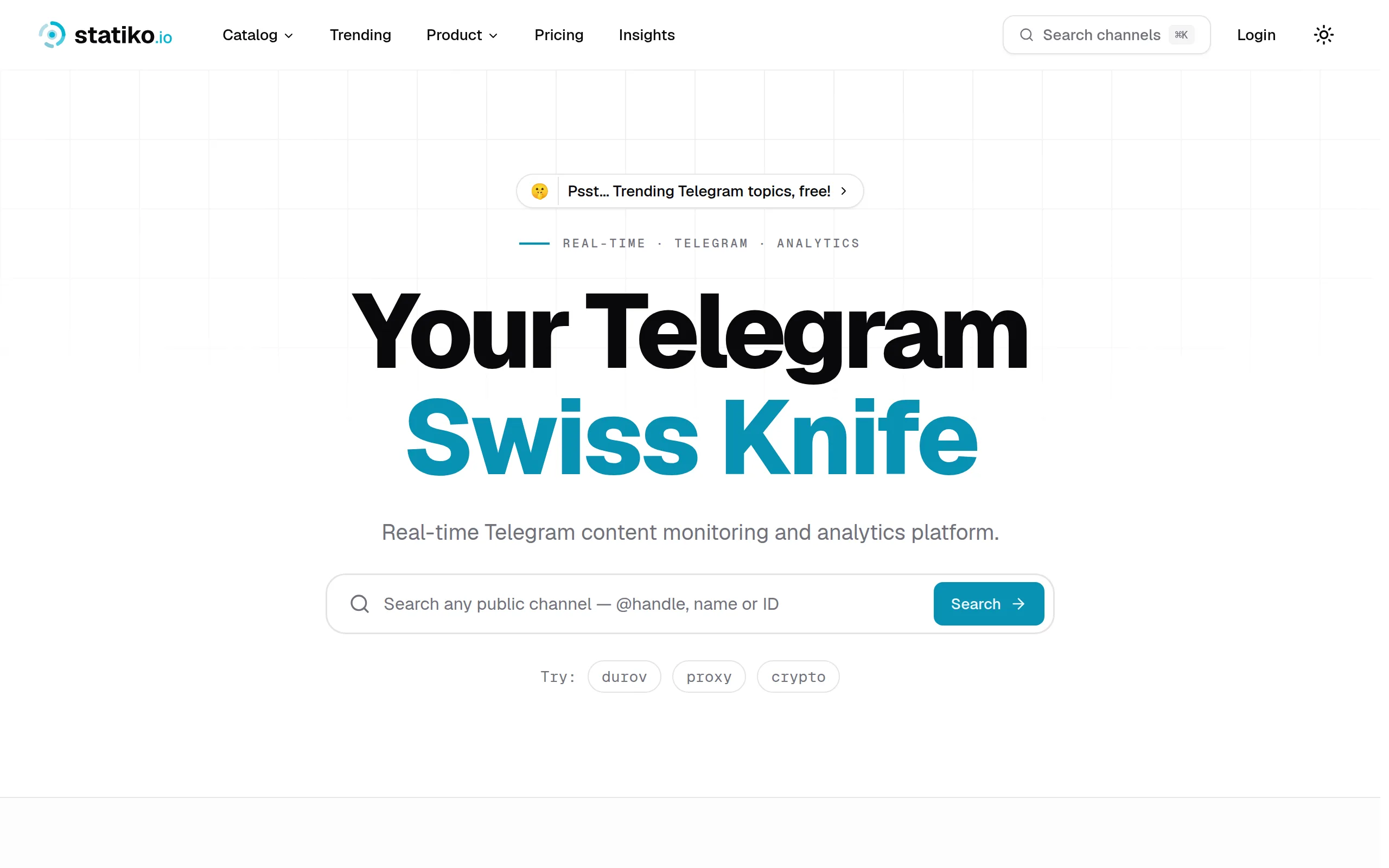
Statiko
Monitor any Telegram channel in real time - track posts, edits, deletions, and growth with AI recaps 📡

Shibui
AI website builder - describe your business, pick a niche template, edit by chatting, and publish instantly ✨

Pro Service
Find verified home service professionals, compare quotes, and pay securely through escrow - built for Brazilians across the US 🏠
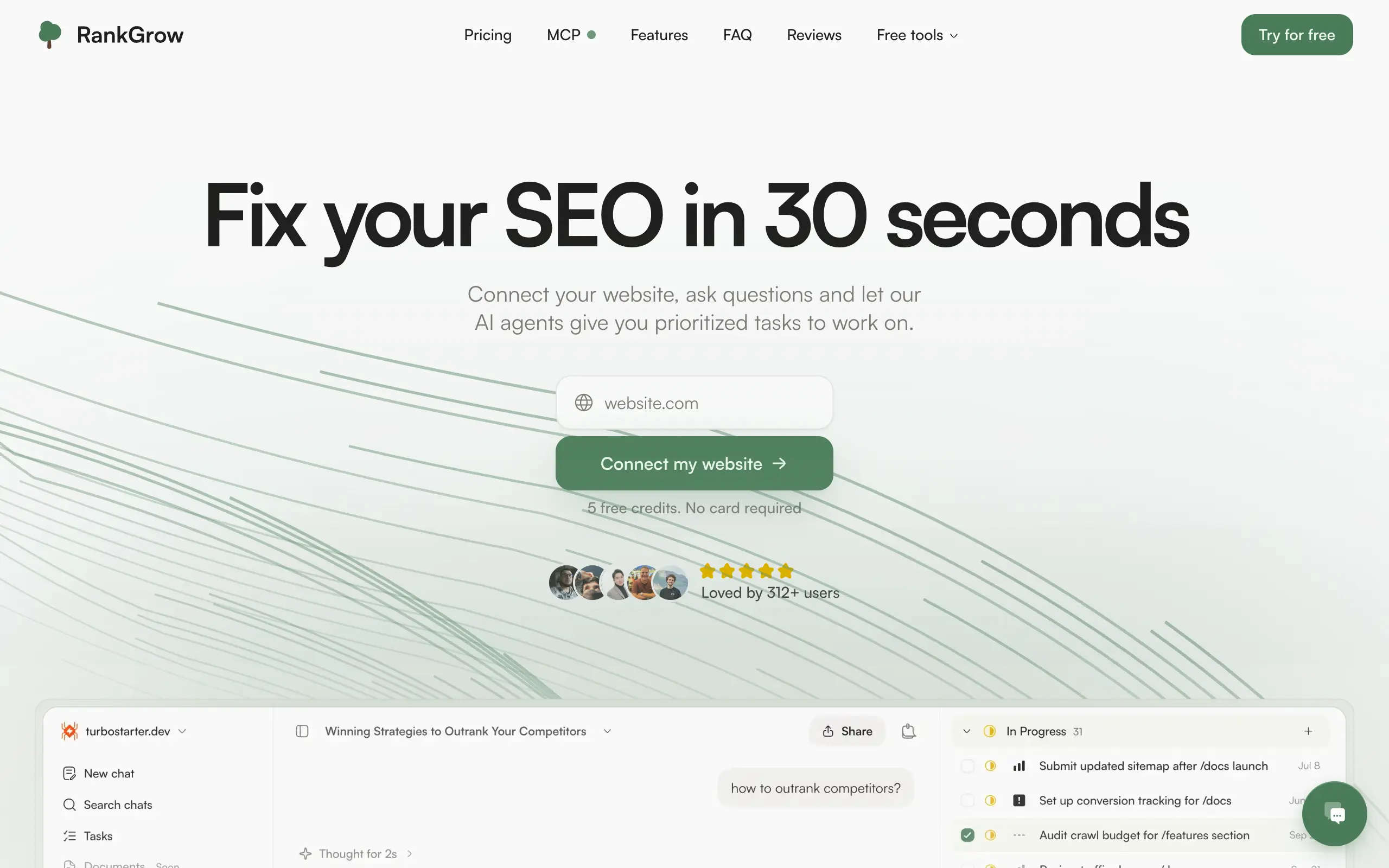
RankGrow
Fix your SEO with AI agents - connect Search Console, get prioritized tasks, and grow organic traffic 📈
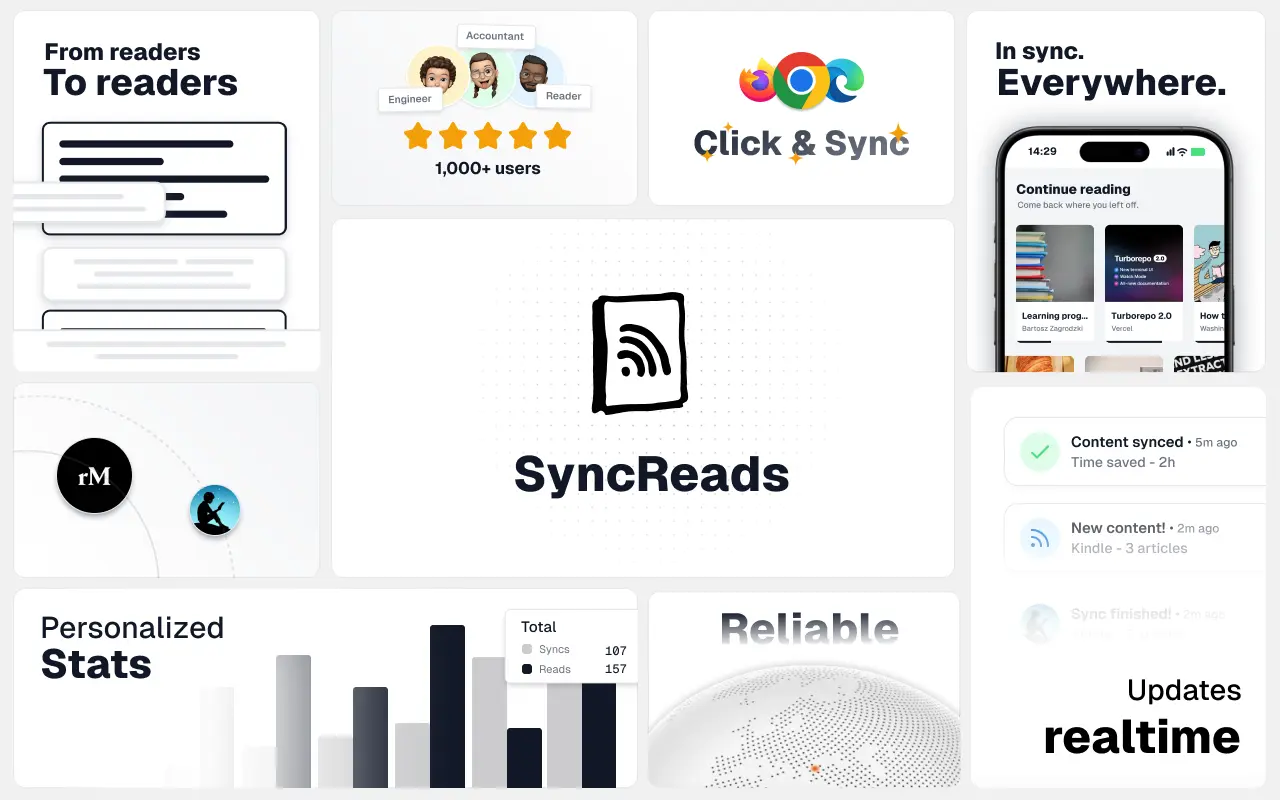
SyncReads
Sync your favorite content for distraction-free reading, save time and replace multiple apps. Anytime, anywhere 🔄
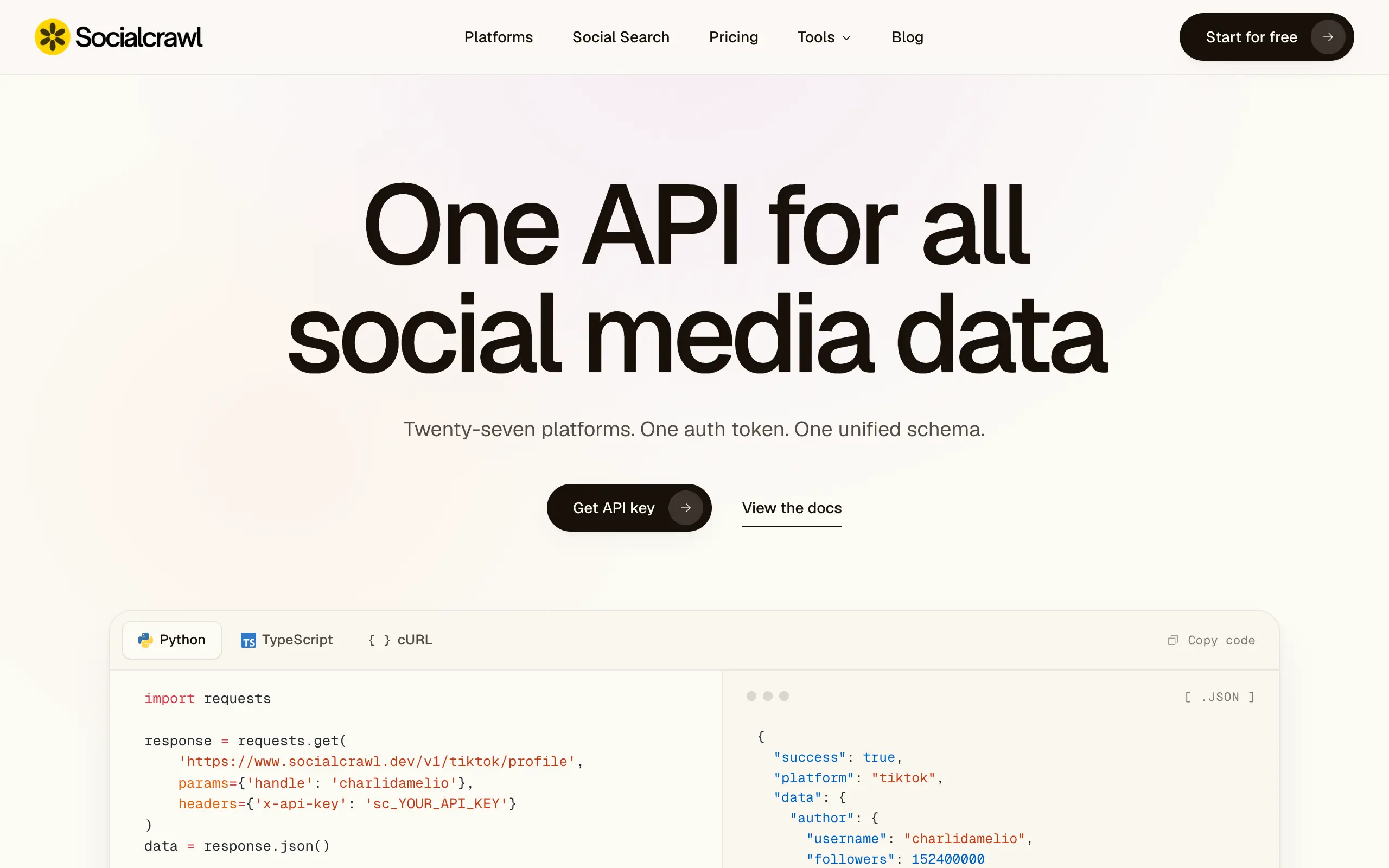
Socialcrawl
Get clean, structured data from 21 platforms like TikTok, Instagram, and YouTube with a single request 📊
Statiko
Monitor any Telegram channel in real time - track posts, edits, deletions, and growth with AI recaps 📡
Shibui
AI website builder - describe your business, pick a niche template, edit by chatting, and publish instantly ✨
Pro Service
Find verified home service professionals, compare quotes, and pay securely through escrow - built for Brazilians across the US 🏠
RankGrow
Fix your SEO with AI agents - connect Search Console, get prioritized tasks, and grow organic traffic 📈
SyncReads
Sync your favorite content for distraction-free reading, save time and replace multiple apps. Anytime, anywhere 🔄
Socialcrawl
Get clean, structured data from 21 platforms like TikTok, Instagram, and YouTube with a single request 📊
Statiko
Monitor any Telegram channel in real time - track posts, edits, deletions, and growth with AI recaps 📡
Shibui
AI website builder - describe your business, pick a niche template, edit by chatting, and publish instantly ✨
Pro Service
Find verified home service professionals, compare quotes, and pay securely through escrow - built for Brazilians across the US 🏠
RankGrow
Fix your SEO with AI agents - connect Search Console, get prioritized tasks, and grow organic traffic 📈
SyncReads
Sync your favorite content for distraction-free reading, save time and replace multiple apps. Anytime, anywhere 🔄
Socialcrawl
Get clean, structured data from 21 platforms like TikTok, Instagram, and YouTube with a single request 📊
Statiko
Monitor any Telegram channel in real time - track posts, edits, deletions, and growth with AI recaps 📡
Shibui
AI website builder - describe your business, pick a niche template, edit by chatting, and publish instantly ✨
Pro Service
Find verified home service professionals, compare quotes, and pay securely through escrow - built for Brazilians across the US 🏠
RankGrow
Fix your SEO with AI agents - connect Search Console, get prioritized tasks, and grow organic traffic 📈
SyncReads
Sync your favorite content for distraction-free reading, save time and replace multiple apps. Anytime, anywhere 🔄
Socialcrawl
Get clean, structured data from 21 platforms like TikTok, Instagram, and YouTube with a single request 📊
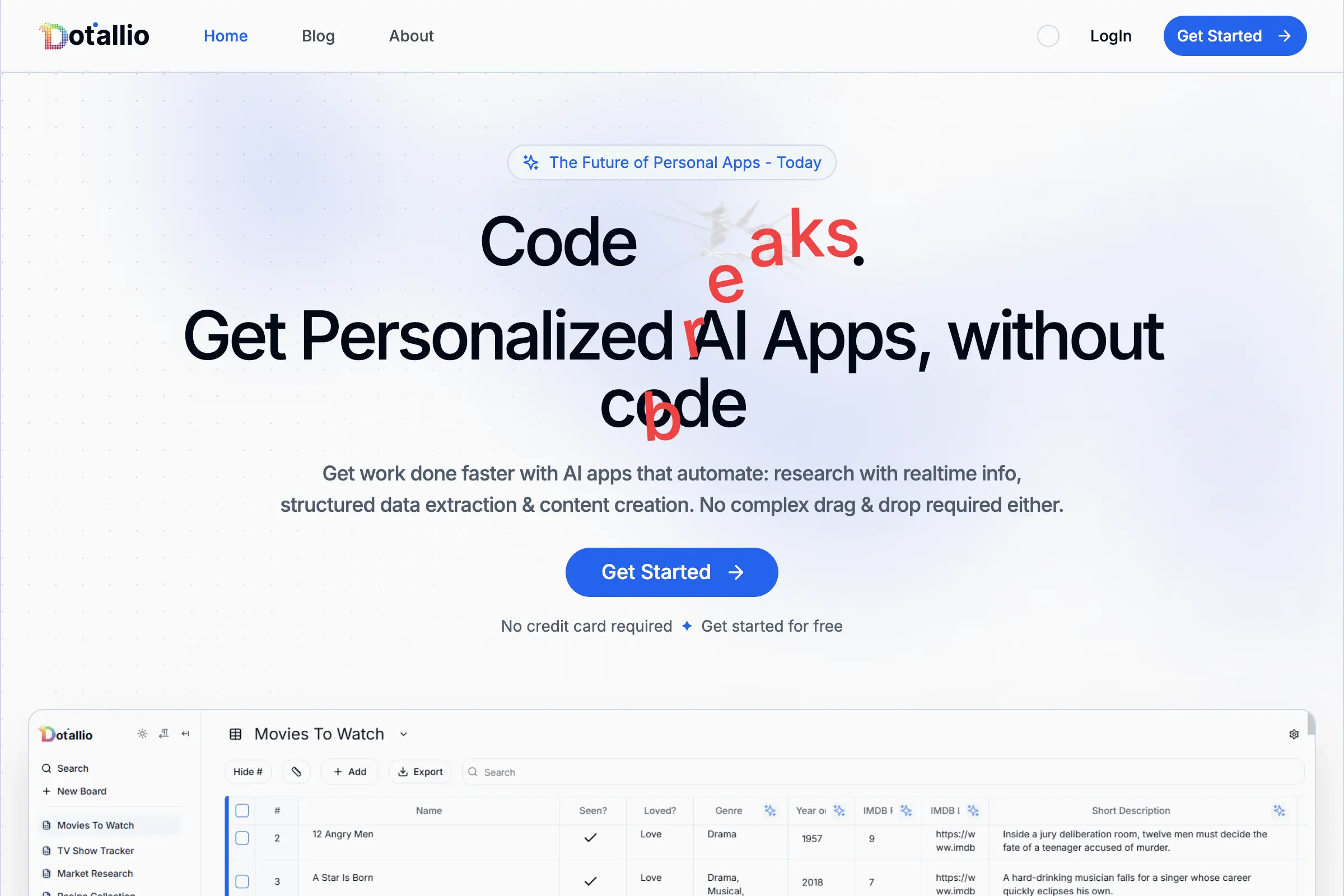
Dotallio
Personalized AI apps that automate research, data extraction, and content creation without code 🤖

Talk to Santa
Enjoy a magical live video chat or receive a unique AI-generated video greeting from Santa Claus 🎅

pozywka.pl
Scalable blog for food journalist, focused on performance and user experience 🌭
zagrodzki.me
Personal blog and portfolio of Bart Zagrodzki, where he shares his knowledge and work 💼
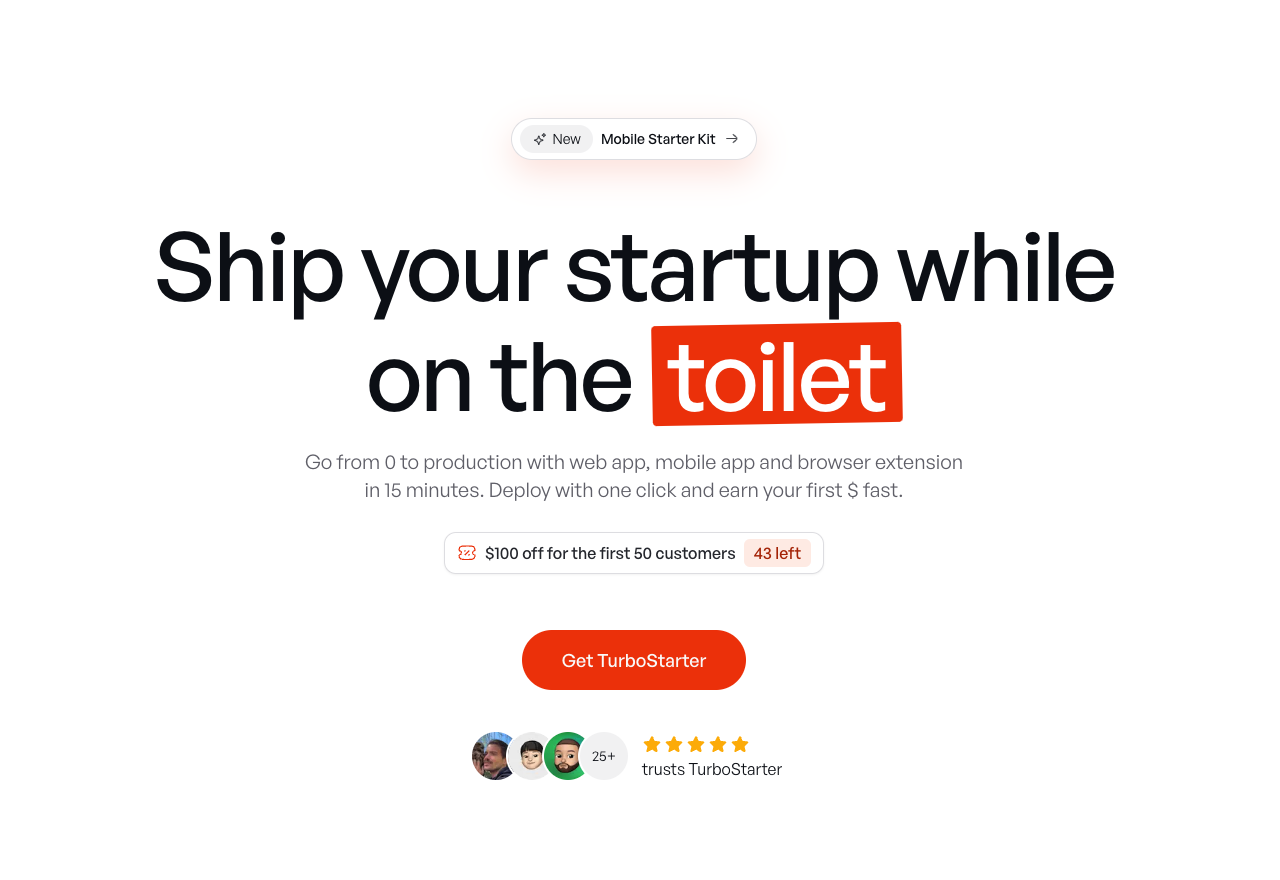
TurboStarter
Ship your startup everywhere. In minutes.
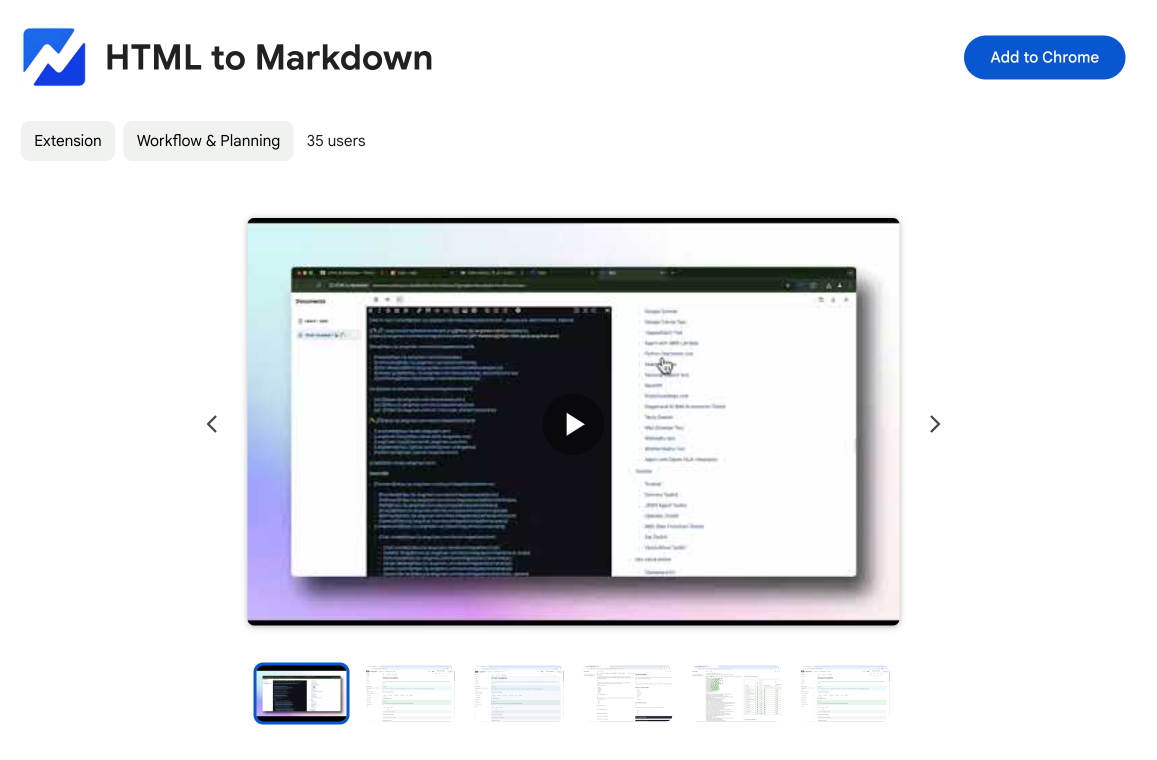
HTML to Markdown
Convert HTML to Markdown with ease, directly in your browser 📄
Dotallio
Personalized AI apps that automate research, data extraction, and content creation without code 🤖
Talk to Santa
Enjoy a magical live video chat or receive a unique AI-generated video greeting from Santa Claus 🎅
pozywka.pl
Scalable blog for food journalist, focused on performance and user experience 🌭
zagrodzki.me
Personal blog and portfolio of Bart Zagrodzki, where he shares his knowledge and work 💼
TurboStarter
Ship your startup everywhere. In minutes.
HTML to Markdown
Convert HTML to Markdown with ease, directly in your browser 📄
Dotallio
Personalized AI apps that automate research, data extraction, and content creation without code 🤖
Talk to Santa
Enjoy a magical live video chat or receive a unique AI-generated video greeting from Santa Claus 🎅
pozywka.pl
Scalable blog for food journalist, focused on performance and user experience 🌭
zagrodzki.me
Personal blog and portfolio of Bart Zagrodzki, where he shares his knowledge and work 💼
TurboStarter
Ship your startup everywhere. In minutes.
HTML to Markdown
Convert HTML to Markdown with ease, directly in your browser 📄
Dotallio
Personalized AI apps that automate research, data extraction, and content creation without code 🤖
Talk to Santa
Enjoy a magical live video chat or receive a unique AI-generated video greeting from Santa Claus 🎅
pozywka.pl
Scalable blog for food journalist, focused on performance and user experience 🌭
zagrodzki.me
Personal blog and portfolio of Bart Zagrodzki, where he shares his knowledge and work 💼
TurboStarter
Ship your startup everywhere. In minutes.
HTML to Markdown
Convert HTML to Markdown with ease, directly in your browser 📄
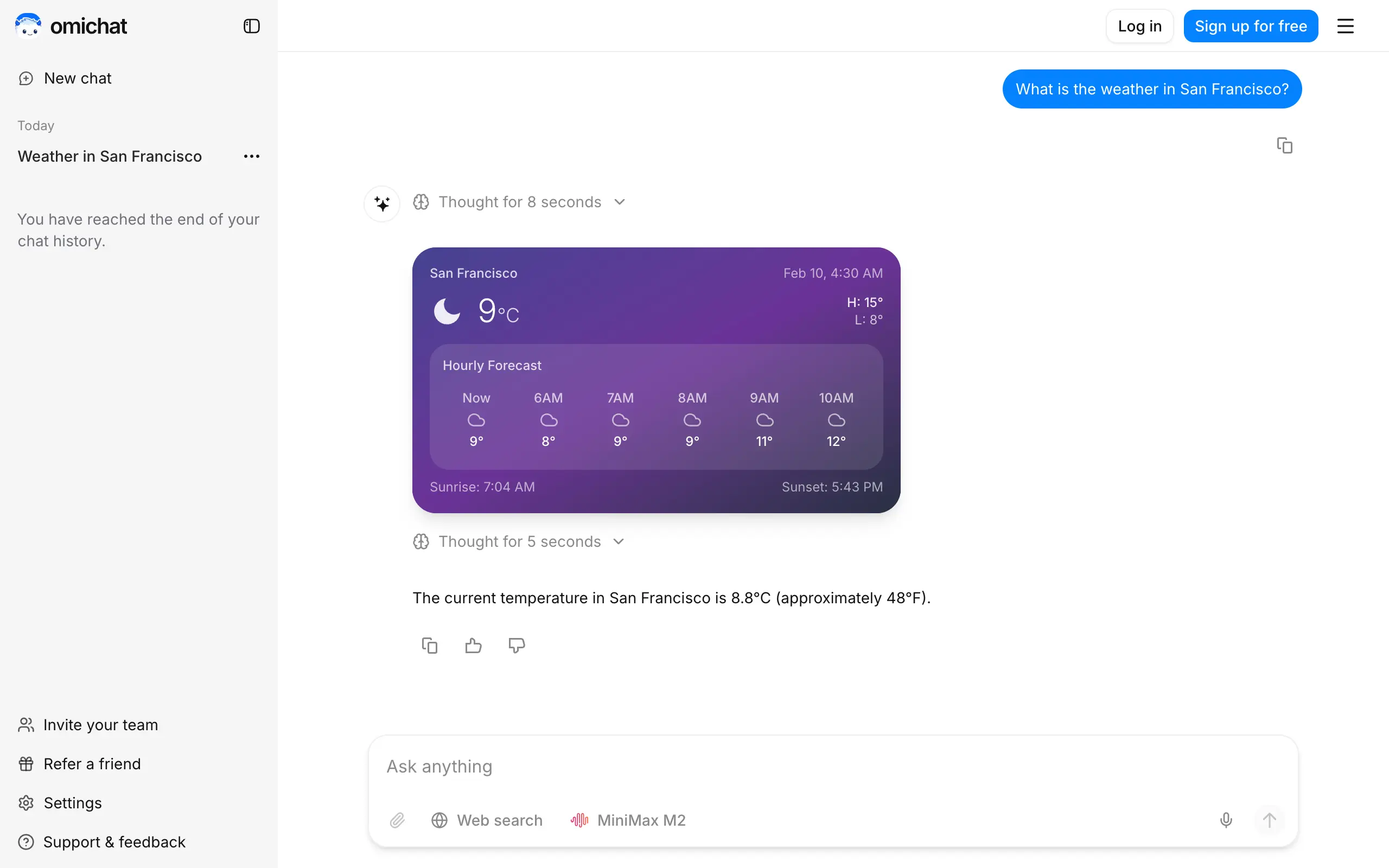
Omichat
Chat with 50+ AI models, including ChatGPT and Claude, in one place - switch models anytime without losing context 🤖
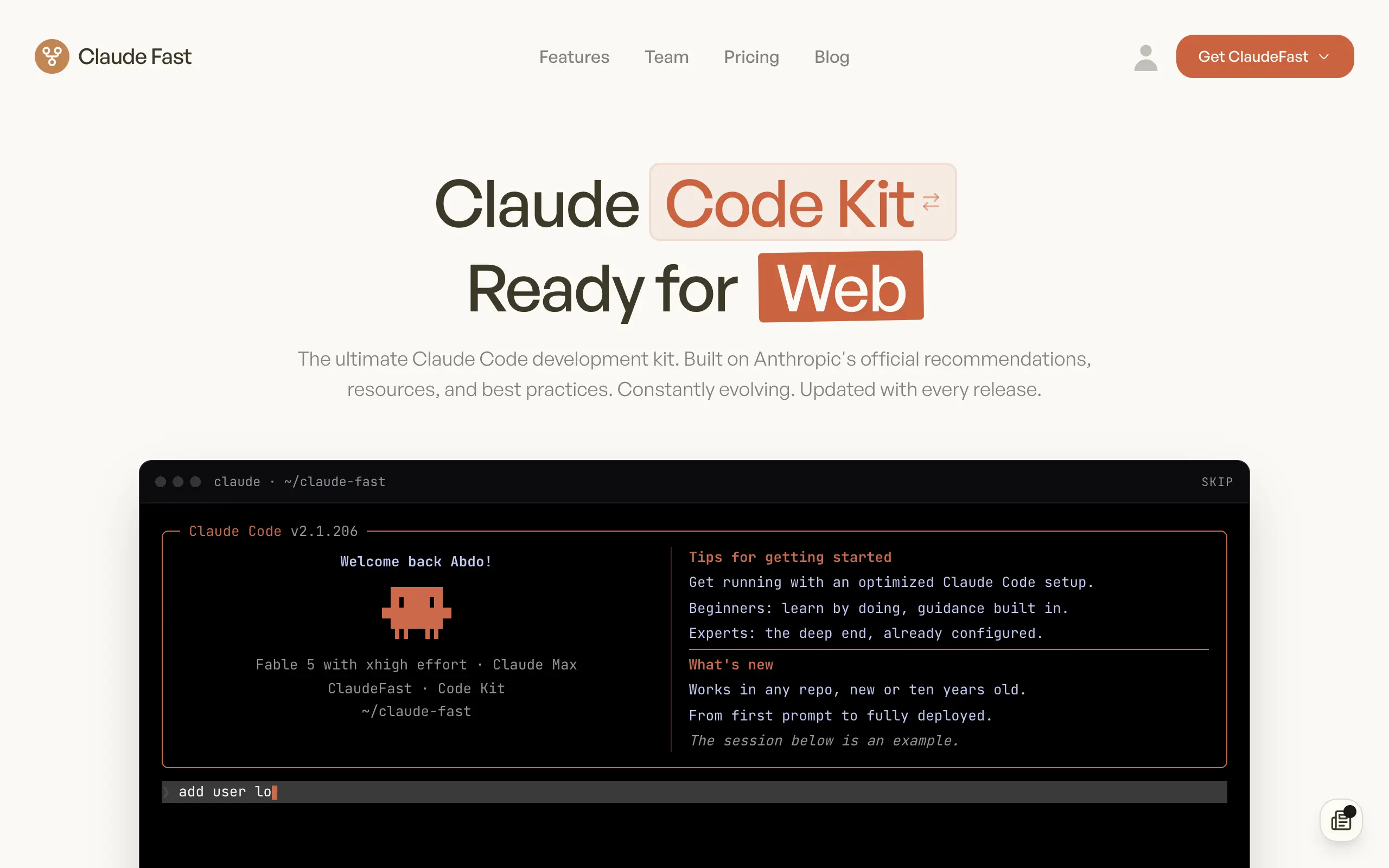
Claude Fast
Supercharge your Claude Code with 6x effective context window and specialized AI agents 🤖
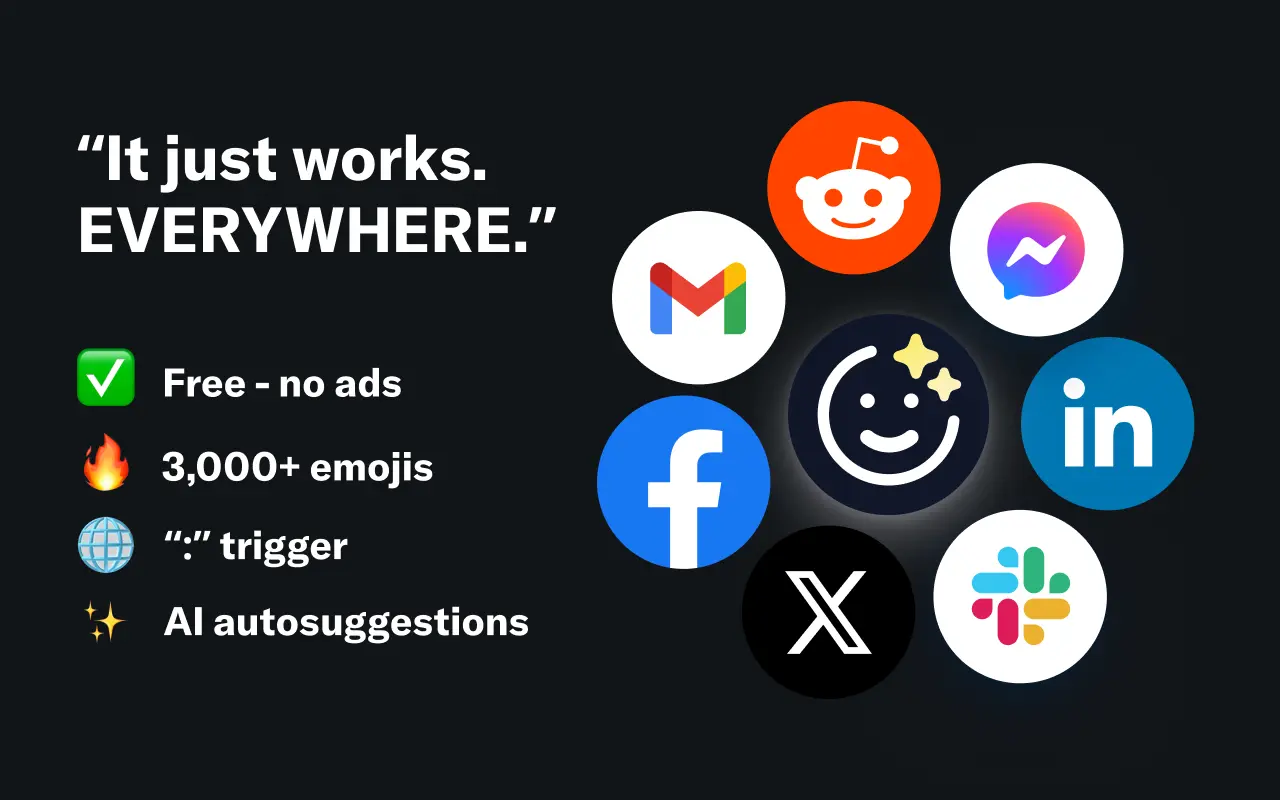
EmojAI
AI-powered emoji picker with smart, context-aware suggestions 🤖

Solohacker
Autonomous company launcher - AI agents work 24/7, escalate what matters, and you stay in control 🤖

BeRawi: Storytelling Coach
Practice storytelling daily with instant feedback to sound clearer, more engaging, and confident 🎤
Omichat
Chat with 50+ AI models, including ChatGPT and Claude, in one place - switch models anytime without losing context 🤖
Claude Fast
Supercharge your Claude Code with 6x effective context window and specialized AI agents 🤖
EmojAI
AI-powered emoji picker with smart, context-aware suggestions 🤖
Solohacker
Autonomous company launcher - AI agents work 24/7, escalate what matters, and you stay in control 🤖
BeRawi: Storytelling Coach
Practice storytelling daily with instant feedback to sound clearer, more engaging, and confident 🎤
Omichat
Chat with 50+ AI models, including ChatGPT and Claude, in one place - switch models anytime without losing context 🤖
Claude Fast
Supercharge your Claude Code with 6x effective context window and specialized AI agents 🤖
EmojAI
AI-powered emoji picker with smart, context-aware suggestions 🤖
Solohacker
Autonomous company launcher - AI agents work 24/7, escalate what matters, and you stay in control 🤖
BeRawi: Storytelling Coach
Practice storytelling daily with instant feedback to sound clearer, more engaging, and confident 🎤
Omichat
Chat with 50+ AI models, including ChatGPT and Claude, in one place - switch models anytime without losing context 🤖
Claude Fast
Supercharge your Claude Code with 6x effective context window and specialized AI agents 🤖
EmojAI
AI-powered emoji picker with smart, context-aware suggestions 🤖
Solohacker
Autonomous company launcher - AI agents work 24/7, escalate what matters, and you stay in control 🤖
BeRawi: Storytelling Coach
Practice storytelling daily with instant feedback to sound clearer, more engaging, and confident 🎤

Connect with like-minded people
Join our community to get feedback, support, and grow together with 1,000+ builders on board, let's ship it!
Join usShip your startup everywhere. In minutes.
Don't burn tokens on setup and start building features on day one.