Mizan Shops
AI demand forecasting for Egyptian grocery and pharmacy owners, helping them predict stock needs, reduce waste, and reorder via WhatsApp.
Why AI demand forecasting is a timely opportunity for Egyptian retailers
Egyptian grocery stores, mini-markets, pharmacies, and neighborhood retailers operate in a high-frequency, low-margin environment. Owners have to make inventory decisions every day, often with incomplete sales records, changing supplier prices, seasonal demand shifts, and limited time to analyze spreadsheets.
Mizan Shops is an AI demand forecasting platform designed for this reality. It helps Egyptian grocery and pharmacy owners predict what stock they need, identify slow-moving items, reduce expiry-related waste, and place or prepare reorders through WhatsApp.
The central business problem is straightforward: retailers lose money when shelves are empty, but they also lose money when too much cash is tied up in products that expire, sell slowly, or become outdated. Manual intuition can work for a small set of familiar products, but it becomes unreliable as an owner manages hundreds or thousands of SKUs across different product categories.
AI demand forecasting for Egyptian grocery stores and pharmacies can turn daily sales history, stock levels, seasonality, promotions, holidays, and local patterns into clear inventory recommendations. Instead of asking owners to become data analysts, Mizan Shops can deliver simple answers in the channel they already use:
- What should I reorder today?
- Which items are likely to run out this week?
- Which products are overstocked or at risk of expiry?
- How much should I order from each supplier?
- Which pharmacy or grocery products are selling unusually fast or slow?
This WhatsApp-first operating model is especially important. Many small and mid-sized Egyptian retailers already coordinate with suppliers, employees, and customers through WhatsApp. Requiring them to log into another complex dashboard creates adoption friction. Giving them actionable, Arabic-friendly inventory guidance inside WhatsApp creates a more natural workflow.
The core thesis
The strongest version of Mizan Shops is not a generic analytics dashboard. It is an operational assistant that converts messy retail data into daily, trusted stock decisions for Egyptian business owners.
Who needs AI demand forecasting in Egypt
The initial market should focus on retailers with repeat inventory purchases, perishable or time-sensitive stock, and enough transaction volume to benefit from better ordering decisions. The best early users are not necessarily the largest chains. They are often owner-operated businesses with meaningful inventory complexity but limited access to enterprise retail software.
Independent grocery stores and mini-markets
Neighborhood groceries face constant replenishment pressure. Fast-moving staples such as dairy, beverages, packaged food, bread-related goods, cleaning products, and snacks can go out of stock quickly. At the same time, slower brands, oversized packs, or seasonal items can occupy valuable shelf and storage space.
These businesses need forecasts that account for:
- Daily and weekly sales velocity
- Weekend demand patterns
- Ramadan and Eid demand changes
- School-season buying behavior
- Local weather effects where relevant
- Supplier delivery schedules
- Minimum order quantities
- Short shelf-life products
- Price changes and promotions
For a grocery owner, the ideal output is not a chart with complicated statistical terminology. It is a short daily recommendation such as: “Order 24 more units of this milk SKU before Thursday; current stock will likely run out in two days.”
Independent pharmacies
Pharmacies have distinct forecasting needs because stock availability affects both customer trust and, in some cases, health-related urgency. They also manage products with expiry dates, controlled handling requirements, substitutes, varying pack sizes, and demand patterns linked to cold and flu seasons, allergies, chronic treatments, and local prescribing behavior.
Pharmacy inventory forecasting should help owners manage:
- Fast-moving over-the-counter products
- Chronic medication replenishment patterns
- Expiry-risk identification
- Near-substitute product recommendations
- Supplier lead times
- Demand spikes for seasonal categories
- High-value medicines that should not be overstocked
- Cosmetic and personal-care inventory
The product should carefully distinguish between inventory intelligence and medical guidance. Mizan Shops can forecast demand and flag availability risks, but it should not make clinical recommendations, alter prescriptions, or encourage inappropriate substitution of regulated medicines.
Small retail chains and franchise operators
Businesses operating two to ten branches are a particularly valuable expansion segment. They have enough complexity to feel the cost of decentralized stock decisions, yet they may not have the budget or implementation capacity for a large enterprise resource planning system.
For these operators, Mizan Shops can provide:
- Branch-level demand forecasts
- Inter-branch transfer suggestions
- Central purchasing recommendations
- SKU-level stockout alerts
- Comparative performance across locations
- Store-specific seasonal demand patterns
- Consolidated supplier order preparation
A multi-branch feature set also creates a higher-value subscription tier and makes the platform harder to replace once it becomes part of the retailer’s purchasing workflow.
Suppliers and distributors as a later customer segment
After building trusted retailer-side demand signals, Mizan Shops could offer supplier-facing tools. Distributors may benefit from aggregated and privacy-preserving forecasts that help them plan their own stock and deliveries.
This should be a later-stage opportunity, not the initial go-to-market motion. Retailers need to trust that their data is protected. Any supplier analytics product must use clear permissions, aggregation thresholds, and transparent data-sharing policies.
Best early customer
An owner-operated grocery or pharmacy with digital sales records, recurring supplier orders, frequent stock issues, and a clear WhatsApp workflow.
High-value pain point
The owner regularly loses sales from stockouts or cash from expired and slow-moving inventory.
Strong expansion path
Multi-branch retailers need centralized forecasting, stock transfers, and procurement coordination.
The market gap for grocery and pharmacy inventory forecasting
The market gap is not a lack of generic forecasting technology. Many international inventory platforms, point-of-sale systems, and enterprise resource planning products include forecasting features. The gap is the lack of a lightweight, localized, adoption-friendly solution for Egyptian independent retailers.
Most existing choices fall into one of four categories.
| Option | Typical strength | Common limitation | Opportunity for Mizan Shops | Best fit |
|---|---|---|---|---|
| Manual ordering | Owner knowledge | Inconsistent and hard to scale | Turn intuition into measurable recommendations | Single-store retailers |
| POS software | Captures transactions | Often weak on actionable forecasting | Connect sales data to reorder decisions | Digitized stores |
| Enterprise ERP | Deep controls and workflows | Expensive and difficult to implement | Deliver practical intelligence without enterprise complexity | Growing chains |
| Generic forecasting tool | Advanced models | Limited Arabic, local, and WhatsApp workflows | Localize data inputs and daily communication | Tech-forward operators |
The operational gap is bigger than the algorithm gap
Demand forecasting accuracy matters, but a highly accurate forecast has little value if the store owner does not act on it. Many small retailers struggle with data fragmentation:
- POS transactions may be incomplete or inconsistently categorized.
- Supplier invoices may arrive in paper, PDF, or WhatsApp formats.
- Stock counts may happen infrequently.
- Product names may vary between suppliers and store systems.
- Some sales occur outside the main POS workflow.
- Units may be mixed between individual items, packs, cartons, and kilograms.
Mizan Shops should therefore position itself as an inventory decision system, not only an AI prediction engine. The product needs data-cleaning workflows, simple confirmation actions, and explainable recommendations.
For example, an owner should be able to receive a message saying:
Your stock of 500 ml bottled water is projected to fall below the safety level in three days. Recommended reorder: 10 cartons. This is based on the last four weeks of sales, expected weekend demand, and your supplier’s two-day delivery time.
That explanation builds confidence. It also gives the owner a reason to correct the recommendation if a known local event, construction disruption, or price change will affect sales.
Localized forecasting is a defensible advantage
A generic demand forecasting product may understand historical sales. A localized Egyptian retail forecasting platform can eventually understand the broader commercial context that affects actual demand.
Relevant local signals may include:
- Islamic calendar events and Ramadan demand cycles
- Eid-related purchasing patterns
- School and university schedules
- Public holidays
- Neighborhood-specific demand behavior
- Arabic product naming and colloquial terms
- Egyptian pound price volatility and supplier price changes
- Local delivery schedules and supplier order cutoffs
- High-temperature periods that influence beverage and certain pharmacy-category sales
Mizan Shops should begin with signals it can reliably collect from merchants. It should not overpromise external data integrations before the data quality and usage case justify them. The product’s initial advantage comes from practical retail workflow design, not from claiming to predict every market event.
The Mizan Shops product: a WhatsApp-first inventory assistant
The most compelling product experience is a combination of lightweight onboarding, automated forecasting, clear exception alerts, and action-oriented WhatsApp messages. The dashboard should support deeper review, but WhatsApp should remain the daily activation channel.
Core feature set for the minimum viable product
A focused MVP should solve one valuable workflow exceptionally well: helping owners know what to reorder and when.
The first release can include the following capabilities.
Sales and inventory data ingestion
The platform needs flexible ways to receive store data. A perfect POS integration is useful, but it should not be the only path to value.
Start with:
- CSV and Excel uploads
- Basic POS exports
- Manual stock count templates
- Supplier catalog uploads
- Invoice entry or photo-assisted extraction as a later feature
- API integrations for commonly used local POS systems when validated by customer demand
At minimum, the data model should capture product identifier, product name, category, unit, sales date, quantity sold, purchase cost when available, current stock, supplier, expected lead time, and expiry date for relevant items.
SKU normalization and catalog intelligence
Retail data is messy. The same product may appear as “Coke 1.5L,” “Coca Cola 1500ml,” or an Arabic spelling variation. Forecasting becomes unreliable if the system treats these as separate products.
Mizan Shops should use a mix of deterministic matching and AI-assisted review to normalize products. The system can suggest matches, but store owners or staff must be able to approve them. This human-in-the-loop approach is important for trust and data quality.
Useful catalog features include:
- Duplicate SKU detection
- Unit conversion support
- Pack-to-unit relationships
- Arabic and English product aliases
- Category assignment suggestions
- Supplier-specific product mappings
- Confidence scoring for automated matches
Demand forecasting by SKU
The forecasting engine should estimate expected demand over practical reorder horizons, such as the next three, seven, or fourteen days. The model must consider more than a simple average.
A reliable initial approach can combine:
- Historical sales velocity
- Day-of-week patterns
- Recent trend direction
- Stockout-adjusted demand estimates
- Seasonal patterns when sufficient history exists
- Promotion flags
- Supplier lead time
- Safety stock policy
- Data-quality confidence
Forecasts should include a confidence range. If data is sparse or inconsistent, the product should say so. A transparent “medium confidence” recommendation is far better than presenting uncertain predictions as fact.
Reorder recommendations
This is the daily value moment. Recommendations should translate forecasts into suggested purchase quantities.
A simplified reorder concept is:
recommended order quantity =
forecast demand during supplier lead time
+ safety stock
- current usable stock
- confirmed incoming stock
In practice, the platform also needs to account for supplier pack sizes, minimum order quantities, and products that are near expiry. It is usually better to recommend “2 cartons” than “37 units” if the supplier sells by carton.
Stockout and overstock alerts
The system should flag two different financial risks:
- Stockout risk, where likely sales are lost because an item will run out before the next delivery.
- Overstock risk, where too much capital is locked in slow-moving stock or items may expire before selling.
For pharmacy users, expiry risk needs special treatment. The alert should prioritize high-value, short-dated, or clinically important products while avoiding alarm fatigue.
WhatsApp-based actions
WhatsApp messages should not only notify users. They should enable action with minimal typing.
Useful actions include:
- Reply “1” to approve a suggested reorder
- Reply “2” to adjust quantity
- Reply “3” to mark an item temporarily unavailable
- Request a weekly stock summary
- Ask “What is running out?”
- Ask “What should I order from supplier X?”
- Confirm actual stock after a manual count
The user experience must support Arabic naturally, including Egyptian Arabic where appropriate. A retailer should be able to use Arabic product names and ordinary conversational commands without learning a technical interface.
A grocery owner receives a morning WhatsApp digest with the five highest-priority reorder items, projected stockout dates, and a consolidated draft order grouped by supplier.
A pharmacy manager receives alerts for likely stockouts, slow-moving high-value items, and products approaching expiry that need review before the next purchase order.
A chain operator sees branch-level demand differences, can identify excess stock in one location, and receives transfer recommendations before placing a new supplier order.
How the AI forecasting model should work
AI demand forecasting for grocery and pharmacy inventory should be practical, measurable, and explainable. It does not need to begin with the most complex deep learning model. In early stages, better data quality and well-designed business rules often produce more value than sophisticated modeling alone.
Start with a forecasting hierarchy
Different SKUs have different demand behavior. A single forecasting method will not work equally well for bottled water, prescription medicine, cosmetics, seasonal gift items, and newly introduced products.
Mizan Shops should classify products based on characteristics such as:
- Demand frequency
- Sales volume
- Shelf life
- Margin contribution
- Purchase price
- Lead time
- Seasonality
- Historical data availability
Fast-moving products can use models that emphasize recent trends and weekday patterns. Intermittent-demand items may require methods designed for sparse sales. New products may need category-level or substitute-product signals until their own history becomes meaningful.
Make forecasts explainable
Retail owners may not care whether the engine uses gradient boosting, probabilistic forecasting, or time-series smoothing. They care whether the recommendation makes sense.
Every recommendation should answer:
- What is expected to happen?
- Why does the system expect it?
- What should the owner do?
- How certain is the recommendation?
For example:
- Expected result: “This item may run out in four days.”
- Reason: “Average daily sales increased by 18% over the last two weeks, and your current stock is below the normal reorder level.”
- Suggested action: “Order 3 cartons from your usual supplier.”
- Confidence: “High confidence based on 90 days of consistent sales data.”
Avoid unsupported precision. Forecasting is probabilistic, especially when stores experience changing prices, supply disruptions, or promotions.
Measure accuracy in business terms
Forecast accuracy should not be judged only by a technical metric. A lower average error may still be commercially worse if it misses high-value stockouts.
Track a balanced scorecard that includes:
- Forecast error by SKU and category
- Stockout rate
- Lost-sales estimates where possible
- Days of inventory on hand
- Expiry and waste value
- Inventory turnover
- Reorder recommendation acceptance rate
- Override rate and reasons
- Gross margin impact
For authoritative public benchmarking, cite retail inventory research from recognized industry bodies or academic journals when publishing numerical claims. Avoid presenting broad percentage savings without specifying the merchant type, baseline period, methodology, and sample size.
Recommended technology stack for Mizan Shops
The right stack should optimize for rapid iteration, reliable integrations, data security, multilingual user experiences, and maintainable forecasting infrastructure.
Customer-facing application and dashboard
A modern web application can use React with Next.js for the merchant dashboard, onboarding flow, account management, and internal operations console. Next.js is well suited to SaaS products because it supports server-side rendering, API routes, authentication patterns, and production-ready deployment workflows.
For the UI layer, Tailwind CSS allows a small team to build consistent responsive interfaces quickly. Arabic support should be built into the design system from the beginning, including right-to-left layouts, font testing, number formatting, and mixed Arabic-English product labels.
A starter framework such as TurboStarter can reduce time spent on repeated SaaS foundations such as authentication, billing foundations, database wiring, and application structure. The team should still validate that its chosen starter architecture matches WhatsApp integration, data-processing jobs, and multi-tenant access requirements.
Backend and data layer
A practical architecture could use:
- PostgreSQL for transactional merchant, product, supplier, and inventory data
- Prisma or a comparable ORM for typed data access
- Redis for caching, rate limiting, and job coordination
- A queue system for imports, forecast generation, WhatsApp notifications, and retries
- Object storage for uploaded CSV files, invoices, and audit artifacts
- A managed cloud platform with regional and security requirements reviewed before launch
PostgreSQL is a strong default because it is reliable, cost-effective, and supports structured relational data well. However, forecasting workloads may eventually require a separate analytics warehouse or columnar database as the number of stores, transactions, and historical records grows.
Forecasting and AI services
Python remains a practical choice for forecasting services because its ecosystem supports data processing, time-series analysis, experimentation, and model evaluation. The platform can expose forecasting jobs through an internal API while keeping the core SaaS backend separate.
The trade-off is operational complexity. A separate Python service adds deployment and monitoring overhead compared with implementing simple logic directly in a TypeScript backend. This is justified when the team begins testing multiple forecasting approaches, handling larger datasets, or maintaining feature pipelines.
Use AI where it meaningfully improves workflows:
- SKU name normalization
- Arabic invoice data extraction with human review
- Natural-language WhatsApp assistance
- Anomaly explanation
- Forecasting model selection
- Support ticket classification
Do not use a large language model as the final source of truth for inventory math. Reorder quantities, stock counts, and purchasing logic should be calculated through validated business rules and forecasting services with auditable inputs.
WhatsApp integration architecture
WhatsApp is central to Mizan Shops, so message delivery, opt-in compliance, templates, retries, and conversation state need first-class engineering attention.
The platform should support:
- User opt-in and consent logging
- Approved template messaging where required
- Interactive response handling
- Arabic content templates
- Delivery status tracking
- Fallback to dashboard notifications or SMS where appropriate
- Role-based message routing for owners, managers, and buyers
- Idempotent action handling to prevent duplicate orders
Build the WhatsApp workflow around confirmation, not automatic purchasing, during the MVP. An owner should approve or adjust a recommended order before it is sent to a supplier or recorded as a purchase order.
Monetization strategies for Mizan Shops
Mizan Shops should price based on recurring business value, not the number of AI messages sent. The most natural model is subscription pricing with tiers based on store count, SKU volume, integrations, and advanced forecasting features.
Subscription tiers
A possible structure includes:
- Starter for a single small store with CSV imports, core forecasts, and a limited number of WhatsApp alerts.
- Growth for higher SKU counts, supplier order drafts, expiry alerts, multi-user access, and POS integrations.
- Multi-branch for centralized procurement, branch comparisons, stock transfer recommendations, and advanced reporting.
- Enterprise for large retailers, custom integrations, service-level commitments, onboarding support, and tailored data controls.
The pricing page should focus on financial outcomes: fewer stockouts, lower waste, less dead stock, and less time spent preparing orders.
Paid onboarding and data setup
Data cleanup has real value. Many stores need help importing sales data, mapping products, defining suppliers, and establishing baseline inventory counts. A paid onboarding package can improve activation while protecting the core subscription margin.
For smaller merchants, offer a guided self-service route. For multi-branch customers, provide a higher-touch implementation package.
Transaction and supplier workflow revenue
Once the product has meaningful reorder volume, Mizan Shops could explore supplier marketplace or transaction revenue. However, this model introduces trust, conflict-of-interest, and operational concerns.
The platform should not quietly steer retailers toward suppliers because of commissions. If supplier offers are introduced, recommendations must be clearly labeled, optional, and separated from the core demand forecast. Retailers need confidence that reorder quantity advice is based on their operational needs, not supplier incentives.
Value-based upsells
Potential add-ons include:
- Advanced expiry management
- Supplier performance scorecards
- Automated purchase order generation
- Custom reporting
- Branch optimization
- Forecast API access
- Inventory financing partnerships, subject to regulatory and risk review
Competitive advantage and unique selling proposition
The unique selling proposition of Mizan Shops is not simply “AI for inventory.” Its advantage comes from combining localized forecasting, retail-specific workflows, WhatsApp delivery, and explainable recommendations for Egyptian grocery and pharmacy owners.
A clear positioning statement could be:
Mizan Shops helps Egyptian groceries and pharmacies buy the right stock at the right time through AI forecasts and WhatsApp reorder recommendations.
The company can build defensibility through several layers.
Workflow integration creates stickiness
When a store uses Mizan Shops daily to review stockout risks, approve order quantities, and prepare supplier orders, switching becomes inconvenient. The product becomes part of the operating rhythm, not an occasional reporting tool.
Retail data improves recommendations
Over time, approved orders, corrected forecasts, stock counts, supplier lead times, and product mappings create a proprietary operational dataset. This can improve the recommendations for each merchant without exposing one retailer’s confidential data to another.
Localization improves adoption
Arabic-first communication, Egyptian retail categories, local calendars, supplier workflows, and support tailored to smaller business owners can outperform global tools that assume a more standardized retail environment.
Explainability builds trust
Many AI products fail because users cannot understand or challenge their output. Mizan Shops can stand out by showing the reason behind every recommendation and by learning from overrides.
A chatbot can answer questions, but it cannot reliably forecast inventory without structured sales, stock, supplier, and product data. The durable product is the data and decision engine behind the conversation, not the chat interface alone.
A strong early metric is the reduction in avoidable stockouts for a defined set of priority SKUs. Pair that with reorder acceptance rate and inventory waste indicators to show that recommendations are both trusted and commercially useful.
Yes, but the value and automation level depend on data quality. CSV uploads, periodic stock counts, and invoice ingestion can support an initial workflow. POS integrations should be prioritized once the team identifies the systems most common among paying customers.
Risks and how to mitigate them
A strong SaaS strategy addresses risk directly rather than assuming that an AI model solves every operational challenge.
Risk: poor data quality
Inconsistent product names, incomplete stock counts, and missing sales records can produce unreliable forecasts.
Mitigation: build data-quality scoring, require basic onboarding validation, make uncertainty visible, offer SKU normalization, and prioritize high-volume items with better data before expanding recommendations across the full catalog.
Risk: low trust in AI recommendations
Owners may rely on personal experience and ignore automated advice, especially in the first weeks.
Mitigation: provide explanations, allow easy overrides, start with alerts rather than automatic actions, compare recommendations against historical outcomes, and use onboarding to identify the owner’s current ordering rules.
Risk: WhatsApp message fatigue
Too many alerts will cause users to mute the channel or ignore the product.
Mitigation: prioritize only high-impact exceptions, let users choose message frequency, bundle low-priority insights into a daily digest, and measure alert engagement continuously.
Risk: regulated pharmacy workflows
Pharmacy inventory includes products with regulatory, handling, and patient-safety implications.
Mitigation: position the platform as inventory support rather than clinical advice, maintain audit logs, support role-based access, consult local legal and pharmacy compliance experts, and avoid automated substitution advice for regulated products.
Risk: inaccurate external assumptions
Holiday, weather, or promotion signals can help, but incorrect assumptions can damage trust.
Mitigation: start with merchant-owned data, provide adjustable event flags, evaluate external signals against actual outcomes, and only retain features that consistently improve forecast quality.
Risk: supplier conflict of interest
If the business later earns revenue from supplier referrals, retailers may question whether recommendations are unbiased.
Mitigation: separate forecast logic from commercial offers, disclose any commercial relationship, preserve supplier choice, and provide transparent recommendation criteria.
A practical implementation roadmap
The fastest route to product-market fit is not building every AI feature at once. It is proving that Mizan Shops can improve a narrow, high-value inventory decision for a specific customer segment.
Choose one beachhead segment, ideally independent pharmacies or digitally enabled neighborhood groceries in a single Egyptian city. Interview at least 20 owners and managers about their ordering process, stockouts, expiry losses, data sources, and supplier relationships.
Recruit five to ten design partners willing to share anonymized historical sales and inventory data. In exchange, provide concierge onboarding, weekly insight reviews, and early access to the product.
Build CSV import, SKU cleanup, current-stock input, a basic demand forecast, and a daily WhatsApp reorder digest. Avoid complex supplier marketplace features until the core recommendation is trusted.
Measure baseline stockouts, inventory value, expiry-related losses, and ordering time before the pilot. Define success with each merchant so results can be evaluated honestly after four to eight weeks.
Add explainability, order approval actions, supplier grouping, and forecast confidence indicators. Use every override as product research and model feedback.
Expand through POS integrations, multi-branch tools, stronger Arabic language workflows, and category-specific forecasting once the initial segment shows consistent retention and measurable value.
The first pilot should include a weekly human review. This is not a failure of automation. It is how the team learns which stock recommendations matter, where the source data is misleading, and which language builds trust with real operators.
A useful early implementation checklist includes:
- Define the ideal customer profile in one sentence.
- Select the first retail vertical rather than serving every retailer immediately.
- Identify the three most common POS or data-export formats among target merchants.
- Build a product normalization workflow before optimizing advanced models.
- Create a daily reorder recommendation with a clear explanation.
- Ensure every WhatsApp action is logged and reversible.
- Track financial outcomes, not just dashboard logins.
- Turn successful pilot outcomes into case studies with merchant permission.
- Establish data-processing, consent, and security policies before scaling.
- Create a repeatable onboarding process that does not require founders to manually clean every catalog.
Final perspective
Mizan Shops has a credible opportunity to become the practical AI inventory operating layer for Egyptian grocery and pharmacy retailers. The customer need is immediate: owners want fewer stockouts, less waste, better cash flow, and faster purchasing decisions. The market does not need another generic analytics product that requires expert setup and constant dashboard monitoring.
It needs a trusted assistant that understands retail inventory, communicates in the merchant’s preferred language and channel, explains its recommendations, and makes the next action easy.
The winning strategy is to begin narrowly. Focus on one retailer type, one painful inventory workflow, and one measurable outcome. Build trust through accurate, explainable reorder recommendations. Then expand from forecasting into purchasing workflows, supplier intelligence, branch optimization, and broader retail operations.
For Egyptian retailers, the promise is simple and compelling: buy smarter, waste less, and keep the products customers need on the shelf.
More 🤖 AI Startup SaaS ideas
Discover more innovative ai startup SaaS ideas that are trending in 2026. Each idea is AI-generated with market validation and growth potential to help you find your next profitable venture faster than competitors.
Your competitors are building with TurboStarter
Below are some of the SaaS ideas that have been generated and built with our starter kit.
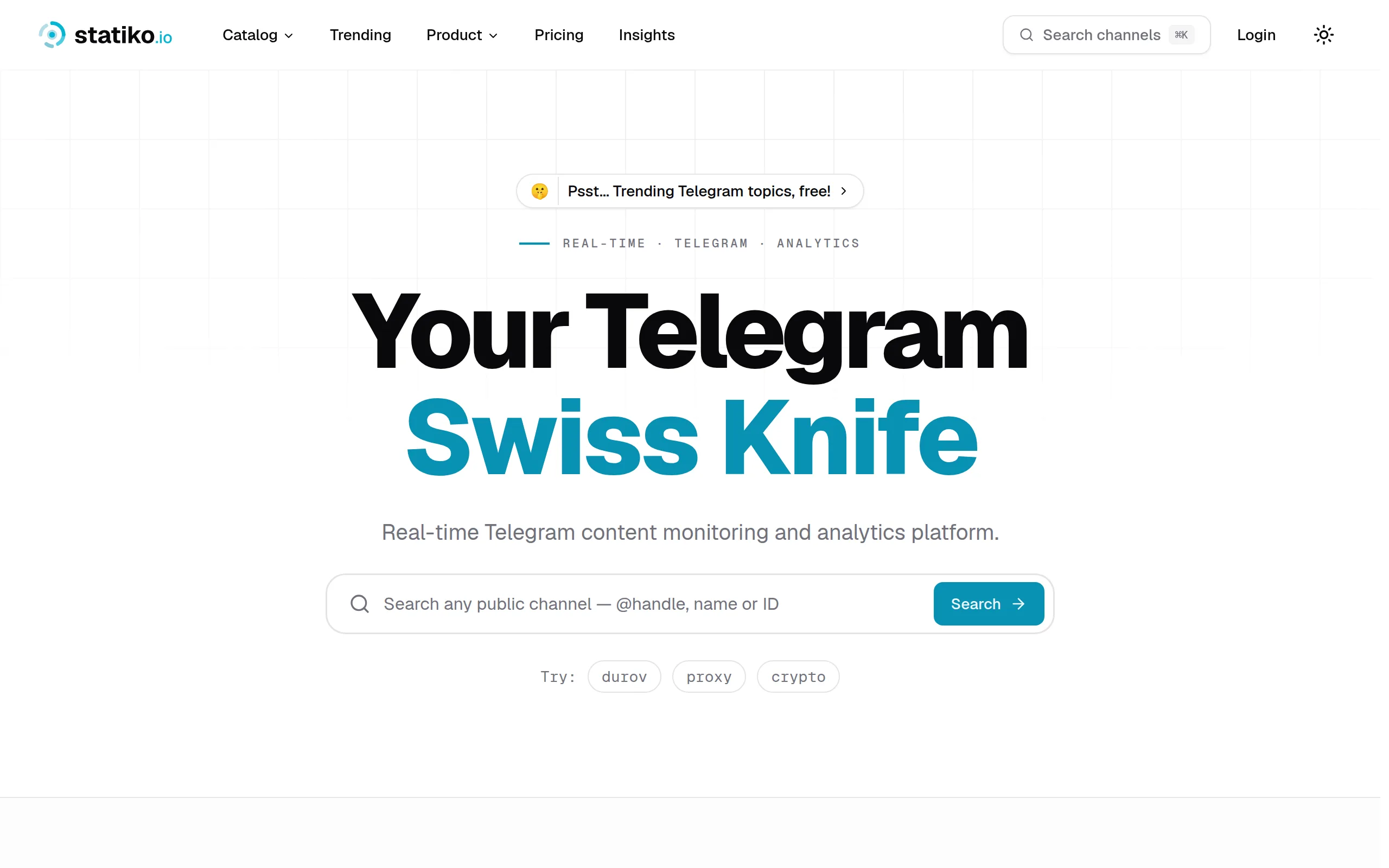
Statiko
Monitor any Telegram channel in real time - track posts, edits, deletions, and growth with AI recaps 📡

Shibui
AI website builder - describe your business, pick a niche template, edit by chatting, and publish instantly ✨

Pro Service
Find verified home service professionals, compare quotes, and pay securely through escrow - built for Brazilians across the US 🏠
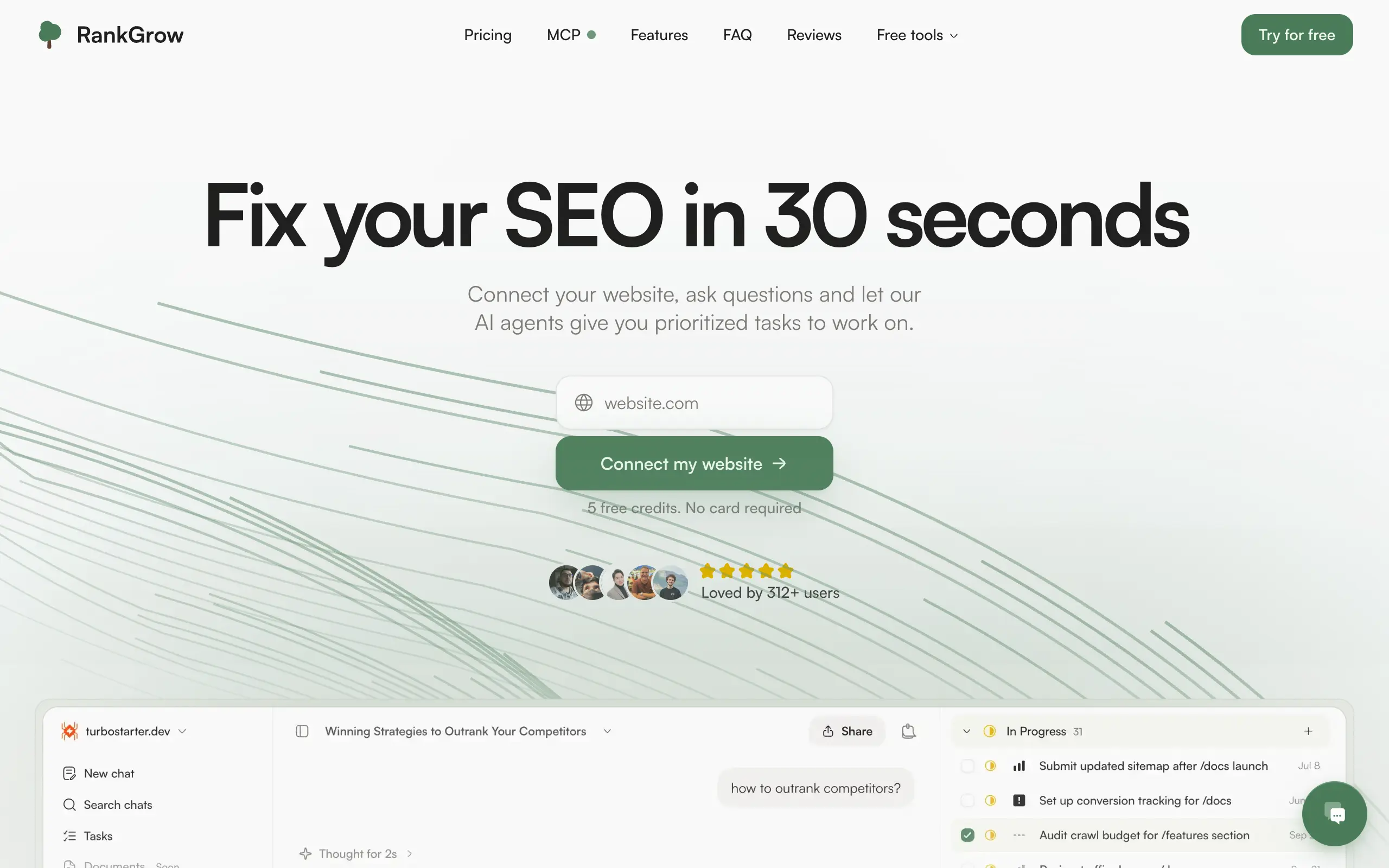
RankGrow
Fix your SEO with AI agents - connect Search Console, get prioritized tasks, and grow organic traffic 📈
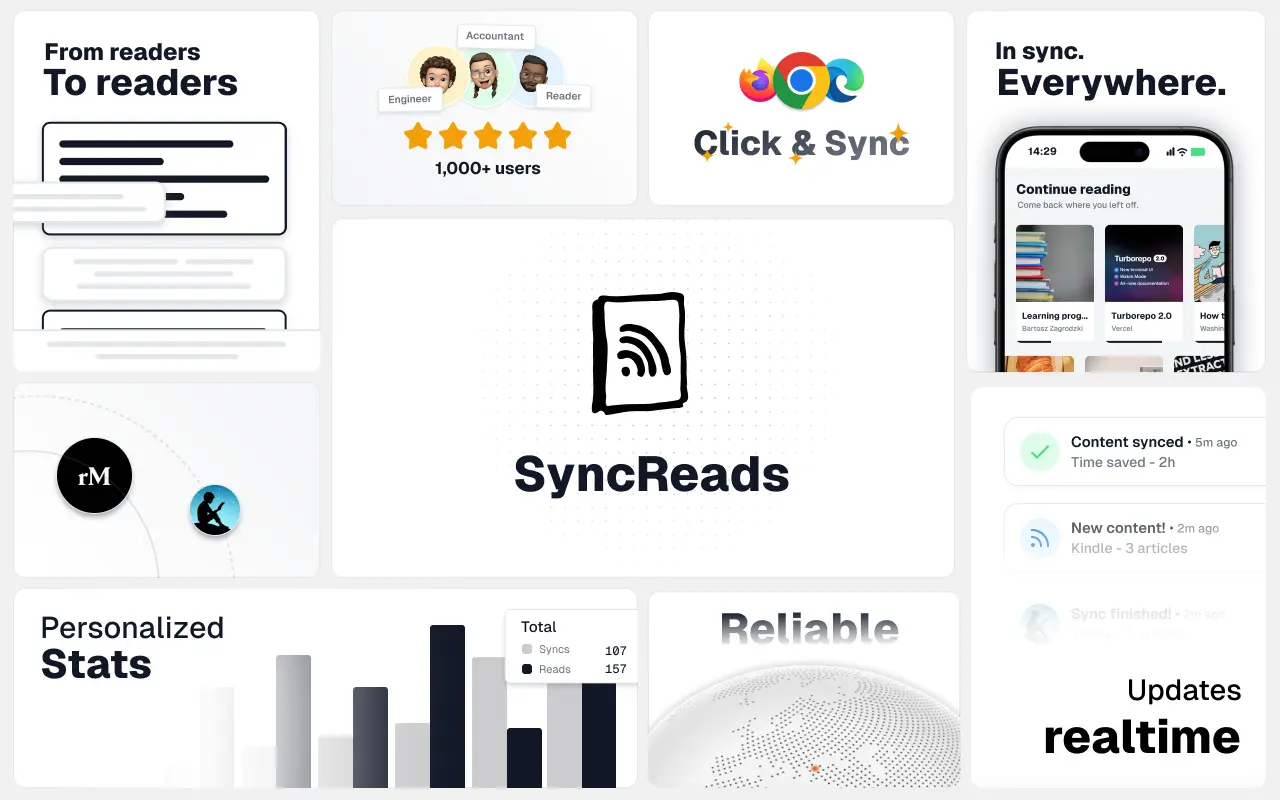
SyncReads
Sync your favorite content for distraction-free reading, save time and replace multiple apps. Anytime, anywhere 🔄
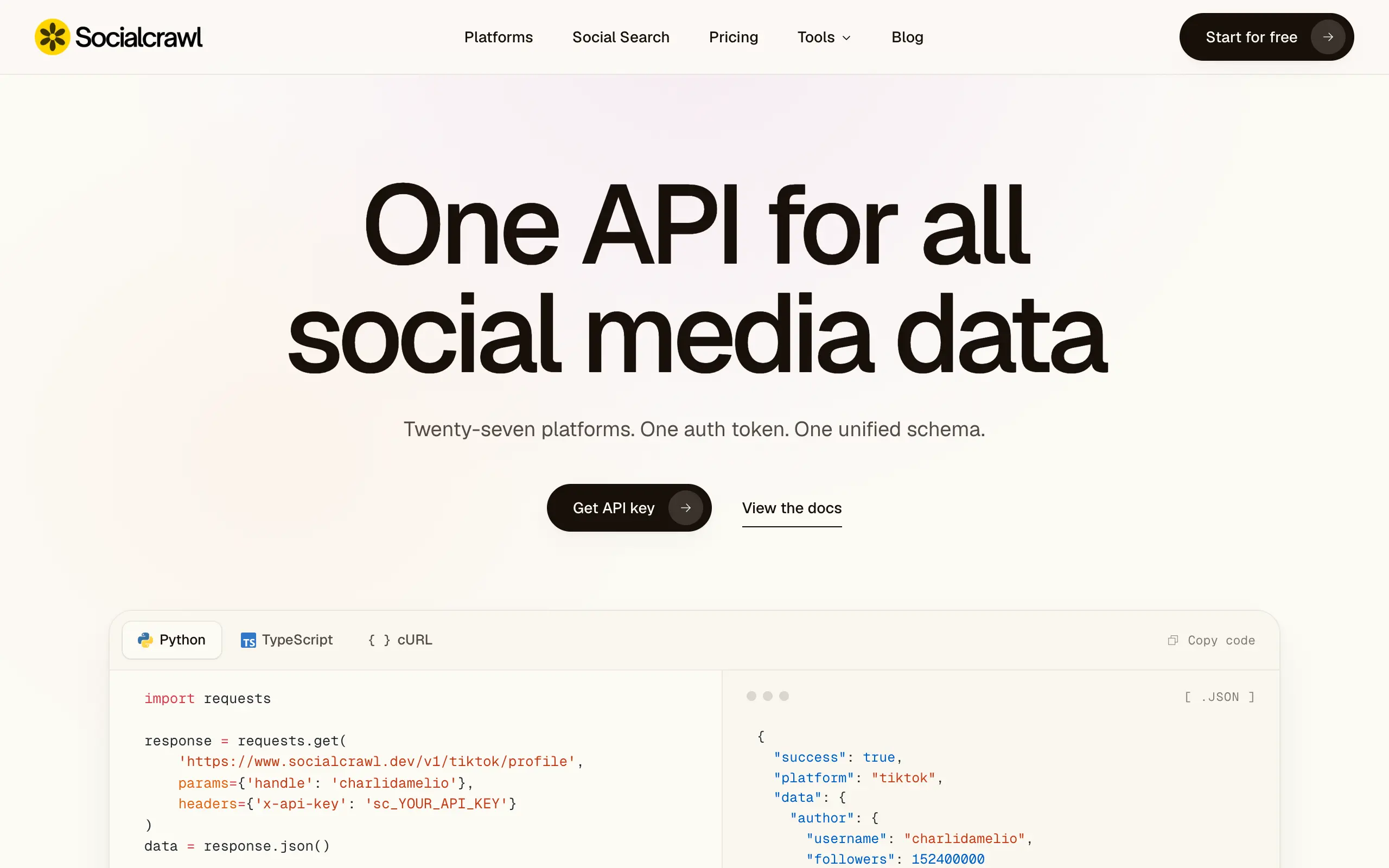
Socialcrawl
Get clean, structured data from 21 platforms like TikTok, Instagram, and YouTube with a single request 📊
Statiko
Monitor any Telegram channel in real time - track posts, edits, deletions, and growth with AI recaps 📡
Shibui
AI website builder - describe your business, pick a niche template, edit by chatting, and publish instantly ✨
Pro Service
Find verified home service professionals, compare quotes, and pay securely through escrow - built for Brazilians across the US 🏠
RankGrow
Fix your SEO with AI agents - connect Search Console, get prioritized tasks, and grow organic traffic 📈
SyncReads
Sync your favorite content for distraction-free reading, save time and replace multiple apps. Anytime, anywhere 🔄
Socialcrawl
Get clean, structured data from 21 platforms like TikTok, Instagram, and YouTube with a single request 📊
Statiko
Monitor any Telegram channel in real time - track posts, edits, deletions, and growth with AI recaps 📡
Shibui
AI website builder - describe your business, pick a niche template, edit by chatting, and publish instantly ✨
Pro Service
Find verified home service professionals, compare quotes, and pay securely through escrow - built for Brazilians across the US 🏠
RankGrow
Fix your SEO with AI agents - connect Search Console, get prioritized tasks, and grow organic traffic 📈
SyncReads
Sync your favorite content for distraction-free reading, save time and replace multiple apps. Anytime, anywhere 🔄
Socialcrawl
Get clean, structured data from 21 platforms like TikTok, Instagram, and YouTube with a single request 📊
Statiko
Monitor any Telegram channel in real time - track posts, edits, deletions, and growth with AI recaps 📡
Shibui
AI website builder - describe your business, pick a niche template, edit by chatting, and publish instantly ✨
Pro Service
Find verified home service professionals, compare quotes, and pay securely through escrow - built for Brazilians across the US 🏠
RankGrow
Fix your SEO with AI agents - connect Search Console, get prioritized tasks, and grow organic traffic 📈
SyncReads
Sync your favorite content for distraction-free reading, save time and replace multiple apps. Anytime, anywhere 🔄
Socialcrawl
Get clean, structured data from 21 platforms like TikTok, Instagram, and YouTube with a single request 📊
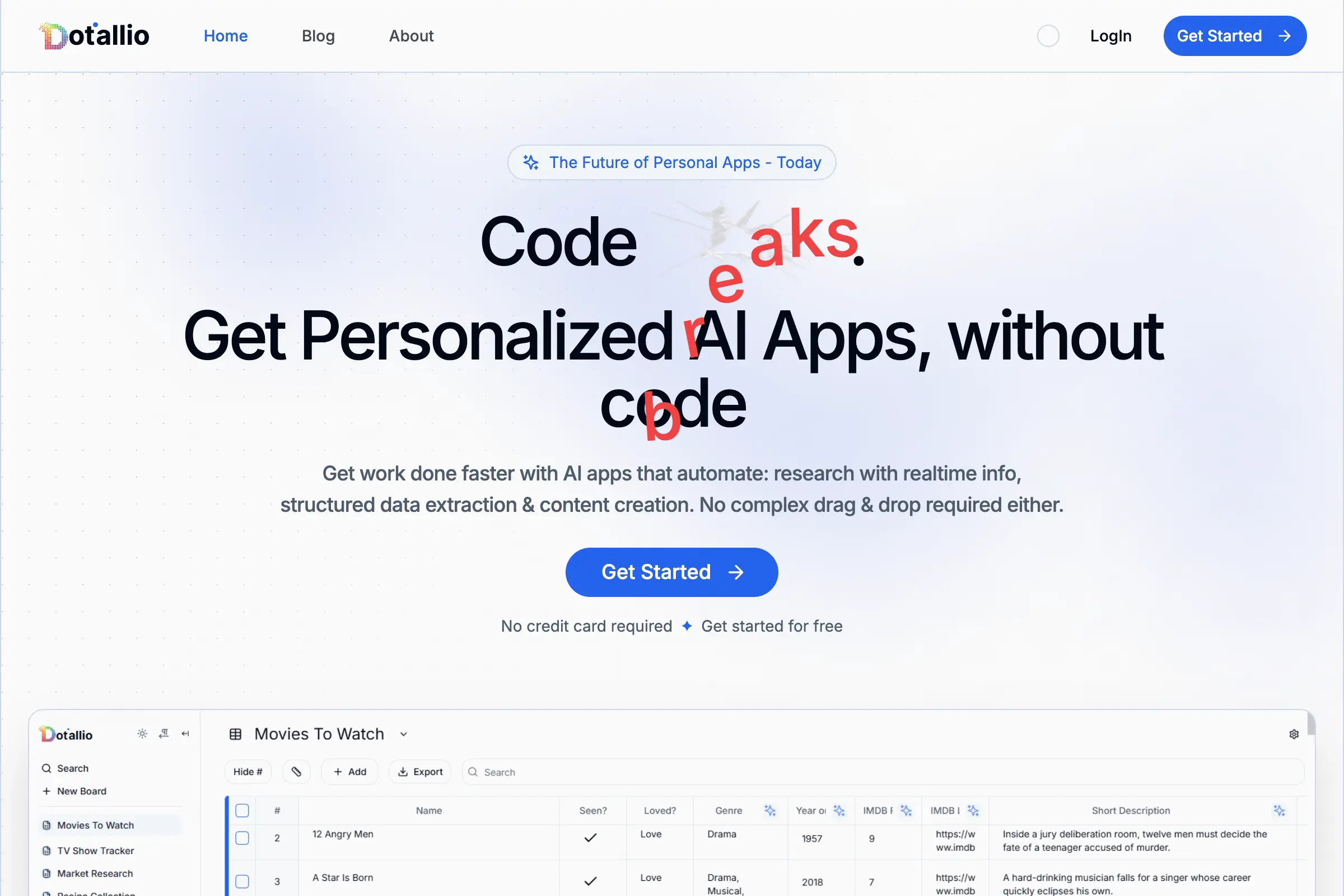
Dotallio
Personalized AI apps that automate research, data extraction, and content creation without code 🤖

Talk to Santa
Enjoy a magical live video chat or receive a unique AI-generated video greeting from Santa Claus 🎅

pozywka.pl
Scalable blog for food journalist, focused on performance and user experience 🌭
zagrodzki.me
Personal blog and portfolio of Bart Zagrodzki, where he shares his knowledge and work 💼

TurboStarter
Ship your startup everywhere. In minutes.
HTML to Markdown
Convert HTML to Markdown with ease, directly in your browser 📄
Dotallio
Personalized AI apps that automate research, data extraction, and content creation without code 🤖
Talk to Santa
Enjoy a magical live video chat or receive a unique AI-generated video greeting from Santa Claus 🎅
pozywka.pl
Scalable blog for food journalist, focused on performance and user experience 🌭
zagrodzki.me
Personal blog and portfolio of Bart Zagrodzki, where he shares his knowledge and work 💼
TurboStarter
Ship your startup everywhere. In minutes.
HTML to Markdown
Convert HTML to Markdown with ease, directly in your browser 📄
Dotallio
Personalized AI apps that automate research, data extraction, and content creation without code 🤖
Talk to Santa
Enjoy a magical live video chat or receive a unique AI-generated video greeting from Santa Claus 🎅
pozywka.pl
Scalable blog for food journalist, focused on performance and user experience 🌭
zagrodzki.me
Personal blog and portfolio of Bart Zagrodzki, where he shares his knowledge and work 💼
TurboStarter
Ship your startup everywhere. In minutes.
HTML to Markdown
Convert HTML to Markdown with ease, directly in your browser 📄
Dotallio
Personalized AI apps that automate research, data extraction, and content creation without code 🤖
Talk to Santa
Enjoy a magical live video chat or receive a unique AI-generated video greeting from Santa Claus 🎅
pozywka.pl
Scalable blog for food journalist, focused on performance and user experience 🌭
zagrodzki.me
Personal blog and portfolio of Bart Zagrodzki, where he shares his knowledge and work 💼
TurboStarter
Ship your startup everywhere. In minutes.
HTML to Markdown
Convert HTML to Markdown with ease, directly in your browser 📄
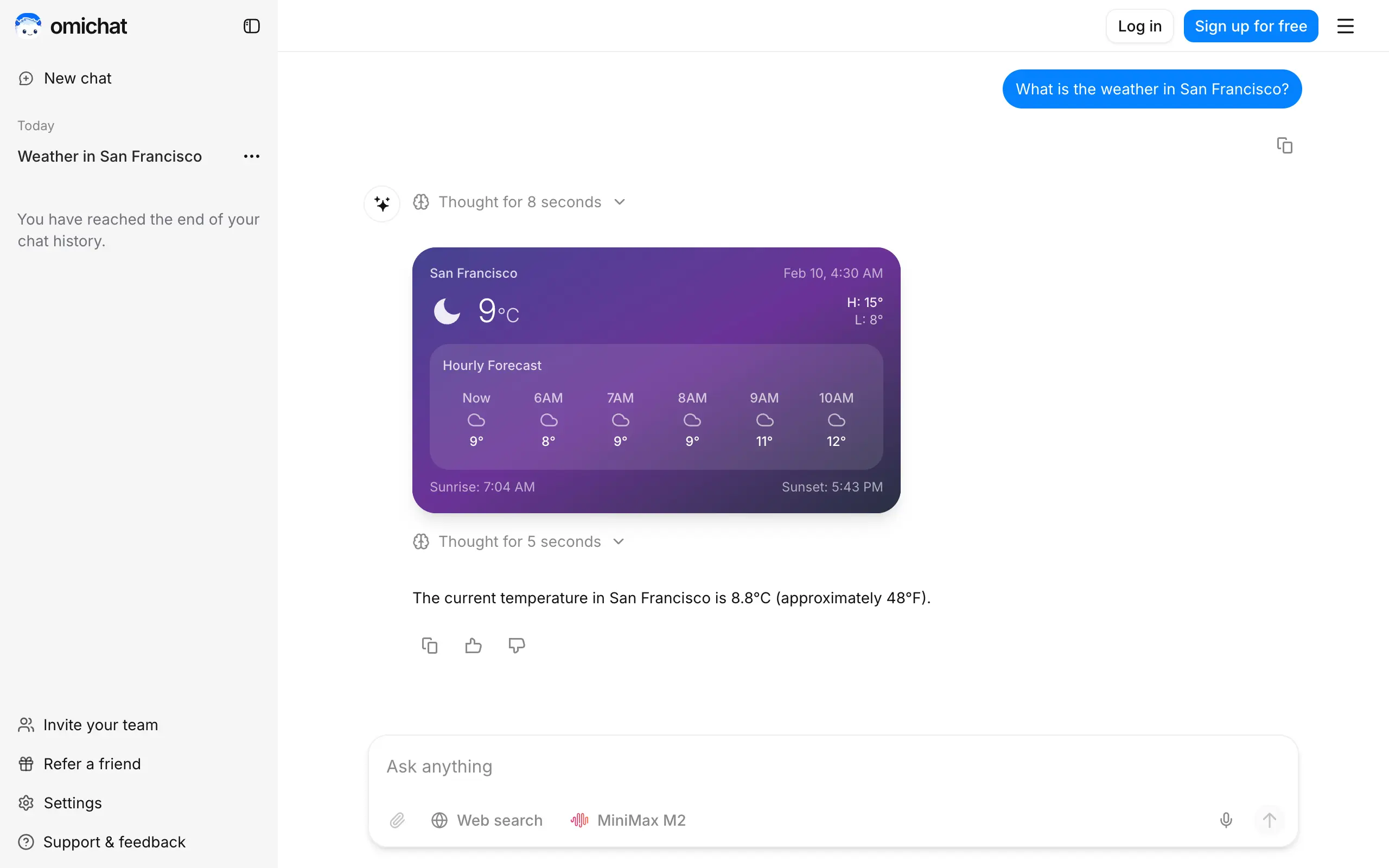
Omichat
Chat with 50+ AI models, including ChatGPT and Claude, in one place - switch models anytime without losing context 🤖
Claude Fast
Supercharge your Claude Code with 6x effective context window and specialized AI agents 🤖

EmojAI
AI-powered emoji picker with smart, context-aware suggestions 🤖

Solohacker
Autonomous company launcher - AI agents work 24/7, escalate what matters, and you stay in control 🤖

BeRawi: Storytelling Coach
Practice storytelling daily with instant feedback to sound clearer, more engaging, and confident 🎤
Omichat
Chat with 50+ AI models, including ChatGPT and Claude, in one place - switch models anytime without losing context 🤖
Claude Fast
Supercharge your Claude Code with 6x effective context window and specialized AI agents 🤖
EmojAI
AI-powered emoji picker with smart, context-aware suggestions 🤖
Solohacker
Autonomous company launcher - AI agents work 24/7, escalate what matters, and you stay in control 🤖
BeRawi: Storytelling Coach
Practice storytelling daily with instant feedback to sound clearer, more engaging, and confident 🎤
Omichat
Chat with 50+ AI models, including ChatGPT and Claude, in one place - switch models anytime without losing context 🤖
Claude Fast
Supercharge your Claude Code with 6x effective context window and specialized AI agents 🤖
EmojAI
AI-powered emoji picker with smart, context-aware suggestions 🤖
Solohacker
Autonomous company launcher - AI agents work 24/7, escalate what matters, and you stay in control 🤖
BeRawi: Storytelling Coach
Practice storytelling daily with instant feedback to sound clearer, more engaging, and confident 🎤
Omichat
Chat with 50+ AI models, including ChatGPT and Claude, in one place - switch models anytime without losing context 🤖
Claude Fast
Supercharge your Claude Code with 6x effective context window and specialized AI agents 🤖
EmojAI
AI-powered emoji picker with smart, context-aware suggestions 🤖
Solohacker
Autonomous company launcher - AI agents work 24/7, escalate what matters, and you stay in control 🤖
BeRawi: Storytelling Coach
Practice storytelling daily with instant feedback to sound clearer, more engaging, and confident 🎤

Connect with like-minded people
Join our community to get feedback, support, and grow together with 1,000+ builders on board, let's ship it!
Join usShip your startup everywhere. In minutes.
Don't burn tokens on setup and start building features on day one.