ModelMux
An AI inference router that abstracts provider-specific schemas into one API and dynamically switches models based on cost, latency, or uptime.
Understanding the problem ModelMux solves in today’s AI landscape
Modern AI applications rarely rely on a single large language model (LLM) provider anymore. Teams experiment with OpenAI, Anthropic, Google, open‑source models, and specialized inference providers to balance cost, latency, quality, and uptime. This experimentation phase, however, quickly turns into a long-term operational burden.
Each provider has:
- A different API schema
- Unique authentication mechanisms
- Inconsistent streaming behaviors
- Varying rate limits and quotas
- Frequent breaking changes or deprecations
For engineering teams, this leads to duplicated logic, brittle abstractions, and vendor lock‑in. For founders and product managers, it introduces business risk: a single provider outage or price change can directly impact revenue and user experience.
This is the gap ModelMux addresses.
ModelMux is an AI inference router that abstracts provider-specific schemas into one unified API, while dynamically routing requests across models and providers based on cost, latency, or uptime. Instead of hard-coding provider logic, teams define policies—and ModelMux handles the rest.
What is ModelMux? A high-level overview
At its core, ModelMux is an AI infrastructure SaaS designed for production-grade AI systems.
The primary keyword for this article—AI inference router—perfectly describes ModelMux’s role in the stack:
- It sits between your application and AI model providers
- It normalizes requests and responses
- It intelligently routes inference calls in real time
Core value proposition
ModelMux enables teams to:
- Integrate once, deploy everywhere
- Switch models without refactoring
- Optimize inference dynamically, not manually
- Reduce operational risk from provider outages
- Control costs without sacrificing performance
This makes ModelMux especially attractive for teams building:
- AI-powered SaaS products
- Developer tools
- Internal enterprise AI platforms
- High-traffic consumer AI apps
Target audience analysis: who ModelMux is built for
Understanding the ideal users is critical for validating both product-market fit and go-to-market strategy.
Primary audience: engineering-led teams
1. Startup engineering teams (Seed–Series B)
These teams move fast, experiment aggressively, and often lack the resources to maintain complex infrastructure.
Their pain points include:
- Rapidly changing model choices
- Unpredictable inference costs
- Limited DevOps bandwidth
- Fear of vendor lock‑in
ModelMux allows them to stay flexible while maintaining production stability.
2. AI platform and infrastructure engineers
At mid-sized to large companies, dedicated AI platform teams often support multiple internal products.
They care deeply about:
- Standardized APIs
- Reliability and observability
- Centralized governance
- Cost attribution and budgeting
ModelMux acts as a control plane for AI inference.
Secondary audience: founders and product leaders
Non-technical decision-makers are increasingly involved in AI strategy. For them, ModelMux provides:
- Business continuity during provider outages
- Predictable cost management
- Faster experimentation without long-term commitments
Market opportunity: why AI inference routing is a growing category
The rise of AI inference routers is not accidental—it’s a direct response to macro trends in the AI ecosystem.
Trend 1: multi-model strategies are becoming the norm
In 2023–2025, many teams realized that no single model is best for every task. For example:
- Cheaper models for summarization
- Higher-end models for reasoning-heavy tasks
- Specialized models for embeddings or vision
Hard-coding these decisions leads to rigid systems. Dynamic routing is the natural evolution.
Trend 2: cost pressure is increasing
Inference costs can easily become the largest variable expense for AI products. Even small pricing changes by providers can materially affect margins.
An AI inference router like ModelMux enables:
- Automatic fallback to cheaper models
- Budget-aware routing rules
- Cost optimization without developer intervention
Trend 3: reliability and uptime matter more than benchmarks
For end users, a working AI feature is better than a slightly smarter one that’s unavailable. Provider outages in recent years have made uptime a top concern.
Routing based on real-time uptime and latency metrics directly addresses this risk.
Core features of ModelMux explained in depth
Unified AI inference API
ModelMux exposes a single, consistent API regardless of the underlying provider.
Benefits include:
- One request/response schema
- Consistent error handling
- Simplified streaming support
- Easier SDK maintenance
This abstraction drastically reduces integration complexity.
Dynamic model routing engine
The routing engine is ModelMux’s defining feature.
Routing decisions can be based on:
- Cost per token
- Latency thresholds
- Provider uptime
- Custom priority rules
Instead of static configuration, routing is policy-driven and evaluated at runtime.
Automatic failover and fallback
When a provider experiences degradation or downtime, ModelMux can:
- Detect failures in real time
- Retry with alternative providers
- Maintain SLA guarantees for downstream apps
This turns AI inference into a resilient service rather than a single point of failure.
Observability and analytics
To build trust and enable optimization, ModelMux provides visibility into:
- Request volume by provider
- Cost breakdowns
- Latency distributions
- Error rates
This data is essential for both engineering and finance teams.
How ModelMux compares to rolling your own abstraction
Many teams attempt to build internal abstractions before adopting a specialized AI inference router. This comparison highlights the trade-offs.
| Capability | Custom in-house logic | Single provider SDK | ModelMux | Long-term scalability |
|---|---|---|---|---|
| Unified API | ✅ | ❌ | ✅ | ✅ |
| Dynamic routing | ❌ | ❌ | ✅ | ✅ |
| Automatic failover | ❌ | ❌ | ✅ | ✅ |
| Maintenance cost | High | Low | Low | ✅ |
The table makes it clear: ModelMux offers production-grade capabilities without the hidden long-term costs of custom solutions.
Recommended tech stack for building ModelMux
While ModelMux is a product idea, understanding the underlying tech choices reinforces its credibility and feasibility.
Backend and API layer
- Node.js or Bun for fast iteration and strong ecosystem support
- TypeScript for type safety across multiple provider schemas
- Fastify or Express for API routing
Trade-off: Node.js excels in I/O-heavy workloads, but careful tuning is required for extreme concurrency.
Model provider integrations
- Direct REST integrations with providers
- Schema normalization layer per provider
- Adapter pattern for extensibility
This architecture ensures new providers can be added without breaking existing clients.
Data and state management
- PostgreSQL for persistent configuration and billing data
- Redis for caching routing decisions and provider health metrics
Observability
- Structured logging
- Metrics aggregation for latency and error rates
- Tracing to debug cross-provider issues
Frontend and dashboard
- React for UI
- TailwindCSS for rapid, consistent styling
Example: how a unified inference request might look
// Example of a normalized inference request sent to ModelMux
const response = await fetch("https://api.modelmux.dev/v1/infer", {
  method: "POST",
  headers: {
    "Authorization": `Bearer ${process.env.MODELMUX_API_KEY}`,
    "Content-Type": "application/json"
  },
  body: JSON.stringify({
    task: "chat.completion",
    messages: [
      { role: "user", content: "Explain AI inference routing in simple terms." }
    ],
    routing: {
      priority: ["low_cost", "low_latency"]
    }
  })
});

const result = await response.json();
console.log(result.output);
This illustrates the simplicity ModelMux offers compared to juggling multiple provider SDKs.
Monetization strategies for ModelMux
Choosing the right pricing model is crucial for adoption and long-term sustainability.
Usage-based pricing
Charge per:
- Request
- Token routed
- Compute unit abstracted
This aligns revenue with customer value but requires transparent billing.
Tiered subscriptions
Offer plans based on:
- Monthly request limits
- Advanced routing features
- SLA guarantees
- Team access controls
This model is easier for budgeting and appeals to enterprises.
Enterprise contracts
Custom pricing for:
- High-volume customers
- Dedicated support
- On-prem or VPC deployments
Enterprise contracts can drive significant ARR with fewer customers.
Competitive landscape and ModelMux’s unique advantage
ModelMux operates at the intersection of AI infrastructure and developer tooling.
Key differentiators
- Dynamic routing as a first-class feature
- Policy-based optimization, not static configs
- Provider-agnostic philosophy
- Operational focus, not just developer convenience
Unlike simpler wrappers, ModelMux is designed for production resilience, not just experimentation.
Vendor neutrality
ModelMux avoids lock-in by design, allowing teams to adapt as the AI ecosystem evolves.
Business-aware routing
Routing decisions consider cost and uptime, not just technical performance.
Scales with maturity
Useful for early startups and enterprise platforms alike.
Risks and challenges—and how to mitigate them
Risk: provider API instability
Providers frequently change APIs or terms.
Mitigation:
Maintain strict adapter layers and versioned integrations.
Risk: performance overhead
An extra routing layer introduces latency.
Mitigation:
Aggressive caching, low-level optimizations, and regional deployments.
Risk: trust and security concerns
Customers route sensitive data through ModelMux.
Mitigation:
Strong security posture, encryption in transit, and transparent compliance practices.
Security consideration
AI inference routers must clearly document data handling policies to build trust with enterprise customers.
Go-to-market strategy: how ModelMux can gain traction
Start with developer adoption
- Clear documentation
- Generous free tier
- Open SDKs
Developers are the primary champions for infrastructure tools.
Expand into enterprise
Once usage grows:
- Add compliance features
- Offer SLAs
- Provide dedicated support
This mirrors the path of many successful SaaS infrastructure companies.
Actionable implementation steps
For founders or teams inspired by ModelMux, here’s a practical roadmap.
This phased approach reduces risk while maintaining momentum.
How ModelMux fits into a broader SaaS ecosystem
ModelMux pairs naturally with other tools in the modern SaaS stack. Platforms like TurboStarter can accelerate the surrounding product infrastructure—authentication, billing, and dashboards—allowing founders to focus on the core routing logic.
Final thoughts: why ModelMux is a compelling AI SaaS opportunity
ModelMux is not just another AI wrapper. It addresses a structural problem created by the rapid fragmentation of the AI model ecosystem.
By offering a unified API, dynamic routing, and production-grade reliability, ModelMux positions itself as essential infrastructure for serious AI applications. Its focus on cost control, uptime, and flexibility aligns perfectly with real-world business needs.
For teams building with AI today—and for those planning to tomorrow—AI inference routing is becoming a necessity, not a luxury. ModelMux captures that shift at exactly the right moment.
More 🤖 AI Startup SaaS ideas
Discover more innovative ai startup SaaS ideas that are trending in 2026. Each idea is AI-generated with market validation and growth potential to help you find your next profitable venture faster than competitors.
Your competitors are building with TurboStarter
Below are some of the SaaS ideas that have been generated and built with our starter kit.

Statiko
Monitor any Telegram channel in real time - track posts, edits, deletions, and growth with AI recaps 📡

Shibui
AI website builder - describe your business, pick a niche template, edit by chatting, and publish instantly ✨

Pro Service
Find verified home service professionals, compare quotes, and pay securely through escrow - built for Brazilians across the US 🏠
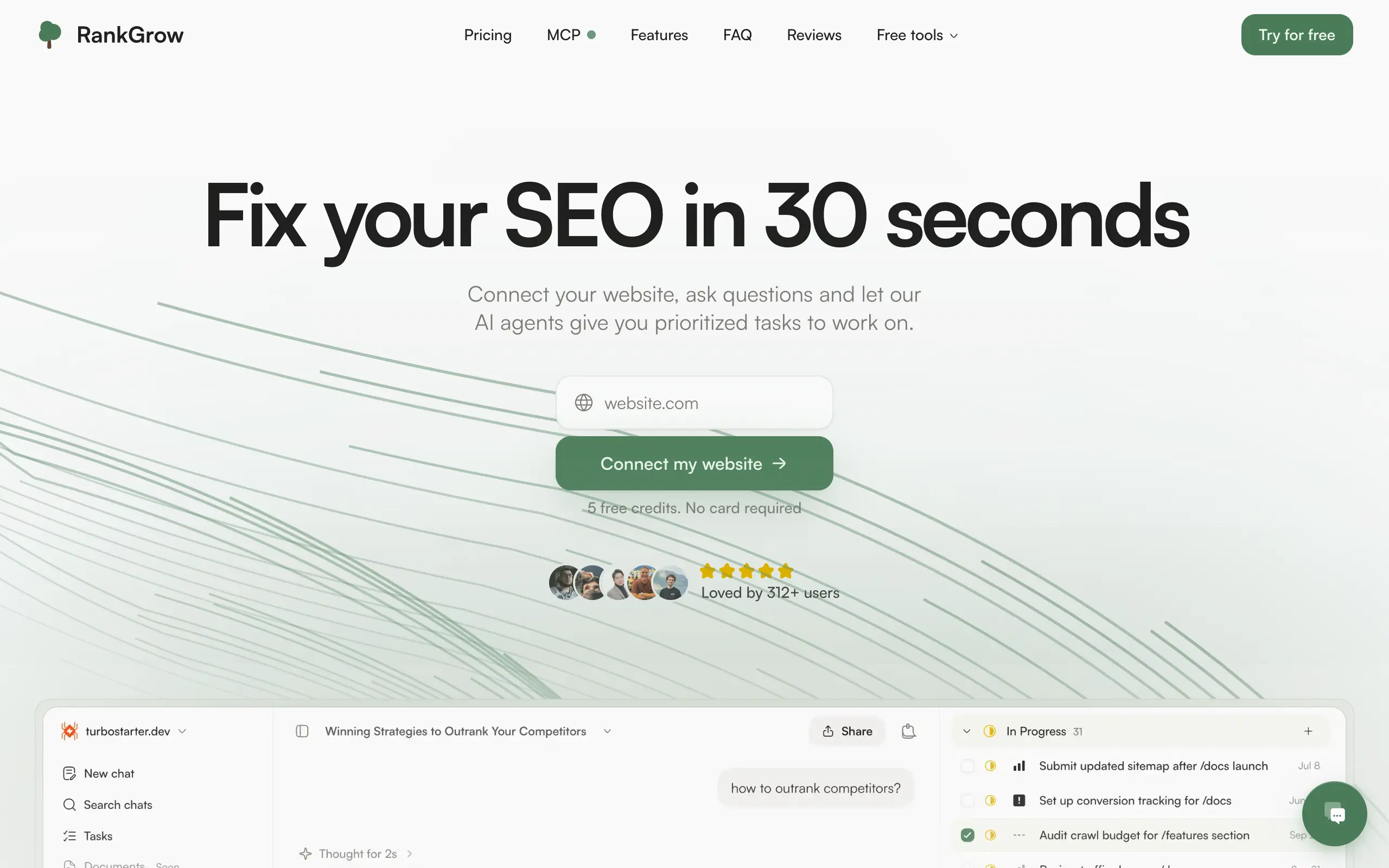
RankGrow
Fix your SEO with AI agents - connect Search Console, get prioritized tasks, and grow organic traffic 📈
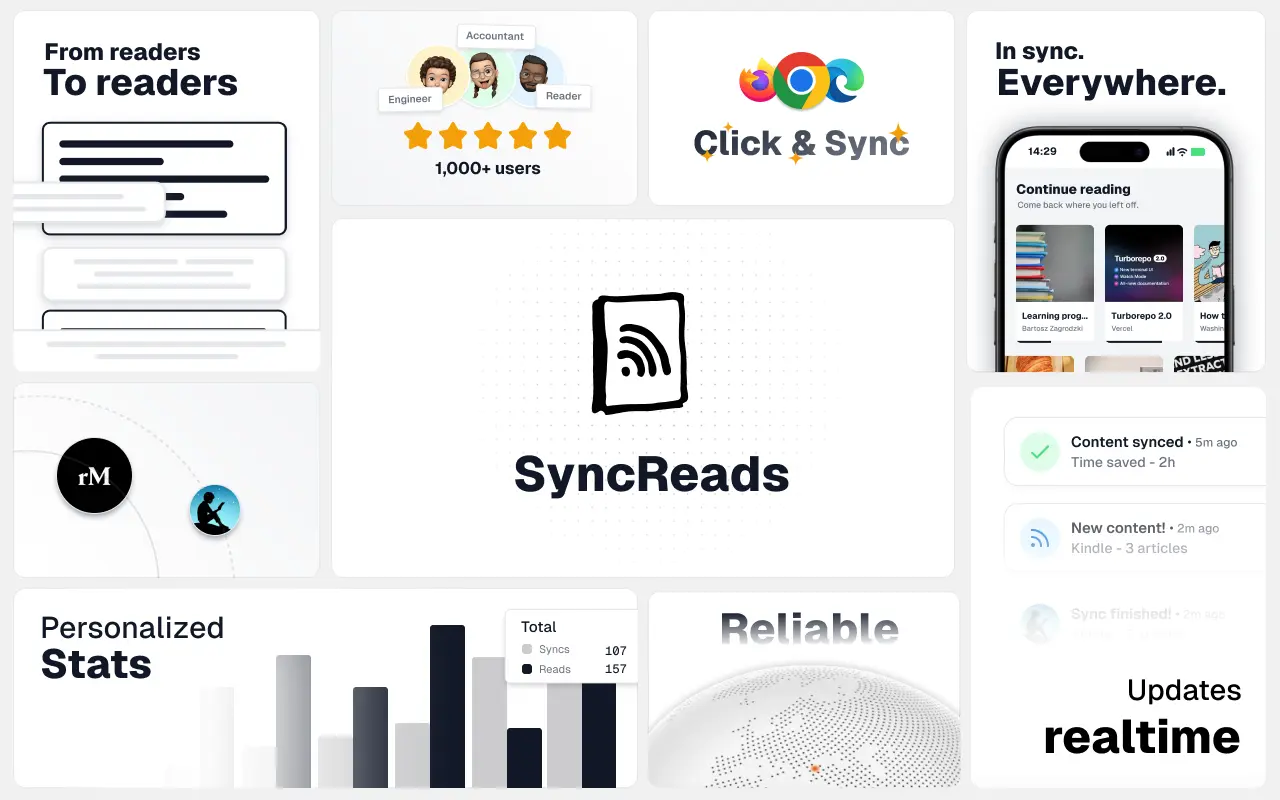
SyncReads
Sync your favorite content for distraction-free reading, save time and replace multiple apps. Anytime, anywhere 🔄
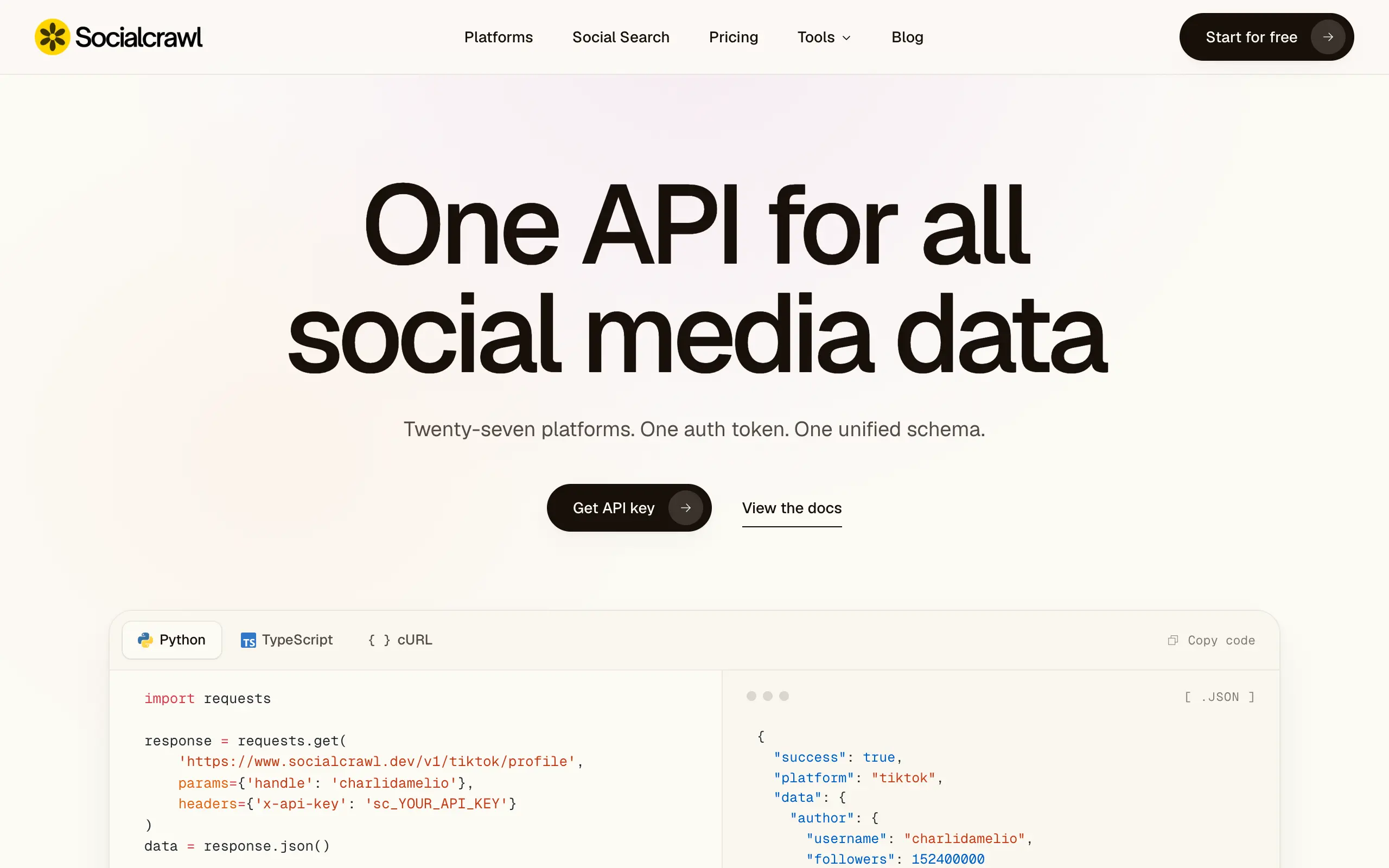
Socialcrawl
Get clean, structured data from 21 platforms like TikTok, Instagram, and YouTube with a single request 📊
Statiko
Monitor any Telegram channel in real time - track posts, edits, deletions, and growth with AI recaps 📡
Shibui
AI website builder - describe your business, pick a niche template, edit by chatting, and publish instantly ✨
Pro Service
Find verified home service professionals, compare quotes, and pay securely through escrow - built for Brazilians across the US 🏠
RankGrow
Fix your SEO with AI agents - connect Search Console, get prioritized tasks, and grow organic traffic 📈
SyncReads
Sync your favorite content for distraction-free reading, save time and replace multiple apps. Anytime, anywhere 🔄
Socialcrawl
Get clean, structured data from 21 platforms like TikTok, Instagram, and YouTube with a single request 📊
Statiko
Monitor any Telegram channel in real time - track posts, edits, deletions, and growth with AI recaps 📡
Shibui
AI website builder - describe your business, pick a niche template, edit by chatting, and publish instantly ✨
Pro Service
Find verified home service professionals, compare quotes, and pay securely through escrow - built for Brazilians across the US 🏠
RankGrow
Fix your SEO with AI agents - connect Search Console, get prioritized tasks, and grow organic traffic 📈
SyncReads
Sync your favorite content for distraction-free reading, save time and replace multiple apps. Anytime, anywhere 🔄
Socialcrawl
Get clean, structured data from 21 platforms like TikTok, Instagram, and YouTube with a single request 📊
Statiko
Monitor any Telegram channel in real time - track posts, edits, deletions, and growth with AI recaps 📡
Shibui
AI website builder - describe your business, pick a niche template, edit by chatting, and publish instantly ✨
Pro Service
Find verified home service professionals, compare quotes, and pay securely through escrow - built for Brazilians across the US 🏠
RankGrow
Fix your SEO with AI agents - connect Search Console, get prioritized tasks, and grow organic traffic 📈
SyncReads
Sync your favorite content for distraction-free reading, save time and replace multiple apps. Anytime, anywhere 🔄
Socialcrawl
Get clean, structured data from 21 platforms like TikTok, Instagram, and YouTube with a single request 📊
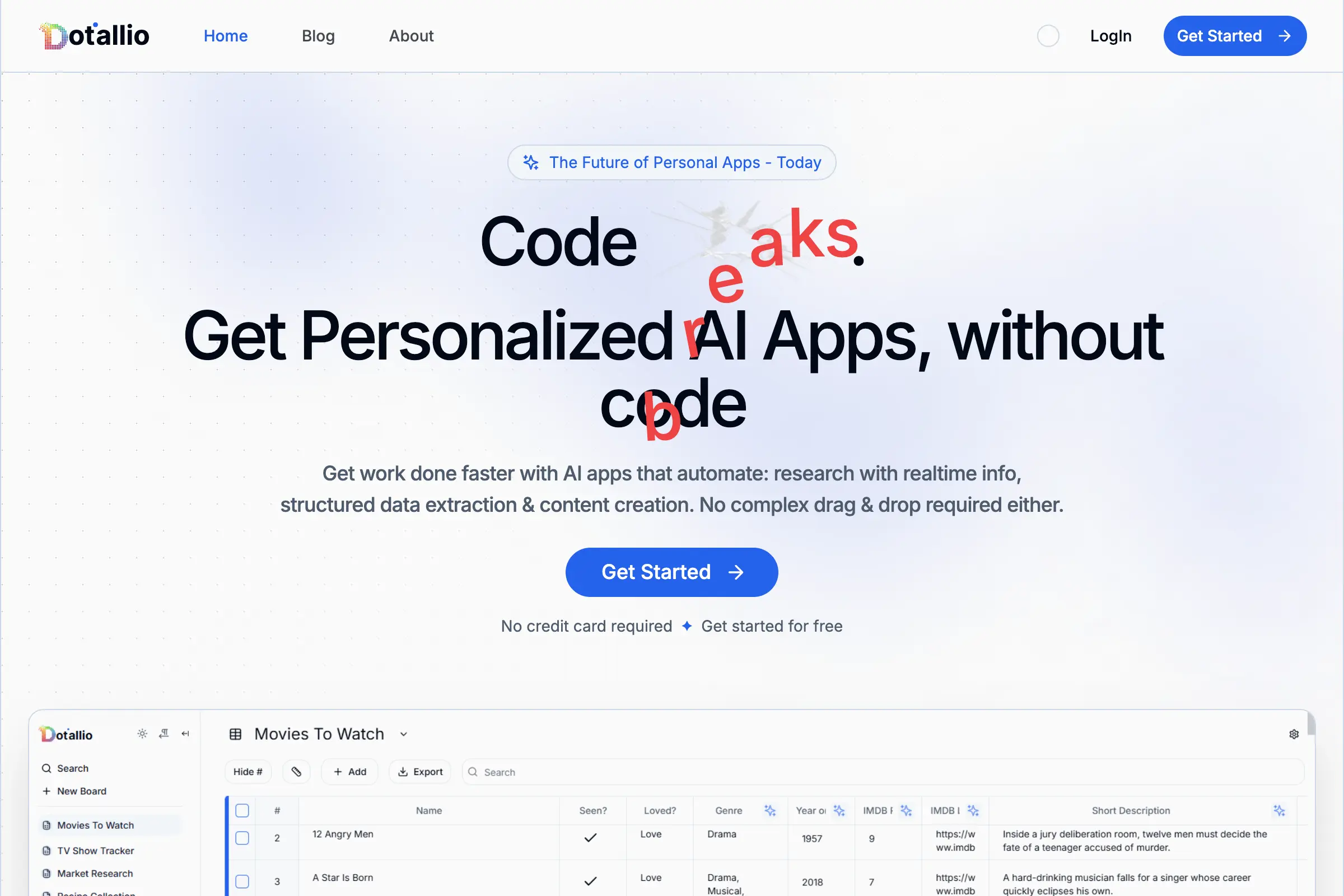
Dotallio
Personalized AI apps that automate research, data extraction, and content creation without code 🤖

Talk to Santa
Enjoy a magical live video chat or receive a unique AI-generated video greeting from Santa Claus 🎅

pozywka.pl
Scalable blog for food journalist, focused on performance and user experience 🌭
zagrodzki.me
Personal blog and portfolio of Bart Zagrodzki, where he shares his knowledge and work 💼
TurboStarter
Ship your startup everywhere. In minutes.
HTML to Markdown
Convert HTML to Markdown with ease, directly in your browser 📄
Dotallio
Personalized AI apps that automate research, data extraction, and content creation without code 🤖
Talk to Santa
Enjoy a magical live video chat or receive a unique AI-generated video greeting from Santa Claus 🎅
pozywka.pl
Scalable blog for food journalist, focused on performance and user experience 🌭
zagrodzki.me
Personal blog and portfolio of Bart Zagrodzki, where he shares his knowledge and work 💼
TurboStarter
Ship your startup everywhere. In minutes.
HTML to Markdown
Convert HTML to Markdown with ease, directly in your browser 📄
Dotallio
Personalized AI apps that automate research, data extraction, and content creation without code 🤖
Talk to Santa
Enjoy a magical live video chat or receive a unique AI-generated video greeting from Santa Claus 🎅
pozywka.pl
Scalable blog for food journalist, focused on performance and user experience 🌭
zagrodzki.me
Personal blog and portfolio of Bart Zagrodzki, where he shares his knowledge and work 💼
TurboStarter
Ship your startup everywhere. In minutes.
HTML to Markdown
Convert HTML to Markdown with ease, directly in your browser 📄
Dotallio
Personalized AI apps that automate research, data extraction, and content creation without code 🤖
Talk to Santa
Enjoy a magical live video chat or receive a unique AI-generated video greeting from Santa Claus 🎅
pozywka.pl
Scalable blog for food journalist, focused on performance and user experience 🌭
zagrodzki.me
Personal blog and portfolio of Bart Zagrodzki, where he shares his knowledge and work 💼
TurboStarter
Ship your startup everywhere. In minutes.
HTML to Markdown
Convert HTML to Markdown with ease, directly in your browser 📄
Omichat
Chat with 50+ AI models, including ChatGPT and Claude, in one place - switch models anytime without losing context 🤖
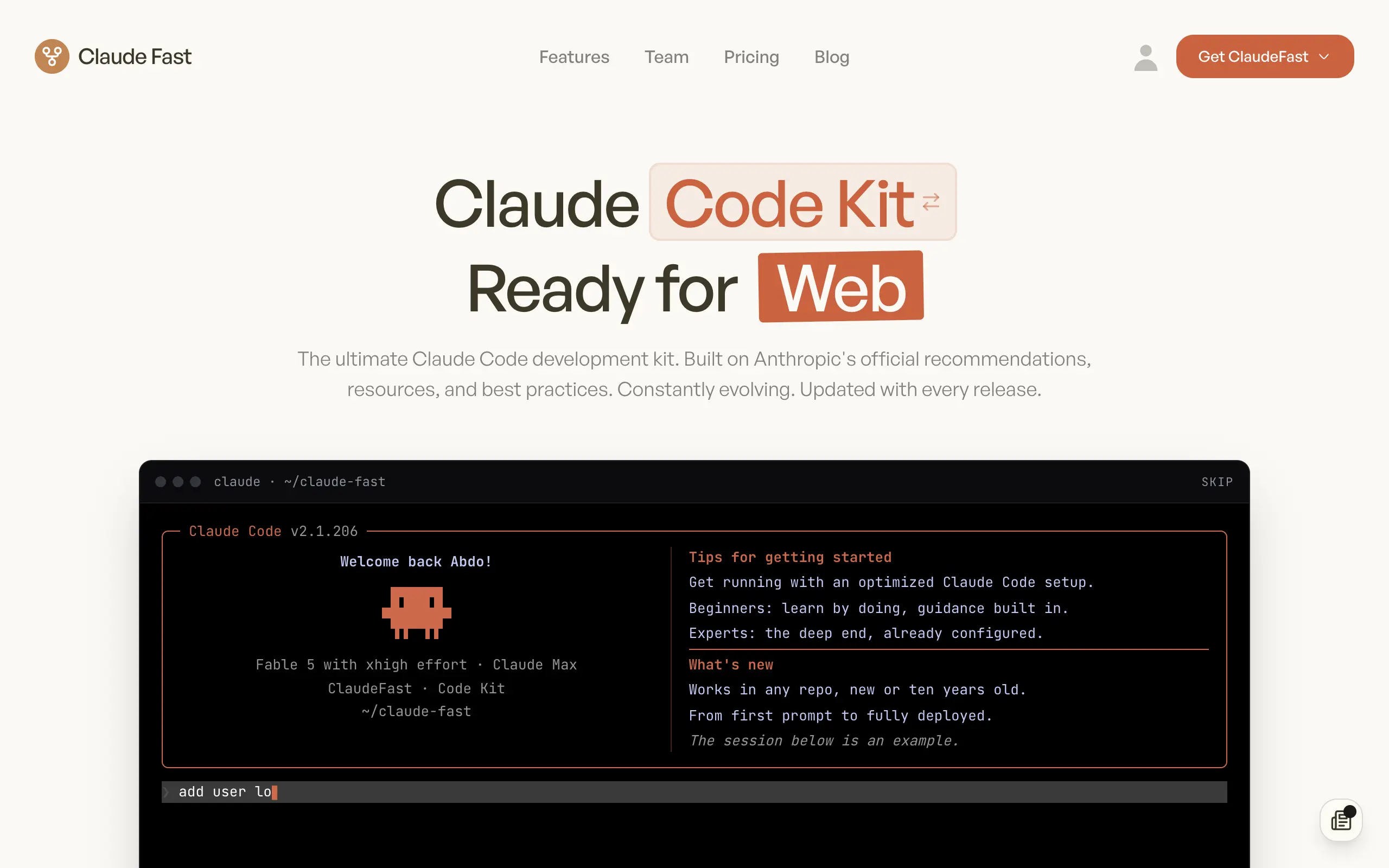
Claude Fast
Supercharge your Claude Code with 6x effective context window and specialized AI agents 🤖
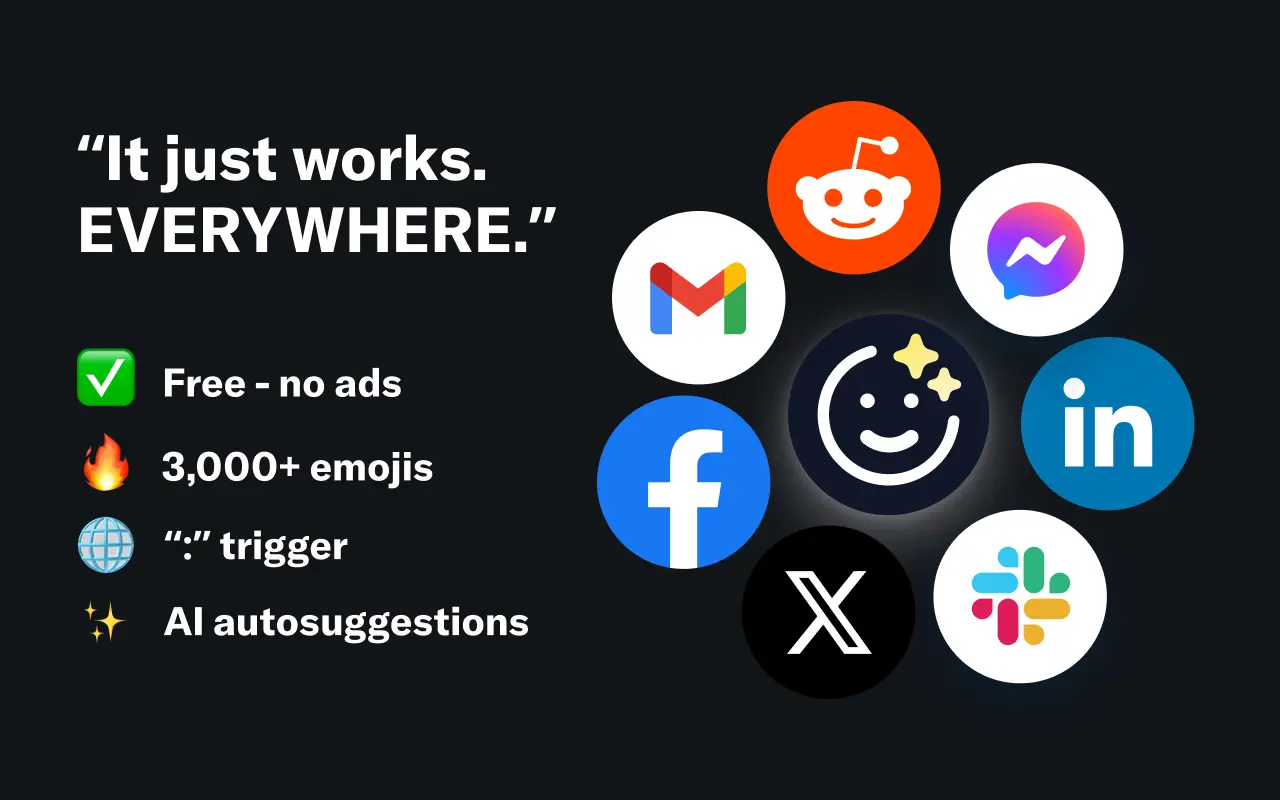
EmojAI
AI-powered emoji picker with smart, context-aware suggestions 🤖
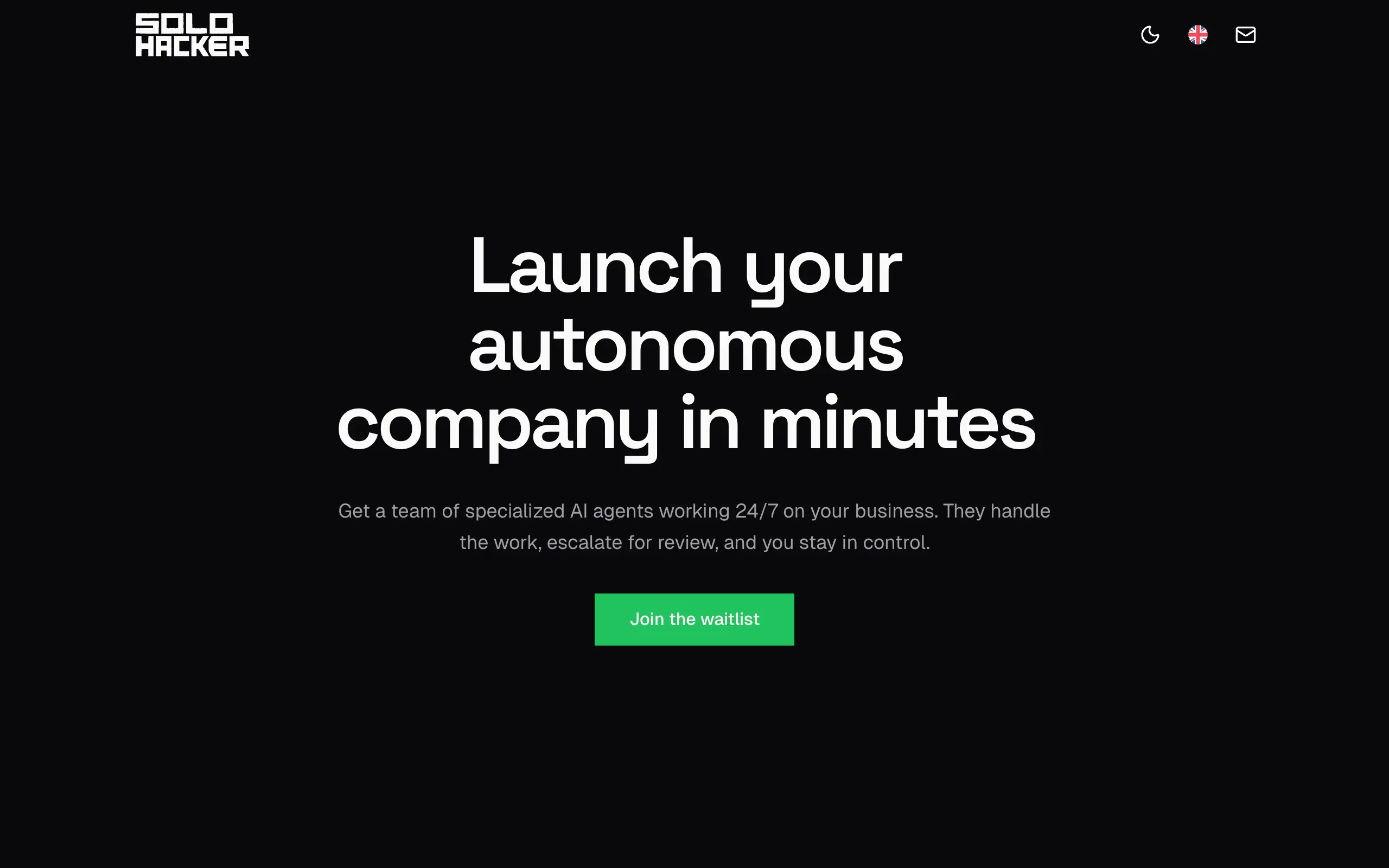
Solohacker
Autonomous company launcher - AI agents work 24/7, escalate what matters, and you stay in control 🤖

BeRawi: Storytelling Coach
Practice storytelling daily with instant feedback to sound clearer, more engaging, and confident 🎤
Omichat
Chat with 50+ AI models, including ChatGPT and Claude, in one place - switch models anytime without losing context 🤖
Claude Fast
Supercharge your Claude Code with 6x effective context window and specialized AI agents 🤖
EmojAI
AI-powered emoji picker with smart, context-aware suggestions 🤖
Solohacker
Autonomous company launcher - AI agents work 24/7, escalate what matters, and you stay in control 🤖
BeRawi: Storytelling Coach
Practice storytelling daily with instant feedback to sound clearer, more engaging, and confident 🎤
Omichat
Chat with 50+ AI models, including ChatGPT and Claude, in one place - switch models anytime without losing context 🤖
Claude Fast
Supercharge your Claude Code with 6x effective context window and specialized AI agents 🤖
EmojAI
AI-powered emoji picker with smart, context-aware suggestions 🤖
Solohacker
Autonomous company launcher - AI agents work 24/7, escalate what matters, and you stay in control 🤖
BeRawi: Storytelling Coach
Practice storytelling daily with instant feedback to sound clearer, more engaging, and confident 🎤
Omichat
Chat with 50+ AI models, including ChatGPT and Claude, in one place - switch models anytime without losing context 🤖
Claude Fast
Supercharge your Claude Code with 6x effective context window and specialized AI agents 🤖
EmojAI
AI-powered emoji picker with smart, context-aware suggestions 🤖
Solohacker
Autonomous company launcher - AI agents work 24/7, escalate what matters, and you stay in control 🤖
BeRawi: Storytelling Coach
Practice storytelling daily with instant feedback to sound clearer, more engaging, and confident 🎤

Connect with like-minded people
Join our community to get feedback, support, and grow together with 1,000+ builders on board, let's ship it!
Join usShip your startup everywhere. In minutes.
Don't burn tokens on setup and start building features on day one.