NextStep AI
An AI decision coach that turns “I don’t know” moments into clear options, trade-offs, and one practical next action for everyday choices.
Most decisions do not fail because people lack information. They fail because information arrives without structure, priorities, or a realistic next move. Someone may know they need a new job, want to move cities, feel stuck in a relationship, or need to choose between saving money and taking a course. The hard part is converting a vague “I don’t know” moment into a decision they can act on today.
NextStep AI is an AI decision coach built for this gap. Instead of behaving like a generic chatbot that produces long, open-ended advice, it guides users through clear options, meaningful trade-offs, and one practical next action. The product promise is simple: help people move from uncertainty to momentum without pretending that an AI can make deeply personal decisions for them.
The primary opportunity is to create an AI decision-making app that feels useful in daily life, emotionally intelligent in its interaction design, and trustworthy in how it handles uncertainty. A successful product should not tell users what to do. It should help them think better, clarify what matters, and make progress with less cognitive load.
Core positioning
NextStep AI should position itself as a practical AI decision coach for everyday choices, not as a replacement for professional financial, legal, medical, or mental health advice.
Why an AI decision coach solves a real problem
Decision fatigue is a familiar problem for knowledge workers, parents, students, freelancers, and anyone managing competing responsibilities. People are expected to make a high volume of choices every day, ranging from low-stakes purchases to career moves with long-term consequences.
Traditional solutions have clear limitations:
- Search engines return information but do not tailor the decision framework to the user.
- Productivity apps organize tasks but rarely help users decide which task matters most.
- Generic AI chatbots can brainstorm but often produce verbose, inconsistent, or overly confident answers.
- Coaches and therapists can be highly effective but may be expensive, unavailable, or unnecessary for smaller day-to-day decisions.
- Friends and family provide context but may bring bias, conflicting incentives, or limited time.
An AI decision coach can occupy the space between casual advice and professional guidance. It can offer structured reflection at the exact moment a user feels blocked.
The strongest version of NextStep AI focuses on three jobs users are trying to complete:
- Turn an unclear problem into a decision that can be named.
- Compare realistic options according to the user’s own priorities.
- Leave the conversation with one next action that reduces uncertainty.
That third job is especially important. Many decision support tools stop at analysis. NextStep AI should be designed to create action, whether that means sending an email, researching one program, booking a consultation, drafting a budget, or having a difficult conversation.
Target audience for NextStep AI
The broad audience for AI decision support is large, but broad positioning can create a vague product. NextStep AI should initially focus on high-frequency decision makers who feel overwhelmed by ambiguity but do not need specialized enterprise decision software.
Primary audience: overwhelmed professionals and knowledge workers
Professionals in their mid-20s through mid-40s often face recurring decisions around work, time, money, relationships, and personal development. They may already use calendars, note-taking systems, AI assistants, and productivity tools, yet still struggle to translate reflection into action.
Common moments include:
- Considering whether to accept a job offer
- Deciding how to handle burnout or workload boundaries
- Choosing between a side project and more rest
- Evaluating a career change
- Selecting a course, certification, or mentor
- Prioritizing competing personal goals
- Deciding whether a purchase is aligned with financial priorities
This segment is likely to understand the value of AI-assisted decision making quickly because they already experience information overload and decision fatigue.
Secondary audience: students and early-career adults
Students and early-career users make many identity-shaping decisions with limited experience. They may need help evaluating internships, majors, first jobs, relocation options, or skill-building paths.
Their needs differ from those of experienced professionals. They often need more educational context, more confidence-building language, and more explicit explanation of trade-offs.
A student might ask, “Should I take the higher-paying job that is unrelated to my degree, or the lower-paid role that builds relevant experience?” NextStep AI should help identify uncertainty, compare short-term and long-term outcomes, and suggest a next action such as reaching out to two people in each field.
Third audience: independent workers and founders
Freelancers, consultants, creators, and early-stage founders make a disproportionate number of decisions with incomplete information. They need to decide what to build, whom to serve, what to charge, when to say no, and where to allocate limited time.
This audience may become a valuable premium segment because decision clarity is directly connected to income and business outcomes. However, their use cases can drift toward strategic business consulting, which may require more robust frameworks and integrations than an everyday consumer product.
Best early adopter
A busy professional who already uses AI tools but wants a faster, more structured way to make personal and career decisions.
High-value recurring use case
Weekly prioritization when users face competing commitments, limited time, and unclear trade-offs.
Potential premium niche
Freelancers and solopreneurs who need decision support for pricing, client selection, and work allocation.
Market gap in AI decision-making tools
The AI market has made conversational assistance widely accessible. The remaining opportunity is not merely another chat interface. It is a focused workflow for moving from uncertainty to a decision-ready state.
Most consumer AI products are optimized for open-ended conversation, generation, or research. They often ask users to provide a prompt, then deliver an answer. This pattern works for writing an email or summarizing text, but decisions usually require a different interaction model.
A useful decision support experience needs to:
- Identify the actual decision behind the user’s initial question.
- Separate facts, assumptions, emotions, constraints, and preferences.
- Present options in a comparable format.
- Show uncertainty honestly.
- Help the user identify reversible versus irreversible choices.
- Convert the outcome into a small, practical action.
The market gap is therefore a decision workflow layer, not simply an LLM wrapper. NextStep AI can win by making the reasoning process legible and repeatable.
Why generic chat interfaces are not enough
A generic chatbot may answer “Should I quit my job?” with a list of pros and cons. That is often insufficient. The user may not know whether their concern is financial risk, lack of career growth, toxic management, exhaustion, or fear of making the wrong choice.
NextStep AI should ask concise, adaptive follow-up questions such as:
- What would need to be true for staying to feel like the right choice?
- Which outcome matters most over the next six months?
- How much financial runway do you have?
- Is this decision reversible?
- What information would change your mind?
These questions transform a vague concern into a structured decision. The app should then produce an output that is brief enough to use, rather than a long essay the user never revisits.
The opportunity is trust-centered product design
Users will share sensitive personal context with an AI decision coach. The product must earn trust through design, policy, and language.
Trust should come from:
- Clear boundaries around medical, legal, financial, and mental health guidance
- Transparent explanations of how recommendations are generated
- User control over saved decision history
- Private-by-default data handling
- Support for deleting conversations and exported data
- Explicit uncertainty when the system lacks enough context
- Avoidance of manipulative engagement tactics
For claims about privacy, security, or data retention, the product website should link to current policy pages and independently reviewed security documentation when available. Avoid vague phrases such as “bank-grade security” unless the company can substantiate them.
The NextStep AI product experience
The central product loop should be easy to understand in seconds:
- A user describes an “I don’t know” moment.
- NextStep AI clarifies the decision and gathers only essential context.
- The system frames two to four viable options.
- It explains trade-offs based on stated priorities.
- It recommends one practical next action.
- The user can save, revisit, or refine the decision later.
The best experience is not necessarily the longest conversation. It is the one that helps users feel more capable after a few minutes.
Core feature: decision intake and reframing
The first screen should not force users to write a perfect prompt. Let them enter an unstructured thought such as:
“I don’t know whether I should move to another city for this job.”
The AI decision coach can then reflect the decision in a concise, neutral form:
“You are deciding whether the career opportunity and lifestyle change are worth the financial, social, and logistical costs of relocating.”
This reframing builds user confidence because it proves the product understands the problem. The user should be able to edit the statement before continuing.
Important fields may include:
- Desired outcome
- Time horizon
- Budget or resource constraints
- Non-negotiables
- Emotional concerns
- Available options
- Missing information
- Decision deadline
The interface should use progressive disclosure. A user should not have to complete a 20-question form before receiving value.
Core feature: option generation with guardrails
NextStep AI should generate options that are realistic, distinct, and relevant to the user’s constraints. It should avoid presenting false binaries.
For example, a user debating whether to quit a job may receive:
- Stay and renegotiate scope, compensation, or workload
- Stay temporarily while preparing a job search
- Search for a new role before resigning
- Leave now if financial runway and wellbeing risk justify it
- Take a defined break or leave of absence if available
The key is not to flood the user with possibilities. Each option should have a clear description, likely benefits, likely costs, and conditions under which it makes sense.
Core feature: personalized trade-off analysis
Trade-off analysis is the heart of an AI decision-making app. NextStep AI should show users that every option has costs, not just benefits.
A useful comparison may evaluate:
- Alignment with stated priorities
- Short-term effort
- Financial impact
- Reversibility
- Downside risk
- Expected learning value
- Emotional energy required
- Information still missing
| Decision factor | Option A | Option B | Why it matters |
|---|---|---|---|
| Career growth | High | Moderate | Measures future opportunity |
| Financial stability | Moderate | High | Protects near-term flexibility |
| Reversibility | Moderate | High | Shows the cost of being wrong |
| Energy demand | High | Low | Accounts for burnout risk |
The table should not imply mathematical certainty. A visual score is helpful only if users can inspect the reasoning behind it. Consider language such as “based on what you told us” and allow users to adjust factor importance manually.
Core feature: the one-next-step recommendation
The most distinctive product behavior should be the final actionable recommendation. Every completed decision session should end with a next step that is:
- Specific
- Small enough to complete soon
- Relevant to the uncertainty
- Within the user’s control
- Measurable or observable
Weak next-step advice would be “think about it more.” Strong advice would be “Ask your prospective manager these three questions about team turnover, role scope, and promotion criteria before Friday.”
The user should be able to mark the action complete, reschedule it, or ask NextStep AI to make it smaller.
Core feature: decision journal and learning loop
A saved decision journal can differentiate NextStep AI from one-off chatbot sessions. Over time, the product can help users identify patterns in their thinking.
Possible journal features include:
- Saved decision summaries
- Priorities selected for each decision
- Assumptions made at the time
- The action chosen
- A later outcome check-in
- Lessons learned
- Reusable personal decision principles
This creates an experience layer that becomes more valuable with use. A user may discover that they consistently overvalue urgency, underestimate recovery time, or avoid asking for key information before choosing.
The product should frame these observations carefully. It can say, “You have frequently rated flexibility as a top priority,” rather than making diagnostic or psychological claims.
A practical decision framework for the product
NextStep AI needs a consistent internal framework so its outputs feel coherent across sessions. A lightweight framework can be branded as the NextStep method.
1. Name the decision
Define the decision in a single sentence. This reduces scope creep and prevents users from solving three life problems at once.
2. Identify what matters now
Ask users to choose or rank values such as stability, growth, time, health, relationships, autonomy, income, or learning. This makes the recommendation personalized rather than generic.
3. Separate knowns from assumptions
The AI should identify which facts are verified and which are guesses. This is a powerful way to reduce anxiety because many difficult decisions are difficult due to hidden assumptions.
4. Compare viable paths
Present a small set of options with trade-offs. Avoid optimizing for a single answer when several choices could be reasonable.
5. Choose the next information-gathering or commitment action
The action may be a decision itself, or it may be an experiment that makes the larger decision easier.
For decisions that are easy to change later, NextStep AI should encourage a timely choice and a short review point. Examples include trying a new routine, testing a productivity tool, or taking a short class.
For decisions with significant financial, legal, health, or relationship consequences, the app should slow the process down. It should identify missing information, recommend appropriate professional input, and avoid forceful recommendations.
This framework draws from established decision-making principles without claiming to replace formal decision science, clinical support, or expert advice.
Recommended tech stack for an AI decision coach
The technology stack should support fast iteration, reliable AI workflows, privacy controls, and a polished consumer experience. The ideal stack depends on the founding team’s skills, expected traffic, and compliance needs.
For a modern web-first SaaS product, a strong starting point is Next.js with React and TypeScript. This combination supports a responsive application, server-side rendering for marketing pages, API routes or server actions, and a broad ecosystem.
Frontend architecture
Recommended frontend components include:
- Next.js for full-stack React application development
- React for interface composition and stateful user experiences
- Tailwind CSS for a consistent and fast design system
- shadcn/ui for accessible, customizable UI primitives
- Zod for validating forms and structured AI responses
A decision support interface should feel calm, not dense. Design priorities include generous spacing, readable type, visible progress, editable summaries, and the ability to pause and resume without losing context.
Backend, authentication, and data layer
A practical backend stack might include:
- Supabase for PostgreSQL, authentication, storage, and row-level security
- Prisma when the team prefers a type-safe ORM and more explicit database workflows
- Stripe for subscriptions and billing
- Sentry for production error monitoring
- PostHog for privacy-conscious product analytics and feature flags
Supabase can be especially attractive for an early-stage AI SaaS because it bundles commonly needed infrastructure. The trade-off is that teams requiring highly customized infrastructure or unusual multi-region requirements may eventually prefer a more modular cloud architecture.
AI model and orchestration layer
NextStep AI should be model-agnostic where possible. Model providers evolve quickly, and the product should be able to route tasks based on quality, latency, cost, and safety requirements.
Potential components include:
- OpenAI API for model access and structured output capabilities
- Anthropic API for model access and long-context reasoning workflows
- Vercel AI SDK for streaming AI interfaces in TypeScript applications
- LangChain only when orchestration complexity justifies an abstraction layer
The main trade-off is simplicity versus flexibility. An early version should avoid a complex multi-agent architecture. A carefully designed prompt, structured output schema, retrieval of user-approved context, and robust evaluation suite will generally deliver more value than a sprawling agent system.
A structured response contract can help ensure every completed session has the same essential outputs.
type DecisionCoachResponse = {
  decisionSummary: string;
  priorities: string[];
  options: Array<{
    title: string;
    description: string;
    benefits: string[];
    tradeoffs: string[];
    confidence: "low" | "medium" | "high";
  }>;
  missingInformation: string[];
  nextAction: {
    title: string;
    whyItHelps: string;
    deadlineSuggestion: string;
  };
  safetyNote?: string;
};
The product should validate model output before rendering it. Do not directly display unvalidated JSON from a language model in a production UI.
Privacy and security requirements
Because users may reveal sensitive details, security cannot be postponed until later. At minimum, NextStep AI should implement:
- Encryption in transit and at rest through trusted infrastructure providers
- Strict access control and least-privilege database policies
- User account deletion workflows
- Clear retention settings for conversation data
- Secure server-side handling of AI provider API keys
- Redaction or minimization of unnecessary personal data in logs
- Rate limiting and abuse prevention
- Audit trails for sensitive administrative access
For users in regulated regions, consult qualified privacy counsel about obligations under applicable laws. If the product serves European users, assess GDPR requirements before making compliance claims. If it could receive health-related information, carefully define product boundaries and avoid presenting the app as a healthcare service without appropriate compliance, governance, and legal review.
Monetization strategy for NextStep AI
The most effective monetization model should match the frequency and depth of use. Since everyday decision support can be both occasional and recurring, a freemium subscription model is likely the strongest starting point.
Freemium subscription model
A free tier can allow users to experience the core decision framework without friction.
Possible free plan limits include:
- A limited number of guided decisions each month
- Basic option comparisons
- Limited decision history
- Standard AI response speed
- No advanced personalization features
A paid plan could include:
- Unlimited or higher-volume decision sessions
- Long-term decision journal access
- Personalized values and priorities profile
- Decision templates for career, money, relationships, and productivity
- Calendar or task app integrations
- Check-ins and outcome reflection
- More detailed decision reports
- Priority model access or faster responses
The premium value should not be “more AI text.” It should be better continuity, personalization, and follow-through.
Additional revenue options
Other monetization paths may become viable after product-market fit:
- "Team plans" — decision support for managers, founders, or coaching organizations, with strong privacy boundaries.
- "Coach partnerships" — tools for human coaches to review client-approved decision summaries.
- "Template marketplace" — expert-created frameworks for specific choices, subject to quality review.
- "Affiliate partnerships" — only for clearly relevant, user-beneficial services and never in a way that biases recommendations.
- "One-time decision packs" — useful for users who need help with a specific event, such as a job change or relocation.
Avoid monetizing through advertising in the early product. Ads can undermine trust, especially when the app handles sensitive personal questions.
Competitive advantage and unique selling proposition
NextStep AI’s competitive advantage should not depend on having access to a particular foundational model. Model capabilities are increasingly accessible to competitors. The defensibility comes from the product system around the model.
The core USP is:
NextStep AI turns everyday uncertainty into structured options, honest trade-offs, and one practical next action that users can complete.
That positioning is meaningfully different from generic AI assistants, to-do apps, journaling tools, and coaching marketplaces.
How NextStep AI can stand out
- Action-first outputs — every session ends with a concrete next move, not only analysis.
- Personal priorities — recommendations are tied to what users say matters, rather than abstract optimization.
- Decision memory — an opt-in journal helps users learn from past choices.
- Transparent reasoning — users can see the factors and assumptions behind a recommendation.
- Calm, bounded UX — the product avoids endless chat and prevents analysis paralysis.
- Safety-aware design — high-stakes topics trigger appropriate caution and professional-resource guidance.
- Decision quality feedback — users can reflect on outcomes and improve their own decision habits.
The long-term moat may be a privacy-respecting dataset of anonymized product insights, user-approved decision patterns, refined frameworks, and evaluation benchmarks. However, the company should never imply that personal decision data is used in ways users did not explicitly agree to.
Risks and mitigation strategies
An AI decision coach has meaningful product, ethical, technical, and business risks. Addressing them early is central to trustworthiness.
Risk: overreliance on AI recommendations
Users may treat a confident recommendation as an authoritative answer. This is especially risky for health, legal, financial, or crisis-related decisions.
Mitigation should include:
- Clear disclaimers for high-stakes domains
- Language that emphasizes options and user agency
- Escalation guidance toward qualified professionals where appropriate
- Safety prompts that trigger based on topic classification
- Avoidance of deterministic language such as “you should definitely”
Risk: hallucinated facts or bad assumptions
A language model can produce plausible but inaccurate information. In a decision context, that can distort the user’s choices.
Mitigation should include:
- Clearly label inferred information versus user-provided facts
- Use web retrieval only with reliable source controls where necessary
- Cite sources within the product when external factual claims influence a recommendation
- Ask users to verify critical assumptions
- Build automated and human evaluation workflows for common decision scenarios
Risk: advice that reinforces user bias
An AI can mirror the framing of the prompt too closely. If a user enters a biased assumption, the app may unintentionally validate it.
Mitigation should include prompts that identify alternative hypotheses, missing viewpoints, and disconfirming evidence. A useful pattern is asking, “What would a reasonable person who disagrees with this option say?”
Risk: privacy concerns
People may avoid the product if they fear personal conversations will be exposed, retained indefinitely, or used to train systems without consent.
Mitigation should include explicit privacy controls, transparent documentation, minimal data collection, and a clear explanation of whether user content is used for training or quality improvement. Policies must match actual technical behavior.
Risk: shallow retention
Users may use NextStep AI once during a stressful moment and never return.
Mitigation should focus on genuine recurring value:
- Weekly decision review
- Follow-up on previous next actions
- Personal decision principles
- Reminders only when user-controlled and useful
- Reusable decision templates
- Outcome reflection that shows learning over time
No. The product should help users make better-informed decisions while preserving agency. Its role is to clarify options, surface trade-offs, identify missing information, and suggest a practical next action.
The app should not provide definitive medical, legal, financial, emergency, or mental health crisis guidance. It can offer general decision structure and encourage users to seek qualified professional help when appropriate.
Use a guided workflow, editable decision framing, explicit trade-off comparisons, user-defined priorities, action planning, and an outcome journal. These product mechanics create a distinct decision-coaching experience.
Go-to-market strategy for an AI decision-making app
The early go-to-market strategy should focus on situations where users already search for help. Content marketing can perform well because many relevant queries have clear intent.
Potential SEO themes include:
- How to make a difficult decision
- AI decision-making tools
- Decision fatigue at work
- How to compare job offers
- How to decide whether to move
- How to make career decisions
- Pros and cons alternatives
- Decision matrix templates
- How to stop overthinking a decision
Content should not simply promote the app. It should provide useful frameworks, examples, and decision templates that demonstrate expertise. For factual industry statistics, cite primary reports or reputable research organizations and include publication dates. This supports E-E-A-T and avoids relying on unsourced trend claims.
Other acquisition channels could include:
- Short-form social content demonstrating real-world decision frameworks
- Partnerships with career coaches and productivity creators
- Communities for professionals, students, freelancers, and founders
- Referral loops around shareable but privacy-safe decision summaries
- App integrations with task managers, calendars, and note-taking platforms
- Product-led onboarding that produces value within the first session
Be careful with sharing mechanics. Decision content is often personal. Default to private, and let users deliberately create a redacted summary if they want outside input.
Actionable implementation plan
The first version of NextStep AI should focus on proving that users value structured decision support enough to return. Do not begin with every possible life category, deep integrations, or complex agent workflows.
Define a narrow initial audience, such as professionals making career and time-management decisions. Interview at least 15 to 25 people about their most recent difficult choices, how they sought advice, and what remained unresolved.
Design a clickable prototype around one complete flow: unstructured input, clarification questions, option comparison, and a one-next-step recommendation. Test whether users understand the outcome without needing a tutorial.
Build an MVP with authentication, secure decision storage, a structured AI output schema, editable recommendations, and a lightweight decision history. Prioritize reliability over feature breadth.
Create a safety taxonomy for high-stakes prompts. Define when the product should provide a disclaimer, suggest professional support, limit advice, or display urgent resources.
Instrument the product to measure activation, session completion, next-action completion, return usage, saved decisions, and user-rated helpfulness. Track quality metrics before optimizing for growth.
Run a private beta with users from the target segment. Review anonymized feedback, identify where the AI asks poor follow-up questions, and refine the framework before expanding categories.
Launch focused educational content around decision making, overthinking, career choices, and practical decision frameworks. Connect every article to a clear product use case.
For founders who want to move quickly, TurboStarter can reduce setup time for a production-minded SaaS foundation, allowing more attention to the decision-coaching workflow, AI evaluation, and user experience that make NextStep AI distinctive.
Metrics that show whether NextStep AI is working
Vanity metrics such as total messages are not enough. The product should measure whether it actually helps people move from uncertainty to action.
Key product metrics include:
- "Activation rate" — percentage of new users who complete their first guided decision.
- "Decision completion rate" — percentage of started sessions that reach a saved outcome.
- "Next-action adoption" — percentage of users who accept, edit, or schedule the recommended next action.
- "Action completion rate" — percentage of users who mark the next action complete.
- "Helpfulness score" — user rating after a decision session.
- "Return rate" — percentage of users who return for another decision within 7, 30, or 90 days.
- "Outcome reflection rate" — percentage of saved decisions that receive a later update.
- "Safety escalation accuracy" — how often high-stakes prompts receive appropriate guidance.
- "Paid conversion" — free users who upgrade after experiencing repeated value.
Qualitative feedback matters equally. Ask users whether the product helped them think more clearly, identify something they had missed, and take a step they otherwise would have delayed.
Final perspective
NextStep AI can become more than another AI chat product if it consistently delivers a focused outcome: clearer thinking and practical momentum. The strongest product will respect the complexity of personal choices while refusing to trap users in endless analysis.
The opportunity is to build an AI decision coach that is structured without being rigid, personalized without being invasive, and helpful without overstating its authority. By combining thoughtful decision frameworks, transparent trade-off analysis, privacy-first design, and action-oriented outputs, NextStep AI can make everyday decisions feel less overwhelming and more manageable.
The winning experience is not an AI that claims to know the user’s life better than they do. It is an AI decision-making app that helps users recognize what they already value, see their real options, and take the next sensible step.
More 🤖 AI Startup SaaS ideas
Discover more innovative ai startup SaaS ideas that are trending in 2026. Each idea is AI-generated with market validation and growth potential to help you find your next profitable venture faster than competitors.
Your competitors are building with TurboStarter
Below are some of the SaaS ideas that have been generated and built with our starter kit.
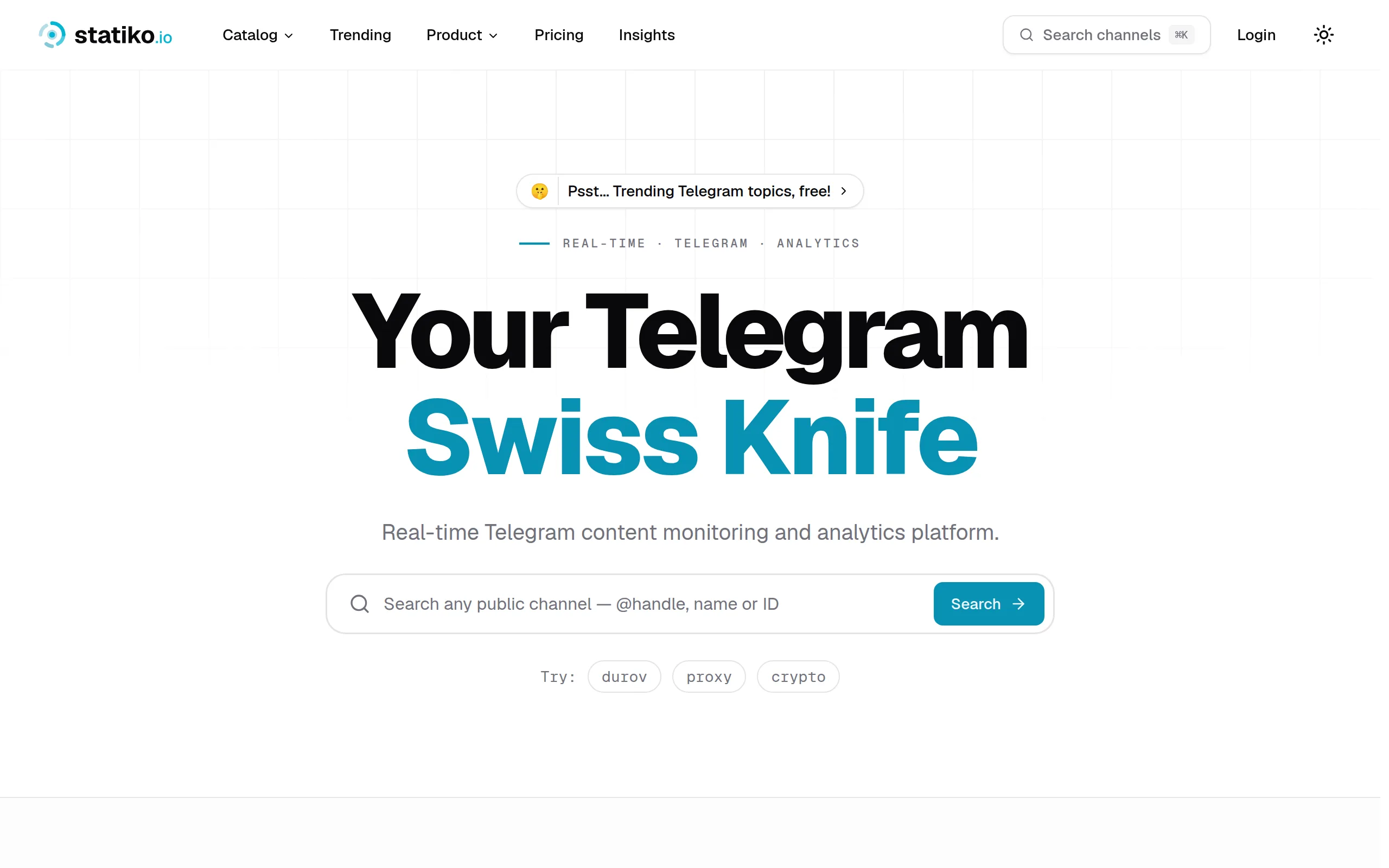
Statiko
Monitor any Telegram channel in real time - track posts, edits, deletions, and growth with AI recaps 📡

Shibui
AI website builder - describe your business, pick a niche template, edit by chatting, and publish instantly ✨

Pro Service
Find verified home service professionals, compare quotes, and pay securely through escrow - built for Brazilians across the US 🏠
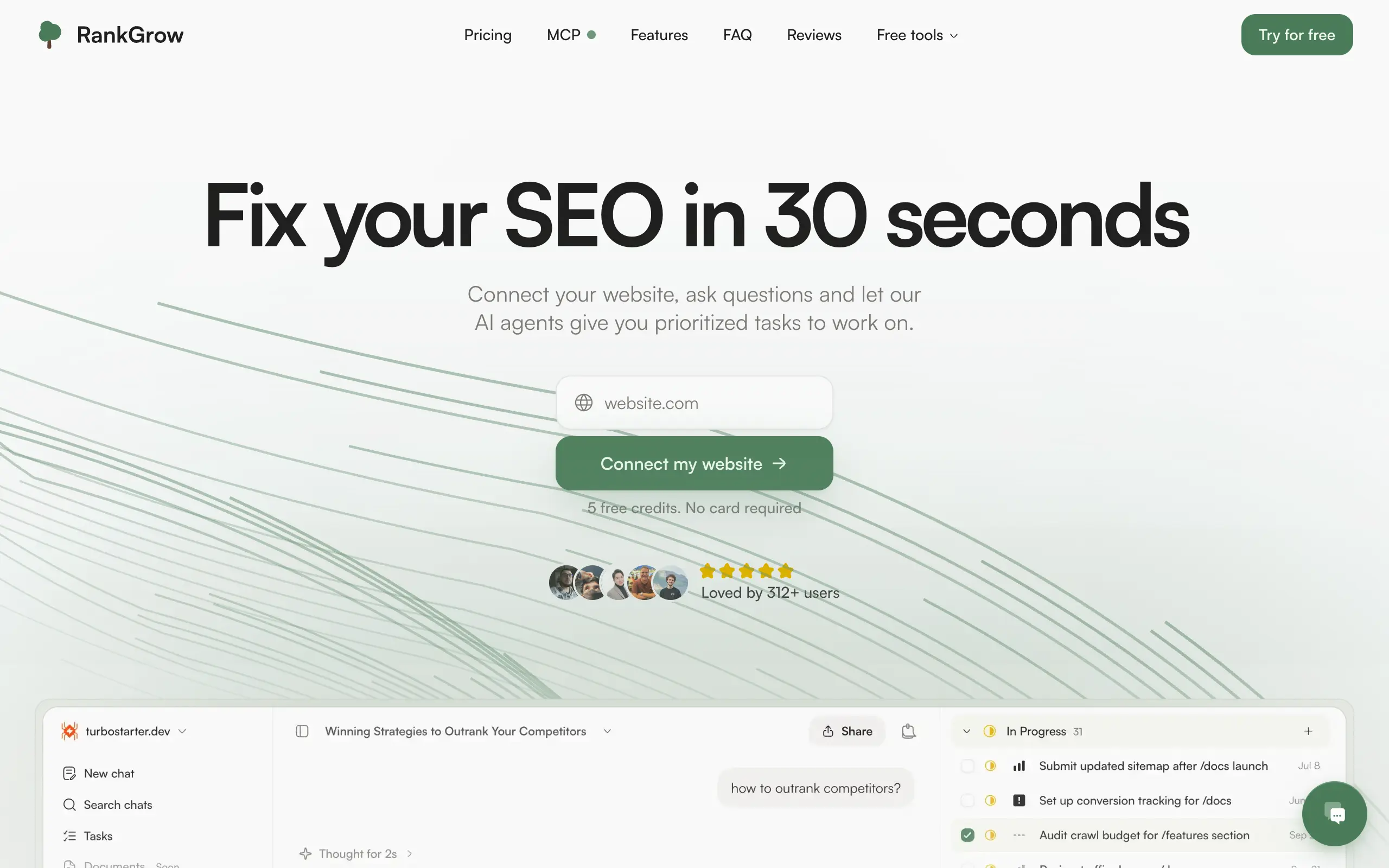
RankGrow
Fix your SEO with AI agents - connect Search Console, get prioritized tasks, and grow organic traffic 📈
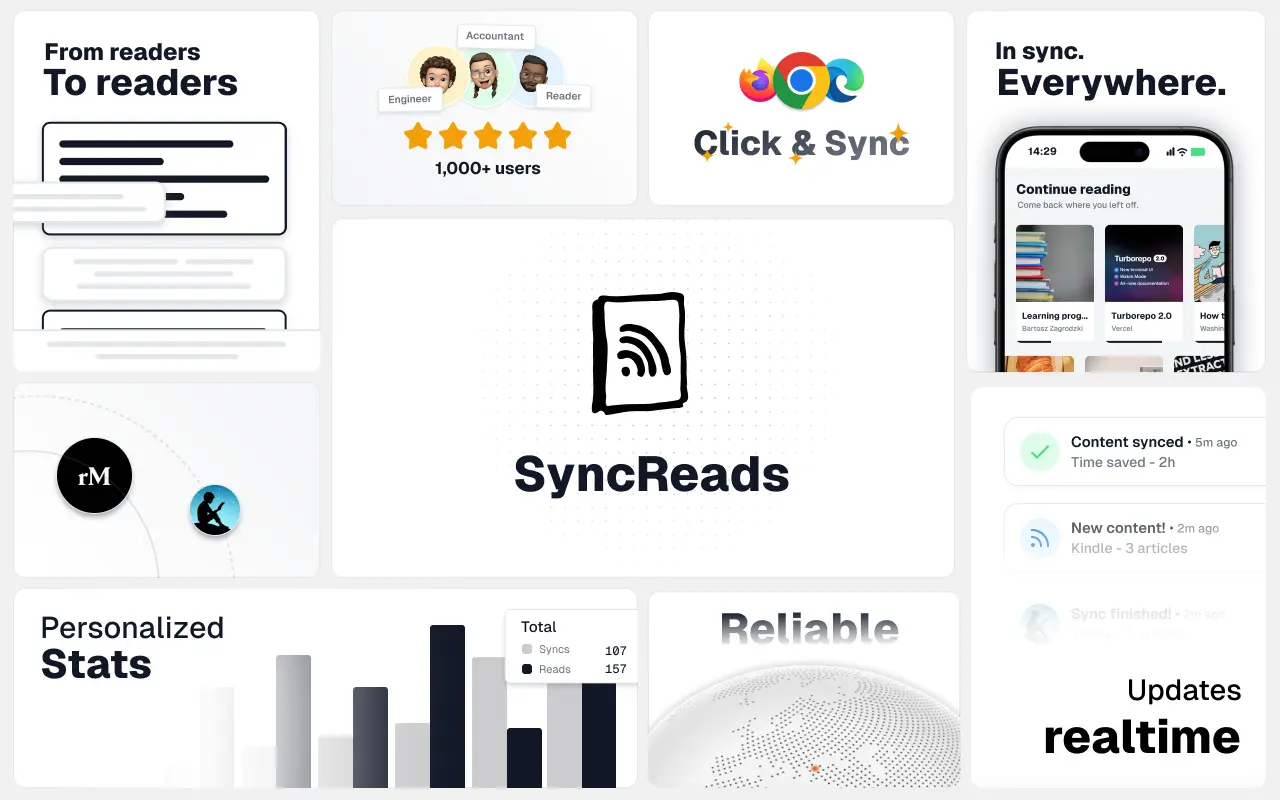
SyncReads
Sync your favorite content for distraction-free reading, save time and replace multiple apps. Anytime, anywhere 🔄
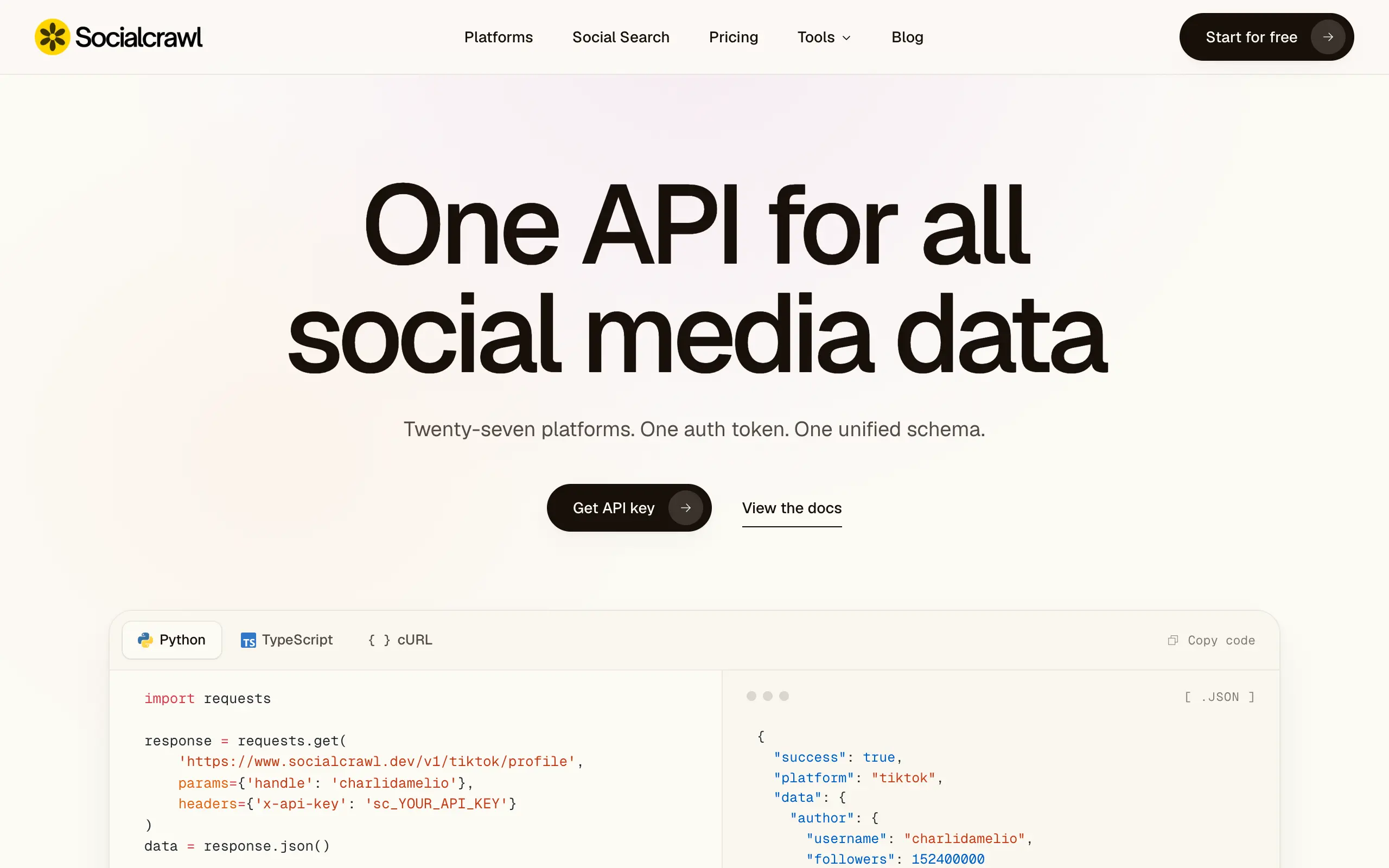
Socialcrawl
Get clean, structured data from 21 platforms like TikTok, Instagram, and YouTube with a single request 📊
Statiko
Monitor any Telegram channel in real time - track posts, edits, deletions, and growth with AI recaps 📡
Shibui
AI website builder - describe your business, pick a niche template, edit by chatting, and publish instantly ✨
Pro Service
Find verified home service professionals, compare quotes, and pay securely through escrow - built for Brazilians across the US 🏠
RankGrow
Fix your SEO with AI agents - connect Search Console, get prioritized tasks, and grow organic traffic 📈
SyncReads
Sync your favorite content for distraction-free reading, save time and replace multiple apps. Anytime, anywhere 🔄
Socialcrawl
Get clean, structured data from 21 platforms like TikTok, Instagram, and YouTube with a single request 📊
Statiko
Monitor any Telegram channel in real time - track posts, edits, deletions, and growth with AI recaps 📡
Shibui
AI website builder - describe your business, pick a niche template, edit by chatting, and publish instantly ✨
Pro Service
Find verified home service professionals, compare quotes, and pay securely through escrow - built for Brazilians across the US 🏠
RankGrow
Fix your SEO with AI agents - connect Search Console, get prioritized tasks, and grow organic traffic 📈
SyncReads
Sync your favorite content for distraction-free reading, save time and replace multiple apps. Anytime, anywhere 🔄
Socialcrawl
Get clean, structured data from 21 platforms like TikTok, Instagram, and YouTube with a single request 📊
Statiko
Monitor any Telegram channel in real time - track posts, edits, deletions, and growth with AI recaps 📡
Shibui
AI website builder - describe your business, pick a niche template, edit by chatting, and publish instantly ✨
Pro Service
Find verified home service professionals, compare quotes, and pay securely through escrow - built for Brazilians across the US 🏠
RankGrow
Fix your SEO with AI agents - connect Search Console, get prioritized tasks, and grow organic traffic 📈
SyncReads
Sync your favorite content for distraction-free reading, save time and replace multiple apps. Anytime, anywhere 🔄
Socialcrawl
Get clean, structured data from 21 platforms like TikTok, Instagram, and YouTube with a single request 📊
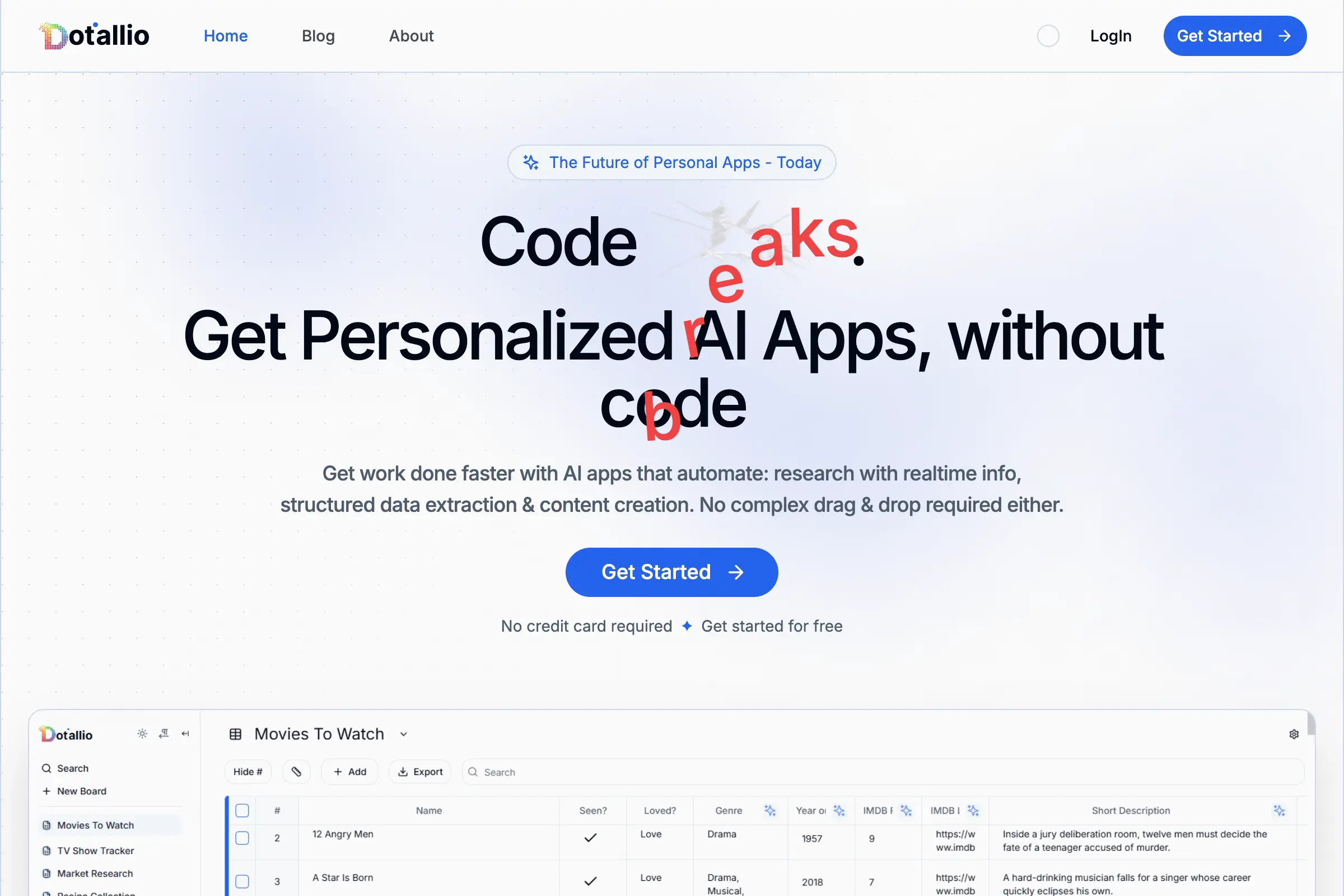
Dotallio
Personalized AI apps that automate research, data extraction, and content creation without code 🤖
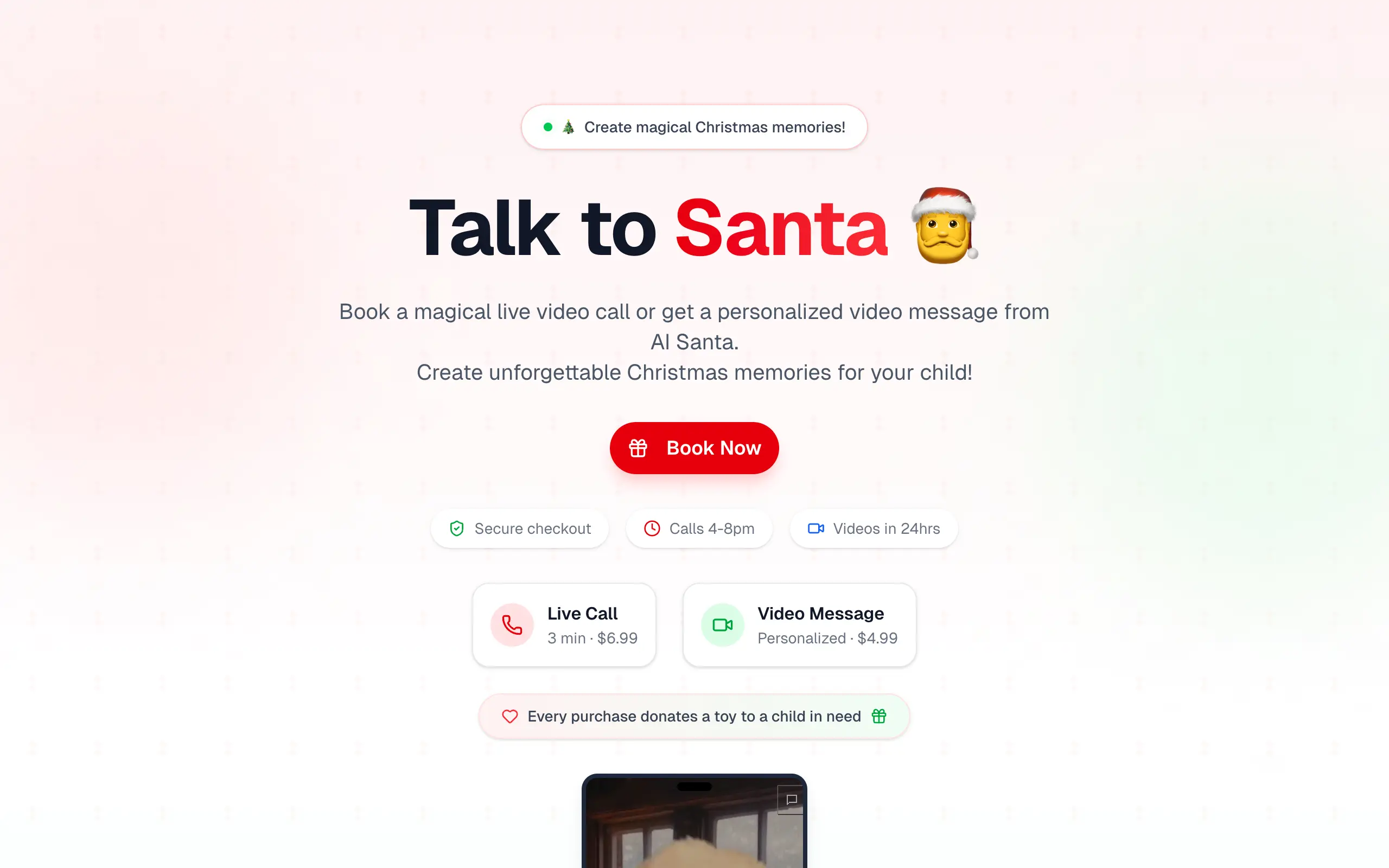
Talk to Santa
Enjoy a magical live video chat or receive a unique AI-generated video greeting from Santa Claus 🎅
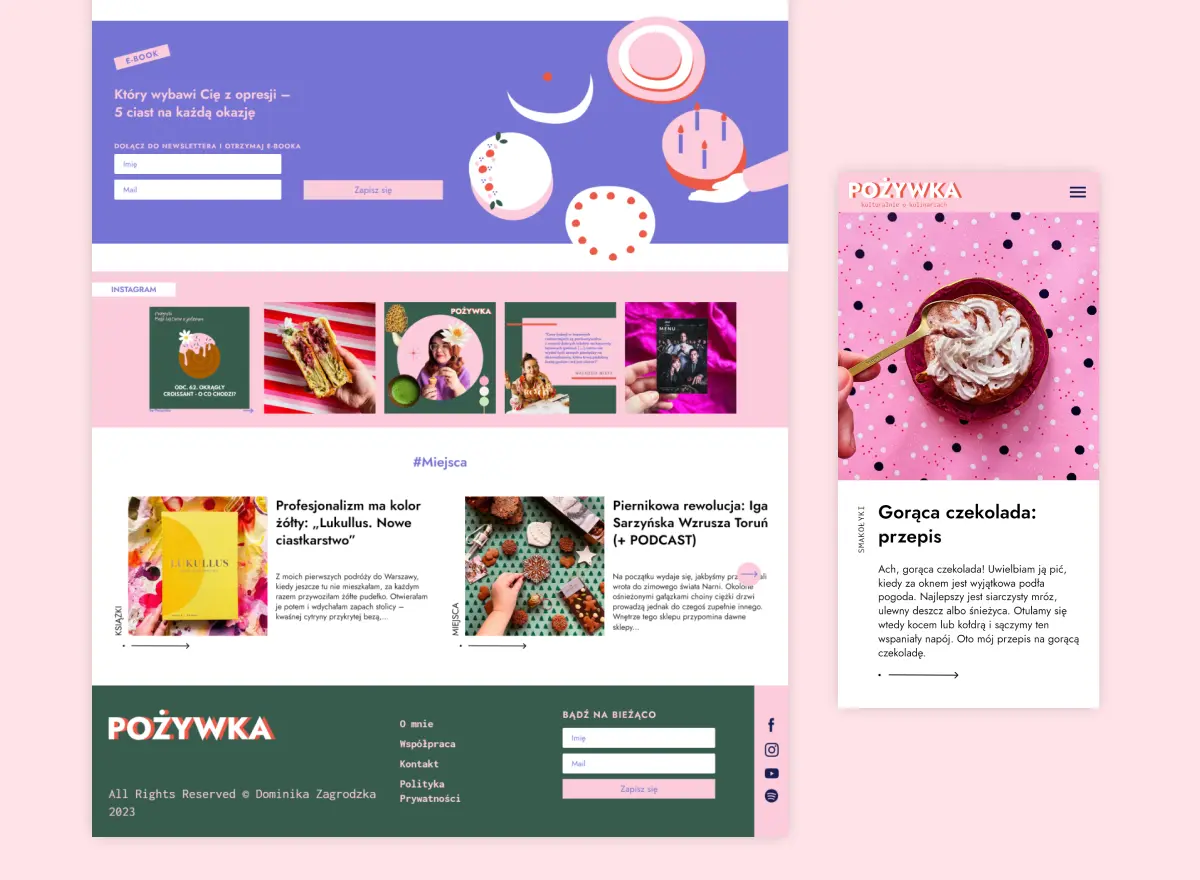
pozywka.pl
Scalable blog for food journalist, focused on performance and user experience 🌭
zagrodzki.me
Personal blog and portfolio of Bart Zagrodzki, where he shares his knowledge and work 💼
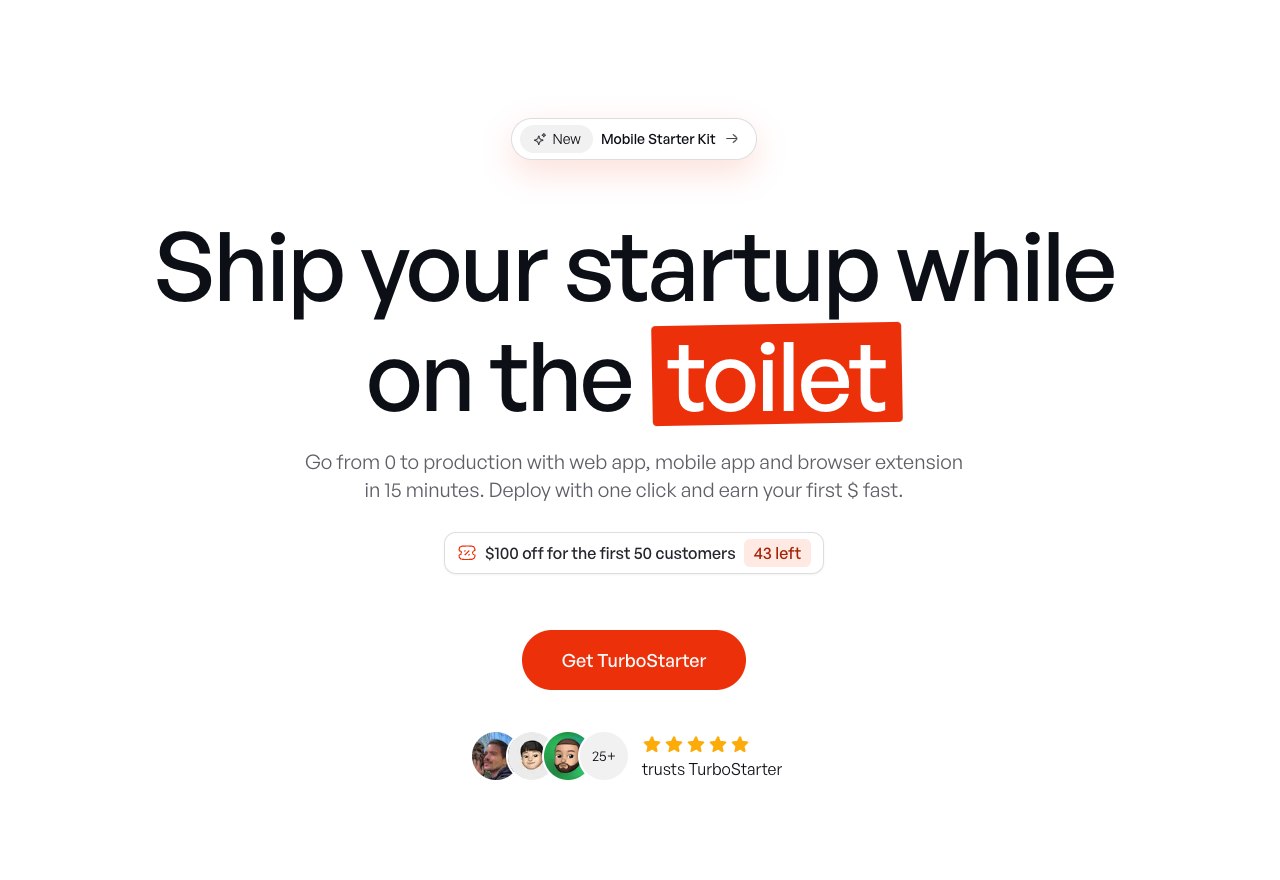
TurboStarter
Ship your startup everywhere. In minutes.
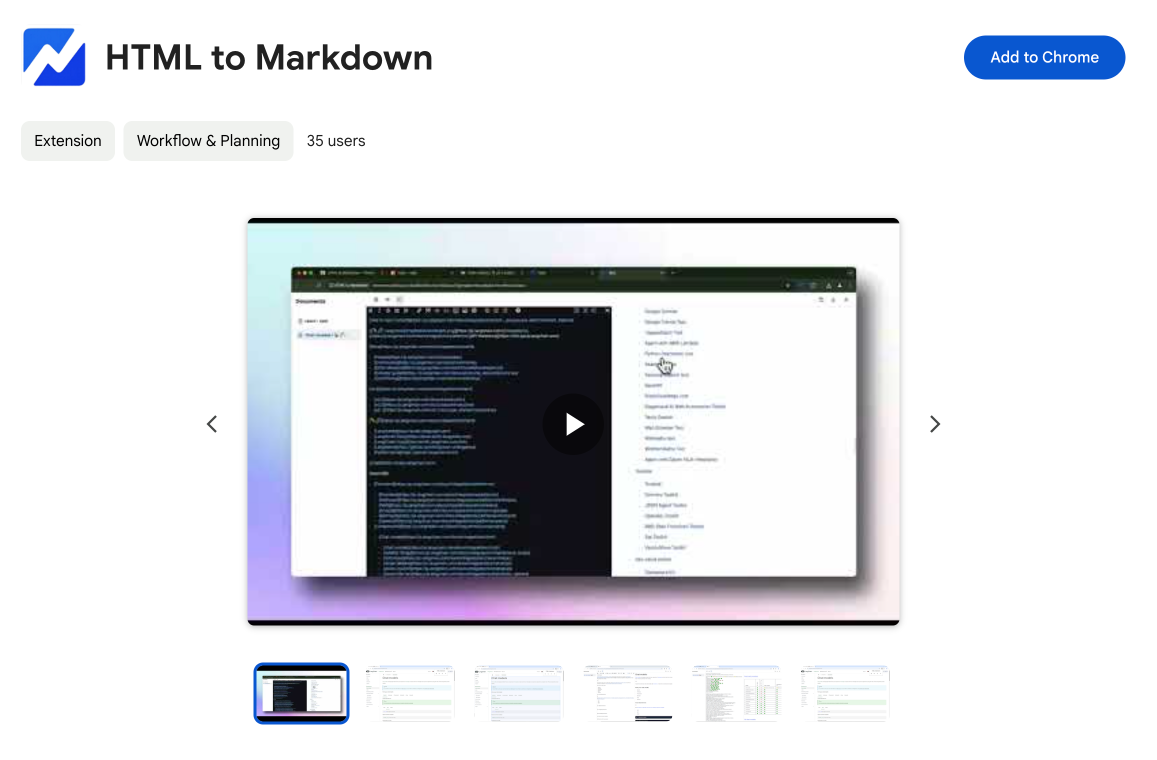
HTML to Markdown
Convert HTML to Markdown with ease, directly in your browser 📄
Dotallio
Personalized AI apps that automate research, data extraction, and content creation without code 🤖
Talk to Santa
Enjoy a magical live video chat or receive a unique AI-generated video greeting from Santa Claus 🎅
pozywka.pl
Scalable blog for food journalist, focused on performance and user experience 🌭
zagrodzki.me
Personal blog and portfolio of Bart Zagrodzki, where he shares his knowledge and work 💼
TurboStarter
Ship your startup everywhere. In minutes.
HTML to Markdown
Convert HTML to Markdown with ease, directly in your browser 📄
Dotallio
Personalized AI apps that automate research, data extraction, and content creation without code 🤖
Talk to Santa
Enjoy a magical live video chat or receive a unique AI-generated video greeting from Santa Claus 🎅
pozywka.pl
Scalable blog for food journalist, focused on performance and user experience 🌭
zagrodzki.me
Personal blog and portfolio of Bart Zagrodzki, where he shares his knowledge and work 💼
TurboStarter
Ship your startup everywhere. In minutes.
HTML to Markdown
Convert HTML to Markdown with ease, directly in your browser 📄
Dotallio
Personalized AI apps that automate research, data extraction, and content creation without code 🤖
Talk to Santa
Enjoy a magical live video chat or receive a unique AI-generated video greeting from Santa Claus 🎅
pozywka.pl
Scalable blog for food journalist, focused on performance and user experience 🌭
zagrodzki.me
Personal blog and portfolio of Bart Zagrodzki, where he shares his knowledge and work 💼
TurboStarter
Ship your startup everywhere. In minutes.
HTML to Markdown
Convert HTML to Markdown with ease, directly in your browser 📄
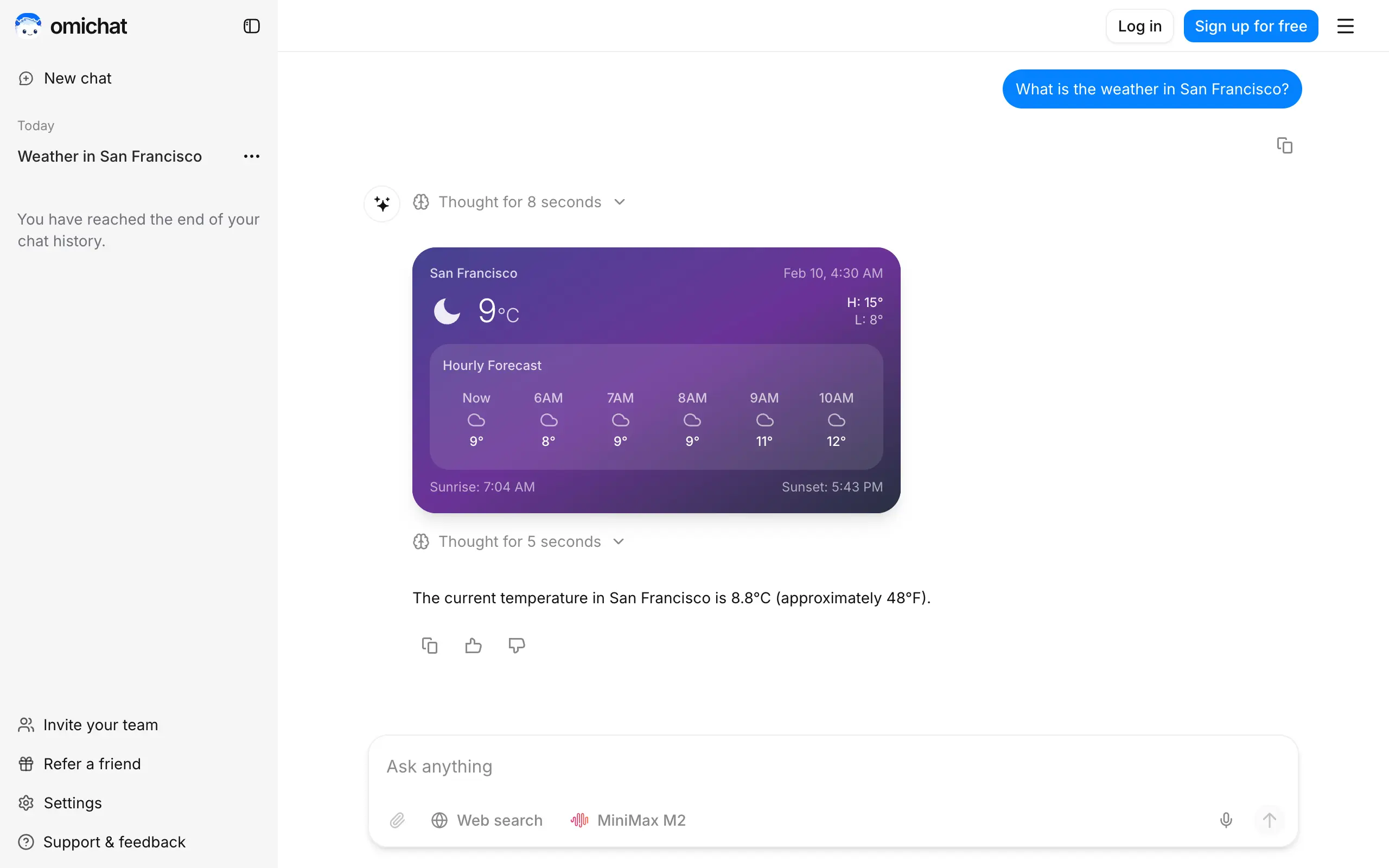
Omichat
Chat with 50+ AI models, including ChatGPT and Claude, in one place - switch models anytime without losing context 🤖
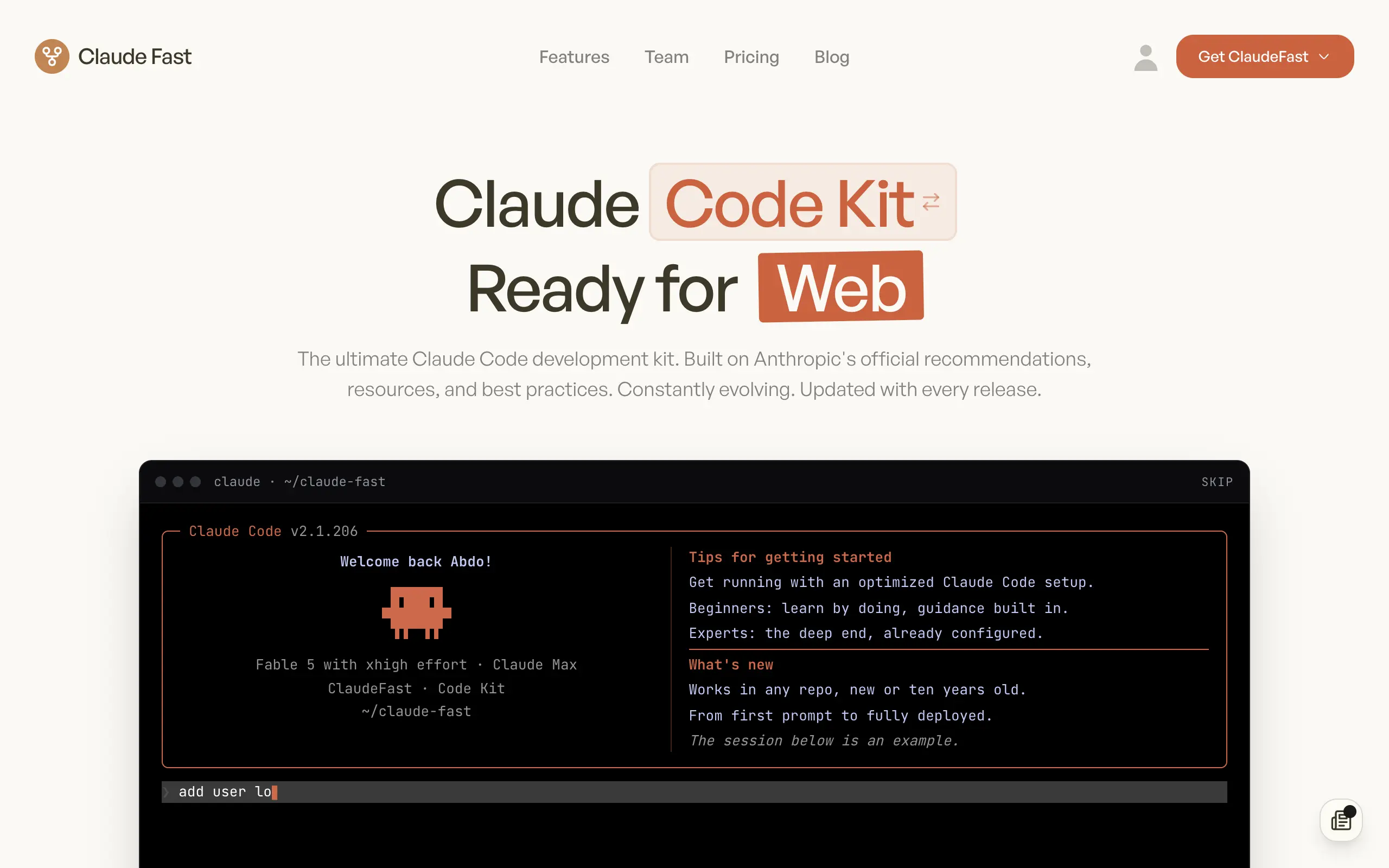
Claude Fast
Supercharge your Claude Code with 6x effective context window and specialized AI agents 🤖
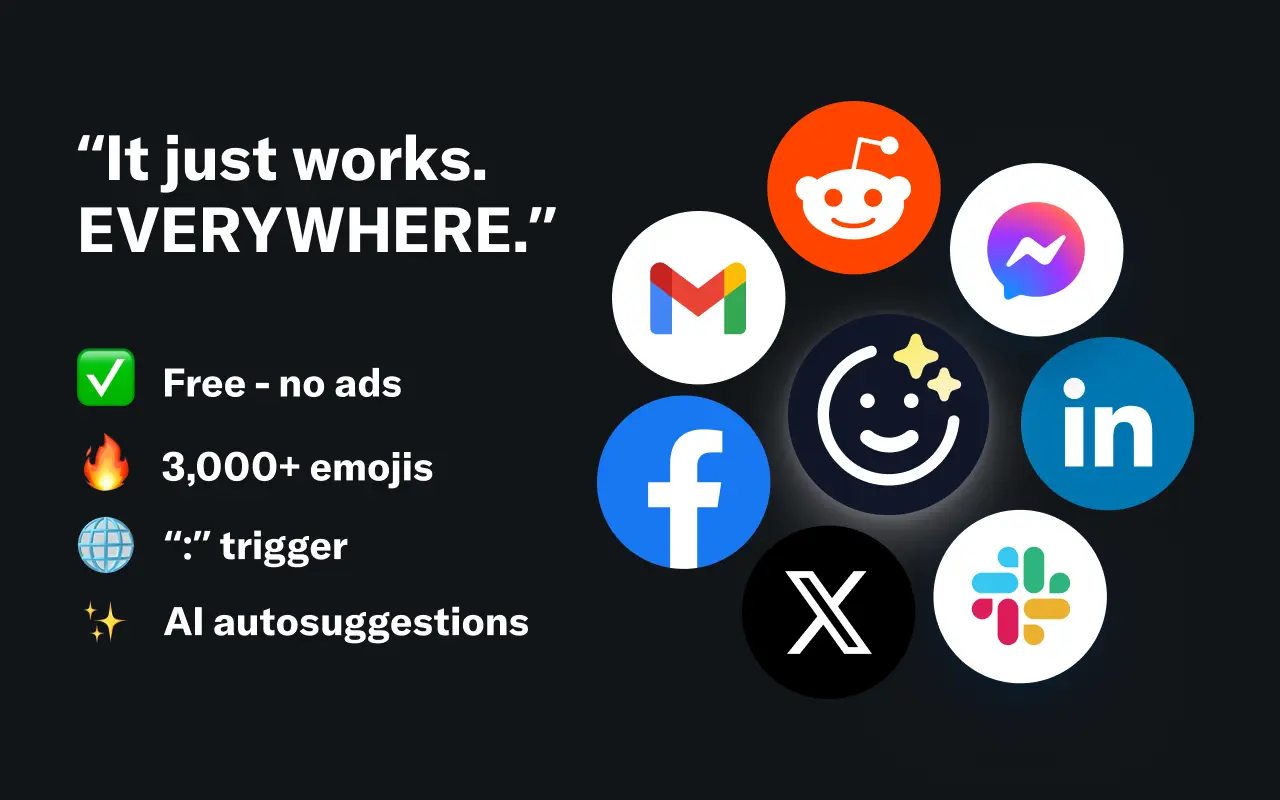
EmojAI
AI-powered emoji picker with smart, context-aware suggestions 🤖
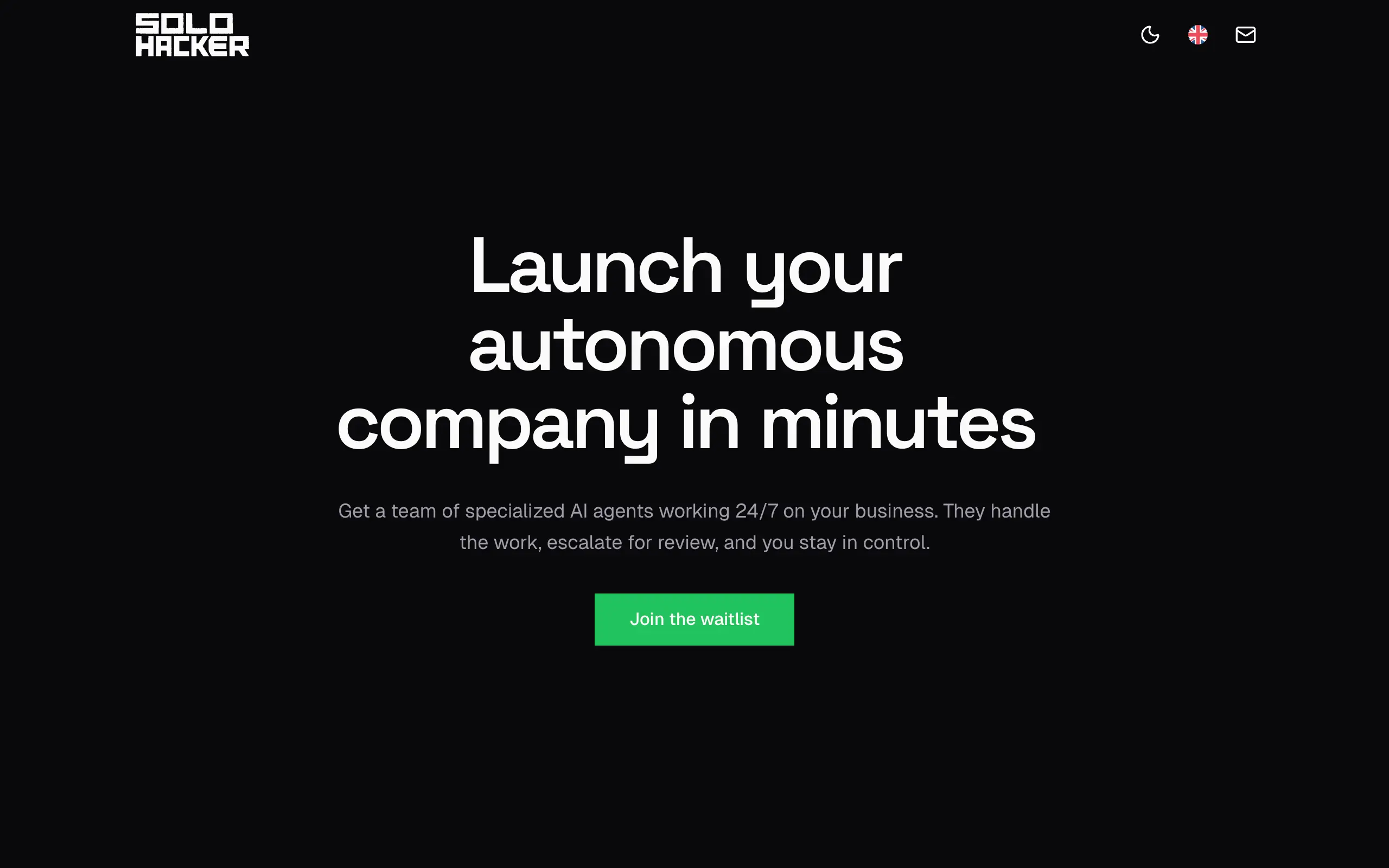
Solohacker
Autonomous company launcher - AI agents work 24/7, escalate what matters, and you stay in control 🤖
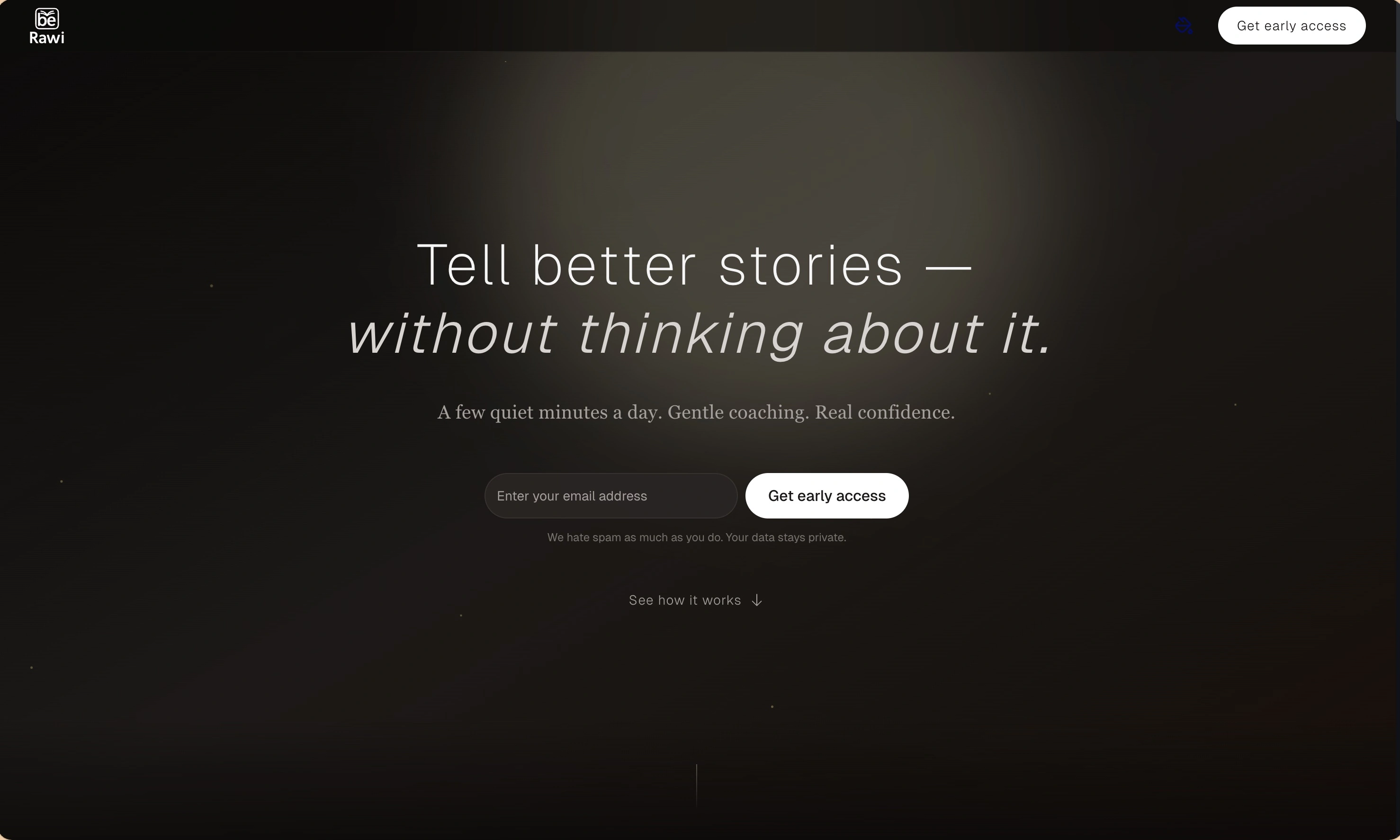
BeRawi: Storytelling Coach
Practice storytelling daily with instant feedback to sound clearer, more engaging, and confident 🎤
Omichat
Chat with 50+ AI models, including ChatGPT and Claude, in one place - switch models anytime without losing context 🤖
Claude Fast
Supercharge your Claude Code with 6x effective context window and specialized AI agents 🤖
EmojAI
AI-powered emoji picker with smart, context-aware suggestions 🤖
Solohacker
Autonomous company launcher - AI agents work 24/7, escalate what matters, and you stay in control 🤖
BeRawi: Storytelling Coach
Practice storytelling daily with instant feedback to sound clearer, more engaging, and confident 🎤
Omichat
Chat with 50+ AI models, including ChatGPT and Claude, in one place - switch models anytime without losing context 🤖
Claude Fast
Supercharge your Claude Code with 6x effective context window and specialized AI agents 🤖
EmojAI
AI-powered emoji picker with smart, context-aware suggestions 🤖
Solohacker
Autonomous company launcher - AI agents work 24/7, escalate what matters, and you stay in control 🤖
BeRawi: Storytelling Coach
Practice storytelling daily with instant feedback to sound clearer, more engaging, and confident 🎤
Omichat
Chat with 50+ AI models, including ChatGPT and Claude, in one place - switch models anytime without losing context 🤖
Claude Fast
Supercharge your Claude Code with 6x effective context window and specialized AI agents 🤖
EmojAI
AI-powered emoji picker with smart, context-aware suggestions 🤖
Solohacker
Autonomous company launcher - AI agents work 24/7, escalate what matters, and you stay in control 🤖
BeRawi: Storytelling Coach
Practice storytelling daily with instant feedback to sound clearer, more engaging, and confident 🎤

Connect with like-minded people
Join our community to get feedback, support, and grow together with 1,000+ builders on board, let's ship it!
Join usShip your startup everywhere. In minutes.
Don't burn tokens on setup and start building features on day one.