OfferPilot AI
AI deal desk for realtors that scores offer strength, drafts client-friendly comparisons, and flags negotiation risks before deadlines.
What an AI deal desk for realtors should solve
Residential real estate agents regularly manage one of the most time-sensitive and emotionally charged decisions their clients will make. When multiple offers arrive, the challenge is not simply identifying the highest price. A strong offer review must weigh financing reliability, appraisal exposure, inspection contingencies, closing timing, earnest money, seller concessions, escalation clauses, occupancy needs, and the practical likelihood that the transaction will close.
OfferPilot AI is an AI deal desk for realtors designed to make that process faster, more consistent, and easier to explain. It scores offer strength, creates client-friendly offer comparisons, and highlights negotiation risks before an acceptance deadline passes.
The core value proposition is straightforward: help agents turn complex, unstructured offer documents into a defensible recommendation without replacing professional judgment.
For real estate teams, brokerages, and high-volume listing agents, this type of real estate offer analysis software can reduce manual review time while improving communication with sellers. Instead of comparing PDFs, text messages, lender letters, and spreadsheet notes across several disconnected tools, agents receive a structured decision workspace that surfaces what matters.
The key product principle
An AI deal desk should recommend and explain, not make the final decision. Real estate professionals must retain control over offer evaluation, disclosure obligations, negotiation strategy, and client communications.
The strongest positioning for OfferPilot AI is not “AI that picks the winning offer.” That claim would be risky, simplistic, and professionally unhelpful. The better promise is:
OfferPilot AI helps realtors review offers with more speed, consistency, and clarity while preserving the agent’s expertise and the seller’s decision-making authority.
Why real estate offer analysis is still a painful workflow
Most real estate professionals already understand how to compare offers. The operational problem is that the information arrives in inconsistent formats and must be interpreted under pressure.
A listing agent may receive five offers, each with different forms, attachments, lender documents, addenda, and informal notes. One buyer may submit an escalation clause, another may offer appraisal-gap coverage, and a third may have a larger down payment but a longer financing contingency. These details are often buried across dozens of pages.
The agent then needs to accomplish several tasks quickly:
- Extract critical terms from every offer package.
- Verify that forms and signatures appear complete.
- Compare net proceeds rather than only headline price.
- Identify financing, appraisal, inspection, and timeline risks.
- Explain trade-offs in plain language to the seller.
- Prepare counteroffer or negotiation options.
- Maintain a documented, professional review process.
This workflow is especially difficult during competitive listing periods. Agents are balancing rapid response expectations with legal, ethical, and fiduciary responsibilities. A manual comparison spreadsheet can work, but it is slow to create, hard to standardize, and vulnerable to accidental omissions.
An AI deal desk for realtors addresses this gap by creating a structured layer between incoming offer documents and client conversations.
Target audience for OfferPilot AI
OfferPilot AI should begin with users who have frequent offer review volume and clear economic incentive to improve their process. The best early customers are not necessarily every individual agent. They are professionals and organizations where repeated offer analysis creates measurable friction.
Listing agents handling competitive properties
Listing agents are the most direct users. They need to compare offers, communicate clearly with sellers, and negotiate efficiently.
Their common frustrations include:
- Reviewing documents late at night or on weekends.
- Explaining why a lower-priced offer may still be stronger.
- Creating comparison summaries manually.
- Tracking revisions after counters and best-and-final rounds.
- Avoiding missed details that could affect closing certainty.
For this segment, OfferPilot AI should emphasize time savings, cleaner seller presentations, and a more reliable offer review workflow.
Real estate teams and team leads
High-performing teams often have administrative coordinators, transaction coordinators, or junior agents who prepare offer summaries before a senior agent reviews them. This creates a standardization problem.
A team leader wants every listing to receive the same quality of offer analysis, even when different staff members handle intake. OfferPilot AI can provide repeatable templates, shared scoring criteria, approval flows, and centralized records.
The team-level pitch is about operational consistency:
- Standardize offer review quality across the team.
- Reduce dependence on a single experienced administrator.
- Create reusable seller-facing comparison formats.
- Keep deal data accessible during negotiations.
- Build institutional knowledge around offer strength.
Brokerages and enterprise real estate organizations
Brokerages may purchase an AI offer comparison platform as a value-added technology benefit for their agents. This audience cares about governance, adoption, permissions, data protection, and brand consistency.
A brokerage implementation could include:
- Custom scoring frameworks by market or office.
- Approved offer comparison templates.
- Role-based access controls.
- Audit trails for internal quality review.
- Brokerage branding on seller reports.
- Integrations with transaction management tools.
Enterprise buyers will also expect documented security practices, clear retention rules, and contractual terms around data ownership.
Transaction coordinators and real estate operations staff
Transaction coordinators may not always advise clients on which offer to choose, but they frequently organize forms, validate completeness, and manage deadlines. They benefit from automated document intake, offer package checklists, and missing-item alerts.
This group can be an important secondary user because their workflow creates clean inputs for agent recommendations.
Primary buyer
Listing agents and teams that repeatedly review multiple offers and need faster, clearer seller conversations.
Operational user
Transaction coordinators who organize offer documents, validate completeness, and manage deadlines.
Expansion buyer
Brokerages that want standardized offer review workflows, governance, and agent-facing technology.
The market gap in real estate offer comparison software
The real estate technology ecosystem includes CRMs, transaction management platforms, digital signature tools, showing solutions, and comparative market analysis products. Yet offer analysis often remains a manual task performed through email, PDFs, notes, and spreadsheets.
That is the market gap: many systems store transaction documents, but fewer help agents interpret the relative strength and risk of competing offers in a seller-friendly way.
A traditional transaction platform may help users collect documents after contract acceptance. OfferPilot AI focuses earlier in the lifecycle, during the offer intake, comparison, negotiation, and acceptance decision stage.
Why existing workflows fall short
Many agents use one of these approaches:
-
Manual spreadsheets
Agents enter offer terms into columns and calculate differences themselves. This can be flexible but requires repeated data entry and may not capture nuanced risk conditions. -
PDF markup and email threads
Agents open each document package, highlight terms, and send a narrative summary to the seller. This becomes error-prone when offers are revised or deadlines are close. -
Informal experience-based review
Skilled agents can assess offers rapidly from experience. However, this knowledge is hard to share, standardize, or turn into client-ready material. -
Generic AI tools
General-purpose AI can summarize documents, but it may not understand local forms, real estate terminology, brokerage policy, or the difference between a confident summary and a legally meaningful contract term.
OfferPilot AI should occupy the intersection of document intelligence, deal-risk modeling, and real estate-specific communication.
The opportunity created by document AI
Recent advances in optical character recognition, multimodal language models, retrieval systems, and structured extraction make it possible to process complex offer packages more reliably than earlier document automation systems.
However, the differentiator is not merely uploading a PDF to an AI model. The product must create trust through:
- Source-grounded extracted fields.
- Clear links back to original offer documents.
- Human review and edit controls.
- Configurable local-market rules.
- Transparent score explanations.
- Careful handling of uncertainty and missing information.
For market sizing and trend validation, a published strategy page should reference current reports from organizations such as the National Association of Realtors, major real estate research firms, and reputable proptech market analysts. Rather than relying on stale figures, update cited data annually and include publication dates alongside each statistic.
How OfferPilot AI can evaluate offer strength
Offer strength is not a single universal number. A seller with an urgent relocation timeline may prioritize closing certainty. Another seller may value price maximization. A third may need a rent-back agreement or a specific possession date.
OfferPilot AI should therefore use a configurable offer strength score rather than a rigid winner-take-all ranking.
A transparent scoring model for real estate offers
The score should be composed of visible categories. Each category needs an explanation of why it matters, what information was used, and where uncertainty exists.
| Scoring category | Example signals | Seller impact | AI role | Agent control |
|---|---|---|---|---|
| Financial value | Price, concessions, credits, escalation terms | Estimated net proceeds | Extract and calculate | Adjust assumptions |
| Financing certainty | Loan type, preapproval, down payment, lender details | Probability of closing | Flag risk indicators | Validate lender context |
| Contingency profile | Inspection, financing, sale-of-home, appraisal | Delay and renegotiation exposure | Compare terms | Set priorities |
| Timing fit | Closing date, possession, rent-back, deadlines | Operational compatibility | Identify conflicts | Confirm seller needs |
| Document completeness | Signatures, addenda, proof of funds | Execution and compliance risk | Detect missing items | Resolve exceptions |
A scoring engine should allow agents to reweight categories according to seller priorities. For example, a seller who needs certainty may assign more weight to financing strength and contingency terms. A seller focused on proceeds may prioritize net value after concessions and repair exposure.
Example offer strength calculation
A practical model can combine structured inputs with risk adjustments.
type OfferScoreInput = {
  netProceedsScore: number;
  financingScore: number;
  contingencyScore: number;
  timelineScore: number;
  completenessScore: number;
  riskPenalty: number;
};

export function calculateOfferStrength(input: OfferScoreInput) {
  const weightedScore =
    input.netProceedsScore * 0.32 +
    input.financingScore * 0.24 +
    input.contingencyScore * 0.20 +
    input.timelineScore * 0.14 +
    input.completenessScore * 0.10;

  return Math.max(0, Math.min(100, weightedScore - input.riskPenalty));
}
This calculation is deliberately simple. In production, the specific weights should remain configurable and explainable. The product should not imply that a score predicts the exact probability of closing unless the business has a robust, validated, jurisdictionally appropriate methodology for making that claim.
A safer and more useful output is:
- Overall offer strength score.
- Category-by-category breakdown.
- High-priority risk flags.
- Missing or ambiguous information.
- Suggested questions for the buyer’s agent or lender.
- Seller-specific trade-off summary.
Core features for an AI deal desk for realtors
An effective MVP should prioritize the actual offer-review workflow rather than trying to become a complete real estate operating system.
Secure offer package intake
Users need a simple way to upload or forward offer packages. Support should include PDFs, image scans, common document formats, and multi-file submissions.
The intake experience should:
- Group related documents into one offer package.
- Detect likely duplicates.
- Identify document type when possible.
- Track upload timestamps and offer deadlines.
- Preserve the original source files.
- Notify users when processing is complete.
A later release can support a secure inbound email address or integrations with transaction management and brokerage systems.
AI-powered field extraction
The product should extract structured data from common offer documents. Typical fields may include:
- Purchase price.
- Earnest money amount.
- Down payment amount and percentage.
- Loan type.
- Proposed closing date.
- Acceptance deadline.
- Inspection contingency terms.
- Financing contingency terms.
- Appraisal contingency or appraisal-gap details.
- Seller concessions.
- Requested personal property.
- Occupancy and possession terms.
- Escalation clause details.
- Proof of funds status.
- Buyer property sale contingency.
Every extracted field should show a confidence indicator and a source reference. The agent should be able to open the relevant page or snippet, confirm the extraction, and make edits.
This source-grounded workflow is critical. In real estate, a beautifully written but unsupported summary is less valuable than a plainly worded result that lets the agent verify every material term.
Offer comparison dashboard
The dashboard should convert offers into an easy-to-scan comparison view. This becomes the agent’s internal control center before they create a seller-facing summary.
Useful comparison capabilities include:
- Side-by-side offer cards.
- Sort by score, price, closing date, or risk level.
- Color-coded risk indicators.
- Net proceeds assumptions and calculations.
- Differences between original and revised offers.
- Offer status tracking.
- Internal notes and collaboration comments.
The interface should avoid misleading visual hierarchy. For example, a bright green score next to an offer with a serious undisclosed concern could encourage overconfidence. Risk flags should remain prominent regardless of the aggregate score.
Seller-friendly offer comparison reports
Agents need a fast way to communicate with clients without overwhelming them with contract language.
OfferPilot AI can generate editable client-facing summaries that explain:
- What each buyer is offering.
- How much the seller may receive under stated assumptions.
- Key contingencies and deadlines.
- Notable strengths of each offer.
- Risks or questions that deserve attention.
- The agent’s recommendation field.
- Potential counteroffer approaches.
The report should clearly label generated content as a summary and should not present itself as legal advice. It should also allow the agent to remove internal scoring details or negotiation notes before sharing it with a seller.
Negotiation risk flags and counteroffer support
The real advantage of an AI deal desk is its ability to surface what an experienced agent might notice under time pressure.
Examples of useful negotiation risk flags include:
- An escalation clause that lacks a clear cap or verification requirement.
- A strong price paired with unusually low earnest money.
- A financing contingency that exceeds the seller’s preferred timeline.
- A closing date that conflicts with the seller’s purchase or move-out schedule.
- Large seller credits that materially reduce net proceeds.
- A missing preapproval letter or proof of funds document.
- Appraisal language that may create later renegotiation exposure.
- Requested repairs or personal property that were not anticipated.
- Incomplete signatures or addenda.
The system can also suggest neutral next steps, such as asking for lender verification, requesting stronger earnest money, clarifying appraisal-gap language, or aligning possession terms. Suggestions should be configurable and framed as prompts for agent review, not automated instructions.
Deadline intelligence
Offer deadlines are a high-value feature because delay can cost a seller leverage or create a poor client experience.
OfferPilot AI should detect and display:
- Offer expiration dates and times.
- Internal review deadlines.
- Counteroffer deadlines.
- Financing and inspection milestone dates.
- Missing documents that must be resolved before response.
Calendar integrations can come later, but prominent in-product reminders are essential for an MVP.
Building trustworthy AI for real estate offer review
Trust is the product. Realtors will not rely on an AI offer comparison tool if it is opaque, confidently wrong, or unable to prove where a number came from.
Use retrieval and citations, not unsupported generation
Every material statement generated by the AI should be based on extracted data and source documents. The system should store document-page references for important fields and present them in the review interface.
For example, instead of saying:
The buyer has waived the appraisal contingency.
The product should say:
Appraisal contingency appears waived based on the submitted addendum. Review the referenced clause before relying on this summary.
That distinction helps prevent overreliance on model output.
Build human review into every critical action
The agent should approve extracted details before sending a report. They should be able to edit scoring assumptions, override flags, add explanatory notes, and choose what the seller sees.
A well-designed review experience includes:
- Confidence levels for extracted fields.
- A queue of low-confidence items.
- Original-document previews.
- Required confirmation for material terms.
- A visible record of human edits.
- Version history for revised offers.
Avoid fair housing and discrimination risks
The system should never score offers using protected-class information or proxy variables that could create discriminatory outcomes. It should not infer buyer demographics from names, language, family status, neighborhoods, photos, or other irrelevant characteristics.
Product policies and prompts should explicitly prevent the generation of discriminatory recommendations. The platform should focus solely on legitimate transaction terms, seller-stated preferences, and documented deal-risk factors.
Compliance design requirement
Offer strength should be based on transaction terms and documented risk factors, never on buyer identity, protected characteristics, or speculative inferences about a buyer.
Protect client and transaction data
Offer packages contain highly sensitive personal and financial information. Security cannot be an afterthought.
At a minimum, OfferPilot AI should plan for:
- Encryption in transit and at rest.
- Strict tenant isolation.
- Role-based access permissions.
- Secure file storage.
- Audit logs for document access and changes.
- Data retention controls.
- Vendor data processing agreements.
- A clear policy for AI training and customer data.
- Incident response processes.
As the product moves upmarket, expect enterprise customers to request security documentation, single sign-on, configurable retention, and compliance questionnaires. Seek legal and security guidance before making claims about certifications or regulatory status.
Recommended tech stack for OfferPilot AI
The ideal stack should enable rapid iteration while supporting secure document processing, AI orchestration, and a polished SaaS experience.
Product application layer
A strong foundation is Next.js with React and TypeScript. This combination supports a fast user interface, server-side rendering where needed, API routes or server actions, and a mature ecosystem.
For interface development, Tailwind CSS is a practical choice for building an information-dense but readable comparison dashboard. Offer review is a data-heavy experience, so consistency in typography, visual states, and responsive layout matters.
A recommended application stack could include:
- "Frontend": Next.js, React, TypeScript, and Tailwind CSS.
- "Authentication": Clerk or Auth0, depending on enterprise requirements.
- "Database": PostgreSQL for relational deal, organization, user, and audit data.
- "ORM": Prisma for type-safe database access and rapid iteration.
- "Object storage": Amazon S3 or a compatible secure storage provider.
- "Background jobs": A managed queue or workflow platform for OCR, extraction, scoring, and report generation.
- "Observability": Sentry for application error monitoring and performance visibility.
AI and document intelligence layer
The document pipeline will determine whether the product feels magical or unreliable.
A practical workflow is:
- Store the original document securely.
- Extract text and layout data through OCR or native PDF parsing.
- Classify document types.
- Extract structured fields using schemas.
- Validate fields against contract-aware rules.
- Flag low-confidence fields for review.
- Ground generated summaries in confirmed fields and source snippets.
Use structured outputs with strict schemas. For an offer comparison platform, free-form responses alone are not enough. The system must separate raw extraction, business logic, and user-facing language generation.
Start with document uploads, OCR, schema-based extraction, a human review screen, and an editable comparison report. This path validates user demand quickly, but requires careful handling of inconsistent forms and edge cases.
Add form-type detection, jurisdiction-specific extraction templates, source citations, background validation rules, audit logs, and integrations. This improves trust and scale, but increases implementation complexity and ongoing maintenance.
Trade-offs to consider
A serverless architecture can lower operational burden and accelerate early development. However, large document uploads, long-running OCR jobs, and multi-stage AI pipelines may require dedicated background workers or managed workflow infrastructure.
Similarly, a single generalized model can simplify the MVP, but real estate forms vary heavily by state, brokerage, and transaction context. Over time, OfferPilot AI will likely need a hybrid approach that combines deterministic rules, document-type templates, and AI extraction.
The goal is not maximum automation. The goal is reliable automation with clear escalation to human review.
Monetization strategy for AI real estate offer analysis software
OfferPilot AI should price around the value of faster deal review, stronger client communication, and reduced operational risk. The product can support both self-serve agent adoption and higher-value team or brokerage contracts.
Subscription tiers
A tiered SaaS plan can align with customer maturity.
| Plan | Ideal customer | Primary limits | High-value features | Pricing logic |
|---|---|---|---|---|
| Solo | Individual listing agent | Offer packages per month | Comparison reports and risk flags | Accessible monthly subscription |
| Team | Multi-agent real estate team | Seats and shared workflows | Collaboration, templates, approvals | Per seat or team bundle |
| Brokerage | Regional or enterprise organization | Custom contract usage | SSO, governance, branding, reporting | Annual platform agreement |
Usage-based pricing
Document processing and AI inference have variable costs. A hybrid model can protect margins:
- Base subscription includes a monthly offer package allowance.
- Additional packages are billed as overages.
- Higher tiers receive lower per-package rates.
- Enterprise agreements use negotiated usage commitments.
Avoid pricing purely per uploaded page. Customers think in offers and listings, not document pages. Charging by offer package is easier to understand and matches the value unit.
Premium expansion opportunities
Once core adoption is established, OfferPilot AI can expand through:
- Branded seller presentation templates.
- Brokerage reporting and audit dashboards.
- Custom scoring frameworks.
- Transaction platform integrations.
- Advanced net-proceeds modeling.
- White-label or API access.
- Lender verification workflows.
- Counteroffer drafting assistance.
- CRM and calendar integrations.
The most defensible revenue path is likely team and brokerage expansion rather than only individual-agent subscriptions.
Competitive advantage and product moat
The competitive landscape includes generic document AI, transaction management systems, brokerage tools, and internal spreadsheets. OfferPilot AI needs a sharper advantage than “uses AI.”
The unique selling proposition
OfferPilot AI’s USP is a source-grounded, configurable AI deal desk that converts real estate offer packages into transparent strength scores, seller-ready comparisons, and negotiation risk alerts before critical deadlines.
This positioning is stronger because it combines three jobs that are often separate:
-
Document intelligence
Extracting and organizing terms from offer packages. -
Decision support
Scoring offers against seller-specific priorities and risk factors. -
Client communication
Producing understandable, editable explanations that agents can confidently share.
Durable differentiation
Potential moats include:
-
Real estate-specific data model
The platform understands offer terms, contingencies, deadlines, and seller priorities rather than treating every PDF as generic text. -
Verified source references
Every material summary can point back to the underlying offer language. -
Workflow fit
The product is built for the offer-review moment, not retrofitted from a generic CRM. -
Configurable policy layer
Teams and brokerages can set approved scoring criteria, report templates, and review processes. -
Feedback loop from agent edits
With appropriate customer permission and privacy safeguards, patterns in corrections can improve extraction templates and risk detection. -
Trust-centered UX
The product makes uncertainty visible rather than hiding it behind a polished AI response.
Key risks and how to mitigate them
An AI deal desk for realtors has meaningful product, legal, and go-to-market risks. Addressing them early will improve credibility with sophisticated agents and brokerages.
Extraction errors in high-stakes documents
A missed concession, incorrect closing date, or misunderstood contingency can damage trust immediately.
Mitigation approaches include:
- Require human confirmation for material fields.
- Show source-page references for every extracted term.
- Use confidence scoring and low-confidence review queues.
- Build state- and form-specific extraction templates over time.
- Test extensively with anonymized real offer packages.
- Log corrections to identify recurring failure modes.
Unauthorized practice of law concerns
The platform must not position itself as providing legal interpretation. Contract language and legal requirements vary by jurisdiction.
Mitigation approaches include:
- Use clear product disclaimers.
- Frame outputs as summaries and issue-spotting prompts.
- Encourage review of original documents.
- Avoid definitive legal conclusions.
- Consult qualified real estate counsel in target markets.
- Support brokerage-approved language and workflows.
Agent distrust of AI recommendations
Experienced agents may feel that a score oversimplifies their expertise.
Mitigation approaches include:
- Make score inputs transparent and editable.
- Let agents set seller priorities.
- Explain trade-offs rather than declaring a winner.
- Emphasize time savings and presentation quality.
- Include agent notes prominently in seller-facing reports.
- Use onboarding examples that demonstrate collaborative AI.
Long brokerage sales cycles
Enterprise buyers can have security reviews, legal negotiations, procurement rules, and integration requirements.
Mitigation approaches include:
- Start with agent and team self-serve adoption.
- Build case studies around measurable time savings.
- Offer a controlled pilot program.
- Prepare a security overview early.
- Design permissions and audit logs before enterprise demand arrives.
- Create a clear data processing policy.
Regional variation in real estate forms
Offer terms and forms differ substantially across states, associations, and brokerages.
Mitigation approaches include:
- Launch in one or two carefully selected markets.
- Support a defined set of common form types first.
- Build a configurable field-mapping framework.
- Be explicit about supported documents.
- Let users manually add and validate custom fields.
No. The product should highlight concerns, compare trade-offs, and help agents prepare questions or counteroffers. Sellers and their licensed real estate professionals should remain responsible for decisions.
Not reliably without substantial validated data and careful methodology. The product should present a transparent strength assessment based on stated terms and documented risk indicators, not a guaranteed closing prediction.
The platform should clearly flag uncertainty, show the relevant source document, and require human review before the information appears in a seller-facing report.
Go-to-market strategy for OfferPilot AI
The best initial go-to-market approach is narrow and workflow-led. Do not market to every real estate professional at once. Start with listing-focused agents in markets where multiple offers and tight decision windows are common.
Start with a high-value wedge
A focused initial promise could be:
Turn competing offer packages into a seller-ready comparison in minutes, with key risks and deadlines clearly flagged.
This is concrete, easy to demonstrate, and aligned with an urgent user problem.
Early acquisition channels can include:
- Listing agent communities and masterminds.
- Real estate team leader networks.
- Brokerage technology partners.
- Transaction coordinator communities.
- Educational webinars about offer review workflows.
- Short product demonstrations using anonymized sample offers.
- Search-focused content targeting terms such as “how to compare real estate offers” and “real estate offer comparison software.”
Content marketing should teach first and sell second. A useful resource library can include offer comparison checklists, contingency explainers, seller communication templates, and guides to reviewing escalation clauses.
Build trust through proof, not broad AI claims
Early case studies should measure practical outcomes such as:
- Time from offer receipt to seller-ready comparison.
- Number of material terms reviewed per offer.
- Agent satisfaction with comparison quality.
- Reduction in manual spreadsheet creation.
- Seller comprehension feedback.
- Frequency of detected missing documents or deadline issues.
Do not claim reduced legal risk or improved close rates without credible, appropriately scoped evidence. If the company publishes quantified outcomes, it should document the methodology and timeframe behind those results.
Actionable implementation roadmap
The first version of OfferPilot AI should solve one repeatable workflow exceptionally well: upload offer packages, verify extracted terms, compare offers, and generate a seller-ready summary.
For founders building the first version, speed matters, but a solid SaaS foundation matters too. TurboStarter can accelerate common SaaS setup work so the team can spend more time on the differentiated offer-review workflow, document intelligence, and trust controls.
Final perspective on the AI deal desk opportunity
OfferPilot AI has a compelling opportunity because real estate offer review is valuable, repetitive, deadline-sensitive, and still heavily manual. Agents do not need another generic chatbot. They need a practical decision-support system that helps them process documents, identify meaningful trade-offs, communicate clearly with sellers, and negotiate from a stronger position.
The winning product will be built around professional trust. It will not pretend that an algorithm can replace an experienced realtor’s judgment or a seller’s priorities. Instead, it will help real estate professionals bring structure, evidence, and speed to a process where those qualities directly improve the client experience.
By focusing on source-grounded extraction, configurable offer scoring, seller-friendly communication, strong privacy controls, and deliberate human review, OfferPilot AI can become more than real estate offer analysis software. It can become the operating layer agents rely on when every detail matters and every minute counts.
More 🤖 AI Startup SaaS ideas
Discover more innovative ai startup SaaS ideas that are trending in 2026. Each idea is AI-generated with market validation and growth potential to help you find your next profitable venture faster than competitors.
Your competitors are building with TurboStarter
Below are some of the SaaS ideas that have been generated and built with our starter kit.

Statiko
Monitor any Telegram channel in real time - track posts, edits, deletions, and growth with AI recaps 📡

Shibui
AI website builder - describe your business, pick a niche template, edit by chatting, and publish instantly ✨

Pro Service
Find verified home service professionals, compare quotes, and pay securely through escrow - built for Brazilians across the US 🏠

RankGrow
Fix your SEO with AI agents - connect Search Console, get prioritized tasks, and grow organic traffic 📈
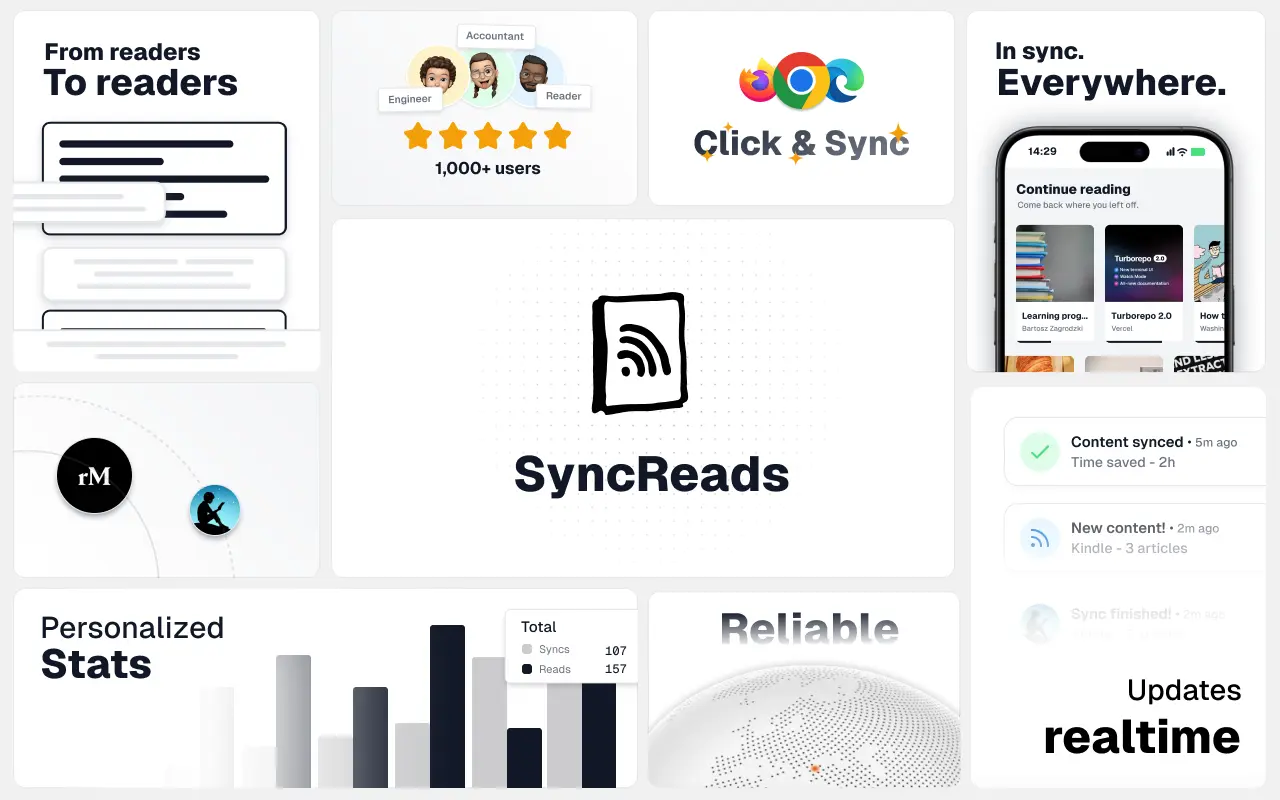
SyncReads
Sync your favorite content for distraction-free reading, save time and replace multiple apps. Anytime, anywhere 🔄
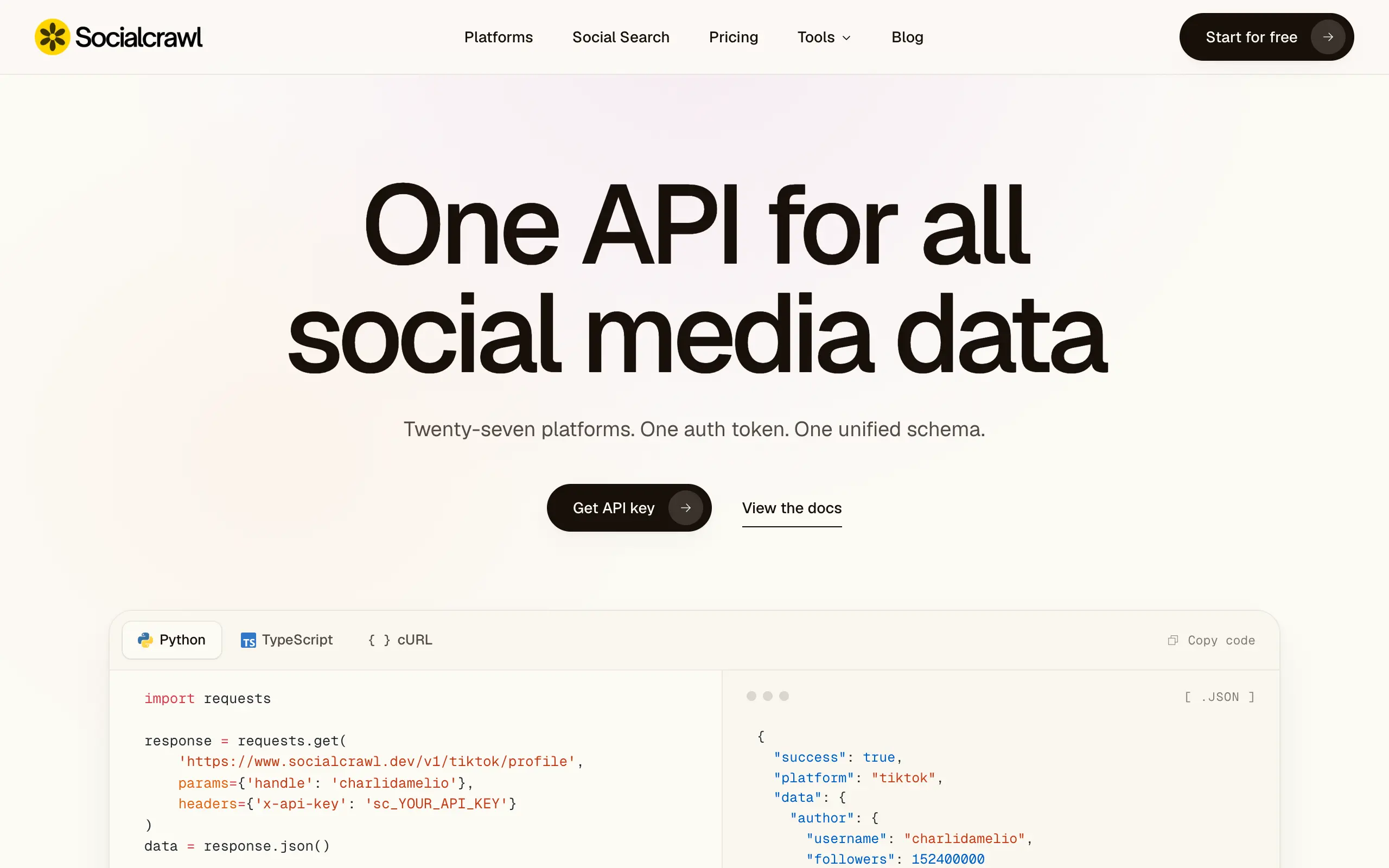
Socialcrawl
Get clean, structured data from 21 platforms like TikTok, Instagram, and YouTube with a single request 📊
Statiko
Monitor any Telegram channel in real time - track posts, edits, deletions, and growth with AI recaps 📡
Shibui
AI website builder - describe your business, pick a niche template, edit by chatting, and publish instantly ✨
Pro Service
Find verified home service professionals, compare quotes, and pay securely through escrow - built for Brazilians across the US 🏠
RankGrow
Fix your SEO with AI agents - connect Search Console, get prioritized tasks, and grow organic traffic 📈
SyncReads
Sync your favorite content for distraction-free reading, save time and replace multiple apps. Anytime, anywhere 🔄
Socialcrawl
Get clean, structured data from 21 platforms like TikTok, Instagram, and YouTube with a single request 📊
Statiko
Monitor any Telegram channel in real time - track posts, edits, deletions, and growth with AI recaps 📡
Shibui
AI website builder - describe your business, pick a niche template, edit by chatting, and publish instantly ✨
Pro Service
Find verified home service professionals, compare quotes, and pay securely through escrow - built for Brazilians across the US 🏠
RankGrow
Fix your SEO with AI agents - connect Search Console, get prioritized tasks, and grow organic traffic 📈
SyncReads
Sync your favorite content for distraction-free reading, save time and replace multiple apps. Anytime, anywhere 🔄
Socialcrawl
Get clean, structured data from 21 platforms like TikTok, Instagram, and YouTube with a single request 📊
Statiko
Monitor any Telegram channel in real time - track posts, edits, deletions, and growth with AI recaps 📡
Shibui
AI website builder - describe your business, pick a niche template, edit by chatting, and publish instantly ✨
Pro Service
Find verified home service professionals, compare quotes, and pay securely through escrow - built for Brazilians across the US 🏠
RankGrow
Fix your SEO with AI agents - connect Search Console, get prioritized tasks, and grow organic traffic 📈
SyncReads
Sync your favorite content for distraction-free reading, save time and replace multiple apps. Anytime, anywhere 🔄
Socialcrawl
Get clean, structured data from 21 platforms like TikTok, Instagram, and YouTube with a single request 📊
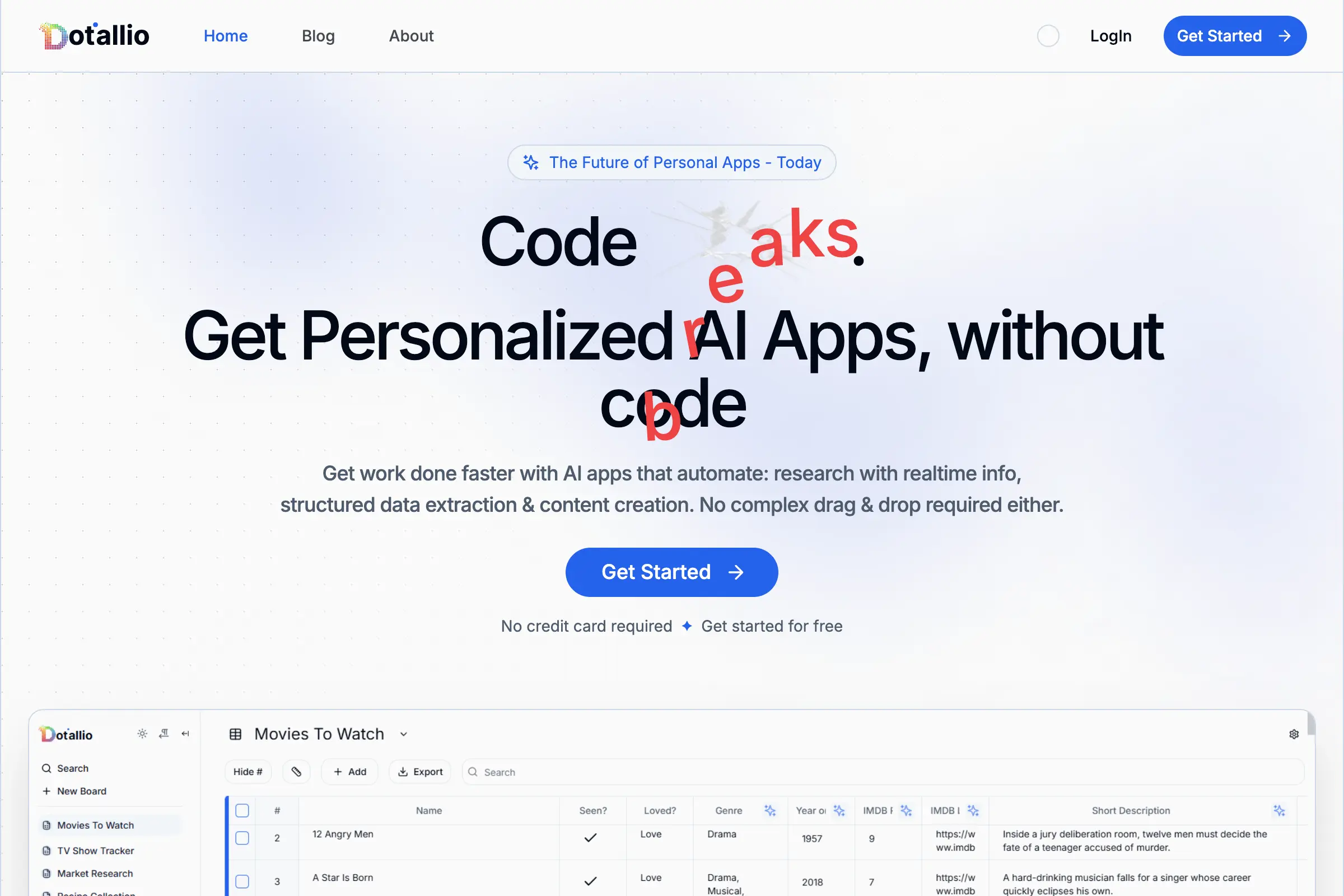
Dotallio
Personalized AI apps that automate research, data extraction, and content creation without code 🤖

Talk to Santa
Enjoy a magical live video chat or receive a unique AI-generated video greeting from Santa Claus 🎅

pozywka.pl
Scalable blog for food journalist, focused on performance and user experience 🌭
zagrodzki.me
Personal blog and portfolio of Bart Zagrodzki, where he shares his knowledge and work 💼

TurboStarter
Ship your startup everywhere. In minutes.
HTML to Markdown
Convert HTML to Markdown with ease, directly in your browser 📄
Dotallio
Personalized AI apps that automate research, data extraction, and content creation without code 🤖
Talk to Santa
Enjoy a magical live video chat or receive a unique AI-generated video greeting from Santa Claus 🎅
pozywka.pl
Scalable blog for food journalist, focused on performance and user experience 🌭
zagrodzki.me
Personal blog and portfolio of Bart Zagrodzki, where he shares his knowledge and work 💼
TurboStarter
Ship your startup everywhere. In minutes.
HTML to Markdown
Convert HTML to Markdown with ease, directly in your browser 📄
Dotallio
Personalized AI apps that automate research, data extraction, and content creation without code 🤖
Talk to Santa
Enjoy a magical live video chat or receive a unique AI-generated video greeting from Santa Claus 🎅
pozywka.pl
Scalable blog for food journalist, focused on performance and user experience 🌭
zagrodzki.me
Personal blog and portfolio of Bart Zagrodzki, where he shares his knowledge and work 💼
TurboStarter
Ship your startup everywhere. In minutes.
HTML to Markdown
Convert HTML to Markdown with ease, directly in your browser 📄
Dotallio
Personalized AI apps that automate research, data extraction, and content creation without code 🤖
Talk to Santa
Enjoy a magical live video chat or receive a unique AI-generated video greeting from Santa Claus 🎅
pozywka.pl
Scalable blog for food journalist, focused on performance and user experience 🌭
zagrodzki.me
Personal blog and portfolio of Bart Zagrodzki, where he shares his knowledge and work 💼
TurboStarter
Ship your startup everywhere. In minutes.
HTML to Markdown
Convert HTML to Markdown with ease, directly in your browser 📄
Omichat
Chat with 50+ AI models, including ChatGPT and Claude, in one place - switch models anytime without losing context 🤖
Claude Fast
Supercharge your Claude Code with 6x effective context window and specialized AI agents 🤖

EmojAI
AI-powered emoji picker with smart, context-aware suggestions 🤖

Solohacker
Autonomous company launcher - AI agents work 24/7, escalate what matters, and you stay in control 🤖

BeRawi: Storytelling Coach
Practice storytelling daily with instant feedback to sound clearer, more engaging, and confident 🎤
Omichat
Chat with 50+ AI models, including ChatGPT and Claude, in one place - switch models anytime without losing context 🤖
Claude Fast
Supercharge your Claude Code with 6x effective context window and specialized AI agents 🤖
EmojAI
AI-powered emoji picker with smart, context-aware suggestions 🤖
Solohacker
Autonomous company launcher - AI agents work 24/7, escalate what matters, and you stay in control 🤖
BeRawi: Storytelling Coach
Practice storytelling daily with instant feedback to sound clearer, more engaging, and confident 🎤
Omichat
Chat with 50+ AI models, including ChatGPT and Claude, in one place - switch models anytime without losing context 🤖
Claude Fast
Supercharge your Claude Code with 6x effective context window and specialized AI agents 🤖
EmojAI
AI-powered emoji picker with smart, context-aware suggestions 🤖
Solohacker
Autonomous company launcher - AI agents work 24/7, escalate what matters, and you stay in control 🤖
BeRawi: Storytelling Coach
Practice storytelling daily with instant feedback to sound clearer, more engaging, and confident 🎤
Omichat
Chat with 50+ AI models, including ChatGPT and Claude, in one place - switch models anytime without losing context 🤖
Claude Fast
Supercharge your Claude Code with 6x effective context window and specialized AI agents 🤖
EmojAI
AI-powered emoji picker with smart, context-aware suggestions 🤖
Solohacker
Autonomous company launcher - AI agents work 24/7, escalate what matters, and you stay in control 🤖
BeRawi: Storytelling Coach
Practice storytelling daily with instant feedback to sound clearer, more engaging, and confident 🎤

Connect with like-minded people
Join our community to get feedback, support, and grow together with 1,000+ builders on board, let's ship it!
Join usShip your startup everywhere. In minutes.
Don't burn tokens on setup and start building features on day one.