PatchNotes AI
Track releases across AI and automation tools, then turn meaningful changes into cited blog drafts and practical upgrade guides for technical creators.
PatchNotes AI is a SaaS concept for tracking releases across AI and automation tools, then turning meaningful updates into cited blog drafts and practical upgrade guides. It addresses a growing workflow problem: product changes are scattered across changelogs, documentation, status pages, release feeds, and social announcements, while technical creators need accurate, useful ways to explain what changed.
The product’s central promise is not simply “AI writes release notes.” It is reliable change monitoring plus source-backed content creation. For independent publishers, developer advocates, consultants, and technical teams, PatchNotes AI could turn a noisy stream of product updates into a prioritized, verifiable editorial workflow.
What PatchNotes AI does
PatchNotes AI would monitor selected AI and automation products, identify new or modified release information, and help users transform those changes into content. A user might follow a language model provider, an automation platform, a coding assistant, or a data tool. When a meaningful release appears, the product could summarize the change, link it to its original source, explain who may be affected, and draft an article or upgrade guide for human review.
A useful end-to-end workflow would look like this:
- A user selects products, categories, and sources to monitor.
- PatchNotes AI checks those sources for new information.
- The system detects and groups changes, distinguishing substantive releases from minor edits.
- It summarizes the updates with direct citations and source excerpts.
- The user reviews the changes, chooses an audience and format, and generates a draft.
- The user edits, approves, and exports or publishes the content.
The opportunity lies in connecting release tracking with editorial production. Many tools help teams publish their own changelog. PatchNotes AI is different: it helps creators follow changes across products they do not control and produce useful, source-grounded coverage about them.
The problem PatchNotes AI can solve
AI and automation products evolve quickly. A provider may update model behavior, add a new API parameter, retire a feature, change usage limits, or introduce a new integration. Those details may be published in different places and described in language intended for customers, developers, or investors.
For someone who writes tutorials, comparisons, technical explainers, or buyer guides, staying current can involve repeatedly checking multiple sources. That creates several types of work:
- Monitoring: remembering which products and channels to check.
- Verification: confirming whether an announcement is new, important, and accurately represented.
- Interpretation: understanding the practical impact on a particular audience.
- Production: turning the update into a clear article, guide, or newsletter segment.
- Maintenance: revisiting older content when its recommendations become outdated.
A general-purpose AI writing tool can help with drafting, but it does not automatically solve the monitoring and verification problems. If the writer provides incomplete or stale information, a polished draft may still be inaccurate. PatchNotes AI should therefore treat source traceability and review as core product features rather than optional add-ons.
The product principle
Every generated claim about a release should be traceable to a source, and every draft should make it easy for a human to check that source before publication.
Target audience analysis
PatchNotes AI should begin with a specific audience rather than attempting to serve every person interested in technology news. Different users need different levels of depth, publishing control, and collaboration.
Independent technical creators
This group includes bloggers, newsletter writers, YouTubers, podcasters, and educators who cover AI tools, developer products, or automation workflows. They need a dependable way to discover updates and turn them into timely content.
Their main benefits would be:
- A personal watchlist of products and topics.
- Alerts for releases that match their coverage.
- Drafts that link claims to primary sources.
- Article formats suited to tutorials, comparisons, and news explainers.
- A clear record of what has changed since their last review.
This is a promising initial segment because the workflow is easy to demonstrate. A creator can see the relationship between a detected release, a source citation, and a usable draft.
Technical marketing and developer relations teams
Product marketing and developer relations teams often create educational materials around third-party tools, integrations, APIs, and workflows. They may need to keep guides current even when they do not control the underlying products.
For these users, PatchNotes AI could support shared workspaces, review assignments, team-specific watchlists, and exportable content drafts. However, this audience will expect clearer permission controls and more predictable collaboration features than a solo creator may need.
Agencies and consultants
Agencies managing content for multiple clients may monitor several tool categories and publish for multiple audiences. Consultants may use release information to advise clients on migrations, product selection, or process changes.
Potential value for these customers includes:
- Separate monitoring projects for each client.
- Custom priority rules and topic filters.
- Client-ready summaries with citations.
- A review queue that records approvals and edits.
- Reusable editorial templates.
Agencies may have stronger willingness to pay than individual creators, but they also require reliable workflows and a polished way to manage multiple accounts.
Product teams and research-focused users
A company may want to monitor competitors, dependencies, ecosystem tools, or vendors it relies on. This could become an adjacent audience, but it may demand different capabilities: broader source coverage, team analytics, compliance controls, integrations, and audit trails.
It is sensible to validate this segment after the creator workflow is working. Building an enterprise intelligence platform too early could pull the product away from its clearest initial use case.
Recommended initial customer profile
A practical first customer profile is an independent technical creator or small editorial team that regularly publishes about AI tools, developer platforms, or automation software. Look for users who:
- Follow at least several products in a defined niche.
- Publish recurring tutorials, reviews, comparisons, or newsletters.
- Spend meaningful time checking release information.
- Need to explain technical changes, not merely repeat announcements.
- Are willing to review AI-assisted drafts before publication.
Market opportunity and product gap
The market opportunity is not simply that more AI tools are launching. It is that product information is fragmented and creators need to translate changes into audience-specific guidance.
A release feed answers, “What did the vendor announce?” A monitoring product may answer, “Which sources changed?” A writing assistant may answer, “Can you draft this article?” PatchNotes AI can connect those steps and add a further question: “What does this change mean for a specific reader, and what evidence supports that explanation?”
That workflow is particularly valuable when a release has practical consequences. A new integration might change how a team automates a task. A deprecated endpoint could require developers to update an implementation. A pricing or usage-limit change might affect a buyer’s decision. A model update could matter to a creator only if it changes a capability they cover.
The product should not claim to monitor “everything” unless it can demonstrate broad, dependable coverage. A smaller, carefully maintained set of high-value sources can be more useful than a large but unreliable directory.
Where the gap exists
Potential gaps in the current workflow include:
- Monitoring without editorial context: tools can alert users to changes without explaining why a specific audience should care.
- Drafting without dependable evidence: general AI writers can produce fluent copy without grounding every release claim in a primary source.
- Changelogs without cross-product views: vendor changelogs are useful for their own products but do not provide a unified view across a user’s watchlist.
- News coverage without workflow continuity: an article or social post may announce a release but not help the user update their own guides and documentation.
- Manual maintenance: creators may not know which previously published articles are affected by a new release.
This gap should be validated through interviews and usage tests rather than assumed from the existence of adjacent tools. The key research question is whether creators will return to a dedicated monitoring workflow often enough to pay for it.
How to validate demand
Before investing in comprehensive automation, interview creators who already cover technical products. Ask them to show how they currently discover and verify updates. Focus on observed behavior, not just hypothetical enthusiasm.
Useful validation questions include:
- Which product releases have they missed or found difficult to verify?
- How many sources do they check during a typical publishing week?
- What makes a release worth covering?
- How do they track whether older articles need updates?
- Which parts of the process do they already automate?
- Would they pay for monitoring, drafting, workflow organization, or some combination?
- What would make them distrust an automatically generated summary?
A concierge test can provide an early signal. Manually monitor a small set of products, deliver cited weekly summaries, and observe whether users read, edit, and publish from them. This tests the value of the workflow before building a complex crawling and generation system.
Core features and solution details
1. Product and source watchlists
Users should be able to follow products and choose the sources that matter. Sources may include official changelogs, documentation, product blogs, release feeds, API documentation, or other publicly accessible announcements.
Each source needs metadata such as:
- Product and vendor.
- Source type and URL.
- Last successful check.
- Monitoring method.
- Update frequency.
- Reliability or parsing status.
- User-configurable topic or category filters.
A robust watchlist should make source health visible. If a page changes format or stops responding, users should not be left assuming it is still being monitored.
2. Change detection and deduplication
PatchNotes AI must distinguish an actual product release from routine page edits, navigation changes, or repeated announcements. The product can use a combination of source-specific parsers, feed ingestion, page snapshots, and semantic comparison.
A practical event record might include:
- The original source and observed timestamp.
- The source’s publication date, when available.
- The text or excerpt that changed.
- A comparison with the previous version.
- A change category, such as feature, API, pricing, deprecation, or policy.
- A confidence score and review status.
Deduplication matters because the same release may appear in a blog post, changelog, documentation page, and social announcement. Grouping those references into one release event helps prevent noisy alerts while preserving multiple citations.
3. Relevance scoring and prioritization
Not every update deserves an alert or article. A prioritization system can consider the user’s selected topics, product importance, change category, novelty, and potential impact.
The initial system should communicate why an update was prioritized. For example, it might say that the release matches a watched API topic or appears to affect a feature mentioned in a user’s existing guide. A concise explanation helps users trust the ranking and correct it when it misses their intent.
Avoid presenting a relevance score as an objective measure of importance. It is a recommendation to support editorial judgment, not a substitute for it.
4. Cited summaries
A PatchNotes AI summary should separate what the source explicitly says from what the system infers. A useful format might include:
- What changed: a concise description grounded in source text.
- Who may be affected: the likely user groups, clearly marked as interpretation when appropriate.
- Why it may matter: a practical explanation for the selected audience.
- What to verify: unresolved details, limitations, or questions.
- Sources: direct references to the primary source and relevant supporting material.
Citations should be attached to individual claims where feasible, rather than placed in a generic list at the end. This makes it easier for editors to verify details and reduces the risk of unsupported statements surviving into a published draft.
5. Draft generation for technical creators
The same release can support several content formats. A creator might need a short newsletter item, a blog post, a migration guide, a product comparison update, or a social post. Draft generation should therefore begin with the intended reader and output format.
Useful controls include:
- Audience expertise level.
- Desired length and format.
- Tone and editorial style.
- Preferred terminology.
- Required sections, such as prerequisites or migration steps.
- Excluded claims or topics.
- Citation and attribution preferences.
The system should make clear that the generated content is a draft. Technical recommendations, compatibility claims, pricing details, and breaking-change guidance should receive explicit human review.
6. Upgrade guides and content maintenance
The strongest extension beyond release summaries is helping users maintain existing content. A creator could connect a draft library or add URLs to published guides, then receive a notification when a new release may affect an article.
A useful workflow might show:
- The published article or guide that may be affected.
- The new release and its source.
- The specific section that could be outdated.
- A suggested revision with citations.
- A human approval step before changes are exported or published.
This can become a meaningful competitive advantage because it shifts the product from “generate another article” to “keep useful content accurate over time.” It also offers a recurring reason for customers to return.
7. Review, export, and collaboration
Creators need to edit content in their preferred environment. Early versions can support copying formatted text, downloading a document, or exporting through a simple integration. More advanced versions can add content management system connections and shared approval workflows.
A review interface should show the source alongside the claim, preserve edits, and clearly identify generated content. Team features might include comments, draft status, assigned reviewers, and an audit history of source and editorial changes.
Recommended MVP scope
The first version should prove the quality and usefulness of the complete workflow, not the size of the source catalog. An MVP might include:
- A curated set of high-demand AI and automation products.
- A manageable set of official sources for each product.
- Scheduled monitoring and basic change detection.
- Grouping and deduplication of related updates.
- Cited summaries with source excerpts.
- A small number of draft templates.
- A saved watchlist and email or in-product alerts.
- Human review before export.
- A feedback action for marking an update useful, irrelevant, or inaccurate.
Delay broad integrations, fully automated publishing, complex team permissions, and large-scale source discovery until customers demonstrate a need for them.
Competitive advantage analysis
PatchNotes AI will operate near several product categories: changelog monitoring, AI writing, technical research, content operations, and competitive intelligence. It should position itself around the workflow that connects them, not claim that no alternatives exist.
| Capability | General AI writer | Vendor changelog | Monitoring tool | PatchNotes AI opportunity |
|---|---|---|---|---|
| Tracks multiple products | Usually manual input | Usually one vendor | Often supported | Curated watchlists |
| Detects source changes | Not usually | For its own product | Often | Change detection with context |
| Links claims to evidence | Depends on user input | Source is direct | Varies | Claim-level citations |
| Explains audience impact | Prompt-dependent | Usually limited | Often limited | Audience-specific interpretation |
| Creates editorial drafts | Yes | Rarely | Usually limited | Drafts grounded in release evidence |
| Helps maintain old content | Not typically | Not typically | Sometimes | Release-to-article matching |
The proposed USP
The unique selling proposition is: monitor important AI and automation releases, understand their practical impact, and create source-backed content that a human can confidently review.
That positioning combines four elements:
- Cross-product monitoring rather than a changelog for a single vendor.
- Editorial interpretation rather than a raw notification stream.
- Source traceability rather than unsupported AI-generated claims.
- Content maintenance rather than one-time article generation.
The product’s defensibility will not come from using a particular language model. Models are replaceable. More durable advantages could come from a high-quality source registry, reliable change histories, user-specific relevance signals, editorial workflow integrations, and accumulated knowledge about which releases matter to particular audiences.
Recommended technology stack
The architecture should prioritize dependable ingestion, traceable data, and safe background processing. The right choices depend on team experience, expected source volume, and whether the product is web-first or API-first.
Application and user interface
A TypeScript web application built with React can support a responsive dashboard for watchlists, alerts, source review, and drafting. A full-stack framework such as Next.js can provide routing and server-side features, though a separate API service may be preferable if ingestion and application workloads need to scale independently.
The user interface should make evidence visible without overwhelming the writing workflow. Prioritize a source comparison view, a readable review queue, and clear labels for generated summaries and interpretations.
Backend and data storage
A relational database such as PostgreSQL is a sensible foundation for users, products, sources, observed changes, citations, drafts, and review events. These records have clear relationships, and users will benefit from querying and filtering them consistently.
A queue and worker system can handle scheduled checks, parsing, comparison, summarization, and retries outside the main web request path. Redis is a common option for queue support and caching, but a managed task queue can reduce infrastructure work for a small team. Choose based on operational expertise and reliability requirements rather than novelty.
Store source observations and generated outputs with timestamps and provenance. Depending on expected volume and retention needs, the product may keep extracted text, selected page snapshots, content hashes, or a combination. Define retention and access policies deliberately, especially when storing content from external sources.
Ingestion and change detection
A hybrid approach is usually more reliable than relying on one technique:
- Use official feeds or APIs when they are available and suitable.
- Use source-specific parsers for important, stable pages.
- Use page comparison for sources without structured feeds.
- Apply semantic similarity to group related announcements.
- Preserve the original observed content needed to support summaries.
Monitoring public pages must account for rate limits, access controls, terms of use, and technical changes. The product should avoid bypassing authentication or access restrictions. Source-specific monitoring policies and conservative request schedules can reduce operational and legal risk.
AI and retrieval
Use an orchestration layer that passes the model only the necessary source material and task instructions. Store source passages with identifiers so generated output can point back to evidence. A retrieval system can help locate relevant material across a source’s history, but retrieval does not guarantee that a generated claim is correct.
For important outputs, a structured generation format can require fields such as summary, affected users, evidence references, confidence, and unresolved questions. Then validate the references against stored source IDs before showing the draft.
Model selection should be based on factuality, latency, cost, output consistency, and performance on a representative evaluation set. A smaller model may be suitable for classification or deduplication, while a stronger model may be reserved for more nuanced explanations. Keep the model provider replaceable to reduce vendor lock-in.
Security and operations
Use standard protections for authentication, authorization, secret management, logging, backups, and rate limiting. Separate customer data by account, and avoid sending private workspace content to external model providers without clearly explaining the data flow and obtaining appropriate consent.
Operational monitoring should cover more than application uptime. Track source-check failures, parser changes, queue delays, citation validation failures, generation latency, and user corrections. These are product-quality signals as well as infrastructure metrics.
A fast-launch foundation can reduce setup time for authentication, billing, and core application structure. TurboStarter is one option to evaluate when its starter architecture fits the product and team. Review the generated stack and adapt it to the monitoring, background-job, and data-provenance requirements rather than treating a starter as a substitute for architecture decisions.
Monetization strategy options
PatchNotes AI could use a tiered SaaS model, but pricing should reflect the value of reliable monitoring and editorial time saved—not only the number of AI generations.
Free plan
A free plan can help users experience the workflow through a limited watchlist, lower alert frequency, and a small number of drafts. It should be useful enough to demonstrate value while making paid limits understandable.
Possible limits include the number of monitored products, historical change access, or monthly draft exports. Avoid making the free plan unreliable; deliberately poor monitoring can damage trust in the product.
Individual creator subscription
A paid creator plan could include more products, custom watchlists, faster notifications, additional draft formats, content update suggestions, and a longer source history. This is likely the simplest plan to test with the initial audience.
Team and agency plans
Team plans could add shared watchlists, client workspaces, review permissions, collaboration, and reusable editorial templates. Agencies may also value separate branding or client-facing reports, though those features should be developed only after confirming willingness to pay.
Usage-based add-ons
Some costs scale with source checks, stored history, and model usage. A hybrid subscription with clear usage allowances can protect margins without making the bill unpredictable. Explain what counts as usage, and provide estimates or alerts before customers reach limits.
Pricing research
Rather than choosing a price based on competitor guesswork, test pricing in customer conversations and landing-page experiments. Ask how users currently solve the problem, how frequently they publish, and what the cost of a missed or outdated update looks like. Compare willingness to pay for monitoring, cited summaries, and content maintenance separately.
Key risks and mitigation
Inaccurate summaries or unsupported claims
A generated draft may misstate a release or overstate its impact.
Mitigation: Ground summaries in stored source material, validate citations, separate source facts from interpretation, and require human approval before publication. Track user corrections and evaluate output quality on real release examples.
Incomplete or brittle monitoring
Sources can change structure, move pages, or publish information in unexpected formats.
Mitigation: Start with a curated source catalog, monitor parser health, show the last successful check, and notify users when a source is not being monitored reliably. Provide a way to report missing updates.
Alert fatigue
If users receive too many low-value alerts, they may ignore all of them.
Mitigation: Group duplicate announcements, let users tune topics and frequency, explain why an update was prioritized, and provide a digest option. Measure useful-alert rates rather than celebrating raw alert volume.
Copyright, terms, and content reuse concerns
A public source is not automatically free to reproduce in full. Extensive storage or republishing of third-party material may create legal and contractual risk.
Mitigation: Prefer concise excerpts needed for verification, link to the original source, respect access rules and applicable terms, and consult qualified legal counsel about monitoring and retention practices. Make the product’s role in generating derivative content transparent.
Model and infrastructure costs
Frequent checks, stored history, and repeated model calls can make a low-priced product unprofitable.
Mitigation: Cache source observations, use efficient models for classification, batch compatible work, set sensible monitoring frequencies, and track unit costs by customer and workflow. Do not send unchanged source content through expensive generation steps repeatedly.
Market trust and positioning
If the product is marketed as fully automated publishing, users may expect accuracy that the system cannot guarantee.
Mitigation: Position PatchNotes AI as an editorial assistant with evidence and review controls. Be explicit about coverage limits, source failures, and the difference between verified facts and model-generated interpretation.
Measuring product success
Choose metrics that represent customer outcomes, not just AI activity. Useful early measures include:
- Time from source publication to detected release.
- Percentage of monitored sources checked successfully.
- Share of alerts users mark as useful.
- Citation validity and claim verification rates.
- Draft acceptance, editing, and export rates.
- Time saved compared with the user’s previous workflow.
- Number of users who return to review updates each week.
- Retention by customer segment.
- Gross margin after monitoring and model costs.
A high number of generated drafts is not necessarily a sign of product-market fit. If users generate content but do not verify, edit, or publish it, the product may be solving the wrong part of the workflow.
Actionable implementation steps
1. Choose a narrow initial niche
Start with one audience and a focused set of products, such as technical creators who cover AI developer tools. Define the first user’s publishing workflow and the sources they already trust.
2. Interview and observe potential customers
Speak with creators who publish regularly. Ask them to demonstrate how they discover releases, confirm facts, and update existing articles. Record the tasks that are repeated and the points where they lose confidence or time.
3. Run a manual concierge test
Create a small, human-reviewed release digest for a handful of users. Include original sources, concise summaries, practical implications, and draft outlines. Learn which updates they use and what they would pay to receive consistently.
4. Build the source and event data model
Represent products, source URLs, observations, detected changes, citations, drafts, and review decisions as separate records. Preserve timestamps and provenance so every summary can be traced to the source material that informed it.
5. Develop monitoring before broad generation
Implement reliable checks for a small set of high-value sources. Add health reporting, retry behavior, deduplication, and a review queue. Test against historical source changes where possible.
6. Add cited summaries and one useful draft format
Generate structured summaries that include evidence references. Start with a single strong format, such as a technical blog brief or newsletter item, and evaluate whether users can verify and edit it quickly.
7. Test pricing and retention
Offer a paid pilot or founding-customer plan. Measure whether users return to the watchlist, act on alerts, and publish from reviewed drafts. Use interviews and behavioral data to refine the value proposition.
8. Expand into content maintenance
Once monitoring and citations are dependable, test matching releases to existing articles. This can deepen recurring value and distinguish PatchNotes AI from tools focused only on detecting or summarizing new announcements.
Final assessment
PatchNotes AI has a compelling product direction because it links a recurring research task with a tangible creator outcome. Its strongest version is not a generic AI writer or an all-purpose news monitor. It is a focused release intelligence workflow for technical creators: find meaningful changes, verify them against primary sources, explain their impact, and keep useful content current.
The most important execution challenge is trust. Monitoring coverage, source quality, citation accuracy, and transparent uncertainty will matter more than generating prose quickly. Start with a narrow audience, a curated set of sources, and a human-reviewed workflow. If users repeatedly rely on the product to decide what to cover and how to update their work, broader integrations and team features can follow.
More 🤖 AI Startup SaaS ideas
Discover more innovative ai startup SaaS ideas that are trending in 2026. Each idea is AI-generated with market validation and growth potential to help you find your next profitable venture faster than competitors.
Your competitors are building with TurboStarter
Below are some of the SaaS ideas that have been generated and built with our starter kit.
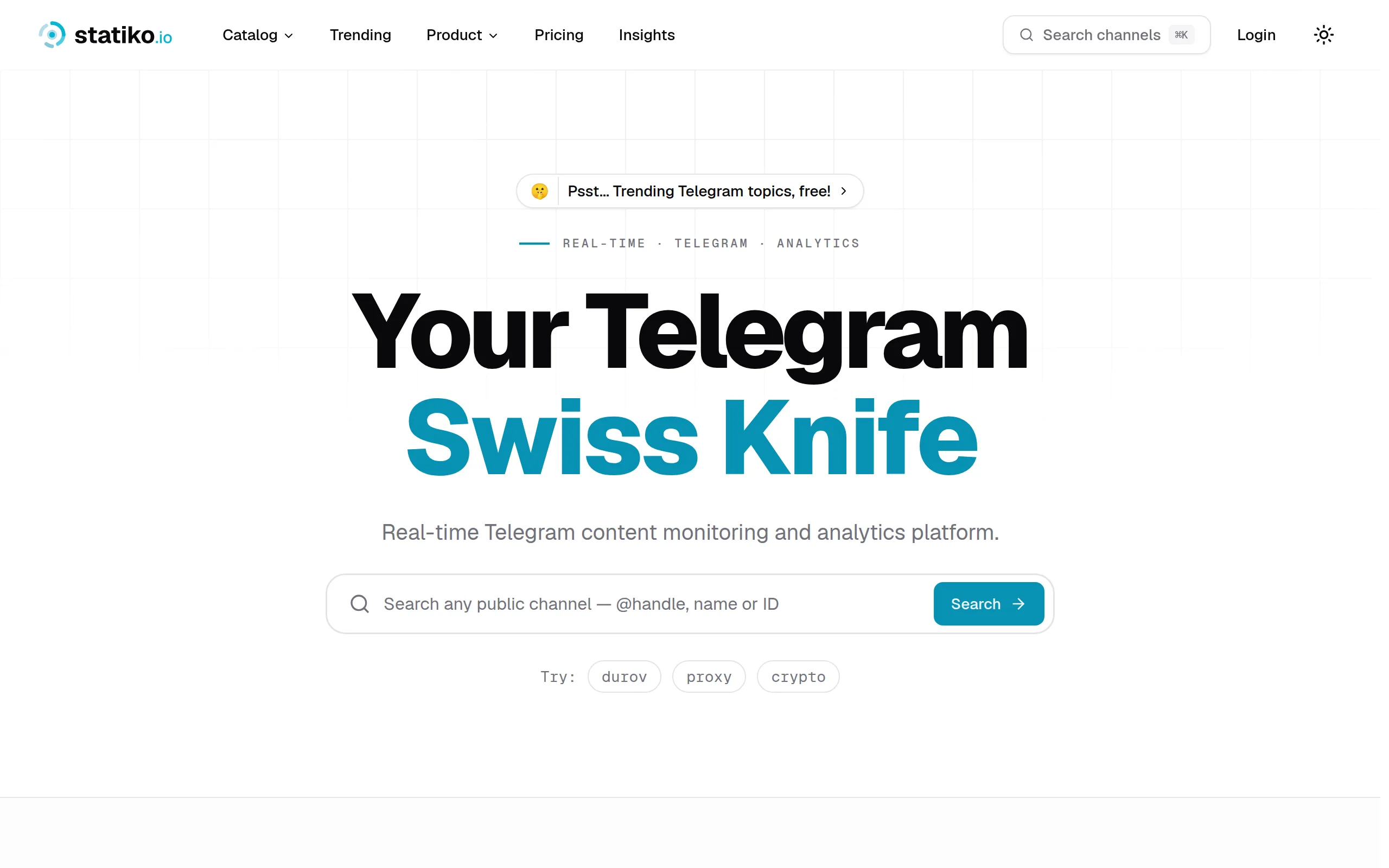
Statiko
Monitor any Telegram channel in real time - track posts, edits, deletions, and growth with AI recaps 📡

Shibui
AI website builder - describe your business, pick a niche template, edit by chatting, and publish instantly ✨

Pro Service
Find verified home service professionals, compare quotes, and pay securely through escrow - built for Brazilians across the US 🏠
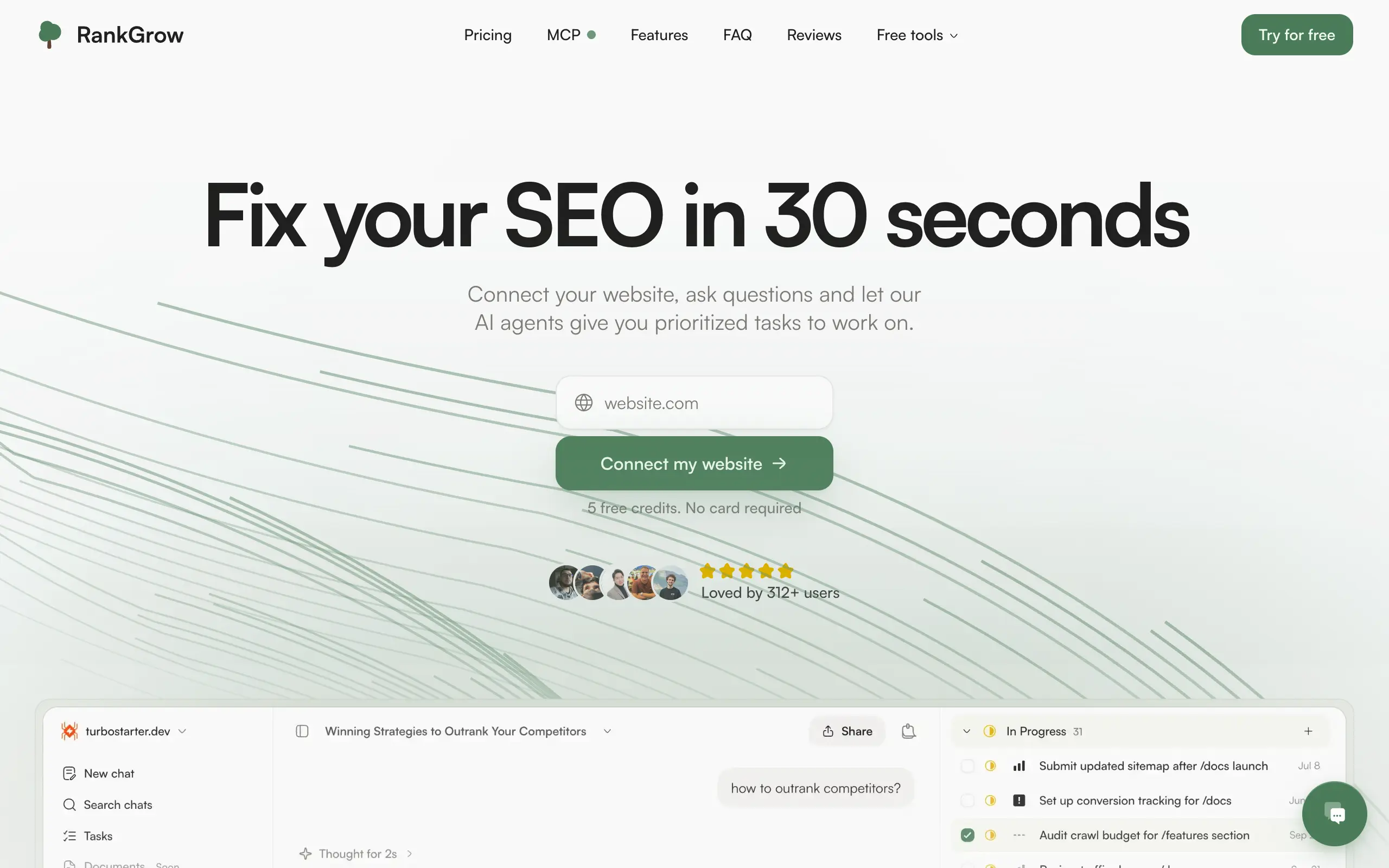
RankGrow
Fix your SEO with AI agents - connect Search Console, get prioritized tasks, and grow organic traffic 📈
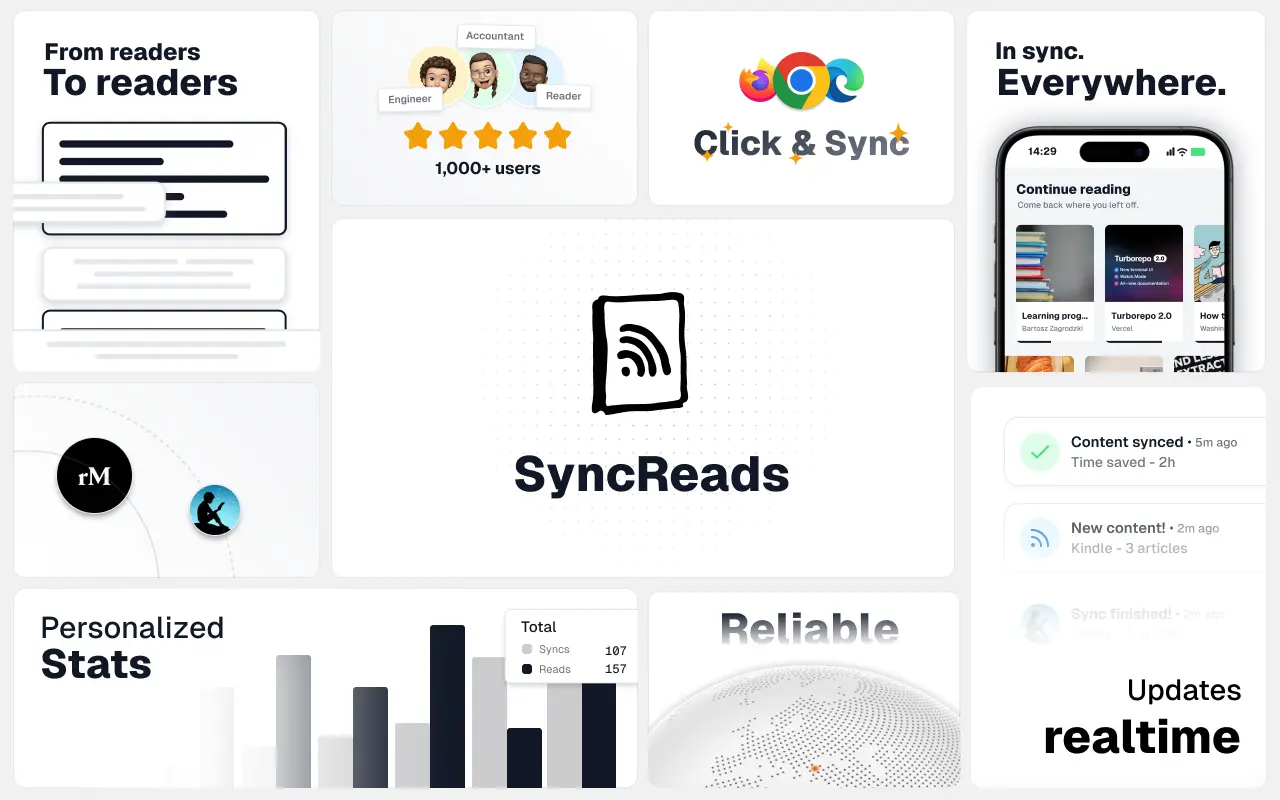
SyncReads
Sync your favorite content for distraction-free reading, save time and replace multiple apps. Anytime, anywhere 🔄
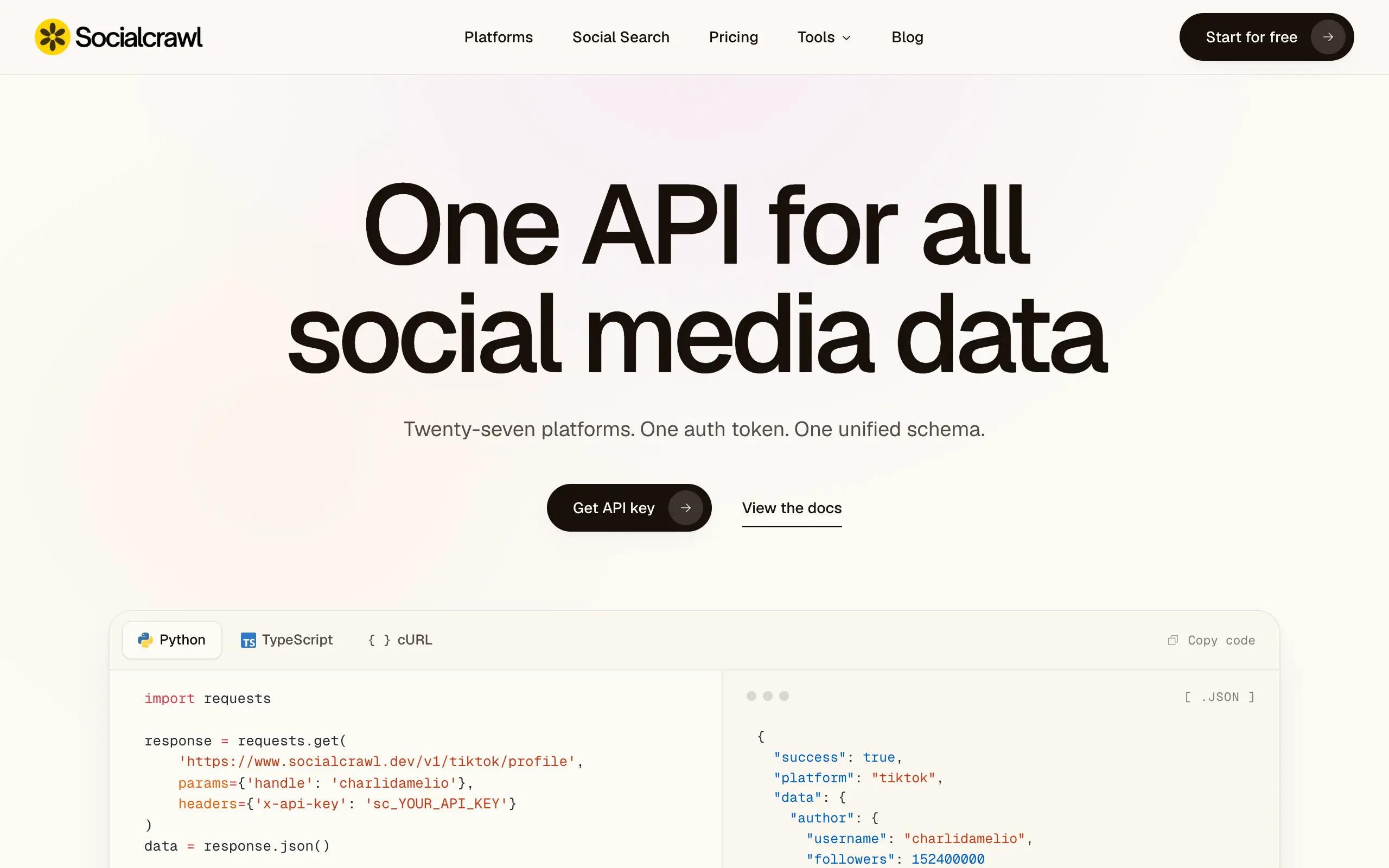
Socialcrawl
Get clean, structured data from 21 platforms like TikTok, Instagram, and YouTube with a single request 📊
Statiko
Monitor any Telegram channel in real time - track posts, edits, deletions, and growth with AI recaps 📡
Shibui
AI website builder - describe your business, pick a niche template, edit by chatting, and publish instantly ✨
Pro Service
Find verified home service professionals, compare quotes, and pay securely through escrow - built for Brazilians across the US 🏠
RankGrow
Fix your SEO with AI agents - connect Search Console, get prioritized tasks, and grow organic traffic 📈
SyncReads
Sync your favorite content for distraction-free reading, save time and replace multiple apps. Anytime, anywhere 🔄
Socialcrawl
Get clean, structured data from 21 platforms like TikTok, Instagram, and YouTube with a single request 📊
Statiko
Monitor any Telegram channel in real time - track posts, edits, deletions, and growth with AI recaps 📡
Shibui
AI website builder - describe your business, pick a niche template, edit by chatting, and publish instantly ✨
Pro Service
Find verified home service professionals, compare quotes, and pay securely through escrow - built for Brazilians across the US 🏠
RankGrow
Fix your SEO with AI agents - connect Search Console, get prioritized tasks, and grow organic traffic 📈
SyncReads
Sync your favorite content for distraction-free reading, save time and replace multiple apps. Anytime, anywhere 🔄
Socialcrawl
Get clean, structured data from 21 platforms like TikTok, Instagram, and YouTube with a single request 📊
Statiko
Monitor any Telegram channel in real time - track posts, edits, deletions, and growth with AI recaps 📡
Shibui
AI website builder - describe your business, pick a niche template, edit by chatting, and publish instantly ✨
Pro Service
Find verified home service professionals, compare quotes, and pay securely through escrow - built for Brazilians across the US 🏠
RankGrow
Fix your SEO with AI agents - connect Search Console, get prioritized tasks, and grow organic traffic 📈
SyncReads
Sync your favorite content for distraction-free reading, save time and replace multiple apps. Anytime, anywhere 🔄
Socialcrawl
Get clean, structured data from 21 platforms like TikTok, Instagram, and YouTube with a single request 📊
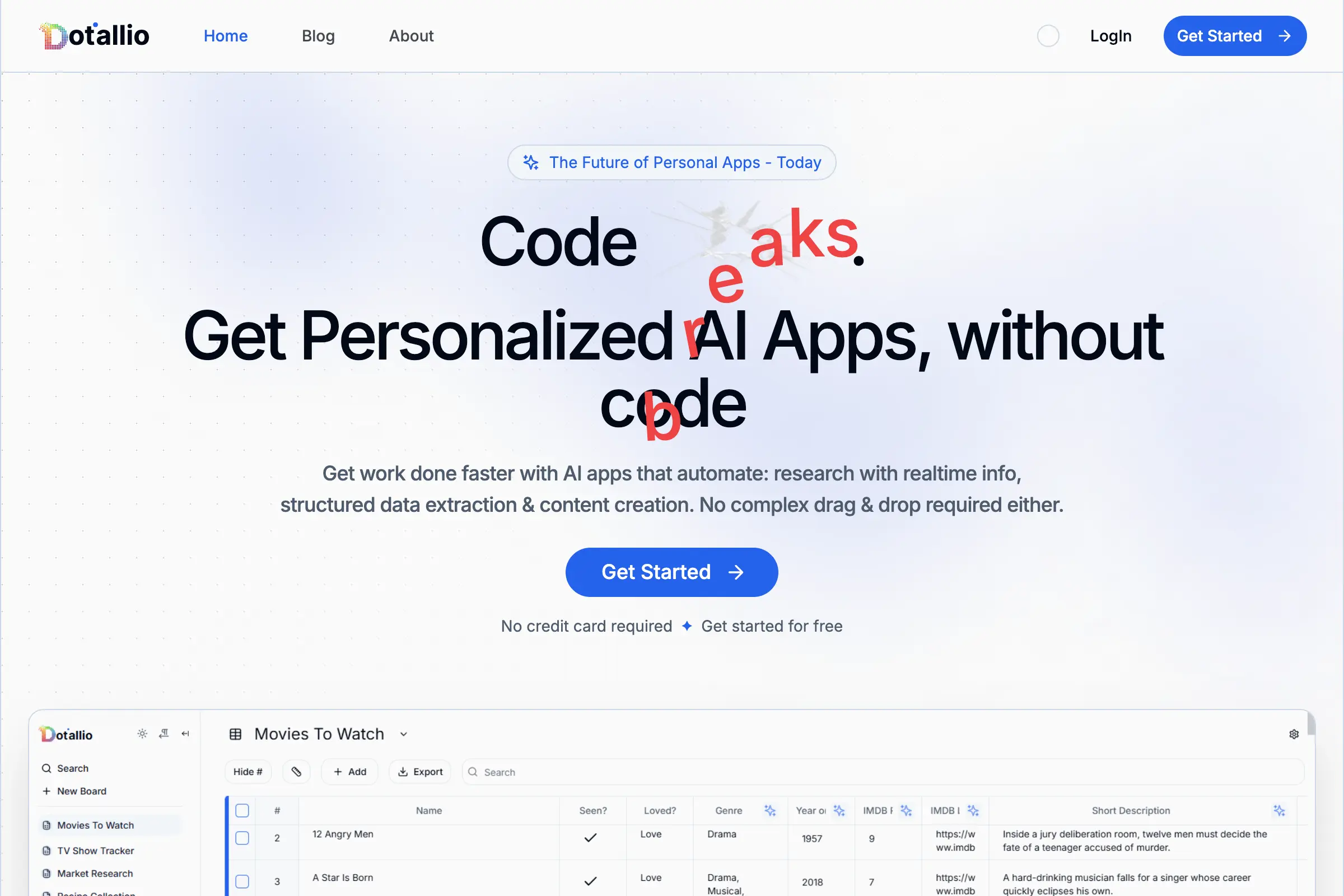
Dotallio
Personalized AI apps that automate research, data extraction, and content creation without code 🤖

Talk to Santa
Enjoy a magical live video chat or receive a unique AI-generated video greeting from Santa Claus 🎅

pozywka.pl
Scalable blog for food journalist, focused on performance and user experience 🌭
zagrodzki.me
Personal blog and portfolio of Bart Zagrodzki, where he shares his knowledge and work 💼
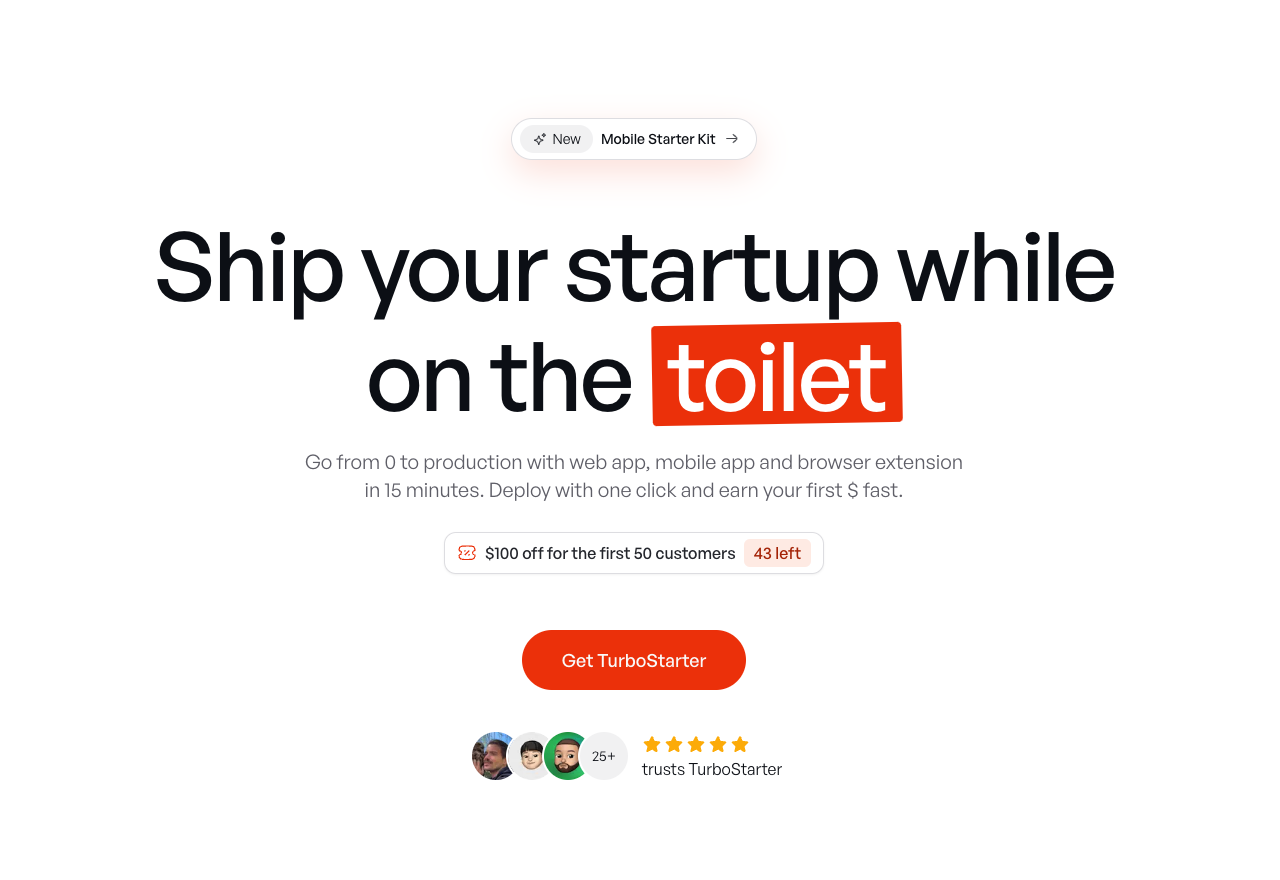
TurboStarter
Ship your startup everywhere. In minutes.
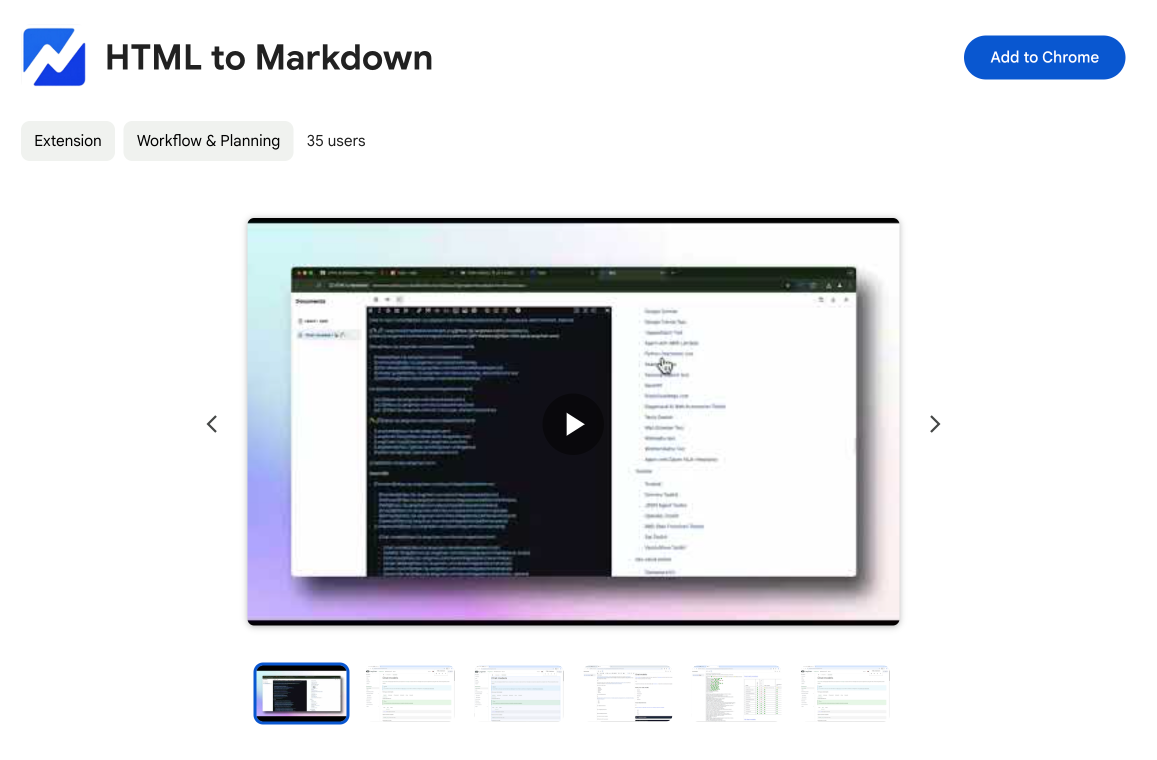
HTML to Markdown
Convert HTML to Markdown with ease, directly in your browser 📄
Dotallio
Personalized AI apps that automate research, data extraction, and content creation without code 🤖
Talk to Santa
Enjoy a magical live video chat or receive a unique AI-generated video greeting from Santa Claus 🎅
pozywka.pl
Scalable blog for food journalist, focused on performance and user experience 🌭
zagrodzki.me
Personal blog and portfolio of Bart Zagrodzki, where he shares his knowledge and work 💼
TurboStarter
Ship your startup everywhere. In minutes.
HTML to Markdown
Convert HTML to Markdown with ease, directly in your browser 📄
Dotallio
Personalized AI apps that automate research, data extraction, and content creation without code 🤖
Talk to Santa
Enjoy a magical live video chat or receive a unique AI-generated video greeting from Santa Claus 🎅
pozywka.pl
Scalable blog for food journalist, focused on performance and user experience 🌭
zagrodzki.me
Personal blog and portfolio of Bart Zagrodzki, where he shares his knowledge and work 💼
TurboStarter
Ship your startup everywhere. In minutes.
HTML to Markdown
Convert HTML to Markdown with ease, directly in your browser 📄
Dotallio
Personalized AI apps that automate research, data extraction, and content creation without code 🤖
Talk to Santa
Enjoy a magical live video chat or receive a unique AI-generated video greeting from Santa Claus 🎅
pozywka.pl
Scalable blog for food journalist, focused on performance and user experience 🌭
zagrodzki.me
Personal blog and portfolio of Bart Zagrodzki, where he shares his knowledge and work 💼
TurboStarter
Ship your startup everywhere. In minutes.
HTML to Markdown
Convert HTML to Markdown with ease, directly in your browser 📄
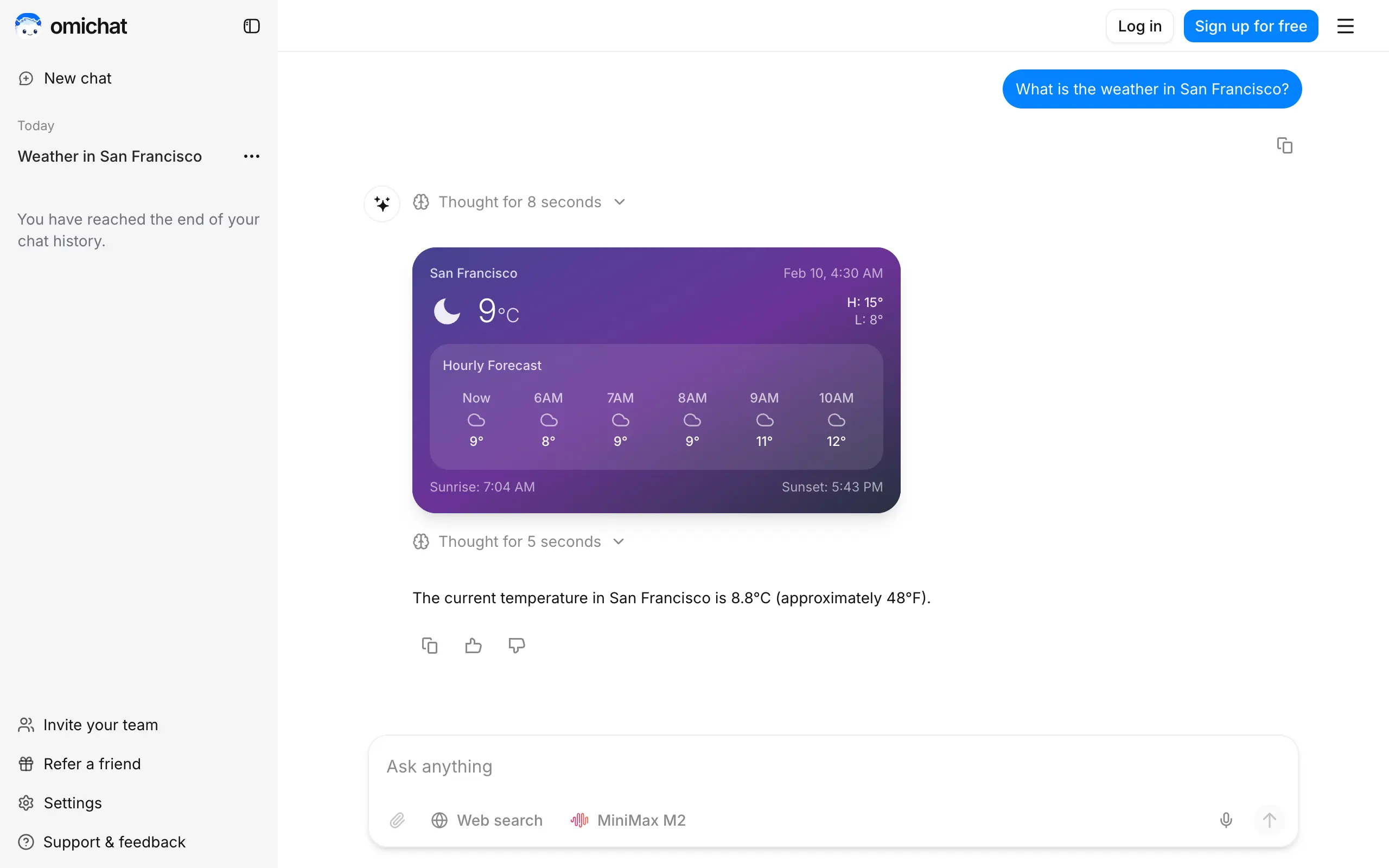
Omichat
Chat with 50+ AI models, including ChatGPT and Claude, in one place - switch models anytime without losing context 🤖
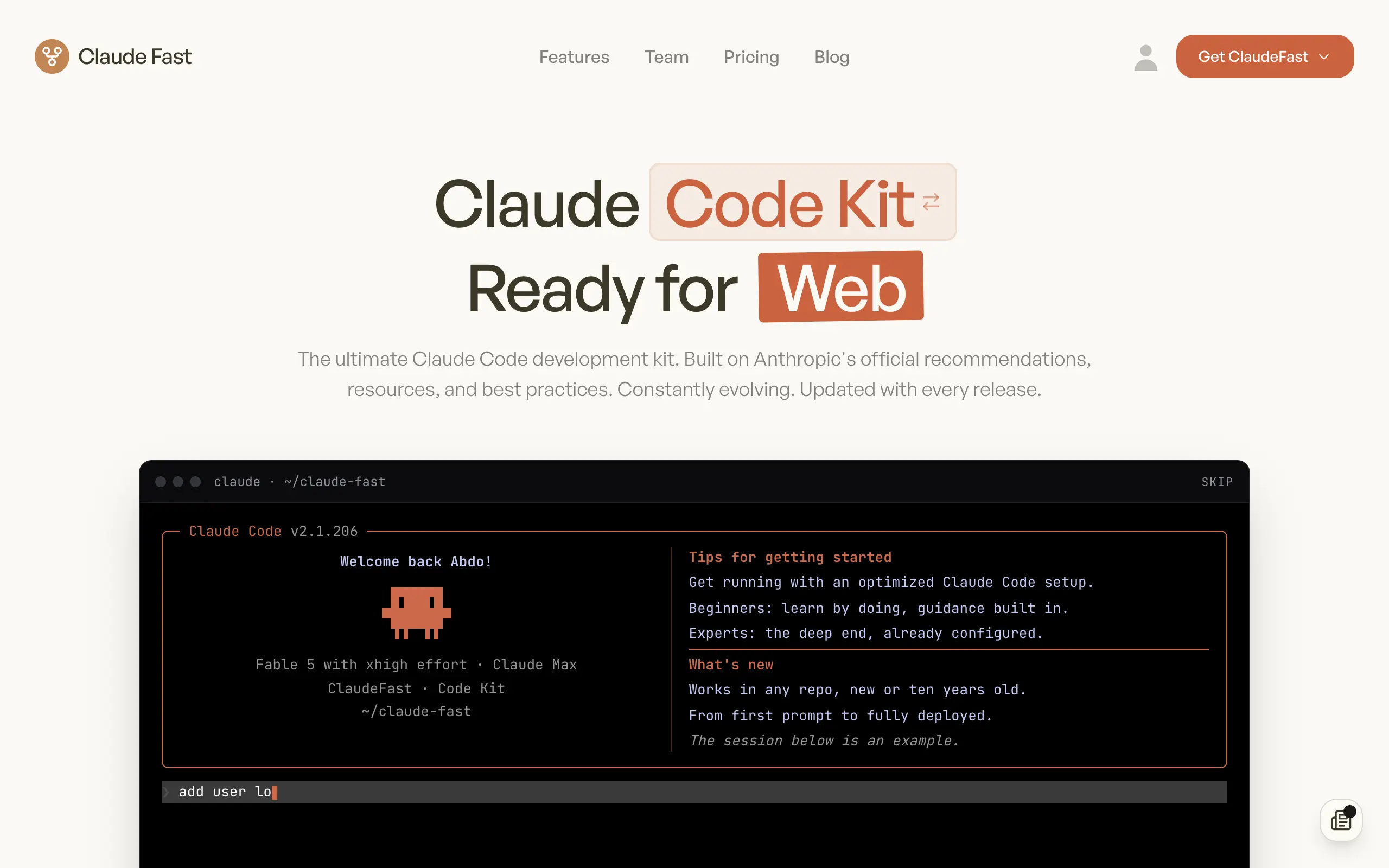
Claude Fast
Supercharge your Claude Code with 6x effective context window and specialized AI agents 🤖
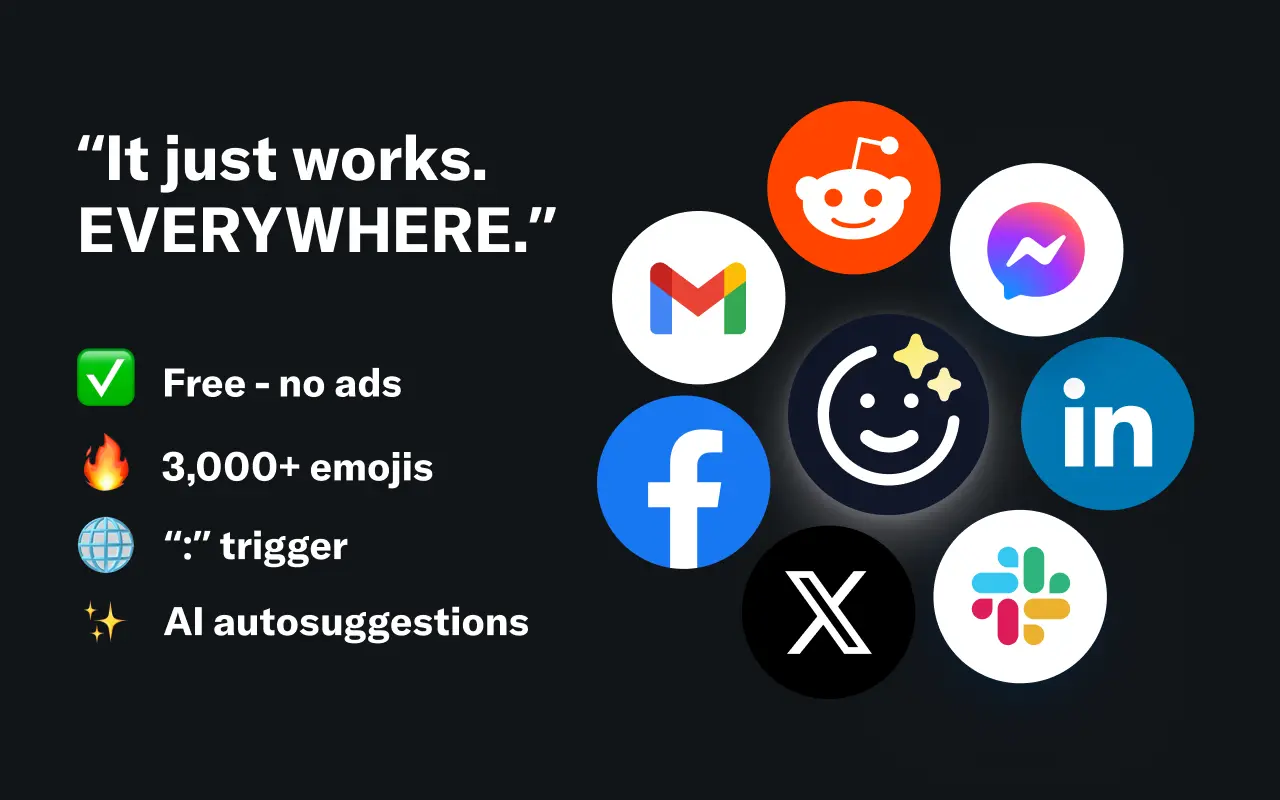
EmojAI
AI-powered emoji picker with smart, context-aware suggestions 🤖
Solohacker
Autonomous company launcher - AI agents work 24/7, escalate what matters, and you stay in control 🤖
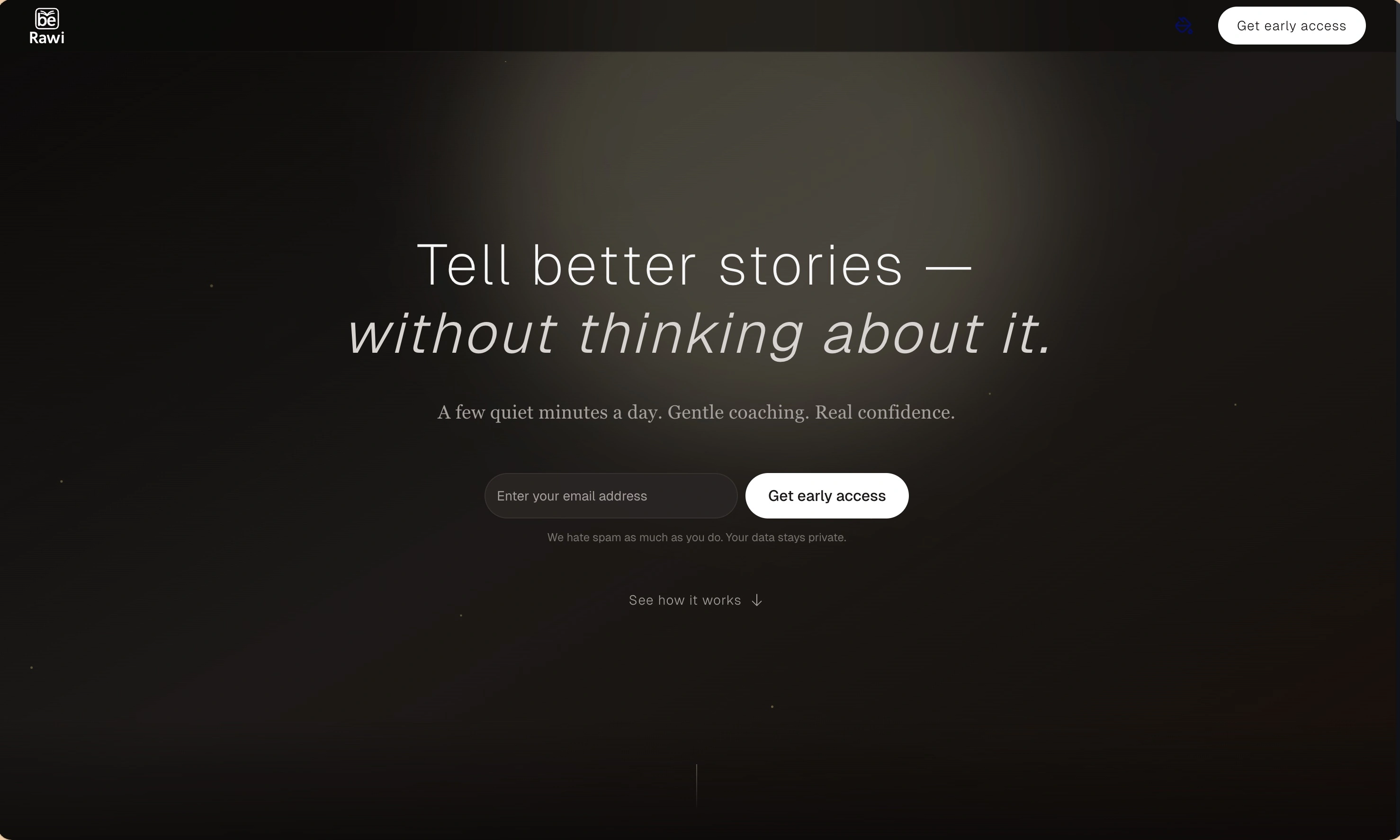
BeRawi: Storytelling Coach
Practice storytelling daily with instant feedback to sound clearer, more engaging, and confident 🎤
Omichat
Chat with 50+ AI models, including ChatGPT and Claude, in one place - switch models anytime without losing context 🤖
Claude Fast
Supercharge your Claude Code with 6x effective context window and specialized AI agents 🤖
EmojAI
AI-powered emoji picker with smart, context-aware suggestions 🤖
Solohacker
Autonomous company launcher - AI agents work 24/7, escalate what matters, and you stay in control 🤖
BeRawi: Storytelling Coach
Practice storytelling daily with instant feedback to sound clearer, more engaging, and confident 🎤
Omichat
Chat with 50+ AI models, including ChatGPT and Claude, in one place - switch models anytime without losing context 🤖
Claude Fast
Supercharge your Claude Code with 6x effective context window and specialized AI agents 🤖
EmojAI
AI-powered emoji picker with smart, context-aware suggestions 🤖
Solohacker
Autonomous company launcher - AI agents work 24/7, escalate what matters, and you stay in control 🤖
BeRawi: Storytelling Coach
Practice storytelling daily with instant feedback to sound clearer, more engaging, and confident 🎤
Omichat
Chat with 50+ AI models, including ChatGPT and Claude, in one place - switch models anytime without losing context 🤖
Claude Fast
Supercharge your Claude Code with 6x effective context window and specialized AI agents 🤖
EmojAI
AI-powered emoji picker with smart, context-aware suggestions 🤖
Solohacker
Autonomous company launcher - AI agents work 24/7, escalate what matters, and you stay in control 🤖
BeRawi: Storytelling Coach
Practice storytelling daily with instant feedback to sound clearer, more engaging, and confident 🎤

Connect with like-minded people
Join our community to get feedback, support, and grow together with 1,000+ builders on board, let's ship it!
Join usShip your startup everywhere. In minutes.
Don't burn tokens on setup and start building features on day one.