PatchPilot
An AI maintenance copilot that turns crash reports, support tickets, and app-store reviews into ranked fixes with pull-request-ready code.
Why an AI maintenance copilot is a timely SaaS opportunity
Modern software teams do not lack feedback. They lack a reliable way to turn fragmented feedback into the next best engineering action.
Crash reporting platforms capture stack traces. Support desks store customer frustration. App stores collect public reviews. Product analytics tools reveal behavioral anomalies. Issue trackers contain duplicate reports, stale priorities, and partial context. Each system is useful independently, but teams still spend hours manually connecting the dots before they can answer a simple question:
Which issue should we fix next, why does it matter, and what would a safe patch look like?
PatchPilot is an AI maintenance copilot designed to answer that question. It ingests crash reports, support tickets, and app-store reviews; clusters related signals; calculates impact; ranks likely fixes; and produces pull-request-ready code suggestions grounded in the target repository.
The primary keyword for this concept is AI maintenance copilot. Supporting semantic keywords include:
- AI bug triage software
- automated bug prioritization
- crash report analysis
- support ticket intelligence
- app review analysis
- AI code repair
- pull request automation
- software maintenance automation
- engineering issue prioritization
- production incident triage
The central opportunity is not merely “AI that writes fixes.” Developers already have coding assistants. The differentiated opportunity is an evidence-aware maintenance workflow that connects user pain to source code, testing requirements, and an auditable pull request.
The core positioning
PatchPilot should position itself as the system that turns noisy production feedback into an engineering-ready maintenance backlog, not as another general-purpose AI coding chatbot.
The software maintenance problem PatchPilot solves
Software maintenance is expensive because the work is dispersed across tools, teams, and levels of technical detail.
A customer may submit a ticket saying that checkout freezes after applying a discount. A crash monitoring tool may show an increase in exceptions around the same checkout flow. Several app-store reviews may mention that “the promo screen is broken.” An engineer must still connect those signals to a release, locate the responsible service or component, inspect recent changes, reproduce the defect, implement a fix, write tests, and prepare a pull request.
That process has several recurring failure modes.
Feedback is fragmented across operational systems
Most companies operate with disconnected systems such as:
- Crash monitoring platforms for technical failure signals
- Customer support tools for qualitative reports
- App-store dashboards for public feedback
- Product analytics tools for user behavior
- Git hosting platforms for source code and pull requests
- Issue trackers for planning and prioritization
- Observability platforms for logs, traces, and performance metrics
The information is rarely structured consistently. The same incident can be described in radically different ways by a stack trace, an end user, and a support agent.
An AI maintenance copilot must normalize this data rather than expecting teams to manually translate every signal into a ticket.
Teams prioritize the loudest issue, not always the most important one
A single enterprise customer can make an issue feel urgent even when the broader impact is low. Conversely, a high-volume mobile crash may remain underprioritized because each report appears minor in isolation.
PatchPilot can create a more defensible prioritization model by considering:
- User impact and affected account count
- Crash frequency and growth rate
- Revenue or conversion exposure
- Severity of the affected workflow
- Sentiment and urgency in customer messages
- Whether the issue is linked to a recent deployment
- Confidence that multiple reports describe the same root cause
- Estimated engineering effort and regression risk
This changes bug prioritization from opinion-driven triage to an evidence-backed decision.
Existing AI coding tools begin too late in the workflow
AI coding assistants are useful after an engineer already understands the defect and knows where to change code. The maintenance bottleneck often appears earlier.
Before code generation becomes valuable, a team needs answers to questions such as:
- Is this a real defect, a duplicate report, or a usability complaint?
- How many users are affected?
- Did this begin after a specific version or deployment?
- Which repository area is most likely involved?
- What evidence supports the suspected root cause?
- What tests should prove that the patch works?
PatchPilot wins by owning this upstream reasoning layer and then extending naturally into code repair.
Who needs AI bug triage software most
The ideal customer is not every software company. The strongest early market consists of teams where user feedback is high-volume, release cadence is fast, and maintenance work competes with feature development.
Primary audience: product-led SaaS engineering teams
B2B and B2C SaaS companies with 10 to 200 engineers are a strong initial segment. These companies commonly have enough volume to make manual triage painful, but they may not have dedicated reliability analysts or full-time bug triage operations.
Typical buyers include:
- VP of engineering
- Head of platform or developer productivity
- Engineering managers
- Support operations leaders
- Product leaders responsible for retention
- Staff engineers responsible for reliability
Their desired outcome is not simply fewer bugs. It is a faster, more predictable path from user-reported issue to production fix.
Secondary audience: mobile app publishers
Mobile teams are particularly well aligned with PatchPilot because app-store reviews, device-specific crashes, OS version differences, and release-based regressions create significant maintenance complexity.
A mobile-focused version could connect with crash intelligence platforms, Android and iOS repositories, release metadata, and app-store review exports. It can then identify patterns such as:
- A crash spike limited to one Android version
- A negative-review cluster after a recent release
- A payment failure affecting a particular region
- A UI regression on a specific device class
- A login bug that only occurs after an upgrade path
This makes PatchPilot relevant to consumer subscription apps, marketplaces, fintech products, health apps, and gaming-adjacent mobile products.
Tertiary audience: agencies and managed development teams
Software agencies maintain multiple client applications with limited context switching capacity. They often receive bugs through email, ticketing portals, chat, and spreadsheets.
For this group, PatchPilot can become a maintenance command center that:
- Separates client accounts and repositories
- Generates client-ready summaries
- Tracks ticket-to-pull-request traceability
- Helps estimate maintenance scope
- Identifies recurring product quality issues
- Creates a repeatable managed support workflow
The agency segment may accept higher per-seat pricing if the product directly improves billable efficiency and customer communication.
The market gap: from issue aggregation to evidence-backed fixes
There are many point solutions in the software delivery ecosystem. Error monitoring tools can surface exceptions. Customer support systems manage conversations. Product analytics platforms measure behavior. AI coding products generate code. Issue trackers organize work.
The gap is the maintenance decision layer between these products.
| Workflow need | Traditional tool category | Typical limitation | PatchPilot opportunity | User value |
|---|---|---|---|---|
| Detect failures | Crash monitoring | Technical signals remain separate from customer context | Correlate crash clusters with tickets and reviews | Faster root-cause investigation |
| Manage requests | Support desk | Tickets are noisy and difficult to deduplicate | Classify, cluster, and score user feedback | Less manual triage |
| Write patches | AI coding assistant | Requires an engineer-defined problem and code location | Provide code-grounded issue briefs and patch proposals | Higher-quality AI-assisted fixes |
| Plan engineering work | Issue tracker | Priority often reflects incomplete evidence | Rank work by impact, confidence, and effort | More rational backlog decisions |
The strategic insight is that PatchPilot should not try to replace every source system. It should become the intelligence layer that makes those systems more actionable.
A customer should be able to keep their existing support desk, crash reporting platform, repository, and ticket tracker. PatchPilot sits on top of these tools, synthesizes the evidence, and closes the loop with suggested engineering work.
PatchPilot’s unique selling proposition
PatchPilot’s unique selling proposition is:
It transforms external user pain and production failure data into ranked, code-aware remediation plans and pull-request-ready patches.
That combination matters because each part reinforces the others.
- External evidence ensures the product focuses on real customer impact.
- Signal correlation reduces duplicate and fragmented bug reports.
- Impact ranking helps teams decide what deserves attention.
- Repository awareness maps symptoms to likely technical ownership.
- Patch generation shortens the path from diagnosis to resolution.
- Verification guidance reduces the risk of blindly merging AI-generated code.
A generic AI assistant may help write a function. PatchPilot should explain why that function is the right change, which customer reports it addresses, what evidence supports the recommendation, and which tests validate it.
This creates an auditable maintenance record that engineering leaders, product managers, and support teams can trust.
Core features for an AI maintenance copilot
A successful initial product should prioritize trust, explainability, and a narrow end-to-end workflow. The most valuable early experience is not fully autonomous code deployment. It is a highly credible recommendation that makes engineers dramatically faster.
Signal inbox
A unified stream of crash reports, support tickets, app reviews, and engineering feedback with source-level provenance.
Issue intelligence
AI clustering, duplicate detection, severity classification, and customer-impact summaries.
Fix ranking
A transparent priority score that combines impact, recurrence, confidence, effort, and regression risk.
PR workspace
Repository-grounded remediation plans, suggested diffs, test cases, and pull request drafts.
Unified ingestion and data normalization
PatchPilot needs reliable connectors before it needs advanced automation. Early integrations should focus on the systems that provide the clearest maintenance signal.
A pragmatic integration order includes:
- GitHub repositories and pull requests
- Sentry or a similar error-monitoring provider
- Linear, Jira, or GitHub Issues
- Zendesk or Intercom support conversations
- App-store review exports or APIs where available
- Slack for notifications and escalation workflows
Each raw event should be normalized into a consistent internal schema. A support ticket and a crash report should retain source-specific detail while sharing common fields such as product area, affected version, timestamp, account segment, severity, environment, and linked issue cluster.
AI issue clustering and duplicate detection
The first intelligence feature should group reports that likely share a root cause.
For example, the following may describe the same underlying defect:
- “The app crashes when I tap pay.”
- “Checkout closes as soon as I apply a coupon.”
- An exception trace involving
calculateDiscount() - A two-star review describing an unusable payment screen
The model should cluster these items while preserving confidence and traceability. It must never hide the evidence behind a vague summary.
A strong issue cluster page includes:
- Plain-language issue title
- AI-generated summary with cited source records
- Affected versions, platforms, and customer segments
- Trend over time
- Representative ticket excerpts
- Related crash signatures
- Suspected source-code locations
- Confidence score and uncertainty notes
- Recommended next action
The goal is to give an engineer enough context to make a decision without opening five separate dashboards.
Explainable bug prioritization
A ranking score must be transparent. Engineering teams will reject a black-box system that tells them what to do without explaining why.
PatchPilot can expose a configurable score such as:
priority score =
  customer impact
  + failure frequency
  + trend acceleration
  + workflow criticality
  + revenue exposure
  + root-cause confidence
  - estimated remediation effort
  - regression risk
The exact weights should be adjustable by workspace. A fintech company may assign much higher weight to payment failures. A collaboration product may prioritize enterprise account impact. A consumer mobile app may heavily weight app-store rating risk and crash-free sessions.
The interface should show the factors behind every recommendation. For example:
- 412 affected users in the past seven days
- 37 percent week-over-week increase
- Checkout workflow affected
- 18 negative support interactions
- Detected after release
v4.12.0 - High confidence in the suspected component
- Low estimated patch complexity
This turns the AI’s output into a decision aid rather than an unchallengeable authority.
Codebase-aware root cause investigation
The core technical differentiator is the bridge between user-facing symptoms and repository context.
PatchPilot should index repositories at multiple levels:
- File and module structure
- Symbols, functions, classes, and API routes
- Dependency graph relationships
- Recent commits and pull requests
- Code ownership metadata
- Existing tests
- Runtime stack traces
- Deployment and release metadata
When an issue cluster is created, the system can retrieve relevant code using a combination of semantic retrieval, lexical search, stack-trace parsing, blame data, and recent-change correlation.
A good recommendation is phrased with calibrated confidence:
The most likely failure path is in
DiscountService.applyPromotion, introduced in commitabc123. The associated stack trace appears in 68 percent of linked crashes. The proposed patch validates a missing currency field before calculating the discount.
This is much more useful than a generic statement that “the checkout code may be broken.”
Pull-request-ready code suggestions
The product should generate a remediation package, not just a code block.
That package can include:
- Root-cause hypothesis
- Evidence cited from feedback and telemetry
- Affected files and symbols
- Proposed code diff
- New or updated tests
- Manual verification checklist
- Rollout recommendation
- Suggested pull request title and description
- Links back to every supporting signal
Here is the shape of a pull request description PatchPilot could generate:
## Summary

Prevent checkout failures when a promotion payload has no currency value.

## Customer impact

- 412 users affected during the past seven days
- 18 linked support tickets
- 64 correlated crash events
- Checkout conversion risk in mobile version 4.12.0

## Root cause

`applyPromotion()` assumes `promotion.currency` is always populated.
The updated promotion endpoint can return an empty currency field.

## Changes

- Add a null-safe currency fallback
- Validate promotion payloads before calculation
- Add regression tests for missing currency data

## Verification

- Run checkout integration tests
- Test discount application on Android and iOS
- Monitor the crash signature for 24 hours after release
The actual code patch should be presented as a draft. The engineer remains responsible for review, testing, and merge approval.
Feedback loop after deployment
PatchPilot becomes more valuable when it verifies that a fix worked.
After a pull request is merged and deployed, the platform should monitor:
- Whether related crash signatures decline
- Whether similar support tickets decrease
- Whether app-review sentiment improves
- Whether a new regression pattern appears
- Whether the fix was rolled back
- Mean time from detection to resolution
This creates a learning loop. Over time, PatchPilot can improve prioritization and remediation recommendations based on outcomes rather than just initial predictions.
Recommended tech stack for PatchPilot
PatchPilot handles multi-tenant data ingestion, sensitive customer feedback, repository access, retrieval-augmented AI workflows, and asynchronous processing. The stack must be reliable and security-first.
Product application and dashboard
For a modern SaaS dashboard, use React with Next.js. This combination supports fast product development, server-rendered pages, API routes, background integration workflows, and a mature developer ecosystem.
Tailwind CSS is a practical styling choice for a dense operational interface where reusable states, tables, filters, badges, and dashboards matter.
Recommended frontend capabilities include:
- Issue inbox with filtering and saved views
- Cluster detail pages with linked evidence
- Repository and integration management
- Priority scoring configuration
- Pull request draft review
- Team permissions and audit history
- Data retention and privacy controls
Backend and workflow orchestration
TypeScript across frontend and backend reduces context switching and enables shared schemas. Use Node.js for API services and integration workers, especially in an early-stage environment.
For longer-running ingestion, AI analysis, and retryable actions, introduce a durable workflow system. The exact choice depends on operational maturity:
- A queue-backed worker architecture is simple and cost-effective for an MVP.
- A workflow engine is more appropriate once connector reliability, retries, and multi-step AI jobs become central to the product.
The key requirement is idempotency. A webhook may be delivered multiple times, an external API may rate limit requests, and LLM calls can fail. Every ingestion and analysis pipeline needs safe retries and clear job status.
Data storage and retrieval architecture
PostgreSQL is a strong primary database because it supports relational workspace data, access control, transactional integrity, JSON fields, and useful indexing.
A practical architecture uses several data layers:
- PostgreSQL for users, workspaces, integrations, issue records, permissions, and audit logs
- Object storage for raw event payloads and large attachments
- A vector search capability for semantic retrieval across tickets, reviews, documentation, and code chunks
- A search index for keyword queries, filters, and operational dashboards
- A queue or event stream for asynchronous processing
Do not treat vector search as the only retrieval method. Software repositories and stack traces benefit from exact symbol matching, file paths, commit metadata, and structured graph relationships. Hybrid retrieval generally produces more trustworthy results.
AI model strategy and trade-offs
PatchPilot should be model-agnostic at the orchestration layer. Different tasks have different requirements.
Use a lower-cost, low-latency model for language detection, ticket tagging, sentiment estimation, PII detection, and preliminary duplicate checks. These tasks are high-volume and typically do not need the most expensive reasoning model.
Use a stronger reasoning model for root-cause synthesis, evidence evaluation, ambiguity handling, and impact summaries. Require structured outputs and citations to source records.
Use a code-capable model with repository retrieval and test context for patch proposals. Generate diffs in a sandboxed workflow, then run static analysis and test commands before presenting the result.
The major trade-off is between cost, latency, and quality. Sending an entire repository to a model is expensive, slow, and unsafe. Retrieval should narrow the context to relevant files, recent changes, test suites, and runtime evidence.
PatchPilot should also support a “bring your own model provider” or enterprise model routing option over time. Larger customers may require data residency, private model endpoints, or approved AI vendors.
Security and permissions architecture
Repository and support data can contain proprietary code, customer information, and credentials embedded in logs. Security is not an add-on for this product category.
Minimum controls should include:
- OAuth-based integration authorization
- Least-privilege repository scopes
- Encrypted secrets management
- Tenant isolation at the database and retrieval layers
- Audit logs for access and generated changes
- PII redaction before model processing where possible
- Configurable data retention
- Explicit controls for model training and data usage
- Human approval before creating or updating pull requests
For enterprise buyers, prepare a roadmap for SSO, SCIM provisioning, role-based access controls, data processing agreements, and security documentation.
Monetization options for PatchPilot
The best pricing model should align with the value PatchPilot creates: fewer triage hours, faster resolution, better retention, and lower production risk.
Usage-based pricing for early adoption
A usage-based model can reduce friction for startups and smaller teams. Billable units may include:
- Connected repositories
- Processed feedback signals
- Active issue clusters
- AI investigations
- Generated patch proposals
- Engineering seats
Avoid pricing entirely on raw tickets or crash events if customers have highly variable volume. That can make bills unpredictable and discourage full data ingestion, which weakens PatchPilot’s intelligence.
A better structure is a platform fee plus a generous included usage allowance.
Tiered team plans
A clear packaging approach could include:
- Starter for small teams with one repository and core integrations
- Growth for multi-repository teams needing custom scoring and collaboration workflows
- Scale for higher data volume, advanced analytics, and expanded integrations
- Enterprise for SSO, compliance, private networking, custom retention, and dedicated support
The Growth tier should be the commercial center of gravity. It should include the features that make PatchPilot strategic rather than experimental, such as pull request drafting, custom priority weights, deployment feedback loops, and team-level analytics.
Value-based enterprise pricing
Enterprise pricing should reflect risk reduction and developer productivity, not token consumption.
A credible enterprise sales narrative is:
- Reduce mean time to identify customer-impacting defects
- Reduce time spent manually reading duplicated reports
- Improve support-to-engineering handoffs
- Focus limited engineering capacity on the highest-impact maintenance work
- Create auditability around AI-generated remediation recommendations
When making ROI claims, use customer-specific baselines rather than generic industry statistics. For published content, cite a recognizable source such as a reputable developer productivity report, incident management benchmark, or company’s internal before-and-after analysis.
Competitive advantage and defensibility
PatchPilot will enter a competitive environment with established monitoring companies, support platforms, issue trackers, and AI coding products. A broad “AI for developers” message is not enough.
Its advantage must come from the quality of its maintenance intelligence loop.
Build a proprietary issue-to-fix data graph
Every customer interaction can strengthen the internal relationship graph:
- User feedback to issue cluster
- Issue cluster to stack trace
- Stack trace to code symbol
- Code symbol to commit
- Commit to pull request
- Pull request to deployment
- Deployment to post-fix outcome
This graph allows PatchPilot to learn which evidence patterns predict real defects, which code areas frequently cause regressions, and which remediation patterns tend to resolve specific incident types.
The value compounds as customers use the platform over time.
Prioritize provenance over impressive prose
Many AI products fail in technical workflows because they generate polished answers with weak evidence. PatchPilot should make evidence visible by default.
Every material claim should be traceable:
- “Affected users” links to source events
- “Started after release” links to version metadata
- “Likely root cause” links to stack traces and code references
- “Recommended patch” links to retrieved source context
- “Issue resolved” links to post-deployment trend data
This is a defensible product philosophy because trust is difficult to retrofit after users have seen unreliable recommendations.
Create workflow lock-in without data lock-in
Customers should be able to export issue data and maintain access to underlying source systems. That builds trust.
The product becomes sticky not because it traps data, but because it becomes embedded in the maintenance process:
- Support teams rely on its issue clustering
- Engineering managers rely on its ranked backlog
- Developers rely on its evidence briefs
- Reviewers rely on its generated verification plans
- Leaders rely on its resolution analytics
That kind of cross-functional workflow adoption is much harder for competitors to displace.
Risks and mitigation strategies
An AI maintenance copilot carries meaningful technical, commercial, and trust risks. Addressing them explicitly is part of building an E-E-A-T-driven product and brand.
Never position generated code as automatically safe. Require pull request review, provide test recommendations, run available tests in isolated environments, and label confidence clearly. Start with patch drafts rather than autonomous merges.
Use confidence thresholds, show source evidence, permit users to split and merge clusters, and collect feedback on incorrect groupings. Early models should prefer uncertainty over aggressive consolidation.
Implement PII detection, redaction, strict tenant boundaries, configurable retention, and transparent model-processing controls. Offer enterprise options for approved model providers and private deployments where feasible.
Start with a focused integration set, build reliable connector primitives, and use a clear integration health dashboard. A shallow set of dependable integrations is better than a long list of fragile connectors.
Expose the formula, show evidence, support configurable weights, and make recommendations easy to override. The product should help teams make decisions, not pretend to replace accountable engineering judgment.
An MVP roadmap for launching PatchPilot
The strongest MVP should deliver one complete user outcome: turn a set of production signals into a ranked issue brief with a credible proposed fix.
Do not begin by trying to support every language, repository host, support platform, and observability vendor.
Choose a narrow initial customer profile, such as mobile SaaS teams using GitHub, Sentry, Linear, and Zendesk.
Build secure OAuth integrations and normalize incoming crash reports, tickets, and repository metadata into a unified event model.
Ship issue clustering with transparent evidence, user-controlled merge and split actions, and a straightforward severity classification workflow.
Add an explainable ranking engine that combines customer impact, recurrence, trend, workflow criticality, and confidence.
Index repositories and implement hybrid retrieval using stack traces, symbols, commit history, tests, and semantic code search.
Generate a remediation brief before generating code. Validate whether engineers trust the diagnosis and source references.
Introduce draft pull request generation with test suggestions, human approval, and post-deployment outcome tracking.
What to validate before expanding features
Early customer interviews and design partnerships should test several assumptions:
- Teams have enough fragmented maintenance signal to justify a new workflow
- Engineers trust the cluster and root-cause evidence
- The ranking changes what teams choose to work on
- Generated remediation briefs save meaningful investigation time
- Pull request drafts are useful without being dangerously overconfident
- Support and engineering teams both see measurable handoff improvement
- Customers will connect sensitive systems after reviewing security controls
The best early metric is not number of AI outputs. It is time from first customer signal to an accepted engineering action.
Other useful product metrics include:
- Percentage of incoming signals automatically clustered
- Percentage of clusters reviewed by a human
- Time from cluster creation to issue creation
- Percentage of recommendations accepted or modified
- Pull request draft acceptance rate
- Post-deployment recurrence rate
- Reduction in duplicate tickets
- Mean time to resolution for high-impact issues
Go-to-market strategy for an AI maintenance copilot
PatchPilot should market through a clear pain point rather than through abstract AI claims.
High-intent messaging examples include:
- “Turn Sentry errors and Zendesk tickets into ranked engineering fixes”
- “Find the bugs hurting customers before they become a backlog debate”
- “Convert app reviews into evidence-backed pull request drafts”
- “Give support and engineering one source of truth for production issues”
Start with integration-led demand capture
People often search for solutions in terms of the tools they already use. Landing pages and content can target use cases such as:
- Sentry and GitHub bug triage
- Zendesk ticket analysis for engineering teams
- AI app review analysis
- Automated crash report prioritization
- AI-generated bug fix pull requests
- Support ticket to GitHub issue automation
These pages should show concrete workflows, screenshots, privacy details, and an honest explanation of what the system can and cannot automate.
Use design partners to build credibility
The first customers should be teams with active maintenance pain and willingness to share feedback. Offer a structured design-partner program with:
- Hands-on onboarding
- Shared success metrics
- Direct product feedback sessions
- Preferential pricing or contract terms
- Permission to publish anonymized results where appropriate
Case studies should focus on measurable outcomes. For example, a credible story might document how a team reduced duplicate issue review, identified a release regression faster, or connected support complaints to a production fix in hours instead of days.
Avoid unsupported claims. When publishing benchmarks, clearly describe the customer environment, time period, and measurement methodology.
Practical implementation guidance
PatchPilot is a sophisticated SaaS product, but its first version does not require fully autonomous software engineering. A focused implementation can provide meaningful value before the most complex AI capabilities are mature.
A sensible build sequence is:
- Build the secure multi-tenant foundation and authentication.
- Connect GitHub, one error-monitoring platform, and one support platform.
- Normalize and store source events with durable provenance.
- Deliver clustering and evidence-rich issue summaries.
- Add transparent issue ranking and human feedback controls.
- Index code, commits, ownership, and tests.
- Generate investigation briefs and only then add patch drafts.
- Measure acceptance, quality, and post-fix outcomes continuously.
For founders and teams that want to accelerate the SaaS foundation, TurboStarter can reduce time spent assembling common application infrastructure so more effort goes into PatchPilot’s differentiated ingestion, intelligence, and code-repair workflows.
Final perspective: make maintenance work actionable
PatchPilot addresses a real and growing problem in software operations: companies collect more customer feedback and production data than their teams can reasonably interpret.
The winning product will not be the one that produces the most AI-generated text or the most aggressive automation. It will be the one that earns trust by connecting every recommendation to evidence, respects engineering review, handles sensitive data responsibly, and proves that its prioritization improves outcomes.
An AI maintenance copilot has the potential to become a critical layer in the software delivery stack. By connecting crash reports, support tickets, app-store reviews, source code, and pull requests, PatchPilot can help teams spend less time sorting through noise and more time resolving the issues that matter most to customers.
More 🤖 AI Startup SaaS ideas
Discover more innovative ai startup SaaS ideas that are trending in 2026. Each idea is AI-generated with market validation and growth potential to help you find your next profitable venture faster than competitors.
Your competitors are building with TurboStarter
Below are some of the SaaS ideas that have been generated and built with our starter kit.
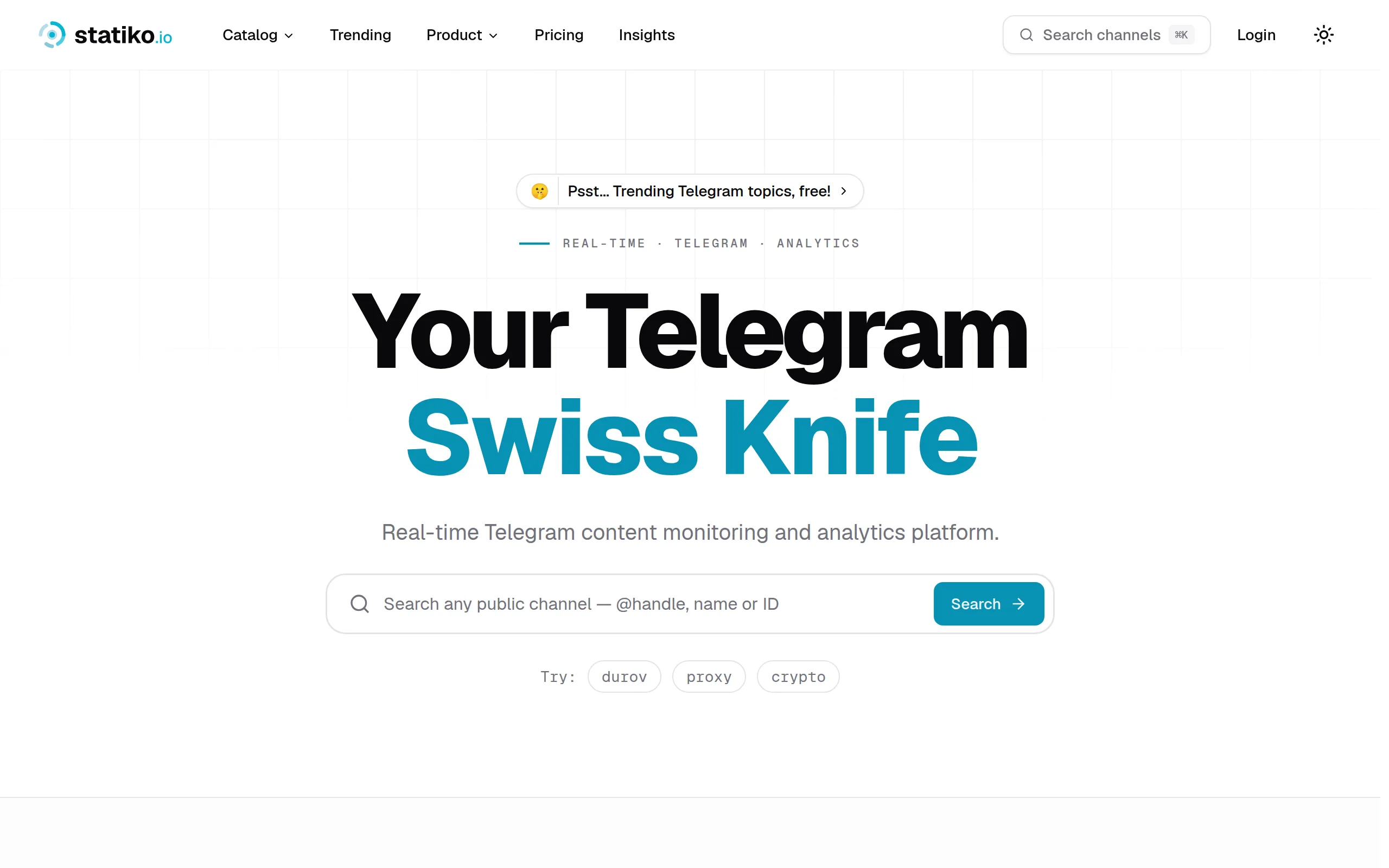
Statiko
Monitor any Telegram channel in real time - track posts, edits, deletions, and growth with AI recaps 📡

Shibui
AI website builder - describe your business, pick a niche template, edit by chatting, and publish instantly ✨

Pro Service
Find verified home service professionals, compare quotes, and pay securely through escrow - built for Brazilians across the US 🏠
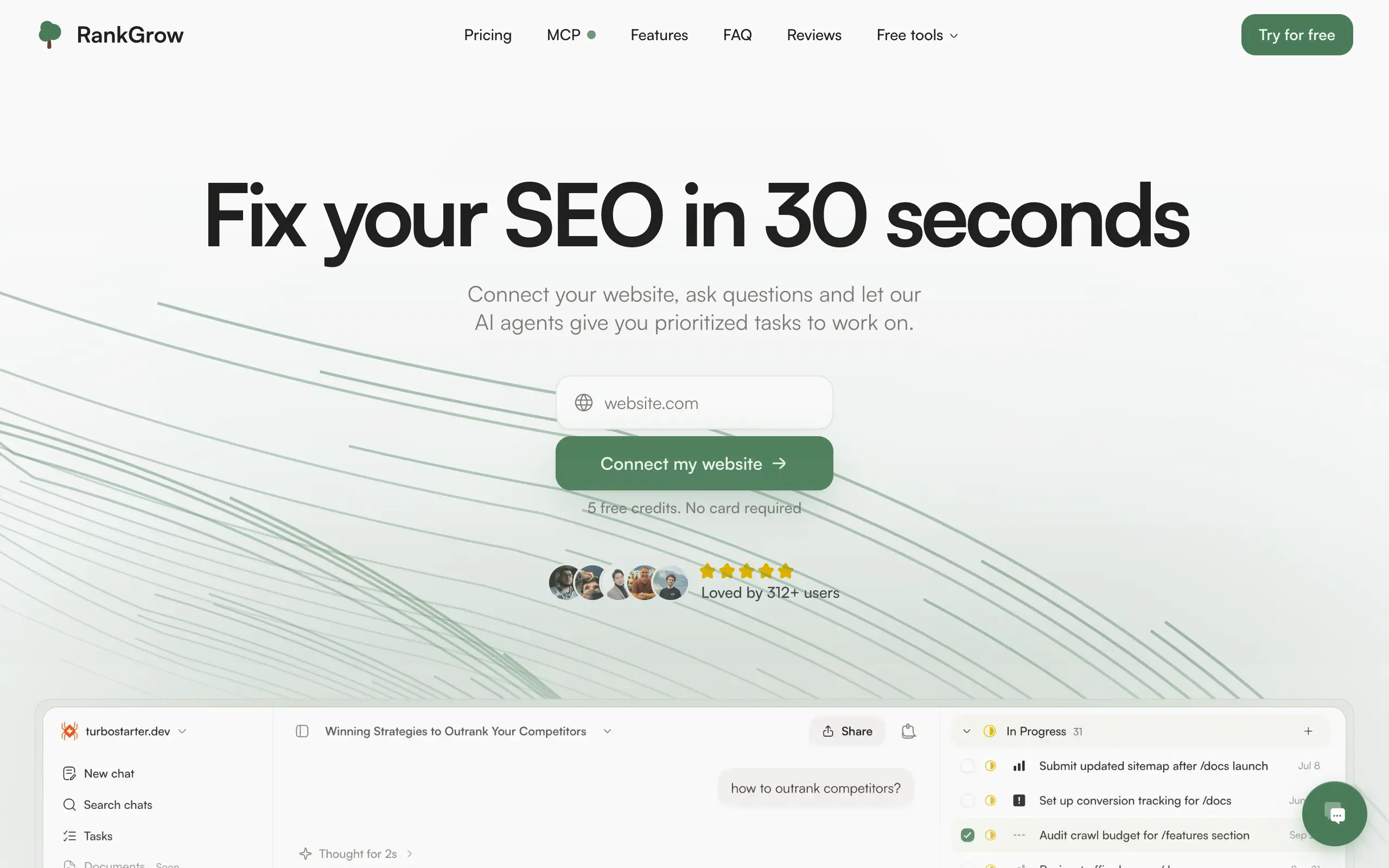
RankGrow
Fix your SEO with AI agents - connect Search Console, get prioritized tasks, and grow organic traffic 📈
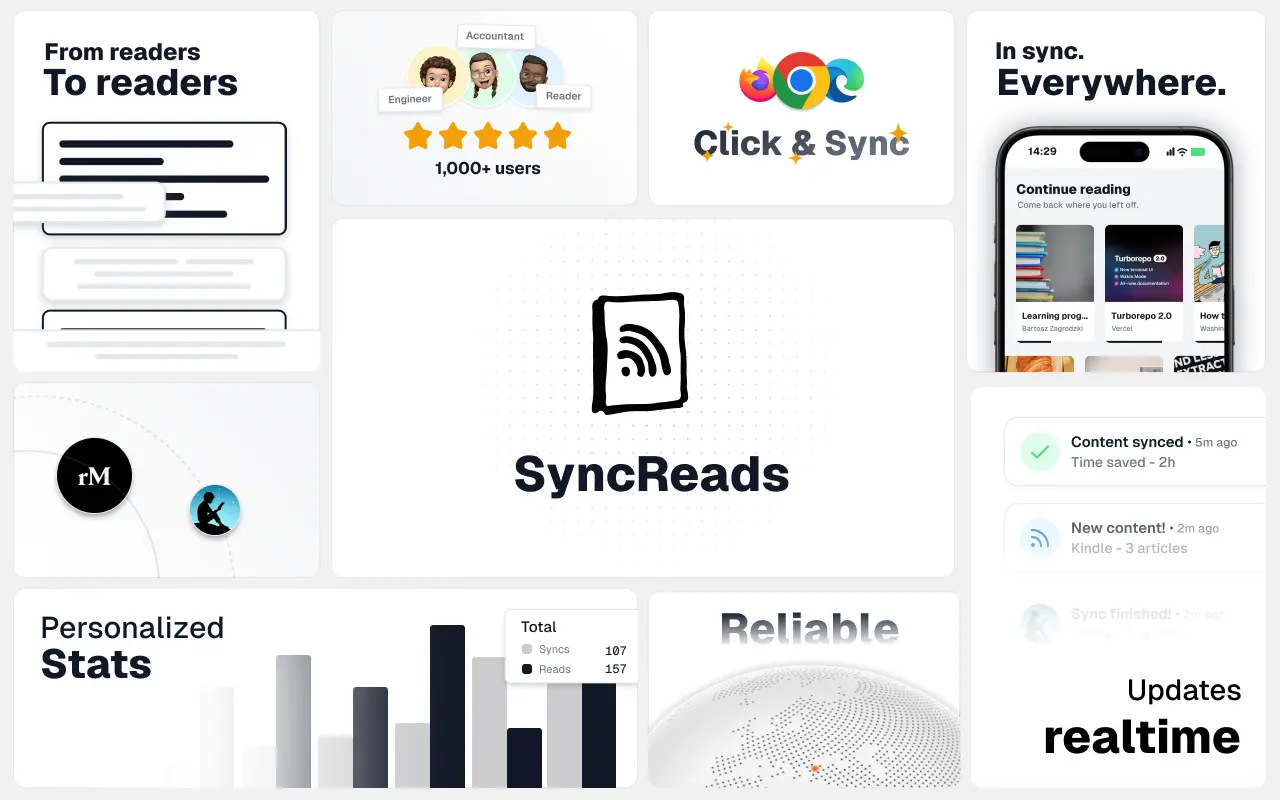
SyncReads
Sync your favorite content for distraction-free reading, save time and replace multiple apps. Anytime, anywhere 🔄
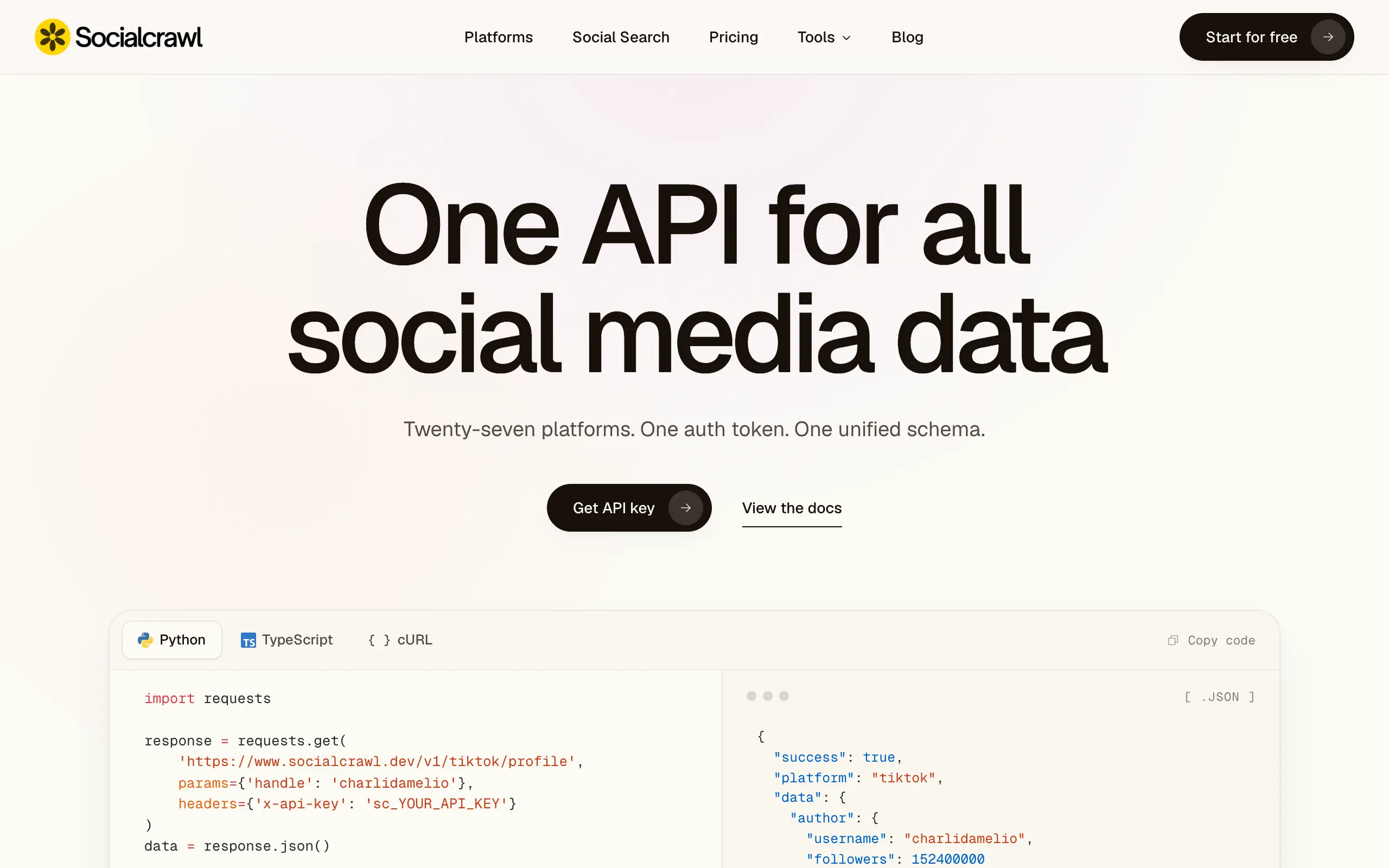
Socialcrawl
Get clean, structured data from 21 platforms like TikTok, Instagram, and YouTube with a single request 📊
Statiko
Monitor any Telegram channel in real time - track posts, edits, deletions, and growth with AI recaps 📡
Shibui
AI website builder - describe your business, pick a niche template, edit by chatting, and publish instantly ✨
Pro Service
Find verified home service professionals, compare quotes, and pay securely through escrow - built for Brazilians across the US 🏠
RankGrow
Fix your SEO with AI agents - connect Search Console, get prioritized tasks, and grow organic traffic 📈
SyncReads
Sync your favorite content for distraction-free reading, save time and replace multiple apps. Anytime, anywhere 🔄
Socialcrawl
Get clean, structured data from 21 platforms like TikTok, Instagram, and YouTube with a single request 📊
Statiko
Monitor any Telegram channel in real time - track posts, edits, deletions, and growth with AI recaps 📡
Shibui
AI website builder - describe your business, pick a niche template, edit by chatting, and publish instantly ✨
Pro Service
Find verified home service professionals, compare quotes, and pay securely through escrow - built for Brazilians across the US 🏠
RankGrow
Fix your SEO with AI agents - connect Search Console, get prioritized tasks, and grow organic traffic 📈
SyncReads
Sync your favorite content for distraction-free reading, save time and replace multiple apps. Anytime, anywhere 🔄
Socialcrawl
Get clean, structured data from 21 platforms like TikTok, Instagram, and YouTube with a single request 📊
Statiko
Monitor any Telegram channel in real time - track posts, edits, deletions, and growth with AI recaps 📡
Shibui
AI website builder - describe your business, pick a niche template, edit by chatting, and publish instantly ✨
Pro Service
Find verified home service professionals, compare quotes, and pay securely through escrow - built for Brazilians across the US 🏠
RankGrow
Fix your SEO with AI agents - connect Search Console, get prioritized tasks, and grow organic traffic 📈
SyncReads
Sync your favorite content for distraction-free reading, save time and replace multiple apps. Anytime, anywhere 🔄
Socialcrawl
Get clean, structured data from 21 platforms like TikTok, Instagram, and YouTube with a single request 📊
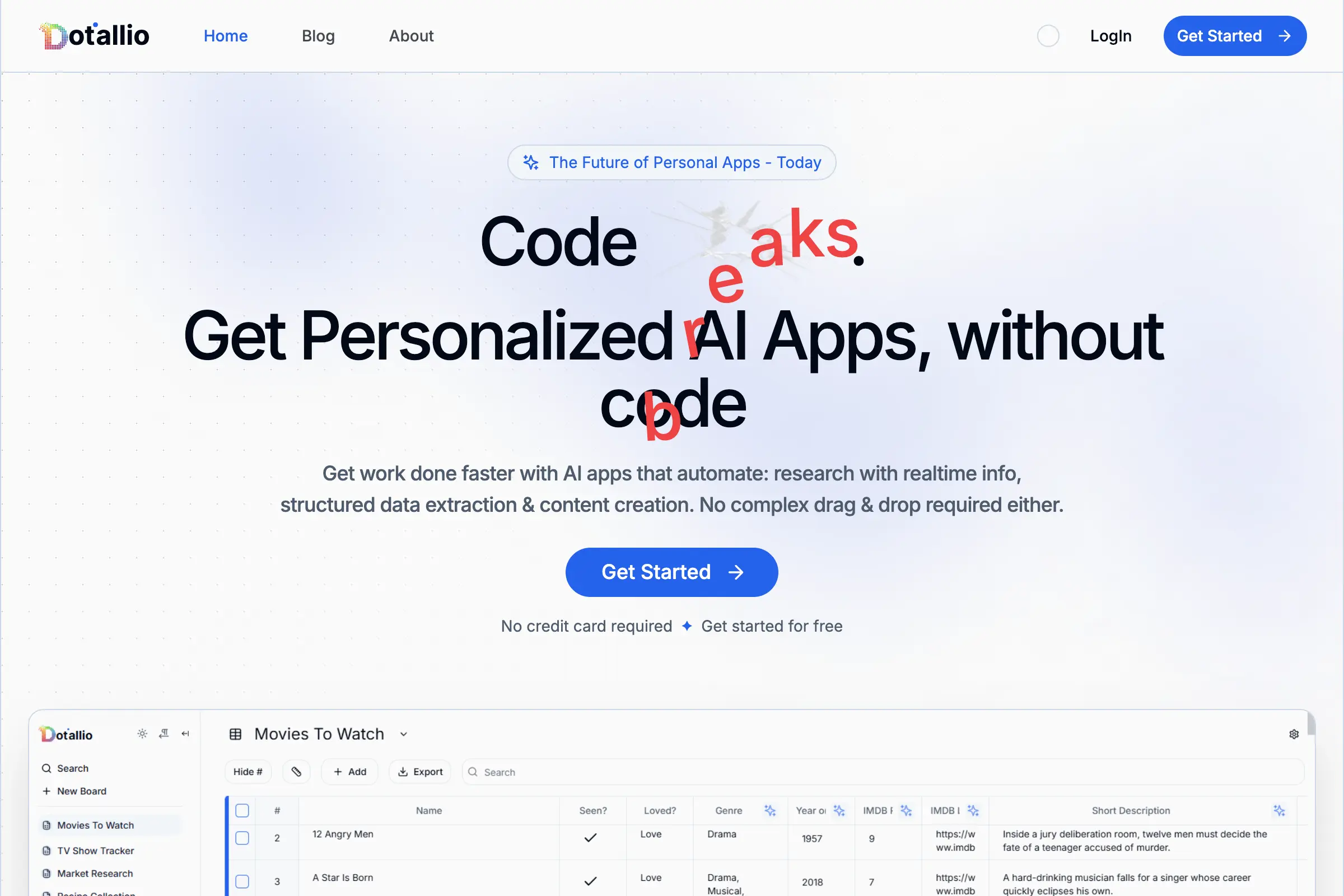
Dotallio
Personalized AI apps that automate research, data extraction, and content creation without code 🤖

Talk to Santa
Enjoy a magical live video chat or receive a unique AI-generated video greeting from Santa Claus 🎅

pozywka.pl
Scalable blog for food journalist, focused on performance and user experience 🌭
zagrodzki.me
Personal blog and portfolio of Bart Zagrodzki, where he shares his knowledge and work 💼
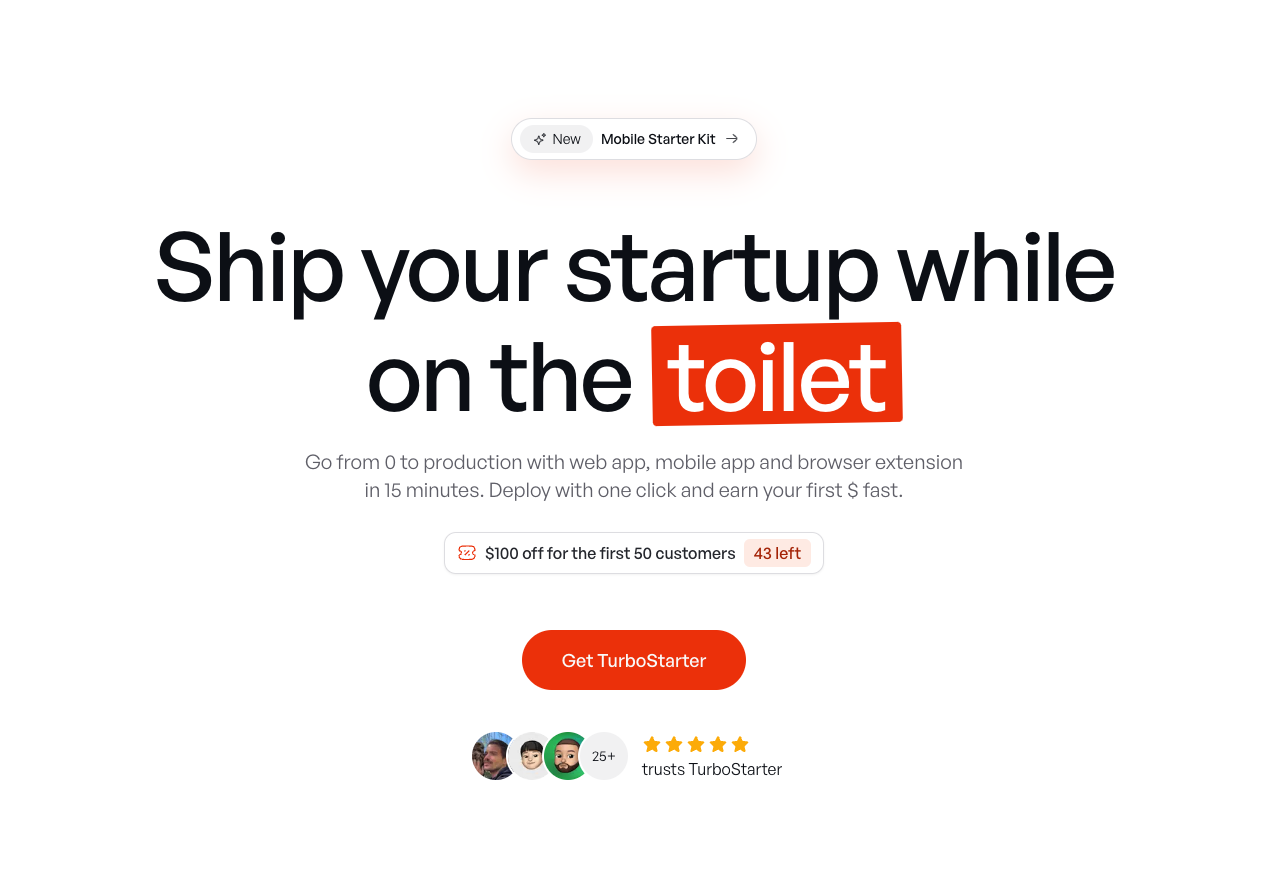
TurboStarter
Ship your startup everywhere. In minutes.
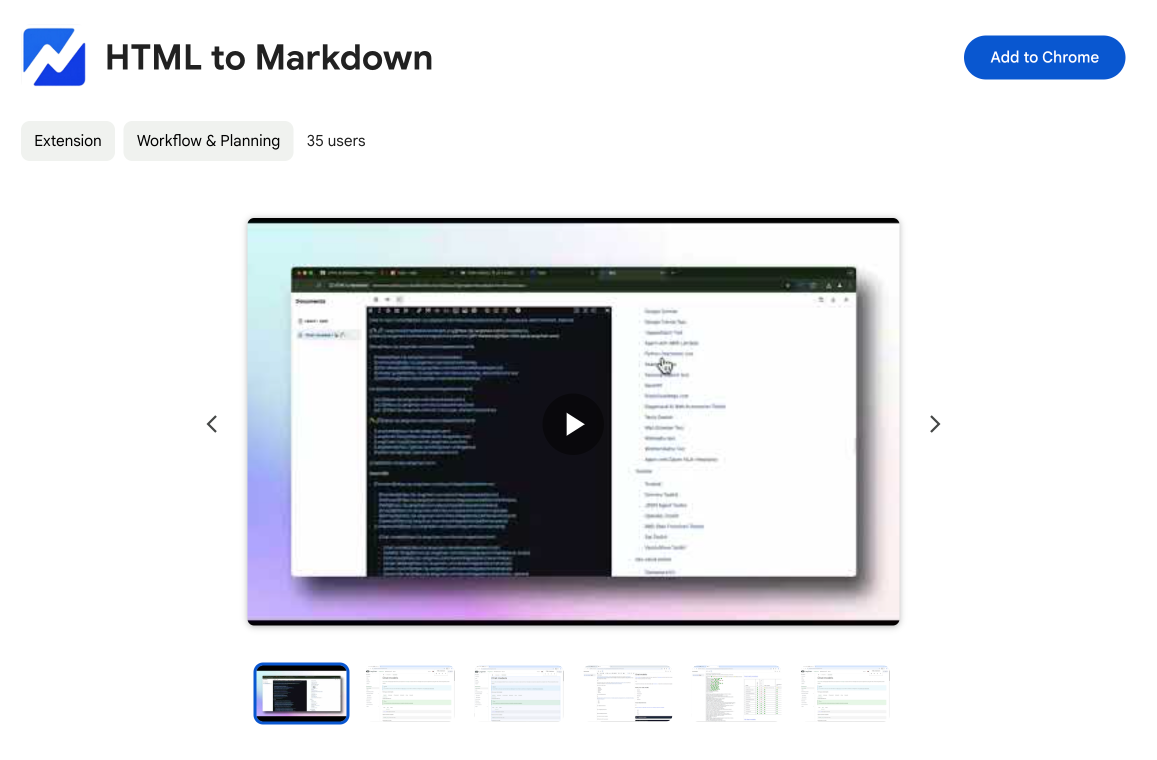
HTML to Markdown
Convert HTML to Markdown with ease, directly in your browser 📄
Dotallio
Personalized AI apps that automate research, data extraction, and content creation without code 🤖
Talk to Santa
Enjoy a magical live video chat or receive a unique AI-generated video greeting from Santa Claus 🎅
pozywka.pl
Scalable blog for food journalist, focused on performance and user experience 🌭
zagrodzki.me
Personal blog and portfolio of Bart Zagrodzki, where he shares his knowledge and work 💼
TurboStarter
Ship your startup everywhere. In minutes.
HTML to Markdown
Convert HTML to Markdown with ease, directly in your browser 📄
Dotallio
Personalized AI apps that automate research, data extraction, and content creation without code 🤖
Talk to Santa
Enjoy a magical live video chat or receive a unique AI-generated video greeting from Santa Claus 🎅
pozywka.pl
Scalable blog for food journalist, focused on performance and user experience 🌭
zagrodzki.me
Personal blog and portfolio of Bart Zagrodzki, where he shares his knowledge and work 💼
TurboStarter
Ship your startup everywhere. In minutes.
HTML to Markdown
Convert HTML to Markdown with ease, directly in your browser 📄
Dotallio
Personalized AI apps that automate research, data extraction, and content creation without code 🤖
Talk to Santa
Enjoy a magical live video chat or receive a unique AI-generated video greeting from Santa Claus 🎅
pozywka.pl
Scalable blog for food journalist, focused on performance and user experience 🌭
zagrodzki.me
Personal blog and portfolio of Bart Zagrodzki, where he shares his knowledge and work 💼
TurboStarter
Ship your startup everywhere. In minutes.
HTML to Markdown
Convert HTML to Markdown with ease, directly in your browser 📄
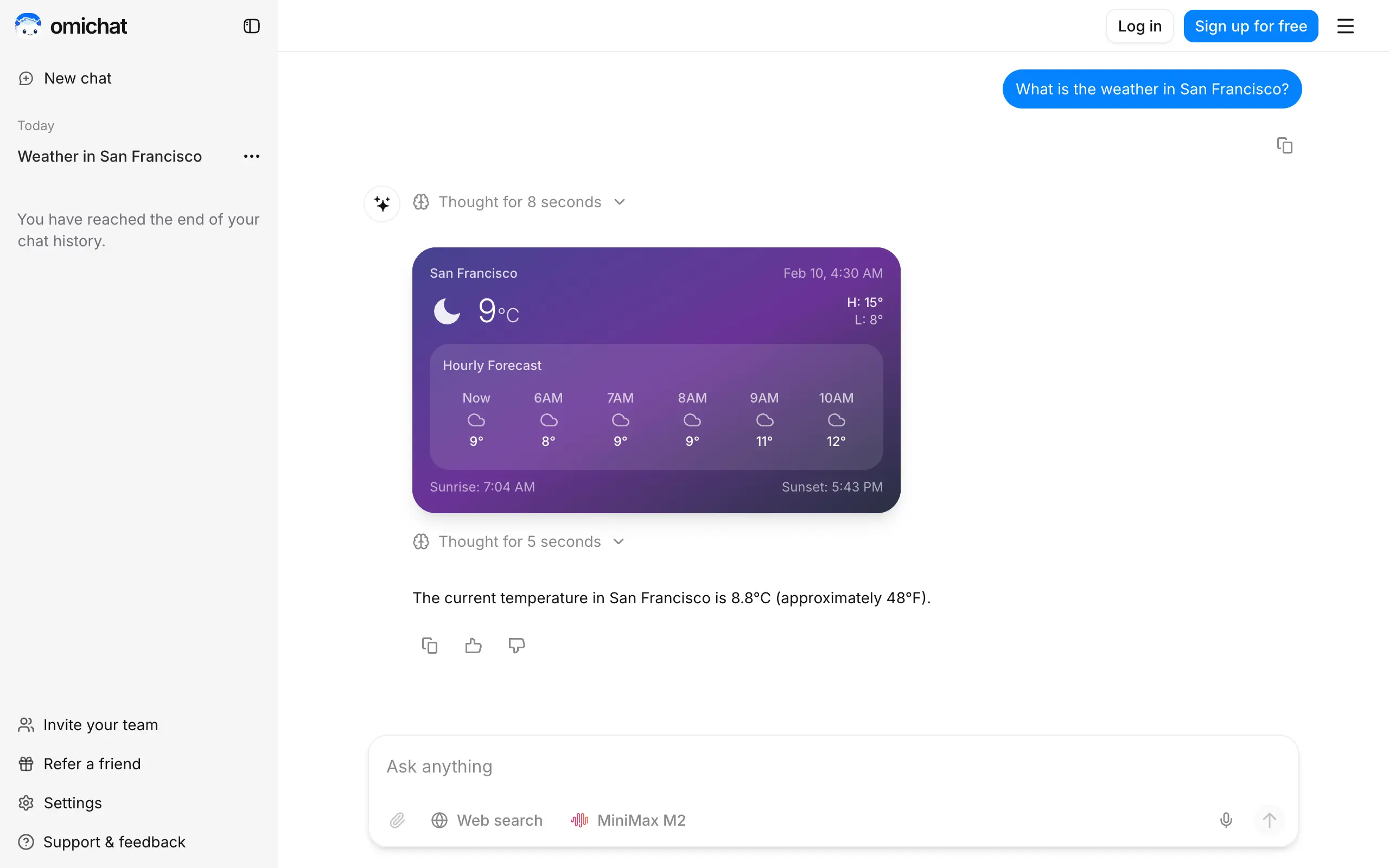
Omichat
Chat with 50+ AI models, including ChatGPT and Claude, in one place - switch models anytime without losing context 🤖
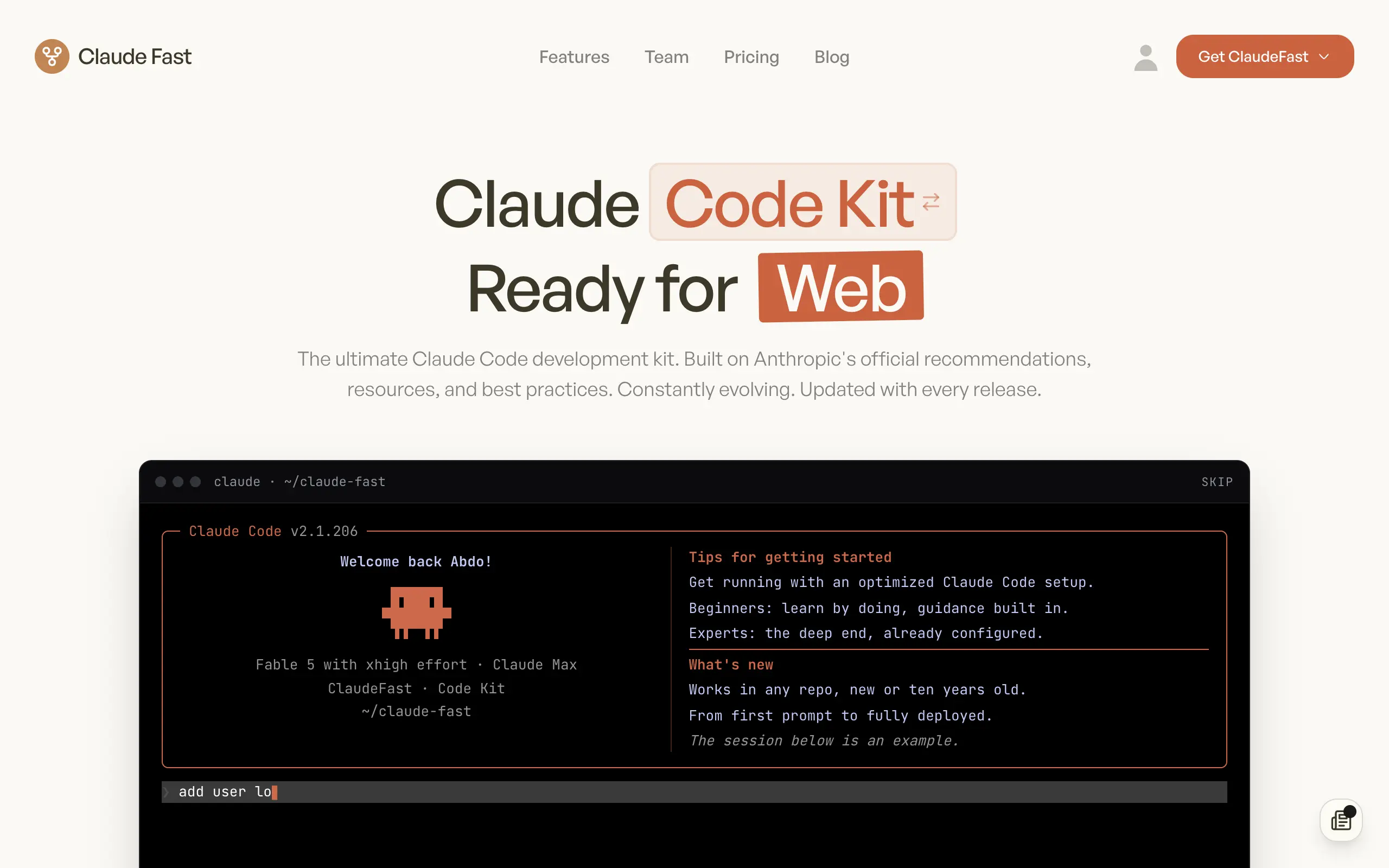
Claude Fast
Supercharge your Claude Code with 6x effective context window and specialized AI agents 🤖
EmojAI
AI-powered emoji picker with smart, context-aware suggestions 🤖
Solohacker
Autonomous company launcher - AI agents work 24/7, escalate what matters, and you stay in control 🤖
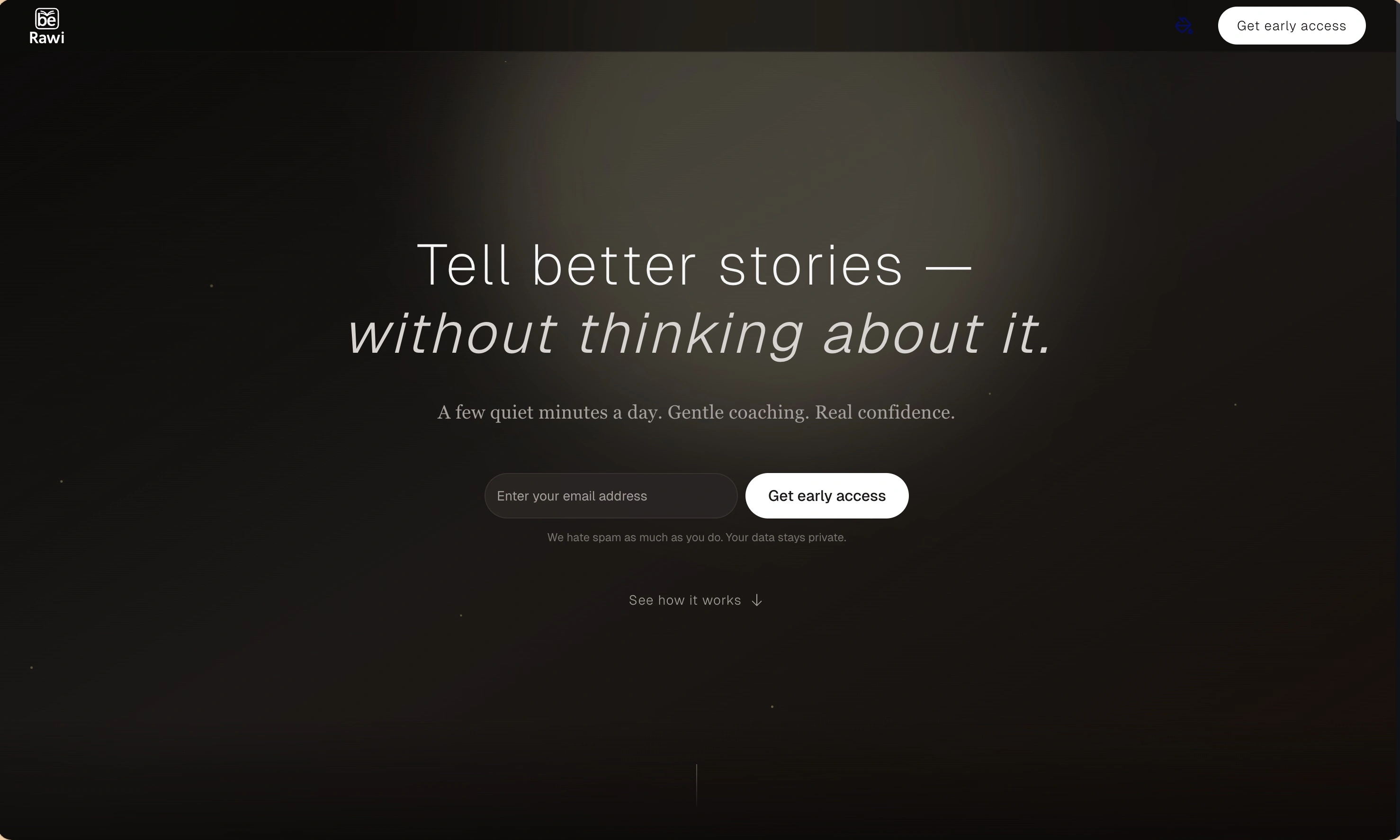
BeRawi: Storytelling Coach
Practice storytelling daily with instant feedback to sound clearer, more engaging, and confident 🎤
Omichat
Chat with 50+ AI models, including ChatGPT and Claude, in one place - switch models anytime without losing context 🤖
Claude Fast
Supercharge your Claude Code with 6x effective context window and specialized AI agents 🤖
EmojAI
AI-powered emoji picker with smart, context-aware suggestions 🤖
Solohacker
Autonomous company launcher - AI agents work 24/7, escalate what matters, and you stay in control 🤖
BeRawi: Storytelling Coach
Practice storytelling daily with instant feedback to sound clearer, more engaging, and confident 🎤
Omichat
Chat with 50+ AI models, including ChatGPT and Claude, in one place - switch models anytime without losing context 🤖
Claude Fast
Supercharge your Claude Code with 6x effective context window and specialized AI agents 🤖
EmojAI
AI-powered emoji picker with smart, context-aware suggestions 🤖
Solohacker
Autonomous company launcher - AI agents work 24/7, escalate what matters, and you stay in control 🤖
BeRawi: Storytelling Coach
Practice storytelling daily with instant feedback to sound clearer, more engaging, and confident 🎤
Omichat
Chat with 50+ AI models, including ChatGPT and Claude, in one place - switch models anytime without losing context 🤖
Claude Fast
Supercharge your Claude Code with 6x effective context window and specialized AI agents 🤖
EmojAI
AI-powered emoji picker with smart, context-aware suggestions 🤖
Solohacker
Autonomous company launcher - AI agents work 24/7, escalate what matters, and you stay in control 🤖
BeRawi: Storytelling Coach
Practice storytelling daily with instant feedback to sound clearer, more engaging, and confident 🎤

Connect with like-minded people
Join our community to get feedback, support, and grow together with 1,000+ builders on board, let's ship it!
Join usShip your startup everywhere. In minutes.
Don't burn tokens on setup and start building features on day one.