PermitPilot
Automate local permit packets for small contractors. PermitPilot turns job details into forms, checklists, and deadline reminders.
Why an AI permit assistant solves a persistent municipal problem
Permitting is one of the most frustrating interactions between residents, contractors, businesses, and local government. A homeowner wants to add a deck. A contractor needs an electrical permit. A restaurant owner needs a sign approval. In every case, the applicant often encounters fragmented instructions, dense municipal code language, outdated PDFs, department-specific terminology, and forms that are easy to submit incorrectly.
PermitPilot is an AI permit assistant designed to convert municipal forms, policy pages, checklists, and permit requirements into practical, step-by-step guidance for applicants. Instead of calling a counter clerk to ask what a form field means, applicants can ask questions in plain language and receive grounded answers based on the municipality's approved source materials.
The core value proposition is straightforward:
- Applicants complete permit applications with more confidence.
- Municipal staff receive fewer incomplete submissions.
- Counter and phone staff spend less time repeating procedural answers.
- Cities can make permit information more accessible without rewriting every legacy web page.
- Departments gain visibility into the questions that confuse applicants most often.
This makes PermitPilot more than a chatbot. It is a municipal permit guidance platform that sits between confusing public-facing requirements and a completed, review-ready application.
The critical design principle
PermitPilot should guide, explain, and validate completeness without making legal determinations, approving permits, or replacing professional review by municipal staff.
The target audience for municipal permit software
The strongest opportunity for an AI permit assistant is not one audience. It is a two-sided workflow problem involving both public applicants and the local government teams serving them.
Primary users include permit applicants
Applicants have varied levels of experience, technical knowledge, and tolerance for government processes. PermitPilot should account for each group rather than assuming every user understands municipal terminology.
- Homeowners often need help identifying whether a project requires a permit and what documents to gather before applying.
- Small business owners need guidance for business licenses, signage, occupancy changes, outdoor dining, health-related approvals, and renovation permits.
- Contractors and tradespeople value speed, permit status clarity, required-document checklists, and jurisdiction-specific requirements.
- Architects and engineers need reliable source citations, version-aware rules, and a clear way to identify project-specific submittal requirements.
- Developers and property managers need repeatable workflows across numerous properties, departments, and permit categories.
- Non-native English speakers benefit from plain-language explanations and multilingual guidance that preserves the original policy meaning.
For these users, the primary search intent behind phrases such as AI permit assistant, permit application help, municipal permit guidance, and building permit checklist software is practical. They are not looking for a broad explanation of government technology. They want to know what they need, what to do next, and whether their application will be rejected for missing information.
Municipal teams are the economic buyer
The paying customer is typically a city, county, town, special district, or agency responsible for permit intake and public assistance. Relevant stakeholders include:
- Permit center managers
- Building department directors
- Planning and zoning administrators
- Economic development teams
- IT and digital service leaders
- City clerks and records managers
- Public information officers
- Accessibility and language access coordinators
- Procurement, legal, and information security staff
Their goals differ from the applicant's goals. Municipal teams need lower call volume, fewer incomplete applications, consistent answers, better public service, and governance over information provided by AI.
A successful PermitPilot deployment should allow staff to answer a defensible question: Did this software reduce avoidable staff effort while making the permit process clearer and more equitable?
Early adopter profile
The best initial customers are usually mid-sized municipalities with meaningful permit volume but limited capacity for a large custom digital transformation project. They often have:
- A public website with forms and policy documents spread across many pages
- Repeated counter questions about the same permit types
- A mix of PDFs, web pages, scanned documents, and checklists
- Existing permitting software but weak applicant self-service guidance
- Pressure to improve customer experience without expanding headcount
- A willingness to pilot AI with clear controls and human oversight
A narrow initial market is strategically useful. PermitPilot could begin with building, planning, and zoning departments, then expand into business licensing, right-of-way permits, special events, short-term rentals, and other high-volume municipal workflows.
The market gap in permit application guidance
Most municipalities already have some combination of a website, online forms, a permitting platform, knowledge base articles, and counter staff. The gap is not merely the absence of information. The gap is that information is rarely organized around the applicant's actual decision path.
A typical municipal website may tell users that permits are required for certain work, link to a form, reference code sections, and provide a phone number. But it often does not answer the applicant's next questions:
- Does my particular project need this permit?
- Which permit type applies if my work includes plumbing and electrical changes?
- What plans, site documents, or contractor details are required?
- Which form fields are relevant to my project?
- What must happen before I submit?
- What is the difference between a planning approval and a building permit?
- What should I do if my property is in a historic district or flood zone?
- Where did this answer come from?
Traditional FAQs help only when the question exactly matches the FAQ. Generic AI chat tools can sound helpful but create risk if they answer from incomplete, outdated, or unauthorized information. Existing enterprise permit systems may support online submission but do not always explain complex requirements before the applicant begins.
That creates a clear market position for PermitPilot.
| Approach | Personalized guidance | Municipal source citations | Submission readiness | Staff governance |
|---|---|---|---|---|
| Static FAQ page | Limited | Sometimes | No | Manual updates |
| Generic AI chatbot | High | Inconsistent | Limited | Often weak |
| PermitPilot | High | Required | Yes | Purpose-built |
The product's opportunity is to make municipal information actionable while preserving the authority of city staff and official policy sources.
The PermitPilot product vision
PermitPilot should operate as a guided digital permit concierge. It ingests approved municipal content, understands the structure of applications and requirements, asks applicants the right clarifying questions, and produces a transparent action plan.
The AI should not simply say, “You need a building permit.” It should lead the applicant through a structured process such as:
- Identify the proposed project.
- Determine likely permit categories.
- Flag jurisdiction-specific conditions.
- Explain required forms and supporting documents.
- Generate a personalized checklist.
- Point applicants to the official application portal.
- Identify when a staff member must review a case.
- Preserve a record of the guidance and source documents used.
This approach turns passive information discovery into guided completion.
The core workflow for applicants
A good applicant journey begins with a short description of the project in plain language. For example, a homeowner might write that they plan to convert a garage into a home office and add a bathroom.
PermitPilot should then ask only the questions necessary to narrow the workflow. Relevant questions might include property address, project scope, structural changes, utility work, historic district status, contractor involvement, and intended use.
The system then generates a permit pathway containing:
- Likely permit categories
- Required and conditional documentation
- Important review dependencies
- Step-by-step instructions
- Plain-language definitions of confusing fields
- Official source links or citations
- A clear disclaimer where staff confirmation is needed
The output should remain dynamic. If the applicant indicates that the property is in a floodplain or historic overlay, the checklist should update rather than force them to restart.
The core workflow for staff
Municipal employees need a control plane, not an opaque AI layer. The staff experience should include tools to:
- Upload or synchronize approved source content
- Assign content owners by department
- Review AI answers and source citations
- Define prohibited answers and escalation rules
- Create structured permit workflows
- Approve public-facing guidance before publication
- Analyze unanswered questions and low-confidence responses
- Identify content gaps causing repeated counter calls
- Review feedback from applicants
- Retire outdated materials and preserve version history
A staff dashboard should make it clear whether the AI is performing well. Useful reporting could include common user questions, abandonment points, source documents used most often, escalation rate, incomplete submission rate, and estimated support deflection.
Essential features for an AI permit assistant
Source-grounded municipal knowledge base
The most important feature is a retrieval system that answers only from approved municipal content. PermitPilot should support:
- Public web pages
- Application forms
- PDF checklists
- Fee schedules
- Municipal code excerpts
- Planning and zoning guides
- Internal staff-approved knowledge articles
- Meeting notes or policy clarifications when authorized
- Document version dates and department ownership
Each answer should show the source title, relevant section, publication date where available, and a direct route to the original municipal page or document.
This citation-first approach reduces hallucination risk and gives applicants confidence that guidance reflects official information rather than generic internet advice.
Guided permit intake and smart triage
A conversational interface is useful, but a structured decision tree is often more reliable for permit eligibility questions. PermitPilot should combine both.
The AI can interpret free-text project descriptions, while curated decision logic handles high-risk conditions. For example, a municipality may define exact requirements for accessory structures, historic districts, floodplains, or right-of-way work. Those rules should be expressed in auditable workflow logic rather than left solely to model interpretation.
Conversational intake
Applicants describe a project naturally while the assistant extracts relevant permit details.
Rules-based routing
Approved municipal logic handles high-impact conditions and departmental handoffs.
Personalized checklist
Each applicant receives a tailored list of documents, forms, fees, and next actions.
Form field explanations and completeness checks
Applicants regularly abandon forms because they do not understand a field, lack a document, or cannot tell whether a requirement applies to them. PermitPilot should provide contextual explanations within a form experience or beside a linked application portal.
Examples include:
- Explaining the difference between owner-builder and licensed contractor information
- Defining parcel numbers and showing where they can be found
- Clarifying when a site plan is required
- Explaining acceptable plan formats
- Flagging missing attachments before submission
- Warning applicants that a listed item requires staff confirmation
Completeness checks should be framed carefully. The system can say an application appears to include the items listed in a public checklist. It should not promise that the application is complete, code-compliant, or approvable.
Escalation to municipal staff
The assistant must know when not to answer. This is a competitive advantage, not a product limitation.
Escalation should trigger for:
- Conflicting or missing source material
- Low-confidence retrieval
- Site-specific interpretation questions
- Code compliance determinations
- Enforcement matters
- Appeals and legal disputes
- Sensitive personal data
- Questions involving emergencies or unsafe conditions
The handoff should create a concise case summary so the applicant does not need to repeat their situation. Staff should receive the user’s project description, answers to intake questions, relevant sources, and the specific point requiring review.
Accessibility and multilingual service
A municipal AI assistant should support digital equity from the start. The product should aim to meet accessibility expectations such as the Web Content Accessibility Guidelines maintained by the W3C.
Key considerations include:
- Keyboard-first navigation
- Screen reader-friendly labels
- Plain-language response mode
- Readable typography and contrast
- Language translation with an option to view the original source text
- Clear disclosure when translated content is informational
- Mobile support for residents who do not use desktop computers
Multilingual guidance should never silently alter official requirements. Show the original language source alongside translated explanations whenever the complexity or legal significance warrants it.
Building trustworthy AI for public-sector permit guidance
Trust is the product. A polished chat interface is not enough when residents are spending money, scheduling contractors, or making property decisions based on the response.
PermitPilot should establish a clear AI governance model from its first deployment.
Use retrieval-augmented generation with strict controls
A practical technical approach is retrieval-augmented generation, commonly called RAG. In this design, the model retrieves relevant sections from approved documents before generating an answer. The response is constrained by those sources and includes citations.
However, RAG alone is not sufficient. Production safeguards should include:
- Source allowlists for each department
- Freshness dates and expired-content detection
- Minimum relevance thresholds before answering
- Response templates for high-risk subjects
- Rules-engine checks for policy-specific conditions
- Automated testing against known permit scenarios
- Human review queues for uncertain responses
- Prompt-injection defenses for uploaded or public documents
- Audit logs for every answer and cited source
The AI should prefer “I cannot verify that from current city guidance” over a fluent but unsupported answer.
Preserve decision authority
Municipal staff remain responsible for official interpretation, review, and approval. PermitPilot should state this consistently in the user interface and contract language.
Appropriate phrases include:
- “This guidance is based on published municipal materials.”
- “A permit reviewer will determine final application completeness.”
- “Your project may require additional review based on site-specific conditions.”
- “Contact the department for an official determination.”
This is not merely a legal disclaimer. It establishes accurate expectations and protects the trust relationship between residents and their government.
Measure answer quality continuously
PermitPilot should create an evaluation set before each launch. The set should contain real, anonymized questions that staff commonly receive, including edge cases.
Quality evaluation can assess:
- Citation accuracy
- Answer completeness
- Correct escalation behavior
- Readability for non-experts
- Consistency with staff guidance
- Policy version alignment
- Translation quality
- Absence of unsupported claims
For responsible AI frameworks, product teams should review guidance such as the NIST AI Risk Management Framework. Legal counsel and municipal privacy officers should also review local obligations before public deployment.
Recommended tech stack for PermitPilot
A modern SaaS architecture can support a fast initial release while still meeting government customer expectations for security, auditability, and configuration.
Application layer
A strong frontend choice is React with Next.js. This combination supports an accessible public-facing experience, fast routing, server-side rendering, authenticated municipal dashboards, and API routes in one ecosystem.
For styling, Tailwind CSS can accelerate consistent interface development. Its utility-first model works well for a design system that must support accessible states, responsive layouts, and white-label municipal themes.
For a faster SaaS foundation, TurboStarter can reduce setup work around authentication, billing, teams, dashboards, and production-ready application patterns.
Data and workflow layer
PostgreSQL is a practical system of record for tenants, documents, permit workflows, audit events, feedback, user roles, and analytics. It is mature, widely supported, and compatible with structured municipal data needs.
A vector search capability is needed for document retrieval. Teams can use PostgreSQL with vector extensions for operational simplicity, or a dedicated vector database when document scale and retrieval performance justify the additional infrastructure.
The trade-off is important:
- A single PostgreSQL-based architecture is easier to operate in an early-stage product.
- A dedicated vector service may improve scaling and retrieval tuning for very large document collections.
- For most initial municipal deployments, simplicity, auditability, and tenant isolation matter more than premature optimization.
AI orchestration layer
Use a model provider abstraction rather than hard-coding business logic to a single large language model. This makes it possible to compare model quality, manage cost, meet residency requirements, and support customers with specific procurement constraints.
The orchestration layer should manage:
- Document parsing and chunking
- Metadata extraction
- Embedding generation
- Retrieval and reranking
- Citation assembly
- Policy checks
- Structured output validation
- Human escalation
- Evaluation logging
For high-stakes responses, require structured model output that maps to fields such as permit category, confidence, required documents, conditional flags, citations, and escalation status.
type PermitGuidance = {
  permitTypes: string[]
  requiredDocuments: string[]
  conditionalRequirements: string[]
  staffReviewRequired: boolean
  confidence: "high" | "medium" | "low"
  citations: Array<{
    title: string
    sourceUrl: string
    section: string
    publishedAt?: string
  }>
}
Security and compliance architecture
Government buyers will ask detailed questions about security early in the sales process. Build the basics before pursuing advanced certifications.
Minimum capabilities should include:
- Tenant isolation
- Role-based access control
- Encryption in transit and at rest
- Audit logs for administrative actions
- Data retention controls
- Secure document storage
- Backups and disaster recovery procedures
- Vulnerability management
- Incident response documentation
- Vendor and subprocessors inventory
- Data processing agreement support
Avoid storing unnecessary applicant data. If a conversation does not require a full address, contractor license number, or personal identifier, do not request it. Data minimization reduces compliance risk and improves public trust.
Monetization strategy for PermitPilot
Government SaaS pricing should align with procurement reality and the value created. A purely usage-based model can be difficult for public agencies to budget, while a large enterprise contract may create friction for smaller jurisdictions.
A hybrid annual subscription model is likely the strongest starting point.
Recommended pricing structure
- Implementation fee for content ingestion, workflow configuration, branding, staff training, and launch support
- Annual platform subscription based on population served, permit volume, departments enabled, or service tier
- Department add-ons for planning, building, business licensing, special events, or right-of-way workflows
- Premium AI governance package for advanced audit exports, private deployment options, custom retention policies, and enhanced support
- Professional services for knowledge base cleanup, form digitization, policy workflow design, and multilingual content review
Avoid tying all pricing to conversations. A city might hesitate to promote a service if every successful resident interaction creates unpredictable cost. Include a generous usage allowance and price overages only for unusually high demand.
Land-and-expand strategy
The initial sale should be narrow and measurable. A building permit pilot can establish value quickly because it has frequent public questions and clear operational pain.
After demonstrating results, expand into adjacent workflows:
- Planning and zoning guidance
- Business license application help
- Special event permits
- Encroachment and right-of-way permits
- Rental registration workflows
- Code enforcement self-service education
- Internal staff knowledge assistance
This expansion strategy increases account value while reusing the same document ingestion, governance, workflow, and analytics foundation.
Competitive advantage in the govtech permit software market
PermitPilot should not position itself as “ChatGPT for cities.” That framing is too generic and raises immediate trust concerns. Its advantage comes from solving the full permit guidance workflow with controls designed for public institutions.
PermitPilot’s defensible differentiation
The strongest competitive advantage combines five elements.
- Source-grounded answers keep guidance traceable to municipal content.
- Permit-specific workflow logic turns broad information into action plans and document checklists.
- Human escalation pathways preserve staff authority for exceptions and determinations.
- Analytics on applicant confusion reveal operational issues that static websites and generic chatbots cannot expose.
- Multi-department extensibility lets cities expand from a single permit type to a broader resident service platform.
The product can also accumulate valuable domain expertise. Over time, PermitPilot can build reusable workflow templates for common permit categories while allowing local policy configuration. Examples include residential reroofing, solar installation, accessory structures, tenant improvements, signs, and special events.
The moat is not the language model itself. Models will become more available and less differentiated. The moat is a trusted municipal content system, a library of validated public-sector workflows, security and procurement readiness, and evidence that the product improves service outcomes.
Risks and mitigation strategies
Every AI govtech product faces meaningful risk. Addressing these risks directly will make PermitPilot more credible to municipalities and investors.
Require citations, track source versions, assign content owners, set document expiration reminders, and escalate low-confidence answers. Do not let the assistant answer beyond approved materials.
Start with pilots that have narrow scope, clear success criteria, fixed implementation pricing, and security documentation prepared before procurement begins.
Position the product as a counter-call reduction tool, involve frontline staff in evaluation, and give departments control over content and escalation policies.
Use clear language that distinguishes guidance from official determinations, approvals, inspections, and code interpretation.
Begin with public web pages and forms, then add integrations only after demonstrating value. A useful guidance experience should not depend on replacing a city’s existing permitting system.
Integration risk
Existing permit systems can be technically closed, expensive to integrate with, or configured differently by every municipality. PermitPilot should avoid making deep integrations a launch dependency.
The first product version can provide value through:
- A public website widget
- A standalone branded guidance portal
- Links into existing permit application systems
- Downloadable or email-ready personalized checklists
- Staff dashboards for content management and analytics
Later integrations can support application prefill, permit status explanations, appointment booking, CRM case creation, and document handoff. This phased approach shortens time to value.
How to validate the market before building everything
Do not begin by building a broad municipal chatbot. Validate the highest-value workflow with real permit staff and applicants.
Interview the people closest to the problem
Conduct interviews with at least three groups.
- Permit counter staff who answer repetitive questions daily
- Applicants who recently completed or abandoned a permit process
- Municipal digital services leaders who own web, IT, accessibility, or customer experience goals
Ask for examples of incomplete applications, recurring questions, confusing forms, and policies that generate the most staff effort. Request anonymized call logs, email categories, FAQ search terms, and permit rejection reasons where available.
Run a narrow concierge pilot
Select one common permit type, such as residential alteration permits or commercial signage permits. Build a reviewed knowledge base, map the top questions, and provide a guided experience to a limited audience.
Measure outcomes such as:
- Reduction in repetitive questions
- Percentage of applicants who complete the guidance flow
- Percentage of users who reach the official application portal
- Applicant-reported confidence
- Staff-rated correctness of AI responses
- Number of incomplete submissions before and after launch
- Escalation rate for unclear cases
For public claims about impact, use a clear reference format such as “PermitPilot pilot analysis, City Department, quarter and year” and make the methodology available. Avoid publishing broad efficiency claims without a transparent baseline.
Actionable implementation plan
A focused implementation sequence will help PermitPilot reach a credible pilot faster than a feature-heavy platform build.
The first release should optimize for trust, clarity, and governance. It does not need every integration, every permit type, or autonomous form submission. If an applicant can quickly understand their next steps and staff can verify every answer, the product is already solving a meaningful government service problem.
Final perspective on the AI permit assistant opportunity
PermitPilot addresses a practical and expensive gap in local government service delivery. Municipalities already possess much of the information applicants need, but that information is commonly scattered, difficult to interpret, and disconnected from the steps required to submit a complete application.
An effective AI permit assistant can bridge that gap by combining conversational guidance, structured permit workflows, approved municipal sources, transparent citations, and human escalation. The result is better than a static FAQ and safer than an unconstrained general-purpose chatbot.
The winning product will not promise to replace permit reviewers. It will make reviewers more effective by preventing avoidable confusion before an application reaches the counter. For applicants, that means fewer dead ends. For municipal teams, it means a more consistent, measurable, and scalable permit guidance experience.
More 🤖 AI Startup SaaS ideas
Discover more innovative ai startup SaaS ideas that are trending in 2026. Each idea is AI-generated with market validation and growth potential to help you find your next profitable venture faster than competitors.
Your competitors are building with TurboStarter
Below are some of the SaaS ideas that have been generated and built with our starter kit.

Statiko
Monitor any Telegram channel in real time - track posts, edits, deletions, and growth with AI recaps 📡

Shibui
AI website builder - describe your business, pick a niche template, edit by chatting, and publish instantly ✨

Pro Service
Find verified home service professionals, compare quotes, and pay securely through escrow - built for Brazilians across the US 🏠
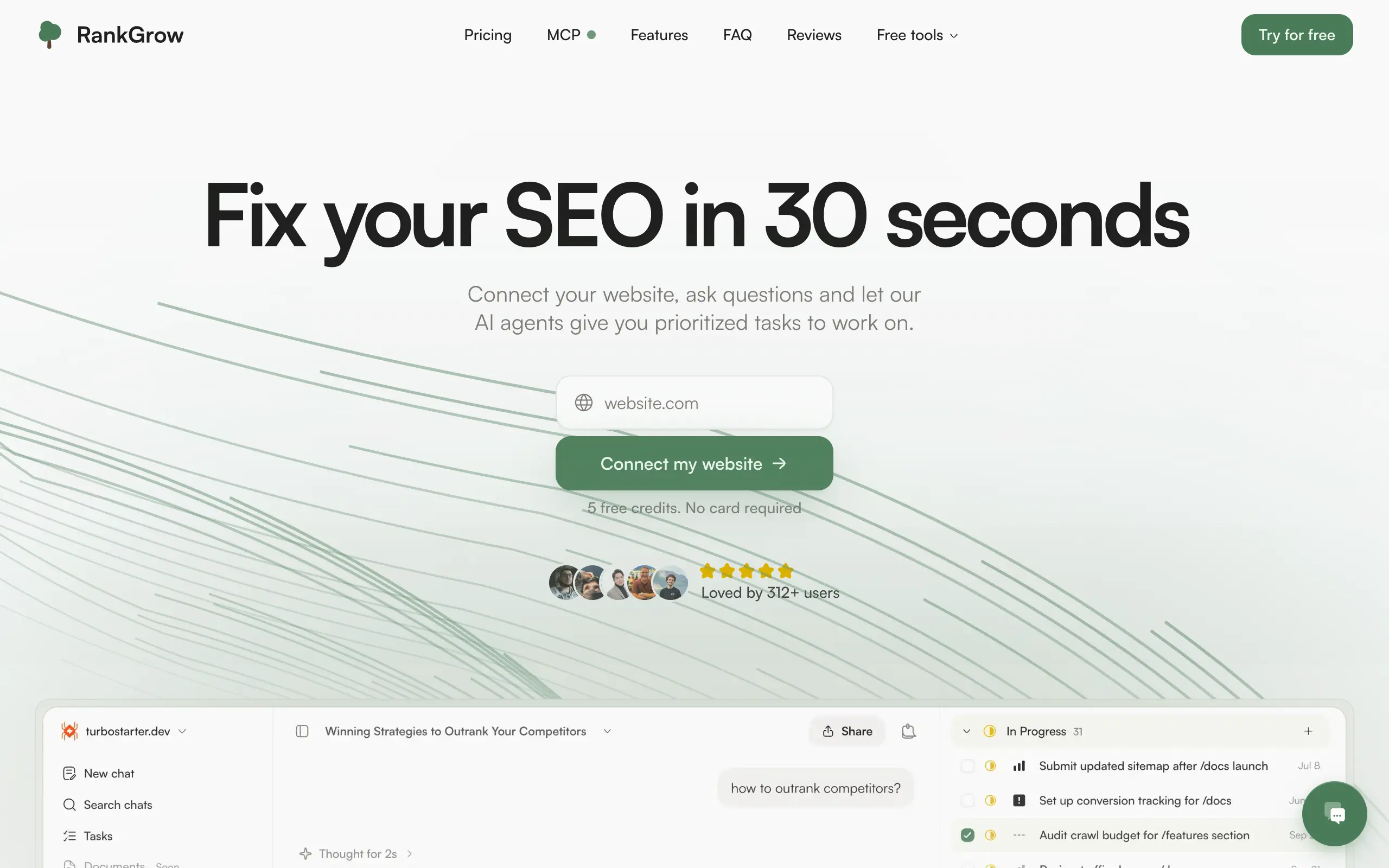
RankGrow
Fix your SEO with AI agents - connect Search Console, get prioritized tasks, and grow organic traffic 📈
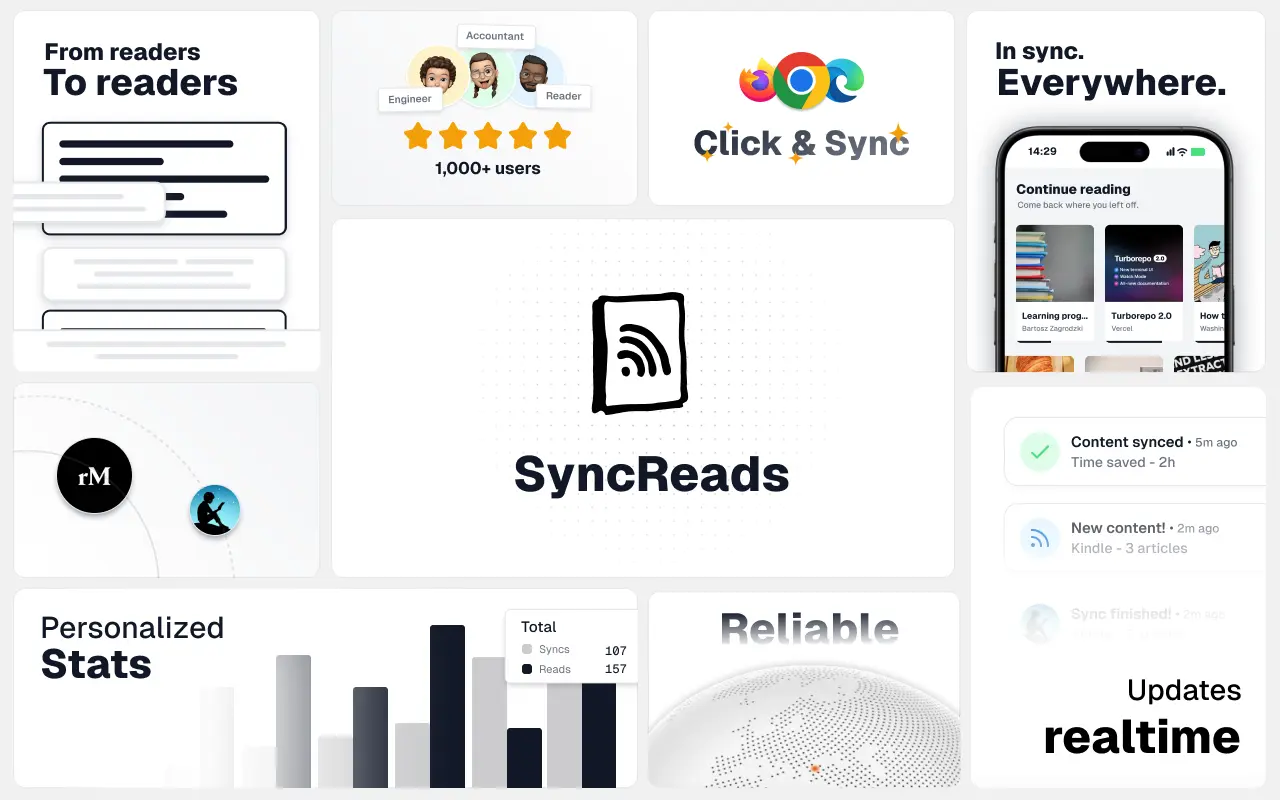
SyncReads
Sync your favorite content for distraction-free reading, save time and replace multiple apps. Anytime, anywhere 🔄
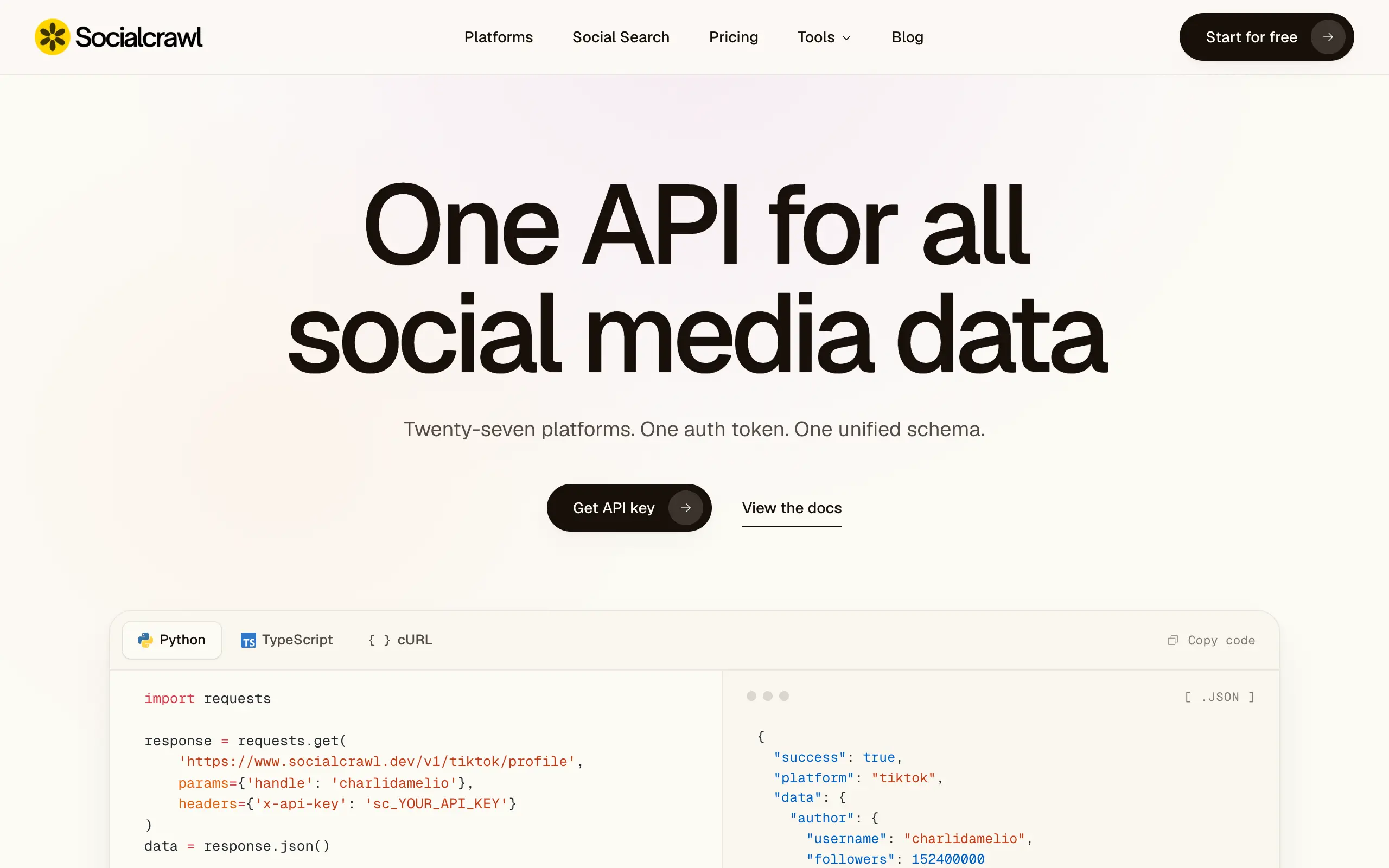
Socialcrawl
Get clean, structured data from 21 platforms like TikTok, Instagram, and YouTube with a single request 📊
Statiko
Monitor any Telegram channel in real time - track posts, edits, deletions, and growth with AI recaps 📡
Shibui
AI website builder - describe your business, pick a niche template, edit by chatting, and publish instantly ✨
Pro Service
Find verified home service professionals, compare quotes, and pay securely through escrow - built for Brazilians across the US 🏠
RankGrow
Fix your SEO with AI agents - connect Search Console, get prioritized tasks, and grow organic traffic 📈
SyncReads
Sync your favorite content for distraction-free reading, save time and replace multiple apps. Anytime, anywhere 🔄
Socialcrawl
Get clean, structured data from 21 platforms like TikTok, Instagram, and YouTube with a single request 📊
Statiko
Monitor any Telegram channel in real time - track posts, edits, deletions, and growth with AI recaps 📡
Shibui
AI website builder - describe your business, pick a niche template, edit by chatting, and publish instantly ✨
Pro Service
Find verified home service professionals, compare quotes, and pay securely through escrow - built for Brazilians across the US 🏠
RankGrow
Fix your SEO with AI agents - connect Search Console, get prioritized tasks, and grow organic traffic 📈
SyncReads
Sync your favorite content for distraction-free reading, save time and replace multiple apps. Anytime, anywhere 🔄
Socialcrawl
Get clean, structured data from 21 platforms like TikTok, Instagram, and YouTube with a single request 📊
Statiko
Monitor any Telegram channel in real time - track posts, edits, deletions, and growth with AI recaps 📡
Shibui
AI website builder - describe your business, pick a niche template, edit by chatting, and publish instantly ✨
Pro Service
Find verified home service professionals, compare quotes, and pay securely through escrow - built for Brazilians across the US 🏠
RankGrow
Fix your SEO with AI agents - connect Search Console, get prioritized tasks, and grow organic traffic 📈
SyncReads
Sync your favorite content for distraction-free reading, save time and replace multiple apps. Anytime, anywhere 🔄
Socialcrawl
Get clean, structured data from 21 platforms like TikTok, Instagram, and YouTube with a single request 📊
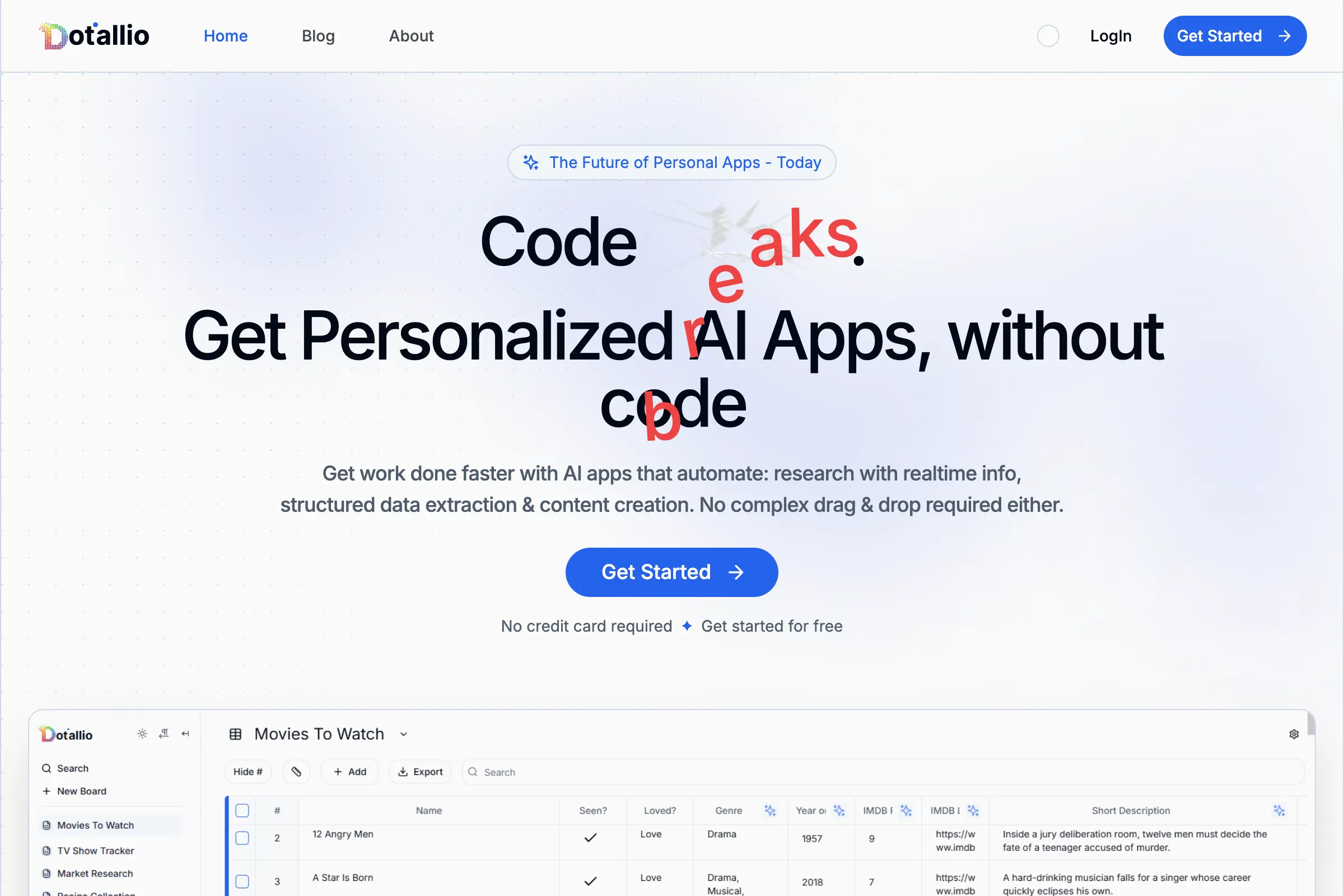
Dotallio
Personalized AI apps that automate research, data extraction, and content creation without code 🤖

Talk to Santa
Enjoy a magical live video chat or receive a unique AI-generated video greeting from Santa Claus 🎅

pozywka.pl
Scalable blog for food journalist, focused on performance and user experience 🌭
zagrodzki.me
Personal blog and portfolio of Bart Zagrodzki, where he shares his knowledge and work 💼
TurboStarter
Ship your startup everywhere. In minutes.
HTML to Markdown
Convert HTML to Markdown with ease, directly in your browser 📄
Dotallio
Personalized AI apps that automate research, data extraction, and content creation without code 🤖
Talk to Santa
Enjoy a magical live video chat or receive a unique AI-generated video greeting from Santa Claus 🎅
pozywka.pl
Scalable blog for food journalist, focused on performance and user experience 🌭
zagrodzki.me
Personal blog and portfolio of Bart Zagrodzki, where he shares his knowledge and work 💼
TurboStarter
Ship your startup everywhere. In minutes.
HTML to Markdown
Convert HTML to Markdown with ease, directly in your browser 📄
Dotallio
Personalized AI apps that automate research, data extraction, and content creation without code 🤖
Talk to Santa
Enjoy a magical live video chat or receive a unique AI-generated video greeting from Santa Claus 🎅
pozywka.pl
Scalable blog for food journalist, focused on performance and user experience 🌭
zagrodzki.me
Personal blog and portfolio of Bart Zagrodzki, where he shares his knowledge and work 💼
TurboStarter
Ship your startup everywhere. In minutes.
HTML to Markdown
Convert HTML to Markdown with ease, directly in your browser 📄
Dotallio
Personalized AI apps that automate research, data extraction, and content creation without code 🤖
Talk to Santa
Enjoy a magical live video chat or receive a unique AI-generated video greeting from Santa Claus 🎅
pozywka.pl
Scalable blog for food journalist, focused on performance and user experience 🌭
zagrodzki.me
Personal blog and portfolio of Bart Zagrodzki, where he shares his knowledge and work 💼
TurboStarter
Ship your startup everywhere. In minutes.
HTML to Markdown
Convert HTML to Markdown with ease, directly in your browser 📄
Omichat
Chat with 50+ AI models, including ChatGPT and Claude, in one place - switch models anytime without losing context 🤖
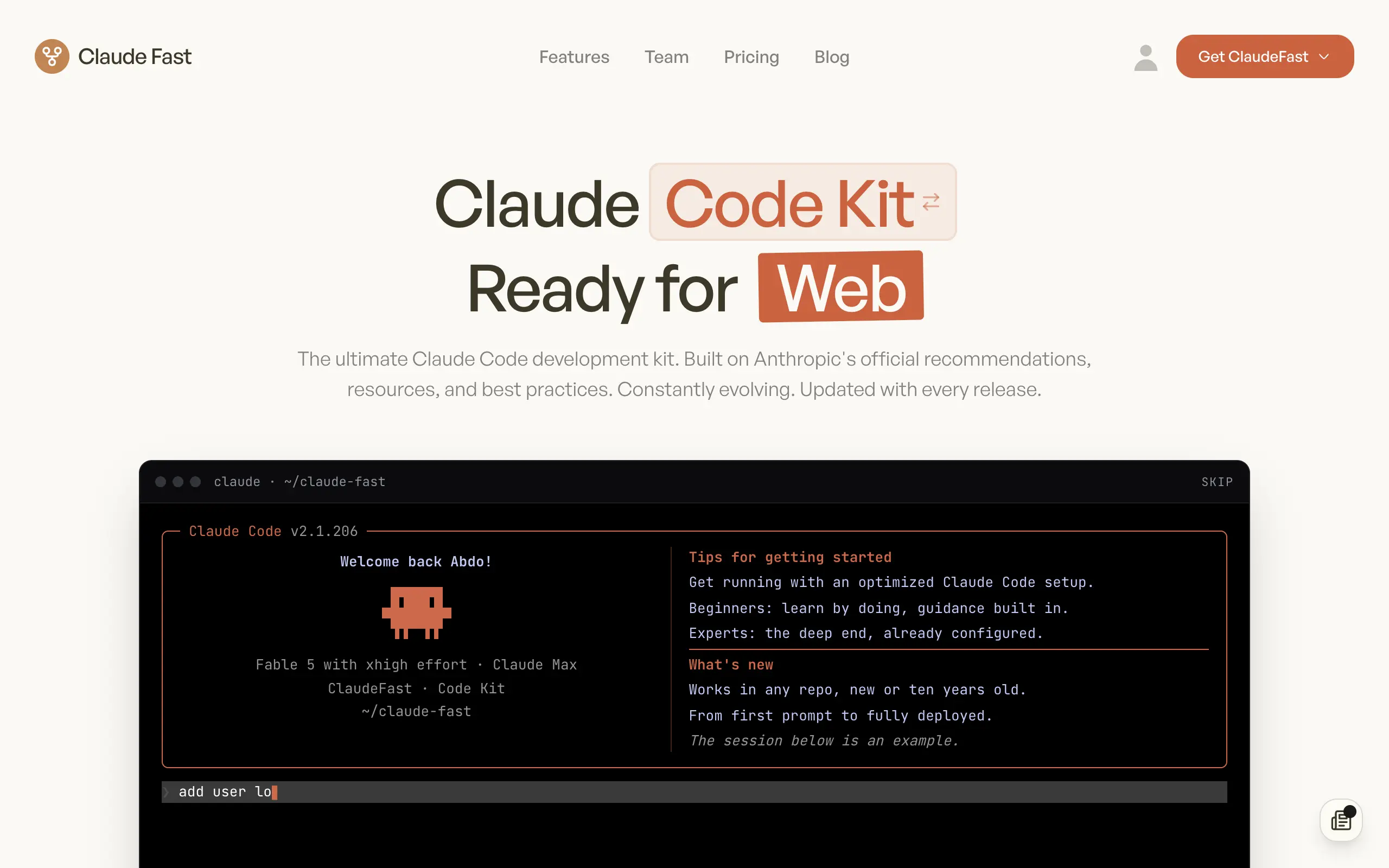
Claude Fast
Supercharge your Claude Code with 6x effective context window and specialized AI agents 🤖
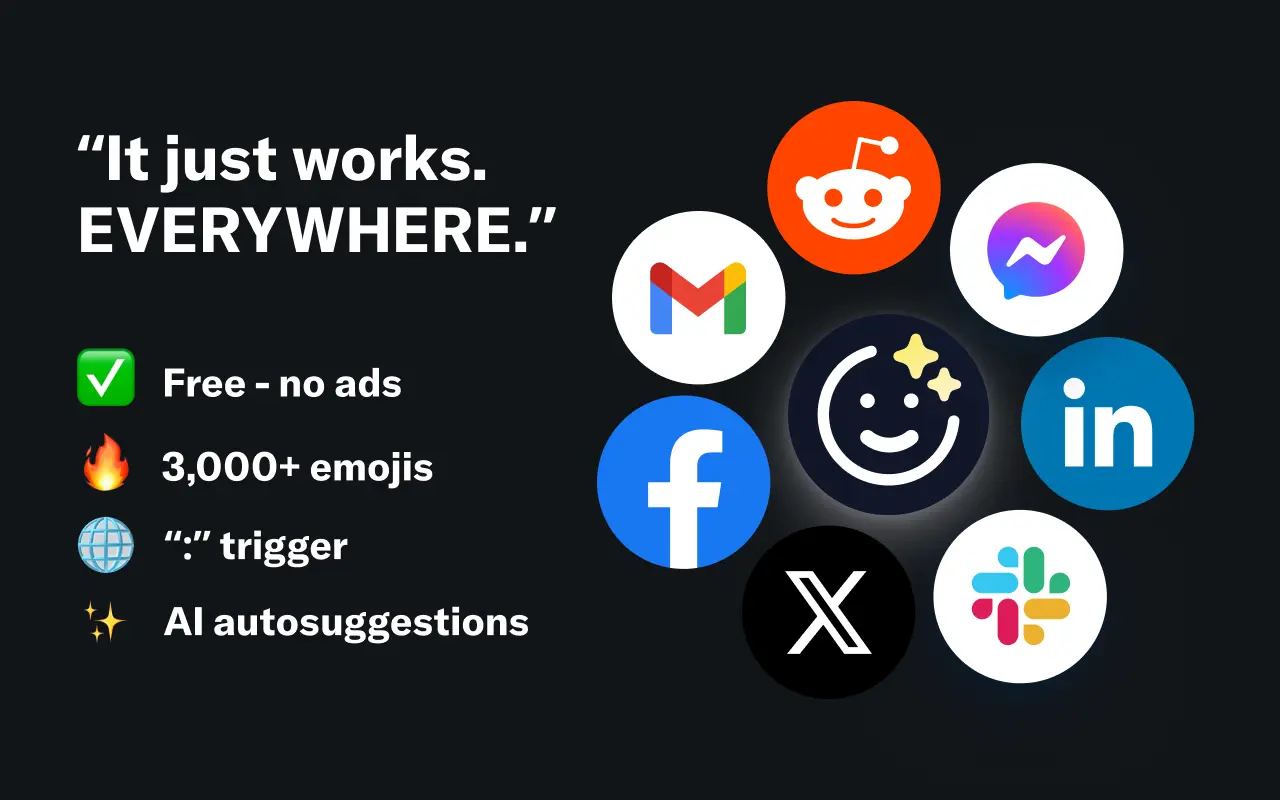
EmojAI
AI-powered emoji picker with smart, context-aware suggestions 🤖
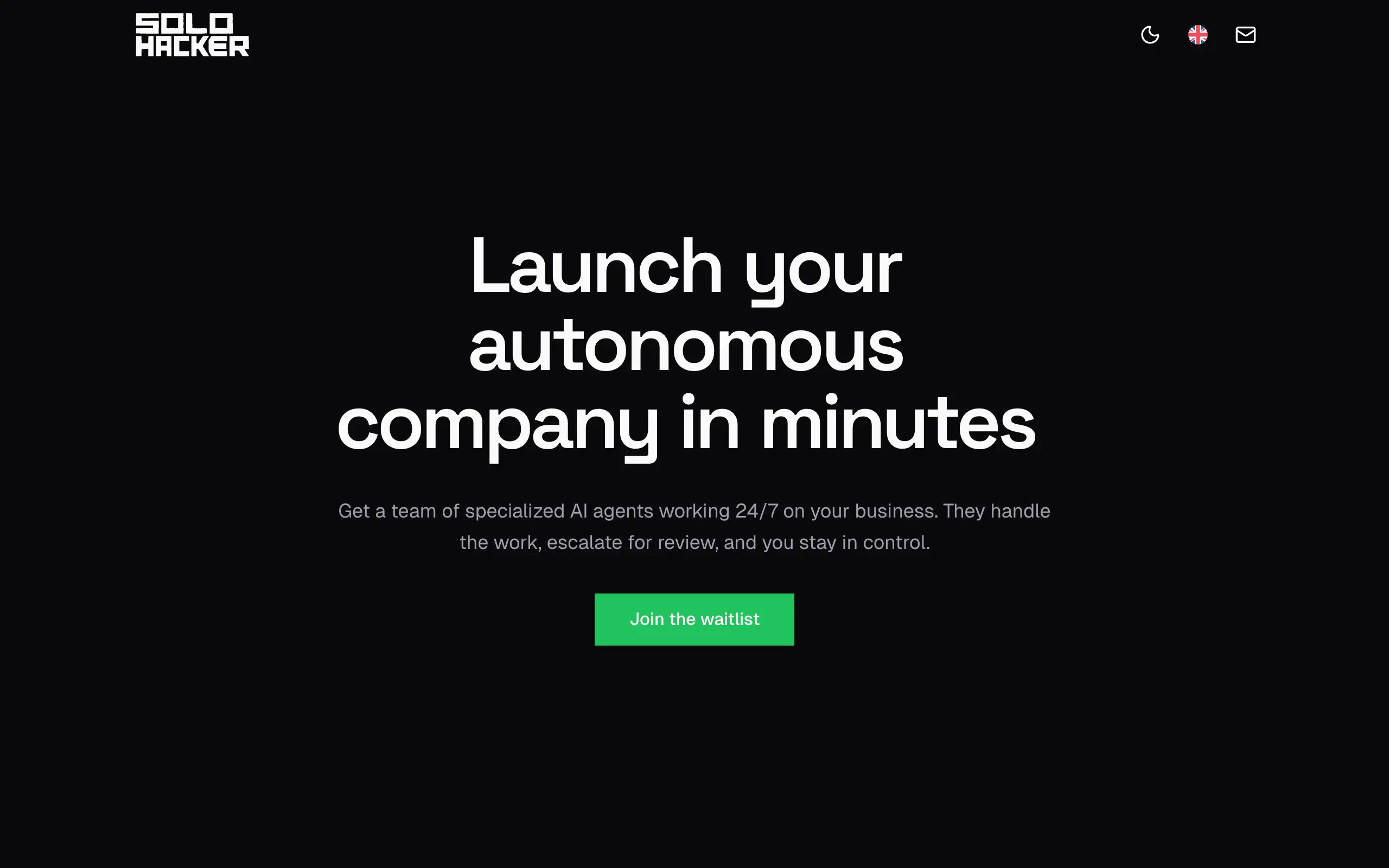
Solohacker
Autonomous company launcher - AI agents work 24/7, escalate what matters, and you stay in control 🤖

BeRawi: Storytelling Coach
Practice storytelling daily with instant feedback to sound clearer, more engaging, and confident 🎤
Omichat
Chat with 50+ AI models, including ChatGPT and Claude, in one place - switch models anytime without losing context 🤖
Claude Fast
Supercharge your Claude Code with 6x effective context window and specialized AI agents 🤖
EmojAI
AI-powered emoji picker with smart, context-aware suggestions 🤖
Solohacker
Autonomous company launcher - AI agents work 24/7, escalate what matters, and you stay in control 🤖
BeRawi: Storytelling Coach
Practice storytelling daily with instant feedback to sound clearer, more engaging, and confident 🎤
Omichat
Chat with 50+ AI models, including ChatGPT and Claude, in one place - switch models anytime without losing context 🤖
Claude Fast
Supercharge your Claude Code with 6x effective context window and specialized AI agents 🤖
EmojAI
AI-powered emoji picker with smart, context-aware suggestions 🤖
Solohacker
Autonomous company launcher - AI agents work 24/7, escalate what matters, and you stay in control 🤖
BeRawi: Storytelling Coach
Practice storytelling daily with instant feedback to sound clearer, more engaging, and confident 🎤
Omichat
Chat with 50+ AI models, including ChatGPT and Claude, in one place - switch models anytime without losing context 🤖
Claude Fast
Supercharge your Claude Code with 6x effective context window and specialized AI agents 🤖
EmojAI
AI-powered emoji picker with smart, context-aware suggestions 🤖
Solohacker
Autonomous company launcher - AI agents work 24/7, escalate what matters, and you stay in control 🤖
BeRawi: Storytelling Coach
Practice storytelling daily with instant feedback to sound clearer, more engaging, and confident 🎤

Connect with like-minded people
Join our community to get feedback, support, and grow together with 1,000+ builders on board, let's ship it!
Join usShip your startup everywhere. In minutes.
Don't burn tokens on setup and start building features on day one.