PixelLoot
Buat dan kelola paket aset game 2D dengan AI, dari ikon hingga sprite sheet. Jual hasilnya sebagai bundle berlisensi untuk kreator indie dan studio kecil.
What PixelLoot could become
PixelLoot is an AI-powered platform for creating, organizing, and selling 2D game asset packs. A creator could describe a visual direction, generate a coordinated set of icons or sprites, arrange the results into a usable pack, and publish that bundle with clear licensing information.
The opportunity is bigger than adding an image generator to a storefront. Game developers need assets that work together: consistent proportions, readable silhouettes, compatible palettes, predictable file formats, and clear usage rights. PixelLoot can focus on that full workflow, helping indie creators move from a rough visual brief to a production-ready, licensable asset bundle.
That positioning matters because generic AI image tools optimize for individual images, while game developers often need a coherent collection of assets that fits a specific project. PixelLoot’s potential differentiator is a purpose-built pipeline for AI-generated 2D game asset packs, rather than one-off image generation.
The problem PixelLoot solves
Small studios and solo developers frequently face a familiar trade-off. They can spend time creating original art, hire an artist, buy premade assets, or use general-purpose AI tools and adapt the results. Each path has costs and limitations.
- Creating assets in-house offers creative control but requires design skill and time.
- Hiring an artist can deliver distinctive work but may exceed an early-stage game’s budget or timeline.
- Buying premade packs is efficient, but a pack may not fit a project’s art direction or technical requirements.
- Using general-purpose AI image tools can speed up ideation, but often leaves users to solve consistency, transparency, export, and licensing questions themselves.
A developer rarely needs “a fantasy sword image” in isolation. They may need a set of 40 inventory icons with consistent lighting, a family of enemy sprites with matching proportions, or a tileset that aligns to a specific grid. The hard part is often not generating one appealing picture; it is turning many images into a coherent, usable, and responsibly documented collection.
PixelLoot can reduce that operational gap by connecting asset generation with pack management and marketplace distribution. The product should make it easier to answer practical questions:
- Do the assets share a consistent visual style?
- Are the files available in the formats and dimensions the game engine needs?
- Can the buyer distinguish included files from previews?
- What license applies to commercial use?
- Can the creator update or expand a pack after publishing?
- Is there enough information to evaluate the assets before buying?
The more directly PixelLoot addresses these questions, the less it feels like a novelty generator and the more it resembles a professional workflow tool.
Who PixelLoot should serve
A clear initial audience will help PixelLoot prioritize features, pricing, and product language. The platform may eventually serve both asset creators and buyers, but those groups have different needs. A strong launch strategy should choose one primary user to optimize for first.
Indie developers and solo creators
Solo developers often work across design, programming, production, and marketing. They may need usable assets quickly, without the time or budget to commission every icon or sprite from scratch.
For this audience, PixelLoot’s value is speed with control. Useful capabilities include:
- Creating a cohesive visual direction from a prompt or reference brief.
- Generating variations while preserving a shared style.
- Exporting assets in common dimensions and file types.
- Organizing assets by category, animation, or game system.
- Understanding commercial usage terms before adopting a pack.
This audience may be willing to pay for convenience when the tool reliably saves production time. However, developers will quickly abandon a product if generated assets require extensive cleanup or do not fit their engine’s workflow.
Small game studios
Small studios may have more complex requirements than solo developers. Several team members may review or use the same asset library, and the studio may need to document the origin and license of assets used in a commercial release.
PixelLoot could support these teams with shared workspaces, approvals, version history, and clear provenance records. The product should not imply that generated assets automatically meet every legal requirement. Instead, it can give studios useful documentation and transparent information so they can make informed decisions.
Pixel artists and asset creators
Artists may use PixelLoot to accelerate ideation, create supporting variations, package their own work, or sell assets to other developers. This segment could become an important supply-side community if the platform supports artist control rather than treating creators as an interchangeable source of content.
Helpful creator tools might include:
- Editable product pages and pack previews.
- Pricing controls and discount options.
- Licensing templates with plain-language summaries.
- Sales analytics and customer feedback.
- The ability to label AI-assisted, hand-authored, or mixed workflows accurately.
PixelLoot should give creators meaningful control over what they publish and how their work is represented.
Buyers browsing for production-ready assets
Buyers are not only looking for attractive previews. They need confidence that a pack is complete, technically usable, and appropriate for their project. Product pages should make it easy to inspect file types, included items, dimensions, style, license terms, and any relevant limitations before purchase.
The market opportunity and product gap
The opportunity for PixelLoot sits at the intersection of generative AI, game development, and digital asset marketplaces. These categories already contain many tools and products, so the goal should not be to claim that no alternatives exist. A more useful question is whether a focused product can make a specific workflow noticeably better.
Generic image-generation products are built to create images across many categories. Asset stores are built to help customers discover and buy existing content. PixelLoot can specialize in the space between them: creating, refining, structuring, and selling game-ready 2D asset collections.
That specialization creates room to compete on workflow quality rather than on having the most powerful underlying image model.
A credible market analysis should validate several assumptions before major investment:
- Demand for coordinated packs: Interview developers about whether they need complete packs, individual assets, or tools to adapt existing packs.
- Current workflow friction: Ask which steps take the most time, such as prompt iteration, cleanup, sprite slicing, palette matching, or license review.
- Willingness to pay: Test pricing for generation, export, marketplace access, and commercial usage separately.
- Creator participation: Determine whether artists want to sell AI-assisted packs, hand-authored packs, or both.
- Trust requirements: Learn what studios need to know about licensing, model use, asset provenance, and commercial distribution.
- Repeat usage: Find out whether users expect to generate assets regularly or only for a single project.
For current market sizing, use a transparent research method rather than relying on unsupported headline estimates. A useful analysis could combine public game industry reports, creator marketplace data, developer surveys, and interviews with small studios. Any published statistics should include the source name, publication date, methodology, and a clear distinction between observed data and estimates.
A practical positioning map
PixelLoot can define its position by comparing workflows, not just brand names. For example, potential alternatives may be categorized as:
- General-purpose AI image generators.
- Traditional game asset marketplaces.
- Pixel-art editors and sprite tools.
- Outsourced art production.
- In-house asset pipelines.
The key question is where users experience the most friction. If the main pain is visual generation, PixelLoot needs excellent style controls. If the pain is production readiness, exports and validation matter more. If the pain is trust, licensing and provenance must be central to the experience.
PixelLoot’s competitive advantage
The strongest version of PixelLoot is not “AI that makes game art.” That proposition is easy to imitate and difficult to defend. A more durable advantage would come from combining a specialized workflow with a trusted catalog and clear creator relationships.
1. Generate collections, not disconnected images
A pack-oriented workflow can ask for a complete set: for example, a themed inventory collection, a group of platformer collectibles, or a family of environmental props. The system can then help maintain shared characteristics such as palette, outline weight, perspective, and visual complexity.
The product should still let users review and edit individual outputs. Consistency is a goal, not a reason to hide model limitations.
2. Make game readiness measurable
“Game-ready” should have a practical meaning. PixelLoot could validate file dimensions, transparency, naming conventions, sprite-sheet layout, and export settings. It could also provide preview modes for common use cases, such as inventory grids or animation sequences.
Validation should be presented as a helpful check, not a guarantee that an asset will work perfectly in every game engine or project.
3. Treat licensing as product functionality
Licensing should not be buried in a checkout footer. Buyers need a clear explanation of what a license allows, whether it covers commercial games, and whether there are restrictions on redistribution or resale.
Creators also need to understand what rights they are granting when they publish a pack. Plain-language summaries can make the marketplace easier to use, while the full legal terms remain available for review.
4. Build a quality-controlled marketplace
If PixelLoot hosts generated and creator-submitted packs, marketplace quality will shape trust. A useful review process could check that product previews match the download, required metadata is present, files are organized, and content follows platform policies.
Curation can become a differentiator when it makes discovery more reliable. The goal is not to promise that every pack is perfect; it is to make quality expectations visible and consistently applied.
5. Support transparent creation histories
A creator could provide a pack description that explains whether it was made by hand, AI-assisted, or generated through a particular workflow. Where relevant and appropriate, PixelLoot could store internal provenance details, including version history and creator-provided information.
Such records can help with operational clarity, but they should not be marketed as definitive proof of ownership or legal status. Provenance data is useful documentation, not a substitute for rights review.
Core PixelLoot features
PixelLoot should begin with a focused set of features that solve a complete user problem. A crowded feature list is less valuable than a reliable path from idea to usable pack.
AI-assisted asset generation
The generation experience could let users specify:
- Asset category, such as icons, props, characters, or tiles.
- Visual style and intended game genre.
- Target dimensions or grid constraints.
- Palette and contrast preferences.
- Background transparency requirements.
- Variations to explore within a consistent collection.
Users should be able to save a brief and regenerate selected assets without restarting the entire project. A good interface will also set expectations about what the AI can and cannot reliably produce.
Style and collection controls
Maintaining a consistent look is one of the most important product challenges. PixelLoot could offer collection-level settings for palette, outlines, perspective, and detail density. Users might also select a reference asset from their own project, subject to clear rules about how uploaded material is processed and retained.
A useful workflow would distinguish between:
- Collection-level settings, which apply across a pack.
- Asset-level edits, which allow a single output to be adjusted.
- Variation controls, which create alternatives without changing the full style.
This structure can help reduce the frustrating cycle of repeatedly rewriting prompts to recover a previous visual direction.
Asset organization and editing
Once generated, assets need a home. PixelLoot can provide collections, folders, tags, naming tools, and status labels such as “draft,” “approved,” and “published.”
Basic editing features may include cropping, background removal, resizing, color adjustments, and sprite-sheet arrangement. PixelLoot does not need to replace a professional art editor in its first release. It should focus on the steps that block users from turning generated results into a shippable pack.
Export and engine-friendly delivery
Export quality directly affects product credibility. Common needs may include PNG files with transparency, organized ZIP downloads, sprite sheets, and metadata files. The team should validate demand before supporting many specialized formats.
Potential export options include:
- Individual asset files.
- A ZIP organized into clearly named folders.
- Sprite sheets with accompanying frame information.
- Preview images for store listings.
- A readme describing contents and license terms.
Engine-specific integrations may be valuable later, but PixelLoot should first make generic exports dependable. Users can import common image assets into many different engines without requiring a bespoke integration.
Pack pages and marketplace tools
A marketplace listing should show buyers what they are purchasing. Each pack page can include preview images, a contents list, dimensions, file formats, license information, creator details, and a changelog.
For creators, useful tools include draft listings, price controls, product updates, sales summaries, and customer support workflows. Ratings and reviews can help discovery, but the platform should guard against spam, manipulation, and unfair treatment of creators.
Moderation, reporting, and support
A marketplace that accepts user uploads needs clear content rules and a process for reporting concerns. PixelLoot should establish procedures for responding to suspected infringement, unsafe content, misleading product descriptions, and license disputes.
These policies should be written before the marketplace scales. A moderation system cannot resolve every complex rights question automatically, so the product should make escalation and human review possible.
A practical MVP roadmap
The first version should test whether creators can produce and publish useful packs, and whether developers can discover and purchase them. Avoid building every planned feature before validating that basic loop.
MVP scope
A focused MVP could include:
- User accounts and creator profiles.
- A generation or upload workflow for 2D assets.
- Project-based asset organization.
- Basic quality checks and export packaging.
- Product pages with previews and clear license summaries.
- Payment and delivery for published packs.
- Reporting, support, and basic moderation tools.
If generating a pack through an AI model is not yet reliable enough, the earliest prototype can test the workflow with user-uploaded assets and limited generation. That can validate whether the organization, packaging, and marketplace pieces solve a real problem before expensive model work begins.
What to measure
Product metrics should reflect both user value and marketplace health. Useful early measures include:
- Time from starting a project to exporting a usable pack.
- Percentage of generated assets kept, edited, or discarded.
- Rate of users who publish a first pack.
- Buyer conversion from product-page views.
- Refunds, support requests, and reported listing issues.
- Repeat creation and purchase behavior.
- Creator earnings and buyer satisfaction.
A high generation count is not automatically a success. If users generate many images but do not keep, export, publish, or use them, the core workflow may not be delivering enough value.
Recommended technology stack
PixelLoot needs a stack that supports a responsive creation interface, background processing, secure file storage, payments, and potentially expensive AI workloads. The best choice depends on the team’s expertise and the model providers available at launch.
Frontend and application layer
Next.js with React is a strong option for building the web application, creator dashboards, product pages, and marketplace discovery. It offers a familiar component-based approach and supports rendering patterns useful for a public catalog.
Tailwind CSS can speed up interface development and make it easier to maintain a consistent design system. The trade-off is that teams should establish reusable components early; otherwise, utility-heavy styling can become difficult to manage across a growing product.
Backend and data
A relational database such as PostgreSQL is a sensible foundation for users, projects, assets, licenses, orders, and marketplace listings. The relationships between these objects benefit from structured schemas and transactional behavior.
Supabase can provide managed PostgreSQL, authentication, and storage-related services in one platform. This can accelerate an MVP, but the team should evaluate storage costs, access-control requirements, and the effort involved in migrating if workloads outgrow the initial setup.
Asset storage and delivery
Generated images and downloadable packs should live in object storage rather than being stored directly in database rows. A typical architecture can use object storage for originals, previews, and exports, paired with a content delivery network for fast image delivery.
Important implementation details include:
- Private storage for drafts and paid downloads.
- Signed or otherwise access-controlled download URLs.
- Separate preview images from full-resolution source files.
- Clear retention and deletion policies.
- File scanning and validation for user uploads.
- Backups and operational monitoring.
Generation jobs and queues
Image generation and pack exports can take longer than a normal web request. A background job system helps keep the application responsive and makes it easier to retry failed tasks, track progress, and limit concurrency.
The generation workflow should record job status, model or provider details where appropriate, user settings, and output references. It should also enforce quotas and prevent a stalled or repeated request from creating unexpected costs.
Payments and marketplace operations
Stripe is one potential payments provider for subscriptions or one-time purchases. Marketplace payments can introduce additional requirements around seller onboarding, payouts, refunds, taxes, and regional availability. The right payment setup should be reviewed against PixelLoot’s intended operating regions and business model.
Model-provider flexibility
Avoid tying the entire product to one generation provider if the product depends on third-party models. A provider abstraction can make it easier to test quality, latency, cost, and policy fit across options.
This flexibility adds engineering work. A small team may reasonably launch with one provider, provided the product isolates provider-specific code and avoids promising permanent support for a particular model.
A simplified TypeScript shape for a generation request might look like this:
type AssetRequest = {
  projectId: string;
  prompt: string;
  category: "icon" | "sprite" | "prop" | "tileset";
  width: number;
  height: number;
  transparentBackground: boolean;
};

type GenerationResult = {
  jobId: string;
  status: "queued" | "running" | "complete" | "failed";
  assetIds: string[];
};
This is only a conceptual starting point. Production systems should validate inputs, enforce account permissions, apply usage limits, and record the operational information needed for support and billing.
Stack trade-offs at a glance
| Layer | Possible choice | Strength | Trade-off | Decision to validate |
|---|---|---|---|---|
| Web app | Next.js and React | Flexible interface and mature ecosystem | Requires deliberate architecture as the app grows | Rendering needs and team experience |
| Database | PostgreSQL | Strong fit for structured marketplace data | Schema changes require disciplined migrations | Expected relationships and query patterns |
| Managed backend | Supabase | Can reduce early infrastructure work | Requires review of scaling and access-control needs | Operational requirements and vendor dependence |
| Payments | Stripe | Supports common online payment workflows | Marketplace payouts and tax needs add complexity | Seller regions and payment model |
For a startup team that wants to move quickly, TurboStarter may help reduce the time spent assembling common SaaS foundations. It is worth evaluating against PixelLoot’s specific requirements for accounts, billing, and product architecture rather than assuming any starter kit will solve marketplace or AI workflow needs out of the box.
Monetization options
PixelLoot can monetize the creation workflow, the marketplace, or both. The right model should be tested with actual users because creators and buyers may have very different expectations.
Subscription tiers
A subscription could include a monthly generation allowance, project limits, advanced export options, or private workspaces. This provides recurring revenue, but usage-based AI costs can make unlimited plans risky.
Use clear limits and explain what happens when a user reaches them. Avoid promising “unlimited” generation unless the economics and abuse controls genuinely support it.
Pay-as-you-go generation
Credits can align payment more closely with generation costs. The challenge is making credits understandable. If users cannot predict how many credits a task will consume, they may hesitate to begin.
A transparent model should show the expected cost before a generation job starts and explain whether failed jobs consume credits.
Marketplace commission
PixelLoot could take a percentage of each marketplace sale. This aligns platform revenue with creator sales, but requires strong discovery, product quality, buyer trust, and smooth seller operations.
Creators will compare the commission with the value PixelLoot provides. Tools that help creators produce, market, and maintain packs can make a marketplace fee easier to justify.
Hybrid plans
A hybrid model may offer a free exploration tier, paid creation features, and a marketplace commission on sales. This can support several user types, but it should not be so complicated that users cannot understand what they are paying for.
A reasonable test plan might compare:
- A subscription with a defined monthly generation allowance.
- A credit-based generation plan.
- Free creation tools with a marketplace commission.
- A creator plan that adds publishing, analytics, and team features.
Before settling on prices, calculate model costs, storage and delivery expenses, payment fees, refunds, support, and moderation. Pricing should be based on contribution margin and user value, not on a competitor’s headline price alone.
Risks and how to mitigate them
PixelLoot’s biggest risks are not limited to technical execution. A sustainable product also needs to manage trust, content rights, output quality, marketplace liquidity, and variable AI costs.
Copyright and licensing uncertainty
Generative AI and copyright rules vary by jurisdiction and continue to develop. PixelLoot should not promise that every generated output is copyrightable, exclusive, or free of third-party claims.
Mitigations include:
- Publish understandable terms for creators and buyers.
- Explain whether users may sell assets generated through the platform.
- Describe how user uploads and prompts are handled.
- Establish a process for rights complaints and disputed listings.
- Seek qualified legal advice for product terms and target markets.
- Keep records of creator-provided provenance information where appropriate.
For any public article or launch material that makes legal claims, have the statements reviewed by counsel familiar with the relevant jurisdictions.
Inconsistent output quality
Generated sprites may have stray pixels, inconsistent outlines, unclear silhouettes, or visual drift across a collection. These issues can make outputs unsuitable for production even when individual previews look attractive.
Mitigate this by investing in collection-level controls, quality checks, user editing, and honest previews. Track which outputs users keep and export. That behavioral data can help identify where the generation workflow needs improvement.
High or unpredictable AI costs
Image-generation costs may vary by model, output size, retry rate, and user behavior. A free tier can become expensive if limits are weak or unclear.
Use queues, per-user quotas, rate limits, cost dashboards, and job-level accounting. Test pricing against real usage patterns before offering high-volume plans.
Marketplace cold start
A marketplace needs enough useful products to attract buyers and enough buyers to motivate creators. Launching an empty general-purpose store is difficult.
A focused niche can help. PixelLoot might begin with a small, curated collection of asset categories or themes, then recruit creators who can produce high-quality packs for those areas. Early demand should be validated through interviews, landing-page tests, and direct creator outreach rather than assumed.
Poor discoverability and low buyer trust
A large catalog does not guarantee that buyers can find the right assets. Search filters, useful metadata, accurate previews, and transparent product pages are essential.
PixelLoot should make it possible to search by category, style, format, and other meaningful attributes. It should also monitor misleading listings and make refund or support procedures clear.
Misuse and harmful uploads
User-generated prompts and files introduce moderation and security concerns. The platform should define acceptable-use rules, provide reporting tools, and build a review process appropriate to its content and audience.
Uploaded files should be validated, access should be permission-controlled, and sensitive data should not be retained longer than necessary. Moderation policies should be visible and enforced consistently.
SEO and go-to-market strategy
PixelLoot’s organic growth strategy should target concrete jobs-to-be-done rather than relying only on broad phrases such as “AI art.” Developers search for solutions to specific production needs, including game icons, sprite sheets, pixel art assets, and commercial-use game asset packs.
Useful content themes may include:
- How to create a consistent 2D game art style.
- How to prepare sprite sheets for a game project.
- What to check before using a commercial game asset pack.
- How to organize game art files for a small studio.
- How AI-assisted art can fit into an indie game workflow.
Each article should answer its search intent directly, include practical examples, and explain limitations. Product pages should have descriptive titles and metadata, but avoid implying that every asset is exclusive or legally risk-free unless those claims are substantiated.
A sensible launch sequence could include:
- Conduct interviews with solo developers, artists, and small studios.
- Build a small set of high-quality demonstration packs.
- Publish clear product and licensing information.
- Invite a limited group of creators to test publishing tools.
- Gather buyer feedback and track support issues.
- Expand categories only after the initial workflow shows repeat use.
Actionable implementation steps
PixelLoot can reduce execution risk by moving through evidence-gathering and product development in stages.
Define the first user and use case. Choose a primary segment, such as solo developers who need cohesive 2D icon packs, and write down the job the product should make easier.
Interview potential users. Ask about their current asset workflow, quality requirements, licensing concerns, and willingness to pay. Focus on recent experiences rather than asking whether they generally like the idea.
Test the workflow before building the full platform. Use a clickable prototype or concierge process to see whether users can move from a visual brief to a usable, organized pack.
Build the smallest complete product loop. Include asset creation or upload, organization, export, product-page publishing, and a basic purchase or delivery flow.
Set trust and safety foundations. Write creator terms, buyer-facing license summaries, content rules, reporting procedures, and data-handling policies before opening submissions broadly.
Measure outcomes and iterate. Track exported assets, published packs, sales, repeat usage, support requests, and quality feedback. Use the evidence to prioritize the next feature.
Frequently asked questions
PixelLoot is a proposed AI-powered platform for creating, organizing, and selling 2D game asset packs. Its core idea is to connect asset generation with practical tools for preparing, packaging, and licensing assets for game projects.
The primary audience could include solo game developers, indie studios, and pixel artists. The product should choose a clear initial audience, then expand once it has evidence that the first workflow is valuable.
The answer depends on the applicable laws, the model and service terms, the asset’s creation history, and the license offered by the platform. PixelLoot should provide clear terms and avoid making universal legal guarantees. Users with significant commercial exposure should seek qualified legal advice.
A useful pack should include clearly organized files, accurate previews, relevant dimensions and formats, a contents list, and understandable license information. Depending on the product, it may also include sprite sheets, individual images, or supporting metadata.
PixelLoot can differentiate itself by focusing on coordinated collections and the full asset workflow: style consistency, organization, quality checks, exports, licensing information, and marketplace publishing. Those features address game production needs beyond generating a single image.
The opportunity ahead
PixelLoot has a promising direction if it solves a real production problem rather than competing only on image generation. Its clearest opportunity is to help creators turn a visual idea into a coherent, organized, and clearly described 2D game asset pack.
The product’s competitive advantage will depend on execution: consistent outputs, dependable exports, transparent licensing, useful creator tools, and a marketplace buyers can trust. Start with one audience and one asset workflow, validate the quality bar with real users, and expand only when the evidence supports it.
More 🤖 AI Startup SaaS ideas
Discover more innovative ai startup SaaS ideas that are trending in 2026. Each idea is AI-generated with market validation and growth potential to help you find your next profitable venture faster than competitors.
Your competitors are building with TurboStarter
Below are some of the SaaS ideas that have been generated and built with our starter kit.
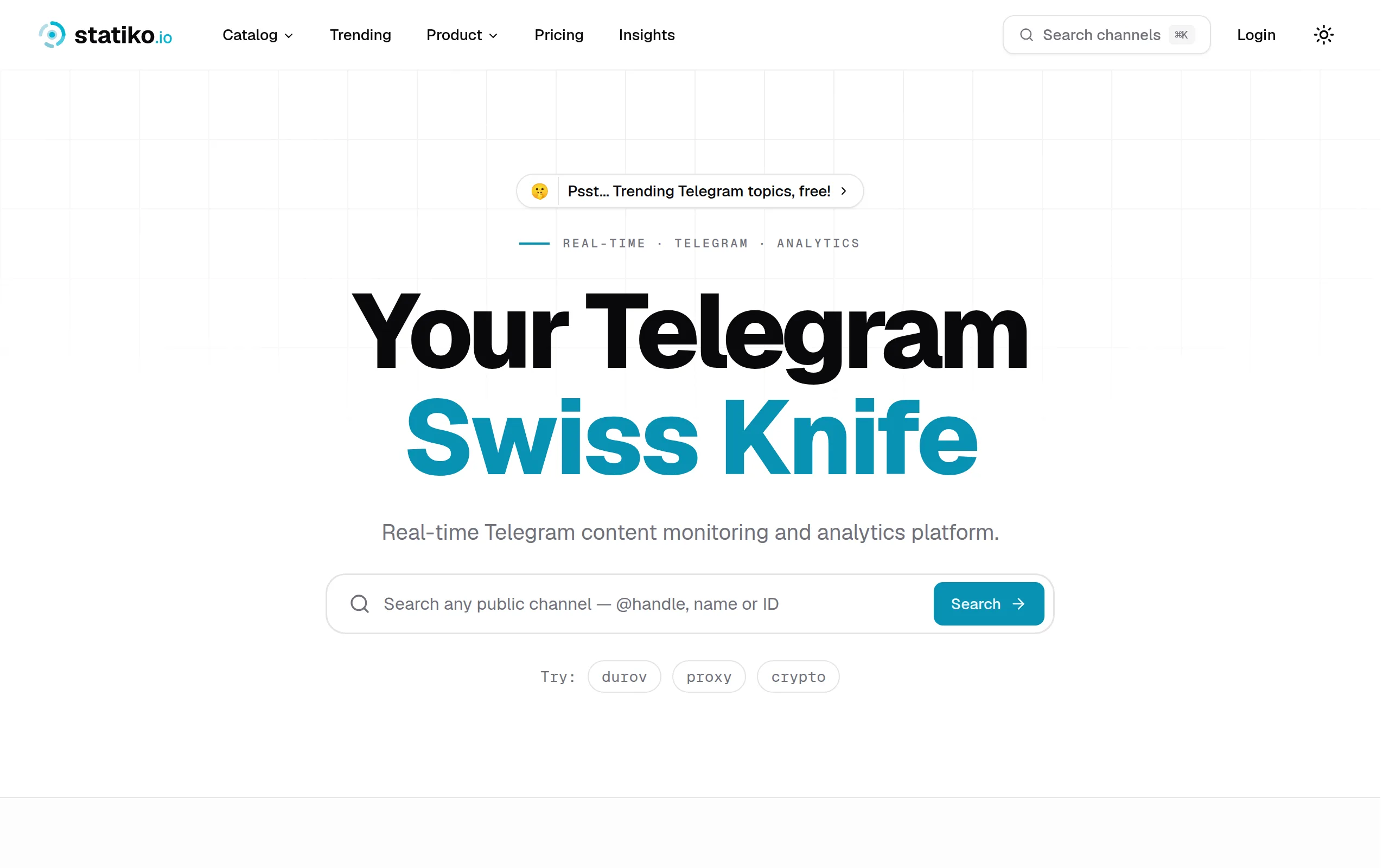
Statiko
Monitor any Telegram channel in real time - track posts, edits, deletions, and growth with AI recaps 📡

Shibui
AI website builder - describe your business, pick a niche template, edit by chatting, and publish instantly ✨

Pro Service
Find verified home service professionals, compare quotes, and pay securely through escrow - built for Brazilians across the US 🏠
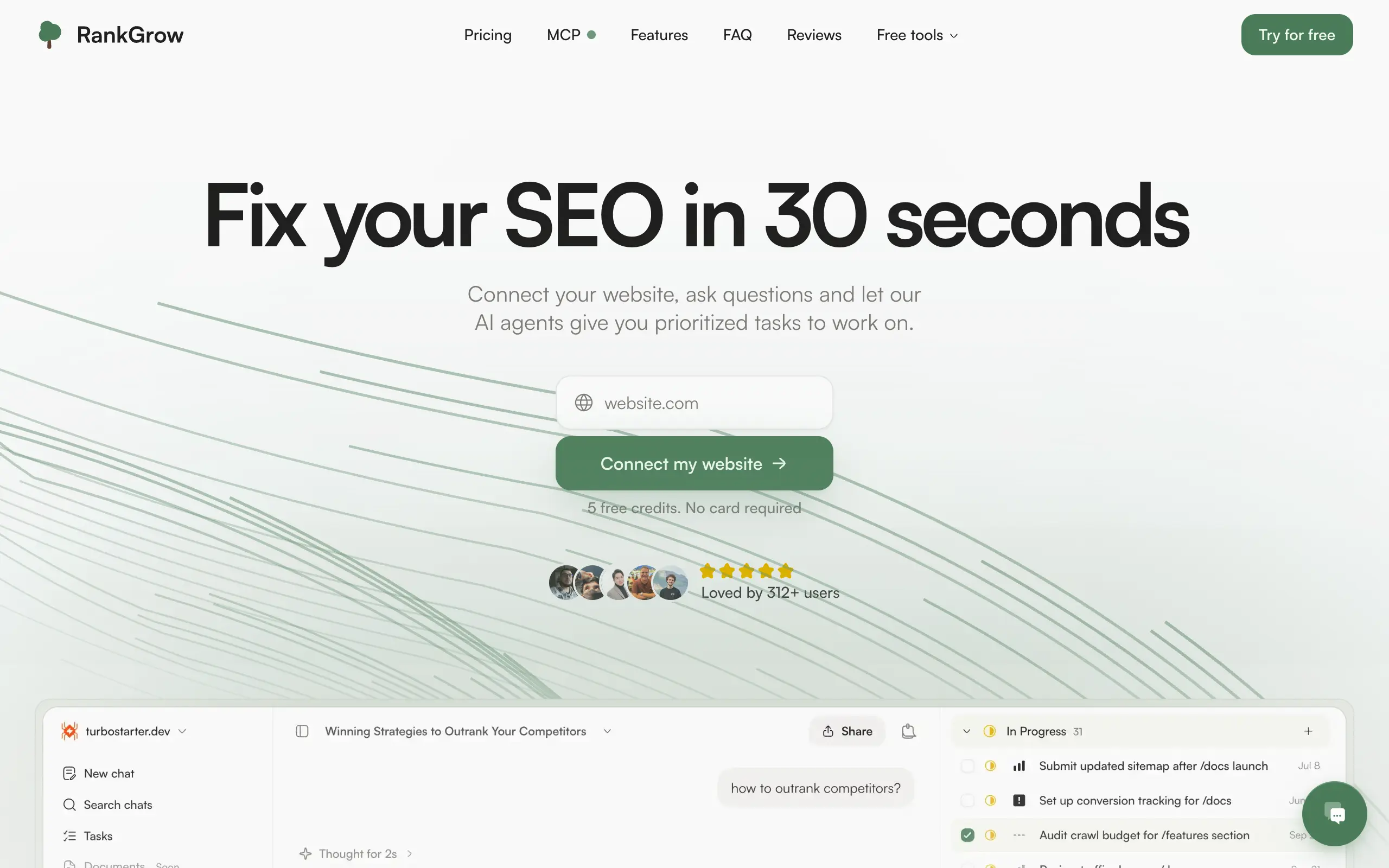
RankGrow
Fix your SEO with AI agents - connect Search Console, get prioritized tasks, and grow organic traffic 📈
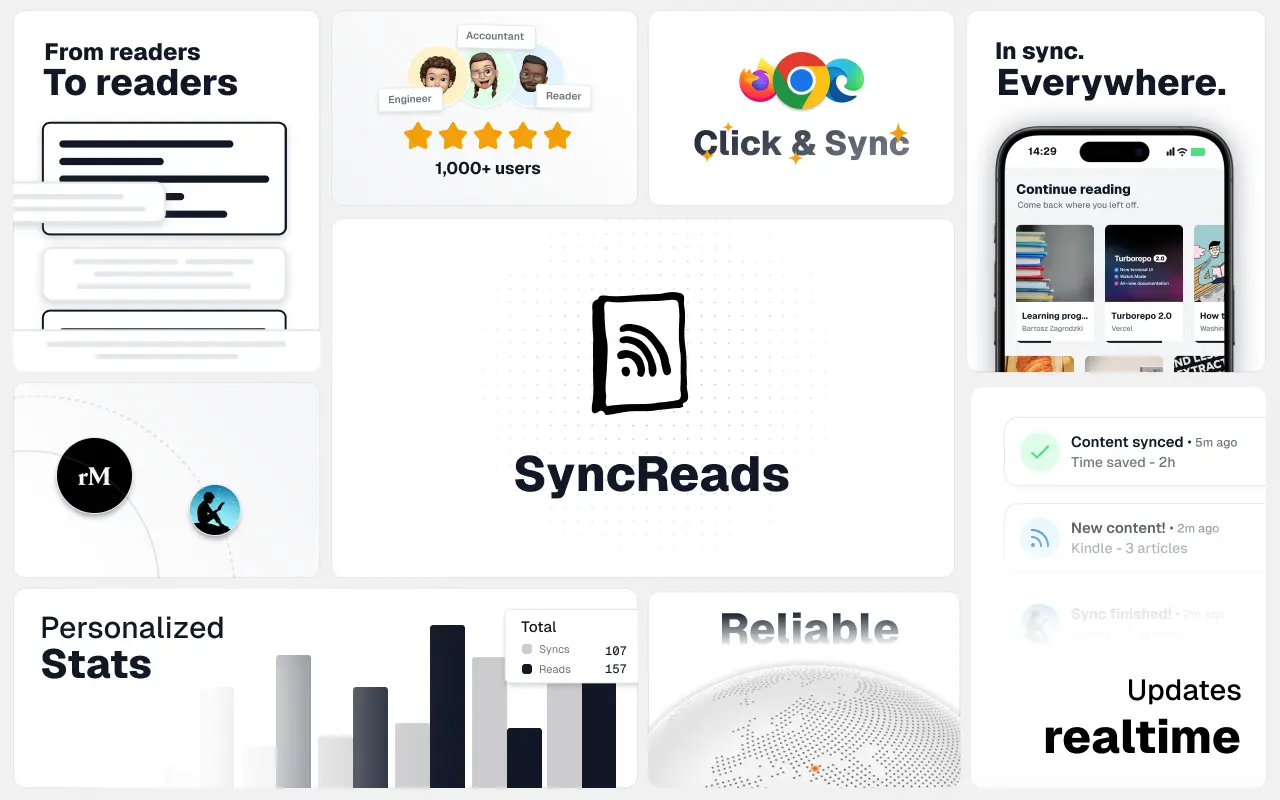
SyncReads
Sync your favorite content for distraction-free reading, save time and replace multiple apps. Anytime, anywhere 🔄
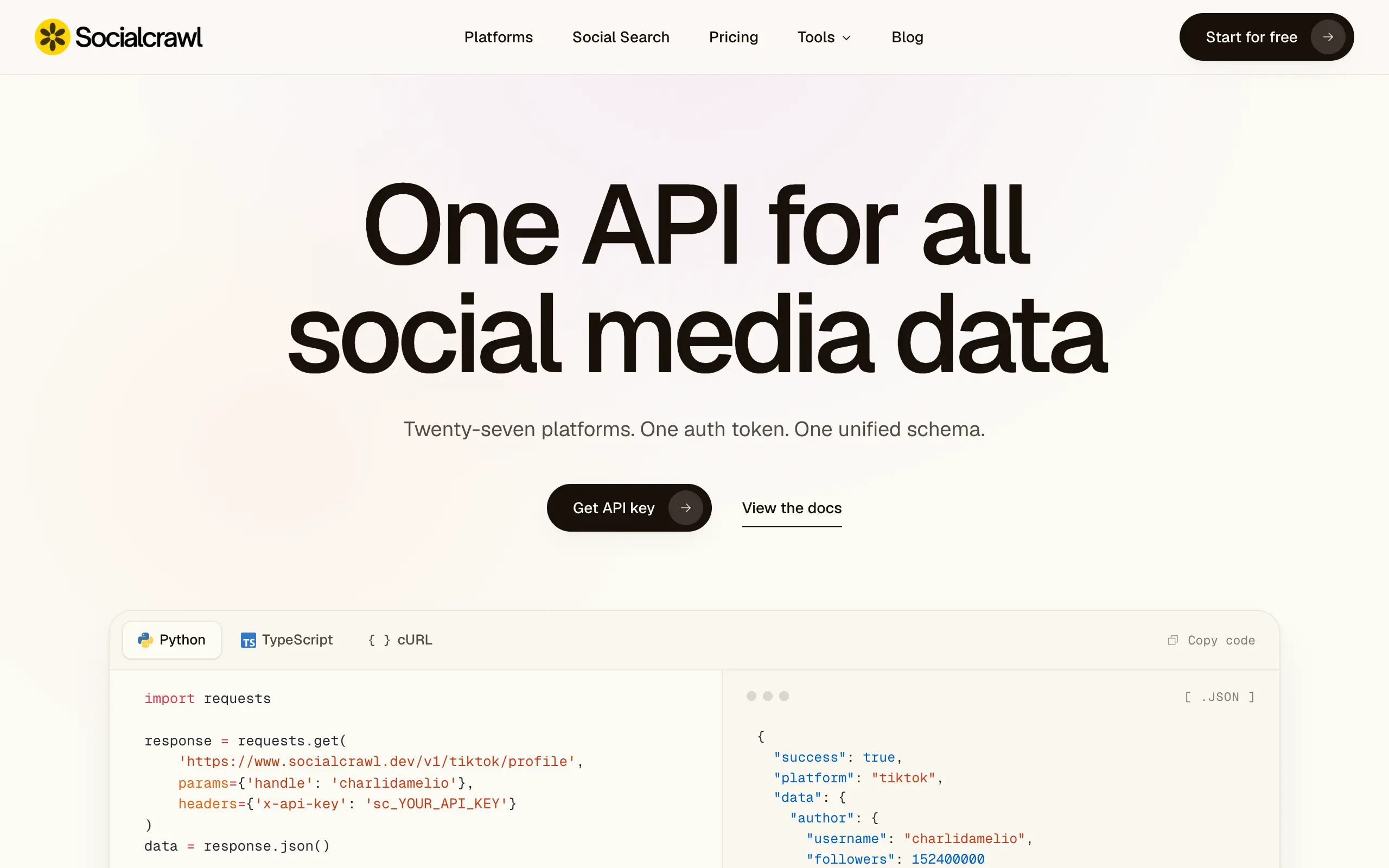
Socialcrawl
Get clean, structured data from 21 platforms like TikTok, Instagram, and YouTube with a single request 📊
Statiko
Monitor any Telegram channel in real time - track posts, edits, deletions, and growth with AI recaps 📡
Shibui
AI website builder - describe your business, pick a niche template, edit by chatting, and publish instantly ✨
Pro Service
Find verified home service professionals, compare quotes, and pay securely through escrow - built for Brazilians across the US 🏠
RankGrow
Fix your SEO with AI agents - connect Search Console, get prioritized tasks, and grow organic traffic 📈
SyncReads
Sync your favorite content for distraction-free reading, save time and replace multiple apps. Anytime, anywhere 🔄
Socialcrawl
Get clean, structured data from 21 platforms like TikTok, Instagram, and YouTube with a single request 📊
Statiko
Monitor any Telegram channel in real time - track posts, edits, deletions, and growth with AI recaps 📡
Shibui
AI website builder - describe your business, pick a niche template, edit by chatting, and publish instantly ✨
Pro Service
Find verified home service professionals, compare quotes, and pay securely through escrow - built for Brazilians across the US 🏠
RankGrow
Fix your SEO with AI agents - connect Search Console, get prioritized tasks, and grow organic traffic 📈
SyncReads
Sync your favorite content for distraction-free reading, save time and replace multiple apps. Anytime, anywhere 🔄
Socialcrawl
Get clean, structured data from 21 platforms like TikTok, Instagram, and YouTube with a single request 📊
Statiko
Monitor any Telegram channel in real time - track posts, edits, deletions, and growth with AI recaps 📡
Shibui
AI website builder - describe your business, pick a niche template, edit by chatting, and publish instantly ✨
Pro Service
Find verified home service professionals, compare quotes, and pay securely through escrow - built for Brazilians across the US 🏠
RankGrow
Fix your SEO with AI agents - connect Search Console, get prioritized tasks, and grow organic traffic 📈
SyncReads
Sync your favorite content for distraction-free reading, save time and replace multiple apps. Anytime, anywhere 🔄
Socialcrawl
Get clean, structured data from 21 platforms like TikTok, Instagram, and YouTube with a single request 📊
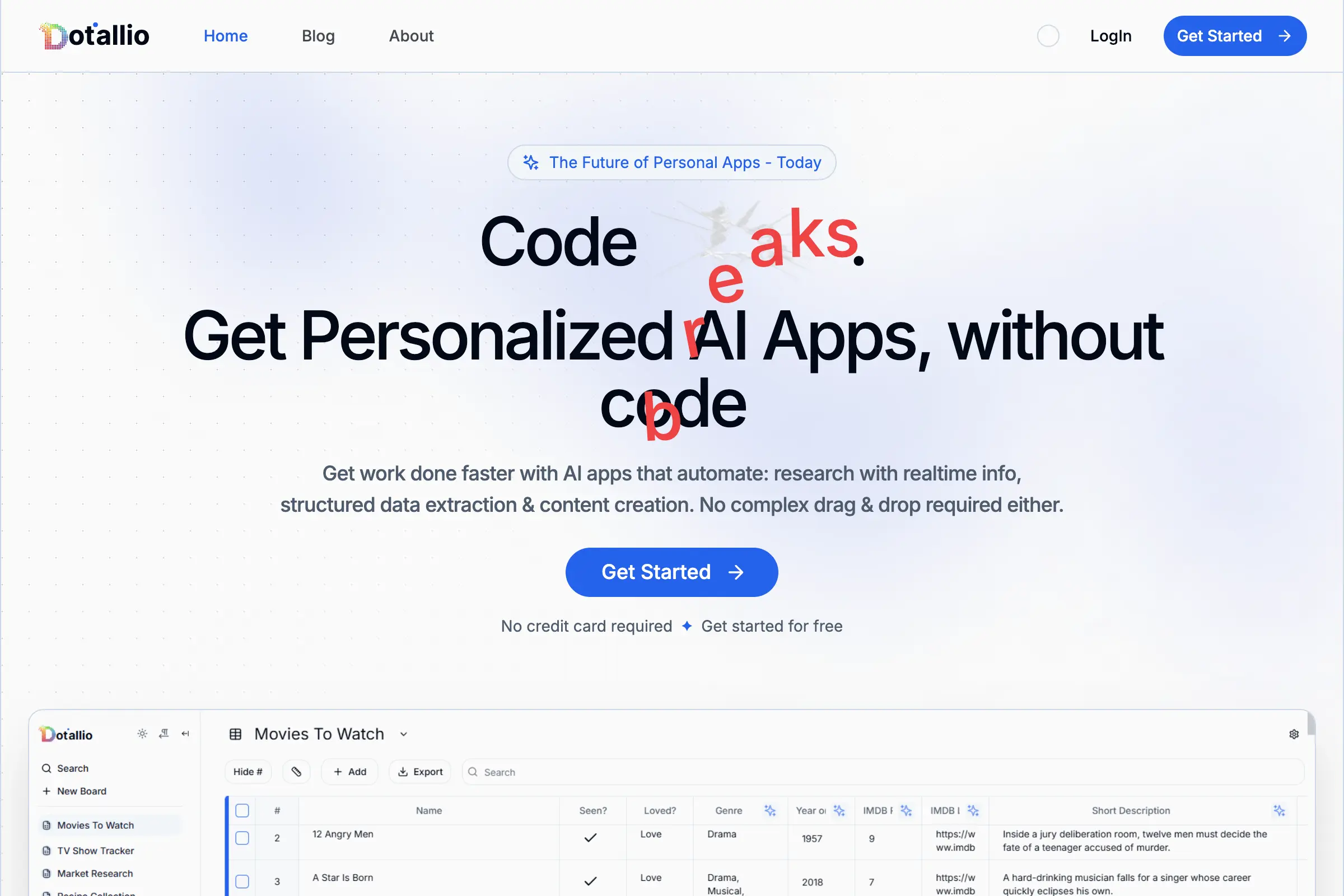
Dotallio
Personalized AI apps that automate research, data extraction, and content creation without code 🤖

Talk to Santa
Enjoy a magical live video chat or receive a unique AI-generated video greeting from Santa Claus 🎅
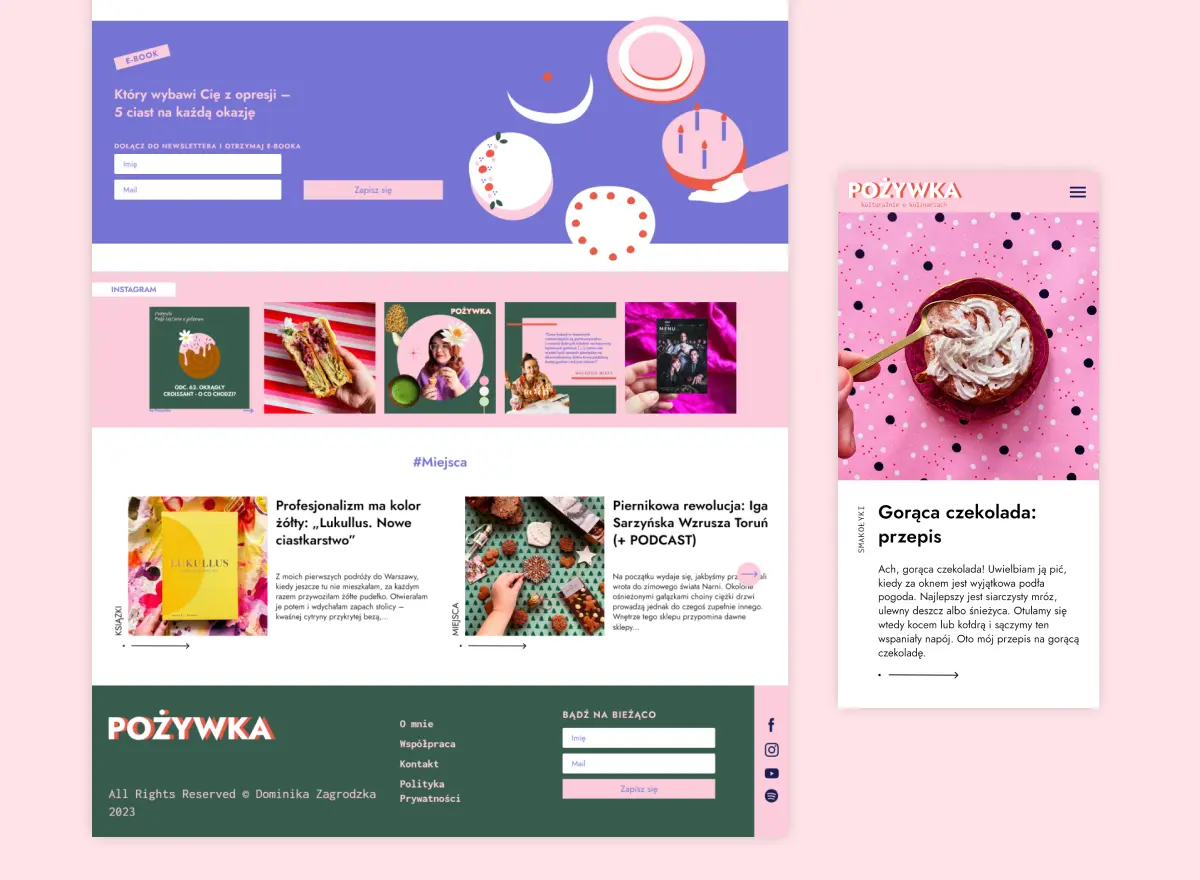
pozywka.pl
Scalable blog for food journalist, focused on performance and user experience 🌭
zagrodzki.me
Personal blog and portfolio of Bart Zagrodzki, where he shares his knowledge and work 💼
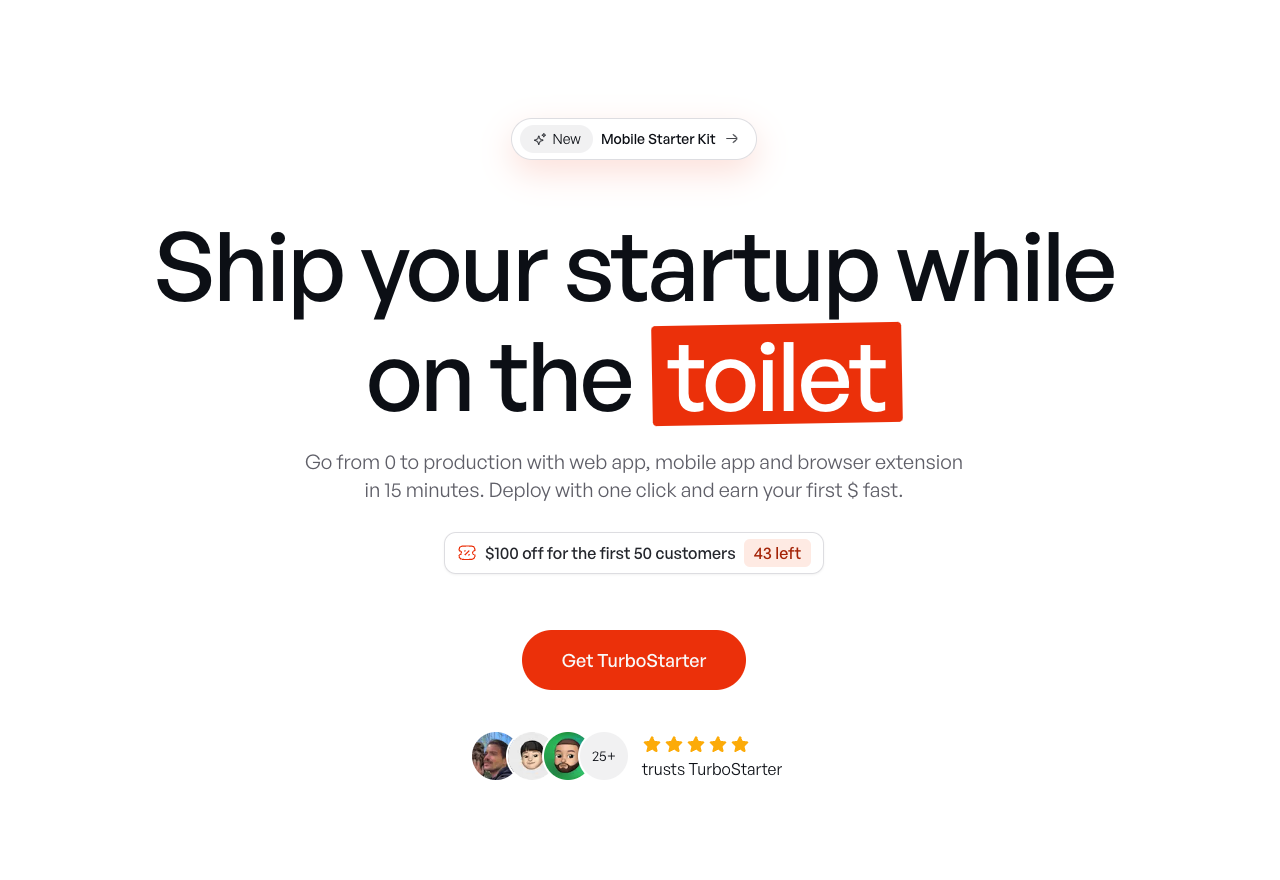
TurboStarter
Ship your startup everywhere. In minutes.
HTML to Markdown
Convert HTML to Markdown with ease, directly in your browser 📄
Dotallio
Personalized AI apps that automate research, data extraction, and content creation without code 🤖
Talk to Santa
Enjoy a magical live video chat or receive a unique AI-generated video greeting from Santa Claus 🎅
pozywka.pl
Scalable blog for food journalist, focused on performance and user experience 🌭
zagrodzki.me
Personal blog and portfolio of Bart Zagrodzki, where he shares his knowledge and work 💼
TurboStarter
Ship your startup everywhere. In minutes.
HTML to Markdown
Convert HTML to Markdown with ease, directly in your browser 📄
Dotallio
Personalized AI apps that automate research, data extraction, and content creation without code 🤖
Talk to Santa
Enjoy a magical live video chat or receive a unique AI-generated video greeting from Santa Claus 🎅
pozywka.pl
Scalable blog for food journalist, focused on performance and user experience 🌭
zagrodzki.me
Personal blog and portfolio of Bart Zagrodzki, where he shares his knowledge and work 💼
TurboStarter
Ship your startup everywhere. In minutes.
HTML to Markdown
Convert HTML to Markdown with ease, directly in your browser 📄
Dotallio
Personalized AI apps that automate research, data extraction, and content creation without code 🤖
Talk to Santa
Enjoy a magical live video chat or receive a unique AI-generated video greeting from Santa Claus 🎅
pozywka.pl
Scalable blog for food journalist, focused on performance and user experience 🌭
zagrodzki.me
Personal blog and portfolio of Bart Zagrodzki, where he shares his knowledge and work 💼
TurboStarter
Ship your startup everywhere. In minutes.
HTML to Markdown
Convert HTML to Markdown with ease, directly in your browser 📄
Omichat
Chat with 50+ AI models, including ChatGPT and Claude, in one place - switch models anytime without losing context 🤖
Claude Fast
Supercharge your Claude Code with 6x effective context window and specialized AI agents 🤖
EmojAI
AI-powered emoji picker with smart, context-aware suggestions 🤖
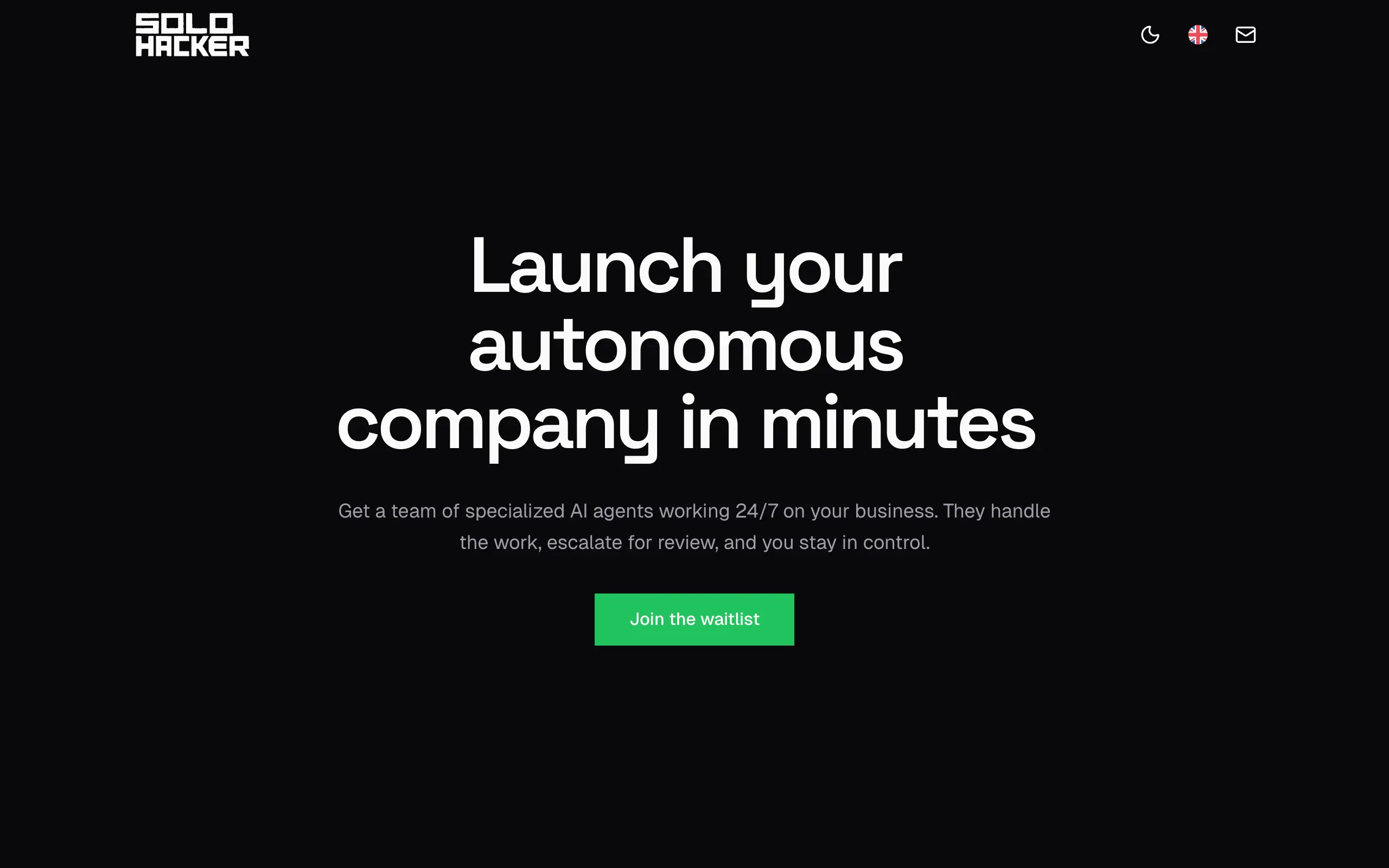
Solohacker
Autonomous company launcher - AI agents work 24/7, escalate what matters, and you stay in control 🤖
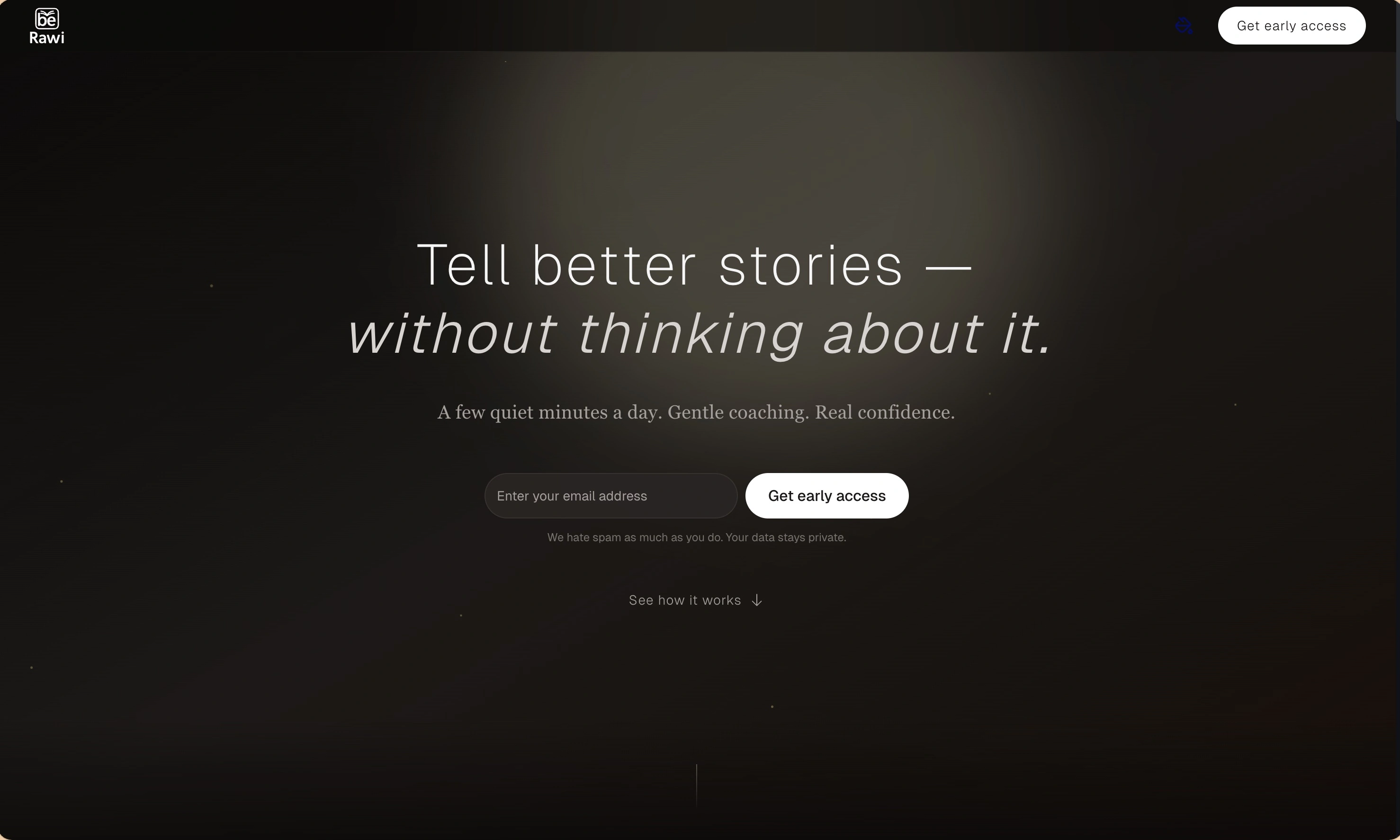
BeRawi: Storytelling Coach
Practice storytelling daily with instant feedback to sound clearer, more engaging, and confident 🎤
Omichat
Chat with 50+ AI models, including ChatGPT and Claude, in one place - switch models anytime without losing context 🤖
Claude Fast
Supercharge your Claude Code with 6x effective context window and specialized AI agents 🤖
EmojAI
AI-powered emoji picker with smart, context-aware suggestions 🤖
Solohacker
Autonomous company launcher - AI agents work 24/7, escalate what matters, and you stay in control 🤖
BeRawi: Storytelling Coach
Practice storytelling daily with instant feedback to sound clearer, more engaging, and confident 🎤
Omichat
Chat with 50+ AI models, including ChatGPT and Claude, in one place - switch models anytime without losing context 🤖
Claude Fast
Supercharge your Claude Code with 6x effective context window and specialized AI agents 🤖
EmojAI
AI-powered emoji picker with smart, context-aware suggestions 🤖
Solohacker
Autonomous company launcher - AI agents work 24/7, escalate what matters, and you stay in control 🤖
BeRawi: Storytelling Coach
Practice storytelling daily with instant feedback to sound clearer, more engaging, and confident 🎤
Omichat
Chat with 50+ AI models, including ChatGPT and Claude, in one place - switch models anytime without losing context 🤖
Claude Fast
Supercharge your Claude Code with 6x effective context window and specialized AI agents 🤖
EmojAI
AI-powered emoji picker with smart, context-aware suggestions 🤖
Solohacker
Autonomous company launcher - AI agents work 24/7, escalate what matters, and you stay in control 🤖
BeRawi: Storytelling Coach
Practice storytelling daily with instant feedback to sound clearer, more engaging, and confident 🎤

Connect with like-minded people
Join our community to get feedback, support, and grow together with 1,000+ builders on board, let's ship it!
Join usShip your startup everywhere. In minutes.
Don't burn tokens on setup and start building features on day one.