PlateauLab
AI coaching for experienced lifters stuck at a plateau, diagnosing training logs, form videos and recovery patterns to prescribe precise weekly changes.
Why AI plateau coaching is a compelling fitness SaaS opportunity
Experienced lifters rarely need another generic workout plan. They already understand progressive overload, track their lifts, and know the difference between a high-bar squat and a low-bar squat. Their problem is more nuanced: progress has stalled despite consistent effort.
That is where AI plateau coaching becomes valuable.
PlateauLab is an AI coaching platform designed for intermediate and advanced lifters who are stuck at a strength, hypertrophy, or body-composition plateau. It analyzes training logs, form videos, recovery patterns, nutrition adherence, and subjective feedback to recommend precise weekly adjustments.
Instead of telling every user to “train harder” or “eat more protein,” PlateauLab can identify the most likely limiting factor:
- Insufficient volume for a specific muscle group
- Poor exercise selection relative to anatomy or goals
- Fatigue accumulation from excessive intensity
- Weak technique that limits load progression
- Inadequate recovery, sleep, or calorie intake
- A progression model that no longer matches the athlete’s experience level
- A mismatch between stated goals and actual programming behavior
The core opportunity is not replacing qualified human coaches. It is making high-quality diagnostic coaching more accessible, more consistent, and more scalable for lifters who cannot justify premium one-on-one coaching every month.
The core positioning
PlateauLab should be positioned as an AI training diagnostic system for serious lifters, not a generic AI workout generator. The difference is central to the product’s credibility and willingness to pay.
A generic workout generator solves an entry-level planning problem. PlateauLab solves a higher-value decision problem: what should change next week, why should it change, and how confident is the system in that recommendation?
That positioning creates a clearer audience, a more defensible product, and stronger opportunities for recurring subscription revenue.
Who PlateauLab should serve first
The fitness market is broad, but PlateauLab should avoid trying to serve every person who exercises. The highest-value early users have enough training history and enough data to benefit from intelligent analysis.
Primary audience: intermediate and advanced lifters
The ideal initial customer has trained consistently for at least one to three years. They likely use a notes app, spreadsheet, training app, or wearable to track performance. They may follow evidence-based fitness creators, understand basic programming concepts, and actively seek better results.
Typical characteristics include:
- They train three to six times per week.
- They have clear goals around strength, muscle growth, athletic performance, or physique development.
- They track sets, reps, loads, bodyweight, calories, or recovery data.
- They have experienced a frustrating stall in one or more lifts.
- They have tried changing exercises or adding volume without confidence that those changes were appropriate.
- They may be too advanced for beginner apps but not ready to spend hundreds of dollars each month on coaching.
These users are especially likely to search for terms such as:
- “Why am I stuck at the same weight in the gym?”
- “How to break a strength plateau”
- “AI strength coach”
- “Workout log analysis”
- “How much volume should I do for hypertrophy?”
- “Why is my squat not increasing?”
- “How to know if I need a deload”
- “AI form analysis for lifting”
PlateauLab can address these queries through product-led educational content, free diagnostic tools, and targeted landing pages.
Secondary audience: online coaches and fitness professionals
Independent coaches are another strong customer segment. A coach managing 20 to 100 clients spends substantial time reviewing training data, spotting patterns, writing adjustments, and repeating similar explanations.
PlateauLab can become a coach operating system rather than a competitor to coaches.
For professionals, the platform could provide:
- Client training log summaries
- Automated adherence reports
- Recovery risk flags
- Form review triage
- Suggested programming adjustments
- Weekly check-in summaries
- White-label or co-branded client portals
- Coach approval workflows before recommendations reach clients
The professional version should always preserve coach control. Recommendations can be generated by AI, but coaches should approve, edit, or reject them.
Tertiary audience: strength-focused communities
Niche communities create distribution opportunities once the product has a reliable core experience. Potential groups include:
- Powerlifters preparing for a meet
- Bodybuilders in an offseason growth phase
- CrossFit athletes managing concurrent training fatigue
- Recreational athletes focused on strength
- Home gym enthusiasts
- Busy professionals who train consistently but recover poorly
- People returning to structured lifting after injury clearance
Each group has different constraints. Powerlifters care about competition-specific lifts and peaking. Hypertrophy-focused lifters care about stimulus, fatigue, exercise execution, and physique measurements. PlateauLab should begin with one primary segment before expanding its recommendation engine.
The market gap in strength training software
Most fitness apps fall into one of four categories:
- Workout libraries with pre-built plans
- Training log apps that record performance
- Wearable dashboards that display health metrics
- Marketplace platforms connecting users with human coaches
Each category provides value, but few products deeply connect training performance, movement quality, recovery behavior, and programming decisions.
A lifter may use one app to log workouts, another to track calories, a smartwatch for sleep, and social media for programming advice. The data exists, but it is fragmented. More importantly, most tools report information without explaining what should be changed.
That is PlateauLab’s market gap.
| Solution type | Primary function | Typical limitation | PlateauLab opportunity | User value |
|---|---|---|---|---|
| Workout generator | Creates routines | Limited ongoing diagnosis | Explain weekly changes using real data | Higher personalization |
| Training log | Records sets and reps | Requires manual interpretation | Detect plateaus and likely causes | Faster decisions |
| Wearable dashboard | Displays health metrics | Weak connection to training plans | Translate recovery into programming actions | Better fatigue management |
| Human coaching | Provides expert guidance | Expensive and difficult to scale | Offer scalable diagnostic support | More accessible expertise |
The product should not claim to diagnose medical issues, prevent injuries, or replace licensed healthcare professionals. Its purpose is training decision support for healthy adults who choose to participate in resistance training.
This is both a legal and trust-building consideration. Serious lifters tend to reject exaggerated claims. Transparent limits can improve credibility.
PlateauLab’s unique selling proposition
The strongest USP for PlateauLab is straightforward:
PlateauLab turns messy training, form, and recovery data into a specific, evidence-informed weekly adjustment plan for experienced lifters.
The key phrase is specific weekly adjustment plan.
Users do not merely want a chart showing declining performance. They want a practical answer such as:
- Reduce lower-body volume by four hard sets this week.
- Keep squat intensity stable, but replace back-off sets with paused squats.
- Move Romanian deadlifts away from the day before heavy squats.
- Add one chest-supported row variation because horizontal pulling volume is low relative to pressing volume.
- Schedule a deload because performance, subjective fatigue, and sleep quality have deteriorated together.
- Maintain calories but increase carbohydrate intake around lower-body sessions.
- Reduce load by 8% until technique criteria are met on the concentric phase.
This type of advice feels valuable because it reflects coaching judgment rather than generic motivation.
Why explainability matters for AI fitness coaching
A recommendation without reasoning is difficult for experienced users to trust. If PlateauLab says, “Remove three sets of leg press,” it must explain the signal behind the decision.
A good recommendation should include:
- The observed pattern
- The likely interpretation
- The confidence level
- The recommended change
- The intended outcome
- The review period
- The conditions under which the recommendation should be reversed
For example:
Your squat top set has remained within a 2.5 kg range for four weeks while reported lower-body soreness, sleep disruption, and RPE drift have increased. PlateauLab estimates accumulated fatigue as the primary constraint with medium confidence. Reduce quad-dominant accessory volume by four hard sets for one week, retain one heavy squat exposure, and reassess bar speed, RPE, and top-set load next Monday.
This output is far more compelling than “You may be overtraining.”
Core features for an AI plateau coaching platform
PlateauLab should be built around a closed feedback loop: collect data, identify constraints, prescribe changes, measure results, and improve recommendations.
Training log ingestion and normalization
The foundation is structured training data. Users should be able to enter sessions manually, import spreadsheets, connect supported training tools, or use natural-language input.
The system should normalize inputs such as:
- Exercise names and aliases
- Sets, reps, load, and estimated one-rep max
- RPE and reps in reserve
- Rest periods
- Tempo and pauses
- Exercise order
- Training frequency
- Bodyweight changes
- Missed sessions
- Substitutions and modifications
Exercise normalization matters more than it initially appears. “Barbell back squat,” “high-bar squat,” and “HBBS” may be related, but they are not identical movements from a programming perspective. The product needs a flexible exercise ontology that supports user terminology while preserving useful categories.
Plateau detection engine
A plateau is not simply a missed personal record. Experienced lifters can progress through better technique, more reps at the same load, lower RPE, improved range of motion, or more consistent weekly volume.
PlateauLab should define plateaus using multiple signals:
- No meaningful improvement across a user-defined time window
- Declining estimated one-rep max trends
- Repeated failure to complete programmed work
- Increasing RPE at stable loads
- Reduced training adherence
- Persistent fatigue markers
- Stagnant body measurements despite target behavior adherence
- Lack of progress in a priority movement or muscle group
The system should let users select a goal hierarchy. A powerlifter may prioritize competition squat strength. A physique athlete may prioritize shoulder and back development. Without priorities, the AI cannot make good trade-offs.
AI form video analysis
Form analysis can be a major acquisition feature, but it should be implemented cautiously.
The initial product should focus on a small number of well-understood barbell movements:
- Back squat
- Deadlift
- Bench press
- Overhead press
- Romanian deadlift
- Pull-up or chin-up
Computer vision can estimate joint positions, bar path, range of motion, movement tempo, asymmetry, and rep consistency. It should avoid definitive claims such as “this form will cause injury.”
Instead, the product can use coaching-oriented language:
- “Your bar path shifted forward during the final two reps.”
- “Hip rise appears to precede chest rise during the ascent.”
- “Depth was less consistent after rep five.”
- “Consider reducing load or reps if the current goal is repeatable technique.”
- “This observation is based on camera angle and may be incomplete.”
Form feedback should include an uncertainty disclaimer because a single camera angle cannot capture every relevant detail.
Recovery and readiness analysis
Recovery data should inform training changes, not become a source of unnecessary anxiety. Users can provide subjective and objective inputs:
- Sleep duration and quality
- Resting heart rate trends
- Heart rate variability when available
- Stress level
- Muscle soreness
- Joint discomfort check-ins
- Daily steps
- Calorie and protein adherence
- Alcohol intake
- Menstrual cycle information as an optional and privacy-conscious feature
The product should prioritize trends over individual bad nights of sleep. A single low readiness score should not automatically trigger a deload. Consistent multi-signal changes are more useful.
Weekly prescription engine
The weekly plan is the product’s central deliverable. It should translate diagnosis into a concise, actionable recommendation set.
A useful output format may include:
-
Primary constraint
The most likely reason progress has slowed. -
Evidence observed
The training, recovery, or technique signals supporting that conclusion. -
This week’s changes
Exact changes to volume, intensity, exercise selection, scheduling, or recovery focus. -
What stays unchanged
Prevents users from rewriting an entire program unnecessarily. -
Success metrics
Metrics that determine whether the intervention worked. -
Escalation conditions
Situations where users should stop, seek a coach, or consult a qualified clinician.
Coach-style chat with data grounding
A conversational interface can improve retention, but it should be grounded in the user’s data. Generic chatbot responses are not enough.
Useful user questions include:
- “Why did you reduce my deadlift volume?”
- “Can I swap Bulgarian split squats for leg press?”
- “Should I deload before my meet?”
- “Why did my estimated one-rep max drop?”
- “Is this a recovery issue or a programming issue?”
- “What would happen if I add another bench day?”
The model should reference relevant logged data in every answer. It should also clearly separate evidence-based guidance from lower-confidence hypotheses.
Avoid building a full nutrition tracker, a social fitness network, a wearable device, and a marketplace for coaches at launch. These features increase scope while weakening the product’s diagnostic focus. Start by delivering exceptional training analysis and weekly prescription quality.
Yes, but not as the first or only value proposition. The most differentiated workflow is importing an existing program, understanding why it has stalled, and prescribing minimal effective changes. Full program generation can become an expansion feature after trust is established.
Use confidence levels, show the signals considered, and invite users to confirm contextual details. For example, a stagnant lift may reflect fatigue, inaccurate RPE logging, a calorie deficit, poor technique, or limited training time. Honest uncertainty is better than false precision.
A practical product experience for PlateauLab
The onboarding process needs to gather enough context without becoming a 30-minute questionnaire. Progressive profiling is the right approach.
First-session onboarding
Ask for the minimum information needed to create an initial baseline:
- Training goal
- Experience level
- Training days available
- Current program or recent training logs
- Priority lifts or priority muscle groups
- Equipment access
- Recent progress concerns
- Injury and medical disclaimer acknowledgment
- Preferred coaching style
Then ask for deeper data only when it improves a specific recommendation.
For example, nutrition adherence matters more when a user is pursuing hypertrophy or body recomposition. Meet date matters more for competitive powerlifters. Video upload prompts matter when performance data suggests a technical constraint.
The weekly check-in loop
The most retention-friendly workflow is a weekly coaching ritual:
This workflow teaches users to make fewer but better changes. It also creates the data flywheel needed to improve recommendations over time.
Recommended tech stack for PlateauLab
An AI fitness coaching application requires a stack that handles responsive product UX, secure user data, media processing, analytics, and AI orchestration.
A strong initial architecture could use Next.js for the web application and API layer, React for interface composition, and TypeScript for safer domain modeling.
For fast product development, TurboStarter can reduce the time required to establish authentication, billing foundations, dashboard structure, and production-ready SaaS conventions.
Suggested application stack
Frontend
Next.js, React, TypeScript, and Tailwind CSS for a fast, responsive coaching dashboard.
Database
PostgreSQL for structured training, subscription, user preference, and recommendation records.
Data layer
Prisma or Drizzle for typed database access and maintainable schema changes.
Media processing
Object storage plus asynchronous workers for video upload, transcoding, and pose-analysis jobs.
AI orchestration
A retrieval-aware LLM workflow combined with deterministic training calculations and safety rules.
Why PostgreSQL is a strong fit
PostgreSQL is a practical choice because PlateauLab needs relational data integrity. A training session includes exercises, sets, performance measures, notes, and optional video records. Recommendations need traceability back to the signals that triggered them.
A simplified domain model could include:
type TrainingSet = {
  userId: string;
  sessionId: string;
  exerciseId: string;
  loadKg: number;
  reps: number;
  rpe?: number;
  completedAt: Date;
};

type WeeklyRecommendation = {
  userId: string;
  createdAt: Date;
  primaryConstraint: string;
  confidenceScore: number;
  evidenceSummary: string[];
  recommendedChanges: string[];
  reviewDate: Date;
};
The AI system should not be responsible for calculating every metric from raw input. Deterministic functions should calculate estimated one-rep max trends, volume landmarks, adherence, acute-to-chronic changes, and RPE drift. The language model can then explain these results clearly and personalize the presentation.
AI architecture and trade-offs
The best architecture is hybrid.
Use deterministic rules and statistical models for calculations that require consistency. Use large language models for summaries, conversational explanations, user intent classification, and transforming validated signals into coaching language.
This approach has important benefits:
- It reduces hallucinated calculations.
- It creates auditable recommendation logic.
- It makes testing easier.
- It allows expert coaches to review and improve rules.
- It prevents the product from sounding confident when the data is weak.
A pure LLM approach is faster to prototype but risky for a training product. A rigid rule engine is safe but can feel impersonal and inflexible. A hybrid system offers the strongest balance.
Form video processing considerations
Video analysis is computationally expensive and introduces privacy responsibilities. Early versions should process videos asynchronously rather than attempting real-time feedback.
A sensible workflow is:
- User uploads a short set video.
- The app validates duration, orientation, and movement selection.
- A background worker extracts frames and estimates key points.
- The analysis service creates movement metrics.
- The AI explanation layer converts metrics into coaching feedback.
- The user receives a notification when analysis is ready.
Users should control video retention. Offer clear deletion settings and avoid using user videos for model training without explicit, informed consent.
Monetization options for AI strength coaching
PlateauLab should use subscription pricing because plateau diagnosis is most valuable as an ongoing process. One-off reports may generate trial revenue, but training adaptation happens over weeks and months.
Recommended pricing structure
A three-tier model creates a clear upgrade path.
- Free tier offers limited workout logging, a basic plateau score, and one sample diagnostic.
- Pro tier provides weekly AI coaching, advanced log analysis, recovery tracking, and personalized plan adjustments.
- Performance tier adds form video analysis, deeper trend reports, priority processing, and advanced goal-specific templates.
- Coach tier serves fitness professionals with client management, white-label options, approval workflows, and team analytics.
The exact price should be validated through interviews and willingness-to-pay testing. A practical consumer SaaS range may be comparable to premium training apps, while coach plans should be priced based on active client capacity and time saved.
Additional revenue opportunities
PlateauLab can diversify revenue without damaging the core user experience:
- One-time in-depth program audits
- Form analysis credit packs
- Coach marketplace referrals
- Expert-reviewed training templates
- Team licenses for gyms and strength clubs
- Affiliate partnerships with training equipment brands
- Educational courses on programming and recovery
- API access for established fitness platforms
Avoid pushing supplements or aggressive affiliate offers early. The platform’s value depends on trust. Recommendations should never appear influenced by commercial relationships.
Competitive advantage and defensibility
The AI fitness space is crowded, but many products compete on novelty rather than coaching depth. PlateauLab can build a durable advantage by focusing on longitudinal data and recommendation quality.
The PlateauLab moat
The product’s defensibility comes from several connected layers:
- Longitudinal training data that reveals how a user responds to different interventions.
- Outcome-linked recommendations that show whether a change improved progress.
- Personalized response models that become more accurate as the user stays active.
- Structured exercise ontology that connects movement patterns, muscles, fatigue cost, and goals.
- Coach-reviewed knowledge base that constrains AI guidance.
- Trust-centered UX that explains recommendations and uncertainty.
- Workflow integration that makes the product part of the weekly training routine.
The most valuable data is not merely “a user did five sets of bench press.” It is the connection between a recommendation, an intervention, user adherence, recovery context, and eventual outcome.
For example, over time PlateauLab may learn that a specific user responds well to increased bench frequency but poorly to aggressive volume increases. That is difficult for a generic app to replicate.
Risks and how to mitigate them
Fitness software involving AI must earn user trust carefully. The product should identify risks early and design for them.
Risk: unsafe or overly confident recommendations
AI can produce persuasive language even when evidence is incomplete. In a training context, that can encourage users to take inappropriate action.
Mitigation should include:
- Rule-based safety checks before recommendations are shown
- Clear confidence levels
- Conservative defaults for load and volume changes
- Strong disclaimers for pain, injury, and medical concerns
- Escalation prompts for persistent pain, dizziness, neurological symptoms, or eating-disorder risk
- Expert review of high-impact recommendation templates
- No diagnosis of medical conditions
Risk: poor-quality user data
Users may forget to log RPE, use inconsistent exercise names, or enter incorrect loads. Weak data can lead to weak recommendations.
Mitigation should include:
- Data-quality scoring
- Input validation and anomaly detection
- Easy correction flows
- Progressive prompts instead of mandatory long forms
- Recommendation language that reflects uncertainty
- Clear requests for the specific missing data needed to improve accuracy
Risk: form analysis overpromises
Computer vision can identify observable movement patterns, but it cannot fully assess an athlete from a single camera angle.
Mitigation should include:
- Limiting supported lifts at launch
- Requiring recommended camera angles
- Showing annotated observations rather than injury claims
- Explaining video quality limitations
- Encouraging professional assessment for pain or persistent technique concerns
Risk: user churn after the plateau is resolved
If the product only solves a short-term issue, users may leave once progress resumes.
Mitigation should include expanding the lifecycle value:
- Ongoing progression management
- Goal periodization
- Meet preparation
- Hypertrophy specialization blocks
- Recovery trend monitoring
- Quarterly program audits
- Historical performance insights
- Coach collaboration features
The product should evolve from “fix my plateau” to “help me make better training decisions over time.”
Go-to-market strategy for PlateauLab
The best early go-to-market approach is credibility-led content combined with a focused beta program.
Build authority with educational content
Publish useful content for experienced lifters, not generic beginner workouts. High-intent topics include:
- How to identify a real lifting plateau
- Deload versus reduced volume
- Why estimated one-rep max can stall
- How to use RPE for strength programming
- Signs that training volume is too high
- How sleep affects resistance training recovery
- What to track when building muscle
- How to analyze a stalled squat or bench press
When citing research or market statistics, reference peer-reviewed studies, recognized sports science organizations, or datasets from credible industry reports. Avoid unsupported claims about exact performance improvements.
A useful editorial standard is to distinguish between:
- Established exercise science principles
- Practical coaching heuristics
- Product-generated hypotheses based on user data
That distinction supports E-E-A-T and helps serious users trust the brand.
Launch with a narrow beta
The best beta audience is likely strength-focused lifters who already log workouts. Recruit 50 to 150 users who have a concrete plateau problem and are willing to provide structured feedback.
Track metrics such as:
- Activation rate after first log import
- Percentage of users who receive a first useful recommendation
- Recommendation acceptance rate
- Weekly check-in completion rate
- Four-week retention
- User-reported recommendation usefulness
- Change in priority lift or goal metric
- Form upload completion rate
- Conversion from free diagnostic to paid plan
Qualitative interviews are just as important. Ask users whether the recommendation felt specific, whether they understood the reasoning, and whether they would have made the same adjustment without PlateauLab.
An actionable implementation roadmap
PlateauLab should launch in phases to validate the most valuable behavior before investing heavily in advanced computer vision or complex integrations.
Interview experienced lifters and coaches. Build a clickable prototype of the weekly diagnostic report. Test whether users care more about plateau detection, recovery interpretation, form feedback, or program modifications. Collect real anonymized training logs with consent to understand data variability.
Build workout logging and CSV import, goal setup, plateau detection, a weekly recommendation engine, and a grounded AI coaching chat. Focus on one segment such as intermediate strength trainees. Add clear safety policies and recommendation explanations before adding broad feature sets.
Add wearable integrations, selected form-video analysis, coach dashboards, program templates, and richer personalized response modeling. Expand into other training segments only after the original use case has strong retention and measurable recommendation value.
The minimum viable product should answer one question exceptionally well:
“Based on my recent training and recovery, what is the smallest high-confidence change I should make next week to resume progress?”
If PlateauLab consistently answers that question better than spreadsheets, generic AI chatbots, and static workout apps, it has a meaningful path to product-market fit.
Final perspective on building PlateauLab
PlateauLab has the potential to occupy a valuable position in the AI fitness coaching market because it addresses a real and expensive problem: experienced lifters often have data, discipline, and motivation, but lack reliable interpretation.
The product should not compete by generating endless routines. It should compete by becoming the most trustworthy system for diagnosing stalled progress and prescribing minimal, measurable changes.
Its winning formula is a combination of:
- High-quality training data capture
- Transparent AI recommendations
- Conservative safety design
- Expert-informed programming logic
- Personalized longitudinal learning
- Weekly workflows that fit real training habits
For users, the promise is simple: fewer random changes, less second-guessing, and more confidence in every training block. For coaches, the promise is leverage without losing professional judgment. For the business, that creates a differentiated, subscription-ready SaaS platform with room to grow from individual lifters into the broader strength coaching ecosystem.
More 🤖 AI Startup SaaS ideas
Discover more innovative ai startup SaaS ideas that are trending in 2026. Each idea is AI-generated with market validation and growth potential to help you find your next profitable venture faster than competitors.
Your competitors are building with TurboStarter
Below are some of the SaaS ideas that have been generated and built with our starter kit.

Statiko
Monitor any Telegram channel in real time - track posts, edits, deletions, and growth with AI recaps 📡

Shibui
AI website builder - describe your business, pick a niche template, edit by chatting, and publish instantly ✨

Pro Service
Find verified home service professionals, compare quotes, and pay securely through escrow - built for Brazilians across the US 🏠
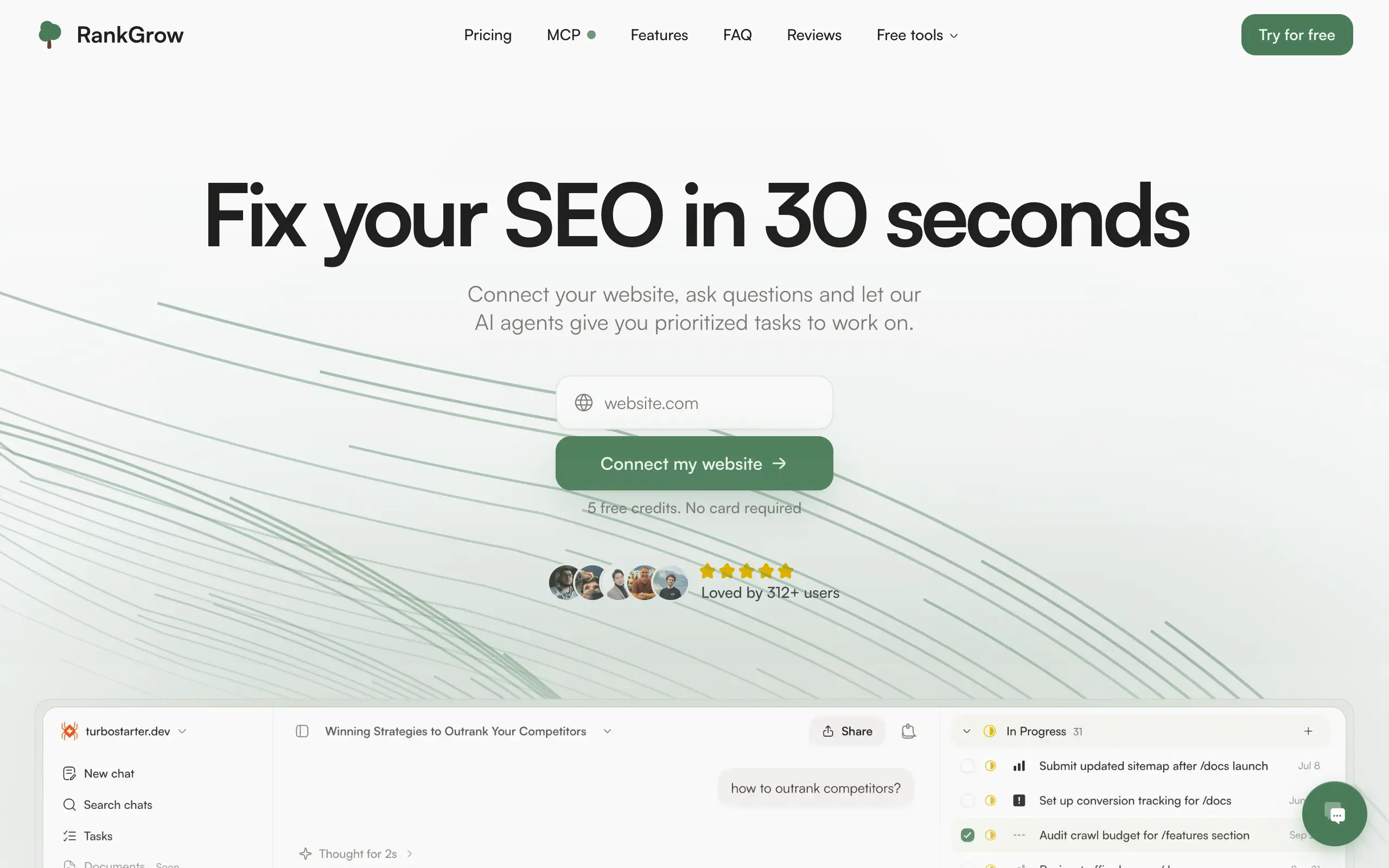
RankGrow
Fix your SEO with AI agents - connect Search Console, get prioritized tasks, and grow organic traffic 📈
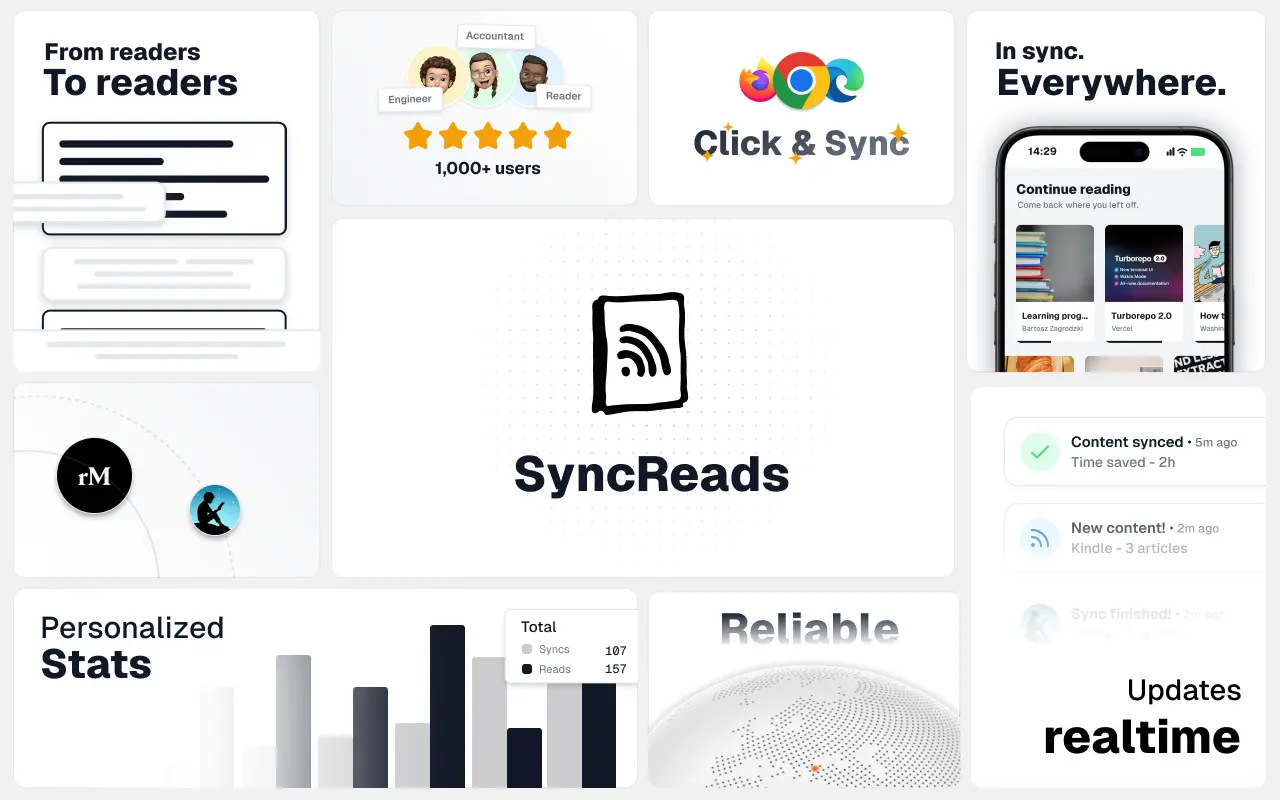
SyncReads
Sync your favorite content for distraction-free reading, save time and replace multiple apps. Anytime, anywhere 🔄
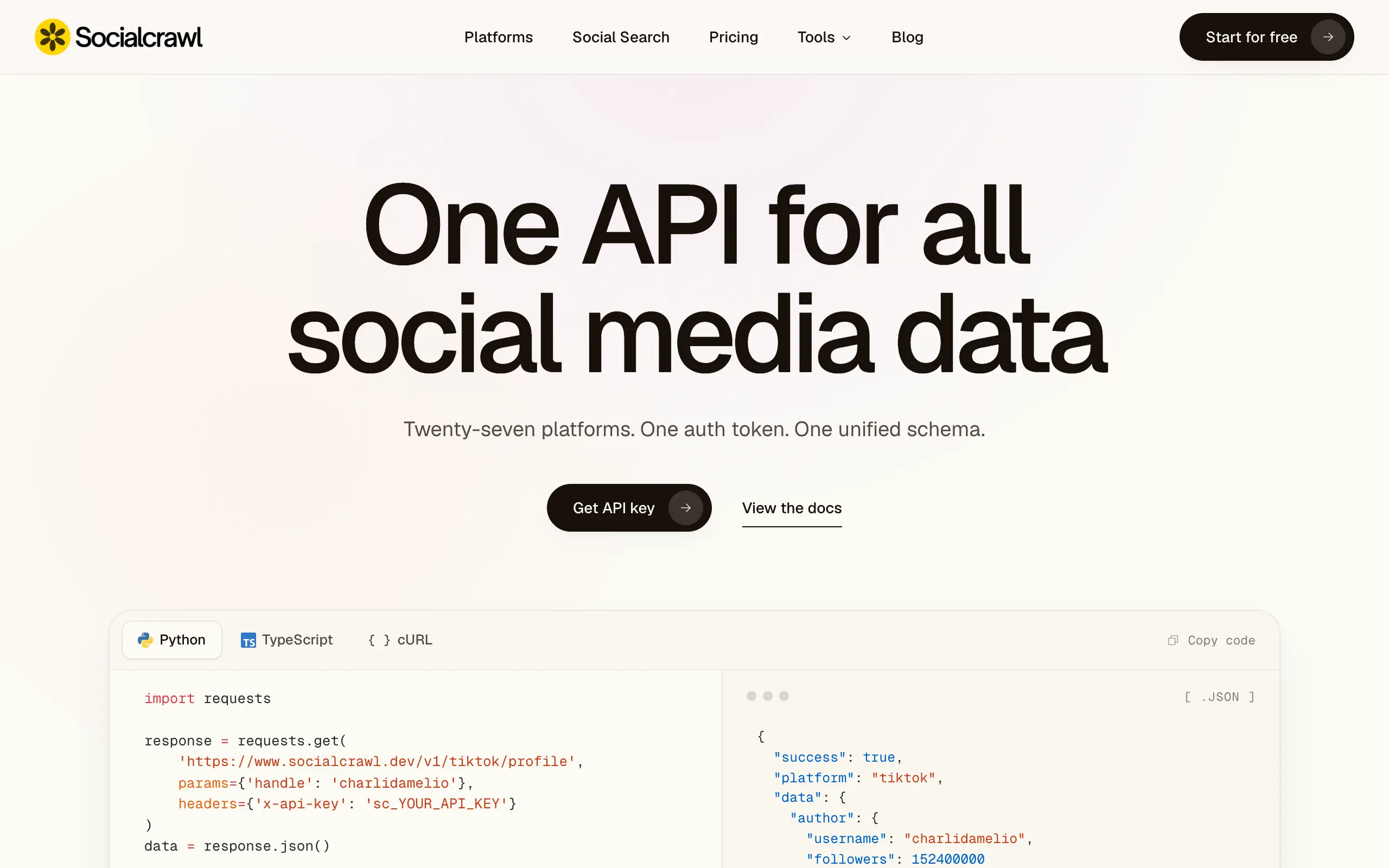
Socialcrawl
Get clean, structured data from 21 platforms like TikTok, Instagram, and YouTube with a single request 📊
Statiko
Monitor any Telegram channel in real time - track posts, edits, deletions, and growth with AI recaps 📡
Shibui
AI website builder - describe your business, pick a niche template, edit by chatting, and publish instantly ✨
Pro Service
Find verified home service professionals, compare quotes, and pay securely through escrow - built for Brazilians across the US 🏠
RankGrow
Fix your SEO with AI agents - connect Search Console, get prioritized tasks, and grow organic traffic 📈
SyncReads
Sync your favorite content for distraction-free reading, save time and replace multiple apps. Anytime, anywhere 🔄
Socialcrawl
Get clean, structured data from 21 platforms like TikTok, Instagram, and YouTube with a single request 📊
Statiko
Monitor any Telegram channel in real time - track posts, edits, deletions, and growth with AI recaps 📡
Shibui
AI website builder - describe your business, pick a niche template, edit by chatting, and publish instantly ✨
Pro Service
Find verified home service professionals, compare quotes, and pay securely through escrow - built for Brazilians across the US 🏠
RankGrow
Fix your SEO with AI agents - connect Search Console, get prioritized tasks, and grow organic traffic 📈
SyncReads
Sync your favorite content for distraction-free reading, save time and replace multiple apps. Anytime, anywhere 🔄
Socialcrawl
Get clean, structured data from 21 platforms like TikTok, Instagram, and YouTube with a single request 📊
Statiko
Monitor any Telegram channel in real time - track posts, edits, deletions, and growth with AI recaps 📡
Shibui
AI website builder - describe your business, pick a niche template, edit by chatting, and publish instantly ✨
Pro Service
Find verified home service professionals, compare quotes, and pay securely through escrow - built for Brazilians across the US 🏠
RankGrow
Fix your SEO with AI agents - connect Search Console, get prioritized tasks, and grow organic traffic 📈
SyncReads
Sync your favorite content for distraction-free reading, save time and replace multiple apps. Anytime, anywhere 🔄
Socialcrawl
Get clean, structured data from 21 platforms like TikTok, Instagram, and YouTube with a single request 📊
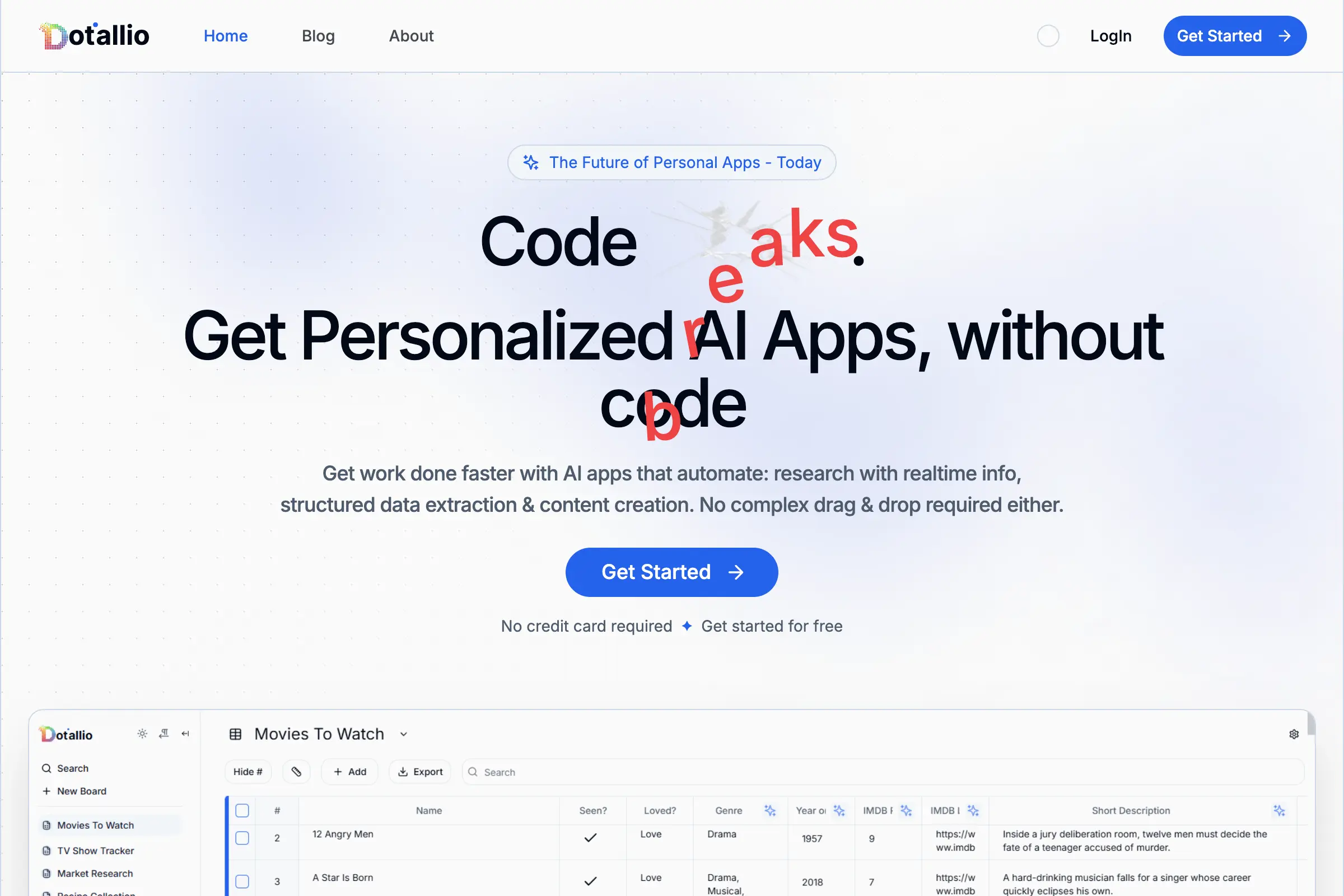
Dotallio
Personalized AI apps that automate research, data extraction, and content creation without code 🤖

Talk to Santa
Enjoy a magical live video chat or receive a unique AI-generated video greeting from Santa Claus 🎅

pozywka.pl
Scalable blog for food journalist, focused on performance and user experience 🌭
zagrodzki.me
Personal blog and portfolio of Bart Zagrodzki, where he shares his knowledge and work 💼
TurboStarter
Ship your startup everywhere. In minutes.
HTML to Markdown
Convert HTML to Markdown with ease, directly in your browser 📄
Dotallio
Personalized AI apps that automate research, data extraction, and content creation without code 🤖
Talk to Santa
Enjoy a magical live video chat or receive a unique AI-generated video greeting from Santa Claus 🎅
pozywka.pl
Scalable blog for food journalist, focused on performance and user experience 🌭
zagrodzki.me
Personal blog and portfolio of Bart Zagrodzki, where he shares his knowledge and work 💼
TurboStarter
Ship your startup everywhere. In minutes.
HTML to Markdown
Convert HTML to Markdown with ease, directly in your browser 📄
Dotallio
Personalized AI apps that automate research, data extraction, and content creation without code 🤖
Talk to Santa
Enjoy a magical live video chat or receive a unique AI-generated video greeting from Santa Claus 🎅
pozywka.pl
Scalable blog for food journalist, focused on performance and user experience 🌭
zagrodzki.me
Personal blog and portfolio of Bart Zagrodzki, where he shares his knowledge and work 💼
TurboStarter
Ship your startup everywhere. In minutes.
HTML to Markdown
Convert HTML to Markdown with ease, directly in your browser 📄
Dotallio
Personalized AI apps that automate research, data extraction, and content creation without code 🤖
Talk to Santa
Enjoy a magical live video chat or receive a unique AI-generated video greeting from Santa Claus 🎅
pozywka.pl
Scalable blog for food journalist, focused on performance and user experience 🌭
zagrodzki.me
Personal blog and portfolio of Bart Zagrodzki, where he shares his knowledge and work 💼
TurboStarter
Ship your startup everywhere. In minutes.
HTML to Markdown
Convert HTML to Markdown with ease, directly in your browser 📄
Omichat
Chat with 50+ AI models, including ChatGPT and Claude, in one place - switch models anytime without losing context 🤖
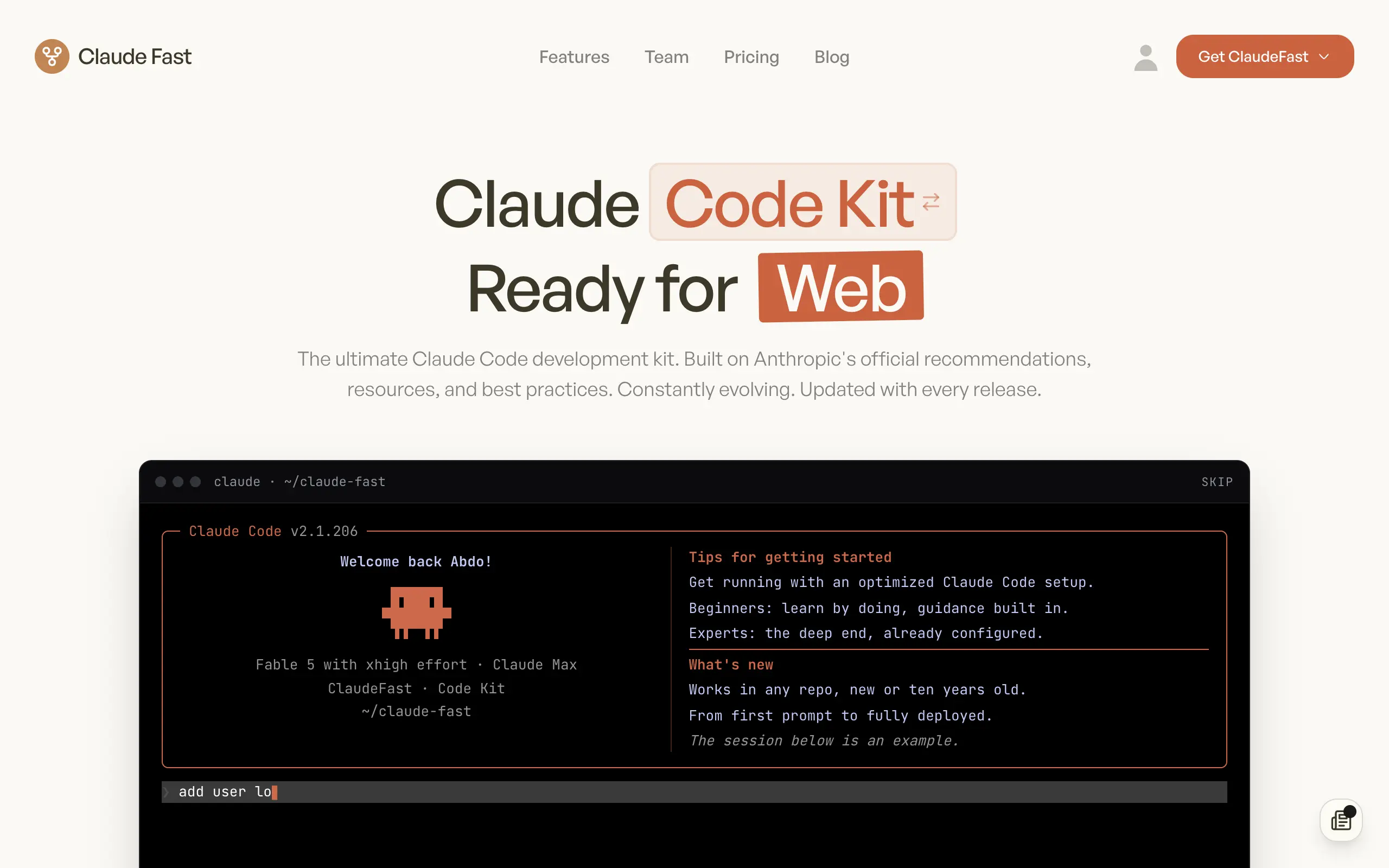
Claude Fast
Supercharge your Claude Code with 6x effective context window and specialized AI agents 🤖
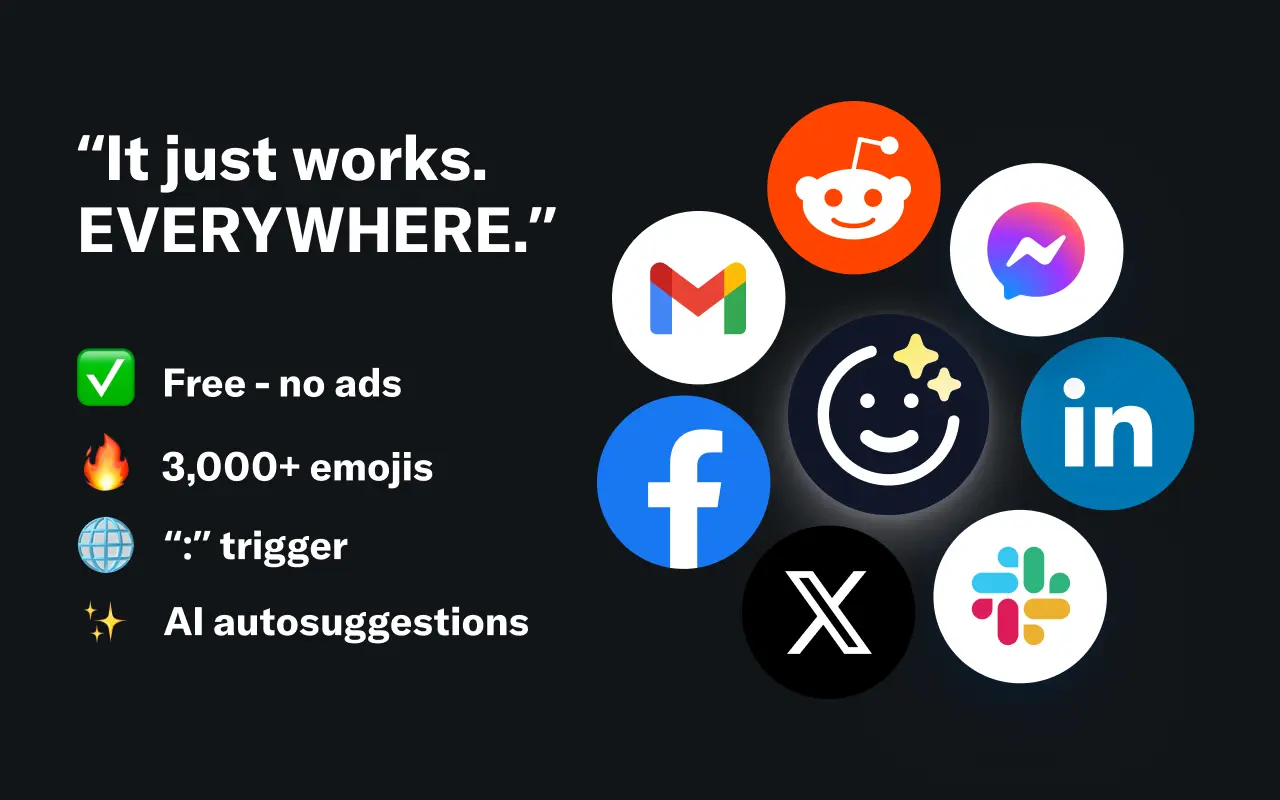
EmojAI
AI-powered emoji picker with smart, context-aware suggestions 🤖
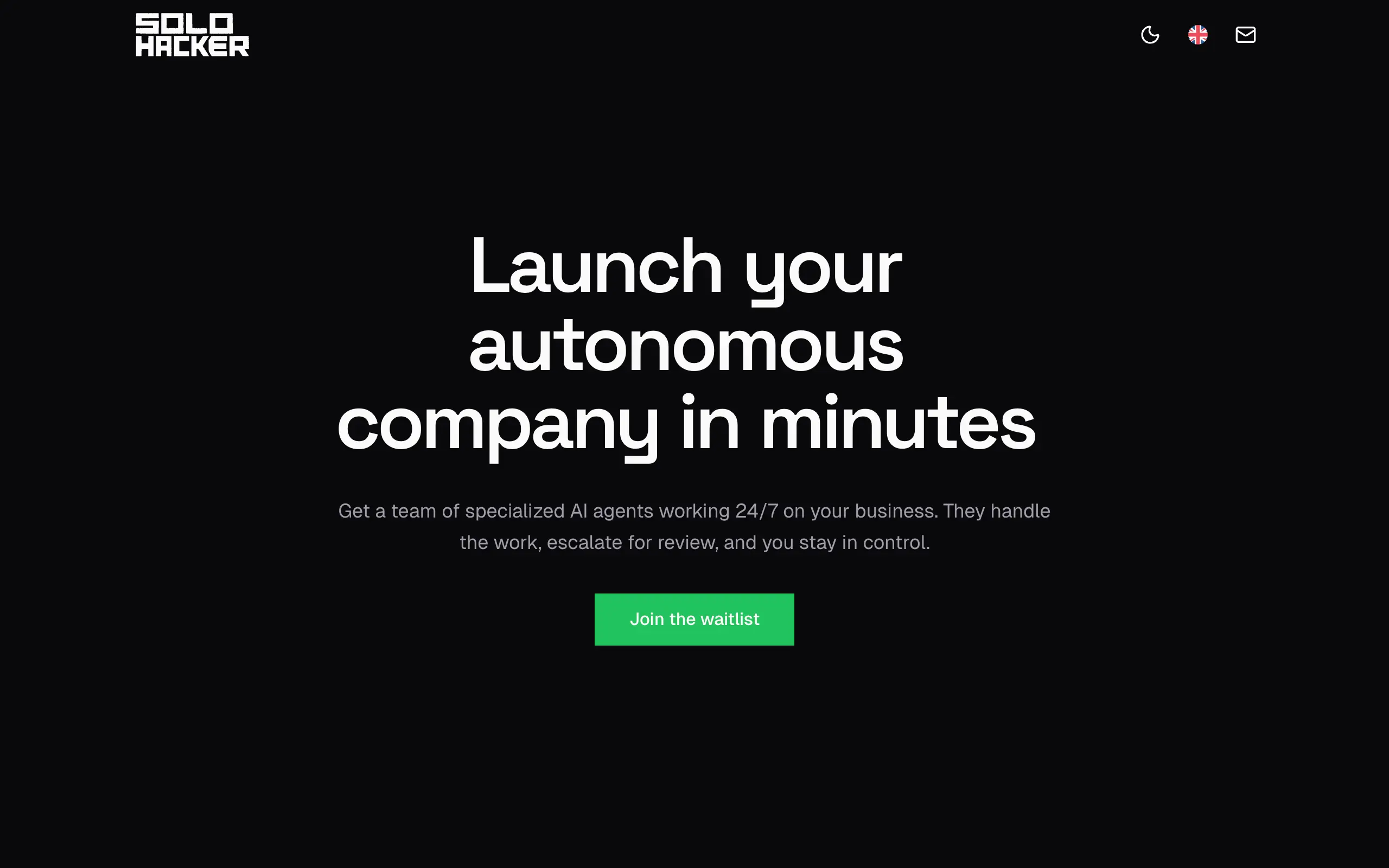
Solohacker
Autonomous company launcher - AI agents work 24/7, escalate what matters, and you stay in control 🤖
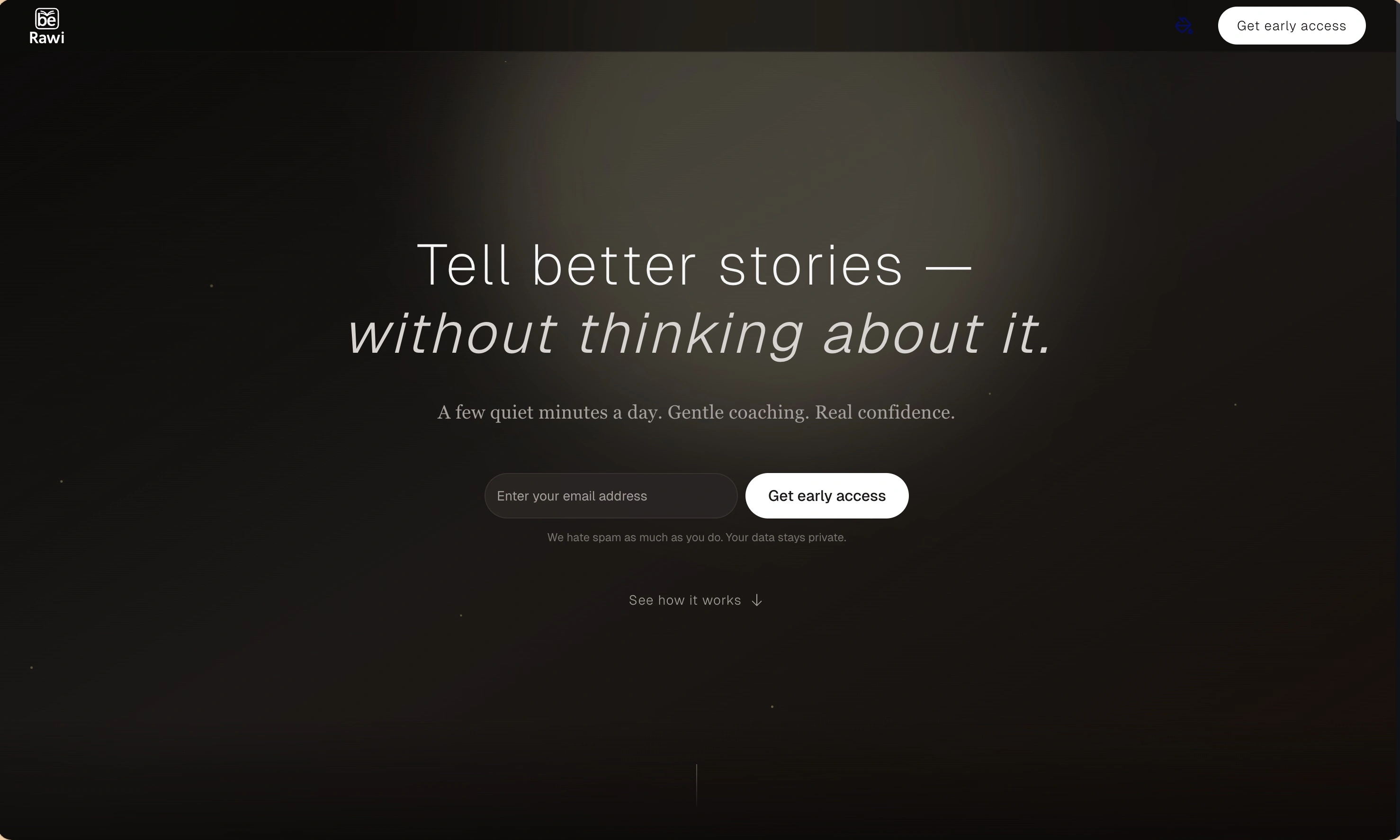
BeRawi: Storytelling Coach
Practice storytelling daily with instant feedback to sound clearer, more engaging, and confident 🎤
Omichat
Chat with 50+ AI models, including ChatGPT and Claude, in one place - switch models anytime without losing context 🤖
Claude Fast
Supercharge your Claude Code with 6x effective context window and specialized AI agents 🤖
EmojAI
AI-powered emoji picker with smart, context-aware suggestions 🤖
Solohacker
Autonomous company launcher - AI agents work 24/7, escalate what matters, and you stay in control 🤖
BeRawi: Storytelling Coach
Practice storytelling daily with instant feedback to sound clearer, more engaging, and confident 🎤
Omichat
Chat with 50+ AI models, including ChatGPT and Claude, in one place - switch models anytime without losing context 🤖
Claude Fast
Supercharge your Claude Code with 6x effective context window and specialized AI agents 🤖
EmojAI
AI-powered emoji picker with smart, context-aware suggestions 🤖
Solohacker
Autonomous company launcher - AI agents work 24/7, escalate what matters, and you stay in control 🤖
BeRawi: Storytelling Coach
Practice storytelling daily with instant feedback to sound clearer, more engaging, and confident 🎤
Omichat
Chat with 50+ AI models, including ChatGPT and Claude, in one place - switch models anytime without losing context 🤖
Claude Fast
Supercharge your Claude Code with 6x effective context window and specialized AI agents 🤖
EmojAI
AI-powered emoji picker with smart, context-aware suggestions 🤖
Solohacker
Autonomous company launcher - AI agents work 24/7, escalate what matters, and you stay in control 🤖
BeRawi: Storytelling Coach
Practice storytelling daily with instant feedback to sound clearer, more engaging, and confident 🎤

Connect with like-minded people
Join our community to get feedback, support, and grow together with 1,000+ builders on board, let's ship it!
Join usShip your startup everywhere. In minutes.
Don't burn tokens on setup and start building features on day one.