ProofPilot
AI turns scattered project updates into evidence-backed status reports, flagging missing proof before clients or auditors ask.
Why an AI compliance evidence vault is a timely SaaS opportunity
Security compliance has become a recurring operational burden for SaaS companies, fintech platforms, healthcare vendors, AI startups, and enterprise software teams. A SOC 2 audit is no longer a one-time project that can be handled through a few spreadsheets and a shared folder. Customers, procurement teams, and auditors increasingly expect continuous proof that controls are operating as designed.
That is the market opening for ProofPilot, an AI evidence vault that transforms scattered compliance artifacts into audit-ready controls, gap reports, and continuous SOC 2 proof packs.
The primary keyword for this opportunity is AI compliance evidence vault. Closely related search terms include:
- SOC 2 evidence automation
- Compliance evidence management software
- Continuous compliance monitoring
- Audit-ready evidence collection
- SOC 2 proof pack
- Security compliance automation
- Audit evidence repository
- AI-powered GRC software
- Compliance gap analysis
- Trust Services Criteria mapping
ProofPilot is not simply another document storage system or generic governance, risk, and compliance platform. Its positioning should focus on the difficult work that happens between a company collecting evidence and an auditor accepting that evidence as valid, complete, current, and mapped to the relevant control.
The core promise is straightforward:
ProofPilot gives compliance teams a continuously organized, explainable, and audit-ready source of truth for SOC 2 evidence.
The core market insight
The biggest compliance problem is rarely the absence of artifacts. It is the inability to prove which artifact supports which control, whether it is current, who validated it, and what remains missing before an audit.
The compliance evidence problem ProofPilot should solve
Most growing companies generate large volumes of compliance-relevant information every day. Security policies live in Google Drive or Notion. Access reviews may happen in spreadsheets. Change management evidence is split across GitHub, Jira, Linear, and deployment tools. Vendor reviews may be stored in email threads, ticketing platforms, or procurement folders.
When an audit begins, teams must manually answer several high-friction questions:
- Which evidence items are relevant to each SOC 2 control?
- Is the evidence current for the audit period?
- Does the artifact prove the control is actually operating?
- Who owns the evidence and who needs to approve it?
- What is missing, weak, duplicated, or outdated?
- Can the auditor review the proof without requesting more context?
This work is expensive because it is repetitive, deadline-driven, and difficult to standardize. Even companies that use existing GRC tools often still rely on manual interpretation when evidence is ambiguous or distributed across unstructured sources.
ProofPilot’s AI evidence vault can address this gap by combining:
- A structured evidence repository
- Control-to-artifact mapping
- AI-assisted evidence classification
- Automated freshness checks
- Missing evidence detection
- Auditor-ready proof pack generation
- Continuous ownership and review workflows
The result is a product that sits between raw operational evidence and formal audit readiness.
Target audience for AI compliance evidence management software
ProofPilot should not target every organization that has a compliance requirement. The strongest early customers are teams with an urgent SOC 2 need, fragmented evidence processes, and enough organizational maturity to pay for workflow automation.
Primary audience: B2B SaaS companies preparing for SOC 2
The ideal early-stage customer is a B2B SaaS company with roughly 30 to 500 employees. These businesses frequently need SOC 2 to close enterprise deals, renew strategic contracts, or enter regulated verticals.
Their common characteristics include:
- Selling to mid-market or enterprise customers
- Responding to security questionnaires regularly
- Running on cloud infrastructure such as AWS, Google Cloud, or Azure
- Using tools such as GitHub, Jira, Okta, Slack, Google Workspace, and cloud logging platforms
- Having a lean security, legal, operations, or engineering team
- Working toward a first SOC 2 Type I or Type II audit
- Feeling pressure to demonstrate continuous compliance between audit cycles
For these buyers, ProofPilot should be positioned as a way to reduce audit chaos without forcing them to build a large internal GRC function.
Secondary audience: Security and compliance consultants
Compliance consultants, virtual CISOs, and audit readiness firms represent a high-leverage distribution channel. They manage multiple client environments and repeatedly face the same evidence collection challenges.
A consultant-focused ProofPilot workspace could let them:
- Manage evidence collection across multiple clients
- Reuse approved control frameworks and evidence requests
- Assign evidence tasks to client owners
- Produce standardized gap reports
- Review AI-generated control mappings before sending them to clients
- Export auditor-ready evidence indexes
This segment can produce strong retention because consultants use the product across recurring engagements rather than for one annual audit.
Tertiary audience: Internal GRC and security teams
Larger companies may already use a broad GRC platform but struggle with evidence quality, audit preparation, or unstructured source material. ProofPilot can be positioned as an intelligence layer rather than an immediate replacement for their system of record.
The product can win here by integrating with existing workflows and solving narrow but painful tasks:
- Evidence quality review
- Artifact deduplication
- Control narrative generation
- Gap identification
- Audit package assembly
- Evidence recency monitoring
Buyer and user roles
Economic buyer
Usually the CISO, VP of Security, Head of Risk, COO, or founder at a smaller company. This person cares about reducing audit cost, protecting revenue, and avoiding compliance delays.
Primary user
Typically a compliance manager, security engineer, IT administrator, GRC analyst, or operations lead responsible for collecting, reviewing, and organizing evidence.
Supporting contributor
Engineering, HR, finance, legal, procurement, and IT staff who own the systems and workflows that produce compliance evidence.
Market gap: where existing SOC 2 automation tools fall short
The compliance automation market is established, but the market is not fully solved. Existing platforms are often highly effective at integrations, task management, and readiness checklists. However, many teams still encounter a material gap between automated data collection and audit-grade evidence interpretation.
That gap is especially visible in unstructured or semi-structured evidence.
Examples include:
- A policy document that changed after management approval
- A screenshot that does not show enough context for an auditor
- A Jira ticket that demonstrates a review occurred but does not prove the reviewer had authority
- A GitHub pull request that indicates code review but lacks a clear link to a production change
- A vendor due diligence file that is present but expired
- An access review spreadsheet that has no sign-off date
- A PDF report that supports several controls but is not mapped consistently
A conventional evidence management system may store these artifacts. ProofPilot should help users evaluate them.
The ProofPilot opportunity
ProofPilot’s market position should be built around evidence intelligence, not just automated collection.
The product should answer questions that a generic file repository or checklist cannot answer reliably:
- What does this artifact prove?
- Which SOC 2 controls could it support?
- Is the proof sufficient, current, and traceable?
- What context is missing?
- Is there conflicting evidence elsewhere?
- Which control activities have no acceptable proof for the selected audit period?
- What needs a human reviewer before it is shared externally?
This approach creates a differentiated category message:
ProofPilot is an AI compliance evidence vault that turns operational artifacts into reviewed, traceable, audit-ready proof.
Competitive advantage analysis
| Capability | Shared drive | Checklist tool | Traditional GRC platform | ProofPilot | Auditor-ready outcome |
|---|---|---|---|---|---|
| Centralizes documents | ✅ | ❌ | ✅ | ✅ | Partial |
| Maps artifacts to controls | ❌ | Partial | ✅ | ✅ | Strong |
| Evaluates evidence quality | ❌ | ❌ | Partial | ✅ | Strong |
| Detects stale or missing proof | ❌ | Partial | ✅ | ✅ | Strong |
| Creates explainable proof packs | ❌ | ❌ | Partial | ✅ | Strong |
The defensible advantage is not that ProofPilot uses an LLM. Many competitors can add AI summaries. The advantage comes from building a proprietary, verified evidence graph that connects controls, artifacts, owners, systems, dates, audit periods, reviewer decisions, and evidence quality signals.
Core ProofPilot features for continuous SOC 2 evidence automation
An effective MVP should solve a complete workflow for a specific buyer rather than attempting to automate every control framework from day one. SOC 2 should be the initial focus because it is common among SaaS companies, operationally demanding, and closely connected to revenue.
Evidence vault with normalized metadata
The evidence vault is the foundation. It should allow teams to ingest files, links, exports, screenshots, and integration-sourced records into a secure, searchable repository.
Every evidence item should have structured metadata such as:
- "Source": where the artifact originated, such as Google Drive, GitHub, Jira, AWS, or manual upload
- "Owner": the person accountable for its accuracy
- "Collection date": when ProofPilot captured or received the artifact
- "Effective date": the period the artifact represents
- "Review status": unreviewed, needs revision, approved, rejected, or expired
- "Framework mapping": the relevant SOC 2 criterion, control, or internal policy
- "Sensitivity": public, internal, confidential, or restricted
- "Audit period": the engagement period the artifact supports
Metadata is what turns a document repository into compliance evidence management software.
AI control mapping and evidence classification
ProofPilot should use AI to read uploaded text, extract meaningful details, and recommend control mappings. For example, a user uploads an access review report. The system identifies references to privileged accounts, reviewer names, review dates, exceptions, and final approvals.
It can then suggest relevant mappings, such as logical access controls or user access review requirements.
The product must frame these as recommendations, not automatic compliance conclusions. The user should be able to approve, modify, or reject each recommendation.
A useful output includes:
- Suggested framework and control mappings
- Confidence score with a plain-language explanation
- Extracted evidence dates and named approvers
- Evidence quality flags
- Related artifacts that may strengthen the proof
- Recommended next action
AI should not certify compliance
ProofPilot should never state that an organization is SOC 2 compliant solely because an AI model reviewed its artifacts. Compliance determinations require professional judgment, scoping, operational validation, and auditor assessment.
Evidence quality scoring
A differentiated ProofPilot feature is an evidence quality score. Instead of merely marking an item as collected, the system should assess whether it is likely to satisfy an audit request.
A quality rubric may consider:
- "Completeness": does the artifact contain enough information?
- "Recency": does it fall inside the applicable audit period?
- "Traceability": can users identify source, owner, and related system?
- "Authenticity": does it have system-originated details, timestamps, or approval records?
- "Control relevance": does it directly support the mapped control?
- "Reviewability": can an auditor understand it without extra explanation?
The interface should explain the score. A black-box number will not earn trust from experienced compliance professionals.
For instance, ProofPilot could flag an access review spreadsheet with this explanation:
The file appears relevant to the quarterly access review control, but it does not include an approval date or documented remediation for two listed exceptions. Add the final approval record and remediation ticket links before marking this evidence audit-ready.
That explanation is more valuable than a generic “low confidence” alert.
Gap reports and evidence requests
The system should continuously compare required evidence against collected, approved, and expired artifacts. Users need a control-level view of readiness, not a giant list of files.
A useful SOC 2 gap report should show:
- Controls with no evidence
- Controls with evidence awaiting review
- Controls supported only by stale artifacts
- Controls that need recurring evidence during the audit period
- Controls with conflicting or insufficient evidence
- Assigned owners and due dates
- Recommended remediation actions
Gap reports can become the daily operating view for compliance managers. They also make ProofPilot valuable before, during, and after an audit.
Continuous SOC 2 proof packs
The flagship deliverable should be a continuously updated SOC 2 proof pack. Rather than rushing to build an evidence package in the final weeks before fieldwork, customers can maintain a reviewable package throughout the year.
A proof pack can include:
- A control index
- Control descriptions and internal owners
- Linked approved evidence items
- Evidence collection timestamps
- Reviewer approvals and commentary
- Exceptions and remediation references
- Audit-period coverage details
- Exportable summaries for auditor review
The product should offer both a secure auditor portal and an export option. Some audit firms prefer their own evidence management workflow, so customers need flexibility.
Evidence requests and ownership workflows
Compliance work fails when responsibility is unclear. ProofPilot should include lightweight workflows for requesting and approving artifacts.
Core workflow capabilities include:
- Automatic task assignment by system or control owner
- Recurring evidence requests for monthly, quarterly, or annual controls
- Due date reminders
- Escalation for overdue high-risk evidence
- Approval queues for compliance leads
- Comment threads with immutable decision history
- Audit log entries for every status change
This workflow layer makes the product operationally sticky. Once teams assign ownership and recurring tasks in ProofPilot, replacing it becomes harder.
How the ProofPilot AI evidence engine should work
AI can speed up classification and analysis, but a credible product needs guardrails, provenance, and human review. The system should be designed as a retrieval-and-verification workflow, not as a chatbot that generates unsupported compliance claims.
A practical evidence processing pipeline
Use retrieval augmented generation instead of unsupported answers
A retrieval augmented generation architecture is appropriate for ProofPilot because compliance users need grounded responses. The model should only assess an artifact after retrieving the relevant control context and internal evidence requirements.
For each recommendation, show users:
- The exact evidence excerpts used
- The control language used for the recommendation
- The mapping rationale
- A confidence indicator
- The data source and version
- Any assumptions or unanswered questions
This design reduces hallucination risk and makes recommendations easier to review.
Example evidence analysis output
const evidenceAssessment = {
  artifact: "Q2 privileged access review.csv",
  suggestedControl: "Logical access reviews",
  confidence: 0.86,
  findings: [
    "Review period is identified as April through June.",
    "Twenty-three privileged accounts were reviewed.",
    "Two exceptions do not include remediation references.",
    "The final approver name is present, but approval date is missing."
  ],
  recommendation:
    "Attach approval confirmation and remediation tickets before auditor submission."
};
The final product should present an interface rather than code, but this structure illustrates a key principle: every AI conclusion should be tied to observable evidence and a recommended human action.
Recommended tech stack for ProofPilot
ProofPilot needs a stack that supports secure multi-tenancy, document processing, asynchronous jobs, AI retrieval, permissions, audit logs, and a polished workflow-oriented interface.
A TypeScript-based architecture is a practical choice because it allows shared types across the frontend, backend, and integration layer.
Application layer
Use Next.js with React for the web application. Next.js is well suited to SaaS products because it supports server-side rendering, route handlers, authentication patterns, and fast dashboard interfaces.
Use TypeScript to reduce errors in complex permission models, evidence schemas, and integration payloads.
For the interface, Tailwind CSS supports a consistent design system without excessive custom CSS. Compliance products need dense but readable tables, status indicators, review panels, and dashboard components, so visual consistency matters.
Data and file storage
Use PostgreSQL as the system of record for tenants, users, controls, evidence metadata, tasks, reviews, and audit log records.
Use object storage for raw evidence files. Amazon S3 is a strong option for organizations building in AWS because it supports encryption, lifecycle policies, signed access patterns, and mature enterprise security controls.
A recommended data separation model includes:
- Relational records for structured application data
- Encrypted object storage for original evidence artifacts
- Extracted text stored separately from raw files
- Embeddings stored in a vector-capable database or vector index
- Immutable audit log records with strict retention controls
AI and search architecture
For early product development, PostgreSQL with vector search capabilities can reduce infrastructure complexity. This approach is often sufficient until evidence volume or retrieval requirements justify a dedicated vector database.
The trade-off is clear:
- "PostgreSQL-first approach": simpler operations, lower early-stage cost, and easier transactional consistency
- "Dedicated vector database": potentially stronger performance and filtering at large scale, but more operational complexity and synchronization work
Document extraction should support PDFs, spreadsheets, word-processing files, HTML, CSV exports, and screenshots. Optical character recognition is necessary for scanned PDFs and image-heavy evidence.
The AI layer should include:
- Embedding generation for retrieval
- Structured extraction with schema validation
- LLM-powered summaries and mapping suggestions
- Rule-based validations for dates, required fields, and audit-period coverage
- Citation generation for every recommendation
- Evaluation datasets built from expert-reviewed evidence examples
Authentication and authorization
Compliance artifacts can contain sensitive data, including employee records, infrastructure details, customer information, and security configurations. Authorization cannot be an afterthought.
ProofPilot should support:
- Role-based access control
- Workspace-level tenant isolation
- Fine-grained evidence permissions
- SSO for enterprise plans
- Multi-factor authentication
- Auditor-specific read-only roles
- Expiring external access links
- Detailed access logs
- Data retention and deletion workflows
For authentication, Auth.js can be appropriate for flexible application-level authentication. Enterprise customers may also require SAML-based single sign-on and SCIM provisioning as the product matures.
Background jobs and integrations
Evidence synchronization and document processing should run asynchronously. A queue-based architecture protects the application experience when users upload large files or connect data-heavy systems.
Integrations should begin with the sources most likely to contain SOC 2 evidence:
- Google Drive and Google Workspace
- Microsoft 365 and SharePoint
- GitHub and GitLab
- Jira and Linear
- Slack
- Okta
- AWS
- Cloud logging platforms
- HR systems
- Ticketing platforms
Avoid building too many shallow integrations early. It is better to build a small number of reliable integrations with strong evidence semantics than dozens of connectors that only import generic files.
Monetization strategy for ProofPilot
The best pricing strategy combines workspace value, automation capacity, and audit complexity. Pricing only by seats can underprice customers that ingest thousands of artifacts and rely heavily on AI processing.
Recommended pricing model
A tiered SaaS plan can work well:
- "Starter": designed for early-stage companies preparing for their first SOC 2 audit
- "Growth": designed for recurring SOC 2 evidence collection, integrations, and multi-team workflows
- "Scale": designed for multi-framework organizations with SSO, advanced permissions, auditor portals, and API access
- "Consultant": designed for vCISOs and compliance firms managing multiple client workspaces
Usage-based expansion can be tied to:
- Number of connected evidence sources
- Evidence artifacts processed per month
- AI analysis credits
- Active framework programs
- Auditor portal users
- Retention duration
- Managed client workspaces
High-value paid add-ons
Potential add-ons include:
- White-glove evidence migration
- Custom control framework mapping
- Premium onboarding with a compliance specialist
- Auditor collaboration portal
- Advanced AI evidence quality reviews
- Long-term retention and legal hold
- Custom integrations
- Compliance consultant partner accounts
The strongest initial sales motion is likely annual contracts with guided implementation. A free trial may be helpful for product-led discovery, but customers handling sensitive audit artifacts will often need trust, setup support, and internal approval before connecting systems.
Risks and mitigation strategies
An AI compliance evidence vault has meaningful risks. Addressing them directly is critical to earning trust from security teams and auditors.
Mitigate this by grounding every recommendation in source excerpts, requiring human approval for external-ready evidence, showing confidence levels, and maintaining a clear distinction between recommendations and compliance conclusions.
Use encryption in transit and at rest, tenant isolation, strict access controls, signed file access, audit logs, data retention controls, and regular penetration testing. Build a security roadmap that matches the buyer’s expectations before pursuing enterprise accounts.
Position ProofPilot as an evidence organization and review platform, not an auditor replacement. Generate transparent proof packs with source links, reviewer history, and original artifacts available for validation.
Start with stable, high-value integrations and provide manual upload or secure link alternatives. Monitor connector health, version integrations carefully, and notify users when synchronization fails.
Differentiate through evidence quality intelligence, explainable gap analysis, flexible auditor-ready proof packs, and an evidence graph that improves as customers use the platform.
Building trust as a product feature
Trust is not just a legal or security function. It should be visible in the product experience.
ProofPilot should make it easy for users to understand:
- What data is connected
- Which user accessed an artifact
- When evidence was last changed
- Which AI model action occurred
- Why a recommendation was generated
- Whether an artifact was approved by a human
- What data is included in an exported proof pack
This transparency is essential for E-E-A-T in both product marketing and real-world adoption. Sophisticated buyers will reject vague “AI compliance” claims if the product cannot explain its outputs.
Go-to-market strategy and positioning
ProofPilot should launch with a focused narrative aimed at companies that already feel audit pain.
A strong positioning statement is:
ProofPilot is the AI compliance evidence vault that helps SaaS teams turn scattered artifacts into mapped, reviewed, continuously audit-ready SOC 2 proof.
This is more specific than “AI GRC software” and more differentiated than “automated compliance.”
Content-led acquisition opportunities
High-intent SEO content can attract teams researching SOC 2 readiness, evidence collection, and audit preparation. Valuable topics include:
- How to collect SOC 2 evidence
- SOC 2 evidence checklist by control area
- What makes evidence audit-ready
- SOC 2 Type II evidence examples
- How to prepare for a SOC 2 audit
- Access review evidence requirements
- Continuous compliance monitoring for SaaS companies
- SOC 2 evidence retention best practices
- How to organize auditor requests
- Common SOC 2 evidence gaps
Each article should provide practical guidance, templates, workflows, and caveats. For specific standards language or statistical claims, reference authoritative material from bodies such as the AICPA, the relevant cloud provider, or established security research reports. Do not publish unsourced claims about audit pass rates, cost savings, or market size.
Partnership channels
The most efficient early channels may include:
- SOC 2 audit firms
- Compliance consultants and vCISOs
- Fractional CISOs
- Startup security communities
- Cloud security consultancies
- Legal and privacy advisors serving SaaS firms
- Startup accelerators with B2B software portfolios
Partners need a clear benefit. For consultants, ProofPilot reduces manual evidence chasing. For auditors, it can provide more organized client submissions. For startups, it can reduce distraction from product development.
Actionable implementation plan for ProofPilot
The key is to avoid trying to become a complete enterprise GRC suite in the first release. Build an opinionated SOC 2 evidence workflow that gives users a visible win within their first week.
Phase one: validate the evidence-quality workflow
Interview at least 20 compliance managers, security leaders, and consultants. Ask them to walk through real evidence requests, anonymized if necessary.
Validate these questions:
- Which control areas create the most evidence-chasing work?
- Which artifact types are regularly rejected or questioned?
- What makes an evidence package painful for auditors to review?
- Which systems hold the most important proof?
- How often do teams discover missing evidence too late?
- What information do users need before approving evidence?
Build a clickable prototype around three workflows:
- Uploading or connecting evidence
- Reviewing AI-suggested control mappings
- Generating a gap report and proof pack
Phase two: build the focused MVP
The first production version should include:
- Secure workspace and user management
- Evidence upload and secure storage
- Google Drive or Google Workspace integration
- A basic control library for SOC 2
- Evidence metadata and ownership assignment
- AI-assisted classification and mapping suggestions
- Human review and approval states
- Gap dashboard
- Exportable evidence index
- Immutable activity log
Avoid building multi-framework support, a large integration marketplace, and fully autonomous remediation in the MVP. Those features can come after the team has validated which evidence workflows customers value most.
Phase three: measure product value
Track metrics that reflect real compliance outcomes:
- Time from evidence request to approval
- Percentage of controls with current approved evidence
- Number of stale artifacts detected before audit preparation
- Evidence review acceptance rate
- Number of auditor follow-up requests per proof pack
- Weekly active compliance owners
- Time saved assembling an audit evidence index
- Workspace retention after an audit cycle
The most important product signal is whether customers keep using ProofPilot after they pass an audit. Continuous value, not one-time audit preparation, is what creates a durable SaaS business.
Phase four: add integrations and enterprise readiness
Once the evidence workflow is proven, add the systems customers repeatedly request. Prioritize integrations based on evidence value, customer demand, and implementation reliability.
Then invest in enterprise requirements:
- SSO and SCIM
- API access
- Advanced audit logs
- Granular retention rules
- Auditor portals
- Multi-framework mappings
- Custom controls
- Regional data hosting options where commercially justified
Final perspective on the ProofPilot opportunity
ProofPilot can succeed by treating compliance evidence as a living operational asset rather than a collection of files assembled at audit time.
The winning product will not promise that AI eliminates auditors, guarantees SOC 2 compliance, or replaces professional judgment. Instead, it will make the work of gathering, interpreting, validating, and presenting proof dramatically more efficient and trustworthy.
Its unique selling proposition is clear:
ProofPilot converts scattered compliance artifacts into an explainable evidence graph, revealing what each item proves, what is missing, and what is ready for auditor review.
For teams building this SaaS, the immediate priority is a narrow, high-trust workflow around SOC 2 evidence automation. Build the evidence vault, make AI recommendations transparent, preserve human approval, and prove that customers can enter an audit with fewer gaps and less chaos.
For a fast foundation for the SaaS application itself, TurboStarter can help accelerate the boilerplate work so the product team can focus on the differentiated compliance intelligence layer.
More 🤖 AI Startup SaaS ideas
Discover more innovative ai startup SaaS ideas that are trending in 2026. Each idea is AI-generated with market validation and growth potential to help you find your next profitable venture faster than competitors.
Your competitors are building with TurboStarter
Below are some of the SaaS ideas that have been generated and built with our starter kit.
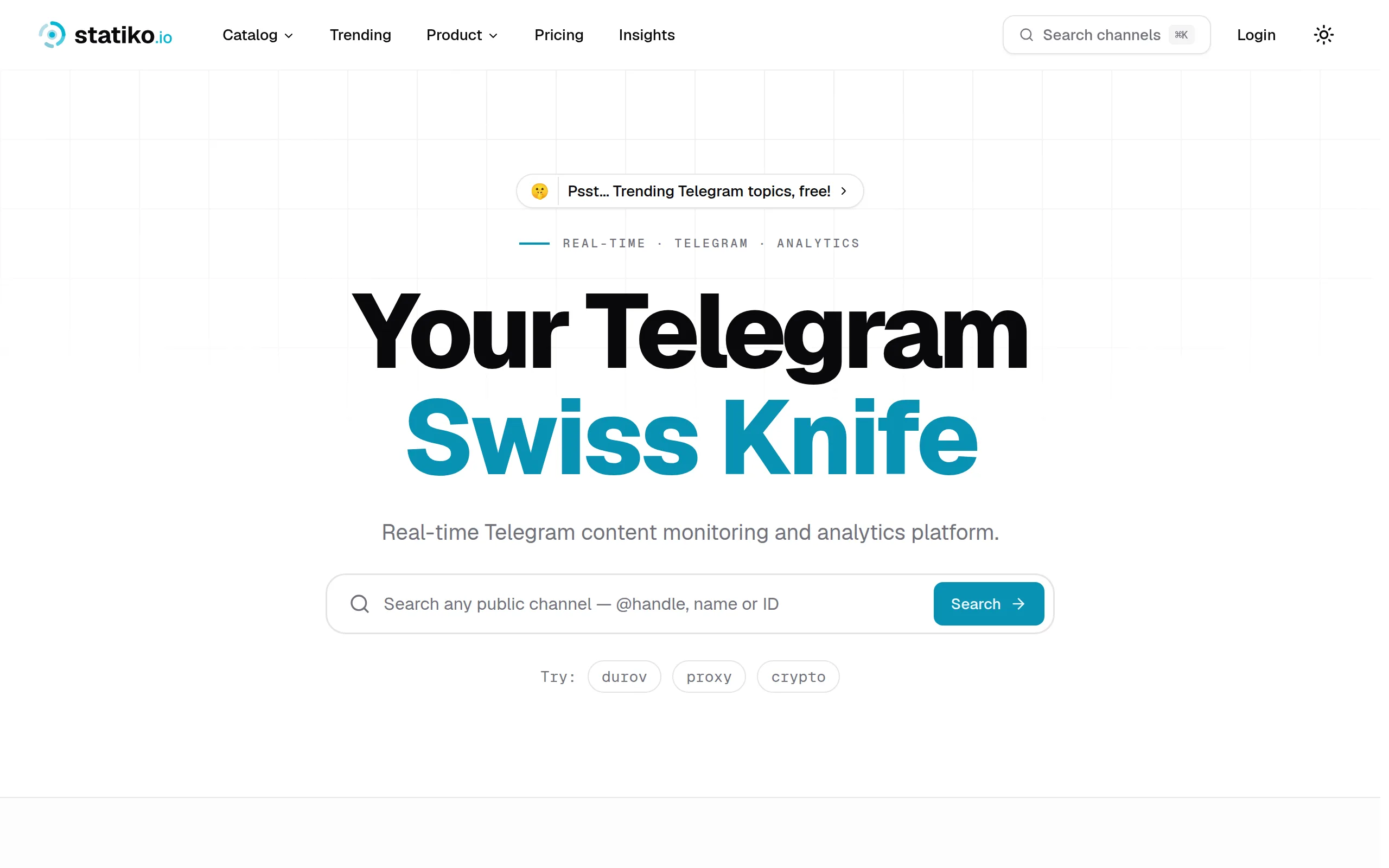
Statiko
Monitor any Telegram channel in real time - track posts, edits, deletions, and growth with AI recaps 📡

Shibui
AI website builder - describe your business, pick a niche template, edit by chatting, and publish instantly ✨

Pro Service
Find verified home service professionals, compare quotes, and pay securely through escrow - built for Brazilians across the US 🏠
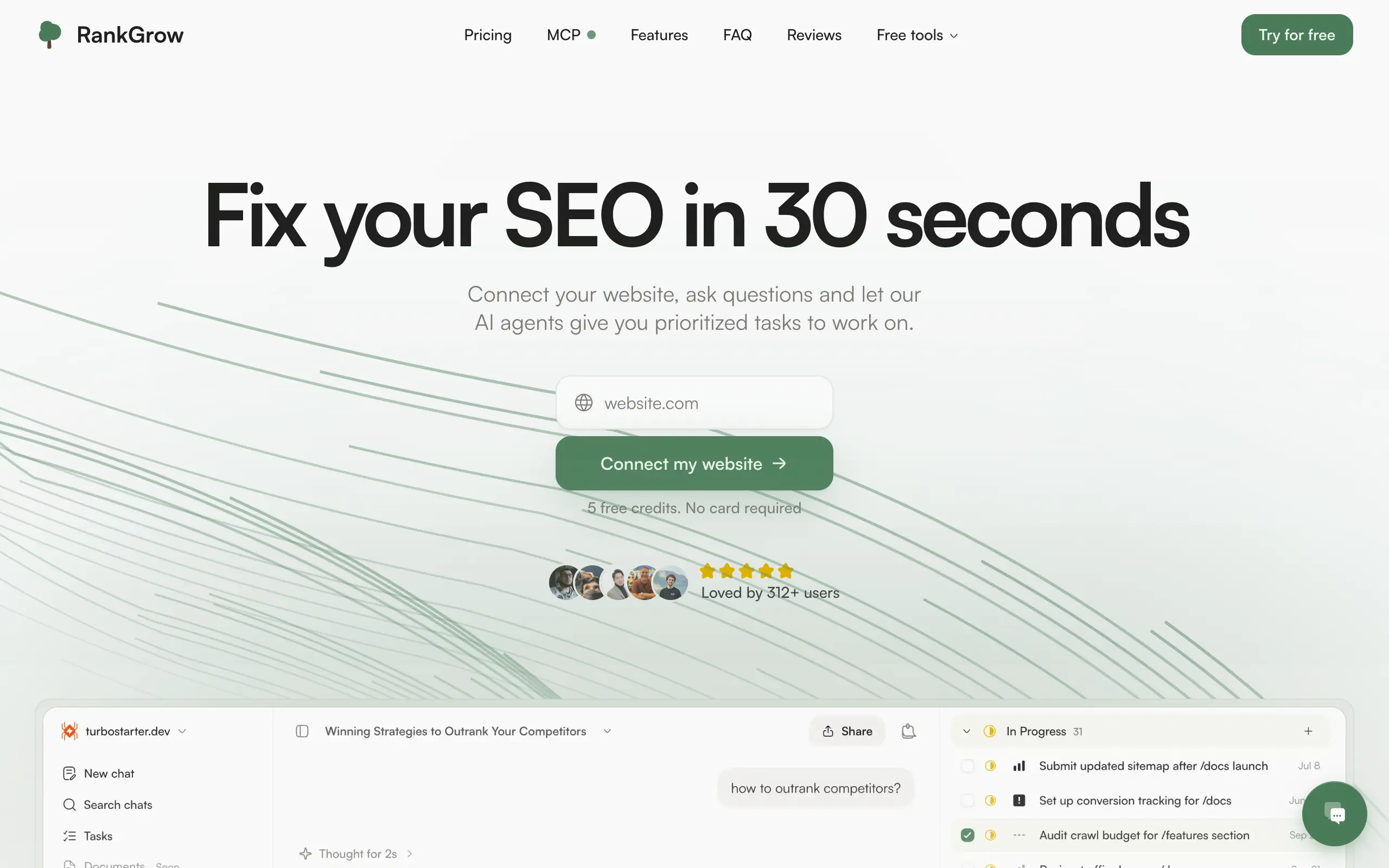
RankGrow
Fix your SEO with AI agents - connect Search Console, get prioritized tasks, and grow organic traffic 📈
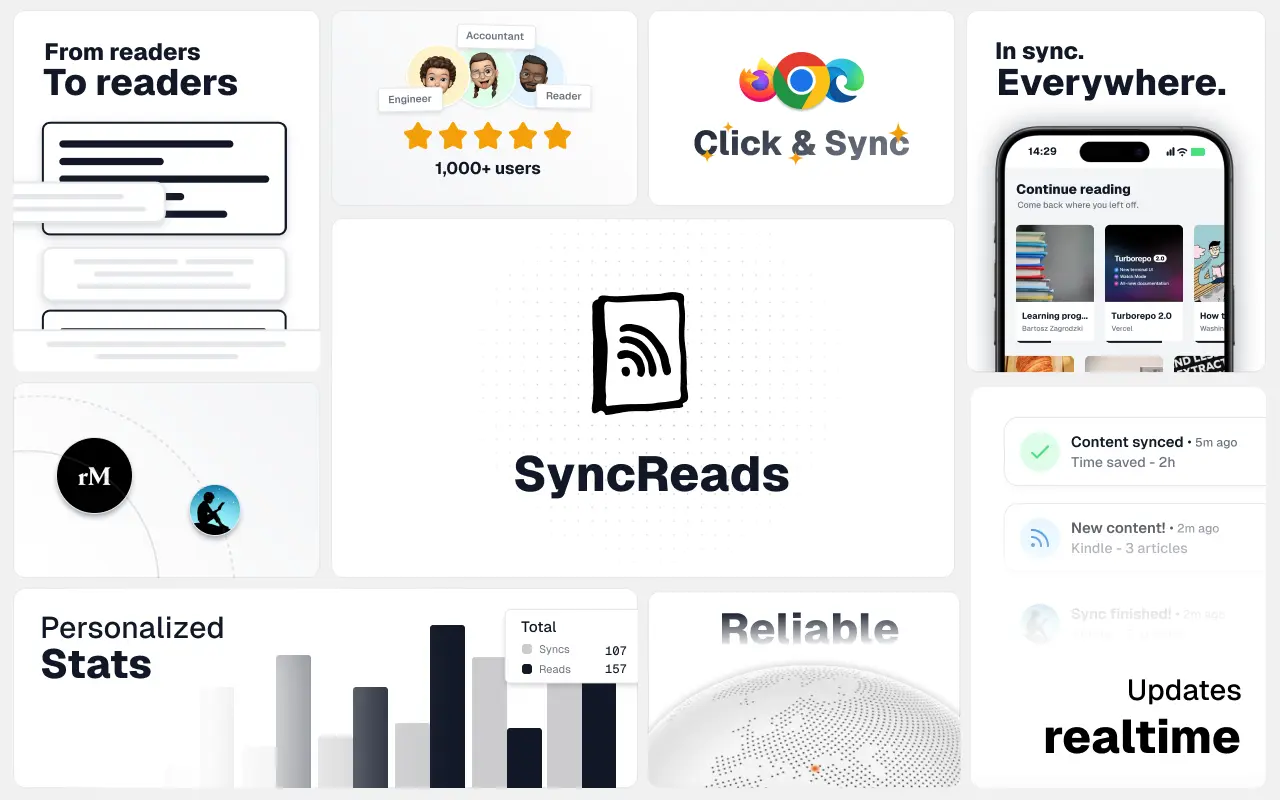
SyncReads
Sync your favorite content for distraction-free reading, save time and replace multiple apps. Anytime, anywhere 🔄
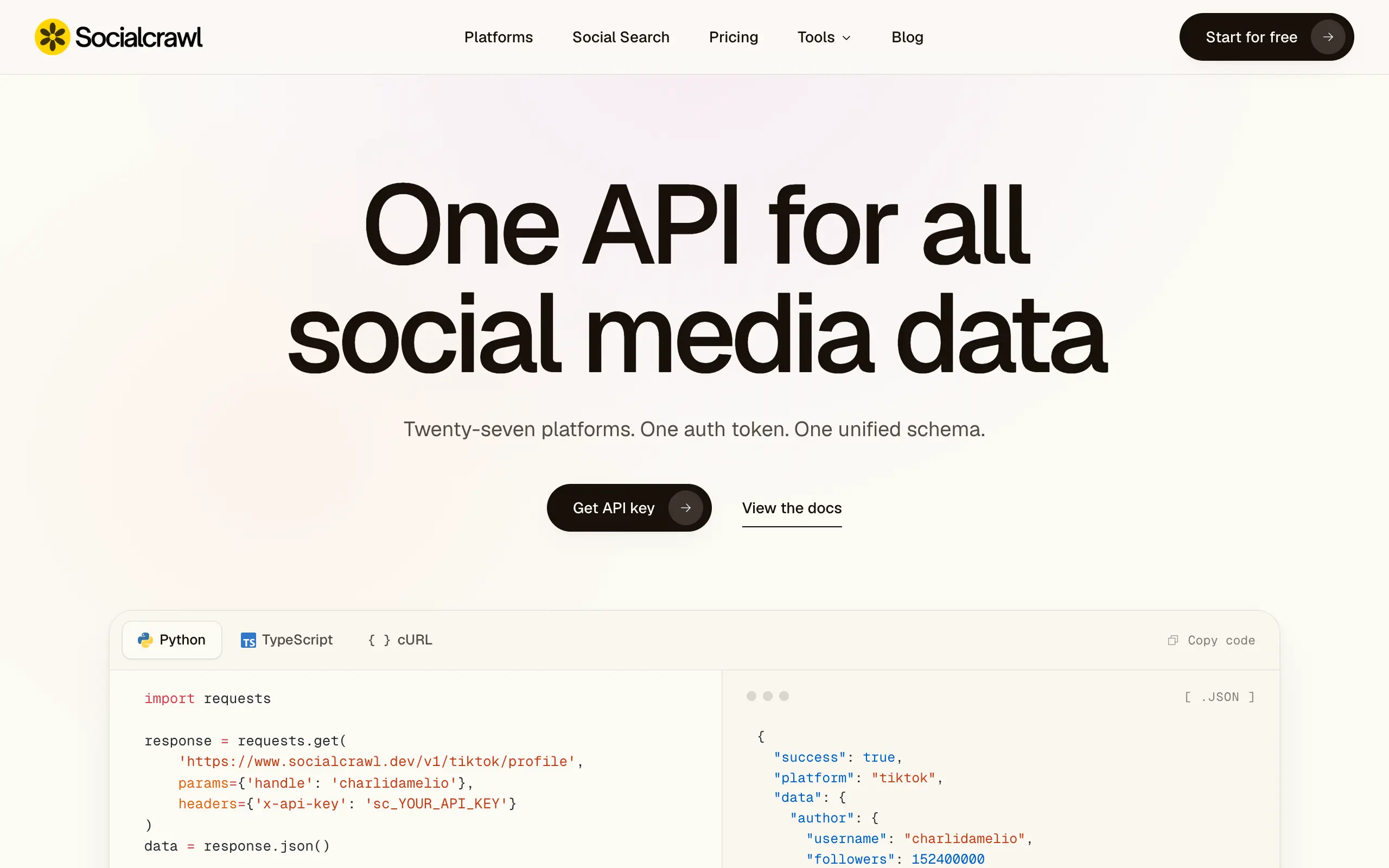
Socialcrawl
Get clean, structured data from 21 platforms like TikTok, Instagram, and YouTube with a single request 📊
Statiko
Monitor any Telegram channel in real time - track posts, edits, deletions, and growth with AI recaps 📡
Shibui
AI website builder - describe your business, pick a niche template, edit by chatting, and publish instantly ✨
Pro Service
Find verified home service professionals, compare quotes, and pay securely through escrow - built for Brazilians across the US 🏠
RankGrow
Fix your SEO with AI agents - connect Search Console, get prioritized tasks, and grow organic traffic 📈
SyncReads
Sync your favorite content for distraction-free reading, save time and replace multiple apps. Anytime, anywhere 🔄
Socialcrawl
Get clean, structured data from 21 platforms like TikTok, Instagram, and YouTube with a single request 📊
Statiko
Monitor any Telegram channel in real time - track posts, edits, deletions, and growth with AI recaps 📡
Shibui
AI website builder - describe your business, pick a niche template, edit by chatting, and publish instantly ✨
Pro Service
Find verified home service professionals, compare quotes, and pay securely through escrow - built for Brazilians across the US 🏠
RankGrow
Fix your SEO with AI agents - connect Search Console, get prioritized tasks, and grow organic traffic 📈
SyncReads
Sync your favorite content for distraction-free reading, save time and replace multiple apps. Anytime, anywhere 🔄
Socialcrawl
Get clean, structured data from 21 platforms like TikTok, Instagram, and YouTube with a single request 📊
Statiko
Monitor any Telegram channel in real time - track posts, edits, deletions, and growth with AI recaps 📡
Shibui
AI website builder - describe your business, pick a niche template, edit by chatting, and publish instantly ✨
Pro Service
Find verified home service professionals, compare quotes, and pay securely through escrow - built for Brazilians across the US 🏠
RankGrow
Fix your SEO with AI agents - connect Search Console, get prioritized tasks, and grow organic traffic 📈
SyncReads
Sync your favorite content for distraction-free reading, save time and replace multiple apps. Anytime, anywhere 🔄
Socialcrawl
Get clean, structured data from 21 platforms like TikTok, Instagram, and YouTube with a single request 📊
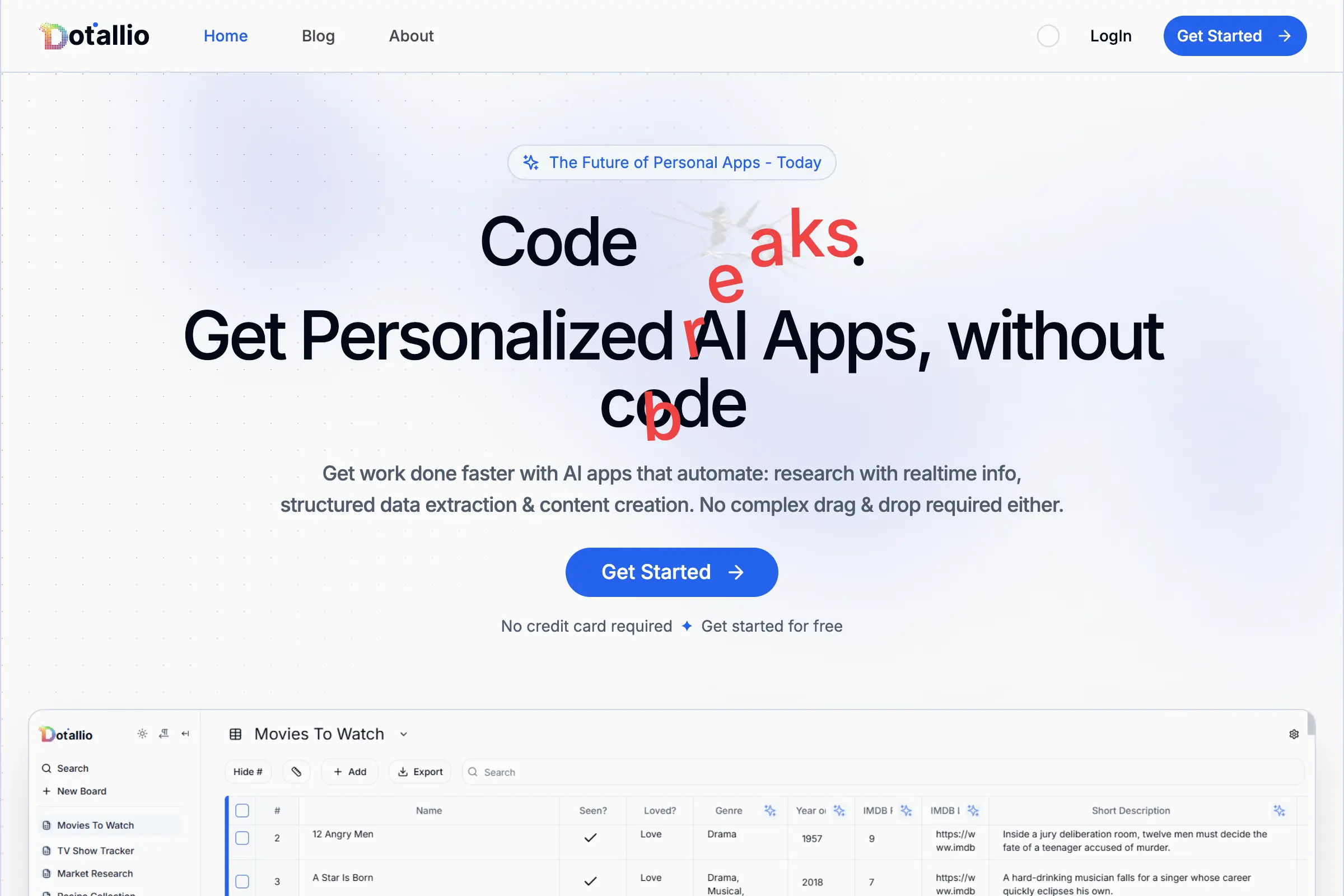
Dotallio
Personalized AI apps that automate research, data extraction, and content creation without code 🤖

Talk to Santa
Enjoy a magical live video chat or receive a unique AI-generated video greeting from Santa Claus 🎅

pozywka.pl
Scalable blog for food journalist, focused on performance and user experience 🌭
zagrodzki.me
Personal blog and portfolio of Bart Zagrodzki, where he shares his knowledge and work 💼
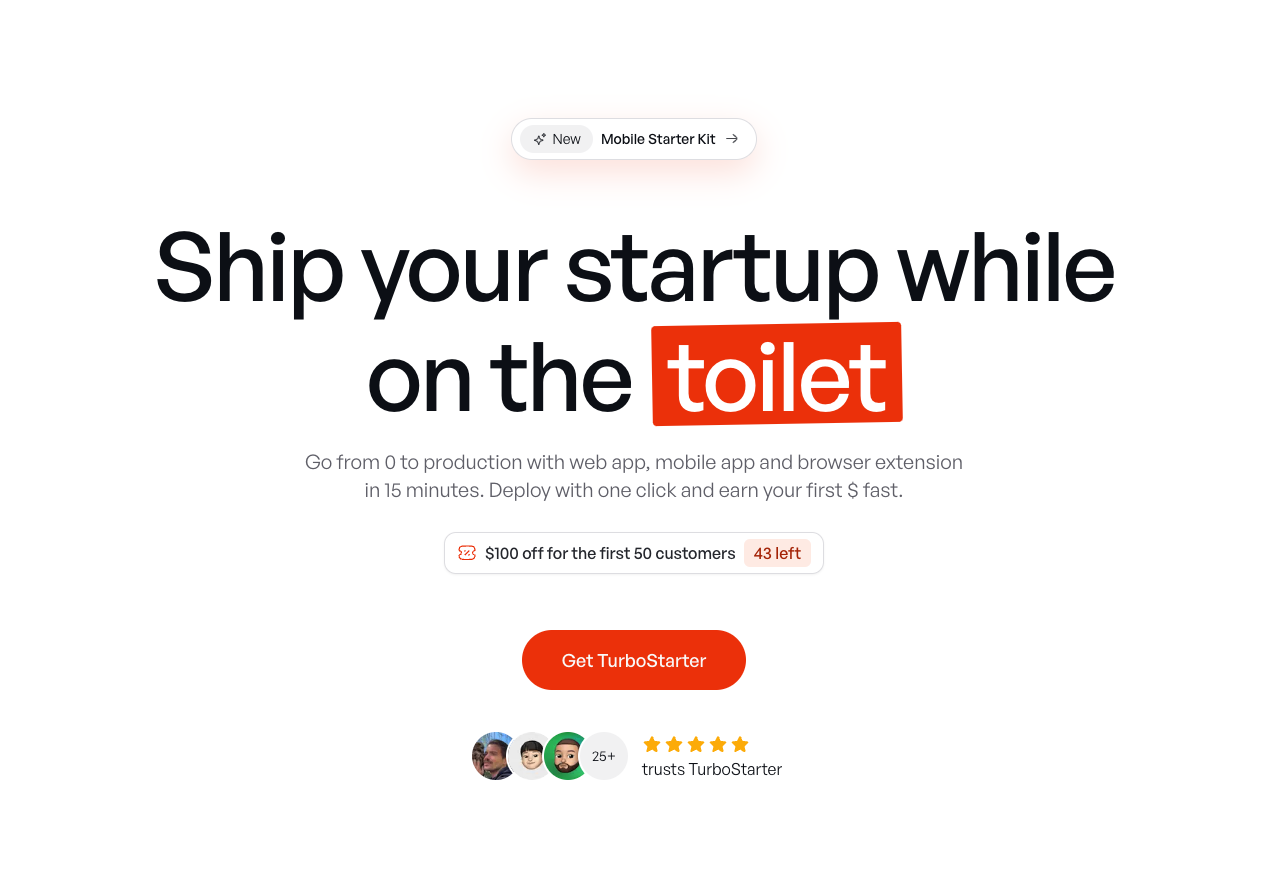
TurboStarter
Ship your startup everywhere. In minutes.
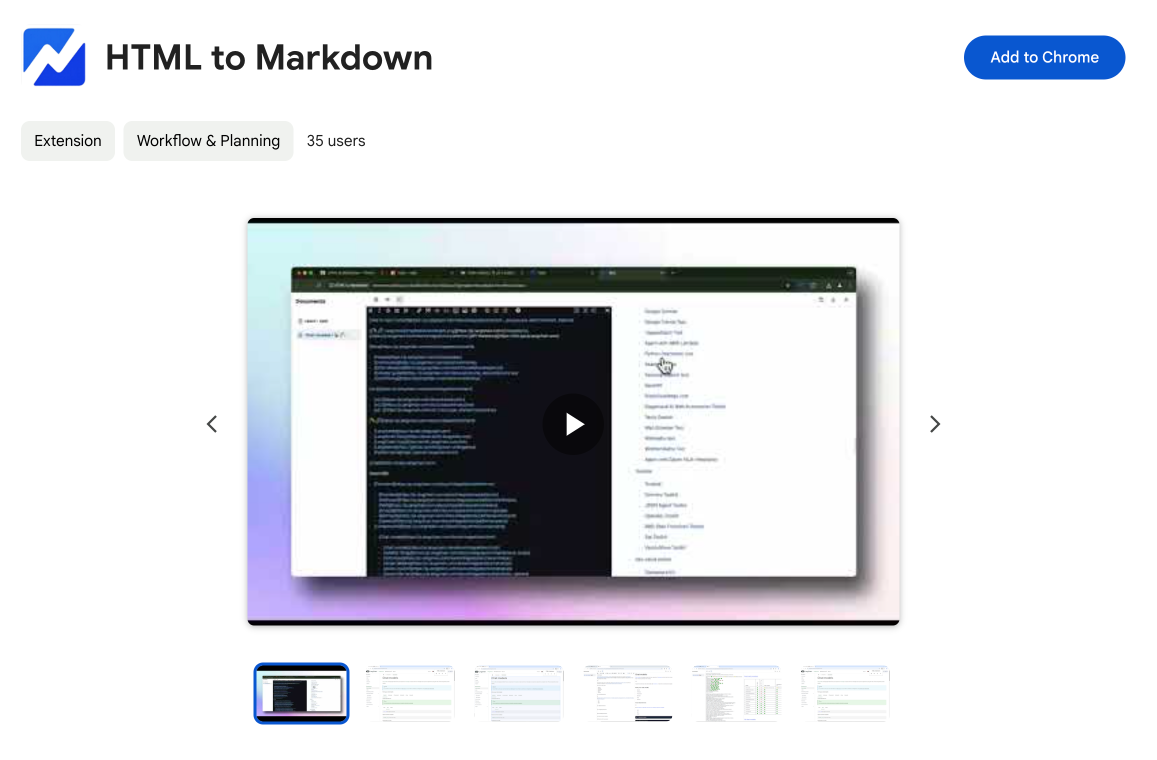
HTML to Markdown
Convert HTML to Markdown with ease, directly in your browser 📄
Dotallio
Personalized AI apps that automate research, data extraction, and content creation without code 🤖
Talk to Santa
Enjoy a magical live video chat or receive a unique AI-generated video greeting from Santa Claus 🎅
pozywka.pl
Scalable blog for food journalist, focused on performance and user experience 🌭
zagrodzki.me
Personal blog and portfolio of Bart Zagrodzki, where he shares his knowledge and work 💼
TurboStarter
Ship your startup everywhere. In minutes.
HTML to Markdown
Convert HTML to Markdown with ease, directly in your browser 📄
Dotallio
Personalized AI apps that automate research, data extraction, and content creation without code 🤖
Talk to Santa
Enjoy a magical live video chat or receive a unique AI-generated video greeting from Santa Claus 🎅
pozywka.pl
Scalable blog for food journalist, focused on performance and user experience 🌭
zagrodzki.me
Personal blog and portfolio of Bart Zagrodzki, where he shares his knowledge and work 💼
TurboStarter
Ship your startup everywhere. In minutes.
HTML to Markdown
Convert HTML to Markdown with ease, directly in your browser 📄
Dotallio
Personalized AI apps that automate research, data extraction, and content creation without code 🤖
Talk to Santa
Enjoy a magical live video chat or receive a unique AI-generated video greeting from Santa Claus 🎅
pozywka.pl
Scalable blog for food journalist, focused on performance and user experience 🌭
zagrodzki.me
Personal blog and portfolio of Bart Zagrodzki, where he shares his knowledge and work 💼
TurboStarter
Ship your startup everywhere. In minutes.
HTML to Markdown
Convert HTML to Markdown with ease, directly in your browser 📄
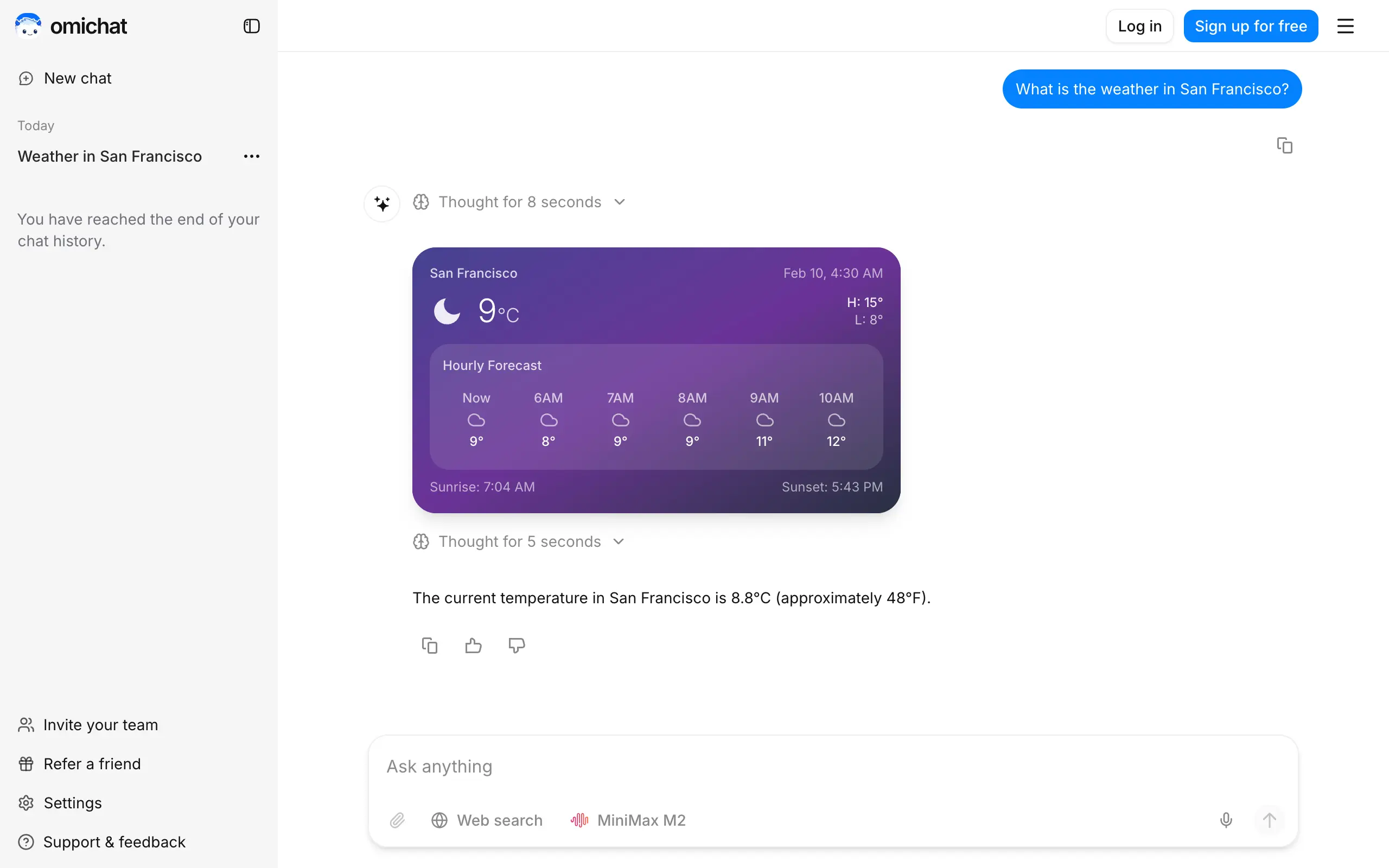
Omichat
Chat with 50+ AI models, including ChatGPT and Claude, in one place - switch models anytime without losing context 🤖
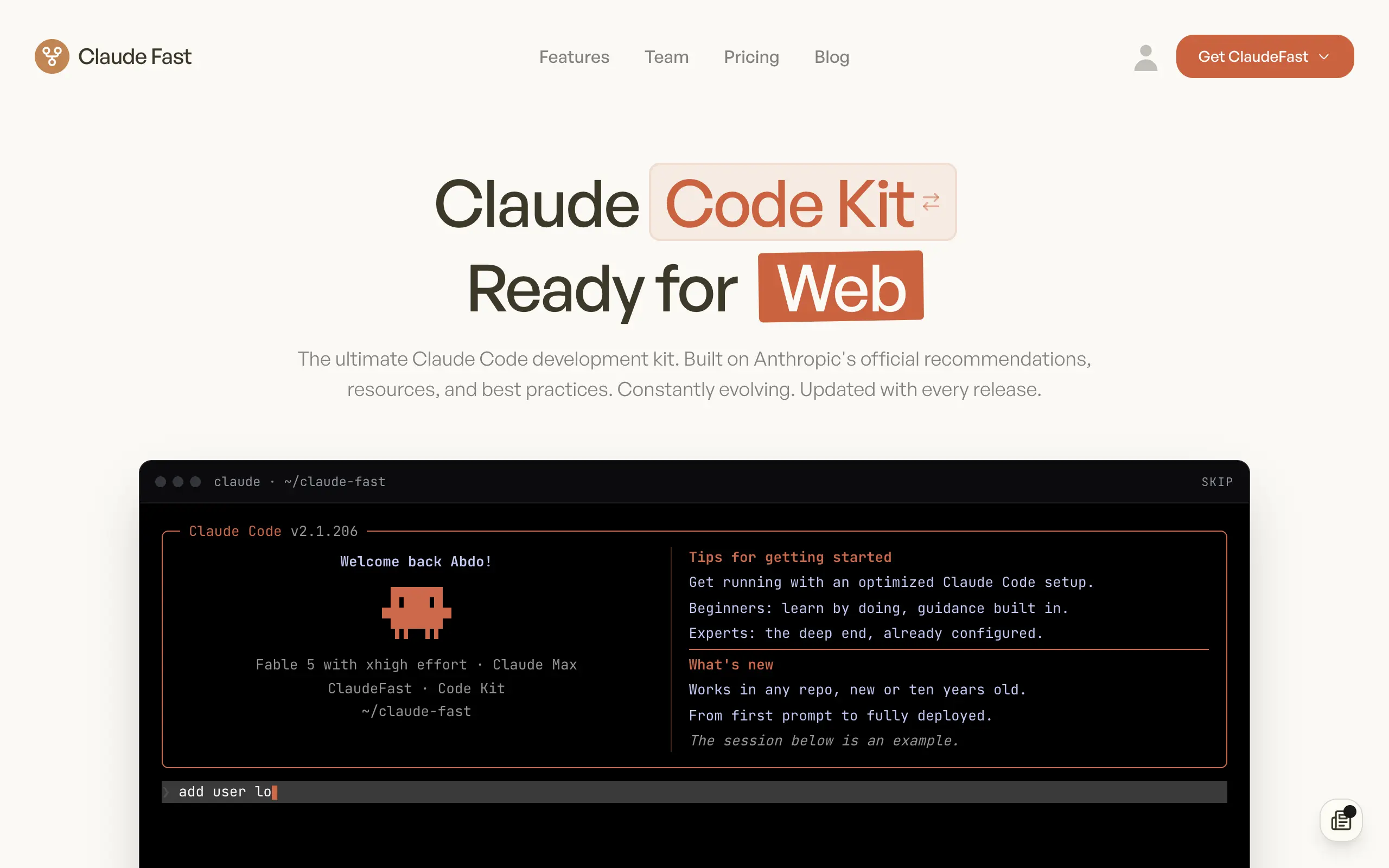
Claude Fast
Supercharge your Claude Code with 6x effective context window and specialized AI agents 🤖
EmojAI
AI-powered emoji picker with smart, context-aware suggestions 🤖
Solohacker
Autonomous company launcher - AI agents work 24/7, escalate what matters, and you stay in control 🤖
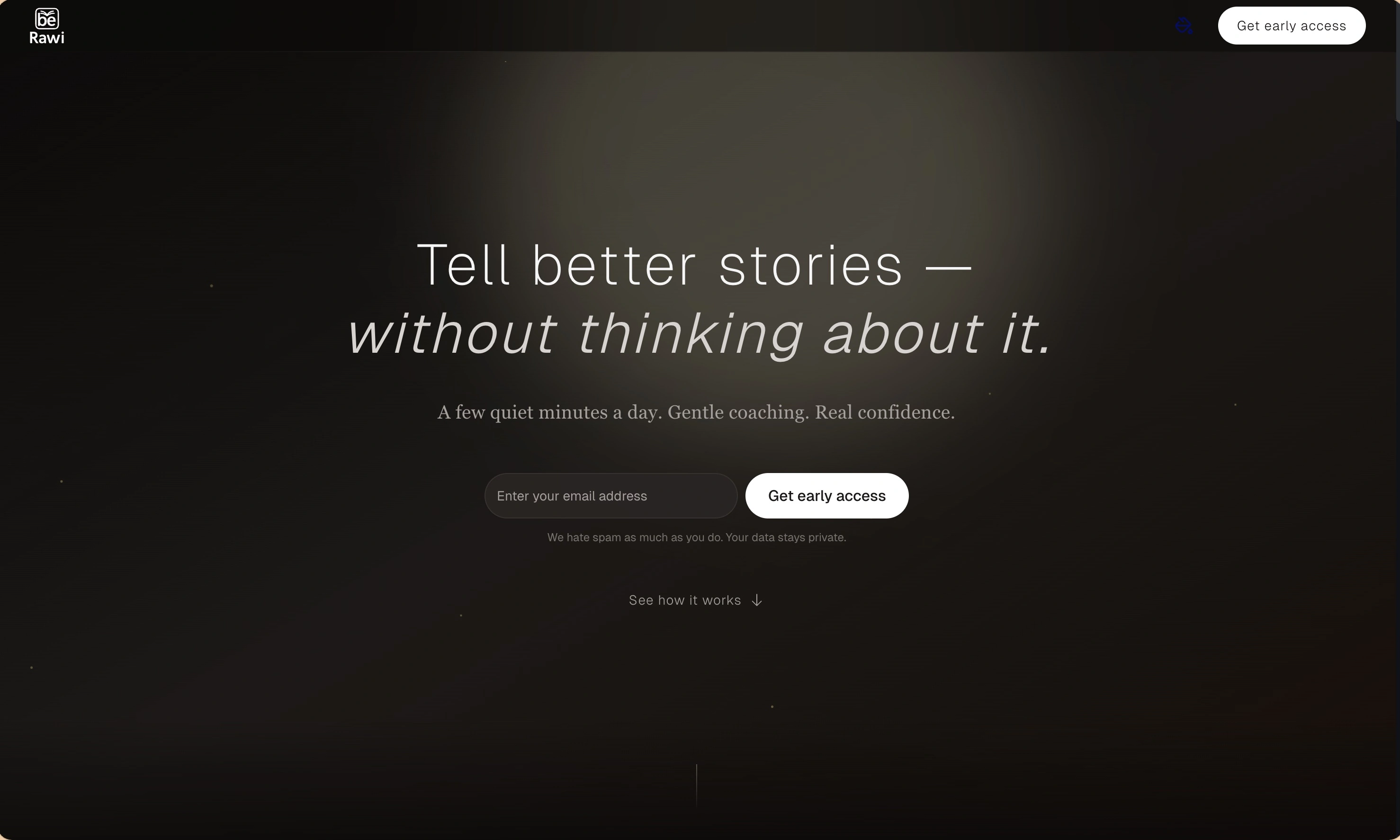
BeRawi: Storytelling Coach
Practice storytelling daily with instant feedback to sound clearer, more engaging, and confident 🎤
Omichat
Chat with 50+ AI models, including ChatGPT and Claude, in one place - switch models anytime without losing context 🤖
Claude Fast
Supercharge your Claude Code with 6x effective context window and specialized AI agents 🤖
EmojAI
AI-powered emoji picker with smart, context-aware suggestions 🤖
Solohacker
Autonomous company launcher - AI agents work 24/7, escalate what matters, and you stay in control 🤖
BeRawi: Storytelling Coach
Practice storytelling daily with instant feedback to sound clearer, more engaging, and confident 🎤
Omichat
Chat with 50+ AI models, including ChatGPT and Claude, in one place - switch models anytime without losing context 🤖
Claude Fast
Supercharge your Claude Code with 6x effective context window and specialized AI agents 🤖
EmojAI
AI-powered emoji picker with smart, context-aware suggestions 🤖
Solohacker
Autonomous company launcher - AI agents work 24/7, escalate what matters, and you stay in control 🤖
BeRawi: Storytelling Coach
Practice storytelling daily with instant feedback to sound clearer, more engaging, and confident 🎤
Omichat
Chat with 50+ AI models, including ChatGPT and Claude, in one place - switch models anytime without losing context 🤖
Claude Fast
Supercharge your Claude Code with 6x effective context window and specialized AI agents 🤖
EmojAI
AI-powered emoji picker with smart, context-aware suggestions 🤖
Solohacker
Autonomous company launcher - AI agents work 24/7, escalate what matters, and you stay in control 🤖
BeRawi: Storytelling Coach
Practice storytelling daily with instant feedback to sound clearer, more engaging, and confident 🎤

Connect with like-minded people
Join our community to get feedback, support, and grow together with 1,000+ builders on board, let's ship it!
Join usShip your startup everywhere. In minutes.
Don't burn tokens on setup and start building features on day one.