QueueCredits
An AI watch-and-play concierge that matches friends’ gaming skills, streaming services, moods, and free time for instant group plans.
QueueCredits solves the group entertainment planning problem
Choosing something to watch or play with friends should be easy. In reality, it often becomes a long thread of messages, multiple app searches, compatibility checks, and compromises that leave someone disengaged.
QueueCredits is an AI watch-and-play concierge designed to turn scattered preferences into an instant group entertainment plan. It matches:
- Friends’ gaming ability and preferred genres
- Available streaming subscriptions
- Current moods and energy levels
- Group size and social dynamics
- Shared free time
- Device and platform compatibility
- Session length and willingness to commit
The core product promise is simple: help groups decide what to watch or play now, with recommendations every participant can actually access and enjoy.
This is more than a generic recommendation engine. Netflix, Steam, Twitch, Discord, console stores, and game launchers each optimize discovery inside their own ecosystems. QueueCredits addresses the missing coordination layer between those ecosystems and the real-world social decision-making process.
For friends who repeatedly spend more time planning entertainment than consuming it, an AI gaming and streaming concierge can create immediate value.
The key product insight
The hardest entertainment recommendation problem is not finding a highly rated game or show. It is finding an option that works for a specific group, at a specific time, with specific access constraints.
Why an AI group entertainment concierge has strong market potential
The market opportunity behind QueueCredits sits at the intersection of several durable behavior shifts:
- Multiplayer gaming has become a mainstream social activity rather than a niche hobby.
- Subscription fragmentation has made it harder to know what each person can watch.
- Remote and hybrid friendships rely more heavily on digital shared experiences.
- Consumers increasingly expect recommendations that reflect context, not only historical preferences.
- Generative AI has made conversational planning interfaces practical for consumer software.
A person may know they want to spend an evening with friends, but that does not mean they know what activity will fit the group. One friend may have only 45 minutes. Another may be a casual player. Someone else may only have a Nintendo Switch, while another uses a PC. Two people may have access to a streaming service that a third does not. A recommendation that ignores even one of these constraints is unlikely to convert into a real plan.
Traditional recommendation products usually answer questions such as:
- “What should I watch?”
- “What game should I buy?”
- “What is trending?”
- “What is similar to something I liked?”
QueueCredits should answer a more valuable question:
“What can all of us watch or play together tonight, given our time, mood, devices, subscriptions, and skill levels?”
That distinction creates a meaningful product wedge. The recommendation is not only about content relevance. It is about social feasibility.
The gap between content discovery and group coordination
Consumers already have many ways to discover content. Search engines, review sites, storefronts, social media platforms, creators, and streaming homepages all compete for that use case. Yet discovery does not solve coordination.
A group plan can fail for many reasons:
- One member does not own the game.
- A title does not support the group’s platform mix.
- A game is too difficult for new players.
- The session requires more time than the group has.
- A streaming title is not included in everyone’s subscriptions.
- The group wants something relaxing, but the recommendation is competitive.
- A game requires setup, downloads, accounts, or tutorials that create friction.
- People cannot agree because every option is presented without a clear rationale.
QueueCredits can reduce this friction by treating a recommendation as a constraint-satisfaction problem combined with a conversational AI experience.
The product should not merely say, “Play this.” It should explain why:
“This cooperative game supports four players across your available platforms, fits a 60-minute session, has a low learning curve, and matches the group’s preference for relaxed teamwork.”
That explanation builds trust and makes the decision feel collaborative rather than algorithmically imposed.
Industry trends that support the idea
Several trends strengthen the timing for an AI entertainment planner:
-
Streaming service fragmentation
Consumers increasingly manage multiple subscriptions, each with its own rotating catalog. A service-aware recommendation layer can save time and reduce subscription waste. -
Cross-platform gaming adoption
More multiplayer games now support cross-play, but determining practical compatibility remains confusing. A platform-aware matching engine can make cross-play discovery substantially easier. -
Social gaming growth
Cooperative, party, and low-commitment games are increasingly important for friend groups, families, and online communities. These users value accessibility as much as depth. -
Conversational interfaces
Users are more comfortable describing intent in natural language, such as “We want a funny movie under two hours” or “Find a low-stress game for three beginners.” -
Decision fatigue
Entertainment abundance has made selection harder. QueueCredits competes against indecision, not only against individual content platforms.
When publishing market-facing content or an investor memo, support broader claims with current sources from organizations such as the Entertainment Software Association, major streaming industry research firms, app intelligence providers, and platform investor reports. Use the latest available reports rather than relying on static historical figures.
Target audience for QueueCredits
QueueCredits should not try to serve every entertainment consumer on day one. The strongest early product-market fit is likely among groups that already coordinate digitally and repeatedly experience planning friction.
Remote friend groups
Friends in different cities who want fast, low-friction ways to watch or play together online.
Casual multiplayer gamers
Players who enjoy games socially but do not want skill mismatches or long onboarding sessions.
Couples and households
People who repeatedly ask what to watch or play and want a shared recommendation workflow.
Online communities
Discord servers, creator communities, and student groups organizing recurring game or movie nights.
Primary persona: the group organizer
The first high-value persona is the person who starts the group chat, creates the Discord event, or asks, “What are we doing tonight?”
This organizer often has the following characteristics:
- They enjoy bringing people together.
- They carry the invisible labor of planning.
- They know some participants have different devices and tastes.
- They want to avoid disappointing the group.
- They need quick answers, not endless browsing.
- They are likely to invite others if the product makes them look organized.
For this user, QueueCredits should function as an intelligent co-host. It removes decision burden while preserving the organizer’s sense of control.
A strong onboarding message might be:
“Tell us who is joining, how long you have, and what kind of night you want. QueueCredits will find options the whole group can access.”
Secondary persona: the casual participant
Casual participants do not necessarily want another profile to manage. Their role should be lightweight.
They may receive an invitation asking them to share:
- Their gaming platforms
- Their streaming subscriptions
- Their preferred genres
- Their comfort level with competitive games
- Their typical availability
- Their mood for the current plan
The product should make this process optional, progressive, and privacy-conscious. A participant can offer minimal information initially, then improve future recommendations over time.
Community and creator persona
Discord moderators, Twitch creators, gaming club leads, and online community managers have a related need. They must select events that maximize attendance and minimize barriers.
QueueCredits could eventually offer a community mode that recommends:
- Games with broad ownership or free-to-play access
- Events appropriate for a range of skill levels
- Watch parties based on common service availability
- Backup options if the first plan fails
- Suggested event descriptions and reminders
This creates a promising business-to-community expansion path after proving the core consumer experience.
How QueueCredits should work
The best QueueCredits experience is not a static catalog. It is a conversational planning workflow that gathers the minimum necessary context, applies hard constraints, then ranks feasible options.
The recommendation flow
A user could open QueueCredits and write:
“Four of us are free for about 90 minutes tonight. Two people have a PS5, one has Xbox, one is on PC. We want something cooperative, not too intense, and one person is new to gaming.”
The AI concierge should translate that message into structured criteria:
- Group size equals four
- Time available equals 90 minutes
- Platforms include PlayStation, Xbox, and PC
- Cross-platform support is required
- Cooperative gameplay is preferred
- Competitive intensity should be low
- New-player accessibility is important
It can then return three or five high-confidence suggestions rather than an overwhelming list.
Each suggestion should include:
- A concise recommendation reason
- Platform support details
- Cross-play or local multiplayer availability
- Approximate setup time
- Expected session fit
- Difficulty and onboarding expectations
- Ownership or subscription requirements
- A vote or “start plan” action
- One backup alternative
For watch plans, the same model applies. A group could ask:
“We have one hour, want something funny, and only use services that everyone already has.”
The system should identify common services first, then rank options that match runtime, genre, rating preferences, and group mood.
Hard constraints versus soft preferences
A reliable AI concierge must distinguish between non-negotiable constraints and flexible preferences.
| Recommendation input | Type | Example | How QueueCredits should use it | User impact |
|---|---|---|---|---|
| Platform compatibility | Hard constraint | PC and Xbox only | Exclude incompatible options | Prevents unusable recommendations |
| Free time | Hard or weighted constraint | 45 minutes tonight | Prioritize fast-start options | Reduces abandoned plans |
| Mood | Soft preference | Relaxed and funny | Rank suitable genres higher | Improves emotional fit |
| Skill level | Weighted group constraint | One beginner joining | Favor accessible onboarding | Protects inclusion |
Hard constraints should be transparent. If no option satisfies every requirement, QueueCredits should say so directly and identify the trade-off.
For example:
“No four-player cross-play cooperative game in your libraries fits all platforms. The closest options are a free-to-play title, a game one member would need to purchase, or a watch-party recommendation.”
This is where trustworthiness matters. The AI should never imply a title is available, compatible, or included in a subscription unless the data source is sufficiently reliable and time-aware.
A credit-based decision system
The name QueueCredits creates an opportunity for a distinctive social mechanic. Each group member could earn or receive “credits” that influence future recommendations.
Credits should not become a manipulative engagement loop. Instead, they can make compromise visible and fair.
Potential uses include:
- A member spends a credit to prioritize a genre they have not selected recently.
- Users earn a credit when they accept a group pick outside their normal preference range.
- Groups can allocate credits for “my pick” nights.
- A host can use credits to unlock curated themed plans.
- A group history can show whose preferences have been prioritized recently.
The system should make fairness explicit:
“Jordan’s preferences have not been selected in the last four sessions. This recommendation gives their comedy preference additional weight.”
This becomes an emotional differentiator. QueueCredits is not only choosing entertainment; it is helping groups balance preferences without awkward negotiation.
Core features for an MVP
A successful minimum viable product should focus on validating the central behavior: can QueueCredits turn planning friction into completed group entertainment sessions?
The MVP does not need every platform integration, social graph feature, or advanced AI capability. It needs a fast path from intent to an actionable group plan.
Essential QueueCredits MVP features
-
Group creation and invitations
Let a user create a private group and invite friends by link, email, or supported community platform. -
Simple preference profiles
Capture platforms, available subscription services, favored genres, skill level, content limits, and general availability. -
Natural-language planning prompt
Enable users to describe the group’s needs conversationally. -
Structured plan filters
Include controls for group size, time window, content type, mood, platforms, budget, and accessibility needs. -
Recommendation cards with rationale
Explain why each recommendation fits and what trade-offs exist. -
Voting and consensus tools
Give groups a lightweight way to choose without endless messages. -
Availability and compatibility checks
Display what each participant needs before the session can begin. -
Saved plans and feedback loops
Allow groups to rate whether a recommendation worked, was too difficult, took too long to start, or did not match the mood. -
Fallback recommendations
Offer a backup plan if a game update, content availability issue, or participant dropout changes the situation.
Features to defer until product-market fit
Avoid overbuilding before validating repeated usage. The following features are valuable but should come later:
- Deep game library syncing from every storefront
- Automatic calendar integrations
- Voice-based concierge workflows
- Full Discord bot functionality
- Advanced creator dashboards
- Real-time group mood analysis
- Cross-service watch-party playback controls
- Social feeds and public profiles
- Marketplace partnerships
A narrow and excellent “what should our group do tonight?” flow is more valuable than a broad but confusing entertainment dashboard.
The AI recommendation engine and data strategy
QueueCredits needs more than a large language model. An LLM is useful for interpreting natural-language requests and generating clear explanations, but it should not be the sole source of truth for availability, pricing, game modes, platform support, or streaming catalogs.
A robust architecture combines structured data, rules, ranking models, and generative AI.
Recommended recommendation architecture
The core system can be designed in four layers:
-
Data normalization layer
Collect and normalize metadata on games, shows, movies, platforms, multiplayer modes, runtime, genres, ratings, subscription availability, and access requirements. -
Constraint engine
Filter out options that do not satisfy non-negotiable conditions such as group size, device compatibility, content restrictions, or available time. -
Ranking layer
Score remaining options based on preference match, novelty, skill fit, session fit, fairness, setup friction, and likelihood of group acceptance. -
AI concierge layer
Use an LLM to ask clarifying questions, interpret ambiguous intent, explain results, and adapt recommendations through dialogue.
This division reduces hallucination risk. The AI model should formulate an answer from verified candidate data rather than inventing titles, platform support, or service availability.
A practical ranking formula
A simple early-stage scoring model can be effective:
type RecommendationScore = {
  compatibility: number;
  timeFit: number;
  moodFit: number;
  skillBalance: number;
  accessFit: number;
  setupEase: number;
  fairness: number;
  novelty: number;
};

export function scoreRecommendation(score: RecommendationScore) {
  return (
    score.compatibility * 0.28 +
    score.accessFit * 0.18 +
    score.timeFit * 0.15 +
    score.skillBalance * 0.12 +
    score.moodFit * 0.1 +
    score.setupEase * 0.07 +
    score.fairness * 0.06 +
    score.novelty * 0.04
  );
}
The weights should change based on user feedback and observed behavior. For example, compatibility and access should remain highly weighted because a perfect genre match is irrelevant if half the group cannot join.
Trust and data freshness requirements
Streaming catalogs, game pricing, free-to-play status, platform support, and subscription availability can change frequently. QueueCredits must communicate confidence levels and refresh timestamps where appropriate.
Good product language includes:
- “Available based on the latest catalog check”
- “Cross-play support may require linked accounts”
- “Included with your selected service according to our most recent data”
- “Confirm local availability before starting”
- “This option requires one friend to install the game first”
Avoid absolute claims when data is volatile. This protects user trust and reduces support issues.
Recommended tech stack for QueueCredits
QueueCredits is a modern consumer SaaS application with AI orchestration, group collaboration, structured content data, and potentially real-time updates. The technical stack should prioritize speed of iteration, reliable authentication, flexible data modeling, and observability.
Frontend and application framework
A strong starting point is Next.js with React and TypeScript.
This combination is well suited for QueueCredits because it supports:
- Fast development of responsive web experiences
- Server-rendered pages for discoverability and performance
- API routes or server actions for backend workflows
- Strong TypeScript safety for recommendation data models
- Mature authentication and deployment ecosystem
- Easy integration with AI APIs and databases
Use Tailwind CSS for a fast, consistent design system. The product will need dense but approachable UI elements such as group cards, compatibility badges, voting states, recommendation explanations, and onboarding forms. Utility-first styling can help the team iterate quickly.
Database and backend services
PostgreSQL is an excellent primary database for users, groups, preferences, plans, votes, recommendation events, and subscription metadata.
For an early product, consider a managed PostgreSQL provider and an ORM such as Prisma. The benefits include:
- Strong relational modeling for group membership and permissions
- Flexible querying for filters and user preferences
- Reliable transactions for credits, votes, and plan state
- Familiar tooling for most SaaS engineering teams
Use a vector search capability only when it offers a concrete benefit. Semantic search can help match vague prompts to titles, genres, or game mechanics, but it should complement structured filters rather than replace them.
AI stack
QueueCredits should use AI through a provider abstraction, allowing the team to change models as quality, cost, and privacy needs evolve.
The AI layer should support:
- Intent extraction from user prompts
- Clarifying-question generation
- Recommendation explanation
- Group-plan summaries
- Safety filtering for age-restricted or sensitive content
- Feedback classification
The trade-off is important. A more capable model may improve conversation quality but increase latency and cost. An MVP should use smaller, faster models for routine extraction and reserve more expensive models for complex planning prompts.
Authentication, payments, and product analytics
Use secure authentication with social sign-in where possible, since a consumer social product benefits from reducing registration friction. Support email-based login as a fallback.
For billing, Stripe is a practical option for subscriptions, trials, and account management.
For product analytics, measure the journey from plan creation to completed activity. Avoid vanity metrics such as raw signups without understanding whether users actually resolve a group decision.
Important events include:
- Group created
- Invite sent
- Invite accepted
- Preference profile completed
- Planning prompt submitted
- Recommendation viewed
- Recommendation voted on
- Plan confirmed
- Activity completed
- Recommendation rated
- Group returns for another session
Why TurboStarter can accelerate the build
The early-stage challenge is not only writing code. It is shipping a polished SaaS foundation with authentication, billing, application structure, emails, dashboards, and operational essentials already considered.
TurboStarter can help founders move faster by providing a production-oriented starting point for SaaS development. That allows the QueueCredits team to spend more of its time on the differentiating product logic: group matching, availability constraints, recommendation quality, and social planning workflows.
Monetization options for an AI gaming and streaming concierge
QueueCredits should initially optimize for recurring group utility, not aggressive paywalls. If the free experience cannot reliably help people make plans, premium features will not matter.
A freemium model is likely the strongest starting point.
Free plan
The free tier can include:
- A limited number of group plans per month
- Basic game and watch recommendations
- Standard preference profiles
- Voting features
- A small number of saved groups
- Basic recommendation explanations
The goal is to make first-time group coordination successful and shareable.
Premium individual plan
A paid individual plan could include:
- Unlimited planning sessions
- Advanced filters and mood matching
- Calendar-aware suggestions
- Deeper personalization
- Priority access to new integrations
- Personal entertainment history insights
- Better backup plan generation
- Expanded group size limits
Group subscription
A group plan may be more aligned with the product’s collaborative value. One organizer can pay for enhanced features shared by a recurring friend group, household, club, or community.
Potential group features include:
- Unlimited members
- Shared preference insights
- Recurring game night recommendations
- Shared decision history
- Custom group rules
- Fairness and credit mechanics
- Event templates
- Premium concierge modes
Affiliate and partner revenue
Affiliate revenue may eventually be relevant, particularly for game purchases, subscriptions, rentals, and hardware. However, this model introduces a significant trust risk.
If QueueCredits earns more from a certain provider or title, users may question whether recommendations are truly in their best interest. The product should clearly disclose sponsored placements and keep paid results separate from organic recommendations.
A trustworthy rule is:
Recommendations should be ranked by user fit first. Commercial relationships must never silently override compatibility or relevance.
Competitive advantage and unique selling proposition
QueueCredits will compete indirectly with streaming platforms, game storefronts, Discord, recommendation websites, group chats, AI assistants, and social planning tools. Its advantage is not that competitors lack content catalogs. Its advantage is that they are not purpose-built for cross-platform group decision-making.
QueueCredits’ unique selling proposition
QueueCredits helps groups instantly choose something they can all watch or play, based on real-world compatibility, shared time, mood, access, and skill level.
That positioning contains several defensible elements:
- It is group-native rather than individual-first.
- It spans both games and watchable entertainment.
- It incorporates actual access constraints.
- It optimizes for completed plans, not browsing time.
- It uses transparent recommendation reasoning.
- It can build a proprietary graph of group preferences and successful sessions.
- It introduces fairness mechanics through credits and group history.
The most valuable long-term data asset is not a generic list of titles. It is the anonymized behavioral understanding of what combinations of people, time limits, moods, skill ranges, and access conditions lead to a successful shared session.
Competitive comparison
Streaming platforms know viewing behavior within their own service, but they generally do not know whether everyone in a group has access, how much time the group has, or whether the group wants to switch from watching to playing.
Game storefronts can recommend games based on purchases and tags, but they do not reliably solve for mixed platforms, beginner inclusion, current group availability, or shared decision-making.
A general AI assistant can brainstorm titles, but QueueCredits can become more useful by grounding its responses in structured compatibility data, persistent group profiles, voting behavior, and verified access details.
Key risks and how to mitigate them
Like any AI SaaS product, QueueCredits faces important technical, commercial, and product risks. Identifying them early makes the concept more credible and easier to execute.
Data licensing and availability risk
The product depends on accurate metadata for games, shows, movies, platforms, and subscriptions. Some data sources may have licensing restrictions, rate limits, incomplete coverage, or changing terms.
Mitigation strategies include:
- Start with a limited, high-quality catalog rather than claiming universal coverage.
- Use permitted APIs and licensed data sources where required.
- Build internal normalization tools that can accept multiple data feeds.
- Store freshness timestamps and source confidence.
- Let users report incorrect availability or compatibility.
- Design a fallback experience when a data source is unavailable.
AI hallucination risk
An LLM may invent a title, overstate compatibility, or make an unsupported availability claim.
Mitigation strategies include:
- Generate recommendations only from a verified candidate set.
- Use structured outputs for constraints and recommendation objects.
- Require a source-backed data field for factual claims.
- Separate conversational language generation from catalog truth.
- Test adversarial prompts and ambiguous scenarios.
- Include clear uncertainty messaging when needed.
Cold-start risk
A new user may not have enough preference data to receive a great recommendation.
Mitigation strategies include:
- Ask a short set of high-signal onboarding questions.
- Use current-session intent heavily.
- Offer starter group templates such as “casual co-op night” or “funny movie under two hours.”
- Let users import or quickly select favorite genres and platforms.
- Make feedback lightweight after every plan.
Social coordination risk
Even a good recommendation may not overcome friends who do not respond to invites or who have conflicting schedules.
Mitigation strategies include:
- Keep participant onboarding optional.
- Offer anonymous or lightweight voting.
- Create a “best available now” mode for whoever is online.
- Support backup options when attendance changes.
- Add recurring plan workflows only after validating the core use case.
Privacy risk
Subscription details, gaming platforms, availability, and preferences can feel personal. QueueCredits should avoid collecting more than necessary.
Mitigation strategies include:
- Use clear permission controls.
- Let users choose which details are visible to group members.
- Make profile data editable and deletable.
- Explain why each data point improves recommendations.
- Avoid using private activity data for advertising without explicit consent.
- Publish accessible privacy and data retention policies before scaling.
A practical implementation roadmap
The fastest route to validation is to build a focused product that handles one repeated planning moment exceptionally well.
Metrics that matter in the first six months
QueueCredits should track outcomes, not just engagement.
The most important early metrics include:
-
Plan completion rate
The percentage of planning sessions that result in a confirmed activity. -
Time to decision
How long it takes a group to move from prompt to selected plan. -
Recommendation acceptance rate
The share of recommended options that receive enough votes to move forward. -
Session satisfaction
Whether users felt the selected game or watch option fit the group. -
Repeat group usage
Whether the same group returns for another plan within seven, 14, or 30 days. -
Invite conversion
The percentage of invited friends who add enough profile information to improve future recommendations. -
Failure reason distribution
Whether plans fail because of availability, cost, setup friction, skill mismatch, content mismatch, or scheduling.
A useful north-star metric could be:
Successful group entertainment sessions facilitated per active group per month.
This metric aligns the product team with the real outcome QueueCredits promises.
Final recommendations for launching QueueCredits
QueueCredits has a compelling opportunity because it addresses a familiar and frustrating problem: groups have plenty of entertainment options but no efficient way to find the option that works for everyone right now.
The winning version of this AI concierge will not be the one with the longest list of titles. It will be the one that users trust to make a practical, inclusive, and enjoyable decision quickly.
To create that experience, focus on these principles:
- Build for groups, not isolated individuals.
- Treat compatibility and access as first-class recommendation inputs.
- Use AI for conversation and explanation, not unverified factual claims.
- Make trade-offs visible when no perfect recommendation exists.
- Optimize for completed plans rather than endless discovery.
- Keep profiles lightweight and privacy-respecting.
- Use feedback from real group sessions to improve the recommendation model.
- Establish QueueCredits as the neutral, fair facilitator in group entertainment decisions.
Start with a narrow gaming coordination use case, prove repeat usage, then expand into watch parties, household recommendations, recurring community events, and deeper platform integrations. That sequencing gives QueueCredits a clear path from useful AI recommendation tool to an indispensable social entertainment layer.
More 🤖 AI Startup SaaS ideas
Discover more innovative ai startup SaaS ideas that are trending in 2026. Each idea is AI-generated with market validation and growth potential to help you find your next profitable venture faster than competitors.
Your competitors are building with TurboStarter
Below are some of the SaaS ideas that have been generated and built with our starter kit.
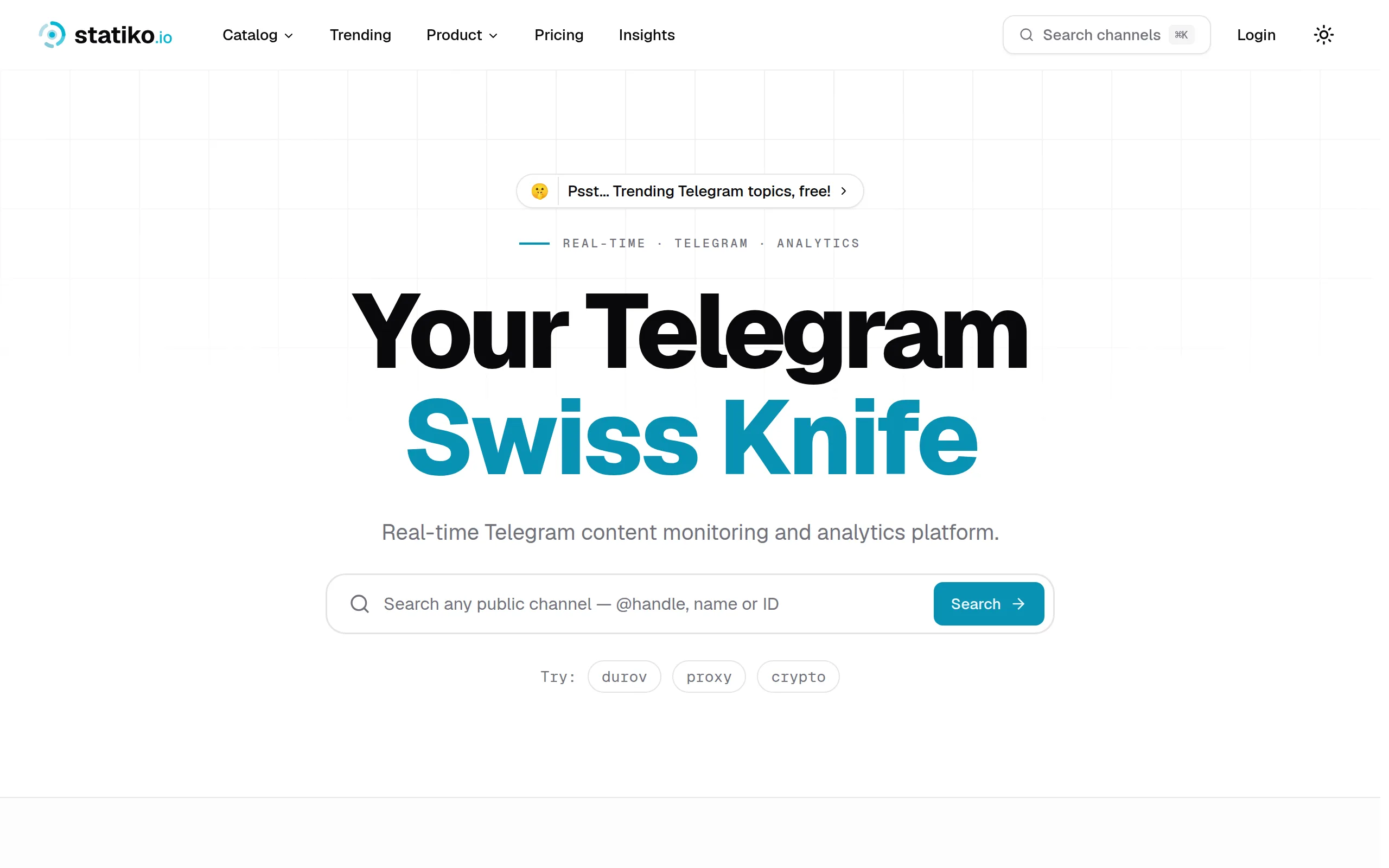
Statiko
Monitor any Telegram channel in real time - track posts, edits, deletions, and growth with AI recaps 📡

Shibui
AI website builder - describe your business, pick a niche template, edit by chatting, and publish instantly ✨

Pro Service
Find verified home service professionals, compare quotes, and pay securely through escrow - built for Brazilians across the US 🏠
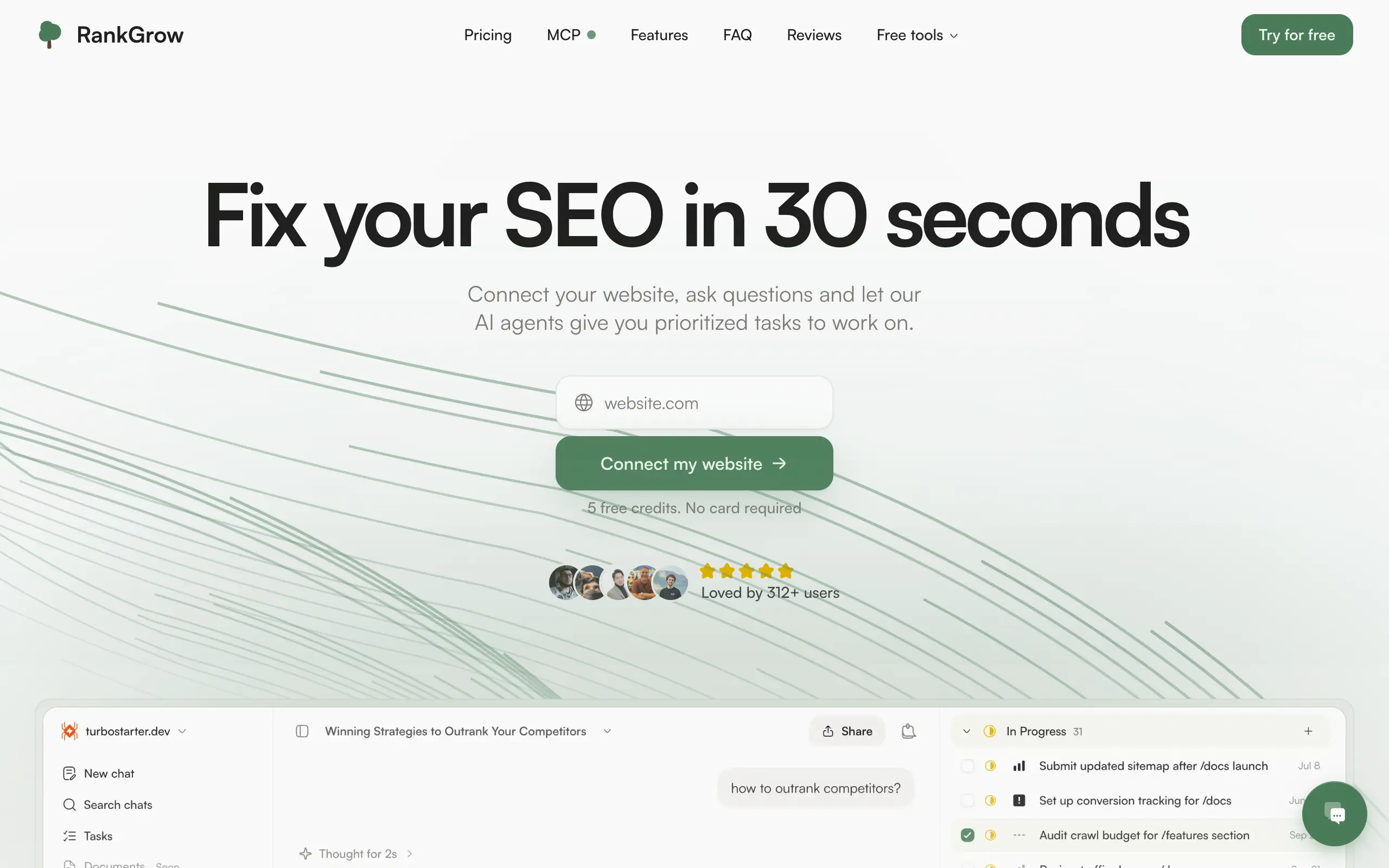
RankGrow
Fix your SEO with AI agents - connect Search Console, get prioritized tasks, and grow organic traffic 📈
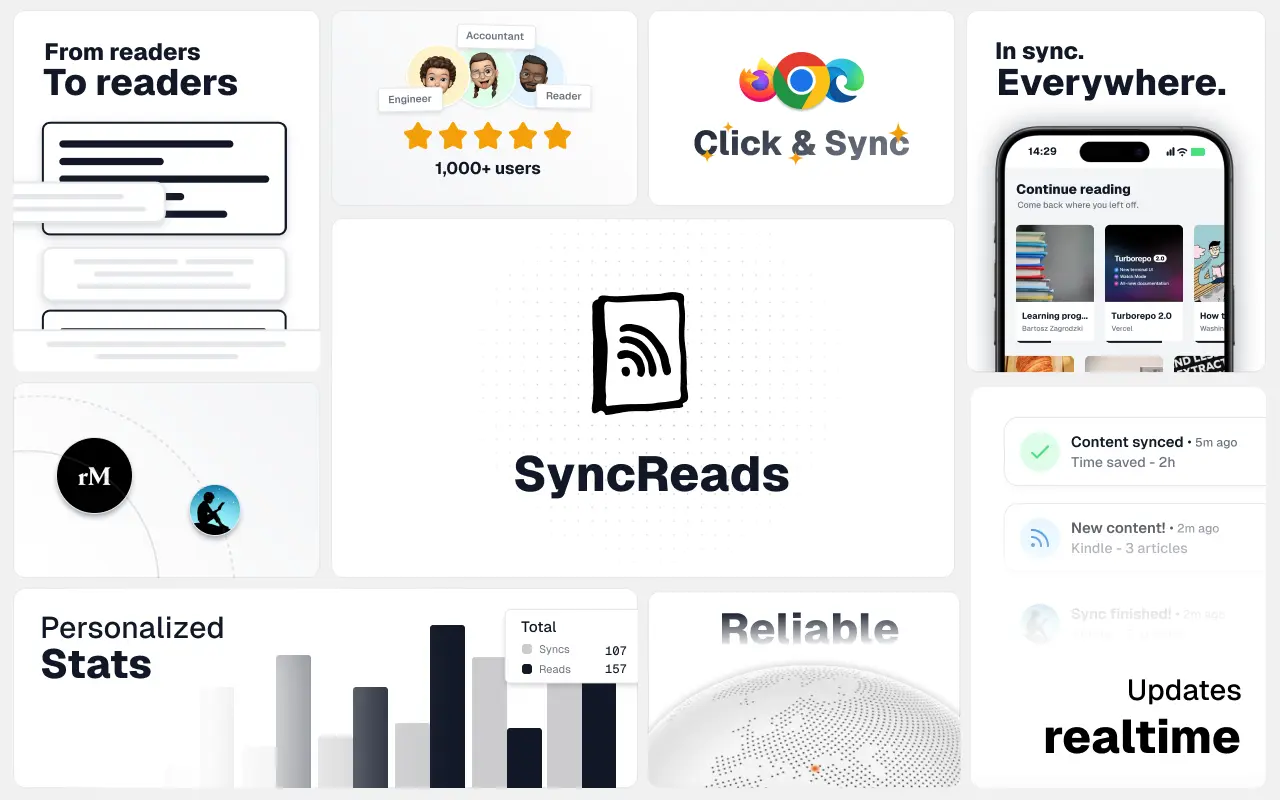
SyncReads
Sync your favorite content for distraction-free reading, save time and replace multiple apps. Anytime, anywhere 🔄
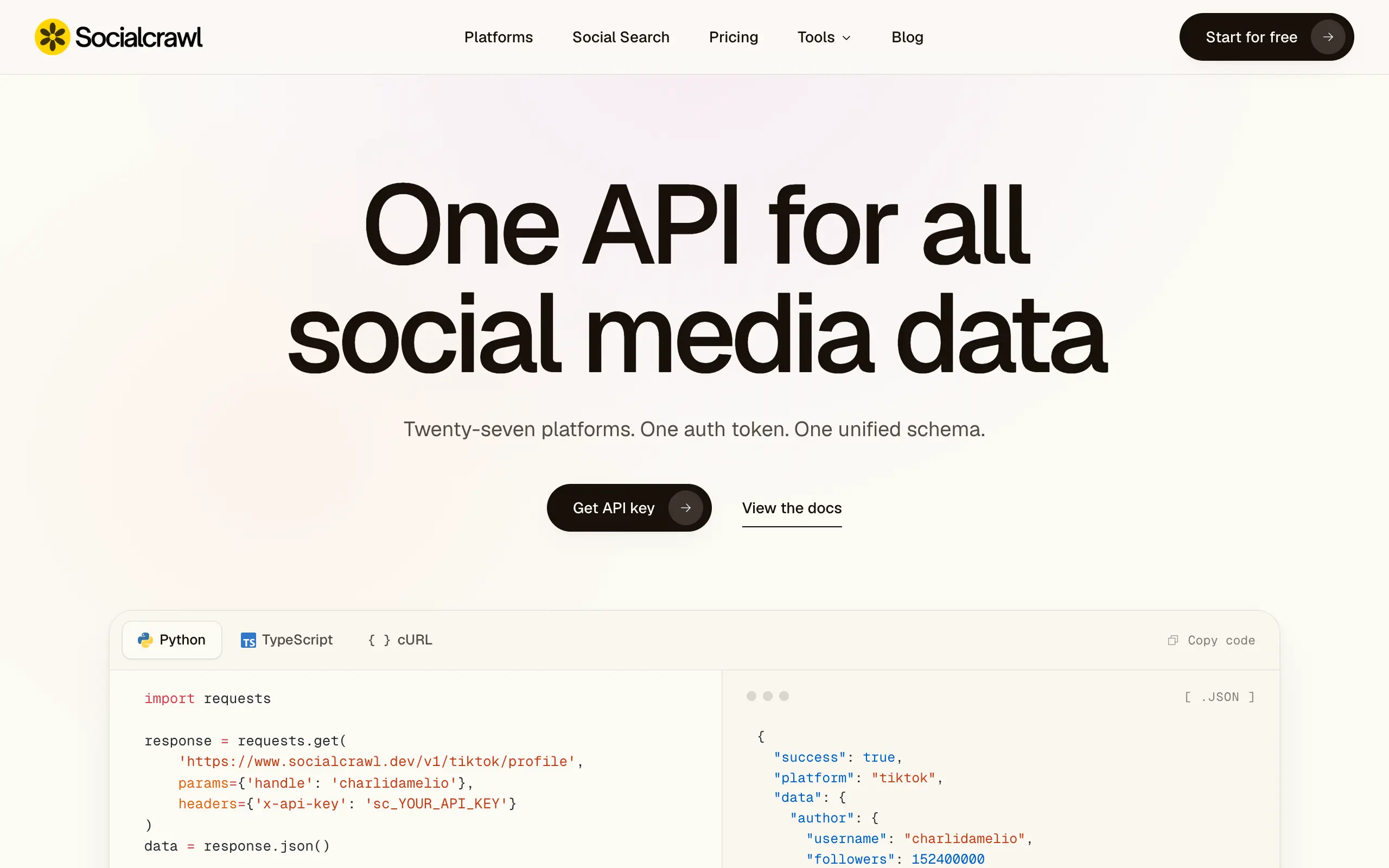
Socialcrawl
Get clean, structured data from 21 platforms like TikTok, Instagram, and YouTube with a single request 📊
Statiko
Monitor any Telegram channel in real time - track posts, edits, deletions, and growth with AI recaps 📡
Shibui
AI website builder - describe your business, pick a niche template, edit by chatting, and publish instantly ✨
Pro Service
Find verified home service professionals, compare quotes, and pay securely through escrow - built for Brazilians across the US 🏠
RankGrow
Fix your SEO with AI agents - connect Search Console, get prioritized tasks, and grow organic traffic 📈
SyncReads
Sync your favorite content for distraction-free reading, save time and replace multiple apps. Anytime, anywhere 🔄
Socialcrawl
Get clean, structured data from 21 platforms like TikTok, Instagram, and YouTube with a single request 📊
Statiko
Monitor any Telegram channel in real time - track posts, edits, deletions, and growth with AI recaps 📡
Shibui
AI website builder - describe your business, pick a niche template, edit by chatting, and publish instantly ✨
Pro Service
Find verified home service professionals, compare quotes, and pay securely through escrow - built for Brazilians across the US 🏠
RankGrow
Fix your SEO with AI agents - connect Search Console, get prioritized tasks, and grow organic traffic 📈
SyncReads
Sync your favorite content for distraction-free reading, save time and replace multiple apps. Anytime, anywhere 🔄
Socialcrawl
Get clean, structured data from 21 platforms like TikTok, Instagram, and YouTube with a single request 📊
Statiko
Monitor any Telegram channel in real time - track posts, edits, deletions, and growth with AI recaps 📡
Shibui
AI website builder - describe your business, pick a niche template, edit by chatting, and publish instantly ✨
Pro Service
Find verified home service professionals, compare quotes, and pay securely through escrow - built for Brazilians across the US 🏠
RankGrow
Fix your SEO with AI agents - connect Search Console, get prioritized tasks, and grow organic traffic 📈
SyncReads
Sync your favorite content for distraction-free reading, save time and replace multiple apps. Anytime, anywhere 🔄
Socialcrawl
Get clean, structured data from 21 platforms like TikTok, Instagram, and YouTube with a single request 📊
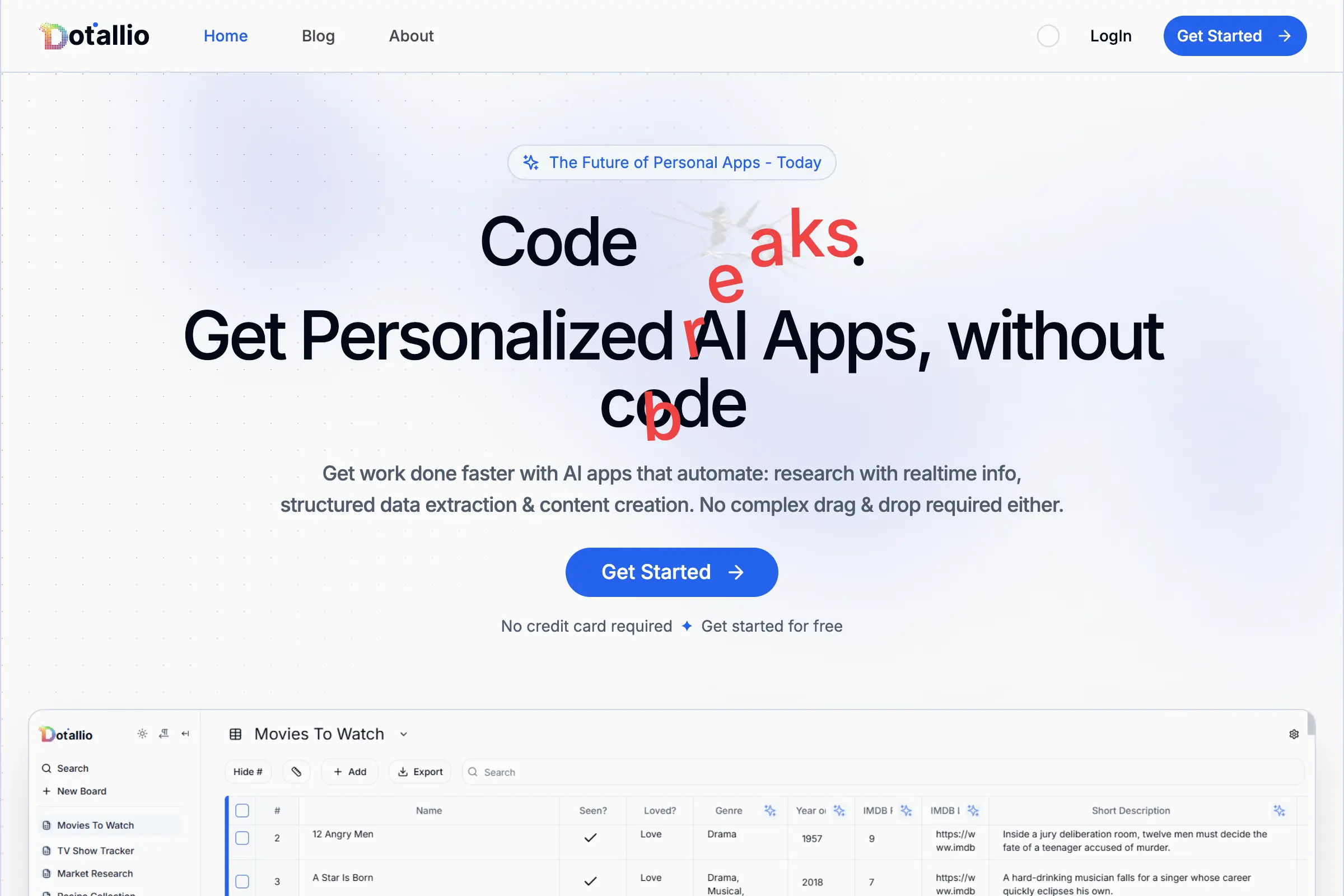
Dotallio
Personalized AI apps that automate research, data extraction, and content creation without code 🤖
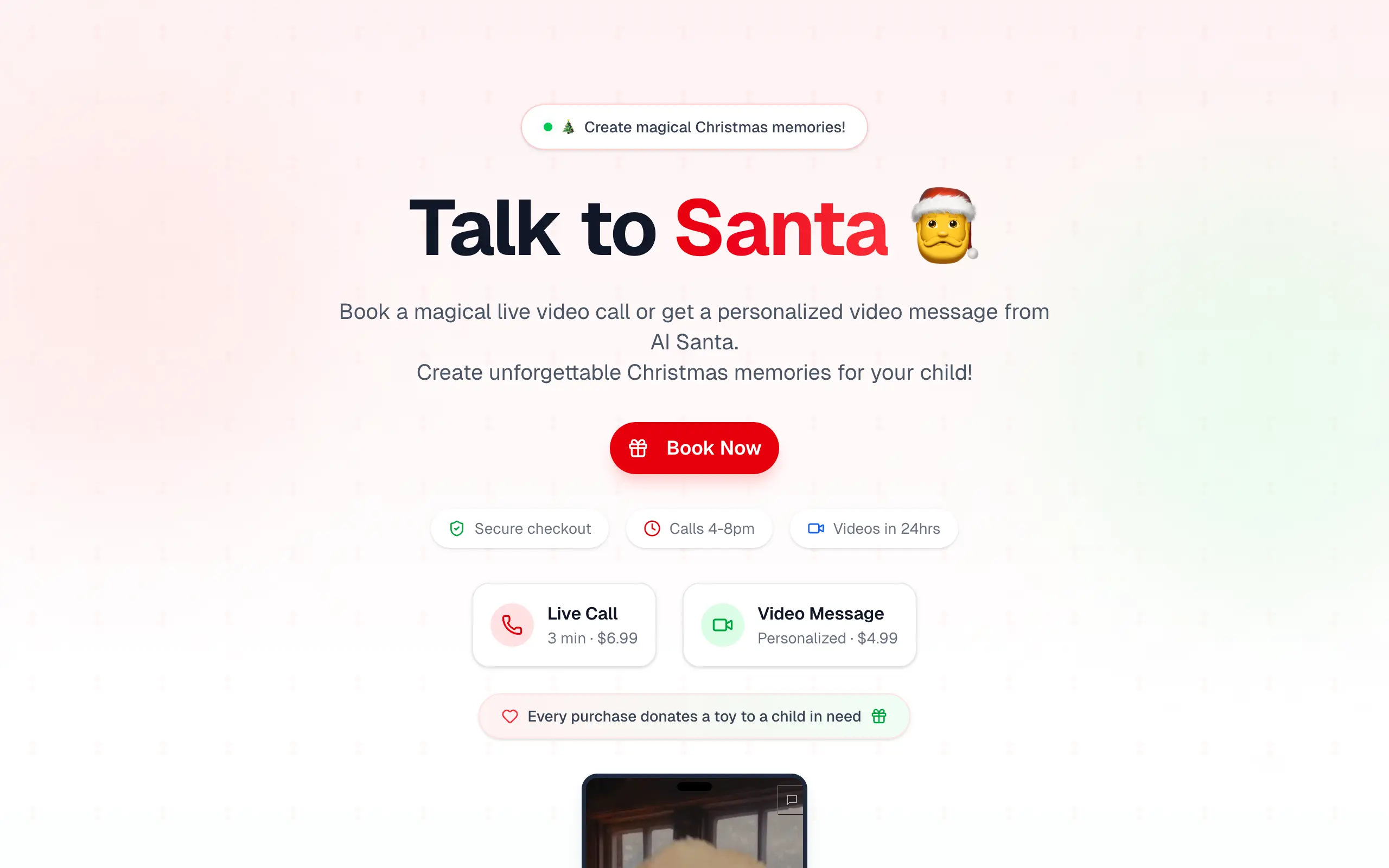
Talk to Santa
Enjoy a magical live video chat or receive a unique AI-generated video greeting from Santa Claus 🎅

pozywka.pl
Scalable blog for food journalist, focused on performance and user experience 🌭
zagrodzki.me
Personal blog and portfolio of Bart Zagrodzki, where he shares his knowledge and work 💼
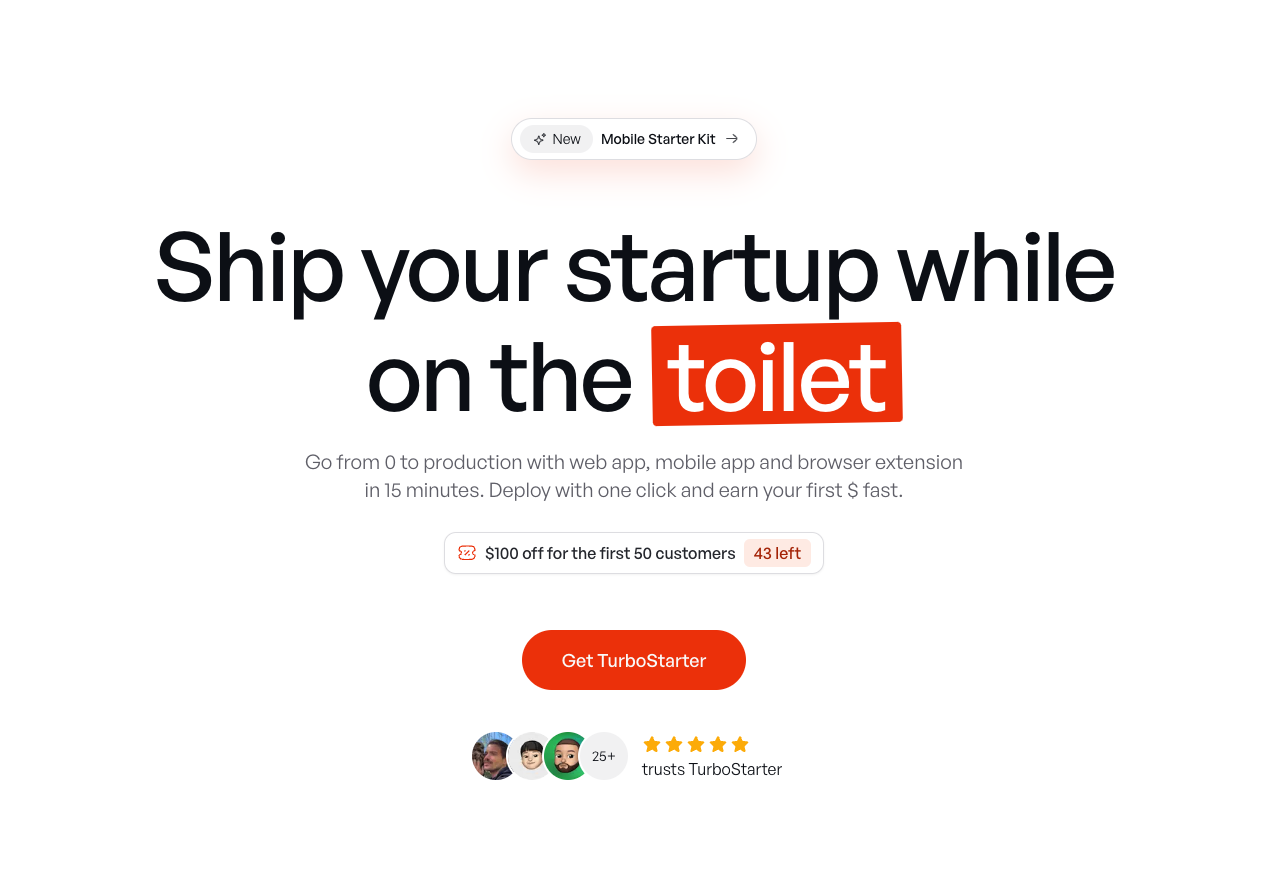
TurboStarter
Ship your startup everywhere. In minutes.
HTML to Markdown
Convert HTML to Markdown with ease, directly in your browser 📄
Dotallio
Personalized AI apps that automate research, data extraction, and content creation without code 🤖
Talk to Santa
Enjoy a magical live video chat or receive a unique AI-generated video greeting from Santa Claus 🎅
pozywka.pl
Scalable blog for food journalist, focused on performance and user experience 🌭
zagrodzki.me
Personal blog and portfolio of Bart Zagrodzki, where he shares his knowledge and work 💼
TurboStarter
Ship your startup everywhere. In minutes.
HTML to Markdown
Convert HTML to Markdown with ease, directly in your browser 📄
Dotallio
Personalized AI apps that automate research, data extraction, and content creation without code 🤖
Talk to Santa
Enjoy a magical live video chat or receive a unique AI-generated video greeting from Santa Claus 🎅
pozywka.pl
Scalable blog for food journalist, focused on performance and user experience 🌭
zagrodzki.me
Personal blog and portfolio of Bart Zagrodzki, where he shares his knowledge and work 💼
TurboStarter
Ship your startup everywhere. In minutes.
HTML to Markdown
Convert HTML to Markdown with ease, directly in your browser 📄
Dotallio
Personalized AI apps that automate research, data extraction, and content creation without code 🤖
Talk to Santa
Enjoy a magical live video chat or receive a unique AI-generated video greeting from Santa Claus 🎅
pozywka.pl
Scalable blog for food journalist, focused on performance and user experience 🌭
zagrodzki.me
Personal blog and portfolio of Bart Zagrodzki, where he shares his knowledge and work 💼
TurboStarter
Ship your startup everywhere. In minutes.
HTML to Markdown
Convert HTML to Markdown with ease, directly in your browser 📄
Omichat
Chat with 50+ AI models, including ChatGPT and Claude, in one place - switch models anytime without losing context 🤖
Claude Fast
Supercharge your Claude Code with 6x effective context window and specialized AI agents 🤖
EmojAI
AI-powered emoji picker with smart, context-aware suggestions 🤖
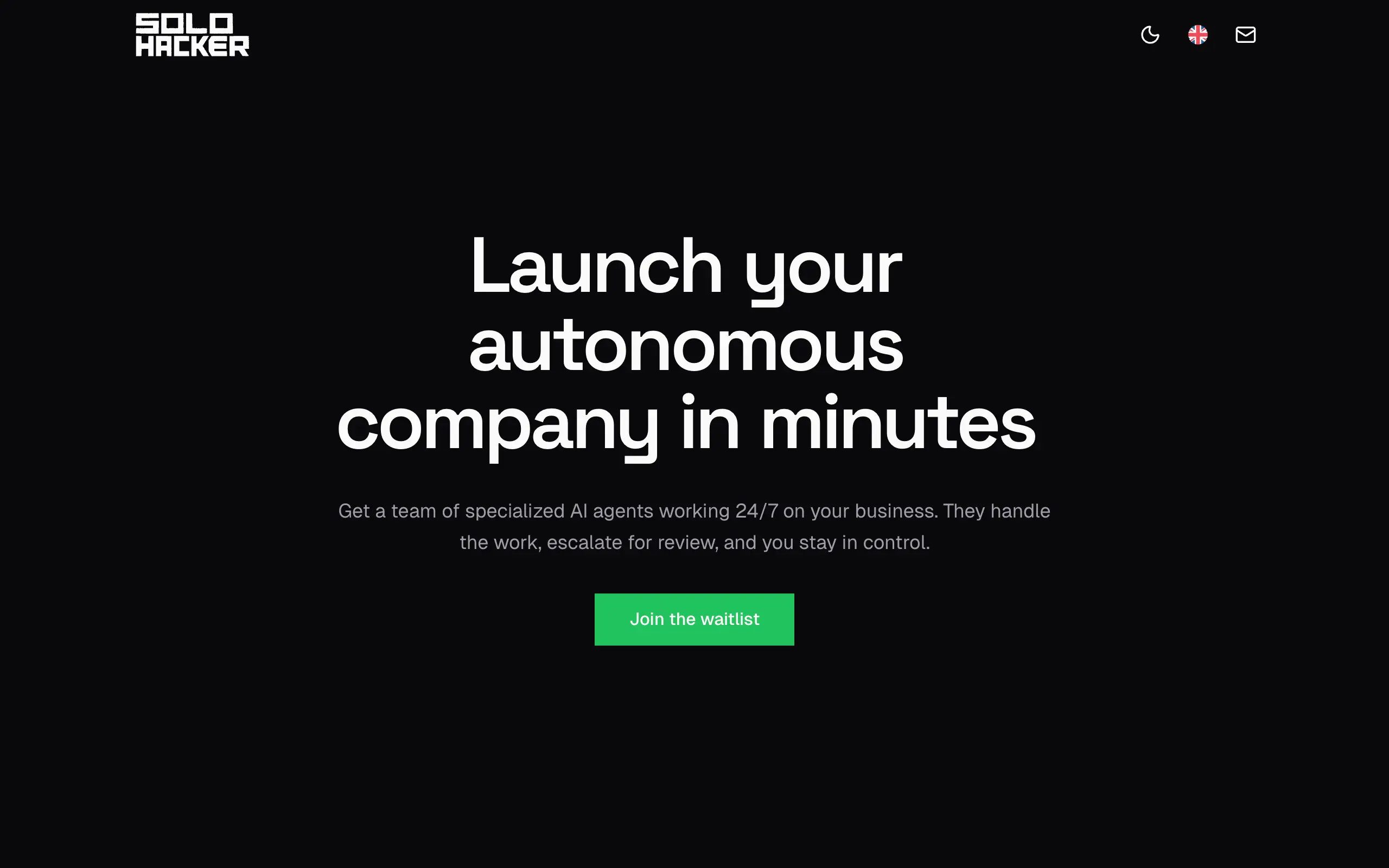
Solohacker
Autonomous company launcher - AI agents work 24/7, escalate what matters, and you stay in control 🤖
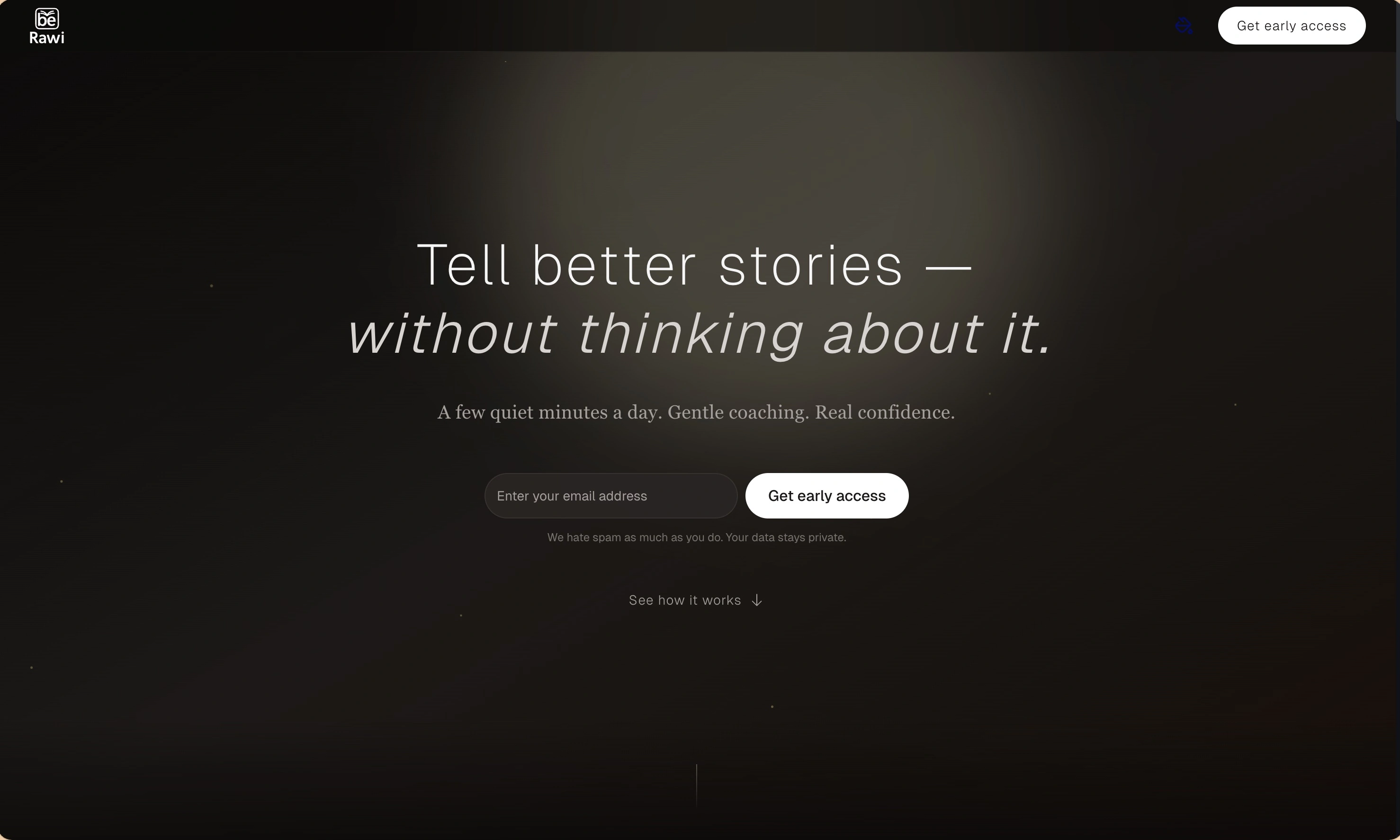
BeRawi: Storytelling Coach
Practice storytelling daily with instant feedback to sound clearer, more engaging, and confident 🎤
Omichat
Chat with 50+ AI models, including ChatGPT and Claude, in one place - switch models anytime without losing context 🤖
Claude Fast
Supercharge your Claude Code with 6x effective context window and specialized AI agents 🤖
EmojAI
AI-powered emoji picker with smart, context-aware suggestions 🤖
Solohacker
Autonomous company launcher - AI agents work 24/7, escalate what matters, and you stay in control 🤖
BeRawi: Storytelling Coach
Practice storytelling daily with instant feedback to sound clearer, more engaging, and confident 🎤
Omichat
Chat with 50+ AI models, including ChatGPT and Claude, in one place - switch models anytime without losing context 🤖
Claude Fast
Supercharge your Claude Code with 6x effective context window and specialized AI agents 🤖
EmojAI
AI-powered emoji picker with smart, context-aware suggestions 🤖
Solohacker
Autonomous company launcher - AI agents work 24/7, escalate what matters, and you stay in control 🤖
BeRawi: Storytelling Coach
Practice storytelling daily with instant feedback to sound clearer, more engaging, and confident 🎤
Omichat
Chat with 50+ AI models, including ChatGPT and Claude, in one place - switch models anytime without losing context 🤖
Claude Fast
Supercharge your Claude Code with 6x effective context window and specialized AI agents 🤖
EmojAI
AI-powered emoji picker with smart, context-aware suggestions 🤖
Solohacker
Autonomous company launcher - AI agents work 24/7, escalate what matters, and you stay in control 🤖
BeRawi: Storytelling Coach
Practice storytelling daily with instant feedback to sound clearer, more engaging, and confident 🎤

Connect with like-minded people
Join our community to get feedback, support, and grow together with 1,000+ builders on board, let's ship it!
Join usShip your startup everywhere. In minutes.
Don't burn tokens on setup and start building features on day one.