QuotePulse
AI price-monitoring SaaS that extracts supplier quotes from emails and PDFs, flags increases, and recommends negotiation targets for small businesses.
Why AI price monitoring software is becoming essential for small businesses
Small businesses rarely lose margin because of one dramatic supplier decision. More often, profitability erodes through small price increases that arrive quietly in inboxes, PDF quotations, purchase confirmations, and revised supplier price lists.
A supplier changes a unit cost by 4%. Freight surcharges rise. A previously agreed discount disappears. An account manager sends a new quote with different payment terms. If these changes are not compared against historical quotes, the business may accept higher costs without realizing it has leverage to negotiate.
QuotePulse is an AI price-monitoring SaaS built to solve this operational blind spot. It extracts supplier quotes from emails and PDFs, normalizes line-item pricing, flags meaningful increases, and recommends practical negotiation targets. Instead of asking a purchasing manager or founder to manually search old inboxes and compare spreadsheets, QuotePulse creates an always-current view of supplier pricing and cost movement.
The primary keyword for this category is AI price monitoring software. Related search terms include:
- supplier quote management software
- procurement price tracking
- supplier price increase alerts
- PDF quote extraction
- email quote parser
- small business procurement software
- AI negotiation recommendations
- purchase cost analysis
- supplier quote comparison
- vendor pricing intelligence
The opportunity is especially strong for companies that are too complex for manual procurement processes but too small to justify an enterprise procurement suite.
The core value proposition
QuotePulse turns unstructured supplier communications into a usable price intelligence system. The product helps small businesses detect cost increases early, quantify negotiation opportunities, and protect gross margin without adding procurement overhead.
The cost-control problem QuotePulse solves
Supplier pricing is often stored in the least useful format possible for analysis. Quotes may arrive as email text, attached PDFs, scanned documents, spreadsheets, portal exports, or a combination of all of them. The information is technically available, but it is scattered, inconsistent, and difficult to compare.
For a small business, the workflow commonly looks like this:
- A supplier emails a quotation.
- An employee saves the attachment in a folder or forwards it to a shared inbox.
- A purchase order is created using the newest available price.
- Nobody checks whether the price has changed from the previous quote.
- The business discovers its margin decline weeks or months later.
This workflow has three major failures.
Price changes are hidden in unstructured documents
A PDF quotation may include product names, stock keeping units, units of measure, volume tiers, discounts, shipping charges, tax treatment, and payment terms. Even a small formatting change can make spreadsheet comparison unreliable.
An AI price monitoring platform needs to identify the commercial meaning of each field rather than merely copy text from a document. It should understand that “Unit Rate,” “Price Each,” and “Net Unit Cost” may represent comparable values. It should also distinguish a true unit-price increase from a different quantity tier or an altered pack size.
Teams lack a reliable historical baseline
A supplier quote is only useful in context. A buyer needs to know:
- what the supplier charged for the same item previously
- whether the quoted quantity is comparable
- whether the price includes freight, duties, or other charges
- whether a discount has changed
- whether another approved supplier has offered a lower price
- how the increase affects the company’s product margins
Without a structured quote history, buyers rely on memory, individual inboxes, or time-consuming spreadsheet audits. This makes negotiation reactive rather than systematic.
Small businesses need actionable alerts, not raw data
Most owners do not want another dashboard full of charts. They want an answer to a practical question:
Is this supplier quote worth challenging, and what should I ask for?
QuotePulse can turn raw quote data into a prioritized action list. For example, instead of merely reporting that a supplier increased a part’s cost from $12.40 to $13.20, the platform can explain that the increase is 6.5%, exceeds the supplier’s historical variance, affects a high-volume item, and creates an estimated annual cost impact of $9,600.
That is the difference between passive reporting and procurement intelligence.
Target audience for supplier quote monitoring software
QuotePulse should not try to serve every procurement team from day one. Its strongest initial market is organizations with recurring supplier purchases, fragmented quote workflows, and meaningful sensitivity to gross margin.
Primary audience: owner-led and operations-led small businesses
The ideal early customer is typically a business with 10 to 250 employees, recurring purchases from several suppliers, and no dedicated enterprise procurement system.
Common examples include:
- light manufacturers and fabricators
- food and beverage producers
- wholesalers and distributors
- construction subcontractors
- packaging-intensive ecommerce brands
- facilities management companies
- automotive repair groups
- hospitality operators with recurring inventory purchases
- healthcare practices buying supplies and consumables
- specialty retailers with private-label products
These companies often have experienced operations teams, but purchasing data still lives in email inboxes, accounting systems, and spreadsheets.
Their core motivations include:
- controlling cost inflation
- protecting product or service margin
- reducing time spent reviewing quotes
- improving supplier accountability
- standardizing purchasing decisions
- finding savings without hiring more staff
Secondary audience: fractional CFOs and procurement consultants
Fractional CFOs, outsourced operations leaders, and procurement consultants can become valuable channel partners. They work across multiple small and midsize businesses and frequently uncover cost leakage during financial reviews.
For this segment, QuotePulse becomes a repeatable analysis layer. A consultant can use the platform to identify supplier cost movement, document savings opportunities, and demonstrate ongoing value to clients.
This audience may also support a multi-client workspace model, where one advisory firm manages separated tenant accounts for several client businesses.
Jobs to be done for QuotePulse users
The most effective product marketing should focus on the user’s desired outcome rather than the technical mechanism of optical character recognition or language models.
| User role | Primary job | Current workaround | QuotePulse outcome |
|---|---|---|---|
| Business owner | Protect margin | Review financials after the fact | Early warnings on material cost changes |
| Purchasing manager | Compare supplier prices quickly | Search inboxes and spreadsheets | Normalized quote history by supplier and item |
| Operations manager | Keep purchasing predictable | Manual approvals and tribal knowledge | Repeatable alerts and review workflows |
| Finance leader | Explain margin changes | Analyze monthly financial reports | Traceable cost movement and annualized impact |
The market gap in small business procurement technology
The procurement software market is crowded, but the needs of small businesses remain under-served. Enterprise procurement platforms are often comprehensive, expensive, and implementation-heavy. Basic document storage tools are inexpensive, but they do not provide pricing intelligence.
QuotePulse sits in the gap between these two extremes.
Enterprise procurement suites are often too broad
Large procurement platforms can include supplier onboarding, approvals, purchase order management, contract workflows, invoicing, sourcing events, spend analytics, risk scoring, and complex ERP integrations. These capabilities are valuable for large organizations, but they can create adoption friction for a 30-person manufacturer or a regional distributor.
The small business buyer usually does not begin with a desire for procurement transformation. They begin with a painful, specific question:
Why did our supplier costs increase, and can we negotiate them down?
QuotePulse can win by solving that urgent problem quickly. It should offer value before requiring a full purchasing-system migration.
Generic AI document tools do not understand pricing context
Document extraction tools can convert PDF text into fields. However, quote monitoring requires more than text extraction. It requires commercial interpretation.
For example, the system must account for:
- product name variations across suppliers
- supplier-specific SKU formats
- different units of measure
- currency differences
- quantity breaks
- pack-size changes
- discount structures
- changing delivery and payment terms
- one-time versus recurring charges
A generic AI parser may extract a price, but it may not know whether $100 per case is actually lower or higher than $12 per unit. QuotePulse needs a domain model designed specifically for quote comparison and purchasing decisions.
Traditional spreadsheets do not scale with document volume
Spreadsheets remain powerful and familiar, but they break down when employees must manually transcribe quotes, maintain naming consistency, calculate comparisons, and remember which prices need review.
The goal is not to replace spreadsheets in every workflow. The goal is to eliminate the repetitive extraction and comparison work that makes spreadsheets fragile.
A strong QuotePulse export capability can still support finance and operations teams that depend on spreadsheet reporting.
QuotePulse product positioning and unique selling proposition
The strongest positioning statement for QuotePulse is:
QuotePulse is AI price monitoring software that turns supplier quotes from emails and PDFs into price alerts, savings opportunities, and negotiation-ready recommendations.
This positioning communicates four customer benefits:
- It handles real-world quote formats.
- It creates a historical price record automatically.
- It identifies changes that deserve attention.
- It gives users a next action rather than just a data point.
The unique selling proposition is not simply “AI document extraction.” Many tools can make that claim. The defensible value is the combination of extraction, normalization, historical comparison, and negotiation intelligence for small businesses.
Fast time to value
Connect an inbox or upload historical quotes and generate useful price comparisons without an ERP replacement project.
Procurement-specific intelligence
Compare unit cost, volume tiers, discounts, terms, and supplier behavior instead of treating quotes as generic documents.
Negotiation-ready output
Turn price changes into evidence-based supplier conversations with target ranges and clear commercial rationale.
Core features for an AI price monitoring SaaS
A successful minimum viable product should focus on reliable workflows that create immediate savings opportunities. Sophisticated features can follow after the core extraction and comparison engine earns user trust.
Email and PDF quote ingestion
QuotePulse should support several intake paths:
- a dedicated forwarding email address for supplier quotes
- direct mailbox connection through OAuth
- manual PDF upload
- drag-and-drop spreadsheet upload
- shared inbox integrations for procurement teams
- API ingestion for advanced customers
The initial user experience should make it easy to onboard historical documents. This is important because price monitoring is much more valuable when the system has an established baseline.
A useful onboarding prompt could ask users to upload the most recent 6 to 24 months of supplier quotes. The platform can then build initial price histories and surface immediate anomalies.
Intelligent quote extraction
The extraction engine should capture more than a document total. It should identify structured quote details such as:
- supplier name and legal entity
- quote number
- quote date and validity date
- currency
- payment terms
- delivery terms
- product description
- supplier SKU
- internal SKU when available
- quantity
- unit of measure
- unit price
- line discount
- line total
- freight and additional fees
- tax treatment
- volume-price tiers
The interface should show source evidence for each extracted value. Users need to see where the system found a number, especially when the document is complex or low quality.
Trust grows when a user can click an extracted line item and view the exact PDF region or email text that supports it.
Item normalization and supplier catalog matching
This is one of the most important features in the entire product.
Suppliers may describe identical products differently. One quote may list “12mm stainless bolt,” another may list “SS M12 hex bolt,” and an internal purchasing system may use a proprietary part number. QuotePulse should create a matching layer that connects these records where confidence is high and asks users for help where confidence is low.
The product can use a combination of methods:
- exact SKU matching
- supplier catalog mapping
- fuzzy string matching
- embedding similarity
- user-approved aliases
- pack-size and unit conversion rules
- machine learning feedback from prior corrections
A human-review queue is essential. Incorrect matching can produce misleading price comparisons, which damages trust much faster than a missing recommendation.
Price change detection and meaningful alerting
Not every price change should create an alert. A $0.03 change on an infrequently purchased item may not justify attention. QuotePulse should prioritize increases based on commercial impact.
A practical alert score can account for:
- percentage increase
- absolute dollar increase
- expected purchase volume
- annualized cost impact
- supplier-specific historical variance
- item criticality
- availability of alternative suppliers
- change in terms or freight charges
- confidence in the product match
For example, the system might classify alerts into three levels:
- Monitor for minor or low-confidence changes
- Review for meaningful cost movement
- Negotiate for high-impact increases with strong supporting evidence
This prioritization helps busy teams focus on the few supplier conversations that can make a material difference.
Negotiation target recommendations
This is where QuotePulse can become more than a quote comparison tool.
The recommendation engine should not promise that a user will always obtain a specific price. Instead, it should provide transparent, evidence-based guidance. For a flagged increase, the system can suggest:
- a target unit price based on previous accepted pricing
- a target range based on historical supplier variance
- a volume-commitment option
- a request to preserve previous discount terms
- a recommendation to seek a competitive quote
- a proposed counteroffer based on the supplier’s own previous pricing
- a request to separate freight or surcharge increases from product-price increases
A recommendation should include the reason behind it. For example:
The supplier increased unit price by 8.2% while the quoted quantity remains within the same historical volume tier. A counteroffer near the prior price plus 2% is supported by the supplier’s price history over the past 12 months.
This reasoning is important for user confidence and responsible AI design.
Savings pipeline and reporting
QuotePulse should allow users to move alerts through a simple workflow:
- new
- reviewing
- negotiating
- accepted increase
- savings achieved
- dismissed
- needs more information
The reporting layer can then show:
- price increases detected
- spend at risk
- negotiated savings
- savings by supplier
- savings by category
- top volatile items
- unresolved high-impact alerts
- supplier response patterns
For B2B buyers, the most persuasive dashboard metric is usually not “documents processed.” It is cost exposure identified and savings realized.
Audit trail and approval workflow
Procurement decisions can affect margins, inventory availability, and supplier relationships. QuotePulse should maintain a clear audit history of:
- original document
- extracted values
- user edits
- matching decisions
- alert status changes
- recommendation outputs
- negotiation notes
- final outcome
This is particularly useful when purchasing is shared across operations, finance, and ownership teams.
How the AI workflow should work in practice
The product experience should feel simple even though the underlying workflow is sophisticated.
A reliable workflow should always include an exception path. If the AI is uncertain about an extracted price, a product match, or a unit conversion, it should ask for confirmation rather than silently inventing certainty.
Example of an explainable pricing comparison
Consider a packaging supplier quote for 10,000 custom cartons.
The current quotation includes:
- unit price of $0.84
- a previous comparable quote at $0.76
- the same order quantity
- the same delivery terms
- a quote validity period of 30 days
QuotePulse could detect a 10.5% unit price increase and calculate an additional cost of $800 for the order. If the business places similar orders monthly, the annualized impact could exceed $9,000.
The system should then show the buyer:
- the current quote and prior comparable quote
- the unit-price delta
- a confidence score for the product match
- the expected annual impact
- a suggested negotiation range
- a ready-to-edit supplier email draft
The user remains in control. QuotePulse provides evidence and recommendations, while the buyer decides how to negotiate and whether to accept the offer.
Recommended technology stack for QuotePulse
QuotePulse needs a stack that supports secure document processing, AI workflows, multi-tenant SaaS operations, and fast iteration. The wrong architecture can create avoidable cost, latency, and compliance challenges.
Frontend and application framework
A strong default is Next.js with React and TypeScript.
This combination works well because it supports:
- server-rendered marketing pages for SEO
- authenticated SaaS dashboards
- API routes and server-side actions
- scalable component architecture
- type safety across pricing and document data models
- a large ecosystem for billing, authentication, and analytics
For styling, Tailwind CSS is a practical choice. It supports rapid interface development and makes it easier to maintain a consistent design system across data-dense procurement screens.
Database and search architecture
PostgreSQL is a strong core database for tenants, users, suppliers, quote metadata, line items, pricing history, workflow status, and audit logs.
For semantic item matching, pgvector can provide vector similarity capabilities inside the PostgreSQL ecosystem. This reduces early operational complexity compared with introducing a dedicated vector database.
The trade-off is that a specialized vector database may become useful if QuotePulse reaches very large document volumes or requires highly tuned retrieval performance. For an MVP and early growth stage, Postgres plus pgvector is usually easier to operate and sufficient for the job.
Document storage and processing
Supplier quotes are sensitive commercial documents, so object storage should support encryption, controlled access, and retention policies. Amazon S3 is a widely used option for secure file storage.
A production architecture should separate:
- raw uploaded documents
- generated document previews
- structured extraction results
- user corrections
- derived analytics records
Document processing must run asynchronously. Uploading a 20-page PDF should not keep a browser request open while the system performs OCR, parsing, matching, and alert generation.
A queue-based architecture is appropriate. Options include Inngest, Trigger.dev, or a managed cloud queue. The right choice depends on team familiarity, hosting environment, and the expected need for durable retries.
AI and extraction layer
The AI workflow should use multiple techniques rather than relying on one model call.
A robust pipeline may include:
- PDF text extraction for digitally generated documents.
- OCR for scanned documents and image-based PDFs.
- layout-aware parsing for tables and line items.
- language-model extraction into a constrained schema.
- validation rules for totals, currencies, quantities, and unit prices.
- similarity matching for products and supplier descriptions.
- human review for low-confidence cases.
For model orchestration, the implementation should return structured outputs validated through a schema library such as Zod. Structured validation matters because a malformed price record can cause downstream calculation errors.
Here is an illustrative TypeScript schema for a quote line item:
import { z } from "zod";

export const quoteLineItemSchema = z.object({
  supplierSku: z.string().nullable(),
  description: z.string().min(1),
  quantity: z.number().positive(),
  unitOfMeasure: z.string().min(1),
  unitPrice: z.number().nonnegative(),
  currency: z.string().length(3),
  discountPercent: z.number().min(0).max(100).nullable(),
  lineTotal: z.number().nonnegative(),
  extractionConfidence: z.number().min(0).max(1),
});
In a production codebase, the extraction response should be checked against arithmetic expectations. For example, quantity multiplied by unit price should approximately equal the line total after accounting for discounts, taxes, and rounding. Validation rules catch many extraction errors before an alert reaches a customer.
Authentication, billing, and SaaS foundation
QuotePulse needs multi-tenancy, role-based access control, billing, user invitations, audit logs, and transactional email from the beginning. Building these foundations manually can slow down an otherwise focused product roadmap.
TurboStarter can help founders launch a SaaS faster by providing a production-minded starting point for common SaaS capabilities. This allows the team to spend more time on quote ingestion, price normalization, and recommendation quality instead of repeatedly rebuilding standard account-management infrastructure.
For payments, Stripe is a strong choice for subscriptions, trials, usage-based billing, invoices, and customer billing portals.
Tech stack trade-offs to evaluate
A lean MVP can use Next.js, PostgreSQL, object storage, a managed background-job platform, and API-based AI extraction. This approach is fast to ship and keeps operations simple. The main risk is variable AI processing cost, so file-size limits and usage controls are essential.
A scale-ready architecture can add dedicated workers, advanced observability, supplier-specific parsing templates, a retrieval layer, and more sophisticated data pipelines. This improves throughput and reliability but should follow validated customer demand rather than precede it.
Monetization options for QuotePulse
The most suitable monetization strategy combines subscription pricing with a usage metric that reflects document-processing costs and customer value.
Tiered subscription pricing
A clear packaging model could include:
- Starter for owner-led businesses with a limited number of suppliers and monthly quote uploads
- Growth for purchasing teams that need connected inboxes, multiple users, alerts, and negotiation recommendations
- Professional for businesses requiring higher document volume, advanced reporting, approval workflows, and integrations
- Advisory or partner for procurement consultants and fractional CFOs managing multiple client accounts
The primary pricing metric could be monthly quote documents processed. This is easy to understand and maps to variable extraction costs.
However, QuotePulse should avoid positioning itself as a commodity document parser. Premium tiers should be tied to business outcomes and workflow value, including savings reporting, negotiation tools, supplier analytics, and integrations.
Usage-based overages
A usage-based overage model can protect margins when a customer uploads a large volume of documents. Keep the policy transparent. Customers should be able to see current usage, expected overage cost, and ways to upgrade before an unexpected bill appears.
Potential usage units include:
- documents processed
- pages processed
- extracted line items
- monitored suppliers
- active price-monitoring categories
For customer simplicity, documents processed is usually the clearest initial unit.
Value-based enterprise pricing
For larger customers, QuotePulse can use custom pricing based on procurement spend, supplier count, integration requirements, service-level agreements, and onboarding needs.
A savings-focused ROI calculator can support sales conversations. The calculation should be conservative and transparent:
If QuotePulse identifies supplier increases affecting $500,000 in annual purchases and the business avoids or renegotiates even a small share of those increases, the platform can pay for itself quickly.
Avoid guaranteeing savings. Procurement outcomes depend on supplier relationships, market conditions, contracts, and buyer execution.
Competitive advantage and defensibility
QuotePulse will compete indirectly with spreadsheets, enterprise procurement systems, generic OCR tools, accounting platforms, and manual purchasing workflows.
Its competitive advantage comes from focus and data compounding.
Focus on the quote-to-negotiation workflow
Many tools stop at capturing documents. QuotePulse should own the workflow from incoming supplier quote to negotiation action.
That means the product experience should connect:
- source document
- extracted data
- historical comparison
- cost impact
- evidence
- recommendation
- negotiation status
- measured outcome
This end-to-end approach creates a stronger customer experience than a generic parser or dashboard.
Build proprietary normalization data over time
Every user correction improves the company’s understanding of how suppliers describe products, price their catalogs, structure their documents, and apply discounts.
Over time, QuotePulse can build a valuable data layer around:
- supplier-specific document templates
- item aliases
- unit-conversion rules
- pricing-pattern baselines
- industry-specific category logic
- negotiation outcomes
This should be handled carefully and with strict tenant separation. One customer’s confidential pricing data must never be exposed to another customer. The defensible asset is the generalized capability to understand purchasing documents, not the sharing of private supplier prices.
Deliver explainable AI recommendations
In procurement, trust matters more than novelty. A recommendation that cannot be explained will be ignored by experienced buyers.
QuotePulse should show:
- the relevant historical quote
- the matching logic and confidence level
- comparable quantities and units
- assumptions used in annualized impact
- the logic behind the suggested target
Explainability is both a product advantage and a risk-control mechanism.
Risks and mitigation strategies
AI price monitoring software handles sensitive documents and financially consequential recommendations. QuotePulse should address product, commercial, and compliance risks from the first version.
Extraction errors and incorrect item matching
A wrong unit price or mismatched product can create a misleading alert. The mitigation strategy should include confidence thresholds, arithmetic checks, source citations, user review queues, and feedback loops.
Do not automate low-confidence decisions
QuotePulse should automate extraction and prioritization, not silently approve purchasing decisions. Low-confidence matches and unusual calculations should require a user to verify the underlying document data.
Sensitive supplier and pricing data
Supplier quotes can contain confidential pricing, personal contact data, payment terms, and commercially sensitive information.
The platform should implement:
- encryption in transit and at rest
- strict tenant isolation
- role-based permissions
- secure document URLs
- configurable retention settings
- audit logs
- deletion workflows
- data-processing agreements for business customers
As the company grows, customers may ask about security standards such as SOC 2. Even before formal certification, QuotePulse should document its security controls accurately and avoid overstating compliance.
Hallucinated negotiation advice
Language models can produce plausible but unsupported advice. QuotePulse should constrain recommendations to structured evidence in the customer’s documents and historical records.
The product should never claim to know market prices unless it has a verified, licensed, and relevant market data source. A recommendation based on a customer’s own quote history should say so clearly.
Supplier relationship concerns
Some businesses may worry that aggressive negotiation prompts could harm strategic supplier relationships. QuotePulse should frame recommendations as commercial options, not directives.
For example, a suggestion can recommend asking for a volume-tier adjustment, longer price validity, or a freight-cost breakdown before pushing for a lower unit price. This helps users negotiate constructively.
Integration complexity
ERP, accounting, and email integrations can become a product roadmap trap. Start with the simplest high-value intake methods, such as email forwarding and upload, then add integrations based on repeated customer demand.
A good rule is to build an integration when it helps onboarding, improves data accuracy, or becomes a consistent blocker in paid sales.
Go-to-market strategy for an AI supplier price monitoring platform
The best go-to-market motion should lead with an immediate, measurable pain point: unnoticed supplier price increases.
Build content around high-intent procurement searches
SEO content can target practical questions such as:
- how to compare supplier quotes automatically
- how to track supplier price increases
- how to negotiate a supplier price increase
- how to extract pricing from PDF quotes
- how to reduce purchasing costs for a small business
- supplier quote comparison template alternatives
- procurement cost-control checklist
The content should include real examples, checklists, calculation methods, and practical implementation advice. This builds topical authority around purchasing analytics rather than relying only on product-led landing pages.
When citing industry statistics, use current sources from credible organizations and clearly label the date and methodology. Suitable reference categories include official government small-business agencies, established management consultancies, professional procurement associations, and audited public-company reports.
Offer a document-based product demonstration
A strong lead magnet is a secure “upload a recent supplier quote” experience that demonstrates how QuotePulse identifies changes and creates a summary.
For privacy and trust, this experience should state clearly how documents are stored, whether files are retained, and how customers can delete uploaded data.
The demonstration should reveal a compelling insight quickly. A generic extraction preview is less persuasive than an output such as:
This supplier quote is 7.4% above your previous comparable price, creating an estimated $4,200 annual cost exposure.
Sell through advisors and vertical communities
Fractional CFOs, procurement consultants, industry associations, bookkeeping firms, and operations communities can all introduce QuotePulse to companies with cost-control needs.
Vertical messaging should adapt to each industry. A food producer cares about ingredient and packaging volatility, while a contractor may care about material quotes, delivery charges, and subcontractor pricing.
Actionable implementation roadmap
The first version of QuotePulse should prove one thing well: that it can find meaningful supplier price changes from real business documents and help users act on them.
Phase one: validate the data and workflow
Build the smallest useful workflow:
- User authentication and organization workspaces.
- PDF and email quote ingestion.
- Structured extraction of supplier name, date, line items, quantity, unit price, and currency.
- Manual item matching and correction tools.
- Historical comparison for the same supplier and item.
- A simple alert for significant price increases.
- A report showing estimated cost exposure.
- A negotiation note or email draft generated from supported evidence.
During this phase, recruit a small group of design partners from one or two verticals. Review their actual documents manually. This is the fastest way to learn which fields matter, how supplier formats vary, and where extraction fails.
Phase two: improve trust and repeatability
After the initial workflow works, add:
- connected inboxes
- supplier-specific parsing improvements
- unit and pack-size conversion
- confidence scoring
- alert prioritization
- configurable thresholds
- collaboration and approval workflows
- supplier and category dashboards
- CSV exports
- savings outcome tracking
At this stage, customer feedback should guide feature priority. A feature is valuable when it improves extraction accuracy, reduces review time, increases negotiation success, or makes ROI more visible.
Phase three: scale the intelligence layer
Once QuotePulse has reliable structured data, expand into more advanced capabilities:
- cross-supplier comparison for approved vendors
- contract and quote-validity tracking
- price trend forecasting
- purchase order and invoice comparison
- supplier performance scorecards
- accounting and ERP integrations
- category-specific negotiation playbooks
- automated weekly price-risk summaries
The long-term opportunity is to become a lightweight procurement intelligence layer for small businesses. But the product should earn that position by first becoming indispensable for quote monitoring.
Final perspective
QuotePulse addresses a clear and costly problem that many small businesses still solve manually. Supplier pricing arrives in emails and PDFs, but the business value sits in the comparison: what changed, why it matters, and what the buyer should do next.
The winning version of this AI price monitoring software will not be the one with the most generic AI features. It will be the one that delivers reliable extraction, transparent comparisons, practical negotiation guidance, and a fast path from supplier quote to cost-control action.
By focusing on small business workflows, explainable recommendations, secure document handling, and measurable savings opportunities, QuotePulse can establish a differentiated position in supplier quote management and procurement price tracking.
More 🤖 AI Startup SaaS ideas
Discover more innovative ai startup SaaS ideas that are trending in 2026. Each idea is AI-generated with market validation and growth potential to help you find your next profitable venture faster than competitors.
Your competitors are building with TurboStarter
Below are some of the SaaS ideas that have been generated and built with our starter kit.
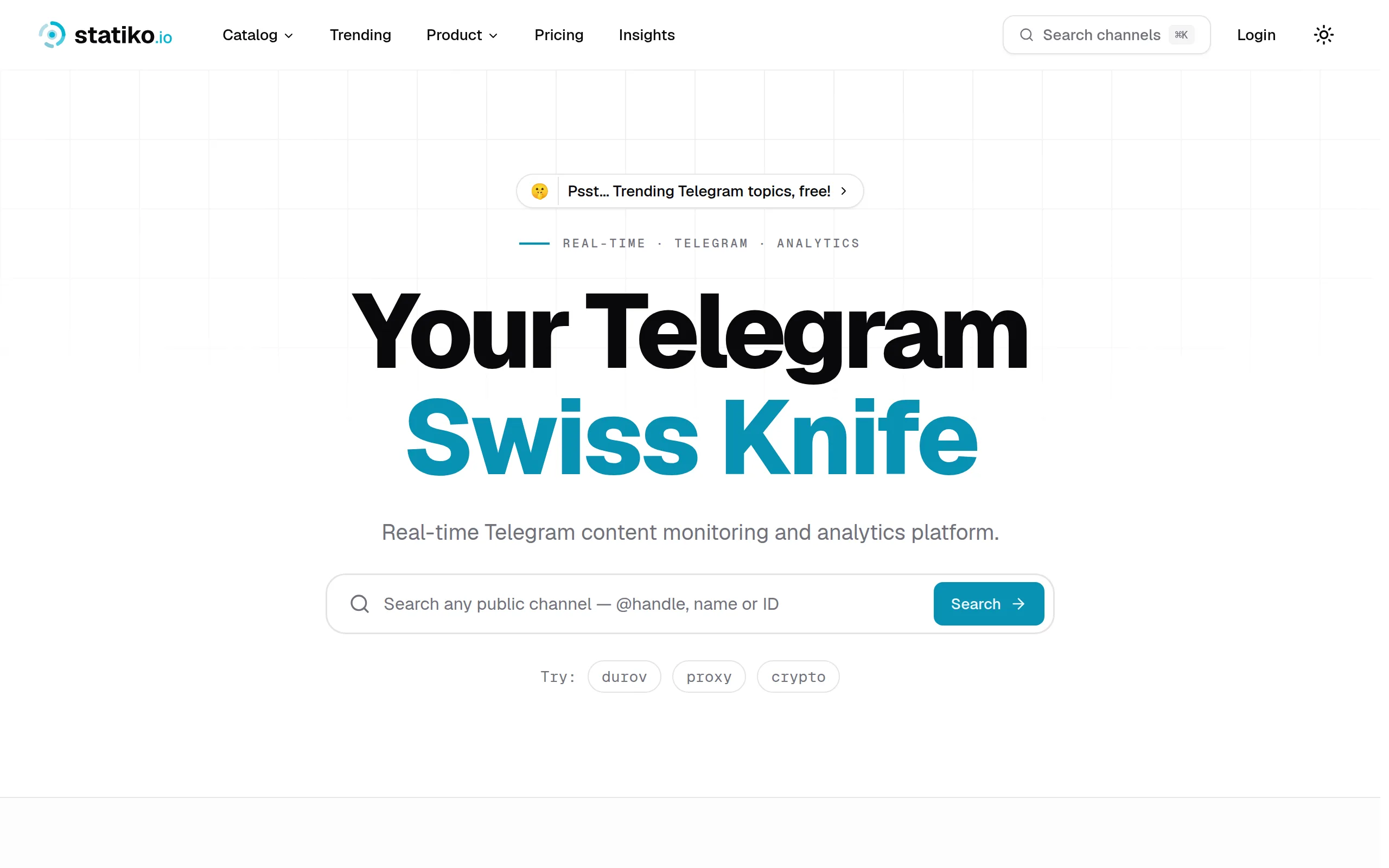
Statiko
Monitor any Telegram channel in real time - track posts, edits, deletions, and growth with AI recaps 📡

Shibui
AI website builder - describe your business, pick a niche template, edit by chatting, and publish instantly ✨

Pro Service
Find verified home service professionals, compare quotes, and pay securely through escrow - built for Brazilians across the US 🏠
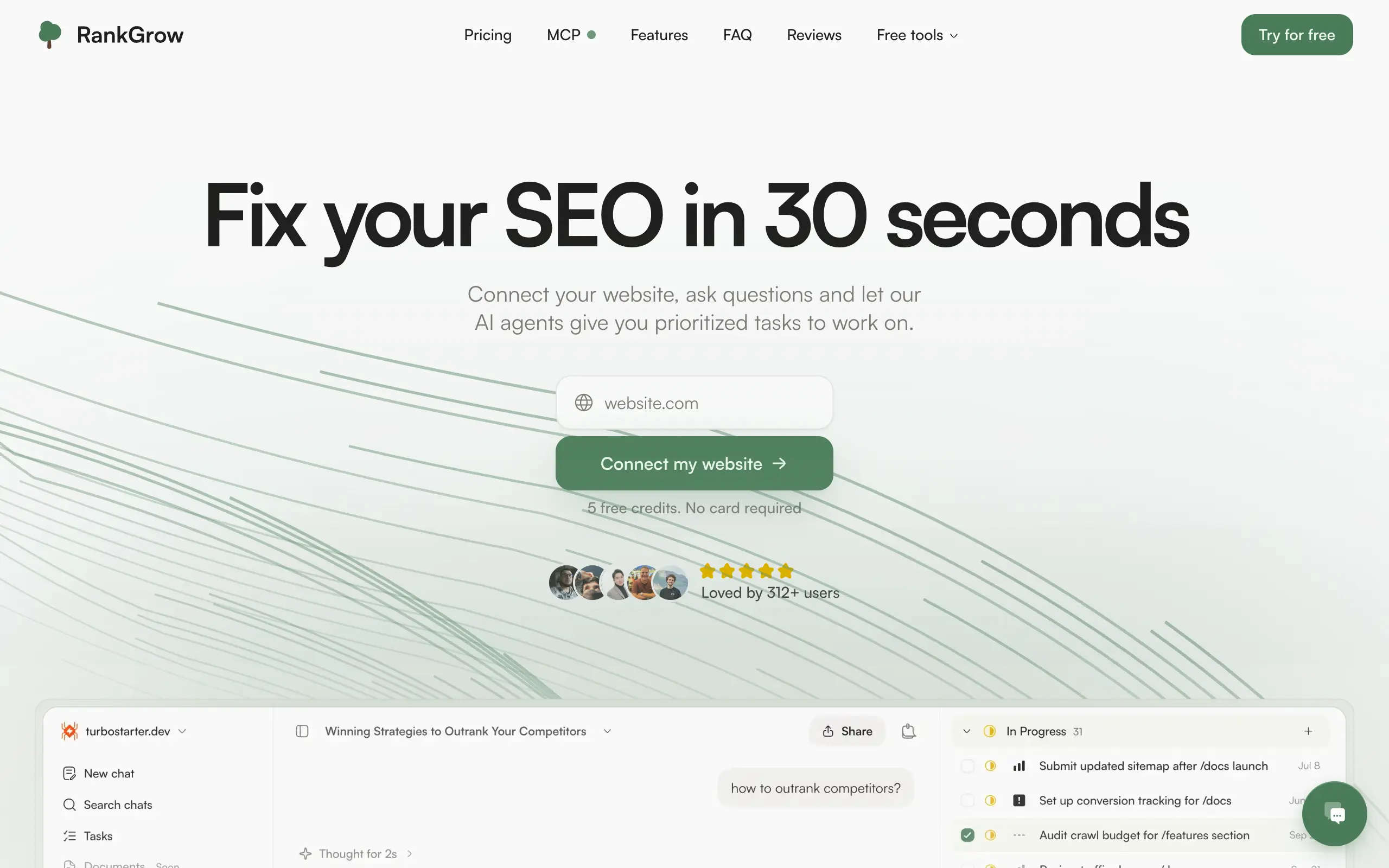
RankGrow
Fix your SEO with AI agents - connect Search Console, get prioritized tasks, and grow organic traffic 📈
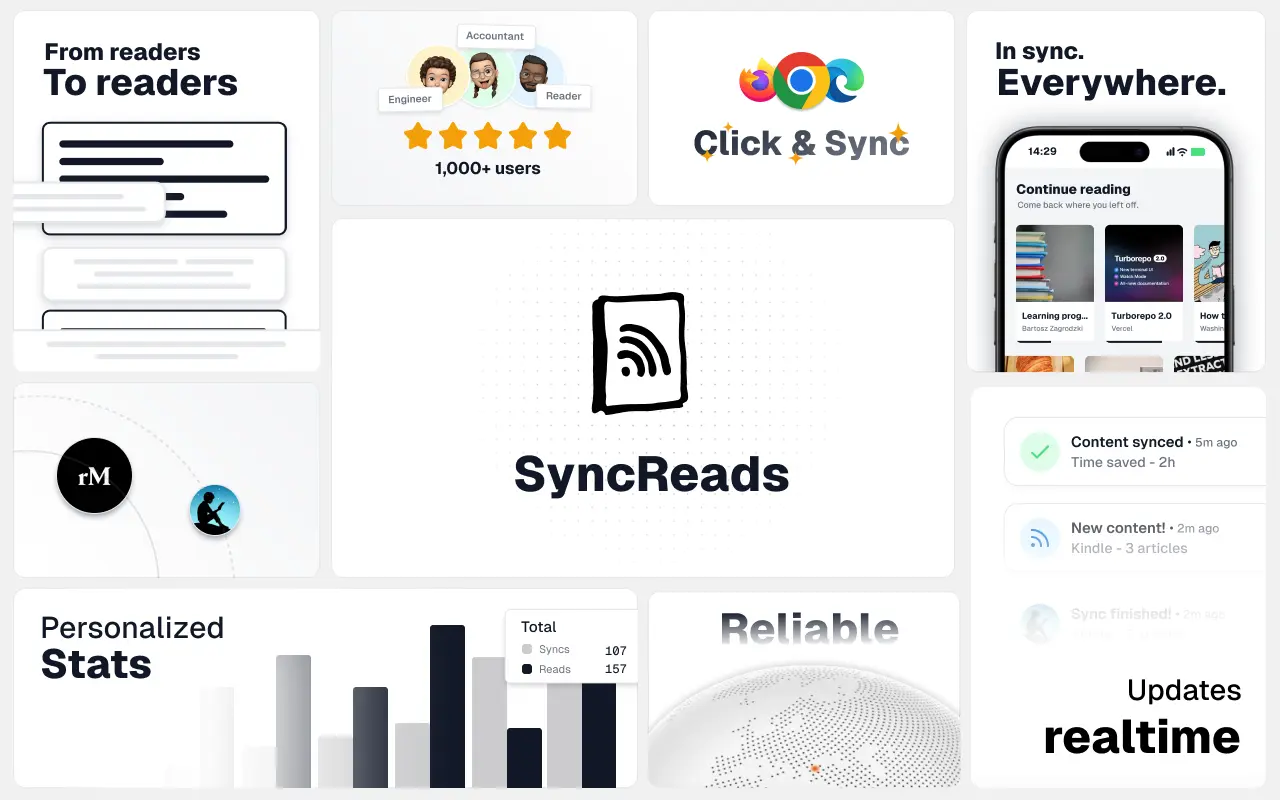
SyncReads
Sync your favorite content for distraction-free reading, save time and replace multiple apps. Anytime, anywhere 🔄
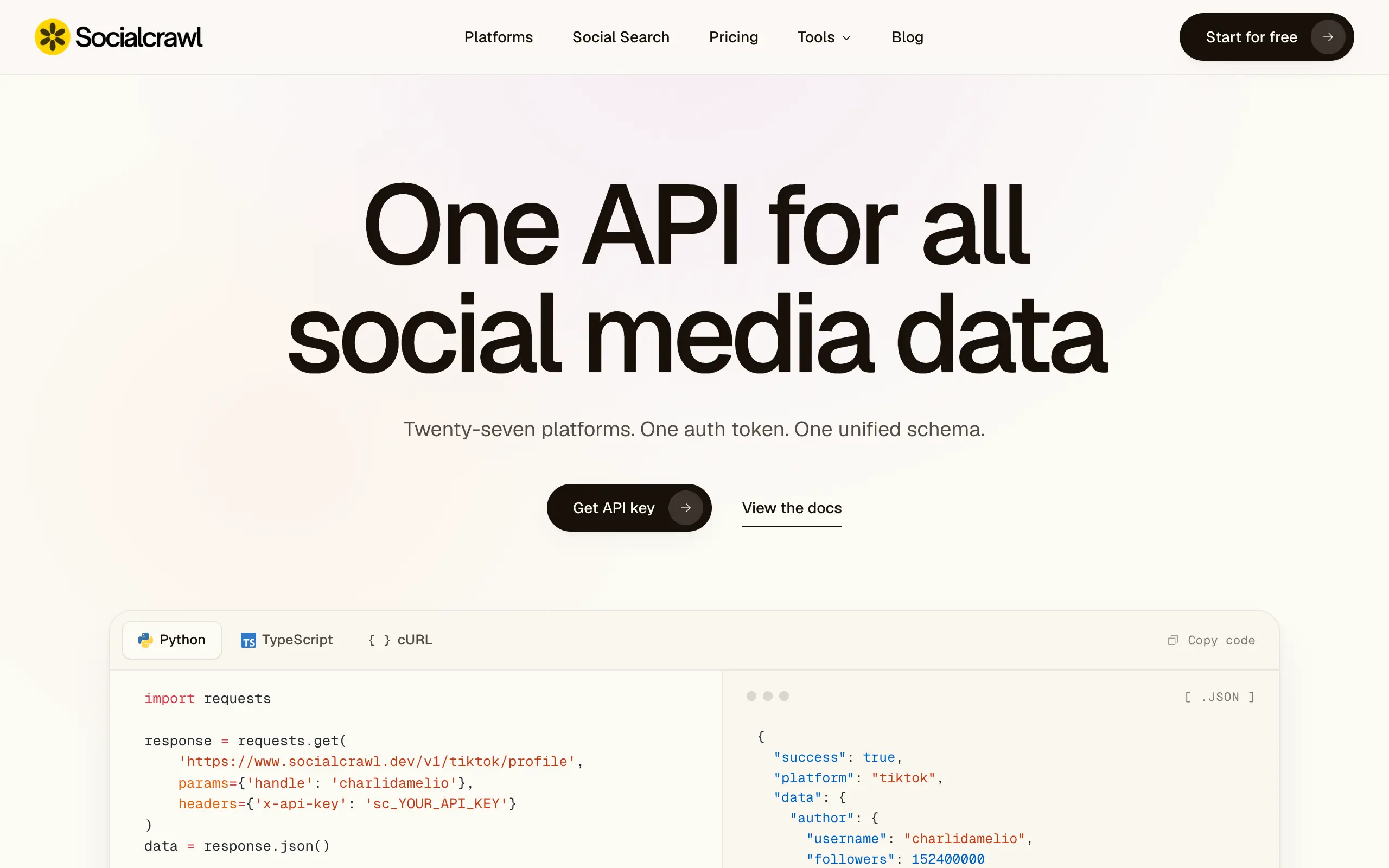
Socialcrawl
Get clean, structured data from 21 platforms like TikTok, Instagram, and YouTube with a single request 📊
Statiko
Monitor any Telegram channel in real time - track posts, edits, deletions, and growth with AI recaps 📡
Shibui
AI website builder - describe your business, pick a niche template, edit by chatting, and publish instantly ✨
Pro Service
Find verified home service professionals, compare quotes, and pay securely through escrow - built for Brazilians across the US 🏠
RankGrow
Fix your SEO with AI agents - connect Search Console, get prioritized tasks, and grow organic traffic 📈
SyncReads
Sync your favorite content for distraction-free reading, save time and replace multiple apps. Anytime, anywhere 🔄
Socialcrawl
Get clean, structured data from 21 platforms like TikTok, Instagram, and YouTube with a single request 📊
Statiko
Monitor any Telegram channel in real time - track posts, edits, deletions, and growth with AI recaps 📡
Shibui
AI website builder - describe your business, pick a niche template, edit by chatting, and publish instantly ✨
Pro Service
Find verified home service professionals, compare quotes, and pay securely through escrow - built for Brazilians across the US 🏠
RankGrow
Fix your SEO with AI agents - connect Search Console, get prioritized tasks, and grow organic traffic 📈
SyncReads
Sync your favorite content for distraction-free reading, save time and replace multiple apps. Anytime, anywhere 🔄
Socialcrawl
Get clean, structured data from 21 platforms like TikTok, Instagram, and YouTube with a single request 📊
Statiko
Monitor any Telegram channel in real time - track posts, edits, deletions, and growth with AI recaps 📡
Shibui
AI website builder - describe your business, pick a niche template, edit by chatting, and publish instantly ✨
Pro Service
Find verified home service professionals, compare quotes, and pay securely through escrow - built for Brazilians across the US 🏠
RankGrow
Fix your SEO with AI agents - connect Search Console, get prioritized tasks, and grow organic traffic 📈
SyncReads
Sync your favorite content for distraction-free reading, save time and replace multiple apps. Anytime, anywhere 🔄
Socialcrawl
Get clean, structured data from 21 platforms like TikTok, Instagram, and YouTube with a single request 📊
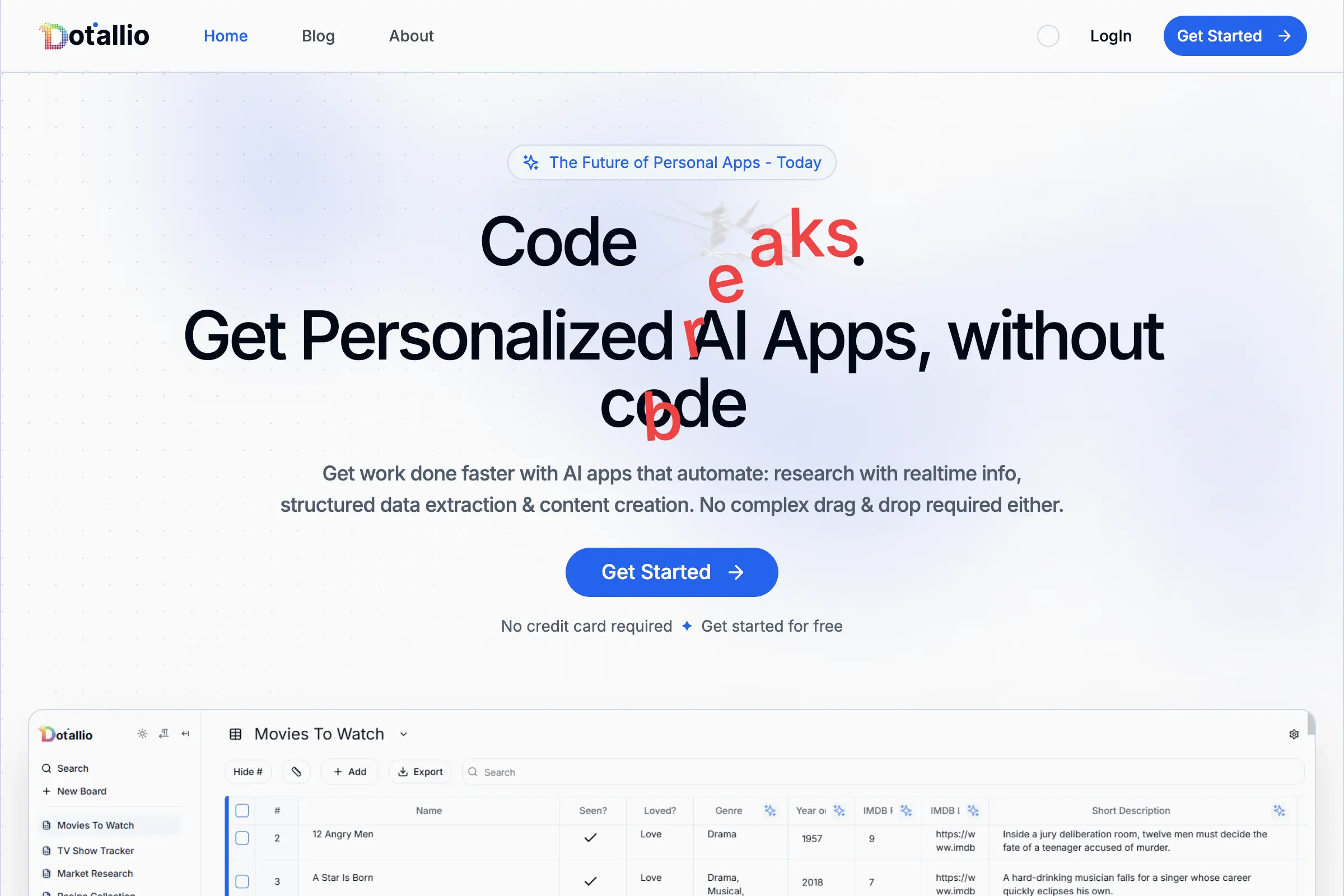
Dotallio
Personalized AI apps that automate research, data extraction, and content creation without code 🤖

Talk to Santa
Enjoy a magical live video chat or receive a unique AI-generated video greeting from Santa Claus 🎅
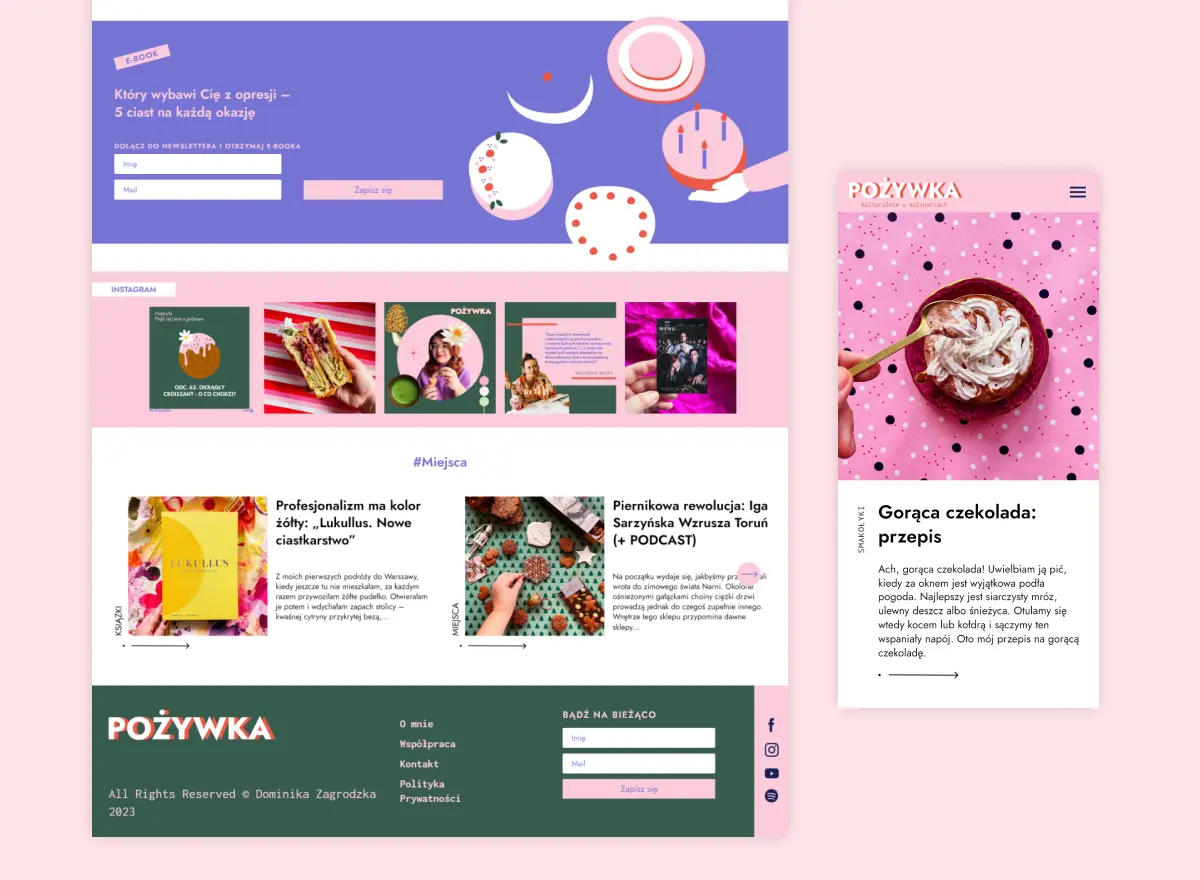
pozywka.pl
Scalable blog for food journalist, focused on performance and user experience 🌭
zagrodzki.me
Personal blog and portfolio of Bart Zagrodzki, where he shares his knowledge and work 💼
TurboStarter
Ship your startup everywhere. In minutes.
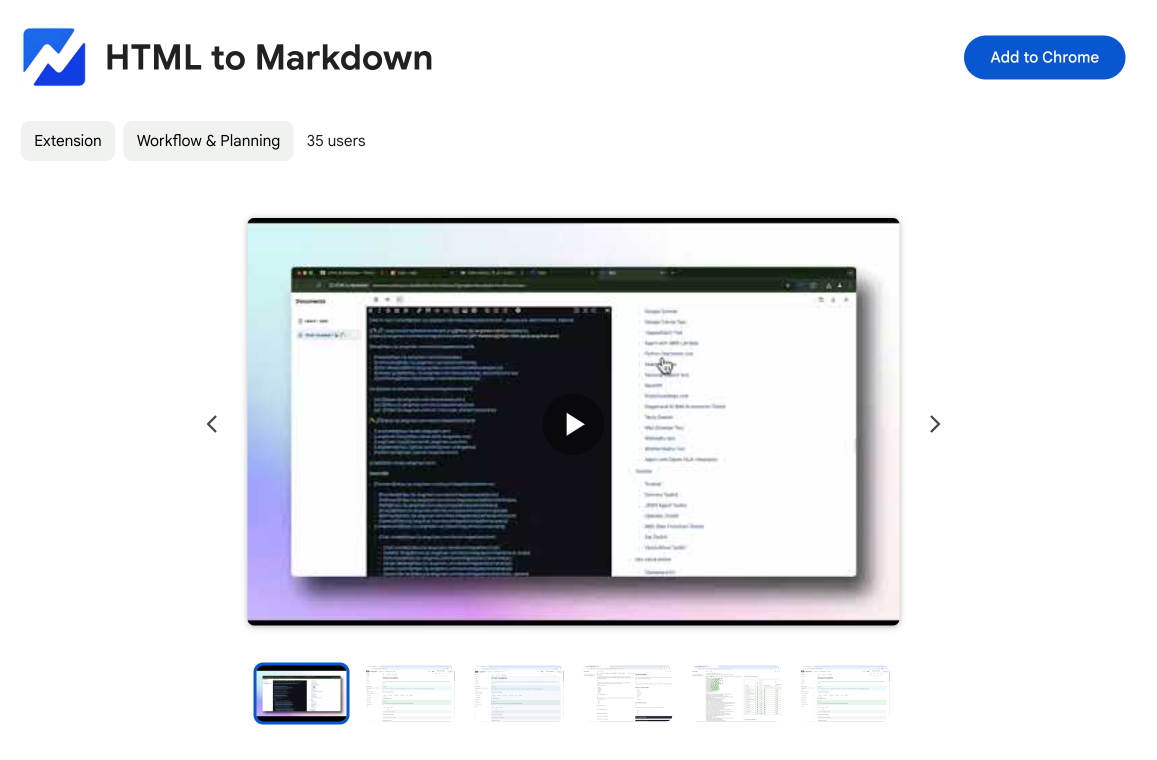
HTML to Markdown
Convert HTML to Markdown with ease, directly in your browser 📄
Dotallio
Personalized AI apps that automate research, data extraction, and content creation without code 🤖
Talk to Santa
Enjoy a magical live video chat or receive a unique AI-generated video greeting from Santa Claus 🎅
pozywka.pl
Scalable blog for food journalist, focused on performance and user experience 🌭
zagrodzki.me
Personal blog and portfolio of Bart Zagrodzki, where he shares his knowledge and work 💼
TurboStarter
Ship your startup everywhere. In minutes.
HTML to Markdown
Convert HTML to Markdown with ease, directly in your browser 📄
Dotallio
Personalized AI apps that automate research, data extraction, and content creation without code 🤖
Talk to Santa
Enjoy a magical live video chat or receive a unique AI-generated video greeting from Santa Claus 🎅
pozywka.pl
Scalable blog for food journalist, focused on performance and user experience 🌭
zagrodzki.me
Personal blog and portfolio of Bart Zagrodzki, where he shares his knowledge and work 💼
TurboStarter
Ship your startup everywhere. In minutes.
HTML to Markdown
Convert HTML to Markdown with ease, directly in your browser 📄
Dotallio
Personalized AI apps that automate research, data extraction, and content creation without code 🤖
Talk to Santa
Enjoy a magical live video chat or receive a unique AI-generated video greeting from Santa Claus 🎅
pozywka.pl
Scalable blog for food journalist, focused on performance and user experience 🌭
zagrodzki.me
Personal blog and portfolio of Bart Zagrodzki, where he shares his knowledge and work 💼
TurboStarter
Ship your startup everywhere. In minutes.
HTML to Markdown
Convert HTML to Markdown with ease, directly in your browser 📄
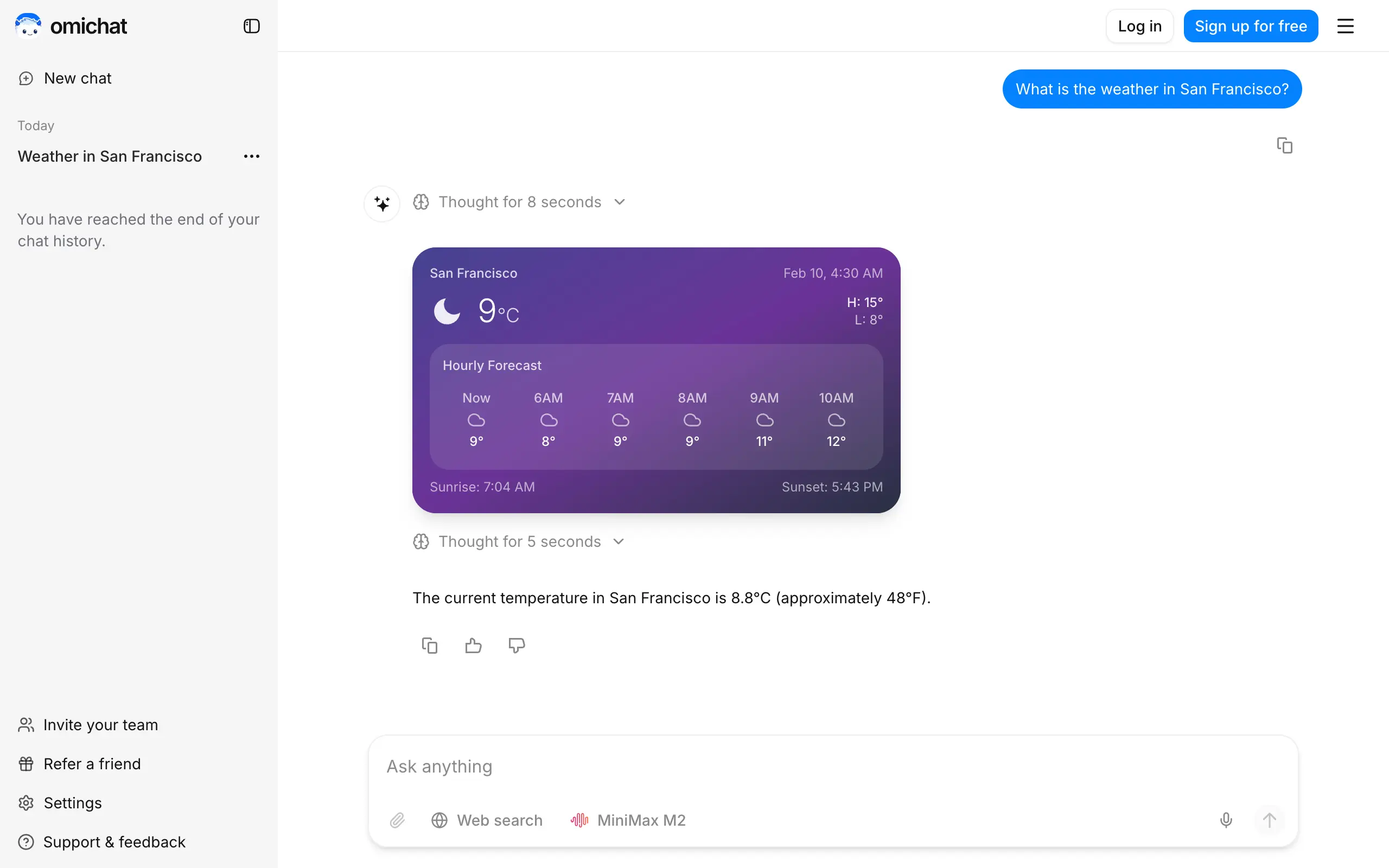
Omichat
Chat with 50+ AI models, including ChatGPT and Claude, in one place - switch models anytime without losing context 🤖
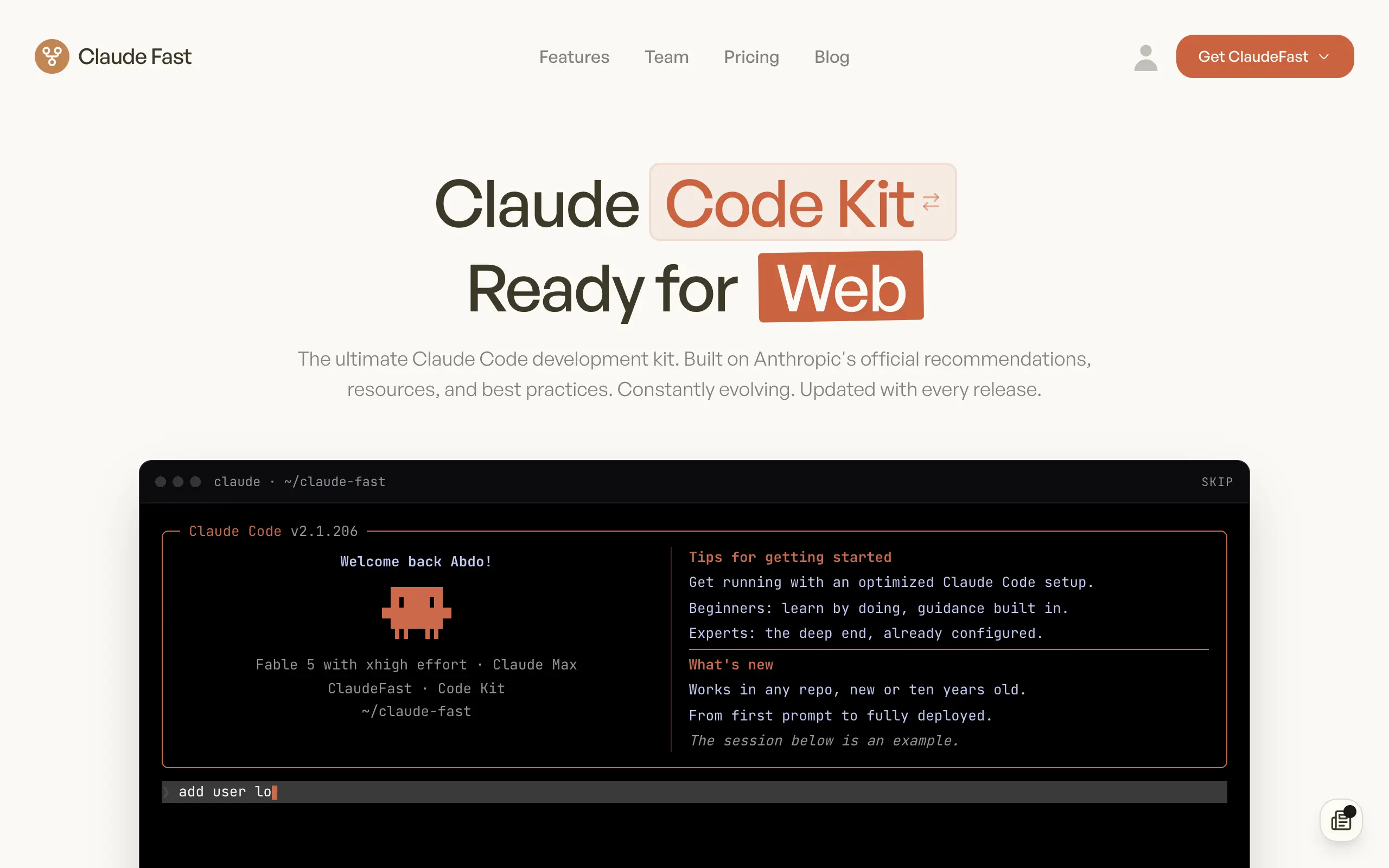
Claude Fast
Supercharge your Claude Code with 6x effective context window and specialized AI agents 🤖
EmojAI
AI-powered emoji picker with smart, context-aware suggestions 🤖
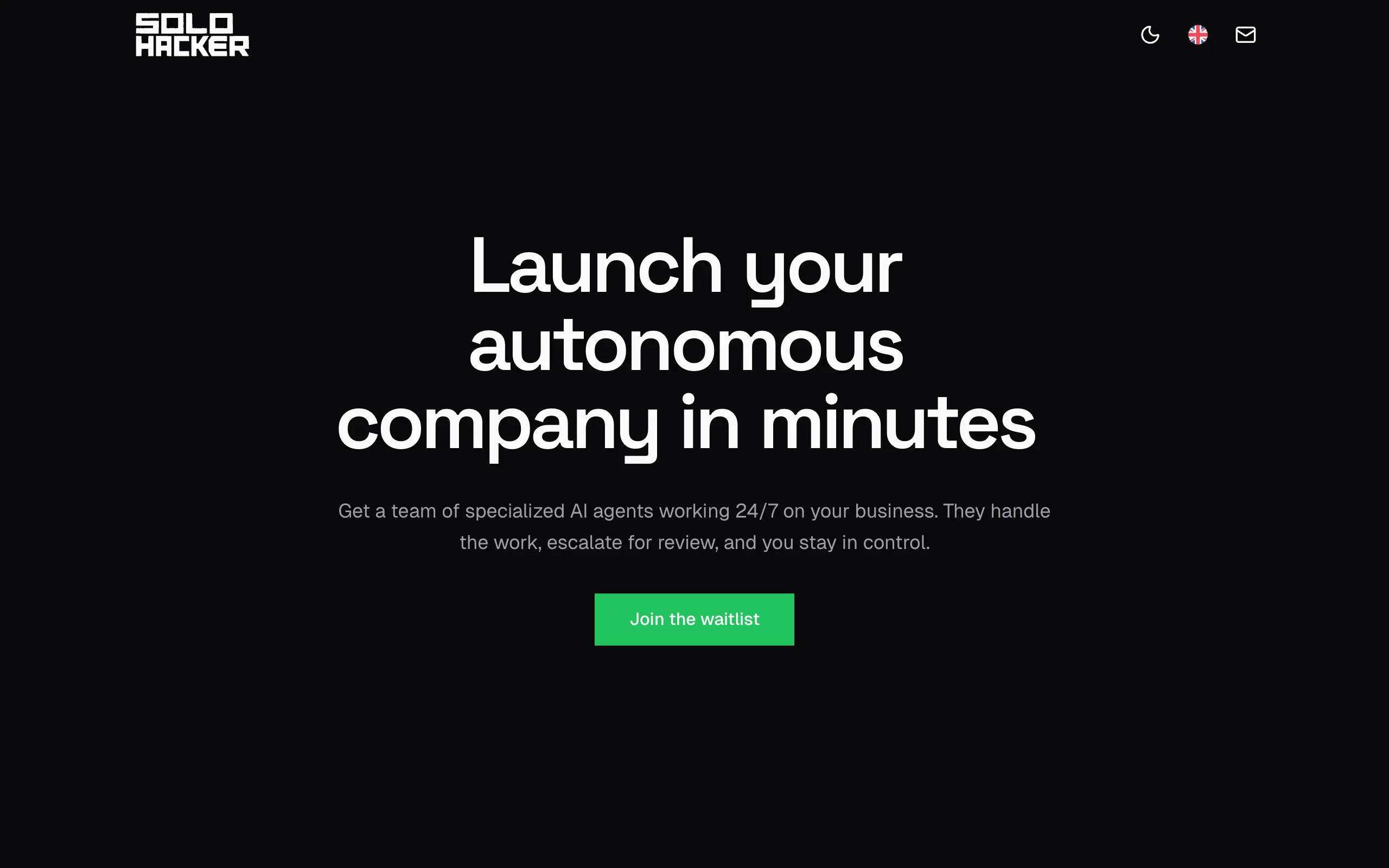
Solohacker
Autonomous company launcher - AI agents work 24/7, escalate what matters, and you stay in control 🤖

BeRawi: Storytelling Coach
Practice storytelling daily with instant feedback to sound clearer, more engaging, and confident 🎤
Omichat
Chat with 50+ AI models, including ChatGPT and Claude, in one place - switch models anytime without losing context 🤖
Claude Fast
Supercharge your Claude Code with 6x effective context window and specialized AI agents 🤖
EmojAI
AI-powered emoji picker with smart, context-aware suggestions 🤖
Solohacker
Autonomous company launcher - AI agents work 24/7, escalate what matters, and you stay in control 🤖
BeRawi: Storytelling Coach
Practice storytelling daily with instant feedback to sound clearer, more engaging, and confident 🎤
Omichat
Chat with 50+ AI models, including ChatGPT and Claude, in one place - switch models anytime without losing context 🤖
Claude Fast
Supercharge your Claude Code with 6x effective context window and specialized AI agents 🤖
EmojAI
AI-powered emoji picker with smart, context-aware suggestions 🤖
Solohacker
Autonomous company launcher - AI agents work 24/7, escalate what matters, and you stay in control 🤖
BeRawi: Storytelling Coach
Practice storytelling daily with instant feedback to sound clearer, more engaging, and confident 🎤
Omichat
Chat with 50+ AI models, including ChatGPT and Claude, in one place - switch models anytime without losing context 🤖
Claude Fast
Supercharge your Claude Code with 6x effective context window and specialized AI agents 🤖
EmojAI
AI-powered emoji picker with smart, context-aware suggestions 🤖
Solohacker
Autonomous company launcher - AI agents work 24/7, escalate what matters, and you stay in control 🤖
BeRawi: Storytelling Coach
Practice storytelling daily with instant feedback to sound clearer, more engaging, and confident 🎤

Connect with like-minded people
Join our community to get feedback, support, and grow together with 1,000+ builders on board, let's ship it!
Join usShip your startup everywhere. In minutes.
Don't burn tokens on setup and start building features on day one.