Regret Radar
An AI decision journal that spots recurring bias patterns in founders’ past choices and warns them before similar high-stakes moves.
Why an AI decision journal matters for founders
Founders make consequential decisions under uncertainty every day. They choose which customer segment to prioritize, whether to hire, how aggressively to spend, when to raise capital, which product requests to reject, and whether a disappointing metric is a temporary fluctuation or a sign of a deeper problem.
The difficulty is not a lack of intelligence, data, or effort. The difficulty is that human judgment is shaped by incomplete information, time pressure, identity, emotion, incentives, and memory. A founder can thoughtfully document why they approved a major hire, then six months later remember the decision as “obvious” even if the original rationale was weak. This is hindsight bias in action.
Regret Radar is an AI decision journal designed to turn past decisions into a practical operating advantage. Instead of merely storing notes, it identifies recurring judgment patterns across a founder’s decision history and provides timely warnings when a new high-stakes decision resembles an earlier costly mistake.
The core value proposition is simple:
Help founders make fewer repeat mistakes by transforming their decision history into a personalized bias-detection system.
Unlike a generic journaling app, an AI decision journal is not primarily about reflection, mindfulness, or productivity. Its job is to create a decision record, measure outcomes against expectations, recognize patterns over time, and make relevant context available before—not after—the next pivotal move.
The key distinction
A decision journal captures what you believed before an outcome was known. That timestamped context is what makes later analysis useful. Without it, retrospective explanations are often distorted by hindsight.
The target audience for Regret Radar
The ideal audience is not every professional who wants to journal. Regret Radar should begin with users who make frequent, high-leverage, uncertain decisions and have a direct financial or organizational cost when their judgment fails.
Primary audience: venture-backed and bootstrapped founders
Early-stage founders are the clearest initial customer segment. They routinely make decisions with limited evidence and limited time, including:
- "Product prioritization" decisions about features, integrations, roadmap bets, and technical debt
- "Go-to-market" decisions about pricing, positioning, channels, sales motions, and target verticals
- "Hiring" decisions about executives, first sales hires, engineers, and agencies
- "Capital allocation" decisions about runway, paid acquisition, contractors, and infrastructure
- "Fundraising" decisions about timing, valuation expectations, investor fit, and dilution
- "Strategic" decisions about partnerships, acquisitions, pivots, market expansion, and shutdowns
Founders also have a specific motivation that makes a decision intelligence product compelling: they often feel personally responsible for outcomes. When a decision goes wrong, they want to know whether it was bad luck, a bad process, or a repeatable cognitive pattern they can correct.
Secondary audience: operators and executive teams
Once the product has validated its core workflow with individual founders, it can expand to:
- Startup CEOs and COO leaders managing cross-functional trade-offs
- Product leaders making roadmap and experimentation decisions
- General partners and investment teams reviewing investment theses
- Agency owners evaluating clients, hires, and service expansion
- Business unit leaders handling budget and headcount decisions
- Boards and advisors who want a more rigorous decision-review practice
For teams, the product needs a careful approach to privacy and psychological safety. The goal should be to improve decision quality, not create a surveillance tool that ranks employees or punishes people for imperfect outcomes.
Jobs to be done
The strongest positioning comes from the user’s underlying job, not the product category alone.
A founder hires Regret Radar when they want to:
- Remember why they made a decision before the result influences their memory.
- Separate decision quality from outcome quality.
- Identify recurring blind spots, such as overconfidence or escalation of commitment.
- Get a useful warning before repeating a familiar failure pattern.
- Build an evidence-based leadership habit without adding excessive administrative work.
- Review important decisions with a cofounder, advisor, or leadership team using a shared factual record.
Founder under pressure
Needs a fast way to capture assumptions, confidence, downside, and decision triggers before committing resources.
Scaling CEO
Needs a searchable record of repeated operating decisions, including how assumptions performed over time.
Investor or advisor
Needs a structured way to challenge reasoning, preserve dissent, and improve post-investment learning.
The market gap in decision intelligence software
The market already contains note-taking applications, journaling products, project management tools, meeting transcription platforms, and business intelligence software. Yet these categories leave a major gap: few tools create a continuous learning loop between a person’s past judgment and their future choices.
Why standard note-taking tools are insufficient
Tools such as Notion, documents, spreadsheets, and task managers are useful for capturing information. However, they generally depend on the user to manually discover patterns across months or years of unstructured content.
A founder might have hundreds of notes containing valuable evidence:
- Reasons they approved a rushed hire
- A launch forecast that proved overly optimistic
- Reservations a cofounder raised before a failed expansion
- A previous decision to keep investing in an underperforming channel
- An assumption that a strategic customer would convert into enterprise demand
The information exists, but it is fragmented. It rarely surfaces when the founder needs it most.
Why postmortems alone do not solve the problem
Postmortems are valuable, but they tend to happen after a visible failure. They can also become overly focused on outcomes rather than the original decision process. A poor outcome can result from a sound decision made under uncertainty, while a favorable outcome can come from a reckless decision that happened to work.
Regret Radar fills the missing layer between logging a decision and conducting a retrospective. It should help users recognize that a current decision looks similar to a prior decision while there is still time to adjust course.
The opportunity created by AI
Modern large language models make semantic retrieval and pattern analysis practical for smaller teams and individual users. Rather than requiring rigid forms for every entry, an AI decision journal can extract structure from natural-language notes and conversation transcripts.
For example, a founder could write:
I want to hire a VP of Sales now because pipeline looks promising. I am worried that we do not yet have a repeatable sales motion, but delaying feels risky because competitors are hiring.
Regret Radar can identify:
- The decision being considered
- The expected upside
- The major assumption
- The stated concern
- The emotional or strategic pressure
- The confidence level
- The desired review date
- Semantically similar past decisions
That is a compelling use of AI because the product is not producing generic advice. It is grounding feedback in the user’s own documented history.
What makes Regret Radar different from a generic AI journal
The unique selling proposition for Regret Radar is personalized pre-mortem intelligence based on a founder’s own decision record.
A standard AI journal may summarize entries, offer prompts, or provide supportive reflection. Regret Radar should go further by connecting three moments that are usually disconnected:
- The moment a decision is made
- The moment evidence emerges
- The moment a similar decision appears again
This creates a durable decision-learning loop.
| Capability | Notes app | Generic AI journal | Postmortem document | Regret Radar |
|---|---|---|---|---|
| Captures decision context | Sometimes | Yes | Usually after the fact | Yes, before commitment |
| Tracks assumptions and forecasts | Manual | Limited | Sometimes | Structured and reviewable |
| Finds similar past decisions | No | Rarely | No | Yes |
| Flags recurring bias patterns | No | Generic prompts | Manual analysis | Personalized pattern detection |
| Warns before a repeat decision | No | Rarely | No | Core product behavior |
A credible product must avoid claiming that it can predict the future or diagnose a user psychologically. Its value lies in surfacing decision-relevant evidence and asking better questions. The founder remains accountable for the decision.
Core features for an AI decision journal
An effective MVP should focus on repeatable decision capture, structured analysis, and timely retrieval. It should not begin as an all-purpose founder operating system.
Guided decision capture
The first workflow needs to be fast enough for busy founders. A user should be able to create a decision entry through a short form, free writing, voice note transcription, or a Slack-style prompt.
Every important entry should capture a minimum viable decision record:
- "Decision" what is being approved, rejected, delayed, or changed
- "Context" the current business conditions and constraints
- "Options" the realistic alternatives that were considered
- "Expected outcome" what success looks like and when it should appear
- "Key assumptions" what must be true for the decision to work
- "Confidence" the user’s calibrated confidence estimate
- "Downside" the likely cost if the decision is wrong
- "Dissent" concerns raised by cofounders, advisors, or team members
- "Review date" when the decision should be revisited
- "Decision owner" who has final responsibility
The interface should allow incomplete entries. Founders will not use a system that turns every decision into a 20-minute exercise.
AI-generated decision summaries
The AI layer should convert free-form input into a transparent structure. Importantly, users must be able to edit every extracted field before saving.
A strong summary might state:
You are considering hiring a senior sales leader before proving a repeatable sales motion. Your thesis depends on current pipeline converting and the hire building process rather than only closing existing demand. You identified premature scaling as the main risk. Review in 90 days using win rate, sales-cycle length, and founder-led close rate.
This framing helps users clarify their own reasoning. It also builds the clean data needed for future pattern detection.
Assumption and prediction tracking
The most useful decision journals distinguish assumptions from outcomes. Regret Radar should prompt users to make measurable predictions where possible.
For example:
- “This pricing change will increase paid conversion from 3% to 4% within 60 days.”
- “The new hire will own a repeatable outbound process by the end of the next quarter.”
- “This enterprise prospect segment will produce at least five qualified opportunities in 45 days.”
- “The infrastructure migration will reduce incident frequency without delaying the roadmap beyond two weeks.”
A prediction does not need to be perfectly precise. The point is to create an auditable expectation before results are visible.
Decision review reminders
The application should automatically schedule review prompts. A decision is incomplete until it is assessed against the criteria that justified it.
Review prompts should ask:
- What happened relative to the original expectation?
- Which assumptions were confirmed, weakened, or disproved?
- Was the decision process sound based on the information available at the time?
- What signals were ignored or overweighted?
- Did dissenting opinions contain information that should influence future decisions?
- What should change the next time this type of decision appears?
This supports a culture of learning without reducing every imperfect result to personal failure.
Personalized bias pattern detection
This is the flagship feature. Over time, Regret Radar can identify patterns that are specific to the user’s decision history.
Potential patterns include:
- Overconfidence in revenue projections
- Repeatedly underestimating implementation complexity
- Escalation of commitment after weak early evidence
- Excessive optimism about hiring speed or candidate fit
- Recency bias after one strong customer conversation
- Anchoring on an early valuation, pricing point, or forecast
- Avoiding difficult people decisions until costs compound
- Treating reversible decisions as irreversible
- Treating irreversible decisions as casually reversible
- Discounting dissent from a particular stakeholder group
The product language should be cautious and evidence-led. Rather than saying, “You are overconfident,” it should say:
In four prior expansion decisions, your projected time to first revenue was shorter than the observed outcome by more than 50%. This proposal includes a similar timeline assumption. Would you like to run a downside scenario?
That wording is more trustworthy, more actionable, and less likely to trigger defensiveness.
Similar-decision warnings
The warning system should activate when a user creates a new high-stakes entry, changes a metric, or enters a planning workflow.
An alert could read:
This decision shares themes with two prior hires made before role expectations were validated. In both cases, success criteria were not defined until after the start date. Consider adding a 30/60/90-day outcome definition and an explicit owner for onboarding.
The warning must always link back to the relevant source decisions. Explainability is essential. Users should never be asked to trust an opaque AI score without being able to inspect the evidence.
Decision quality dashboard
A dashboard can help users see aggregate patterns without implying false precision. Useful visualizations include:
- Decision volume by category and timeframe
- Decisions awaiting review
- Forecast calibration over time
- Assumptions most frequently invalidated
- Decision areas with the highest regret score
- Common recurring decision triggers
- Percentage of decisions that included dissent or alternative scenarios
- A timeline of major decisions and outcomes
Avoid a simplistic “founder score.” It may gamify judgment in the wrong way and discourage honest documentation. The dashboard should emphasize learning velocity and decision hygiene, not personality ranking.
How Regret Radar should model cognitive bias responsibly
Cognitive bias is a useful lens, but it can easily be overused. The product should treat biases as hypotheses about decision processes, not clinical labels or fixed traits.
A better framework: patterns, evidence, and prompts
Instead of building a feature that declares definitive bias diagnoses, use a three-part model:
- Pattern detection identifies recurring similarities in decisions and outcomes.
- Evidence presentation shows the past entries, assumptions, and results supporting the observation.
- Reflection prompts invite the user to test whether the pattern applies now.
This preserves the user’s agency and reduces the risk of AI overreach.
“You have confirmation bias. Do not proceed.”
“You may be favoring evidence that supports this plan. Consider listing two disconfirming signals.”
“In three earlier channel bets, positive customer anecdotes outweighed weak conversion data. This entry relies on four anecdotal interviews and no conversion baseline. Would you like to define a disconfirming metric before approving spend?”
High-value cognitive patterns for founders
The earliest bias taxonomy should focus on common, observable founder decisions:
- Planning fallacy when effort, cost, or time estimates are repeatedly too optimistic
- Sunk cost fallacy when investment continues despite predefined stop conditions being met
- Confirmation bias when supporting evidence is documented while contradictory evidence is absent or discounted
- Outcome bias when a good result causes a weak process to be treated as sound
- Availability bias when recent or vivid anecdotes disproportionately influence a decision
- Anchoring when an early number continues to dominate subsequent analysis
- Action bias when urgency encourages action even when waiting would create better information
- Status quo bias when the cost of changing course is consistently underestimated
- Authority bias when a highly credible person’s view repeatedly overrides direct evidence
Users should be able to disagree with a suggested pattern. That feedback becomes valuable training data for improving future recommendations.
Recommended technology stack for Regret Radar
Regret Radar needs a stack that supports secure multi-tenant SaaS workflows, AI extraction, semantic retrieval, scheduled reminders, and reliable audit trails. The best implementation balances speed to market with the ability to evolve safely.
Application layer
A practical web application stack includes Next.js and React. Next.js is well suited to a SaaS product because it supports server-side rendering, route handlers, authentication integrations, and responsive application experiences within one TypeScript-based framework.
For styling, Tailwind CSS offers fast iteration and helps maintain a consistent product design system. A decision journal should feel calm and focused, so reusable interface primitives and a restrained visual language matter more than elaborate animation.
Recommended foundation:
- "Frontend" Next.js with React and TypeScript
- "Styling" Tailwind CSS
- "Forms" schema-validated forms with clear autosave behavior
- "Authentication" secure email, social, and optional SSO pathways
- "Billing" Stripe for subscriptions and invoices
- "Observability" error monitoring, structured logs, and product analytics with privacy controls
For founders who want to reduce boilerplate and reach a polished SaaS foundation faster, TurboStarter can accelerate work on the application shell, authentication, billing architecture, and core production conventions.
Data storage and structured decision records
Use a relational database such as PostgreSQL for user accounts, organizations, decisions, reviews, permissions, subscriptions, and audit metadata. A relational model is important because the product needs clear ownership boundaries and reliable reporting.
A simplified decision record might look like this:
type DecisionRecord = {
  id: string
  organizationId: string
  authorId: string
  title: string
  category: "hiring" | "product" | "pricing" | "growth" | "fundraising" | "operations"
  status: "draft" | "committed" | "review_due" | "reviewed"
  context: string
  options: string[]
  selectedOption: string
  assumptions: Array<{
    statement: string
    confidence: number
    validationMetric?: string
  }>
  downside: string
  reviewDate: string
  createdAt: string
}
The initial schema should preserve raw user text alongside AI-generated fields. This ensures that the system can be improved without losing the original source record.
AI pipeline and retrieval architecture
The AI architecture should be retrieval-first rather than model-first. The system should retrieve relevant past decisions and then ask an LLM to summarize similarities, contradictions, and possible questions.
A typical flow is:
- Capture raw decision text.
- Extract structured fields with a schema-constrained model response.
- Generate embeddings for the full entry and selected structured fields.
- Store embeddings in a vector-capable retrieval layer.
- Retrieve semantically similar historical entries when a new decision is drafted.
- Apply deterministic filters, such as category, organization, outcome, date range, and stakes.
- Ask the model to generate a grounded warning using retrieved evidence only.
- Display citations back to the user’s original decisions.
For early-stage development, a PostgreSQL extension such as pgvector can reduce infrastructure complexity by keeping relational and vector data close together. A dedicated vector database may become attractive at larger scale or when advanced retrieval features become central to product performance.
The trade-off is straightforward:
- "PostgreSQL with vector support" simplifies the architecture and is excellent for a focused MVP.
- "Dedicated vector infrastructure" can offer specialized performance and retrieval tooling, but adds operational overhead.
Background jobs and notifications
Decision reviews and alerts require reliable background processing. Use a durable job queue for tasks such as:
- Scheduling review reminders
- Processing long transcripts
- Recalculating user pattern summaries
- Generating weekly decision digests
- Sending email and in-app notifications
- Running deletion and data-export requests
The application should never make users wait for a long AI analysis after they save a decision. Save first, process asynchronously, and notify the user when the insight is ready.
Privacy, security, and trust requirements
A decision journal will contain highly sensitive material. Founders may record pricing strategy, runway concerns, employee performance observations, investor conversations, acquisition interest, customer data, and personal anxieties.
Trust cannot be an afterthought. It is part of the product.
Core privacy commitments
Regret Radar should make explicit commitments around:
- Encryption in transit and at rest
- Tenant isolation between organizations
- Strict role-based access controls
- User-controlled sharing for individual decisions
- Export and deletion capabilities
- Clear retention settings
- Transparent disclosure of AI processing
- Explicit policy on whether customer data is used for model training
- Audit logs for workspace access and shared decision activity
The default should be private-by-default. A personal decision should never become visible to an entire workspace simply because it was created inside that workspace.
Responsible AI safeguards
The AI should be constrained to its intended role. It should not offer legal, medical, investment, employment-law, or mental-health determinations. It should not present uncertain analysis as fact.
Use guardrails such as:
- Grounded generation based on retrieved decisions
- Clear citations to source entries
- Confidence and uncertainty language
- User corrections and feedback controls
- Human-readable explanations for every alert
- PII minimization in logs and analytics
- Prompt injection defenses for imported content
- Clear separation between source text and model instructions
Avoid a black-box regret score
A single score may look attractive in a dashboard, but it can obscure uncertainty and encourage users to optimize for appearances. Show evidence, assumptions, and patterns instead of pretending complex judgment can be reduced to one definitive number.
Monetization strategies for an AI decision journal
The best pricing model should align with the value of avoiding costly mistakes while remaining accessible to founders at different stages.
Freemium for individual habit formation
A free plan can make it easy to build a decision-journaling habit.
A free tier could include:
- A limited number of active decisions
- Basic decision templates
- Manual reviews
- A small history window
- A limited number of AI summaries each month
This approach gives users enough value to experience structured reflection before asking them to pay.
Pro plan for individual founders
A paid individual plan should unlock the core intelligence features:
- Unlimited decisions and reviews
- Personalized pattern detection
- Similar-decision retrieval
- Advanced search
- Unlimited AI decision analysis
- Scheduled reminders
- Forecast calibration insights
- Data export
- Priority support
The buyer is not paying for journal storage. They are paying for retrieval, analysis, and a better decision process.
Team plans for startup leadership groups
A team plan can support founder pairs, executive teams, and leadership groups.
Relevant collaborative features include:
- Shared decisions and private personal entries
- Permission controls
- Decision review workflows
- Commenting and dissent capture
- Team pattern reports
- Slack or email reminders
- Advisor and board-view access
- Centralized billing and onboarding
Pricing should use a workspace base fee plus seats or active decision-makers. Avoid charging solely by AI usage if that creates anxiety around using the core feature.
Premium services and enterprise expansion
Later revenue opportunities may include:
- Decision-coaching templates for accelerators and founder communities
- Advisor dashboards for portfolio support
- Enterprise SSO and advanced compliance controls
- Custom retention policies
- Private deployment options for highly sensitive organizations
- Facilitation tools for strategy offsites and investment committees
The product should resist becoming a consulting business too early. Productized workflows are more scalable and strengthen the software’s learning advantage.
Competitive advantage and defensibility
Regret Radar’s defensibility will not come from calling an LLM API. AI capabilities are increasingly accessible. Durable advantage comes from the quality of the decision data, the workflow integration, the feedback loop, and user trust.
A proprietary decision-outcome graph
Each user’s value increases as their history grows. Over time, Regret Radar can create a private graph connecting:
- Decision categories
- Assumptions
- Evidence sources
- Participants
- Confidence levels
- Time horizons
- Predicted outcomes
- Actual outcomes
- Review insights
- Detected recurring patterns
This creates switching costs because the user’s historical judgment record becomes increasingly valuable. A blank alternative tool cannot immediately replicate years of personalized context.
Better data through better prompts
The product can also improve its own data quality by asking the right questions at the right moment. For example, when a founder logs a hiring decision, the app can ask hiring-specific questions rather than showing a generic journal form.
This creates a compounding loop:
The founder captures a decision with structured assumptions and success criteria.
Regret Radar prompts a review when meaningful evidence is available.
The outcome improves the founder’s personal decision history.
Future warnings become more specific, grounded, and useful.
Trust as a product moat
Founders will only document candidly if they trust the system. Strong privacy design, transparent AI behavior, and evidence-backed alerts can become powerful differentiators in a category where users are sharing their most sensitive professional thinking.
Risks and practical mitigation strategies
The opportunity is meaningful, but the product has important risks that should be managed deliberately.
Risk: users do not build the journaling habit
The most common failure mode is not technical. Users may agree with the concept but fail to log decisions consistently.
Mitigation approaches include:
- Make initial capture possible in under two minutes
- Offer templates for common founder decisions
- Support voice input and quick capture
- Integrate with calendar, email, or team workflows carefully
- Prompt users only at meaningful moments
- Provide immediate value through summaries and overlooked-assumption prompts
- Start with high-stakes decisions rather than every minor choice
Risk: AI feedback feels generic or judgmental
If warnings sound like generic leadership advice, users will stop paying attention. If they sound accusatory, users may stop documenting honestly.
Mitigation approaches include:
- Ground every warning in specific historical evidence
- Use probabilistic, nonjudgmental language
- Let users dismiss, correct, or save a warning
- Ask reflective questions rather than issue commands
- Display the source decisions behind the alert
- Measure helpfulness directly after alerts are shown
Risk: insufficient historical data for new users
Personalized pattern detection improves with time, creating a cold-start challenge.
Mitigation approaches include:
- Offer decision templates that provide immediate process value
- Allow users to import selected past postmortems or planning documents
- Provide universal frameworks before personalization is available
- Clearly label early insights as preliminary
- Use category-level checklists without claiming they are personalized
Risk: sensitive information creates security concerns
The data is attractive and highly confidential, so a breach would be especially damaging.
Mitigation approaches include:
- Build security architecture early rather than retrofitting it
- Minimize unnecessary data collection
- Implement deletion and export workflows from the beginning
- Limit internal access to production data
- Conduct regular access reviews and security testing
- Publish transparent security and privacy documentation as the product matures
Risk: outcomes are hard to measure
Many strategic decisions do not have a single clean outcome. A market expansion, senior hire, or platform migration may have mixed results.
Mitigation approaches include:
- Separate outcome quality from decision quality
- Support multiple evaluation criteria
- Allow qualitative review notes
- Encourage users to define leading indicators and review windows
- Let users mark decisions as unresolved or mixed
- Avoid treating every decision as a binary success or failure
Usually, no. The product should surface comparable decisions, highlight assumptions, and propose questions or safeguards. It should not replace accountable leadership judgment with an opaque recommendation.
Yes, but individual privacy must remain central. Team workflows should support explicit sharing, recorded dissent, and clear permissions rather than automatically exposing private reflections.
Early-stage B2B SaaS founders are an especially strong starting point because they make recurring, documentable decisions across product, hiring, pricing, and go-to-market motion.
A practical MVP roadmap for Regret Radar
The first version should solve one painful problem exceptionally well: helping a founder capture a high-stakes decision and retrieve relevant personal history before they make a comparable choice.
Phase one: validate the decision capture workflow
Build:
- Secure account creation and workspace setup
- Decision creation with structured and free-form input
- Categories for hiring, product, growth, pricing, and fundraising
- AI extraction with user editing
- Review-date reminders
- Basic decision search
- Private-by-default data controls
Interview founders while they use the workflow. Watch for where they abandon an entry, which prompts create clarity, and what types of decisions they feel are worth documenting.
Phase two: introduce the learning loop
Add:
- Outcome review prompts
- Assumption validation tracking
- Similar-decision retrieval
- Source-linked AI summaries
- Basic trend reporting
- A feedback mechanism for alert quality
At this stage, do not overbuild dozens of bias labels. Test whether users find evidence-linked similarity alerts genuinely useful.
Phase three: deliver personalized warnings
Once there is enough decision history, introduce:
- Recurring-pattern detection
- Category-specific decision templates
- Calibration reports
- Pre-mortem prompts
- Dissent capture
- More sophisticated notification rules
The product should earn the right to make stronger observations only after it has enough user-specific evidence.
Phase four: expand into collaborative decision intelligence
After individual retention is strong, build:
- Cofounder and leadership-team workflows
- Shared decision rooms
- Advisor commenting
- Team review cadences
- Permission management
- Workspace-level reports that preserve personal privacy
Final implementation checklist
The most effective path is to start narrow, protect user trust, and prove that the AI produces timely insights founders cannot get from ordinary notes.
- Define the first ideal customer profile as B2B SaaS founders making recurring high-stakes operating decisions.
- Design a two-minute decision capture flow with optional depth.
- Store raw entries, structured decision fields, reviews, and outcome data in a secure relational model.
- Use semantic retrieval to find similar decisions before asking an AI model to generate insight.
- Require evidence links for every personalized warning.
- Build decision review reminders before attempting advanced bias classification.
- Use careful language that frames patterns as hypotheses, not diagnoses.
- Make personal entries private by default and invest early in security controls.
- Measure activation through completed decisions, scheduled reviews, and repeat usage.
- Measure product value through helpful-alert feedback, decision-review completion, and retained weekly users.
Regret Radar has the potential to define a valuable category: the AI decision journal for founders. Its success will depend on being more than a place to write thoughts and more responsible than an AI tool that makes broad claims about human judgment. By preserving decision context, tracking assumptions, learning from outcomes, and surfacing relevant patterns at the right time, it can help founders turn regret into a durable strategic asset.
More 🤖 AI Startup SaaS ideas
Discover more innovative ai startup SaaS ideas that are trending in 2026. Each idea is AI-generated with market validation and growth potential to help you find your next profitable venture faster than competitors.
Your competitors are building with TurboStarter
Below are some of the SaaS ideas that have been generated and built with our starter kit.
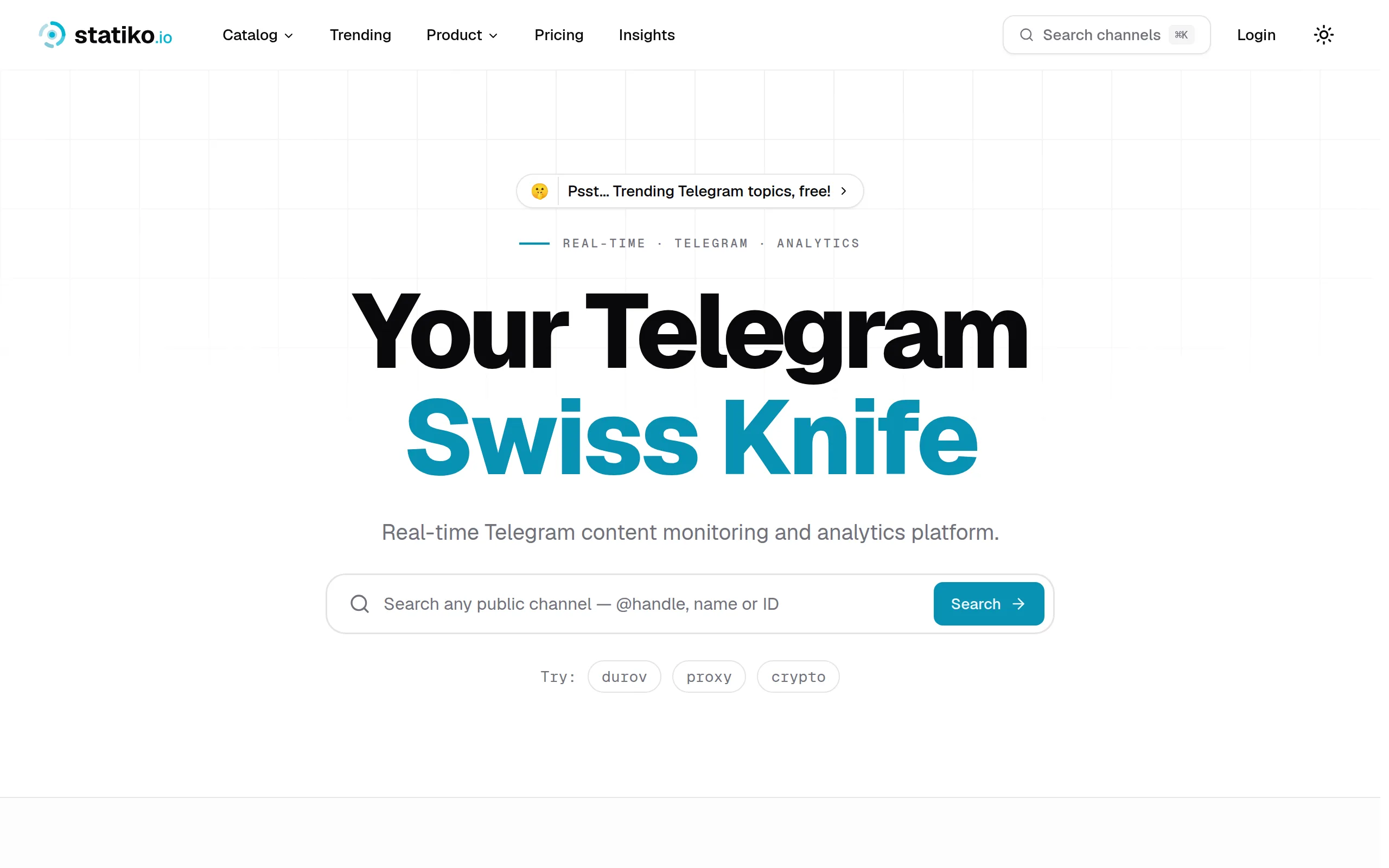
Statiko
Monitor any Telegram channel in real time - track posts, edits, deletions, and growth with AI recaps 📡

Shibui
AI website builder - describe your business, pick a niche template, edit by chatting, and publish instantly ✨

Pro Service
Find verified home service professionals, compare quotes, and pay securely through escrow - built for Brazilians across the US 🏠
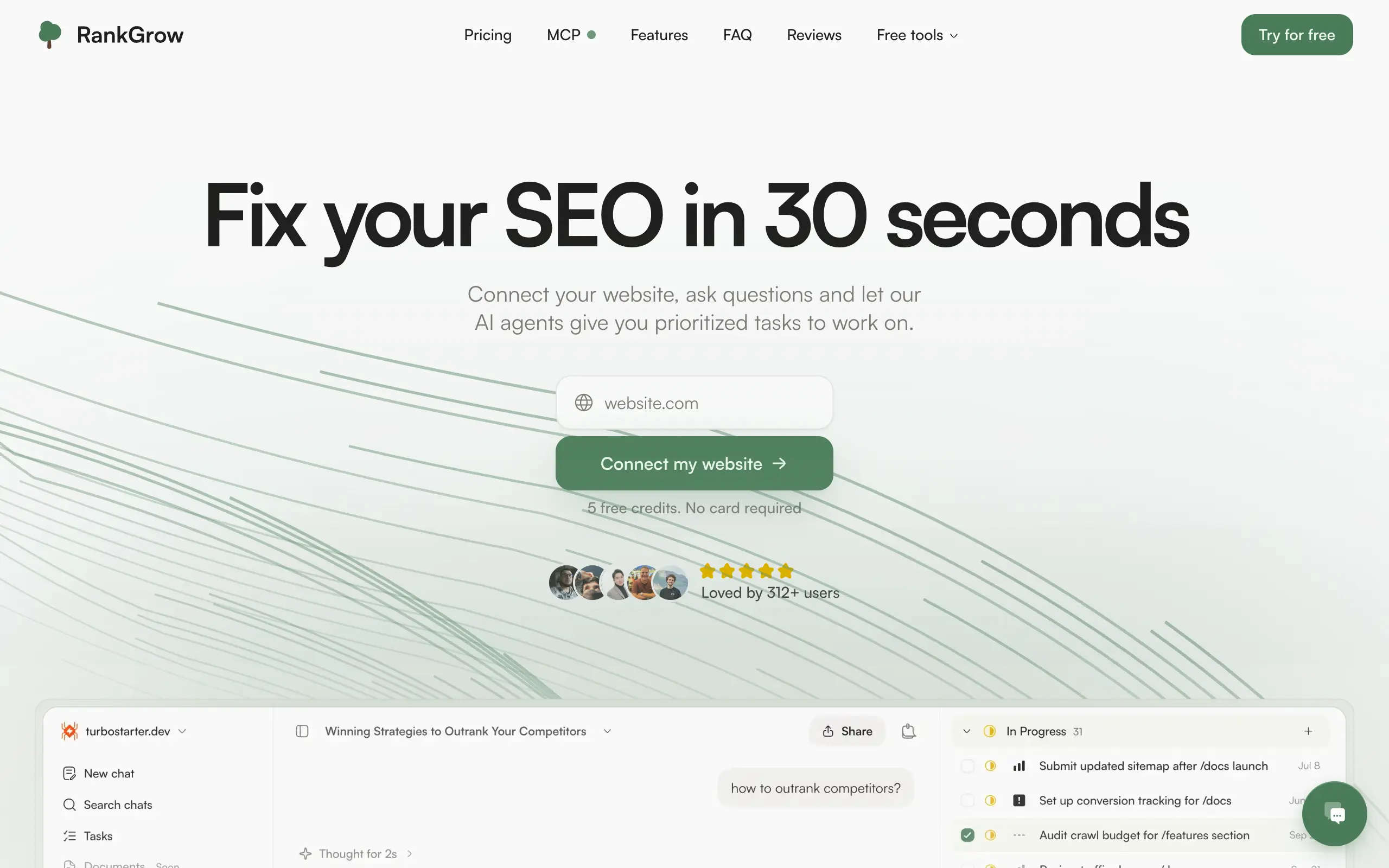
RankGrow
Fix your SEO with AI agents - connect Search Console, get prioritized tasks, and grow organic traffic 📈
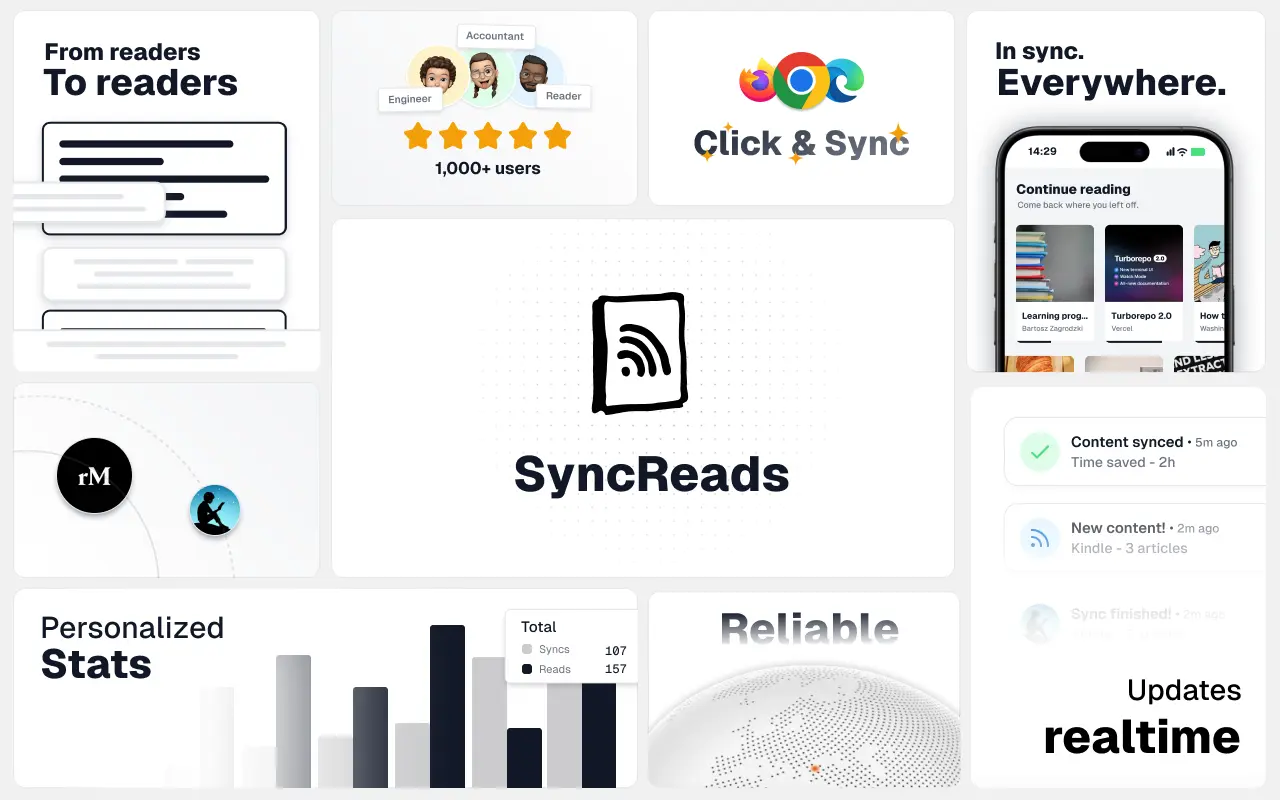
SyncReads
Sync your favorite content for distraction-free reading, save time and replace multiple apps. Anytime, anywhere 🔄
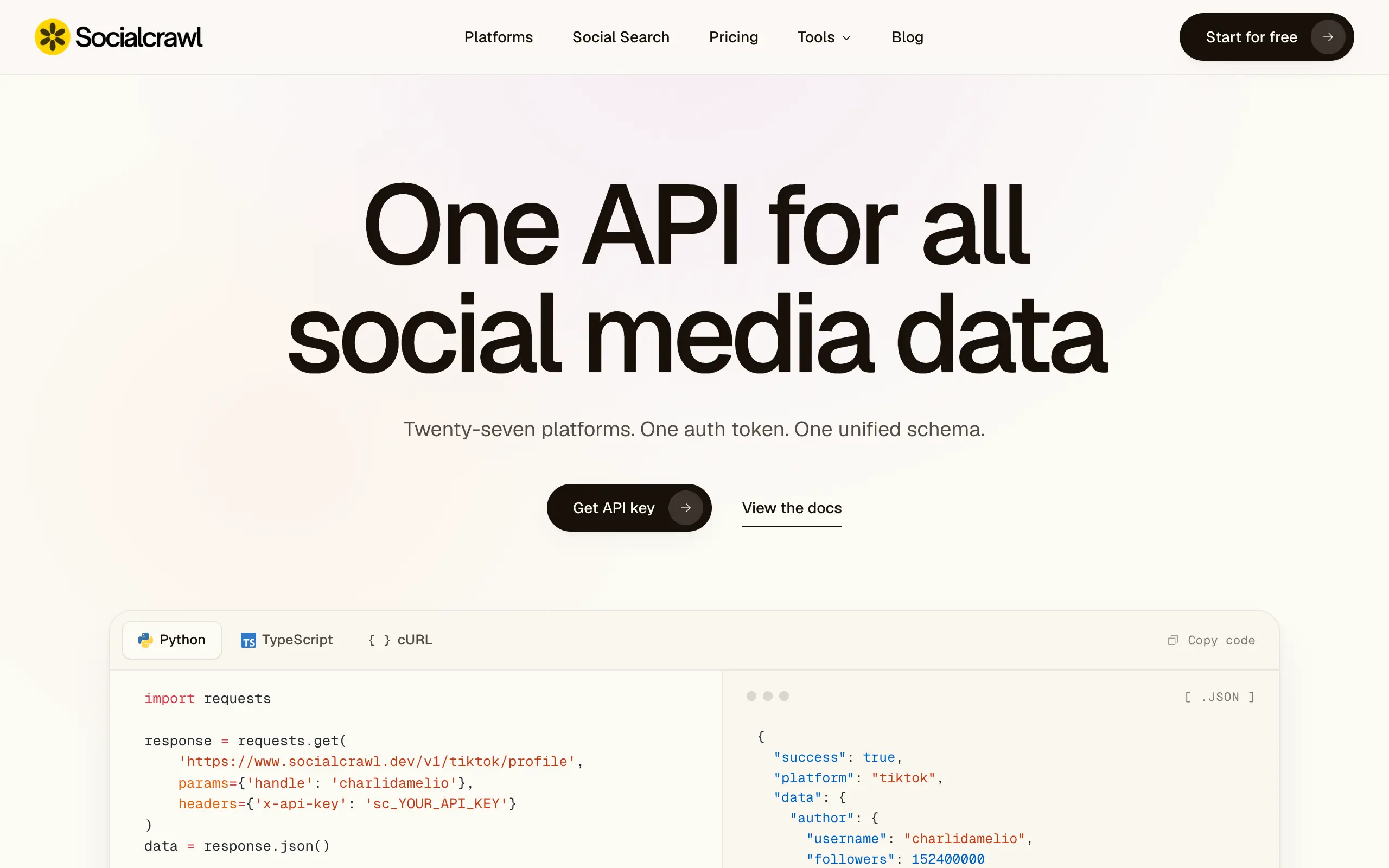
Socialcrawl
Get clean, structured data from 21 platforms like TikTok, Instagram, and YouTube with a single request 📊
Statiko
Monitor any Telegram channel in real time - track posts, edits, deletions, and growth with AI recaps 📡
Shibui
AI website builder - describe your business, pick a niche template, edit by chatting, and publish instantly ✨
Pro Service
Find verified home service professionals, compare quotes, and pay securely through escrow - built for Brazilians across the US 🏠
RankGrow
Fix your SEO with AI agents - connect Search Console, get prioritized tasks, and grow organic traffic 📈
SyncReads
Sync your favorite content for distraction-free reading, save time and replace multiple apps. Anytime, anywhere 🔄
Socialcrawl
Get clean, structured data from 21 platforms like TikTok, Instagram, and YouTube with a single request 📊
Statiko
Monitor any Telegram channel in real time - track posts, edits, deletions, and growth with AI recaps 📡
Shibui
AI website builder - describe your business, pick a niche template, edit by chatting, and publish instantly ✨
Pro Service
Find verified home service professionals, compare quotes, and pay securely through escrow - built for Brazilians across the US 🏠
RankGrow
Fix your SEO with AI agents - connect Search Console, get prioritized tasks, and grow organic traffic 📈
SyncReads
Sync your favorite content for distraction-free reading, save time and replace multiple apps. Anytime, anywhere 🔄
Socialcrawl
Get clean, structured data from 21 platforms like TikTok, Instagram, and YouTube with a single request 📊
Statiko
Monitor any Telegram channel in real time - track posts, edits, deletions, and growth with AI recaps 📡
Shibui
AI website builder - describe your business, pick a niche template, edit by chatting, and publish instantly ✨
Pro Service
Find verified home service professionals, compare quotes, and pay securely through escrow - built for Brazilians across the US 🏠
RankGrow
Fix your SEO with AI agents - connect Search Console, get prioritized tasks, and grow organic traffic 📈
SyncReads
Sync your favorite content for distraction-free reading, save time and replace multiple apps. Anytime, anywhere 🔄
Socialcrawl
Get clean, structured data from 21 platforms like TikTok, Instagram, and YouTube with a single request 📊
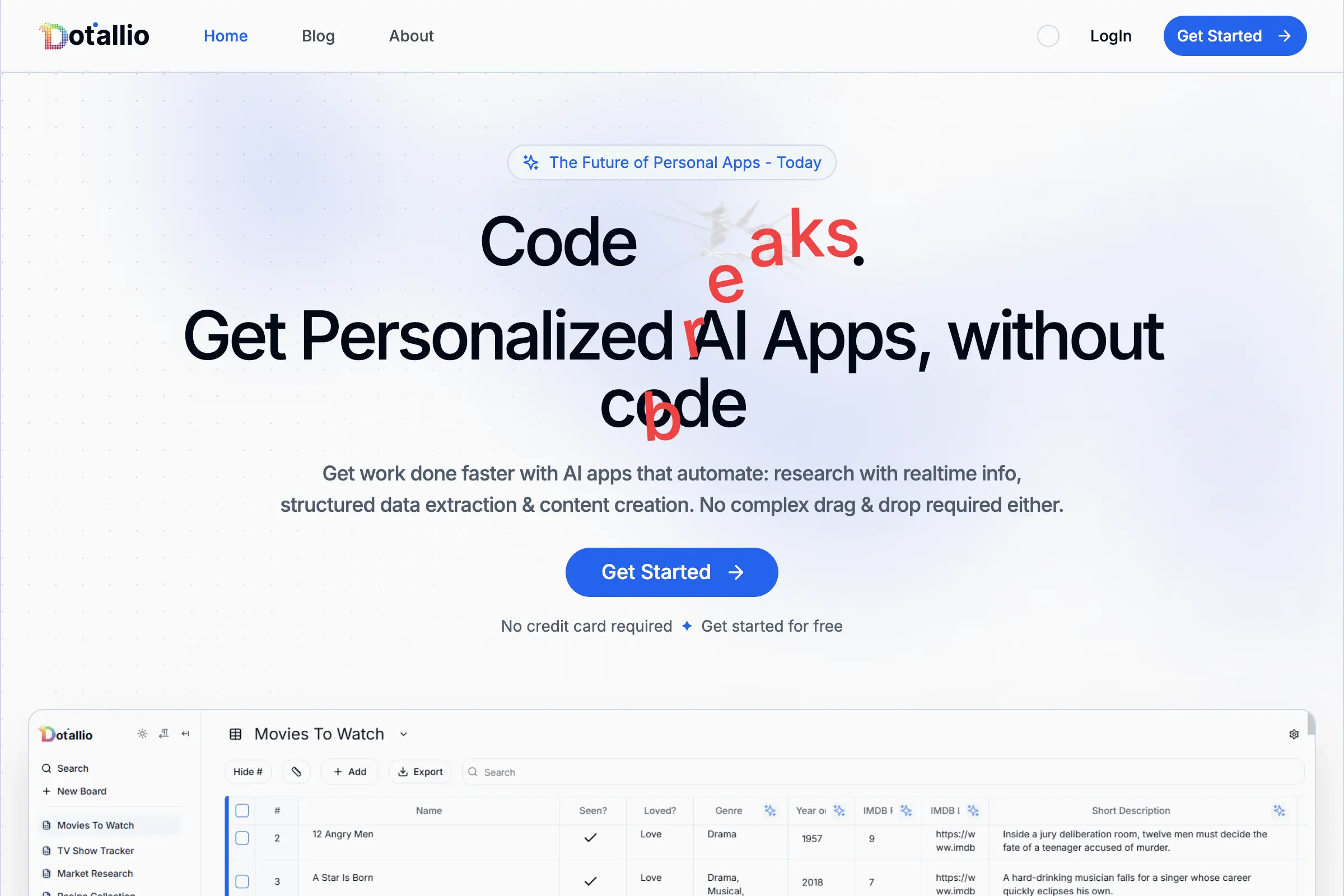
Dotallio
Personalized AI apps that automate research, data extraction, and content creation without code 🤖

Talk to Santa
Enjoy a magical live video chat or receive a unique AI-generated video greeting from Santa Claus 🎅

pozywka.pl
Scalable blog for food journalist, focused on performance and user experience 🌭
zagrodzki.me
Personal blog and portfolio of Bart Zagrodzki, where he shares his knowledge and work 💼

TurboStarter
Ship your startup everywhere. In minutes.
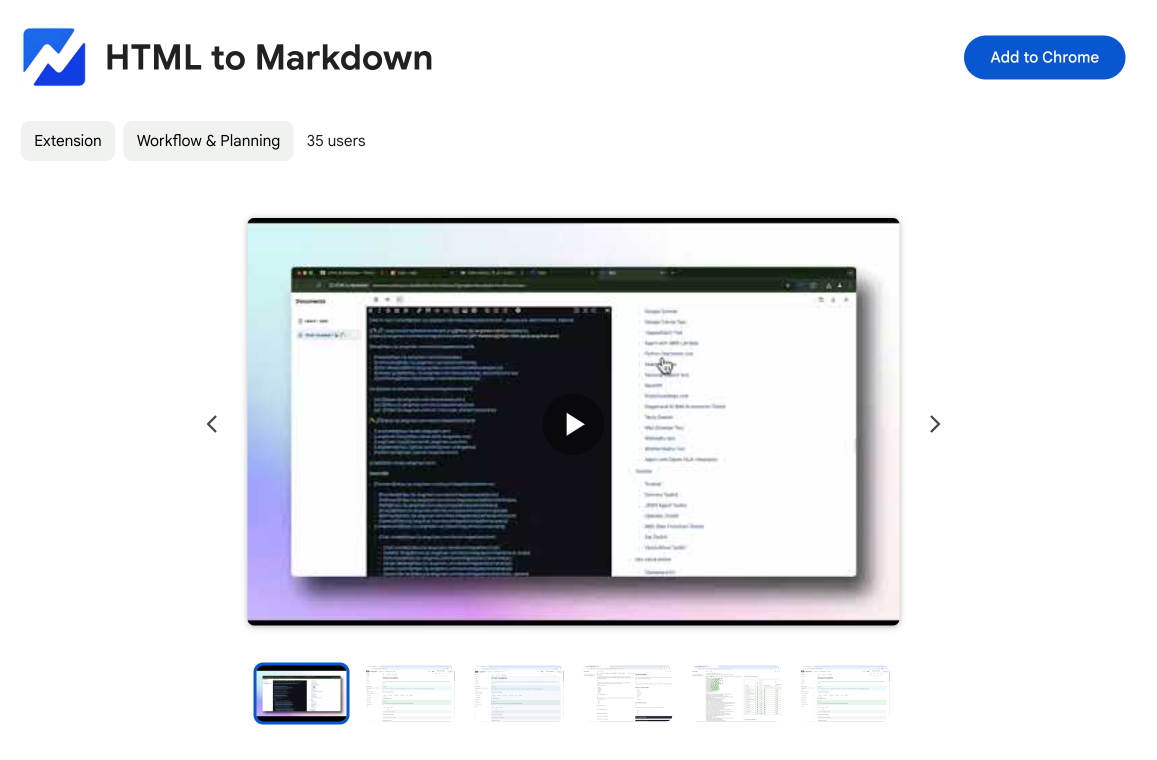
HTML to Markdown
Convert HTML to Markdown with ease, directly in your browser 📄
Dotallio
Personalized AI apps that automate research, data extraction, and content creation without code 🤖
Talk to Santa
Enjoy a magical live video chat or receive a unique AI-generated video greeting from Santa Claus 🎅
pozywka.pl
Scalable blog for food journalist, focused on performance and user experience 🌭
zagrodzki.me
Personal blog and portfolio of Bart Zagrodzki, where he shares his knowledge and work 💼
TurboStarter
Ship your startup everywhere. In minutes.
HTML to Markdown
Convert HTML to Markdown with ease, directly in your browser 📄
Dotallio
Personalized AI apps that automate research, data extraction, and content creation without code 🤖
Talk to Santa
Enjoy a magical live video chat or receive a unique AI-generated video greeting from Santa Claus 🎅
pozywka.pl
Scalable blog for food journalist, focused on performance and user experience 🌭
zagrodzki.me
Personal blog and portfolio of Bart Zagrodzki, where he shares his knowledge and work 💼
TurboStarter
Ship your startup everywhere. In minutes.
HTML to Markdown
Convert HTML to Markdown with ease, directly in your browser 📄
Dotallio
Personalized AI apps that automate research, data extraction, and content creation without code 🤖
Talk to Santa
Enjoy a magical live video chat or receive a unique AI-generated video greeting from Santa Claus 🎅
pozywka.pl
Scalable blog for food journalist, focused on performance and user experience 🌭
zagrodzki.me
Personal blog and portfolio of Bart Zagrodzki, where he shares his knowledge and work 💼
TurboStarter
Ship your startup everywhere. In minutes.
HTML to Markdown
Convert HTML to Markdown with ease, directly in your browser 📄
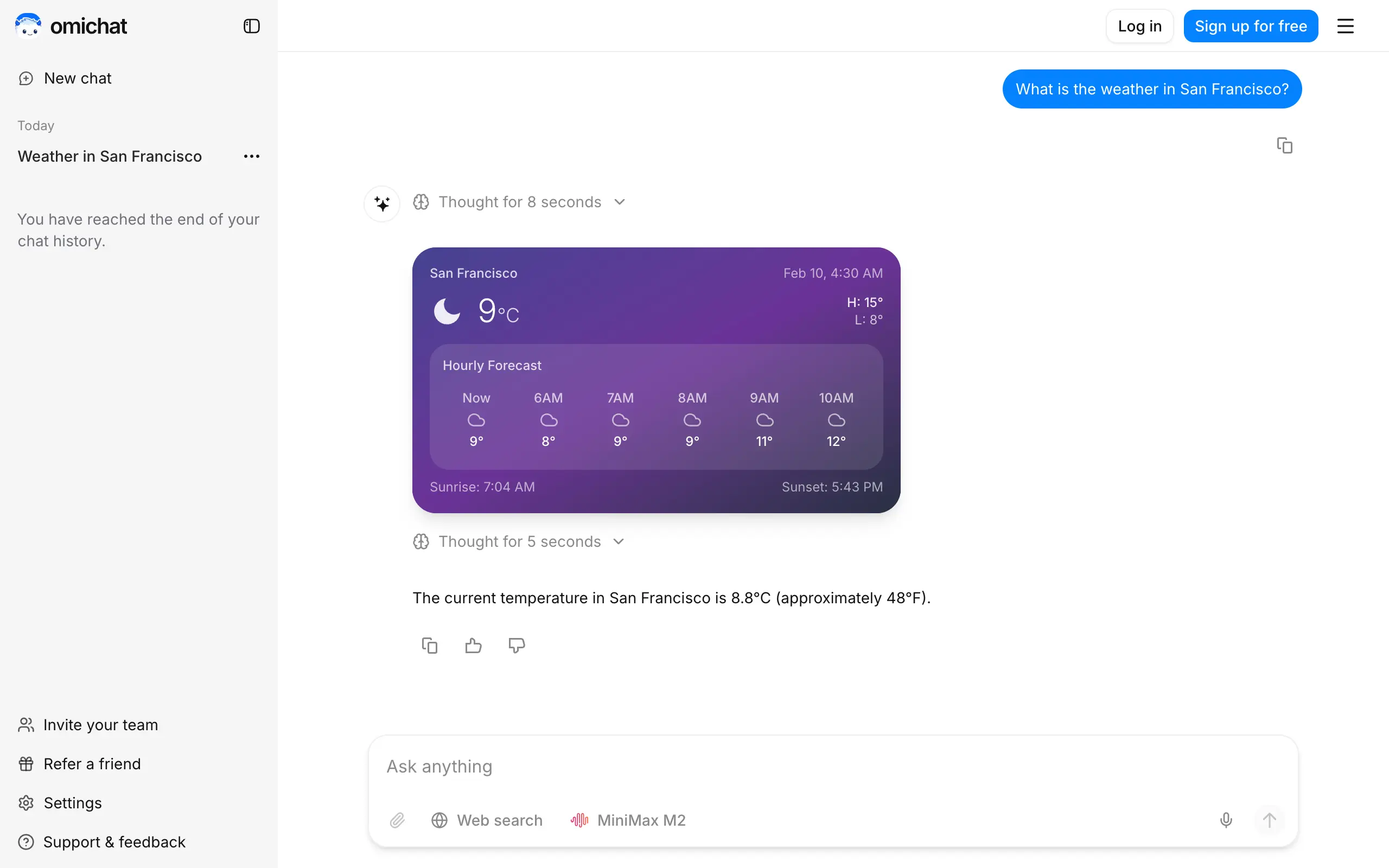
Omichat
Chat with 50+ AI models, including ChatGPT and Claude, in one place - switch models anytime without losing context 🤖
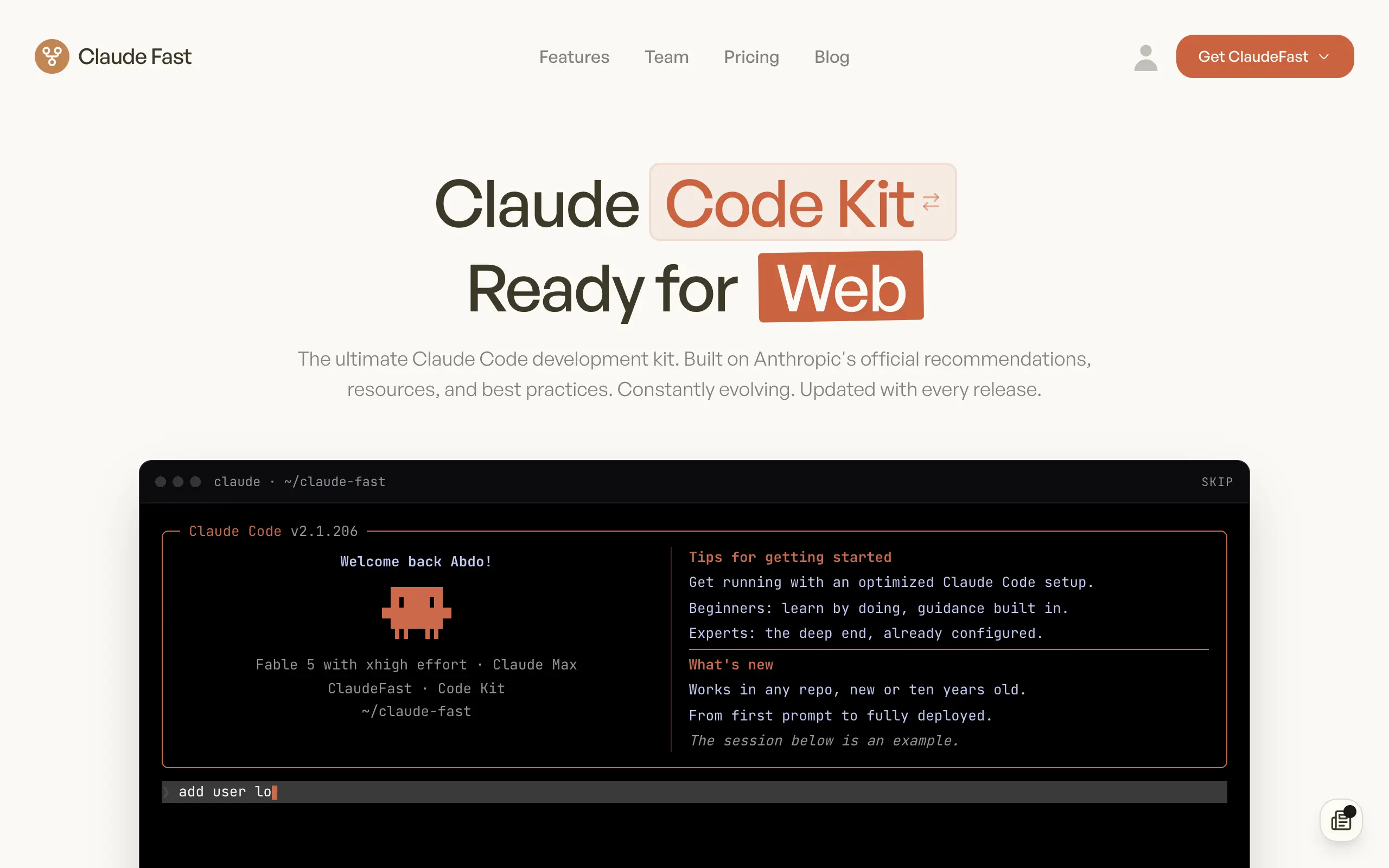
Claude Fast
Supercharge your Claude Code with 6x effective context window and specialized AI agents 🤖
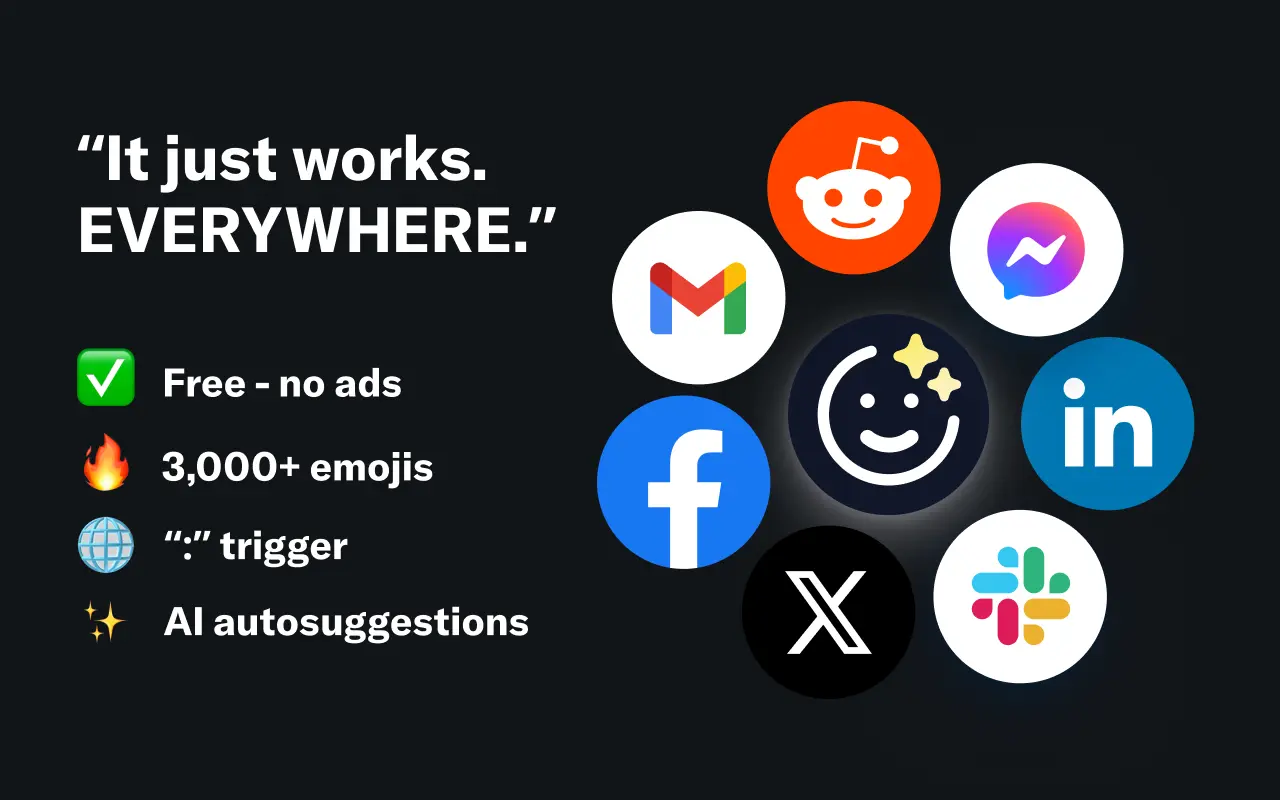
EmojAI
AI-powered emoji picker with smart, context-aware suggestions 🤖

Solohacker
Autonomous company launcher - AI agents work 24/7, escalate what matters, and you stay in control 🤖
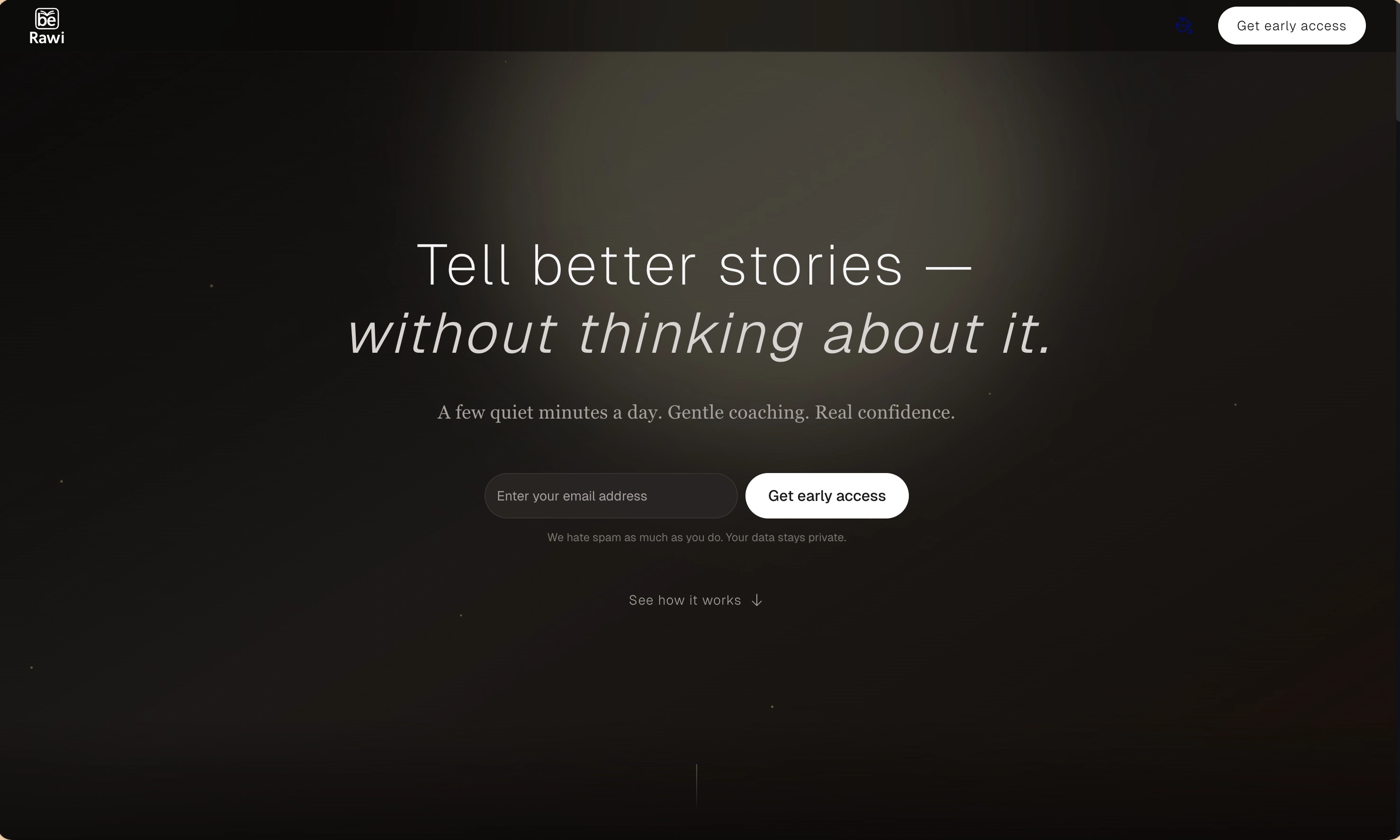
BeRawi: Storytelling Coach
Practice storytelling daily with instant feedback to sound clearer, more engaging, and confident 🎤
Omichat
Chat with 50+ AI models, including ChatGPT and Claude, in one place - switch models anytime without losing context 🤖
Claude Fast
Supercharge your Claude Code with 6x effective context window and specialized AI agents 🤖
EmojAI
AI-powered emoji picker with smart, context-aware suggestions 🤖
Solohacker
Autonomous company launcher - AI agents work 24/7, escalate what matters, and you stay in control 🤖
BeRawi: Storytelling Coach
Practice storytelling daily with instant feedback to sound clearer, more engaging, and confident 🎤
Omichat
Chat with 50+ AI models, including ChatGPT and Claude, in one place - switch models anytime without losing context 🤖
Claude Fast
Supercharge your Claude Code with 6x effective context window and specialized AI agents 🤖
EmojAI
AI-powered emoji picker with smart, context-aware suggestions 🤖
Solohacker
Autonomous company launcher - AI agents work 24/7, escalate what matters, and you stay in control 🤖
BeRawi: Storytelling Coach
Practice storytelling daily with instant feedback to sound clearer, more engaging, and confident 🎤
Omichat
Chat with 50+ AI models, including ChatGPT and Claude, in one place - switch models anytime without losing context 🤖
Claude Fast
Supercharge your Claude Code with 6x effective context window and specialized AI agents 🤖
EmojAI
AI-powered emoji picker with smart, context-aware suggestions 🤖
Solohacker
Autonomous company launcher - AI agents work 24/7, escalate what matters, and you stay in control 🤖
BeRawi: Storytelling Coach
Practice storytelling daily with instant feedback to sound clearer, more engaging, and confident 🎤

Connect with like-minded people
Join our community to get feedback, support, and grow together with 1,000+ builders on board, let's ship it!
Join usShip your startup everywhere. In minutes.
Don't burn tokens on setup and start building features on day one.